Ireland Moves to Legalize Spyware Use by Police
The bill turns state hacking from a covert act into an accepted instrument of law
By Ken Macon | Reclaim The Net | January 23, 2026
Irish police could soon be granted the legal authority to infiltrate phones and encrypted messaging services under new government legislation that would formally approve the use of spyware.
The proposal, contained in the forthcoming Communications (Interception and Lawful Access) Bill, has provoked concern among civil rights groups who say the plan risks eroding basic digital privacy.
Justice Minister Jim O’Callaghan has said the new powers are “long overdue,” arguing that they are necessary to deal with organised crime and national security threats that rely on encrypted communications.
The plan would, for the first time, provide An Garda Síochána (the main law enforcement and security agency in the state) with a legal basis for using what the government calls “covert surveillance software” to monitor devices.
This could include collecting information from phones or laptops, recording communications, or interfering with computer networks thought to be used for unlawful purposes.
Officials have indicated that similar powers exist in other countries, though reports suggest the technology under consideration resembles Pegasus, the Israeli-made spyware that was unlawfully used by police to monitor citizens and foreign nationals.
The Department of Justice has said any use of such spyware would be subject to strict judicial authorization.
Under the Bill, investigators could access both the content of communications and the associated “metadata,” which records who contacted whom, when, and from where.
Agencies would also have to declare whether any privileged material, such as communications involving journalists or lawyers, might be affected by their applications.
Officials continue to present the legislation as a practical response to modern crime. Yet this framing ignores what is actually at stake: a quiet authorization for state hacking of private devices.
For years, Ireland has criticized other nations for digital overreach, from the misuse of facial recognition abroad to the abuse of spyware uncovered in Europe.
Now, its own government is preparing to legalize similar tools under the banner of security. The right to communicate privately is one of the last real protections citizens have from constant scrutiny.
If this Bill passes in its current form, that protection could quietly disappear, not through scandal or crisis, but through a line in legislation that makes surveillance a normal feature of everyday life.
Irish football body votes to seek Israel’s ban from European competition
Press TV – November 8, 2025
The Football Association of Ireland (FAI) has overwhelmingly passed a resolution calling on the Union of European Football Associations (UEFA) to suspend Israel from international competitions.
The resolution, proposed by Dublin club Bohemians, says that the Israel Football Association (IFA) failed to enforce an effective anti-racism policy and continues to organize clubs in Israeli settlements in the occupied West Bank without the consent of the Palestinian Football Association.
The motion passed Saturday with 74 votes in favor, seven against, and two abstentions, according to the FAI. The association confirmed that it plans to submit a formal motion to UEFA’s executive committee requesting Israel’s immediate suspension from its competitions.
The Irish resolution follows similar calls from the Turkish and Norwegian football associations, which urged Israel’s suspension from international competitions.
These requests came after United Nations experts appealed to FIFA and UEFA to act, citing a UN Commission of Inquiry report that concluded Israel was actively committing genocide against Palestinians.
In a letter to UEFA president Aleksander Ceferin, the experts described banning Israel as “imperative” and urged the football governing body and its members to “fulfil their legal and moral obligations to uphold international law and move forward with an immediate and complete ban of Israeli football.”
The letter highlighted the devastating impact of Israel’s actions on football in Gaza as at least 421 Palestinian footballers have been killed since the regime launched its war on the Palestinian territory in October 2023.
Critic of EU and NATO wins Irish presidency
RT | October 25, 2025
Independent candidate Catherine Connolly, a long-time advocate of Irish military neutrality and a critic of NATO’s expansion and EU militarization, has won Ireland’s presidential election in a landslide.
The ballot count was still underway when Connolly’s main rival, Heather Humphreys, conceded defeat after early tallies showed her trailing by a wide margin. Preliminary results put Connolly ahead by 63% to 29%.
“Catherine will be a president for all of us and she will be my president,” Humphreys told journalists.
Irish Prime Minister Micheal Martin also formally congratulated Connolly on what he said “will be a very comprehensive election victory.”
Although an independent, the 68-year-old former Galway mayor was supported by major left-wing parties, including Sinn Fein and Labour.
Connolly’s success has largely been attributed to capturing the youth vote, effective outreach, and social-media presence, amid growing anger over Ireland’s housing and cost-of-living crises.
During the campaign, she emphasized Irish neutrality and criticized the EU’s push to expand militarization at the expense of social welfare. While critical of Russia in the Ukraine conflict, she has argued that NATO “warmongering” played a role in the crisis.
Last month, Connolly compared Germany’s push to boost its economy by “championing the cause of the military industrial complex” to its rearmament in the 1930s under the Nazis. “Seems to me, there are some parallels with the ‘30s,” she said at a discussion at University College Dublin.
Moscow has long criticized Brussels’ accelerating military buildup, arguing the EU was essentially transforming into an aggressive, military and political extension of NATO.
While the president is the formal head of state in Ireland, a parliamentary democracy, the role is seen as largely symbolic. However, the presidency does hold a few key powers, including the ability to refer bills to the nation’s top court to determine constitutionality, as well as the power to dissolve the lower chamber of parliament and call for new elections in the event a prime minister loses majority support.
Ex-NATO commander claims united Ireland could aid Russia and China
RT | October 25, 2025
The potential unification of Ireland would be a major blow to the West’s security as it could allow Russia and China to expand their reach in the North Atlantic, a former NATO commander has warned.
Speaking at a briefing for members of Parliament and the House of Lords on Wednesday, retired British Rear Admiral Chris Parry argued that if the UK were to lose its foothold in Northern Ireland, it would present a major opportunity for Moscow and Beijing.
He noted that the waters between Northern Ireland and Scotland are essential for Britain’s deployment of its nuclear-armed submarines, describing it as “critical to our strategic deterrent.” “With a united Ireland, there is no guarantee we could deploy our ballistic missiles,” Parry said.
He also suggested that a potential Irish unification would enable NATO adversaries to threaten critical undersea cables.
“The UK needs to calibrate the threat to itself of a supine Republic of Ireland. My view is that the best way to help Ireland now is to increase NATO and Allied activity in Ireland’s economic zone waters,” he said.
The retired admiral went so far as to suggest that NATO should hold exercises in Irish-controlled waters “whether Dublin agreed or not,” asserting that the bloc must be prepared to “fish in Irish waters for our potential opponents.” He said the Republic should move toward closer military cooperation with NATO and renounce neutrality.
“If anyone attacks Britain, they will attack Ireland… Neutrality cannot be seen as conscientious objection any more. If you are part of the free world, you have to be prepared to defend it. The Republic needs to reduce its vulnerabilities,” he stated.
Moscow has consistently rejected claims that it plans to attack NATO as “nonsense“.
Ireland has been militarily neutral since gaining independence in 1921, and is not a NATO member but cooperates with the bloc.
The idea of Irish reunification — merging the Republic of Ireland with Northern Ireland, which is part of the UK — is permitted under the 1998 Good Friday Agreement. The accord ended a three-decade-long stand-off between Irish nationalists and pro-British unionists by establishing a power-sharing government in Belfast and confirming that Northern Ireland’s status can change only if a majority there votes for it.
Irish contender blasts Irish gov. over delay of sanctions on ‘Israel’
Al Mayadeen | October 9, 2025
Ireland’s leading presidential contender has accused the government of bowing to US corporate pressure by stalling legislation that would sanction Israeli settlements, as anger grows over “Israel’s” genocide in Gaza.
Catherine Connolly, an independent left-wing lawmaker backed by Sinn Féin, urged Dublin to resist diluting the long-delayed Occupied Territories Bill, which aims to ban trade with goods and services linked to illegal Israeli settlements.
“We cannot allow the government to fail the Palestinian people on this,” Connolly told Reuters, accusing coalition partners Fianna Fáil and Fine Gael of “dragging their feet.” She warned that limiting the bill to goods only would amount to “an appalling capitulation to corporate interests” and an “unforgivable betrayal”.
Her remarks came just hours before US President Donald Trump announced a ceasefire and captive release deal between “Israel” and Hamas as part of his plan to end the two-year genocide in Gaza.
‘Ireland must match its moral stance with real action’
Government insiders told Reuters the proposed law may be watered down following lobbying by major US businesses operating in Ireland. While Ireland’s government has been vocal in condemning the Israeli war, the bill’s progress has stalled amid diplomatic and economic pressures.
Connolly, who currently leads in opinion polls ahead of the October 24 presidential election, said she would continue pushing for a comprehensive sanctions framework that includes services, insisting that Ireland “must match its moral stance with real action.”
Her stance was echoed by Frances Black, an independent senator who first introduced the legislation seven years ago. “The government needs to be strong on this. They need to be courageous,” Black said. “It’s absolutely vital that we have goods and services on the bill. We need to match our words with action.”
The proposed sanctions, in preparation for over a year, have drawn criticism from “Israel”, international business groups, and US lawmakers. Earlier this week, a group of American legislators warned Prime Minister Micheál Martin that passing the bill could damage US-Irish relations and harm American companies based in Ireland.
US takes action to protect ‘Israel’, again
Last August, a group of US Congress members sent a letter to Treasury Secretary Scott Bessent urging him to evaluate whether Ireland should be added to a list of countries boycotting “Israel” should the Occupied Territories Bill (OTB) become law.
The letter, which was signed by New York Republican Congresswoman Claudia Tenney and backed by 16 other congressional members, expresses what it describes as serious concerns about the Irish government’s proposed ban on imports from Israeli-occupied territories.
The letter cites Section 999 of the 1986 Internal Revenue Code, which condemns foreign boycotts targeting allied countries, with specific opposition to measures directed at “Israel”.
The letter warned that if Ireland were added to the list of countries boycotting “Israel”, it would trigger mandatory tax reporting obligations and possible financial penalties for American citizens and companies conducting specific operations in those nations.
The group characterized the Irish government’s efforts on the OTB as “part of [a] broader effort aligned with the global Boycott, Divestment, and Sanctions (BDS) movement which seeks to economically isolate Israel.”
VIGILANT: British Cops Push Censorship Technology at Trinity College Dublin
By Tadhg MACDONNELL | The Burkean | September 15, 2025
Tucked away inside its Pearse Street labs and offices, Trinity College Dublin quietly plays host to a variety of initiatives and interests blurring the lines between academia, the private sector and security realm. The VIGILANT project is just one of them.
A €4 million EU-funded scheme run out of the campus’ ADAPT centre for emergent technologies, VIGILANT (Vital Intelligence to Investigate Illegal Disinformation) is a pan-European initiative bringing together the private and public sector to create and fine tune an AI-driven platform for monitoring hate speech.
Commencing work in 2022 and lasting until late this year, VIGILANT ropes in the PSNI as well as policing services of Moldova, Greece and Estonia in the fight against hate speech and disinformation.
Alongside policing services VIGILANT partners include the Spanish technology giant ATOS and GLOBSEC (a Slovakian registered Atlanticist think tank) both with their own funding streams and political agendas.
Treating online speech as a potential security threat, part of VIGILANT’s remit includes establishing an informal intelligence for officers to share information on threats. Central in its pitch is its ability to counter so-called far right extremism with the VIGILANT website listing its ability to neutralise the spread of alleged migrant crime videos as chief among its selling points.
In effect, VIGILANT creates a pan-European surveillance consortium, mixing public police powers with private data-driven expertise, headquartered in Dublin but reaching deep into continental security networks. Publicly, VIGILANT is sold as a tool to help protect democracy yet the technology’s scope flagging “hate speech” puts it squarely in the camp of shutting down civic dissent.
As readers no doubt know, “Hate speech” and “disinformation” are infinitely expandable categories. Today it’s neo-Nazis; tomorrow it’s farmers protesting carbon taxes, parents objecting to gender ideology, or critics of NATO policy or the EU.
Let’s not ignore the symbolism: the PSNI, a British police force with its own chequered legacy, is now a partner in dictating what Europeans may say online, under the banner of an Irish university. Trinity’s prestige provides the camouflage, but the reality is murky.
Ireland’s Communications Minister Stands by “Disinformation” Plan, Citing Need to Tackle Online “Gossip”
Public consultation was billed as dialogue but ended up as window dressing

By Cindy Harper | Reclaim The Net | September 10, 2025
Despite overwhelming public resistance, Ireland’s government is pressing on with its national “disinformation” strategy.
Communications Minister Patrick O’Donovan has acknowledged that most responses to the public consultation opposed the plan, but said the State has a duty to tackle “gossip” circulating online.
The consultation, carried out ahead of the strategy’s launch, produced a clear result: approximately 83 percent of submissions were against the proposal, even objecting to the concept itself.
Still, the government moved ahead. When asked during a press conference what purpose the consultation served if the outcome was dismissed, O’Donovan avoided addressing the contradiction directly.
“Yeah, and we got responses from other people as well,” he said, adding: “What we have seen over the last number of years is that there has been, unfortunately, in some quarters, a move to believe gossip online as fact and run with gossip online as fact.”
The strategy, introduced earlier this year, outlines a range of state-backed efforts to counter what officials describe as disinformation, misinformation, and malinformation.
O’Donovan emphasized the importance of “trusted sources,” claiming the initiative will help the public separate truth from fiction.
“So look, it’s very important from a government’s point of view, from a democracy point of view, and from basically being able to disseminate what’s news and what’s fiction to have a national counter-disinformation and malinformation, and misinformation strategy,” he said.
According to O’Donovan, the government plans to increase its support for traditional media, including print, broadcast, and commercial radio. He also highlighted measures to aid new journalists entering the field. “It sets out a number of different actions, including supports for young journalists that are emerging out of university, how we make sure that they actually have a pathway for careers,” he said.
Yet the core issue raised by the public, freedom of expression, remains ignored.
When pressed by a reporter, O’Donovan offered no explanation for why the department failed to examine how the strategy might affect free speech.
His own department later confirmed in writing that it had conducted no analysis on that issue, even though it dominated the consultation feedback.
The Minister instead reiterated the need to protect news integrity. “I think what’s very justifiable in Ireland in 2025 is that what passes for news is actually news. What passes for fiction is actually fiction,” he said. “Because unfortunately, we have, notwithstanding the importance of free speech, an awful lot of what’s passing off as news at the moment is just mere gossip.”
Far from responding to concerns, the government appears intent on pushing ahead regardless. O’Donovan framed the consultation as just one piece of the broader strategy, which will continue to receive State investment and institutional support.
In his view, ensuring that citizens receive information from approved sources outweighs objections raised about censorship. “That’s what our department is doing. That’s what the strategy sets out,” he said. “And that’s what the misinformation, malinformation and disinformation strategy seeks to be able to support.”
But for those who took part in the consultation, the government’s course of action suggests their input carried no real weight.
No adjustments were made to reflect public concerns, no assessment was done on the potential risks to civil liberties, and no justification has been offered for ignoring a process that was billed as public engagement.
If Ireland’s disinformation strategy is meant to reinforce democratic values, its rollout has done the opposite. It has shut out dissent, refused transparency, and treated public opinion as a formality rather than a foundation.
Russia: Irish peacekeeping in Ukraine “unacceptable”
By Ben Scallan | GRIPT | September 5, 2025
The possibility of Irish peacekeepers being deployed to Ukraine is “categorically unacceptable” because “Ireland cannot be considered a neutral state,” the Russian Embassy has said.
In a statement issued today, the Embassy said it was monitoring the Irish Government’s rhetoric closely and “considers it categorically unacceptable and unsustainable.”
“It is important to emphasize that Ireland cannot be considered as a neutral state with regard to the conflict in Ukraine,” the Embassy remarked. “Given its openly Russophobic and pro-Ukrainian position, as well as its assistance to the Kiev regime, including military aid.”
The Embassy also argued that any attempt to justify the proposal under a United Nations Security Council mandate “would be deemed inadmissible.”
“Ireland is a member of the European Union and follows its foreign policy approaches,” the statement continued. “The EU is rapidly moving away from its originally strictly peaceful integrative agenda, while losing its independence in the decision making process and rapidly militarizing itself, turning in essence into a NATO appendage.”
Russia warned that it would reject any scenario involving Western military forces being deployed to Ukraine, claiming such a move could cause escalation.
“Russia categorically rejects any scenarios which envisage the deployment of the Western military contingents in Ukraine,” the Embassy said. “Peacekeeping services of ‘neutral’ Dublin, even if they are indeed genuine, should start first and foremost with the rejection of the rabid anti-Russian rhetoric.”
The statement concluded with a call for the Irish Government to avoid what it called attempts to “inflate its ‘peacekeeping’ reputation” at Russia’s expense.
“We call on the Irish leadership to stop any attempts to undermine the efforts to achieve comprehensive, just and sustainable settlement of the conflict over Ukraine,” the Embassy said. “And to refrain from cynical attempts to inflate its ‘peacekeeping’ reputation on account of the crisis in the provocation of which Dublin, along with other countries of the collective West, played no small role.”
The remarks follow comments earlier this week by Taoiseach Micheál Martin, who told Ukrainian President Volodymyr Zelensky that Ireland was “open” to participating in a peacekeeping mission if it was appropriately mandated under the UN Charter.
As reported by Gript yesterday, Russia has already dismissed wider European proposals for a multinational deployment as “absolutely unacceptable.” Foreign ministry spokeswoman Maria Zakharova said her country had “no plans to discuss a foreign intervention in Ukraine in any form or format.”
Since the outbreak of the Ukraine war, Irish politicians have repeatedly asserted that Ireland is “not neutral” in relation to the conflict. Notably, in 2022, then-Taoiseach Leo Varadkar asserted: “In this conflict, Ireland is not neutral at all. Our support for Ukraine is unwavering and unconditional”.
Ireland’s Defence Forces have a long history of UN service, including missions in southern Lebanon since 1978. Under the State’s current “Triple Lock” policy, troops cannot be deployed overseas without UN Security Council approval. Critics argue this allows powers such as Russia and China to block Irish deployments, and the Government has proposed abolishing the mechanism. Proponents of the Triple Lock argue that it helps to ensure military neutrality.
Irish Govt Pushes “Disinfo” Plan Despite Public Backlash
By Cindy Harper | Reclaim The Net | August 15, 2025
Despite an avalanche of opposition from the public, the Irish government has pushed ahead with its controversial National Counter Disinformation Strategy, without conducting any evaluation of how such policies might restrict freedom of expression.
The plan, quietly released in April, follows a government-run consultation in late 2023 that revealed widespread rejection of the proposed measures. An independent review by Gript of all 470 responses submitted during that consultation found that 83 percent of participants were against the plan entirely. A similar majority raised concerns about threats to civil liberties, and four out of five said the entire scheme should be dropped.
None of that stopped the government from proceeding. Instead of reckoning with the criticism, officials simply published the strategy and presented it as a positive step in the fight against “disinformation,” a term that remains undefined and highly malleable.
When asked by Gript whether any internal analysis had been conducted to measure the potential impact on speech rights, the Department of Communications confirmed there had been none.
The strategy outlines plans to increase state-supported fact-checking, introduce “pre-bunking” campaigns to shape narratives before information spreads, and use online advertising tools to suppress content flagged as misleading. These efforts are to be coordinated through partnerships with NGOs, private tech platforms, media organizations, and state agencies, along with new laws to support enforcement.
At the time of the consultation’s launch in September 2023, then-Media Minister Catherine Martin said public input was important. “It is important to seek the views of the public… I would encourage people to… submit their views,” she stated.
People responded in large numbers, and they were overwhelmingly opposed.
Gript’s full breakdown found that only 11 percent of responses supported the government’s direction. Four percent were neutral or mixed, and another two percent were unclear or duplicate entries. Most of the support came from state-linked entities, including government departments, local authorities, publicly funded NGOs like the Hope & Courage Collective, and several universities.
Meanwhile, ordinary members of the public made up the vast majority of submissions. Many expressed frustration, distrust, and a belief that the government was attempting to control speech under the guise of protecting the public:
“Very dystopian.”
“The government should stay out of people’s lives, and stop pushing legislation no one wants or voted on.”
“Regulation of the media is already practiced in communist countries.”
“This principle is disgraceful. It’s an excuse for government censorship. It should be scrapped.”
“Disinformation is one of those contrived words which is at best ambiguous and can be molded to favour any argument.”
Some of those who supported efforts to combat “false” information still called for caution, warning that government-led messaging campaigns can easily cross the line into censorship.
The Price of Speaking Truth
Dr. Martin Feeley and the cost of courage
By Trish Dennis | July 31, 2025
In April 2023, The Irish Times published a quietly devastating article under the headline:
 This article told the story of Dr. Martin Feeley, a man who had already lived an extraordinary life before becoming a reluctant public dissenter during one of the most charged periods in Irish history.
A vascular surgeon by training, Martin Feeley was also an Olympian, representing Ireland in rowing at the 1976 Summer Games. Born in Lecarrow, County Roscommon in 1950, he qualified from UCD in medicine and later became a Fellow of the Royal College of Surgeons in Ireland. In 1985, he earned a Master’s in surgery, and by 2015, he had been appointed Group Clinical Director of the Dublin Midlands Hospital Group, one of the most senior medical administrative roles in Ireland’s Health Service Executive (HSE.)
By any measure, Dr. Martin Feeley was an exceptional person, not just accomplished, but genuinely liked and respected by his colleagues, patients, friends and everyone who knew him through the Irish rowing community. He was known and loved not just for his clinical expertise, but also for his warmth, integrity, intelligence and humour. Those who worked alongside him described a kind, principled man, generous with his time, supportive of younger colleagues, and unwilling to play politics with the truth.
A sample few of the many heartfelt tributes left in the Condolence Book on RIP.ie following Dr. Feeley’s death in December 2023, read:
“I had the privilege to work with Mr Feeley in AMNCH and that made all the difference to me. He exemplified integrity, empathy and good sense. Authentic, kind and encouraging, a Colossus amongst men and medics. And always brilliantly funny.”
“A decent man, a great teacher, much respected.”
A patient shares:
“Thank you Mr. Feeley for saving my life in 2013. Fly high with the Lord. RIP.”
What stands out in the many tributes is how deeply admired he was, not just for his medical expertise, but for his warmth, kindness and humour and the deep impression he left on those who worked with him. Again and again, the tributes spoke of his decency and integrity.
And yet, when it really mattered, during a period in Irish life when decency and integrity were needed most, it was precisely those qualities that cost Dr. Feeley his job.
During the Covid-19 pandemic, Dr. Feeley raised a profoundly important question, one that has aged far better than the policies it challenged: Was the State’s response proportionate to the actual risk faced by the population, particularly children and young adults?
Dr. Feeley did not deny the virus or downplay the risks. He simply raised a measured, evidence-based concern, which was that the restrictions being imposed were doing real and lasting harm. Drawing on clinical experience and moral clarity, he warned of the damage being done, especially to children and young people, through shuttered schools and colleges, cancelled sports, and the loss of everyday human connection. He believed that those at low risk could, in time, build natural immunity, helping to reduce the danger to the most vulnerable.
His critique wasn’t vague or emotional. It was specific, well-informed, and in hindsight, remarkably prescient. Among the key points he raised:
- Restrictions should have focused on those most at risk, not applied as blanket rules to everyone. Healthy younger people, he argued, could have built immunity more safely, helping society reopen sooner and more fairly.
- He condemned the government’s communication strategy, especially the daily case counts, calling them a form of “deliberate, unforgivable terrorising of the population.”
- His concerns were later echoed by others, including former HSE infection control chief Professor Martin Cormican who suggested that Dr. Feeley wasn’t alone in his thinking, just in his willingness to say it out loud.
- He examined ICU projections and found they didn’t match the alarmist tone of official briefings. On the ground, he was seeing only a handful of Covid patients in intensive care, far fewer than the public had been led to expect.
- He urged staff to keep perspective, pointing out that statistically, a healthy person under 65 was more likely to be injured cycling than to die of Covid.
- He objected to the new definition of a “case”, expanded to include any positive test result, even in people with no symptoms, a shift that he believed inflated fear and distorted the public understanding of risk.
And Dr. Feeley never backed down. If anything, he felt that the passing of time only confirmed the accuracy and necessity of what he said.
From the very early days of the pandemic, Dr. Feeley spoke with a compassion and honesty that few public health figures dared to match. In an article written in October 2020 for The Irish Times, written as Ireland entered a second lockdown, he captured the human cost in a single, unforgettable sentence:
“Life is not a video game which we can freeze-frame and restart when a vaccine arrives. All living is being suspended, but unfortunately all lifetime is passing, even for those with six months or a year to live, with or without Covid-19.”
This line “Life is not a video game which we can freeze-frame and restart when a vaccine arrives” gets to the heart of the problem with lockdown thinking. Real life cannot be paused. Time moves forward inevitably, especially for those who are elderly, ill, or nearing the end of life.
And it’s not only the old people who lost something. For young people too, there are moments in life, rites of passage, milestones, celebrations, that happen once and cannot be relived or recreated. Birthdays, graduations, first jobs, leaving school, falling in love, saying goodbye. These are not things you can reschedule. That time was taken from our young people, and it can never be given back.
Dr. Feeley’s point was that by trying to preserve life at all costs, we ended up suspending the very things that made life worth living, human connection, care, life experiences and milestones. When he said “all life time is passing even for those with six months or a year to live”, it was a stark reminder that waiting for a vaccine wasn’t just a pause for some, it was a loss they would never get back. It challenged the technocratic idea that society could be put on hold without consequence, and called for a more humane, proportionate approach, one that saw people not as data points but as human beings living in real time.
And yet, for speaking so clearly and ethically, he was punished.
In September 2020, Dr. Feeley was forced to resign from his role as Clinical Director of the Dublin Midlands Hospital Group under pressure from the HSE following a series of media interviews. In that April 2023 article from The Irish Times, Dr. Feeley is quoted as saying that “within days” of airing his objections to the restrictions he was removed from his position. He specifically stated:
“I was forced to resign as opposed to just walking away.”
He attributed responsibility for his exit to the former HSE Chief Executive Paul Reid, although Reid denied involvement.
He was further quoted in that article of having said about his decision to speak publicly against the lockdowns from inside the HSE:
“The only stupid thing I did,” he said, “was to say what I thought. I should have kept my mouth shut.”
Those words should shame us. Because they don’t just reflect one man’s bitter experience, they reflect a sick and dishonest culture. A culture that punished integrity and rewarded compliance and where the cost of speaking truth was professional exile. In Dr. Feeley’s case, the silence of Irish medicine was not only deafening, it was shamefully complicit.
Following Dr. Feeley’s death in 2023, tributes poured in across social media. Colleagues, former patients, independent politicians, and members of the public remembered him not just as a brilliant surgeon, but as a man of deep principle and uncommon courage. Independent TD Michael McNamara called him “a doctor unafraid to question the consensus.” Another tribute read: “If only we had more men like him in this country. We lost a good one. RIP Dr Feeley.” One especially searing comment captured the public mood: “This poor man was shunned… by the HSE… for challenging the ‘science’ that caused untold damage… RIP.”
These aren’t just empty or generic eulogies, they’re heartfelt tributes from people who understood and valued what he stood for.
At this stage in the game, five years on from that bleak chapter, I shouldn’t be surprised by the Irish establishment’s failure to learn anything meaningful from all of this, and yet somehow I still am. Despite everything we’ve seen and lived through, I remain both astonished and disheartened by how little reflection or change seems to have taken place.
Not only has the Irish state failed to reckon with the silencing of Dr Martin Feeley and others like him, it now appears poised to reward the chief architect of the very policies they dared to question. Dr Tony Holohan, who served as chair of the National Public Health Emergency Team (NPHET) during the pandemic and was widely seen as the public face of Ireland’s Covid response, is now reportedly being considered for the highest office in the land, the Irish Presidency.
Often described as Ireland’s answer to Dr Anthony Fauci, Dr. Holohan became synonymous with the government’s lockdown policies. Under Dr. Holohan’s watch, Ireland implemented one of the strictest lockdown regimes in the EU, including the longest closure of public venues across Europe. On a global level, Ireland had the fourth most stringent lockdown in the world, behind only Cuba, Eritrea and Honduras.
Whether or not this presidential bid ultimately materialises, the very suggestion that Dr. Holohan could be a contender for the most prestigious office in the state, is a striking example of the Irish establishment doubling down on steroids. Rather than reassess, Ireland appears intent on enshrining its mistakes.
To elevate Dr. Holohan now is to consecrate a version of history in which men like Dr. Feeley were cast as dangerous and disposable, and those who imposed sweeping harms on the Irish population are hailed as statesmen. It sends a chilling message that in Ireland, telling the truth as you see it, even from a place of expertise, ethics, and professional integrity is punishable. That the architect of Ireland’s extreme lockdowns, a man who dictated when we could hug our loved ones, is now being considered for the Irish presidency is not only shocking but morally obscene.
In fact, were he still with us today, Dr Martin Feely is exactly the sort of person the Irish people should have elected as their President, being someone who truly stood for the people of Ireland. He did his utmost, against all odds, to advocate for their rights and to stand firm against the harms he knew were being inflicted upon them.
Dr. Feeley’s voice may be silent now, but what he stood for must continue to be heard. He spoke with reason, compassion and integrity in a time of hysteria and institutional cowardice. He recognised the true human cost, not just in lives lost, but in lives unravelling, in relationships strained or severed, in connections broken, and in communities turning on themselves.
Dr Feely understood that this harm was not abstract but deeply personal and that it fell heaviest on those least equipped to bear it, those children and young people whose milestones were stolen, the elderly who were isolated and forgotten, and the already marginalised who were pushed further to the edges of society.
To honour him now is to face what we did, not in blame, but in truth. We must reject the whitewashing of history that elevates bureaucrats and silences decent and honest people. We have to ensure that in any future crisis, conscience will not be a sackable offence.
We lost Dr. Feely too soon, and with him, a voice the Irish people sorely needed. I would have loved the chance to meet him, shake his hand, and thank him for speaking up for all of us, for humanity, and for decency. I wish I could have told him that in person. Still, I write it now in the hope that someone, somewhere might read about this remarkable man and find courage and inspiration in his example.
Martin, may you rest in peace. You were one of the good ones. You stood for what was right when it mattered most. We remember you with gratitude, respect and love.
Irish High Court Rejects X’s Challenge to Online Censorship Law
By Cindy Harper | Reclaim The Net | July 31, 2025
The Irish High Court has thrown out a legal challenge by X, dealing a blow to the company’s pushback against Ireland’s new censorship rules for online video-sharing services.
X had taken aim at Coimisiún na Meán, the country’s media watchdog, accusing it of stepping beyond legal limits with its Online Safety Code.
The rules demand that platforms hosting user-generated videos take active steps to shield users from “harmful” material. The company had described the regulator’s actions as “regulatory overreach.”
Mr Justice Conleth Bradley, delivering judgment on Wednesday, found no merit in X’s application for judicial review. The court concluded that the regulator’s code was lawful and that its provisions fell within the scope of both the EU’s Audiovisual Media Services Directive (AVMSD) and Ireland’s 2009 Broadcasting Act.
According to the ruling, the code does not clash with the Digital Services Act and can function in tandem with EU law.
Responding to the outcome, Coimisiún na Meán said it welcomed the decision and intended to examine the ruling closely before offering more detailed comment.
The case comes as X begins rolling out new age verification systems to meet obligations under the Irish code, alongside compliance efforts aimed at satisfying UK and wider EU digital censorship regulations.
The ruling marks a significant moment in the ongoing struggle over who decides the boundaries of online speech and content moderation.
While the court’s backing of the state regulator reinforces governments’ ability to impose strict platform controls, it raises deeper concerns about the growing normalization of surveillance-based compliance measures and centralized authority over digital expression.
Featured Video
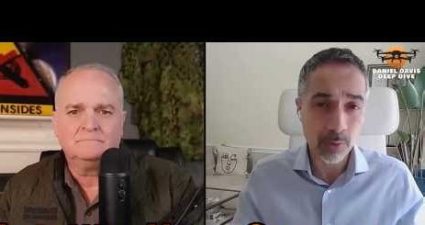
No Threat Can Force Iran’s Surrender /Trita Parsi & Lt Cl Daniel Davis
or go to
Aletho News Archives – Video-Images
From the Archives
An Expert Military Analysis of War with China
Actually, None is Necessary
By Fred Reed • Unz Review • December 13, 2020
The Correlation of Armed Forces: U.S. goods and services trade with China totaled an estimated $634.8 billion in 2019. Exports were $163.0 billion; imports were $471.8 billion. The U.S. goods and services trade deficit with China was $308.8 billion in 2019. Trade in services with China (exports and imports) totaled an estimated $76.7 billion in 2019. Services exports were $56.5 billion; services imports were $20.1 billion. The U.S. services trade surplus with China was $36.4 billion in 2019.
There is talk within the Washingtoniat of a possible war with China. Steve Bannon, who apparently was dropped on his head as a child, actually favors such a war. We hear the usual shoo-the-boobs alarm about how the Chinese are doing something terrible and we must gird our loins and American values and show them what for, bow wow, woof. The danger is that the current game of who-blinks-first in Asian waters might actually provoke a shooting war. You know the kind of thing: One warship refuses to get out of the way of another, a collision ensues, some retard lieutenant who signed up on waivers opens fire, and we’re off and running. It is not a good idea to let children play with matches.
The said war is discussed either in emotional terms by idiots or in purely naval terms by those familiar with such things, so we hear of the First Island Chain and the Second Island Chain and whose missiles against the other’s missiles and so on. This would be appropriate if we were fighting World War Two again. Which we aren’t. Let’s take a quick-and-dirty look at how such a war might go.
To begin the war, America would overestimate itself and underestimate China. This is doctrine in the Pentagon. … continue
Blog Roll
 Aletho News
- Iran To Target Military Industrial-Tech Complex That Facilitated Gaza Genocide
- Collapsing Empire: The Resistance Disarms ‘Israel’
- Suicide Should Not Be a Government Service
- Rethinking America’s greatest threat: Iran vs. Israel-Firsters
- Iran accuses adversaries of false flags to strain Turkey ties
- Poland rules out sending Patriot missiles to US/Israel amid war on Iran
- Tehran approves new Hormuz plan with major restrictions
- No Threat Can Force Iran’s Surrender /Trita Parsi & Lt Cl Daniel Davis
- UK’s New Pandemic Plan Would Turn Big Tech Into a Mass Location Tracking Network
- Growing insecurity, soaring prices fuel protests in north as regime bans evacuation: Sources
- If Americans Knew
- Ann Coulter Rips Into Fox News for Iran War Coverage, Compares to False Rigged 2020 Election Reporting
- Joe Kent Urges Americans To Call White House and Congress To Object To Sending Troops Into Iran
- DNC Resolution to Reject AIPAC Funding Puts Democratic Leaders in the Hot Seat
- Swedish foundation to build 400 schools as over 650,000 Gaza children remain without education for 2 years
- Israeli army admits photshopping image of slain Lebanese journalist
- This is how Israel is systematically killing health workers under the cover of war in Lebanon
- Carrying life under fire: Israeli invasion of Lebanon leaves pregnant women facing deadly risks
- Champagne all around for the new death penalty (for Palestinians) law – Not a ceasefire Day 172
- Why are Palestinian books struggling to be seen on Amazon?
- The Line Between Affinity and Conspiracy
- No Tricks Zone
- New Study Finds Warming Saves Lives…Cold Temperatures 12 Times More Deadly Than Excess Heat
- German Science Blog Accuses PIK Climate Institute Of Hallucinating Climate Tipping Points
- Devastating Assessment Of Comirnaty Vaccine By Former Senior Pfizer Europe Toxicologist
- New Study: CO2 Is ‘Effectively Negligible’ As An Explanatory Climate Change Factor Since 2000
- Former Pfizer Toxicologist Dr. Helmut Sterz Tells Bundestag Hearing Pfizer Vaccine Should Have Never Been Approved
- Energy Expert: Germany’s Nuclear Phaseout Was A “500 Billion Euro Mistake”
- New Research: South Australia’s Mid-Holocene Sea Surface Temperatures Were 4°C Warmer Than Today
- Storing Green Energy To Last Germany 10 Days Would Require A 60-Million Tonne Battery
- New Studies: UK Sea Levels Were 4 Meters Higher Than Today During The Mid-Holocene
- Destructive Green New Deal: German Energy And Metal Group Warns Of Drastic Crisis
 Aletho News