The Insidious Relationship between Washington and ISIS: The Evidence
By Prof. Tim Anderson | Global Research | September 3, 2015
Reports that US and British aircraft carrying arms to ISIS have been shot down by Iraqi forces have been met with shock and denial in western countries. Few in the Middle East doubt that Washington is playing a ‘double game’ with its proxy armies in Syria, but some key myths remain important among the significantly more ignorant western audiences.
A central myth is that Washington now arms ‘moderate Syrian rebels’, to both overthrow the Syrian Government and supposedly defeat the ‘extremist rebels’. This claim became more important in 2014, when the rationale of US aggression against Syria shifted from ‘humanitarian intervention’ to a renewal of Bush’s ‘war on terror’.
A distinct controversy is whether the al Qaeda styled groups (especially Jabhat al Nusra and ISIS) have been generated as a sort of organic reaction to the repeated US interventions, or whether they are actually paid agents of Washington.
Certainly, prominent ISIS leaders were held in US prisons. ISIS leader, Ibrahim al-Badri (aka Abu Bakr al-Baghdadi) is said to have been held for between one and two years at Camp Bucca in Iraq. In 2006, as al-Baghdadi and others were released, the Bush administration announced its plan for a ‘New Middle East’, a plan which would employ sectarian violence as part of a process of ‘creative destruction’ in the region.
According to Seymour Hersh’s 2007 article, ‘The Redirection’, the US would make use of ‘moderate Sunni states’, not least the Saudis, to ‘contain’ the Shia gains in Iraq brought about by the 2003 US invasion. These ‘moderate Sunni’ forces would carry out clandestine operations to weaken Iran and Hezbollah, key enemies of Israel. This brought the Saudis and Israel closer, as both fear Iran.
While there have been claims that the ISIS ‘caliph’ al-Baghdadi is a CIA or Mossad trained agent, these have not yet been well backed up. There are certainly grounds for suspicion, but independent evidence is important, in the context of a supposed US ‘war’ against ISIS . So what is the broader evidence on Washington’s covert links with ISIS?
Not least are the admissions by senior US officials that key allies support the extremist group. In September 2014 General Martin Dempsey, head of the US military, told a Congressional hearing ‘I know major Arab allies who fund [ ISIS ]‘. Senator Lindsey Graham, of Armed Services Committee, responded with a justification, ‘They fund them because the Free Syrian Army couldn’t fight [Syrian President] Assad, they were trying to beat Assad’.
The next month, US Vice President Joe Biden went a step further, explaining that Turkey, Qatar, the UAE and Saudi Arabia ‘were so determined to take down Assad … they poured hundreds of millions of dollars and tens, thousands of tons of weapons into anyone who would fight against Assad … [including] al Nusra and al Qaeda and extremist elements of jihadis coming from other parts of the world … [and then] this outfit called ISIL’. Biden’s admissions sought to exempt the US from this operation, as though Washington were innocent of sustained operations carried out by its key allies. That is simply not credible.
Washington’s relationship with the Saudis, as a divisive sectarian force in the region, in particular against Arab nationalism, goes back to the 1950s, when Winston Churchill introduced the Saudi King to President Eisenhower. At that time Washington wanted to set up the Saudi King as a rival to President Nasser of Egypt. More recently, British General Jonathan Shaw has acknowledged the contribution of Saudi Arabia’s extremist ideology: ‘This is a time bomb that, under the guise of education. Wahhabi Salafism is igniting under the world really. And it is funded by Saudi and Qatari money’, Shaw said.
Other evidence undermines western attempts to maintain a distinction between the ‘moderate rebels’, now openly armed and trained by the US, and the extremist groups Jabhat al Nusra and ISIS. While there has indeed been some rivalry (emphasised by the London-based, Muslim Brotherhood-aligned, Syrian Observatory of Human Rights), the absence of real ideological difference is best shown by the cooperation and mergers of groups.
As ISIS came from Iraq in 2013, its Syrian bases have generally remained in the far eastern part of Syria. However Jabhat al Nusra (the official al Qaeda branch in Syria, from which ISIS split) has collaborated with Syrian Islamist groups in western Syria for several years. The genocidal slogan of the Syrian Islamists, ‘Christians to Beirut and Alawis to the Grave’, reported many times in 2011 from the Farouk Brigade, sat well with the al Qaeda groups. Farouk (once the largest ‘Free Syrian Army’ group) indeed killed and ethnically cleansed many Christians and Alawis.
Long term cooperation between these ‘moderate rebels’ and the foreign-led Jabhat al-Nusra has been seen around Daraa in the south, in Homs-Idlib, along the Turkish border and in and around Aleppo. The words Jabhat al Nusra actually mean ‘support front’, that is, support for the Syrian Islamists. Back in December 2012, as Jabhat al Nusra was banned in various countries, 29 of these groups reciprocated the solidarity in their declaration: ‘We are all Jabhat al-Nusra’.
After the collapse of the ‘Free Syrian Army’ groups, cooperation between al Nusra and the newer US and Saudi backed groups (Dawud, the Islamic Front, the Syrian Revolutionary Front and Harakat Hazm) helped draw attention to Israel’s support for al Nusra, around the occupied Golan Heights. Since 2013 there have been many reports of ‘rebel’ fighters, including those from al Nusra, being treated in Israeli hospitals. Prime Minister Netanyahu even publicised his visit to wounded ‘rebels’ in early 2014. That led to a public ‘thank you’ from a Turkey-based ‘rebel’ leader, Mohammed Badie (February 2014).
The UN peacekeeping force based in the occupied Golan has reported its observations of Israel’s Defence Forces ‘interacting with’ al Nusra fighters at the border. At the same time, Israeli arms have been found with the extremist groups, in both Syria and Iraq. In November 2014 members of the Druze minority in the Golan protested against Israel’s hospital support for al Nusra and ISIS fighters. This in turn led to questions by the Israeli media, as to whether ‘ Israel does, in fact, hospitalize members of al-Nusra and Daesh [ISIS]‘. A military spokesman’s reply was hardly a denial: ‘In the past two years the Israel Defence Forces have been engaged in humanitarian, life-saving aid to wounded Syrians, irrespective of their identity.’
The artificial distinction between ‘rebel’ and ‘extremist’ groups is mocked by multiple reports of large scale defections and transfer of weapons. In July 2014 one thousand armed men in the Dawud Brigade defected to ISIS in Raqqa. In November defections to Jabhat al Nusra from the Syrian Revolutionary Front were reported. In December, Adib Al-Shishakli, representative at the Gulf Cooperation Council of the exile ‘ Syrian National Coalition’, said ‘opposition fighters’ were ‘increasingly joining’ ISIS ‘for financial reasons’. In that same month, ‘rebels’ in the Israel-backed Golan area were reported as defecting to ISIS, which had by this time began to establish a presence in Syria’s far south. Then, in early 2015, three thousand ‘moderate rebels’ from the US-backed ‘Harakat Hazzm’ collapsed into Jabhat al Nusra, taking a large stock of US arms including anti-tank weapons with them.
ISIS already had US weapons by other means, in both Iraq and Syria , as reported in July, September and October 2014. At that time a ‘non aggression pact’ was reported in the southern area of Hajar al-Aswad between ‘moderate rebels’ and ISIS, as both recognised a common enemy in Syria: ‘the Nussayri regime’, a sectarian way of referring to supposedly apostate Muslims. Some reported ISIS had bought weapons from the ‘rebels’.
In December 2014 there were western media reports of the US covert supply of heavy weapons to ‘Syrian rebels’ from Libya, and of Jabhat al-Nusra getting anti-tank weapons which had been supplied to Harakat Hazm. Video posted by al-Nusra showed these weapons being used to take over the Syrian military bases, Wadi Deif and Hamidiyeh, in Idlib province.
With ‘major Arab allies’ backing ISIS and substantial collaboration between US-armed ‘moderate rebels’ and ISIS, it is not such a logical stretch to suppose that the US and ‘coalition’ flights to ISIS areas (supposedly to ‘degrade’ the extremists) might have become covert supply lines. That is precisely what senior Iraqi sources began saying, in late 2014 and early 2015.
For example, as reported by both Iraqi and Iranian media, Iraqi MP Majid al-Ghraoui said in January that ‘an American aircraft dropped a load of weapons and equipment to the ISIS group militants at the area of al-Dour in the province of Salahuddin’. Photos were published of ISIS retrieving the weapons. The US admitted the seizure but said this was a ‘mistake’. In February Iraqi MP Hakem al-Zameli said the Iraqi army had shot down two British planes which were carrying weapons to ISIS in al-Anbar province. Again, photos were published of the wrecked planes. ‘We have discovered weapons made in the US , European countries and Israel from the areas liberated from ISIL’s control in Al-Baqdadi region’, al-Zameli said.
The Al-Ahad news website quoted Head of Al-Anbar Provincial Council Khalaf Tarmouz saying that a US plane supplied the ISIL terrorist organization with arms and ammunition in Salahuddin province. Also in February an Iraqi militia called Al-Hashad Al-Shabi said they had shot down a US Army helicopter carrying weapons for the ISIL in the western parts of Al-Baqdadi region in Al-Anbar province. Again, photos were published. After that, Iraqi counter-terrorism forces were reported as having arrested ‘four foreigners who were employed as military advisors to the ISIL fighters’, three of whom were American and Israeli. So far the western media has avoided these stories altogether; they are very damaging to the broader western narrative.
In Libya, a key US collaborator in the overthrow of the Gaddafi government has announced himself the newly declared head of the ‘Islamic State’ in North Africa. Abdel Hakim Belhaj was held in US prisons for several years, then ‘rendered’ to Gaddafi’s Libya, where he was wanted for terrorist acts. As former head of the al-Qaeda-linked Libyan Islamic Fighting Group, then the Tripoli-based ‘Libyan Dawn’ group, Belhaj has been defended by Washington and praised by US Congressmen John McCain and Lindsey Graham.
Some image softening of the al Qaeda groups is underway. Jabhat al-Nusra is reported to be considering cutting ties to al Qaeda, to help sponsor Qatar boost their funding. Washington’s Foreign Affairs magazine even published a survey claiming that ISIS fighters were ‘surprisingly supportive of democracy’. After all the well published massacres that lacks credibility.
The Syrian Army is gradually reclaiming Aleppo, despite the hostile supply lines from Turkey, and southern Syria, in face of support for the sectarian groups from Jordan and Israel. The border with Lebanon is largely under Syrian Army and Hezbollah control. In the east, the Syrian Army and its local allies control most of Hasaka and Deir e-Zour, with a final campaign against Raqqa yet to come. The NATO-GCC attempt to overthrow the Syrian Government has failed.
Yet violent destabilisation persists. Evidence of the covert relationship between Washington and ISIS is substantial and helps explain what Syria’s Deputy Foreign Minister Fayssal Mikdad calls Washington’s ‘cosmetic war’ on ISIS. The extremist group is a foothold Washington keeps in the region, weakening both Syria and Iraq . Their ‘war’ on ISIS is ineffective. Studies by Jane’s Terrorism and Insurgent database show that ISIS attacks and killings in Iraq increased strongly after US air attacks began. The main on the ground fighting has been carried out by the Syrian Army and, more recently, the Iraqi armed forces with Iranian backing.
All this has been reported perversely in the western media. The same channels that celebrate the ISIS killing of Syrian soldiers also claim the Syrian Army is ‘not fighting ISIS’. This alleged ‘unwillingness’ was part of the justification for US bombing inside Syria. While it is certainly the case that Syrian priorities have remained in the heavily populated west, local media reports make it clear that, since at least the beginning of 2014, the Syrian Arab Army has been the major force engaged with ISIS in Hasaka, Raqqa and Deir eZour. A March 2015 Reuters report does concede that the Syrian Army recently killed two ISIS commanders (including Deeb Hedjian al-Otaibi) along with 24 fighters, at Hamadi Omar.
Closer cooperation between Iran, Iraq, Syria and Lebanon’s Hezbollah is anathema to Israel, the Saudis and Washington, yet it is happening. This is not a sectarian divide but rather based on some clear mutual interests, not least putting an end to sectarian (takfiri) terrorism.
It was only logical that, in the Iraqi military’s recent offensive on ISIS-held Tikrit, the Iranian military emerged as Iraq’s main partner. Washington has been sidelined, causing consternation in the US media. General Qasem Suleimani, head of Iran’s Quds Force is a leading player in the Tikrit operation. A decade after Washington’s ‘creative destruction’ plans, designed to reduce Iranian influence in Iraq, an article in Foreign Policy magazine complains that Iran’s influence is ‘at its highest point in almost four centuries’.
——
Select references
Mahdi Darius Nazemroaya (2006) Plans for Redrawing the Middle East: The Project for a ‘New Middle East’
Seymour Hersh (2007) The Redirection
http://www.newyorker.com/magazine/2007/03/05/the-redirection
Al Akhbar (2011) Syria: What Kind of Revolution?
http://english.al-akhbar.com/node/540
The New Yorker (2013) Syrian Opposition Groups Stop Pretending
http://www.newyorker.com/news/news-desk/syrian-opposition-groups-stop-pretending
RT (2014) Anyone but US! Biden blames allies for ISIS rise
https://www.youtube.com/watch?v=11l8nLZNPSY
Iraqi News (2015) American aircraft dropped weapons to ISIS, says MP
http://www.iraqinews.com/iraq-war/american-aircraft-airdropped-weapons-to-isis-says-mp/
Washington Post (2015) Syrian rebel group that got U.S. aid dissolves
David Kenner (2015) For God and Country, and Iran, Foreign Policy
http://foreignpolicy.com/2015/03/05/for-god-and-country-and-iran/
Reuters (2015) Syrian air strike kills two Islamic State commanders
http://www.reuters.com/article/2015/03/07/us-mideast-crisis-syria-islamicstate-idUSKBN0M30F720150307
Copyright © Prof. Tim Anderson, Global Research, 2015
ISIS revealed as ISRAELI SECRET INTELLIGENCE SERVICE
chemtrailsplanet – September 12, 2014
This 1990 publication is the first comprehensive and balanced account of the most controversial and well-known espionage organization in the world, taking readers through the complex web of politics and personal ambition that led to such disasters as the brutal violence on the West Bank.
 The amount of detail in this book certainly lends some credence to the book’s subtitle, and the journalist authors have also uncovered some fascinating new information: Israel has a number of top secret agencies, including one devoted to protecting their nuclear program and another for rescuing Jews from unfriendly countries; nuclear weapons using submarine-based launch platforms are nearly a reality; and Israel has been spying on the United States for years. The authors work diligently in this book to convince the world of the high morality of the Israeli cause. Israeli intelligence has been a popular subject for fiction and nonfiction, but there has yet to be a definitive nonfiction account on the subject. This readable and entertaining book is recommended for larger Middle East collections. –David P. Snider, Casa Grande P.L., Ariz. – Copyright 1990 Reed Business Information, Inc.
Dan Raviv is/was a Washington-based correspondent for CBS News and host of the national radio magazine Weekend Roundup. New book published in July 2012: SPIES AGAINST ARMAGEDDON: INSIDE ISRAEL’S SECRET WARS. Most of his books are co-authored with Yossi Melman, and Dan wrote COMIC WARS about the Marvel Comics bankruptcy and renaissance. An earlier book with Yossi, EVERY SPY A PRINCE, was a national best seller; and they have a book about U.S.-Israel relations, FRIENDS IN DEED. Now they are again writing about the history of Israeli espionage — and how Israel intends to stop Iran from developing nuclear weapons. The book is largely aimed at Kindle readers — because if something big happens in the Middle East, the authors will update the e-book immediately. Again, the title: SPIES AGAINST ARMAGEDDON: INSIDE ISRAEL’S SECRET WARS.
Turkish Tanks, Troops Uninvited ‘Occupants’ in Increasingly Irate Iraq
Sputnik – 10.12.2015
There are no security treaties between Iraq and Turkey, which is why the presence of Turkish troops in Iraq is nothing but an act of occupation, according to Razzak Muhaibis, an MP from the Iraqi political bloc Badr Organisation.
In an interview with Sputnik, Razzak Muhaibis, an MP from the Iraqi political bloc Badr Organisation, said that Turkish forces are essentially occupiers because there are no security treaties between Ankara and Baghdad.
According to him, legislators from Iraq’s special parliamentary panels contacted the country’s Foreign Ministry after discussing the topic earlier on Thursday.
Muhaibis said that after analyzing the archives on relations between Iraq and Turkey, it turned out that bilateral security treaties haven’t existed between the countries since 1946.
“So the Turkish troops in Mosul can be called occupational forces because they entered Iraq without the Iraqi government’ s request or the parliament’s permission,” Muhaibis said.
Earlier on Thursday, Russian Foreign Ministry spokeswoman Maria Zakharova stated that Moscow considers Turkey’s move to deploy troops to Iraq a flagrant violation of international law.
On December 4, Turkey deployed hundreds of personnel to a camp in northern Iraq’s Bashiqa region, located near the city of Mosul, currently controlled by Daesh, (ISIL/ISIS). Ankara has called it a routine rotation to train Iraqis to retake Mosul.
Earlier this week, Iraqi Prime Minister Haider Abadi gave Turkey 24 hours to withdraw its troops from Iraq, and threatened to approach the UN Security Council to have the matter reviewed. Turkey refused to do so.
100,000 foreign troops incl. Americans to be deployed in Iraq, MP claims
RT | December 10, 2015
The US is to send some 10,000 troops to Iraq to provide support for a 90,000-strong force from the Gulf states, a leading Iraqi opposition MP has warned. The politician said the plan was announced to the Iraqi government during a visit by US Senator John McCain.
During a meeting in Baghdad on November 27, McCain told Prime Minister Haider Abadi and a number of senior Iraqi cabinet and military officials that the decision was ‘non-negotiable’, claimed Hanan Fatlawi, the head of the opposition Irada Movement.
“A hundred thousand foreign troops, including 90,000 from Saudi Arabia, the UAE, Qatar and Jordan, and 10,000 troops from America will be deployed in western regions of Iraq,” she wrote on her Facebook page.
She added that the Iraqi prime minister protested the plan, but was told that “the decision has already been taken.”
McCain and fellow hawk Senator Lindsey Graham have both been calling for a tripling in the current number of US troops deployed in Iraq to 10,000, and also advocate sending an equal number of troops to Syria to fight against the terrorist group Islamic State (IS, formerly ISIS/ISIL) and the government of Syrian President Bashar Assad. The Americans would prop up a 90,000-strong international ground force provided by Sunni Arab countries like Egypt, Turkey and Saudi Arabia.
“The region is ready to fight. The region hates ISIL – they are coming for Sunni Arab nations. Turkey hates ISIL. The entire region wants Assad gone. So there is an opportunity here with some American leadership to do two things: to hit ISIL before we get hit at home and to push Assad out,” Graham argued during the joint visit to Baghdad in November.
“Saudi Arabia, Egypt, Turkey – they have regional armies and they would go into the fight if we put [the removal of] Assad on the table. Most of the fight will be done by the region. They will pay for this war,” he added.
The US currently has about 3,600 troops in Iraq, including 100 special operations troops deployed last month to take part in combat missions involving hostage rescue and the assassination of IS leaders. The White House is reluctant to commit a large ground force, citing the cost in human lives and money and the possible political ramifications of what will be portrayed by America’s opponents as yet another Western invasion of the Arab world.
The McCain-Graham plan also poses the risk of direct confrontation between the proposed coalition force and Russia and Iraq, which are both militarily assisting the Assad government and may not stay out of the fight – something which the hawkish duo have not factored into their plan.
This is especially true after Turkey’s downing of a Russian bomber plane on the Turkish-Syrian border, which Moscow considered a stab in the back and which sent relations with Ankara to a low not seen for decades.
Baghdad has its own concerns about a Turkish presence on its territory after Ankara sent troops into western Iraq and refused to withdraw them, despite Iraqi protests. Ankara claimed the incursion was made under a 2014 invitation from Iraqi Prime Minister Abadi.
Turkey detains & deports Russian journalists investigating ISIS oil trade reports
RT | December 9, 2015
Russian journalists preparing an investigative report into Ankara’s alleged involvement in the oil trade with ISIS have been detained and deported from Turkey. Moscow strongly condemned the treatment of the Rossiya 1 TV crew, demanding explanations.
“We strongly condemn the illegal actions of the Turkish authorities,” the Russian Foreign Ministry said. “Such an attitude towards the media is absolutely unacceptable.”
On Monday, the press crew of the TV program ‘Special Correspondent’, headed by Alexander Buzaladze, were detained in southeastern Turkey by authorities in civilian clothes. The journalists were preparing an investigative report into the alleged smuggling of Islamic State (IS, formerly ISIS/ISIL) oil into Turkey.
The trouble for the Rossiya 1 TV crew started only once they arrived at the border, Buzaladze said after the deportation. He told Russian state-owned channel Vesti that while the crew worked in Istanbul and Ankara they had faced no opposition from the authorities.
But as soon as they tried to film close to the Turkish-Syrian border the crew was “blocked [by] the Turkish security forces” leaving them no time to even “get the camera out.”
The Russian crew was arrested in Hatay province bordering Syria as they were on their way to the neighboring province of Gaziantep. According to Buzaladze, there the journalists wanted to film “the border itself, military hardware, people that work at the border, and the border crossing.”
Turkish authorities were first of all concerned “whether we had a camera,” Buzaladze says.
“The first thing they wanted to know [was] if we had a camera. The camera was left in the luggage compartment, locked in a case. Despite this, they took our documents, we were taken to the police station, later we were photographed, fingerprinted, brought to the doctor for a medical examination to confirm that we are in a sane state, and that we are alive and well,” the journalist said.
The crew was later informed by the Turkish side that they were being deported. At the same time, authorities failed to explain the reason behind their move, Buzaladedze notes. The Russian journalists were escorted by police to the airport and put on a plane back to Russia.
Throughout the entire incident the Turkish authorities refused to cooperate with Russian diplomats on the ground. The Russian Foreign Ministry wants to know the real reasons behind the detention of the Rossiya 1 crew, and remains curious as to what “rules” were violated by the Russian journalists.
“The Turkish authorities refused to give explanations to representatives of the Russian Embassy in Turkey who got in touch with the crew shortly after its detention,” the Russian Foreign Ministry said. The group was deported apparently under the pretext of its members having violated laws for foreign journalists working in Turkey.
The lack of a clear explanation forces the Ministry to speculate that the journalistic investigation might have uncovered something which Turkey would rather not share with the world in light of Turkish-Russian tensions following the shooting down of the Russian Su-24 bomber last month.
“One gets the impression that Ankara is scared that correspondents of the Rossiya 1 TV channel may throw a spotlight on facts about the illegal activities carried out in the Turkish-Syrian border area [that] the Turkish government would prefer to keep in the shadow[s],” the Russian Foreign Ministry said.
According to Rossiya 1 TV channel, the journalists arrived in Turkey on an assignment “to make a package on what is actually happening on the border between Turkey and Syria, and to clarify the situation with the traffic across the border of militants and illegal oil tank trucks.”
The scandal over alleged oil profiteering on the part of Turkey follows the downing of the Russian Su-24 bomber by Turkey in Syrian airspace amid the ongoing campaign against ISIS oil infrastructure on the Syria-Turkey border. Russian President Vladimir Putin described the act as “a stab in the back” by terrorist supporters and accused Turkey of involvement in the illegal oil deals with IS.
Meanwhile, the Russian Foreign Ministry commissioner for human rights, Konstantin Dolgov, said via Twitter that the latest incident shows that the Turkish authorities are ignoring international obligations with respect to the protection of journalists. Dolgov also called for international condemnation of the incident, including by the OSCE.
Overall, the latest incident, according to the ministry, is just part of the ongoing trend by the Turkish authorities to crack down on freedom of speech in the country.
“The international organizations, including the OSCE, have repeatedly drawn [the] attention of the world public to this. In this regard, the detention of the editor-in-chief of the Turkish daily newspaper Cumhuriyet Can Dundar and the newspaper’s Ankara bureau chief Erdem Gul in late November over a report about the involvement of the Turkish intelligence agencies in the supplies of weapons to militants in Syria is indicative in this respect,” the Russian Foreign Ministry said. “The journalists were charged with ‘espionage, disclosure of state secrets and terrorism.’ They are facing life in prison.”
Is Islamic State now equipped with a NATO air force?
By John Wight – RT – December 8, 2015
Within the past two weeks Turkish F-16s have shot down a Russian SU-24 bomber and a US-led coalition airstrike has hit a military base controlled by the Syrian Arab Army. It begs the question: are these people actually insane?
ISIS could not have had a better two weeks than these past two if it had its own air force. But with the US and Turkey among its ‘enemies’ it appears they don’t need one, for those countries have been doing its job for them.
How else are we to explain the strikes carried out by both countries, not against ISIS but against Russia and Syria, who are fighting ISIS?
Never in the annals of military conflict has such a dangerous and absurd scenario been played out as the one being played out in Syria today. Two entirely separate multi-nation coalitions are engaged in combat operations against one enemy, thus dictating they coordinate and combine their efforts. Yet such is the lack of leadership and statesmanship within one of those coalitions – led by Washington – that the prospect remains a distant dream even after a recent spate of atrocities resulted in the mass murder of citizens and civilians belonging to both.
This at least is one narrative, which holds that incompetence, stupidity and hubris is the root of the problem, impairing the judgment and clarity of the West when it comes to Syria and the wider region, responsible for allowing a terrorist menace in the shape of ISIS and other extremist groups to grow and enjoy the kind of success they should never have enjoyed.
There is a second narrative to be explored, however, one far more insidious. It is that these attacks are evidence of the real objective of the West and its allies when it comes to Syria, despite the rise of ISIS, which remains regime change in Damascus.
Turkey’s president, Recip Erdogan, has long harbored this objective. In fact, more than harbor the man has been utterly obsessed with it. He has taken every opportunity to rail against Syria’s president, attributing the entire blame for the Syrian crisis and conflict to him, even though the majority of Syrians support their president and have done so throughout.
Never in the annals of military conflict has such a dangerous and absurd scenario been played out as the one being played out in Syria today.
With Russian airstrikes bearing down on the illicit oil trade between ISIS and Turkey, the strong suspicion is that Turkey’s desperate action in shooting down the Russian bomber was directly related to it being unmasked as a key actor in facilitating the terrorist group, rather than an ally in the struggle against it.
This has now been followed by Turkey’s military incursion into northern Iraq, where its troops have occupied territory around Mosul, slap bang in the middle of the oil smuggling route from the oilfields located there up into Turkey.
The Turks claim they are there to train Kurdish Peshmerga forces they are supporting, at the request of the Kurdistan Regional Government, led by Massoud Barzani, which administers a de facto independent Kurdish state in northern Iraq in defiance of central government authority in Baghdad. The equally independent oil trade controlled by he Barzani administration has come under attack from the PKK over the past few months, which has managed to destroy pipelines transporting oil from the Mosul region to Turkey.
By now the penny should be starting to drop.
Erdogan is a man who many consider to be engaged in a neo Ottoman policy of re-establishing Turkey’s hegemonic influence in the region, exploiting the chaos and turmoil across its southern border in both Iraq and Syria to establish Turkey as a regional power broker and architect of a Sunni state comprising eastern Syria across into northern Iraq.
The collapse of US leadership in the region, measured in the rise of ISIS, has left a vacuum that its regional allies – Turkey, Saudi Arabia and Israel – are exploiting with an aggressive pursuit of their own national and sectarian agendas. Those agendas are contrary to the interests of stability and security, and unless reined in can only lead to more chaos and conflict rather than less.
The point is that the aforementioned states are leading the wider Western strategy towards the region at this point, the primary aim of which, as mentioned, is the toppling of the Assad government in Syria and the weakening of Iranian influence in Iraq and Lebanon.
The US airstrike, despite Washington’s denial of responsibility for it, should be seen with the aforementioned in mind. It also helps explain the recent entry of British airstrikes into the Syrian conflict.
Less than the official justification of helping to crush ISIS, Britain is intent on establishing an overt military presence in Syria with its eyes not on the ISIS stronghold of Raqqa but on Damascus in advance of the upcoming peace talks in Vienna. We know this because no sooner had the British Government received the vote required to press ahead with airstrikes from the House of Commons than British foreign secretary Phillip Hammond was talking up the need for a transitional government in Damascus, making it clear that President Assad cannot remain in power.
Overall it is becoming increasingly apparent that for the West and its regional allies, such as Turkey, ISIS is but a sideshow and that the real priority is the removal of the Assad government. They want a pliant alternative in its place, one willing to be their place man in a region that has long been the focus of their geopolitical, strategic, and economic priorities.
In the process they are willing to court the risk of a major conflagration, evidence of their failure to learn the lessons of history and playing with fire as a consequence.
The First World War was the last major conflict into which the major powers sleepwalked. It resulted in a level of carnage that undermined the very foundations of civilization and led inexorably to the collapse of the Austro-Hungarian and Ottoman empires. The response to the Western powers of the collapse of the latter in the Middle East, in moving in to carve up the spoils between them regardless of the wishes and interests of the people living there, has brought us a century of turmoil and conflict from then to now.
In a very real sense, the world of today is paying the price of the crimes of the past. As a consequence, committing more crimes is more than folly it is tantamount to dragging us back in time to a hell of our own creation.
Follow John Wight on Twitter @JohnWight1
Paris-San Bernardino
XYMPHORA | December 4, 2015
Remember the Paris attack, with the teams of expendable “martyrs”, and the three white mercenaries, the “non-expendables“, who drove up in a Mercedes, did their shooting, and then disappeared, never to be heard from, or spoken of, again, while the Muslim world of France continues to be torn apart looking for ‘terrorists’. Then there was the Saint-Denis engagement, an explosion, and dead Muslims/witnesses.
Tweet (FOX 11 Los Angeles):
“#BREAKING: Reports of an active shooter in San Bernardino. Police looking for 3 white males dressed in military gear. At least 20 injured”
Eventually, there is an engagement on the highway, a shootout, and dead Muslims/witnesses.
Some things that make you wonder:
- “Farook and Malik, who are thought to have married earlier this year in Saudi Arabia, are parents to a young child, now orphaned, whom they left with a grandparent before heading out on their murder spree.”
- “A spokesman for the Bureau of Alcohol, Tobacco, Firearms and Explosives said the suspects threw a thick-gauge copper pipe out of the SUV, but no explosives were found inside. The fake pipe bomb was equipped with a piece of material made to look like a wick.” With an apartment allegedly full of real bombs – an apartment the authorities are allowing the press to rummage through – why would you throw a faked one?
- “Baccari says the reserved Farook showed no signs of unusual behavior, although he grew out his beard several months ago. He said he had been sitting at the same table as Farook at the party on Wednesday morning, but his co-worker suddenly disappeared, leaving his coat behind.” As if he knew when to leave.
- A comment by ‘Clouds are nice’: “Good job they caught them or everyone would still be looking for the three white men wearing balaclavas.” Ha!
“Correlations on Facebook Probably Key to ISIS Claim in San Bernardino” “Female San Bernardino Shooter “Pledged Allegiance” to ISIS on Facebook” A rather half-assed creation of the ‘legend’, with seemingly no other evidence of political inclination, and absurdly easy for anybody to fake.
“Lawyer For San Bernardino Gunman’s Family Floats Sandy Hook Trutherism”
Is this another ‘hybrid’ ‘terrorist’ attack like Paris, where elements of ISIS and French intelligence worked hand in hand like the brothers they are, or is this some kind of patsy situation?
Israel the Main Buyer of ISIS Oil — Report
Multiple reports claim that Israel is the top purchaser of smuggled ISIS oil
By Enrico Braun | Russia Insider | December 3, 2015
Citing multiple sources, the Israeli business press are now reporting that Israel is the main recipient of ISIS oil:
Kurdish and Turkish smugglers are transporting oil from ISIS controlled territory in Syria and Iraq and selling it to Israel, according to several reports in the Arab and Russian media. An estimated 20,000-40,000 barrels of oil are produced daily in ISIS controlled territory generating $1-1.5 million daily profit for the terrorist organization.
The oil is extracted from Dir A-Zur in Syria and two fields in Iraq and transported to the Kurdish city of Zakhu in a triangle of land near the borders of Syria, Iraq and Turkey. Israeli and Turkish mediators come to the city and when prices are agreed, the oil is smuggled to the Turkish city of Silop marked as originating from Kurdish regions of Iraq and sold for $15-18 per barrel (WTI and Brent Crude currently sell for $41 and $45 per barrel) to the Israeli mediator, a man in his 50s with dual Greek-Israeli citizenship known as Dr. Farid. He transports the oil via several Turkish ports and then onto other ports, with Israel among the main destinations.
In August, the Financial Times reported that Israel obtained 75% of its oil supplies from Iraqi Kurdistan. More than a third of such exports go through the port of Ceyhan, which the FT describe as a “potential gateway for ISIS-smuggled crude.”
It’s been well-established that Turkey is a major transportation hub for ISIS oil smuggling operations. But where is the oil sent? Someone has to buy it. The answer, apparently, is: Israel.
Al-Araby published an extensive investigation which lays out in detail how oil is transported from ISIS-controlled wells to Israel via Turkey.

Arms giants see stocks rocket after Syrian airstrikes vote
RT | December 3, 2015
The share prices of major international arms traders jumped in the wake of the British parliament’s decision to extend its aerial bombing campaign against Islamic State (IS, formerly ISIS/ISIL) from Iraq into Syria.
Stock values at BAE Systems, Airbus, Finmeccanica and Thales all soared as trading began on Thursday morning, CommonSpace reports. It comes as Britain prepares to spend millions more on its war with IS, and as an international collaboration against the terror group looks ever more likely.
BAE Systems leapt four points at the start of trading on Thursday. The jump comes as the arms trader’s value increased by 14 percent following the terror attacks in Paris which left 130 dead and over 300 injured.
Britain announced it is boosting its military spending and introducing a range of new security measures in the wake of the Paris attacks.
Aircraft firm Airbus, which develops the British Typhoon fighter jet, is also trading 1.5 percent up since the stock market opened on Thursday.
Italian arms dealer Finmeccanica has also seen its shares rise by 2 percent.
Andrew Smith of Campaign Against Arms Trade told CommonSpace that arms companies are cashing in on the bloodshed.
“Unfortunately, where most of us see war and destruction, the arms companies see a business opportunity. It is conflict and military intervention that fuel arms sales, and companies like BAE are only too happy to cash in from it. These companies don’t care who uses their weapons or the damage they cause, the only thing they care about is profit.”
Prime Minister David Cameron warned on Thursday that British military action in Syria will be complex and take a long time.
“This is going to take time. It is complex and it is difficult what we are asking our pilots to do, and our thoughts should be with them and their families as they commence this important work,” he added.
On Wednesday evening British bombers hit seven IS targets in eastern Syria, including oil fields used to supply the terror group with vital funds.
Defence Secretary Michael Fallon said the airstrikes had dealt IS “a real blow,” and added that British planes would not initially be targeting urban areas like Raqqa.
“I can confirm that four British Tornados were in action after the vote last night attacking oil fields in eastern Syria – the Omar oil fields – from which the Daesh (IS) terrorists receive a huge part of their revenue.”
“This strikes a very real blow at the oil and the revenue on which the Daesh terrorists depend,” he told the BBC.
‘New Turkey’: Toward an Authoritarian and Sectarian Police State
By Sinem Adar | Jadaliyya | December 2, 2015
Tahir Elçi, the president of the bar association in southeastern Diyarbakır province and a determined Kurdish human rights lawyer, was shot dead on Saturday, 28 November, during a press statement he had delivered in Diyarbakır. Photos of Elçi’s dead body lying on the ground quickly overwhelmed social media accounts, symbolizing the deadly difficulty of talking about and fighting for peace at this critical juncture that Turkey, and the region at large, are going through. Despite the fact that Turkey is known for its long history of unsolved political crimes and political violence, Elçi’s assassination is an alarming turning point in the final phase, after the electoral victory of the AKP (Justice and Development Party) in the 1 November elections, of consolidating an authoritarian and sectarian police state.
In this essay, I argue that the “new Turkey” the AKP government is forcefully imposing on its citizens goes beyond a mere ideological transformation. It includes a full reorganization of the state’s security apparatus to consolidate an authoritarian and sectarian police state, thoroughly controlled by the AKP government under the leadership of President Recep Tayyip Erdoğan. The institutionalization of this police state is made possible through a physical war against Kurds that is legitimized by a war of discourse, the complete suppression of dissidence, and the manipulation of regional dynamics. In the rest of the essay, I will elaborate this argument by focusing on three disparate events that happened last week: the assassination of Tahir Elçi; the arrest of Can Dündar and Erdem Gül, two journalists at Cumhuriyet daily; and Turkey’s shooting down of a Russian military jet with the claim that it violated Turkish airspace. Although these events are independent of one another and thus there is seemingly no causal relationship among them, they come together as pieces of a rather discomforting, and even alarming, puzzle, indicating the deeper transformation toward building the “new Turkey.”
The Physical War against Kurds and the War of Discourse
The country is at war. It is a war of discourse through the constant and willful reproduction by state elites of the infamous friend-enemy binary. But also, it is an actual physical war brutally carried out through a state of emergency in the Kurdish southeastern and eastern Anatolia. The AKP government legitimizes this physical war against its Kurdish citizens through expansively launching a war of discourse against any form of dissidence. In other words, the AKP government has been strategically manipulating, since the 7 June elections, ethnic cleavages and societal fears, leading up to its electoral victory in the re-elections on 1 November.[1]
Following the suicide bombing in Suruç on 20 July that killed thirty-three and injured 104 people, and the killing of two policemen in Șanlıurfa (which was at first claimed by the PKK, although the group then denied responsibility for it), the ceasefire between the Turkish army and the PKK came to an abrupt end. Extensive and intensive securitization policies in what are defined as “special security zones” were quickly put to work in most of the cities and towns of the Kurdish southeast and east, directly targeting life itself. It is important to emphasize here that the state of emergency and curfews continue today.
The death toll increased rapidly during the period between 7 June and 1 November. A total of 229 civilians died and about 595 were injured in incidents not related to the armed struggle. Among these, 101 died and about four hundred were injured in the Ankara suicide bombing. A total of 150 soldiers, policemen, and village guards died and forty-two were injured during the armed struggle, while at the same time, 181 armed guerrilla members died and nineteen were injured. In addition, nine civilians died and 101 were injured as a result of the armed struggle.[2]
Despite the fact that state violence has been a common practice in Turkey since the establishment of the republic in 1923 (and even preceding the founding of the republic), this particular moment is distinctively different, mainly because of the changes made to the security apparatus of the state. Among these are the reorganization of the National Intelligence Organization (MIT) under the Council of Ministers and the expansion of the MIT’s access to personal and private information; the expansion of power given to government-appointed mayors over the deployment of security measures, particularly at the local level; and the reorganization of the police force. In other words, the governance of violence has been reorganized in ways toward institutionalizing a police state.
The war of discourse around the constant re-evocation of the friend-enemy binary that has brutally accompanied this physical war against Kurds since 7 June is only possible in this context of hyper-securitization. Such a war of discourse significantly confines the contours of any conversation about, and any political action for, peace, by effectively de-sanctifying any attempt to reason and mobilize. As such, the war of discourse has the ideological capacity to turn anything and everything that is considered a threat to the status quo of the party into an enemy of national unity and security, into a spy against the state. As loyalty to the party—and thus the state—has now become the overt doctrine of the AKP government in the name of assembling the nation together, the search for truth and justice is under severe attack.
Suppression of Dissidence
It is exactly in this context that Elçi became a prominent target, as someone who violated this desired and imagined state of loyalty of the citizen/subject to the party/state. In the aftermath of his remarks as part of a television discussion about the PKK not being a terrorist organization but rather an organization of Kurdish resistance, he became the target of a public verbal lynching and death threats. There was also a court order banning Elçi from international travel. As a symbol of “out-of-the-box” thinking who had the political ability to mediate between different positions through reason and a powerful language of peace, Elçi was systematically turned into a public enemy. His assassination therefore came as no surprise to many, as was painstakingly expressed by Selahattin Demirtaş, the co-leader of the HDP, at Elçi’s funeral.
A total of 5,713 people, the majority of whom are supporters of the Kurdish resistance movement, were taken into custody during the period between 7 June and 9 November. Of these, 1,004 were arrested. There were also attacks on party buildings of the HDP (People’s Democratic Party), as well as lynchings of HDP supporters and Kurdish citizens.[3] In other words, as the most vocal oppositional fraction and the most adamant supporter of freedoms in the Turkish public sphere today, the Kurdish movement and its supporters, Kurdish and Turkish alike, were at the center of this full-fledged attack on dissidence since the 7 June elections.
The arrest of Can Dündar, the editor-in-chief of Cumhuriyet daily, and Erdem Gül, the paper’s Ankara bureau chief, on 27 November came within this larger context of suppressing dissidence. The two journalists were charged with “spying” and “helping a terrorist organization without being active members of it” after alleging, through photos and video footage published at the newspaper, that Turkey’s intelligence agency sent arms to Islamist rebels in Syria. President Erdoğan personally filed charges against the newspaper, also threatening Dündar in an interview aired on the national television channel right before the November elections.
Regional Dynamics: Rojava and Re-Mapping the Borders
The charges filed against Dündar and Gül—that is, “spying” and “helping a terrorist organization”—demonstrate the highly expansive reach that the war of discourse has over dissidence in Turkey today. These terms have now become the legitimizing grounds for any (arbitrary) attack on freedom of expression. Turkey is ranked number 149 in press freedom out of 180 countries, according to Reporters Without Borders’ 2015 Press Freedom Index. The state of exception that was confined to the Kurdish southeastern and eastern Anatolia during the 1990s has now extended into the entire country.
Besides the actual physical war that the government has launched against its Kurdish citizens, the civil war taking place in Syria, which involves myriad international and regional actors with competing and conflicting interests, contributes to the government’s excessive suppression of dissidence. In fact, the government’s response to the allegations made by the daily Cumhuriyet was that the ammunition had been sent to Turkmens, instead of Islamist groups, fighting in Northern Syria.
There are two important factors that raise the AKP government’s stakes in the war in Syria. One is driven by the sectarian concern to establish a strong Sunni hand in the changing power order in Syria. The second is the government’s discomfort with the rising Kurdish power in Northern Syria, especially following the Rojava revolution. The Kurdish People’s Protection Units (YPG) is one of the most prominent factions powerfully fighting on the ground against the Islamist rebels, and particularly ISIS. The shooting down of a Russian jet by the Turkish army on 24 November should be interpreted in this context. Although the dynamics and factors behind Turkey’s decision to shoot down the plane are likely to be much more complicated than what appears in public, there are two implications of the decision.
First, it is a declaration—a rather too ambitious one—meant to re-position Turkey in the politico-military field beside the West as an imperial/powerful actor along the Cold War nexus. Bashar Al-Assad still remains in power despite Turkey’s staunch criticism of him since the beginning of the uprising in Syria, and the support Turkey has been giving to the quite heterogeneous and ambiguous mix of Syrian opposition groups that includes Islamist rebels of all factions. Moreover, Russia’s actual military involvement in Syria since September 2015 came as a significant challenge to Turkey’s attempt to limit the rising Kurdish power in Northern Syria, on one hand, and its support to Islamist rebels, on the other. Therefore, Turkey’s decision to shoot down the Russian military jet was part of an attempt to regain power in Syria.[4]
Second, it is also a subtle declaration aimed to position Turkey in the politico-religious field as the legitimate hegemonic actor vis-à-vis the Islamist rebels fighting in Syria. Putin immediately said that the shooting down of the plane “represents a stab in the back by the terrorists,” implying Turkey’s relationship with ISIS. Since then, allegations of Turkey’s relations with ISIS have been at the center of the cat-fight between Turkey and Russia. It would be naïve to think that Turkey acted without knowing that this action would heat up such a discussion. The dangerous pragmatism of the West (the most recent example of which is the agreement between Turkey and the EU to control the migrant and refugee flow) and the rise of Salafi jihadism across the world provide the AKP government the opportunity to attempt to position itself as the legitimate Sunni actor in the politico-religious field.
What Is Our Political Imaginary for the Future?
We are living through dark times, not only in Turkey, but also across the world. In the particular case of Turkey, what makes this juncture critical is that it underlines a deeper transformation of the state, but also of the nation. The state is being consolidated as an authoritarian police state, while at the same time the nation is re-engineered based on a sectarian imagination.
At this critical juncture, we should all earnestly ask ourselves the following questions: What is our political imaginary for the future? What kind of a country do we want to live in? What do we need to do to build such a future? Debating and answering these questions is much more pressing than ever. It is a time that urgently calls for an honest self-reflection about our societal fears. This requires a confrontation with historical injustices.
If the state is significantly failing to protect its citizens’ right to have rights—and thus the right to have a life—as equals, we are left with the political and moral responsibility of demanding it begin to do so, in full solidarity with one another despite our differences. Politics is not a kind of magic that happens to us tomorrow by some visible hand or power. Politics happens today through our deliberate choices to act or not to. Through silence and dismissal, we contribute to every death, to every bit of suffering, and to every other catastrophe.
NOTES
I would like to thank the Turkey Page editors for their useful comments in revising this essay.
[1] For a discussion of political parties’ strategic deployment of ethnic, racial, and religious cleavages toward political articulation, see Cihan Tugal, Cedric de Leon, and Manali Desai, “Political Articulation: Parties and the Constitution of Cleavages in the United States, India, and Turkey,” Sociological Theory 27:3 (2009): 193-219.
[2] See this report by the Human Rights Association (IHD).
[3] See this report by the Human Rights Association (IHD).
[4] See this essay by Metin Gurcan for an analysis of the incident.
Featured Video
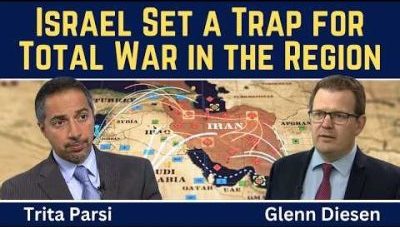
Trita Parsi: Israel Set a Trap for Total War in the Region
or go to
Aletho News Archives – Video-Images
From the Archive
Zionism’s Violent Legacy
By Donald Neff | Washington Report On Middle East Affairs | January 1996
On January 4, 1948, Jewish terrorists drove a truck loaded with explosives into the center of the all Arab city of Jaffa and detonated it, killing 26 and wounding around 100 Palestinian men, women and children.[1] The attack was the work of the Irgun Zvai Leumi – the “National Military Organization,” also known by the Hebrew letters Etzel – the largest Jewish terrorist group in Palestine. The Irgun was headed by Revisionist Zionist Menachem Begin and had been killing and maiming Arabs, Britons and even Jews for the previous ten years in its efforts to establish a Jewish state.
This terror campaign meant that at the core of Revisionist Zionism there existed a philosophical embrace of violence. … continue
Blog Roll
 Aletho News
- Trita Parsi: Israel Set a Trap for Total War in the Region
- Trump’s Iran war is on an Israeli leash
- Saudi oil boss issues global supply warning
- Riyadh Says Its Oil System Is Intact. The Numbers Say Otherwise.
- Trump and Netanyahu Want to “Finish the Job” on Iran
- US ‘one-sided dictation’ not Iran’s beliefs makes rational talks impossible: Baghaei
- Iran’s Next Strike May Not Explode. It Could Shut You Down /Col Doug Macgregor
- Iran: US political targets legitimate if assassinations return
- Iraq shuts key border crossing with Iran under US pressure: Report
- Undersea Internet cables could be targeted in retaliation for attacks on Iran: IRGC deputy chief
- If Americans Knew
- The Israel Lobby’s Changing Fortunes
- AIPAC has become such a political liability that it’s shifting to a more “nimble” approach to buying politicians
- At least 160 Israeli settler attacks in 2 weeks
- Will Gaza’s Ancient Christian Community Disappear Forever?
- Israel’s vision of regional security rests on keeping Arab states weak
- Heidi Levine recounts how Palestinian youths helped save her in settler attack
- DAILY UPDATE: Latest essential news on Palestine, Israel, & region
- Trump’s Intensifying Sabotage of the ICC, for Israel’s Sake
- Israeli military detain US and UK volunteers in West Bank including Democratic NY politician Brad Lander
- Americans at National Conservatism Conference held in Israel this year criticize Israel
- No Tricks Zone
- E-Cars Reduce CO2 Emissions By Only 41% Compared To Internal Combustion Engine Vehicles
- Predictions Made By Renowned Climate Professor Over Past Decades Have Been Proven To Be Poor
- New Study Suggests Large Regions Of The Pacific Ocean Have Been Cooling For The Last 80 Years
- Germany’s Green Energy Debacle: High Energy Costs Force Kahla Porzellan to Close After 182 Years!
- New Study: 50 Years Of The Most Aggressive ‘Net Zero’ Policies Can Only Affect The Global Climate By 0.03°C
- US September “Heat” Was No Record…Many Records Set Decades Ago
- Latest European Green Energy Debacle; Portugal’s Largest Flagship Solar Park Insolvent!
- Green Energy Debacle: German Expert Professor Fritz Vahrenholt Warns Of Severe Economic And Social Consequences
- Two More Paleo Reconstructions Affirm Meters-Higher Sea Levels Across Ireland, Brazil 7000-6000 Years Ago
- New Study: Earth And Venus Surface Warmth Largely Explained By Convection And Lapse Rate, Not CO2 Or Radiation

