Satellite images reveal Israel quietly expanding secretive Dimona nuclear site
Press TV – February 19, 2021
Newly-released satellite images have revealed that the Israeli regime — the sole possessor of nuclear arms in the Middle East — is conducting “significant” constructive activities at the highly-secretive Dimona nuclear facility in the Negev Desert.
Citing commercial satellite imagery of the facility, the International Panel on Fissile Material (IPFM), a group of independent nuclear experts from 17 countries, reported Thursday that “significant new construction” had been underway at the Dimona complex.
The construction site sits “in the immediate vicinity of the buildings that house the nuclear reactor and the reprocessing plant,” the report said.
The IPFM’s website said the construction had “expanded and appears to be actively underway with multiple construction vehicles present,” adding, however, that the purpose was not known.
It was unclear when the construction work began, but Pavel Podvig, a researcher with the program on science and global security at Princeton University, told The Guardian that the project had apparently been launched in late 2018 and 2019.
“But that’s all we can say at this point,” he added.
Israel has tightly withheld information about its nuclear weapons program, but the regime is estimated to be keeping at least 90 nuclear warheads in its arsenal, according to the non-profit organization Federation of American Scientists (FAS).
The warheads, FAS said, had been produced from plutonium obtained at the Dimona facility’s heavy water reactor.
Dimona, which is widely believed to be key to Israel’s nuclear arms manufacturing program, was built with covert assistance from the French government and activated sometime between 1962–1964, according to reports.
Israel has acknowledged the existence of the Dimona nuclear reactor, but neither confirms nor denies the purpose of the facility, which is assumed to be widely assumed to be the manufacturing of nukes.
Meanwhile, environmentalists have warned that Dimona — one of the world’s oldest nuclear facilities —could pose enormous environmental and security threats those living in the area and to the entire Middle East, calling on the regime to shut down the complex.
Turning a deaf ear to international calls for nuclear transparency, the regime has so far refused, with the US’s invariable support, to join the Non-Proliferation Treaty (NPT), which is aimed at preventing the spread of nuclear weapons.
Israel prepares law to prohibit cooperation with ICC
MEMO | February 18, 2021
Israeli authorities are preparing a law that would prohibit any cooperation with the International Criminal Court (ICC) in The Hague, and would propose five years in prison for any violations of this law, RT reported yesterday.
Reporting Israeli TV Channel 7, RT said the law would also include a ban on handing over Israeli nationals to the ICC, financing the expenses of legal defence before it and imposing penalties on the court and those working for it.
This, it explained, comes as part of a series of measures taken by Israel against the ICC after its announcement that it would probe potential Israeli war crimes against Palestinians.
Channel 7 reported that the bill is being inspired by the American Civil Service Protection Act, which was enacted in Congress in 2002.
The US law, which was known as the Invasion of The Hague, gives the US president wide ranging powers to do anything in order to release any American citizen arrested by the ICC, including the use of force.
Reporting the Israeli NGO Shurat HaDin, Channel 7 said that the Israeli law aims to create a legal safety network for Israeli soldiers and senior officials who could be prosecuted.
It will also sanction the tribunal’s members, ban them from entering Israel and impose restrictions against foreign entities that help them.
The ICC’s declared intention to investigate possible war crimes in the occupied Palestinian territories has enraged Israel. The government has apparently drafted a list of its officials and former officials who should avoid foreign travel as they may be arrested and charged with such crimes.
Fauci follows Wiki co-founder, ‘death panels’ inventor, warmonger Blair & WEF creator as winner of Israeli prize
By Helen Buyniski | RT | February 18, 2021
US corona czar Dr. Anthony Fauci has been awarded the Dan David Prize for “defending science in the face of uninformed opposition,” joining a rogues gallery of former winners including Jimmy Wales and Tony Blair.
The Dan David Foundation, which is based out of Tel Aviv University and counts such dubious luminaries as war criminal Henry Kissinger on its board of directors, has gifted $1 million to Fauci for “courageously defending science in the face of uninformed opposition during the challenging Covid crisis.”
It’s not clear from whence this “uninformed opposition” emerged – indeed, one of Fauci’s most vocal opponents has been Dr. Anthony Fauci, who spoke up against the wearing of face masks and other mandates just weeks before he came out swinging in support of such rules.
Presumably, though, the Dan David Foundation was referring to popular opposition to that version of science that more closely resembles religious dogma. Fauci’s smug, self-satisfied and above all brittle variant of “science” cannot be questioned, lest it shatter into a million pieces, and the man’s stubborn use of thought-terminating clichés makes him resemble more of a cult leader than a public health official.
The Dan David Foundation has quite a history of honoring dodgy figures, and it’s no surprise to find them promoting dogmatic Fauci-flavored science over the true scientific method. Wikipedia co-founder and famed fabulist Jimmy Wales was among its prize-winners in 2015, gifted the $1 million treasure for his work in the field of “the Information Revolution.”
While Wales generally defends his truth-averse creation by waxing poetic about a world “in which every person is given free access to the sum of all human knowledge,” Wikipedia has instead mounted a full frontal assault on human knowledge, seeking to destroy all that which does not conform to its founder’s preferred version of reality. Despite presenting itself as an encyclopedia, Wikipedia even admits it does not traffic in “truth,” but merely “verifiability,” and the site’s disclaimer notes “that nothing found here has necessarily been reviewed by people with the expertise required to provide you with complete, accurate or reliable information.”
Fauci is in good company at the Dan David Foundation. Just as the good doctor has done for Big Pharma fraudsters like Pfizer and GlaxoSmithKline, Wales has taken great care to treat Israel and the many “alternative facts” with which it shrouds its own crimes with kid gloves, ensuring the average Wikipedia user doesn’t learn the truth about the horrific oppression Tel Aviv deals out to occupied Palestine on a daily basis.
The Israeli government and its private-sector collaborators have long operated ideologically-driven editing cells, a massive violation of Wikipedia’s rules but one whose owners straight-facedly describe as merely an effort to make Wikipedia “balanced and Zionist in nature.” Many of the Israelis who operate these editing initiatives receive valuable rewards from their government, and some even rise to plum positions therein – Ayelet Shaked became the Israeli Minister of Justice after putting together the pro-(illegal)-settlement Yesha Council’s editing initiative, and Naftali Bennett rose to Education Minister not long after serving in that same organization.
As a Dan David Foundation winner, Fauci will also be mingling with Ezekiel Emanuel, the oncologist who infamously devised the notion of rationing healthcare – “death panels” – and suggested humans should aspire to live to no more than 75 years of age. He won the prize in 2018 for his work as “pioneer in the field of end-of-life care.” You can’t make this stuff up.
Speaking of “end-of-life care,” the Foundation also counted Tony Blair, the former UK PM who joined US President George W. Bush in his illegal and monstrous assault on Iraq, among its winners in 2009. Blair’s bio deems him “one of the most outstanding statesmen of our era,” presumably with a straight face. In his post-PM career, Blair has traveled around giving expensive speeches to repressive dictators and counseling them on how best to extract themselves from pesky human rights charges (see: Kazakhstan, Azerbaijan, UAE and Israel itself), while Wales follows him around like a lovesick puppy, setting up Wikipedia projects for aforementioned dictators. After all, nothing says “democratic” like a “people’s encyclopedia” run like a Ministry of Truth!
And what gathering of ruling class ghouls would be complete without the World Economic Forum’s Klaus Schwab? The real-life Bond villain won the Dan David Prize in 2004 for “his significant contribution in fostering international dialogue and activism to resolve some of the world’s greatest issues.” So what if the corporations that comprise his little organization caused a whole bunch more “issues” in the mean time? Can’t make an omelet without breaking a few eggs!
As a central figure in the US medical establishment for four decades who’s personally presided over the declining life expectancy of its people, Fauci fits perfectly into the malevolent ruling class soup cooked up by the Dan David Foundation. Wikipedia made a formal alliance with the World Health Organization last year, supposedly part of an effort to fight “disinformation” related to the novel coronavirus epidemic, and Wales has long considered his website a prize weapon in the armory of modern medicine against what he calls “lunatic charlatans” – those medical practitioners who dare to dream that cures may exist outside the money-paved halls of Big Pharma.
And Fauci himself is a true believer in the wide world of orthodox pharmaceutical treatments, unwilling to concede any validity on the part of natural medicine and determined to come out of the Covid-19 pandemic looking good – no matter how many people have to die for his public relations campaign.
In reality, Fauci has done a substandard job throughout his tenure, whether it was denying access to a potentially lifesaving antibacterial drug that could have saved the lives of AIDS patients infected with a killer variant of pneumonia or pushing a dangerous swine flu vaccine for an epidemic that turned out to be largely imaginary. Unfortunately for all of humanity subject to his policymaking decisions, he’ll fit right in with Kissinger and his sorry array of pals.
Helen Buyniski is an American journalist and political commentator at RT. Follow her on Telegram
Israel violates international law anew, again bombing Syria… to further indifference of Western media
By Eva K Bartlett | RT | February 16, 2021
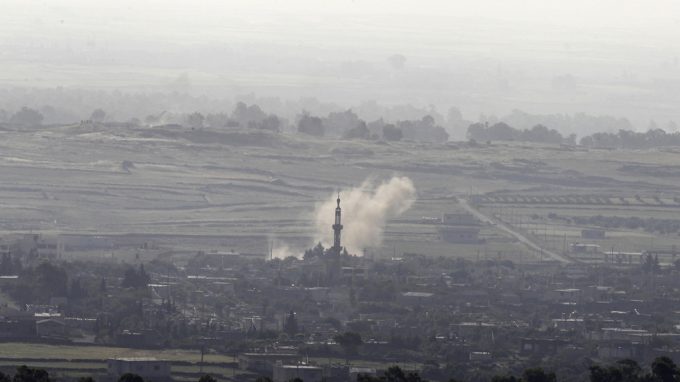
Israeli missiles reportedly targeted Syria again on Monday. Usually carried out under the pretense of “targeting Iranian/Iranian-backed militias,” Israel’s strikes violate Syria’s sovereignty and breach international law.
Israel’s military chief of staff boasted earlier about hitting over 500 targets in just 2020 alone. Bearing in mind that Syria’s air defenses do intercept Israeli missiles, it is clear that Israel attacked Syria exponentially more than 500 times last year, and an untold number of times more in the many years that Israel has been bombing Syria.
This latest assault on Syria comes after an Iranian official clarified any Iranian forces in Syria are there at the invitation of the Syrian government to fight terrorists in Syria. This of course applies to all of Syria’s allies, but not to the illegal US and Turkish occupation forces.
Yet, one of the many ironies regarding reporting on Syria is that, while Syria and her allies are fighting terrorism, they are routinely lambasted by Israeli and Western officials, both Israel and Western nations have long been supporting terrorists in Syria, claiming they are “opposition forces” although they are either part of Al-Qaeda in Syria, closely aligned to them, or members of equally brutal factions, including even Islamic State ( IS, formerly ISIS).
If Israel’s routine bombings of Syria are reported in Western media at all, it is with the usual downplaying of (and normalizing of) Israel’s violations of international law.
A SANA (Syrian Arab News Agency) report on the February 15 bombings read as most reports prior over the years, noting the Israeli aggression and that Syria’s “air defenses intercepted the missiles and downed most of them.”
Reuters’ account, referring to the SANA report, put Israeli aggression in quotation marks, as though the bombings don’t amount to an aggression. Perhaps Reuters views them as late Valentine’s greetings…Google “Iranian” or “Russian aggression” and see how often quotation marks are used.
Did Reuters or similar media bother to speak with civilians terrorized by these and the many prior Israeli assaults on Syria? Would they ever mention the psychological component of bombing at night, which is inevitably when Israel usually bombs?
Unlikely. Their narrative is to establish that “Iranian militias” are overtaking Syria and pose a threat to Israel that justifies Israel’s incessant bombings of Syria.
Who do Israel’s bombs target besides “Iranian/Iranian-backed militias” ?
If Western media reported honestly on Israeli bombings of Syria, they would be forced to acknowledge not only that Syrian civilians, including children, have been killed in the bombings, but perhaps offer a human face. Given the frequency of Israeli attacks and disregard for civilians, it is likely that the number of civilians maimed or killed by such bombings is not low.
Even in media traditionally hostile to Syria, one can find reports of civilians killed by Israeli bombings in Syria.
Western media do periodically mention that civilians were killed, but always usurp that point with justifications, like Israel, “periodically attacks what it says are threats to Israeli security in Syria.”
In June 2019, I travelled to Quneitra, southern Syria. Standing near al-Baath City, with around 2,000 civilians living there, and around 4km from the occupied Syrian Golan Heights, security there spoke of Israeli attacks in previous years and also just roughly two weeks before my visit.
While their emphasis was on the fact that every time Israel attacked it enabled terrorists (al-Nusra and other groups) to advance, the other take away was that the bombings took place next to or where civilians were living.
In July 2019, among the routine Israeli bombings of Syria was an attack that killed at least four civilians, including an infant, injuring many more. A France 24 mention of the bombings reported six civilians killed, including three children. The report was careful to also specify “pro-regime” for fighters killed, weighted lexicon so common in Western media.
Of that day’s attacks, the BBC ran with: “Israeli jets ‘hit Iranian targets in Homs and Damascus’’. The BBC justified, as the BBC does, Israel’s bombings with: “It periodically attacks what it says are threats to Israeli security in Syria.” Were the dead civilians Israelis, you can bet they would have made the BBC’s headline and not be buried in a justification.
More recently, on the morning of January 22, 2021, Israel (violating Lebanese airspace) bombed Tartous, Hama and Homs countryside. The bombings resulted in the deaths of at least five in one suburb.
Writing from Beirut and Gaza, AP cited the highly partial Syrian Observatory For Human Rights, who from their position afar in the UK attributed the cause of deaths to a Syrian air defense missile. The media ran with that.
And although the big corporate media networks have abundant “unnamed sources,” “citizen journalists” and other credible anonymous sources to support claims of Russian or Syrian atrocities, when it comes to attacks by Israel or the US or allies, these networks run strangely dry of sources and dry of empathy for the victims.
So it is that we never hear of the personal tragedies that come with such bombings.
Regarding the January 22 bombings, journalist Vanessa Beeley went to Kazu, Hama, which she wrote, “took a direct hit with four rockets landing in a narrow residential street.” Beeley reported on how five members of an internally displaced family from Idlib were killed in their sleep (one later dying of her injuries). And sharing horrifying nuances you will not find in Western corporate media, she wrote:
“Hossam was the first on the scene and to see the broken bodies, crushed by the debris of the blast. He told me that he later found the mobile phone of the daughter visiting from Tartous. Her husband had heard news of the attack and had been trying to call her, unaware that his wife had been killed alongside their daughter. Hossam told me that one family member had been sleeping when the shrapnel sliced into their face, tearing skin from bone…”
Now just imagine these were Syrian bombings killing Israeli civilians and children. There would be hell to pay, and the media would scream about it 24/7.
Because some lives matter, but most do not, when it comes to reporting on Syria.
I asked Beeley about the SOHR claims. She replied:
“All survivors of the attack that I interviewed were adamant that four Israeli rockets targeted the narrow residential streets, killing five members of one family and grievously injuring four other relatives living in the same house.”
Why does this hypocrisy matter?
Perhaps people far from the war in Syria and inundated with other terrible information and news wonder why I’m harping on about something that has happened a million times (figuratively) before, Israeli bombings of Syria. Yes, it isn’t news, yes it happens routinely. But it shouldn’t. That’s the bottom line. And it wouldn’t be accepted were a Western nation the target.
These are beyond hypocritical times, when repeatedly bombing a sovereign nation, killing civilians in doing so, merits no outrage, much less any UN or other actions against the offender.
But fighting designated terrorists in Syria warrants media indignation, accusations from Western politicians and the UN itself, and the cruel sanctioning of the people affected.
So why does the hypocrisy matter? Because every time Israel bombs Syria, it is either killing civilians, enabling terrorism (which kills civilians), or preventing the forces fighting terrorism from doing so.
And it matters because Syrians aren’t just numbers behind headlines about “Iranian-backed” fighters. They are people long-abused by Israel and the West’s backing of terrorism and by media complicity.
Israel To Ban Citizens From Gyms, Cafés and Shops If They Refuse Vaccine
By Richie Allen | February 15, 2021
SKY News correspondent Mark Stone is in Tel Aviv today, reporting on Israel’s vaccine roll-out. Israel offered the jab to everyone over-16 at the beginning of this month. Since then, uptake has dropped significantly. Younger people are reluctant to be vaccinated. The country’s Health Minister has proposed that the unvaccinated be excluded from museums, cinemas, shops and cafés. Taking to Twitter Health Minister Yuli Edelstein declared:
“Decide whether you are part of the celebration or whether you will be left behind. Just lend a shoulder to the vaccine.”
The Health and Culture ministries confirmed yesterday, that museums, libraries, concert venues and other cultural events will reopen later this month, but only to those who have been vaccinated.
Israel is blaming misinformation and fake news for the low uptake amongst the young. The government set up a digital task force to counter the alleged misinformation on the coronavirus vaccines. Incredibly, DJ’s have been sent to vaccination centres to lure the kids and free food has been offered as a further incentive. They, and by they I mean our governments and their advisers, are desperate for us to take this vaccine. The only question of any value now is why?
UK Foreign Secretary Dominic Raab told LBC Radio yesterday that domestic vaccine passports, for shops and café’s hadn’t been ruled out. Upon hearing this, Good Morning Britain presenter Piers Morgan was delighted. He Tweeted:
“Love the idea of covid vaccine passports for everywhere: flights, restaurants, clubs, football, gyms, shops etc. It’s time covid-denying, anti-vaxxer loonies had their bullsh*t bluff called & bar themselves from going anywhere that responsible citizens go.”
Morgan would undoubtedly have told his viewers back in 2009, that they should have the Pandemrix Swine Flu Vaccine, to protect themselves and others. Then, when people began dying and coming down with narcolepsy, he would have ignored it. Nothing to see here and all that. Morgan is wretched, but he’s not alone. Raab made his chilling comments on domestic vaccine passports nearly 24 hours ago.
There isn’t so much as a murmur of dissent in today’s British newspapers. It is no exaggeration to say now, that the UK is a fascist state. Did you ever imagine that your government would threaten to destroy your life, if you didn’t consent to being vaccinated? Welcome to Dystopia.
Iraq’s Muqtada Al-Sadr warns of looming normalisation with Israel
MEMO | February 11, 2021
Leader of the Iraqi Sadrist Movement and prominent Shia cleric Muqtada Al-Sadr said yesterday that his movement will not allow normalisation between Iraq and Israel, even if the price is “blood”.
“Normalisation is at the door, and the parliament must prevent this. We will not allow normalisation at all, even if it costs us blood,” Al-Sadr told reporters in the southern city of Najaf.
Al-Sadr did not provide further details, however, in January a new movement named October 25 was formed under the leadership of Secretary-General Talal Hariri who called to have good relations with Israel.
The Iraqi government, led by Prime Minister Mustafa Al-Kadhimi, has not issued a clear position on the movement’s demand.
Iraq does not officially recognise Israel, and there are no relations between the two sides.
In October 2017, the Iraqi Parliament passed a resolution prohibiting raising the Israeli flag and punishing violators with imprisonment.
Last year, the UAE, Bahrain , Sudan and Morocco signed normalisation deals with Israel. At the time of the first announcements, Iraq declared that its laws prohibited it from normalising relations with the occupation state.
Another Zionist Joins the Biden Team
Neuberger will make our cyber secure?
By PHILIP GIRALDI • Unz Review • February 9, 2021
It does not require any particularly perspicacity to realize that the [proclaimed] President Joe Biden Administration has been loaded with Zionists who not only believe in their own vision for Greater Israel but also in some cases have strong and enduring ties to the Israeli government itself. The new Secretary of State Tony Blinken comes from an American Jewish family that has well established ties to Israel. Blinken’s paternal grandfather was one of the founders of an organization that eventually evolved into the American Israel Public Affairs Committee (AIPAC). Blinken said at his Senate confirmation hearing that the new administration would “consult with Israel” before any possible return to the 2015 nuclear deal and he also made clear that there will be “additional conditions for Iran,” an odd position to take since it was the U.S. that withdrew from the agreement and introduced a harsh sanctions regime even though Iran was in compliance. More recently, Blinken claimed that Iran is weeks away from having the enriched uranium needed to make a nuclear weapon. Strangely enough, or perhaps not, Israeli Prime Minister Benjamin Netanyahu has been making the same claim since the 1980s.
Joe Biden himself proclaims proudly that he is a Zionist and Vice President Kamala Harris has spoken at AIPAC gatherings, pledging her unconditional support for the Jewish state. Senate Majority leader Chuck Schumer has proclaimed himself “shomer” or protector of Israel in the Senate while House Speaker Nancy Pelosi has said that the “If this Capitol crumbled to the ground, the one thing that would remain would be our commitment to our aid, I don’t even call it our aid, our cooperation with Israel. That’s fundamental to who we are.” The House Majority Leader, the second ranking Democrat, Steny Hoyer has proudly led numerous Congressional delegations to Israel.
One has to suspect that many White House and Congressional friends of Israel are opportunists, knowledgeable of the fact that Zionism is career enhancing and equally aware that getting on the wrong side of “The Lobby” is a political death wish. Many politically astute senior officials meanwhile wind up by design in positions in the Department of State, CIA and National Security Council where they will be able to narrow foreign policy options in favor of the Jewish state. Under George W. Bush, folks like Paul Wolfowitz, Richard Perle, Doug Feith and Scooter Libby worked hard to infiltrate the Pentagon and White House and, having succeeded, the disastrous Iraq War was the result.
One might also recall the concurrent purge of the so-called “Arabists” in the State Department in the 1950s which has led to a domination of key foreign and national security positions relating to the Middle East by American Jews ever since. Indeed, the shift in priorities at State Department has been dramatic, with Foggy Bottom now housing an office of the Special Envoy to Monitor and Combat Anti-Semitism, allegedly because anti-Semitism is surging worldwide, apparently having nothing to do with how Israel and its supporters behave. The incumbent, Elan Carr, has recently been elevated to the rank of Ambassador-at-large and his office, as well as the Biden Administration, now insists that criticism of Israel is ipso facto anti-Semitism. So much for free speech in the new world order.
Once upon a time it was considered unwise to appoint senior officials who had personal ties to other countries lest it create a conflict of interest that would not ultimately be beneficial to either nation. In his often-cited Farewell Address of 1796, George Washington famously warned that “… permanent, inveterate antipathies against particular Nations, and passionate attachments for others should be excluded; and that in place of them just and amicable feelings towards all should be cultivated. The Nation, which indulges towards another an habitual hatred, or an habitual fondness, is in some degree a slave. It is a slave to its animosity or to its affection, either of which is sufficient to lead it astray from its duty and its interest.”
If Washington were to see the foreign policy ruined by the Israel-centric federal government that has prevailed since the time of Ronald Reagan he would surely be at a loss to understand how that could possibly have developed. Donald Trump even intensified the pander by giving the Israelis gifts that they had not asked for and Joe Biden looks like he will do more of the same. When it comes to Israel, no concession or gift is ever enough.
The FBI, in the past, routinely denied security clearances to appointed officials who had close and enduring ties to other countries that were not part of NATO. Under Donald Trump, it was reported that his son-in-law Jared Kushner had been denied a top-level clearance in part due to his family’s close personal connection with Israel, to include its Prime Minister Benjamin Netanyahu, who is regarded as a family friend. Donald Trump ignored the recommendation and used his own authority to grant Kushner the clearance anyway.
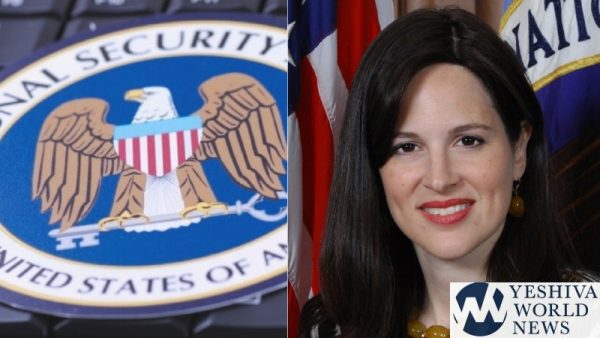
The latest friend of Israel to rise to the top as Biden completes his appointments is one Anne Neuberger, who recently was named senior director for cyber policy on the National Security Council. Neuberger has spent the last decade at the National Security Agency, the Pentagon’s cyber spying arm, where she was recently appointed head of the newly created cybersecurity directorate. Her husband Yehuda meanwhile is chair of the American Israel Public Affairs Committee (AIPAC) Baltimore executive council. He reportedly lobbied ardent Zionist Senator Ben Cardin to oppose the 2015 Iran nuclear deal the Obama White House had negotiated. Cardin did vote against it in spite of it being strongly supported by his party leader President Barack Obama.
There is, not surprisingly, an additional back story to the tale. It goes something like this: NBC news published on January 27th an article claiming that a family foundation connected to Neuberger has donated $500,000 to AIPAC, which is the largest of the hundreds of Jewish organizations that are dedicated to advancing Israeli interests in the United States. AIPAC had in 2019 an annual budget of $133 million, assets of $157 million and 476 employees. It lobbies Congress heavily and is successful to the point where it actually writes legislation favorable to the Jewish State.
The NBC article stated that: “The daughter of billionaire investor George Karfunkel, Neuberger is an officer of a foundation named for her and her husband, the Yehuda and Anne Neuberger Foundation. The foundation was created 12 years ago to ‘carry out the charitable and religious purposes of the Associated Jewish Community Federation of Baltimore,’ according to its tax records… From 2012 through 2018 — the last year for which tax records for the foundation are available — the Neuberger foundation donated $559,000 to AIPAC, tax record show. In a separate part of the forms, the foundation reports spending that exact amounts of its AIPAC donations under the category of spending for lobbying ‘to influence a legislative body’ or ‘to influence public opinion…’”
The article also observes that “[Israel] operates in its own interest and aggressively spies on the U.S., including using cyber capabilities.” It also cites “A cross section of current and former intelligence officials and foreign policy experts — none of whom were willing to be named — [who] said the donations created an appearance problem. They noted that Israel, whose companies build and sell spying gear to regimes abroad and whose intelligence agencies hack foreign governments around the world, has a big stake in American cyber policy.”
The Neuberger foundation also contributes money to the neocon dominated Foundation for Defense of Democracies (FDD), which, like AIPAC, colludes directly with the Israeli Embassy in Washington. FDD should be registered as a foreign agent, but no Israel connected entity has ever been forced to comply. To be sure, Neuberger’s involvement with the foundation and her participation in the money contribution to AIPAC should have been an element in her security clearance process, but that process may have been either modified for political reasons or the information was not made available. The NBC report observes that “A spokeswoman for the National Security Council declined to answer detailed questions about the matter, saying, ‘As a senior NSC employee, Ms. Neuberger will abide by the Executive Order on Ethics Commitments By Executive Branch Personnel.’ It’s not clear Neuberger would have been required to disclose contributions by her family foundation as part of her ethics or security clearance reviews — so it’s not known whether the Biden team vetted the donations. Although the donations are listed in public tax filings available on the web, some effort is required to find them.”
The supporters of Neuberger are incorrect in that the contributions made in her name to AIPAC, which most in Washington regard as a front for the Israeli government, would have most definitely been relevant to her clearance process. Under normal rules, it would disqualify her from having a top level clearance, but, as should be noted, we are dealing here with Israel. Neuberger’s appointment as head of U.S. cybersecurity while donating hundreds of thousands to the lobbying arm of a foreign government that recently welcomed to great fanfare a citizen of theirs, Jonathan Pollard, who spied on the U.S., as a hero is unacceptable. One might also add that Israel is regarded as the most active “friendly” government in respect to its spying on the United States, often using sayanim American Jews as their “agents,” and its well documented history of stealing U.S. high technology is extensive. It also has highly developed cyber capabilities of its own which it has recently used against American government targets, to include the White House.
The final twist to the Neuberger story is that complaints from Jewish groups and individuals began to pour into NBC after it released the story, some concerned that a wonderful organization like AIPAC was being impugned. AIPAC denounced the piece directly, claiming that its “Charges of dual loyalty are anti-Semitic and insult millions of Americans—Jewish & non-Jewish—who stand by our ally Israel.” The news network then surrendered, pulling and archiving the story after claiming that it had not met its usual standards due to its use of anonymous sources and failure to give Neuberger adequate time to respond. NBC did not contest the AIPAC claim that Israel is an actual American ally, which is itself a lie, nor to the compelling evidence that some American Jews certainly do demonstrate either dual or singular loyalty that favors Israel.
But my favorite contribution in support of Neuberger comes from President Barack Obama’s U.S. Ambassador to Israel Dan Shapiro, who appears to be in line for a Biden senior foreign policy appointment. He tweeted: “I don’t know Anne Neuberger, but the ‘charge’ against her — that she’s not fit for national security work because her family foundation supported political work that is fully protected under the Constitution — is offensive and belied by her stellar career. Glad she is serving.”
Shapiro’s claim that a senior national security official’s supporting a lobby that exists to obtain favors for a foreign country is a “free speech” issue is curious. One also wonders about Shapiro’s ultimate loyalty, recalling how he left his ambassadorial post to live in Israel, where he presumably now holds dual-citizenship. He subsequently told an American Jewish audience that Israel is “this miracle, this gift, this jewel” and worked as a senior officer in an Israeli national security think tank, representing it in testimony before Congress, which should have required him to register as a foreign agent. But he didn’t do so and got away with it because it was Israel, of course. And now he is giving advice on a critical United States national security issue in which he is dead wrong. That is the fundamental problem. We Americans are, at our peril, never allowed to challenge the extent of someone’s devotion to a foreign country if that country just happens to be Israel.
Philip M. Giraldi, Ph.D., is Executive Director of the Council for the National Interest, a 501(c)3 tax deductible educational foundation (Federal ID Number #52-1739023) that seeks a more interests-based U.S. foreign policy in the Middle East. Website is https://councilforthenationalinterest.org address is P.O. Box 2157, Purcellville VA 20134 and its email is inform@cnionline.org
Why Would the US Stir Up Conflict in North Africa?

Photo credit: FAROUK BATICHE/AFP via Getty Images
By Vladimir Odintsov – New Eastern Outlook – 09.02.2021
The Trump administration, which left the US political Olympus, actively sought to sow contradictions in the unity of the Arab world in the Middle East, to divide these countries, to force the states that yield to the influence of Washington to lose even more identity and independence in their politics, to obey only the dictates of the American-Israeli elite. It was to this end that active steps were taken to build a new configuration of the region with forceful pressure on Muslim countries for diplomatic recognition of Israel. Although it was clear to everyone, including in the US itself, that without a solution of the Palestinian question by Tel Aviv, no Abraham Accords made between the leaders of individual Muslim states and the Jewish state would bring these countries peace and political stability.
Trump’s initiatives to involve North African countries in the game of chess, conceived by his administration, in which Israel was supposed to be the leading figure, brought no calm to the political situation either. And Donald Trump’s baiting of Morocco on “US support for the kingdom’s sovereignty over the territories of Western Sahara in Africa” for agreeing to recognize the Jewish state has only exacerbated the situation in the region. Political activists in countries such as Algeria and Libya, which for decades have supported the Polisario Front, which insists on the creation of the Sahrawi Arab Democratic Republic (SADR), opposed Washington’s decision.
As a result, the Polisario Front declared the end of a 30-year truce and mobilized the population to fight the “Moroccan occupiers” and began preparing for hostilities with Morocco, whose army also said it would conduct an operation in Western Sahara to “restore the unity of the nation.” The military has already entered the buffer zone, ignoring its obligations to the UN, which, in fact, was the trigger for a new armed conflict in Africa. The military operations have already started, involving the use of artillery and MLRs, as well as peacekeepers, who fired APCs to repel the Polisario’s attack in the direction of the border town of Guerherat. The main hope of the Polisario rebels is Algeria, which was already considering stepping up its forces against the kingdom.
Mohammed Salem Ould Salek, one of the leaders of the Polisario Front, accused the Moroccan authorities of fomenting war in the region. In addition, he stated that his organization, as well as the SADR administration, had lost confidence in UN Secretary General António Guterres because his recent report did not comply with the letter and spirit of the joint UN-African Union (AU) plan to resolve the conflict in Western Sahara.
Another Polisario Front representative, Sidi Mohammed Omar, quoted by AFP, believes that the Guterres report gives a false impression of calm, when in reality there is chaos in the region. He claims that the Moroccan authorities have grossly violated human rights in the occupied territories by abducting, torturing and killing Polisario and SADR functionaries.
At the same time, in spite of the ongoing tension around the problem of Western Sahara, it should be noted that since the arrival of the new US President Joe Biden in the White House, despite the breakdown of the truce, the rebels are not trying to make a serious offensive in the lands controlled by Rabat. They are clearly hoping that the new US administration may renegotiate Trump’s agreement with Morocco on Western Sahara. Moreover, Polisario is well aware that, without the necessary support from the international community and with insufficient firepower, a prolonged war with Morocco is clearly untenable. Therefore, the recent loud statements of the Polisario fighters are more a desire to draw international attention to the situation in Western Sahara, to get the support of world powers to put pressure on Morocco to withdraw royal troops from the occupied territories.
The Moroccan authorities are already accusing the authorities of neighboring Algeria of covertly supporting the Polisario. Other countries, in particular the United Arab Emirates, which opened a diplomatic mission in Western Sahara 10 days before the start of the war, are involuntarily brought into the conflict. In addition, the situation escalated after the government of Côte d’Ivoire, followed by several other small African states, including Gabon, Comoros, and Sao Tome and Principe, decided to open their consulates in Laayoune, a small town claimed by the SADR. In Western Sahara, such steps were perceived as flagrant violations of international law, UN and General Assembly resolutions on the decolonization of Western Sahara. The SADR protest was supported by Algeria, Polisario’s traditional sponsor, Namibia, and several other African countries that have recognized SADR independence.
The danger of the current escalating conflict in Western Sahara is that a new war could not only scorch Morocco and the SADR, but also spill over into Algeria. In this situation, with African countries and the Arab world deeply concerned about the events in Western Sahara, Egypt has taken the initiative to play the role of mediator and peacemaker, calling on Morocco, Polisario and Algeria to refrain from further escalation.
To better understand the situation, it is necessary to recall that Western Sahara was under Spanish control until 1953. But when a new political-military organization, the Frente Popular para la Liberación de Saguia el-Hamra y Río de Oro (Polisario), appeared in the territory, it began to advocate the independence of the two regions, with Algerian support, without ruling out the possibility of armed struggle. As a result, Madrid abandoned its colony and withdrew its troops, to be replaced by soldiers from Morocco and Mauritania. The fighting continued until 1991, when representatives of Rabat and Polisario signed a UN-brokered ceasefire agreement.
The people of Western Sahara were given the opportunity to determine the fate of their land, including through a referendum in 1992, but due to disagreements over who could participate, the vote did not take place. Subsequently, Morocco refused to support the idea of calling a new referendum, agreeing only to grant autonomy within the state.
Today about 80% of Western Sahara is controlled by Rabat, the remaining 20%, which is mostly desert surface, has gone to the rebels.
On the issue of ownership of the disputed territories the international community has remained neutral for the last 30 years, 117 out of 194 UN member states still do not recognize the independence of the Sahrawi Arab Democratic Republic, in fact, as well as the sovereignty of Morocco over these lands. However, Algeria, Argentina and several other countries sided with the SADR, and France, along with 19 states, agreed to a plan for autonomy in the region. Forty-five states, including Russia, advocate a people’s right to self-determination.
As for Rabat’s resumption of diplomatic relations with Tel Aviv, one can hardly expect any active steps from the kingdom in the near future. First, they clearly intend to wait for the new US administration’s decision on Trump’s “initiatives,” especially with regard to support for “kingdom sovereignty over the Western Sahara territories in Africa.” In addition, the Supreme Court of the Kingdom has already received a lawsuit from a group of lawyers demanding the cancellation of the deal with Israel, and until the end of this lawsuit official Rabat is not willing to take any action against Israel.
As for the Biden administration, it had another urgent task to clean up Trump’s “Augean Stables,” only this time in relation to the situation in Morocco-Western Sahara-Algeria, and in the North African region as a whole.
Arab regimes seek to field Israeli-backed Dahlan for Palestinian elections
Press TV – February 7, 2021
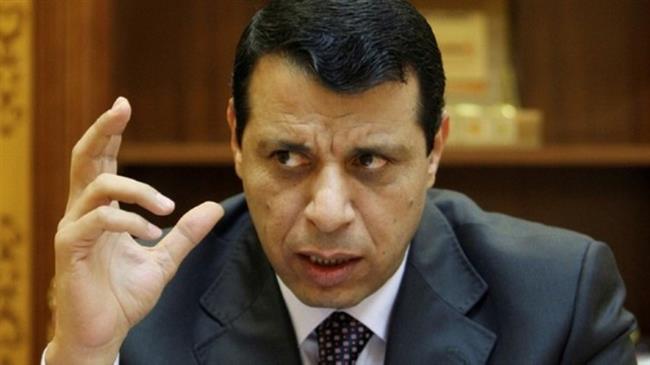
Several Arab states are reportedly putting pressure on Palestinian political factions to reinstate exiled former Fatah strongman Mohammed Dahlan and field him against Hamas in the upcoming elections.
Sources told Arabic Post news website on Saturday that the UAE, Egypt and Jordan are trying to compel Fatah, Palestine Liberation Organization (PLO) and Palestinian Authority (PA) President Mahmoud Abbas to reinstate the Israeli-backed Dahlan and his supporters.
Abbas dismissed Dahlan from the movement in 2011 and stripped the 58-year-old of all his merits, after which he fled to the United Arab Emirates.
Last September, US Ambassador to Israel David Friedman set off an uproar after suggesting Washington was considering supporting Dahlan to overthrow Abbas as the next Palestinian Authority chief.
Dahlan was sentenced in absentia to three years in prison in 2016 by a Palestinian court for corruption, and ordered to repay $16 million, according to his lawyers.
Dahlan once led a coup against the elected Hamas government in Gaza in 2007. The plan was a massive failure which saw Hamas rout out Dahlan’s forces in a matter of days in the summer of 2007.
President Abbas announced in a decree last month that the 2021 general elections will include legislative elections being held on May 22, presidential elections on July 31 and the Palestinian National Council elections on August 31.
Leaders of 14 Palestinian political factions, including Hamas and Fatah, are scheduled to start a comprehensive national dialog in the Egyptian capital of Cairo on February 8, aiming to reach an agreement on the mechanism for holding the general elections in Palestine.
Refuse bids from those ‘involved in Israeli war crimes’, legal groups tell UK rail construction company
MEMO | February 5, 2021
A new legal brief has deemed it legal for the company building the UK’s new high-speed railway, HS2 Ltd, to exclude firms “involved in Israeli war crimes” from its tender process.
Drafted by Lawyers for Palestinian Human Rights and the European Legal Support Centre (ELSC), the legal brief states that the rail project is “legally entitled” to reject Spanish manufacturer Construcciones Auxiliar de Ferrocarriles (CAF)’s bid, on the grounds of “grave professional misconduct” and breaches of international law.
In 2019, CAF and the Israeli infrastructure company Saphir was chosen by Israel’s finance ministry to expand the settlement railway project, known as the Jerusalem Light Rail (JLR).
CAF and Saphir won the $2 billion contract to extend the railway to more illegal Israeli settlements, particularly in occupied East Jerusalem.
Under international law, the West Bank and East Jerusalem are occupied territories and all Jewish settlements there are illegal.
CAF is one of five companies which have issued bids to secure a £2.75 billion ($3.76 billion) contract to supply high-speed trains to the HS2 rail project.
ELSC, an NGO based in Amsterdam which defends and empowers the Palestine solidarity movement in Europe through legal means, said companies “involved in war crimes should have no standing in public tenders.”
“HS2 Ltd has the legal right and a moral obligation to exclude CAF from the tender procedure,” said the group’s Programme Director Giovanni Fassina.
The Boycott, Divestment and Sanctions (BDS) national committee’s Europe campaigns co-ordinator, Alys Samson Estape, added: “The JLR project is part of the ongoing process of entrenchment of Israel’s apartheid, illegal settlement enterprise and theft of Palestinian land in and around occupied East Jerusalem.”
JLR is so blatantly illegal that other multinationals which had participated in the initial stages of bidding for the project, including Alstom, Siemens, Systra, Bombardier and Macquarie, withdrew from the call for tenders, leaving just two consortiums bidding.
“Public institutions, including the UK government, should exclude CAF from its public tenders due to its violations of international law until it stops profiting from Israel’s illegal occupation.”
Palestine Solidarity Campaign Director, Ben Jamal, explained: “All public contract authorities must discharge their responsibilities to cease complicity in ongoing violations of international law.”
“This means HS2 Ltd must exclude CAF, and any other company violating Palestinian human rights, from the bid to provide rolling stock.”
Featured Video

The Search for Truth: Charlie Kirk’s Assassination One Year Later
or go to
Aletho News Archives – Video-Images
From the Archives
Did Israel Kill the Kennedys?

By Laurent Guyénot • Unz Review • June 3, 2018
Introduction
Just after midnight of June 6, 1968, Senator Robert Kennedy was assassinated in a backroom of the Ambassador Hotel in Los Angeles. He had just been celebrating his victory at the California primaries, which made him the most likely Democratic nominee for the presidential election. His popularity was so great that Richard Nixon, on the Republican side, stood little chance. At the age of 43, Robert would have become the youngest American president ever, after being the youngest Attorney General in his brother’s government. His death opened the way for Nixon, who could finally become president eight years after having been defeated by John F. Kennedy in 1960.
John had been assassinated four and a half years before Robert. Had he survived, he would certainly have been president until 1968. Instead, his vice-president Lyndon Johnson took over the White House in 1963, and became so unpopular that he retired in 1968. Interestingly, Johnson became president the very day of John’s death, and ended his term a few months after Robert’s death. He was in power at the time of both investigations.
And both investigations are widely regarded as cover-ups. In both cases, the official conclusion is rife with contradictions. We are going to sum them up here. But we will do more: we will show that the key to solving both cases resides in the link between them. And we will solve them beyond a reasonable doubt. … continue
Blog Roll
 Aletho News
- The Search for Truth: Charlie Kirk’s Assassination One Year Later
- ‘Harsh reality’: Iran says France seeks monopoly on power and intimidation, not peace for all
- When Will This White House Madness End?
- Huckabee aide goes to ‘unusual lengths’ to portray ‘Israel’ positively
- Trump Announces Diesel Supply Deal With Putin Following Phone Call
- MEP blasts ‘Euro-Gestapo’ for lecturing Russia on democracy
- Syria May Send Troops to Saudi Arabia Amid War with Ansar Allah
- UK whines about losing billions to ‘Putin tax’
- Baghaei to Rubio: Distorted narratives cannot erase US record of broken commitments
- Houthis Don’t Have to Conquer Saudi Arabia to Make It Pay
- If Americans Knew
- Gaza ceasefire exists in name only, say more than 100 organizations
- Nearly 2 Million in Gaza Need Urgent Shelter Assistance as Winter Looms: IOM Chief Warns
- Suppressing Palestinian resistance: US charity under fire for AI monitoring of Gaza classrooms
- Thousands Are Held in Israeli Torture Camps. This Is What Happens Inside
- Israel puts Gaza’s sick, injured, newborn in peril – Daily Update
- Report claimed Mark Levin used by Israeli government to influence Trump
- Over 2,000 Gazans have died awaiting medical evacuation amid Israel’s continued siege
- How a U.S. Diplomat Suppressed and Altered Reports Critical of Israel
- 5 Palestinians Die from Israeli Strikes in Gaza as Relentless Attacks Continue
- Report: Ceasefire Slows Killing but Leaves Devastation Intact
- No Tricks Zone
- New Study: 50 Years Of The Most Aggressive ‘Net Zero’ Policies Can Only Affect The Global Climate By 0.03°C
- US September “Heat” Was No Record…Many Records Set Decades Ago
- Latest European Green Energy Debacle; Portugal’s Largest Flagship Solar Park Insolvent!
- Green Energy Debacle: German Expert Professor Fritz Vahrenholt Warns Of Severe Economic And Social Consequences
- Two More Paleo Reconstructions Affirm Meters-Higher Sea Levels Across Ireland, Brazil 7000-6000 Years Ago
- New Study: Earth And Venus Surface Warmth Largely Explained By Convection And Lapse Rate, Not CO2 Or Radiation
- 2025 Nature Paper Claiming Worsening Global Drought Gets RETRACTED …Heavily Flawed
- New Study: ‘Global Drought Shows No Detectable Recent Acceleration Under Climate Warming’
- Economic Masterminds: German Socialists Suggest Taxing Productivity Gains Stemming From Using AI
- The South China Sea Has Not Been Cooperating With The Climate Change Narrative

