What Keeps the F-35 Alive

By David Swanson | Let’s Try Democracy | October 31, 2016
Imagine if a local business in your town invented a brand new tool that was intended to have an almost magical effect thousands of miles away. However, where the tool was kept and used locally became an area unsafe for children. Children who got near this tool tended to have increased blood pressure and increased stress hormones, lower reading skills, poorer memories, impaired auditory and speech perception, and impaired academic performance.
Most of us would find this situation at least a little concerning, unless the new invention was designed to murder lots of people. Then it’d be just fine.
Now, imagine if this same new tool ruined neighborhoods because people couldn’t safely live near it. Imagine if the government had to not only compensate people but kick them out of living near the location of this tool. Again, I think, we might find that troubling if mass murder were not the mission.
Imagine also that this tool fairly frequently explodes, emitting highly toxic chemicals, particles, and fibers unsafe to breathe into the air for miles around. Normally, that’d be a problem. But if this tool is needed for killing lots of people, we’ll work with its flaws, won’t we?
Now, what if this new gadget was expected to cost at least $1,400,000,000,000 over 50 years? And what if that money had to be taken away from numerous other expenses more beneficial for the economy and the world? What if the $1.4 trillion was drained out of the economy causing a loss of jobs and a radical diminution of resources for education, healthcare, housing, environmental protection, or humanitarian aid? Wouldn’t that be a worry in some cases, I mean in those cases where the ability to kill tons of human beings wasn’t at stake?
What if this product, even when working perfectly, was a leading destroyer of the earth’s natural environment?
What if this high-tech toy wasn’t even designed to do what was expected of it and wasn’t even able to do what it was designed for?
Amazingly, even those shortcomings do not matter as long as the intention is massive murder and destruction. Then, all is forgiven.
The tool I’m describing is called the F-35. At RootsAction.org you can find a new petition launched by locally-minded people acting globally in places where the F-35 is intended to be based. Also at that link you’ll find explanations of how the tool I’ve been describing is the F-35.
The petition is directed to the United States Congress and the governments of Australia, Italy, the Netherlands, Norway, Turkey, the United Kingdom, Israel, Japan and South Korea from the world and from the people of Burlington, Vermont, and Fairbanks, Alaska, where the F-35 is to be based. This effort is being initiated by Vermont Stop the F35 Coalition, Save Our Skies Vermont, Western Maine Matters, Alaska Peace Center, University of Alaska Fairbanks Peace Club, North Star Chapter 146 Veterans For Peace, World Beyond War, RootsAction.org, Code Pink, and Ben Cohen.
The petition reads:
The F-35 is a weapon of offensive war, serving no defensive purpose. It is planned to cost the U.S. $1.4 trillion over 50 years. Because starvation on earth could be ended for $30 billion and the lack of clean drinking water for $11 billion per year, it is first and foremost through the wasting of resources that this airplane will kill. Military spending, contrary to popular misconception, also hurts the U.S. economy (see here) and other economies. The F-35 causes negative health impacts and cognitive impairment in children living near its bases. It renders housing near airports unsuitable for residential use. It has a high crash rate and horrible consequences to those living in the area of its crashes. Its emissions are a major environmental polluter.
Wars are endangering the United States and other participating nations rather than protecting them. Nonviolent tools of law, diplomacy, aid, crisis prevention, and verifiable nuclear disarmament should be substituted for continuing counterproductive wars. Therefore, we, the undersigned, call for the immediate cancellation of the F-35 program as a whole, and the immediate cancellation of plans to base any such dangerous and noisy jets near populated areas. We oppose replacing the F-35 with any other weapon or basing the F-35 in any other locations. We further demand redirection of the money for the F-35 back into taxpayers’ pockets, and into environmental and human needs in the U.S., other F-35 customer nations, and around the world, including to fight climate change, pay off student debt, rebuild crumbling infrastructure, and improve education, healthcare, and housing.
Show a Film, End Up on a Watch List
By Ted Steinberg | CounterPunch | October 31, 2016
In a speech before the American Israel Public Affairs Committee earlier this year, Hillary Clinton, who vehemently opposes the Boycott, Divestment and Sanctions movement warned against anyone who tries to “to shut down debate, especially in places of learning like colleges and universities.” Her concern, of course, was with reassuring pro-Israel students that she stood behind them as they battled efforts to criticize Israel from the left.
It is certainly sportsman-like of Clinton to be open to debate, but the reality is that the free exchange of ideas on campus is currently under assault, not from the left but from the right. Consider the following incident from here in Ohio.
On September 21, the Case Western Reserve University Radical Student Union showed a documentary titled “The Occupation of the American Mind: Israel’s Public Relations War in the United States,” which is available to all members of the university community through the Kanopy streaming service. Today, the RSU stands accused by the AMCHA Initiative, a nonprofit pro-Israel group, of engaging in an “antisemitic expression” that “condoned terrorism,” simply for showing the film in public. One radical student critical of Israel’s policies likened the climate of fear on the CWRU campus with respect to this issue as akin to being “stalked.”
The RSU decided to host the film to raise awareness and in the words of its president, Gabriel Murcia, to give “voice to people who don’t have a voice.” Although some 100 people attended the screening, the RSU decided at the last minute not to have a formal discussion after the film when an email raising the specter of antisemitism emerged from the president of a pro-Israel student group.
I have watched this film at least four times now. There is absolutely not one shred of evidence of antisemitism in it if by that word we mean hatred or discrimination against the Jewish people. The film does, however, take Israel to task for engaging in a dishonest campaign of public diplomacy. These efforts have tended to cast the problem in Israel/Palestine in terms of terror instead of territory, and have made it seem as if Palestinians are on the whole just prone to violence instead of people with legitimate grievances about displacement and dispossession of land.
After the movie, a student fellow of the Committee for Accuracy in Middle East Reporting in America (CAMERA), a group formed after the Israeli invasion of Lebanon in 1982, noted that though “every student on this campus is entitled to express their opinion” the film was biased and “unacceptable to be presented by a student organization at our university.” The student then expressed her opposition to the BDS movement and argued that the president of CWRU had made opposition to academic boycotts the institution’s official stance.
The student’s reference is to a 2013 statement in which the president and provost, like many university administrations across the country, communicated their personal opposition to the academic boycott of Israel following the American Studies Association’s endorsement of it. They argued that the boycott compromised academic freedom. Never mind that the academic boycott was set up to help Palestinian scholars achieve academic freedom while under the Israeli occupation. The AMCHA Initiative liked their statement so much that it still links to it on its website. The statement was not, however, the official position of CWRU, simply the personal opinions of its two highest administrators.
The statement by the CWRU administration and the letter from the CAMERA fellow recall, as I pointed out in a letter to the student paper, Edward Said’s comment, nearly 40 years ago, that politically speaking, the Palestinian in the United States “does not exist.”
I thought the matter was at an end, but to my surprise the Cleveland Jewish News ran a story about the movie screening. A university administrator who directs a continuing education center dedicated to “the heritage of Jewish learning” condemned the film and the RSU, as if a radical Jewish tradition did not exist. He also implied that faculty drove the group’s agenda, implying that the students were not bright enough to think for themselves. The chairman of the board of trustees of the Jewish Federation of Cleveland, Gary Gross, meanwhile, called the film a bunch of “lies and distortions” without providing any evidence in support of the assertion. In fact, the film is about a policy of using lies and distortions to advance the interests of a foreign government. Gross added that he supports free speech, but then ominously intoned, “We will follow what’s happening on [the CWRU] campus through our partner agency, Cleveland Hillel.”
The reference to Hillel was not an idle one. Cleveland Hillel just partnered with CWRU on the creation of the new Albert & Norma Geller Hillel Student Center which includes within it classrooms available for undergraduate courses. Some students on the left are dismayed that they are forced to take classes in a building run by a group that offers “Israel advocacy training.”
This incident is part of nationwide trend. Universities all over the country are under surveillance, most famously at the University of California, Berkeley, where a student-led course titled Palestine: A Settler-Colonial Analysis was canceled after AMCHA coordinated with other groups, including CAMERA, to pressure administrators. The course was later reinstated, but the intimidation continues online. An anonymous website called the Canary Mission, established in 2015, targets those on campus critical of the Israeli occupation. The site’s main goal is to harass student activists and attempt to block their admission into graduate school.
If Hillary Clinton really does care about academic freedom, she should step up and publicly condemn the blacklisting of students and faculty concerned about Palestinian human rights. And so should the university presidents who invoked academic freedom as the rationale for their opposition to the ASA’s endorsement of the boycott of Israeli academic institutions. These leaders should also learn something from the experience on the Berkeley campus and stop caving in to people who have trouble tolerating a perspective that challenges them to think.
When I informed Mr. Murcia about his group’s inclusion on the AMCHA website he was saddened. As he put it, “All we did was show a movie.”
Ted Steinberg teaches history and law at Case Western Reserve University. He is the faculty advisor to the Radical Student Union and the author, most recently, of Gotham Unbound: The Ecological History of Greater New York.
Palestinian Man Seriously Injured By Israeli Army In Ramallah
IMEMC | October 29, 2016
 Israeli soldiers shot and seriously wounded a young Palestinian man, near Ein Yabroud town, east of the central West Bank city of Ramallah on Saturday at dawn after he reportedly attempted to “ram Israeli soldiers with his car, then tried to stab them.”
The Israeli army claims that the soldiers shot and injured the young man, identified as Ahmad Ayman Hamed, 21, after he “tried to run over them” near a military base, close to the illegal Ofra colony.
It added that the soldiers fired at the Ahmad’s vehicle, forcing him to stop, and that he allegedly stepped out of his car and “tried to stab a soldier, before he was shot and injured.”
An Israeli ambulance was called to the scene and moved Ahmad to a hospital for treatment.
Palestinian eyewitnesses said while the young man was driving his car, he was surprised to see a group of soldiers in his way on the main road, before the army opened fire and seriously wounded him.
They added that the wounded young man was shot with three live round in his abdomen, and was left bleeding, without any first aid, until the Israeli ambulance arrived and took him away.
Following the shooting, the soldiers invaded Ahmad’s home, and interrogated his family while searching their property.
Many Palestinians have been shot dead by the soldiers since last year under similar allegations of attempting to ram soldiers with their car.
In September, the soldiers shot and killed a young Palestinian man, identified as Mustafa Nimir, 25, after alleging he attempted to ram them with his car, but later admitted that the man was not even the driver of the vehicle, to blame his brother-in-law for “driving erratically”
Mustafa Nimir, 25, was returning home along with his brother-in-law Ali after the two had gone shopping and purchased clothes for Ali’s six-year-old daughter, and baked goods for the family.
Imprisoned lives: closed military zone in occupied al-Khalil (Hebron)

Photo credit – CPT.net
International Solidarity Movement | October 30, 2016
Hebron, Occupied Palestine – It’s like living in a prison. That’s how residents describe what Israeli forces are doing to their lives in the Tel Rumeida neighborhood and Shuhada Street in occupied al-Khalil (Hebron). The area was first declared a ‘closed military zone’ on 30th October 2015 – solely and deliberately affecting the Palestinian residents. One year of collective punishment, open discrimination, racism, apartheid policies and rampant attempts at ethnic cleansing in this area, commonplace tactics of an illegal occupying force in an obvious attempt to rid the area of any Palestinian presence and instead, create a continous ‘sterile’ strip of illegal settlements.
The ‘closed military zone’ has several times been extended within this year of collective punishment of the Palestinian population, adding even more areas and ‘re-inforcing’ and creating more checkpoints, exclusively for the Palestinian civilian population. Only the Palestinian civilian residents, who must register to pass through a checkpoint to gain access to their family home, have been degraded to a mere number on a list by the Israeli forces. Only ‘registered’ residents are allowed to reach their homes. The lists of Palestinian residents have been changed repeatedly lately, arbitrarily dropping various names from the list. Apparently registering with the occupying force as a resident in one’s own home just once often isn’t sufficient. This dehumanization of the Palestinian civilians who at the checkpoint are reduced to a number, is a deliberate tactic to create a forcible environment directly furthering ethnic cleansing. For some time Palestinian residents were assigned numbers that were marked on their IDs, completely ridding these civilians of their human aspect, instead making them a mere number on a list. Now, with those numbers temporarily not in use, Palestinians are reffered to by their ID-number. The Palestinian civilian trying to live in their own home is just that for the Israeli forces, a number, void of any humanity.
During the Jewish holiday of Sukkot, Israeli forces basically declared a curfew on the whole area, closing Shuhada checkpoint, denying Palestinians passage while allowing exclusive access tor settlers at the same time. The prison this area is becoming for the Palestinian civilian population is further exacerbated by the fact that, if there’s a large number of Israeli forces or settlers from the nearby illegal settlements on the street, leaving the house is not an option. One year of collective punishment – a sad anniversary that proves that the Israeli state does not need to fear an outcry by the international community when implementing their racist, apartheid measures, ethnically cleansing an entire neighborhood. During a year in which the residents have not been allowed to receive visitors like family or friends, workers of any sort have been denied entry and even medical personnel will be turned away at the checkpoint.
Israel: 1984 Everlasting
By Stanley L. Cohen | CounterPunch | October 28, 2016
Empty Declarations of Democracy… Vacant Boasts of humanity
For decades, Israel has held itself out as being the lone “democracy” in the Middle East; a state where the rights of individuals could not and would not be held hostage to the autocratic whims of royalty, but rather a full partner to a free and robust electoral process that guarantees not just meaningful input from the governed but the ability to challenge state policies as the winds of change blow from “the river to the sea.”
Once again, recent events have proven this to be just so much a perverse myth… empty rhetoric… second only to the brazen unfounded Israeli boast of having the “most humane army in the world,” even as the body count of Palestinian children grows in cemeteries and prisons that have become very much its own unique brand of 21st century youth hostel.
Recently, Hagai El-Ad, an Israeli and Jew, who serves as executive director of B’Tselem (The Israel Information Center for Human Rights in the Occupied Territories), spoke before the UN Security Council urging it to take immediate action against Israel’s illegal settlements.
Demagoguery and Inhumanity Exposed
Not quite 1400 words in its entirety, one paragraph in particular of El-Ad’s testimony sums up life for millions of those captured by a democracy that sees day as night… pain as pleasure. Crushing, despite its brevity, the power and pain of these words could easily be part of an opening statement by a war crimes prosecutor at a tribunal called to hold Israel accountable for crimes unseen since the Nuremburg tribunals some 70 years ago.
“What does it mean, in practical terms, to spend 49 years, a lifetime, under military rule? When violence breaks out, or when particular incidents attract global attention, you get a glimpse into certain aspects of life under occupation. But what about the rest of the time? What about the many “ordinary” days of a 17,898-day-long occupation, which is still going strong? Living under military rule mostly means invisible, bureaucratic, daily, violence. It means living under an endless permit regime, which controls Palestinian life from cradle to grave: Israel controls the population registry; Israel controls work permits; Israel controls who can travel abroad – and who cannot; Israel controls who can visit from abroad – and who cannot; in some villages, Israel maintains lists of who can visit the village, or who is allowed to farm which fields. Permits can sometimes be denied; permits must always be renewed. Thus with every breath they take, Palestinians breathe in occupation. Make a wrong move, and you can lose your freedom of movement, your livelihood, or even the opportunity to marry and build a family with your beloved.”
In a free democratic society these comments, while perhaps controversial, would certainly not constitute sedition. In an open, healthy State these words would surely give reason to pause and reflect… but never serve as a rational trip-wire to strip their speaker of his birthright as an unbound citizen empowered to support his government for policies he finds just but condemn it for those that bear the star of tyranny. It is a distinction that Israel has failed to adopt or learn over the course of its 50 year subjugation of millions whose only crime is to be born Palestinian in occupied land with sign-posts everywhere that simply say “ Jews only.”
Beating of Chests
Not long after El-Ad’s powerful speech before a world body entrusted with securing fundamental rights and liberty for all of its citizenry, the hue and cry could be heard among Israeli political elite to silence such subversive talk. Thus, Coalition Chairman MK David Bitan of the Likud Party undertook the first steps of reprisal by announcing he was considering submitting a bill to the Knesset that could remove the citizenship of Israelis who act against their country in international organizations. According to Bitan, “El-Ad’s actions at the Security Council are a blatant violation of the trust citizens must have for their country, so he should go find another country where he could be a citizen.”
Alarming, one might ask; no, not at all… merely another in an endless daily stream of steps by a government second to none when it comes to autocratic, indeed dictatorial, control of every fiber of its citizen’s freedoms, particularly their ability to access and exchange information without fear of retribution.
Much is known and largely ignored about the thousands of Palestinian civilians that have been targeted and slaughtered by the Israeli military machine in occupied Palestine, whether in Gaza or the West Bank. Indeed, the killing fields of Gaza or execution alleys of back street Jerusalem no longer acquire more than a passing fancy or footnote in the evening news spread across a world now busy with outrages of more recent vintage. After 70 years of slaughter, it’s just so much business as usual.
So, too, we have seemingly become numbed to the reality that thousands of Palestinian political prisoners languish in isolation, many sitting year after year, some for decades, in administrative detention cells of political prisons… uncharged, undefended and untried, tortured in ways that leave the spirits of those still roaming the now empty cellblocks of South Africa’s notorious Robben Island relieved their misery was ended quickly through state sanctioned executions by “suicide.”
The Mighty Censor’s Sword
Closures of Palestinian news rooms and television stations are commonplace… yet no more remarkable than assaults by Israel upon Palestinian journalists that long ago moved into triple digits and show no sign of abating. The Palestinian Centre for Development and Media Freedoms (MADA) has documented a pattern of such attacks by Israel running, for some time now, at almost 400 per year. Although the exact number of Palestinian journalists killed or injured by Israel over just the last decade may never be known, it has been documented that seventeen lost their lives in Gaza, alone, during the months of bombings which it endured in 2014.
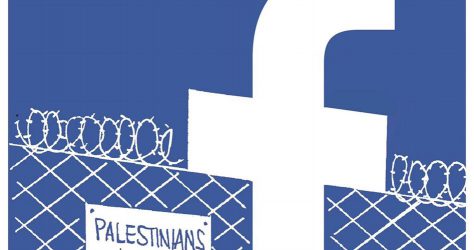
Dozens of Palestinian journalists and private bloggers have been arrested by Israel and held for violating vague administrative codes that typically come down to the application of entirely undefined prohibitions such as “incitement.” Dareen Tatour, a 35-year-old poet and Arab-Palestinian citizen of Israel, was arrested and placed under administrative detention on charges of inciting violence via her poetry which she posted on Facebook and which merely praises those who fight against Israeli domination. Also arrested and charged with criminal incitement was 19-year-old Anas Khateeb, on the basis of her Facebook posts which included such alarming statements as “Jerusalem is Arab,” and “Long live the Intifada.”
Recently, Palestinian journalist, Samah Dweik, was released from prison having served almost six months for an alleged incitement charge which resulted from comments about the occupation she posted on her private Facebook account. For most of her sentence, her family was banned from visiting or having any contact with her. She was but one of over 20 Palestinian journalists recently imprisoned by Israel for allegations of incitement, along with hundreds of other Palestinian activists or bloggers who have been targeted for arrest and prosecution for nothing more than postings of political opinions about the Israeli occupation and Palestinian resistance on social media. Dweik’s release came not long after Israel and Facebook entered into an agreement to “work together” to monitor Palestinian posts.
The Sword Cuts Deeper
Increasingly, Palestinians are not the sole victims of an Israeli policy to silence “dissent” or to dramatically curb the nature and extent of information made available to its citizens… Jews and Arabs alike. For example, not long ago, Israeli Defense Minister Avigdor Lieberman confronted the military station director after Army Radio broadcast a documentary on the life of the leading Palestinian national poet, Mahmoud Darwish, saying that material like Darwish’s shouldn’t darken Israeli airwaves.
In what can only be described as a systematic effort to control both journalists and citizens in their ability to read and write, to access and exchange information, and to reach informed opinions essential to a public and democratic dialogue about current and future Israeli policies, its machinery of censorship has become the linchpin of the State’s view of what is appropriate knowledge and speech and what is not.
Thus, of late, Israel has begun to demand of social media giants such as Facebook and Twitter that they have input, if not control, over what posts ultimately find their way into the stream of ideas and debate within the Israeli public at large. According to Quds Press, Facebook and Twitter recently deleted thousands of posts, pages and accounts as a result of demands made by the Israeli Ministry of Justice based upon little more than amorphous claims that the information posed a threat to the safety of Israel.
On an even more ominous note, the Knesset has begun to formulate legislation that would require foreign entities to actively monitor social media sites for information deemed to be offensive to Israel. Under the legislation, content based liability could be found for material published by foreign nationals, addressed to foreign nationals and posted on foreign websites thereby reducing the concept of free speech in Israel to one that is cast by the prevailing political winds of the day and little else.
Recently the chief Israeli censor notified dozens of Israeli bloggers and social media activists that any material they might wish to publish in their personal blogs or social media accounts, when dealing with a wide range of what was described as “security” related subject matters, must be vetted. Although provided a generic and ambiguous catalog of those areas to be submitted for clearance, the targets, themselves, were not permitted to disclose the makeup of the list under penalty of law. If history can be counted upon to be the guidepost of what subject matters must be prescreened before publication, in the past the list has included such security “sensitive” subject matters as:
+ Cooperation agreements with foreign militaries;
+ Letters to the editor on military or security matters;
+ Contacts with foreign countries;
+ Anything connected to the nuclear industry;
+ Information about official delegations abroad;
+ Any material which constitutes a “danger” to people’s lives;
+ Immigration policies from “endangered” nations;
+ Use of foreign sources or material that touch upon any of these areas;
+ Detention of those suspected of security offenses;
+ Any information about military industries;
+ Appointments, resignations, firings, rumors about IDF activities or commanders
Finally, in a readily transparent effort to maintain a democratic illusion of a free and uncensored flow of information in the market place of ideas, pursuant to the censorship regulations there are complete prohibitions against leaving any blank spaces or other potential indicators in one’s writing or posts that might suggest or lead one to conclude that material has been deleted.
For those disturbed over this censorship procedure, it must be remembered that we are, after all, talking about a state that recently placed 101st out of 179 countries in the press Freedom index worldwide. Indeed, this appalling placement for the Middle East’s sole democracy is significantly better than Israel has scored in the Freedom index for quite a number of years.
For those wondering just how widespread, indeed systemic, Israel’s censorship procedures are, it is a country with a military censor procedure that has banned, outright, publication of, soon to be, some 2,000 articles and redacted various information from 15,000 others in recent history. That is thousands of articles professional journalists and editors decided were of public interest but which never saw the light of day. Imagine how many more events of public interest went uninvestigated, or articles which were not written, issues debated, or challenges brought to bear for the Israeli body politic to consider because of self-censorship by journalists or editors too tired or principled to seek pre–approval of their body of work by government censors. Stories simply swallowed up and disappeared by an industry of censorship.
Human Rights… Israel Wrongs
Although not yet law, in what can only be described as an all-out onslaught against core democratic rights and values, over the last several days consideration of a bill has begun in the Knesset that would empower the Defense Minister to detain a citizen without trial; to deny one the right to pursue or obtain employment in a field of interest; to limit access to various public places; and “to impose any other order or restriction necessitated by considerations of national security or public safety”.
Earlier in January 2011, the Knesset endorsed a right-wing proposal to investigate some of Israel’s best-known human rights organizations for “delegitimizing” its military. Among others was B’Tselem. The proposed investigations would entail inquiries into the funding of several human rights groups that have a history of criticizing Israeli policies. At the time, the Association for Civil Rights in Israel described the proposal as a “severe blow” to Israeli democracy and critics labeled the policy as “McCarthyist“.
Recently a variation on that bill became law in Israel compelling non-governmental organizations (NGOs) that receive more than half of their funding from foreign state entities to declare so publicly. Ultimately, the legislative criteria were tailored specifically to silence criticism of government policies by some 27 NGO’s… 25 of which, including B’Tselem, are considered to be left-wing… while the other two are non-affiliated. As intended, the bill will have absolutely no impact upon right-wing and pro-settlement NGOs which are funded almost entirely by private donations from powerful Zionists and Zionist entities from outside of Israel.
One can only imagine that upon returning home to the firestorm awaiting him, following his speech before the UN, Hagai El-Ad surely felt what it must have been like to be an activist leftist Jew in the United States during the dark days of McCarthy.
On the other hand, perhaps El-Ad should consider himself very fortunate indeed. On his twitter account, Arab-Palestinian MK Ahmad Tibi mocked MK David Bitan’s call for El-Ad’s de-citizenship saying: “Why stop at removing citizenship? Why not destroy the home of the B’Tselem director-general? Why not bar his entire family from entering the country, remove his land, submit them to administrative detention, and put checkpoints and closures in his neighborhood?”
UN Expert to Investigate Israel’s War on Human Rights Defenders
teleSUR | October 29, 2016
A United Nations expert said on Friday that Israel is attacking human rights organizations and trying to delegitimize their work and that he will launch an investigation into the problem.
Michael Lynk, the United Nations Special Rapporteur on the situation of human rights in the Palestinian territories occupied since 1967, presented his first report to the UN General Assembly calling Israel to end the nearly 50 years of occupation, which he said “is entrenched, is dripping in human rights violations.”
“The fact that the Israeli government threatened to revoke the citizenship of the executive director of B’Tselem is a particularly worrying path for Israel to wind up taking,” Lynk said, referring to the rights groups’ appearance before the Security Council earlier this month.
He praised the recent intervention at the Security Council by the Israeli human rights organization B’Tselem, which urged the UN to end the Israeli occupation in Israel and said he was especially troubled by the Israeli government’s reaction.
In a statement, Israel’s U.N. Ambassador Danny Danon called Lynk’s comments offensive and said it “shows the immense damage done by Israeli organizations that defame us in front of the international community.”
Most of the international community has labeled the Israeli occupation as illegal because the territories in which half a million Israelis live in over 230 settlements, were captured by Israel in a war in 1967 and are hence subject to the Geneva Conventions, which forbid construction on occupied lands.
Conflict, terrorism in Mideast serving Israel: Larijani
Press TV – October 29, 2016
Iranian Parliament Speaker Ali Larijani says terrorists have created chaos in the Middle East, adding that the continuation of conflicts and acts of terror will serve the Israeli regime’s interests.
“The [critical] situation and chaos in the region has been created by a number of terrorists and the enemy does not want this chaos to end,” Larijani said on Saturday.
He added that all Muslim countries, including Syria, Yemen and Iraq, are entangled in conflicts and only the Israeli regime benefits from such a chaotic situation.
“Superpowers formed an anti-terror coalition in coordination with 60 countries but since they do not want to see the end of wars in the region and regard such an end as detrimental to the Zionist regime [of Israel], they are fanning the flames of tensions in the region,” Larijani said.
He noted that even American and Israeli experts and strategists have confirmed that the current conflicts in the Muslim world best serve the interests of the Zionists and that any success by Iran and the Lebanese resistance movement, Hezbollah, would be detrimental to them.
The top Iranian parliamentarian added that whenever promising prospects emerge for putting an end to the regional conflicts, the world powers rush to hold meetings and try to prolong the crises.
He said these powers have reinforced their links with terrorist groups operating in regional countries and are covertly providing them with weapons and military equipment.
Since March 2011, Syria has been hit by militancy it blames on some Western states and their regional allies. The Syrian military is engaged in an operation to rid the country of Daesh and other terrorist groups.
Over the past months, Syria has managed to recapture swathes of land from Daesh and other groups in the east and north of the country. The Syrian military has used the assistance of fighters from Hezbollah as well as advisory military support from Iran. Russia also helps Syria in the fight against terrorists through a series of coordinated airstrikes on their positions.
This is while Iraqi army troops, backed by fighters from allied Popular Mobilization Units, have been engaged in military operations to win back regions held by Daesh and have managed to liberate most of these areas.
The militants have been committing heinous crimes against all ethnic and religious communities in the northern and western parts of Iraq.
Video shows ‘Islamophobic’ outburst by Student Rights employee at UCL protest
MEMO | October 29, 2016
A video has emerged showing an employee of Student Rights, a so-called ‘counter-extremism’ organisation linked to the Henry Jackson Society, shouting ‘Islamophobic’ abuse during a controversial event at University College London (UCL) on Thursday night.
Elliot Miller, national organiser for Student Rights who has previously worked with the Israeli foreign ministry, had already been captured on video shoving a member of the public. The new footage is expected to add to the pressure on Student Rights to take action.
In the clip, Miller is seen shouting “You treat them like shit! You don’t respect women, you don’t respect gays… you’re all… It’s a violent religion, a violent religion!”
The event, organized by the Friends of Israel society at UCL with support from Israel advocacy group CAMERA, saw a former Israeli army officer, Hen Mazzig, come to campus in order to speak in favour of the Israeli government’s policies in the Occupied Palestinian Territory.
A protest organised by Palestine solidarity activists against Mazzig’s presence on campus has been widely smeared as “violent” and “aggressive” by the likes of Conservative Friends of Israel and the Board of Deputies of British Jews. Miller himself claimed protesters were “aggressive and violent.”
UCL, however, in a statement published Friday, “stress[ed] that the protest was non-violent.”
The video footage of Miller and other Israel supporters, who abused the protesters as “vermin” and Nazis, will no doubt be important for the university’s inquiry into the events of Thursday evening, as well as the presence on campus of extremist pro-Israel groups and individuals.
Israel settlements legal, Trump aide says, playing anti-Iran video message on Mount Zion
Press TV – October 27, 2016
GOP nominee Donald Trump does not believe that settlements built by the Zionist regime of Israel in Palestine are illegal, his advisor on Israel says.
David Friedman, who was campaigning for the New York billionaire at a restaurant on Mount Zion (Jabel Sahyoun) in East Jerusalem al-Quds, made the comments to AFP after the Wednesday rally.
“I don’t think he believes that the settlements are illegal,” Friedman said.
He also said the former reality TV star is “tremendously skeptical” about the so-called two-state solution, promoted by the Democratic administration of President Barack Obama during his eight years in office, but to no avail.
The Obama administration has already voiced criticism over Tel Aviv’s expansionist policies, considered illegal by the international community.
The presence and continued expansion of Israeli settlements in the occupied Palestine has created a major obstacle for the efforts to establish peace in the Middle East.
Over half a million Israelis live in more than 230 illegal settlements built since the 1967 Israeli occupation of the Palestinian territories of the West Bank.
All Israeli settlements are illegal under the international law. Tel Aviv has defied calls to stop the settlement expansion in the occupied Palestinian territories.
Guaranteeing enmity with Tehran
Some 150 people, including extremist Israelis and evangelical Christians, took part in the Trump rally in on Wednesday.
Friedman echoed previous remarks by Trump, saying the real estate mogul would recognize East Jerusalem al-Quds as the capital of Israel if he wins the White House in the US 2016 presidential election.
A short video message by Trump was also played at the event, in which he said, “Together we will stand up to the enemies like Iran, bent on destroying Israel and her people. Together we will make America and Israel safe again.”
According to leaked emails from March 2015 by former US secretary of state Colin Powell, the regime has pointed 200 nuclear weapons at the Iranian capital.
Jews ‘blamed for Holocaust’ at House of Lords event
RT | October 27, 2016
Israel has condemned a “shameful” event hosted by the British House of Lords in which Jews were blamed for the Holocaust and Israel was compared to Islamic State (IS, formerly ISIS/ISIL).
The session marked the launch of the Balfour Apology Campaign ahead of the Balfour Declaration centenary. The 1917 declaration pledged British support for a Jewish homeland in Palestine.
A spokesperson for the Israeli embassy said the gathering “gave voice to racist tropes against Jews and Israelis alike.”
According to the Times, an audience member was applauded after suggesting Hitler only decided to kill Jews after being provoked by anti-German protests led by a rabbi, Stephen Wise, in New York.
“[He] made the boycott on Germany, the economic boycott… which antagonized Hitler, over the edge, to then want to systematically kill Jews wherever he could find them.”
The speaker also said Rabbi Wise told the New York Times in 1905 there were “6 million bleeding and suffering reasons to justify Zionism.” This quote is often used by Holocaust deniers to suggest the figure of 6 million Jews later killed by the Nazis was a myth.
The audience member – reportedly a member of the anti-Zionist strictly Orthodox Neturei Karta sect – also compared Israel to IS.
“Just as the so-called Jewish state in Palestine doesn’t come from Judaism. This Islamic State in Syria is nothing with Islam. It is a perversion of Islam just as Zionism is a perversion of Judaism.”
Another audience member said, to applause: “If anybody is anti-Semitic, it’s Israelis themselves.”
David Collier, a blogger who attended the session, says he “witnessed a Jew-hating festival at the heart of the British estate.”
The event run by Baroness Tonge, a former Liberal Democrat MP who sits as an independent, and the Palestinian Return Centre.
Tonge reportedly made no attempt to challenge the comments.
She has run into trouble for her own anti-Israeli outbursts and resigned as the Lib Dem whip after claiming the state of Israel was “not going to be there forever.”
The House of Lords event was also run by the Palestinian Return Centre.
Campaigners are calling on Britain to apologize for the Balfour Declaration and show remorse for its “past colonial crimes” in Palestine.
Featured Video

Trump asks Iran not to retaliate after he strikes Pickaxe Mountain
or go to
Aletho News Archives – Video-Images
Book Review & Summary
Calling of an Angel: The True Story of Rene Caisse and an Indian Herbal Medicine Called Essiac (1988)
Dr. Gary L. Glum – 30 Q&As – Book Review & Summary
Lies are Unbekoming | October 17, 2026
On June 10, 1975, Dr. Chester Stock, a vice president at Memorial Sloan-Kettering Institute for Cancer Research, wrote to a Canadian nurse named Rene Caisse: “Enclosed are test data in two experiments indicating some regressions in sarcoma 180 of mice treated with Essiac.” The sentence sat in a letter from one of the world’s largest private cancer research centers, concerning an herbal tea an elderly English woman had learned from an Ojibwa medicine man at a northern Ontario mining camp in the 1890s. The tests were terminated the following year after Sloan-Kettering admitted, in sworn affidavit three years later, that they had prepared the injectable solution improperly from the dried material supplied — freezing and thawing the herb rather than boiling it as Rene had instructed. By the time Calling of an Angel was published in 1988, Rene Caisse had been dead for a decade, having treated thousands of cancer patients across fifty-six years in her Bracebridge, Ontario kitchen, never charging a fee, and refusing every offer — from Memorial Sloan-Kettering, the National Cancer Institute, Merck, Parke Davis, and private corporations dangling contracts up to $1 million — to release her formula before the medical establishment admitted her remedy had merit. … continue
Blog Roll
 Aletho News
- Trump asks Iran not to retaliate after he strikes Pickaxe Mountain – w/ Prof. Marandi
- Vice President J.D. Vance’s Deceptive ‘Antiwar’ Campaign Speech
- Iran: Palestinians’ rights must not be compromised in Gaza’s future; US, Israel to blame for Hormuz situation
- Ongoing tales of Syrian chemical weapons
- Moscow blasts UN for ignoring torture of Russian POWs
- Millions of Books Could Have Been Destroyed in Lebanon During Israeli Bombings
- Moscow warns of ‘hunt for Russians’
- Calling of an Angel: The True Story of Rene Caisse and an Indian Herbal Medicine Called Essiac (1988)
- South Korean Assistance to the U.S. in the War with Iran: Between Allied Duty and National Interests
- Pharma- and Gates-Funded GAVI Seeks to Assure Parents
- If Americans Knew
- Israeli soldiers debunk Israel’s talking points
- In West Bank, Israeli settlers are totally out of control – Daily Update
- NPR investigation finds evidence of widespread fraud at mall kiosks tied to Israeli skincare brand
- Tucker Carlson exposes Israeli Lies about the Oct 7th attack, Charlie Kirk, and the U.S.
- Israel has detained thousands of Palestinian children since Oct 7th – over half spent time in solitary, many uncharged
- Israeli Analysis: Is Netanyahu Planning an ‘October Surprise’ Attack Before Israel’s Election?
- Israeli settlers brutally attack Palestinians and Washington Post female photographer, 65
- Words Have Changed, Occupation Continues: The Reality of the Gaza Ceasefire
- Gaza’s child amputees are growing faster than their prosthetics allow
- Israel keeps Palestinians struggling just to survive–Daily Update
- No Tricks Zone
- New Study Suggests Large Regions Of The Pacific Ocean Have Been Cooling For The Last 80 Years
- Germany’s Green Energy Debacle: High Energy Costs Force Kahla Porzellan to Close After 182 Years!
- New Study: 50 Years Of The Most Aggressive ‘Net Zero’ Policies Can Only Affect The Global Climate By 0.03°C
- US September “Heat” Was No Record…Many Records Set Decades Ago
- Latest European Green Energy Debacle; Portugal’s Largest Flagship Solar Park Insolvent!
- Green Energy Debacle: German Expert Professor Fritz Vahrenholt Warns Of Severe Economic And Social Consequences
- Two More Paleo Reconstructions Affirm Meters-Higher Sea Levels Across Ireland, Brazil 7000-6000 Years Ago
- New Study: Earth And Venus Surface Warmth Largely Explained By Convection And Lapse Rate, Not CO2 Or Radiation
- 2025 Nature Paper Claiming Worsening Global Drought Gets RETRACTED …Heavily Flawed
- New Study: ‘Global Drought Shows No Detectable Recent Acceleration Under Climate Warming’

