Will Japan and India become permanent members of the UN Security Council?
By Petr Konovalov – New Eastern Outlook – 14.01.2023
On December 12, 2022 in London, during a meeting of the British Foreign, Commonwealth and Development Office, its head, James Cleverly, said that he was in favor of expanding the number of permanent members of the UN Security Council (UNSC) by including Japan, India, Brazil and Germany.
The British diplomat believes that the current world order allows a much larger number of people to live much better than before, but today it needs some changes. According to Cleverly, the UK is interested in reflecting the needs of as many countries as possible in the UN. He also noted that the inclusion of Japan, Brazil, India and Germany would allow London to expand interaction with these countries and thus accelerate the growth of global prosperity.
The British Secretary of State for Foreign, Commonwealth and Development Affairs said that the established system of international relations, which was approved as a result of the victory of the Allies after the Second World War, is allegedly outdated due to the fact that since 1950 the volume of world trade has increased by about 40 times, which has led to a radical change in the balance of power in the world. Furthermore, he emphasized that demographic changes had also made their own adjustments to the modern world order.
The rhetoric of the British leadership is quite logical. The UK no longer represents the military and economic power that it used to be during the second half of the previous century. London is aware that it needs allies to support it internationally. The countries listed by James Cleverly, which, in his opinion, should become permanent members of the UN Security Council, maintain close relations with the US and the UK and are highly likely to pursue a common policy with London and Washington on many issues.
In accordance with the norms of international law, the UN Charter can be revised only with the unanimous consent of all the permanent members of the UN Security Council. France, which is a permanent member of the UN Security Council and is loyal to the policy pursued by Washington and London, will support the proposal of the UK, however, Russia and China, who are also permanent members of the UN Security Council, may not approve its expansion, as this may upset their geopolitical plans.
Russia welcomes the inclusion of India and Brazil in the list of permanent members of the UN Security Council. The Russian Federation has fairly warm relations with these states, and it is unlikely that Moscow will have any international disputes with them in the foreseeable future. Back in 2010, Russian President Vladimir Putin, who was serving as Prime Minister of the Russian Federation that year, during a meeting with Indian diplomats, said that India should be included in the list of permanent members of the UN Security Council. Subsequently, the Russian president has always adhered to this rhetoric. As for Russian-Brazilian relations, they have always been at a high level, and Lula da Silva, elected for the third time as President of Brazil in October 2022, is known for his pro-Russian views. During the previous presidency of Lula da Silva, the international organization BRICS was created (in 2006), which includes Brazil, Russia, India, China and South Africa. Consequently, the Russian Federation is likely to approve the inclusion of Brazil in the list of permanent members of the UN Security Council.
However, the Kremlin has a negative stance when it comes to the inclusion of Germany and Japan in the list of permanent members of the UN Security Council, since these states are pursuing an unfriendly policy towards Russia, and Tokyo completely casts doubt on the territorial integrity of the Russian Federation, claiming control over the Kuril Islands.
It should be noted that the inclusion of Germany, Brazil, Japan and India in the list of permanent members of the UN Security Council is not beneficial for China either, since these states maintain good relations with the United States and will adhere to a pro-American position in numerous international disputes.
Germany and Brazil are in close economic relations with London and Washington and therefore, with a high degree of probability, they will act in the interests of the US and the UK if they become permanent members of the UN Security Council. Of course, China will prevent such a development of events.
In China, the memory of Japan’s war crimes against the Chinese population during the Second World War is still fresh. Beijing also disapproves of Tokyo’s pro-American policy and is wary of the impressive number of US military installations in Japan.
Relations between Beijing and New Delhi are also at a fairly low level. India and China are competing for influence in places like Bangladesh and Sri Lanka. The Chinese authorities do not want the strengthening of Indian international influence and will do everything in their power to prevent India from being included in the list of permanent members of the UN Security Council.
It is important to emphasize that skirmishes have periodically occurred between Indian and Chinese border guards over the past 45 years. As recently as December 9, 2022, another conflict broke out between the military of China and India along the Indian line of actual control in the Tawang district in the west of the Indian state of Arunachal Pradesh in an area of the disputed territory. As a result of the collision, the military personnel of the two countries were slightly injured.
Despite the rationality of the idea of expanding the list of permanent members of the UN Security Council, Russia and China are unlikely to take such a step. Russia will not vote for granting this privilege to Germany and Japan, which today openly support the Ukrainian army participating in hostilities against the Russian Armed Forces. In turn, China is not interested in increasing the clout in the international arena of Tokyo and New Delhi, which are on cool terms with Beijing. Also, China will not give an opportunity to Germany and Brazil to become permanent members of the UN Security Council since both countries sympathize with the policies of the states of the Western bloc. As noted above, without the unanimous consent of all the permanent members of the UN Security Council, changes in the norms of international law are impossible.
The West is pursuing its own interests and engaging in geopolitical confrontation with China through the Quadrilateral Security Dialogue (QUAD), which includes Australia, the US, Japan and India. Within the framework of this organization, annual military exercises of the participating countries are held.
On May 24, 2022, a QUAD summit was held in Tokyo, the main agenda of which, according to Australian Prime Minister Anthony Albanese, was to discuss how to counter the growth of China’s influence in East and Southeast Asia.
As it stands now, there will be no expansion in the number of countries that are permanent members of the UN Security Council any time soon, since this comes into conflict with the plans of several current permanent members of the UN Security Council. However, the absence of Japan and India in the UN Security Council is offset by their participation in the QUAD, as well as their close cooperation with the United States in the field of defense.
Britain and Japan to sign defense pact
UK and Japanese troops will be deployed on each other’s territory, as Tokyo deepens its alignment with NATO powers
RT | January 11, 2023
UK Prime Minister Rishi Sunak and his Japanese counterpart, Fumio Kishida, will sign a major defense agreement on Wednesday, Sunak’s office has announced. With Britain and its NATO allies focused on opposing both Russia and China, Japan is deepening its cooperation with the Western military machine.
The ‘Reciprocal Access Agreement’ will allow both countries to deploy troops on each other’s soil, and to hold “larger and more complex” joint military exercises, according to a statement from Downing Street.
While Japan already hosts around 50,000 US troops, Wednesday’s signing will make the UK the first European nation to have a reciprocal access deal with Japan. Australia has had such an agreement with Japan since 2007, although this pact became non-binding when it was renewed in October.
The signing comes a month after Japan, the UK, and Italy announced that they would team up to develop a sixth-generation fighter jet, merging separate national jet programs.
These developments mark a significant step by Japan away from its post-WWII constitution, which commits the country to a pacifist foreign policy and mandates that its military be a strictly defensive and peacekeeping force.
However, Japan joined the renewed Quadrilateral Security Dialogue – a loose military alliance with the US, India, and Australia explicitly aimed at countering China in the “Indo-Pacific” region – in 2017, and in December announced a doubling of its military budget, citing missile “missile threats” from China and North Korea.
Tokyo also joined the West in sanctioning Russia over the conflict in Ukraine, and plans on stationing supersonic missiles near Russia’s northeastern islands. Moscow considers this plan to pose “a serious challenge” to its security.
Sunak and Kishida are set to discuss both Ukraine and China on Wednesday, with the British prime minister’s office stating that they would talk about “the need to maintain our collective support” for Kiev and strengthen its military.
Fake news about North Korea arming the Wagner PMC as an illustration of new “evidence” trends
By Konstantin Asmolov – New Eastern Outlook – 04.01.2023
It would seem that not long ago we touched on the intricate situation regarding rumors of North Korean or South Korean arms being supplied to the region of the Russian-Ukrainian conflict, noting that there was no real evidence of either. Unfortunately, the situation is not evolving for the better and even those in the US establishment, who previously had refrained from making direct and unsubstantiated accusations, have begun to do so.
On December 22, 2022, National Security Council spokesman John Kirby told reporters that the DPRK had completed its initial arms delivery to Russia back in November, including infantry rockets and missiles: “We can confirm that North Korea has completed an initial arms delivery to Wagner, which paid for that equipment”. And while Washington does believe “that the amount of material delivered to Wagner will not change battlefield dynamics in Ukraine,” it is still “certainly concerned that North Korea is planning to deliver more military equipment.”
Kirby’s further statements reflected that, for him, the Russian-Ukrainian conflict is taking place on some other globe. It turned out that Russian military officials report to the command of this PMC, which has 50,000 fighters. “It’s pretty apparent to us that Wagner is emerging as a rival power center to the Russian military and other Russian ministries”. The Russian reader can only raise a restrained smile, which also applies to the idea that the PMC has not only heavy equipment, but also missiles and heavy artillery in its arsenal.
Nevertheless, Kirby said the US, along with its allies and partners, would raise the issue in the UN Security Council, as the North’s arms deliveries were a clear violation of sanctions resolutions and he promised new sanctions against the Wagner group. US Permanent Representative to the UN Linda Thomas-Greenfield also said that the US “intends to raise the DPRK’s and Russia’s violations of UN Security Council resolutions in future meetings of the Security Council and will share information of this violation with the Council’s 1718 Sanctions Committee.”
The ROK and Canadian foreign ministries joined in the condemnation. Canadian Foreign Minister Mélanie Joly stressed that the actions of Wagner and Pyongyang “clearly violate international law and United Nations Security Council resolutions.” South Korea’s foreign ministry also condemned the arms trade between North Korea and the PMC, saying it was detrimental to peace and stability in the international community in direct violation of the resolutions.
More interestingly, Stéphane Dujarric, the Spokesperson for the UN Secretary-General, told a briefing that the UN had no information on possible arms deliveries from the DPRK to the Wagner PMC. From the author’s point of view, this is a hint…
Equally interesting is that Kirby’s information was published almost exactly the same way a little earlier by the British media. Reuters quoted a senior US administration official as saying that the ammunition had been bought from the DPRK last month and delivered to Russia: allegedly the volume of shipments is not large enough to seriously affect military operations, but the US fears that this channel will continue to operate.
A little earlier, the Japanese newspaper Tokyo Shinbun had reported that similar missiles were being supplied via the Hasan-Rajin railway.
And all this could not but prompt a comment from the DPRK Foreign Ministry, which on December 22 dismissed the manipulative report by the Japanese media as a completely clumsy and groundless PR stunt. The rest of the statement should be quoted as fully as possible:
“The DPRK remains unchanged in its principled stand on the issue of “arms transaction” between the DPRK and Russia which has never happened.
The international community will have to focus on the US criminal acts of bringing bloodshed and destruction to Ukraine by providing it with various kinds of lethal weapons and equipment on a large scale, rather than lending an ear to the groundless theory of “arms transaction” between the DPRK and Russia cooked up by some dishonest forces for different purposes.
Taking this opportunity, I would like to say that the Russian people are the bravest people with the will and ability to defend the security and territorial integrity of their country without any others’ military support”.
Yevgeny Prigozhin, the owner of the Wagner PMC, also dismissed the allegation of North Korean supplies as “gossip and speculation”, and the author partly agrees with him: there is still no regular railway connection between North Korea and Russia. All the more so since the movement of trains across the border is monitored by US military satellites, among others.
The author also draws attention to the fact that the PMC has far less capacity to procure this type of weapons than the state does, because it would require additional time. Finally, if the PMC had received these weapons back in November, they would have already been used on the battlefields, which would have left an information trail.
This looks like another fake about North Korean shells, but for the author it is an opportunity to talk about two additional things.
First, that accusations are very often based on the method of projection or, as the saying goes, the tongue ever turns to the aching tooth. And in this context, it is worth talking about a series of US pieces in the Western media which suggest that the “arsenal of democracy is depleting” and it is not Russia, but the “free world” which is having problems in supplying arms.
Second, although this version was first published by a British news agency and then voiced by Kirby himself, no evidence was produced. Meanwhile, the author reiterates a very important point: if you accuse your opponent and you have hard, irrefutable facts that incriminate them in some way, you can safely put them out there – without fear that some independent expert will discover that it was a poorly concocted fake. When someone says “we have secret evidence, but we won’t show it to you because it is a military secret”, this approach has been considered rotten since the Dreyfus affair.
The accusations concerning Moscow’s use of Iranian drones include at least debris that is structurally similar to Iranian designs. There is nothing in this case, and the Wagner PMC seems to be attacked because it is today the most demonized armed formation having anything to do with Russia. Moreover, it also operates in the Middle East and Africa, which might have added credibility to the US claims, if there had been any specifics.
The use of accusations, however, which are not backed up by any semblance of credible evidence, did not begin with North Korean shells. One may recall the high-profile doping case in which the Russian side somehow allegedly tampered with urine samples in containers that were not supposed to be opened as per design. One may recall the poisonings of the Skripals or Kim Jong-nam when, in response to a direct question as to how exactly on the technical side the special operation had been carried out, there was no sane answer.
Rather than going into detail and sorting out the extent to which certain actions are technically possible, the analysis is substituted by notions of how capable we think “They” are of doing It. And if They could do it, then They did it, no matter how.
That said, such unsubstantiated information becomes a pretext for imposing sanctions of any level of severity – and this is an important criterion of a post-globalization world in which there is no longer any room for normal investigations and evidence. And this is a worrying sign, because now it is possible to use a fantastic accusation as a pretext for sanctions and if it is said from a high rostrum, the status of the one who said it is confirmation in itself: “How can we doubt the existence of Marquis of Carabas if the talking cat claims it?”
Konstantin Asmolov, PhD in History, leading research fellow at the Center for Korean Studies of the Institute of China and Modern Asia, the Russian Academy of Sciences.
China Conducts Military Maneuvers Near Guam, Okinawa
By Kyle Anzalone and Will Porter | The Libertarian Institute | December 30, 2022
The Chinese aircraft carrier Liaoning has sailed near the Japanese island of Okinawa and the US territory of Guam over the past two weeks. The naval operations came at the end of a year which saw several military escalations between Washington and Beijing.
Tokyo reported that the Liaoning and at least four other large warships operated in waters near Okinawa, adding that the ships remained about 150 miles offshore for several days. While in the area, the Chinese carrier conducted over 200 takeoff and landing drills.
On Thursday, Japanese officials confirmed that, after sailing away from Japan, the flotilla then traveled near the US territory of Guam. According to the Global Times, a Chinese newspaper closely linked with the country’s ruling Communist Party, the operation ”showed that the Chinese carrier is ready to defend the country against potential US attacks launched from there.”
The relationship between Washington and Beijing has continued to deteriorate in 2022, perhaps best exemplified by House Speaker Nancy Pelosi’s trip to Taiwan last summer and a massive round of Chinese military drills launched near the island in retaliation.
President Joe Biden has further fueled tensions by repeatedly asserting that US forces would come to Taiwan’s defense in the event of a Chinese invasion. However, Taiwan is not recognized as a sovereign nation under US law, which instead endorses Beijing’s claim to the island and calls for a position of ”strategic ambiguity” towards Taipei.
While a number of past US administrations have refrained from openly saying whether Washington would intervene against China on Taiwan’s behalf, Biden has increasingly eroded that position, prompting senior White House officials to walk back his statements on multiple occasions. Proponents of strategic ambiguity contend that the policy acts as a deterrent against any future attack by Beijing, and stops short of emboldening Taipei to take aggressive actions of its own.
Biden recently met with Chinese President Xi on the sidelines of the G20 summit. While the goal was to seek to resolve various outstanding issues between the two powers, both countries continue to conduct provocative military exercises.
Tokyo – which is part a three-way security pact with Washington and Seoul created to confront Beijing – has also escalated regional tensions by announcing an end to its post-WWII defense-oriented military and plans to become the world’s third-highest weapons spender over the next five years. Moreover, the United States has worked to persuade its allies in the North Atlantic Treaty Organization to take part in its operations in Chinese-claimed waters, while Canada recently announced plans to conduct more military transits through the disputed Taiwan Strait.
Beijing has significantly deepened its security and diplomatic ties with Moscow this year, with the two allies striking a ”no limits strategic partnership” in the days before Russia’s invasion of Ukraine in late February. The Asian superpowers have conducted joint drills in the waters and skies around both Japan and Taiwan in recent weeks, having just wrapped up naval exercises in the East China Sea on Tuesday. Another round of wargames on December 14 saw Chinese warships cross multiple Japanese straits as Russian fighters and bombers flew near Japanese airspace over the Sea of Japan.
Underscoring the rising hostilities, earlier this week the Pentagon released a video, captured on December 21, showing a Chinese fighter that approached an American spy plane over the South China Sea, accusing the pilot of performing an ”unsafe maneuver” that risked a collision.
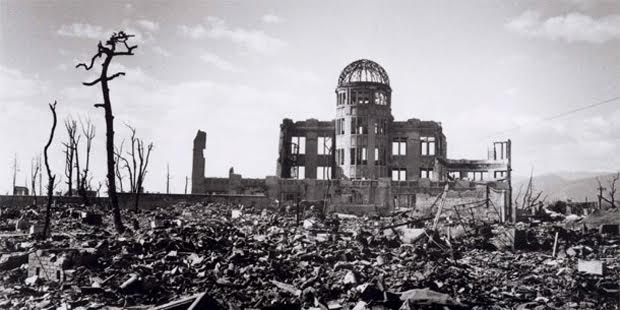
Japanese politician calls on Biden to apologise for US atomic bombings of Hiroshima and Nagasaki
By Ahmed Adel | December 23, 2022
Renowned Japanese Senator Muneo Suzuki called on the United States to honestly admit to Japan and the whole world that dropping atomic bombs on Hiroshima and Nagasaki at the end of World War II was a mistake.
“Although 77 years have passed since the war ended, the United States, the country that dropped the atomic bomb, has never apologised or asked for forgiveness. It is the United States that still speaks loudly about ‘democracy, human rights and freedom’ for the actions of other countries. So why not tell Japan and the world honestly what the US has done?” the veteran politician said in an article posted on his website.
“During (the visit), you should say using an atomic bomb was a mistake,” stressed the Japanese MP.
Japanese media reported that Washington was negotiating with Tokyo on the possibility of Biden visiting Nagasaki in May 2023. Biden’s visit to Nagasaki is expected to take place within the framework of the G7 Leaders’ Summit to be held in Hiroshima on May 19-21.
Biden will become the first US President to visit Nagasaki if negotiations go well. It is recalled that in May 2016, former President Barack Obama, a fellow Democrat, became the first US leader to visit Hiroshima during the G7 summit in Japan, but he did not visit Nagasaki.
If the trip occurs, Biden would likely visit the city’s Peace Park, located near the epicentre of the nuclear blast. He, as a devout Catholic, would also expectedly visit Urakami Cathedral, a Catholic church rebuilt after being destroyed by the nuclear blast.
Japanese Prime Minister Fumio Kishida, who has put forward his vision of a nuclear weapons free world since coming to power in October 2021, would likely accompany Biden on his visit to Nagasaki sometime before or after the summit, Japan Times reported, citing a source close to the matter.
The current Japanese prime minister visited Hiroshima with Obama when he was foreign minister, together with then prime minister Shinzo Abe. It is recalled that Biden served as vice president under Obama, who was controversially awarded the Nobel Peace Prize in 2009 for his so-called attempts to free the world of nuclear weapons. According to Japan Times, Kishida hopes he and Biden can send a similar message to the world from the two Japanese cities.
The G7 summit, to be held from May 19 to 21, will be hosted by Kishida, who represents a constituency in Hiroshima, which was also destroyed by a US atomic bomb. For this reason, Tokyo and Washington are still contemplating if Biden’s trip to Nagasaki, a city which is forever linked with Hiroshima, is viable and to scope the opinions of local residents, including the hibakusha – the Japanese term to mean a survivor of the atomic explosions in 1945.
On August 6 and 9, 1945, the US military dropped atomic bombs on the Japanese cities of Hiroshima and Nagasaki: 140,000 people died in Hiroshima and 74,000 people died in Nagasaki. Most of the victims of the two atomic bombings were civilians. Every year on these days, Hiroshima and Nagasaki hold memorials to remember the nuclear tragedy that claimed the lives of 214,000 people.
This massive loss of life has meant a firm element of anti-Americanism in Japan. At the same time though, because the country has been partially occupied by the US since World War II, Tokyo is firmly in the Atlanticist camp as its political elite are mostly controlled. None-the-less, Japan always held a pacifist policy, partly imposed by a US fearful of a Japan once again being military empowered.
However, Japan has evidently abandoned its long-held pacifist policy when considering the $320-billion defence plan recently announced by Kishida. This defence plan will make Japan the world’s third-biggest military spender after the United States and China, surpassing even India, the UK and France.
For this reason, the Russian Foreign Ministry accused Japan on December 22 of “unbridled militarisation”.
“It can be clearly seen that Tokyo has embarked on the path of an unprecedented build-up of its own military power, including the acquisition of strike potential,” the statement said. “This is a frank rejection by the F. Kishida administration of the peaceful development of the country, which was persistently declared by previous generations of politicians, and a return to the rails of unbridled militarisation.”
Japan’s actions will inevitably increase tension in the Asia-Pacific region despite the fact there should be no real reason why they should exist to begin with. In fact, they mostly exist on the influence of the US, a country which dropped two nuclear bombs on Japan and to this day still refuses to apologise, as Muneo Suzuki highlighted.
With Japan on the path of becoming a major military power, there is a high possibility that Biden will make the apology if it will deepen American influence in a country which Washington hopes, and seemingly now gives permission, to oppose and challenge Russia and China.
Ahmed Adel is a Cairo-based geopolitics and political economy researcher.
Russian carmaker to launch production at former Nissan plant
RT | December 21, 2022
Russia’s biggest automaker, Avtovaz, will start producing cars at a plant in St. Petersburg previously owned by the Japanese car manufacturer Nissan, the company’s CEO Maxim Sokolov told reporters on Wednesday.
Sokolov noted that the cars will be produced under the Lada brand and that preparations for the launch of production are in the final stages.
“We will not reveal all the details now, they are kept under wraps by the automakers till the last moment, but I can say that these cars will be modern, of high quality and with the highest safety standards… As soon as the memorandums [with our partners] are signed, we will immediately present them to the public,” the company official said.
Earlier reports stated that Avtovaz was planning to restart production at the plant in the second half of 2023.
The Nissan plant in St. Petersburg, which was launched in 2009, has a production capacity of up to 100,000 cars per year. Last year, roughly 43,000 cars came off of its assembly line. The plant mostly produced SUV models such as the Qashqai and X-trail.
The Japanese carmaker suspended operations at the plant in March, citing supply-chain interruptions due to Ukraine-related sanctions imposed on Moscow. Last month, the company decided to sell all of its Russian assets to the state-owned research and development firm NAMI, according to the Russian Trade Ministry. Under the deal, which was concluded for a token sum of €1, Russian carmaker Avtovaz is to carry out maintenance services for Nissan vehicles and supply spare parts for them.
Japan’s $320 billion militarization plan wastes precious resources amid rapid societal decline
By Drago Bosnic | December 20, 2022
In the aftermath of the Second World War, Japan went through a process of thorough demilitarization. The country’s militaristic ideology, the effects of which were disastrous for the entire Asia Pacific region during WWII, was also dismantled by American occupation forces. The changes were codified in the new Japanese constitution which effectively banned the country from possessing a fully fledged military.
This changed to a certain degree during the zenith of the (First) Cold War when the Japan Self-Defense Forces (JSDF) essentially became the country’s military, although its role was limited to effectively being a footnote within the larger context of US-led “Free World” security policies. This approach lasted up until recently, when Tokyo decided to start a massive rearmament program aimed at turning Japan into a major military power.
On December 16, the Japanese government announced a $320 billion program that would make it possible for the JSDF to launch standoff strikes against China and other regional adversaries (presumably North Korea). Reportedly, the plan also involves the expansion of Japanese military power to include the ability to maintain a sustained front against advanced opponents. Speculation about the program started in late November when Tokyo hinted it could soon equip its submarines with long range missiles. According to a report by the Naval News, the Japanese Defense Ministry announced it was in the process of extending the range of its Type 12 surface-to-ship missiles deployed by the Ground Self-Defense Force (JGSDF) from the current 200 km to a maximum of 1,200 km.
A Reuters report claims the new military plan would take approximately five years to complete and would also make Japan the world’s third largest military spender, right after the United States and China. The program would also focus on logistics as it would include the stockpiling of spare parts and various types of munitions, expanding transport capacity, as well as the development of cyber warfare capabilities.
The deal is also set to benefit the Japanese military industry, as companies such as the Mitsubishi Heavy Industries are expected to be at the helm of the development efforts for long-range missiles that are set to constitute the backbone of the country’s new military power projection in the Asia-Pacific region. The company is currently involved in a project to develop Japan’s next generation fighter jet. The effort, which also includes corporate giants such as the BAE Systems and Leonardo SPA, is a joint venture between Japan, the UK and Italy. So far, the project received at least $5.6 billion in funding.
Foreign companies, particularly those from the US, are also expected to benefit from Japan’s (re)militarization efforts.
Additionally, Tokyo says it plans to arm its ships with the latest iteration of the “Tomahawk” cruise missile (most likely referring to the new Block V) made by the Raytheon Technologies. According to Reuters, other weapons set to be acquired as part of the new five year program will very likely include interceptor missiles for ballistic targets (apparently including the troubled ship-borne “Aegis” and its land-based “Aegis Ashore” version), attack and ISR (intelligence, surveillance, reconnaissance) drones, satellite communications equipment, F-35 fighter jets, helicopters, submarines, warships and heavy-lift transport jets.
Prime Minister Fumio Kishida recently stated that “Japan is at a turning point in history,” adding that “the ramp-up in its military was my answer to the various security challenges that we face.” According to Reuters, Kishida’s government is allegedly concerned that “Russia has set a precedent that will encourage China to attack Taiwan, threatening nearby Japanese islands, disrupting supplies of advanced semiconductors and putting a potential stranglehold on sea lanes that supply Middle East oil.” Needless to say, the claim that Russia set a precedent is quite bemusing, especially when considering the countless examples of the massive scope of US aggression against the world.
Expectedly, the program will be closely coordinated with the US, as shown in a separate national security document in which Tokyo pledged to maintain close security ties with Washington DC and its other vassals. The US itself was quick to show public support for the program. US Ambassador to Japan Rahm Emanuel stated that “the Prime Minister is making a clear, unambiguous strategic statement about Japan’s role as a security provider in the Indo-Pacific.”
In addition, the cooperation is apparently also set to include China’s breakaway island province of Taiwan. During a meeting with Japan-Taiwan Exchange Association Chairman Mitsuo Ohashi on Friday, the incumbent head of the government in Taipei Tsai Ing-wen stated she expected greater defence cooperation with Japan. “We look forward to Taiwan and Japan continuing to create new cooperation achievements in various fields such as national defence and security, the economy, trade, and industrial transformation,” Reuters claims the presidential office cited Tsai as saying.
The plan is expected to double Japan’s military expenditures to around 2% of the country’s GDP over a period of five years. The previous 1% limit was self-imposed in 1976, nearly 50 years ago. This is also set to increase the share of military expenditures to around 10% of all public spending. To secure funding for the program, the current Japanese government announced tax hikes, which can only further exacerbate the country’s woes, including the disastrous demographic situation which is set to get even worse in the coming years.
With nearly 1,400,000 deaths and approximately 840,000 births per year, Japan is highly unlikely to get out of its current demographic “black hole”. And yet, instead of focusing on preventing further societal decline, the Japanese government is still blindly following the suicidal US diktat by investing precious remaining resources into a military project which is bound to fail from the start, as China’s unrelenting rise will dwarf anything its opponents could hope to accomplish.
Drago Bosnic is an independent geopolitical and military analyst.
Japan steps up its digital ID push, tells public they may lose health insurance if they don’t sign up
By Didi Rankovic | Reclaim The Net | October 27, 2022
There is a discernible and forceful push in many countries toward digitization and switching citizens’ key sensitive personal and financial data from “analog doldrums” to government-controlled (and easily accessible by multiple agencies) centralized databases.
Somewhat telling of how important this task is for those in power, is the fact they are increasingly either pulling all the stops or threatening to, prodding a reluctant population in the desired direction.
In Japan, those who are unsure about signing up for digital IDs – and reports say, those are many – are being told they risk losing their public health insurance, AP writes.
Japan’s Social Security Number-like scheme was launched back in 2016. It’s called My Number and consists of 12 digits given to all residents. But My Number has been far from a resounding success as many Japanese avoid using it, afraid their personal data and right to privacy could be compromised.
The Japanese society seems technologically savvy enough to understand the underlying risks and harms of some types of technology, which means that this otherwise hi-tech country to this day prefers to do business in person, use cash, stamping seals, and paper documents in administrative procedures – in other words, in all those areas that really matter.
Despite the fact the My Number scheme has not had wide adoption, Japan’s authorities are now apparently doubling down: they want to issue My Number cards with microchips in them to everyone, and those cards will also serve as photo ID since they will contain photographs of their carriers. Some of the information and services the cards are linked to are drivers licenses and public health insurance.
This is where the plot thickens since current health cards do not require photos – but those will be phased out by the end of 2024, meaning that residents who do not apply for My Number cards risk losing their health insurance.
An online petition is currently circulating, having gathered over 100,000 signatures in a matter of days, calling for continued use of the current form of health cards.
“If this was coming from a trustworthy leadership and the economy was thriving, maybe we would think about it, but not now,” Saeko Fujimori, who works in the music industry, told AP.
And there are dark overtones to the report.
Seventh Nuclear Test? How US and Its Asian Allies are Driving North Korea Into a Corner
By Ekaterina Blunova – Samizdat – 27.10.2022
The US, Japan, and South Korea vowed an “unparalleled” response to a potential seventh nuclear test by the Democratic People’s Republic of Korea (DPRK). However, the countries’ officials did not clarify precisely what measures they would take.
“This deterrence through threat of punishment by Washington and its allies is unlikely to succeed,” said Dr. Zhang Baohui, director of the Center for Asian Pacific Studies at Lingnan University in Hong Kong. “Pyongyang follows its own strategic logic when deciding whether to pursue new tests. A rise in tensions on the peninsula will only heighten North Korea’s insecurity, motivating it to continue to pursue the nuclear option.”
The US and its Asian allies reportedly fear that Pyongyang could be planning a nuclear bomb test for the first time since 2017. However, they have yet to provide details backing their concerns. Meanwhile, the US and South Korea have stepped up joint military drills in the region over the past several months.
Earlier, President Donald Trump’s White House tried to facilitate dialogue between Seoul and Pyongyang. These efforts were halted by President Joe Biden, who announced in May 2021 that he would not give DPRK leader Kim Jong-un “recognition” as the “legitimate” head of the state unless the latter denuclearized the country. Washington’s shift under Biden did not go unnoticed by the DPRK, and was followed by eight missile tests by Pyongyang in 2021.
The number of missile tests carried out by North Korea rose steeply in 2022, as Yoon Suk-yeol won the presidency in South Korea in March and declared Communist Pyongyang the “main enemy” of Seoul. Furthermore, the new South Korean president has openly flirted with the idea of a preemptive strike against his country’s northern neighbor.
In August 2022, Washington and Seoul kicked off their largest military exercises since 2018, with Yoon vowing to further boost “deterrence” against the DPRK. Earlier this month, Seoul also launched the 12-day Hoguk exercise with the participation of the Army, Navy, Air Force, Marine Corps, and the US military. The Hoguk drills will last until October 28.
Almost simultaneously, South Korea joined a US-led multinational exercise on cyber operations called Cyber Flag for the first time. According to the South Korean Defense Ministry, 18 personnel from the South Korean military are participating in the exercise, held from October 24 to 28 and which involves 25 countries.
Beijing has repeatedly warned Washington and Seoul against provoking Pyongyang and igniting instability on the Korean Peninsula. “All parties concerned should focus on the overall situation of peace and stability on the peninsula and prevent the situation from escalating,” Geng Shuang, China’s deputy permanent representative to the United Nations, told the international body on October 5. Geng highlighted that the recent bolstering of the US military alliance in the Asia-Pacific region has only increased the risk of military confrontation.
“Historical experience shows that dialogue and consultation are the only correct way to resolve the Korean Peninsula issue,” the Chinese official stressed.
Diplomatic Logjam Between North and South
However, if Pyongyang decides to conduct a seventh nuclear test, there is little if anything that the US and its Asian allies can do to prevent it, according to Zhang.
“Frankly, I don’t see what the three can do with North Korea’s seventh nuclear test,” the Chinese scholar said. “It is already under very systematic sanctions by the United Nations and it is hard to imagine that the US, South Korea, and Japan could pursue additional meaningful sanctions against Pyongyang. Current sanctions were adopted due to China and Russia’s support in 2017. Now, the strategic landscape has completely changed and it is now impossible to expect China and Russia supporting new sanction measures.”
The US and its Asian allies are likely to take a series of measures in response to the DPRK’s potential nuclear test, according to Michael Madden, nonresident fellow at the Stimson Center, leading contributing analyst to 38 North, and director and founder of NK Leadership Watch.
“The ‘unparalleled response’ line comes from remarks made by the Republic of Korea [South Korea] 1st Vice Foreign Minister following interactions with officials from the US and Japan,” said Madden. “The primary response will be an increase in military exercises in and around the Korean Peninsula.”
For its part, the US might also move certain military assets into the area as a warning to the DPRK, according to the analyst.
“There has already been a loose plan to continue some exercises and drills through the middle of November, albeit on a small scale,” he said. “In the event of the seventh nuclear test, the scope and equipment of those exercises will probably be expanded. From the ROK we might also see them scrap some of the agreements they made with the DPRK during the Moon Administration. The Yoon Administration has called attention to the North violating the 2018 inter-Korea military agreement so a seventh nuclear test raises the probability that both Koreas will discard that agreement.”
For its part, the North could launch or attempt to launch an intercontinental ballistic missile (ICBM) and additionally carry out intermediate-range ballistic missile (IRBM) drills, according to Madden.
“The North could very well declare itself on a wartime footing which they had done in 2013. If there are additional military exercises from the US, ROK and/or Japan, it is highly probable the DPRK will respond with their own drills and exercises. Of course, all of this activity would be an escalation,” the US analyst projected.
According to Madden, the unfolding situation “is a bit of a diplomatic logjam” between the South and North, as Pyongyang has already announced that it will not negotiate its nuclear weapons program or inventory, while the US, South Korea, and Japan urge it to denuclearize.
However, the analyst did not rule out that South and North Korea could have a meeting or interaction to reduce tensions if military engagement between the two escalates at the border. Another de-escalation scenario could involve another country, like China or Russia, brokering something between the two sides.
“In the current context of the re-rise of tension, a diplomatic option no longer exists,” argued Zhang. “The only viable alternative, as some have suggested in the US, is to accept North Korea’s nuclear status. That would remove a source of conflict between the US and North Korea simply by recognizing and accepting the status quo. However, Washington should not be expected to pursue this option.”
Ex-Aussie PM Calls Quad ‘Piece of Strategic Nonsense’
Samizdat – 12.10.2022
The Quad was officially launched in 2007 but suspended in 2008 after Australia pulled out of the US-led grouping over concerns expressed by China. The grouping was revived in 2017, a year after the US announced its ‘Indo-Pacific Strategy’. Beijing has labelled the Quad ‘Asian NATO’, accusing Washington of inciting tensions in the region.
Former Australian Prime Minister Paul Keating has slammed the US-led Quad grouping as “illegitimate” and a “strategic piece of nonsense,” as he advised Canberra to not be a part of the US-led efforts to “ring-fence” China.
The Quad, which comprises Australia, India, Japan and the US, says that its official goal is to maintain a “free and open Indo-Pacific region”.
“We shouldn’t be stringing together the US, Japan, India and Australia to try to contain China,” Keating, a senior party colleague of Prime Minister Anthony Albanese, said on Wednesday.
Keating argued that that Beijing’s “ambitions are in the west, not the east,” as he underlined the inroads made by the Belt and Road Initiative (BRI) in regions outside Asia. “Everywhere between Wuhan and Istanbul, in the next 30 years, will have a huge Chinese influence.”
Keating pointed out that the BRI has already financed infrastructure projects in the Baltic states as well as in former Soviet countries.
The multi-trillion-dollar BRI initiative was launched by Chinese President Xi Jinping in 2013 and strives to connect east Asia with Europe and beyond through connectivity and infrastructure projects. As of March 2022, a total of 147 countries across Asia, Africa, Europe, South America as well as North America have been members of the Beijing-backed global initiative.
Keating also reckoned that the era of US “supremacy” as the pre-eminent global power has already passed.
“This idea that the US is an exceptional power… they have God’s ear and proselytizing democracy was fine in the 20th century. The 20th century was owned by the US. The 21st century belongs to someone else,” stated Keating.
He also expressed doubts whether the US would come to the help of Taiwan if Beijing went ahead with the re-unification of the island with the mainland through military means.
Beijing has doubled down on its commitment to “reunify” Taiwan with the mainland following the visit of US House Speaker Nancy Pelosi to Taipei in August. Chinese President Xi Jinping has said that reunifying Taiwan is part of China’s goal to achieve “national rejuvenation”.
“China would see every amphibious vessel coming towards the United States, whether it is San Diego or Honolulu. They would see them and sink them,” the former Australian PM claimed, suggesting that the chances of an American “victory” in such a scenario would be “nil”.
Keating advised the Australian government not to get involved in the “geopolitical conflict” around Taiwan.
“We should be no more interested in the political system of Taiwan than Vietnam and Kazakhstan,” argued Keating.
Featured Video

NO MANDATES, NO PROFITS: MODERNA CEO TELLS THE TRUTH
or go to
Aletho News Archives – Video-Images
Book Review
In 2007, Michael Parenti Called Out The Greater Israel Project

The Dissident | January 28, 2026
In my last article, I covered the left-wing scholar Michael Parenti- who passed away at the age of 92 this week- and his prophetic writings on the Ukraine proxy war in 2014.
Parenti’s writings on the Israel lobby and the greater Israel project were equally prophetic.
In his 2007 book “Contrary Notions” Parenti called out “Israel First” Neo-cons and Israel’s role in the Iraq war, and predicted to a tee the future Israeli/American wars in the Middle East in service of Greater Israel and the ethnic cleansing of Palestine.
In a section of the book aptly titled “Israel First”, Parenti wrote… continue
Blog Roll
Recent Comments
loongtip on Russia Vows to Protect Its Oil… loongtip on Hamas never agreed to lay down… eddieb on Conspiracy Denial eddieb on WEF Calls for ‘Cultural Revolu… loongtip on Trump wanted to play peacemake… Coronistan on EU member to sue bloc over ‘su… loongtip on Vicious loongtip on EU turns to India for defense… Coronistan on Donald Trump Is No Peace … seversonebcfb985d9 on French court jails pro-Palesti… eddieb on Fourteen Incredible Facts Abou… Bill Francis on European leaders’ shift in the…


 Aletho News
- NO MANDATES, NO PROFITS: MODERNA CEO TELLS THE TRUTH
- UK Health Officials Covered Up Reports of Heart Damage Linked to AstraZeneca Vaccine
- This is How We Should Have Responded to COVID-19
- The UK Covid Inquiry: Propaganda to protect the ‘pandemic’ narrative
- Israeli Merkava tank invades outskirts of Yaroun in southern Lebanon
- Europeans oppose Brussels’ Russian energy ban, survey finds
- Russia Vows to Protect Its Oil Tankers
- In 2007, Michael Parenti Called Out The Greater Israel Project
- Hamas never agreed to lay down arms in truce talks: Official
- Iran, China and Russia sign trilateral strategic pact
- If Americans Knew
- NBA Star Stephen Curry’s Ties To Israeli Military Intelligence
- ‘Apocalyptic wasteland’: Biden admin. blocked warning on deteriorating Gaza situation after Oct. 7
- Why Israeli counterterrorism tactics are showing up in Minnesota
- Israel Went to Extremes to Return Ran Gvili’s Body. Why Doesn’t It Accord Dead Palestinians the Same Respect?
- Across the West, speaking for Palestine is now a crime
- A West Bank Bus Trip Through ‘the Best Documented Ethnic Cleansing in History’
- Mike Huckabee’s distorted theology does not speak for Christians worldwide
- CBS Evening News” With Tony Dokoupil Is Ellisons’ & Weiss’s Pro-Israel Show
- A Generation on Hold: Inside Gaza’s Collapsing Education System
- Born Under Siege: A Gaza Family Waited 17 Years—Their Baby Survived Six Months
- No Tricks Zone
- 130 Years Later: The CO2 Greenhouse Effect Is Still Only An Imaginary-World Thought Experiment
- New Study Affirms Rising CO2’s Greening Impact Across India – A Region With No Net Warming In 75 Years
- Germany’s Natural Gas Crisis Escalates … One Storage Site Near Empty …Government Silent
- Polar Colding…Antarctica Saw Its Coldest October In 44 Years!
- New Study: Sea Levels Rose 20 Times The Modern Rate During The Roman Warm Period
- As German Gas Storage Dips Dangerously Low…Shortage Hardly Avoidable
- New Study: Brazil’s Relative Sea Level Was 2+ Meters Higher And SSTs 3-4°C Warmer 6000 Years Ago
- Philosopher Schopenhauer: Climate Science Certainty Stems From Stupidity, Ignorance
- New Study: Species Extinction Rates Declining Since 1980 – ‘Climate Change Is Not An Important Threat’
- Denmark Places Climate Protection Above Animal Welfare, Poisoning And Culling Cows
 Aletho News