CNN admits America trying to use Ukraine conflict to ‘isolate’ China
By Drago Bosnic | March 10, 2023
It’s certainly no secret that the United States has been trying to foment yet another conflict in the immediate vicinity of its geopolitical adversaries. This is particularly true in regards to Russia and China, the only near-peer rivals capable of not only resisting, but also challenging Washington DC’s disastrous hegemony. It is precisely this that makes both superpowers prime targets for encirclement and destabilization, with the end goal being either their complete dismantlement or, at the very least, weakening to a point where they would be forced to accept US dominance without much (or any) opposition. To accomplish this, the belligerent thalassocracy has been using everything at its disposal, from false narratives disseminated by the massive mainstream propaganda machine to more “hard power” schemes such as weapons deliveries and (in)direct military involvement.
Most observers have always seen the connection between Russia and China or, more specifically, between their interests in Ukraine and Taiwan, respectively. These legitimate interests (primarily relating to, but not limited to security) have been targeted by the US and its numerous vassals. Both Moscow and Beijing are perfectly aware of this and are working towards building closer ties, especially on a strategic level, to counter escalating US aggression while maintaining their respective foreign policy frameworks, which aren’t always 100% convergent in every aspect. However, this does not impede their growing cooperation in any way, as can only be expected from truly sovereign nations. This is causing a tremendous amount of frustration in Washington DC, prompting it to mobilize its propaganda machine to try and tarnish the (Eur)Asian giants’ reputation.
A recent piece published by the infamous CNN perfectly illustrates the thinking behind US attempts to use the aforementioned crises against both Russia and China. Authored by Brad Lendon and titled “Ukraine war has made it easier for US to isolate China in the Pacific”, the analysis is an admission of sorts that Washington DC is pushing both conflicts.
Expectedly, the author claims that China is supposedly “backing” Russia just by virtue of Beijing’s continued refusal to join the political West’s siege of Moscow. Lendon claims that this perceived support has pushed Japan to double military spending and acquire long-range weapons from the US, while entirely ignoring the enormous pressure Tokyo has been exposed to in the last 12 months to “up the ante” and commit more of its increasingly depleted resources to the “defense of shared values”.
And while the author praised the new Japanese $320 billion remilitarization program, he harshly criticized China’s own regular military activities as “destabilizing”. This is just further proof that the incessant hypocrisy and double standards are the mainstays of US foreign policy. Lendon claims that “China’s actions are pushing the Asia-Pacific allies closer than ever before”, openly admitting that the Ukraine conflict is “very useful” for Washington DC in this regard. He then quoted the Chinese Premier Li Keqiang as saying: “The [Chinese] armed forces should intensify military training and preparedness across the board, develop new military strategic guidance, devote greater energy to training under combat conditions and make well-coordinated efforts to strengthen military work in all directions and domains.”
The CNN insists that the outgoing Chinese premier stated this as part of a government work report. Either way, the US is surprisingly open about its plans, with the recently revealed National Security Strategy (NSS) envisioning a greater strategic role for America’s numerous satellite states. While Donald Trump’s approach was more isolationist and focused on economic warfare, the Biden administration is showing much more belligerence, as well as a tendency to relegate portions of its power projection to allies and vassals such as the UK, Australia, Japan, etc. Somewhat surprisingly, Lendon claims that South Korea is now also joining the fray.
“Peace and stability in the Taiwan Strait is essential for peace and stability on the Korean Peninsula and it’s indispensable for security and prosperity of the region as a whole,” South Korean Foreign Minister Park Jin told CNN recently.
This is somewhat uncommon for Seoul, which has previously been careful not to antagonize Beijing, with which it has extensive economic cooperation. If CNN’s claims are true, this would signal a dramatic strategic shift in the Asia-Pacific, further splitting the region along geopolitical fault lines and eroding decades of essentially unlimited economic cooperation. Perhaps this might be exactly what the US wants, as per CNN itself, but it might also backfire into yet another spectacular US foreign policy failure. Lendon insists that South Korea is worried about Pyongyang and that this is the main reason it is further integrating with the US-brokered anti-Chinese coalition.
However, it could be argued that it is precisely this action by Seoul that could escalate tensions between the North and the South, particularly if the latter further antagonizes and alienates Beijing, which has been playing quite a constructive role in defusing tensions in the Korean peninsula. The destabilization could also be exacerbated by South Korea repeatedly floating the idea of potentially acquiring its own nuclear weapons, a course of action the US has not shown any opposition to while still insisting the North should disarm. Needless to say, Pyongyang is not only refusing to comply with such a suicidal request, but is even expanding its strategic capabilities, much to the chagrin of Washington.
In conclusion, Lendon laments that the Ukrainian crisis “has not been helpful in one key American partnership in the Indo-Pacific, the informal Quad alliance linking the US, Japan, Australia and India”, as New Delhi, “unlike the other three members”, has not condemned Russia’s counteroffensive against NATO aggression in Europe. “When the US, Australia, and Japan tried to condemn Russia through a joint statement, India refused…
India claimed that the Quad only tackles Indo-Pacific challenges, and since Russia isn’t in the region, this topic cannot be broached,” the piece quoted Derek Grossman, a senior defense analyst at the infamous RAND Corporation. However, he added that “the split in the Quad doesn’t really distract from its focus, as the Quad is all about how to deal with China”, essentially admitting that America is still trying to compartmentalize its geopolitical approach in the region.
Drago Bosnic is an independent geopolitical and military analyst.
New Asian contracts to double Russian gas project’s revenue – Reuters
RT | January 26, 2023
The Sakhalin-2 liquefied natural gas (LNG) project is expected to generate twice as much revenue in 2023 compared to its earnings before the Ukraine-related sanctions rained down on Russia’s energy sector, Reuters reported on Thursday, citing industry analysts.
The boost is attributed to long-term contracts with clients from the Asian region, along with higher global energy prices.
Renewed deals with Asian buyers are expected to secure demand for up to 6.5 million tons of the super-chilled fuel annually from Sakhalin 2, according to calculations by the agency and contractual volume data provided by the GIIGNL international group of LNG importers.
The contracts could earn up to $4.5 billion in revenue for Sakhalin 2 shareholders, which include state-run energy giant Gazprom and Japanese companies Mitsubishi and Mitsui, according to Masanori Odaka, a senior analyst on Rystad Energy’s gas and LNG team.
The enterprise is expected to generate another $7.45 billion in 2023 if production remains in line with 2022, while its sales on the spot market are retained at 4.9 million tons, Alexei Kokin, chief analyst at Russia’s Otkritie brokerage, told Reuters.
On Thursday, Sakhalin Energy, the operator of the project, said it produced 11.5 million tons of LNG and some 3.7 million tons of its Sakhalin blend crude oil at the Sakhalin-2 facilities in 2022, exceeding its production plan. That is 10% more than the project produced in the previous year.
The company had managed to continue production despite “a period of unprecedented pressure from external factors on production and economic activity,” according to Andrey Oleinikov, Sakhalin Energy’s managing director.
According to the company’s statement, LNG and oil shipments in 2022 were delivered to the buyers on time in full compliance with the terms of Stock Purchase Agreement, while its production remained on schedule. The major markets for exports are Japan, China, South Korea and Indonesia, Sakhalin Energy said.
Will Japan and India become permanent members of the UN Security Council?
By Petr Konovalov – New Eastern Outlook – 14.01.2023
On December 12, 2022 in London, during a meeting of the British Foreign, Commonwealth and Development Office, its head, James Cleverly, said that he was in favor of expanding the number of permanent members of the UN Security Council (UNSC) by including Japan, India, Brazil and Germany.
The British diplomat believes that the current world order allows a much larger number of people to live much better than before, but today it needs some changes. According to Cleverly, the UK is interested in reflecting the needs of as many countries as possible in the UN. He also noted that the inclusion of Japan, Brazil, India and Germany would allow London to expand interaction with these countries and thus accelerate the growth of global prosperity.
The British Secretary of State for Foreign, Commonwealth and Development Affairs said that the established system of international relations, which was approved as a result of the victory of the Allies after the Second World War, is allegedly outdated due to the fact that since 1950 the volume of world trade has increased by about 40 times, which has led to a radical change in the balance of power in the world. Furthermore, he emphasized that demographic changes had also made their own adjustments to the modern world order.
The rhetoric of the British leadership is quite logical. The UK no longer represents the military and economic power that it used to be during the second half of the previous century. London is aware that it needs allies to support it internationally. The countries listed by James Cleverly, which, in his opinion, should become permanent members of the UN Security Council, maintain close relations with the US and the UK and are highly likely to pursue a common policy with London and Washington on many issues.
In accordance with the norms of international law, the UN Charter can be revised only with the unanimous consent of all the permanent members of the UN Security Council. France, which is a permanent member of the UN Security Council and is loyal to the policy pursued by Washington and London, will support the proposal of the UK, however, Russia and China, who are also permanent members of the UN Security Council, may not approve its expansion, as this may upset their geopolitical plans.
Russia welcomes the inclusion of India and Brazil in the list of permanent members of the UN Security Council. The Russian Federation has fairly warm relations with these states, and it is unlikely that Moscow will have any international disputes with them in the foreseeable future. Back in 2010, Russian President Vladimir Putin, who was serving as Prime Minister of the Russian Federation that year, during a meeting with Indian diplomats, said that India should be included in the list of permanent members of the UN Security Council. Subsequently, the Russian president has always adhered to this rhetoric. As for Russian-Brazilian relations, they have always been at a high level, and Lula da Silva, elected for the third time as President of Brazil in October 2022, is known for his pro-Russian views. During the previous presidency of Lula da Silva, the international organization BRICS was created (in 2006), which includes Brazil, Russia, India, China and South Africa. Consequently, the Russian Federation is likely to approve the inclusion of Brazil in the list of permanent members of the UN Security Council.
However, the Kremlin has a negative stance when it comes to the inclusion of Germany and Japan in the list of permanent members of the UN Security Council, since these states are pursuing an unfriendly policy towards Russia, and Tokyo completely casts doubt on the territorial integrity of the Russian Federation, claiming control over the Kuril Islands.
It should be noted that the inclusion of Germany, Brazil, Japan and India in the list of permanent members of the UN Security Council is not beneficial for China either, since these states maintain good relations with the United States and will adhere to a pro-American position in numerous international disputes.
Germany and Brazil are in close economic relations with London and Washington and therefore, with a high degree of probability, they will act in the interests of the US and the UK if they become permanent members of the UN Security Council. Of course, China will prevent such a development of events.
In China, the memory of Japan’s war crimes against the Chinese population during the Second World War is still fresh. Beijing also disapproves of Tokyo’s pro-American policy and is wary of the impressive number of US military installations in Japan.
Relations between Beijing and New Delhi are also at a fairly low level. India and China are competing for influence in places like Bangladesh and Sri Lanka. The Chinese authorities do not want the strengthening of Indian international influence and will do everything in their power to prevent India from being included in the list of permanent members of the UN Security Council.
It is important to emphasize that skirmishes have periodically occurred between Indian and Chinese border guards over the past 45 years. As recently as December 9, 2022, another conflict broke out between the military of China and India along the Indian line of actual control in the Tawang district in the west of the Indian state of Arunachal Pradesh in an area of the disputed territory. As a result of the collision, the military personnel of the two countries were slightly injured.
Despite the rationality of the idea of expanding the list of permanent members of the UN Security Council, Russia and China are unlikely to take such a step. Russia will not vote for granting this privilege to Germany and Japan, which today openly support the Ukrainian army participating in hostilities against the Russian Armed Forces. In turn, China is not interested in increasing the clout in the international arena of Tokyo and New Delhi, which are on cool terms with Beijing. Also, China will not give an opportunity to Germany and Brazil to become permanent members of the UN Security Council since both countries sympathize with the policies of the states of the Western bloc. As noted above, without the unanimous consent of all the permanent members of the UN Security Council, changes in the norms of international law are impossible.
The West is pursuing its own interests and engaging in geopolitical confrontation with China through the Quadrilateral Security Dialogue (QUAD), which includes Australia, the US, Japan and India. Within the framework of this organization, annual military exercises of the participating countries are held.
On May 24, 2022, a QUAD summit was held in Tokyo, the main agenda of which, according to Australian Prime Minister Anthony Albanese, was to discuss how to counter the growth of China’s influence in East and Southeast Asia.
As it stands now, there will be no expansion in the number of countries that are permanent members of the UN Security Council any time soon, since this comes into conflict with the plans of several current permanent members of the UN Security Council. However, the absence of Japan and India in the UN Security Council is offset by their participation in the QUAD, as well as their close cooperation with the United States in the field of defense.
Britain and Japan to sign defense pact
UK and Japanese troops will be deployed on each other’s territory, as Tokyo deepens its alignment with NATO powers
RT | January 11, 2023
UK Prime Minister Rishi Sunak and his Japanese counterpart, Fumio Kishida, will sign a major defense agreement on Wednesday, Sunak’s office has announced. With Britain and its NATO allies focused on opposing both Russia and China, Japan is deepening its cooperation with the Western military machine.
The ‘Reciprocal Access Agreement’ will allow both countries to deploy troops on each other’s soil, and to hold “larger and more complex” joint military exercises, according to a statement from Downing Street.
While Japan already hosts around 50,000 US troops, Wednesday’s signing will make the UK the first European nation to have a reciprocal access deal with Japan. Australia has had such an agreement with Japan since 2007, although this pact became non-binding when it was renewed in October.
The signing comes a month after Japan, the UK, and Italy announced that they would team up to develop a sixth-generation fighter jet, merging separate national jet programs.
These developments mark a significant step by Japan away from its post-WWII constitution, which commits the country to a pacifist foreign policy and mandates that its military be a strictly defensive and peacekeeping force.
However, Japan joined the renewed Quadrilateral Security Dialogue – a loose military alliance with the US, India, and Australia explicitly aimed at countering China in the “Indo-Pacific” region – in 2017, and in December announced a doubling of its military budget, citing missile “missile threats” from China and North Korea.
Tokyo also joined the West in sanctioning Russia over the conflict in Ukraine, and plans on stationing supersonic missiles near Russia’s northeastern islands. Moscow considers this plan to pose “a serious challenge” to its security.
Sunak and Kishida are set to discuss both Ukraine and China on Wednesday, with the British prime minister’s office stating that they would talk about “the need to maintain our collective support” for Kiev and strengthen its military.
Fake news about North Korea arming the Wagner PMC as an illustration of new “evidence” trends
By Konstantin Asmolov – New Eastern Outlook – 04.01.2023
It would seem that not long ago we touched on the intricate situation regarding rumors of North Korean or South Korean arms being supplied to the region of the Russian-Ukrainian conflict, noting that there was no real evidence of either. Unfortunately, the situation is not evolving for the better and even those in the US establishment, who previously had refrained from making direct and unsubstantiated accusations, have begun to do so.
On December 22, 2022, National Security Council spokesman John Kirby told reporters that the DPRK had completed its initial arms delivery to Russia back in November, including infantry rockets and missiles: “We can confirm that North Korea has completed an initial arms delivery to Wagner, which paid for that equipment”. And while Washington does believe “that the amount of material delivered to Wagner will not change battlefield dynamics in Ukraine,” it is still “certainly concerned that North Korea is planning to deliver more military equipment.”
Kirby’s further statements reflected that, for him, the Russian-Ukrainian conflict is taking place on some other globe. It turned out that Russian military officials report to the command of this PMC, which has 50,000 fighters. “It’s pretty apparent to us that Wagner is emerging as a rival power center to the Russian military and other Russian ministries”. The Russian reader can only raise a restrained smile, which also applies to the idea that the PMC has not only heavy equipment, but also missiles and heavy artillery in its arsenal.
Nevertheless, Kirby said the US, along with its allies and partners, would raise the issue in the UN Security Council, as the North’s arms deliveries were a clear violation of sanctions resolutions and he promised new sanctions against the Wagner group. US Permanent Representative to the UN Linda Thomas-Greenfield also said that the US “intends to raise the DPRK’s and Russia’s violations of UN Security Council resolutions in future meetings of the Security Council and will share information of this violation with the Council’s 1718 Sanctions Committee.”
The ROK and Canadian foreign ministries joined in the condemnation. Canadian Foreign Minister Mélanie Joly stressed that the actions of Wagner and Pyongyang “clearly violate international law and United Nations Security Council resolutions.” South Korea’s foreign ministry also condemned the arms trade between North Korea and the PMC, saying it was detrimental to peace and stability in the international community in direct violation of the resolutions.
More interestingly, Stéphane Dujarric, the Spokesperson for the UN Secretary-General, told a briefing that the UN had no information on possible arms deliveries from the DPRK to the Wagner PMC. From the author’s point of view, this is a hint…
Equally interesting is that Kirby’s information was published almost exactly the same way a little earlier by the British media. Reuters quoted a senior US administration official as saying that the ammunition had been bought from the DPRK last month and delivered to Russia: allegedly the volume of shipments is not large enough to seriously affect military operations, but the US fears that this channel will continue to operate.
A little earlier, the Japanese newspaper Tokyo Shinbun had reported that similar missiles were being supplied via the Hasan-Rajin railway.
And all this could not but prompt a comment from the DPRK Foreign Ministry, which on December 22 dismissed the manipulative report by the Japanese media as a completely clumsy and groundless PR stunt. The rest of the statement should be quoted as fully as possible:
“The DPRK remains unchanged in its principled stand on the issue of “arms transaction” between the DPRK and Russia which has never happened.
The international community will have to focus on the US criminal acts of bringing bloodshed and destruction to Ukraine by providing it with various kinds of lethal weapons and equipment on a large scale, rather than lending an ear to the groundless theory of “arms transaction” between the DPRK and Russia cooked up by some dishonest forces for different purposes.
Taking this opportunity, I would like to say that the Russian people are the bravest people with the will and ability to defend the security and territorial integrity of their country without any others’ military support”.
Yevgeny Prigozhin, the owner of the Wagner PMC, also dismissed the allegation of North Korean supplies as “gossip and speculation”, and the author partly agrees with him: there is still no regular railway connection between North Korea and Russia. All the more so since the movement of trains across the border is monitored by US military satellites, among others.
The author also draws attention to the fact that the PMC has far less capacity to procure this type of weapons than the state does, because it would require additional time. Finally, if the PMC had received these weapons back in November, they would have already been used on the battlefields, which would have left an information trail.
This looks like another fake about North Korean shells, but for the author it is an opportunity to talk about two additional things.
First, that accusations are very often based on the method of projection or, as the saying goes, the tongue ever turns to the aching tooth. And in this context, it is worth talking about a series of US pieces in the Western media which suggest that the “arsenal of democracy is depleting” and it is not Russia, but the “free world” which is having problems in supplying arms.
Second, although this version was first published by a British news agency and then voiced by Kirby himself, no evidence was produced. Meanwhile, the author reiterates a very important point: if you accuse your opponent and you have hard, irrefutable facts that incriminate them in some way, you can safely put them out there – without fear that some independent expert will discover that it was a poorly concocted fake. When someone says “we have secret evidence, but we won’t show it to you because it is a military secret”, this approach has been considered rotten since the Dreyfus affair.
The accusations concerning Moscow’s use of Iranian drones include at least debris that is structurally similar to Iranian designs. There is nothing in this case, and the Wagner PMC seems to be attacked because it is today the most demonized armed formation having anything to do with Russia. Moreover, it also operates in the Middle East and Africa, which might have added credibility to the US claims, if there had been any specifics.
The use of accusations, however, which are not backed up by any semblance of credible evidence, did not begin with North Korean shells. One may recall the high-profile doping case in which the Russian side somehow allegedly tampered with urine samples in containers that were not supposed to be opened as per design. One may recall the poisonings of the Skripals or Kim Jong-nam when, in response to a direct question as to how exactly on the technical side the special operation had been carried out, there was no sane answer.
Rather than going into detail and sorting out the extent to which certain actions are technically possible, the analysis is substituted by notions of how capable we think “They” are of doing It. And if They could do it, then They did it, no matter how.
That said, such unsubstantiated information becomes a pretext for imposing sanctions of any level of severity – and this is an important criterion of a post-globalization world in which there is no longer any room for normal investigations and evidence. And this is a worrying sign, because now it is possible to use a fantastic accusation as a pretext for sanctions and if it is said from a high rostrum, the status of the one who said it is confirmation in itself: “How can we doubt the existence of Marquis of Carabas if the talking cat claims it?”
Konstantin Asmolov, PhD in History, leading research fellow at the Center for Korean Studies of the Institute of China and Modern Asia, the Russian Academy of Sciences.
China Conducts Military Maneuvers Near Guam, Okinawa
By Kyle Anzalone and Will Porter | The Libertarian Institute | December 30, 2022
The Chinese aircraft carrier Liaoning has sailed near the Japanese island of Okinawa and the US territory of Guam over the past two weeks. The naval operations came at the end of a year which saw several military escalations between Washington and Beijing.
Tokyo reported that the Liaoning and at least four other large warships operated in waters near Okinawa, adding that the ships remained about 150 miles offshore for several days. While in the area, the Chinese carrier conducted over 200 takeoff and landing drills.
On Thursday, Japanese officials confirmed that, after sailing away from Japan, the flotilla then traveled near the US territory of Guam. According to the Global Times, a Chinese newspaper closely linked with the country’s ruling Communist Party, the operation ”showed that the Chinese carrier is ready to defend the country against potential US attacks launched from there.”
The relationship between Washington and Beijing has continued to deteriorate in 2022, perhaps best exemplified by House Speaker Nancy Pelosi’s trip to Taiwan last summer and a massive round of Chinese military drills launched near the island in retaliation.
President Joe Biden has further fueled tensions by repeatedly asserting that US forces would come to Taiwan’s defense in the event of a Chinese invasion. However, Taiwan is not recognized as a sovereign nation under US law, which instead endorses Beijing’s claim to the island and calls for a position of ”strategic ambiguity” towards Taipei.
While a number of past US administrations have refrained from openly saying whether Washington would intervene against China on Taiwan’s behalf, Biden has increasingly eroded that position, prompting senior White House officials to walk back his statements on multiple occasions. Proponents of strategic ambiguity contend that the policy acts as a deterrent against any future attack by Beijing, and stops short of emboldening Taipei to take aggressive actions of its own.
Biden recently met with Chinese President Xi on the sidelines of the G20 summit. While the goal was to seek to resolve various outstanding issues between the two powers, both countries continue to conduct provocative military exercises.
Tokyo – which is part a three-way security pact with Washington and Seoul created to confront Beijing – has also escalated regional tensions by announcing an end to its post-WWII defense-oriented military and plans to become the world’s third-highest weapons spender over the next five years. Moreover, the United States has worked to persuade its allies in the North Atlantic Treaty Organization to take part in its operations in Chinese-claimed waters, while Canada recently announced plans to conduct more military transits through the disputed Taiwan Strait.
Beijing has significantly deepened its security and diplomatic ties with Moscow this year, with the two allies striking a ”no limits strategic partnership” in the days before Russia’s invasion of Ukraine in late February. The Asian superpowers have conducted joint drills in the waters and skies around both Japan and Taiwan in recent weeks, having just wrapped up naval exercises in the East China Sea on Tuesday. Another round of wargames on December 14 saw Chinese warships cross multiple Japanese straits as Russian fighters and bombers flew near Japanese airspace over the Sea of Japan.
Underscoring the rising hostilities, earlier this week the Pentagon released a video, captured on December 21, showing a Chinese fighter that approached an American spy plane over the South China Sea, accusing the pilot of performing an ”unsafe maneuver” that risked a collision.
Japanese politician calls on Biden to apologise for US atomic bombings of Hiroshima and Nagasaki
By Ahmed Adel | December 23, 2022
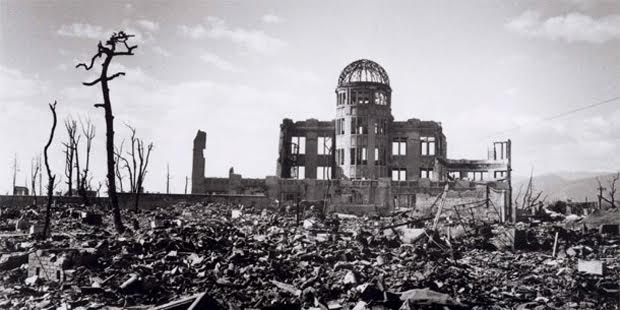
Renowned Japanese Senator Muneo Suzuki called on the United States to honestly admit to Japan and the whole world that dropping atomic bombs on Hiroshima and Nagasaki at the end of World War II was a mistake.
“Although 77 years have passed since the war ended, the United States, the country that dropped the atomic bomb, has never apologised or asked for forgiveness. It is the United States that still speaks loudly about ‘democracy, human rights and freedom’ for the actions of other countries. So why not tell Japan and the world honestly what the US has done?” the veteran politician said in an article posted on his website.
“During (the visit), you should say using an atomic bomb was a mistake,” stressed the Japanese MP.
Japanese media reported that Washington was negotiating with Tokyo on the possibility of Biden visiting Nagasaki in May 2023. Biden’s visit to Nagasaki is expected to take place within the framework of the G7 Leaders’ Summit to be held in Hiroshima on May 19-21.
Biden will become the first US President to visit Nagasaki if negotiations go well. It is recalled that in May 2016, former President Barack Obama, a fellow Democrat, became the first US leader to visit Hiroshima during the G7 summit in Japan, but he did not visit Nagasaki.
If the trip occurs, Biden would likely visit the city’s Peace Park, located near the epicentre of the nuclear blast. He, as a devout Catholic, would also expectedly visit Urakami Cathedral, a Catholic church rebuilt after being destroyed by the nuclear blast.
Japanese Prime Minister Fumio Kishida, who has put forward his vision of a nuclear weapons free world since coming to power in October 2021, would likely accompany Biden on his visit to Nagasaki sometime before or after the summit, Japan Times reported, citing a source close to the matter.
The current Japanese prime minister visited Hiroshima with Obama when he was foreign minister, together with then prime minister Shinzo Abe. It is recalled that Biden served as vice president under Obama, who was controversially awarded the Nobel Peace Prize in 2009 for his so-called attempts to free the world of nuclear weapons. According to Japan Times, Kishida hopes he and Biden can send a similar message to the world from the two Japanese cities.
The G7 summit, to be held from May 19 to 21, will be hosted by Kishida, who represents a constituency in Hiroshima, which was also destroyed by a US atomic bomb. For this reason, Tokyo and Washington are still contemplating if Biden’s trip to Nagasaki, a city which is forever linked with Hiroshima, is viable and to scope the opinions of local residents, including the hibakusha – the Japanese term to mean a survivor of the atomic explosions in 1945.
On August 6 and 9, 1945, the US military dropped atomic bombs on the Japanese cities of Hiroshima and Nagasaki: 140,000 people died in Hiroshima and 74,000 people died in Nagasaki. Most of the victims of the two atomic bombings were civilians. Every year on these days, Hiroshima and Nagasaki hold memorials to remember the nuclear tragedy that claimed the lives of 214,000 people.
This massive loss of life has meant a firm element of anti-Americanism in Japan. At the same time though, because the country has been partially occupied by the US since World War II, Tokyo is firmly in the Atlanticist camp as its political elite are mostly controlled. None-the-less, Japan always held a pacifist policy, partly imposed by a US fearful of a Japan once again being military empowered.
However, Japan has evidently abandoned its long-held pacifist policy when considering the $320-billion defence plan recently announced by Kishida. This defence plan will make Japan the world’s third-biggest military spender after the United States and China, surpassing even India, the UK and France.
For this reason, the Russian Foreign Ministry accused Japan on December 22 of “unbridled militarisation”.
“It can be clearly seen that Tokyo has embarked on the path of an unprecedented build-up of its own military power, including the acquisition of strike potential,” the statement said. “This is a frank rejection by the F. Kishida administration of the peaceful development of the country, which was persistently declared by previous generations of politicians, and a return to the rails of unbridled militarisation.”
Japan’s actions will inevitably increase tension in the Asia-Pacific region despite the fact there should be no real reason why they should exist to begin with. In fact, they mostly exist on the influence of the US, a country which dropped two nuclear bombs on Japan and to this day still refuses to apologise, as Muneo Suzuki highlighted.
With Japan on the path of becoming a major military power, there is a high possibility that Biden will make the apology if it will deepen American influence in a country which Washington hopes, and seemingly now gives permission, to oppose and challenge Russia and China.
Ahmed Adel is a Cairo-based geopolitics and political economy researcher.
Russian carmaker to launch production at former Nissan plant
RT | December 21, 2022
Russia’s biggest automaker, Avtovaz, will start producing cars at a plant in St. Petersburg previously owned by the Japanese car manufacturer Nissan, the company’s CEO Maxim Sokolov told reporters on Wednesday.
Sokolov noted that the cars will be produced under the Lada brand and that preparations for the launch of production are in the final stages.
“We will not reveal all the details now, they are kept under wraps by the automakers till the last moment, but I can say that these cars will be modern, of high quality and with the highest safety standards… As soon as the memorandums [with our partners] are signed, we will immediately present them to the public,” the company official said.
Earlier reports stated that Avtovaz was planning to restart production at the plant in the second half of 2023.
The Nissan plant in St. Petersburg, which was launched in 2009, has a production capacity of up to 100,000 cars per year. Last year, roughly 43,000 cars came off of its assembly line. The plant mostly produced SUV models such as the Qashqai and X-trail.
The Japanese carmaker suspended operations at the plant in March, citing supply-chain interruptions due to Ukraine-related sanctions imposed on Moscow. Last month, the company decided to sell all of its Russian assets to the state-owned research and development firm NAMI, according to the Russian Trade Ministry. Under the deal, which was concluded for a token sum of €1, Russian carmaker Avtovaz is to carry out maintenance services for Nissan vehicles and supply spare parts for them.
Japan’s $320 billion militarization plan wastes precious resources amid rapid societal decline
By Drago Bosnic | December 20, 2022
In the aftermath of the Second World War, Japan went through a process of thorough demilitarization. The country’s militaristic ideology, the effects of which were disastrous for the entire Asia Pacific region during WWII, was also dismantled by American occupation forces. The changes were codified in the new Japanese constitution which effectively banned the country from possessing a fully fledged military.
This changed to a certain degree during the zenith of the (First) Cold War when the Japan Self-Defense Forces (JSDF) essentially became the country’s military, although its role was limited to effectively being a footnote within the larger context of US-led “Free World” security policies. This approach lasted up until recently, when Tokyo decided to start a massive rearmament program aimed at turning Japan into a major military power.
On December 16, the Japanese government announced a $320 billion program that would make it possible for the JSDF to launch standoff strikes against China and other regional adversaries (presumably North Korea). Reportedly, the plan also involves the expansion of Japanese military power to include the ability to maintain a sustained front against advanced opponents. Speculation about the program started in late November when Tokyo hinted it could soon equip its submarines with long range missiles. According to a report by the Naval News, the Japanese Defense Ministry announced it was in the process of extending the range of its Type 12 surface-to-ship missiles deployed by the Ground Self-Defense Force (JGSDF) from the current 200 km to a maximum of 1,200 km.
A Reuters report claims the new military plan would take approximately five years to complete and would also make Japan the world’s third largest military spender, right after the United States and China. The program would also focus on logistics as it would include the stockpiling of spare parts and various types of munitions, expanding transport capacity, as well as the development of cyber warfare capabilities.
The deal is also set to benefit the Japanese military industry, as companies such as the Mitsubishi Heavy Industries are expected to be at the helm of the development efforts for long-range missiles that are set to constitute the backbone of the country’s new military power projection in the Asia-Pacific region. The company is currently involved in a project to develop Japan’s next generation fighter jet. The effort, which also includes corporate giants such as the BAE Systems and Leonardo SPA, is a joint venture between Japan, the UK and Italy. So far, the project received at least $5.6 billion in funding.
Foreign companies, particularly those from the US, are also expected to benefit from Japan’s (re)militarization efforts.
Additionally, Tokyo says it plans to arm its ships with the latest iteration of the “Tomahawk” cruise missile (most likely referring to the new Block V) made by the Raytheon Technologies. According to Reuters, other weapons set to be acquired as part of the new five year program will very likely include interceptor missiles for ballistic targets (apparently including the troubled ship-borne “Aegis” and its land-based “Aegis Ashore” version), attack and ISR (intelligence, surveillance, reconnaissance) drones, satellite communications equipment, F-35 fighter jets, helicopters, submarines, warships and heavy-lift transport jets.
Prime Minister Fumio Kishida recently stated that “Japan is at a turning point in history,” adding that “the ramp-up in its military was my answer to the various security challenges that we face.” According to Reuters, Kishida’s government is allegedly concerned that “Russia has set a precedent that will encourage China to attack Taiwan, threatening nearby Japanese islands, disrupting supplies of advanced semiconductors and putting a potential stranglehold on sea lanes that supply Middle East oil.” Needless to say, the claim that Russia set a precedent is quite bemusing, especially when considering the countless examples of the massive scope of US aggression against the world.
Expectedly, the program will be closely coordinated with the US, as shown in a separate national security document in which Tokyo pledged to maintain close security ties with Washington DC and its other vassals. The US itself was quick to show public support for the program. US Ambassador to Japan Rahm Emanuel stated that “the Prime Minister is making a clear, unambiguous strategic statement about Japan’s role as a security provider in the Indo-Pacific.”
In addition, the cooperation is apparently also set to include China’s breakaway island province of Taiwan. During a meeting with Japan-Taiwan Exchange Association Chairman Mitsuo Ohashi on Friday, the incumbent head of the government in Taipei Tsai Ing-wen stated she expected greater defence cooperation with Japan. “We look forward to Taiwan and Japan continuing to create new cooperation achievements in various fields such as national defence and security, the economy, trade, and industrial transformation,” Reuters claims the presidential office cited Tsai as saying.
The plan is expected to double Japan’s military expenditures to around 2% of the country’s GDP over a period of five years. The previous 1% limit was self-imposed in 1976, nearly 50 years ago. This is also set to increase the share of military expenditures to around 10% of all public spending. To secure funding for the program, the current Japanese government announced tax hikes, which can only further exacerbate the country’s woes, including the disastrous demographic situation which is set to get even worse in the coming years.
With nearly 1,400,000 deaths and approximately 840,000 births per year, Japan is highly unlikely to get out of its current demographic “black hole”. And yet, instead of focusing on preventing further societal decline, the Japanese government is still blindly following the suicidal US diktat by investing precious remaining resources into a military project which is bound to fail from the start, as China’s unrelenting rise will dwarf anything its opponents could hope to accomplish.
Drago Bosnic is an independent geopolitical and military analyst.
Featured Video

“Historic Russia”: The Land Putin Will Not Give Back
or go to
Aletho News Archives – Video-Images
Book Review
Why the War on Conspiracy Theories Is Bad Public Policy
By Kevin Barrett • Unz Review • February 1, 2019
 A Review of Conspiracy Theories and Other Dangerous Ideas by Cass Sunstein (based on an earlier paper co-authored with Adrian Vermeule); In Defense of Troublemakers: The Power of Dissent in Life and Business by Charlan Nemeth; and Conspiracy Theories and the People Who Believe Them, edited by Joseph E. Uscinski
On January 25 2018 YouTube unleashed the latest salvo in the war on conspiracy theories, saying “we’ll begin reducing recommendations of borderline content and content that could misinform users in harmful ways—such as videos promoting a phony miracle cure for a serious illness, claiming the earth is flat, or making blatantly false claims about historic events like 9/11.”
At first glance that sounds reasonable. Nobody wants YouTube or anyone else to recommend bad information. And almost everyone agrees that phony miracle cures, flat earthism, and blatantly false claims about 9/11 and other historical events are undesirable.
But if we stop and seriously consider those words, we notice a couple of problems. First, the word “recommend” is not just misleading but mendacious. YouTube obviously doesn’t really recommend anything. When it says it does, it is lying. … continue
Blog Roll
 Aletho News
- “Historic Russia”: The Land Putin Will Not Give Back
- How the Cambridge Analytica scandal still haunts Mark Zuckerberg
- The Ongoing Cancellation Campaign Against a Dissenting Academic in Norway
- Yemen and ‘the Houthis’: Challenging Sami Hamdi’s Narrative
- No, Christians did not invent Zionism
- AIPAC-led lobbying network opens branches in Cypriot, Greek parliaments
- Araghchi blasts ‘parasitic’ alliance as US taxpayers pay for Israel’s war on Iran
- Easy fix for Europe’s chaos? Stop fueling war against Russia
- Putin’s key remarks on peace talks and Europe’s ‘schizophrenia’
- Trita Parsi: Israel Set a Trap for Total War in the Region
- If Americans Knew
- Damning report shows the media must confront its failures on Gaza
- BBC senior broadcaster speaks out on Gaza coverage
- Netanyahu vows vast West Bank invasion in response to 20-minute skirmish that left 2 Israeli soldiers and 2 Palestinian fighters dead
- Tied up and tortured: Israel using US-made electroshock weapons on Palestinian detainees
- The outsourced risk: how newsrooms rely on Gaza’s freelancers without protecting them
- Gaza bakeries forced to shut as Israel blocks flour shipments
- Gaza’s breast cancer patients face a deadly wait for treatment amid Israel’s genocide
- DAILY UPDATE: Latest essential news on Palestine, Israel, & region
- The Israel Lobby’s Changing Fortunes
- AIPAC has become such a political liability that it’s shifting to a more “nimble” approach to buying politicians
- No Tricks Zone
- E-Cars Reduce CO2 Emissions By Only 41% Compared To Internal Combustion Engine Vehicles
- Predictions Made By Renowned Climate Professor Over Past Decades Have Been Proven To Be Poor
- New Study Suggests Large Regions Of The Pacific Ocean Have Been Cooling For The Last 80 Years
- Germany’s Green Energy Debacle: High Energy Costs Force Kahla Porzellan to Close After 182 Years!
- New Study: 50 Years Of The Most Aggressive ‘Net Zero’ Policies Can Only Affect The Global Climate By 0.03°C
- US September “Heat” Was No Record…Many Records Set Decades Ago
- Latest European Green Energy Debacle; Portugal’s Largest Flagship Solar Park Insolvent!
- Green Energy Debacle: German Expert Professor Fritz Vahrenholt Warns Of Severe Economic And Social Consequences
- Two More Paleo Reconstructions Affirm Meters-Higher Sea Levels Across Ireland, Brazil 7000-6000 Years Ago
- New Study: Earth And Venus Surface Warmth Largely Explained By Convection And Lapse Rate, Not CO2 Or Radiation

