Lula Sealed His Deal With The Devil By Condemning Russia During His Meeting With Biden

By Andrew Korybko | February 11, 2023
Lula did indeed make a deal with the devil, in this case his US nemeses who were responsible for his imprisonment, in order to be sprung from jail and subsequently given a fighting chance to return to office. Upon doing so, this geopolitically repentant leader whose multipolar worldview was noticeably recalibrated behind bars did exactly as the US expected him to do, namely condemn Russia like all Sanders-style leftists have done and then rush to Biden to “kiss the ring”.
Brazilian President Luiz Inácio Lula da Silva, who was just re-elected to a third non-consecutive term in office and is popularly known as Lula, did what had previously been unthinkable for the same man who used to be regarded as a titan of the global multipolar movement. After meeting with Biden, who was Vice President when the US orchestrated “Operation Car Wash” against him and his successor Dilma Rousseff, Lula released a joint statement in which he fiercely condemned Russia.
According to the official White House website, “They deplored the violation of the territorial integrity of Ukraine by Russia and the annexation of parts of its territory as flagrant violations of international law and called for a just and durable peace.” No leader of Russia’s other fellow BRICS partners had ever expressed such sentiments, not even former Brazilian President Jair Bolsonaro, which proves that Lula has indeed recalibrated his worldview since his imprisonment in a more pro-US direction.
This development wasn’t surprising since Lula had earlier condemned Russia by comparing its special operation in Ukraine to the US’ Hybrid War on Venezuela. At the same time, he put forth a G20-like peace proposal that wasn’t just ignored by Russia, but even indirectly criticized by it an insincere publicity stunt that actually goes against Moscow’s interests. Intrepid readers can learn more about the first incident here and the second one here since they’re beyond the scope of the present piece.
Nevertheless, by fiercely condemning Russia while meeting with Biden in DC, it should be obvious to all that Lula made a proverbial deal with the devil. In hindsight, it compellingly appears as though the information that was leaked about his case proving the courts’ political bias against him and which ultimately annulled their prior ruling (which thus let him run for re-election last year) was probably the result of a US intelligence operation aimed at once again manipulating Brazil’s political process.
Throughout the course of his first two terms and the unfinished one of his successor, the US regarded Lula as a titan of the global multipolar movement whose foreign policies posed a threat to its hemispheric hegemony. For that reason, they leaked the detailed materials implicating Lula, Rousseff, and other Workers’ Party members in a massive corruption scandal that would serve to discredit their rule, jail that aforementioned titan, and pave the way for installing a much more pliable leader.
The US’ Hybrid War on Brazil achieved all three of its initial goals but the last of them proved to be unsustainable after Bolsonaro refused to sanction Huawei in exchange for an official NATO partnership and later defied similar demands against Russia in a surprising flex of his independence. Not only that, but his conservative-sovereigntist worldview that’s inaccurately been smeared as solely being a so-called “far right-wing” one is the polar opposite of the ruling US Democrats’ liberal-globalist one.
While the sequence of events that reversed the primary outcome of “Operation Car Wash” began under the Trump Administration, objective observers already know that his military, intelligence, and diplomatic bureaucracies (“deep state”) were working against him and his worldview this entire time. This was proven by their complicity in the Russiagate conspiracy theory, among many other examples, with their preemptive efforts to manipulate Brazil’s 2022 elections being another case in point.
The US’ “deep state” believed that their country’s interests would be best served by replacing increasingly independent Bolsonaro with a geopolitically repentant Lula, ergo why they worked so hard to reverse the same outcome that imprisoned the latter. They concluded that he’s no longer the multipolar titan that they previously thought he was, but is more akin to a Bernie Sanders-style leftist, which thus makes him amenable to manipulation in pursuit of their foreign policy goals.
Just like Sanders and his ilk fiercely condemned Russia, so too did Lula, which was entirely predictable once one realizes that this Brazilian leader has turned into a “fellow traveler” of the US left. The Workers’ Party has gradually been infiltrated by pro-US liberal-globalists who prioritize the promotion of so-called “woke” identity-centric politics at home over tangible improvements in poverty alleviation, workers’ rights, and accelerating the global systemic transition to complex multipolarity (“multiplexity”).
This observation explains why one of the three largest paragraphs of Lula’s joint statement with Biden included a pledge to fight racism and support LGBTQI+ persons. That’s not to deny the existence of racism in either of their countries, but just to point out that the Brazilian leader apparently believes that he can’t effectively counteract it with US assistance, which is a tacit deferral to the US’ de facto seniority in their revived partnership and thus by default confirms his country’s position as its “junior partner”.
Further evidence of the US’ successfully reasserted hegemony over Brazil in the aftermath of last year’s elections, which were manipulated by its intelligence services as was previously explained, can be seen by Lula agreeing to “strengthen democratic institutions” with Biden. This represents one of the most cringeworthy self-inflicted humiliations that any world leader has ever committed since it was during Biden’s term as Vice President that “Operation Car Wash” was orchestrated against Lula and his party.
He obviously knows that, yet he decided to “kiss the ring” and radically revise history as a quid pro quo for the US’ intelligence services once again manipulating Brazil’s domestic processes, albeit this time to release him from his unfair imprisonment. Lula went even further with his self-inflicted humiliation ritual by also agreeing in their statement to “build societal resilience to disinformation” together with the US despite the latter being the world’s largest fake news factory, which it earlier weaponized against him.
Another aspect of historical revisionism is evidenced by the remarks that preceded their meeting. The White House reported that Lula claimed that Brazil “isolated itself for four years” under Bolsonaro, who he claimed “didn’t enjoy to keep international relations with any country.” That’s factually false though since trade with China surged despite that former leader’s Sinophobic rhetoric on the campaign trail and he even visited President Putin in Moscow just before the special operation began despite US pressure.
These objectively existing and easily verifiable facts prove that Lula is lying through his teeth, which he believes he can do with impunity since he has the US’ support nowadays, unlike during his first two terms. He’s fully confident that nobody in the US-led West’s Mainstream Media (MSM) will fact-check him since they also share his ideological opposition to the conservative-sovereigntist worldview that Bolsonaro imperfectly embodied. It’s therefore in all their interests to so radically revise history.
The newly declared Brazilian-US joint crusade against “extremism and violence in politics” that was also unveiled in their statement strongly implies that Washington will help Lula crack down on the opposition in the aftermath of his country’s January 8th event. About that, the US arguably had a role in orchestrating everything as well in order to create the pretext for Lula to consolidate his rule, which is especially important for them since he shares their liberal-globalist worldview in the domestic sense.
More about that incident and the US’ role within it can be read about in detail here and here since it goes beyond the scope of the present analysis just like Lula’s prior condemnation of Russia and his doomed-to-fail G20-like peace plan that were earlier touched upon in this piece too. They’re relevant for intrepid readers to review, however, if they hope to obtain a deeper understanding of the ways in which Brazil and the US are now closely cooperating behind the scenes during Lula’s third term in office.
What all of this goes to show is that Lula did indeed make a deal with the devil, in this case his US nemeses who were responsible for his imprisonment, in order to be sprung from jail and subsequently given a fighting chance to return to office. Upon doing so, this geopolitically repentant leader whose multipolar worldview was noticeably recalibrated behind bars did exactly as the US expected him to do, namely condemn Russia like all Sanders-style leftists have done and then rush to Biden to “kiss the ring”.
Lula then radically revised history alongside his counterpart in order to publicly patch up their well-known differences brought about by the US’ Hybrid War on his country that was partially overseen by none other than Biden himself and ultimately resulted in the Brazilian leader’s imprisonment. This self-inflicted humiliation ritual was the cost that Lula had to pay, which included condemning Russia and thus discrediting himself among the multipolar community, but he looked happier than ever as he did it.
Russia makes claim over West’s ‘hybrid war’
RT | February 15, 2023
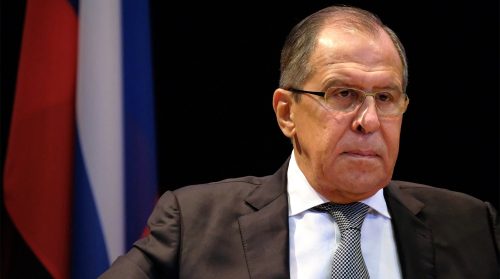
The West is attempting to use the Ukraine conflict to portray Russia as a “rogue state” in the eyes of the world, Foreign Minister Sergey Lavrov said on Wednesday. He stressed that the strategy has not been successful.
“The US and its satellite states are waging an all-encompassing hybrid war that they have long been preparing for, and are using Ukrainian radical nationalists as a battering ram against us,” Lavrov said in a speech in the lower house of the Russian parliament, the State Duma.
“They are not even trying to hide the goal of this war: it is not only to defeat our country on the battlefield and destroy our economy, but also to surround us with a ‘sanitary cordon’ and turn us into a type of a rogue state.”
The statement came the same day that European Commission President Ursula von der Leyen unveiled proposals for a new sanctions package against Russia, including additional export bans and measures to prevent the bypassing of restrictions.
Lavrov said that the West’s efforts to isolate Russia have failed because Moscow continues to develop relations with partners in other areas of the globe. He added that nations that have refused to back the “unprecedented” sanctions make up the majority of the world’s population.
The countries of the Asia-Pacific, the Middle East, Africa, and South America “don’t want to live in accordance with the West-centric order,” the Russian minister stated. “So it makes perfect sense why three-quarters of the world’s countries have not joined the anti-Russian sanctions and have a reasonable view regarding the situation in Ukraine.”
China and India are among the major economies that have refused to impose restrictions on Moscow. Denis Alipov, Russia’s ambassador to New Delhi, said on Tuesday that sanctions “had an opposite effect” and facilitated more trade and closer cooperation between Russia and India.
Beijing, meanwhile, has accused the US of fueling the Ukraine conflict and trying to weaponize the world economy for its own benefit.
Peru’s Congress Refuses Early Elections, Heightening Tensions as Protests Rage
By Wyatt Reed – Sputnik – 02.02.2023
Peruvian legislators shot down any remaining chance of a peaceful resolution to protests that have already seen around 60 demonstrators killed by security forces.
The Congress of Peru voted down a proposal to move up presidential and legislative elections to 2023, complicating efforts to end the deadly crisis that has gripped Peru since ousted President Pedro Castillo was forced from power and jailed by security forces nearly two months ago.
With just 53 legislators in support, lawmakers fell far short of the 87 votes needed to advance the initiative after five hours of debate.
Legislators from elite-dominated parties reportedly insisted that early elections were “unconstitutional” and complained that members of Peru’s notoriously-unpopular Congress should be allowed to finish their term.
Demonstrators have been calling for the liberation of Castillo, a new constitution, and for Congress to be dissolved.
The lawmakers’ refusal to budge on the issue of early elections means demonstrators have little incentive to leave the streets. After seven weeks of daily protests, participants have so far shown little intention of packing up and leaving.
“There is no truce,” one Peruvian journalist wrote following the proposal’s rejection.
“The demonstrations against the government of Dina Boluarte continue in #Lima the same day that Congress denied the possibility of an advance of general elections.”
Widespread pushback against the newly-formed Peruvian regime of Dina Boluarte began on December 7, after Castillo was charged with rebellion over accusations that he attempted to “illegally” dissolve Congress, which holds an abysmal approval rating of just 7% per latest polls.
Boluarte herself isn’t faring much better. The most recent survey available shows just 21% of Peruvians approve of her performance and 63% want the unelected head of the regime to resign immediately.
Scholtz failed to secure support for Ukraine on his tour of South America
By Ahmed Adel | February 2, 2023
German Chancellor Olaf Scholz’s trip to Argentina, Brazil and Chile was with the aim of involving them in the Ukraine conflict and to create a regional counterweight to China’s growing influence. These are similar actions already made by the US in South America and one that we can also expect from other European powers.
Scholz’s visit is an attempt to restore influence in a region that has been empowered by China and Russia to forge an independent path that is not under the umbrella of the “Monroe Doctrine.” It is not a coincidence that the German Chancellor visited the region just days after the Summit of the Community of Latin American and Caribbean States (CELAC), at which member states sought to strengthen regional integration in the context of Western powers attempting to prevent Latin America from strengthening relations with Russia and China.
Behind Scholz’s visit was the fact that China has become very close to Latin America. Therefore, it is in Berlin’s interest to note this competition between the Great Powers in South America and follow the trends that are emerging in the region rather than just behave as Washington’s representative.
It cannot be overlooked that South America, especially Chile, has large lithium reserves. Scholz’s visit is a form of US and European effort to effectively make the Chilean economy work in their own interest, as was the case when the US installed Augusto Pinochet as dictator in 1973.
The West’s imperial attitude of previous centuries remains the same, but, now with China’s thirst for resources, South American countries are finding a way out from the grasp of US hegemony. It is reminded, for example, that Chile’s main copper export partner today is China and not the US.
Both Washington and Berlin want major Latin American countries, like Chile, to ratify commercial, diplomatic, and political relations with the West so that they are not absorbed into China’s sphere of influence. This is an endeavour that will take many years to undergo because China is already entrenched in the region, something that is problematic for Germany as they need immediate solutions to the self-imposed energy crisis caused by sanctions on Russia.
Germany’s own self-destructive policies made it show an interest in a region that it never traditionally did. If the war in Ukraine was not occurring, it is more than likely that Berlin would not be in a hurry to forge new relationships for alternative energy sources. The issue is that Germany wants to impose its own liberal ideology over Latin America as a condition for trade, which means a cut in trade and relations with China and Russia.
South America is not only an important source of resources, but is a major region that refuses to cut trade and diplomatic relations with Russia. Whatever anticipation or expectation Scholz had on his trip were quickly dashed as he did not find the response he was expecting from his Latin American counterparts. The positions of the leaders of Argentina, Brazil and Chile reflects the fact that these governments know how to distinguish economic cooperation from political dependence.
Involving Latin America in the Ukraine conflict is something that will face widespread rejection. For example, although new Brazilian President Luiz Inacio Lula da Silva “emphatically deplored Russia’s violation of Ukraine’s territorial integrity and annexation of parts of its territory as flagrant violations of international law” in a joint statement released with Scholtz on January 30, his government’s policies towards Russia have not deviated far from his predecessor Jair Bolsonaro.
However, Lula also confirmed that Brazil would not provide ammunition to Ukraine for German-made Gepard anti-aircraft guns, as reportedly requested by Berlin, and insinuated that Ukraine was not seeking peace. Effectively, Lula is happy to pay lip service to the West but will not take any concrete action in matters related to the war in Ukraine.
In the same light, Argentina and Chile’s leaders also ended any German hope that they might lend support for Ukraine despite the fact that they were happy to condemn Russia’s military operation as an “invasion”. On his Latin America tour, Scholz wanted to demonstrate that international unity against Russia extends beyond the Western World, but only managed to secure some statements that are unlikely to damage relations with Moscow.
For his part, Lula said Brazil will work with other countries to help achieve peace in Ukraine as his country has not taken sides – something objectively true despite some damning rhetoric. In fact, likely to the annoyance of the German Chancellor, Lula said that China has an important role to play in peace talks, which he said he will discuss on a planned visit to Beijing in March.
It can be said that although Scholz’s trip can serve as a foundation for German-South American relations, his main goals – to secure support for Ukraine and to make advances in the resource industry only found limited success. Although he secured some rhetoric against Russia, he could not secure any material support for Ukraine. At the same time, although Germany has pitched its entry into the resource market, there is no guarantee that it will come to fruition or even challenge China’s dominance in the region.
Ahmed Adel is a Cairo-based geopolitics and political economy researcher.
State of emergency declared in Peru amid deadly protests
RT | January 15, 2023
The Peruvian government has introduced a state of emergency in a number of provinces in a bid to tackle violent anti-government protests. The South American country has been gripped by unrest since early December 2022, when President Pedro Castillo was removed from office and arrested over accusations of corruption.
The former president’s supporters, who claim the ouster was a coup, have been taking to the streets and clashing with security forces ever since. Castillo has denied any wrongdoing, insisting that his removal was orchestrated by his political opponents.
The decree introducing the state of emergency was published in Peru’s official daily newspaper, Diario Oficial El Peruano, late on Sunday.
The decree took effect on January 15 and will last for thirty days. It covers three regions, three provinces, and one district, mostly in the south of the country. The capital city of Lima and surrounding areas are among them. Five major highways were also included in the measure.
Where the state of emergency is in effect, Peru’s National Police has been charged with maintaining order with the support of the military.
Under the decree, local residents are prohibited from gathering in groups, while security forces can detain them if they deem it necessary, and can also enter and search homes.
Moreover, a curfew has been imposed from 8:00 pm to 4:00 am for ten days in the southern department of Puno. The restrictions were imposed after violent clashes left 18 people dead in the region. Certain exceptions are envisaged for the purchase of food or to seek medical care, while workers in a number of critical professions are also allowed to move about freely.
On Friday, President Dina Boluarte apologized to the nation for the violence that has so far claimed 47 lives.
She insisted, however, that she will not resign, and claimed “foreign provocateurs and infiltrators” may have played a role in the deadly unrest.
Genocide Investigation Launched Against Peruvian Authorities Following Massacre
By Wyatt Reed – Samizdat – 11.01.2023
A new government probe suggests the tide may be turning against the US-backed government which seized power in Peru last month, depriving President Pedro Castillo of his power.
Peru’s Attorney General has opened an investigation into the country’s new leaders after over a dozen Peruvians were killed in confrontations with security forces.
According to local media, officials are investigating the politicians for the crimes of genocide, homicide, and inflicting grievous injuries.
“The preliminary investigation is related to the alleged crimes of genocide, murder, and grievous bodily harm committed during the demonstrations of December 2022 and January 2023 in the regions of Apurimac, La Libertad, Puno, Junin, Arequipa, and Ayacucho,” reads a statement issued by the office.
Much of the upper echelon of Peru’s new authorieis are reportedly being scrutinized, including the self-declared president, Dina Boluarte, Prime Minister Alberto Otárola, Interior Minister Victor Rojas, and Defense Minister Jorge Chavez.
On Tuesday morning, left-leaning Congresswoman Ruth Luque asked the Attorney General’s office to probe the role played by high-ranking officials of the Boluarte cabinet in its crackdown on pro-Castillo protesters that left at least 17 Peruvians dead in the Southern city of Juliaca Monday.
The investigation comes as Peru’s notoriously unpopular legislature gave its approval to a vote of confidence aimed to legitimize the new government.
On Friday, Peru’s Attorney General opened an earlier investigation into the the new cabinet, which stands accused of killing dozens of demonstrators and bystanders amid the ongoing political crisis.
Massive protests have consumed Peru since the ouster of Peruvian President Pedro Castillo, who was arrested hours after attempting to dissolve parliament after lawmakers proceeded with an impeachment vote. He has remained in police custody since his detainment.
Peru: General Strike Continues Despite Repression
Kawsachun News | January 9, 2023
The general strike against Peru’s coup regime is on its sixth consecutive day with barricades and roadblocks erected across the country. The weekend also saw countless illegal arrests of protesters and journalists.
According to authorities, protesters have blocked highways at 45 different points. The indigenous Aymara region of Puno is the center of opposition to the regime, with the highest number of barricades erected along highways. The roads connecting Puno to Arequipa, Cusco, and the Amazon, are among those currently blocked.
In Lima, 224 people were detained on Friday for participating in protests organized by workers’ unions. Nevertheless, the transport workers union has announced that they will join the general strike “if this is the only way for them to listen to us,” said their general secretary Ricardo Pareja.
The possibility of dialogue appears unlikely after the Confederation of Peruvian Workers (CGTP), the largest union confederation, announced that it would not participate in the ‘National Agreement Session’ organized by the regime. The unions say that there cannot be social peace while the Peruvian people are being massacred, tortured, and killed for using their right to social protests.
The regime of Dina Boluarte has killed more than 30 protesters, mostly indigenous, since the coup against Pedro Castillo. Strike demands include the resignation of Dina Boluarte, new elections, a constituent assembly, and the release of Pedro Castillo.
Peru Mourns ‘Massacre’ of 17 as Calls Grow for US-Backed ‘Coup Regime’ to Step Down
Samizdat – 10.01.2023
A shockingly bloody day of violence threatened to upend the new coup-borne regime’s grip on power as Peruvians reacted with horror to the deadliest day so far in the political struggle that has rocked the country for over a month.
Thousands of Peruvians took to the streets throughout the country on Tuesday as memorial services were held in the city of Juliaca for the 17 people killed Monday in what victims families’ are calling a “massacre” by the Andean country’s security forces.
At least two of the deceased – a boy and a girl – were reportedly children. According to a health ministry official in the Puno region of Peru, another 68 victims suffered injuries in Monday’s violence.
Videos showing several of the killings circulated widely on social media Monday night, as condemnations rolled in from across the globe.
“In the name of the sacred right to life, of the rights of indigenous peoples recognized by UN and international organizations, in the name of peace and social justice, we demand that the massacre of our brothers in Perú stop,” wrote former Bolivian President Evo Morales, who was labeled ‘persona non grata’ and barred from entering the country just hours beforehand.
It was by far the deadliest day of the chaos that has wracked Peru since its first working-class indigenous president, Pedro Castillo, was overthrown last month. Castillo has been jailed ever since, following what leaders of countries throughout the region have condemned as a coup d’etat.
The head of the intensive care unit of the Carlos Monge Medrano Hospital in Juliaca, Jorge Sotomayor Perales, reportedly suggested that authorities used lethal expanding bullets in the bloody crackdown. In comments given to journalists Monday evening, Sotomayor noted the gunshot victims had “no exit wounds” but had “their internal organs destroyed.”
“I want to call on the central government – how can we have so many dead?” he asked.
On Tuesday, as the regional government began observing a three-day mourning period in honor of those killed, Prime Minister Alberto Otarola responded with an announcement of his own: a three-day nighttime curfew in Puno, extending from 8 p.m. local time until 4 a.m.
Without providing evidence, Otarola insisted in a news conference Monday night that “foreign interests” and “drug traffickers” were to blame for the killings. The former Defense Minister Otarola ascended to his current position just weeks ago and has emerged as one of the prime beneficiaries of the coup.
Observers point to his meeting with US Ambassador Lisa Kenna, just two days before Castillo was arrested, as evidence of US support for the putsch. After the coup’s consummation, the US Embassy immediately extended its recognition to the controversial regime, which imposed itself on Peru under the figurehead of self-styled ‘President’ Dina Boluarte.
As of publishing, Boluarte still had yet to comment on the spate of seemingly state-backed killings in Juliaca.
However, on Tuesday evening, Peru’s human rights office called on “all qualified institutions to investigate and punish those responsible for all the deaths that have occurred in the last hours in Juliaca.”
Hours beforehand, a representative for the Office of the UN High Commissioner for Human Rights said the international body was also “very concerned at the rising violence in Peru.”
In a statement urging the Boluarte regime to “comply with human rights standards and ensure that force is only used when strictly necessary,” and insisting “the rights to freedom of expression and of peaceful assembly must be respected and protected,” spokesperson Marta Hurtado noted that “one medical worker was killed while administering aid.”
The medical worker in question, Marco Antonio Samillan Sanga, was reportedly killed by the regime’s forces Monday while attempting to treat other victims.
In comments given to local media, his sister Milagros said that prior to his death, Sanga was on the verge of receiving his medical degree and dreamed of being “the best neurosurgeon in Juliaca.”
He was wearing his medical scrubs when he was killed while tending to the wounded “because of the goodwill and empathy that he had,” she said.
“How is it possible that they [give the] order to kill like that? How is it possible that President Dina Boluarte gives the order to kill whoever she wants?” she asked.
As Peruvians across the country awoke to the horrifying news, she was hardly the only one to demand answers.
On Tuesday, the Attorney General’s office announced it was opening an investigation into the role played by Boluarte and Otarola in the apparent state-sponsored massacre following a criminal complaint by Peruvian Congresswoman Ruth Luque, who wrote in the early hours that the “deaths cannot go unpunished.”
Qassem Soleimani in Venezuela: The lesser known motive behind his assassination
By Hasan Illaik | The Cradle | January 3, 2023
On 3 January 2020, the US military assassinated Iranian Major General Qassem Soleimani, the commander of the elite Quds Force in the Islamic Revolutionary Guard Corps (IRGC), along with his companion, the deputy head of Iraq’s Popular Mobilization Units, Abu Mahdi al-Muhandis.
Three years later, the motives for this decision – and its timing -are still being debated. The reasons for the US’s shock killing, however, may not be solely related to Soleimani’s role in regional conflicts, but could also arguably stem from his growing international clout.
Why was Soleimani assassinated?
Soleimani was reportedly responsible for leading Iran’s plan to surround Israel with an arc of missiles and precision drones in the West Asian region – from Lebanon to Syria, Iraq and Gaza, all the way to Yemen – which was viewed by Israeli officials as an existential threat to the Jewish state.
The US has long accused Soleimani of being behind much of the resistance it faced after invading Iraq in 2003, as well as allegedly ordering operations against US forces in the period leading up to his assassination.
The Quds Force commander – along with Muhandis – were critical in the Iraqi effort to defeat ISIS, outside of the control and agenda of the US and its regional allies, who often used the terrorist group to secure political and geographic gains.
Furthermore, the US held Iran, and by extension Soleimani, responsible for the Yemeni attack on Saudi Arabia’s Aramco oil facilities on 14 September, 2019. The Aramco attack was so massive that it disrupted half of Saudi oil production, and was the largest of its kind since former Iraqi President Saddam Hussein’s invasion of Kuwait in 1990.
A leader in the Resistance Axis
Soleimani was the “keyholder” in the Axis of Resistance, according to an Arab politician with strong ties to decision-making circles in both Washington and Riyadh.
“Hajj Qassem,” says the politician, was uniquely capable of making decisions and then implementing them, which is considered a “rare advantage” among leaders. He was able to achieve significant strategic results – rapidly – by moving freely and negotiating directly with various statesmen, militias, and political movements.
Examples of this are rife: The Quds Force commander persuaded Russian President Vladimir Putin in 2015 to intervene militarily in Syria, and organized the complex ‘frenemy’ relationship between Turkiye and Tehran through Turkish intelligence director Hakan Fidan.
Soleimani played a pivotal role in preventing the fall of Damascus, maintained and developed important links with Lebanese resistance movement Hezbollah in Beirut, led a region wide campaign to defeat ISIS, and successfully managed the delicate balances between various political components in Iraq. In Yemen, he was able to supply the Ansarallah movement with training and arms that arguably changed the course of the Saudi-led aggression.
Together or separately, the aforementioned points made him a desired target of assassination for both the US government and the security establishment in Israel.
A visit to Venezuela
There may, however, be additional factors that contributed to the US decision to assassinate Soleimani on 3 January, 2022. While some analysts cite, for instance, the storming of the 2019 US embassy in Baghdad by demonstrators three days before the extrajudicial killing, US decision makers were unlikely to have mobilized its assassins in reaction to this relatively benign incident.
More significant for them would have been Soleimani’s unannounced trip to Venezuela in 2019, which crossed Washington’s red lines within its own geographic sphere of influence.
His visit to the South American country was publicly revealed more than two years later by Venezuelan President Nicolas Maduro, during an interview with Al-Mayadeen in December 2021.
Maduro stated that Soleimani visited Caracas between March and April 2019, during which time the US launched a cyber and sabotage attack on Venezuela, resulting in widespread power outages. He glorified the Iranian general as a military hero who “combated terrorism and the brutal terrorist criminals who attacked the peoples of the Axis of resistance. He was a brave man.”
Although Maduro did not reveal the exact date of the visit, it can be assumed that it took place on 8 April, 2019, and that Soleimani came on board the first direct flight of the Iranian airline Mahan Air between Tehran and Caracas.
At that time, the US attack on Caracas was at its peak: Washington’s recognition of Juan Guaidó as president of Venezuela, comprehensive economic sanctions, and then, at the end of April, the organization of a coup attempt that succeeded only in securing the escape of US-backed opposition leader Leopoldo Lopez to the Spanish embassy.
Expanding military ties with Caracas
During Soleimani’s Caracas visit, military cooperation between Iran and Venezuela was likely a key topic of discussion. Prior to his visit, Maduro had announced the establishment of “People’s Defense Units,” or revolutionary militias, to maintain order in the face of US-backed coup attempts.
Both Iranian and Latin American sources confirm that Tehran had a role in organizing these militias. However, the most significant military cooperation between the two countries has been in the field of military industrialization.
Since the tenure of late, former President Hugo Chavez, Venezuela has been working on a project to manufacture drones. This was announced by Chavez on 13 June, 2012, noting that “We are doing this with the help of different countries including China, Russia, Iran, and other allied countries.”
A few months earlier, the commander of the US Army’s Southern Command SOUTHCOM (its assigned area of responsibility includes Central and South America), General Douglas Fries, spoke about the same project, downplaying its importance by claiming that Iran was building drones with “limited capabilities” in Venezuela for internal security purposes.
Developing drones
In fact, Iran, represented by Soleimani’s Quds Force, was busy increasing military cooperation with Venezuela by developing new generations of drones and providing Caracas with spare parts for its existing American-made aircrafts. Interestingly, the raising of the Iranian flag has become routine in the Venezuelan Air Force’s military ceremonies.
On 20 November, 2020, President Maduro delivered a speech announcing plans to produce different types of drones. Near him, on display, was a miniature model of a drone which appeared to be that of the Iranian “Muhajer 6” aircraft that entered service in Iran in 2018.
This issue was raised by then-Israeli Minister of Defense, Benny Gantz, while receiving the heads of American Jewish organizations in February 2022.
Soleimani’s legacy in Latin America
These developments were the direct result of Qassem Soleimani’s efforts. A Venezuelan official has confirmed to The Cradle that the country’s drone project was built with full Iranian support: from training engineers to setting up research and manufacturing centers, all the way to production.
In October 2019, the commander of US Southern Command, Navy Admiral Craig S. Faller, warned that Russia, China, Iran and Cuba were operating in varying capacities in SOUTHCOM’s area of responsibility. He noted, specifically, that Iran’s influence and presence is being felt in South America.
In March 2020, the US SOUTHCOM commander repeated the same warning, placing Iran at the “top of the list of countries” that have assisted Venezuela in skirting US sanctions.
The US has long viewed Latin America as its “backyard” and has sought to prevent the influence of rival or hostile powers in the region through its adherence to the Monroe Doctrine. The influence of Soleimani in the western hemisphere may have been viewed as a threat to US interests and a crossing of this “red line.”
His role in assisting Venezuela in developing military capabilities, including the production of drones, was seen in Washington as a qualitative leap in Iran’s foreign relations and was likely a factor in the decision to assassinate Soleimani.
25 Peruvians Murdered in a Week of Intense Repression

“Terrorists are the lawmakers and the Lima City’s press.” | Photo: Twitter/ @mario_campa
teleSUR | December 19, 2022
On Sunday, Peru’s Health Ministry acknowledged that 25 people have died during the protests against President Dina Boluarte and in favor of an immediate call for general elections.
According to official data, the departments where these deaths occurred were Ayacucho (9), Apurimac (6), Cusco (3), Junin (3), La Libertad (3), and Arequipa (1).
The Health ministry also reported 287 injured people who have already been discharged. They are distributed as follows: Apurimac (56), Ayacucho (45), Lima (37), La Libertad (36), Arequipa (35) , Junin (35), Cusco (16), Puno (15), and Huancavelica (12).
Nevertheless, 69 people remain hospitalized in Ayacucho (20), Junin (17), La Libertad (12), Ucayali (6), Apurimac (5), Lima (4), Arequipa (4), and Huancavelica (1).
Boluarte announced that the Public Ministry and the Military Justice would investigate the death of civilians during the social protests.
On Tuesday, she will appoint new officials to replace the president of the Council of Ministers and the ministers of education and culture, who resigned on Dec. 16 after stating their disagreement with the violent repression of the population.
Peruvians have been staging huge protests since Dec. 7, when Congress appointed Dina Boluarte as president after removing Pedro Castillo, who is currently sentenced to 18 months in preventive prison for rebellion. Mexico will grant political asylum to his family.
Pentagon exploits post 9/11 laws to wage ‘secret wars’ worldwide: Report
The Cradle | November 9, 2022
A report released last week by the New York University School of Law’s Brennan Center for Justice details how the US Department of Defense (DoD) has been allowed to covertly deploy troops and wage secret wars over the past two decades in dozens of countries across the globe.
Among the nations in West Asia affected by these so-called ‘security cooperation authorities’ are Lebanon, Iraq, Syria, and Yemen; however, they also include many African and Latin American nations.
Known as ‘security cooperation authorities,’ they were passed by the US Congress in the years following the 11 September attacks, and are a continuation of the 2001 Authorization for Use of Military Force (AUMF), a piece of legislation that has been stretched by four successive governments.
According to the report, the AUMF covers “a broad assortment of terrorist groups, the full list of which the executive branch long withheld from Congress and still withholds from the public.”
Following in this tradition, the ‘security cooperation authorities’ being abused by the Pentagon are Section 333 and Section 127e of Title 10 of the United States Code (USC).
Section 333 authorizes the US army to “train and equip foreign forces anywhere in the world,” while Section 127e authorizes the Pentagon to “provide support to foreign forces, paramilitaries, and private individuals who are in turn supporting US counterterrorism operations,” with a spending limit of $100,000,000 per fiscal year.
However, thanks to the vague definition of ‘support’ and ‘training’ in the text of these laws, both Section 333 and Section 127e programs have been abused to target “adversarial” groups under a strained interpretation of constitutional self-defense; they have also allowed the US army to develop and control proxy forces that fight on behalf of – and sometimes alongside – their own.
As a result of this, in dozens of countries, these programs have been used as a springboard for hostilities, with the Pentagon often declining to inform Congress or the US public about their secret operations under the reasoning that the incidents are “too minor to trigger statutory reporting requirements.”
“Researchers and reporters uncovered Section 127e programs not only in Afghanistan and Iraq, but also in Cameroon, Egypt, Kenya, Lebanon, Libya, Mali, Mauritania, Niger, Nigeria, Somalia, Syria, Tunisia, and Yemen,” the report highlights.
Researchers also point out that defense authorities “have given little indication of how [they] interpret Section 333 and 127e.”
Even more concerning, and ignoring the damage caused by these ‘anti-terror’ laws, the US Congress recently expanded the Pentagon’s security cooperation authorities, particularly with Section 1202 of the National Defense Authorization Act (NDAA).
Section 1202 allows the US army to allow “irregular warfare operations” against “rogue states” like Iran or North Korea, or “near-peers,” like Russia and China.
The report comes at a time when the US army and its proxy militias are accused of illegally occupying vast regions of Syria and Yemen, looting oil from the war-torn countries, just over a year after their brutal occupation of Afghanistan ended. Moreover, a former US official on Tuesday revealed that anti-Iran militias are being armed in the Iraqi Kurdistan Region (IKR), where both the CIA and the Mossad are known to operate.
US wants to build military bases in Uruguay
By Ahmed Adel | November 7, 2022
A draft defence cooperation agreement between Washington and Montevideo, which could allow the installation of US military bases in Uruguay, is once again being considered in the Uruguayan Parliament. Allowing US military bases would effectively damage the sovereignty of Uruguay, a country which currently maintains good relations with both Russia and China.
Senator Gustavo Penadés for Uruguay’s ruling centre-right National Party claimed that the project only involves “some type of investment in construction” and not the permanent presence of US forces in Uruguayan territory. For his part, the president of the Uruguayan Defence Commission and of the opposition centre-left Broad Front, León Lev, admitted that the project is “ambiguous” and will instigate “profound discussion” in Parliament.
The project is defined as “a complementary agreement” for “reciprocal provision” of “logistical support, supplies and services.” It says that Uruguay and the US express their “desire to improve the interoperability, preparation and efficiency of their respective military forces through greater logistical cooperation.” In addition, the purpose of the agreement is to “facilitate logistical support” between the two countries during “combined exercises, training, displacements, stopovers, operations or other cooperative activities.”
Effectively, it is very clear that the bilateral agreement will in fact enable US actions more than anything else. For example, the supply of services that can be provided to each other in reality only benefits the US as Uruguay does not have the capacity to do military missions or operations in North America like the US does in South America. It cannot be overlooked that the initiative is from the US and is drafted in the terms that it proposed.
The project was first discussed in 2012, during the government of José Pepe Mujica, but it did not have the support of parliament. Today, just like in 2012, if the parliament authorises it, it would mean a loss of Uruguayan sovereignty over a part of its territory.
According to Senator Penadés, there is no possibility of US bases in Uruguay and he believes that this interpretation of the agreement is incorrect. The legislator claimed that it is a “standard agreement” like the ones that have been signed between the US and other countries on defence cooperation. When asked what the project refers to when it says “operations in bases [and the construction corresponding to that support],” Penadés said it is about the “infrastructure” that is built in “cooperation,” such as, according to him, hospitals.
For his part, Lev affirmed that the project is “ambiguous” and will provoke “very deep discussion” in parliament.
“As it is ambiguous, it is going to give rise to at least a very deep discussion, I have no doubt. This is not going to be voted on tables and this discussion is going to take many months, if not years. But one can never anticipate,” he said, adding: “There are two main laws for the Government, such as the organic law of the Armed Forces and the retirement law. Parliament is not in a position to quickly study this project.”
Lev pointed out that, in general, agreements with foreign countries take months or years to approve.
“An issue of this nature, with the ambiguities, especially with this potential base, is going to generate a deep debate. The Uruguayan government does not propose the agreement, it makes a scheme with the US and proposes what Washington aspires to. But in politics one should never rush. One has to carefully analyse and see the actions of the political system,” Lev said.
The underlying issue is that the Uruguayan military’s limited defence budget means that it is reliant on the generosity of donor nations. In one example, the US State Department GPOI funds contributed $36 million since 2008 in equipment, training, and construction for the Uruguayan Armed Forces. This is evidently a paltry amount, but in the context of the Uruguayan military, which has a total budget of $1.16 billion, it is significant.
It is recalled that Daniel Castillos, Uruguay’s Ambassador to Moscow, announced in April that his country does not support the economic sanctions on Russia.
“Despite the current situation and criticism regarding [Russia’s] special military operation [in Ukraine], Uruguay has not imposed and does not support any economic and financial sanctions against Russia… and maintains an interest in strengthening trade and maintaining good relations,” he said, adding that it was “necessary” to cooperate with Russia.
For the US, it is important that initiatives like the defence cooperation agreement are signed with Uruguay so that the country can be brought under its sphere of influence. Uruguay currently has friendly relations with the US, Russia and China, but Washington hopes to upset this balance by slowly influencing the country, beginning with military bases. For now, although the US undoubtedly has ambitions for military bases in Uruguay, it appears unlikely to happen in the short and medium term.
Ahmed Adel is a Cairo-based geopolitics and political economy researcher.
Featured Video
Chinese jet fuel and the myth of energy independence
or go to
Aletho News Archives – Video-Images
Book Review
Former Insiders Criticize Iran Policy as U.S. Hegemony
By GARETH PORTER | CounterPunch | February 27, 2013
“Going to Tehran” arguably represents the most important work on the subject of U.S.-Iran relations to be published thus far.
Flynt Leverett and Hillary Mann Leverett tackle not only U.S. policy toward Iran but the broader context of Middle East policy with a systematic analytical perspective informed by personal experience, as well as very extensive documentation.
More importantly, however, their exposé required a degree of courage that may be unparalleled in the writing of former U.S. national security officials about issues on which they worked. They have chosen not just to criticise U.S. policy toward Iran but to analyse that policy as a problem of U.S. hegemony. … continue
Blog Roll
 Aletho News
- Chinese jet fuel and the myth of energy independence
- Ukraine Sea Drone Fired From Libya Hit Russian Tanker in Mediterranean
- IRGC: Iranian forces launched no attacks during ceasefire hours
- Trump Administration Moves To Automate U.S. Military Draft Registration
- Spain orders reopening of Tehran embassy, condemns Israel’s carpet bombing of Lebanon
- Israel faces ‘unsustainable’ strategic crisis following 40-day war against Iran: Analyst
- Iran restricts Hormuz access to 15 vessels per day under ceasefire terms: Report
- The ‘Opposition Party’ Has Done Nothing to Stop the Iran War and Much to Goad Trump Into Continuing It
- Moscow backs Tehran on status of Lebanon in US-Iran deal
- How UK Regulator Ofcom Quietly Bypassed International Law to Police American Speech
- If Americans Knew
- Amnesty: Urgent – Protect Lebanese civilians from brutal escalation in Israeli attacks
- Is The War Against Iran Over?
- Inside the Israeli army’s propaganda wing
- Hundreds of Gaza Amputees Stranded in Legal Limbo
- The gallows law: Israel moves toward executing Palestinian children
- Tucker Carlson: The Path to Peace requires ending ‘special alliance’ with Israel
- This is ceasefire? Israel’s biggest massacre yet in Lebanon, another journalist killed in Gaza – Daily Update
- Tucker Carlson on Israel: This Is the Behavior of an Ally? Really?
- Gazans face a triple crisis: severe shortages of water and bread, healthcare in tatters
- NY Times reports how Netanyahu took the US into Iran War
- No Tricks Zone
- An Inconvenient Tree: Uncovered In Alps… Europe Much Warmer Than Today 6000 Years Ago
- New Study Reports A 60% Slowdown In Greenland’s Ice Loss Rate In The Last Decade
- Low Intensity Tornado Wrecks Major Solar Farm, Creating A Potential Toxic Dump
- New Study Finds Warming Saves Lives…Cold Temperatures 12 Times More Deadly Than Excess Heat
- German Science Blog Accuses PIK Climate Institute Of Hallucinating Climate Tipping Points
- Devastating Assessment Of Comirnaty Vaccine By Former Senior Pfizer Europe Toxicologist
- New Study: CO2 Is ‘Effectively Negligible’ As An Explanatory Climate Change Factor Since 2000
- Former Pfizer Toxicologist Dr. Helmut Sterz Tells Bundestag Hearing Pfizer Vaccine Should Have Never Been Approved
- Energy Expert: Germany’s Nuclear Phaseout Was A “500 Billion Euro Mistake”
- New Research: South Australia’s Mid-Holocene Sea Surface Temperatures Were 4°C Warmer Than Today
 Aletho News