UK to Deploy Royal Navy Warship to Ex-Colony Amid Guyana-Venezuela Dispute
By Svetlana Ekimenko – Sputnik – 24.12.2023
Guyanese President Irfaan Ali and Venezuela’s leader Nicolas Maduro met in mid-December under the aegis of the Community of Latin American and Caribbean States and the Caribbean Community to defuse tensions around the disputed region of Essequibo. The two agreed to “continue dialogue to resolve the dispute over the Essequibo territory.”
The UK has decided to re-task Royal Navy warship the HMS Trent and deploy it to Guyana after Christmas, according to British media reports.
Instead of scouring the Caribbean in search of drug smugglers, the warship will take part in joint naval exercises with the former British colony and Commonwealth member. The decision was reportedly prompted by the current flare-up of the territorial dispute between Guyana and Venezuela.
“HMS Trent will visit regional ally and Commonwealth partner Guyana later this month as part of a series of engagements in the region during her Atlantic Patrol Task deployment,” a UK Ministry of Defense spokesperson was cited as saying.
The HMS Trent is a Batch 2 River-class offshore patrol vessel, named after the River Trent. Commanded by Commander Tim D. Langford, it is designed to carry out tasks that include “counter-piracy, anti-smuggling, fishery protection, border patrol, counter terrorism, humanitarian aid, search and rescue, general patrols and defence diplomacy,” as per the Royal Navy website.
The warship will stay in Barbados, the Caribbean region of the Americas, during Christmas, after which it will be heading for Guyana. Its activities will reportedly be carried out at sea, and will not involve docking in Guyana’s capital, Georgetown.
Earlier in December, when Britain’s Foreign Office Minister for the Americas and Caribbean David Rutley visited Guyana, he was quoted as saying that the UK would work internationally “to ensure the territorial integrity of Guyana is upheld.”
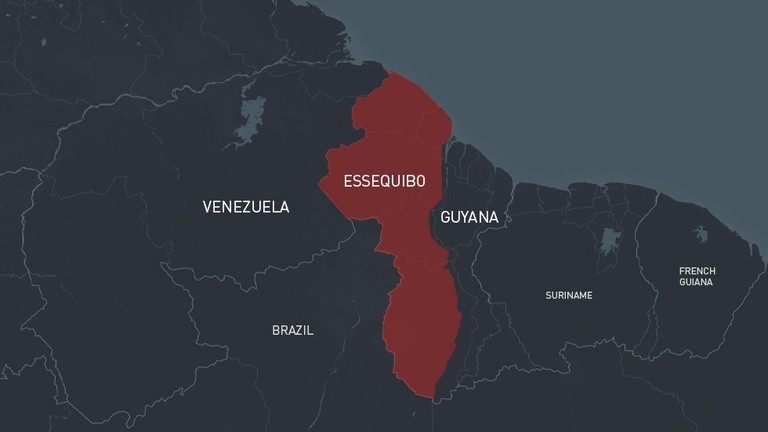
The border between Guyana and Venezuela, which runs through the Guyana-Essequibo region, known for its abundant oil reserves, has been a source of territorial dispute for several decades.
Venezuela gained independence from Spain in 1845 and recognized Essequibo – a zone of 160,000 sq. km – as part of its sovereign territory. In 1899, however, the United Kingdom filed and won an arbitration claim to recognize Essequibo as part of its then-Caribbean colony of British Guiana. Independent Guyana referred the dispute to the International Court of Justice (ICJ) in 2018. This came after Venezuela’s President Nicolas Maduro objected to former Guyanese president David Granger granting oil exploration rights off the Essequibo coast to ExxonMobil, the US-French oil transnational.
Venezuela held a referendum earlier this month in which almost 96% of the population voted in favor of incorporating the Essequibo region, which makes up two-thirds of the territory controlled by Guyana, into the country. Venezuelan President Nicolas Maduro put forward a proposal to the parliament, suggesting the establishment of Venezuela’s 24th state, named Guyana-Essequibo. He also produced a new map showing the disputed region of Essequibo as part of Venezuela. Besides referring to Essequibo as a “zone of integral defense,” Venezuela’s president proposed a deadline of three months for oil companies to halt offshore operations in the area. Last Sunday, a referendum was conducted to reaffirm Caracas’s claim to Essequibo. The majority of citizens voted in favor of establishing a state on the disputed territory.
According to Venezuelan media, President Nicolas Maduro has already officially signed decrees to incorporate the western region of neighboring Guyana into Venezuela, ratifying a total of six documents. In addition, Maduro signed a decree facilitating the creation of specialized units within the state oil and gas company PDVSA — PDVSA Essequibo and the Guyana Venezuelan Corporation — CVG Essequibo. To oversee the newly formed state, Major General Alexis Rodriguez Cabello was appointed as the sole head of the 24th state.
Venezuela and Guyana have since agreed not to threaten or use force in any circumstances to settle the dispute, as per a joint statement, published by Venezuelan President Nicolas Maduro. The sides also agreed to meet in Brazil within the next three months to “consider any matter with implications for the territory in dispute” and immediately establish a joint commission on the level of foreign minister and experts to address the dispute.
Venezuela, Guyana to hold talks on disputed Essequibo region
RT | December 10, 2023
The presidents of Venezuela and Guyana – Nicolas Maduro and Mohamed Irfaan Ali, respectively – will sit down next week to discuss a long-standing territorial dispute that has recently intensified, the prime minister of Saint Vincent and the Grenadines has revealed. While Caracas has laid claim to the oil-rich Esequibo region since the late 19th century, President Maduro recently took steps toward gaining actual control over the area, which covers some 160,000 square kilometers.
Earlier this week, the Spanish daily El Pais reported that the Venezuelan government had deployed troops to the border with Guyana.
Saint Vincent and the Grenadines PM Ralph Gonsalves, who also serves as president pro tempore of the Community of Latin American and Caribbean States (CELAC), broke the news after speaking with Maduro on Saturday, saying the negotiations would take place on Thursday.
The Venezuelan government has confirmed the planned talks, saying they hoped to “preserve our aspiration to maintain Latin America and the Caribbean as a zone of peace.”
The Office of the President of Guyana, for its part, stressed that “Guyana’s land boundary is not up for discussion.”
Also on Saturday, Brazilian President Luiz Inacio Lula da Silva spoke with Maduro, calling for dialogue and warning against unilateral measures that could escalate the situation. The Brazilian head of state has also been invited to take part in Thursday’s talks as an observer.
Speaking on Tuesday, the Venezuelan president said Caracas wanted the “peaceful rescue of the Guayana Esequiba,” which “has been de facto occupied by the British Empire and its heirs and they have destroyed the area.” Maduro also unveiled a new map of Venezuela that incorporates the disputed territory, and appointed a new governor to the region.
Guyanese President Irfaan Ali, in turn, gave a televised address to the nation, accusing Venezuela of attempting to annex more than two thirds of his country.
“This is a direct threat to Guyana’s territorial integrity, sovereignty, and political independence, and a violation of fundamental principles of international law,” the leader stressed.
“The Guyana Defense Force is on high alert… Venezuela has clearly declared itself an outlaw nation,” Ali added.
The recent escalation followed Sunday’s referendum, in which 10.4 million Venezuelan voters backed Caracas’ claim to Guayana Esequiba.
The territorial dispute stems from the US’ decision in 1899 to assign the territory to what was then British Guiana – a move Venezuela never accepted as legitimate.
Henry Kissinger and the Assassination of Gen. Rene Schneider
By Jacob G. Hornberger | FFF | December 4, 2023
The recent death of former National Security Advisor Henry Kissinger provides an opportunity to revisit one of Kissinger’s most infamous acts — the role he played in the 1970 kidnapping and murder of Gen. Rene Schneider, the overall commander of the Chilean Armed Forces.
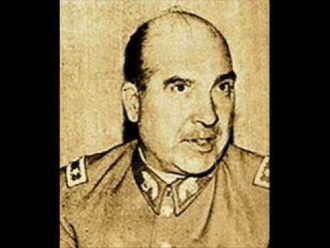 Let me emphasize one thing right off the bat: Schneider was an entirely innocent man. Why, he wasn’t even a communist. Instead, he was simply a man of great integrity who believed that he had a responsibility to support and defend the constitution of Chile. That’s what got him killed.
In the 1970 presidential election in Chile, a socialist named Salvador Allende received a plurality of the votes. Since he had not received a majority, the election was thrown into the hands of the Chilean congress.
U.S. President Richard Nixon, along Kissinger, together with CIA officials, decided that U.S. “national security” would be threatened by the election of a socialist president in Chile.
So, Nixon, Kissinger, and the CIA conspired to produce a two-level plan to prevent Allende from assuming the presidency. The first level involved the secret payment of bribes to the members of the Chilean congress, using, of course, U.S. taxpayer money. The second level was more ominous — to persuade the Chilean national-security branch to take charge of the Chilean government. (Chile was a national-security state, just as the U.S. had become.)
However, Gen. Schneider said no. He continued standing steadfastly in support and defense of the Chilean constitution, which did not provide for a national-security coup as a way to “save” the country from a president who, it was claimed, posed a grave threat to Chile’s “national security.”
Nixon, Kissinger, and CIA officials conspired to launch a violent kidnapping of Schneider to remove him as an obstacle to their plot. During the kidnapping attempt, which took place on the streets of Santiago, Schneider fought back. The kidnappers shot him dead.
The Schneider children later sued Kissinger for his role in the conspiracy to kidnap and murder their father. The federal courts threw them out on their ear. The courts held that when it comes to foreign policy, including kidnapping and assassination, the federal courts would never interfere.
Needless to say, the attitude of the Justice Department was the same. Even though there was clear and convincing evidence of a conspiracy involving felonious actions in Washington, D.C., and Langley, Virginia, the Justice Department never sought any indictments for the conspiracy to kidnap and murder an entirely innocent man. After all, it is important to keep in mind the U.S. felony-murder rule, which holds that if a person is murdered as part of a felonious action, all of the parties to the felonious action are criminally liable for the murder, even if they didn’t participate in it or intend it to happen.
Ironically, the Chilean people were so outraged over Schneider’s murder that the Chilean congress was pressured to elect Allende as president. Thus, the bribery part of the U.S. scheme didm’t work either.
Three years later, U.S. officials finally succeeded in ousting Allende from power through a violent U.S.-supported coup that left Allende and some 3,000 innocent Chilean people dead. It also left the Chilean citizenry to suffer under a brutal U.S.-supported military dictator, one in which 50,000 innocent Chilean citizens were violently rounded up and subjected to torture and rape at the hands of Pinochet’s goons. Kissinger had a close relationship with Pinochet and, in fact, visited him in Chile soon after the coup and offered him generous U.S. support for his brutal dictatorship.
For a detailed analysis of the Schneider murder, I recommend reading “The CIA and Chile: Anatomy of an Assassination” on the website of the National Security Archive.
For a good summary of the lawsuit that Schneider’s sons brought against Kissinger — and the deferential attitude of the federal courts toward foreign-policy actions like kidnapping and assassination — see René Schneider et al. v. Henry A. Kissinger et al on the website of the International Crimes Database.
Kissinger & the Americas: How the US Built Order ‘on The Ashes of Genocide’
Sputnik – December 3, 2023
“A huge loss.” “A cherished friend and mentor.” “His appointment said as much about his greatness as it did America’s greatness.” Tributes are pouring in after the death of Henry Kissinger, America’s best known diplomat.
Kissinger died Wednesday at the age of 100 at his home in Kent, Connecticut. Having served as US Secretary of State for eight years under the presidencies of Gerald Ford and Richard Nixon, Kissinger strove to maintain global US dominance during a time when it was in doubt. His influence molded America’s foreign policy for years to come.
But not everyone celebrates the empire built by the highly consequential statesman.
An Argentine speaks with Sputnik about how her family was affected.

Guillermo Montes (right) pictured next to his brother (left), the father of Agustina Montes © Courtesy of Agustina Montes
“What it really is, is a kingdom built on the ashes of genocide,” said Agustina Montes in an interview with Sputnik.
Montes is an Argentine citizen now living in New Zealand. Inflation neared 150% in her home country last month amidst an economic crisis that’s wreaked havoc on Argentina for half a decade.
Compounding the financial disruption, Montes sees an Argentine society still torn apart by its recent history.
“Genocide denialism is at an all time high,” laments the 37-year-old. “With the elections in Argentina, it’s more pressing than ever. Politicians make barely veiled threats about military uprising. We know what that can mean.”
Argentina’s vice president-elect Victoria Villarruel has downplayed the brutality of the South American country’s seven-year military dictatorship. Villarruel made headlines last month when she criticized UNESCO’s decision to declare Buenos Aires’ ESMA Navy school a World Heritage site. Tens of thousands passed through the facility before being tortured or killed.
Among them were Montes’ uncles, Miguel and Guillermo.
Reorganization
The “National Reorganization Process” was the benign name for the regime that seized power in 1976.
Argentines knew it was a military dictatorship. They’d seen several throughout the 20th century. If the generals sought to “reorganize” Argentine society it was through the barrel of a gun.
Amid the violence, one figure in Washington provided Argentina’s new rulers with the legitimacy they craved.
“We have followed events in Argentina closely,” said then-Secretary of State Henry Kissinger to the country’s new foreign minister Admiral Cesar Augusto Guzzetti. “We wish the new government well. We wish it will succeed. We will do what we can to help it succeed.”
“If there are things that have to be done, you should do them quickly.”
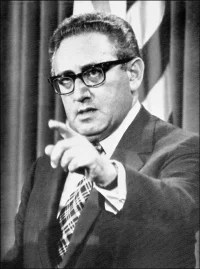
Photograph taken on April 29, 1975 in Washington of the then US Secretary of State Henry Kissinger. © AFP 2023 / GENE FORTE
For the junta, the things that had to be done were kidnapping, torture, and murder. The regime faced pressure from armed resistance groups. Some of them aligned with charismatic former President Juan Perón. Many were socialists. The regime was intent on snuffing them out.
“I have a ‘desaparecido’ on each side of my family,” Montes told Sputnik, using the Spanish term for people who vanished during that period. “My dad’s brother Guillermo and my mum’s brother Miguel Angel.”
“Miguel Angel Fiorito – Milan to his family – was taken on July 12th, 1976, so pretty early in the dictatorship. My uncle was 21 and very idealistic, I’ve been told he was very funny and warm. He worked in the villas, or slums, and had a very keen sense of social justice.”
“Guillermo Montes was my dad’s brother. He was a bit older when he was taken, about 27 or 28. He made it to 1977. He was a massive man, called ‘the Yeti’ by his companions. He went to work one day and never came back.”
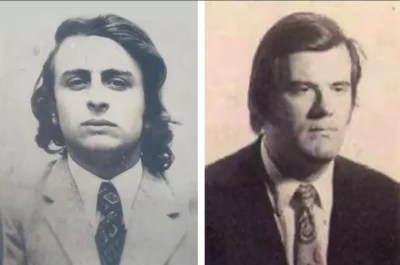
Left: Miguel Angel Fiorito, Right: Guillermo Montes © Courtesy of Agustina Montes
In the repressive fog of the time, “disappeared” became the euphemism for those who fell prey to the reorganization. The word was terrifying as much because of the uncertainty it implied as anything else. Families rarely received closure. “The army never spoke,” says Montes.
Parents throughout the country sought answers. The Madres de Plaza de Mayo was formed when a group of mothers came together in Buenos Aires’ central square. The group became known for their unique form of silent protest, wearing white headscarves symbolizing the cloth diapers of their disappeared children.
Montes said her grandmother knew of the Madres, but “she lacked the political beliefs they had. She loved her son but didn’t believe that what he had done was right.”
Politics provoked sharp divisions in Argentine society in those days.
“My mum’s family was pretty pro-dictatorship up until that point [that Miguel was kidnapped],” says Montes, “mostly because they were anti-Perón.” Montes explained that Miguel began Argentina’s required military service in March of 1976.
“He was also a part of the Montoneros, one of the leftist anti-dictatorship movements. Growing up in the ‘90s, where the rhetoric was that everyone involved in the guerrilla was a terrorist, I had a deep sense of shame about this. We did not discuss politics in my house.”
“My uncles were very present ghosts but we would not talk about them.”
The Chilean Method
The divisions within Montes’ family mirrored those throughout Latin America. Cuba’s revolution sent shockwaves across the region with the reverberations felt at the highest echelons of American power. They only intensified as grassroots movements approached political legitimacy.
Washington’s worst fears were realized in 1970, when the socialist Salvador Allende was elected president of Chile.
“I don’t see why we need to stand by and watch a country go communist due to the irresponsibility of its people,” said Kissinger during a closed-door meeting with Nixon. “The issues are much too important for the Chilean voters to be left to decide for themselves.”
The CIA immediately went to work destabilizing Allende’s democratic government, infiltrating Chile’s trade unions, provoking strikes, fomenting opposition within the military. Within three years Allende was overthrown in a military coup backed by Kissinger. The country’s new leader General Augusto Pinochet declared war on the left, and Santiago’s national soccer stadium was filled with dissidents waiting to be tortured, jailed, and killed.
Nixon’s embrace of Pinochet was justified under the Cold War banner of anticommunism. Socialists, democratically-elected as they may be, were also simply bad for business as it turned out. Concerned about their investments in Chile, the US-based International Telephone & Telegraph Corporation funneled millions of dollars toward forces plotting Allende’s downfall.
Three years later, Argentina’s military government sought a similar approach to repress opposition. “Their theory is that they can use the Chilean method,” aide Harry Shlaudeman informed Kissinger in 1976. “That is, to terrorize the opposition – even killing priests and nuns and others.”
By then an axis of dictatorship stretched across the Southern Cone, with American-backed juntas in Chile, Uruguay, Paraguay, Bolivia, Brazil, Peru, and now Argentina. Under the coordination of the US Central Intelligence Agency the governments coordinated their efforts in a campaign of state terror known as Operation Condor.
“I don’t remember the first time I heard or read his name,” said Montes of Kissinger. “My family didn’t speak about this, and back then this whole period of Argentine history was completely erased from history classes at school.”
“I think of his name in proximity to the names of our dictators: Videla, Massera. Kissinger, the CIA, ‘Plan Condor.’ Like shadowy figures behind it all.”
Montes is likewise unsure about what drew her uncles towards issues of social justice.“They didn’t get that from their families,” she insisted. “None of my grandparents were particularly socialist, quite the contrary. I believe they saw the disparities, the injustice all around them. But they were both middle class. My mum always says Miguel would give the clothes off his back if it meant helping someone else.”
The Latin American left was a diverse array of forces. Some admired the guerrilla tactics of Che Guevara. Others simply advocated for Western European-style labor reforms. Still, others professed Liberation Theology, a strain of Catholicism that stressed concern for the poor.
But after Cuba’s popular uprising against US-backed dictator Fulgencio Batista trended towards socialism, any movement from below could be suppressed in the name of fighting the communist threat.
“Some people still say that my uncles and others like them were terrorists,” claims Montes, “that they did all sorts of horrible things, bombed child care centers and schools. Where is the evidence of that?”
“And if they did, why did the military – that was in control of the government, the police and the judicial system – not put them through a trial and in jail? Why did they disappear them and destroy any evidence and witnesses of what they allegedly did?”
Miguel and Guillermo stood firm by their beliefs, even as the military consolidated its rule.
“There is resentment towards them from my parents and grandparents,” says Montes. “They both could have escaped Argentina. They chose to stay knowing what could happen to them.”
Heaven and Earth
Kissinger stayed on as secretary of state through 1977. Then-US President Jimmy Carter continued to support the junta until the following year; when he moved to end arms transfers, Kissinger registered his opposition by attending the 1978 World Cup in Argentina as the personal guest of dictator Jorge Videla.
US relations with the regime were restored and expanded after the election of Ronald Reagan in 1980 as the CIA sought their assistance in training Central American death squads.
Lieutenant General Videla’s government shaped up to be perhaps the most repressive of all those of the Condor era. Of the 60,000 who were killed across the continent, it’s estimated that around half of them were Argentines.
Montes’ grandparents were determined to make sure Miguel and Guillermo weren’t among them.
“[Miguel] was taken and my grandma, who was also widowed around that time, started moving ‘heaven and earth,’ as we say, to find him,” she said. “She was threatened by police and even by the church when she went there, they told her she would end up just like him.”
“My parents met through their mothers’ – my grannies’ – fight to find out what happened to their sons. I used to think it was a very romantic story when I was a child. But the reality is that two very broken people met each other because of one of the most horrific things that happened to them.”
The final years of the dictatorship saw mounting economic instability. The military attempted to distract from the matter by waging war against the United Kingdom for control of the Falkland Islands. When they failed, the days of the junta were numbered.
Liberal democracy was restored in 1983. Time went by, but Miguel and Guillermo were still gone. President Carlos Menem’s pardon of the junta leaders six years later suggested a desire to forget about the nightmare of Argentina’s Dirty War.
It was only in 2003, when new investigations were opened, that the relatives of Argentina’s desaparecidos finally saw the potential to receive some closure. For Montes’ family the process would take over a decade.
“We didn’t get to find out what happened to my uncles until very recently, almost 40 years after the fact,” says Montes. “The only reason we know what happened is because of witnesses, people that survived, who saw them.”
In that moment Miguel and Guillermo reappeared, but only in memory as Montes’ family imagined their tragic last days.
“They were both taken to the same concentration camp, the ESMA. Miguel Angel was tortured with electricity until he died. We don’t know what happened after, his body was likely burned.”
“Guillermo was able to survive the electric torture. He was drugged and put on a plane, and dropped alive in the River Plate.”
Very Present Ghosts
Montes recounts the horrible toll of her uncles’ kidnappings on her family.
“My mum was around 14 years old when her brother disappeared and her dad died. That family was destroyed… Most of the people this happened to have been destroyed: mentally, physically. My parents have had substance abuse issues, mental health issues.”
“A lot of people in my country want us to ‘move on’ from what happened, to stop talking about it. But how can you do that when the collective trauma still remains?”
Montes now feels much differently about her uncles – especially Miguel, who she’s heard many stories about.
“I have since learned a lot about my uncle and believe he was an incredible man. It feels weird to say, when he died at 21. But what made Miguel and Guillermo literally give their lives for what they believed in? I don’t know. I wish I got to meet them, to talk to them.”
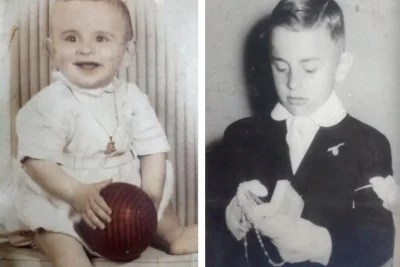
Young Miguel Angel Fiorito as an infant (left) and young boy (right) © Courtesy of Agustina Montes
Among the many condolences and the judicious praise of Kissinger as a friend, a pioneer, and even a peacemaker, the eulogy of former US ambassador to Israel Martin Indyk may contain the most truth: “He was deeply skeptical of those who would aim to try to achieve a peaceful world. He was much more focused on establishing order because order was more reliable than peace.”
“I’m not surprised,” responded Montes. “Order for most, freedom for few.”
And what about George Bush’s comment, that Kissinger was a symbol of “America’s greatness?”
“I feel like they are saying the quiet part out loud. He is a symbol of America’s imperialism,” says Montes.
“Living in South America – and I’m sure this is true of many other so-called ‘Third World countries’ – we get sold this glossy idea of the US, you know? The Land of the Free, of Opportunity, of Freedom and Dreams.”
“I used to be enamored with the US! I grew up watching US TV shows and movies. I learned English from watching ‘Friends.’ It’s only when you grow up a bit that you start seeing it for what it is.”
The Palestinian American scholar Edward Said once remarked:
Every single empire in its official discourse has said that it is not like all the others, that its circumstances are special, that it has a mission to enlighten, civilize, bring order and democracy, and that it uses force only as a last resort.
And, sadder still, there always is a chorus of willing intellectuals to say calming words about benign or altruistic empires, as if one shouldn’t trust the evidence of one’s eyes watching the destruction and the misery and death brought by the latest mission civilizatrice.
When asked about the influence of the junta – and that of Kissinger and the United States – Montes is unequivocal.
“Their legacy is seen in the poverty in the villas, in the sunken eyes of hungry kids all over the world, in the missing but remembered, in the children of women who were taken that we are still looking for. It’s still very much there.”
But Montes doesn’t think the final chapter has been written in the story of Latin America. “I wholeheartedly believe in justice.”
Henry Kissinger, America’s most notorious war criminal

Press TV – December 1, 2023
The most notorious and hawkish America’s former top diplomat, known more for his war crimes and export of imperialism than diplomacy, died on Thursday. He was 100.
Henry Kissinger, a key architect of America’s Cold War foreign policy during the presidencies of Richard Nixon and Gerald Ford, breathed his last at his home in Kent, Connecticut.
While in the United States, he is often lauded for bringing about rapprochement with China, around the world, he is known as an infamous war criminal with blood of millions of people on his hands.
It is estimated that the victims of his blatant war crimes number from several hundred thousand to several million, from Argentina, Bangladesh, Cambodia, Chile, Cyprus, East Timor, Palestine, South Africa, to Vietnam.
In 1973, quite scandalously, he was handed a Nobel Peace Prize for negotiating a ceasefire deal in the Vietnam War, although the earlier flare-up and spread of the devastating war to neighboring Cambodia was entirely his handiwork.
In the eight years that he was the US Secretary of State, Kissinger shaped America’s interventionist foreign policy, which later became a benchmark for his successors to export American hegemony and imperialism around the world.
Christopher Hitchens, the author of The Trial of Henry Kissinger, in his 2001 book called for the former top US diplomat to be prosecuted for conspiracy to commit murders, kidnappings and torture across the world.
“The US could either persist in averting their gaze from the egregious impunity enjoyed by a notorious war criminal and lawbreaker, or they can become seized by the exalted standards to which they continually hold everyone else,” wrote Hitchens.
What are Kissinger’s main crimes?
One of his most notorious roles was in Cambodia, where he masterminded the expansion of the Vietnam War through a secret bombing campaign in 1969 and ground invasions by US forces for years.
The US is believed to have rained down more than 540,000 tonnes of bombs in a campaign called Operation Menu that was executed without the backing or knowledge of the US Congress.
The deadly military adventure caused an eight-year civil war between the Cambodian government and the Khmer Rouge regime, which led to the killing of around 275,000–310,000 people and displaced millions of others.
In declassified cables in 1970, Kissinger was heard conveying this message to his deputy Alexander Haig after speaking to Nixon: “He wants a massive bombing campaign in Cambodia… It’s an order, it’s to be done. Anything that flies, on anything that moves. You got that?”
Author and TV personality Anthony Bourdain, after visiting Cambodia, wrote in his 2011 book A Cook’s Tour: “Once you’ve been to Cambodia, you’ll never stop wanting to beat Henry Kissinger to death with your bare hands”.
“Witness what Henry did in Cambodia – the fruits of his genius for statesmanship – and you will never understand why he’s not sitting in the dock at The Hague next to Milošević.”
He also played an instrumental role in the massacre of the East Timorese people by the Indonesian forces in the mid-1970s.
Kissinger and President Ford, during a meeting with the Indonesian dictator Suharto in December 1975, gave him instructions to invade East Timor, which triggered a civil war that left at least 200,000 people dead, according to 2001 declassified documents.
In Chile, Kissinger worked behind the scenes to destabilize and undermine the government of Salvador Allende who was seen as a threat to US hegemony in South America at a time when all other Latin American countries had US-installed military dictatorships.
Less than three years into Allende’s rule, amid skyrocketing inflation and massive strikes that were orchestrated by the CIA, a US-engineered coup led by General Augusto Pinochet toppled the democratically-elected government.
A Chilean government report later revealed that over 40,000 people were killed, tortured, or imprisoned during Pinochet’s murderous regime at the behest of the US government and Kissinger.
In Argentina, Kissinger militarily backed junta leader General Jorge Rafael Videla after he toppled the democratically-elected government of President Isabel Perón in March 1976, according to declassified cables.
These actions led to the Dirty War between 1976 and 1983, where Argentina’s military junta killed between 10,000 and 30,000 people. Many of them were subjected to enforced disappearances.
Kissinger was also involved in Bangladesh, previously known as East Pakistan, where he and Nixon backed the genocide of people by West Pakistan.
Following his death on Thursday, Bangladesh’s Foreign Minister AK Abdul Momen said Kissinger backed the Pakistani military regime during the 1971 war and failed to apologize to the people of Bangladesh for his actions.
Kissinger was also responsible for consolidating the US vassal dictatorship in Iran in the 1970s, which had long-lasting unwanted consequences for Washington.
What role did Kissinger play in Iran?
Kissinger’s political opportunism is particularly evident in the example of relations with Iran, which American diplomacy under his leadership saw, in the words of Leader of the Islamic Revolution Ayatollah Seyyed Ali Khamenei, as a “milking cow.”
In the 1970s, accompanying then-US President Nixon, he traveled to Tehran and initiated massive military deals on the export of arms worth billions of dollars to Iran.
In his eyes, the best solution for Iran was a rigid military dictatorship that would spend massively on American weapons and other expensive products, and at the same time play the role of a US proxy against the regional countries that refused to lean toward Washington.
Such an attitude was formed partly as a consequence of the defeat in the Vietnam War, which is why the American authorities did not like the idea of repeating the same scenario in West Asia, with huge American casualties.
In 1975, when he held the position of Secretary of State and National Security Advisor, Kissinger was the key man in signing a $15 billion deal that included $6.4 billion for the purchase of eight US nuclear reactors.
The Shah’s regime then planned to build a total of twenty nuclear power plants with the import of enriched uranium, for which Washington and its allies showed great enthusiasm, seeing it as a lucrative opportunity for their companies.
These treaties collapsed four years later due to mass popular discontent with the West-backed dictatorship and the success of the Islamic Revolution, the prospect of which Kissinger understandably dreaded.
He was among the loudest proponents of providing asylum to the deposed Shah, arguing that it was America’s “moral obligation.”
On the aggression of the Baathist Iraqi regime on Iran, he said “It’s a pity they both can’t lose.”
Three decades later, when Iran announced the continuation of the development of a civilian nuclear program, this time with its own technology and without multibillion-dollar contracts with American and Western companies, Kissinger turned the tables.
In an opinion piece for the Washington Post in 2005, Kissinger wrote that “for a major oil producer such as Iran, nuclear energy is a wasteful use of resources.”
This radical switch once again confirmed that Americans have an essential problem with the technological prowess and progress of independent countries because they believe only the US has the right to a monopoly of advanced technologies.
In the 2000s, Kissinger became an advocate of American interventionism in West Asia and met regularly with then-US President George W. Bush and Vice President Dick Cheney to advise them on the disastrous invasion of Iraq.
The collapse of American imperial ambitions in Iraq and other countries of the region culminated in his intensified anti-Iranian rhetoric.
In 2014, when Iraq and Syria were under the grip of Takfiri terrorism, he stated that “Iran is a bigger problem than Daesh,” arguing that the latter’s fall would open the door to Tehran’s alleged “imperial agendas.”
In addition to giving unequivocal support to anti-Iranian terrorism, he also strongly opposed the 2015 nuclear agreement between Iran and world powers, clinched during the presidency of Barack Obama.
He maintained the same stance after Obama’s megalomaniac successor Donald Trump scrapped the deal, saying any attempts to reinstall the deal are “extremely dangerous.”
Belize severs diplomatic relations with Israel
MEMO | November 15, 2023
The Central American state of Belize announced the severing of its diplomatic relations with Israel due to Tel Aviv’s continued attacks on the Gaza Strip.
The Belize government said in a statement published on its website that the decision was taken because Israel did not accept calls for a ceasefire and prevented the entry of humanitarian aid into Gaza.
It added: “Despite our requests, Israel has not stopped its violations of international humanitarian law nor allowed relief workers to alleviate the suffering of millions of Gazans.”
As a result, it continued, the government is withdrawing the accreditation of Israel’s ambassador to Belize and withdrawing “its request for accreditation of Mr. Jonathan Enav as Belize’s Honorary Consul” to Israel.
“All activities conducted by the Israeli Honorary Consulate in Belize and the appointment of the Honorary Consul are suspended.”
It concluded that it “renews its call for an immediate ceasefire in Gaza, unimpeded access to humanitarian supplies into Gaza and the release of all hostages.”
This comes after South Africa, Bolivia, Chile, Colombia and Jordan recalled their ambassadors from the occupation state over its war crimes in Gaza.
UN Agency Unveils Action Plan To Regulate Speech on Social Media Platforms
By Didi Rankovic | Reclaim The Net | November 9, 2023
Yet another United Nations agency – this time the Educational, Scientific, and Cultural Organization (UNESCO) – has joined the contentious efforts to use UN resources in the “war on misinformation.”
UNESCO is not lagging behind some of the veterans of this “war” regarding the kind of alarmist language its leadership is choosing to use to justify the policy.
Thus, Director-General Audrey Azoulay presented an action plan, saying that online disinformation is “a major threat to stability and social cohesion.”
A press release announcing the plan referred to the phenomenon of misinformation as “a scourge” and one that is intensifying. Those behind all this must hope that this is enough to explain what UNESCO – formerly known mostly for protection of world heritage sites and raising funds for underprivileged children – is even doing “fighting disinformation.”
But here’s the plan: to somehow not harm freedom of speech, and yet push for social media companies to hire more “moderators” that speak all the major languages and whose job would be “effective control of content.”
A lot of attention seems to be given to strengthening censorship capacities in languages other than English; that could explain why, according to UNESCO’s statement, the plan has received support particularly from some countries in Latin America and Africa.
Over the past number of years, the whole world could see how efficiently the notion of “misinformation” and the tools to counter it can be turned into proper weapons of censorship; there is likely no shortage of governments that would like to replicate what has been happening in English speaking countries.
“Electoral integrity” also crops up in the press release announcing the UNESCO initiative, and here the proposed solution is “risk assessment” as well as flagging content, more “transparency” around political ads – and who they are meant to target.
Finally, UNESCO somehow manages to work its core task and purpose into the whole thing – namely, culture. And that’s done by calling for “highlighting the risks faced by artists and the need for online access to ‘diverse cultural content’ (quotation marks here are UNESCO’s) as a fundamental human right.”
As for who needs any of this from UNESCO, and why – the agency justified its involvement by mentioning an opinion poll it commissioned, involving 8,000 respondents in 16 countries.
And because “85% of citizens are worried about the impact of online disinformation (on elections)” – we now have this “action plan.”
Honduras recalls envoy from occupied territories citing Israeli violations in Gaza
Press TV – November 3, 2023
Honduras has recalled its ambassador from the occupied territories for consultations amid the Israeli regime’s hugely deadly and devastating war against the Gaza Strip.
The Honduran foreign ministry announced the development on Friday, citing Tel Aviv’s violations of the international humanitarian law in Gaza.
The country’s top diplomat confirmed the development in a post on X, formerly known as Twitter.
“Amid the grave humanitarian situation, the Palestinian civilian population suffers in the Gaza Strip, the government of President Xiomara Castro has decided to immediately call Mr. Roberto Martinez, ambassador of the Republic of Honduras in Israel, to consultations in Tegucigalpa,” read the post by Enrique Reina.
On Friday, the 28th day of Israel’s genocidal attacks on the coastal territory, the death toll reached at least 9,227 people, including 3,826 children and more than 2,405 women. At least 23,516 people have been wounded.
The regime launched the war after Gaza’s resistance groups conducted Operation al-Aqsa Storm, their biggest operation against the occupying entity in years.
So far, Chile and Colombia have similarly recalled their envoys from the occupied territories, while Bolivia has moved to sever its diplomatic ties with the occupying entity.
On Thursday, Bahrain’s lower house of parliament said the country had halted its economic relations with the Israeli regime over the war.
The chamber also confirmed that the Israeli ambassador to the kingdom had left Bahrain, and that Manama had decided to return the Bahraini ambassador from the occupied territories.
Countries Begin Downgrading Ties with Israel Over Relentless Bombing of Gaza
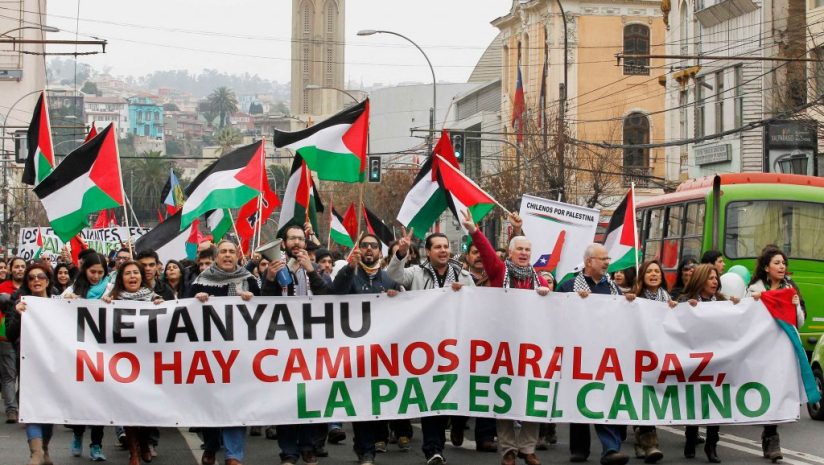
By Kyle Anzalone | The Libertarian Institute | November 1, 2023
A trio of South American countries, along with Jordan, have cut ties with Israel over the onslaught in Gaza. According to Palestinian sources, the Israeli military operations in Gaza have killed nearly 9,000 people, half of which are women and children.
On Tuesday, Bolivia took the most extreme step and cut all ties with Israel. Deputy Foreign Minister Freddy Mamani explained that Bolivia “decided to break diplomatic relations with the Israeli state in repudiation and condemnation of the aggressive and disproportionate Israeli military offensive taking place in the Gaza Strip.”
The next day, Tel Aviv responded by saying Sucre’s move was “capitulation to terrorism and to the ayatollah regime in Iran.”
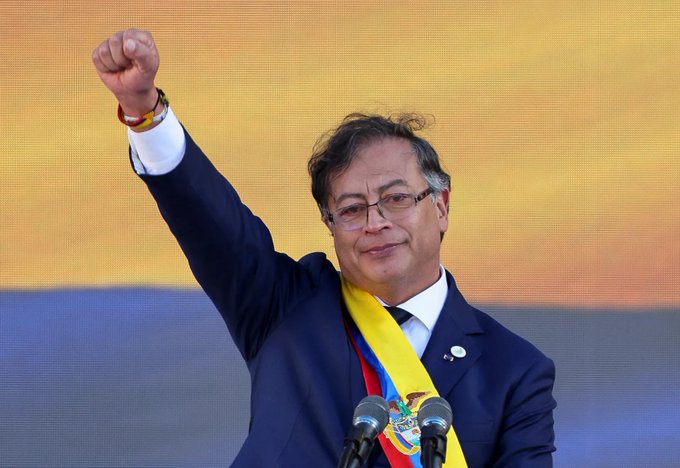
Colombia and Chile announced they would recall their ambassadors to Israel. Colombian President Gustavo Petro posted on X, “I have decided to call our ambassador in Israel for consultation. If Israel does not stop the massacre of the Palestinian people we cannot be there.”
Chile posted a press release saying Santiago would also recall its diplomat.
“Given the unacceptable violations of International Humanitarian Law that Israel has incurred in the Gaza Strip, the Government of Chile has decided to recall the Chilean ambassador to Israel, Jorge Carvajal, to Santiago for consultations. …”
“Chile strongly condemns and observes with great concern that these military operations – which at this point in their development entail collective punishment of the Palestinian civilian population in Gaza – do not respect fundamental norms of International Law, as demonstrated by the more than eight thousand civilian victims, mostly women and children.”
Jordan joined the South American nations in downgrading ties with Israel. The Foreign Ministry announced it was recalling its ambassador. “Foreign Minister Ayman Safadi decided to immediately recall Jordan’s ambassador to Israel,” a statement said. The move is to reflect Amman’s condemnation of the “Israeli war that is killing innocent people in Gaza.”
While Tel Aviv receives near unconditional backing from Washington, Israel lacks the international community’s support for its war. On Monday, the UN General Assembly voted 120-14 for a ceasefire in Gaza.
After a Hamas attack in southern Israel on October 7, Tel Aviv launched a military operation. The bombing campaign and ground invasion have killed thousands of Palestinian civilians, including over 3,600 children.
Featured Video
“Historic Russia”: The Land Putin Will Not Give Back
or go to
Aletho News Archives – Video-Images
Book Review
Why the War on Conspiracy Theories Is Bad Public Policy
By Kevin Barrett • Unz Review • February 1, 2019
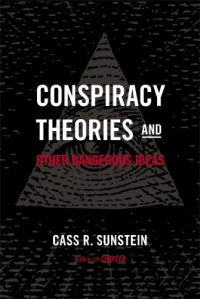 A Review of Conspiracy Theories and Other Dangerous Ideas by Cass Sunstein (based on an earlier paper co-authored with Adrian Vermeule); In Defense of Troublemakers: The Power of Dissent in Life and Business by Charlan Nemeth; and Conspiracy Theories and the People Who Believe Them, edited by Joseph E. Uscinski
On January 25 2018 YouTube unleashed the latest salvo in the war on conspiracy theories, saying “we’ll begin reducing recommendations of borderline content and content that could misinform users in harmful ways—such as videos promoting a phony miracle cure for a serious illness, claiming the earth is flat, or making blatantly false claims about historic events like 9/11.”
At first glance that sounds reasonable. Nobody wants YouTube or anyone else to recommend bad information. And almost everyone agrees that phony miracle cures, flat earthism, and blatantly false claims about 9/11 and other historical events are undesirable.
But if we stop and seriously consider those words, we notice a couple of problems. First, the word “recommend” is not just misleading but mendacious. YouTube obviously doesn’t really recommend anything. When it says it does, it is lying. … continue
Blog Roll
 Aletho News
- “Historic Russia”: The Land Putin Will Not Give Back
- How the Cambridge Analytica scandal still haunts Mark Zuckerberg
- The Ongoing Cancellation Campaign Against a Dissenting Academic in Norway
- Yemen and ‘the Houthis’: Challenging Sami Hamdi’s Narrative
- No, Christians did not invent Zionism
- AIPAC-led lobbying network opens branches in Cypriot, Greek parliaments
- Araghchi blasts ‘parasitic’ alliance as US taxpayers pay for Israel’s war on Iran
- Easy fix for Europe’s chaos? Stop fueling war against Russia
- Putin’s key remarks on peace talks and Europe’s ‘schizophrenia’
- Trita Parsi: Israel Set a Trap for Total War in the Region
- If Americans Knew
- An error has occurred; the feed is probably down. Try again later.
- No Tricks Zone
- E-Cars Reduce CO2 Emissions By Only 41% Compared To Internal Combustion Engine Vehicles
- Predictions Made By Renowned Climate Professor Over Past Decades Have Been Proven To Be Poor
- New Study Suggests Large Regions Of The Pacific Ocean Have Been Cooling For The Last 80 Years
- Germany’s Green Energy Debacle: High Energy Costs Force Kahla Porzellan to Close After 182 Years!
- New Study: 50 Years Of The Most Aggressive ‘Net Zero’ Policies Can Only Affect The Global Climate By 0.03°C
- US September “Heat” Was No Record…Many Records Set Decades Ago
- Latest European Green Energy Debacle; Portugal’s Largest Flagship Solar Park Insolvent!
- Green Energy Debacle: German Expert Professor Fritz Vahrenholt Warns Of Severe Economic And Social Consequences
- Two More Paleo Reconstructions Affirm Meters-Higher Sea Levels Across Ireland, Brazil 7000-6000 Years Ago
- New Study: Earth And Venus Surface Warmth Largely Explained By Convection And Lapse Rate, Not CO2 Or Radiation

