Venezuela Opposition Cries Foul After Recall Suspended, Calls for Coup Against Maduro
teleSUR | October 21, 2016
The ominous calls came as courts temporarily froze the referendum process to investigate thousands of fraudulent signatures submitted in the first phase.
Leader’s from Venezuela’s opposition appeared to call for a coup against President Nicolas Maduro, after the country’s Supreme Court ruled that the presidential recall referendum would be temporarily suspended due to fraud committed in the first phase of the process.
Opposition leader Henrique Capriles said Friday that President Maduro is “in disobedience of the constitution” and called on both the National Assembly and Armed Forces to “make a decision” and have people “respect the constitution.”
The former Venezuelan presidential candidate also said Maduro had vacated his position as president, prompting fears that a coup might be looming.
“Maduro did not only leave the country, he left his position,” Capriles said during Friday’s press conference.
“Maduro declared himself in disobedience, he does not respect the Constitution, and today he left the country, and will leave everything.”
Maduro left Venezuela for various OPEC and non-OPEC countries Thursday to help establish a stable price for oil, which has negatively affected the South American country’s economy.
Capriles, head of Justice First and one of the leaders of the opposition MUD coalition, also called on the nation’s armed forces to intervene.
“Hopefully the armed forces will have people respect the constitution,” he said.
The MUD leader also demanded the government repeal the decision to suspend the signature collection process for the recall referendum and called on opposition members to “take the streets of Venezuela.” Toward the end of his speech, Capriles denied he wanted a coup to oust Maduro and said he does not want to incite violence.
“We don’t want a coup in the country,” said Capriles, “A coup has (already) happened to the people and we have to restore constitutional order.“
Henry Ramos Allup, the president of the National Assembly, also spoke during the press conference and said the National Assembly he leads supports all the decisions and the message promoted by Capriles.
Ramos Allup also called on the Venezuelan Armed Forces “to analyze the abuses to the constitution” allegedly carried out by the government. He also said they were offering a constitutional way out for Maduro through the recall referendum in order to prevent “a violent way out” in the future.
The legislator said a delegation from the assembly will travel to the Organization of American States, or OAS, to demand the OAS apply the so-called Democratic Charter against his country, something the opposition has been requesting for months.
“Venezuelans have always been stronger than its leaders,” he said, before he cast doubt on Maduro’s nationality, suggesting he may actually be Colombian—a common allegation that has no basis.
The National Electoral Council, or CNE, said the decision to postpone the recall referendum process came after the MUD committed the criminal offense of presenting more than 600,000, about 30 percent, of signatures deemed irregular. Among the invalid signatures were almost 11,000 from deceased Venezuelans.
The Supreme Court also declared invalid all acts of the National Assembly after it swore in three legislators who had previously been suspended over irregularities when they were elected.
Venezuelan Supreme Court Orders New Inquiry into Disappeared During Fourth Republic
By Lucas Koerner | Venezuelanalysis | October 20, 2016
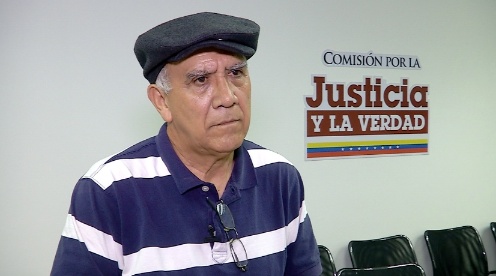
Caracas – Venezuela’s Supreme Court (TSJ) issued a ruling Tuesday ordering the country’s the public prosecution to reopen investigations into the case of a law student disappeared in 1966.
Andres Pasquier Suarez, a law student at the Central University of Venezuela, was detained by Venezuela’s national guard on October 10, 1966 and subsequently handed over to the now defunct Armed Forces Information Service.
According to military records, the youth was transferred two days later to the Urica Anti-Guerrilla Camp from which he never returned.
A Maracaibo military tribunal charged with investigating the incident declared the case closed on March 15, 1968, finding that “no crime has been committed in any moment”.
Writing on behalf of the high court, TSJ President Gladys Gutierrez struck down the prior ruling as “contrary to the elemental principles of law and justice”, concluding that the military court had failed to conduct an impartial investigation of the disappearance.
The justice ordered the public prosecutor’s office to reopen the investigation and identify those responsible as mandated under article 19 of Venezuela’s Law to Prosecute Crimes, Disappearances, Tortures, and Other Human Rights Violations for Political Reasons during the Period 1958-1999.
Over the last 17 years, numerous inquiries have brought to light the magnitude of human rights violations committed under Venezuela’s pacted, two-party system known as the Fourth Republic.
This past July, the country’s official Truth and Justice Commission revealed that it had registered a total of 11,043 cases of torture, assassinations, and political disappearances between 1958 and 1998.
Argentina Not Only Wants To Bring In E-Voting, It Will Make It Illegal To Check The System For Electoral Fraud
By Glyn Moody | TechDirt | October 7, 2016
Earlier this year, we wrote about Australia’s refusal to allow researchers to check e-voting software being used in that country. The situation in Argentina seems to be even worse. Access Now provides the background (original in Spanish):
The ruling party in Argentina is driving the adoption of an electronic voting system for national elections. Despite stern warnings from computer security experts about the dangers of the system, the ruling party is persisting with the project and plans to put it to a vote in Congress in the coming weeks.
Techdirt readers hardly need to be reminded about the deeply-flawed nature of e-voting systems, but there’s a useful article on Medium (in Spanish) with plenty of links to hispanophone experts from widely-different backgrounds warning against the move.Imposing an e-voting system may be foolish, but Argentina’s plans manage to magnify that folly many times over. A blog post in Spanish by Javier Smaldone explains why:
The proposal provides for imprisonment (1 to 6 years) for conducting activities that are essential in any audit or independent review of the system.
Thus, it is intended to impose the use of computer system in the casting and counting of votes, and as if it were not already extremely difficult for any citizen to be sure how it works (and it is safe), anyone who tries to find out is punished with imprisonment.
It’s one thing to bring in an e-voting system that most experts say is a bad idea in theory. But making it effectively illegal to point out flaws that exist in practice is really asking for trouble. Unless this proposed law is changed to allow independent scrutiny of the systems, Argentina will probably find this out the hard way.
40 Years After CIA Terrorist Bombs Cuba Plane, Still No Justice

By Teresa Gutierrez – teleSUR – October 2016
Forty years ago, on October 6, 1976, Cubana Flight 455 on its way from Barbados to Jamaica was bombed shortly after takeoff, killing 73 people, including the national fencing team of Cuba.
In what was immediately seen as a terrorist act, most in the international community joined Cuba in denouncing the horrific act.
In 2011, declassified CIA documents showed that one of the key figures in this terrorist attack was Luis Posada Carriles, a right-wing Cuban who had fled the island after the Cuban Revolution of 1959.
The documents revealed that it was Posada Carriles, now 88, who had planned the 1976 bombing. He had already gained experience terrorizing the Cuban people as a participant in the failed CIA-orchestrated Bay of Pigs assault in 1961.
Peter Kornbluh, author of the book, “Back Channel to Cuba,” and a former researcher at the National Security Archive of George Washington University, said in 2011 that the declassified documents “again brings up the issue of how an international terrorist like Luis Posada Carriles can live happily ever after in Miami.”
This point demonstrates that the Oct. 6 anniversary should not only be remembered, it should be reflected upon.
The 1976 attack highlights U.S. imperialism’s decades-long war of sabotage against the Cuban Revolution. Despite a thawing in U.S.-Cuba relations, this war has not subsided.
A free man, Posada Carriles moved to Venezuela in the early 80’s where he was eventually jailed for his acts of terror against Cuba. But he escaped in 1985 and resumed plotting against Cuba and its leader, Fidel Castro.
In this period, he was also instrumental in plotting against the revolutionary government of the Sandinista National Liberation Front in Nicaragua, working as a coordinator for the contras who were fighting a war backed by the U.S. government.
Posada Carriles bragged to the New York Times in 1998 that he had been responsible for the 1997 hotel bombings targeting Cuba’s tourist industry that killed an Italian tourist, saying the man just happened to be in the wrong place at the wrong time. Posada Carriles later recanted his story.
The New York Times wrote in 1998, “Mr. Posada was schooled in demolition and guerrilla warfare by the Central Intelligence Agency in the 1960s. In a series of tape-recorded interviews … Posada said the hotel bombings and other operations had been supported by leaders of the Cuban-American National Foundation. Its founder and head, Jorge Mas Canosa … was embraced at the White House by Presidents Reagan, Bush and Clinton.”
The CANF recieved millions of dollars of U.S. tax-payer money to carry out its dirty war against Cuba for decades, according to declassified documents.
Posada Carriles was again arrested in 2000 for possession of explosives in Panama and charged with plotting to assassinate the Cuban leader at the Peoples’ Summit taking place at the University of Panama. Soon after he went into hiding.
When Posada Carriles resurfaced in Miami in 2005, the U.S. government refused to extradite him to Cuba or Venezuela to face judicial proceedings for his crimes.
In early 2011, Posada Carriles was finally put on trial in El Paso, Texas—not for his many terrorist acts—but for immigration fraud and obstruction of a proceeding.
He was charged with lying to an immigration judge about his involvement in the 1997 bombings and about how he entered the U.S. in 2005.
U.S. prosecutors presented evidence that Posada Carriles played a major role in carrying out bombings in Cuba. Many expected convictions on at least some of these charges but the jury dumbfounded prosecutors with a complete acquittal.
Ricardo Alarcon, a long-time Cuban leader and at the time, the president of the national assembly, told AP, “The stupid and shameful farce is over.”
Venezuela’s government also denounced the trial as “theater,” saying Washington continued to harbor a mass murderer.
Alarcon had intimate and deep knowledge of the farce that is the U.S. judicial system. He had been a leading advocate of the Cuban Five and a principle strategist for their freedom.
The Cuban Five were Gerardo Hernandez, Ramon Labañino, Antonio Guerrero, Fernando Gonzalez and Rene Gonzalez. They were arrested by the U.S. government in Miami in 1998 and falsely accused of committing espionage conspiracy against the U.S. and other related charges.
They were convicted in a federal court in 2001 and spent over 15 years in jail, labeled by the U.S. government and media as terrorists.
But the Five were in fact counter-terrorists, heroes who were willing to sacrifice their lives, leave their beloved families and homeland to protect Cuba from U.S. aggression. They worked to stop terror and aimed to defend Cuba from the kind of aggression Posada Carriles and his CIA cohorts carried out.
The Five reflect a spirit of justice and peace and to this day—having returned to their beloved country—continue to inspire all those who yearn for a better world.
As long as the likes of Posada Carriles are free to walk the streets of Florida, Cuba must do everything it can to defend itself from U.S. terror.
As long as the U.S. continues to occupy Guantanamo, the Cuban Revolution must be ready to defend itself, despite President Barack Obama’s dubious declarations.
A Salon magazine article in 2008 raised this question: “The coddled ‘terrorists’ of South Florida: Anti-Castro Cuban exiles who have been linked to bombings and assassinations are living free in Miami. Does the U.S. government have a double standard when it comes to terror?”
The answer is yes—a thousand times yes.
Plan Colombia Vindicated: Colombia Rejects Peace
By Roger Harris | CounterPunch | October 3, 2016
 Rio Hacha, Colombia – The mood in this improvised Colombian town on the Caribbean coast is somber tonight. The national peace plebiscite was just defeated by a mere 0.43% or 60,000 votes.
The government of Colombia and the FARC insurgents signed peace accords six days ago to much public jubilation. Today the peace accords were put to a public vote. Polls predicted a landslide approval of 60%.
The public airwaves had been saturated with advertisements for “si” to approve the accords. Practically every wall that I passed here on the coast and earlier this week in the capital of Bogota was plastered with “si” posters.
The “no” side appeared absent except for a fringe represented by former president Uribe and his right-wing cohorts. The Catholic Church, the current Santos government, and the entirety of progressive civil society – unions, Indigenous, Afro-descendants, campesinos – were campaigning for “si.” The outcome seemed preordained.
Yet when the polls opened today, the usual long lines were absent. Turnout was low, allowing an upset victory for “no.”
The right-wing had been threatening activists – many had already been assassinated – to disrupt the peace process. Hence our delegation of North Americans to accompany targeted Colombian activists to provide them some protection by raising their international visibility. The Alliance for Global Justice along with the National Lawyers Guild came to Colombia at the invitation of FENSUAGRO, an agrarian workers federation, Marcha Patriotica, a large progressive coalition, and Lazos de Dignidad, a human rights organization.
The accords would have ended the 52-year civil war – the longest in modern history. The FARC’s position during the intense four years of negotiations in Havana with the Colombian government was there could be no peace without justice. That it makes no sense to end the armed conflict if the conditions that generated that conflict were not addressed. The accords accordingly had provisions for agrarian reform, political participation for the insurgents, transitions from an illicit drug economy, and reparations for victims of the conflict.
Campesino leaders in the rough and rundown frontier town of Maicau on the Venezuelan border, where drug running and sales of contraband are mainstays of the local economy, spoke about the agrarian struggle. The “oligarchs,” they explained, want to “clean” the countryside of small farmers to make way for transnational agribusiness. Yesterday they spoke of the great hope they had for a “si” vote to defeat the oligarchy.
Today Colombia voted against peace and against that hope.
The Obama administration, while giving lip service in support of the peace process, has massively increased lethal aid and transfer of the latest military technology to the Colombian government under the rubric of Plan Colombia. Presumptive president-elect Hillary Clinton has been on the campaign trail stomping for Plan Colombia as the world model for the military subjugation of those who oppose the extension of the US neoliberal empire.
The October 2nd “no” vote on peace in Colombia will have repercussions around the world.
Roger D. Harris is on the State Central Committee of the Peace and Freedom Party, the only ballot-qualified socialist party in California.
Russian Envoy Stands Against Imposing Color Revolution on Venezuela
Sputnik – 03.10.2016
Russia is prepared to join efforts aimed at resolving Venezuela’s internal political standoff if necessary, Russian Ambassador to Venezuela Vladimir Zaemsky told Sputnik.
“We welcome efforts of various politicians to help reach a mutual understanding between the various political groups in Venezuela and we hope that such steps eventually would lead to a positive result. We are ready to join this if it is deemed necessary,” Zaemsky said.
Venezuela has been embroiled in a political crisis with opposition staging regular protests and launching a campaign to remove President Nicolas Maduro, blaming him for an economic crisis in Venezuela, a country suffering from shrinking GDP, shortages of goods and rising inflation. According to the ambassador, the political crisis cannot be settled without preventing the attempts of some of Venezuela’s neighbors, the West, global media and non-governmental organizations to interfere in the internal affairs of the country.
“Russia believes that the political resolution of Venezuela’s problems should be found by the Venezuelan people itself… It must meet constitutional norms and national laws. Destructive meddling from abroad is unacceptable, no one can impose ‘color [revolution] scenarios’ based on notorious radical tactics to destabilize the situation,” Zaemsky said.
Venezuela has been in a state of an economic emergency since January. Up to 96 percent of Venezuela’s budget depends on oil revenues amid the ongoing slump in oil prices. Venezuela’s opposition hopes to hold a recall referendum to remove Maduro from power.
In August, Maduro pledged to act much tougher than his Turkish counterpart Recep Tayyip Erdogan in case of the coup attempt in the country.
Venezuela Faces Down Rebuke at UN, Possible New Sanctions
By Ryan Mallett-Outtrim | Venezuelanalysis | September 30, 2016
A group of 29 countries called for the Venezuelan government and opposition to engage in renewed national dialogue Thursday, amid calls for more US sanctions against the South American country.
Led by the right-wing government of Paraguay, the international group including the US and UK called on President Nicolas Maduro to “ensure the full respect of human rights, due process, the separation of powers and the consolidation of a representative democracy”.
Issued during a meeting of the UN Human Rights Council (UNHRC) in Geneva, the statement also called for the Venezuelan government to ensure the organisation of a presidential recall referendum.
Venezuela condemned the declaration as “interventionist”, while its regional allies drew support outweighing the Paraguayan statement.
A call from Cuba for respect for state sovereignty drew the support of 88 countries.
Maduro described the outcome of the UNHRC meeting as a “great victory” for Venezuela.
“To their 29 votes, we got 88,” he said.
The fiery session Thursday was the latest in a series of jabs at Venezuela over the course of the meeting. When the UNHRC forum began on September 13, UN High Commissioner for Human Rights Zeid Ra’ad al Hussein lashed out at Maduro’s government over “allegations of repression of opposition voices, arbitrary arrests and excessive use of force against peaceful protests”.
A major anti-government rally two days later drew thousands of opposition supporters to the streets of Caracas and other major Venezuelan cities, with no signs of widespread police crackdowns or repression. Another large rally is scheduled to take place on October 12.
More International Setbacks, Possible Sanctions
The controversy at the UNHRC followed weeks of bad news for Venezuela’s international relations. Earlier this month Venezuela was barred from its position as president of the South American trade bloc Mercosur, while Maduro’s hosting of a summit of the Non-Aligned Movement failed to draw more than a handful of international allies.
Then on Wednesday, US lawmakers issued renewed condemnation, and calls for new sanctions on Caracas.
On Tuesday, the US House of Representatives passed a resolution calling for the release of “political prisoners” in Venezuela.
“This resolution states in no uncertain terms that President Maduro’s shameful and rampant corruption in Venezuela must end,” said Florida Representative and former chairperson of the Democratic National Committee Debbie Wasserman Schultz.
Schultz herself faced allegations of corruption earlier this year, after whistle-blower website Wikileaks released documents that appeared to show Schultz and other leading party officials failed to maintain impartiality during the Democratic primaries.
CNE Head Targeted by Rubio
The day after the House issued its latest Venezuela resolution, long time anti-Venezuela campaigner Senator Marco Rubio called on President Barack Obama to authorise sanctions on government officials including the head of Venezuela’s National Electoral Council (CNE), Tibisay Lucena.
Rubio claimed Lucena and other top officials have “committed significant acts of violence or human rights abuses”.
Lucena herself has no oversight over Venezuela’s security forces, which have been accused of human rights abuses. Nor has she directly been involved in the arrest of opposition political figures such as Leopoldo Lopez, who was imprisoned in 2015 after a Venezuelan court found him guilty of inciting a wave of deadly violence.
As head of the CNE, Lucena has been criticised by opposition supporters, who say her organisation has dragged its feet on preparing for a presidential recall referendum, which could lead to Maduro being forced from power early. CNE officials have responded to the complaints by arguing the opposition itself has slowed the referendum by allegedly including bogus signatures in a preliminary petition that was required to prompt a recall vote.
Last week, the CNE confirmed the referendum would not be possible until next year, dashing opposition hopes of forcing new elections. The timing of the referendum is significant: if it takes place before January 10, 2017, Maduro could be forced from office, and snap elections held. If the referendum is held after this cut off point, Maduro will simply be replaced by his vice-president for the rest of the normal presidential term.
The CNE’s handling of the referendum has also been criticised by the US, prompting backlash from the Maduro administration.
In a bid to ease tensions, the US and Venezuela are expected to hold new diplomatic talks in the coming weeks.
According to a report from the Associated Press this week, the talks will include Venezuelan officials and a US Department of State official. The official was named as Thomas Shannon, the state department’s current undersecretary of state for political affairs.
No further details of the meeting have been released, though another recent meeting between Venezuelan officials and US Secretary of State John Kerry reportedly focused on the detention of Joshua Holt.
A US national, Holt was detained by the Venezuelan military in June, under allegations of stockpiling firearms in the home of his wife in Venezuela. Holt’s relatives have denied the allegations.
‘Death Caravan’ Perpetrators to Face Court in Chile

Augusto Pinochet. | Photo: EFE
teleSUR | September 30, 2016
The Death Caravan was the name of a military operation that killed almost 100 political prisoners in Chile beginning on Sept. 30, 1973.
Former Army Commander Juan Emilio Cheyre and six military officials were arrested July 7 in Chile for their involvement in the death of 15 people as part of an operation known as the Death Caravan, launched the same month as the military coup that overthrew President Salvador Allende.
The Death Caravan was the name of a military operation that killed and disappeared almost 100 political prisoners in Chile beginning on Sept. 30, 1973, following General Augusto Pinochet’s coup, with the support of the United States. The military ruled the country with an iron fist for 17 years, until 1990.
Judge Mario Carroza told La Tercera that the decision to arrest the former commander-in-chief of the Chilean army was based on “knowledge of what happened during the three hours in La Serena,” where the killing took place.
Carroza added that “testimonies of direct observers during the reconstruction of the scene” coincided with other elements of the investigation, and will be an important factor in the trial.
The arrests followed a complaint filed by the Human Rights Program affiliated with the interior ministry.
Cheyre was named commander-in-chief of Chile’s army in 2002, one year before he was publicly accused of participating in the murder of a couple and stealing their 2-year-old child in La Serena back in 1973. Chile’s justice eventually filed a case without finding Cheyre responsible for the act.
Serving in the top-ranking military role until 2006, Cheyre was appointed as president of Chile’s electoral body in 2013 by the neoliberal President Sebastian Piñera.
Cheyre jailed an estimated 80,000 people, tortured 30,000 and murdered around 3,200. Only 75 of more than a thousand of his former agents are serving prison sentences for human rights violations.
Lula lambastes judge who ordered his trial
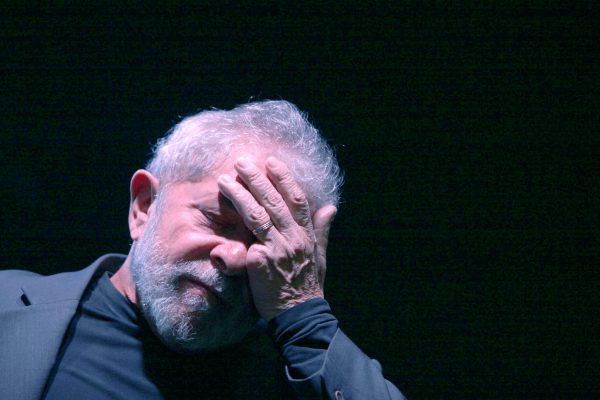
There are many who feel the corruption allegations are designed to prevent Lula from running in 2018 presidential elections [Xinhua ]
The BRICS Post | September 21, 2016
Former Brazilian President Luiz Inacio Lula da Silva has come out swinging against a judge who ordered him to stand trial for allegations of money laundering while in office.
Lula accused anti-corruption judge Sérgio Moro of being politically motivated and said that charges brought against him by federal prosecutors were part of a scheme to discredit him and ruin his career.
On Tuesday, and less than a month after he was indicted on alleged graft charges, Lula was ordered by Moro to stand trial for receiving at least $1 million in kickbacks from Brazilian energy company Petrobras.
Moro first accepted charges filed in July by prosecutors investigating Lula for allegedly “masterminding” a corruption and money laundering operation in Petrobras.
Lula, a hugely popular president who served from 2003 to 2010 and is credited with a number of initiatives that propelled GDP growth and significantly reduced poverty in Brazil, has been under investigation for much of the past year..
“As we were starting to have success in the presidency, they are trying to do with us what they did with Dilma (Rousseff, the former president impeached in August). A part of the press and a part of the judiciary already tried to oust me from the presidency in 2005,” Lula has said.
Last month, Lula and members of his family and three other people had been indicted on a number of charges stemming from alleged financial irregularities, declaration of assets in addition to money laundering and graft.
Some in Brazil believe that the charges and trial are designed to ruin his chances of running in presidential elections in 2018.
In early August, the Vox Populi Institute published a poll which showed Lula would come out the clear winner if he ran for the presidency against a number of likely candidates.
Only 17 per cent of respondents in that poll said they wanted current President Michel Temer to stay on until 2018.
The Vox Populi Institute’s findings appear to support an earlier poll conducted by Datafolha in Brazil.
That poll also showed that Lulu would comfortably win a presidential election. Only five per cent said they would vote for Temer, however.
Featured Video
Patrik Baab: Europe’s New Iron Curtain – Freedom of Speech Dies
or go to
Aletho News Archives – Video-Images
From the Archives
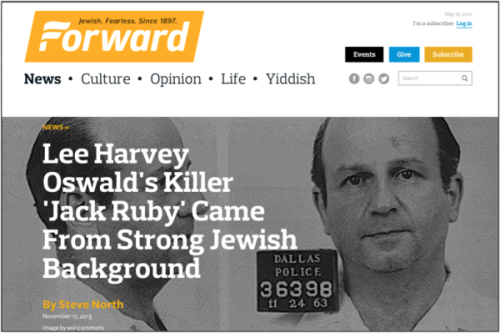
Jack Ruby: Israel’s Smoking Gun
BY LAURENT GUYÉNOT • UNZ REVIEW • NOVEMBER 13, 2021
By a strange paradox, most Kennedy researchers who believe that Oswald was “just a patsy” spend an awful lot of time exploring his biography. This is about as useful as investigating Osama bin Laden for solving 9/11. Any serious quest for the real assassins of JFK should start by investigating the man who shot Oswald at pointblank in the stomach at 11:21 a.m. on September 24, 1963 in the Dallas Police station, thereby sealing the possibility that a judicial inquiry would draw attention to the inconsistencies of the charge against him, and perhaps expose the real perpetrators. One would normally expect the Dallas strip-club owner Jack Ruby to be the most investigated character by Kennedy truthers. But that is not the case. … continue
Blog Roll
Recent Comments


 Aletho News
- The Hidden Map: US and Israel May Use Unexpected Neighbors to Attack Iran
- Trump, Netanyahu Agree to Target Iranian Oil Exports to China
- Russia open to discussing Ukraine’s ‘external governance’ – senior diplomat
- US Caribbean Buildup Near $3B — Report
- Munich Security Conference and the U.S. elephant in the room
- Epstein Pitched JPMorgan Chase on Plan to Get Bill Gates ‘More Money for Vaccines’
- Germany’s CDU Pushes Real-Name Social Media Mandate and ID Checks
- Patrik Baab: Europe’s New Iron Curtain – Freedom of Speech Dies
- Trump’s ‘Board of Peace’ exports Israeli ‘ceasefire’ diplomacy to the world
- Israeli army closes dozens of cases involving killing of Palestinians inside torture camps
- If Americans Knew
- ISIS-linked border guards, GHF-linked aid – Not a ceasefire Day 128
- Israel battles Palestinian right of return, one Palestinian at a time – Not a ceasefire Day 127
- Noor’s short life of unimaginable suffering
- Israel Destroyed Gaza’s Hospitals. Now It’s Banning Doctors Without Borders.
- Is Spite of What Zionists Say, It’s a Good Thing to Criticize Governments
- Palestinian mother, daughter recount strip searches, harsh conditions in Israeli detention
- Israel used weapons in Gaza that made thousands of Palestinians evaporate
- ADL’s Stats Twist Israel’s Critics Into Antisemites
- Why Is the World Silent When the Gaza Genocide Is Not Over?
- In Gaza: 8,000 bodies under rubble, 3,000 missing – Not a ceasefire Day 126
- No Tricks Zone
- Unfudging The Data: Dutch Meteorological Institute Reinstates Early 20th Centruy Heat Waves It Had Erased Earlier
- German Gas Crisis…Chancellor Merz Allegedly Bans Gas Debate Ahead of Elections!
- Pollen Reconstructions Show The Last Glacial’s Warming Events Were Global, 10x Greater Than Modern
- Germany’s Natural Gas Storage Level Dwindles To Just 28%… Increasingly Critical
- New Study Rebuts The Assumption That Anthropogenic CO2 Molecules Have ‘Special’ Properties
- Climate Scientist Who Predicted End Of “Heavy Frost And Snow” Now Refuses Media Inquiries
- Polar Bear Numbers Rising And Health Improving In Areas With The Most Rapid Sea Ice Decline
- One Reason Only For Germany’s Heating Gas Crisis: Its Hardcore-Dumbass Energy Policy
- 130 Years Later: The CO2 Greenhouse Effect Is Still Only An Imaginary-World Thought Experiment
- New Study Affirms Rising CO2’s Greening Impact Across India – A Region With No Net Warming In 75 Years
 Aletho News