Washington Invented Hacking and Interfering in Elections
Weaponized hacking all began with Stuxnet
By Philip Giraldi • Unz Review • January 10, 2017
Is the United States the victim of an unprovoked cyber and media attack by Russia and China or are the chickens coming home to roost after Washington’s own promotion of such activity worldwide? On Thursday Director of National Intelligence James Clapper asserted to the Senate Foreign Relations Committee that while no foreign government had been able to interfere with actual voting machines, “U.S. agencies are more confident than ever that Russia interfered in America’s recent presidential election. And he called the former Cold War foe an ‘existential threat’ to the nation.” Pressed by Senator John McCain whether the “attack” constituted an “act of war,” Clapper demurred, saying that it would be a “very heavy policy call” to say so. He also said that he could not judge if the election outcome had been changed due to the claimed outside interference.
Clapper also claimed that the Russian effort included including the creation and dissemination of fake stories, explaining that “While there has been a lot of focus on the hacking, this is actually part of a multifaceted campaign that the Russians mounted.” Clapper singled out Russian state funded TV channel RT, previously called Russia Today. “Of course RT… was very, very active in promoting a particular point of view, disparaging our system.” [Full disclosure: I have been on RT numerous times.]
Apart from the nonsense about foreign broadcasters being part of a conspiracy to “disparage our system” and destroy our democracy, I confess that I was willing to be convinced by what seemed to be the near-unanimous intelligence and law enforcement agency verdict but, any such expectations disappeared when the 17 page report on the hack was actually released on Friday. Entitled Declassified Intelligence Community Assessment of Russian Activities and Intentions in Recent US Elections, the report is an exercise in speculation minus evidence indicting alleged Russian interference in the recent election. It even came with a significant caveat, “Judgments are not intended to imply that we have proof that shows something to be a fact.”
So I am still waiting to see the actual evidence for the Russian direct involvement and have to suspect that there is little to show, or possibly even nothing. Saying that Russian government agents were employed in passing the stolen emails from the DNC server to WikiLeaks raises more questions than it answers, particularly as it is now clear from media leaks that the parties involved were using what is referred to as cut-outs to break the chain of custody of the material being passed. Does the intelligence community actually know exactly who passed what to whom and when or is it engaged in reconstructing what it thinks happened? Does it really believe that intercepted unencrypted phone calls among Russian officials expressing pleasure over the election result equate to an actual a priori conspiracy to determine the outcome? And based on what evidence do they know that conspiracy was “ordered” by President Vladimir Putin as is now being alleged? Or are they only assuming that it must have been him because he is head of state?
And what about the possibility that activity of Russian intelligence agencies to penetrate computers in the United States was little more than routine information collection, which Clapper conceded is normal activity for Washington as well? And above all, where is a truth and consequences analysis of America’s global role as a contributor to the tit-for-tat, obscured by a prevailing mainstream media narrative that prefers to see everything in terms of good guys versus bad guys?
One can reasonably argue that Washington started the practice of cyber-warfare and has been a long-time practitioner of both regime change and election tampering in its relationship with much of the world. The Snowden papers indicate that NSA hacking of targets in China has been going on for many years as has routine interception of cell phones of allied European and other world leaders, including German Chancellor Angela Merkel and the UN Secretary General. The NSA has deliberately sought to have the capability to penetrate nearly every electronic communications network in the world, frequently in real time, and has come close to achieving that ability under Presidents George W. Bush and Barack Obama.
The information obtained in the huge dumps of intelligence obtained by NSA is, at least in theory, used to confront possible threats to the United States and to obtain competitive advantage over both adversaries and competitors. But the intrusion into systems has also been weaponized, witness for example the creation of the Stuxnet worm in collaboration with the Israelis. Stuxnet was intended to disable key elements in Iranian nuclear research but it also went beyond that, creating dysfunction in other economic and industrial systems unrelated to its laboratories. The assault on Iran was more of an act of war than the hack of the DNC computers. And the damage was not limited to Iran. There have also been concerns that the Stuxnet virus had migrated from the Iranian systems and become viable on other civilian use computers.
There have been numerous military interventions in Latin America ever since the U.S. became involved in the region in the wake of the Spanish-American War. The subsequent interventions in the so-called Banana Wars by U.S. Marines in Central America and the Caribbean were on behalf of United Fruit Company and other commercial interests. The cynical use of force to support American business moved the highly-decorated Marine Major General Smedley Butler to describe himself as “a high class muscle man for Big Business, for Wall Street and the bankers … a racketeer, a gangster for capitalism” while declaring that “war is a racket.” More recently, the CIA arranged for the removal of populist Jacopo Arbenz in Guatemala in 1954, initiating 60 years of political instability in that country while the Agency role in the military coup in Chile that ousted Salvador Allende and its involvement with the Nicaraguan contra rebels subsequently are similarly notorious.
When I was in Europe with CIA the U.S. government regularly interfered with elections, particularly in Italy, Spain, France and Portugal, all of which had active communist parties. The Agency would fund opposition parties directly or indirectly and would manage media coverage of the relevant issues to favor the non-communists. The end result was that the communists were indeed in most cases kept out of government but the resulting democracy was frequently corrupted by the process. Italy in particular suffers from that corruption to this day.
The United States has directly interfered in Russia, using proxies, IMF loans and a media controlled by the oligarchs to run the utterly incompetent Boris Yeltsin’s successful campaign in 1996 and then continuing with more aggressive “democracy promotion” projects until Putin expelled many of the NGOs responsible in 2015. More recently there have been the pastel revolutions in Eastern Europe and the upheaval in Ukraine, which came about in part due to a $5 billion investment by the United States government in “democracy building” supplemented by regular visits from John McCain and the State Department’s activist Assistant Secretary of State Victoria Nuland.
And then there are Vietnam, Cambodia, Laos, Afghanistan, Libya, Iraq and Syria as well as endorsement of the ongoing carnage in Yemen. The Congress meanwhile continues to call for regime change in Iran. So it leads to the question “Who is actually doing what to whom?”
One can well understand the anger at Russian actions but much of the sentiment is being fueled by a hostile press and deliberate U.S. government fear mongering orchestrated by the Obama Administration as its parting gift to the American people. A new Cold War would be good for no one. Stepping back a bit, it is difficult to avoid the conclusion that anything Russia did or is suspected of doing in 2016 pales in comparison to what the United States has been doing for much longer and on a much wider scale. The Defense Department runs a cyber warfare command with a budget of $7 billion and the White House has ordered military interventions to bring about regime change in four Muslim majority countries while also interfering in a number of others since 9/11. The Obama response to an alleged Russian conspiracy that has yet to be demonstrated has been to send more soldiers to the Baltics while ordering a massive politically motivated retaliation that included the persona non grata expulsion of 35 Russian officials and their families. Moscow did not retaliate and instead invited U.S. diplomatic families to a Christmas celebration at the Kremlin. Sure, it was political theater to a certain extent but it has to make one wonder who was actually the adult in the room whenever Obama and Putin would meet.
Chilean MPs to demand UK apology for Balfour Declaration
Palestine Information Center – January 6, 2017
SANTIAGO – A number of pro-Palestinian Chilean MPs are preparing for an international campaign starting from the Chilean capital, Santiago that calls on the United Kingdom to apologize to the Palestinian people for the Balfour Declaration, which paved the way for the establishment of Israel on the land of Palestine in 1948.
Chilean deputies from the parliament affirmed that the vast majority of the political spectrum in Chile advocates the Palestinian cause.
The deputy of the Christian Democratic party, Fuad Shahin, said in an interview with the Quds Press news agency that half of the deputies of the Chilean parliament support the Palestinian issue and back the UN anti-settlement resolution. They also push to stop importing goods form the Israeli settlements, and expedite the approval of the two-state solution and the establishment of a Palestinian state on the 1967 territories.
George Sbakh, MP of the Christian Democratic party, told the Quds Press that the supporters of Palestine are not only in the parliament, but also in all Chilean official institutions, and they don’t face major challenges since supporting Palestine is common among Chilean people. Besides, pro-Israel activists in the Chilean parliament and government don’t pose any danger, he added.
A number of pro-Palestinian Chilean MPs received on Thursday a delegate of Palestinian notables in Europe accompanied by Palestinian journalists. Their visit to Chile comes as a part of activities seeking to shed light on the Palestinians of Chile who make up the largest percentage of Palestinian refugees in Latin American countries.
A group of Chilean MPs are preparing to launch a campaign demanding Britain to apologize to the Palestinian people for the Balfour Declaration on its centennial anniversary. They are also working to unify the endeavors of the pro-Palestinian parliamentarians in Latin America.
Thatcher Wanted to Infest Peru With Coca-Eating Moths: New Docs
teleSUR | December 30, 2016
Margaret Thatcher wanted to eradicate cocaine in Peru with moths, according to newly-released documents, which also reveal the then-British government’s top-secret strategy in combating acid house parties and soccer hooligans.
Her peer in the Labour Party, Lord Victor Rothschild, suggested in 1989 that to tackle drug production in Peru, “One might think of aerial sprays, with or without the connivance of the government concerned; and various other methods of introduction, covert as well as overt.”
The moth, Eloria noyesi, is known for its exclusive diet of the coca plant. “While virtually everyone agrees that those who take cocaine or crack, in the various ways available, should be punished, everyone, I think, agrees that it is the ‘drug baron’ who must be mercilessly ‘put down,’” Rothschild also added.
Thatcher found the “most intriguing idea” to be “characteristically brilliant” and an “ingenious solution,” she responded in a letter released Friday by the National Archives in Kew.
However, the plan was never executed because it lacked cooperation from the Peruvian government.
Other declassified documents describe plans to allow law enforcement to attack anti-nuclear “demonstrators or terrorists” and “as a last resort, open fire to prevent a perceived threat of sabotage not only to nuclear warheads but also to the submarine.”
Multiple documents also detail moves against soccer hooligans with the aim of “excluding troublemakers from football grounds,” who represent “a serious blemish on our society” that are “destroying the game as family entertainment.”
Another signature fight from Thatcher revealed in the documents is her war on Acid House parties, the 1980s’ underground equivalent of raves. Private correspondence claims her uncle was “very disturbed” by the parties and that police had a “feeling of collective anger and helplessness” when they were unable to shutdown the raves.
Venezuelan Supreme Court: The President Has Not Abandoned His Post
By Rachael Boothroyd-Rojas – Venezuelanalysis – January 31, 2017
Caracas – Venezuela’s Supreme Court (TSJ) has blocked an attempt by Congress to oust President Nicolas Maduro over the allegation that he has “abandoned his post”.
Earlier in January, the opposition-controlled National Assembly (AN) approved an agreement stating that the president should be dismissed, accusing him of being responsible for a “serious rupture of the constitutional and democratic order,” the “devastation” of the country’s economy, and human rights abuses.
Opposition lawmakers argued that the declaration was based on Article 233 of the Bolivarian Constitution, which outlines the circumstances under which the president can be considered to have permanently vacated the position.
However, on Monday, Venezuela’s highest court released a statement confirming that there were no constitutional grounds for President Maduro’s removal from office, and criticised the AN’s interpretation of the article as “fraudulent and insurrectional”.
“The President of the Republic, citizen Nicolas Maduro Moros, has not been absent, nor separated in any moment, from the exercise of his post, nor has he ceased to exercise his constitutional responsibilities since the beginning of his mandate, which is a public, well-known and communicable indisputable fact,” reads the declaration.
In the official ruling, the high court describes opposition lawmakers’ actions as an attempt to set in motion a “coup d’etat” against the president of the Republic and to “subvert the established constitutional order”.
“(This) responds to their interest in destabilisation, with the only intention of changing the legitimately constituted government through an unconstitutional procedure,” continues the top judicial body.
TSJ judges also went on to reprimand the opposition coalition, the Democratic Unity Roundtable, for having continuously flouted the court’s previous orders demanding that congress remove three opposition legislators pending investigations into voter fraud. The court has released several statements declaring the National Assembly to be in contempt of court and consequently void, as well as warning the legislative body not to overstep its constitutional boundaries.
According to the Constitution, the Venezuelan president can be considered to have “abandoned his post” through his death, resignation, destitution by the TSJ or his “physical or mental incapacity” as corroborated by a medical committee.
Nonetheless, opposition legislators have prioritised removing Maduro from office through a variety of initiatives since winning a congressional majority in the legislative elections of December 2015.
Argentine Indigenous Leader Milagro Sala Hit With New Sentence

teleSUR | December 30, 2016
An Argentine court slapped a new sentence against jailed Indigenous leader Milagro Sala Thursday, just a day after she was handed down a three-year suspended prison sentence for being guilty of “aggravated damages” linked to a protest she led against the conservative government in her home province in Jujuy.
The Jujuy court issued Sala the maximum fine of 3,870 Argentina pesos — nearly half the monthly minimum wage of 8,060 pesos — and prohibited her from participating in any civic and political organizations for three years, the same term as her suspended prison sentence.
Sala was charged with a misdemeanor of “occupying public space, disorderly conduct and the obstruction of vehicle and pedestrian traffic.” The court also ordered the Tupac Amaru organization that Sala leads to shut down its location in Jujuy.
Sala, who has been dubbed the first political prisoner of President Mauricio Macri’s administration, was jailed last January after leading a 52-day sit-in against Jujuy governor and Macri ally Gerardo Morales.
She was initially detained on accusations of inciting mob violence with the occupation — a protest that was reportedly carried out in a peaceful manner — but was soon hit with a barrage of other charges of alleged corruption and illicit enrichment that kept her behind bars for months as investigations continued.
The new three year prohibition of Sala’s participation in social and political organizations extends until the end of Morales’ term as the governor of Jujuy.
After being jailed for nearly a year, on Wednesday a court handed her three years probation with a suspended prison sentence.
Sala is the leader and founder of Tupac Amaru, a 70,000 member-strong organization inspired by the ideals of South American Indigenous liberator Tupac Amaru, revolutionary leader Che Guevara, and former Argentine First Lady Eva Peron, that works with Indigenous and poor communities on a number of political issues.
She is also a lawmaker with the parliament of the sub-regional South American trade bloc Mercosur, known as Parlasur, though her detention has blocked her from being able to fulfill her parliamentary duties.
The United Nations Working Group on Arbitrary Detention has slammed Sala’s arrest as arbitrary, calling for her immediate release. President Macri ignored the ruling.
Social movements have also rallied behind Milagro Sala, demanding her release as well as freedom for other political prisoners.
Argentina to Reopen Jewish Center Bombing Case Against Cristina
teleSUR | December 29, 2016
An Argentine federal appeals court will order the reopening of a probe that accuses former President Cristina Fernandez de Kirchner of covering up Iran’s alleged role in the bombing of a Jewish center in 1994, state news agency Telam said on Thursday.
Two years earlier the prosecutor who initially made the accusation, Alberto Nisman, was found shot dead in the bathroom of his Buenos Aires apartment. Nisman had said Fernandez worked behind the scenes to clear Iran and normalize relations to clinch a grains-for-oil deal with Tehran.
Nisman’s death rocked Argentina, with some trying to pin the blame on the government of Fernandez, whose late husband President Nestor Kirchner ordered the investigation into the AMIA bombing. However, courts have repeatedly dismissed the allegations of an official conspiracy.
Fernandez’s government said Nisman’s murder was perpetrated by rogue agents from the defunct Secretariat of Intelligence — a holdover from Argentina’s Dirty War era — which was dissolved immediately after his death, but a report by Reuters revealed that President Mauricio Macri’s government wants to revive the infamous agency, sparking fears of a return to authoritarian rule and open class warfare in the country.
Iran has repeatedly denied any link to the bombing, and an Argentine judge in February 2015 dismissed Nisman’s accusations as baseless. A review panel later agreed, finding insufficient evidence to formally investigate the president.
Still, a delegation of Argentine Jewish associations pushed Macri to reopen the case, citing new evidence.
Fernandez has faced numerous criminal charges since leaving office a year ago. Earlier this week, she was indicted on corruption charges arising from allegations she skimmed money intended for public works projects, which her supporters say are being launched used to prevent Fernandez from running for office in the future.
Venezuela Expresses Concern Over Colombia-NATO Cooperation
By Jeanette Charles | Venezuelanalysis | December 26, 2016
La Ceiba – The Venezuelan Ministry of Foreign Relations released an official statement Monday expressing its concern over Colombian President Juan Manuel Santos’ announcement that Colombia and the North Atlantic Treaty Organization (NATO) are set to further military cooperation. Venezuela’s Bolivarian government recognizes the agreement as a threat against regional peace emphasizing Latin American institutions such as the Community of Latin American and Caribbean States’ (CELAC) commitment to peace of which Colombia is a member.
Santos celebrated the recently approved agreement and publicly reminisced how the process began nine years ago when he served as Defense Minister under former Colombian President Alvaro Uribe’s administration.
TELESUR reports that the agreement between the South American nation and Northern hemispheric military organization is based upon pre-existing cooperation tackling organized crime. In 2013, Colombia signed a cooperation memorandum with NATO in Brussels, Belgium the first of its kind for the military organization with a Latin American nation.
The 2013 memorandum was signed by former Colombian Defense Minister Juan Carlos Pinzón and NATO Vice-Secretary General Alexander Vershbow. Pinzón expressed then that the agreement sought to “access knowledge, experience, good practices in peace missions, humanitarian missions, human rights, military justice, transformation processes and improvement of the defense and security sector, in addition to help in the fight against drug trafficking.”
Venezuelan Foreign Relations Minister Delcy Rodríguez expressed her nation’s concern Monday via social media platform Twitter where she published the Bolivarian government’s official statement.
“The Venezuelan Government is strongly opposed to the attempt to introduce external factors with nuclear capability in our region, whose past and recent actions claim a policy of war, violate bilateral and regional agreements of which Colombia is a member (UNASUR, CELAC) and through which Latin America and the Caribbean have been declared a Peace Zone,” read the statement.
For the Bolivarian government, Santos’ announcement also “distorts the principles of Bandung that gave rise to the Non-Aligned Movement (NAM), which expressly prohibits member states from forming military alliances.”
Additionally, “the Bolivarian Government of Venezuela, for the sake of union and integration of the Patria Grande, urges the Colombian government to not generate elements of destabilization and war in South America and vows to attend to our Liberators’ historic call for peace and unity.”
NATO was founded in 1949 and has been most recently criticized for waging wars in Afghanistan, Iraq and Libya. Twenty-eight member states constitute the multi-governmental military organization.
News of Santos’ decision to build a stronger alliance with NATO comes after several tumultuous months for the Colombian people following the devastating results of the Peace Accords plebiscite.
In recent weeks, the Colombian government and Revolutionary Armed Forces of Colombia (FARC) reached consensus on revised peace accords which suggest potential opportunities for peace in the South American nation.
Ecuador to Investigate NGO for Supporting Amazon Anti-Mining Violence
teleSUR | December 22, 2016
Ecuador has warned that an environmental group, accused of supporting violent acts that left one police officer dead and another with life-threatening injuries amid Indigenous protests against a Chinese mining company in the Amazon, is being investigated and could have its legal status removed.
Accion Ecologica was notified Tuesday by the Ministry of Environment that administrative proceedings would be starting against the group which is accused of supporting “mobilizations that promote discord and confrontations with the police,” Ecuador’s Ministry of Interior said.
Accion Ecologica has been accused of supporting recent violent protests reportedly carried out by the section of the Shuar Indigenous group which attempted to occupy territory in the area where Chinese mining company Explorcobres, in charge of a copper mining project in Ecuador’s Amazon rainforest, is operating.
On Dec. 14, a group of people in the town of San Carlos de Tanantza, in the province of Morona Santiago, killed a police officer, injured five others, as well as two military members, during a protest against the mining project.
Security officials said that a group of 80 people, believed to be part of a Shuar community fired at police guarding the Explorcobres camp, after the group had already attempted on a number of occasions to enter the area. The government is holding six people in detention over the incidents, which also left another officer seriously injured.
Ecuador has rules governing NGOs that say that they should fulfill the mandate of the mission in their legal documents, and government officials say that Accion Ecologica has moved away from its original peaceful goals of environmental advocacy and that its support of recent violent protests could undermine the country’s security and peace.
Ecuador began registering and regulating NGO’s, given the history of interference from foreign governments using NGO’s to meddle in the country’s affairs.
The Ministry of Interior said that all environmental groups are free to “express their ideas,” but are not permitted to “make an apology for criminal actions or engage in political action apart from the function they registered in the defense of nature.”
In a statement, Accion Ecologica responded to the accusations by the Ministry of the Environment maintaining that “We have been scrupulous in our compliance with the law,” and that their lobbying complies with the country’s environmental management guidelines. In response, the group has taken to social media with the hashtag #SOSAccionEcologica, echoing the “SOS” taglines used by opposition groups to the region’s left-wing governments.
Files Reveal US Sold Argentina Military Aircraft to Dump Bodies in Ocean

teleSUR | December 16, 2016
Declassified documents on Operation Condor reveal that the U.S. knew and assisted the Argentine dictatorship as it threw unconscious prisoners to their death in notorious “vuelos de la muerte,” or death flights.
Under the military dictatorship in Argentina, thousands of political opponents were drugged, tossed into aircraft and dumped in the Atlantic Ocean to drown.
According to Adolfo Scilingo, an Argentine naval officer during the dictatorship, the navy conducted death flights every Wednesday between 1977 and 1978, killing up to 2,000 people.
Newly released documents on Operation Condor, the 1970s covert efforts to topple and temper progressive governments outright in South America, show that the U.S. not only knew about the lethal flights — they provided military equipment.
An intelligence report, dated July 1978, states, “terrorists and subversives selected for elimination were now being administered injections of Ketalar.”
“Ketalar is administered in an intra-muscular injection to the prisoner as a preventive health measure, the subject rapidly loses consciousness and vital functions cease. Source alleges that subjects are then disposed of in rivers or the ocean.”
But despite being aware of the horrific death flights, the United States proceeded to sell Argentina army helicopters.
Two months after describing the “new drug” used to paralyze so-called terrorists, then-U.S. Vice President Walter Mondale met with Argentine dictator Jorge Rafael Videla in Rome.
Included in his meeting checklist was a reaffirmation to “improve relations, and to take steps that will lead to such improvement.”
It continues, “As a token of our interest we have taken steps to release export licenses for ambulance aircraft, army helicopters, airport radar equipment and other items.”
Reports suggest Argentina’s death flights began in 1976 and continued until 1983, killing thousands of political opponents — likely with the help of U.S. aircraft.
In 2016, Francisco Bossi, the mastermind of the death flights, confessed to murdering 6,000 people.
The revelations of U.S. involvement and support of the brutal dictatorship come after the Obama administration declassified 500 pages on repression in Argentina during the military regime.
The declassified documents have revealed the U.S. supported torture, tried to “liquidate” human rights activists and destabilize Latin American leftist governments.
RELATED:
New Operation Condor Files Show Terror, Torture in Argentina
Brutal US Colonialism in Puerto Rico
“No ambition to oppress them”?
By Leftist Critic | Dissident Voice | December 2, 2016
Recently, I’ve been reading Overthrow: America’s Century of Regime Change from Hawaii to Iraq, a book by veteran New York Times correspondent Stephen Kinzer, which focuses on US-backed coups from 1893 (Hawaii) to Iraq (2003). In the book, Kinzer devotes only fourteen pages to Puerto Rico, a small island nation controlled by the murderous empire of the United States. On page 94, he declares that “most Puerto Ricans” understand that the US, despite colonial “misdeeds,” harbors “no ambition to oppress them.” He goes on to say that most want to continue ties with the US and that colonial rule has been “relatively benign,” meaning it was partially beneficial to islanders. In his view, this hasn’t led to a “violent backlash” because of US efforts to take “direct political responsibility” to govern the island, and even floats the idea that there could be a reasonable case that US control over the island has made it “better off”! Kinzer ends optimistically, saying that “a happy end to the long story” would not only take away stigma of US citizens from “ruling another people” but would tell them that “toppling of foreign regimes need not end badly.” Such words, like this, reek of apologism for imperialism and existing US colonialism in Puerto Rico. In this article, using quotes from Kinzer’s own book, I plan to prove that US rule in the island nation has not been “relatively benign,” but that the US imperialists should not be seen as engaging in “nice” oppression, with “no ambition,” of Puerto Rico’s citizens.
On May 12, 1898, seven US warships appeared off the coast of San Juan. They soon began their bombardment, firing over 1,300 shells, met by a Spanish response of about 400 shells, killed a dozen people and one US soldier.1 The small island nation of Puerto Rico comprises of an island 3,515 square miles across, called Borinquen by many native residents, three inhabited islands (Vieques, Cuelbra, and Mona), and 140 other small reefs, islands, and atolls. For over 400 years, the island was an established Spanish colony (1493-1898), with the indigenous Taino nation pushed into forced labor as part of the encomienda system. It was not until the early nineteenth century that Puerto Rico would be integrated into the international capitalist economy.2
The island, which exported commodities such as coffee and tobacco, became a sugar colony, supported by the country’s Creole elite, with 276 sugar plantations dotting the island’s landscape.3 As the sugar industry thrived, thousands of white wage laborers and enslaved blacks suffered in the “sugar haciendas,” or plantations, concentrated near Ponce, Guayama, and Mayaguez.4 The number of enslaved black laborers, who were mistreated, abused, and overworked despite “favorable” laws, reached into the tens of thousands, numbering 17,890 in 1828.5 They were chosen over wage laborers as more profitable for the sugar industry.6 It would not be until 1873 that slavery would be abolished in the Spanish empire, but the exploitation would not end, continuing under the system of apprenticeship, for example.7
About two months before the US warships arrived, Puerto Rico had elected a new government. The Spanish, likely in a measure to stave off revolt, had offered the Puerto Ricans political autonomy.8 They didn’t want rebellions like the Lares Uprising (Grito de Lares) in 1868 or the Attempted Coup of Yauco (Intentona de Yauco) in 1897 which were strongly pro-independence and opposed to Spanish colonial rule. On March 27, 1898, Luis Munoz Rivera’s Liberal Fusion Party was elected in a legislative body, created with agreement from the “liberal” Spanish government, of the island’s autonomous government.9 However, this would not last. On July 25, US marines from the Glouchester gunboat waded ashore, raising a US flag above a customs house after a short exchange of firearms.10
As Kinzer puts it, after the US flag fluttered in the breeze above the customs house, the “United States effectively took control of Puerto Rico” with every institution of Spanish colonial control, and the autonomous Liberal Fusion Party government, would quickly disappear. The objective of the US imperialists like Theodore “Teddy” Roosevelt, who declared that “Puerto Rico is not forgotten [in this war] and we mean to have it” came to be true, with US trade routes protected and a naval base established on the island.11 While some Puerto Ricans welcomed the US presence, this quickly changed, as the US seizure of the island nation became “legal” with the Treaty of Paris.12
The imposition of US imperialism on Puerto Rico began in 1898 as the island was declared a colony. Luis Munoz Rivera, the former leader of the island before the US arrived, declared that “we are witnessing a spectacle of terrible assimilation… our present condition is that of serfs attached to conquered territory.”13 The “individual freedom” that was promised, was not delivered upon, with the US instead engaging in exploitation which, as Martinquis revolutionary Frantz Fanon said about all colonizers, was part of a spiral of “domination, exploitation and looting.”14
The bank on the island was transferred to US investors, who printed Puerto Rican dollars, pegged to the US dollar, replacing the Spanish peso. Other banks were established on the island by investors such as the American Colonial Bank, which opened in 1899. As a result, new taxes were imposed. The following years, as US military troops remained in place as an occupying force, the US Congress passed the Foraker Act which put the Puerto Rican assembly under direct US control.15 As the people of the island nation had “no liberty, no rights, no protection,” as civil rights campaigner Julio Henna once put it, four US corporations took over land on the island for mass production and farming.16 This was reinforced by one of Insular Cases, which some say established “political apartheid,” Downes v. Bidwell (1901) in which the Supreme Court held that Puerto Rico wasn’t a foreign country, allowing Congress to treat it like a dependent colonial possession.
In later years, the island nation forced “permanent uncertainty” in its political status. In 1910, foreign banks began foreclosing on land in Puerto Rico, and the island became an official protectorate in 1913 with the existing naval bases reinforcing economic and ideological interests.17 By World War I, with the imposition of US citizenship with the Jones Act, 18,000 Puerto Ricans were conscripted to fight in the forces of empire as 200 Puerto Ricans were arrested for refusing to participate. Such imposition did not end there. From 1920 to 1923, Moncho Reyes ruled as the Governor on the island, declaring English as the only official language, not Spanish, and that the US flag is the only one to be flown across the island. He was only forced out by corruption scandals. This was accompanied the Balzac v. Porto Rico (1922) case, in which the Supreme Court said that provisions of the US constitution did not apply to a “territory” that was not a US state. In the following years, more and more of the island was controlled by US corporations, including 80% of the farms, and half of the arable land!
By the 1930s, medicine went to war on the island’s inhabitants. In 1931, Dr. Cornelius P. Rhoads injected patients on the island with live cancer cells, with thirteen people dying. He bragged about killing them, calling for a “tidal wave or something to totally exterminate the population” and saying that the island’s inhabitants were “the dirtiest, laziest, most degenerate and thievish race of men ever inhabiting this sphere.” He went on to head the US Army’s Biological Weapons division, serve on the Atomic Energy Commission, and sent memos to US military leaders expressing the opinion that Puerto Rican supporters of independence should be “eradicated” with the use of germ bombs! This was only a prelude, in a sense.
Henry Laughlin, superintendent of the US Eugenics Record Office, pushed the Model Eugenical Sterilization Law, targeting “socially inadequate” people for sterilization in 30 US states and Puerto Rico. On the island itself, in 1936, Law 116 entered into force by making sterilization legal and free for women, with no alternative plan of birth control, backed by the International Planned Parenthood Federation18, the Puerto Rican government, and Human Betterment Association. It was voluntary, only in theory, with employer discrimination and a dearth of other options giving women the incentive to participate, coupled with the veneer of being “feminist” and sometimes a lack of informed consent. This was done after scientists conducted research experiments on Puerto Rican women who had taken birth control pills, with a high amount of estrogen. Such an approach was rejected by the Catholic Church, which supported sterilization instead. By the 1970s, this horrendous practice ended, with more than one-third of Puerto Rico’s female population of childbearing age undergoing the procedure.19
At the same time, repression of the island’s spirit and feelings for independence intensified. On October 24, 1935, police at the campus of the University of Puerto Rico confronted nationalists, resulting in the death of four nationalists and one police officer, in what has been called the Rios Piedras massacre, what police chief E. Francis Riggs declared was part of his “war to the death against all Puerto Ricans.” In response to this action, the nationalist party called for a boycott to all actions held while Puerto Rico was a part of the United States.
The nationalist party continued its actions on the island. On March 21, 1937, it peacefully marched to Ponce. As they requested a permit, it was denied, and as they continued the action, police cordoned off unarmed demonstrators, then firing upon them from multiple directions, killing a total of 21 and wounding 140-200 people, in what has been called the Ponce Massacre. As “hysteria and near civil war swept the island” with nationalists arrested and hunted on sight, 23 nationalists and four police officers were arrested for participation in the massacre, with the ACLU even investigating the matter, finding that the protesters were not armed and had been surrounded by the police.
As the years passed, the US strengthened its hold on the island. By 1940, 80% of the country’s arable land was US-owned. In 1939, the US began bombing on the island of Culebra (which it later fully occupied until protests in the 1970s forced it to move operations to Vieques), and two years later, it began the occupation of Vieques, an island of 7,000 inhabitants. As William Blum, a renowned critic of US foreign policy, writes, from 1940 to 2000, the Puerto Rican island of Vieques, had to endure years of “target practices and war games” which included dropping depleted uranium and napalm.20 This led to the island’s drinking water to be reportedly poisoned and resulted in the land being “contaminated by radioactivity.”
Even as US military officials outrageously said that they could only have a bombing range on that island since one on the East Coast would be too close to population centers, President Bill Clinton promised that the US would stop using the bombing range in 2005.21 With international pressure and local protests, the bombing range stopped being used in 2003, but was accompanied by the closing of the Roosevelt Roads naval facility, the following year, almost to make residents “regret” their decision. Still, this was another victory against the empire. Such bombing on Vieques and Culebra islands was not the only imposition. From 1948 to 1957, Law 53, also called Le Ley de Mondonza or “gag law,” made it illegal to support or say anything construed as pro-independence, with a penalty of ten years in prison.
As the Cold War started, by arrogant imperialists who didn’t want to have friendly relationships with the Soviets after World War II, the imperialists began their “charm offensive” to the world stage. US leaders were recognizing that “ruling an impoverished colony in the Caribbean made the United States look bad.”22 Of course, they could only say this, feeling assured that those in the Puerto Rican government, like Luis Munoz Martin, the “Father of Modern Puerto Rico,” were accommodationist to US imperial power, even pushing for Law 53 and by the 1950s, at least, was clearly a symbol of an organ of the machine of colonial control.
In the UN, the US government attempted to stifle criticism of US colonial control by working on changing the country to a commonwealth. Diplomats saw the island helping in the anti-communist Korean War as a vital “political association” which respects individuality and culture of the island, and declaring that the occupation was legal. As the diplomats frankly admitted, declaring colonial control of the island nation as “free choice” of the residents would head off attacks “by those who have charged the United States government with imperialism and colonial exploitation.” While the “Soviet bloc” argued correctly that self-government didn’t exist in Puerto Rico, diplomats claimed they had a “strong case” of moving Puerto Rico from the list of non-self-governing territories (discussed more in the following paragraph), even as they felt difficulties would arise in the “usual anti-colonial propaganda by Iron Curtain countries,” along with other factors.
This veneer was first reinforced by the Constitutional Referendum in 1952, which approved a constitution proposed in 1950 by the US Congress, stripped of social democratic measures before it was approved, after negotiation with the accommodationist leaders on the island, including Governor Marin. Not surprisingly, independence was never offered as an option, showing that the motive of the US could have been to douse revolutionary feelings. The second reinforcement was on November 27, 1953, when the US imperialists achieved a victory which allowed “approval” of the commonwealth status of the island. The passing of Resolution 748, in the UN’s General Assembly, after a push of US hegemony, made it clear that the US was given sanction to determine the “status of territories under its sovereignty.” Years later, the US imperialists have tried to soften the push for independence by allowing multiple plebiscites on the island to “decide” its fate, but none of these considered that the island is a colony and needs to have self-determination, as asserted in UN General Assembly resolution 1514, described later in this article.
This may be the basis of Kinzer’s claim that colonialism in Puerto Rico has been “benign” and that US imperialists had “no ambition” to oppress the island’s inhabitants. Some may even think the idea the island is under “self-rule” or a change in its status, means that neocolonialism is in place. These are both incorrect. For neocolonialism to be present, the island would have to be under indirect colonial control. Such domination, unlike direct colonial control of the past keeping people politically and economically exploited, often used by Britain, France, and the United States, would require formal recognition of political independence even with domination by political, economic, social, military, and other means.23
This “norm” of neocolonialism, which exists under imperial rivalry, and assists profitable enterprises, is not the case in Puerto Rico.24 This is because the island is not formally an independent political entity. As recently as October 2016, the Supreme Court held that while the island nation functioned as a separate sovereign entity for certain purposes, the authority to govern the island derives from the US Constitution, saying that the US Congress still has the supreme authority over the island.25
This is buttressed by the case of United States v. Sanchez in 1993, in which a US Court of Appeals which said that Congress may unilaterally repeal the constitution of Puerto Rico, and a congressional committee report in 1997 declaring that the island is “subject to the supremacy of the Federal Constitution and laws passed by Congress,” even including the rescinding of the current “commonwealth” status! Hence, while the current government in Puerto Rico is, officially, a separate political entity from the United States, the US is still the imperial overlord of the island. By extension, this means that the officially deemed US “territories” in Guam, American Samoa, US Virgin Islands, and Northern Marinas Islands are colonies, along with arguably Hawaii.26 Hence, for these “territories,” colonialism, rather than neocolonialism, is at work, a subset of imperialism.
Efforts by US imperialists to repress or weaken resistance was abundantly clear. The FBI, the secret “internal” police of the murderous empire, spent forty years (1936-1976) working to repress, disrupt, and surveil the independence movement (“independentista”) in Puerto Rico. This included surveillance of renowned nationalist leader Pedro Albizu Campos from 1936 until his death in 1965.27 Specifically, the FBI kept files, illegally, on 140,000 pro-independence individuals! Even Governor Marin, the founder of the Popular Democratic Party, and later pliant puppet leader, was originally under surveillance until the FBI changed its mind, trying to protect him from threats. Years later, FBI director Louis J. Freeh admitted that his agency engaged in “egregious illegal activity, maybe criminal action” and violated the civil rights of those on the island. This suppression was only part of the story. The island’s police, FBI, and US Army intelligence had dossiers on 100,000 Puerto Ricans, 75,000 who were under “political” surveillance. Apart from the police provocateurs who assassinated independentistas,15,000 Puerto Ricans (of the 75,000) had extensive police files for political activity.
There were other forms of US domination. In 1976, the US put in place Section 936 of the internal revenue code, which allowed US companies to operate on the island without paying any corporate taxes. This was released years later when there was a huge pharmaceutical boom on the island, and the provision was replaced by Section 30A, which had similar language, in 2006. In 1979, Jimmy Carter, trying to engage in a “significant humanitarian gesture” mainly to fend off criticism of the United States, commuted the sentences of four Puerto Rican nationalists who participated in the 1950 and 1954 actions, described in the next paragraph, saying they had served enough time in prison.28
Clearly, the FBI’s brutal streak did not end, with surveillance of Puerto Rican independence activists still occurring in 1995. Ten years later, in 2005, the FBI murdered a Puerto Rican independence leader named Ojeda Rios in a shootout.29 This outraged many islanders. The following year, the FBI engaged in violent raids on the island. And two years later, an FBI/NYPD anti-terrorism task force targeted three independentistas living in the US mainland, currently, handing them subpoenas.30 This clearly shows that the crackdown on independentistas has not ended in the slightest.
Such impositions were not met without resistance. In 1934, sugar workers went on strike, and gained a few wage concessions, one of the victories for the small island nation. Two years later, on February 23, 1936, Riggs, on the island to protect colonial investments, was killed by nationalist Elias Beauchamp, accompanied by Hiram Rosado, who were, in turn, murdered by police, within hours and without trial! This killing was one of the times that Puerto Ricans would engage in what Fanon called “counterviolence” and recognized that the “colonized men liberates himself in and through violence.”31 Flash forward to 1950. On October 30, there were uprisings in Ponce, Jayuya, Utado, Naranjito, and elsewhere, led by Campos. These uprisings were brutally crushed, some by National Guardsmen flying planes and firing down upon the crowd as ordered by Governor Martin, a reliable US puppet leader.32 The revolutionary spirit would not die. In 1950, two Puerto Rican nationalists struck at the heart of the empire: they attempted to kill President Truman.33 While the action was not successful, there was no doubt that the anti-colonial struggle by Puerto Ricans was connected to that of other peoples as Campos said before being arrested in 1950:
… it’s not easy to give a speech when we have our mother laying in bed and an assassin waiting to take your life… The assassin is the power of the United States of North America. One cannot give a speech while the newborn of our country are dying of hunger; while the adolescents of our homeland are being poisoned with the worst virus of them all, the virus of slavery… They must go to the United States to be the slaves of the economic powers, of the tyrants of our country… One cannot easily give a speech when this tyrant has the power to tear the sons right out of the hearts of Puerto Rico mothers to send to Korea, or into hell, to kill, to be the murderers of innocent Koreans, or to die covering a front for the Yankee enemies of our country, for them to return insane to their own people or for them to return mutilated beyond recognition… It’s not easy… We have called together here those who want the union of our brothers, of our Latin American brothers, and, very specially, the Cubans, all the people of the Antilles, the Haitians, the Dominicans, for all of them who love the independence of Puerto Rico as their very own, because as long as Puerto Rico is not free, every single one of those nations feels mutilated.
By the 1950s, the Puerto Rican Nationalist Party was starting to fade from the political landscape. By the 1960s, it was being replaced by armed revolutionary groups, like the Los Macheteras, with the latter engaging in counterviolence. In 1954, this was proven to be true when Campos led a group of 37 nationalists who fired on Congressmen from the house balcony, with many taken into custody after a two-hour gun battle.34 Campos would die years later, in 1965, after being tear gassed, tortured, and beaten in prison.35
By the 1960s, the equation was changing. Between 1955 and 1960, seventy-seven newly independent nations had been admitted to the UN, which formed an alliance to push for the adoption of resolution 1514 in the General Assembly in 1960. The resolution, initially proposed by Nikita S. Khrushchev of the USSR, declared that the “colonial situation in all its forms and manifestations” had to be remedied, with eighty-nine countries voting in favor. There were only nine abstentions (and no votes against) by the U.K., US, Western-backed apartheid South Africa, Portugal, Spain, Belgium, France, Australia, and the Dominican Republic, then controlled by the US-backed Rafael Trujillo. The latter was assassinated in 1961, with the CIA, without consent of the State Department, giving the assassins rifles and other firearms, as noted in pages 70-85 of the Rockefeller Commission’s report in 1975.
In the US, with the development of the “New Left”, social movements began to gain steam. The Young Lords Party, originally a gang in Chicago, re-organized itself as a pro-Puerto Rican organization, in 1968, that took a strong anti-imperialist position. In their principles, they argued that they had been colonized for five hundred years, first by Spain, then the United States, making them the “slaves of the gringo” and rejecting Puerto Rican rulers who were “puppets of the oppressor… who keep our communities peaceful for business,” instead of pushing for a socialist society, and ultimately against machismo, a fundamentally feminist position.
Like the Black Panthers, they supported armed self-defense and had free breakfast programs to support the community while increasing their base of support. In 1969, the Black Panthers reached out to them, the Brown Berets fighting for Chicano liberation, and anti-racist Young Patriots who tried to support young, white migrants who came from Appalachia, to create the first “rainbow coalition.” The name of the coalition was later taken by black opportunist Jesse Jackson, Jr. in a failed effort to run for the Democratic Party’s presidential nomination and push for political reforms. Years later, the Lords changed their name to the Puerto Rican Revolutionary Workers Organization (PRRWO), pushed for a revolutionary party, and fell apart in 1975 after FBI disruption, infighting and other factors.
The Puerto Ricans are not alone. Starting in 1972, the UN Special Committee on Decolonization (The Committee of 24) condemned the status of Puerto Rico, recognizing that the Commonwealth status is untenable, with US investors getting preferential treatment, and that the island should be independent from the supposedly “benign empire” of the United States. Due to the more than 33 resolutions calling for Puerto Rico’s independence by the Committee of 24 since 1972, building off of resolution 1514, it has been tarred by the US. In 1968, only five years into its existence, US diplomats declared that the Committee had become “anti-Western” because it criticized US imperialism and supported “independentistas” in Puerto Rico. Such criticism didn’t stop the Committee. Recently, the Committee concluded that the US violated Puerto Rico’s right to self-determination to be an independent nation. Specifically, representatives from Cuba, Nicaragua, Ecuador, and Iran have talked about independence for the island nation and relinquishing US colonial rule, with some witnesses talking about how the island was illegally taken and under corporate control. Latin America clearly did not abandon the island. Nicolas Maduro of Venezuela, former Argentine President Cristina Kirchner, and Raul Castro of Cuba have all supported the island’s independence.
Other organizations that have argued for independence include the Non-Aligned Movement and the Community of Latin American and Caribbean States (CELAC) founded by Latin American states in Carcas, Venezuela in 2011. Clearly, the Democratic and Republican parties, along with the island’s two major political parties (The Popular Democratic Party and the New Progressive Party) do not support independence.36 The island’s governors, under the constitution of the Puerto Rican “commonwealth,” five from the Popular Democratic Party (Luis Muñoz Marín, Roberto Sánchez Vilella, Rafael Hernández Colón, Sila Calderón, and Aníbal Salvador Acevedo Vilá) who want to maintain the current status of the island, five from the New Progressive Party (Luis A. Ferré, Carlos Romero Barceló, Pedro Rosselló, Luis Fortuño, Alejandro García Padilla, and newly elected Ricky Rosselló), who want the island to be a US state, have stayed within acceptable bourgeois opinion. While some may be liberal and others conservative, through all eleven of the governors, there has been concentration of corporate power on the island and maintenance of the colonial relationship. While some could claim the referendum in 2012 “solved” the status of the island, less than half supported statehood, with most, instead, wanting a change to the status quo.
In 1975, when Cuba pushed to give special status for the island for the Puerto Rican independence movement, the US balked with anger. Such a response is predictable. Deep down, the imperialists of the US are afraid of Puerto Rican independence. If the country became independent, it is possible that Vieques couldn’t become a bombing range again, the US couldn’t store nuclear weapons there, plan for strikes on Cuba, use the island to intercept “enemy” signals, and so on.37 Even some diplomats tried to say that if the island is separated from the US, the residents would be jeopardizing their “paramount interests in economic, social, education… [and] political matters.” This is reflexively talking about what US and foreign capitalists would lose, instead of referring to the real needs of Puerto Ricans.
The question remains: where do we stand now? Undoubtedly, the coverage of the island by the bourgeois media focuses on “unpayable debt.” The island is, as writer Nelson Denis argued (with likely feminist implications), the “battered spouse of the Caribbean.” An article last fall by Linda Backiel, in the Monthly Review, is vital in explaining the current situation. She writes that the dire straits of the island, $73 billion of debt, is not a surprise, since it has been “sacked by colonial powers for half of a millennium.” She goes on to say that IMF officials were paid $400,000 to make recommendations about the island’s economic crisis, which is ridiculous considering that the island has no access to financing from the World Bank, IMF, or elsewhere because it is a colony. Backiel adds that Article VI, section 8 of the island’s constitution, payment of interest and debt is the first priority, coupled with the country “running on bonds” held by US banks such as Morgan Stanley, JP Morgan, and Bank of America, along with numerous venture and hedge funds.
She then writes that “the vultures are circling” the small island nation, with the island in crisis, even as human misery caused by colonialism is ignored and over 45% of the people live below the poverty line, with the country seeming on the verge of economic collapse. If this occurs, it could threaten the “propaganda value” of the island and its economy, destroyed in part by the collaboration of the pro-statehood New Progressive Party and US Congress, leaving the Popular Democratic Party to “clean up” the mess. She closes by saying “in the battle between soul and capital, who will win? Until the people of Puerto Rico organize to defend their soul; it is not even a stalemate: Black is playing with nothing but pawns.” Other accounts affirm this assessment of the situation in Puerto Rico.38
In the most recent election cycle, the island’s precarious state got some play. Bernie Sanders, the “nice” imperialist running for the Democratic nomination, declared in June of this year that the US cannot “continue a colonial-like relationship with the people of Puerto Rico,” and saying he would offer it three options: becoming a state, enhancing its territorial rights, or becoming an independent country, which is no different than the previous plebiscites ordered by the US government.39 Predictably, he didn’t mention Resolution 1514, the efforts of the Committee of 24, or actions by Puerto Ricans to engage in counterviolence, instead posing himself as a “savior” of the island, an act of racist and imperialist positioning.
Jill Stein of the Green Party had a similar statement on the subject; however, she more clearly called out colonial exploitation, even calling for a bailout of the island.40
What Vladimir Lenin wrote in 1917 in his book, Imperialism: The Highest Stage of Capitalism is relevant here, as related to the island’s debt and plans for “restructuring.” Lenin writes that concentration of production leads to monopoly especially in the US, which was described, even then, as an “advanced country of modern capitalism.”41 In the island nation, the spreading of monopoly, specifically of “monopolist combines of big capitalists” or “gigantic monopolist combines” into every sphere of life would likely get a boost under a Trump administration.42 If he follows his cost-benefit formulation of “solving” the world’s problems, he would support debt restructuring, but let the “bondholders take a hit.” Even if this sounds “anti-business,” it is likely that his plan, whatever that is, would move away from the populist rhetoric and benefit the same economic actors, reinforcing the “world system of colonial oppression” manifested in capitalism, with “world marauders” like the United States “armed to the teeth.”43 It is also possible the newly-elected Puerto Rico Governor Rosselló will clash with Trump, but what happens in that realm remains to be seen.
At the present, Puerto Rico stands at a crossroads. US control of the island, which has never enjoyed real sovereignty, arguably led to a colonial mentality where Puerto Ricans feel they cannot engage in true self-rule, despite a strong nationalist sentiment. As a result, due to economic dependence on the US, and 25% unemployment, many are not supportive of independence from the US. These feelings are reinforced by existing assimilation showing that people haven’t been decolonized, with the possible compromise of Puerto Rican strong identity and culture. With the advent of neoliberal policies on the island, accommodationist Puerto Rican leaders, as described earlier, and blatant efforts to tamp down demands for independence, it hasn’t got any better.
According to the most recent report by the military establishment in September, there are 142 military personnel, 7,598 reservists, and 1,922 civilian personnel, coming to a total of 9,662!44 Such personnel are clearly used as a way of asserting colonial dominance. Still, Puerto Ricans have not remained silent, with continuing resistance to colonial rule. One example of this would be the student strikes which shut down the university system in the country and were repressed brutally. Either the status quo of neoliberal and capitalist exploitation can remain, or there can be a challenge and destruction to the existing colonial system, ending over 520 years of colonial rule (1493-2016) by the Spanish, then the United States. That is the choice at hand.
There is no doubt that Puerto Rico should be freed from colonial shackles of the murderous empire and its corporate clients. Negotiation may lead to a situation of neocolonialism, like in a number of African countries, where a national bourgeoisie on the island is subservient to the US, not changing the existing relationship between the US and the island nation. While the Puerto Rican people ultimately have to decide their fate, it is clear that decolonization, when part of a real liberation struggle, is “always a violent event,” as Fanon put it, where the colonized masses engage in violence, such as guerrilla warfare, to push for the demolition of the colonial system and allow for the emergence of a new nation.45 In the current economic situation, such counterviolence, which undermines the role of the US as “barons of international capitalism” and demands the independence of island from the imperial behemoth, could erupt once again.46
As one stands in solidarity with Puerto Rico in resisting “a monster where the flaws, sickness and inhumanity of Europe have reached frightening proportions,” what Fanon wrote in 1961 is apt to this island nation at the crossroads: “we must shake off the great mantle of night which has enveloped upon us, and reach for the light. The new day which is dawning must find us determined, enlightened and resolute.”47
- Stephen Kinzer, Overthrow: America’s History of Regime Change from Hawaii to Iraq (New York: Henry Holt & Company, 2006), 45. [↩]
- Francisco Scarano, “The Origins of Plantation Growth in Puerto Rico,” Caribbean Slave Society and Economy (ed. Hilary Beckles and Verene Shepherd, New York: The New Press, 1991), 57-59. [↩]
- Scarano, 56-58. [↩]
- Scarano, 58-60, 61, 63-64, 66. [↩]
- Scarano, 62-65. [↩]
- Howard Zinn, A People’s History of the United States: 1492 to Present (New York: HarperCollins, 2003, Fifth Edition), 532. This was not done without resistance in Puerto Rico, in terms of slave revolts, in the 1520s and 1530s. [↩]
- Scarano, 66. French abolition of slavery in its colonies in 1794 (while re-established in Haiti in 1802 by Napoleon in failed attempt to stop revolution, which succeeded in 1804 after twelve years) set off panic among Puerto Rican planters. [↩]
- Kinzer, 44. [↩]
- Ibid. [↩]
- Kinzer, 45. [↩]
- Kinzer, 44 [↩]
- Kinzer, 45, 46, 48, 70, 80; Zinn, 312, 408; Ziaudin Sardar and Merryl Wyn Davies, Why Do People Hate America? (New York: The Disinformation Company, 2002), 43. [↩]
- Kinzer, 91. [↩]
- Frantz Fanon, The Wretched of the Earth (New York: Grove Press, 2004 reprint, originally published in 1961, 14. [↩]
- Kinzer, 91-92. [↩]
- Kinzer, 92. [↩]
- Kinzer, 92, 104, 107, 108, 215, 300. [↩]
- Anti-abortion activists have even used this to criticize Planned Parenthood, with a lawyer for such a group, Casey Mattox, writing that Planned Parenthood worked with the government of Puerto Rico to sterilize women, which was not voluntary, and was a major part of the island’s sterilization program. Of course, Mattox uses it to argue against contraceptive use instead of developing it into a criticism of US imperialism.
- Some have argued that feminists on the US mainland too often framed the discussion around the idea that “Puerto Rican women are victimized and need to be saved,” denying the action of Puerto Rican feminists in support of the measure, and deny the possibility of “Puerto Rican feminist agency” (see pages 31-34 of Laura Briggs’s “Discourses of ‘Forced Sterilization’ in Puerto Rico: The Problem with the Speaking Subaltern”). Be that as it may, parts of this argument come very close to apology for US imperial and colonial action, such as imposed sterilization. Saying this does not deny that Puerto Rican women didn’t act in their best interests and engaged in sterilization in order to improve their own conditions. However, as said in the article, women had little choice but to engage in this procedure, so they didn’t even have “agency,” a word also used to throw off certain analysis, especially of a radical kind, or free choice to engage in all possible birth control measures if they wished to do so. [↩]
- William Blum, Rogue State (Monroe, ME: Common Courage Press, 2000), 98. [↩]
- Blum-Ibid. [↩]
- Kinzer, 92-93. [↩]
- Jack Woodis, Introduction to Neo-Colonialism:The New Imperialism in Asia, Africa, & Latin America (New York: International Publishers, 1969, second printing, originally published in 1967), 13, 16, 28, 32-33, 43-47, 49, 58, 61, 68-69. [↩]
- Woddis, 50, 68-69. [↩]
- The Court’s majority opinion, written by “liberal” Justice Elena Kagan, declared in flowery words that the colonial relationship is “unique” and built on the “island’s evolution into a constitutional democracy exercising local self-rule,” while admitting that the US Congress stripped the Puerto Rican constitution of social democratic qualities before it was approved since US colonies are “not sovereigns distinct from the United States” as noted on pages 2, 3, 10-11, 15 of the decision. Even Stephen Breyer, who accepted that federal power was the governing authority over US states and colonies, posited the “self-rule” argument, claiming that the island was self-ruling, citing numerous sources including the horrid Resolution 748. The dissenting opinion of Justice Ruth Bader Ginsburg did not not challenge, fundamentally, the court’s ruling, only saying that the matter warrants attention to future cases. Clarence Thomas had a similar opinion, only saying that he felt the decision would be a negative precedent on law governing indigenous peoples in the United States.
- The US also controls uninhabited islands in the Pacific including Baker Island, Howland Island, Jarvis Island, Johnston Atoll, Kingman Reef, Midway Atoll, Navassa Island, Palmyra Atoll, and Wake Island. They could be effectively considered part of the US colonial system.
- The FBI began its close attention on the island in 1936 when a local US attorney said that Campos was publishing articles insulting the US and giving “public speeches in favor of independence.” His influence was so widely recognized that when he refused to go to his parole officer, the Roosevelt administration didn’t order him back to prison for fear that there would be unrest on the island.
- In September 1999, Bill Clinton would commute the sentences of eleven Puerto Rican nationalists, which sparked anger among police officers, numerous leading Democrats, and numerous Republicans. Not surprisingly, Hillary Clinton opposed this move, expressing her opposition.
- See articles on this from Democracy Now!, USA Today, Associated Press, and Socialist Worker just for examples of differing reactions among those on the internet. [↩]
- From 1936 to 1995, the FBI generated 1.5 to 1.8 million pages on Puerto Rican independence activists! [↩]
- Fanon, 44, 47. [↩]
- Sardar and Davies, 96. [↩]
- Chronicle of America (Mount Kisco, NY: Chronicle Publications, 1988), 755, 758. The surviving man from this action, who was not killed in a gun battle with police officers, was sentenced to life imprisonment instead of being killed. [↩]
- Chronicle of America, 765. [↩]
- Laura Briggs, wrote in her article, as mentioned in an earlier footnote, that Campos was opposed to radicals who pushed for birth control on the island (along with independence), started by the Puerto Rican Socialist Party, and other efforts. This, in and of itself, would not be surprising, as machismo is widely cemented in many Latin American societies and reflected itself in liberation struggles. Despite this major flaw, it still worth recognizing his struggle in resisting US colonialism on the island nation of Puerto Rico, making him a hero to many. [↩]
- Politically, the Republicans would likely oppose statehood due to the large number of Puerto Ricans voting for the Democratic Party in presidential elections. [↩]
- In 1977, some diplomats claimed that the US could not place nuclear weapons on the island if it became a state. Whether this is actually true is not known.
- See articles on The Real News, The Hill, Democracy Now!, Telesur English, Mother Jones, Common Dreams, and Dissident Voice, of course
- Sanders is also on record for rejecting the neoliberal debt restructuring in place. However, due to his imperialist stance on foreign policy, there is no guarantee his debt restructuring would be any better overall.
- The Green Party of the United States has a plank on their platform declaring that the people of the island have the right to self-determination and independence, release of Puerto Rican political prisoners, environmental cleanup of Vieques, that the island’s debt is “unpayable” and that decolonization had to be supported as the “first step for the Puerto Rican people to live in a democracy.” Even the Communist Party USA, a political party that became rightist after the Hungarian “Revolution” in 1956 and with its call for a left-liberal inclusive coalition against the right-wing in the US instead of actively organizing people for socialism, declared in its 2006 “Road to Socialism” that the island nation composes an “oppressed national minority” who are mostly working class, dependent on the US, and says there needs to be a “free and independent Puerto Rico.” This is even further left, strangely enough, then the Socialist Party USA. In their recent platform, the party only calls for Guam, Puerto Rico, indigenous nations, and D.C. to have congressional representation, the similar to a position held by the Democratic Party. [↩]
- Vladimir Lenin, Imperialism: The Highest Stage of Capitalism (New York: International Publishers, 1972 reprint of 1939 English translation, originally published in 1917), 16-17, 20, 22, 32. [↩]
- Lenin, 25, 28, 31, 35, 58, 60, 62, 82. [↩]
- Lenin, 10-11. [↩]
- The “Military and Civilian Personnel by Service/Agency by State/Country (Updated Quarterly)” excel spreadsheet report from September 2016 is used here. That’s around the same number of personnel in the state of Delaware, which isn’t a colony in the slightest (although it is occupied indigenous land), which is telling. [↩]
- Fanon, 1, 10, 26, 30. [↩]
- Fanon, 38. [↩]
- Fanon, 235-237. [↩]
Eyewitnesses Say Fallen FARC Rebels Were Ambushed by Sniper

Two FARC rebels, identified as Joaco (L) and Monica, were allegedly killed Wednesday by a government sniper. | Photo: Prensa Rural
teleSUR | November 18, 2016
Eyewitnesses told a verification team that the two rebel fighters with the Revolutionary Armed Forces of Colombia killed earlier this week in the northern department of Bolivar died as a result of an ambush by government forces, Prensa Rural reported Friday.
The Ministry of Defense claimed that the armed guerrilla rebels were killed in combat after carrying out criminal activities.
Meanwhile the leaders from the Revolutionary Armed Forces of Colombia, known as the FARC, said they were merely making their way to “pre-concentration” areas where members of the rebel army are gathering ahead of the final process of demobilization as part of the ongoing peace process.
Members of the Association of Agroecological and Mining Brotherhoods of Guamoco, a local organization, spoke to witnesses in the municipality of Santa Rosa del Sur, where the incident took place to collect testimonies.
According to these witnesses, the two victims, FARC rebels who went by the names Joaco and Monica, were standing near two houses near a section of town known as the “Y” when suddenly Joaca, who was on the phone, was struck by a bullet and fell to the ground. Monica then bent down to check on him when she too was struck by a bullet.
The testimonies were collected from people who were inside one of the houses and witnessed the entire series of events. Prensa Rural reported that the house contained four men, two women, a child, and an infant.
Government troops, who were positioned approximately 40 meters away, then fired two bursts of rounds into the air. Troops then ordered a third rebel fighter to the ground and subsequently detained him.
The government troops then harassed the locals, storming into their homes, reportedly insulting those present and demanding they produce identification. They further accused the civilians of being FARC collaborators. Locals reported that they fear reprisals from state security forces after being labeled collaborators.
Witnesses reported that two of the government soldiers wore masks to hide their identities. Others said they recalled seeing some of the government troops, in civilian clothing, visiting the house near where the killings took place.
The testimony from witnesses matched early statements from the FARC. Spanish lawyer Enrique Santiago, who has served as a legal advisor to the FARC during the peace negotiations in Havana, wrote Wednesday on his Twitter account that the two rebels were killed “by a sniper.”
The Tripartite Monitoring and Verification Mechanism, which forms part of the bilateral cease-fire agreement, was activated in order to conduct formal investigation of the events.
However, this early report raises serious questions about the conduct of the government soldiers. It is widely known within Colombia that there are high-ranking officials in the armed forces who oppose the peace process and may try to sabotage efforts to end the five-decade-long conflict.
Witness testimony belied the government’s version of events in an incident in April 2015 that left 13 dead. There the government claimed troops were ambushed but witnesses said the deaths were the product of a lengthy gun battle and that locals had warned the government soldiers not to make camp in the area. That incident took place before a bilateral cease-fire had been established and threatened to derail peace talks.
The details surrounding this latest incident, such as the presence of government troops in civilian clothing days earlier, suggests the killings were not the product of a chance encounter but rather a pre-planned operation.
The killing of the two FARC rebels marked the first documented break in some 80 days of the official bilateral cease-fire and, according to the Center for Resources for Analysis of the Conflict.
The Tripartite Mechanism is expected to issue a series of recommendations to avoid any future incidents.
FARC and government negotiators signed a new peace deal in Havana Saturday, just six weeks after a previous peace plan was narrowly rejected in a nationwide plebiscite. The new agreement includes modifications made after consultations with the “No” side as well as other sectors of Colombian civil society.
RELATED:
Exclusive: 2nd Colombia Deal ‘More Inclusive’ Says FARC Lawyer
Featured Video
Racist Seinfeld Dances for Joy as Bibi Unveils His New Map
or go to
Aletho News Archives – Video-Images
TV Drama Review
Japanese drama projects Japan’s wartime atrocities onto Chinese characters
Global Times | October 25, 2026
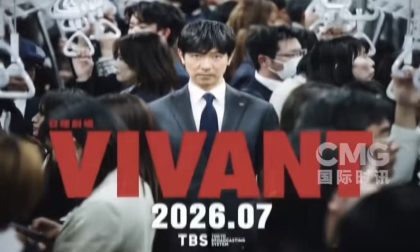
By portraying Chinese characters as perpetrators of ruthless violence while casting Japanese Self-Defense Forces (SDF) intelligence operatives as defenders, the season 2 of the Japanese drama Vivant has recently drawn criticism from Chinese netizens, who argue that its depiction turns historical reality on its head while ignoring Japan’s wartime atrocities.
The TBS drama series – a spy suspense story in which an alleged unofficial intelligence unit of the SDF operates across the globe — has attracted a passionate fanbase. Its currently airing season 2 opened with a household rating of 18.8 percent, the highest for a TV drama this year, according toa commentary article by Japanese media Toyo Keizai.
What draws attention is the portrayal of the enemies in the series, the article noted. Scenes in which the Chinese organization subjects kidnapped members of the SDF unit to brutal torture are repeated with unrelenting intensity.
It is rare for Japanese TV dramas to explicitly portray a real-life country as the enemy, the article noted.
Japanese Prime Minister Sanae Takaichi also made a reference to the drama, saying that she has been recording Vivant and hopes to binge-watch it over the year-end and New Year holidays, according to Japanese media outlets.
China’s CCTV News report on Sunday revealed that the drama features scenes in which Chinese personnel cut off the fingers of and stab Japanese intelligence operatives in the abdomen. Such acts bear striking similarities to the torture inflicted on Chinese nationals by invading Japanese troops during the World War II.
The drama distorts the truth by attributing these atrocities to modern Chinese characters. Beneath the surface, it subtly glorifies Japan’s cross-border overseas operations, blurs the functional boundaries of the SDF and implicitly promotes an expansionist narrative, per CCTV News. … continue
Blog Roll
 Aletho News
- Up in arms… Koreans reject U.S. empire’s plan to make South Korea the next Ukraine
- Iran, Turkey, Pakistan, Saudi Arabia could advance region-led security framework in Tehran: FM spox
- Netizens condemn Japanese drama for projecting Japan’s wartime atrocities onto Chinese characters
- Racist Seinfeld Dances for Joy as Bibi Unveils His New Map
- A West Bank War for Netanyahu’s Election Campaign, Could It Backfire?
- Yemen denounces European Parliament’s ‘hypocritical’ push to blacklist Ansarullah
- Qalibaf: UAE’s UN bid aims to ‘clear the runway’ for ‘Greater Israel’, whitewash genocide
- Pakistan reopens Iran border after boosting security: Report
- Why are so many Brazilians voting for Flávio Bolsonaro?
- Democrats Put Anti-Russia Agenda Ahead of American Workers
- If Americans Knew
- An error has occurred; the feed is probably down. Try again later.
- No Tricks Zone
- Sudden Stratospheric Warming, Powerful El Niño Combination May Lead To Extreme Europe Cold, Energy Crisis!
- Two New Studies Find Thwaites Glacier Melt Cannot Be Driven By Human Activity Or A Warming Ocean
- E-Cars Reduce CO2 Emissions By Only 41% Compared To Internal Combustion Engine Vehicles
- Predictions Made By Renowned Climate Professor Over Past Decades Have Been Proven To Be Poor
- New Study Suggests Large Regions Of The Pacific Ocean Have Been Cooling For The Last 80 Years
- Germany’s Green Energy Debacle: High Energy Costs Force Kahla Porzellan to Close After 182 Years!
- New Study: 50 Years Of The Most Aggressive ‘Net Zero’ Policies Can Only Affect The Global Climate By 0.03°C
- US September “Heat” Was No Record…Many Records Set Decades Ago
- Latest European Green Energy Debacle; Portugal’s Largest Flagship Solar Park Insolvent!
- Green Energy Debacle: German Expert Professor Fritz Vahrenholt Warns Of Severe Economic And Social Consequences

