Zika: JunkScience right again; Public health ‘experts’ wrong again
By Steve Milloy | JunkScience | October 26, 2016
“Scientists are bewildered by Zika’s path across Latin America” — except the “scientists” didn’t do the right science before jumping to conclusions.
From today’s WaPo :

Below are the cases:

Back in March, I wrote that we need to wait until the data from Colombia are in. Well they are. Clearly there is some other cause of the reported fetal deformities. I don’t expect the “experts” to figure it out. Meanwhile, how many babies were needlessly aborted?
Vatican Mediation in Venezuela Changes Political Equation for Washington
By Mark Weisbrot | The Hill | November 6, 2016
The Vatican’s participation in the mediation effort in Venezuela poses an unusual challenge to US policy in Venezuela and the region. On Sunday, October 30, three of the four major opposition parties and other prominent opposition leaders met with the government, with mediators from the Vatican and UNASUR (the Union of South American Nations). Some progress was made. The government released four people who the opposition considers political prisoners, and the opposition called off a political trial against President Maduro and a planned demonstration that most observers believed ran a high risk of violence.
Thomas Shannon, the number three official in the US State Department, also went to Venezuela this week, met with President Maduro and opposition leaders, and supported the dialogue. I wish I could say that this represents an actual change in US policy in the region, but all evidence still points to the contrary.
The US government is not looking at Venezuela in terms of dialogue or compromise. The Obama administration has economic sanctions against Venezuela, which President Obama renewed last March. In renewing these sanctions, the executive order again declared that Venezuela presented “an unusual and extraordinary threat to US security.” The world knows what happens to countries that the US deems to be “an unusual and extraordinary” security threat. Look what happened to Iraq. Look what happened to Nicaragua in the 1980s. It doesn’t matter how many people are directly affected by the specific sanctions against Venezuela. The threat is what matters, and it is ugly and belligerent enough to keep many investors from investing in Venezuela and to raise the country’s cost of borrowing. (Not to mention that the whole premise of Venezuela as a “security threat” is absurd.) And the US government has also directly pressured financial institutions not to do business with Venezuela.
For all of these reasons, it is clear that Washington’s goal in Venezuela is currently the same as it has been for almost all of the past 15 years. Shannon’s support for dialogue is almost certain to turn out the same as previous diplomatic thaws in the past: a brief and insincere interlude. President Obama initiated the longest period (about five months) of calm US-Venezuela relations ― since the US-backed military coup of 2002 ―between March and July last year. It soon became clear that this was only because the Cubans ― with support from the rest of the region ― made it a condition of progress in their own negotiations for opening relations with the US. This was something that Obama wanted for his legacy. But as Venezuela’s National Assembly elections approached, the Obama administration went back to its regime change strategy, supporting an international campaign to delegitimize Venezuela’s elections. (This turned out to be unnecessary, since the opposition won in a landslide.)
The Venezuelan opposition pursued a “strategy of military takeover” for the first four years of the Chávez government, including the 2002 military coup. But since 2004, they have been divided on whether to pursue change through legal means. Whenever they had people in the streets supporting a violent or extralegal overthrow ― as in 2002–03, 2013, or 2014 ― the US government has taken their side. Washington has also led various campaigns to delegitimize the Venezuelan government, a vital part of any extralegal “regime change” strategy.
But for the moment, Pope Francis has altered everyone’s calculations. It is not good optics for the hard-line Venezuelan opposition to condemn the pope. And the Obama administration cannot exert the kind of pressure on the Vatican that it does on, e.g., European governments to support its sanctions against Russia, or various unpopular military adventures. Also, the international media cannot marginalize or ignore the pope in the way they do the rest of the hemisphere’s governments, e.g., when these governments resist Washington’s support for regime change in Venezuela, Honduras, and other countries.
The pope is likely to look at the Venezuelan crisis in a pragmatic way, rather than through the lens of Washington’s imperial and ideological imperatives. There is a divided government in Venezuela, with the chavistas controlling the presidency and to a large extent the judiciary. The fractious opposition controls the National Assembly. Until the next presidential election, there is no way to resolve the political conflict except through dialogue and negotiation.
Pope Francis can be a pragmatic diplomat, but he has certain principles and is not easily intimidated. He is likely to understand that Venezuela’s divided government is a result of a divided country. From 2003, when the Chávez government got control of the national oil industry, until 2014, the large majority of the population experienced enormous gains in their living standards. That is why, in December of last year, in the elections for National Assembly, the ruling PSUV still got more than 40 percent of the vote ― despite inflation running at 180 percent and widespread shortages of basic consumer goods.
A big part of the gains of the Chávez era have been lost in the past nearly three years, and especially over the past year. But the governing party still has a political base that remembers worse poverty and exclusion, if not worse shortages, in the pre-Chávez era. They do not see the political opposition, which is a right-wing political movement that has always represented the upper classes, offering solutions that will make their lives better.
The Vatican will therefore likely seek negotiation and compromise on both sides of the political divide. This poses a unique challenge to Washington and some of its closest allies in Venezuela.
Son of Honduran Human Rights and Resistance Activist Murdered

teleSUR | November 2, 2016
In post-coup Honduras, a coup which Democratic presidential candidate Hillary Clinton supported, the corpses continue to pile up.
Human rights organizations are raising alarm after yet another assassination in Honduras, this time of the son of a prominent resistance activist, human rights defender, and aspiring progressive candidate for local political office with the left-wing Libre party.
Fernando Aleman Banegas was shot dead in the early hours of Monday morning when we was getting into his car after leaving a club in the northern port city of La Ceiba, according to local reports. The gunmen reportedly fled the scene on a motorcycle.
Aleman will be buried in the nearby city of Tocoa, which borders the Aguan Valley agricultural region, home to a brutally repressive land conflict between campesino communities and large private landowners.
Aleman’s mother, Elsy Banegas, has accompanied the campesinos struggle for years as the President of the Coordinator of Popular Organizations of the Aguan, known as COPA, a human rights group focused on labor and campesino issues in the region. Banegas is also an aspiring mayoral candidate for Tocoa with the Libre party, founded as an offshoot of the popular resistance movement in the wake of the 2009 U.S.-backed coup, in order push for a constituent assembly to rewrite the Honduran constitution at the ballot box, to complement their street resistance.
According to the Honduran human rights organization COFADEH, Banegas’ candidacy “threatens the interests of transnational mining companies and large landowners in the region.” The prominent activist has long been a vocal critic of systematic grave human rights abuses, impunity and the consequences of militarization in the region, particularly since the coup.
Banegas’ organization COPA reported after the murder that the social leader has “on many occasions received death threats for acting against mining companies, privatization and against the violation of human rights.”
Aleman’s assassination came hours before Libre kicked off its internal elections process to select the party’s new leadership leading up to the 2017 general election. Despite the shadow of violence, participation in the process surpassed the party’s own goals, according to Libre leader and ousted President Manuel Zelaya, with at least 239,000 people casting votes when estimates expected participation of 150,000 in the country of about 8 million.
Human rights organizations have called for a thorough and impartial investigation into Aleman’s murder.
The killing comes just two weeks after two Aguan campesino activists were murdered. Jose Angel Flores, president of the Unified Campesino Movement of the Aguan, one of the most prominent land rights organizations on the forefront of the Honduran resistance movement, and his fellow activists Silmer Dionisio George were both gunned down on Oct. 17. Since 2010, the bloody land conflict in the Aguan has claimed the lives of nearly 150 campesinos, according to human rights groups.
The wave of assassinations also comes months after the high-profile killing of internationally-renowned Indigenous activist Berta Caceres in March. Caceres’ case has come to epitomize the grave human rights situation in Honduras and systemic impunity enjoyed by perpetrators of political violence.
Human rights organizations have stressed that the United States — which under the leadership of former Secretary of State Hillary Clinton helped secure the 2009 coup — is complicit in the ongoing crisis in Honduras and must cut all aid funding to the Honduran government and military.
Venezuelan Government Releases Five Opposition Activists in Goodwill Gesture
By Rachael Boothroyd-Rojas | Venezuelanalysis | November 1, 2016
Caracas – Venezuela’s national government has agreed to release five jailed opposition activists in a goodwill gesture as part of its official talks with the country’s opposition.
The liberation of the prisoners is the first concrete agreement to emerge from the Vatican-mediated dialogue, initiated Sunday with representatives of four opposition parties.
On Monday evening, opposition mayor Carlos Ocariz took to social media to announce the negotiated release, confirming the freed prisoners as Andrés Moreno, Marco Trejo, Carlos Melo, Ángel Coromoto Rodríguez, and Andrés Leon– all arrested for their participation in violent protests or for the incitement of political violence.
As former security chief to opposition National Assembly President Ramos Allup, Ángel Coromoto Rodríguez, was arrested in May for allegedly bankrolling anti-police violence during opposition protests, while Melo was detained on August 31 for the possession of explosives. Similarly Moreno and Trejo were both arrested in late September after creating a video calling for the rebellion of the armed forces.
The longest-serving inmate amongst the group is Andres Leon, who was arrested during the deadly 2014 street violence known as the “guarimbas”. He was granted house-arrest on health grounds in June last year.
“Not enough”
The announcement comes just three days ahead of an anti-government march on the Miraflores Presidential Palace, called by the opposition for this coming Thursday.
Opposition leaders had previously hinted that they would be willing to consider calling off the demonstration depending on the progress of the talks, which they say are contingent on the release of their activists from jail.
Nonetheless, the government’s gesture appears to have done little to dissuade the MUD leadership from going forward with the controversial march– despite the violence unleashed by their supporters during protests last week.
“The release of the political prisoners is important, but not sufficient,” MUD Secretary Jesus Chuo Torrealba told reporters.
On Tuesday morning, the MUD opposition coalition also retweeted a message from legislator Freddy Guevara insisting that Thursday’s march would “still go ahead”. Guevara is a lawmaker for the ultra-right Popular Will party, which is currently boycotting the talks.
The coalition has been deeply divided over the decision to partake in official negotiations with the government, with proponents describing the top-level talks as just “one more terrain of struggle” amongst many.
Meanwhile, the government has hailed the move as a sign of its willingness to negotiate with the opposition in a bid to ease tensions in the politically polarised country.
“We, who have been permanently waiting for opposition sectors to (commit to) dialogue, salute the fact that it has finally taken place,” Venezuela’s foreign minister, Delcy Rodriguez, told press at the United Nations Human Rights Council on Tuesday.
The opposition has stated that it will not negotiate on its demands for a presidential recall referendum this year or on the release of all of its activists from jail, regardless of their crime. The MUD has yet to release an official statement confirming the status of Thursday’s march.
Venezuela Police Officer Shot, Killed During Right-Wing Protest
teleSUR – October 26, 2016
A Venezuelan policeman died after being shot during an opposition protest late Wednesday in the province of Miranda, Minister of the Interior and Justice Nestor Reverol said, adding there were two other officers injured.
Reverol stated that the officer was shot after the police tried to disperse an opposition march to preserve public order on the Panamerican highway in San Antonio de los Altos, adding that two suspects were in custody.
“There are two people detained for questioning, and an order will be issued to begin investigations to clarify this murder,” said Reverol.
The wounded officers were taken to a private clinic, where Jose Alejandro Molina Ramirez died, shot in the abdomen and arm. Medouza Dany Daniel Briceno was shot in one hand, Davis Jose Laya Ayala was hit in one arm and Miguel Antonio Cuevas Pirela had a wound on his face from a blunt object, but all were out of danger, the doctors informed.
Reverol said the right-wing opposition was responsible for the death of officer Molina. He also confirmed that four policemen were injured in Zulia state during the protests.
“The officer killed is Jose Alejandro Molina Ramirez who was shot in the abdomen and arm.”
The right wing had called for a “Taking of Venezuela” march Wednesday, provoking clashes that led to more than a hundred injuries.
Despite some factions of the opposition agreeing to talks with the government, some of the splintered right wing have refused dialogue and instead called for a national strike on Friday and a more provocative march to the Miraflores presidential palace on Nov. 3.
Miranda’s governor is right-wing leader Henrique Capriles, who denied that opposition forces had agreed to talks with the socialist government Tuesday and has been instrumental in calling for street demonstrations and the ouster of President Nicolas Maduro.
“This needs to keep growing so that the government understands once and for all that we’re doing this for real,” said two-time presidential loser Capriles.
The National Assembly, that is in contempt of the constitution, voted Tuesday to start an impeachment process against Maduro, even though any actions it takes have been declared nulled by the Supreme Court in the country.
Crowds at the protests where the officer was shot chanted “This government is going to fall!”
Clashes also broke out in the western town of San Cristobal that was an epicenter of violence during 2014 anti-Maduro protests that left at least 40 people dead.
‘Venezuela opposition unable to overthrow Maduro’
Press TV – October 26, 2016
Venezuela’s opposition-led National Assembly has voted for impeaching President Nicolas Maduro accusing him for violating democracy. The anti-government vote came after the Supreme Court blocked the parliament’s plan to hold a referendum to try and recall President Maduro. The Venezuelan socialist government has dismissed the move as meaningless.
Lajos Szaszdi, a Latin America expert, told Press TV that President Maduro has the support of the Supreme Court, the security forces and people, as a result of which the National Assembly would not be able to remove President Maduro from power.
The executive branch of the government “has the upper hand” in the division of power in Venezuela; therefore, President Maduro will be able to survive attacks by the opposition, Szaszdi said.
The analyst went on to say that the president of Venezuela has control over police, security and military forces and “of course, there is a broad base of supporters,” and “there is no danger for his hold on power.”
The Supreme Court will not accept any anti-government resolution issued by the National Assembly of Venezuela until the parliament invalidates three opposition lawmakers who are being accused of having bought votes in the last general elections, he added.
“The opposition is desperate,” Szaszdi argued, adding that the opposition is trying to resort to “extreme measures,” but people, the armed forces and the Supreme Court would support President Maduro.
The desperation of the opposition has increased after the National Electoral Council put a stop to the opposition-driven plebiscite against Maduro when four state courts called the signature-gathering process fraudulent.
The Venezuela’s government, which is facing economic difficulties and all-out pressure from the opposition legislators, has said the country is the victim of an international plot against Socialism, led by the United States.
Guatemala Indicts Top Ex-Military Men for War Crimes and Rape

A family member holds an image of Marco Antonio Molina Theissen, kidnapped and disappeared in 1981 when he was 14 years old. | Photo: EFE
teleSUR | October 25, 2016
Marco Antonio Molina Theissen was kidnapped by the military in 1981 when he was 14 years old. His family never saw him again.
Guatemala made a new breakthrough Tuesday in the decades-old struggle for justice for historical crimes against humanity, including systematic rape, as a court indicted former military chief of staff Manuel Benedicto Lucas Garcia and four other high-ranking officials on a number of crimes linked to the 1981 kidnapping and disappearance of 14-year-old boy Marco Antonio Molina Theissen, including the torture and rape of his sister Emma Guadeloupe.
In the presence of Marco Antonio and Emma Guadeloupe’s mother, Emma Theissen de Molina, in the criminal court, Judge Victor Herrera Rios announced that all five former top military men were involved in crimes against humanity, forced disappearance, and aggravated rape.
Lucas Garcia, the brother of former dictator Romero Lucas Garcia and the four others accused — former commanders Francisco Luis Gordillo and Edilberto Letona and former military intelligence agents Hugo Ramiro Zaldaña and Manuel Antonio Callejas — have been in pre-trial detention since being arrested in January.
Initially, only four were linked to the case. Lucas Garcia — currently facing prosecution along with several other former military officers for the disappearance of at least 558 civilians between 1981 and 1988 — was added when additional charges were announced in August for charges related to his role overseeing counterinsurgency strategy at the time that Emma Guadeloupe was detained and Marco Antonio was disappeared.
In Tuesday’s hearing, the judge established that Lucas Garcia’s role as military chief of staff from 1978 to 1982 held him responsible for the actions of the military brigade under his command in Quetzaltenango, where Molina Theissen was kidnapped in 1981. In that year, Gordilla and Letona were first and second in command, respectively, of the Quetzaltenango army unit, while Zaldaña was the intelligence official to the chief of staff and Callejas was in charge of intelligence at the Quetzaltenango base.
The indictments in the Molina Theissen case are a step toward clarifying the historical truth in brutal crimes carried out at the hands of the military during Guatemala’s bloody 36-year civil war.
In 1981, Emma Guadeloupe, a young activist at the time with the Patriotic Worker Youth, was detained at a military checkpoint for being in possession of items deemed political propaganda. She had previously been detained, tortured and raped by the military officials five years earlier in an incident that saw her boyfriend and two other students killed at the hands of the army.
Intelligence agent Zaldaña, one of the five indicted, was in charge of the checkpoint where Emma Guadeloupe was arrested in 1981. The young leftist — following in the footsteps of other dissidents in her family targeted for speaking out against the military regime — was locked up at the military base in Quetzaltenango.
She managed to run away from the military base nine days later, but the army swiftly retaliated. Just days after her escape, suspected military intelligence agents dressed in plain clothes stormed the Thiessen Molina home, beating the mother and kidnapping 14-year-old Marco Antonio. The family never saw him again.
According to the Washington Office on Latin America, the Molina Theissen family’s attorney has warned that the high-ranking positions of the accused — along with the fact that some of them have been implicated in organized crime operations — raises a risk of witness intimidation and other forms of obstruction of justice in the case, leading him to urge authorities to deny the accused alternative measures.
The Inter-American Court of Human Rights found the Guatemalan state guilty in the Molina Theissen disappearance in 2004, opening the door to a decade-long investigation in hopes of prosecuting the masterminds behind the heinous crimes.
Earlier this year, a landmark sexual slavery trial in Guatemala sentenced two former soldiers to 120 and 240 years in jail and established that rape was systematically used by the military as a weapon of war under the dictatorships. It was the first case of wartime sexual abuse prosecuted in the Central American country, raising hopes among human rights defenders that it could set a precedent for other cases of systematic rape.
The five accused will continue to be held in preventative detention.
US Impunity Erodes World Justice
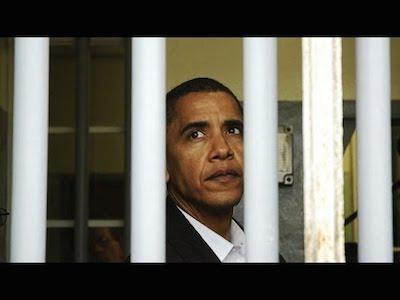
By Nicolas J S Davies | Consortium news | October 25, 2016
In the past week, Burundi and South Africa have joined Namibia in declaring their intention to withdraw from the jurisdiction of the International Criminal Court (ICC). They are likely to be followed by a parade of other African countries, jeopardizing the future of an international court that has prosecuted 39 officials from eight African countries but has failed to indict a single person who is not African.
Ironically, African countries were among the first to embrace the ICC, so it is a striking turnaround that they are now the first to give up on it.
But it is the United States that has played the leading role in preventing the ICC from fulfilling the universal mandate for which it was formed, to hold officials of all countries accountable for the worst crimes in the world: genocide; crimes against humanity; and war crimes – not least the crime of international aggression, which the judges at Nuremberg defined as “the supreme international crime” from which all other war crimes follow.
As the ICC’s founding father, former Nuremberg prosecutor Benjamin Ferencz, lamented in 2011, “You don’t have to be a criminologist to realize that if you want to deter a crime, you must persuade potential criminals that, if they commit crimes, they will be hauled into court and be held accountable. It is the policy of the United States to do just the opposite as far as the crime of aggression is concerned. Our government has gone to great pains to be sure that no American will be tried by any international criminal court for the supreme crime of illegal war-making.”
The U.S. has not only refused to accept the jurisdiction of the ICC over its own citizens. It has gone further, pressuring other countries to sign Bilateral Immunity Agreements (BIA), in which they renounce the right to refer U.S. citizens to the ICC for war crimes committed on their territory.
The U.S. has also threatened to cut off U.S. aid to countries that refuse to sign them. The BIAs violate those countries’ own commitments under the ICC statute, and the U.S. pressure to sign them has been rightly condemned as an outrageous effort to ensure impunity for U.S. war crimes.
Resistance to U.S. Impunity
To the credit of our international neighbors, this U.S. strategy has met with substantial resistance. The European Parliament overwhelmingly passed a resolution stating that BIAs are incompatible with E.U. membership, and urged E.U.- member states and countries seeking E.U. membership not to sign them.
Fifty-four countries have publicly refused to sign BIAs, and 24 have accepted cut-offs of U.S. aid as a consequence of their refusal. Of 102 countries that have signed a BIA, only 48 are members of the ICC in any case, and only 15 of those countries are on record as having ratified the BIAs in their own parliaments.
Thirty-two other ICC members have apparently allowed BIAs to take effect without parliamentary ratification, but this has been challenged by their own country’s legal experts in many cases.
The U.S. campaign to undermine the ICC is part of a much broader effort by the U.S. government to evade all forms of accountability under the laws that are supposed to govern international behavior in the modern world, even as it continues to masquerade as a global champion of the rule of law.
The treaties that U.S. policy systematically violates today were crafted by American statesmen and diplomats, working with their foreign colleagues, to build a world where all people would enjoy some basic protections from the worst atrocities, instead of being subject only to the law of the jungle or “might makes right.”
So current U.S. policy is a cynical betrayal of the work and wisdom of past generations of Americans, as well as of countless victims all over the world to whom we are effectively denying the protections of the U.N. Charter, the Geneva Conventions, the U.N. Convention on the Rights of the Child and other multilateral treaties that our country ignores, violates or refuses to ratify.
Avoiding the jurisdiction of international courts is only one of the ways that the U.S. evades international accountability for its criminal behavior. Another involves an elaborate and well-disguised public relations campaign that exploit the powerful position of U.S. corporations in the world of commercial media.
Major Propaganda Funding
The U.S. government spends a billion dollars per year on public relations or, more bluntly, propaganda, including $600 million from the Pentagon budget. The work of its P.R. teams and contractors is laundered by U.S. newspapers and repeated and analyzed ad nauseam by monolithic, flag-waving TV networks.
These profitable corporate operations monopolize the public airwaves in the U.S., and also use their financial clout, slick marketing and the support of the U.S. State Department to maintain a powerful presence in foreign and international media markets.
Foreign media in allied countries provide further legitimacy and credibility to U.S. talking-points and narratives as they echo around the world. Meanwhile, Hollywood fills cinema and TV screens across the world with an idealized, glamorized, inspirational version of America that still mesmerizes many people.
This whole elaborate “information warfare” machine presents the United States as a global leader for democracy, human rights and the rule of law, even as it systematically and catastrophically undermines those same principles. It enables our leaders to loudly and persuasively demonize other countries and their leaders as dangerous violators of international law, even as the U.S. and its allies commit far worse crimes.
Double Standards in Syria/Iraq
Today, for instance, the U.S. and its allies are accusing Syria and Russia of war crimes in east Aleppo, even as America’s own and allied forces launch a similar assault on Mosul. Both attacks are killing civilians and reducing much of a city to rubble; the rationale is the same, counterterrorism; and there are many more people in the line of fire in Mosul than in east Aleppo.
But the U.S. propaganda machine ensures that most Americans see one, in Mosul, as a legitimate counterterrorism operation (with Islamic State accused of using the civilians as “human shields”) and the other, in east Aleppo, as a massacre (with the presence of Al Qaeda’s Syrian affiliate, the former Nusra Front, virtually whited out of the West’s coverage, which focuses almost entirely on the children and makes no mention of “human shields”).
The phrase “aggressive war” is also a no-no in the Western media when the U.S. government launches attacks across international borders. In the past 20 years, the U.S. has violated the U.N. Charter to attack at least eight countries (Yugoslavia, Afghanistan, Iraq, Pakistan, Yemen, Somalia, Libya and Syria), and the resulting wars have killed about two million people.
A complex whirlwind of conflict and chaos rages on in all the countries where the U.S. and its allies have lit the flames of war since 2001, but U.S. leaders still debate new interventions and escalations as if we are the fire brigade not the arsonists. (By contrast, the U.S. government and the Western media are quick to accuse Russia or other countries of “aggression” even in legally murky situations, such as after the U.S.-backed coup in 2014 that ousted the elected president of Ukraine.)
Systematic violations of the Geneva Conventions are an integral part of U.S. war-making. Most are shrouded in secrecy, and the propaganda machine spins the atrocities that slip through into the public record as a disconnected series of aberrations, accidents and “bad apples,” instead of as the result of illegal rules of engagement and unlawful orders from higher-ups.
The senior officers and civilian officials who are criminally responsible for these crimes under U.S. and international law systematically abuse their powerful positions to subvert investigations, cover up their crimes and avoid any accountability whatsoever.
Pinter’s Complaint
When British playwright Harold Pinter was awarded the Nobel Prize for Literature in 2005, he bravely and brilliantly used his Nobel lecture to speak about the real role that the U.S. plays in the world and how it whitewashes its crimes. Pinter recounted a meeting at the U.S. Embassy in London in the 1980s in which a senior embassy official, Raymond Seitz, flatly denied U.S. war crimes against Nicaragua for which the U.S. was in fact convicted of aggression by the International Court of Justice (ICJ). Seitz went on to serve as Assistant Secretary of State, U.S. Ambassador to the U.K., and then Vice-Chairman of Lehman Brothers.
As Pinter explained: “this ‘policy’ was by no means restricted to Central America. It was conducted throughout the world. It was never-ending. And it is as if it never happened.
“The United States supported and in many cases engendered every right wing military dictatorship in the world after the end of the Second World War. I refer to Indonesia, Greece, Uruguay, Brazil, Paraguay, Haiti, Turkey, the Philippines, Guatemala, El Salvador, and, of course, Chile. The horror the United States inflicted upon Chile in 1973 can never be purged and can never be forgiven.
“Hundreds of thousands of deaths took place throughout these countries. Did they take place? And are they in all cases attributable to US foreign policy? The answer is yes they did take place and they are attributable to American foreign policy. But you wouldn’t know it.
“It never happened. Nothing ever happened. Even while it was happening it wasn’t happening. It didn’t matter. It was of no interest. The crimes of the United States have been systematic, constant, vicious, remorseless, but very few people have actually talked about them. You have to hand it to America. It has exercised a quite clinical manipulation of power worldwide while masquerading as a force for universal good. It’s a brilliant, even witty, highly successful act of hypnosis.”
If in 2016 the world seems to be more violent and chaotic than ever, it is not because the United States lacks the will to use force or project power, as both major party candidates for President and their military advisers appear to believe, but because our leaders have placed too much stock in the illegal threat and use of force and have lost faith in the rule of law, international cooperation and diplomacy.
After a century of commercial dominance, and 75 years of investing disproportionately in weapons, military forces and geopolitical schemes, perhaps it is understandable that U.S. leaders have forgotten how to deal fairly and respectfully with our international neighbors. But it is no longer an option to muddle along, leaving a trail of death, ruin and chaos in our wake, counting on an elaborate propaganda machine to minimize the blowback on our country and our lives.
Sooner rather than later, Americans and our leaders must knuckle down and master the very different attitudes and skills we will need to become law-abiding global citizens in a peaceful, sustainable, multipolar world.
Nicolas J S Davies is the author of Blood On Our Hands: the American Invasion and Destruction of Iraq. He also wrote the chapters on “Obama at War” in Grading the 44th President: a Report Card on Barack Obama’s First Term as a Progressive Leader.
Venezuela Opposition Cries Foul After Recall Suspended, Calls for Coup Against Maduro
teleSUR | October 21, 2016
The ominous calls came as courts temporarily froze the referendum process to investigate thousands of fraudulent signatures submitted in the first phase.
Leader’s from Venezuela’s opposition appeared to call for a coup against President Nicolas Maduro, after the country’s Supreme Court ruled that the presidential recall referendum would be temporarily suspended due to fraud committed in the first phase of the process.
Opposition leader Henrique Capriles said Friday that President Maduro is “in disobedience of the constitution” and called on both the National Assembly and Armed Forces to “make a decision” and have people “respect the constitution.”
The former Venezuelan presidential candidate also said Maduro had vacated his position as president, prompting fears that a coup might be looming.
“Maduro did not only leave the country, he left his position,” Capriles said during Friday’s press conference.
“Maduro declared himself in disobedience, he does not respect the Constitution, and today he left the country, and will leave everything.”
Maduro left Venezuela for various OPEC and non-OPEC countries Thursday to help establish a stable price for oil, which has negatively affected the South American country’s economy.
Capriles, head of Justice First and one of the leaders of the opposition MUD coalition, also called on the nation’s armed forces to intervene.
“Hopefully the armed forces will have people respect the constitution,” he said.
The MUD leader also demanded the government repeal the decision to suspend the signature collection process for the recall referendum and called on opposition members to “take the streets of Venezuela.” Toward the end of his speech, Capriles denied he wanted a coup to oust Maduro and said he does not want to incite violence.
“We don’t want a coup in the country,” said Capriles, “A coup has (already) happened to the people and we have to restore constitutional order.“
Henry Ramos Allup, the president of the National Assembly, also spoke during the press conference and said the National Assembly he leads supports all the decisions and the message promoted by Capriles.
Ramos Allup also called on the Venezuelan Armed Forces “to analyze the abuses to the constitution” allegedly carried out by the government. He also said they were offering a constitutional way out for Maduro through the recall referendum in order to prevent “a violent way out” in the future.
The legislator said a delegation from the assembly will travel to the Organization of American States, or OAS, to demand the OAS apply the so-called Democratic Charter against his country, something the opposition has been requesting for months.
“Venezuelans have always been stronger than its leaders,” he said, before he cast doubt on Maduro’s nationality, suggesting he may actually be Colombian—a common allegation that has no basis.
The National Electoral Council, or CNE, said the decision to postpone the recall referendum process came after the MUD committed the criminal offense of presenting more than 600,000, about 30 percent, of signatures deemed irregular. Among the invalid signatures were almost 11,000 from deceased Venezuelans.
The Supreme Court also declared invalid all acts of the National Assembly after it swore in three legislators who had previously been suspended over irregularities when they were elected.
Venezuelan Supreme Court Orders New Inquiry into Disappeared During Fourth Republic
By Lucas Koerner | Venezuelanalysis | October 20, 2016
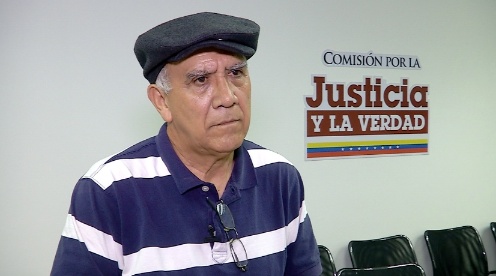
Caracas – Venezuela’s Supreme Court (TSJ) issued a ruling Tuesday ordering the country’s the public prosecution to reopen investigations into the case of a law student disappeared in 1966.
Andres Pasquier Suarez, a law student at the Central University of Venezuela, was detained by Venezuela’s national guard on October 10, 1966 and subsequently handed over to the now defunct Armed Forces Information Service.
According to military records, the youth was transferred two days later to the Urica Anti-Guerrilla Camp from which he never returned.
A Maracaibo military tribunal charged with investigating the incident declared the case closed on March 15, 1968, finding that “no crime has been committed in any moment”.
Writing on behalf of the high court, TSJ President Gladys Gutierrez struck down the prior ruling as “contrary to the elemental principles of law and justice”, concluding that the military court had failed to conduct an impartial investigation of the disappearance.
The justice ordered the public prosecutor’s office to reopen the investigation and identify those responsible as mandated under article 19 of Venezuela’s Law to Prosecute Crimes, Disappearances, Tortures, and Other Human Rights Violations for Political Reasons during the Period 1958-1999.
Over the last 17 years, numerous inquiries have brought to light the magnitude of human rights violations committed under Venezuela’s pacted, two-party system known as the Fourth Republic.
This past July, the country’s official Truth and Justice Commission revealed that it had registered a total of 11,043 cases of torture, assassinations, and political disappearances between 1958 and 1998.
Featured Video

Racist Seinfeld Dances for Joy as Bibi Unveils His New Map
or go to
Aletho News Archives – Video-Images
TV Drama Review
Japanese drama projects Japan’s wartime atrocities onto Chinese characters

Global Times | October 25, 2026
By portraying Chinese characters as perpetrators of ruthless violence while casting Japanese Self-Defense Forces (SDF) intelligence operatives as defenders, the season 2 of the Japanese drama Vivant has recently drawn criticism from Chinese netizens, who argue that its depiction turns historical reality on its head while ignoring Japan’s wartime atrocities.
The TBS drama series – a spy suspense story in which an alleged unofficial intelligence unit of the SDF operates across the globe — has attracted a passionate fanbase. Its currently airing season 2 opened with a household rating of 18.8 percent, the highest for a TV drama this year, according toa commentary article by Japanese media Toyo Keizai.
What draws attention is the portrayal of the enemies in the series, the article noted. Scenes in which the Chinese organization subjects kidnapped members of the SDF unit to brutal torture are repeated with unrelenting intensity.
It is rare for Japanese TV dramas to explicitly portray a real-life country as the enemy, the article noted.
Japanese Prime Minister Sanae Takaichi also made a reference to the drama, saying that she has been recording Vivant and hopes to binge-watch it over the year-end and New Year holidays, according to Japanese media outlets.
China’s CCTV News report on Sunday revealed that the drama features scenes in which Chinese personnel cut off the fingers of and stab Japanese intelligence operatives in the abdomen. Such acts bear striking similarities to the torture inflicted on Chinese nationals by invading Japanese troops during the World War II.
The drama distorts the truth by attributing these atrocities to modern Chinese characters. Beneath the surface, it subtly glorifies Japan’s cross-border overseas operations, blurs the functional boundaries of the SDF and implicitly promotes an expansionist narrative, per CCTV News. … continue
Blog Roll
 Aletho News
- EU facing trillion-euro debt hole while seeking more cash for Kiev
- How US, Europe, Persian Gulf states exhausted missile stockpiles, splurged billions to defend Israel
- Up in arms… Koreans reject U.S. empire’s plan to make South Korea the next Ukraine
- Iran, Turkey, Pakistan, Saudi Arabia could advance region-led security framework in Tehran: FM spox
- Netizens condemn Japanese drama for projecting Japan’s wartime atrocities onto Chinese characters
- Racist Seinfeld Dances for Joy as Bibi Unveils His New Map
- A West Bank War for Netanyahu’s Election Campaign, Could It Backfire?
- Yemen denounces European Parliament’s ‘hypocritical’ push to blacklist Ansarullah
- Qalibaf: UAE’s UN bid aims to ‘clear the runway’ for ‘Greater Israel’, whitewash genocide
- Pakistan reopens Iran border after boosting security: Report
- If Americans Knew
- An error has occurred; the feed is probably down. Try again later.
- No Tricks Zone
- Sudden Stratospheric Warming, Powerful El Niño Combination May Lead To Extreme Europe Cold, Energy Crisis!
- Two New Studies Find Thwaites Glacier Melt Cannot Be Driven By Human Activity Or A Warming Ocean
- E-Cars Reduce CO2 Emissions By Only 41% Compared To Internal Combustion Engine Vehicles
- Predictions Made By Renowned Climate Professor Over Past Decades Have Been Proven To Be Poor
- New Study Suggests Large Regions Of The Pacific Ocean Have Been Cooling For The Last 80 Years
- Germany’s Green Energy Debacle: High Energy Costs Force Kahla Porzellan to Close After 182 Years!
- New Study: 50 Years Of The Most Aggressive ‘Net Zero’ Policies Can Only Affect The Global Climate By 0.03°C
- US September “Heat” Was No Record…Many Records Set Decades Ago
- Latest European Green Energy Debacle; Portugal’s Largest Flagship Solar Park Insolvent!
- Green Energy Debacle: German Expert Professor Fritz Vahrenholt Warns Of Severe Economic And Social Consequences

