Latin America’s Mass Murderers to Be Tried in Italian Court
teleSUR | February 8, 2015
After decades of impunity, those responsible for the wave of political violence that swept Latin America under the dictatorships of 1970s and 1980s will be tried in court this week in Rome, Italy.
Thirty-three people have been formally charged for their links to the operation, which left 50,000 people dead, 30,000 disappeared, and 400,000 jailed.
Among those killed were 23 Italian citizens, which is why Italy’s justice system is now ruling on the case, opened in 1999.
Operation Condor was a coordinated political assassination and persecution plan drafted in the 1970s by South American military dictatorships, with the help of foreign governments. It sought to eliminate any resistance or political rivals, mostly targeting left-wing groups.
The military chiefs of participating countries were provided with a command center by the United States, located in Panama, through which they could communicate and share intelligence on their victims. Declassified U.S. documents show the government knew about the operation but still continued to back the military dictatorships.
Evidence suggests that the beginning of the operation coincided with a visit made by Manuel Contreras – then Chile’s intelligence chief – to CIA headquarters in Langley, Virginia. Several researchers believe that U.S. Secretary of State Henry Kissinger was involved in the assassination scheme.
French intelligence agents were also part of the operation and helped the South American military chiefs to implement many of the counterinsurgency tactics that France had used against the Algerian resistance.
The Italian court is not expecting the former military chiefs and politicians to attend the hearing, although it has given them the possibility to do so through a video conference.
Among the people charged are 11 former military junta members from Chile, 16 from Uruguay, four from Peru, and one from Bolivia.
Former Bolivian President Luis Garcia Meza has also been accused by the Attorney Giancarlo Capaldo, however he has not been charged given that he has not yet responded to the formal notification against him.
The trial will take place inside Rebbibia prison and will be presided over by Judge Evelina Canale and Judge Paolo Colella.
150 People Reported Disappeared in Piedras Negras, Mexico
teleSUR | February 7, 2015
Over 150 people have been reported disappeared in the small city of Piedras Negras in the northern border Mexican state of Coahuila in the last 18 months, of which at least 60 have been attributed to elite police forces, according to a lawyer overseeing the cases.
Families of victims and their lawyers accused state government of creating special forces that have carried out arbitrary detentions, tortures and enforced disappearances across Coahuila during the last six years.
The creation of elite police forces, which in the past have been sent to the U.S. for special training by the FBI, is not new in Mexico. These types of forces have been accused of acting as death squads for the government and have sometimes carried out assassinations ordered by organized crime gangs.
“Special units of the army and navy, assassins trained by armed forces deserters and civilians trained by foreign security forces operate in Mexico as death squad,” Proceso published in June of 2013. The Mexican magazine based this assertion on a book published by 0federal lawmaker Ricardo Monreal Avila, which was edited by the congress’ lower house.
Influential newspaper Excelsior in November of last year wrote that, “The special forces created in the states (of Mexico) are under scrutiny due to human rights issues.”
The daily based in Mexico City added that, “these elite police groups have been accused of carrying out enforced disappearances, kidnappings, extortion and torture.”
Excelsior said that “it should be noted that in spite of the negative reputation of these forces in various states, which sometimes receive special training by U.S., Colombian or Israeli elite groups, more states and Mexico City are in the process of integrating elite groups to (allegedly) fight organized crime.”
The newspaper went on to say that the United Nations has questioned the work of special intelligence units in Baja California and Tamaulipas, due to the high number of crimes they have committed against innocent people.
On Friday, the La Jornada newspaper reported that attorney Denise Garcia told reporters that the non-governmental organization United Families has documented 150 cases of disappearances in the last 18 months in Piedras Negras alone.
“In at least 60 of those cases there is evidence that the Special Arms and Tactics Group (GATE) participated in them, as well as other similar types police units that were created by the former Governor Humberto Moreira and which still exist today under the governorship of his brother Ruben,” she said.
Garcia said the 51 people that were disappeared by GATE were later found alive, but all of them, she added, were tortured to confess crimes they did not commit, including drug trafficking, and today they remain jailed under false charges.
These groups have no accountability, Garcia explained, and they don’t report their operations nor their arrests, which is a clear violation of human rights.
“GATE and other special police units work under the recognition and support of the government, despite that many of them are [not] even legally constituted,” she said.
García said they act as illegal death squads, they travel in unmarked vehicles with no license plates, they are masked and commit many other irregularities.
The worst thing, she added, is that “we have denounced these issues to the federal government and the National Human Rights Commission (CNDH), which respond with indifference.”
See also:
US Slaps Venezuelans with New Sanctions
teleSUR | February 3, 2015
The United States officially imposed new sanctions on Venezuela Monday, amid accusations from President Nicolas Maduro that Washington is trying to destabilize his country.
The new sanctions expand the number of Venezuelan government officials barred from entering the United States.
“These restrictions will also affect the immediate family members of a number of those individuals subject to visa restrictions for believed involvement in human rights abuses or for acts of public corruption,” said State Department spokesperson Jen Psaki.
Psaki continued by stating, “We will not publicly identify these individuals because of U.S. visa confidentiality laws, but we are sending a clear message that human rights abusers, those who profit from public corruption, and their families are not welcome in the United States.”
Maduro hit back at the announcement by accusing the U.S. government of hypocrisy.
“They kill black youth in the street with impunity, they persecute and have concentration camps of Central American kids. They have abducted dozens of citizens of the world under no known legal system, submitting them to torture, isolation,” he said during a speech.
Maduro has previously accused U.S. officials of plotting to topple his government.
He asked, “What human rights are they talking about?”
The new U.S. sanctions are in response to a wave of unrest that hit Venezuela in early 2014. Around 43 people died as anti-government groups took to the streets with weapons ranging from firearms to molotov cocktails and home-made bazookas to demand Maduro step down. According to an analysis of the death toll by independent media collective Venezuelanalysis, around half the casualties were government supporters, state security personnel or ordinary members of the public likely killed by anti-government groups. Venezuelan authorities have arrested opposition figures it claims masterminded the violence including Leopoldo Lopez, while also pressing charges against security personnel accused of misconduct.
However, Psaki described the opposition violence as “peaceful protests.”
“We emphasize the action we are announcing today is specific to individuals and not directed at the Venezuelan nation or its people,” she said.
However, Venezuelan foreign minister Delcy Rodriguez told private broadcaster Venevision that the U.S. and corporate media are trying to mislead the international community about Venezuela.
“All imperialist wars have been precipitated by media campaigns such as this one, giving false information that aims to provide the world with the justification for an intervention,” said Rodriguez.
Sabino Romero’s Widow Testifies Amidst Threats

Sabino’s widow, Lucia Martinez de Romero, testified at court today (Aporrea)
By Lucas Koerner | Venezuelanalysis | February 2, 2015
Caracas – Dozens of activists gathered outside the Ministry of Justice in the capital today in solidarity with Lucia Martinez de Romero, the widow of assassinated indigenous Yukpa leader Sabino Romero. Today she testified in the trial of Angel Antonio Romero Bracho, (aka “Manguera”) accused of murdering the indigenous chief or “cacique”.
Lucia herself also suffered multiple gunshot wounds the night of March 3, 2013 when her husband was shot and killed by hired assassins reportedly acting in the service of wealthy cattle ranchers.
Lusby Portillo, 66, Coordinator of the Zulia-based Homo Et Nature Society, explained what is at stake in today’s proceedings:
“Today there is a trial against the physical murderer, who shot and killed [Sabino] and wounded Lucia Martinez. Five police officers from Machiques have already been tried and given seven years of prison… They gave them seven years, because there was influence on the part of the cattle ranchers, who paid so that the court would decide a minimum sentence of seven years”.
Portillo is one of the principal activists to have followed the case over the past 23 months. He told Venezuelanalysis that many indigenous activists feared that a miscarriage of justice would take place unless supporters continued to draw attention to the case. One witness today also noted that the family of Manguera began to threaten Lucia before she was due to testify.
“If we let our guard down, if we don’t protest, if we don’t make movies, if we don’t write articles, if we don’t get the word out, these courts are going to give Manguera ten, eleven years, and then within two or three years he can go free with all of the benefits…So we are demanding thirty years of prison [for Manguera], and we’re also demanding that the trial against the five police officers be annulled, that there be a new trial, and that… the intellectual actors… the cattle ranchers who financed [the murder], who are millionaires, go to trial.”
Land Struggles
In the leadup to his assassination, Rabino spearheaded a series of occupations by Yukpa campesinos of the expansive rancher haciendas established on their ancestral land in Sierra de Perijá, which were returned to them by the current socialist government under the Constitution. According to Portillo, these lands were violently confiscated by the government of dictator Juan Vicente Gomez in 1930, driving the Yukpa people into the mountains. When they subsequently attempted to retake their lands, as Sabino would do over eighty years later, they were brutally massacred by the cattle ranchers.
For indigenous rights activist Tibisay Maldonado, 52, however, this struggle goes much further back than eighty years.
“We are active in the organization National Front for Land Struggle, because, even though we are from Caracas we are from the city, this problematic of the land, this plundering from 500 years ago. We are the inheritors of a dispossession, of an invasion 500 years ago, and the indigenous peoples remain in resistance, and we must stand with them”.
Amid Trial, Impunity Continues for Murder of 8 other Yukpa Leaders
Portillo went on to criticize what he described as “impunity” for the hired killers of indigenous leaders and their intellectual and financial backers.
“Of the Yukpa [leaders] killed over the question of land, who are nine up until now, only the case of Sabino has been taken to the courts, but the [case of the] other eight murdered [leaders] has not been investigated nor brought to trial…Besides trial for [the case of] Sabino, there also needs be trials for the other eight Yukpa who were assassinated.”
Nonetheless, for Leonardo Dominguez, the problem goes well beyond these nine assassinated leaders, encompassing the issues of paramilitary violence in Venezuela writ large;
“This is something that is practiced in Colombia. These are new crimes in Venezuela. So I think the laws need to stipulate a decent punishment for this murderer to mark a precedent, because enough is enough. There have already been 359 campesinos assassinated at the hands of the hitmen, plus workers’ leaders, plus popular leaders. We want peace, but we believe peace is achieved through struggle. If you want peace, prepare for war,” he said.
A Test for the Revolution
For those present outside the Ministry of Justice, today’s trial represents a fundamental test of the Bolivarian government’s commitment to defending indigenous rights.
“Socialism has two paths,” warns Dominguez..”Either we’re with the indigenous people or we’re with the murderers.”
Despite the challenges faced by the Yupka people, including the relative inaction of the government, Jessy Rojas, 20, of Urbano Aborigen, is nevertheless hopeful. She stated that there had been a “fair amount of gains” for indigenous people under the Bolivarian Revolution, including the trial of Sabino’s murderer.
“In the past, there generally weren’t trials for indigenous cases. In the past, there wasn’t this openness to discussing indigenous issues in the capital”.
According to Jessy, these historic gains are propelling young activists to take the struggle evern further.
“This is the moment to demand,” she asserted.
The case has been adjourned until February 13th.
Chile: Two Found Guilty in Horman Murder Case
Weekly News Update on the Americas | February 2, 2015
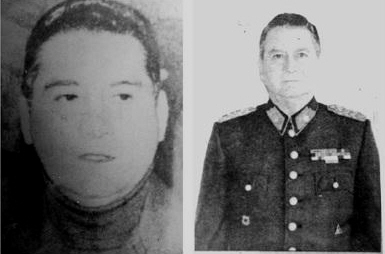
Retired Chilean army colonel Pedro Espinoza and former Chilean air force intelligence agent Rafael González Berdugo have been convicted in the murder of US journalist Charles Horman and US graduate student Frank Teruggi during the days after the Sept. 11, 1973 military coup that overthrew leftist president Salvador Allende Gossens [see Update #1226].
Judge Jorge Zepeda sentenced Espinoza–formerly an officer in the now-defunct National Intelligence Directorate (DINA) who has been described as the right-hand man of DINA head Manuel Contreras—to seven years in prison for the two murders.
González Berdugo was sentenced to two years of police surveillance as an accomplice in Harmon’s murder.
Judge Zepeda ruled in the case on January 9 but the decision wasn’t announced until January 28.
Last summer the judge officially ruled that “US military intelligence services played a fundamental role in the murders” by supplying information to the Chilean military. (El Ciudadano (Chile) 1/31/15)
Colombia’s Journalists Under Threat
teleSUR | January 27, 2015
“2014 ended with threats and 2015 as well started with threats,” said representative in Colombia for Reporters Without Borders, Fabiola León. She insists the situation is worrying as over the course of around 20 days, 5 written threats have been delivered targeting 150 people, who include not only journalists but also social activists and land restitution leaders.
Among those directly threaten is Omar Vera, Chief Editor of “El Turbión,” a digital newspaper that for 11 years has been reporting on the struggles of Colombia’s social movements. In one of the written threats received December last year, the nine journalists working at “El Turbión” including Omar, were identified by their full names in the list of targets.
Omar and his team consider that the threats are related to the “interest of silencing independent voices that are reporting on social movements and that are showing solidarity with a network of organizations currently struggling for a change in the country in the wake of the peace process,” he recalled.
Elkin Sarria, a friend and colleague of Omar, is the editor of “Contagio” radio station, which like “El Turbión” newspaper is among the 12 media outlets targeted in a written threat signed by Aguilas Negras, a paramilitary group that Colombia’s Ministry of Interior Juan Fernando Cristo has recently denied existed.
“If Aguilas Negras does not exist, then who’s behind the threats?” Elkin asks; “Is it the military? Is it the State intelligence? To know who’s behind would be the only real guarantee to our security,” he adds.
For Fabiola León it is not by chance that among the people that have been threatened are not only journalists. “What these people, including journalists, share in common is that we have been talking about the peace process, that we have been working on the resolution of social problems that could serve as base for the final deal to put an end to the armed conflict,” she pointed out.
The tough situation Colombian journalists are currently facing, coincides with the security conditions that members and leaders of the “Broad Front for Peace,” a coalition of activists actively supporting the peace process, have been denouncing.
“Behind the threats I believe there are powerful forces with great interest in the failure of the peace process; determined to hinder fundamental transformations as well as a strengthening of democracy and to sabotage the peace talks in Havana,” Human Rights defender Piedad Cordoba recently declared to teleSUR English referring to the latest life threats she received.
But what worries the most is that whoever is behind the threats, seems to be willing to implement them. That was made clear Wednesday last week when peace activist and social leader Carlos Alberto Pedraza was found dead in strange circumstances.
Social leaders, peace activists and journalists have agreed that the very first step to guarantee the security of those under threat is to identify who exactly is behind the increasing threats, something that has already be demanded from the Colombian authorities.
Argentine president seeks to dissolve intelligence body
Press TV – January 27, 2015
Argentina’s president has described the country’s intelligence agency as a “national debt” and has announced plans to disband it.
President Cristina Fernandez de Kirchner made the remarks in a Monday TV address, saying she would prepare a draft legislation to set up an alternative body.
“I have prepared a bill to reform the intelligence service,” said Fernandez, insisting that she wanted the idea discussed at an urgent session of the nation’s Congress.
She further stated that her plan “is to dissolve the Intelligence Secretariat and create a Federal Intelligence Agency” and added that a new leadership for the intelligence agency should be picked by a president and confirmed by the South American country’s Senate.
Fernandez further argued that the intelligence services maintained the same structure they had during the US-backed military government that ended in 1983.
“Combating impunity has been a priority of my government,” she emphasized.
She made the decision following the mysterious death of prosecutor Alberto Nisman hours before he was reportedly due to testify against senior government authorities.
Nisman had been probing the bombing of a Jewish center in the Argentine capital Buenos Aires in 1994 which killed 85 people.
He was found dead on January 18 in his apartment in Buenos Aires.
Investigators initially said they believed he had committed suicide, but later clarified that homicide or “induced suicide” could not be ruled out.
President Fernandez has emphasized that she does not believe Nisman’s death was a suicide.
1.5 Million Lifted Out of Poverty in Ecuador under Correa
teleSUR | January 25, 2015
The Ecuadorean National Secretariat for Planning and Development announced on Friday that between the years 2007 and 2014, more than 1.5 million people have been lifted out of poverty in the South American country. These years coincide with the administration of Rafael Correa and the policies of what is known as the Citizen’s Revolution, which recently celebrated 8 years of government.
“The model of government has radically changed,” said Pabel Muñoz, the national secretary for planning and development. The government of Rafael Correa has also dramatically reduced inequality in the country, with the gap between the richest and poorest in the country shrinking. In 2007 the richest earned 42 times that of the poorest, while in 2014 that was reduced to only 22 times.
The 1.5 million lifted out of poverty represents a drop of 14 percent in the poverty rate in the country, with extreme poverty dropping 8 points from 16.5 percent to 8.6 percent.
“Ecuador is a successful country because while reducing poverty, it reduces the gap between the rich and the poor. It has allowed for an increase in consumption and has not registered drops in social indicators. Instead people have climbed the social ladder,” said Muñoz.
These figures were published by the National Secretariat for Planning and Development.
Ecuador has also seen the biggest decrease in the region in the Gini coefficient — a figure that measures inequality in a country — dropping from 0.55 in 2007 to 0.48 in 2012, whereas the rest of Latin America saw a drop from 0.52 to 0.50.
The country has also seen important progress in the field of education, with primary school attendance increasing from 92 percent in 2007 to 96 percent in 2014. There has also been an increase of approximately 1 million more Ecuadoreans enrolled in public education.
Ecuador is now a leader in public investment in the region. Whereas in 2006 social investment constituted the equivalent of 3.6 percent of GDP, social investment is now the equivalent of 11 percent of GDP.
“This is just an example of the achievements of our government, which have been made possible because we have put capital at the service of the people and not the other way around,” said Muñoz.
Featured Video

Ian Proud: Economic Reset with Russia to Save Europe
or go to
Aletho News Archives – Video-Images
From the Archives
Magic Hour for Gates

By Gary Jordan | Wake The F*** UP | March 15, 2021
Bill Gates wants to know everything about you.
He wants to control every aspect of your life.
His insatiable thirst for the supervision and scrutiny of every human being alive has sparked a US$1 billion investment that will blanket the earth in video surveillance satellites, providing real-time feedback with a mere one-second delay. He advocates for Orwellian digital tools to track your every move and has bankrolled US$1.7 billion to provide artificial intelligence that will be used to scan each and every visitor to major event venues worldwide. He wants to do away with end-to-end encryption, so he can snoop on your private conversations. He wants to know when and where you travel and who you travel with. He wants you to eat whatever he says you should eat, drink whatever he says you should drink, think how he wants you to think and know only what he wants you to know. Plus he wants to dictate what goes inside your body.
But he doesn’t want you to know a lot about him.
For instance… continue
Blog Roll
 Aletho News
- ‘Fox guarding the henhouse’: AMA, Vaccine Integrity Project to conduct their own vaccine safety and efficacy reviews
- Macron, Merz, and von der Leyen Defend Expanded Speech Controls
- Keir Starmer-tied think tank paid PR firm to target The Grayzone
- ‘Israel’ threatens to genocide Gaza if Hamas refuses disarmament
- Apple Just Bought A Sinister ‘Pre-Speech’ Tech Company Implicated In Genocide
- Israel’s new West Bank registration process declares Palestinian land ‘state property’
- Two children killed in Palestinian Authority ambush in West Bank; Hamas slams attack as ‘black mark’
- Israel Needs Time Before Another Iran War—Here’s Why
- US seizes oil tanker for ‘defying Trump’s quarantine’
- Ian Proud: Economic Reset with Russia to Save Europe
- If Americans Knew
- In Gaza, “rats run over our faces” – Not a ceasefire Day 129
- Israel-backed border guards, GHF-linked aid – Not a ceasefire Day 128
- Israel battles Palestinian right of return, one Palestinian at a time – Not a ceasefire Day 127
- Noor’s short life of unimaginable suffering
- Israel Destroyed Gaza’s Hospitals. Now It’s Banning Doctors Without Borders.
- Is Spite of What Zionists Say, It’s a Good Thing to Criticize Governments
- Palestinian mother, daughter recount strip searches, harsh conditions in Israeli detention
- Israel used weapons in Gaza that made thousands of Palestinians evaporate
- ADL’s Stats Twist Israel’s Critics Into Antisemites
- Why Is the World Silent When the Gaza Genocide Is Not Over?
- No Tricks Zone
- New Study: A 4°C Warmer Beaufort Sea Had ‘No Sea Ice’ 11,700 – 8200 Years Ago
- Unfudging The Data: Dutch Meteorological Institute Reinstates Early 20th Centruy Heat Waves It Had Erased Earlier
- German Gas Crisis…Chancellor Merz Allegedly Bans Gas Debate Ahead of Elections!
- Pollen Reconstructions Show The Last Glacial’s Warming Events Were Global, 10x Greater Than Modern
- Germany’s Natural Gas Storage Level Dwindles To Just 28%… Increasingly Critical
- New Study Rebuts The Assumption That Anthropogenic CO2 Molecules Have ‘Special’ Properties
- Climate Scientist Who Predicted End Of “Heavy Frost And Snow” Now Refuses Media Inquiries
- Polar Bear Numbers Rising And Health Improving In Areas With The Most Rapid Sea Ice Decline
- One Reason Only For Germany’s Heating Gas Crisis: Its Hardcore-Dumbass Energy Policy
- 130 Years Later: The CO2 Greenhouse Effect Is Still Only An Imaginary-World Thought Experiment
 Aletho News