The New York Times Reports on What the Rest of the Western Hemisphere Thinks About the Conflict Between the US and Venezuela
By Mark Weisbrot | CEPR Americas Blog | March 13, 2015
In a significant change in reporting at The New York Times, the newspaper yesterday became the first major news outlet in the English language media to report on what the rest of the governments in the Western Hemisphere think of U.S. policy toward Venezuela.
This is potentially important because this part of the story, which has heretofore been ignored, could begin to change many people’s perceptions of what is behind the problems in U.S.-Venezuelan relations, if other journalists begin to report on it. The Obama administration is more isolated in Latin America than even George W. Bush was, but hardly anyone who depends on the major hemispheric media would know that, because the point of view of governments other than the U.S. is not reported.
The Times article contains this very succinct and eloquent comment on the new U.S. sanctions against Venezuela from Ecuadorean president Rafael Correa:
“It ought to be a joke in bad taste that reminds us of the darkest hours of our America, when we received invasions and dictatorships imposed by the imperialists,” Mr. Correa wrote. “Can’t they understand that Latin America has changed?”
The last line really sums up the situation: They really don’t understand that Latin America has changed. One can follow all the foreign policy debates in Washington about Latin America, in the media or in journals such as Foreign Affairs, and there really is almost no acknowledgment of the new reality. In this sense the discussion of hemispheric relations is different from most other areas of U.S. foreign policy, e.g., Afghanistan, Iraq, even Israel and Palestine – where there is at least some debate that reaches the intelligentsia and the public. (The new Cold War with Russia is perhaps exceptional in the pervasiveness of a sheep-like mentality and uniformity of thinking – as Russia expert Stephen Cohen of Princeton has pointed out reminiscent of the 1950s; but it remains to be seen how long this can last, and even in this robust display of groupthink there is a small smattering of exceptions that break through.)
Latin America really has changed, drastically, and Correa’s view represents the vast majority of governments in the region, even if some are more diplomatic in their expression of it. This can be seen in the strong statements criticizing U.S. actions from regional organizations such as the Community of Latin American and Caribbean States, which includes every country in the hemisphere except the U.S. and Canada; and UNASUR (the Union of South American Nations). (The Times article mentioned that these two organizations “issued statements expressing concern,” although that was a bit of an understatement.)
More generally, the vast majority of Latin American governments now have a foreign policy independent of Washington, which has never been true before the 21st century; and they are also much more independent of Washington in their economic policies. As recently as 2002, for example, the U.S. was able to exert a major influence on the economic policy of even the region’s largest economy, Brazil, through the International Monetary Fund.
The White House’s latest move is seen throughout the region as so outrageous and threatening that it will likely be reversed, eventually, under pressure from Latin American governments. That is what happened in April 2013, when U.S. Secretary of State John Kerry refused to recognize the results of Venezuela’s presidential election, even though there was no doubt about the outcome. At first, Washington was able to get OAS Secretary General José Miguel Insulza, and the right-wing government in Spain, to join in refusing to recognize the result; but then these two allies gave in under pressure, and Kerry was left completely alone, whereupon Washington recognized the results.
Indigenous Languages Gaining Space in Ecuador
teleSUR | March 12, 2015
Ecuador is working to rescue and promote the use of indigenous languages.
As reparation for historical injustices and as a means to strengthen the nation’s intercultural identity, the Ecuadorean government and citizens are prioritizing the recuperation of the country’s 14 indigenous languages.
Human migration and societies stigmatization of their tounge are two factors which have led to the near disappearance of some languages in recent years. Studies have shown that in 1950 14 percent of the population spoke an indigenous language, with that number plummeting to be 3.7 percent in 1990.
Director of the Center for Economic and Social Rights Eduardo Pichilingue told teleSUR English, “I think that language is fundamental for creating a group, so that it has identity. I work with the Waorani indigenous group, the Waorani thankfully have a relatively healthy language still, they were contacted not too long ago, this makes the change in their language not as drastic as in other nationalities.”
Giving a space to those previously excluded and ignored indigenous voices is the Ecuador Educational Coordination of Popular Radio. With the objective of democratizing communication, it allows Kichwa-speaking producers to design their own programs, and report on both national and international events.
“On behalf of the government I think there has been an effort above all else to strengthen processes of cultural exchange. I believe the government is working hard in communication processes between people and nationalities. 18 community radios have been implemented at a national level to strengthen processes of communication between people from distinct nationalities,” said Sandy Chavez, the Coordinator of Networks at CORAPE.
She went on to say, “From us as an institution, a great success has been incorporating producers, young people who did not speak Kichwa, into our educational initiative and transmit in the Kichwa language. So our first success has been that these young people are not embarrassed to speak in the language, but that they are part of this initiative to rescue indigenous languages, and this has been the first.”
A country with more than 10 indigenous nationalities, the 2008 constitution of Ecuador declares it a plurinational and intercultural state. The Foreign Ministry has expressed that it is willing to foster diplomatic relationships with these distinct nationalities within Ecuador, as a way to strengthen national identity as the country continues working to save and further the use of indigenous languages.
How the US Funds Dissent against Latin American Governments
teleSUR | March 12, 2015
“A lot of what we do today was done covertly 25 years ago by the CIA.”
NED founding father, Allen Weinstein
The U.S. government and military have a long history of interfering in the affairs of numerous countries in Latin American and the Caribbean.
By the end of the 19th century, there had been at least 10 U.S. military interventions across the hemisphere including Argentina (1890), Chile (1891), Haiti (1891), Panama (1895), Cuba (1898), Puerto Rico (1898) and Nicaragua (1894, 1896, 1898 and 1899).
From this time onward, successive U.S. administrations applied different strategies and tactics for involvement in the region as a means to secure and protect its geopolitical and economic interests. However, only recently has there been wider acknowledgement about the role that U.S. funding to nongovernmental organizations, or NGOs, particularly from the National Endowment for Democracy (NED) and the United States Agency for International Development (USAID), plays in furthering U.S. foreign policy. For example, in 2012 governments of the Bolivarian Alliance for the Peoples of Our America (ALBA) collectively signed a resolution to expel USAID from each of the signing countries. Those countries included Bolivia, Cuba, Ecuador, Dominica, Nicaragua, and Venezuela.
The National Endowment for Democracy (NED)
Created by the administration of former U.S. President Ronald Reagan in 1983, the NED operates as a foundation that provides grants for “democracy promotion.” The foundation is structured as an umbrella with an almost corporatist flavor, housing four other organizations reflecting U.S. sectoral and party interest: the U.S. labor affiliated American Center for International Labor Solidarity (ACILS) and Chamber of Commerce linked Center for International Private Enterprise (CIPE), along with the National Democratic Institute for International Affairs (NDI) and the International Republican Institute (IRI), both of which reflect Democrat and Republican affiliations, respectively.
In many ways the NED resembles previous CIA efforts in the 1950s, 60s and 70s to provide mostly public money for secret operations aimed to bolster pro-U.S. governments and movements abroad. In South America for example, between 1975 and 1978 the U.S. helped with the creation and implementation of Operation Condor. The U.S. provided right-wing dictatorships in Argentina, Bolivia, Brazil, Chile, Paraguay, Uruguay, Colombia, Peru, Venezuela and Ecuador with technical and military support for the goal of hunting down and killing political opponents. Some estimate that Operation Condor killed between 60,000 and 80,000 people.
In 1986, then president of the NED Carl Gershman explained to the New York Times, “We should not have to do this kind of work covertly … It would be terrible for democratic groups around the world to be seen as subsidized by the C.I.A. We saw that in the 60s, and that’s why it has been discontinued. We have not had the capability of doing this, and that’s why the endowment was created.”
U.S. citizens unknowingly fund the NED with public money. The U.S. government allocates part the budget of the United States Agency for International Development (USAID) under the U.S. State Department to the NED – which is most of the NED’s funding source. Although it receives practically all of its funding from the U.S. government, the NED is itself an NGO headed by a Board of Directors. The current board includes:
- Political economist, author and free market universalist Francis Fukuyama,
- Elliott Abrams, former deputy assistant and deputy national security adviser on Middle East policy in the administration of President George W. Bush,
- Moises Naim, Venezuelan Minister of Trade and Industry during the turbulent early 1990s and former Executive Director of the World Bank, and
- Former Deputy Secretary of State under George W. Bush (2005 – 2006) and Vice Chairmanship at Goldman Sachs Group, Robert B. Zoellick.
The scope of activity of the NED is truly impressive. According to the NED website, it supports more than 1,000 NGO projects in more than 90 countries.
At its inception in the early 1980s, its funding allocation was set at US$18 million and reached its peak in the late 1990s and early 2000s. Allocations for 2014 and 2015 have been approved for US$103.5 million, while over US$7 million was directed primarily to opposition organizations in Ecuador, Bolivia, Venezuela and Cuba in 2013.
Within the U.S. State Department Justification of Request documents which outline the reasons for funding requests, it is clear that funding priorities in Latin America and the Caribbean reflect the NED’s modern strategy of overtly carrying out old covert objectives.
Michel Chossudovsky, a professor emeritus of economics at the University of Ottawa in Canada, sees this funding as an element in “manufacturing dissent” against governments that the U.S. government dislikes. However, these funders do not work alone. “The NED (and USAID) are entities linked with the U.S. state department, but they operate in tandem with a whole of other organizations,” said Chossudovsky.
In May 2010 the Foundation for International Relations and Foreign Dialogue released their report Assessing Democracy Assistance in Venezuela which revealed that in addition to NED and USAID funding, a broad range of private and European based foundations funded opposition-aligned NGOs in the country with between US$40-50 million annually.
According to Dan Beeton, International Communications Director at the Center for Economic and Policy Research (CEPR) in Washington, D.C., NED funds in Latin American have been directed at “a lot of what are kind of the old guard political entities that are now kind of discredited,” such as the Trade Union Confederation of Venezuela (CTV), which was instrumental in the 2002 coup in Venezuela, as well as older political parties that are now marginal forces in their country’s political landscapes in spite of their considerable outside funding.
The United States Agency for International Development
Created in 1961 as a foreign assistance program under President John F. Kennedy, USAID commands a much larger budget and broader scope than NED. While U.S. diplomats continue to stress that USAID funding does not have a political basis, USAID documents nonetheless acknowledge its role in “furthering America’s interests” while carrying out “U.S. foreign policy by promoting broad-scale human progress at the same time it expands stable, free societies, creates markets and trade partners for the United States.” But critics are skeptical of USAID’s missionary work, noting how their strategy has changed over time.
“(USAID’s) mandate is to provide development aid and historically it has provided development aid, tied into debt negotiations and so on. Subsequently with the evolution of the development aid program it has redirected its endeavours on funding NGOs,” said Chossudovsky.
While the range of activities undertaken by NGOs can be broad and some of these programs may not have political intentions, Beeton nonetheless argues that this funding “ultimately can and often does serve a political end when the U.S. wants these grantees to help it fulfill its goals in these countries.”
The extent of U.S. political ambitions recently came into the international spotlight with the revelation that USAID had secretly spent US$1.6 million to fund a social messaging network in Cuba called ZunZuneo, with the stated purpose of “renegotiat(ing) the balance of power between the state and society.” The project was headed up by Joe McSpedon of the USAID’s Office of Transition Initiatives (OTI).
Other USAID officials accused of active political meddling in the affairs of sovereign countries include regional head Mark Feierstein. According to Venezuelan investigative journalist Eva Golinger, in 2013 Feierstein met Venezuelan opposition figures including right-wing politicians Maria Corina Machado, Julio Borges and Ramon Guillermo Avelado as well as political strategist Juan Jose Rendon to devise a plan to undermine the Venezuelan government.
At the State Department budgetary hearing, Feierstein also confirmed “a long-standing program in place to support those who are advocating and fighting on behalf of democracy and human rights in Venezuela … and we are prepared to continue those under any scenario.”
State Department cables revealed by WikiLeaks also brought to light previous activities by USAID/OTI in Venezuela, including the development of a five point, anti-government strategy for U.S. embassy activities, as well as the confirmation that grantees had been active in promoting street demonstrations in 2009.
Machado, a former anti-Chavista National Assembly member, was among the signatories of the Carmona decree following the Venezuelan coup in 2002, which abolished the legislative and judiciary powers, as well as the constitution. She was also among the most prominent promoters of last year’s opposition violence that claimed the lives of 43 people.
In Bolivia, local rural workers’ groups and the government expelled the U.S.-based Chemonics International Inc. after their US$2.7 million USAID-funded “Strengthening Democracy” program was accused of financing destabilization attempts against the government. Chemonics operates in approximately 150 countries, offering various technical services and “consulting.”
The Bolivian government publicly outlined what they argued was proof of USAID-funded programs to mobilize the indigenous population against the government, in particular an indigenous march protesting the construction of a highway. USAID funded programs were active in these areas, and had funded some of the leading organizations such as the Eastern Bolivia Indigenous Peoples and Communities Confederation (CIDOB).
“USAID refused to reveal who it was funding and the Bolivian government had strong reasons to believe that it had ties and coordination with opposition groups in the country which at the time was involved in violence and destructive activities aimed at toppling the Morales government,” said Beeton. “Now we know through WikiLeaks that that’s what really was going on.”
President Evo Morales also revealed transcripts of phone calls between the anti-highway march organizers and U.S. embassy officials. The U.S. embassy confirmed the calls, but explained that they were merely trying to familiarize themselves with the country’s political and social situation.
Officials also denounced the lack of accountability to the Bolivian government or to the recipient constituencies of USAID funds.
The head of the Eastern Bolivia Indigenous Peoples and Communities Confederation (CIDOB), Lazaro Taco, confirmed that they had received “external support for our workshops,” but would not identify the source.
These and other USAID activities led Bolivian President Evo Morales to claim that the agency was conspiring against his government. The government expelled USAID from the country in May 2013, while USAID denied any wrongdoing.
In June of 2012, an Ecuadorian daily revealed that 4 NGOs based in Ecuador were recipients of over US$1.8 million for a project called Active Citizens, whose political bend was critical of the Correa government.
Shortly afterwards, the Technical Secretariat for International Cooperation (Seteci) of Ecuador announced it would also investigate the “Costas y Bosques” (Coasts and Forests) conservation project, which received US$13.3 million in funding from USAID. The project, based in the provinces of Esmeraldas, Guayas and Manabí, was also being undertaken by the Chemonics International Inc, the same organization expelled from Bolivia.
Mireya Cardenas, National Secretary of Peoples, Social Movements and Citizen Participation, said that “there is every reason to consider USAID a factor of disturbance that threatens the sovereignty and political stability (of Ecuador)”. While the U.S. Ambassador in Ecuador Adam Namm tried to reassert that USAID did not fund political parties, he did confirm that certain opposition groups such as Fundamedios was funded “indirectly.”
In November 2013 the Ecuadorean government sent a letter to the U.S. embassy in the country’s capital Quito, ordering that “USAID must not execute any new activity” in Ecuador. USAID canceled its aid shortly after.
For Beeton, “lack of transparency is probably the biggest problem (with USAID) in that it really prevents the governments in the host countries from finding something objectionable, or even coordinating better”. This was in large part the principle concern from the Ecuadorian Seteci, who questioned the extent of expenditures on certain project and the lack of coordination.
In the wake of the devastating 2010 earthquake, CEPR conducted an extensive evaluation of USAID funding to Haiti, including the history of funding, and found transparency and coordination with local government to be a significant problem, especially when the local government experienced tensions with U.S. foreign policy.
“The U.S. government has been perfectly happy to not coordinate with governments, and that has a lot to do with politics… it was under [former Haitian President] Aristide really saw a lot of assistance bypass the Haitian government and go to NGO, including violent opposition groups and so called democratic opposition groups much like what you are seeing recently in Venezuela and Bolivia,” said Beeton.
For 2013, the combined NED and USAID allocations for Cuba, Venezuela, Ecuador and Bolivia alone totaled over US$60 million, with the bulk of these funds destined to Cuba and Ecuador. For the government and progressive social movements of these countries, there is a growing concern that these funds could be used to undertake what Chossudovsky qualified as a “consistent process of destabilizing government as part of non-conventional warfare, meaning you don’t send in the troops but you destabilize the government through so called colored revolutions or infiltrations.”
Obama, at War on Three Continents, Threatens Venezuela
By Glen Ford | Black Agenda Radio | March 11, 2015
President Obama, who is currently engaged in multiple wars on both the African and Asian continents and is hell-bent on provoking a war in Europe with Russia, is now stepping to the very brink of war in South America, against Venezuela. On Monday, Obama declared a state of national emergency to justify freezing the assets of 7 Venezuelan officials that the U.S. claims are involved in human rights violations. In order to comply with U.S. law, Obama asserted that Venezuela represents a threat the national security of the United States. The White House pretended that the scary language was just a legal technicality, and does not mean that the president actually believes Venezuela is about to do harm to the United States. However, Obama is invoking the same language and law against Venezuela that was used against Syria and Iran, leading to Syria’s near destruction by the U.S. and its allies and proxies, and to vicious sanctions and a state of near-war with Iran. Venezuela has every reason to fear that Obama’s executive order might be a prelude to military attack.
Washington has been trying to topple the socialist government in Venezuela since at least 2002, when George Bush backed an unsuccessful coup against the late President Hugo Chavez. Since then, Venezuela has conducted more elections than any other nation in the hemisphere, all of them vouched for as free and fair by international observers. Unable to prevail at the polls, the rightwing, racist opposition hopes to come to power through another coup or direct military intervention by the United States. In that context, Obama’s assertion that Venezuela is a danger to U.S. national security ranks just short of a declaration of war.
Venezuelan President Maduro has thrown a few of the most brazen coup plotters in jail, which Obama ridiculously describes as a massive violation of human rights. However, the worst human rights violators in the hemisphere are Washington’s allies. Almost six million people, most of them Black and indigenous, have been displaced from their homes by political violence in Colombia, a U.S. client state. Mexico’s is a narco-state, as violent as Colombia. And Honduras, where the U.S. backed a military coup against the democratically elected government in 2009, is a place of lawlessness and state terror.
Luckily, the United States only has a few remaining allies left in Latin America. What unifies the southern part of the hemisphere is the common experience of the U.S. boot on one’s neck. CELAC, the Community of Latin American and Caribbean States, which includes all of the nations of the western hemisphere except Canada and the U.S., has warned Washington to stop interfering in Venezuela’s internal affairs.
So, if Obama thinks that he can get away with waging a phony “humanitarian” interventionist war against Venezuelan President Maduro, as he did against Libya’s Muammar Gaddafi, he will find himself opposed by an entire continent.
Obama Regime Brands Venezuela a “Security Threat,” Implements New Sanctions
By Lucas Koerner | Venezuelanalysis | March 9, 2015
Caracas – U.S. President Barack Obama issued an executive order this Monday slapping Venezuela with new sanctions and declaring the Bolivarian nation an “unusual and extraordinary threat to the national security”.
The sanctions target seven individuals accused by the White House of alleged human rights violations and “public corruption”, freezing their assets and barring entry into the U.S.
The figures include Justo Jose Noguera Pietri, President of the state entity, the Venezuelan Corporation of Guayana (CVG) and Katherine Nayarith Haringhton Padron, a national level prosecutor currently taking the lead in the trials of several Venezuelan political opposition leaders, including Leopoldo Lopez.
The executive order is the latest in a series of U.S. sanctions imposed on Venezuela over the past few months. On February 3, the Obama administration expanded the list of Venezuelan officials barred from entering the U.S., which now includes the Chief Prosecutor Luis Ortega Diaz.
“Venezuelan officials past and present who violate the human rights of Venezuelan citizens and engage in acts of public corruption will not be welcome here, and we now have the tools to block their assets and their use of U.S. financial systems,” announced White House spokesman Josh Earnest.
The U.S. has failed thus far to disclose evidence that might bolster its claims of human rights violations, leading Venezuelan and other regional leaders to condemn what they regard as the arbitrary and political character of U.S. sanctions.
While regional bodies such as the Union of South American Nations (UNASUR) have called for dialogue, Washington has so far refused to support negotiations or to recognise the organisation’s stance.
“We will continue to work closely with others in the region to support greater political expression in Venezuela, and to encourage the Venezuelan government to live up to its shared commitment, as articulated in the OAS Charter, the Inter American Democratic Charter, and other relevant instruments related to democracy and human rights,” reads the latest White House statement.
The order goes on to call for the release of all “political prisoners” allegedly held by the Venezuelan government, including “dozens of students”.
The Venezuelan government, for its part, maintains that all of those arrested are in the process of facing trial for criminal offences linked to violent destabilization efforts spearheaded by the opposition.
Former Caracas Metropolitan Mayor Antonio Ledezma was arrested last month on charges of conspiracy and sedition related to the February 12 thwarted “Blue Coup” attempt. A Venezuelan judge found sufficient evidence linking the opposition figure to air force officials involved in the coup as well as to rightwing terrorist leaders such as Lorent Saleh, who was extradited by Colombian authorities to face charges last year.
The other high profile Venezuelan opposition leader currently facing trial is Leopoldo López, who was indicted for his role in leading several months of violent opposition protests last year with the aim of effecting the “exit”, or ouster, of the constitutional government. Known as the “guarimbas”, these violent protests and street barricades caused the death of 43 people, the majority of whom were security personnel or Chavistas.
Ledezma and López, together with far right leader Maria Corina Machado, were active in the 2002 coup against then president Hugo Chávez, which succeeded in temporarily ousting the Venezuelan leader until he was restored by a popular uprising.
All three opposition leaders also signed a “National Transition Agreement” released on the day prior to February’s “Blue Coup” attempt, describing the government of Nicolas Maduro as in its “terminal phase” and declaring the need to “name new authorities” without mentioning elections or other constitutional mechanisms. Many political commentators interpreted the document as an open call for a coup against the president.
The Venezuelan government has charged the U.S. government with hypocrisy on the issue of human rights, and in particular the mass repression and incarceration of Afrodescendent communities in the U.S.
On February 28, President Maduro announced new measures imposing a reciprocal travel visa requirements on U.S. citizens seeking to enter Venezuela as well as mandating a reduction in U.S. embassy staff to levels that match the number of Venezuelan personnel in Washington.
Maduro also announced the creation of an “anti-terrorist list” of individuals barred from entering Venezuela, which will include former U.S. officials such as George W. Bush and Dick Cheney, who have reportedly “committed human rights violations.”
Venezuelan Foreign Minister, Delcy Rodriguez, has confirmed that the Bolivarian government will soon issue an official response to the order.
The CIA Against Latin America, the Special Case of Ecuador
teleSUR | March 6, 2015
Imprisoned on various occasions and subjected to numerous interrogations, Dr. Jaime Galarza Zavala is one of the estimated 120 direct victims of the CIA’s record in Ecuador.
Persecuted by the CIA for his political organizing, Galarza described to teleSUR English that “they told me that I was working as a guerrilla in the Dominican Republic. I, to this day, have never visited the Dominican Republic. But they accused me of being a guerrilla leader in the Dominican Republic. And this was a common theme with various interrogations.”
He added that, “while they interrogated me, there was somebody that called every now and then from another room. Afterward, they told me that this person they were talking with was a gringo, a North American, who never presented himself to me. But he gave them instructions as to how to continue the interrogation,” said Galarza.
A fierce critic of U.S foreign policy in the region, Galarza recently published a book titled, “The CIA Against Latin America, the Special Case of Ecuador,” co-authored by Francisco Herrera Arauz.
In an interview with teleSUR English on CIA actions in Ecuador, Herrera said,“First, they destroyed our democracy. Second, they worked with undivided attention against our citizens. They persecuted our citizens for thinking differently. People were killed, injured, there are victims of this violence, there are families that were harmed, there are exiles, the honor of some people has been ruined, there are destroyed families, and all of this was caused by the CIA’s actions.”
Both authors have previously interviewed Philip Agee, the ex-CIA operations officer whose name became internationally known when he wrote the book “Inside the Company: CIA Diary” in 1975, detailing his time working in Ecuador, Uruguay, and Mexico from 1960 to 1968 and denouncing actions undertaken by the CIA during this period.
In his testimonies of that period, Agee said that when he operated in Ecuador from 1960 to 1963, the CIA oversaw: the overthrow of two presidents; the infiltration of various political parties and organizations; and the planting of bombs in front of churches and other emblematic sites to frame leftist groups; among other actions.
At an event celebrating the new book, Ecuador’s Foreign Minister Ricardo Patiño said, “These secret policies continue in Latin America today. Nothing that Philip Agee denounced as CIA actions in the past have been discarded by the espionage seen in the present.”
To raise public awareness of the atrocities committed within Ecuador and the long-term damage caused by CIA interventions throughout Latin America, Ecuador’s Foreign Ministry has printed and widely distributed copies of the book in Spanish and English.
Nisman: Ghost in the machine
Inca Kola News – 3/7/15
The dramatic and world-headline making press conference held by the ex-wife of killed (murdered?suicide?) public prosecutor Alberto Nisman is already beginning to look shaky. At that highly covered presser last Thursday his ex-wife and Argentine judge Sandra Arroyo Salgado stated that according to the readings of the autopsy report (made by her and her team) Nisman was not killed in-situ or on the Sunday morning/midday that the government insist as time and place of death, but was killed the previous evening and then moved to the bathroom where he was found.
Ms Arroyo Salgado’s problem is that she doesn’t have all the information to hand. According to records (and before you start with the “yeah but…” interjections, this isn’t just the gov’t’s info, but also telephone company and internet company info), the computer in Nisman’s apartment was turned on at 8am Sunday morning and then used to check all the things that Nisman typically checked, including his Yahoo mail account and various newspapers.
Slight aside: IKN isn’t going to start covering this story on a blow-by-blow basis, but today’s is interesting because things such as facts are much less likely to be covered in the same media blanket as the “He was murdered!” presser we saw last week from Nisman’s ex. That’s because this case is highly political and as the CFK government has a whole stack of enemies both inside and outside of Argentina, you can guarantee that coverage isn’t going to be free and fair. I still don’t know whether Nisman committed suicide or was murdered and frankly, at this point nobody does*. I suspect he committed suicide, but one mouthy guy with a blog’s opinion is of zero importance and I’d be perfectly okay about being proved wrong on my current suspicions. Plus there’s the “cui bono” factor, which offers very little if any ‘bono’ to the government of Argentina for his death. After all, his two year in the making case filed against the CFK government has already been shown as shaky, to say the least. It doesn’t take Sherlock Holmes to work out that it would have been to the government’s benefit to have had the chance to cross-examine Nisman on the facts of his case and shown both him and the world at the same time that his prosecution was built on false facts and statements.
*Unless of course he was indeed murdered, which means by definition that at least one person knows.
UN: Torture by Mexican State is Widespread
teleSUR | March 8, 2015
A report by the U.N. Human Rights Council, set to be released on Monday, states that torture by the Mexican state has become a regular occurrence.
The 22-page report by the U.N. Special Rapporteur Juan Mendez was leaked to Mexican weekly magazine, Proceso. The report is the product of an investigation conducted by Mendez in Mexico in April and May of last year.
“Torture and abuse are widespread in Mexico,” states Mendez’ report.
Proceso states that the U.N. report includes allegations of physical violence, electric shock, suffocation, sexual assault, and psychological abuse. Mendez reveals that multiple elements of the state are guilty of utilizing torture, from local police, to state and federal police, as well as the armed forces.
“The majority of the victims (of torture) are detained for their alleged links with organized crime,” adds the report. As a result of their alleged ties to organized crime, these detainees are not offered the same legal protections as other suspected criminals.
Apart from being tortured, Mendez alleges that these detainees are held in preventative detention for lengthy periods without being afforded the right to appear before a judge.
The U.N. special rapporteur also states that it is difficult to know how many cases of torture there may actually be in Mexico, as a federal record is not maintained. Mendez also claims that many victims do not come forward for fear of reprisals.
Mendez’ report harshly criticizes the Mexican state for failing to put in place measures to prevent the use of torture and makes a series of recommendations to the Mexican government.
Suspects connected to the case of the missing 43 students are also suspected to have been tortured in order to coerce statements from them that would match the government’s version of events.
The U.N. also recently criticized the Mexican government regarding forced disappearances in the country.
Colombia, FARC rebels reach agreement over land mines removal
Press TV – March 8, 2015
The Colombian government and the FARC rebels have reached a deal to remove the country’s land mines and discarded explosives, which have killed thousands of people in rural areas in the past 25 years.
The government and rebels from the Revolutionary Armed Forces of Colombia “have agreed to ask (Norwegian People’s Aid) to lead and coordinate a cleanup and decontamination operation for mines in rural areas,” both sides said in a statement after they ended the latest round of peace talks in the Cuban capital Havana on Saturday.
Cuba and Norway are guarantors of Colombia’s peace negotiations.
“Our goal is to put an end to the conflict… so the demining proposal is a first step, but a giant one toward peace,” top government mediator Humberto de la Calle said.
Land mines killed or wounded 11,043 people, including 4,226 civilians, between 1990 and 2015, the Colombian government says.
FARC representatives said on Saturday that progress is also being made on the issue of a bilateral ceasefire.
“The technical sub-commission, which handles such overwhelmingly important topics as a definitive bilateral ceasefire and the mutual agreement to disarm, has begun to move forward at a good pace,” said Ivan Marquez, the FARC lead negotiator.
The peace talks between the Colombian government and the rebels began in November 2012 in Havana.
The negotiations have produced partial agreements on several issues, but have not resulted in a final deal.
FARC is Latin America’s oldest rebel group and has been fighting the government since 1964.
Bogota estimates that 220,000 people have been killed and more than 4.5 million others have been displaced due to Latin America’s longest insurgency.
US fails to take Cuba off list of state sponsors of terrorism
Press TV – February 28, 2015
The United States and Cuba have held another round of talks to reestablish diplomatic relations and explore the possibility of opening embassies in Washington and Havana.
However, the Friday talks left a serious issue unresolved as Washington has failed to remove Cuba from its list of “state sponsors of terrorism” so far.
The US said it was still reviewing Cuba’s place on the list maintaining that the issue is separate from the talks and won’t affect the reestablishment of diplomatic relations.
However, the head of the Cuban delegation, Josefina Vidal, said that the removal from the terror list was a “very important issue” and a priority for Havana.
“It would be difficult to explain that Cuba and the US have re-established normal diplomatic relations while Cuba is kept on that list that we believe we have never belonged to,” Vidal said.
The US State Department says the process is more complicated than it seems. If President Barack Obama wants to remove Cuba from the list, he must forward that to Congress and it cannot take effect for 45 days according to the law.
Following the talks, the head of the US delegation expressed optimism that the two countries could re-open embassies before a regional summit in April.
On December 17, Obama announced that Washington will start talks with Cuba to normalize diplomatic relations, marking the most significant shift in US foreign policy towards the communist country in over 50 years.
Several Republican lawmakers have criticized Obama for trying to restore relations with Cuba because they say it could provide the Caribbean nation with legitimacy and money while it continues with its alleged human rights violations.
Featured Video
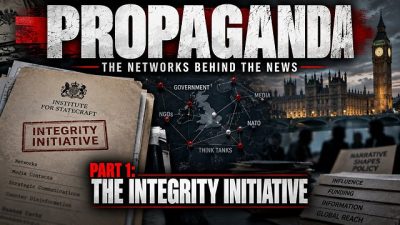
Integrity Initiative: UK-funded network framed dissent as Russian disinformation for years
or go to
Aletho News Archives – Video-Images
From the Archives
Why Saudi Ties to 9/11 Mean U.S. Ties to 9/11
By Kevin Ryan | Dig Within | September 27, 2015
Media interest in Saudi Arabian connections to the crimes of 9/11 has centered on calls for the release of the 28 missing pages from the Joint Congressional Inquiry’s report. However, those calls focus on the question of hijacker financing and omit the most interesting links between the 9/11 attacks and Saudi Arabia—links that implicate powerful people in the United States. Here are twenty examples. … continue
Blog Roll
 Aletho News
- EUROPE FEARS RUSSIA’S NEXT MOVE / Ian Proud
- Big tech hands in its DSA censorship reports to the EU
- ‘A Big Victory’ – Palestine Chronicle Wins Two-Year Legal Battle
- IAEA inspectors cannot return to Iran amid US threats: Russia
- Senate Rejects Iran War Powers Resolution Passed By House
- ‘We did not attack Pakistan with drones’: Afghan sources
- Iraqi Resistance faction links arms to sovereignty, questions US exit
- Cannon fodder no more… South Korea rejects Trump’s pressure to join his criminal war on Iran
- Neria Leiter Was A Legitimate Military Target
- Integrity Initiative: UK-funded network framed dissent as Russian disinformation for years
- If Americans Knew
- ‘This is where I live now, the back of a truck’: a day in the life of a grandmother in Gaza
- In UN Speech, Iran’s President Displays Pictures of Children Killed by US, Brings Attention to Israel’s Nuclear Arsenal
- Israel displaces hundreds of Palestinians amid wave of demolitions in West Bank
- Aid, reconstruction, and Israel’s history of obstruction in Gaza
- Trump administration digs an ever-deeper hole of complicity in genocide – Daily Update
- US-Israel $2.8 Billion Arms Deal, 40,000-Bomb Supply Faces New Gaza Complicity Accusations
- Caught on Tape: AIPAC CEO Boasted of Controlling Trump’s National Security Officials
- Why Hamas Attacked Israel in October 2023 – Israeli professor Ilan Pappé
- They see them, then kill them: Israeli quadcopters track, deliberately target civilians in Gaza
- Winter could turn Gaza’s treacherous, war-damaged buildings into deathtraps
- No Tricks Zone
- New Study: Earth And Venus Surface Warmth Largely Explained By Convection And Lapse Rate, Not CO2 Or Radiation
- 2025 Nature Paper Claiming Worsening Global Drought Gets RETRACTED …Heavily Flawed
- New Study: ‘Global Drought Shows No Detectable Recent Acceleration Under Climate Warming’
- Economic Masterminds: German Socialists Suggest Taxing Productivity Gains Stemming From Using AI
- The South China Sea Has Not Been Cooperating With The Climate Change Narrative
- Energy Crisis: Germany Enters Heating Season With Historically Low Gas Reserve Fill Levels
- New Study: The Antarctic Ice Sheet Gained Mass From 2020-2024 Due To Staggering Snow And Ice Accumulation
- Study: Ocean Heating Rates From Thousands Of Years Ago ‘Dwarf’ Modern Ocean Heating Rates
- Climate Extremists Target, Attack Large-Scale Power Grid Infrastructure In Germany!
- New Study: Antarctic Ice Melt Has Contributed Less Than 1 Centimeter To Sea Level Rise In The Last 30 Years

