Cuba Better Be Careful What It Wishes For
By Andrew Korybko | Sputnik | December 17, 2014
The US and Cuba have reached a historic deal to swap notable prisoners and establish diplomatic relations after decades of mutual hostility. The announcement caught many by surprise, and begs the question: Are there more sinister geopolitical calculations at work behind the U.S.’ olive branch?
The tradeoff largely boils down to this: the US has released the three remaining members of the Cuban Five in exchange for jailed contractor Alan Gross, 53 US-selected “political prisoners,” and an unnamed intelligence source who was imprisoned over 20 years ago. As a result, both countries will now establish diplomatic relations and the decades-long US embargo will be largely eased.
Many people are rightfully cheering what seems to be an imminent end to U.S. hostility towards Cuba, but all of this may just be a deception. The U.S. needs Cuba more than the other way around, since it wants to use the island as a pivot to reverse the Caribbean Basin’s move to multipolarity and prolong Washington’s full control over its historic “lake.”
Regime Change Done Differently
Cuba no longer needs the U.S. as much as it did at the end of the Cold War, when its economy was in despair and the market hardly functioned. It’s come a long way since then, and although it still has its fair share of problems, it’s proved that it can survive on its own while being officially isolated from its massive northern neighbor. While the U.S. had plenty of opportunity to exploit Cuba when it was at its weakest in the 1990s, it missed the chance to do so, driven by the precondition that regime change must happen first.
Now, however, the tables have turned, and the U.S. is pursuing a policy of engagement first in order to facilitate the same regime change goal it’s been trying to pull off for over the past half century.
“I do not expect the changes I’m announcing today to bring about a change in Cuban society overnight,” Obama said, implying that he still wants the U.S. vision of change to occur. The removal of the embargo would only be a victory for the Cuban people if they are able to retain their independence, sovereignty, and preferred form of government afterwards.
Indirect Inroads
Overt hostility hasn’t worked in the past against Cuba, and it likely won’t work in the future. Plus, there’s been a general trend in recent years for the US to pursue its objectives through covert and indirect means. This is where Cuba is most vulnerable in the recent ‘thaw’ in relations. The American economy doesn’t need Cuba at all, really, and Washington’s opening to Havana is a convenient cover to catch Cuba in its social and economic snare to more directly control the inevitable leadership transition process that will occur with Fidel’s passing. It already tried and failed to use USAID to create a ‘revolutionary Twitter’ on the island, as well as its embarrassing follies with anti-government Cuban rappers, to name but the few most recent regime change scandals there. And it must be kept in mind that Mr. Gross was working for the Agency when he was arrested in 2011 for trying to, as Cuban authorities described it, to “promote destabilizing activities and subvert constitutional order” to foster a “Cuban Spring.”
Cuba is also vulnerable to reverse migration, in that dissident and possibly extremist Cuban-Americans may return to the island in order to build a future Color Revolution’s social infrastructure to deploy when the time is right (likely in the aftermath of Fidel’s death). American businesses can fill a valuable development and investment gap on the island, in exchange for making Cuba ever more dependent on the U.S. This would give the U.S. another lever of influence over the island’s affairs, which could be activated in unison with a Color Revolution to create maximum disorder.
Bucking The Trend
The timing of Washington’s “outreach” to Havana isn’t coincidental, as it coincides with major processes going on in the region that the U.S. hopes to reverse. Most recently, the pro-U.S. Prime Minister of Haiti, Laurent Lamothe, was forced to resign last week amid protests and popular outrage over his corruption and ineffectiveness. Backtracking America’s hold on the region even further, the Chinese are slated to begin construction on the Nicaraguan Canal, which when completed, would create a major breach in America’s control of the Caribbean Sea. Finally, Venezuela has been a center of resistance to American hegemony over the hemisphere ever since the leadership of the late President Hugo Chavez.
Cuba is the symbolic leader of the Latin American resistance movement, and its “Cuban Spring” surrender would be disheartening for the other allied states that defy the U.S. via the ALBA grouping. Congress recently passed sanctions against Venezuela (largely overshadowed by the anti-Russian ones), which is the financial engine of the hemispheric resistance, to facilitate a Color Revolution there as well, as President Maduro himself has previously alleged Washington wants to do.
Venezuela’s economy is also hurting because of the recent oil price slump, which may inhibit its ability to subsidize the allied Nicaraguan, Ecuadorian, and Bolivian ones in the future. With Cuba out of the game, and perhaps even Venezuela, there’d be little ideological or economic support keeping Nicaragua, the future key to the Caribbean, from being next (to say nothing of Ecuador and Bolivia) and the Chinese-sponsored canal from becoming a failed infrastructure project. If this happens, then the U.S. would have reasserted its complete control over the Caribbean and begun to penetrate the Andes, thus tightening the containment noose around Brazil and strangling the future of multipolarity in the region.
Rousseff hails unveiling of Brazilian torture report
The BRICS Post | December 11, 2014
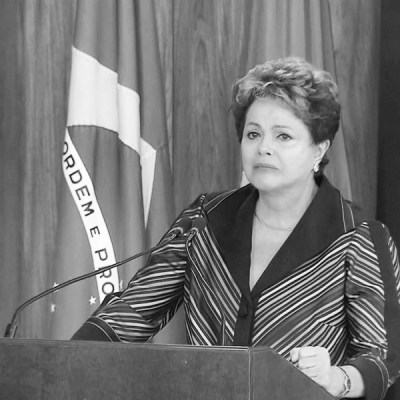 Brazilian national Truth Commission’s report presented to President Dilma Rousseff moved her to tears as it published accounts of torture, killings and disappearances during two decades of military rule from 1964-85.
“I am very proud to be here, because the people here contributed to combat the violation of human rights,” Rousseff said during an emotional speech at the ceremony on Wednesday.
“We, who so love democracy, hope that the wide circulation of this report helps to reaffirm the priority that we must give to upholding democratic liberties. In this way, we must show our absolute aversion to authoritarian states and dictatorships of any kind,” President Rousseff said.
Rousseff is a former leftist guerrilla once imprisoned and tortured by the country’s military regime. The report has identified 377 people of committing “crimes against humanity”, 200 of whom are still alive.
“This is a key step in the right direction for Brazilians: knowing their history they can build a better society,” Rousseff tweeted on Wednesday.
The Brazilian leader has alluded to her past imprisonment and physical torture under the military dictatorship during the presidential campaigning this year.
“I have come up against hugely difficult situations in my life, including attacks which took me to the limit physically. Nothing knocked me out of my stride,” said Rousseff.
Hundreds of Brazilians were murdered and thousands were tortured by the Brazilian military rule but the Latin American nation has never put anyone on trial for the murder and widespread torture of political dissidents during its dictatorship.
In 1979 the Brazilian army pushed an amnesty law to shield themselves from future prosecutions through the Brazilian Congress.
The report released on Wednesday has identified Germany’s Volkswagen AG as one of several foreign companies that provided the Brazilian military with lists and accounts of union activists.
Brazil is seeking a permanent seat on the UN Security Council and was this week voted in with a majority to the Advisory Commission of the United Nations Relief Works Agency (UNRWA).
The vote marked the first time a Latin American country was admitted to the agency’s top consultative body, which advises on “key strategic decisions,” said the UNRWA.
The New Republic’s Ugly Reality
By Robert Parry | Consortium News | December 8, 2014
There has been much hand-wringing of late in Official Washington about an editorial shakeup at The New Republic and the possibility that the century-old political magazine’s legacy will somehow be tarnished by its new owner. But the truth about The New Republic is that it has more blood on its hands than almost any other publication around, which is saying something.
In my four decades in national journalism – that’s two-fifths of The New Republic’s life – what I have seen from the magazine is mostly its smug advocacy for U.S. interventionism abroad and snarky putdowns of antiwar skeptics at home. Indeed, you could view The New Republic as the most productive hothouse for cultivating neoconservative dogma — and at least partly responsible for the senseless slaughter associated with that ideology.
Though The New Republic still touts its reputation as “liberal,” that label has been essentially a cover for its real agenda: pushing a hawkish foreign policy agenda that included the Reagan administration’s slaughter of Central Americans in the 1980s, violent U.S. interventions in Iraq, Syria and other Muslim countries for the past two decades, and Israel’s suppression of Palestinians forever.
Indeed, the magazine’s long-ago-outdated status as “liberal” has long served the cause of right-wingers. The Reagan administration loved to plant flattering stories about the Nicaraguan Contras in The New Republic because its “liberal” cachet would give the propaganda more credibility. A favorite refrain from President Ronald Reagan’s team was “even the liberal New Republic agrees …”
In other words, the magazine became the neocon wolf advancing the slaughter of Central Americans in the sheep’s clothing of intellectual liberalism. Similarly, over the past two decades, it has dressed up bloody U.S. interventionism in the Middle East in the pretty clothes of “humanitarianism” and “democracy.”
The magazine – which has given us the writings of neocons Charles Krauthammer, Fred Barnes, Steven Emerson, Robert Kagan and many more – has become a case study in the special evil that can come from intellectualism when it supplies high-minded rationalizations for low-brow brutality.
In the world of the mind, where The New Republic likes to think it lives, the magazine has published countless essays that have spun excuses for mass murder, rape, torture and other real-world crimes. Put differently, the magazine afforded the polite people of Official Washington an acceptable way to compartmentalize and justify the ungodly bloodshed.
Perhaps The New Republic had a different existence in the years before I arrived on the scene. I’ve heard some longtime New Republic lovers wax on about its era of thoughtful progressivism. But The New Republic that I encountered from the 1970s onward was the magazine of Martin Peretz, a nasty neocon who cared little about journalism or even thoughtful analyses, but rather pushed a dishonest and cruel agenda including crude insults against Muslims.
In his later years after moving part-time to Israel, Peretz began to expose more of his personal agenda. In one TNR blog post regarding the proposed Islamic community center in Lower Manhattan which prompted post-9/11 right-wing outrage, Peretz declared: “Frankly, Muslim life is cheap, most notably to Muslims. And among those Muslims led by the Imam Rauf [the promoter of the Islamic center] there is hardly one who has raised a fuss about the routine and random bloodshed that defines their brotherhood.
“So, yes, I wonder whether I need honor these people and pretend that they are worthy of the privileges of the First Amendment which I have in my gut the sense that they will abuse.” (Facing accusations of racism, Peretz later issued a half-hearted apology which reiterated that his reference to Muslim life being cheap was “a statement of fact, not opinion.”)
A New York Times magazine profile of Peretz in 2011 noted that Peretz’s hostility toward Muslims was nothing new. “As early as 1988, Peretz was courting danger in The New Republic with disturbing Arab stereotypes not terribly different from his 2010 remarks,” wrote Stephen Rodrick.
Steven Emerson, one of Peretz’s favored TNR writers, also became notorious for similar Islamophobia as well as shoddy and dishonest journalism. [See Consortiumnews.com’s “Unmasking October Surprise Debunker.”]
Ignoring the History
Yet, very little of this real history of The New Republic can be found in the mainstream media’s coverage of the recent staff revolt against plans by new owner (and Facebook co-founder) Chris Hughes to modernize the publication. Hughes’s new chief executive – former Yahoo official Guy Vidra – vowed to rebuild the magazine as a “vertically integrated digital media company.”
At the Washington Post, the New York Times and pretty much the entire MSM, there has been much rending of garments over these plans and the ouster of some top editors but almost nothing about what some of those now ex-TNR editors actually did.
One was longtime literary editor Leon Wieseltier, who was a prominent advocate for the Iraq War and a promoter of right-wing Zionism. Another was editor Franklin Foer, another hawkish intellectual. Their departures were followed by a walkout by a dozen or so members of the editorial staff, resignations from contributing columnists, an outraged letter from former TNR writers and furious columns by ex-TNR staffers.
“The New Republic is dead; Chris Hughes killed it,” wailed Post columnist Dana Milbank, another TNR alumnus.
On Monday, the 31-year-old Hughes took to the Post’s op-ed page to offer Official Washington something like a paper bag to control all the hyperventilating. He denied that he was behaving like some spoiled Silicon Valley rich kid imposing an Internet-style culture on an old-fashioned print publication, but rather was trying to save the institution.
“I came to protect the future of the New Republic by creating a sustainable business so that our journalism, values and voice — the things that make us singular — could survive,” Hughes wrote.
But the real question is: Does The New Republic deserve to survive? Wouldn’t it be appropriate that at least one neocon institution faced some accountability for the hundreds of thousands of dead Iraqis, not to mention the other victims of reckless U.S. interventionism in the Middle East or the tens of thousands of murdered Central Americans during the Reagan years?
Though The New Republic’s apologists depict the magazine as an honorable place where “long-form journalism” thrived and “serious thinking” was nourished, the reality was actually much different. Indeed, much of the trivialization of U.S. journalism in the 1980s stemmed from the punchy opinions voiced by TNR columnists as they moonlighted as talking heads on the TV “shout shows,” like “The McLaughlin Group” and “Inside Washington.”
Many of the regulars on those media “food fights” came from The New Republic and lowered the intellectual level of Official Washington into a “thumbs up, thumps down” reductionism where political leaders were rated on scales of one to ten. Their well-compensated behavior was the opposite of true intellectualism or – for that matter – true journalism.
Phony Posture
The typical posture of these media-beloved neocons was to pretend that they were bravely standing up against some “liberal” orthodoxy, courageously daring to embrace the Nicaraguan Contras or other right-wing “freedom fighters” despite the danger of taking such principled stands.
The reality was that TNR’s writers were lining up behind the real power structure, standing with the Reagan administration and much of the major media while joining in the bullying of the relatively weak and vulnerable forces in Washington that went against this grain.
The phoniness of TNR’s pretend bravery was demonstrated by how the neocon commentators were rewarded with plum jobs, prominent op-ed slots, regular seats on the TV shows, lucrative speaking fees, book contracts, etc. The opposite was true for journalists who challenged the Reagan administration’s propaganda. They were the ones who faced real punishment.
Journalists who dared file critical stories about the U.S.-backed Salvadoran army or the CIA-trained Contra rebels found themselves reassigned or out on the street. The New York Times’ Raymond Bonner was the best known example after he was pulled out of Central America while under fierce right-wing attack for his accurate reporting on human rights atrocities in El Salvador.
In a similar case, the Reagan administration’s public diplomacy team browbeat National Public Radio for airing a story about a Contra massacre of farmworkers in northern Nicaragua. Sensitive to government strings on NPR’s funding, NPR executives appeased the administration by getting rid of foreign editor Paul Allen who had allowed the story to air.
Within a short time, Washington journalists understood that their route to professional success required them to swallow any propaganda from Reagan’s team, no matter how absurd.
That servility was on display when Reagan’s White House fumed over one human rights report citing 145 sworn affidavits signed by Nicaraguans who had witnessed Contra atrocities. Many of the witnesses described Contras slitting the throats of captives and mutilating their bodies.
In stepped The New Republic and one of its many pro-Contra writers, Fred Barnes, who countered the eyewitnesses by referencing the findings of a secret U.S. investigation which had absolved the Contras of many charges, he wrote. In a harsh article entitled “The Sandinista Lobby,” Barnes denounced the human rights community for hypocritically criticizing the innocent Contras and other pro-U.S. forces, while allegedly going soft on Nicaragua’s leftist Sandinista government.
But when I got hold of the investigative report in 1986, I found that it had been written by the CIA and was based on the word of the Contras themselves. One of the CIA’s key findings, supposedly debunking the slitting-throat allegations, was that the Contras said they could not have slit throats because they “are normally not equipped with either bayonets or combat knives.” The CIA failed to note that photographs of the Contras from that period showed them slouching off to battle carrying a variety of machetes and other sharp objects.
The absurdity of suggesting that the Contras could not have slit the throats of captives because they weren’t “normally” given knives should have been something a cub reporter would have laughed at. But clearly journalism was not what was going on at The New Republic where there was no interest in exposing the atrocities committed by the Contras. It was all about pushing a hawkish foreign policy and serving the Reagan agenda.
A Contra Exposé
That sort of behavior continued throughout the Reagan era with one notable exception in fall 1986 – when editor Jefferson Morley and investigative reporter Murray Waas asked me and my Associated Press colleague Brian Barger to expand the work that we had done exposing Oliver North’s secret Contra support network into a New Republic cover story.
Our article appeared in November 1986 while Peretz was out of town visiting Israel. But he soon weighed in after receiving a furious letter from then-Assistant Secretary of State for Inter-American Affairs Elliott Abrams, another arch-neocon. Abrams ostentatiously canceled his TNR subscription in protest of our article, and Peretz responded to Abrams’s complaint by excluding Waas from the magazine and putting Morley in the publisher’s doghouse.
The situation could have gotten worse for those who had a hand in bringing our story into the magazine, except that the Iran-Contra scandal broke wide open in November 1986, confirming that Barger and I had been right about North’s secret network. Abrams eventually pleaded guilty to misleading Congress (though he was later pardoned by President George H.W. Bush and was brought into President George W. Bush’s National Security Council to oversee Middle East policy, including the invasion of Iraq).
The New Republic’s pattern of playing fast and loose with the facts would eventually cause the magazine some embarrassment in 1998 when it was caught publishing a number of fabrications by writer Stephen Glass. But TNR never was held accountable for its support for atrocities in Central America, its pushing for illegal wars in the Middle East or its smearing of honest journalists and human rights investigators.
Though Peretz finally lost control of the magazine’s content in 2010, The New Republic has remained an important vehicle for pushing the neocon agenda. Earlier this year, TNR published a long exaltation to American interventionism by neocon Robert Kagan, a co-founder of the Project for the New American Century and a leading proponent for the Iraq War.
In the essay, “Superpowers Don’t Get to Retire,” Kagan “depicted President Obama as presiding over an inward turn by the United States that threatened the global order and broke with more than 70 years of American presidents and precedence,” wrote Jason Horowitz in the New York Times. “He called for Mr. Obama to resist a popular pull toward making the United States a nation without larger responsibilities, and to re-assume the more muscular approach to the world out of vogue in Washington since the war in Iraq drained the country of its appetite for intervention.”
President Barack Obama, who remains hypersensitive to criticism from well-placed and well-connected neocons, responded by inviting Kagan to lunch at the White House and shaping his foreign policy speech at West Point’s graduation in May to deflect Kagan’s criticism.
So, when you read the endless laments from the mainstream U.S. news media about the tragedy of having some Silicon Valley barbarians violating the sacred journalistic temple of The New Republic, you might reflect on all the suffering and death that the magazine has rationalized and intellectualized away.
~
Investigative reporter Robert Parry broke many of the Iran-Contra stories for The Associated Press and Newsweek in the 1980s. You can buy his latest book, America’s Stolen Narrative, either in print here or as an e-book (from Amazon and barnesandnoble.com).
US Military’s Training of Mexican Security Forces Continues As Human-Rights Abuses Mount In Mexico
DoD Officials Claim Training is Part of the Solution, Not the Problem
By Bill Conroy | narcosphere | December 3, 2014
The U.S. government has spent more than $62 million since fiscal year 2010 providing highly specialized training to Mexican security forces, including some $16.3 million in fiscal 2013, as part of an effort to help Mexico better prosecute its war on drugs, records made public under the U.S. Foreign Assistance Act show.
The spending has continued even as Mexico’s military and police forces continue to face accusations of pervasive human-rights abuses committed against Mexican citizens, leading some experts to question whether the U.S.-funded training is resulting in some deadly unintended consequences.
The news of the disappearance in late September of 43 students who attended a rural teachers college in Ayotzinapa, located in the southern Mexican state of Guerrero, has sparked massive protests in Mexico. The students were allegedly turned over to a criminal gang after being abducted by Mexican police and they remain missing. The police fired on the three buses transporting the students along a stretch of road near Iguala, about 130 kilometers north of Ayotiznapa, and the abduction was carried out near a Mexican military base, according to Human Rights Watch.
The Ayotzinapa incident was preceded by a lesser-known attack this past June during which Mexican soldiers killed 22 people inside a warehouse in Tlatlaya, 238 kilometers southwest of Mexico City. At least 12 of those homicides were deemed extrajudicial executions, according to Mexico’s National Human Rights Commission [CNDH in its Spanish initials].
Last year, the Mexican government conceded that at least 26,000 people had gone missing, or been disappeared, in Mexico since 2006 — the year the war on the “cartels” in that nation was launched. Over that same period, INEGI (the Mexican State Statistics Agency) reports, there were some 155,000 homicides in Mexico, most with a nexus to the drug war.
The U.S. Department of Defense insists that the relationship it has with Mexican security forces is based on “trust and confidence and mutual respect” and is critical to helping to reduce the violence sparked by criminal organizations in Mexico.
The U.S. training, funded through the DoD and to a lesser extent the U.S. Department of State, encompasses a wide range of military strategy and tactics and is carried out at locations in the United States and inside Mexico. Among the course topics on the menu are asymmetrical conflict, counter intelligence, international counterterrorism, psychological operations, counter-drug operations and urban operations. The training is being provided to a broad spectrum of Mexican security forces, including the Army, Navy and the federal police, according to data provided to Congress under the requirements of the Foreign Assistance Act and is current through fiscal year 2013.
Adam Isacson, senior associate for regional security policy with the Washington Office on Latin America, a nongovernmental organization promoting human rights and democracy in Latin America, says there is a lack of reliable public data on the fate of Mexican security forces after they receive U.S. military training.
“What happens to these trainees a year or two down the road after they are placed in areas dominated by organized crime?” Isacson asks. “We simply don’t have good after-training tracking of these people, and the amount they are paid can’t compete with the drug money. Plus, the risk of getting caught is small. The biggest risk for them isn’t jail, but rather running afoul of the drug organizations.”
From fiscal 2010 through 2013, U.S. military training was provided to some 8,300 members of Mexico’s security forces, according to Foreign Assistance Act data. That training is overseen by U.S Northern Command (Northcom), a Department of Defense branch created in 2002 that is responsible for U.S. homeland defense as well as security cooperation efforts with the Bahamas, Canada and Mexico.
Northcom officials contend that all Mexican security forces receiving U.S. training are well vetted and that data is maintained on all participants. The training is designed to compliment Mexico’s existing efforts to maintain security and stability in the country.
“We do not believe that U.S. military training enables corruption and human rights violations,” Air Force Master Sgt. Chuck Marsh, spokesman for Northcom, says. “On the contrary, U.S. military members who provide training serve as positive role models, displaying professional values for foreign security forces to emulate. They conduct this training in strict accordance with the Leahy Law, which requires us to ensure individuals and units with whom we work are not involved in human rights violations.”
Still, in a country where fewer than 13 percent of crimes are even reported, according to a recent Congressional Research Service report, and where tens of thousands of murders and cases of disappeared individuals remain unresolved, it’s difficult to accept with certainty that the data maintained on U.S.-trained Mexican security forces is of much use in monitoring corruption. If human-rights abuses are not reported, much less investigated, then there’s nothing to track.
And even when abuses are probed, the conviction rates are anemic.
Mexico’s Military Prosecutor’s Office between 2007 and mid-2013 opened 5,600 cases into alleged human-rights abuses by soldiers, Human Rights Watch reports. Yet, as of October 2012, only 38 cases had resulted in convictions and sentences from military judges.
Mexico’s CNDH reported last year that Mexican security forces were suspected of playing a role in at least 2,443 cases in which people were disappeared. Human Rights Watch, in a study released last year, said it “found evidence that members of all branches of the [Mexican] security forces carried out enforced disappearances.”
“Virtually none of the victims have been found or those responsible brought to justice,” Human Rights Watch reports.
WOLA’s Isacson says there is no evidence at this point directly linking human-rights abuses by Mexican security-forces to U.S. military training, but adds that “the risk is huge.”
“Congress a few years ago required DoD to keep more records on trainees, but that information is classified,” he adds.
What’s lacking is quantifiable public data that can be used to assess the effectiveness of U.S. training of Mexico’s security forces or the human-rights track record of trainees after the training is finished. “That evaluation has to now be based mostly on blind faith,” Isacson says.
And in yet another wrinkle to the military-training issue, Isacson points out that the U.S. military is helping to fund Colombia’s export of military training to other nations as part of its security coordination with the South American nation. Colombia provided military and police training to more than 10,310 members of Mexico’s security forces between 2009 and 2013, according to a recent WOLA report that uses figures provided by the Colombian National Police.
“Some of this training was U.S. funded, although Colombia carried out many activities using its own resources, or that of other donors such as Canada,” the WOLA report states.“… Beyond official advertisements of the strategy and occasional, anecdotal press reports, little information is available about the extent and nature of Colombia’s training.
“While foreign aid law requires the United States to report to Congress in some detail about its own overseas training, these reports include no mention of U.S.-funded activities carried out by Colombian forces.”
The nature and sources of funding for Colombia’s exported military training may be opaque. But what is clear is that U.S. military training was provided to 4,486 members of Colombia’s security forces in fiscal 2013 at a cost to taxpayers of $32.9 million, according to the most recently available Foreign Assistance Act data. A good share of that training was in areas consistent with regional security operations, including courses in international counter-terrorism, advanced security cooperation, joint operations and international tactical communications.
The Colombian military and police training provided to Mexico’s security forces, Isacson says, is essentially a proxy arrangement, given the United States’ role in helping to fund and coordinate that training.
“Colombians trained 10,000 Mexicans with the help of U.S. money,” he adds. “Our main concern is the lack of transparency and controls.”
Calls for Peace Actions in Colombia after General Released
teleSUR | December 2, 2014
With Colombia’s peace talks likely to restart in the near future following the release of General Ruben Dario Alzate, calls are growing for a de-escalation of the conflict in order to avoid any future risks to the process.
Though non-government organizations, progressive politicians and peace activists continue to call for a bilateral cease-fire – as do the Revolutionary Armed Forces of Colombia (FARC) – the government maintains that it will not consider such a measure until a final agreement is signed.
However, according to many observers, a full cease-fire is not the only recourse available. Acts of peace such as declaring a Christmas period truce would not only strengthen the process, but reinforce public support, which has been shaken by the recent suspension.
“They cannot continue talking peace in Havana and in the territories continue with this armed confrontation, of which the effects are well known: more victims, more displacement, more antipersonnel mines, more kidnappings, recruitment. What the people in the regions are asking for is ‘please, now, acts of peace,’” said Irma Perilla of the NGO Pensamiento y Accion Social (Social Thought and Action), which has helped stage a series of regional forums to teach communities in conflict zones about the process and give people a space to have their thoughts heard.
According to Carlos Salgado, director general of peace advocacy NGO Planeta Paz (Peace Planet), the two teams must guarantee that the recent rupture following the November 16 capture of Alzate is not repeated, otherwise it would likely prove fatal to the talks.
Government and FARC negotiators are set to meet in Havana on December 2 to discuss how to restart the talks. According to Salgado, conflict reduction measures should form part of any agreement to continue the peace process.
“The two sides are going to be obliged at the negotiating table in Havana to create an atmosphere of de-escalation of the conflict, to be very clear about what would produce a suspension in the future, and to create an atmosphere of trust for society,” said Salgado.
A wide variety of measures remain in order to reduce hostilities, such a regional cease-fires, and agreements on the cessation of certain activities – as United Nations representative in Colombia Fabrizio Hochschild has previously advocated.
Over the past two years, the FARC has implemented a unilateral cease-fire over the Christmas period, with relatively few violations.
This year, both Perilla and Salgado advocate a truce during December, which they say would prove to the public that the two sides are capable of establishing peace, as well as giving those hardest hit by the conflict the opportunity to enjoy the festive season in tranquility.
Interview with Uruguay’s Carlos Alejandro: Uruguay Elections
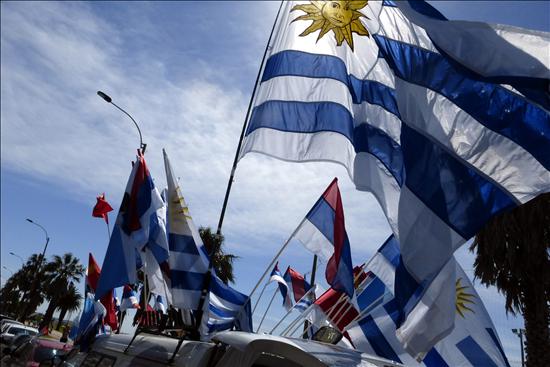
teleSUR | November 28, 2014
UPDATE: Vazquez wins Uruguayan presidential election
teleSUR talks to the Broad Front’s Carlos Alejandro, to understand in more depth the elections and their consequences.
teleSur: Carlos, what have been the standout points of the Broad Front’s campaign?
Carlos Alejandro: There is no political debate in the second round of elections. Really, the right wing has been knocked back, they experienced a serious setback in the first round. They really thought that polls would be right, and that the Broad Front wouldn’t get more than 45 percent of the votes.
The main point of this campaign is to uphold the Broad Front government’s achievements in all areas, especially those related to freedom and equality.
Over the past 10 years, we’ve approved a series of laws, like establishing the 7-hour work day for rural workers; a domestic worker law limiting the number hours they are allowed to work.; the same sex marriage act, a sexual and reproductive health law, which includes legislation on abortion. We want to clarify that it is not an abortion law, because that is one of the themes being debated.
Also being debated is the widening of political engagement among the population; a freedom of information law; the barriers to education; the role of women in politics; all of these are central to the election debate, coming above even economic matters. It’s a rare thing when the economy gets overshadowed in an election … it’s the only political debate they are having in Brazil.
Here in Uruguay what we’re debating is how to better ourselves, how to create better conditions, which is a debate we don’t want to have with the right wing, because they’ve shown us for the past 150 years that they cannot take care of those problems, problems we are resolving, and laying the ground work to have that debate with the people who will truly benefit from these policies.
TS: You have said that if Vazquez is re-elected, he would carry on with the Broad Front’s policies. However, there are many controversial policies that Jose Mujica implemented, like abortion, and the marijuana law, which Vazquez is known to oppose. What will happen if he is elected with regard to these topics?
CA: Tabare was against these projects. He didn’t support them, and furthermore, during his last administration, he vetoed the same law that was later approved under Mujica. But as they are both from the Broad Front, which passed the law, it’s not up for discussion. Nothing will change from the way it was approved during Mujica’s government. There is no political sign that suggests that Tabare will erase what Mujica did.
Regarding the marijuana law in particular, it is very clear within the party, that it is a law still being studied and analyzed, that can and will be corrected if necessary; it is new not only for Uruguay, but in the whole world; we know there are other places who have had similar experiences, like in some of the states in the U.S., but in our case, we want to resolve the drug problem, take the market for marijuana away from organized crime, and create conditions to rehabilitate not only marijuana users, but hard drugs too.
In this sense, our aim is to deepen the changes we have already made, improve what has been done, and improve what has been done badly.
TS: How is Vazquez viewed in Uruguay?
CA: Tabare is a man of the people, what we call “de a pie,” down to earth. He comes from a similar humble background as many other Uruguayans.. The Right cannot forgive him for paving the way —via his education and intellect— for the Left to get into power.
Tabare is a man of the Left, even though the political pragmatism he uses makes him seem more centrist, and not as left-wing as many would like; but he has a great feel for politics, and what both he and Mujica can do effectively is scope out what the people want, but in different ways.
Tabare ended his term with approximately 68 percent of approval, which shows that, beyond the problems that existed during that administration, Tabare ultimately received approval for what he did during his term. And I believe that the result of the October 26 elections shows that the Uruguayan people support his candidacy again.
TS: And how is right wing perceived the Uruguayan people?
CA: I think that the clearest example is that the Right didn’t have a clue how to face the second round of the elections. I’ll reiterate what I said before, they relied too heavily on the polls; they thought they were doing well, so did not work to create the conditions in case the scenario changed.
TS: Do you think that the Brazilian election result might influence the results in Uruguay?
CA: Not for this runoff, but yes, I do believe that the political change in the last days in the Brazil elections, with Marina Silva leading in the polls for so many months, and the possibility that the PT could lose the elections, caused some to be nervous, and a little bit worried. Not only us left-wing activists, but among people who would not necessarily identify themselves as left-wing.
TS: What challenges would a new Broad Front government face?
CA: I have said for many years that the most important thing is to not let down the electorate which voted for us and gave us the opportunity to govern. We have developed all of our policies that aim to improve the quality of people’s lives based on this basis; where we can keep generating societal change and evolution, and most importantly, within a region which is our neighborhood. Latin America is our neighborhood from which we relate to the rest of the world. In this sense, our internal policies have an external objective; to project the country within the region, prioritizing regional integration.
TS: So a Tabare Vazquez government would strengthen regional integration?
CA: Yes, definitely. We’re trying to create the conditions to solidify existing regional integration effortslike MERCOSUR, UNASUR, CELAC, ALBA … those projects are here to stay, and we want to make them robust.
We have shown we are a serious political party, dealing with, for example, the case of the Syrian refugees, and the problem of the Guantanamo prisoners. Doing so doesn’t mean we’re trying to cover-up for, or save Obama’s administration, but instead we are trying to resolve the situation for the prisoners, and help Guantanamo to go back to being part of Cuba.
TS: The case of the Syrian refugees is very interesting…
CA: Let me tell you an anecdote. The union for bank workers has a place for the children of its members to live in Montevideo if they go there to study. When President Mujica announced that Syrian families — who were refugees in Lebanese camps — would come to Uruguay, the young people living in the union’s accommodation talked to the leadership, and offered to share their bedrooms with the Lebanese translators who are there to help the Syrians with their Spanish, and adapting to life in Uruguay. For us, that gesture is not only seen as a humanitarian act, but it means that our youth is getting involved in a political issue that does not directly affect them, far away from our borders. That is very important to us, that they get involved, and understand what is it about.
This also shows the possibility and the capability that we have to resolve these issues. To welcome these Syrian families in Uruguay, so they can work here, have a life here. And it is the same with Guantanamo, a topic that Pepe [Mujica] said was not suspended, but on hold until November 30; and that after the elections, regardless who is the new president, he would continue to advocate for, and engage in, negotiations, so those six prisoners without a sentence can come to Uruguay and be free here. This is a very important political gesture by the Broad Front that needs to be highlighted, and it will reverberate with future governments.
Carlos Alejandro is the Broad Front’s director of international relations, as well as member of the Broad Front Commitment group. A member of the Broad Front since 1983, he has a background of union activism.
Lebanon’s war on ‘hashish’ indistinguishable from war on the poor

A cannabis farmer in the Bekaa Valley prays as Lebanese army men come to destroy his harvest. Al-Akhbar/Rameh Hamieh
By Amer Mohsen | Al-Akhbar | November 27, 2014
The cultivation of cannabis is popular in specific areas that have special characteristics like high altitude and sunlight, similar to the Bekaa region. This differential feature of Lebanon, which can revive the Lebanese countryside, has been overcome by the alternative agricultural policies required from abroad. The health risks associated with the use of cannabis are minimal compared to alcohol and tobacco, and compared with the results of the war on cannabis cultivation which only affects the poor segments of society.
A few years ago, Lebanese organizations, including left-wing movements, launched a media campaign warning against cannabis and the risk of its spread among the youth. The intention behind the campaign was noble, but it had several flaws: The first is related to the medical claims that accompanied the campaign – which are similar to the propaganda that was disseminated in America during the forties to scare people away from marijuana – saying that marijuana drives people crazy, makes them jump out of windows, and causes delinquency and crime. The main problem was in the “central-Beiruti” mentality, which led left-wing movements to claim their devotion to the grievances of the poor and the marginalized, and thus sought to combat and criminalize hashish rather than demand its legalization and lifting the ban on its cultivation.
The issue is very clear. There is a disregard – even contempt – by urban activists for the fates of hundreds of thousands of peasants in their country. They support policies and laws that have impoverished large parts of the Lebanese countryside, either because of their focus on “more important” issues (such as the rejection of the [parliamentary] extension and the “revolt against the sectarian system”), or because of a bourgeois view aimed at preserving morality and normalcy. There is no harm in adopting or defending such a view, but not when it is at the expense of the most vulnerable and disadvantaged segments of society. To date, there are no adequate studies on the social and economic deterioration that affected the villages of Bekaa and Hermel after the prohibition of cannabis cultivation in the nineties, and others on the prosperity witnessed in the region and the local development that resulted from it, while the rest of the country – paradoxically – was experiencing the worst stages of the civil war, and so the government left the farmers alone.
From the history of cannabis
In his book about the history of cannabis, Martin Booth (who also published a well-known book about opium) says that the cannabis is one of the oldest plantations that spread in human societies. He refers to one of the three major species of cannabis today, the “cannabis sativa,” whose name in Latin means “cultivated hemp” because it reached us in its hybrid version, which means that Neanderthals cultivated and hybridized it for thousands of years until the original “wild” seed has been lost and we now have the agriculturally-improved species.
The cultivation of cannabis was widespread not only because of its narcotic effect. Archeological excavations have shown that the consumption of cannabis was also part of religious rituals, and that the plant was an economic asset and resource used in the manufacturing of cloth, linen, ropes, and oils. A conspiracy theory popular among supporters of marijuana in the United States claims that the ban on cannabis cultivation is linked to influential circles in the timber industry, who sought to exclude cannabis as a competitive resource in the paper-manufacturing industry.
We also find many references to hashish and cannabis in Arab and Islamic history, which show its spread and recreational use in our countries through the eras, such as in the writings of chronicler Abdel Rahman al-Jabarti (who talked about his meeting with a mosque orator in Cairo, who claimed to be “under the effect of hashish” to justify his lack of focus during the sermon), as well as in the fatwas of Ibn Taymiyyah, where “Sheikh al-Islam” discussed the topic of hashish and ended up outlawing most of its uses. Based on his jurisprudential arguments, it appears that the people at the time used to consume cannabis either through melting it in tea, eating it directly, or cooking it with food (since the United States had not been discovered yet, and tobacco had not yet reached the ancient world). However, the prolonged explanation provided by Ibn Taymiyyah on the topic and his detailed justification of the prohibition show that the scholars of his day did not have a clear or decisive stance on the matter.
Lebanon and the differential feature
To be able to understand the secret behind the special relationship between Lebanon and hashish, and the differential feature that characterizes the Bekaa Valley and its surrounding hills in this regard, we have to know a few basics about the cultivation of this plant. According to Martin Booth, the “quality” of the hashish – i.e., the concentration of the principal psychoactive constituent Tetrahydrocannabinol (THC) in the female plants – is directly linked to two factors: altitude and sunlight. Cannabis needs large amounts of solar radiation during the maturity period so the plant can grow rapidly, and the growth of its genital parts, which contain the active substance, needs infrared (IR) radiation, whose concentration in the sun increases with altitude.
In other words, high-quality cannabis needs high-altitude mountainous areas, which are, at the same time, hot and exposed to the burning sun during the summer, which is rare in the world. For this reason, the cultivation of cannabis is prominent in specific areas that combine the characteristics of altitude and sunlight, like the Atlas Mountains in Morocco, the hills of Afghanistan … and the Lebanese Bekaa. This is a “geographic gift” that cannot be cloned or bought with money. It is limited to a few regions in the world – Booth says that the best and most expensive types of hashish are grown in India, on the foothills of the Himalayas and over-3,000-meter heights, and due to their rarity are preserved in special leather bags. These qualities have made Lebanon’s Bekaa and Hermel a center for cannabis cultivation since ancient times.
The charming town of Yamuna, which lies in a small internal valley in the highlands of Lebanon’s western mountain range, acquired its “market” reputation in the production of cannabis not because of its special soil, or the magic touch of al-Sharif. It is simply due to its high altitude in the barren areas and abundant water sources, which allows the cultivation of cannabis in perfect conditions. If the Hermel heights – which are rain fed areas today – were covered by irrigation projects – as it was supposed to be decades ago – the whole area would have been like Yamuna.
Lebanon’s gold
In the past two decades, new varieties of marijuana were bred in the West, and plantation techniques were developed in closed spaces under controlled lighting and temperature conditions to produce crops in which the concentration of the psychoactive constituent exceeds any product grown in nature.
However, this pattern of agriculture (which supplies the medical and commercial marijuana market in the West) requires the consumption of large amounts of energy for each plant separately. It is also less competitive – in the commercial sense – compared with lands that are, by nature, ideal for the cultivation of cannabis, and have been inherited by farmers over long years. Millions of meters of these lands can be cultivated at a low cost, and by relying solely on the generosity of the sun and the sky.
From here, we conclude that any kind of agriculture is – naturally – ideal for the marginal areas of Lebanon, and some have real differential features on a global level. A quick look at the labor force working in Lebanon, the price of land, and state policies is enough to understand that Lebanon’s competitive commodity – which will eliminate rural poverty and create development in rural areas – is most likely not potatoes or wheat. In addition, a main characteristic of agricultural property in eastern Lebanon is that [owned lands] are relatively small and fragmented. Also, most farmers own their land, which prevents the emergence of feudal and semi-feudal cartels (as in Afghanistan and South America), or huge agricultural companies that would exploit the peasants as laborers and monopolize profits for the benefit of major landowners. A significant part of proceeds from the cultivation of “contraband” plants in the Bekaa traditionally went to farmers.
This question should be raised, while the country that pressured and forced Lebanon to ban the cultivation of cannabis – the United States – has legalized the use of hashish in several states. The governments of the West no longer have a moral or legal excuse to impose such policies on our country. The general direction in the West is heading toward the legalization of cannabis derivatives, or at least not criminalizing it and prosecuting its users. But Lebanon is required to arrest its farmers who are seeking to avoid hunger and migration.
War on the poor
One of the reasons that triggered the wave of marijuana legalization in the West, even for recreational use, is the absence of a convincing medical argument – i.e. a threat to “public safety” – to justify the prohibition of hashish while allowing the sale of other “drugs” like alcohol and tobacco, which are far more dangerous and harmful than marijuana. As Professor As`ad AbuKhalil once wrote, if whiskey was produced by the countries of the South, while hashish was monopolized by the West, wine would be forbidden and frowned upon in Lebanon while ads by hashish companies would have filled the streets.
Science has become clear in this regard. Serious proven tests have shown that the consumption of cannabis may have side effects and can be dangerous for people who suffer from certain neurological problems. Also, heavy consumption can cause addiction and dependency in one out of 10 cases. However, these risks are insignificant compared with those of alcohol and tobacco, or even stress. Tobacco combustion may be the most dangerous thing in a “marijuana cigarette.” During the writing of this article, I consulted with a professor and researcher of Lebanese origin at Harvard Medical School, who graciously provided me with scientific studies and summaries. He expressed his opposition to the criminalization of cannabis cultivation, adding that its advantages in medical use are “very real,” and that the greatest harm results from the war on cultivation, as evidenced by the American experience, since it mainly affects – in Lebanon, as in America – the poorer classes, which do not have a voice in society.
This is one of the issues that will not be of concern to civil society organizations, and will not receive financing from European governments and institutions. However – unlike a lot of campaigns created by these organizations to justify their existence – it is achievable and can change – in the actual direct sense – many people’s lives.
It is possible to imagine a different future for large areas in Lebanon that are marginalized and disadvantaged today, in which farmers will be able to live in dignity and prosperity in their areas, and land and production will have real value.
The people living on the coast may migrate to internal areas, this time, in search of work and opportunities.
Compare and Contrast: Human Rights Watch on Mexico and Ecuador
teleSUR | November 24, 2014
HRW statements about Ecuador’s policing are out of proportion compared to their statements about the disappeared students in Mexico.
The following two headlines are from news releases by Human Rights Watch (HRW) about two incidents that took place in September:
1) Mexico: Delays, Cover-Up Mar Atrocities Response
2) Ecuador: Police Rampage at Protests
The headlines suggest very similar events are described, but that’s not the case at all.
In Mexico, police fired on student protesters, killing three, and then disappeared 43 others by handing them over to a gang. Those basic facts are not disputed by anyone. In Ecuador, the allegations are vastly less serious and far more contested. There were no deaths, but police are accused of beating protesters, some of whom HRW concedes were violent.
Mexico is a close US ally, so HRW instinctively pulled its punches with the national government, which HRW accuses of actions that only “mar” – i.e. impair the quality of– its response to the atrocity. But the government’s failure to produce the missing students (alive or dead) over a month after their “arrest” does not simply “mar” the response. It has raised reasonable suspicions that the entire Mexican establishment is complicit in the crime. As Spanish singer-songwriter Joan Manuel Serrat put it, “They need to demonstrate that they are not accomplices of this barbarism, and of other barbaric acts the country has been enduring; this is a great opportunity for Peña Nieto to show it.” The atrocity has sparked protests all over Mexico and a great deal of international attention.
Ecuador’s left wing government, under Rafael Correa, is a member of ALBA, an alliance of left of center governments that includes, among others, Venezuela and Cuba. HRW’s statement about the much less serious allegations against Ecuador’s police was four times longer than the statement about disappeared students in Mexico, who, according to state-directed gang members’ admissions, were killed and incinerated. HRW officials rushed to Ecuador in September, immediately after the protests, to carry out a “fact-finding mission”. In addition to describing claims made by several alleged victims, HRW accused Correa’s government of “harassing” the private media in ways that foster impunity for police brutality. HRW’s evidence for this last allegation is very weak. For example, a private TV station was obliged to broadcast a seven-minute government rebuttal to a show about the protests that had aired the previous day.
HRW’s statement about the atrocities in Mexico, in contrast, says absolutely nothing about the government’s media policies. Even a very lengthy report (from last year) that HRW cited in their statement said nothing about the Mexican media. However, HRW’s 2014 World Report summary for Mexico does, very briefly, list some facts that show why the media is an important part of Mexico’s human rights disaster: “At least 85 journalists were killed between 2000 and August 2013, and 20 more were disappeared between 2005 and April 2013… ”. HRW said that “Journalists are often driven to self-censorship by attacks carried out both by government officials and by criminal groups, while under-regulation of state advertising can also limit media freedom by giving the government disproportionate financial influence over media outlets.”
State advertising? What about private sector elites who own the Mexican media as well as advertise in it, who are closely allied with the state, and who may have a vested interest in maintaining the blood-drenched status quo? Alice Driver wrote in Aljazeera.
“When I interviewed Juarez journalist Julian Cardona in 2013 for a film about violence in the Mexican media, he argued: ‘The media can be understood as a company that makes tacit or under the table agreements with governments to control how newspapers cover such government entities. You don’t know who is behind the violence.’”
[Mexican President] Peña Nieto’s close ties with Televisa, the largest media company in Latin America, have been widely documented and even earned him the nickname the ‘Televisa candidate’ during the elections.”
Televisa alone has about 70 percent of the broadcast TV market. Almost all the rest of the market is held by TV Azteca. A study, done by researchers with the University of Texas, of Mexican TV coverage during the 2006 presidential election found significant bias in favor of two of the three major parties that lean farthest to the right – one of which is the PRI, the party of current President Peña Nieto. The study concluded “both Televisa and TV Azteca gave significantly more coverage to the winning candidate, Felipe Calderón [of PAN], than to his main rivals, Andrés Manuel López Obrador [formerly of PRD] and Roberto Madrazo [of PRI] . Also, the tone of the news coverage was clearly favorable for Calderón and Madrazo and markedly unfavorable for López Obrador.” In US Embassy cables published by Wikileaks, US officials privately stated in 2009 that “Analysts and PRI party leaders alike“ were telling them that (then candidate) Peña Nieto was “paying media outlets under the table for favorable news coverage.”
Alice Driver has claimed that
“To create confusion, the Pena Nieto administration has pursued the strategy of making splashy high profile narco arrests, and of blaming all criminal activity, including murders and disappearances, on the fact that everyone involved was part of the drug trafficking business. This approach makes victims responsible for the violence they suffer, and it is promoted in the media in a way that makes all victims become suspects.”
Driver’s claim appears quite plausible and well worth HRW’s time to investigate. At the very least, there are extremely good reasons to doubt that Mexico’s private media can be relied on to expose the national government’s complicity with atrocities.
HRW’s 2014 World Report summary about Ecuador offers no evidence that Ecuadorian journalists are being murdered or disappeared under Correa (who has been in office since 2007) as their Mexican counterparts have been over the same period. But HRW nevertheless goes on at much greater length in critiquing Correa’s media policies. HRW’s critique is based on the assumption that private-sector elites pose no threat to freedom of expression or political diversity in the media. Any measure by a government – and especially left of center government like Correa’s – that clips the wings of private media barons is deplored. No positive suggestion is ever made by HRW for blunting the power of private media elites no matter how grave the human rights implications. It is this double standard that provides the basis of HRW executive director Ken Roth’s outrageous assertion that Ecuador and its ALBA partners—not U.S. allies such as Colombia, Honduras or Mexico—are “the most abusive” governments in Latin America.
In the case of the United States, HRW’s inability or unwillingness to identify the private media as major contributor, arguably the most important contributor, to its abysmal human rights record is truly farcical. There are striking examples, quite readily available as I mentioned here, of how the private media promotes a stunning level of ignorance about the scale of US government crimes, but HRW’s 2014 summary for the USA breezily asserts that the “United States has a vibrant civil society and media that enjoy strong constitutional protections”.
Then again, HRW is unwilling to even close its revolving door with US government officials, so the inability to challenge the way public and private power collude to stifle public debate in the USA, and in Mexico, is very unsurprising.
“Security” In the West’s Client States
By ANDRE VLTCHEK | CounterPunch | November 21, 2014
Perhaps you thought that the security at the Atlanta or Newark, or Dallas airports is bad, obnoxious, the worst in the world… Think twice… Of course it all began there, in the United States, from the first glory days of that hypocritical and deranged “War On Terror”: the humiliation of people, especially Arabs, especially Muslims, especially all those who are not white, but eventually everybody, at least to some degree.

But it did not just stay there. The allies joined in almost immediately, and then the ‘client’ states jumped on the bandwagon, competing in tactics and strategies of how most to humiliate those confused and helpless passengers, by censoring internet sites, digging into emails, monitoring mobile phone communications, and relentlessly spying on both citizens and foreigners.
I have travelled all over the world, to some of the most imaginable and unimaginable places. All the while being monitored and harassed, threatened and periodically attacked, even physically, I have also spread many counter-punches: I have observed, recorded, and published, who does what to whom, who is the most diligent, methodical, and ruthless bully?
Unsurprisingly, the toughest surveillance comes from Western allies and ‘client’ states, all over the world – from places that Washington, London and Paris routinely call ‘thriving democracies’.
Countries that have collapsed socially strive to impress their Western neo-colonial masters, by imposing increasingly harsh security and surveillance measures against their own people. At the same time, they are full-heartedly and enthusiastically signing up to the bizarre, ‘War on Terror’. It gives the local rulers many privileges. If they play it right, their gross human rights violations, and even their killing of the opposition, is not scrutinized.
***
When I recently worked in South Africa, I was told that the country is now one of the freest on earth. It has nothing to hide and it is not particularly afraid of scrutiny.
“You can photograph here, whatever you want, and nobody will tell you anything”, many of my South African friends explained to me, in Cape Town, Pretoria, Johannesburg, as well as by those living abroad.
It is true. In fact, after few days there, you can easily forget that there are any restrictions, like a ban on filming or photographing police stations or navy ships. Nobody would ever stop you from taping, for instance, battleships at the Simon’s Town base.
South Africa is a proud BRICS country, a left-wing beacon on the African continent and, together with neighboring Zimbabwe, a target of an aggressive negative Western propaganda campaign.
Just as in South Africa, not once was I stopped from filming or photographing in Zimbabwe. And not once was I intimidated, harassed or humiliated by their immigration or customs at the airports.
That is in stark contrast with the West’s allies on the continent – Rwanda, Uganda, Djibouti, Kenya, Ivory Coast or Senegal, to name just a few.
It is not just that ‘everything is forbidden’ there, but ‘violators’ can easily be arrested, harassed, even ‘disappeared’.
When making my film, “Rwanda Gambit”, about Paul Kagame’s monstrous regime, and about the genocide it had been committing (on behalf of the Western powers) in the Democratic Republic of Congo, I tried to film with a small Leica, at the border between Rwanda and DR Congo, at the Gisenyi/Goma crossing. Within a few seconds later, an enormous Congolese soldier grabbed me and began pulling me towards the border post. I have been arrested in Goma once before, and I knew what it amounts to – what it is to rot in the underground intelligence bunker cut off from the outside world.
I was almost certain that, that time, I would not make it out alive. And so I screamed for help in the direction of the Rwandese soldiers who were watching the scene from the other side of the borderline. It is not that they were really eager to help, but the disappearance of a US citizen, an investigative journalist at that, would be an extra, and unnecessary ‘annoyance’. And so they went to work, grabbing my free hand and pulling me back towards Rwanda. The enormous Congolese man in the end lost, and I survived.
All of this over just a few shots! Nobody would ever even think about preventing me from filming on, say the border between Argentina and Chile, or Vietnam and China!
In Rwanda itself, absolutely everything is forbidden, and everybody snitches on everybody. It is forbidden to photograph the streets, the hospitals, and museums, even the genocide memorial! It is strictly banned to photograph or to film their villages, In order to film military installations or prisons, I had to attach a Drift camera to the undercarriage of my car.
In Rwanda and Uganda, everything is under the surveillance. Walls have ears and eyes, so to speak. It is not like surveillance in London, done with high-tech cameras (although these are also beginning to appear); people simply spy on each other, at an unimaginable rate, and the security apparatus appears to be present absolutely everywhere, omnipresent.
But for the West, that is all fine. Both Rwanda and Uganda are plundering DR Congo of Coltan and uranium. The 10 million lives lost there, appears to be just a token price, and the horrors that are occurring in these countries are just some tiny inconvenient episodes not even worth mentioning in the mainstream press.
Security is ‘needed’, in order to maintain ‘order’ – our order.
The humiliation of travellers at Kigali, Kampala or Nairobi airports is indescribable. It is not about security at all, but about a power game, and plain sadism. In Kigali, there are at least 8 ‘security checks’, in Nairobi 6 to 7, depending on the ‘mood’ at the airport.
Three years ago, on behalf of the West (mainly US, UK and Israel), Kenya attacked the oil-rich part of Somalia, where it is now committing atrocities. Its state apparatus also perpetrated several attacks against its own civilian targets, blaming all of them on the al-Qaida linked movement, al-Shabaab. It was done in order to justify the ‘security measures’.
Now there are metal detectors in front of every department store, hotel or office-building in Nairobi. When I, earlier this year, photographed the entrance to a prison, I was literally kidnapped, thrown into the jail and informed: “We will treat you as a terrorist, as an al-Shabaab member, unless you prove that you are not.”
The slightest argument with the Kenyan military forces, or with the corrupt and outrageously arrogant police, leads to detention. And there are cases of people being harassed, sexually molested, even tortured and killed in detention.
The security forces in East Africa cooperate, as the security forces cooperated in the dark years of the fascist military dictatorships in South America.
As I was walking with my friends through Kampala, a huge lone figure slowly walked towards us.
“That is one of the butchers and he comes from Kenya”, I was told. “He tortures and kills people that pose a danger to this regime… He does things no local person would dare to do. Our countries exchange the most sadistic interrogators; ours go to Kenya, Kenyans come here.”
I recalled that even Paul Kagame, now the President of Rwanda, used to serve as the Chief of the Military Intelligence in Uganda.
Yes, the Newark and Houston airport security is bad, and the surveillance in the West is outrageous, but it is being taken to insane extremes in the ‘colonies’.
In Djibouti, which is basically a military enclave of the French Legionnaires, the US air force and other European armed forces (Somalia, Yemen, Eritrea and Ethiopia are all just a stone-throw away), I once complained at the airport that my passport was being checked twice within a distance of 10 feet. As a result, a huge soldier grabbed me, tore my shirt, threw me against the wall, and then smashed my professional camera against a concrete wall. All this happened in front of the horrified passengers of Kenya Airways. That, I found somehow intolerable. It pissed me off so much that I got up, ready to confront the soldier, no matter what. But the horrified voice of a Kenya Airways’ manager stopped me: “Sir, please leave it at this… They can just kill you, and nothing will happen to them. They can do anything they want!”
In Ivory Coast (Côte d’Ivoire), which is yet another French military dependency, and generally a loyal servant to Western interests in West Africa, ‘security’ is the main excuse for keeping undesirable elements, like myself, away from the country. Earlier this year I embarked on a journey there to investigate the chocolate empire activities of the Ukrainian President Poroshenko. Ivory Coast is the biggest producer of cocoa in the world, and ‘the Chocolate King’ is apparently involved in many unsavory practices there.
The authorities were tipped off in advance that I was coming, and the charade began from the moment I landed. I was ordered to produce my yellow fever certificate, which was inside my bag. As I began searching for it, I was roughly ushered into a small room full of sick people quarantine – and informed that I was to be vaccinated again. I found the certificate just a few seconds later, and went out to present it to the authorities. “Back!” they shouted at me. Wait inside for your turn, and tell the doctor that you have found it. The wait turned out to be 2 hours long. Later, I was told that a visa on arrival is no longer available. For days I had to go to the immigration office, from morning to the evening. For days I was fingerprinted and photographed. I clearly saw that wires were disconnected from their computer, every time my turn came round. “Your fingers are not good for fingerprinting! Go to the hospital and bring a certificate that they are not good!” Going there costs US$100 a time, and another wasted day in Abidjan. The hospital said that my fingers were just fine. I had to bribe them to write that they were not.

The US embassy was clearly aware of what was happening. They even sent an officer to ‘assist me’. I showed him that the wires had been pulled out from the computer. “We cannot interfere in other country’s internal affairs”, he explained.
Then, on the last day, when my visa was finally issued, a lady from the US embassy whispered into the phone: “Well, if you write what you do, you must be ready for the consequences”. ‘Honest person’, I thought.
I am almost ‘embarrassed’ to write this, but I have driven on many occasions, all over China (PRC), around at least 8,000 kilometers, but have never been prevented from photographing or filming anything. I have hours and hours of footage and thousands of photographs from many corners of the nation.
A stark, almost grotesque contrast is India, the ‘largest democracy on earth’, according to the Western assessment.
There, nothing is allowed. Forget about filming the battleships near Mumbai (even the Soviet Union does not care – they would put their battleships on the Neva river in Leningrad during celebrations, for everyone to admire and to photograph them, which I did, as a child, when visiting my grandmother). You cannot even photograph that idiot Clive, inside the Victoria Monument in Calcutta.
In India, surveillance is everywhere. It is the perfect police state.
You need a local SIM card in Beijing? Even in the middle of the night, you just go to any kiosk and buy one, no questions asked, no paperwork.
In India, to get a SIM card is one tremendous saga, monstrous bureaucracy, spiced by demands for all sorts of documents and information.
You want to use the internet at New Delhi airport? You have to provide your name, your telephone number, and your email address! I invent names, like Antonio Mierdez or Amorsita Lopez; sometimes it works, sometimes not. In China, you just stick the front page of a passport onto a scanner, and get password within ten seconds. In South Africa, there is not even need for that – the internet is open and free.
And then, those legendary, those epic security checks in India!
The Indian state appears to be thoroughly paranoid, scared of anyone trying to document the reality.
It has developed an allergy to writers, investigative journalists, film-makers and photographers, especially those that happen to be ‘independent’, therefore ‘unpredictable’ and potentially capable of challenging the clichés fabricated in Washington, London and New Delhi, that depict the country as the ‘largest democracy on earth’.
To fight against such threatening elements, the Indian regime, which consists of the moneyed elites, feudal lords, religious fanatics and the military brass, have become pathologically obsessed with security, with surveillance, with relentless checking on things, and people. I have never witnessed such security zeal, even in countries that are under a direct threat from the West: such as Cuba or China.
Even domestic flights in India, from smaller cities like Varanasi or Jaipur, require an entire chain of security steps. Your passport or ID is checked on at least 10 occasions. As you enter the airport, a few steps later, before you are allowed to check in, when you are checking in, as you are entering the departure area, when you are in the departure area (that one is grand – you are forced to step on a platform and everything is checked), when you are entering the departure gate and when you are leaving it for the plane door. Sometimes there are additional checks. It is all, mostly, very rude.

In Turkey, everything is censored. From my official website to ‘Sitemeter’, even the Hong Kong MTR and Beijing and Shenzhen subway maps (maybe just in case someone wants to compare those pathetic subway developments in Istanbul and Ankara, to those in China).
When I called the guest relations supervisor at the four star ‘Kalyon Hotel’ in Istanbul, where I was staying in November 2014, I was told that she “does not know what internet provider is used by the hotel”, but that censorship is actually part of a “security program”, which in turn is part of “the hotel policy”, or vice versa.
How honest!
She actually kindly suggested that I bring my Mac ‘downstairs’, so the IT manager could “do something with it”. I very politely, declined, remembering an experience two years earlier, at the Sheraton in Istanbul, where the ‘IT manager’ actually installed some spy wear, which totally and immediately corrupted my computer, my email addresses, turning my operating system into something that has since been insisting on functioning almost exclusively in the Turkish language. When I complained over the phone, he, the IT manager, went upstairs, kicked my door, rolled up his sleeves and he let me know that this matter could be settled most effectively, outside the hotel, most likely in the street.
***
It may sound bizarre, but in the countries literally besieged by hostility from the Empire, like Cuba or even North Korea, security appears to be much more lax than in the nations where the elites are terrified of their own poor majority.
I don’t remember going through any security, in order to enter a theatre or a hotel in Havana. In Pyongyang, North Korea, there are no metal detectors at entrances to shopping centers, or subway stations.
It goes without saying that one is monitored more closely by the security cameras and armies of cops in London or New York, than in Hanoi or Beijing.
The most common mode of modern communication – the mobile phone – is regulated much less or monitored in Vietnam, China or Venezuela, than in India, Japan, or Europe. In fact, Japan recently even discontinued the sale of pre-paid SIM cards; every number has to be meticulously registered and issued only after signing an elaborate contract.
As I keep reporting, the world is full of stereotypes and clichés. Countries are not judged by rational analyses and comparisons, but by chimeras created by commercial mass media, especially those in the West.
Three countries in Latin America are still living the nightmare of the ‘Monroe Doctrine’: Honduras, Paraguay and Colombia. In Paraguay and Honduras, the West basically managed to overthrow progressive governments and installed fascist regimes, not unlike those that reigned all over the continent during Ronald Reagan and Otto Reich’s days. Colombia has been, for decades, a US ‘client’ state.

Surveillance in all three countries is monstrous, and so are gangs and death-squads.
But you would not guess it. If you read Western reports, including those produced by Reporters Without Borders, you would think that the true villains are actually countries like Venezuela and Cuba. But then, you look closely, and see who organizations like Reporters Without Borders are playing with… And surprise-surprise: you will discover names like Otto Reich among them!
When Thailand, another staunch ally of the West and a shamelessly servile state, began photographing people at the airports and borders, I asked an immigration officer in Bangkok, where all the data goes. She answered, without any hesitation: “To your country!” That is, to the United States.

Malaysia and its immigration used to be quite different – relaxed and easy. But then, earlier this year, Obama came aboard his diplomatic tank. I landed in Kuala Lumpur just an hour after his Air Force One had touched town. What did I encounter? A fingerprinting machine at KLIA! Obama left, but the machines are still there. To spy on people, to fingerprint and photograph them, is apparently one of the conditions of being a good friend of the West. That would never have happened in the era of Dr. M!
Even Japan now photographs and fingerprints people arriving from abroad! Japan where one can even easily and freely photograph combat air force bases (some of them, including those in Okinawa, have viewing terraces for tourists, all around them) is now also spying on people! That is, obviously, one of the rules laid down by the gang that is ruling the world.
Of course the Western allies of the United States are not much better.
Do you still remember how Europeans were bitching about having to take of their shoes at US airports? What has happened now? They do it, without protesting, at their own airports, in London, Paris, Munich, everywhere.
In fact, the most repulsive security I have ever encountered in the West was at CDG, in Paris. I was taking a night flight on Asiana Airlines, from Paris to Seoul. The flight was full of Korean tourists in their seventies and eighties. The tables were set up, sadistically, far away from the X-ray machines, so the poor old people had to carry their bags and belongings quite a long distance. Security personnel were yelling at them, insulting them. I protested, on behalf of the Koreans. A tough French dude came up to me and began insulting me. I asked for his name. He turned around and mooned me, in public. He took down his pants and showed me his hairy ass. “My name is Nicolas Sarkozy”, he said. In a way he was right…
Once I arrived very early in the morning, in Darwin, Australia, after working in East Timor. My electronic travel authorization was for ‘tourism’. The unfriendly immigration officer was clearly on her power trip: “What are you going to do in Australia?” I told her I would be meeting some of my academic friends in Sydney.” “That is work, academic exchange!” she barked at me. “You requested a tourist permit.” I explained that we would just have dinner together, perhaps get pissed”. That was the typical Aussie-type of tourism, I thought. The interrogation began and went on for 2 hours. As the sun was rising, I had had enough: “Then deport me!” Of course she did not. Humiliating people was simply a form of entertainment, or how to kill a couple of boring hours. Or how to show people where they really belong!
How free and proud one should feel entering that great world of Western democracies!
One has to lie, of course. Once I was held for 4 hours by the Canadian immigration services, entering from the US by car. Why? I told the truth, that I was coming to interview Roma (Gypsy) people fleeing from persecution in the Czech Republic (a staunch ally of the West).
Leaving Israel is beyond anything that I have ever experienced elsewhere in the world. Especially once Mossad realized that I had come to trash Israel for its treatment of Palestinian people, and for its foreign policy.
We commonly end up discussing my grandparents, my books, and my films. I have already commented: no woman in my life, not even my own mother, wanted to know so much about all the details of my existence, as Mossad agents at the airport! And none of them has ever listened so attentively!

I am totally exhausted from all that freedom given to me by the West and its allies.
My email addresses are corrupted and I don’t even know which publication or television network is actually receiving my stuff. There is absolutely no way to tell. I have no idea which immigration service will screw me next, and how.
I have already got buggered about by the security in Colombia, Canada, Indonesia, Kenya, Djibouti, Ivory Coast, DR Congo, Kenya, the US (entering from Mexico), Bahrain and Australia… I can hardly remember, there is much more…
It is all turning into a game of Russian roulette.
My African, Indian, Arab and Latin American friends and colleagues are, of course, going through much deeper shit.
The question that I keep asking myself is very simple: “What are they all so afraid of?” I don’t mean the US and Europe – those are control freaks and they simply don’t want to lose their control of the world… There, it is all transparent and clear.
But it is not as clear elsewhere: what about those regimes in India and Turkey, in Honduras and Kenya, in Indonesia (you have to show your passport or the national ID, even to board a long distance train!) and Bahrain?
What are they fighting for or against? Who is their enemy?

They are fighting against their own people, aren’t they?
Their ‘War on Terror’ is their war against the majority. The majority are the terror. The West is the guarantee of the status quo.
They – the elites and their masters in the West – watch in panic that in many parts of the world, the people are actually winning.
That is why the security in the West’s ‘client’ states is on the increase. The war against the people goes on. This war is one of the last and brutal spasms of feudalism and imperialism.
Check everything and spy on everybody, so nothing changes, nothing moves. But things are moving, and fast! And all those lies, and surveillance cameras, fingerprints and the ‘disappearing’ of people will not be able to prevent progress. They will never manage to smash the people’s dreams of living in societies free of fear!
Peace Talks in Havana and Murder in Colombia: The Santos Regime’s Dual Strategy
By James Petras | November 5, 2014
Introduction
There are many fabrications and false assumptions underlying the Colombia peace negotiations between the Santos regime and FARC – EP (Revolutionary Armed Forces of Colombia – Peoples Army). The first and most egregious is that Colombia is a democracy. The second is that the Santos regime pursues policies which enhance non-violent social and political activity conducive to integrating the armed insurgency into the political system.
There is sufficient evidence to call into question both assumptions. Over the past two decades and a half nearly three thousand trade union leaders and activists have been murdered; over 4.5 million peasants have been dispossessed and displaced by the military and paramilitary forces; and over nine thousand political prisoners are being held indefinitely for engaging in non-violent socio-political activity. In addition scores of human rights lawyers, activists and advocates have been assassinated.
The vast majority of the victims are a result of regime directed military and police repression or paramilitary death squads allied with the military and leading pro-government politicians.
The scale and scope of regime violence against social opposition precludes any notion that Colombia is a democracy: elections conducted under widespread terror and whose perpetrators are allied with the state and act with impunity, have no legitimacy.
The re-election of President Santos and the convocation of peace negotiations with the FARC to end Latin America’s longest civil war is certainly a welcome step toward ending the bloodshed and providing the basis for a transition to democracy.
While the Santos regime has put a stop to the massive state terror regime of his predecessor, the US backed Alvaro Uribe regime, political assassinations still occur and the perpetrators continue to act with impunity.
For any peace process to culminate with success, the peace accords, agreed to by both parties, must be effectively implemented. Previous agreements ended in state massacres of demobilized guerrillas turned civil society activists and elected political representatives.
The peace negotiations have proceeded for two years and major accords have been reached on a series of vital areas of mutual concern. In particular both sides have signed off on 3 of 5 points on the peace agenda: rural developments, guerrilla participation in politics, policy on drug trafficking. Current negotiations focus on the contentious “transitional justice” for victims of the conflict. Most human rights groups and experts agree that the vast majority of victims are a result of military and paramilitary repression. However, the Santos regime and its backers in the media claim otherwise – blaming the FARC.
Is There a “Peace Process”?
The Santos regime has thrice rejected cease fire offers by the FARC who have gone ahead and unilaterally implemented them . The regime has chosen to continue the war in Colombia while negotiating in Havana. The two year time span of the peace negotiations provides deep insights into the viability of the peace accords signed in Havana. International and Colombian human rights groups and social movements provide timely reports on the scope and depth of ongoing violations of political and human rights in Colombia during the peace negotiations.
Based on data compiled by human rights attorneys and experts affiliated with the Marcha Patriotica (Patriotic March), an alliance of scores of neighborhood, peasant, trade union and human rights organizations, between April 2012 and January 2014, it is clear that the reign of state and paramilitary terror continues parallel to the peace negotiations.
During this 21 month period, twenty-nine Patriotic March (PM) activists were killed and three others were “disappeared” – and presumed murdered. Scores of others have received death threats.
The class background of the victims points to the vulnerability of the peace agreement. Twenty-three of the murdered members of the PM were peasant leaders and activists promoting agrarian reform, the repossession of land under the regime’s Land Restitution Law or engaged in other peaceful civil society activity. Four of the victims were active in social movements supporting a “peace with social justice” agenda; two were human rights lawyers; two were community and neighborhood organizers and one was a leader of a local youth movement.
None of the assailants were arrested. Military and police officials, who had previous notice of death threats, took no precautions. Nor were any investigations undertaken, even when family and neighbors were privy to relevant evidence.
In the face of the Santos’ government’s unwillingness to curtail military, police and death squad complicity in the murder of peasant activists during the peace negotiations, can the regime be trusted to implement the accord on “rural development”? Can the government guarantee the security of disarmed guerrillas as they enter the political system when over one hundred human rights activists received death threats in September 2014?
According to Amnesty International, during 2013, seventy human rights defenders were killed, including indigenous and Afro-Colombian leaders and twenty-seven members of trade unions. At least forty-eight homicides were committed by military units. Military commanders engaged in “false positives”, meaning murdered civilians were falsely labelled by the military as “armed insurgents”. Extra judicial killings by the military continue under the Santos regime.
Equally ominous, Santos has failed to disband the paramilitary death squads. As a result, the regime fails to protect land claimants. Dispossessed peasants and farmers attempting to resettle their land under Santos’ “Land Restitution Law” have been threatened or murdered by paramilitary gangs. As a result the Law has virtually no impact on resettling peasants because of landlord retaliations.
In fact the number of dispossessed has increased according to the United Nations: 55,157, mostly rural, Colombians fled their homes between January and October 2013, because warfare between and among drug and paramilitary gangs.
Presidential Santos War on Civil Society
The pervasive insecurity that rules the countryside, the murders, disappearances and jailing of social activists, accompanying the peace negotiations, call into question the “accords” thus far reached between the FARC and the Santos regime. Supporters of the regime argue that the number of state murders has declined over the past three years. Critics counter that relatively fewer assassinations have the same effect in generating fear, undermining citizen participation and the transition to a democratic political system.
The entire conception of a successful peace process rests on the assumption that the accords will result in constitutional guarantees of free and democratic citizen participation. Yet throughout the two year period, the regime has not demonstrated a clear and consequential commitment to elementary rights. If that is the case during the negotiations with the popular insurgency, still active and armed, how much worse will conditions become once the military, police and paramilitary are free of any retaliation, when they will have a free hand to intimidate and strike down disarmed political dissidents attempting to compete in local or national elections?
The Santos regime appears to have adopted a two prong strategy: combining violent repression of the social movements in Colombia while adopting the language of peace, justice and reconciliation at the peace table in Havana.
The Santos regime can promise to accept many democratic changes but its practice over the past two years speaks to an authoritarian, lawless regime, content with maintaining the status quo.
The Santos regime has three strategic goals: to disarm the popular insurgency; to regain control over the territory under insurgent control; and to weaken and undermine the popular social movements and human rights groups which are likely to form political alliances with the insurgents when and if they become part of the political system.
It is doubtful that the FARC will surrender their arms in a political climate in which paramilitary killers operate with impunity; military commanders still engage in ‘false positives’; and rural development projects are inoperative because of landowners’ terror tactics.
Unless the peace accords are accompanied by fundamental changes in the military; unless the paramilitary forces are effectively demobilized; unless the government recognizes the legitimacy of the demands of the mass social movements and human rights group for a freely elected constituent assembly is accepted, the peace process will end in failure.
Conclusion: Four Hypothesis on Santos Strategy for War and Peace
There are several hypotheses regarding why the Santos regime negotiates a peace accord while gross violations of human rights continue on a daily basis.
(1) The Santos regime is divided, with one sector in favor of peace and another opposed. This hypothesis lacks any credible basis as there are no visible signs of internal conflict and the regime acts with a unified command. While some state violence may be a result of local military commanders, at no point have national leaders reprimanded the “local” transgressors.
(2) The Santos regime actively pursues violent acts against the social movements to strengthen its bargaining position in the peace negotiations to secure a more favorable settlement – in other words to make the minimum of social concessions in order to placate oligarchs critical of any negotiations. This hypothesis explains the ‘dual strategy’ approach advocated by the regime with regard to the FARC, talking peace in Havana and rejecting a cease fire in Colombia; continuing the war while negotiating peace. But it also undermines the regime’s claim that Santos seeks to incorporate combatant groups into the political system.
(3) The regime is in a tacit pact with former death squad – President Alvaro Uribe. As a result the government’s military apparatus is still tied to paramilitary gangs, working with landowners, drug traffickers and businesspeople. There is no doubt that Santos has long-standing ties to Uribe – he was his Defense Minister. Moreover, after Santos defeated Uribe’s candidate for the Presidency by a narrow margin he has sought a political accommodation with Uribe’s Congressional and business supporters. On the other hand Santos recognizes that his economic strategy, especially his focus on promoting trade with Latin America and especially Venezuela, and his big push to exploit the energy and mining sector depends on reaching a peace agreement with the FARC, which controls substantial mineral rich regions. Hence Santos signs “paper agreements’ with the FARC, while applying a ‘hard fist’ (‘mano duro’) policy to the social movements.
(4) The upsurge of the mass social movements, including the Marcha Patriotica, demanding the effective implementation of the ‘rural development’ reforms and repossession of land to 3.5 million displaced families and the increasing role of the human rights groups in monitoring the ongoing violations of human rights, means that the Santos regime cannot secure ‘peace’ solely through an agreement with the FARC in Havana. If the Santos regime’s goal in the peace negotiations is to disarm the guerrillas and incorporate them into the electoral system, without dealing with the root socio-economic structural reforms, it must weaken the civil society popular movements.
This is the most plausible hypothesis. President Santos is capable of promising the FARC any sort of ‘democratic reforms’ and is willing to sign off on anti-drug agreements and even ‘agrarian development’. But what he is unwilling to accept is the emergence of mass peasant movements actively engaged in changing land tenure, repossessing their farms and reclaiming millions of acres of land granted to big foreign owned mining consortiums.
Santos will not ‘demobilize’ the paramilitary gangs because they are instruments of the big landowners and protect the state grants to the big mining companies. But he will try to limit death squad targets to specific activists and organizations in contentious regions.
Santos has not even curtailed the cross border attacks by Colombian paramilitary groups. Assassinations continue, the latest, the assassination of a Venezuelan Congressional leader. He has expanded military ties with the US by pursuing agreements to collaborate with NATO – offering combat units for the Middle East wars.
What is abundantly clear is that the Santos regime has not complied with the most elementary conditions necessary to implement any of the five point reform agenda set forth in Havana. Military impunity, rampaging death squads, scores of daily death threats to human rights activists, over nine thousand political prisoners and dozens of unsolved killings of peasant leaders is not compatible with a transition to a democratic peace. They are compatible with the continuity of an authoritarian oligarchical regime. A democratic transition and a peace agreement requires a fundamental change in the political culture and institutions of the Colombian state.
Featured Video
Ian Proud: Economic Reset with Russia to Save Europe
or go to
Aletho News Archives – Video-Images
From the Archives
Magic Hour for Gates

By Gary Jordan | Wake The F*** UP | March 15, 2021
Bill Gates wants to know everything about you.
He wants to control every aspect of your life.
His insatiable thirst for the supervision and scrutiny of every human being alive has sparked a US$1 billion investment that will blanket the earth in video surveillance satellites, providing real-time feedback with a mere one-second delay. He advocates for Orwellian digital tools to track your every move and has bankrolled US$1.7 billion to provide artificial intelligence that will be used to scan each and every visitor to major event venues worldwide. He wants to do away with end-to-end encryption, so he can snoop on your private conversations. He wants to know when and where you travel and who you travel with. He wants you to eat whatever he says you should eat, drink whatever he says you should drink, think how he wants you to think and know only what he wants you to know. Plus he wants to dictate what goes inside your body.
But he doesn’t want you to know a lot about him.
For instance… continue
Blog Roll
 Aletho News
- ‘Fox guarding the henhouse’: AMA, Vaccine Integrity Project to conduct their own vaccine safety and efficacy reviews
- Macron, Merz, and von der Leyen Defend Expanded Speech Controls
- Keir Starmer-tied think tank paid PR firm to target The Grayzone
- ‘Israel’ threatens to genocide Gaza if Hamas refuses disarmament
- Apple Just Bought A Sinister ‘Pre-Speech’ Tech Company Implicated In Genocide
- Israel’s new West Bank registration process declares Palestinian land ‘state property’
- Two children killed in Palestinian Authority ambush in West Bank; Hamas slams attack as ‘black mark’
- Israel Needs Time Before Another Iran War—Here’s Why
- US seizes oil tanker for ‘defying Trump’s quarantine’
- Ian Proud: Economic Reset with Russia to Save Europe
- If Americans Knew
- An error has occurred; the feed is probably down. Try again later.
- No Tricks Zone
- New Study: A 4°C Warmer Beaufort Sea Had ‘No Sea Ice’ 11,700 – 8200 Years Ago
- Unfudging The Data: Dutch Meteorological Institute Reinstates Early 20th Centruy Heat Waves It Had Erased Earlier
- German Gas Crisis…Chancellor Merz Allegedly Bans Gas Debate Ahead of Elections!
- Pollen Reconstructions Show The Last Glacial’s Warming Events Were Global, 10x Greater Than Modern
- Germany’s Natural Gas Storage Level Dwindles To Just 28%… Increasingly Critical
- New Study Rebuts The Assumption That Anthropogenic CO2 Molecules Have ‘Special’ Properties
- Climate Scientist Who Predicted End Of “Heavy Frost And Snow” Now Refuses Media Inquiries
- Polar Bear Numbers Rising And Health Improving In Areas With The Most Rapid Sea Ice Decline
- One Reason Only For Germany’s Heating Gas Crisis: Its Hardcore-Dumbass Energy Policy
- 130 Years Later: The CO2 Greenhouse Effect Is Still Only An Imaginary-World Thought Experiment
 Aletho News