Germany to help Baltic states establish Russian-language media
Press TV – February 28, 2017
Germany plans to help Estonia, Latvia, and Lithuania establish Russian-language media outlets to counter the “disinformation” allegedly being spread by Russian channels broadcasting in the region.
The plan was announced by German Foreign Ministry spokesman Martin Schaefer, RT reported on Tuesday.
The announcement came ahead of German Foreign Minister Sigmar Gabriel’s trip to the Baltic states and Sweden, which is due to take place this week.
“During his trip, Mr. Gabriel will also employ what we already started last year in the Baltic states, which is — as we say in new German — handling Russian ‘fake news’ together with appropriate partners,” Schaefer said on Monday.
He added that the main goal of the initiative was to launch Russian-language radio and TV channels, which will be “attractive to Russian speakers living in the three Baltic states” in order to produce news “in a different way” from the Russian media.
The United States, too, recently announced plans to launch a Russian-language television news channel. The US has long accused Russian media of propagating “fake news.” Such allegations have also been leveled by European governments, which are concerned about alleged Russian attempts to influence their elections in much the same way as the US has said Moscow influenced its recent presidential vote.
Western ties with Russia have plummeted significantly in recent years, particularly following Crimea’s separation from Ukraine and reunification with the Russian Federation after a referendum not authorized by Kiev.
Military build-ups close to the Russian borders, including in the Baltic countries, have also been a major source of tension.
Latvia detains, deports chief producer of Russian news agency
RT | October 21, 2016
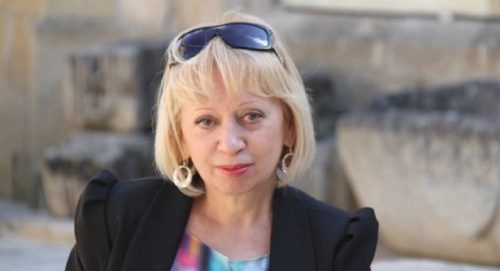
Latvian border guards have detained Ella Taranova, a chief producer for Russia’s Rossiya Segodnya international information agency, who arrived for the Baltic Forum in Riga. According to RIA Novosti, she was deported late Friday.
It appears Taranova had been blacklisted by the country’s authorities in August 2014 but was never informed about it.
Taranova, who has a valid Schengen visa, arrived in the country by plane on Friday morning, alongside other Russian journalists, and “had no problems when passing border control,” she said.
However, several hours after she checked in to a hotel, she was summoned to the registration desk where two Latvian border guards told her she was on a blacklist and must leave the country, TASS reports.
“It seems from 5 August 2014, I have been on a security services list of undesirable people,” Taranova told RIA Novosti. “I knew nothing about this, only that I had been invited to a conference of the Baltic Forum.”
“I was asked several times with suspicion whether I knew I was on the list, before being told that in theory, I should know,” she added. “It was explained to me that the people on this list pose a threat and security risk to the Republic of Latvia. This is disgusting. I was not and am not involved in any political activity.”
The director of the Baltic Forum, Aleksandr Vasilyev, said Taranova is at a border guards station in Jurmala and will be put on a plane to Moscow later on Friday. He added that a Russian Embassy member of staff and a forum representative are with her.
The Baltic Forum is an annual conference held since 1998. It is due to be held on Saturday in Jurmala. Participants will discuss the nature of the Russia-EU relationship and will include diplomats, experts and politicians from EU countries, Russia, Ukraine, China and the US. Taranova has a long-term partnership with the Forum and had attended several times prior to 2014.
RT’s editor-in-chief, Margarita Simonyan, expressed her dismay.
“It is an outrage,” she wrote on Twitter.
The Russian Foreign Ministry condemned the incident, saying the incident contradicts Latvia’s international obligations regarding freedom of speech.
“This regrettable event completely fit into the fabric of the anti-Russian actions aimed at suppressing dissent and restricting freedom of expression, of the Latvian alternative media,” an official statement read. “The existence of blacklists, the criterion for inclusion in it, which is being a professional journalist, is unacceptable in a democratic state, and contrary to all international commitments to ensure freedom of speech.”
Meanwhile the Russian State Duma is going to demand an official explanation for Latvia’s actions from the EU, the Council of Europe and the OSCE, Sergey Zheleznyak, a member of the Russian Parliament Foreign Affairs Committee, told reporters. This is just the latest in a series of attempts to “put pressure on the Russian media, which has become the ‘new normal’ of European policy,” he said, as quoted by RIA Novosti.
Latvian MP Janis Urbanovics, who belongs to the center-left Harmony party, has warned that expelling Taranova is not good for Latvia’s image. “I don’t know why it happened that a person with a Schengen visa could arrive in any other country of the European Union, but turned out to be unwelcome in Latvia,” Urbanovics said, RIA Novosti reported.
Austrian Institute Clarifies True Costs of the EU’s Anti-Russian Sanctions
Sputnik – 03.07.2015
The Austrian Institute of Economic Research (WIFO) published a monograph clarifying the projected short and long-term costs of anti-Russian sanctions to the EU 28 plus Switzerland. A summary of the report published Friday has confirmed that Europe as a whole expects €92.34 billion in long-term losses, along with over 2.2 million lost jobs.
While the report attempts to downplay somewhat the losses attributed to sanctions, noting that politicized export restrictions must be considered together with the ongoing Russian recession and other factors, the figures speak for themselves.
The report projects an “observed decline in exports and tourism expenditures of €34 billion value added in the short run, with employment effects on up to 0.9 million people.” Switching to a longer-term perspective, the report estimates “the economic effects increas[ing] to up to 2.2 million jobs (around 1 percent of total employment) and €92 billion (0.8 percent of total value added), respectively.”
Commenting on the geographical disbursement of the economic and jobs losses, WIFO’s report shows that “geographical closeness highly correlates with the relative size of the effects at the national level, with the Baltic countries, Finland and the Eastern European countries being hit above the EU average of 0.3 percent of GDP in the short and 0.8 percent in the long run.” The report also notes that Germany, which accounts for nearly 30 percent of all EU 27 exports to Russia, has been hit the hardest in absolute terms, and is projected to lose €23.38 billion in losses in the long term. Italy is second, with €10.93 billion in projected losses. France rounds out the top three with €7.92 billion in losses.
The study’s figures also show that Estonia is the single most heavily affected country in both the short and the long term, with the country suffering a €800 million (4.91 percent) and €2.1 billion (13.24 percent) decline, respectively. Estonia is followed by Lithuania (-6.37 percent long term), Cyprus (-3.25 percent), Latvia (-1.87 percent), and the Czech Republic (-1.53 percent).
In employment terms, Estonia, Lithuania and Cyprus are also the hardest hit in percentage terms, and are projected to suffer 16.3 percent, 10.84 percent and 4.21 percent losses, respectively. In absolute terms, Germany (losing 395,000 jobs) Poland (300,000), and Italy (200,000) have been the hardest hit; Spain, Lithuania and Estonia are projected to lose between 100,000 and 190,000 jobs.
As for the economic sectors most heavily impacted, the WIFO study found that agriculture and food products, metal products, machine-building, vehicles, and manufacturing-related services are hardest hit in the short term, with construction, business services, and wholesale and retail trade services also projected to suffer disproportionately in the long-term.
Speaking to Radio Sputnik about the report, WIFO economist Oliver Fritz noted that while EU politicians still hope that the sanctions will have some effect on Russian policy, pressure is building on them to change their policy, since the economic consequences are rapidly beginning to add up.
While the economist noted that he does not see the sanctions being lifted in the short term, with German Chancellor Angela Merkel successfully keeping other EU nations in line, Fritz noted that as losses mount, EU politicians may eventually decide to consider rethinking their decisions.
Last month, WIFO conducted research for Europe’s ‘Leading European Newspaper Alliance’, estimating up to €100 billion in losses if anti-Russian sanctions remain in place.
Since March 2014, the United States, European Union, and other Western countries have placed sanctions on Russia’s banking, defense and energy sectors over Moscow’s alleged role in the Ukrainian crisis. In August, Moscow imposed a year-long food embargo on the countries that had sanctioned it. Last month, the EU’s foreign ministers agreed to extend sanctions against Russia until January 31, 2016.
Russia has better things to do than start WW3
By Bryan MacDonald | RT | June 8, 2015
Vladimir Putin said this weekend that “Russia would attack NATO only in a mad person’s dream.” Unfortunately, there are a lot of mad people working in western politics and media.
If the G7 were based on GDP, adjusted for purchasing power, it would be comprised of the USA, China, India, Japan, Russia, Germany and Brazil. Such a lineup would have remarkable clout. Members would boast 53% of the globe’s entire GDP and the planet’s 3 genuine military superpowers would be represented.
The problem for Washington is that this putative G7 might actually be a forum for a real debate about the world order.
Instead of a real G7, we have a farce. An American dominated talking shop where the US President allows ‘friendly’ foreign leaders to tickle his belly for a couple of days. There is no dissent. Washington’s dominance goes unquestioned and everyone has a jolly time. Especially since they kicked out Russia last year – Vladimir Putin was the only guest who challenged the consensus.
However, the problem is that this ‘convenient’ G7 is way past its sell-by-date. The days when its members could claim to rule the world economically are as distant as the era of Grunge and Britpop. Today, the G7 can claim a mere 32% of the global GDP pie. Instead of heavyweights like China and India, we have middling nations such as Canada and Italy, the latter an economic basket case. Canada’s GDP is barely more than that of crisis-ridden Spain and below that of Mexico and Indonesia.
Yet, the Prime Minister of this relative non-entity, Stephen Harper, was strutting around Bavaria all weekend with the confidence of a man who believed his opinion mattered a great deal. Of course, Harper won’t pressure Obama. Rather, he prefers to – metaphorically – kiss the ring and croon from the same hymn sheet as his southern master.
NATO and the G7 – 2 sides of 1 coin?
There was lots of talk of “Russian aggression” at the G7. This was hardly a surprise given that 6 of the 7 are also members of NATO, another body at which they can tug Washington’s forelock with gay abandon. Obama was at it, David Cameron parroted his guru’s feelings and Harper was effectively calling for regime change in Russia. It apparently never occurred to the trio that resolving their issues with Russia might be easier if Putin had been in Bavaria? The knee-jerk reaction to remove Russia from the club was hardly conducive to dialogue.
Meanwhile, Matteo Renzi stayed fairly quiet. It has been widely reported that the Italian Prime Minister privately opposes the EU’s anti-Russia sanctions due to the effects on Italy’s struggling economy. Also, Renzi’s next task after the G7 summit is to welcome Putin to Rome.
With that visit in mind, Putin gave an interview to Italy’s Il Corriere della Sera where he essentially answered the questions that Obama, Cameron and Harper could have asked him if they hadn’t thrown their toys out of the pram and excluded Russia from the old G8. Putin stressed that one should not take the ongoing “Russian aggression” scaremongering in the West seriously, as a global military conflict is unimaginable in the modern world. The Russian President also, fairly bluntly, stated that “we have better things to be doing” (than starting World War 3).
Putin also touched on a point many rational commentators have continuously made. “Certain countries could be deliberately nurturing such fears,” he added, saying that hypothetically the US could need an external threat to maintain its leadership in the Atlantic community. “Iran is clearly not very scary or big enough” for this, Putin noted with irony.
A world of ‘goodies’ and ‘baddies’
For Washington to maintain its huge military spending, it has to keep its citizens in a state of high alarm. Otherwise, they might insist that some of the armed forces’ cash is diverted to more productive things like hospitals and schools. These services, of course, are not very profitable for weapons manufacturers or useful for newspaper and TV editors looking for an intimidating narrative.
Following the collapse of the USSR, Russia was too weak and troubled to be a plausible enemy. Aside from its nuclear arsenal – the deployment of which would only mean mutual destruction – the bear’s humbled military was not a credible threat. Instead, the focus of warmonger’s venom shifted to the Middle East and the Balkans, where Saddam Hussein, Muammar Gaddafi, Slobodan Milosevic and Osama Bin Laden kept the general public’s attention occupied for roughly a decade and a half. However, they are now all dead and pro-war propaganda needs a new bad guy to play the Joker to America’s Batman.
Kim Jong-un looked promising for a while. Nevertheless, the problem here is that North Korea is too unpredictable and could very feasibly retaliate to provocations. Such a reaction could lead to a nuclear attack on Seoul, for instance, or draw Washington into a conflict with China. Even for neocons, this is too risky. Another candidate was Syria’s Basher Al-Assad. Unfortunately, for the sabre rattlers, just as they imagined they had Damascus in their sights, Putin kyboshed their plan. This made Putin the devil as far as neocons are concerned and they duly trained their guns in his direction.
Russia – a Middle East/North Africa battleground?
In the media, it is noticeable how many neocon hacks have suddenly metamorphosed from Syria ‘experts’ into Russia analysts in the past 2 years. Panda’s Mark Ames (formerly of Moscow’s eXILE ) highlighted this strange phenomenon in an excellent recent piece. Ames focused on the strange case of Michael Weiss, a New York activist who edits the anti-Russia Interpreter magazine (which is actually a blog). The Interpreter is allegedly controlled by Mikhail Khodorkovsky and a shadowy foundation called Herzen (not the original Amsterdam-based Herzen) of which no information is publicly available.
Weiss was a long-time Middle East analyst, who promoted US intervention to oust Assad. Suddenly, shortly before the initial Maidan disturbances in Kiev, he re-invented himself as a Russia and Ukraine ‘expert,’ appearing all over the US media (from CNN to Politico and The Daily Beast ) to deliver his ‘wisdom.’ This is despite the fact that he appears to know very little about Russia and has never lived there. The managing editor of The Interpreter is a gentleman named James Miller, who uses the Twitter handle @millerMENA (MENA means Middle East, North Africa). Having been to both, I can assure you that Russia and North Africa have very little in common.
Weiss and Miller are by no means unusual. Pro-War, neocon activists have made Russia their bete noir since their Syria dreams were strangled in infancy. While most are harmless enough, this pair wields considerable influence in the US media. Naturally, this is dressed up as concern for Ukraine. In reality, they care about Ukraine to about the same extent that a carnivore worries about hurting the feelings of his dinner.
Russia’s military policy is “not global, offensive, or aggressive,” Putin stressed, adding that Russia has “virtually no bases abroad,” and the few that do exist are remnants of its Soviet past. Meanwhile, it would take only 17 minutes for missiles launched from US submarines on permanent alert off Norway’s coast to reach Moscow, Putin said, noting that this fact is somehow not labeled as “aggression” in the media.
Decline of the Balts
Another ongoing problem is the Baltic States. These 3 countries have been unmitigated disasters since independence, shedding people at alarming rates. Estonia’s population has fallen by 16% in the past 25 years, Latvia’s by 25% and Lithuania’s by an astonishing 32%. Political leaders in these nations use the imaginary ‘Russian threat’ as a means to distract from their own economic failings and corruption. They constantly badger America for military support which further antagonizes the Kremlin, which in turn perceives that NATO is increasing its presence on Russia’s western border. This is the same frontier from which both Napoleon and Hitler invaded and Russians are, understandably, paranoid about it.
The simple fact is that Russia has no need for the Baltic States. Also, even if Moscow did harbor dreams of invading them, the cost of subduing them would be too great. As Russia and the US learned in Afghanistan and America in Iraq also, in the 21st century it is more-or-less impossible to occupy a population who don’t want to be occupied. The notion that Russia would sacrifice its hard-won economic and social progress to invade Kaunas is, frankly, absurd.
The reunification of Crimea with Russia is often used as a ‘sign’ that the Kremlin wishes to restore the Soviet/Tsarist Empire. This is nonsense. The vast majority of Crimean people wished to return to Russia and revoke Nikita Khrushchev’s harebrained transfer of the territory to Ukraine. Not even the craziest Russian nationalist believes that most denizens of Riga or Tallinn wish to become Russian citizens.
Putin recalled that it was French President Charles de Gaulle who first voiced the need to establish a “common economic space stretching from Lisbon to Vladivostok.” As NATO doubles down on its campaign against Moscow, that dream has never looked as far off.
Bryan MacDonald is an Irish writer and commentator focusing on Russia and its hinterlands and international geo-politics. Follow him on Facebook
War in Ukraine: Who Wants War? And Who Doesn’t?
By William Boardman | Reader Supported News | February 10, 2015
“Russian aggression” – the bad faith mantra of dishonest brokers
Just as NATO allies Germany and France were undertaking a peace initiative with Russia and Ukraine, U.S. Secretary of State John Kerry turned up in Kiev at the same time, seeking to poison the talks before they started by spouting yet again the ritual U.S. accusation of “Russian aggression.” The incantation is meaningless without context. Its purpose is mesmerize a false consciousness. “Russian aggression” may or may not exist in the events of the past year, just like “Russian self-defense.” Reporting on the ground has been too unreliable to support any firm analysis, never mind the provocative “Russian aggression” the U.S. brandishes as a virtual call for war.
Western aggression, political and diplomatic more than military, is a cold reality and has been for two decades. The West, and especially the U.S., has yet to accept responsibility for 20 years of anti-Russian aggression, much less pull back from such perennial hostility. The Obama administration (parts of it at least, given the incoherence of the “administration”) has acted as if its pulling off an only-slightly-violent coup in Kiev in 2014 was a grand triumph. Worse, having grabbed a government on Russia’s borders, the Obama hawks carry on as if the only reasonable choice for Russia is to accept the success of this Western aggression.
Rarely is this context acknowledged in discussions of the natural fissures in Ukraine that feed sectarian civil war. Rather the issues are over-simplified – falsified – by the U.S. Secretary of State, consistent with a hidden agenda of provoking a military confrontation (at the very least) with Russia and eastern Ukrainians. That’s the subtext that makes sense of Kerry’s otherwise seeming blithering in Kiev on February 5:
We talked about the largest threat that Ukraine faces today, and that is Russia’s continued aggression in the east. There’s no other way to call it. We’re not seeking a conflict with Russia. No one is. … The president is reviewing all of his options. Among those options, obviously, is the possibility of providing defensive — defensive — assistance to Ukraine. And those discussions are going on. The president will make his decision, I am confident, soon.
Note the lie: “We’re not seeking a conflict with Russia. No one is.”
When Kerry said that, he was lying, he almost surely knew he was lying, and the question is whether his lie represents only the rogue war-faction in the U.S., or is part of a dicey good-cop/bad-cop routine out of Washington. The only way it’s true that “we’re not seeking a conflict” is that the U.S. is already engaged in conflict with Russia, decades-long and currently escalating. The lie of not seeking a conflict already engaged is used to mask the lie of “defensive weapons,” a military-diplomatic oxymoron of long standing. So the most obvious answer to the question of who wants war in Ukraine is elements of the U.S. government whose immediate challenge is to persuade its Kiev client that it’s a good idea to risk turning its country into more of a battlefield than it already is.
Kiev’s desire is more obscure, and likely divided. Having taken power in something of a slow-motion coup d’etat last spring, the government faced a restive-to-defiant population in eastern Ukraine. Rather than seeking to negotiate legitimate grievances with the eastern region, the Kiev government chose instead to escalate quickly, from political hostilities into civil war. When that didn’t work out militarily, when Kiev started losing what it started, it agreed on September 5 to terms of a ceasefire that it then failed to honor with consistency (as did the separatists). Now the Ukrainian president has been to Moscow for early peace talks, but only after he staked out a preposterous public position seeking to win with a losing negotiating hand what Kiev has already lost on the ground.
Ukrainian President Petro Poroshenko met with German Chancellor Angela Merkel and French President François Hollande in Kiev on February 5 (when Kerry was in town but not part of the meeting). In his public statement, Poroshenko referred self-servingly to September’s Minsk Agreement signed by Ukraine, Russia, and the break-away Ukrainian states that call themselves the People’s Republic of Donetsk and the People’s Republic of Luhansk. The only other Minsk signatory was the Organization for Security and Co-operation in Europe (OSCE), giving the agreement the tacit endorsement of Europe without any individual European nation signing on. The United States was not directly involved in the Minsk Agreement, but a week later expressed its support for finding a peaceful solution by sending American troops to take part in NATO military exercises in Ukraine’s western provinces.
Understood in its actual context, Poroshenko’s February 5 statement is ludicrously disingenuous:
The Minsk plan is very simple: immediate ceasefire; releasing all the hostages; closing the border, or renew the internationally recognized border on Ukrainian (side); withdrawal all of the foreign troops from the Ukrainian territory; launching very important process of the political regulation by the election on the municipal election, local election, under Ukrainian legislation in the territory of Donetsk and Luhansk.
All signatories must take Minsk accord seriously to avoid war
It’s hard to find anyone who doesn’t urge compliance with the Minsk Agreement, even if that means different things to different people. Neither side in Ukraine has come close to significant compliance for any length of time. Poroshenko calls for the ceasefire, but omits the international monitoring called for in the agreement. He calls for closing the border with Russia, which is NOT part of the agreement. When he calls for the withdrawal of foreign troops, he omits mention of NATO. When he refers to elections, he omits Kiev’s failure to pass the legislation it promised, and he omits the elections that have already been held in the Republics of Donetsk and Luhansk [see “Election Note” at the end of this article]. Poroshenko also omits amnesty for separatists, improving humanitarian conditions in the region, and the recovery program, all of which are part of the Minsk Agreement.
Nevertheless, Poroshenko went to Moscow with his German and French colleagues to take part in peace talks with Russian President Vladimir Putin there on February 6, at Russia’s initiative. When similar talks had been proposed for mid-January, Chancellor Merkel had been instrumental in making sure they didn’t happen. This time her public posture going in was appropriately statesmanlike:
It is a question of peace and preserving the European peace order. It is a question of free self-determination of the people as part of this European peace order. And we are doing what we believe to be our duty at this time, namely trying to do everything in our power to end the bloodshed.
Merkel’s reference to “free self-determination” is diplomatically murky and allows for a wide range of possible solutions for the self-proclaimed Republics in eastern Ukraine, and even hints at a resolution for Crimea. Her focus on peace serves all the parties’ best interest, seeking to avoid a war that would, inevitably, cause much more suffering for Europe than the United States.
U.S. policy seems designed to turn Ukraine into the “European Iraq”
Presumably none of the parties meeting in Moscow on February 6 wants to see Ukraine become “another Iraq,” even if Ukraine is already part way there. Where Iraq had been a coherent, modern state with cultural cohesion despite its dictatorship, Ukraine has a long history of quasi-chaos, internal squabbling, and corruption. Where it took an American invasion and occupation to reduce Iraq to a near-failed state, the U.S. sees an opportunity now to manipulate proxies into destroying Ukraine (and even Russia) for the next generation or so.
Germany, France, Russia, and especially Ukraine must be acutely tuned to the potential horrors they face. After meeting for four hours, the parties were generally low key and discreet in what they said about the substance discussed. This reality produced European coverage by the BBC and others characterized by cautious hopefulness. U.S. media more typically characterized uncertainty as failure, offering the talismans of magical thinking and instant gratification in place of accuracy or analysis.
Whatever they were, the four-way talks in Moscow were not a failure. All sides called them “constructive,” which is diplo-speak for: there’s still a chance for a settlement. The parties are continuing the negotiations with apparent openness to a range of solutions. Hollande called this process “one of the last chances” to settle eastern Ukraine peacefully. Poroshenko has expressed hope for an early agreement to an “unconditional ceasefire” and one step toward reducing tensions. An unconditional ceasefire is beyond what was agreed to at Minsk in September, but creates no barrier to implementing the agreement later. Moscow’s tactful obliqueness leaving room for the parties to maneuver was in sharp contrast to the bloviating cries for war coming mostly from U.S. Senators and the vice-president at the simultaneous regional security gathering in Munich.
The lesson of Munich for 2015: “War in our time”?
Meeting for the 51st year in Munich during February 6-8, the Munich Security Conference (MSC) provided a setting for mostly U.S. hawks to try to undermine the chances for peace in Ukraine. Founded in 1963, the Munich conference identifies itself as
… a key annual gathering for the international ‘strategic community’… an independent forum dedicated to promoting peaceful conflict resolution and international cooperation and dialogue in dealing with today’s and future security challenges.
What the Munich conference seems to be is something of a foreign policy free-for-all to which almost anyone from anywhere can come and pontificate regardless of whether they hold any actual decision-making authority. The American delegation, including a dozen war-minded congress members, seems not to have gotten the memo about “promoting peaceful conflict resolution,” like the British lapdog also barking loudly for war.
Like any good multinational circus, the Munich show offered a variety of clown acts and sideshows to distract from the U.S. rush to war. The Turks decided not to take part rather than share a panel with Israelis. Non-office-holder Arnold Schwarzeneggar stumped to action on climate change. Some European Union members ganged up on Greece (again), this time for opposing some sanctions on Russia, while support for Greece (and peace) came from Cyprus, Austria, Hungary, Italy, Luxembourg, Slovakia, Slovenia, and the Czech Republic – most of which are closer to the likely war zone than those brave distant states ready to start a fight. In the Munich streets, some 2,000 peaceful protestors demonstrated against NATO, otherwise known as an American sphere of influence (if not a Trojan horse).
Joe Biden toes the official line, smoothly riffing on official lies
Other members of the American delegation included Kiev coup supporters Vice President Joe Biden, Secretary of State Kerry, and assistant secretary of state Victoria Nuland, none of whom showed any public willingness to look at the realities of the present or the past 20 years. Like a good apparatchik of the American war party, Biden’s address to the conference included a subtle version of the requisite “Russian aggression” trope, along with 45 minutes of neo-Cold-War boilerplate propaganda. In one of the more hilarious highlights of this taken-very-seriously by the media speech, Biden quoted himself from the same conference in 2009:
Six years ago at this podium, I said and I quote, ‘To paraphrase President Obama, it is time to press the reset button and reinvest in the many areas where we can and should be working together with Russia.’
That’s what everybody remembers. But they don’t often repeat what I then said.
I said, ‘We will also not recognize any nation having a sphere of influence. We will remain — it will remain our view that sovereign states have the right to make their decisions and choose their own alliances.’
I meant it when I said it then, and America means it as I repeat it now.
The “reset button” rhetoric did not include changing U.S. support for the relentless push for NATO to include countries on Russia’s border, a form of blatant – and mindless – political aggression. NATO, the European Union, Europe itself are all U.S. spheres of influence, no matter what the Biden-shills of the world may say. Even as he lied sanctimoniously about spheres of influence in 2009, his country was engaging in its half-century of punishing Cuba for not being a loyal and subservient of the American hemisphere of influence.
And when Biden claimed, “it will remain our view that sovereign states have the right to make their decisions and choose their own alliances,” an honest audience would have laughed as derisively at that as the same audience laughed at perceived absurdity from Russian Foreign Minister Sergey Lavrov during his address to the Munich conference.
Having destabilized Ukraine, the U.S. blames Russia for piling on
Remember how the present Ukraine crisis came about? In the fall of 2013, Ukraine was weighing a political, economic choice between a European proposal requiring exclusivity (and implying future NATO membership) and a somewhat more open Russian proposal (with no military alliance component). In Ukraine, as politically divided as ever, the western population yearned for Europe, the eastern population was content with Russia. When the legitimate, democratically-elected Ukraine government rejected the European offer, protesters mostly from western Ukraine launched the months-long Euro-Maidan demonstrations in Kiev (presumably with the connivance of the U.S. and others). In time, including on the scene visits from Biden (whose son reportedly has significant economic interests in Ukraine) and Nuland (with her cookies for the mob), the Maidan evolved into the coup d’etat that produced the current Ukraine government.
So when Biden says “that sovereign states have the right to make their decisions and choose their own alliances,” he lying. He’s lying about Ukraine and he’s lying about U.S. behavior in the present and the recent past (and the not so recent past as well, to be sure).
Somewhat measured language from the White House
On February 5, as the flurry of events in Kiev, Moscow, and Munich was beginning, the White House expressed some awareness that military escalation might only make matters worse in Ukraine. White House Press Secretary Josh Earnest said, in part:
… the United States has been saying for some time that it’s a diplomatic negotiation that is required to bring this conflict in Ukraine to an end, that this is not something that’s going to be solved or resolved militarily, but rather through diplomatic negotiations. So we certainly are encouraging and supportive of ongoing efforts to try to find a peaceful diplomatic resolution to the conflict in Ukraine…. [But] we need serious engagement from the Russians and the separatists, the likes of which we’ve not seen before….
… the President is going to make a decision [on weapons to Ukraine] that he believes is in the broader national security interests of the United States…. But certainly the President takes very seriously the views of our allies and is going to consult very closely as we evaluate any needed strategic changes ahead…. [But] this conflict was not going to rise to the level of a military confrontation between the United States and Russia. The President has been very clear about that. So there are things that we are going to continue to avoid.
But one of the concerns that we have about providing military assistance is it does contain the possibility of actually expanding bloodshed, and that’s actually what we’re trying to avoid. The whole reason that we are trying to encourage both sides to sit down and hammer out a diplomatic agreement is to end the bloodshed and end the escalating conflict in that country.
The press secretary made no effort to offer a balanced analysis of the Minsk Agreement, blaming the separatist Republics and Russia for virtually all the problems. He did allow that Ukraine had not lived up to all its commitments under the agreement.
Who actually speaks for the United States?
The same day the White House offered this view, NATO ministers in Brussels adopted a plan to ring Russia’s European perimeter with a network of command centers and rapid reaction forces. According to NATO Secretary General Jens Stoltenberg, this plan is NATO’s biggest reinforcement of collective defense since the end of the Cold War. He added that the first six multinational command and control units would be established immediately in Estonia, Latvia, Lithuania, Poland, Romania, and Bulgaria. Estonia and Latvia border on Russia. Poland and Romania border on Ukraine.
The Secretary of State is carrying on as if he believes that this might be his legacy moment. He’s acting as if he’s thinking: Hillary Clinton led the charge on Libya and made magnificent regional chaos there, so why shouldn’t I be able to top that, and make a mess of Ukraine, and possibly create global chaos?
But what if “Russian aggression” is real? As matters stand now, U.S. policy aggression for two decades has served as a self-fulfilling prophecy that creates “aggression” in response. What would happen if the U.S. especially, and the West in general, sent a clear signal that western aggression was over? How long would it take for Russia (or China) to trust that as reality? And would that persuade the Russians to relax what we now call their aggression? (We don’t hear much about “Chinese aggression” these days, but chances are that Kerry or Biden or someone already has that speech written.)
The course the U.S. has been on since 1990 has no good ending, unless one assumes that the Russians (or the Chinese) will fold under pressure. That seems unlikely. Nor does the result seem worth the risk. But also unlikely is a U.S. course change as long as we remain enamored of our own exceptional face in the magic mirror that keeps telling us we’re indispensable and can do no wrong. In Ukraine, today, probably the most dispensable nation is the U.S.
As this is written February 9, President Obama and Chancellor Merkel have met at the White House and offered vague public assurances that diplomatic efforts will continue to try to settle Ukraine issues peacefully. It’s not reassuring that Obama’s companions in his meeting with Merkel were committed aggressors: Biden, Kerry, and national security advisor Susan Rice. We don’t know if this President is strong enough to be in control of his administration as it speaks with conflicting voices. What we know pretty surely is that this is a moment when President Obama could actually earn his Nobel Peace Prize by calling off “American aggression.”
Or he could just follow the lead of the mindless, bi-partisan weapons-gaggle in Congress and elsewhere. The president could do the bidding of all those shrill demagogues who cry for escalating bloodshed, those grandstanding testosterone puffs who will never accept responsibility for the death and dismemberment they advocate. In that event, the President would once again ignore his own earlier wisdom when he once said: “Don’t do stupid stuff.”
Election Note [see above]: The Donetsk and Luhansk elections held November 2 were supported by Russia and rejected as illegitimate by Ukraine, as well as spokespersons for the European Union, Germany and others in the west. The election results mostly confirmed the local authority already in place, including the chief executive and parliamentary majorities in both Republics, which were popularly approved in referendums in May. An OSCE spokesperson called the November elections a violation of the spirit and letter of the Minsk Agreement, which seemed to contemplate such elections taking place on December 7, under Ukrainian law. Ukraine had excluded Donetsk and Luhansk from its presidential election in May and its parliamentary election in October. The last apparently legitimate presidential election held in Ukraine chose Viktor Yanukovych president in February 2010. Yanukovych, whose support reached 90% of the vote in some districts of Donetsk and Luhansk, was forced from office in February 2014 by the coup that emerged from the Maidan protest. Ukraine has almost 34 million voters in all, of which more than 5 million are (or were) in Luhansk and Donetsk. Another 1.8 million voters in Crimea have not taken part in the 2014 elections outside Crimea.
There to stay: US troops keep Poland, Baltic deployment for 2015
RT | November 24, 2014
A ‘temporary’ deployment of US troops in Poland and the Baltic states has been extended through 2015, a US commander in Europe said. NATO sells its presence as a deterrent to an ‘aggressive Russia’, with Moscow countering that it only escalates tension.
The alliance deployed several hundred US troops in Poland, Latvia, Lithuania and Estonia earlier this year. The move was explained by a desire to give confidence to these NATO members after the political crisis in Ukraine and the secession of its region of Crimea to rejoin Russia. The alliance called it an annexation and said countries in the region feared that Moscow would militarily attack them.
Originally the troops were supposed to stay until the end of the year, but now NATO wants to keep them for at least 12 months more, said Lieutenant-General Frederick Ben Hodges, Commanding General of US Army Europe.
“We have planned rotations out through next year. Units are designated that will continue to do this,” Hodges told journalist in the Lithuanian capital, Vilnius.
“There are going to be US Army forces here in Lithuania, as well as Estonia and Latvia and Poland, for as long as is required to deter Russian aggression and to assure our allies,” he said as cited by Reuters.
A 1997 Russia-NATO agreement forbids the alliance from having troops permanently stationed in the Baltic States, so the deployment remains a temporary mission. However, it’s not immediately clear when, if ever, NATO would consider the perceived threat of a Russian aggression no longer valid and withdraw the troops.
Washington’s assurances to its eastern NATO partners were also delivered last week through diplomatic channels.
“When NATO and the US as part of NATO took new members into the alliance, this means that we are ready to participate in the defense of the security of these countries, and this means that we are ready to give our lives for the security of these countries,” said US Assistant Secretary of State for European and Eurasian affairs Victoria Nuland during a visit to Latvia.
Amid the Ukrainian crisis, Poland and the Baltic states have been among the most vocal critics of Russia. Lithuanian President Dalia Grybauskaite went as far as branding Russia ‘a terrorist state’ last week, prompting some Russian MPs to call for the severing of diplomatic ties with Vilnius.
Russia considers the build-up of NATO troops close to its borders provocative and dangerous. Moscow’s envoy to the alliance Aleksandr Grushko said NATO “is turning the Baltic region, which used to be militarily calm, into an area of military confrontation with Russia.”
The Russian military said it would respond to the emerging NATO threat from the Baltic with appropriate counter-moves.
All-Out War in Ukraine: NATO’s ‘Final Offensive’
By James Petras :: 11.20.2014
Introduction
There are clear signs that a major war is about to break out in Ukraine: A war actively promoted by the NATO regimes and supported by their allies and clients in Asia (Japan) and the Middle East (Saudi Arabia).
The war over Ukraine will essentially run along the lines of a full-scale military offensive against the southeast Donbas region, targeting the breakaway ethnic Ukraine- Russian Peoples Republic of Donetsk and Lugansk, with the intention of deposing the democratically elected government, disarming the popular militias, killing the guerrilla resistance partisans and their mass base, dismantling the popular representative organizations and engaging in ethnic cleansing of millions of bilingual Ukraino-Russian citizens. NATO’s forthcoming military seizure of the Donbas region is a continuation and extension of its original violent putsch in Kiev, which overthrew an elected Ukrainian government in February 2014.
The Kiev junta and its newly ‘elected’ client rulers, and its NATO sponsors are intent on a major purge to consolidate the puppet Poroshenko’s dictatorial rule. The recent NATO-sponsored elections excluded several major political parties that had traditionally supported the country’s large ethnic minority populations, and was boycotted in the Donbas region. This sham election in Kiev set the tone for NATO’s next move toward converting Ukraine into one gigantic US multi-purpose military base aimed at the Russian heartland and into a neo-colony for German capital, supplying Berlin with grain and raw materials while serving as a captive market for German manufactured goods.
An intensifying war fever is sweeping the West; the consequences of this madness appear graver by the hour.
War Signs: The Propaganda and Sanctions Campaign, the G20 Summit and the Military Build Up
The official drum- beat for a widening conflict in Ukraine, spearheaded by the Kiev junta and its fascist militias, echoes in every Western mass media outlet, every day. Major mass media propaganda mills and government ‘spokesmen and women’ publish or announce new trumped-up accounts of growing Russian military threats to its neighbors and cross-border invasions into Ukraine. New Russian incursions are ‘reported’ from the Nordic borders and Baltic states to the Caucusus. The Swedish regime creates a new level of hysteria over a mysterious “Russian” submarine off the coast of Stockholm, which it never identifies or locates – let alone confirms the ‘sighting’ of. Estonia and Latvia claim Russian warplanes violated their air space without confirmation. Poland expels Russian “spies” without proof or witnesses. Provocative full-scale joint NATO-client state military exercises are taking place along Russia’s frontiers in the Baltic States, Poland, Romania and Ukraine.
NATO is sending vast arms shipments to the Kiev junta, along with “Special Forces” advisers and counter-insurgency experts in anticipation of a full-scale attack against the rebels in the Donbas.
The Kiev regime has never abided by the Minsk cease fire. According to the UN Human Rights office 13 people on average –mostly civilians –have been killed each day since the September cease fire. In eight weeks, the UN reports that 957 people have been killed –overwhelmingly by Kiev’s armed forces.
The Kiev regime, in turn, has cut all basic social and public services to the Peoples’ Republics’, including electricity, fuel, civil service salaries, pensions, medical supplies, salaries for teachers and medical workers, municipal workers wages; banking and transport have been blockaded.
The strategy is to further strangle the economy, destroy the infrastructure, force an even greater mass exodus of destitute refugees from the densely populated cities across the border into Russia and then to launch massive air, missile, artillery and ground assaults on urban centers as well as rebel bases.
The Kiev junta has launched an all-out military mobilization in the Western regions, accompanied by rabid anti-Russian, anti-Eastern Orthodox indoctrination campaigns designed to attract the most violent far right chauvinist thugs and to incorporate the Nazi-style military brigades into the frontline shock troops. The cynical use of irregular fascist militias will ‘free’ NATO and Germany from any responsibility for the inevitable terror and atrocities in their campaign. This system of ‘plausible deniability’ mirrors the tactics of the German Nazis whose hordes of fascist Ukrainians and Ustashi Croats were notorious in their epoch of ethnic cleansing.
G20-plus-NATO: Support of the Kiev Blitz
To isolate and weaken resistance in the Donbas and guarantee the victory of the impending Kiev blitz, the EU and the US are intensifying their economic, military and diplomatic pressure on Russia to abandon the nascent peoples’ democracy in the south-east region of Ukraine, their principle ally.
Each and every escalation of economic sanctions against Russia is designed to weaken the capacity of the Donbas resistance fighters to defend their homes, towns and cities. Each and every Russian shipment of essential medical supplies and food to the besieged population evokes a new and more hysterical outburst – because it counters the Kiev-NATO strategy of starving the partisans and their mass base into submission or provoking their flight to safety across the Russian border.
After suffering a series of defeats, the Kiev regime and its NATO strategists decided to sign a ‘peace protocol’, the so-called Minsk agreement, to halt the advance of the Donbas resistance into the southern regions and to protect Kiev’s soldiers and militias holed-up in isolated pockets in the East. The Minsk agreement was designed to allow the Kiev junta to build up its military, re-organize its command and incorporate the disparate Nazi militias into its overall military forces in preparation for a ‘final offensive’. Kiev’s military build-up on the inside and NATO’s escalation of sanctions against Russia on the outside would be two sides of the same strategy: the success of a frontal attack on the democratic resistance of the Donbas basin depends on minimizing Russian military support through international sanctions.
NATO’s virulent hostility to Russian President Putin was on full display at the G20 meeting in Australia: NATO-linked presidents and prime ministers, especially Merkel, Obama, Cameron, Abbott, and Harper’s political threats and overt personal insults paralleled Kiev’s growing starvation blockade of the besieged rebels and population centers in the south-east. Both the G20’s economic threats against Russia and the diplomatic isolation of Putin and Kiev’s economic blockade are preludes to NATO’s Final Solution – the physical annihilation of all vestiges of Donbas resistance, popular democracy and cultural-economic ties with Russia.
Kiev depends on its NATO mentors to impose a new round of severe sanctions against Russia, especially if its planned invasion encounters a well armed and robust mass resistance bolstered by Russian support. NATO is counting on Kiev’s restored and newly supplied military capacity to effectively destroy the southeast centers of resistance.
NATO has decided on an ‘all-or-nothing campaign’: to seize all of Ukraine or, failing that, destroy the restive southeast, obliterate its population and productive capacity and engage in an all-out economic (and possibly shooting) war with Russia. Chancellor Angela Merkel is on board with this plan despite the complaints of German industrialists over their huge loss of export sales to Russia. President Hollande of France has signed on dismissing the complaints of trade unionists over the loss of thousands French jobs in the shipyards. Prime Minister David Cameron is eager for an economic war against Moscow, suggesting the bankers of the City of London find new channels to launder the illicit earnings of Russian oligarchs.
The Russian Response
Russian diplomats are desperate to find a compromise, which allows Ukraine’s ethnic Ukraine- Russian population in the southeast to retain some autonomy under a federation plan and regain influence within the ‘new’ post-putsch Ukraine. Russian military strategists have provided logistical and military aid to the resistance in order to avoid a repeat of the Odessa massacre of ethnic Russians by Ukrainian fascists on a massive scale. Above all, Russia cannot afford to have NATO-Nazi-Kiev military bases along its southern ‘underbelly’, imposing a blockade of the Crimea and forcing a mass exodus of ethnic Russians from the Donbas. Under Putin, the Russian government has tried to propose compromises allowing Western economic supremacy over Ukraine but without NATO military expansion and absorption by Kiev.
That policy of conciliation has repeatedly failed.
The democratically elected ‘compromise regime’ in Kiev was overthrown in February 2014 in a violent putsch, which installed a pro-NATO junta.
Kiev violated the Minsk agreement with impunity and encouragement from the NATO powers and Germany.
The recent G20 meeting in Australia featured a rabble-rousing chorus against President Putin. The crucial four-hour private meeting between Putin and Merkel turned into a fiasco when Germany parroted the NATO chorus.
Putin finally responded by expanding Russia’s air and ground troop preparedness along its borders while accelerating Moscow’s economic pivot to Asia.
Most important, President Putin has announced that Russia cannot stand by and allow the massacre of a whole people in the Donbas region.
Is Poroshenko’s forthcoming blitz against the people of southeast Ukraine designed to provoke a Russian response – to the humanitarian crisis? Will Russia confront the NATO-directed Kiev offensive and risk a total break with the West?
James Petras latest book is THE POLITICS OF IMPERIALISM:THE US,ISRAEL AND THE MIDDLE EAST (CLARITY PRESS:ATLANTA)
NATO’s Estonia drills are anti-Russian, don’t make Europe more secure – Moscow
RT | November 11, 2014
Moscow believes NATO drills in Estonia are of “a clearly anti-Russian nature” and will scarcely contribute to European safety, according to a statement by the Russian Defense Ministry.
NATO has conducted five military exercises near the Russian border over the past six months, the head of the ministry’s Department of International Cooperation, Sergey Koshelev, told journalists on Tuesday.
“Obviously the policy chosen by our colleagues from NATO will hardly make Europe a safer place,” he said.
The comment was in response NATO’s plans of having so-called ‘Trident Juncture’ drills in Estonia. Koshelev believes the exercises have been inspired by warnings of a “Russian threat,” as voiced by NATO’s supreme allied commander, Philip Breedlove.
“Today Estonia is chosen as an object of that ‘threat’,” Kochelev said. Although recently such objects were Poland, Lithuania and Latvia, which also hosted large-scale NATO drills.”
“Taking this into account, it’s strange to hear some NATO representatives lamenting a group of Russian planes flying in international airspace over the North Atlantic,” he added.
The Trident Juncture drills are clearly anti-Russian, Koshelev believes.
“According to the drills’ scenario, the headquarters of various levels should have their actions tested in a situation in which one of the members of the bloc is attacked by an unnamed “big hostile nation,” he said. “From a geographical standpoint Estonia, which hosts the drills, borders only with ‘little friendly nations’ besides Russia. Hence, the NATO drills have a clearly anti-Russian nature.”
Latvia urges Europe to stop ‘war of sanctions’ before it ruins world economies
RT | August 19, 2014
The “right steps” politicians in the West and Russia are now taking against each other are very similar to what was happening before World War I, Latvian MEP Andrejs Mamikinsh warned EC President Jose Manuel Barroso in a letter Tuesday.
It’s crucial to stop reciprocal sanctions before they throw people into poverty and ruin the economies altogether, the European Parliament member wrote.
“In 2014 exactly 100 years have passed since the beginning of World War I that killed millions of people and left Europe in ruins. On the eve of that war similar processes occurred when countries took “the right” steps against each other and eventually were not able to stop. It is doubtful that in the end of that war anyone remembered for what good intentions it had started,” Mamikinsh wrote in his letter.
These would be ordinary people, not politicians, who’ll be hit first and hardest by a so called “risky poker” played by politicians in the West and Russia, the Latvian MEP, added.
Latvia is expected to suffer the most from the tit for tat sanctions imposed by the West and Russia, Mamikinsh said.
Further escalation of a “sanctions war” would erode about 10 percent of Latvian GDP, which means thousands of people could be left out of work with shrinking living standards.
NATO troops and bases not welcome in Slovakia and Czech Republic
RT | June 5, 2014
Two Eastern European nations, Slovakia and the Czech Republic, have refused to host foreign troops and military bases. The prime ministers of both countries have consecutively spoken against the proposal voiced by US President Barack Obama.
Following the example of their neighbor the Czech Republic, the prime minister of Slovakia stated that his country is ready to meet its obligations as a NATO member state, but stationing foreign troops on its territory is out of the question.
Slovak PM Robert Fico said he “can’t imagine foreign troops being deployed on our territory in the form of some bases.”
The proposal to host more NATO troops in Eastern Europe was voiced by Obama on his current tour of Europe.
Speaking at a news conference in Warsaw, Obama said America is stepping up its partnership with countries in Eastern Europe with a view to bolstering security.
Initially, it was Poland that asked for a greater US military presence in Eastern Europe.
In April, Polish Defense Minister Tomasz Siemoniak called on the Pentagon to deploy as many as 10,000 American troops in his country.
Three Baltic States welcomed the idea back in April. To begin with, a small contingent of American troops began to arrive in Lithuania, Latvia and Estonia to take part in military training.
Two countries opposed deployment of any foreign soldiers on their territory.
On Tuesday, Czech Prime Minister Bohuslav Sobotka said his country sees no need to allow foreign military presence on its territory.
Last month, Defense Minister Martin Stropinsky sparked a political storm in the Czech Republic by recalling the 1968 invasion as the biggest reason not to host NATO troops in the country in a Reuters interview.
Slovakia’s Fico joined in the debate Wednesday, saying that for his country such a military presence is a sensitive issue because of the Warsaw Pact troops’ invasion into Czechoslovakia in 1968.
“Slovakia has its historical experience with participation of foreign troops. Let us remember the 1968 invasion. Therefore this topic is extraordinarily sensitive to us,” he said.
Fico said that Slovakia is committed to fulfill its obligations towards NATO despite military budget cuts and that allies would be allowed to train on Slovak territory anyway.
Czechoslovakia split into the Czech Republic and Slovakia in 1993.
The Czech Republic entered NATO in 1999, whereas Slovakia joined the alliance later, in 2004.
Fico’s Smer party, which has an absolute majority in Slovakia’s parliament, has been advocating warmer relations with Russia.
See also:
‘Peed in public, behave like occupiers’: Latvian mayor complains about NATO sailors
Featured Video
It’s the Occupation, Stupid
or go to
Aletho News Archives – Video-Images
From the Archives
A superpower and “the world’s sickest warrior state”
By Paul J. Balles | March 8, 2010
Living through five or six major wars has hardened me to what I thought were the extremes of inhuman cruelty and brutality.
Two things made those extremes almost bearable: the brutality always revealed – at least according to the media coverage – the viciousness of the enemy. It was therefore quite understandable when our “brave men and women” pulverized the enemy.
Films of Japanese torturing captive Americans somehow justified holding Japanese Americans in internment camps during World War II; and only a small percentage of Americans found the bombing of Hiroshima and Nagasaki unreasonably vengeful at best, at worst, depraved.
The media giants in America portrayed the North Koreans as barbaric beasts with their captives, quite unlike their southern counterpoints – our allies during the Korean War. No one ever felt the need to explain how the South Koreans were a civilized breed while the North Koreans were absolute savages, at least according to the official line.
In Vietnam, our warriors justifiably (or so the media made us believe) dropped napalm on the North Vietnamese who had the gall to hide in villages and tunnels to ravage our invaders. At least it was accepted practice until some rogue photojournalist filmed a young girl screaming down a Vietnamese road in flames. … continue
Blog Roll
 Aletho News
- Pro-Palestinian French member of European Parliament denied entry to Canada
- Pakistan to Host US-Iran Talks
- How Indonesia’s tilt toward the US left it stranded in the Strait of Hormuz
- US has no choice but to retreat from Iranian borders: Top commander
- Iran Retaliation Strikes Chemical Plant Near Dimona
- AWACS’ Destruction is a Major Loss for US Military – Ex-DoW Analyst
- Israel’s Iran Strategy Uses US Military & Gulf States as Its Pawns
- Iran: Trump wanted regime change, now just begging for Hormuz to open
- IRGC: Israeli, US universities in region legitimate targets after strikes on Iranian university
- Trump admits Iran hit USS Ford carrier: ‘We ran for our lives’
- If Americans Knew
- Israeli police block Catholic cardinal from entering Church of the Holy Sepulchre on Palm Sunday
- Israel is assassinating journalists again, more than any other nation, anywhere, ever – Not a ceasefire Day 170
- Over 300 US service members wounded, majority have brain injuries – Not a ceasefire Day 169
- Researchers at Human Rights Watch Resign Over Blocked Report on Palestinian Refugee Return
- Jewish Groups Are Backing a War Americans Don’t Want
- Eric Fingerhut Thinks He’s the President of the Jews
- Top Jewish Philanthropists, Rabbis Urge Israeli President to Take Action Against ‘Jewish Extremists’
- Don’t Be Fooled. Zionist Leaders Have Always Wanted to Control Southern Lebanon
- Israel’s widespread use of torture is a core element of its genocide against the Palestinian people
- In Israel’s War on Iran, Many Middle East US Bases Rendered “All But Uninhabitable”
- No Tricks Zone
- German Science Blog Accuses PIK Climate Institute Of Hallucinating Climate Tipping Points
- Devastating Assessment Of Comirnaty Vaccine By Former Senior Pfizer Europe Toxicologist
- New Study: CO2 Is ‘Effectively Negligible’ As An Explanatory Climate Change Factor Since 2000
- Former Pfizer Toxicologist Dr. Helmut Sterz Tells Bundestag Hearing Pfizer Vaccine Should Have Never Been Approved
- Energy Expert: Germany’s Nuclear Phaseout Was A “500 Billion Euro Mistake”
- New Research: South Australia’s Mid-Holocene Sea Surface Temperatures Were 4°C Warmer Than Today
- Storing Green Energy To Last Germany 10 Days Would Require A 60-Million Tonne Battery
- New Studies: UK Sea Levels Were 4 Meters Higher Than Today During The Mid-Holocene
- Destructive Green New Deal: German Energy And Metal Group Warns Of Drastic Crisis
- New Study Documents A 20-Year Pause In Arctic Sea Ice Decline – Driven By Internal Variability
 Aletho News