Hezbollah: Israel poses strategic threat to region and beyond
Press TV – July 3, 2025
Sheikh Naim Qassem, the leader of Hezbollah, declared Israel not only an occupier of Palestine but a strategic threat to Lebanon, Egypt, Syria, Jordan, the broader region, and global stability.
In a televised address on Wednesday, Qassem emphasized that Israel’s ideology, actions, and ambitions endanger Muslims, Christians, and Jews alike, destabilizing both regional and global peace.
He noted that the regime’s ideology, behavior, and vision endanger both regional stability and global peace.
Qassem said that since the ceasefire agreement between Lebanon and Israel took effect, the regime has not stopped its aggression and has violated the agreement more than 3700 times.
He stressed that the regime must adhere to the terms it agreed upon with Lebanon and stop its acts of aggression.
The Hezbollah leader said the movement will not be swayed by threats, nor will it accept surrendering its weapons to Israel.
Qassem firmly rejected calls for Hezbollah to disarm, asserting that Lebanon’s defense and sovereignty are internal matters, immune to external pressures.
“We will not submit to humiliation, abandon our land, or compromise under threats,” he stated, stressing that discussions about Hezbollah’s weapons are a domestic issue, with no role for Israel in dictating terms.
Qassem said Hezbollah’s resistance is a defense against a strategic threat impacting multiple nations, including Palestine, Lebanon, Egypt, Syria, and Jordan.
Describing Israel as an existential danger, Qassem noted, “Israel’s threat is not limited to Muslims; it endangers Christians and Jews as well.”
He criticized the regime’s ideology and actions as a risk to global peace and called on those who avoid confronting Israel to resist on humanitarian grounds.
“Coexisting with an expanding, invasive danger is impossible,” he warned, emphasizing Hezbollah’s resistance as rooted in human, Islamic, and national values for future generations.
Lebanese state must address ongoing violations
In late June, Qassem stated that Israel’s continued aggression, including attacks on Nabatieh, the targeting of civilians in southern Lebanon, and strikes on the money exchange sector, is now the Lebanese state’s responsibility to address.
“The state must apply pressure and fulfill its duties,” he urged, rejecting claims that Hezbollah provides pretexts for Israeli attacks.
He cited Israel’s occupation of 600 km² of Syrian territory, destruction of capabilities, and attacks on Iran as evidence of unprovoked aggression.
“You must understand this cannot continue,” Qassem told the public. “Do you imagine we will remain silent forever? All of this has limits.”
Israel used depleted uranium bombs in Iran strikes: Report
The Cradle | June 26, 2025
A well-informed source revealed to Fars News Agency on 26 June that Israel may have used depleted uranium (DU) munitions in its recent airstrikes targeting sensitive sites across Iran.
Initial tests conducted at the impact zones reportedly detected traces suggestive of uranium, although further technical analysis is still underway to confirm the findings.
Depleted uranium, a dense metal used in bombs and tank shells to penetrate armored targets, is not classified as nuclear weaponry, but it poses serious long-term health risks due to its low-level radioactivity and toxic chemical composition.
International health organizations have warned that DU exposure may be linked to increased rates of leukemia, kidney damage, and anemia – especially in children living in contaminated areas.
The US military’s use of DU weapons has been linked to massive increases in cancer rates in Iraq following the US wars on that country in 1991 and 2003.
Military experts are currently examining debris and munitions remnants from bombs dropped by Israel in Iran during the recent 12-day war. More detailed findings will be released once final lab results are available, the source stated, cautioning against premature conclusions.
This would not be the first time Israel has been accused of using prohibited weapons. Human rights groups have previously condemned the Israeli military for its use of white phosphorus and suspected DU-based weapons in past operations in Lebanon and the Gaza Strip, raising international concern over repeated violations of international humanitarian law.
On 6 October, the president of the Lebanese Association of Social Medicine stated that Israel had been bombing the southern suburbs of Beirut using banned bombs with uranium warheads.
President of the association, Raif Reda, called for “collecting samples from the bombing sites and sending reports to the United Nations so the world can witness the bloody, criminal history of the Zionist enemy,” according to statements reported by the National News Agency (NNA).
Following Israel’s massive bombing campaign against Lebanon, the Syndicate of Chemists in Lebanon (SCL) warned that “the use of such types of internationally banned weapons, especially in densely populated Beirut, leads to massive destruction, and their dust causes many diseases, especially when inhaled.”
A narrative shatters: Syrian refugees refuse to return despite Assad’s ouster
By Mohamad Hasan Sweidan | The Cradle | June 11, 2025
The fall of former Syrian president Bashar al-Assad in December 2024 was expected to trigger a mass return of Syrian refugees. It did not. Six months on, UN figures show fewer than eight percent of Syrians abroad have made the journey home. The promise of a new era in Damascus has collided with the harsh realities of insecurity, poverty, and heightened foreign interference.
The Syrian refugee crisis – now in its 14th year – was born of war, western-imposed economic blockade, and the disintegration of state institutions that started in March 2011. What began as internal displacement soon morphed into a mass exodus across West Asia and into Europe, producing one of the most severe refugee crises of the 21st century.
Life after Assad: The enduring refugee crisis
Despite the fall of the Assad government, the Syrian refugee crisis remains unresolved. As of early 2025, the UN reports that approximately 6.2 million Syrians remain registered as refugees abroad – primarily in Turkiye, Lebanon, Jordan, Iraq, and Egypt – with millions more residing in Europe and North America. Only a fraction have returned since the Syrian opposition assumed power.
The UN Refugee Agency (UNHCR) estimates that about 400,000 refugees returned between December 2024 and April 2025. This number rose slightly to 481,730 by May, still below eight percent of the total refugees abroad. This disparity underlines a stark reality: The fall of Assad did not translate into mass return as the west suggested for years, which reveals that there are deeper, unresolved issues that keep Syrians away from Syria.
In West Asia’s key host countries, Turkiye hosts between 2.7 and three million Syrian refugees under a temporary protection regime, in addition to roughly one million unregistered Syrians. Lebanon hosts around 750,000 registered refugees, though Beirut places the actual figure closer to 1.5 million. Jordan houses approximately 650,000 Syrian refugees.
While many refugees may dream of returning, reality intervenes. A mid-2024 survey found 57 percent hoped to return one day, yet fewer than two percent believed this was feasible within the following year. UNHCR identifies safety concerns and the lack of stable livelihoods as the most significant obstacles. These core issues shape the calculus of return – a calculus that has not shifted meaningfully since Assad was in power.
Why Syrians aren’t going back
A May poll cited critical return deterrents: housing and property conditions (69 percent), service availability (40 percent), safety (45 percent), and economic hardship (54 percent). Fourteen years of war have left Syria fractured, devastated, and distrustful. There is no unified, trustworthy security or governance structure. The post-Assad era remains deeply uncertain to Syrian refugees.
The current political set-up in Damascus is a patchwork of domestic and foreign-influenced actors. Despite Assad’s ousting, returnees consistently cite improved security and essential services as prerequisites. A recent survey indicated that 58 percent of Syrians abroad would return only under “safe and dignified conditions,” while 31 percent remain undecided.
Governance challenges are equally daunting. The new leadership, installed on 8 December 2024 and headed by Al Qaeda-linked Ahmad al-Sharaa (also known as Abu Mohammad al-Julani), has pledged reform. But memories of infighting among rebel groups linger. Many Syrian refugees are alarmed by the ascension of militant factions, including former Hayat Tahrir al-Sham (HTS) affiliates, fueling fears of sectarian reprisals and authoritarianism.
Beyond Syria’s borders, refugee networks now serve as lifelines. After more than a decade abroad, Syrian refugees have established enduring community ties. In Turkiye, 60 percent of working-age Syrians are employed, mostly in informal sectors. These jobs, although low-paid, offer stability compared to war-torn Syria.
Yet, most Syrians in Turkiye remain socially unanchored: Over half report feeling disconnected from Turkish society, where racism has become rife, while 84 percent still feel moderately connected to Syria. This duality reflects a long-term migration trend where refugees retain ties to their homeland while integrating abroad.
A recent survey shows that just seven percent of Syrians in Turkiye have concrete plans to leave. Others express the desire to relocate, but without actionable steps. Citizenship also affects permanence: Around 238,000 Syrians had been naturalized in Turkiye by mid-2024, granting them full legal protections, including immunity from deportation. Turkish opposition sources, however, estimate this figure could be as high as 2.5 million.
The return paradox: Poor conditions in host nations, yet no return?
Even deteriorating conditions in host countries have not significantly altered return patterns. Economic collapse in Lebanon, rising costs in Turkiye, and recent conflict along the Lebanese border have not pushed Syrians homeward. Studies consistently show return decisions hinge more on improvements in Syria – security, jobs, services – than on hardships abroad.
Divisions among external powers inside Syria further complicate matters. Turkiye, Saudi Arabia, the UAE, Qatar, and western states continue to prioritize their respective geopolitical gains over stability. The result is a fragmented political order dominated by armed factions and foreign patrons, with little accountability to actual Syrians.
This instability has real consequences. The massacres along Syria’s coast last March, reportedly instigated by UAE-backed elements, required intervention by the new Damascus authority. Such events erode trust and deter return.
Economically, Syria remains in free fall. According to the UN Development Programme (UNDP), 90 percent of Syrians live below the poverty line. The World Bank projects an additional one percent GDP contraction in 2025. The World Food Programme (WFP) says 9.1 million are food insecure, with 3.6 million reliant on aid.
Electricity is available just two to three hours a day, crippling industry and inflating living costs. Despite promises by the transitional government to reform banking and attract Persian Gulf investment, remaining sanctions and market isolation are still serious hurdles, even after Washington lifted most restrictions in May 2025.
Unemployment is rampant, fuel and transport costs are surging, and social safety nets are vanishing. Monthly incomes in many regions fall below $40, while basic food baskets cost twice that amount. The exodus of Syrian professionals continues to deplete the labor market, deepening reliance on remittances in the absence of a coherent reconstruction plan.
Syria remains a high-risk return
The reluctance of millions of Syrians to repatriate was never actually about leadership change – credible data simply does not exist on this. It is about the cumulative consequences of war: insecurity, economic collapse, political fragmentation, and the absence of justice or reconciliation.
Unless those in power focus on rebuilding credible institutions and securing livelihoods – not just reshuffling elites – the prospect of return will remain a perilous gamble.
UNIFIL denies talks on ending its mission in south Lebanon: Exclusive
Al Mayadeen | June 9, 2025
Any discussion about the future of UNIFIL falls solely under the authority of the UN Security Council, the spokesperson for UNIFIL clarified to Al Mayadeen, noting that the force remains committed to coordinating with the Lebanese Army and insists on the full withdrawal of Israeli troops from southern Lebanon.
UNIFIL spokesperson Andrea Tenenti told Al Mayadeen, “There are currently no talks about UNIFIL’s future,” adding that “any such discussion would take place within the UN Security Council.”
Meanwhile, a US State Department spokesperson told Al Mayadeen in a short briefing that the recent reports claiming the United States intends to end the UNIFIL peacekeeping mission in southern Lebanon are inaccurate.
Tenenti stated that UNIFIL continues its operations in southern Lebanon in full cooperation with the Lebanese Armed Forces. He emphasized that Israeli forces should withdraw from their occupied positions in the area, noting that the UN Security Council alone holds the authority to assess whether UNIFIL’s ongoing presence remains necessary and effective.
“Restoring stability to southern Lebanon depends on Israel’s withdrawal from recently occupied positions,” he added.
Lebanese Army is adhering to resolution 1701
Tenenti also affirmed that the Lebanese Army remains committed to implementing UN Resolution 1701, deploying to required areas in close coordination with UNIFIL forces.
When asked about French troops, he responded: “I don’t distinguish between the role of French forces and UNIFIL, all are fulfilling their duties under Resolution 1701.”
The statement follows reports in Israeli media claiming the US and “Israel” agreed to terminate UNIFIL’s operations in southern Lebanon.
The Israeli newspaper Israel Hayom cited sources claiming that “the United States and Israel have agreed to end UNIFIL’s operations in southern Lebanon.” According to the report, the US administration is “not interested in renewing UNIFIL’s mandate,” and “Israel, frankly, isn’t pushing hard to convince them otherwise.”
US, Israel agree to end UNIFIL mandate in south Lebanon: Report
The Cradle | June 9, 2025
The US and Israel have agreed that the United Nations Interim Force in Lebanon (UNIFIL) must cease its operations in the country’s south, according to Hebrew media outlets.
Washington has decided not to renew UNIFIL’s mandate, and Israel “did not try to convince them otherwise,” the report said.
A vote on the UNIFIL mandate is expected to take place at the UN Security Council within the next few months, likely in August.
Another report in Israel Hayom said the US is considering pulling support for UNIFIL. Sources told Times of Israel that the “option is on the table.”
“The US has not yet made up its mind regarding its future support for UNIFIL, but it wants to see major reforms, which could mean pulling support,” the sources added.
No officials from the US, Israel, or the UN have publicly commented on the matter yet.
UNIFIL, which was established in 1978 and expanded after Israel’s war on Lebanon in 2006, currently includes more than 13,000 uniformed personnel tasked with monitoring hostilities along the Blue Line and ensuring humanitarian access.
Israeli Prime Minister Benjamin Netanyahu has been pushing for UNIFIL’s removal from Lebanon since as far back as October 2024.
Analysts have said that the move is intended to eliminate international observers who could monitor or document Israeli military activity in southern Lebanon. During the latest war, UNIFIL forces came under Israeli fire several times.
“The exclusion of outside observers, whether it is journalists or UN peacekeepers, seems a deliberate strategy to limit the scrutiny of Israeli forces at a time when they are most needed,” Shane Darcy, professor at the Irish Centre for Human Rights, said last year during Israel’s ground operation in Lebanon.
Other reports and analyses have said that Washington is looking to pressure Beirut into accepting a new mandate for UNIFIL, including changes that would see the interim force actively work against Hezbollah’s presence in the south and destroy infrastructure without needing to coordinate with the Lebanese army.
Such changes to the UNIFIL mandate are advocated for by Israeli reservist and former head of the Israeli army’s Strategic Planning Division, Assaf Orion, in a 29 May piece for the Washington Institute. “The time has come for UNIFIL to either adapt or disband,” Orion says.
The Israeli media reports about UNIFIL’s future in Lebanon come days after Tel Aviv launched its largest attacks on the Lebanese capital since the start of the ceasefire.
Since the truce was reached in November 2024, Israel has violated the deal over 3,000 times with constant attacks. Israeli forces also maintain an occupation of five locations inside Lebanon, which they established themselves in after the ceasefire, in violation of the agreement.
Hezbollah and the Lebanese state have abided by the agreement. The resistance has handed over weapons and military positions to the Lebanese army south of the Litani River.
Yet it rejects US and Israeli pressure for full disarmament.
On 6 June, Israel’s Defense Minister, Israel Katz, threatened Lebanon with an escalation of attacks if Hezbollah is not disarmed.
“There will be no calm in Beirut, and no order or stability in Lebanon, without security for Israel,” he said.
Lebanese army may partially ‘freeze cooperation’ with US-led ceasefire committee
The Cradle | June 6, 2025
The Lebanese Armed Forces (LAF) released a statement on 6 June warning it could potentially “freeze cooperation” with the US-led ceasefire monitoring committee regarding site inspections, due to constant Israeli violations.
The statement came the morning after Israel carried out a large-scale attack on Beirut’s southern suburb.
In the statement, the LAF condemned Israel’s “daily aggression” against Lebanon and its continued occupation of Lebanese territory. “Immediately after the Israeli enemy announced its threats, it began coordinating with the Cessation of Hostilities Monitoring Committee to prevent an attack. Patrols also headed to a number of sites to inspect them, despite the enemy’s rejection of the proposal,” the statement added.
“The Israeli enemy’s persistent violation of the Agreement and its refusal to cooperate with the Cessation of Hostilities Monitoring Mechanism only weakens the role of the Committee and the Army, and could lead the military establishment to freeze cooperation with the Cessation of Hostilities Monitoring Mechanism regarding site inspections,” the LAF went on to say.
Following the attacks on Thursday evening, Lebanon’s President Joseph Aoun and Prime Minister Nawaf Salam released statements condemning the Israeli airstrikes.
The president said the attack was a “blatant violation of an international agreement” and served as “conclusive evidence” of Israel’s rejection of regional peace.
Salam also condemned the “systematic and deliberate assault on Lebanon’s security, stability, and economy” and called on the international community to “shoulder its responsibility to deter Israel and ensure its full withdrawal from Lebanese territories.”
The Israeli airstrikes on Beirut took place on the eve of the Muslim holiday of Eid al-Adha.
Thousands of civilians were displaced from their homes after Israel issued evacuation orders for eight residential buildings in the southern suburb on Thursday night.
Israeli drones carried out over a dozen “warning strikes” before warplanes struck and destroyed the targeted buildings, marking the largest attack on Lebanon’s capital since the ceasefire was reached last year.
Tel Aviv claimed the buildings were located above underground drone production facilities belonging to the Lebanese resistance movement, Hezbollah.
“After Hezbollah extensively used drones as a key component of its attacks on Israel, the terrorist organization is expanding its drone production industry in preparation for the next war with Israel,” an Israeli army spokesman said.
Lebanese security sources who spoke with several local media outlets said the Lebanese army requested via the US-led ceasefire committee that it enter the buildings and inspect them to refute Israel’s claims.
The sources said the army entered one of the buildings and found no evidence of any weapon facilities. However, Israel rejected the request and began carrying out drone strikes, forcing the army to withdraw.
“In the (ceasefire) agreement, there is a mechanism for inspections if there is a complaint. Israel in general, and Netanyahu in particular, wants to continue the war in the region,” a Hezbollah official told Lebanese media, denying the presence of any drone facilities at the locations targeted by Israel.
As the final round of airstrikes took place, Israeli warplanes also bombed the village of Ain Qana in southern Lebanon, citing the presence of Hezbollah facilities.
Hundreds of people have been killed since the ceasefire agreement, which Israel has so far violated over 3,000 times, was reached in November last year. Israeli forces also maintain an occupation of five locations inside Lebanon, which they established themselves in after the ceasefire, in violation of the deal.
Lebanese diplomatic efforts have so far failed to make progress in forcing Israel to stop its attacks and withdraw its forces from the five points in southern Lebanon, which are separate from the other areas in the south that the Israeli army has been illegally occupying for years.
Lebanon’s continued coordination with the US-led monitoring committee has yielded no results.
Israel’s Channel 14 said on Thursday evening that the latest Israeli strikes on Beirut were carried out in full coordination with Washington.
US reshuffle of pro-‘Israel’ officials alarms occupation
Al Mayadeen | June 3, 2025
Israeli officials are expressing growing concern over a series of unexpected personnel changes within the US administration, which have targeted figures long regarded as staunch supporters of “Israel”, Israeli news outlet Ynet reported.
The shake-up comes amid escalating tensions between US President Donald Trump and Prime Minister Benjamin Netanyahu over both the war on Gaza and a possible strike on Iran.
Among the most notable dismissals are Merav Ceren, a dual US-Israeli citizen who oversaw the Iran and “Israel” portfolio at the National Security Council, and Eric Trager, who led Middle East and North Africa policy. Both were appointed by former National Security Advisor Mike Waltz, a strong supporter of “Israel”, who was removed by Trump.
Their removal was reportedly executed by Secretary of State Marco Rubio, Waltz’s successor.
Another high-profile figure expected to be removed is Morgan Ortagus, deputy to special envoy Steve Witkoff and in charge of the Lebanon file.
Ortagus’s leaving her post, although unfavorable for “Israel” due to her critical role in efforts to disarm Hezbollah, marks the departure of a controversial figure in Lebanon, with her statements, such as thanking “Israel” for what she claimed was defeating Hezbollah in the Presidential Palace in Baabda, inflaming tensions in the country, flouting proper protocol, and meddling in Lebanon’s internal affairs.
Her dismissal, which sources say was not voluntary, has shocked officials in “Israel”, where she was seen as a key ally. Ortagus is reportedly being reassigned to internal duties within the State Department and will have no further role in Middle East diplomacy.
According to Lebanese outlet al-Akhbar, Ortagus had sought a more senior regional role, aiming to take over the Syria portfolio. However, her responsibilities are now expected to be reassigned, possibly to Joel Rayburn or Thomas Barrack. The Lebanese file, sources noted, has been downgraded in US priorities, with attention shifting to Syria.
American sources confirmed to Lebanon’s MTV network that Ortagus had been dismissed due to internal professional issues unrelated to Lebanon. Her upcoming trip to Beirut has been canceled, and Rayburn is expected to assume oversight of the Lebanon file as assistant secretary of state for Near Eastern affairs.
US deputy envoy behind Hezbollah disarmament campaign to be replaced: Report
The Cradle | June 1, 2025
US Deputy Special Envoy to the region Morgan Ortagus, who has been in charge of Washington’s Lebanon policy, is soon to be removed from her position and reassigned to another role, according to US and Israeli reports.
Ortagus “will be leaving her position as Deputy Envoy in the Trump administration,” right-wing US journalist Laura Loomer reported on X on 1 June, citing White House sources.
“I’m told she will be cordially reassigned to another role in the Trump administration. She wanted to be the Special Envoy to Syria, but the position was instead given to Tom Barrack. Morgan’s replacement will be announced this week by Steve Witkoff,” she added.
Ortagus has been at the head of the US government’s campaign to pressure the Lebanese government into disarming Hezbollah and Palestinian resistance groups. In an interview with Al-Arabiya in April, Ortagus referred to the Lebanese resistance as a “cancer” that needs to be “cut out.”
During her first visit to Lebanon, she publicly thanked Israel for “defeating” Hezbollah at the presidential palace in Baabda.
Ortagus was scheduled to visit Beirut in the coming days to advance proposals regarding reforms, border demarcation, reconstruction, disarmament of Hezbollah, and normalization with Israel, according to Lebanese news outlet Al-Jadeed. “The US proposals will be presented with a firm tone, with a specific deadline for Lebanon to implement what gets agreed on or be held responsible” for the consequences, the report said.
Hezbollah has outright rejected disarmament, but says it is eventually willing to hold dialogue with the Lebanese government on a national defensive strategy that sees its weapons incorporated into the state for use in protecting the country from Israel.
According to a report by Israel’s Channel 14, National Security Council (NSC) officials Merav Ceren and Eric Trager have also been recently removed from their positions. Trager was overseeing Middle East and North Africa affairs at the NSC, while Ceren was the director for Iran.
Ceren previously worked at the Israeli Ministry of Defense and is affiliated with the Foundation for Defense of Democracies (FDD), a pro-Israel think tank based in Washington DC which has been described as “hawkish” and has been heavily pushing for the dismantlement of Iran’s uranium enrichment capabilities as US President Donald Trump’s government holds nuclear talks with Tehran.
Channel 14 notes that the decision is part of an effort to restructure the NSC, reduce its influence, and transfer foreign policy to a limited group of “trusted officials.”
The outcome of these changes, including Ortagus’s departure from her current position, was described in the report as “not good for Israel.”
Heavy Israeli strikes hit south Lebanon ahead of final vote in municipal elections
The Cradle | May 23, 2025
The Israeli army unleashed a violent wave of airstrikes across southern and eastern Lebanon on the evening of 22 May, striking what it claimed were Hezbollah weapons sites.
The attacks were preceded by an evacuation order for a building in the town of Toul, in the Nabatieh district of southern Lebanon north of the Litani River, citing the presence of Hezbollah facilities.
Following a “warning strike,” Israel bombed and destroyed the building – which had already been struck during the war last year, according to Al-Manar.
Israel then proceeded to carry out airstrikes in several southern regions, including the Iqlim al-Tuffah region, Mahmoudia, Jabal al-Rafi, and Jabal Safi. The vicinity of a school in the town of Tulin were among the areas bombarded.
Additionally, Israeli ground troops opened fire at the southern town of Aitaroun as the strikes were happening.
An airstrike also hit the town of Boudai in the eastern Baalbek region of Lebanon. The Israeli army said in a statement that it “attacked a military site containing rocket launchers and weapons in the Bekaa Valley with fighter jets,” as well as “terrorist infrastructure, rocket launchers, and missiles” in the south, accusing the resistance of violating the ceasefire and attempting to reconstitute its forces.
According to Lebanese media, these were some of the heaviest strikes on the country since the war ended last year.
Lebanese Prime Minister Nawaf Salam condemned the attacks and said they came at a “dangerous” time. They occurred just two days before the final round of municipal elections in south Lebanon – the first to be held since the ceasefire agreement was reached in November 2024.
“Prime Minister Salam stresses that these violations will not thwart the state’s commitment to holding the elections and protecting Lebanon and the Lebanese,” Salam’s office said in a statement.
Despite the devastating war that ravaged southern and eastern Lebanon and the southern suburb of Beirut last year, Hezbollah has retained significant popular support.
During the first rounds of voting two weeks ago, Hezbollah-backed lists won in the Shia-inhabited towns of Ain al-Ghuwaybah, Hajoula, Ras Asta, Bashtlida, Fidar, Mishan, Almat al-Sawaneh, Lassa, Afqa, al-Maghiri, and al-Husun.
The final round of voting will be held on 24 May in Nabatieh and other southern governorates, which have endured brutal Israeli strikes during the war and even after the ceasefire.
“This year’s municipal and elective elections come as a challenge of resilience, steadfastness, and commitment to the land – rebuilding it with its people, orchards, houses, and all elements of life,” Hezbollah Secretary-General Naim Qassem said on Thursday.
Qassem also stressed that “the continued Israeli occupation of any inch of our land and homeland will not be accepted.”
Tel Aviv’s violations of the ceasefire agreement reached in November last year have continued unabated.
Over 200 people have been killed in the more than 3,000 Israeli violations of the US-sponsored deal since the end of 2024.
Israeli troops also occupy five locations along the border in the south, where they established themselves following the ceasefire deal in violation of the agreement. This is aside from the Lebanese land that Israel has already been illegally occupying for decades, including the Kfar Shuba hills and Shebaa Farms.
The High Human Cost of Syria Sanctions
By Rick Sterling | Dissident Voice | May 17, 2025
On May 13, U.S. President Trump announced he is ordering the removal of sanctions on Syria.
Some of the U.S. sanctions can be quickly terminated because they were issued by Executive Order. Other sanctions, including the extremely damaging 2019 “Caesar” sanctions, were imposed by Congressional legislation and may require Congressional action to terminate.
The Syrian people are joyous at the prospect of the end of their country’s economic nightmare. In 2010, before the conflict began, Syria was a middle-income country with free education, free healthcare, and no national debt. It was largely self-sufficient in energy and food. After fourteen years of war, occupation, and strangulating Western sanctions, the U.N. reports that “nine out of ten Syrians live in poverty and face food insecurity”.
Why Syria Was Targeted
In 2007, the former Supreme Allied Commander of NATO, General Wesley Clark, publicly revealed that Washington neo-cons had a hit list of seven countries to be overthrown in the wake of 9-11. The list included Iraq, Libya, Somalia, Sudan, Lebanon, Syria, Iran.
The list is essentially the same as that identified by Benjamin Netanyahu in his 1995 book Fighting Terrorism: How Democracies Can Defeat the International Terrorist Network. The premise of this book is that Palestinian and Lebanese resistance movements are “terrorist,” and any nation that supports them should be overthrown. He targets Iran, Libya, Syria, and Sudan for supporting Palestinian rights and says. “Take away all this state support, and the entire scaffolding of international terrorism will collapse into dust.”
In 2007, Democratic Party leader Nancy Pelosi visited Syria and tried to persuade Assad to end Syria’s support of the Palestinian and Lebanese resistance movements. When Assad would not comply with US and Israeli wishes, Syria was marked for regime change. The Netanyahu and neo-conservative hit list had somehow been adopted by the Western foreign policy establishment. This was confirmed by the former French Foreign Minister Roland Dumas. In a 2013 interview he says, “I went to England almost two years before the start of hostilities (2011). I met British officials, some of whom are friends of mine. They confessed, while trying to persuade me, that preparations for something were underway in Syria. This was in England, not the US. Britain was preparing gunmen to invade Syria… This operation goes way back. It was prepared, conceived, and planned for the purpose of overthrowing the Syrian government because … this regime has an anti-Israeli stance.”
Hybrid Warfare against Syria
The overthrow of the Syrian government was not easy. It involved massive funding from seven countries (USA, UK, France, Turkey, Saudi Arabia, Qatar, UAE). In the early years, the CIA budget alone was $1 billion per year. The campaign included military, diplomatic, media/information and economic warfare.
The regime change operation began in March 2011. While part of the population was hostile to the Assad dynasty, the majority supported the government and a secular Syria. The opposition came largely from sectarian jihadist elements, including the Muslim Brotherhood. Hundreds of factions and cells were supplied and funded by a host of countries, including Qatar, Saudi Arabia, Turkey, the U.S., and the UK. Thousands of foreigners were recruited and provided access to Syria.
The political and media war on the Assad government was intense. Historian Stephen Kinzer wrote, “Coverage of the Syrian war will be remembered as one of the most shameful episodes in the history of the American press.”
Accusations that the Assad government used chemical weapons against civilians were widely broadcast in the West. They were used to justify Western bombing attacks on Syria. Acclaimed U.S. investigative journalist Seymour Hersh uncovered evidence that the chemical weapons attacks were by the opposition, aided by Turkey, NOT by the Assad government. He had to go abroad to have the explosive article published.
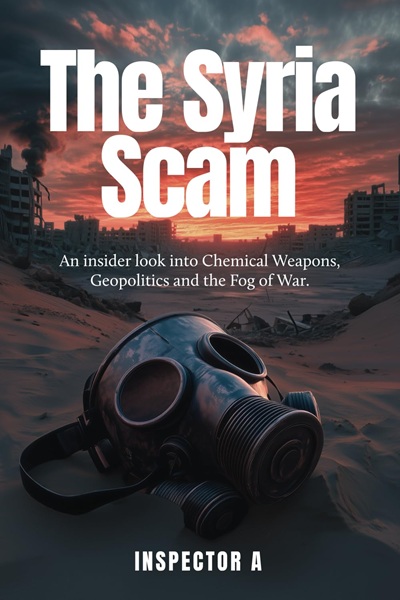 The dubious chemical weapons accusations and US driven political corruption of the Organization for the Prohibition of Chemical Weapons (OPCW) are now exposed in a February 2025 book by one of the technical professionals from the OPCW. The book is titled The Syria Scam: An insider look into Chemical Weapons, Geopolitics and the Fog of War.
By the end of 2018, the Syrian army had largely defeated the diverse jihadists. However, instead of conquering or expelling the opposition, Syria allowed them to have a safe haven in Idlib province on the border with Turkey. With Turkey, Iran and Russia seeking to find a solution through the Astana Accords, the conflict was frozen, and the jihadists were allowed to regain strength. Hayat Tahrir al Sham (HTS) became the de facto leader of the opposition factions and the government of Idlib.
The Frozen Conflict
In 2019, the U.S. turned the screws on Syria and escalated attacks on Lebanon. The extreme Caesar sanctions did what they were intended to do. They crushed the Syrian currency and economy, made it impossible to rebuild, and impoverished the vast majority of Syrians. The spreading poverty and inability to counteract it led to widespread demoralization and dissatisfaction. With consummate cynicism, the “Caesar” sanctions were named the “Caesar Civilian Protection Act”.
Meanwhile, in the HTS safe haven of Idlib province on the Turkish border to the north, conditions were very different. Although HTS was designated a terrorist organization in the U.S. and the West, they were helped economically. The HTS fighters were trained and supplied with modern military weaponry, including drones, sophisticated communications equipment, etc.. Very recently, when people from Damascus traveled to Idlib, they were shocked to find new highways, Wi-Fi widely available, and electricity 24 hours a day. Teacher salaries are ten times higher in Idlib than in Damascus.
The Fall of Damascus
With a demoralized population and Syrian army, the Assad government fell in a few weeks, and HTS, led by Ahmad Al Sharaa, took power on 8 December 2024. The new leader of Syria has been greeted and endorsed by the Gulf monarchies and Western countries that paid for and promoted the overthrow in Syria: the UK, Germany, France, Saudi Arabia, Qatar, and of course, Turkey.
Since the change, there have been numerous sectarian massacres of Alawites and Christians along the coast.
There have been attacks on Druze in Damascus. To date, there have been no punishments for the massacres of civilians. A nun reports, “there is no security” in Damascus or elsewhere in Syria.
Meanwhile, Israel has invaded and occupied all of the Golan and parts of southern Syria. They have built military bases in Quneitra and other strategic locations. Israel has carried out a bombing blitzkrieg, destroying all known Syrian ammunition depots. Israel can now fly over any part of Syria at will.
Instead of condemning the Israeli violation of Syrian land and airspace, Ahmad al Sharaa has criticized Iran and Hezbollah. In recent weeks, the new Syrian regime has arrested Palestinian leaders and closed their offices in Damascus. The normalization of relations with the Zionist state has begun.
Lifting Sanctions on Syria
Of course, the sanctions on Syria should be lifted. They never should have been imposed.
U.S. sanctions, known officially as “unilateral coercive measures”, are condemned by the vast majority of world nations. Over 70% of the world’ nations say that US sanctions are “contrary to international law, international humanitarian law, the Charter of the UN and the norms and principles governing peaceful relations among States.”
Without exaggeration, the West and their allies sponsored terrorism in Syria through Al Qaeda and other fanatical violent terrorist groups. They destroyed a once prosperous and independent nation. With a diverse Syrian population ruled by a sectarian leadership prone to violence, there may be more dark days ahead. While Israel, Turkey and the Gulf monarchies are pleased with the removal of the Assad government, a very heavy price has been paid by the majority of Syrians. And the cost is ongoing.
UNIFIL Raises Alarm Over Israeli Aggression Near Blue Line
Al-Manar | May 14, 2025
The United Nations Interim Force in Lebanon (UNIFIL) expressed serious concern over what it described as “recent hostile actions” by the Israeli occupation forces targeting UN peacekeepers and UN property near the Blue Line, including a direct fire incident on Monday.
Direct Hit on UNIFIL Base
In an official statement, UNIFIL reported that around 7:20 PM on Monday, peacekeepers observed two gunshots fired from the so-called “Israeli side” of the Blue Line. One of the bullets directly struck a UNIFIL base near the southern Lebanese village of Kfar Shouba.
“This marks the first direct hit on a UNIFIL site since the cessation of hostilities agreement on November 27, 2024,” the statement noted.
UNIFIL also documented at least four other incidents in recent days involving Israeli fire near its positions along the Blue Line. The mission cited additional “hostile behavior” by the Israeli occupation forces targeting peacekeepers conducting operational activities in line with UN Security Council Resolution 1701.
Laser Targeting and Drone Harassment
The statement detailed several other troubling encounters. On Monday, UN peacekeepers patrolling with the Lebanese Army near Maroun Al-Ras reported being targeted with a laser beam from an Israeli occupation army position.
A similar incident occurred on May 7 near Alma Al-Shaab, when a UNIFIL patrol was illuminated with laser beams from two Israeli Merkava tanks.
As the patrol moved, a drone flew overhead at a low altitude of approximately five meters and followed it for nearly a kilometer. In a separate incident the same day, a reconnaissance drone repeatedly circled a UNIFIL site near the town of Houla.
UNIFIL Lodges Protest
UNIFIL strongly condemned these actions, reaffirming its protest and urging all parties to uphold their responsibility to ensure the safety and security of UN personnel and property.
“The sanctity of UN premises, personnel, and assets must be respected at all times,” the mission emphasized.
Featured Video

Rewriting the risk? Inside the government’s vaccine safety messaging
or go to
Aletho News Archives – Video-Images
Book Review
“Davos Can Really Replace the UN”
Inside the book that maps the architecture behind global governance — from the Epstein files to the Pact for the Future
Lies are Unbekoming | April 1, 2026
On June 13, 2019, the United Nations and the World Economic Forum signed a partnership deal to “accelerate the implementation of the 2030 Agenda for Sustainable Development.” That same evening, WEF president Börge Brende — Norway’s former Foreign Minister — had dinner with Jeffrey Epstein at Epstein’s Manhattan townhouse. The Epstein files, released January 2026, contain an exchange between the two from the previous year. Epstein to Brende: “Davos can really replace the UN. C21, cyber, crypto . genetics… intl coordination.” Brende back to Epstein: “Exactly — we need a new global architecture. World Economic Forum (Davos) is uniquely positioned — public private.”
The next day, the UN General Assembly adopted the framework for restructuring global governance.
That sequence — the partnership signing, the Epstein dinner, the candid admission about replacing the UN with a public-private architecture, and then the formal adoption — opens Jacob Nordangård’s The Digital World Brain. Pages two and three. Footnoted to the UN resolution number, the Epstein files, and the General Assembly record.
I keep coming back to it because it captures what this book does that almost nothing else in the independent research space manages. I’ve followed Jacob’s work for years now and interviewed him about his research. Each book peels back another layer of the same institutional architecture, and each time I think he’s reached the limit of what can be documented, the next one goes further. Nordangård doesn’t speculate. He doesn’t editorialize much. He lays institutional actions next to each other in chronological order and lets the pattern announce itself. … continue
Blog Roll
 Aletho News
- How I fell foul of the BBC thought police
- The End of NATO
- 37 days of war on Iran cost US staggering $42bln, tracker shows
- Baghdad tells Asian refiners, traders to begin loading Iraqi crude amid Iranian exemption
- Under fire, Moscow and Tehran close ranks
- Iran, US receive Pakistan-mediated plan for ceasefire then final deal
- Iran submits demands for end to war as mediators scramble ahead of Trump deadline
- Iran Threatens Retaliatory Strike on Stargate AI Project in UAE
- US sent ‘a lot’ of arms to Iranian protesters – Trump
- Barak Ravid Launders Deception To Allow Trump To Back Off Of His Power Plant Threat – Again
- If Americans Knew
- Trump poised to “blow everything up” (ie. commit war crimes) in Iran – Daily Update
- In Iran, Israel-US take aim at “reason, research, and freedom of thought” – Daily Update
- US loses planes over Iran, Israel downgrades Lebanon war goals – Daily Update
- Israel Is Blocking Palestinians from Easter at Church Where Jesus Resurrected
- Plot to assassinate Palestinian activist follows harassment campaign promoted by Zionist groups and elected officials
- Prominent New York synagogue hosts presentation on why U.S. Jews should support the ethnic cleansing of Gaza
- Tapper vs. Piker: Is the CNN Anchor Auditioning for David Ellison?
- Shouldn’t Democrats Be Able to Condemn Genocide?
- Israel-US kill negotiators, destroy civilian structures, but Iran’s military capabilities still largely intact – Daily Update
- ‘War crime’: Global condemnation as Israeli ministers celebrate death penalty law targeting Palestinian prisoners
- No Tricks Zone
- An Inconvenient Tree: Uncovered In Alps… Europe Much Warmer Than Today 6000 Years Ago
- New Study Reports A 60% Slowdown In Greenland’s Ice Loss Rate In The Last Decade
- Low Intensity Tornado Wrecks Major Solar Farm, Creating A Potential Toxic Dump
- New Study Finds Warming Saves Lives…Cold Temperatures 12 Times More Deadly Than Excess Heat
- German Science Blog Accuses PIK Climate Institute Of Hallucinating Climate Tipping Points
- Devastating Assessment Of Comirnaty Vaccine By Former Senior Pfizer Europe Toxicologist
- New Study: CO2 Is ‘Effectively Negligible’ As An Explanatory Climate Change Factor Since 2000
- Former Pfizer Toxicologist Dr. Helmut Sterz Tells Bundestag Hearing Pfizer Vaccine Should Have Never Been Approved
- Energy Expert: Germany’s Nuclear Phaseout Was A “500 Billion Euro Mistake”
- New Research: South Australia’s Mid-Holocene Sea Surface Temperatures Were 4°C Warmer Than Today
 Aletho News