Hezbollah thwarts Israeli advances into Kfar Tebnit-Ali al-Taher
Al Mayadeen | June 18, 2026
The Islamic Resistance in Lebanon – Hezbollah released a detailed statement regarding confrontations along the Kfar Tebnit-Ali al-Taher axis in South Lebanon, after four days of failed Israeli attempts to advance toward the area via multiple axes under the cover of aerial surveillance, heavy artillery, and smoke screens.
The Operations Room stated that its fighters have consistently engaged all Israeli advance attempts by targeting troop movements and concentrations with rockets, drones, and FPVs, inflicting significant losses in personnel and equipment among Israeli officers, soldiers, and armored vehicles.
It added that, as a result of these engagements, Israeli occupation forces were compelled to withdraw and conduct nighttime helicopter evacuations under smoke cover and artillery fire to recover casualties.
According to the statement, on Wednesday, June 17, at 8:00 pm, following the detection of an Israeli infantry unit attempting to establish positions on the northeastern outskirts of Kfar Tebnit, Resistance fighters engaged the force using a swarm of drones and Ababil FPV drones, confirming casualties among its members, including killed and wounded. The operation was subsequently followed by rocket salvos and artillery fire directed at the same area.
Several hours later, at approximately 01:50 am on Thursday, June 18, amid enemy attempts to regroup in a crossing area, Hezbollah fighters targeted a Merkava tank with the appropriate weapons, achieving a direct hit and forcing the withdrawal of the Israeli force from the sector.
The Resistance confirmed that Israeli occupation forces remain present on the southern outskirts of Kfar Tebnit toward Arnoun, vowing that the Kfar Tebnit–Ali al-Taher axis will remain inaccessible to enemy advances.
The operations come as Hezbollah defends Lebanese territories from ongoing Israeli violations of the April 17 ceasefire and the memorandum of understanding reached between the United States and Iran, which clearly stipulates “Israel’s” withdrawal and cessation of attacks in Lebanon.
The art of the recycled deal: Trump and the outcome Israel cannot tolerate
By Jamal Kanj | MEMO | June 17, 2026
There are many lessons to be learned from the latest made-for-Israel war on Iran. The first and most damning is that the war resolved the very crisis it created. Donald Trump celebrated the reopening of the Strait of Hormuz and the lifting of the blockade against Iran. Two conditions that were fully in place before Benjamin Netanyahu dog walked Trump into this war. The agreement that concluded the war took us back to exactly where we stood before America spent $200 billion, and where Americans continue to pay Israeli surcharge tax at the pump and grocery stores.
As for Iran’s nuclear program, the arithmetic does not lie. The 400 kilograms of 60-percent enriched uranium that Iran possessed were zero before Trump — pressured by his largest Israel-first donors — tore up the Joint Comprehensive Plan of Action (JCPOA) in May 2018.
According to the International Atomic Energy Agency, Iran had fully complied not only with the IAEA non-proliferation agreement, which Israel has never signed nor accepted, but with the additional protocols governing verification and monitoring of its civilian nuclear program.
Trump canceled the deal anyway, not because it failed America, but because it did not satisfy Israel’s veto.
The deepest irony is that Iran’s nuclear knowledge and capabilities are more advanced today than when Trump discarded the JCPOA. Any new agreement — even one stricter in structure than the original — is therefore being negotiated from a fundamentally weaker position than the one that existed in 2018. No treaty can unlearn what Iran already knows.
On Monday, June 15, Trump heralded the end of war bragging that Iran agreed not to develop nuclear weapons. In a leaked copy of the supposed Memorandum of Understanding (MoU), item 8 states: “The Islamic Republic of Iran reiterates that it will never produce nuclear weapons ...” The word reiterates is not incidental. It is a direct reference to Article III of the 2015 JCPOA, which Trump most likely never read, where Iran had already affirmed: “… that under no circumstances will Iran ever seek, develop or acquire any nuclear weapons.” Same commitment. Same language. Different signatures. Twelve weeks of a war that went nowhere to get here.
From “There will be no deal with Iran except UNCONDITIONAL SURRENDER!” to celebrate an MoU to reopen a Strait that was open before $200 billion and countless American and Iranian lives were squandered. Trump’s triumph is much ado about nothing.
He canceled an existing deal that took years to negotiate, inflicted economic hardship on ordinary Iranians, and allowed Iran’s nuclear advancement to leap forward. It is, in the most literal sense, like redefining water as H2O. The molecule did not change. Only the dressing did. Israel’s war took Trump back to the starting point, at twice the cost to American taxpayers.
The same special-interest group that pushed Trump to cancel the JCPOA, lobbied him long before the 2024 election. Israel-first donors poured hundreds of million into his campaign as a down payment for this war. Netanyahu visited Trump seven times in thirteen months, manipulating, and scheming for another made-for-Israel war.
This war should also carry a lesson for the Arab Gulf states that long believed American military bases were a guarantee of their security. Instead, they found themselves sidelined and never consulted on a war waged, directly or indirectly, from their own soil, ultimately in service of an Israeli agenda. Foreign military presence does not deliver security. It delivers dependency. Lasting regional stability is built through regional cooperation, on terms beneficial to the region.
More importantly, the region must now reckon with a pattern it can no longer afford to ignore: wherever Israel goes, instability follows. The so-called Abraham Accords brought Israel into the Gulf. What followed was bombs, drones and economic ruins never seen since the Second World War.
I have lived in the Gulf. The only pop people could hear was the backfire of an aging car exhaust. In the last three months, friends shared recordings of ballistic missiles splitting the sky and drones buzzing overhead. Israel did not bring a defense shield; it brought a target. Its presence is a magnet for unrest. It is a carcass attracting wasps.
In fact, Israel is an agent of disorder and a parasite nurtured by chaos. It wraps itself in the language of partnership, mutual benefit, and shared values, deceiving others into believing the arrangement is reciprocal when it is entirely one-directional.
Israel’s record speaks for itself: a genocide in Gaza, ethnic cleansing across the West Bank, 1.3 million internal refugees in Lebanon, the occupation of Syrian land following Assad’s fall, destabilization operations in northern Iraq and Sudan.
In Iraq, the American invasion and regime change did not satisfy Israel’s insatiable lust for total chaos. It targeted Iraqi scientists and waged war against knowledge itself. The blueprint, in this view, has not changed for Iran. Israel’s dissatisfaction over the MoU with Tehran is not that it fails to produce a non-nuclear Iran, but that it fails to wipe out knowledge. Its broader objective is the suppression of scientific and technological development across the region. Israel seeks neighbors unable to think independently, consume, not produce, import rather than innovate. It wants to maintain a monopoly over nuclear capabilities and control over regional scientific advancement.
Israel brought ruins to the U.S., too. The made-for-Israel Iraq war helped detonate the financial crisis of 2008, saddling future American generations with trillions in accumulated debt that has never been fully reckoned with. A war that Trump condemned, criticizing Democratic leadership for failing to impeach George W. Bush who “got us into the war with lies.”
The cost of current Trump’s made-for-Israel war on Iran requires no economist to explain. It arrives uninvited in every American home, at the meat counter, in every grocery bill, every gas receipt, every price that keeps rising without explanation. They may not realize its extent, yet. By the time they do, the damage to the U.S. economy, as in 2008, will be too deep to reverse.
To undermine potential peace with Iran, the ungrateful Israel-first loyalists like Ben Shapiro, Mark Levin are already panicking and challenging Trump’s MoU. Israel will activate the constellation of media outlets controlled by Israel-first billionaires to shape what Americans see, read, and are permitted to question. The once-respected 60 Minutes, under a new Israel-first boss, Bari Weiss, allows Netanyahu to handpick his own interviewer. Who knows, maybe he submits his own questions, too.
Now, Netanyahu and American Zionists have sixty days to sabotage a final deal with Iran. Israel will mobilize its donors, lobby Congress, and if that fails, resort to what it has perfected. A false flag operation against American forces in the region, or another assassination in Lebanon.
A conflagration ensues, and once again, it will be fought with American money and American lives. Because a Middle East free of American military entanglement is the one outcome Israel cannot tolerate — a prospect more threatening than any Iranian nuclear centrifuge.
UN: Israel continues to violate Lebanon airspace in defiance of Iran-US MoU
Press TV – June 16, 2026
The United Nations has reported ongoing Israeli military offensives in southern Lebanon, including projectile launches and repeated violations of airspace, though it recorded a decrease in overall violence following a memorandum of understanding between Iran and the United States.
UN spokesperson Stephane Dujarric said during a news conference on Monday that the UN Interim Force in Lebanon (UNIFIL) had “observed a decrease in violence and exchanges of fire” from midnight until 4 p.m. local time.
UNIFIL also documented “133 trajectories of projectiles and 2 airstrikes” conducted by Israeli forces, while noting “no trajectories from Hezbollah or non-state actors.”
Dujarric further explained that peacekeepers had recorded 25 violations of Lebanese airspace by Israeli forces, with a cumulative overflight duration of “approximately 40 hours.”
“Prior to the announcement of the agreement yesterday between the US and Iran, our UNIFIL peacekeepers noted 135 violations of Lebanese airspace by the [Israeli military], with a total overflight time exceeding 222 hours,” he stated, adding that the peacekeeping mission had recorded a total of “1,374 trajectories of projectiles over the weekend, with 1,328 attributed” to Israeli forces.
Regarding the humanitarian situation, Dujarric highlighted the prevailing uncertainty on the ground, stating, ”Some families have reportedly begun to return to their homes or are evaluating the conditions in communities in parts of southern Lebanon, particularly in Nabatieh.”
“However, no large-scale returns have occurred thus far,” he added.
On Monday evening, Iran’s Supreme National Security Council announced that the memorandum of understanding (MoU) reached between Tehran and Washington earlier in the day will bring an end to warfare on all fronts, including in Lebanon.
The SNSC secretariat also announced that the MoU is scheduled to be officially signed on Friday, June 19.
Despite the agreement, the Israeli army conducted demolitions and shelling in several towns in southern Lebanon on Monday. Reports indicated that displaced residents were returning to some southern villages, while local municipalities advised caution and urged residents to postpone their returns.
Since March 2, Israel has been conducting an extensive military offensive in Lebanon, killing 3,783 individuals and injuring 11,699 others, as reported by the Lebanese Health Ministry. Additionally, over one million people have been forced to flee their homes.
Israel maintains its occupation of certain regions in southern Lebanon, with some areas being held for decades and others since the onset of the 2023-2024 war. Israeli troops have also penetrated more than 10 kilometers into Lebanese land.
Araghchi: Israeli occupation of Lebanese land a violation of MoU
Al Mayadeen | June 16, 2026
In a televised statement, Iranian Foreign Minister Abbas Araghchi affirmed that, from Iran’s perspective, the two parties to the Memorandum of Understanding are the United States and “Israel” on one side, and Iran and Hezbollah on the other.
He also said, contrary to Trump’s overnight statement, that the MoU would be signed on Friday.
Speaking at the opening of a meeting with ambassadors, chargés d’affaires, and heads of foreign and international missions in Tehran on Tuesday, Araghchi stressed that the end of the war in Lebanon is an inseparable part of the complete end of the war, noting that ending the war on Lebanon also includes ending the occupation of Lebanese territory.
Araghchi said that, from now on, any military attack by “Israel” on Lebanon, as well as the continuation of the occupation of Lebanese territories, will be considered a violation of the MoU.
According to Araghchi, the heads of the two delegations from the US and Iran will first sign the memorandum of understanding on Friday before the inaugural round of formal negotiations begins.
Tehran, he said, aims to build on the understandings reached and translate them into a tangible economic opening.
Implementation mechanism amid deep-seated mistrust
The Iranian foreign minister also said that the negotiation agenda and the mechanism for implementing the anticipated understandings will be formulated in light of the prevailing lack of trust in the United States stemming from previous experiences marked by breaches of commitments and failures to uphold obligations.
“Naturally, we do not squander any opportunity in foreign policy, but at the same time, we do not pin our hopes on any opportunity,” Araghchi said, underscoring Tehran’s cautious and pragmatic approach to the forthcoming negotiations.
Meanwhile, US President Donald Trump claimed overnight Monday that a memorandum of understanding with Iran has been signed and that the Strait of Hormuz will be completely reopened by Friday, speaking to reporters upon his arrival in Evian, France, ahead of the G7 summit.
The formal signing ceremony is scheduled for Friday in Geneva, with Vance confirmed to attend.
Hezbollah fighters confront intruding Israeli forces in southern Lebanon
Press TV – June 16, 2026
Fighters from the Lebanese Hezbollah resistance movement have confronted an Israeli military convoy as it was attempting to infiltrate into southern Lebanon despite an Iran-US agreement that includes complete cessation of Israeli assaults on Lebanon.
Hezbollah said in a statement on Monday that its fighters, employing rockets and drones, obstructed an Israeli unit comprising an excavator and two Merkava tanks that was moving forward near the town of Kfar Tebnit, close to the southern city of Nabatieh.
In a subsequent statement later in the day, Hezbollah said, “The enemy army has reorganized its forces in the vicinity of the crossing area by deploying an armored contingent consisting of five Merkava tanks and four vehicles.”
“The combatants of the Islamic Resistance have targeted them with rocket barrages and artillery shells, and clashes are continuing.”
It came after an Israeli drone struck a vehicle in the same region, killing its driver. The air raid marked the first fatal strike since the announcement of the agreement.
Hebrew-language media outlets, meanwhile, reported “a serious security incident” for Israeli soldiers positioned in southern Lebanon.
The outlets added that Israeli rescue helicopters are trying to transport the injured troopers to hospitals in the northern part of the occupied territories.
There were no immediate reports about the number of casualties that the Israeli army suffered as a result of the incident.
Israeli media outlets also reported that a soldier fighting in southern Lebanon committed suicide last night due to mental distress from military offensives.
This comes as the Israeli military is witnessing a continuous and alarming rise in soldier suicides, a trend linked to widespread post-traumatic stress disorder (PTSD) stemming from Israel’s prolonged and repeated aggressions on multiple fronts.
According to figures published by the Haaretz daily newspaper, at least six active-duty soldiers and three non-active reservists died by suicide in April alone.
Earlier this year, the newspaper recorded 22 soldier suicides in 2025, a 15-year high.
A new poll by Israel’s public broadcaster KAN shows that a majority of Israeli settlers believe that the Zionist regime has failed to secure victory in any war since October 2023.
Lebanon Accuses Israel Of Violating The Chemical Weapons Convention By Spraying Toxic Herbicide Over Farmland
By Justin K.P. | The Dissident | June 15, 2026
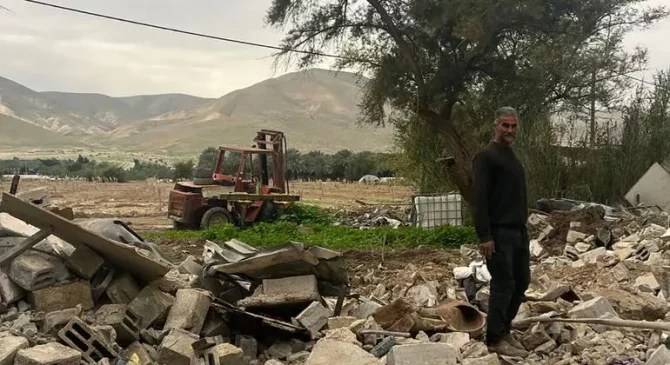
Lebanon has officially accused Israel – in a complaint filed with the U.N. Security Council- of violating the Convention on the Prohibition of Chemical Weapons for using aircraft to spray glyphosate, a “toxic herbicide with serious consequences for health, soil, and crops” over farmland in Southern Lebanon, as part of its broader ethnic cleansing plan.
Lebanon said that “the Convention on the Prohibition of Chemical Weapons prohibits the use of herbicides as a means of warfare”.
It noted that “Chemical analyses and laboratory tests conducted on soil samples taken from Aita al-Shaab (Bint Jbeil district), Ras Naqoura and Dhaira (Sour district) ‘confirmed the use of glyphosate at high concentrations reaching 22,750 micrograms per gram, a level far higher than the concentrations usually found in agricultural soils after farmers’ direct use of this product, which generally range between 0.5 and 2 micrograms per gram at most’”.
For context, Lebanon’s agriculture minister, Nizar Hani, revealed in February that “Laboratory tests have identified the chemical sprayed by Israeli aircraft in southern Lebanon as glyphosate, a widely used herbicide that can destroy vegetation when applied intensively,” adding that “the substance was used at abnormally high concentrations along the border with Israel”.
Nizar Hani noted that, “glyphosate, like other herbicides, eliminates vegetation when used at such high levels, directly affecting soil and water and causing negative repercussions for human health” and “the substance is classified as having carcinogenic effects and poses serious risks, particularly to agriculture and plant ecosystems” adding, “the incident was consistent with known practices along the border, where such substances are used to create vegetation-free zones, effectively resulting in systematic desertification.”
The Guardian reported that glyphosate was “in 2015 classified by the World Health Organization as ‘probably carcinogenic to humans’.”
In January, Israel similarly sprayed glyphosate over farmland in the southern Quneitra province in Syria and soon after, “A second incident occurred two days later, during which the visible release of substances led to outcries from Syrian farmers in occupied areas near Quneitra, southwest of Damascus and along the border with Israel.”
Israel, through spraying this carcinogenic herbicide, is attempting to kill off the farms and crops needed to sustain life in areas of Syria and Lebanon targeted for Israeli annexation in the Greater Israel Project.
Press TV reporter wounded in Israeli drone strike on southern Lebanon

Hadi Hoteit, Press TV correspondent in southern Lebanon
Press TV – June 15, 2026
A Press TV correspondent has been struck by an Israeli drone while reporting in southern Lebanon, despite wearing a clearly marked press vest.
Israeli forces deliberately targeted Hadi Hoteit in the southern Lebanese town of Kfar Tebnit on Monday, according to Lebanon’s National News Agency (NNA), despite the journalist wearing clearly marked press gear.
Hoteit sustained a shrapnel wound to his foot and was transported to Al-Najda Al-Shaabia Hospital in Nabatieh, where he underwent surgery and is receiving medical treatment.
The NNA reported that the Israeli military fired a shell that landed near the journalist.
The strike comes just one day after Iran and the United States finalized a memorandum of understanding to end the war on all fronts, including in Lebanon.
Despite the announcement, Israeli forces continue to attack areas in southern Lebanon.
Shortly before the attack, Hoteit posted on X, “We are back to South Lebanon, and hopefully the ceasefire this time will be different. This is my understanding of the situation and possible scenarios.”
Also on Monday, an Israeli drone struck another car at a roundabout in Kfar Tebnit, killing one person.
Israeli officials: ‘Security zones’ to remain in Lebanon, Syria, Gaza

Al Mayadeen | June 15, 2026
Israeli War Minister Israel Katz said the Israeli army will continue to hold so-called “security zones” in Lebanon, Syria, and Gaza indefinitely, asserting that what he described as border security requirements take precedence over any political or diplomatic arrangements.
He stated that the policy is being pursued in coordination with Israeli Prime Minister Benjamin Netanyahu, adding that the IOF would remain deployed in these areas without a defined timeline.
According to Katz, the stated objective of maintaining these zones is to prevent what he described as threats from armed groups operating near the borders.
He said Israeli forces would remain in the “security zones” in Lebanon, Syria, and Gaza in order to protect Israeli settlements and border areas, framing the deployments as a defensive necessity to mask its colonial nature.
“We will not compromise on the vital interests of Israel’s security and the protection of our citizens, and we will not leave the security zones,” Katz said.
He also stated that this position had been communicated to US President Donald Trump, US War Secretary Pete Hegseth, and other senior officials.
Netanyahu signals rejection of withdrawal from Lebanon
Separately, Israeli media cited officials close to Prime Minister Benjamin Netanyahu as saying that he informed Trump that “Israel” does not intend to withdraw from Lebanon under any emerging understandings linked to regional negotiations.
According to these reports, Israeli forces will remain in their current positions in southern Lebanon and continue what Tel Aviv describes as operations aimed at preventing threats from Hezbollah.
Netanyahu also reportedly rejected any linkage between developments on the Lebanese front and broader US-Iran diplomatic arrangements, insisting that “Israel” would not be bound by agreements affecting its military posture.
Internal political backing for hardline stance
Israeli political figures across the governing coalition expressed support for maintaining occupation deployments in Lebanon and other theaters.
“Israel’s” Finance Minister Bezalel Smotrich was quoted in Israeli media as arguing that any attempt to connect the Lebanese and Iranian fronts should be resisted, while also emphasizing the importance of preserving military deterrence without direct confrontation with Washington.
Other ministers, including Itamar Ben-Gvir, reportedly stated that any US-brokered agreement with Iran would not be binding on “Israel”, asserting that Tel Aviv would continue to determine its own security policy independently.
Energy Minister Eli Cohen and Transport Minister Miri Regev also stressed the need to maintain what they described as clear deterrence while avoiding unnecessary escalation with the US administration.
Israel Fails to Sabotage Islamabad Accord… At Least for Now
By Larry C. Johnson | SONAR21 | June 14, 2026
Well, when news broke that Israel had bombed the southern suburb of Beirut on Sunday afternoon, the Iranians started gearing up for promised retaliation only to be dissuaded by a Donald Trump bribe. Iran and the US reportedly were closing in on an agreement based on Iran’s 14-point plan when the Israeli strike in Lebanon threw everything into chaos. Iran quickly started ramping up for a renewed missile strike on Israel, but Donald Trump rump reportedly offered Iran financial incentives to not attack Israel.
Iranian media outlet Mehr reported that a 14-point memorandum of understanding between the US and Iran calls for the release of $24 billion in frozen Iranian assets during a 60-day negotiation period, with half of that — $12 billion — required to be made available to Iran before negotiations even begin. The MOU also reportedly includes immediate and permanent cessation of war on all fronts including Lebanon, a US commitment not to interfere in Iran’s internal affairs, lifting of the naval blockade within 30 days, and reopening of the Strait of Hormuz under Iranian arrangements.
Trump essentially offered Iran a bribe to not attack Israel. Hedeclared on Truth Social that the US deal with Iran was “now complete,” authorizing the toll-free reopening of the Strait of Hormuz and the immediate removal of the US.naval blockade, instead of waiting 30 days. He also agreed that Iran could receive the $12 billion as soon as the ceasefire agreement was signed on Friday.
With that change, the Supreme National Security Council of Iran confirmed the achievement of an agreement between the United States and Iran:
“The Islamic Republic of Iran, under the leadership of its martyred leader, has completed its success over the American-Zionist enemy and, under the guidance of the Supreme Leader of the system (may God protect him), with the support of the entire nation and the diligent efforts of Islam’s warriors, after a difficult and intensive several months of negotiations and based on the resolution of the Supreme National Security Council, finalized the text of the Memorandum of Understanding regarding negotiations to end the war (negotiations in Islamabad) between Iran and the United States on the evening of June 14.
According to the agreements reached, the war and military operations on all fronts, including Lebanon, will end immediately and forever from tonight, and the naval blockade against Iran will be immediately and fully lifted. The signing of this Memorandum of Understanding will be officially carried out on Friday, June 19. Negotiations for the final agreement will be postponed until the other party fulfills its obligations in accordance with the Memorandum of Understanding. The Islamic Republic of Iran highly values the efforts of the Islamic Republic of Pakistan and the government of Qatar.”
But before you start popping champagne corks you must understand that Trump administration officials — mostly unnamed — are painting a different picture of the agreement. For example, asenior U.S. official rejected Iran’s claim that it would receive $12 billion in frozen assets unconditionally before the start of the 60-day negotiations, describing the assertion as “a spin,” Axios reports:
This is completely not true. This is a pay-for-performance deal, and no frozen funds will be released without the Iranians implementing their commitments,” the official said.
The point is simple… Major differences remain between the US and Iran regarding the details of the proposed MOU. Even if those details are eventually ironed out and a letter signed on Friday with both sides confirming their mutual agreement to the 14 prinicipals spelled out in the final MOU, this will mark the start of a negotiations process that will last at least two months, if not longer. And, at any time in the succeeding days, a US or Israeli violation of the MOU will likely lead Iran to renew its attacks on Israeli and/or US military targets.
With one strike, Netanyahu tries to kill two peace deals
Netanyahu knew exactly what he was doing when he defied Trump’s red line and struck Beirut this morning
By Trita Parsi | June 14, 2026
It’s important to understand that, contrary to Donald Trump’s quip to Barak Ravid that Netanyahu has “no f***ing judgment,” the Israeli Prime Minister knows exactly what he is doing: With a set of strikes at the Dahiyeh neighborhood in Beirut, he is trying to kill both the pending US-Iran peace deal and the fragile peace between Israel and Lebanon that would come with it.
There is a further strategic dividend. Netanyahu is also seeking to preempt Iran’s attempt to establish a new regional deterrence equation—one in which attacks on Beirut, and potentially on Lebanon more broadly, would trigger a direct Iranian response against Israel. By striking now, he is not merely targeting an adversary; he is challenging the emergence of a regional order that would constrain Israel’s freedom of military action.
Netanyahu even posted a video on his Twitter bragging about the attack.
The exchange of fire between Israel and Iran last week was about far more than retaliation. After Israel defied President Trump and struck Beirut’s Dahiyeh neighborhood, Iran responded by attacking Israel directly—the first time Tehran had launched strikes on Israel in response to an Israeli attack on Lebanon. Israel defied Trump once more and retaliated against Iran, prompting another Iranian response, after which Israel confined its next strike to southern Lebanon rather than Beirut.
The cycle reflected Iran’s attempt to establish a new regional equation: that attacks on Lebanon would no longer be cost-free for Israel, but would carry the risk of direct Iranian retaliation. For the first time in decades, a major regional power was seeking to place hard-power constraints on Israel’s freedom of military action beyond its borders.
Having reestablished its own deterrence, Tehran was now attempting to establish extended deterrence to its partners as part of a broader effort to rebuild its forward-defense posture. Israel, unsurprisingly, viewed this as a direct challenge to its long-standing freedom of maneuver and moved quickly to prevent the new doctrine from taking hold.
Of course, extended deterrence can not be established through a single exchange of fire. At a minimum, it would require several rounds of action and reaction before either side accepted it as a new reality. And even then, it would never be foolproof. Tehran understands that its purpose cannot simply be to eliminate Israeli strikes on Lebanon, but to force Israeli leaders to think twice before authorizing them by attaching a new and significant cost: the likelihood of direct Iranian retaliation.
It was therefore clear that Netanyahu had not abandoned the fight. Yet for several days, even as Hezbollah and Israel continued to exchange fire, he refrained from striking Beirut’s southern suburbs and testing Iran’s new red line.
But today, just hours before President Trump was expecting Iran to sign a memorandum that would end the U.S.-Iran war and reopen the Strait of Hormuz, Netanyahu crossed both Tehran’s and Trump’s red line: keeping Beirut out of the conflict.
Netanyahu clearly timed this for maximum impact. With a single set of strikes, Netanyahu may have advanced two goals at once—torpedoing Trump’s peace deal and preventing the emergence of a new deterrence equation that would impose meaningful constraints on Israel’s military operations in Lebanon.
A diplomat involved in the talks told Fox News that: “This is a clear attempt by Israel to sabotage the President’s deal and drag the United States back into war.”
Trump, meanwhile, is once again reportedly “pissed off” at Netanyahu. In a Truth Social post, the president declared that the strike on Beirut “should not have happened,” while pointedly questioning whether it was a proportionate response to Hezbollah’s latest attack on Israel.
“Israel has the right to defend itself against threats,” Trump wrote, “but the attack it was responding to was very small and meaningless. Nobody was hurt, injured, or killed, and it should not disrupt this important process.”
The statement was notable not merely for its criticism of Netanyahu, but for what it implied: that Israel’s strike was neither militarily necessary nor diplomatically prudent at a moment when a potential breakthrough with Iran appeared within reach.
Washington is frustrated by Tehran’s insistence that Trump rein in Israel, even as American officials believe Iran has failed to similarly restrain Hezbollah. It is equally frustrated that a deal it urgently wants with Iran is now being held hostage by Israel, ironically at the request of the Iranians, since it is Tehran that insists that any ceasefire must be region-wide and prevent Israel from having the ability to restart the war.
That frustration is understandable. But Washington must also recognize a basic reality: the only way to delink a U.S.-Iran agreement from the Israel-Lebanon conflict is to delink the United States itself from Israel’s recurring resort to military escalation.
As long as Israel retains the capacity to drag the United States back into conflict, Tehran will see little reason to separate diplomacy with Washington from the wars Israel chooses to start and pull the US into.
Indeed, the principal reason Tehran insists on a region-wide ceasefire is to deny Israel the ability to draw the United States into yet another war with Iran itself.
If Trump were to clearly establish that the United States would neither participate in nor defend an unjustified Israeli military escalation, Tehran might no longer see the need to link a U.S.-Iran accord to the Israel-Lebanon front.
Such a calculated distancing from Israel would serve American interests in any case. But the need for it has rarely been more apparent than it is today.
Iran warns ‘no point’ in deal with US if Israel remains unrestrained
The Cradle | June 14, 2026
Iran’s Parliament Speaker Mohammad Bagher Ghalibaf warned in a statement on 14 June that there is “no point” in continuing efforts to reach a deal with Washington if Tel Aviv remains unrestrained, a few hours after a new Israeli attack on Lebanon’s capital.
“The Zionists’ aggression against the southern suburb [of Beirut] once again demonstrated that the US either lacks the will to uphold its commitments or lacks the ability to do so,” Ghalibaf said.
“You cannot gain concessions by giving the [Israeli] regime a green light. The ‘good cop, bad cop’ game has grown old. If you lack the will and the ability to fulfill your commitments, then there is no point in speaking about continuing down this path,” the parliament speaker added.
Meanwhile, Brigadier General Mohammad Jafar Asadi, deputy commander and deputy inspector of the Iranian military’s Khatam al-Anbiya Central Headquarters, said Israel’s attack on Beirut’s southern suburb will not go unanswered.
“If you seek an agreement or understanding, you must discipline the Zionist regime. If this rabid dog is not controlled, it will bite your leg before the ink is dry on the agreement,” said Ebrahim Rezaei, spokesperson for the Iranian parliament’s Foreign Policy and National Security Committee.
The latest Israeli airstrike on the Lebanese capital took place earlier on Sunday afternoon. The attack hit a building in the southern suburb’s Ghobeiry area.
According to the Lebanese Civil Defense, three people were killed and six others injured.
The Israeli army claimed it bombed a “command center belonging to the Hezbollah terrorist organization in Beirut.”
“The targeted command center was being used by Hezbollah operatives to advance terrorist plans against the citizens of the State of Israel,” the Israeli military added, calling its deadly attack on Beirut a “precise strike.”
The new attack on Beirut coincides with intensive Pakistani mediation to secure a Memorandum of Understanding (MoU) between the US and Iran.
Among Tehran’s terms is a full ceasefire in Lebanon and an end to Israel’s wars, attacks, and occupation across the region.
Following an Israeli attack on Beirut earlier this month, Iran carried out a ballistic missile attack on an Israeli air base and vowed harsher retaliation in response to any new attacks on the Lebanese capital.
Featured Video

Iran’s Next Strike May Not Explode. It Could Shut You Down
or go to
Aletho News Archives – Video-Images
From the Archive
Zionism’s Violent Legacy
By Donald Neff | Washington Report On Middle East Affairs | January 1996
On January 4, 1948, Jewish terrorists drove a truck loaded with explosives into the center of the all Arab city of Jaffa and detonated it, killing 26 and wounding around 100 Palestinian men, women and children.[1] The attack was the work of the Irgun Zvai Leumi – the “National Military Organization,” also known by the Hebrew letters Etzel – the largest Jewish terrorist group in Palestine. The Irgun was headed by Revisionist Zionist Menachem Begin and had been killing and maiming Arabs, Britons and even Jews for the previous ten years in its efforts to establish a Jewish state.
This terror campaign meant that at the core of Revisionist Zionism there existed a philosophical embrace of violence. … continue
Blog Roll
 Aletho News
- Trump’s Iran war is on an Israeli leash
- Saudi oil boss issues global supply warning
- Riyadh Says Its Oil System Is Intact. The Numbers Say Otherwise.
- Trump and Netanyahu Want to “Finish the Job” on Iran
- US ‘one-sided dictation’ not Iran’s beliefs makes rational talks impossible: Baghaei
- Iran’s Next Strike May Not Explode. It Could Shut You Down /Col Doug Macgregor
- Iran: US political targets legitimate if assassinations return
- Iraq shuts key border crossing with Iran under US pressure: Report
- Undersea Internet cables could be targeted in retaliation for attacks on Iran: IRGC deputy chief
- EU sending ‘biased’ observers to interfere in Serbian election – president
- If Americans Knew
- The Israel Lobby’s Changing Fortunes
- AIPAC has become such a political liability that it’s shifting to a more “nimble” approach to buying politicians
- At least 160 Israeli settler attacks in 2 weeks
- Will Gaza’s Ancient Christian Community Disappear Forever?
- Israel’s vision of regional security rests on keeping Arab states weak
- Heidi Levine recounts how Palestinian youths helped save her in settler attack
- DAILY UPDATE: Latest essential news on Palestine, Israel, & region
- Trump’s Intensifying Sabotage of the ICC, for Israel’s Sake
- Israeli military detain US and UK volunteers in West Bank including Democratic NY politician Brad Lander
- Americans at National Conservatism Conference held in Israel this year criticize Israel
- No Tricks Zone
- E-Cars Reduce CO2 Emissions By Only 41% Compared To Internal Combustion Engine Vehicles
- Predictions Made By Renowned Climate Professor Over Past Decades Have Been Proven To Be Poor
- New Study Suggests Large Regions Of The Pacific Ocean Have Been Cooling For The Last 80 Years
- Germany’s Green Energy Debacle: High Energy Costs Force Kahla Porzellan to Close After 182 Years!
- New Study: 50 Years Of The Most Aggressive ‘Net Zero’ Policies Can Only Affect The Global Climate By 0.03°C
- US September “Heat” Was No Record…Many Records Set Decades Ago
- Latest European Green Energy Debacle; Portugal’s Largest Flagship Solar Park Insolvent!
- Green Energy Debacle: German Expert Professor Fritz Vahrenholt Warns Of Severe Economic And Social Consequences
- Two More Paleo Reconstructions Affirm Meters-Higher Sea Levels Across Ireland, Brazil 7000-6000 Years Ago
- New Study: Earth And Venus Surface Warmth Largely Explained By Convection And Lapse Rate, Not CO2 Or Radiation

