70,000 Tonnes of Hubris
By Craig Murray | June 27, 2017
There is no defensive purpose to an aircraft carrier. Its entire purpose is to move aircraft to a position where they can attack other countries. As soon as they are equipped with attack aircraft, these carriers will spend most of their time around the Middle East, including at the UK’s brand new naval base in the vicious despotism of Bahrain. Having spent £7 billion on these behemoths, politicians will seek to enhance their prestige and demonstrate that they control a nation which is a “major power”, by using them. The very fact of their existence will make bombing attacks such as those we saw on Syria, Libya and Iraq more likely.
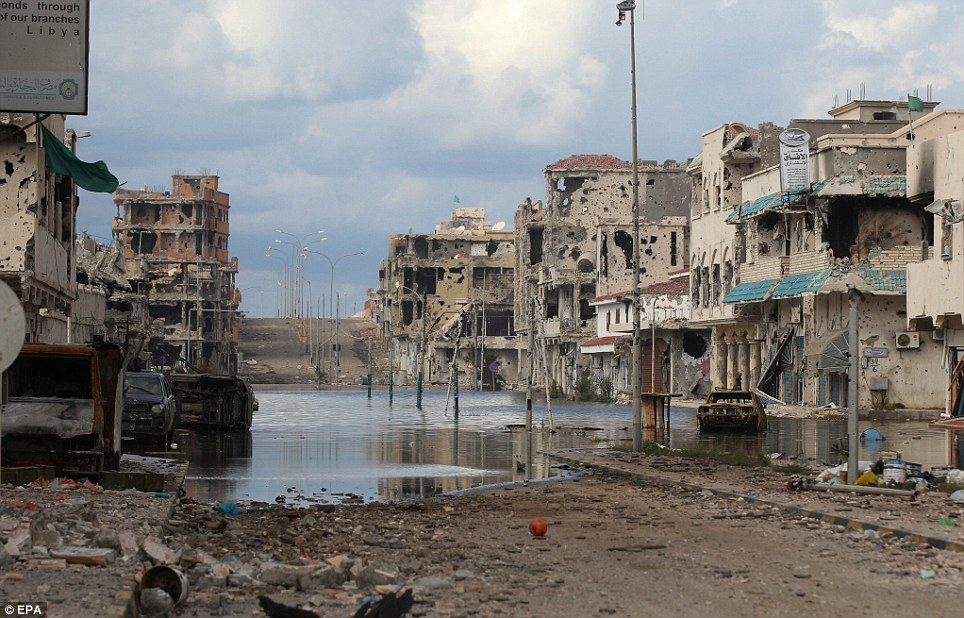
Sirte, Libya, after NATO bombing
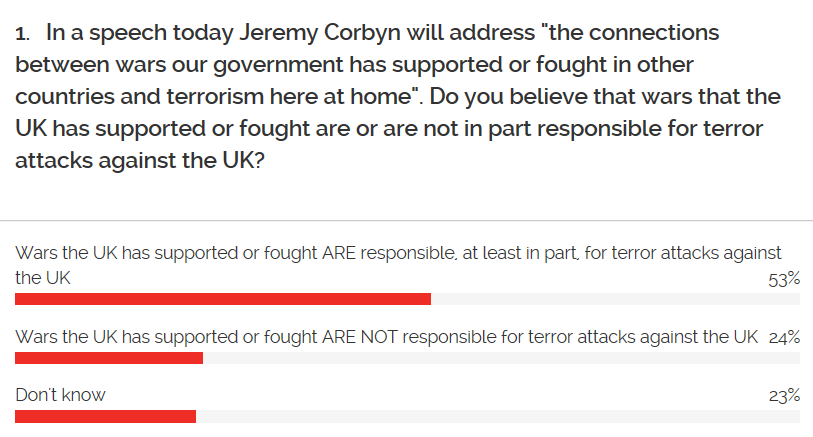
That further twist in the cycle of violence will lead to more terrorist attacks in the UK. There is no sense in which this aircraft carrier is anything to do with defending the United Kingdom. It is a device to attack foreign countries. The result is it makes us a lot less safe at home.
When they think about it, people understand that, as YouGov demonstrated during the recent election campaign. The politicians will be trying to whip up feelings of jingoism and national pride around this huge hunk of floating hubris, to stop us thinking about that.
There is no money for our schools and hospitals, but unlimited sums for the armaments industry. The United Kingdom is not just a dysfunctional state, it is a rogue state and a danger to the peace of the world.
Crimea, Afghanistan and Libya
By Brian CLOUGHLEY | Strategic Culture Foundation | 27.06.2017
On June 20 the United States Treasury Department stated that economic sanctions against Russia «would not be lifted until Russia leaves Crimea». In that case, sanctions will remain forever, because ten days after the democratically elected Crimean parliament voted to accede to Russia on 6 March 2014, a referendum was held which confirmed its decision — and the citizens of Crimea intend to remain with Russia.
At that time «Mr Obama said that the referendum was illegal and would never be accepted» and the European Union proclaimed that the vote was ‘illegitimate and its outcome will not be recognised’». This was an interesting political signal, because it was obvious the objectors knew that the citizens of Crimea would vote to rejoin Russia. The hopes and desires of ordinary citizens didn’t matter, because the US and the EU had already made up their minds to ignore a democratic vote.
Predictably, the Secretary General of NATO, Jens Stoltenberg, continues to declare that «NATO Allies do not and will not recognise Russia’s illegal and illegitimate annexation of Crimea».
Time magazine was realistic in recording on March 16, 2014, that the citizens of Crimea «voted overwhelmingly on Sunday to secede from their country and join Russia, in a major victory for Moscow that followed days of international condemnation that the referendum itself was illegitimate». Of course they voted to accede to Russia. They would have been insane to do otherwise. The thought of being ruled by xenophobic bigots who had just mounted a US-assisted coup in Ukraine was appalling. Since the accession to Russia there hasn’t been a single instance of civil disturbance in Crimea — and be assured that if there was the slightest possibility of any such disorder, then US and British intelligence agencies would have informed their media.
The reason for the West’s condemnation of a democratic vote to belong to Russia by Russian-cultured, Russian-speaking citizens of Crimea is not difficult to determine. Since the end of the Soviet Union the US-NATO military alliance has been desperate to justify its existence, and there is no more convenient enemy to be conjured up than Russia. Until that could be arranged, excursions into wider war by NATO provided excuses for survival and expansion.
NATO’s total failure in the war in Afghanistan has further detracted from its miniscule credibility, and its 2011 blitz on Libya was a war crime. Both countries are now in chaos.
After fifteen years of US-NATO war in Afghanistan, as admitted on June 13 by the US Secretary for Defence, General Mattis, the place is a shambles, and «we are not winning in Afghanistan right now».
Amazingly, Mattis added «and we will correct this as soon as possible». What is he going to do? Wave a magic wand and eradicate corruption and install a democratic government and give equal rights to women and destroy the drug industry that accounts for 15 percent of Afghanistan’s GDP and disband the savage militias which have been so well-armed and funded by the CIA? Is he going to defeat the militants who have fought the US-NATO military alliance to a standstill over 15 years?
Mattis is the gallant intellectual general who boasted in a CNN interview in 2005 that «You go into Afghanistan, you got guys who slap women around for five years because they didn’t wear a veil. You know, guys like that ain’t got no manhood left anyway. So it is a hell of a lot of fun to shoot them». — He is exactly the sort of rabid military maniac whose bash and crash tactics over the years have caused so many Afghans to loathe and despise the foreigners who invaded their country. Mattis declares that «NATO has always stood for military strength and protection of the democracies and the freedoms we intend to pass on to our children», but the Mattis-NATO concept of freedom is at variance with reality.
In Afghanistan, as recorded by Human Rights Watch, «Early on February 18, Afghan police special forces raided a clinic run by the humanitarian organization Swedish Committee for Afghanistan, assaulted medical staff, and shot dead two patients, including a 16-year-old, and a 15-year-old caregiver. Witnesses reported that international military forces accompanied the Afghan forces, although they did not enter the clinic». No prizes for guessing which country provided these «international military forces,» under NATO auspices. Freedom, anyone?
Then on 12 June 2017 US troops killed three civilians, a man and his two sons. The soldiers were in a vehicle convoy that was struck by a bomb, and opened fire, spraying bullets round the countryside in the cause of freedom. Now: nobody should denounce these young soldiers for panicking and blasting anyone they thought was a threat. It is only too easy for commentators and politicians to aim the blame in such circumstances — without reflecting that they themselves might not have been exactly cool, calm and collected when the bomb blast went off. Certainly the man and his kids should not have been killed — but the US soldiers shouldn’t have been in Afghanistan in the first place.
And while all this carnage is going on, the West’s sanctions on Russia continue to be aimed at the innocent citizens of Crimea in the hope that they will revolt against Russia and embrace what General Mattis calls the freedom-loving US-NATO military alliance.
In 2011 this freedom-loving military alliance destroyed Libya in an aerial blitz that began by US and British warships firing 110 Tomahawk missiles and continued with NATO’s air forces pulverising the place for seven months, during which their aircraft carried out 14,202 bomb and rocket airstrikes in the cause of freedom. As noted by one commentator, Human Rights Watch «released a report into the deaths of at least 72 Libyan civilians, a third of them children, killed in eight separate bombing raids (seven on non-military targets) – and denounced NATO for still refusing to investigate or even acknowledge civilian deaths that were always denied at the time».
Libya is now a catastrophic shambles, with armed groups fighting each other and Islamic State terrorists finding willing recruits for their savagery. The results of the US-NATO war that supported rebels against the Libyan government include «Shortages of food, fuel, water, medical supplies and electricity, as well as reduced access to health care and public services. Care for patients with chronic diseases, disabilities and mental health disorders is compromised by restricted access to the few functioning health facilities. The situation of women and children has become particularly vulnerable, since the hospitals are overwhelmed with trauma patients».
Before the US-NATO destruction of Libya the World Health Organisation recorded that «the country is providing comprehensive health care including promotive, preventive, curative and rehabilitative services to all citizens free of charge through primary health care units, health centres and district hospitals». The CIA Factbook noted that Gaddafi’s Libya had a literacy rate of 94.2% which was higher than in Malaysia, Mexico and Saudi Arabia. According to WHO, life expectancy was 75 years, as against 66 in India, 71 in Egypt, 59 in South Africa.
Forgotten are the wise words of Brazil, China, India, Russia and NATO-member Germany (which refused to join the Libya bombing spree), who warned against «unintended consequences of armed intervention» concerning which Mr Putin (then prime minister) observed that it was regrettable when the «so-called civilized community, with all its might, pounces on a small country, and ruins infrastructure that has been built over generations».
The question is, where would you prefer to live? — In Afghanistan, after 15 years of US-NATO war, where barbaric violence rules, the lives of women are obscenely degrading, corruption is terminal and illegal drug production is the highest in the world? Or Libya, destroyed by a US-NATO blitzkrieg, where there are now «two rival parliaments and three governments» and even the New York Times admits that it is «a violent and divided nation rife with independent militias, flooded with arms and lacking legitimate governance and political unity»?
Or might you not prefer Crimea, where infrastructure is being improved and the people do not fear being sprayed with bullets by foreign soldiers; where every effort is being made to improve the living conditions of its inhabitants who are the targets of spiteful western sanctions?
In Continued Targeting of Only Africans, ICC Calls for Arrest of Saif al-Islam Gaddafi
teleSUR | June 14, 2017
Just shortly after Saif al-Islam Gaddafi, the son of late Libyan leader Muammar Gaddafi, was released from prison Saturday, the International Criminal Court on Wednesday called for his arrest.
“Libya is obliged to immediately arrest and surrender Mr. Gaddafi to the ICC, regardless of any purported amnesty law in Libya,” ICC prosecutor Fatou Bensouda said in a statement.
The body — which in its history has only prosecuted Africans — alleges that Gaddafi suppressed opposition to his father’s rule during uprisings in 2011, accusing him of crimes against humanity.
Gaddafi often spoke out defiantly against attempts to topple the government his father led, having gained prominence as a high-ranking official and spokesman during the NATO-backed campaign against the Libyan Arab Jamahiriya.
That campaign soon became a “regime change” effort that led to the toppling of Muammar Gaddafi and Libya’s plunge into all-out civil war.
The North African country has since become a base for various transnational extremist factions such as al-Qaida, the Islamic State group and the Libyan Islamic Fighting group.
The ICC, on the other hand, has largely been discredited in Africa, with Gambia’s Information Minister Sheriff Bojang noting last October that the ICC is, “in fact, an International Caucasian Court for the persecution and humiliation of people of color, especially Africans.”
Earlier this year, leaders from the African Union adopted a non-binding decision to withdraw from the court.
In addition to the ICC’s calls for arrest, a Tripoli court in 2015 sentenced Saif to death in absentia for alleged war crimes as well.
The US Hand in the Libyan/Syrian Tragedies
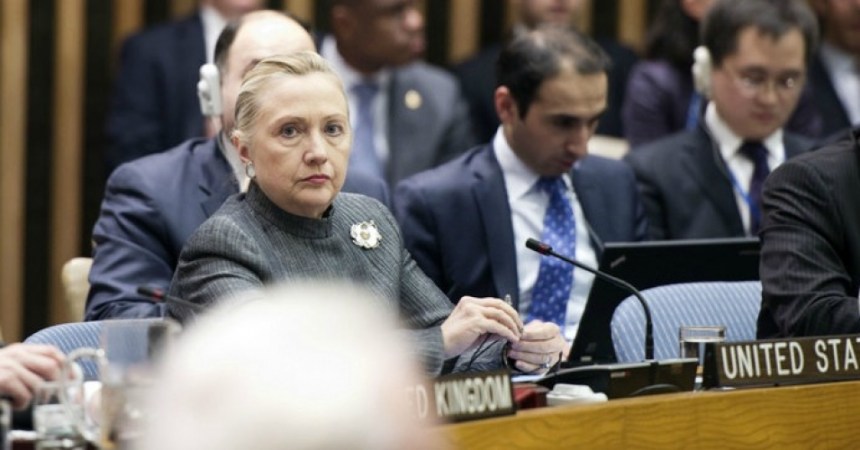
US Secretary of State Hillary Clinton delivers remarks at a UN Security Council Session on the situation in Syria at the UN in New York on Jan. 31, 2012. [State Dept. Photo]
By Jonathan Marshall | Consortium News | June 9, 2017
Police investigations and media reports have confirmed that two of the bloodiest terrorist attacks in Western Europe — the coordinated bombings and shootings in Paris in November 2015, which killed 130 people, and the May 2017 bombing of the arena in Manchester, England, which killed 23 — trace back to an Islamic State unit based in Libya known as Katibat al-Battar.
Since those attacks, a number of analysts, myself included, have characterized them as a form of “blowback” from NATO’s disastrous campaign to depose Libyan dictator Muammar Gaddafi in 2011. By turning Libya into an anarchic staging ground for radical Islamist militants, that intervention set in motion the deadly export of terror back into Western Europe.
But such a Eurocentric critique of NATO’s intervention misses the far greater damage it wreaked on Syria, where nearly half a million people have died and at least 5 million refugees have had to flee their country since 2011. U.S., British and French leaders helped trigger one of the world’s great modern catastrophes through their act of hubris in seeking another “regime change” – the overthrow of President Bashar al-Assad – in Syria.
A decade ago, Libya was a leading foe of radical jihadis, not a sanctuary for their international operations. A 2008 State Department memo noted that “Libya has been a strong partner in the war against terrorism.” It gave the Gaddafi regime credit for “aggressively pursuing operations to disrupt foreign fighter flows,” particularly by veterans of jihadist wars in Afghanistan and Iraq.
All that came to an end in 2011, when armed rebels, including disciplined members of al-Qaeda and Islamic State, enlisted NATO’s help to topple Gaddafi’s regime.
Western leaders ignored the prescient warnings of Gaddafi’s son Seif that “Libya may become the Somalia of North Africa, of the Mediterranean. . . .You will see millions of illegal immigrants. The terror will be next door.” Gaddafi himself similarly predicted that once the jihadis “control the Mediterranean . . . then they will attack Europe.”
Subsequent terrorist attacks in Europe certainly vindicated those warnings, while discrediting the so-called “humanitarian” case for waging an illegal war in Libya. But the predicted jihadi efforts to “control the Mediterranean” have had far graver repercussions, at least in the case of Syria.
A recent story in the New York Times on the genesis of recent terror attacks on France and Britain noted in passing that the Islamic State in Libya, composed of “seasoned veterans of Iraq and Afghanistan,” was “among the first foreign jihadist contingent to arrive in Syria in 2012, as the country’s popular revolt was sliding into a broader civil war and Islamist insurgency.”
A former British counter-terrorism analyst told the newspaper, “some of the baddest dudes in Al Qaeda were Libyan. When I looked at the Islamic State, the same thing was happening. They were the most hard-core, the most violent — the ones always willing to go to extremes when others were not. The Libyans represented the elite troops, and clearly ISIS capitalized on this.”
These Libyan jihadists leveraged their numbers, resources, and fanaticism to help escalate Syria’s conflict into the tragedy we know today. The mass murder we now take for granted was not inevitable.
Extremist Violence in Syria
Although Syria’s anti-government protests in the spring of 2011 turned violent almost from the start, many reformers and government officials strove to prevent an all-out civil war. In August 2011, leaders of Syria’s opposition wisely declared that calls to arms were “unacceptable politically, nationally, and ethically. Militarizing the revolution would . . . undermine the gravity of the humanitarian catastrophe involved in a confrontation with the regime. Militarization would put the revolution in an arena where the regime has a distinct advantage and would erode the moral superiority that has characterized the revolution since its beginning.”
Largely forgotten today, the Assad regime also took serious steps to deescalate the violence, including lifting the country’s state of emergency, disbanding the unpopular National Security Court, appointing a new government, and hosting a national dialogue with protest leaders.
But on August 18, 2011, the same Western leaders who were bombing Gaddafi announced to the world that “the time has come for President Assad to step aside.” Further energizing Syrian militants, Libyan rebels were just then in the midst of conquering Tripoli with NATO’s help.
“That is an ominous sign for Syria’s President Bashar al-Assad,” reported the Wall Street Journal. “Already there are signs Libya is giving inspiration to the rebels trying to oust Mr. Assad. . . . Syrian protesters took to the streets chanting ‘Gadhafi tonight, Bashar tomorrow.’ . . . The Libyan episode may serve simply to sharpen the conflict in Syria: both spurring on the dissidents and strengthening Mr. Assad’s resolve to hold on.”
Stoking war in Syria was not an unintended consequence of the Libyan campaign, but a conscious part of the longstanding neoconservative ambition to “remake the map of the Middle East” by toppling radical, nationalist and anti-American regimes. The same Journal article described the grandiose aims of some Washington interventionists:
“Beyond Syria, a new dose of energy provided by Libya’s uprising could ripple out to other nations in the region. In particular, U.S. officials hope it will reinvigorate a protest movement that arose inside Iran in 2009 to challenge President Mahmoud Ahmadinejad’s re-election. . . Syria has served for 30 years as Iran’s closest strategic ally in the region. U.S. officials believe the growing challenge to Mr. Assad’s regime could motivate Iran’s democratic forces.”
Instead of motivating Iran’s democrats, of course, the Syrian conflict motivated Iran’s hardliners to send Revolutionary Guard units and Hezbollah proxy forces into the country, further destabilizing the region.
Following the gruesome murder of Gaddafi in the fall of 2011, Libyan zealots quickly began fueling other terrorist conflicts, ranging from Mali to the Middle East, with arms looted from Gaddafi’s vast stocks.
“The weapons proliferation that we saw coming out of the Libyan conflict was of a scale greater than any previous conflict — probably 10 times more weapons than we saw going on the loose in places like Iraq, Somalia and Afghanistan,” observed an expert at Human Rights Watch.
A United Nations investigation determined that “Transfers of arms and ammunition from Libya were among the first batches of weapons and ammunition to reach the Syrian opposition.” It also stressed that Libyan weapons were arming primarily “extremist elements,” allowing them to gain territory and influence at the expense of more moderate rebel groups.
Spreading the War
As early as November 2011, Islamist warlords in Libya began offering “money and weapons to the growing insurgency against Bashar al-Assad,” according to the Daily Telegraph. Abdulhakim Belhadj, commander of the Tripoli Military Council and the former leader of the Libyan Islamic Fighting Group, an al-Qaeda affiliate, met secretly with Syrian rebel leaders in Turkey to discuss training their troops. (In 2004, he had been the victim of a CIA kidnap plot and rendition from Malaysia to Libya.)
The commander of one armed Libyan gang told the newspaper, “Everyone wants to go (to Syria). We have liberated our country, now we should help others. . . This is Arab unity.”
In April 2012, Lebanese authorities confiscated a ship carrying more than 150 tons of arms and ammunition originating in Misrata, Libya. A U.N.-authorized panel inspected the weapons and reported finding SA-24 and SA-7 surface-to-air missiles, anti-tank guided missiles, and a variety of other light and heavy weapons.
By that August, according to Time magazine, “hundreds of Libyans” had flocked to Syria to “export their revolution,” bringing with them weapons, expertise in making bombs, and experience in battlefield tactics.
“Within weeks of the successful conclusion of their revolution, Libyan fighters began trickling into Syria,” the magazine noted. “But in recent months, that trickle has allegedly become a torrent, as many more have traveled to the mountains straddling Syria and Turkey, where the rebels have established their bases.”
A Syrian rebel told the newsweekly, “They have heavier weapons than we do,” including surface-to-air missiles. “They brought these weapons to Syria, and they are being used on the front lines.”
A month later, the London Times reported that a Libyan ship carrying more than 400 tons of weapons bound for Syria, including SAM-7 anti-aircraft missiles and rocket-propelled grenades, had docked in Turkey. Such weapons particularly compounded the suffering of civilians caught up in the war. As France’s foreign minister told reporters that October, rebel-held anti-aircraft missiles were “forcing (Syrian government) planes to fly extremely high, and so the strikes are less accurate.”
According to later reporting by Seymour Hersh, most such Libyan weapons made their way to Syria via covert routes supervised by the CIA, under a program authorized by the Obama administration in early 2012. Funding and logistics support came from Turkey, Saudi Arabia, and Qatar. The CIA supposedly avoided disclosing the program to Congress by classifying it as a liaison operation with a foreign intelligence partner, Britain’s MI6.
Word of the operation began leaking to the London media by December 2012. The CIA was said to be sending in more advisers to help ensure that the Libyan weapons did not reach radical Islamist forces.
Of course, their efforts came too late; U.S. intelligence officials knew by that time that “the Salafist(s), the Muslim Brotherhood, and (al-Qaeda)” were “the major forces driving the insurgency.” The influx of new arms simply compounded Syria’s suffering and raised its profile as a dangerous arena of international power competition.
Libya’s arms and fighters helped transform the Syrian conflict from a nasty struggle into a bloodbath. As Middle East scholar Omar Dahi noted, “the year 2012 was decisive in creating the present catastrophe. There were foreign elements embroiled in Syria before that date . . . but until early 2012 the dynamics of the Syrian conflict were largely internal. . . . Partly in . . . appropriation of weapons pumped in from the outside and partly in anticipation of still greater military assistance, namely from the West, the opposition decided to take up arms.
“The decision — militarization — had three main effects. First, it dramatically increased the rate of death and destruction throughout the country. . . . By mid-2012, the monthly casualties were almost in excess of the total in the entire first year of the uprising. Militarization gave the Syrian regime a free hand to unleash its full arsenal of indiscriminate weaponry. . . Perhaps most fatefully, the advent of armed rebellion placed much of the opposition’s chances in the hands of those who would fund and arm the fighters. . . . It was then that the jihadi groups were unleashed.”
The collateral victims of NATO’s intervention in Libya now include 6 million Libyans attempting to survive in a failed state, millions of people across North Africa afflicted by Islamist terrorism, 20 million Syrians yearning for an end to war, and millions of innocent Europeans who wonder when they might become targets of suicidal terrorists. There is nothing “humanitarian” about wars that unleash such killing and chaos, with no end in sight.
Calls on Britain to stop arms exports to UAE
MEMO | June 1, 2017
The Arab Organisation for Human Rights in Britain (AOHR) has called on the UK government to stop exporting arms to the United Arab Emirates (UAE) because of its role in fuelling armed conflicts in the Middle East.
The organisation said the British government granted 509 arms licenses to the UAE worth £182 million ($233.3 million) in 2016 including defensive and offensive weapons with most of these weapons being transported to conflict zones in Yemen and Libya.
The organisation warned that the UAE government does not abide by the last user condition stipulated in the arms licenses which is documented in UN and international reports and therefore it is imperative that the UK government stop the export of arms to Abu Dhabi and investigate the fate of arms deals which were concluded previously.
The UAE not only provided the parties to the conflict with weapons, AOHR explained, but carried out military operations in the field like the continued bombing against the Darna region in Libya in cooperation with Egypt which resulted in civilian deaths and the destruction of many civilian facilities.
Using the pretext of fighting terrorism, the UAE and its allies are committing gross violations of the rules of international humanitarian law, AOHR added.
It went on to express deep concern that the UAE is expanding its military activity in Africa, where it has built military bases in Eritrea and Somalia.
Manchester Bombing: The Libyan Connection

By David Macilwain | American Herald Tribune | May 28, 2017
Following the Manchester suicide bombing, one wonders just what is necessary before Western media commentators and journalists join the dots – to make a true picture of the terrorist monster unleashed on the world by their own governments.
It is a question many people were asking only a day earlier, as those media blandly reported the demented ravings of the US, Saudi and Israeli leaders about the global terrorist threat posed by Iran. Surely there must have been some misunderstanding! Even though some commentators noticed a few of the Emperor’s clothes were missing, or a little inappropriate (black-flag underwear?) none challenged the ludicrous ideas that Iran was a global sponsor of terrorism, and “still” sought to develop nuclear weapons.
For Iranians however, and their friends and allies, events of the last weeks have stripped bare both the “Emperor” and his terrorist partners, and revealed the depths of deceit in the West’s fight against the “Islamic State”. The Libyan link in this chain of covert war – the LIFG connections of the Manchester bomber – has finally and unexpectedly rounded out the picture.
Silence over the collapsed Libyan state is just another of the Western media’s failings, though silence might be preferable to further repetition of the old lies about a “Revolution against the dictator Qadhafi”, followed by tribal warfare, and now compounded by the supposed presence of “Islamic State”. What has actually been happening in Libya, both since 2011 and dating back to the ‘90s has been cleverly or unwittingly concealed from Western audiences by their media and leaders in what looks like a complex game of diversions and distractions, white lies and black lies.
As revealed recently by Tony Cartalucci, and further dissected by Thierry Meyssan, the network of alliances and collaboration between Libyan Salafist groups and US and UK intelligence services has played a central role in NATO’s campaign against the “resistance” states, including Libya, Syria, Iran and Shia Lebanon. The failure of Western commentators and analysts to notice this “conspiracy” and consequently adjust their viewpoint has enabled grossly criminal behaviour to continue without public opposition. The exposing of the “Libyan connection” – by US intelligence agencies – threatens to change this, and the extreme reaction from the UK to the US leaking of the Manchester bomber’s identity – cutting communications between their intelligence services for 24 hours – indicates just who is threatened by it.
It was former MI5 agent David Shayler and his partner Annie Machon who first made public the co-operation between MI6 and anti-Qadhafi Salafists in Libya in the 1990s. MI6 helped in the formation of the “Libyan Islamic Fighting Group” from Afghanistan mujahideen/Al Qaeda veterans, with the express aim of assassinating the Libyan leader. Following the plot’s failure, and changing attitudes to Qadhafi in the UK, marked later by Tony Blair’s much publicised rapprochement with him, the tables were turned on several key leaders. Most notable, and now notorious, was Abdulhakim Belhaj, who was delivered back to Tripoli by the CIA/MI6 and imprisoned for six years.
During this period, up until the “Arab Spring”, other members of the LIFG who were resettled in the UK around 1998 – in the Manchester suburb where they were rediscovered last week – became rather persona non grata and some were placed on control orders as the LIFG was classified as a terrorist group.
However… a big however – when US, UK and French leaders decided in 2011 that they could no longer live with Moammar Qadhafi – who now supported his traditional secular Arab Nationalist allies in Syria – the UK leaders again found a use for their Libyan friends in Manchester, as leaders of the ‘Revolutionary forces’ against the Libyan government.
But of course it didn’t end there – in Libya – and hasn’t ended yet, either in Libya or in Syria, which is where many Libyan militants soon went.
The story of the ‘rat line’, from Eastern Libya to Turkey and onto Syria, was first prominently exposed by Seymour Hersh in early 2014, but observers in Turkey had noticed the presence of many Libyans in Turkey back in 2012, as they waited to join the violent insurgency against the Assad government in Syria. Amongst these fighters – or terrorists if you prefer – was Belhaj, who the CIA found was someone they could work with in their operation to “smuggle” militant jihadists and weapons from Libya to Syria. The US “consulate” in Benghazi seems to have been the centre of operations for the rat line, and disputes between different terrorist groups including the LIFG, and the CIA were likely the cause of the well-publicised attack and killing of the US ambassador Christopher Stevens.
Abdulhakim Belhaj meanwhile had returned to Libya, and somehow became the head of military forces in the Libyan transitional government. Rather contradictorily he had also launched legal action against the UK government for their years of action against him, including rendition and alleged torture by Libyan Intelligence on behalf of MI5. Compounding the picture of this terrorist-in-a-tie were claims last year that Belhaj was now the leader of Islamic State in Libya…
Before getting to the crucial questions on the identity of the Manchester bomber and his relatives, there is one other little thing to mention – Clinton’s emails. As is the habit with Western mainstream media, their focus has been almost entirely on aspects of this story which are relatively unimportant – such as Clinton’s use of a private server, and a witch-hunt over how the emails were leaked. It is of course the content of those emails that is the real story, and what they tell us about Clinton’s direct role in supporting the terrorist groups in Syria. Along with David Petraeus, who just happened to be in Tripoli when the Benghazi consulate was attacked, Clinton could hardly have been ignorant of the whole rat-line operation, even as her President Obama publicly debated whether to arm the “moderate opposition” in Syria.
But then Belhaj and his Libyan terrorist mates were not exactly moderate. Once Al Qaeda and now “Islamic State”.
It is against this background that we discover some shocking truths about the Manchester bomber, Salman Abedi – this young man who “appears to have become radicalised in Syria”.
In 2011, when MI5 facilitated the passage to Libya of LIFG members from Manchester, Salman’s father Ramadan Abedi evidently took his sons back to Tripoli to join the armed insurgents and learn how to kill people. Ramadan already had experience doing this in the ‘90s alongside Belhaj, as despite failing to kill Qadhafi there were many other innocent victims of the MI6 enabled LIFG “contras”.
In the six years since, Salman Abedi evidently went to fight in Syria, with Al Qaeda or “IS”. Perhaps he even went there with the CIA’s “rats”. So it could be said that joining the dots on the Manchester bombing gives us quite a good picture of a Western mercenary rat, whether it’s a white rat or a black rat…
Manchester Bomber Was Product of West’s Libya/Syria Intervention
By Daniel McAdams | Ron Paul Institute | May 24, 2017
Here’s what the media and politicians don’t want you to know about the Manchester, UK, suicide attack: Salman Abedi, the 22 year old who killed nearly two dozen concert-goers in Manchester, UK, was the product of the US and UK overthrow of Gaddafi in Libya and “regime change” policy in Syria. He was a radicalized Libyan whose family fled Gaddafi’s secular Libya, and later he trained to be an armed “rebel” in Syria, fighting for the US and UK “regime change” policy toward the secular Assad government.
The suicide attacker was the direct product of US and UK interventions in the greater Middle East.
According to the London Telegraph, Abedi, a son of Libyan immigrants living in a radicalized Muslim neighborhood in Manchester had returned to Libya several times after the overthrow of Muamar Gaddafi, most recently just weeks ago. After the US/UK and allied “liberation” of Libya, all manner of previously outlawed and fiercely suppressed radical jihadist groups suddenly found they had free rein to operate in Libya. This is the Libya that Abedi returned to and where he likely prepared for his suicide attack on pop concert attendees. Before the US-led attack on Libya in 2011, there was no al-Qaeda, ISIS, or any other related terrorist organization operating (at least with impunity) on Libyan soil.
Gaddafi himself warned Europe in January 2011 that if they overthrew his government the result would be radical Islamist attacks on Europe, but European governments paid no heed to the warnings. Post-Gaddafi Libya became an incubator of Islamist terrorists and terrorism, including prime recruiting ground for extremists to fight jihad in Syria against the also-secular Bashar Assad.
In Salman Abedi we have the convergence of both these disastrous US/UK and allied interventions, however: it turns out that not only did Abedi make trips to Libya to radicalize and train for terror, but he also travelled to Syria to become one of the “Syria rebels” fighting on the same side as the US and UK to overthrow the Assad government. Was he perhaps even trained in a CIA program? We don’t know, but it certainly is possible.
While the mainstream media and opportunistic politicians will argue that the only solution is more western intervention in the Middle East, the plain truth is that at least partial responsibility for this attack lies at the feet of those who pushed and pursued western intervention in Libya and Syria.
There would have been no jihadist training camps in Libya had Gaddafi not been overthrown by the US/UK and allies. There would have been no explosion of ISIS or al-Qaeda in Syria had it not been for the US/UK and allied policy of “regime change” in that country.
When thinking about Abedi’s guilt for this heinous act of murder, do not forget those interventionists who lit the fuse that started this conflagration. The guilt rests squarely on their shoulders as well.
Featured Video
“Historic Russia”: The Land Putin Will Not Give Back
or go to
Aletho News Archives – Video-Images
Book Review
Why the War on Conspiracy Theories Is Bad Public Policy
By Kevin Barrett • Unz Review • February 1, 2019
 A Review of Conspiracy Theories and Other Dangerous Ideas by Cass Sunstein (based on an earlier paper co-authored with Adrian Vermeule); In Defense of Troublemakers: The Power of Dissent in Life and Business by Charlan Nemeth; and Conspiracy Theories and the People Who Believe Them, edited by Joseph E. Uscinski
On January 25 2018 YouTube unleashed the latest salvo in the war on conspiracy theories, saying “we’ll begin reducing recommendations of borderline content and content that could misinform users in harmful ways—such as videos promoting a phony miracle cure for a serious illness, claiming the earth is flat, or making blatantly false claims about historic events like 9/11.”
At first glance that sounds reasonable. Nobody wants YouTube or anyone else to recommend bad information. And almost everyone agrees that phony miracle cures, flat earthism, and blatantly false claims about 9/11 and other historical events are undesirable.
But if we stop and seriously consider those words, we notice a couple of problems. First, the word “recommend” is not just misleading but mendacious. YouTube obviously doesn’t really recommend anything. When it says it does, it is lying. … continue
Blog Roll
 Aletho News
- “Historic Russia”: The Land Putin Will Not Give Back
- How the Cambridge Analytica scandal still haunts Mark Zuckerberg
- The Ongoing Cancellation Campaign Against a Dissenting Academic in Norway
- Yemen and ‘the Houthis’: Challenging Sami Hamdi’s Narrative
- No, Christians did not invent Zionism
- AIPAC-led lobbying network opens branches in Cypriot, Greek parliaments
- Araghchi blasts ‘parasitic’ alliance as US taxpayers pay for Israel’s war on Iran
- Easy fix for Europe’s chaos? Stop fueling war against Russia
- Putin’s key remarks on peace talks and Europe’s ‘schizophrenia’
- Trita Parsi: Israel Set a Trap for Total War in the Region
- If Americans Knew
- An error has occurred; the feed is probably down. Try again later.
- No Tricks Zone
- Two New Studies Find Thwaites Glacier Melt Cannot Be Driven By Human Activity Or A Warming Ocean
- E-Cars Reduce CO2 Emissions By Only 41% Compared To Internal Combustion Engine Vehicles
- Predictions Made By Renowned Climate Professor Over Past Decades Have Been Proven To Be Poor
- New Study Suggests Large Regions Of The Pacific Ocean Have Been Cooling For The Last 80 Years
- Germany’s Green Energy Debacle: High Energy Costs Force Kahla Porzellan to Close After 182 Years!
- New Study: 50 Years Of The Most Aggressive ‘Net Zero’ Policies Can Only Affect The Global Climate By 0.03°C
- US September “Heat” Was No Record…Many Records Set Decades Ago
- Latest European Green Energy Debacle; Portugal’s Largest Flagship Solar Park Insolvent!
- Green Energy Debacle: German Expert Professor Fritz Vahrenholt Warns Of Severe Economic And Social Consequences
- Two More Paleo Reconstructions Affirm Meters-Higher Sea Levels Across Ireland, Brazil 7000-6000 Years Ago

