Britain is More of a Fake State than Anything Else
By Grete Mautner – New Eastern Outlook – 11.10.2018
Blatant lies have been a feature of the British political system for a long while. Whitehall’s tried and tested ways of manipulating the general public are used to distract attention from crucial topics. But what’s even more curious is that inside the Whitehall bunkers where they come up with their own definitions for such manipulations, there is even a term for this kind of propaganda. They call it a ‘term of art’.
That would hardly be a surprise if one is to recall that modern British oligarchies have grown out of yesterday’s slave owners and high seas pirates, for whom deception was nothing but a tool of their trade. We must not forget that millions of people died in the wars unleashed by the United Kingdom. One can recall that only a handful of native Tasmanians escaped being slaughtered by the English in the 19th century. In less that two decades of British military presence in Bengal, the population of the region had decreased by almost 20 million people – which constitutes more than a half of the indigenous population of the region. The absolute majority of wars Anglo-Saxons unleashed over the course of the last two centuries began with a provocation and then were sold to the UK population together with an extensive amount of military hysteria in the media.
 And it doesn’t seem that things have changed much in the ways that London operates on the international stage, as it carries on voicing its dubious accusations against Moscow for its alleged involvement in the Salisbury incident. Previously, it would try to prevent British sports fans from traveling to Russia to attend FIFA World Cup 2018 by claiming that it was a terrible and dangerous place to visit. For sure, those accusations were proven wrong by those fans who dared to make a trip but no apologies was offered to Russia by London.
But why bother with presenting facts before voicing any actual accusations, if the Telegraph could as well announce that the chief executive of BP was poisoned in a plot believed to have been orchestrated by the Russian security services.
To provide this publication with some air of credibility, the media would present “revelations” made by the former employee of BP Illya Zaslavsky, who announced that Russian elites wanted to remove Bob Dudley from the position of group chief executive of BP by “slow poisoning” him with foods. The only problem with Zaslavsky’s claims is that Dudley himself is perfectly healthy and he keeps working in close cooperation with Russia. As a matter of fact, after visiting Moscow last February, Dudley described his contacts with Russia’s Rosneft as exceptional, in spite of the aggravation of geopolitical tensions in the world.
In its bid to provide British citizens with even more fake information, the Guardian would in turn run an article full of allegations that Moscow was somehow discussing with representatives of Julian Assange its assistance in his escape plan. However, these claims haven’t been confirmed by anyone just as well.
However, British media sources are not the only ones who are engaged in disinformation campaigns, as British foreign secretary, Jeremy Hunt has recently told the Sky News that he he had a “tough” discussion with his Russian counterpart Sergei Lavrov on the margins of a United Nations summit in New York. According to Hunt, he hinted to Lavrov that there’s a high chance of a direct military confrontation between Russia and the UK, while adding that Moscow would pay a high diplomatic price for its alleged wrongdoings. The only problem with those claims is that there was no direct meeting between Lavrov and Hunt during the recent UN Summit in New York, which was officially confirmed by the Russian foreign ministry.
But should we be surprised by the obsession of British elites with all things fake, if The Queen Elizabeth II has a fake hand waving machine for when her arm gets tired at royal engagements. So it must be of little surprise to anyone that to support its lies the British government employs thousands of people directly in propaganda and related activities to distort and deceive.
But, frankly, if you’re going to start wars using fake pretexts you could as well fight it with fake weapons. Thus, the British-made ADE 651 tool, that London urges others to use to scan personal belongings of jihadists must be allegedly helping explosives specialists to detect all sorts of explosives and precious metals from a fairly long distance using a telescopic antenna. However, it’s unlikely that the actual device has any electronic boards inside it – at the very best, its an imitation of a scanner. But this did not prevent Britain from pushing this product on the international market at a price tag of 60 thousand dollars a pop. The government of Iraq, in particular, has acquired more than 1,500 units of ADE 651 for the needs of its federal police and the military, since those bodies are engaged in heavy counter-terrorist activities at all times. ADE 651 is the brainchild of the British company ATSC, and its inventor James McCormick is currently serving ten years in prison. To make the matters worse, militants of various terrorist organizations are aware of the properties of this British know-how and keep mocking Iraqi law enforcement agencies for the acquisition of this device.
As it’s been recently reported by a professor of sociology at the University of Bath and ESRC, David Miller, the UK office for national statistics, for 2017, show that the number of people who work in “communication” in central government departments, executive agencies and non departmental public bodies, totals 3,450. It is clear that these figures are an underestimate for a variety of reasons. For example the 490 employed in the ministry of defence seems not to cover the media people in the armed services themselves. In 2007, for example, the total ministry of defence complement was reported as as over 1,000, but this “excludes many military personnel involved in communications work”.
Also not in the figures – as the ONS has confirmed – are the unknown numbers that work for the intelligence agencies. Both MI5 and MI6 most likely have sizable staff groups working on propaganda, whether ‘communication’ is in their formal job title or not. The contemporary period is indeed one in which many more people than in the previous two decades are more confident about existing outside the ‘filter bubble’ conjured up by the government, the spooks and the mainstream media.
Grete Mautner is an independent researcher and journalist from Germany.
Corbyn Summoned by MI5 for ‘Facts of Life’ Briefing on Terrorism – Reports
Sputnik – 02.09.2018
The head of the MI5, Andrew Parker, has reportedly invited Corbyn to a “facts of life” briefing on the real terrorist threats facing the country.
But Corbyn has postponed the meeting, which was scheduled for Tuesday, as he is expected to spend all day attending a meeting of Labour’s National Executive Committee as he battles to quell a storm over anti-Semitism that has engulfed his leadership.
“The subjects of the briefing would have included issues relating to the domestic security threat, counterterrorism, counter-espionage, Russia and returning foreign fighters,” The Sunday Times wrote, quoting intelligence sources.
This would have been the first time the Labour leader would have been briefed by the head of Britain’s domestic intelligence service, the newspaper wrote.
Jeremy Corbyn had been told he could bring along his chief advisor Seumas Milne and Labour’s shadow Home Secretary Diane Abbott to the briefing.
Another source told the newspaper that Britain’s security services have been “troubled” by some of Jeremy Corbyn’s statements on terrorism.
When speaking after last year’s bombing in Manchester, Corbyn suggested that it was London’s foreign policy, rather than jihadist ideology, that bears the blame for terrorist atrocities.
Corbyn and Milne have also questioned the veracity of the security services’ conclusion about Russia’s alleged involvement in the Skripals’ poisoning in March, with Milne saying that she found it “problematic” to trust the security services after the Blair government lied about the strength of the intelligence about alleged Iraqi weapons of mass destruction in the run-up to the US-led invasion of the Arab country in 2003.
MI5 Poisons Another Russian Asset to Smear Putin in Ongoing Propaganda War
By Joe Quinn | March 6, 2018
As you may have noticed from the title, I’m cutting to the chase on this one. Context is everything these days when attempting to understand major geopolitical events.
Sergei Skripal is a former Russian army colonel who worked for Soviet military intelligence during the Cold War. In the late 1990s he was recruited by MI6 as a double agent. In December 2004, Skripal was arrested and charged with “high treason in the form of espionage”, convicted and sentenced to 13 years in prison. In July 2010, he was released as part of a spy exchange for ten Russian agents who had been arrested in the United States as part of the ‘Illegals Program’. Skripal was then settled in the UK by MI6 in the town of Salisbury. Yesterday he was found on a public bench with his 33 year old daughter, Yulia. Both were incoherent and/or incapacitated. When medical personnel arrived, some of them also allegedly became ill.
Within a few hours of the discovery of the pair, the British media and politicians had decided that they had been poisoned at the behest of Vladimir Putin himself, with some as yet “unknown substance”. British newspapers said it, so it must be true. British Foreign Secretary, Boris Johnson, threatened fresh sanctions against Russia if it is proven to have poisoned a Russian double agent and branded the country “a malign and disruptive force”. No evidence was cited to back up any of these allegations, because everyone ‘knows’ that Putin is a ruthless dictator who just loves to bump off people that he doesn’t like. British newspapers and politicians said it, so it must be true.
For the unfortunate cretins who still refuse to swallow the anti-Russia narrative, the British government and media duly require you to remember the case of Alexander Litvinenko, another former Russian intelligence agent who became a British intelligence asset. Litvinenko was, ‘everyone knows’ murdered in 2006 by polonium that was given to him by two Russian spies on the ‘direct orders of Putin’. The problem is that there was, and is today, no hard evidence for this claim. But who needs evidence when you have a propaganda bullhorn to addle the public brain. Mush-for-brains are highly averse to evidence anyway. It’s much better to quote the words of people like Alexander Goldfarb, long term anti-Putin activist, author of Litvinenko’s death bed testimony accusing Putin, and promoter of the activities of ‘Pussy Riot’. On the Skripal situation, Goldfarb, who was (coincidentally) a close friend of Skripal, said:
“Any reasonable person would think immediately that Russia had the opportunity, motive and a prior history of this kind of crime so it is reasonable to think it was involved in this attack. This is the Kremlin’s modus operandi. There are plenty of precedents. ‘What’s interesting now is that this happens just before Russia’s presidential election.”
The Skripal event, and the way it is being reported, cannot be understood except in the context of the vicious and persistent defamation and slander campaign that Western governments and media have waged against Russia over the past several years. To put it another way, the Skripal event is simply one more chapter in that defamation campaign. The reasons for the West’s anti-Russia hysteria have everything to do with the fact that, over the past 10-15 years, Russia has re-emerged as a powerful independent player on the world stage, capable of pushing back long-standing Anglo-American designs on global control. Exceptional nations with a serious megalomaniacal streak (and their lackeys) don’t like being pushed back, not even an inch. When they don’t get their way, and lack the cojones to engage in a fair fight, they resort to dirty tricks and smear campaigns, at which they are very adept.
But really, is there NO evidence? Well, the UK Independent informed its readers today that, while there is still no word on any toxicology reports, ‘some experts’ suggest that Skirpal and his daughter may have been poisoned by ‘nerve agents’ because a witness described Mr Skripal and his daughter vomiting, twitching and unable to move. The Indy hacks then informed us that among the most powerful nerve agents is VX, “a toxin developed at the British Ministry of Defence Porton Down facility, which was used to assassinate Kim Jong-nam – the brother of North Korean leader Kim Jong-un, at Kuala Lumpur International Airport in February 2017″.
Without a hint of irony, Salisbury MP John Glen told the BBC today: “Fortunately just down the road in my constituency at Porton Down defence, science and technology labs exist and they will have taken the substance and will be trying to evaluate what they can, no doubt.” Indeed, Porton Down is about 5 miles from the bench where Skripal and his daughter were found. Very fortunate indeed, and more than a little coincidental.
The name of the research facility at Porton Down has undergone many changes over the years, although the words “chemical” and “defence” have been consistently used, giving the impression that…well….that it is used only for research into “defence” against “chemical” weapons. In 1991, however, the UK “Centre for Applied Microbiology and Research” moved to the Porton Down facility and its name was changed to the “Chemical and Biological Defence Establishment”, reflecting the addition of biological warfare agent research to the list of “services” that Porton Down offered. In 2004, with PC culture in full bloom in Western nations, the name was sanitized somewhat to ‘Defence Science and Technology Laboratory’.
Some of the known highlights of the Porton Down facility include:
When the foot-and-mouth virus ravaged British cattle in 2002, it was later revealed that the outbreak was likely caused when a phial of the virus ‘went missing’ from the facility.
Between the 1950s and 1980s, 20,000 ‘volunteers’ were unwittingly involved in a chemical and biological weapons trials at Porton Down that left them with long-term ill health.
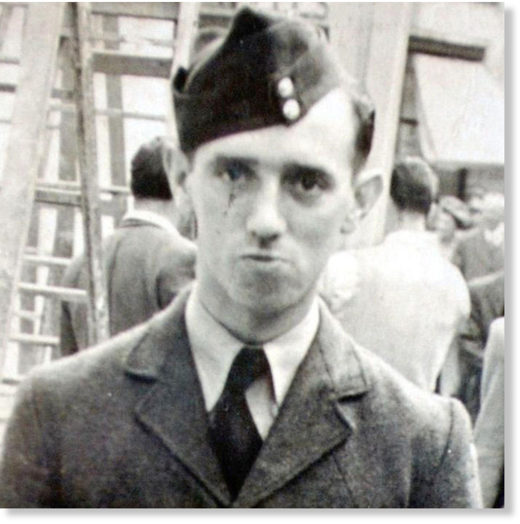
Ronald Maddison
20-year-old Ronald Maddison died 45 minutes after 200mg of the deadly nerve agent sarin was dripped onto a patch of uniform taped to his arm at Porton Down. He was told he was testing a flu vaccine.
Thousands of British orphans who were regarded as “feeble-minded” were allegedly used for trialing drugs for use in the Cold War
While no official source has confirmed it (for obvious reasons) it’s highly likely that Skirpal was settled by MI5 in Salisbury because his new job was five miles away at Porton Down. Perhaps the most dangerous part of working for Western intelligence agencies in the 21st century, particularly if you are a Russian double agent, is that your life is implicitly forfeit in service to the West’s new great game of ‘stop Russia at all costs’. Litvinenko and now (most likely) Skirpal and his daughter found that out a little too late.
Spies recruited me then ‘threw me to the wolves’ – terrorism convict
RT | December 12, 2016
A convicted terrorist suspect who aided the Brussels bombers has claimed that he was recruited and groomed by UK spies before being thrown “to the wolves” once he was no longer deemed useful.
Zakaria Boufassil, who was sentenced to three years in jail on Monday after being convicted of aiding terrorism, had handed £3,000 to a jihadist named Mohammed Abrini in the city of Birmingham in July of 2015, just months before Abrini was involved in the 2016 Brussels bombing.
Moroccan-born Abrini became known as ‘the man in the hat’ after being spotted on CCTV in the Belgian capital ahead of the suicide bombings that killed 32 civilians. Abrini was also connected with the 2015 Paris attacks.
Boufassil claims that he was groomed by MI5 – Britain’s internal security agency – starting six weeks after Abrini was arrested in April of 2016, when Boufassil was approached and befriended by spies, who allegedly bought him cigarettes, clothes, and a phone, and also gave him £3,000.
He was later arrested upon returning from a Moroccan holiday that he claimed to have paid for with the MI5 money.
Despite vain attempts by prosecutors to keep his claim from being reported, the Guardian reported on Monday that his barrister said, “in Zakaria’s eyes, he feels he was effectively picked up by MI5 and was pumped and dumped.
“He found himself approached by the security service and he was reluctant at first, then more gradually, he told them what he knew about Abrini and the meeting in the park,” Dorian Lovell-Park QC argued in court.
“He was told by MI5 he wasn’t in any trouble and was told they were interested in signing him up or having him on their books.
“He feels he ceased to be of any use to them and he was effectively thrown to the wolves,” Boufassil’s lawyer said.
The prosecution has refused to confirm or deny the defendant’s claims, as is standard MI5 procedure.
Boufassil was convicted along with another man, Mohammed Ali Ahmed, who was given eight years for the same offences.
UK spying agencies collected Britons’ data for 17 years: Court
Press TV – October 18, 2016
UK spying agencies secretly and unlawfully collected and stored personal data of Britons for 17 years, according to a court ruling.
MI5, MI6 and GCHQ collected data on everyone’s communications between 1998 and 2015, according to the Investigatory Powers Tribunal, the watchdog for intelligence agencies.
The agencies tracked individual phone and web use and other confidential information without having adequate safeguards or supervision, senior judges ruled on Monday.
They did not abide by article 8 protecting the right to privacy of the European convention of human rights (ECHR), they added.
“The BPD (bulk personal datasets) regime failed to comply with the ECHR principles, which we have above set out throughout the period prior to its avowal in March 2015. The BCD (bulk communications data) regime failed to comply with such principles in the period prior to its avowal in November 2015, and the institution of a more adequate system of supervision as at the same date,” the ruling stated.
Spying agencies, however, will still be able to continue to do so due to small tweaks to the law that allow them to flout the ruling.
Millie Graham Wood, legal officer at Privacy International, said “today’s judgment is a long overdue indictment of UK surveillance agencies riding roughshod over our democracy and secretly spying on a massive scale.”
“There are huge risks associated with the use of bulk communications data,” Wood said. “It facilitates the almost instantaneous cataloging of entire populations’ personal data.”
According to Privacy campaigners, the ruling was “one of the most significant indictments of the secret use of the government’s mass surveillance powers” since Edward Snowden, a former contractor of the US National Security Agency, who first released the extent of American and British surveillance of citizens in 2013.
Secret documents leaked by Snowden also revealed that the GCHQ and the NSA had monitored more than 1,000 targets in at least 60 countries between 2008 and 2011 by secretly accessing cable networks carrying the world’s phone calls and internet traffic.
ISIS sympathizer who refused to become MI5 informant convicted in secret trial
RT | October 14, 2016
A man who rejected an offer from MI5 to become an informant has been convicted of planning to join Islamic State (IS, formerly ISIS/ISIL) in a secretive trial at the Old Bailey.
Secret justice, which many claim is at odds with the most fundamental principles of British law, is becoming increasingly normalized.
The latest trial of this kind was that of Somali-born Anas Abdalla, who was alleged to have attempted to smuggle himself out of the UK in 2013 to join IS.
Abdalla was found in a truck full of cannisters at Dover and claimed he was trying to escape years of harassment by MI5 officers who were attempting to recruit him.
The secrecy order specifically pertained to “any evidence which is called by the prosecution which confirms or denies any allegation of contact, or attempted contact, between MI5 and [Abdalla],” and “any allegation… that [Abdalla] would not be allowed by MI5 to live and progress normal expectations and achievements in life.”
Given the level of secrecy, it not is not possible to report on the specific evidence, but Abdalla was convicted of preparing to join IS.
It emerged during the trial that Abdalla had come to believe the security services had caused his girlfriend to leave him, his bank card to stop working and jobs to fall through.
“This is the stuff of nightmares from which there is no escape. This is what happens when you are targeted by the security services and decline to cooperate,”Rajiv Menon QC told the jury as part of Abdalla’s defence.
Union boss claims state undercover agents sabotaging Corbyn’s Labour leadership
RT | July 22, 2016
Union boss Len McCluskey has accused British intelligence agencies of using agents provocateurs to undermine Labour leader Jeremy Corbyn.
The Unite general secretary said he believed spies were using “dark practices” in an attempt to “stir up trouble” and suggested they could be behind the abuse of MPs on social media.
McCluskey told the Guardian he thought the truth would come out in 30 years, when classified government documents are released into the public domain.
Asked if he believed online abuse of Corbyn’s critics was posted by people trying to discredit his supporters, he said: “Of course, of course. Do people believe for one second that the security forces are not involved in dark practices?
“We found out just a couple of years ago that the chair of my union then, the Transport and General Workers Union, was an MI5 informant at the time that there was a strike taking place that I personally as a worker was involved in. [In] 1972, I was on strike for six weeks. And 30 years later it comes out that the chair of my union at that time was an MI5 informant.”
When asked again if he believed classified documents would reveal the involvement of British intelligence agents in Corbyn’s leadership strife, McCluskey said: “Well I tell you what, anybody who thinks that that isn’t happening doesn’t live in the same world that I live in.
“Do you think that there’s not all kinds of rightwingers who are not secretly able to disguise themselves and stir up trouble? I find it amazing if people think that isn’t happening.”
Labour MP Angela Eagle, who dropped out of the leadership race to back ‘unity candidate’ Owen Smith, dismissed McCluskey’s comments as “over the top.”
“These are serious issues. Rape threats, death threats and organized bullying are not something to be ignored or minimised. We have a democracy and we need Labour politics of solidarity to avoid the kind of anger and hostility that the politics of division inspires,” she said.
There is a historical precedent to provocateurs both in the UK and the US.
In 2009, Liberal Democrat MP Tom Brake accused the police of using undercover agents to incite the crowds at the G20 protests in London.
In the US, the FBI ran a secret program called COINTELPRO from 1956 to 1971 which infiltrated groups such as the Black Panther Party and peace activists such as Martin Luther King Jr.
The FBI conducted systematic plots and surveillance to discredit and harass King, including false allegations he was influenced by communists and a threatening letter sent by agents in 1964 calling him “an evil, abnormal beast,” just one year after he delivered his famous “I Have A Dream” speech.
British collusion with sectarian violence: Part one
By Dan Glazebrook | RT | April 3, 2016
In the first of a four-part series, Dan Glazebrook and Sukant Chandan look at the recent spate of revelations about the involvement of British security services in facilitating the flow of fighters into Syria.
Over 13 years ago, in March 2003, Britain and the US led an illegal and unprovoked war of aggression against Iraq, a fellow UN member state. Such a war is deemed to be, in the judgment of the Nuremberg trials that followed World War Two, “not only an international crime” but “the supreme international crime differing only from other war crimes in that it contains within itself the accumulated evil of the whole.”
The mainstream narrative surrounding this war, and the endless catastrophes it bequeathed to Iraq, is that it was the result of a series of unfortunate ‘intelligence failures’: the British government had been led to believe that Iraq posed what Tony Blair called a “clear and present danger” to international security by intelligence that subsequently turned out to be false.
Blair told us that the Iraqi government had an active nuclear weapons program, had acquired uranium from Niger, had mobile chemical weapons factories that could evade UN weapons inspectors, and had stocks of chemical weapons able to hit British troops in Cyprus within 45 minutes.
All of these claims were false, and all were blamed on ‘intelligence failings’, creating an image of an intelligence service totally incapable of distinguishing between credible information and the deluding ravings of crackpots and fantasists, such as the notorious Curveball, the source of many of the various made-up claims later repeated in such grave and reverent tones by the likes of Tony Blair and Colin Powell.
In fact, we now know that sources such as Curveball had already been written off as delusional, compulsive liars by multiple intelligence agencies long before Blair and co got their hands on their outpourings – and the British government was fully aware of this.
The truth is, there were no intelligence failings over the Iraq war. In fact, the intelligence services had been carrying out their job perfectly: on the one hand, making correct assessments of unreliable information, and on the other, providing the government with everything necessary to facilitate its war of aggression. The Iraq war, then, represented a supreme example not of intelligence failure, but intelligence success.
Fast forward to today, and we are again hearing talk of ‘intelligence failings’ and the supposed incompetence of the security services to explain a debilitating Western-sponsored war in the Middle East: this time in Syria.
Earlier this year, British Foreign Minister Philip Hammond admitted that 800 British citizens had gone to join the anti-government terrorist movement in Syria, with at least 50 known to have been killed fighting for Al-Qaeda or Islamic State (IS, formerly ISIS/ISIL). The British security and intelligence community, we are to believe, were simply unable to stop them.
Opportunist political opponents blame such shocking statistics on incompetence, while the government and its supporters increasingly weave them into an argument for greater powers and resources for the security services. Both are wrong; and a closer look at some of these so-called ‘intelligence failings’ makes this very clear.
In December 2013, it emerged that MI5 had tried to recruit Michael Adebolajo, one of the killers of Fusilier Lee Rigby, just a few weeks before Rigby’s murder. Adebalajo had been on the radar of both MI5 and MI6 for over 10 years. He had been under surveillance in no less than five separate MI5 investigations, including one set up specifically to watch him. He was known to have been in contact with the senior leadership of Al-Qaeda in the Arab Peninsula, based in Yemen, and he had been arrested in Kenya on a speedboat on the way to Somalia with five other youths, where he was suspected of hoping to join Al Shabaab.
The Kenyans were furious when they handed him over to the Brits only for him to be turned loose, presumably to continue with his recruitment activities.
The following month, 17-year-old Aseel Muthana left his family home in Cardiff to join rebel fighters in Syria. His brother Nasser had left three months earlier, and his family were worried that Aseel would try to join him. So they confiscated his passport, and informed the police of their concerns. The police kept the family under close scrutiny. They even arrived at his house at 5pm the day he left for Syria, to be told he hadn’t been seen since the night before. He boarded a flight at 8.35pm that night, using alternative travel documents issued by the Foreign Office. His family were horrified that he had been allowed to travel, without a passport, despite all their warnings.
A similar case occurred in June 2015, when three sisters from Bradford traveled to Syria – it is thought to join IS – taking their nine young children with them. Again, the family had been under intense scrutiny from the police ever since their brother went to join IS in Syria earlier that year. And far from being unaware of the risk of their being recruited, counter-terrorist police were, it appears, deeply complicit in their recruitment.
A letter from the family’s lawyers said they were “alarmed” by the police allegedly having been actively promoting and encouraging contact with the brother believed to be fighting in Syria: “It would appear that there has been a reckless disregard as to the consequences of any such contact [with] the families of those whom we represent,” the lawyers said, and continued: “Plainly, by the NECTU [North East Counter Terrorism Unit] allowing this contact they have been complicit in the grooming and radicalizing of the women.”
October 2014 saw the trial of Moazzam Begg, for various terrorism-related offences. Begg had admitted to training British recruits in Syria – but in his defense, he made the incendiary claim that MI5 had explicitly given him the green light for his frequent visits in a meeting they had arranged with him. MI5 admitted it was true, and the trial collapsed.
Six months later, BBC Radio 4 broadcast an interview with Aimen Dean, a founding member of Al-Qaeda who was subsequently recruited by MI6 as a spy. Part of his work for MI6, he said, involved encouraging young impressionable Muslims to go and join the ranks of Al-Qaeda.
Then in June 2015, Abu Muntasir, known as the godfather of British jihadists, thought to have recruited “thousands” of British Muslims to fight in Afghanistan, Kashmir, Burma, Bosnia and Chechnya, gave an interview to the Guardian, repenting his actions. He explained that he came back from fighting in Afghanistan to “create the link and clear the paths. I came back [from war] and opened the door and the trickle turned to a flood. I inspired and recruited, I raised funds and bought weapons, not just a one-off but for 15 to 20 years. Why I have never been arrested I don’t know.”
That same month, a second trial collapsed, for much the same reasons as Begg’s. Bherlin Gildo was arrested in October 2014 on his way from Copenhagen to Manila. He was accused of attending a terrorist training camp and receiving weapons training as well as possessing information likely to be useful to a terrorist. The Guardian reported that the prosecution “collapsed at the Old Bailey after it became clear Britain’s security and intelligence agencies would have been deeply embarrassed had a trial gone ahead.”
In January 2016, it was revealed that Siddhartha Dhar traveled to Syria in September 2014 while on police bail for terrorism offences – the sixth time he had been arrested for terror-related offences, and not long after MI5 had reportedly tried to recruit him. Police had demanded he hand in his passport, but did not follow it up; this was despite the fact that he had revealed – live on BBC morning television no less – that he would “love to live in the Islamic State.” He later posted pictures of himself posing with guns in Raqqa, and is suspected of being the so-called ‘new Jihadi John’, appearing in an IS video executing suspected spies. The original ‘Jihadi John’ – British-Kuwaiti Mohammed Emwazi – had also been well known to the British security services, having – just as Adebolajo and Dhar – apparently been offered a job by MI5.
Is this all just a ‘catalogue of blunders’, more ‘intelligence failings’ on a massive scale?
These cases demonstrate a couple of irrefutable points. Firstly, the claim that the security services would have needed more power and resources to have prevented the absconding is clearly not true.
Since 1995, the Home Office has operated what it calls a ‘Warnings Index’: a list of people ‘of interest’ to any branch of government, who will then be ‘flagged up’ should they attempt to leave the country. Given that every single one of these cases was well known to the authorities, the Home Office had, for whatever reason, decided either not to put them on the Warnings Index, or to ignore their attempts to leave the country when they were duly flagged up. That is, the government decided not to use the powers already at its disposal to prevent those at the most extreme risk of joining the Syrian insurgency from doing so.
Secondly, these cases show that British intelligence and security clearly prioritize recruitment of violent so-called Islamists over disruption of their activities. The question is – what exactly are they recruiting them for?
At his trial, Bherlin Gildo’s lawyers provided detailed evidence that the British government itself had been arming and training the very groups that Gildo was being prosecuted for supporting. Indeed, Britain has been one of the most active and vocal supporters of the anti-government insurgency in Syria since its inception, support which continued undiminished even after the sectarian leadership and direction of the insurgency was privately admitted by Western intelligence agencies in 2012. Even today, with IS clearly the main beneficiaries of the country’s destabilization, and Al-Qaeda increasingly hegemonic over the other anti-government forces, David Cameron continues to openly ally himself with the insurgency.
Is it really such a far-fetched idea that the British state, openly supporting a sectarian war against the Ba’athist government in Syria, might also be willfully facilitating the flow of British fighters to join this war? Britain’s history of collusion with sectarian paramilitaries as a tool of foreign policy certainly suggests this may be so. This history, in Ireland, Afghanistan and the Arab peninsula, and its role in shaping British policy today, will be the subject of the articles to follow.
Dan Glazebrook is a freelance political writer who has written for RT, Counterpunch, Z magazine, the Morning Star, the Guardian, the New Statesman, the Independent and Middle East Eye, amongst others. His first book “Divide and Ruin: The West’s Imperial Strategy in an Age of Crisis” was published by Liberation Media in October 2013. It featured a collection of articles written from 2009 onwards examining the links between economic collapse, the rise of the BRICS, war on Libya and Syria and ‘austerity’. He is currently researching a book on US-British use of sectarian death squads against independent states and movements from Northern Ireland and Central America in the 1970s and 80s to the Middle East and Africa today.
Featured Video
America Racing to Strategic Defeat in Iran
or go to
Aletho News Archives – Video-Images
From the Archives
Should Europeans ‘Thank’ the Americans for Destroying Nord Stream?
By Robert Bridge | Strategic Culture Foundation | September 29, 2022
With an investigation continuing into the destruction of the Nord Stream gas pipeline that provided energy supplies to Europe from Russia, there appears to be just one prime suspect, and that should surprise nobody.
Following the sabotage of the Nord Stream 1 and 2 gas pipelines, former Polish Foreign Minister Radoslaw Sikorski already seemed to know the identity of the perpetrator when he tweeted out: “Thank you, USA.”
At first glance, it seemed that Sikorski was speaking sarcastically, berating Washington for carrying out an attack that will have severe repercussions for the people of Europe. After all, how could anyone see any good coming from the termination of Europe’s primary source of gas reserves with winter just around the corner? It was Sikorski’s homeland of Poland, after all, that urged its citizens to collect firewood in the face of dwindling gas reserves.
In fact, the Polish diplomat was speaking one-hundred percent literally… continue
Blog Roll
 Aletho News
- Growing insecurity, soaring prices fuel protests in north as regime bans evacuation: Sources
- Iran denies responsibility for ‘depraved’ attack on Kuwait desalination plant
- Bring The Troops Back. End This War Now!
- Can we please stop calling Israel the ‘only democracy in the Middle East’ now?
- US should start removing its troops for Germany, proposes AfD co-leader Chrupalla
- Iran Red Crescent: 600 educational centers attacked in US-Israeli ‘war crimes’
- Russian Oil Tanker Arrives in Cuba Amid U.S. Blockade
- America Racing to Strategic Defeat in Iran: Lt Col Daniel Davis
- FTC Warns Visa, Mastercard, PayPal, Stripe Over Political Debanking
- Russian tanker approaches Cuba despite US oil blockade
- If Americans Knew
- Israeli police block Catholic cardinal from entering Church of the Holy Sepulchre on Palm Sunday
- Israel is assassinating journalists again, more than any other nation, anywhere, ever – Not a ceasefire Day 170
- Over 300 US service members wounded, majority have brain injuries – Not a ceasefire Day 169
- Researchers at Human Rights Watch Resign Over Blocked Report on Palestinian Refugee Return
- Jewish Groups Are Backing a War Americans Don’t Want
- Eric Fingerhut Thinks He’s the President of the Jews
- Top Jewish Philanthropists, Rabbis Urge Israeli President to Take Action Against ‘Jewish Extremists’
- Don’t Be Fooled. Zionist Leaders Have Always Wanted to Control Southern Lebanon
- Israel’s widespread use of torture is a core element of its genocide against the Palestinian people
- In Israel’s War on Iran, Many Middle East US Bases Rendered “All But Uninhabitable”
- No Tricks Zone
- New Study Finds Warming Saves Lives…Cold Temperatures 12 Times More Deadly Than Excess Heat
- German Science Blog Accuses PIK Climate Institute Of Hallucinating Climate Tipping Points
- Devastating Assessment Of Comirnaty Vaccine By Former Senior Pfizer Europe Toxicologist
- New Study: CO2 Is ‘Effectively Negligible’ As An Explanatory Climate Change Factor Since 2000
- Former Pfizer Toxicologist Dr. Helmut Sterz Tells Bundestag Hearing Pfizer Vaccine Should Have Never Been Approved
- Energy Expert: Germany’s Nuclear Phaseout Was A “500 Billion Euro Mistake”
- New Research: South Australia’s Mid-Holocene Sea Surface Temperatures Were 4°C Warmer Than Today
- Storing Green Energy To Last Germany 10 Days Would Require A 60-Million Tonne Battery
- New Studies: UK Sea Levels Were 4 Meters Higher Than Today During The Mid-Holocene
- Destructive Green New Deal: German Energy And Metal Group Warns Of Drastic Crisis
 Aletho News