US Used Military Bases in Afghanistan to Keep Watch on Entire Region, Russian Diplomat Says
Sputnik – 22.07.2021
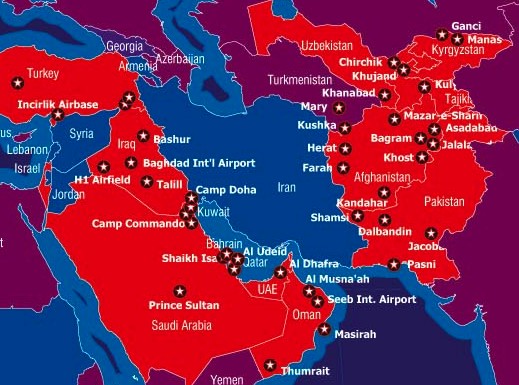
MOSCOW – Russia’s special presidential envoy for Afghanistan, Zamir Kabulov, said on Thursday that nearly half of the US military bases in Afghanistan were used to keep strategic tabs on the wider region.
“Of the 19 [US bases] that we know of, somewhat about seven or eight had nothing to do with Afghanistan and had nothing to do with the situation there”, Kabulov told the Echo of Moscow radio station.
The diplomat emphasised that the American contingents were conveniently placed in Afghanistan to be closer to the Middle East, Russia, Central Asia and China.
“[The US military] kept an eye on the Pakistani and Indian nuclear arsenal”, Kabulov added.
The United States and NATO began pulling their ground forces out of Afghanistan on 1 May. The withdrawal resulted in a flare-up of tensions between the government forces and the Taliban. The radical movement stepped up the territorial advances and is believed to have captured large rural areas in the country’s north.
Iraqi politicians slam Turkey’s interventionist remarks, vow strong response
Press TV – July 22, 2021
A number of Iraqi politicians and lawmakers have reacted to recent interventionist remarks by Turkish Interior Minister Suleyman Soylu during his recent visit to the city of Sirnak in southeastern Turkey, vowing a strong response to any infringement of the Iraqi sovereignty and territorial integrity.
According to a report by Rudaw news agency on Thursday, during his visit to Sirnak, the Turkish minister claimed that establishing peace in Muslim countries, including Iraq and Syria, was Turkey’s responsibility.
Soylu’s comment reverberated widely through social media platforms, enraging Iraqi people and politicians.
Ra’ad Hussein, representative of Saairun Alliance affiliated with Iraq’s influential cleric Muqtada al-Sadr, said the sovereignty of Iraq is beyond all considerations and the positions of the Sadr movement in this regard are clear.
“The Sadr movement is totally Iraqi and has no links to foreign countries, and it prefers the interests of Iraq over all interests, and to this end, the head of al-Sadr’s bloc decided to withdraw from the elections,” Hussein said.
“Our position is firm, which means that we will sever ties with any of the neighboring or regional countries if they do not have a positive attitude towards Iraq,” he added.
Hussein underlined that such statements, whether made by Turkish or other officials, are unacceptable and no one will ever be able to encroach on a single inch of Iraqi soil.
Iraqi Shia cleric Ammar al-Hakim took to Twitter on Wednesday, calling on neighboring countries to respect Iraq’s sovereignty.
Hakim, who heads Iraq’s National Wisdom Movement political bloc, said, “Achieving peace in the region and the world comes through the interaction of states among themselves in accordance with international covenants and cooperation based on the foundations of mutual relations and common interest.”
He added, “It is not allowed to compromise the sovereignty of Iraq and for its land to be infringed,” without making any direct reference to Turkey.
Meanwhile, Iraqi MP and member of the Law Coalition, Kadhem Finjan al-Hamami, reacted to Turkish minister’s remarks, saying that the Turkish provocations were not the first of its kind in clear reference to Turkey’s deforestation of Kurdish areas and the continuous attacks on the Iraqi territory under the pretext of fighting Kurdish separatists.
“There have been no reactions from the Iraqi government or the Kurdistan Regional Government (KRG) towards all these attacks on Iraqi lands,” he said, adding that the Turkish government believes that “Iraq and the neighboring countries are a subject of the Ottoman Empire.”
Israeli Firm Helped Governments Target Journalists, Activists with 0-Days and Spyware
By Ravie Lakshmanan | The Hacker News | July 16, 2021
Two of the zero-day Windows flaws rectified by Microsoft as part of its Patch Tuesday update earlier this week were weaponized by an Israel-based company called Candiru in a series of “precision attacks” to hack more than 100 journalists, academics, activists, and political dissidents globally.
The spyware vendor was also formally identified as the commercial surveillance company that Google’s Threat Analysis Group (TAG) revealed as exploiting multiple zero-day vulnerabilities in Chrome browser to target victims located in Armenia, according to a report published by the University of Toronto’s Citizen Lab.
“Candiru‘s apparent widespread presence, and the use of its surveillance technology against global civil society, is a potent reminder that the mercenary spyware industry contains many players and is prone to widespread abuse,” Citizen Lab researchers said. “This case demonstrates, yet again, that in the absence of any international safeguards or strong government export controls, spyware vendors will sell to government clients who will routinely abuse their services.”
Founded in 2014, the private-sector offensive actor (PSOA) — codenamed “Sourgum” by Microsoft — is said to be the developer of an espionage toolkit dubbed DevilsTongue that’s exclusively sold to governments and is capable of infecting and monitoring a broad range of devices across different platforms, including iPhones, Androids, Macs, PCs, and cloud accounts.
Citizen Lab said it was able to recover a copy of Candiru’s Windows spyware after obtaining a hard drive from “a politically active victim in Western Europe,” which was then reverse engineered to identify two never-before-seen Windows zero-day exploits for vulnerabilities tracked as CVE-2021-31979 and CVE-2021-33771 that were leveraged to install malware on victim boxes.
The infection chain relied on a mix of browser and Windows exploits, with the former served via single-use URLs sent to targets on messaging applications such as WhatsApp. Microsoft addressed both the privilege escalation flaws, which enable an adversary to escape browser sandboxes and gain kernel code execution, on July 13.
The intrusions culminated in the deployment of DevilsTongue, a modular C/C++-based backdoor equipped with a number of capabilities, including exfiltrating files, exporting messages saved in the encrypted messaging app Signal, and stealing cookies and passwords from Chrome, Internet Explorer, Firefox, Safari, and Opera browsers.
Microsoft’s analysis of the digital weapon also found that it could abuse the stolen cookies from logged-in email and social media accounts like Facebook, Twitter, Gmail, Yahoo, Mail.ru, Odnoklassniki, and Vkontakte to collect information, read the victim’s messages, retrieve photos, and even send messages on their behalf, thus allowing the threat actor to send malicious links directly from a compromised user’s computer.
Separately, the Citizen Lab report also tied the two Google Chrome vulnerabilities disclosed by the search giant on Wednesday — CVE-2021-21166 and CVE-2021-30551 — to the Tel Aviv company, noting overlaps in the websites that were used to distribute the exploits.
Furthermore, 764 domains linked to Candiru’s spyware infrastructure were uncovered, with many of the domains masquerading as advocacy organizations such as Amnesty International, the Black Lives Matter movement, as well as media companies, and other civil-society themed entities. Some of the systems under their control were operated from Saudi Arabia, Israel, U.A.E., Hungary, and Indonesia.
Over 100 victims of SOURGUM’s malware have been identified to date, with targets located in Palestine, Israel, Iran, Lebanon, Yemen, Spain (Catalonia), United Kingdom, Turkey, Armenia, and Singapore. “These attacks have largely targeted consumer accounts, indicating Sourgum’s customers were pursuing particular individuals,” Microsoft’s General Manager of Digital Security Unit, Cristin Goodwin, said.
The latest report arrives as TAG researchers Maddie Stone and Clement Lecigne noted a surge in attackers using more zero-day exploits in their cyber offensives, in part fueled by more commercial vendors selling access to zero-days than in the early 2010s.
“Private-sector offensive actors are private companies that manufacture and sell cyberweapons in hacking-as-a-service packages, often to government agencies around the world, to hack into their targets’ computers, phones, network infrastructure, and other devices,” Microsoft Threat Intelligence Center (MSTIC) said in a technical rundown.
“With these hacking packages, usually the government agencies choose the targets and run the actual operations themselves. The tools, tactics, and procedures used by these companies only adds to the complexity, scale, and sophistication of attacks,” MSTIC added.
Explosion hits Israel’s Ashdod reactor facility
Press TV – July 13, 2021
An explosion has been reported at the Israeli regime’s Ashdod reactor facility in the south of the occupied territories, with reports not providing details on the cause of the blast or the number of possible casualties.
The blast was reported by the Israeli journalist Edy Cohen, who posted a video on his Twitter account on Tuesday and said the explosion had taken place at the Ashdod reactor facility in southern Israel.
Israeli media sources said the blast had rocked the regime’s Ashdod oil refinery and that firefighters had been dispatched to the scene after hearing the sound of the explosion. Hebrew-language sources said the blast caused fuel leaks at the refinery and efforts were underway to stop the leakage.
The sources have not yet mentioned the cause of the explosion and whether there were any casualties.
In recent months, similar incidents have taken place in important facilities run by the Israeli regime.
In April, a powerful explosion rocked a sensitive Israeli missile factory allegedly during a test for advanced weapons in the city of Ramla.
Documents reveal US pressure on ex-Yemeni regime to agree on normalizing ties with Israel
Press TV – July 12, 2021
The interior ministry of Yemen’s National Salvation Government has released a series of confidential documents detailing the United States pressure on the administration of former Yemeni dictator, Ali Abdullah Saleh, to normalize relations with Israel and lift the blockade on products made in the Israeli occupied territories.
According to the documents, the US embassy in Sana’a had asked then-Yemeni authorities to end the economic embargo on Israeli goods, and not to participate in any activities deemed harmful to the Tel Aviv regime, the official Yemeni news agency Saba reported.
The papers expose the level of Washington’s and Tel Aviv’s discontent and frustration with the blockade, and how US officials left no stone unturned to force former Yemeni officials into opening the Arab country’s market to Israeli businesses and their products.
The former US ambassador to Yemen, Thomas C. Krajeski, called on Saleh’s regime to lift sanctions on companies with first-, second- or third-degree ties to Israel, which was not turned down by the Yemeni side.
Then-Yemeni foreign minister, Abu Bakr al-Qirbi, later told the US ambassador that the so-called embargo on US and Israeli goods was not actually being enforced.
The documents go on to reveal that the US embassy urged the Yemeni foreign ministry not to dispatch representatives to an anti-Israel event at the University of Damascus in Syria.
Moreover, the American diplomat described Yemen’s removal of boycott of Israeli products as the fundamental prerequisite for the Arab state’s membership in the World Trade Organization, and its access to free trade and international investment.
Last month, Spokesman for Yemen’s Armed Forces Brigadier General Yahya Saree announced that Yemeni security forces had arrested a man involved in espionage activities on behalf of Israel’s Mossad intelligence agency.
Saree said in a tweet at the time that more details on the matter will be provided in a documentary entitled “The Spy of Mossad in Yemen.”
The documentary will shed light on part of Israel’s intervention in the country and “the plan to target Yemen militarily, and other secrets revealed for the first time,” the senior Yemeni military figure pointed out.
The developments come as earlier reports said that Israel and the United Arab Emirates have been working to establish a spy base on Yemen’s strategically-located island of Socotra.
The UAE has also been accused of constructing an air base on the Mayyun Island, situated off the Yemeni coast in the Bab el-Mandeb.
Both activities have drawn strong condemnation from the Yemeni government, which has described them as violation of Yemen’s sovereignty and international law, especially following the illegally-run tours to Socotra from Abu Dhabi, some of which included Israeli tourists.
“The transfer of tourists to the Socotra Island reveals the plans and programs of the occupying UAE, which are in line with the Zionist schemes to dominate Yemeni islands as well as the steps towards normalization with the regime,” a statement read back then.
Yemen’s popular Ansaullah resistance movement has previously threatened to attack Israel if it was “involved in any action against Yemeni people.”
The Israeli regime took the threats seriously, and deployed its Iron Dome and Patriot missile systems around the southern city of Eilat early this year.
Where the Abraham Accords are (and aren’t) going
Israel has improved its relationship with the UAE, but what about other Gulf countries?
By Giorgio Cafiero and Kristian Coates Ulrichsen | Responsible Statecraft | July 7, 2021
On June 29, Israel’s Foreign Minister Yair Lapid arrived in the United Arab Emirates, marking the first official trip by any chief Israeli diplomat to the Gulf country. Former Prime Minister Benjamin Netanyahu had wanted to visit Abu Dhabi while in office, so the timing of the visit so soon after the new Netanyahu-less government was sworn in was notable.
While Lapid was in the UAE, Israel inaugurated an embassy in Abu Dhabi and a consulate in Dubai, representing an important milestone in Emirati-Israeli relations nine months after the Abraham Accords were signed in Washington last September.
Lapid’s trip highlighted how the bilateral relationship has overcome challenges posed by the recent 11-day Gaza-Israel war. Although Emirati officialdom publicly condemned Israel’s conduct in East Jerusalem and the West Bank, and called on both Hamas and Israel to halt attacks (which notably did not single out Israel) in May, the UAE is not cooling its relations with Israel. To the contrary, Abu Dhabi is keen to find ways to build on the Abraham Accords and enhance its ties with the Israelis notwithstanding the unresolved question of Palestine.
While with Sheikh Abdullah bin Zayed Al Nahyan, the UAE’s Minister of Foreign Affairs and International Cooperation, Lapid signed an economic and commercial cooperation agreement. The two also co-authored a highly optimistic article in Abu Dhabi’s The National newspaper where they outlined their outlook for the Emirati-Israeli relationship as well as for “peace” across the greater region: “Peace isn’t an agreement you sign – it’s a way of life. The ceremonies we held this week aren’t the end of the road. They are just the beginning.” (Technically, the UAE-Israel accord is not a “peace” agreement because the UAE, which gained its independence in 1971, has never been at war with Israel.)
Beyond the rhetoric and the symbolism, what are this relationship’s substantive elements and what does this partnership truly mean in practice nine months after the accord’s signing?
Bilateral trade since September 2020 has reached around $675 million. The two countries have signed a long list of trade and cooperation agreements. Media, education, and tourism are all promising sectors that are starting to take off. It is significant that amid the global pandemic, which greatly harmed the UAE and all other Gulf Cooperation Council states’ tourism sectors, 200,000 Israeli tourists visited the UAE with most flying to Dubai.
Technology may be the area where the Emiratis have the highest hopes for this relationship. The potential benefits of formalized ties with the region’s most technologically innovative and advanced country are clear to the UAE. This is particularly true with respect to cybersecurity and to the potential acquisition of offensive cyber-capabilities by the UAE. As Sheikh Abdullah stated, the Emiratis are pleased that the Israelis will participate in Expo2020, an event to be held later this year in Dubai that will bring 192 countries together through technology, innovation, science, and art.
Nonetheless, the Emirati-Israeli trade relationship has thus far not lived up to its expectations. There has also been a degree of disappointment among those who were expecting the partnership to take off much faster following then-President Donald Trump’s announcement of the Abraham Accords.
Some anticipated deals have not taken place. For example, there was the suspension of the 50 percent sale of Beitar Jerusalem (a Jerusalem-based professional football club with an anti-Arab image) to a member of Abu Dhabi’s royal family in Abu Dhabi, Sheikh Hamad bin Khalifa Al Nahyan. In addition, an Israeli energy firm that planned to sell its share of a gas field to Mubadala Petroleum (a subsidiary of the UAE’s sovereign wealth fund, Mubadala Investment Company) missed a deadline for completing the agreement, although, according to the UAE’s side, the deal remains set to proceed. Time will tell how many and how soon major government-to-government and private sector transactions will indeed take place.
Abraham Accords, the Gulf, and Africa
Despite the political risks for any Arab state that normalizes relations with Israel, the UAE has vocally stood by the Abraham Accords, which, in the words of its ambassador to Washington, Yousef al-Otaiba, “move the region beyond a troubled legacy of hostility and strife to a more hopeful destiny of peace and prosperity.” But Abu Dhabi at this point does not appear to be leading any trend within the Gulf region toward the formalization of relations with Israel.
In Kuwait, Oman, Qatar, and Saudi Arabia, the 2002 Arab Peace Initiative remains popular and the only viable means of reaching a fair and lasting settlement between Israel and the Palestinians. This is true at the highest levels of government and among these countries’ general publics. But Tel Aviv almost certainly will not under any foreseeable circumstances agree to the API’s terms, which require Israel to return to the 1949-1967 borders and permit the Palestinians to have an independent state with East Jerusalem as its capital in exchange for opening diplomatic relations. Therefore, among GCC states, the UAE, along with Bahrain, will probably stand alone on the normalization question for some time.
As the GCC state with the most pro-Palestinian stance, Kuwait is most strongly opposed to normalization and unlikely to change its position. Oman maintains pragmatic, albeit unofficial, relations with Israel as highlighted by Lapid’s phone call with Oman’s foreign minister Badr al Busaidi on June 24, plus Netanyahu and other Israeli prime ministers’ visits to Muscat since the 1990s. But Oman remains committed to the API, as affirmed by Muscat’s chief diplomat at an Atlantic Council event held on February 11.
Qatar has a special role to play in Gaza that would be jeopardized by “abandoning” the Palestinians in exchange for normalization with Israel. Through Al Jazeera, which focuses heavily on the plight of Palestinians, and the tendency of Qatari diplomats to advocate on behalf of Palestinians in international forums, Doha’s regional and global image has much to do with its ability to take firm positions on certain international issues that contribute to the image of a pro-human rights foreign policy.
Finally, Saudi Arabia, due to its special role across the wider Islamic world, its authorship of the API, and its own internal dynamics that are fundamentally different than the smaller GCC states, will likely continue seeing normalization of relations with Israel as too risky, at least so long as King Salman remains on the throne.
Within this context, Israel will likely have its next diplomatic openings in the Islamic world not in the Persian Gulf, but instead in impoverished parts of sub-Saharan Africa where countries such as Niger, Mali, and Mauritania could have their economic interests advanced by joining the Abraham Accords. It will be important to see what actions Abu Dhabi might take to incentivize these African countries, many of which are major recipients of Emirati aid, to formalize ties with Israel. Enhanced Emirati assistance in exchange for normalization with Israel was already evident in Sudan’s decision to normalize ties with Israel, and the UAE may take a similar approach with these and other predominantly Muslim and poor African states.
US neocons Bolton & PNAC lay down weapons of war for protest signs with their new ‘Turkish Democracy Project’
By Helen Buyniski | RT | July 5, 2021
The aging neocons who have been practicing regime change ops in the Middle East for decades are now launching a project targeting Turkey – perhaps in honor of the deceased Don Rumsfeld.
Erdogan’s Turkey has long been something of a thorn in Washington’s paw, given its ongoing refusal to buy inferior US military equipment (it was booted from the US’ F-35 program for insisting on buying Russian S-400 missiles, making the Americans who still store their nukes at Incirlik somewhat nervous), its refusal to place the good of Israel above its own benefit, and its rumblings of discontent regarding the US’ pleas for support (or at least safe passage) to its Syrian ‘moderate rebel’ militant groups, which Ankara considers to be little more than terrorists.
Under the government of President Recep Tayyip Erdogan, Turkey has become quite recalcitrant indeed, far from the ideal domesticated state keen to babysit American nukes and stage American missiles in exchange for coveted membership in the deteriorating NATO structure (not long ago fetchingly described by French President Emmanuel Macron as “brain dead”). Clearly what it needs is a shot in the bottom from that great big needle marked ‘Democracy’ – and who better to deliver that than the good old boys from the Project for a New American Century, many of them the old same men who led and lied the US, blindfolded, into the chaos of Iraq.
Enter the Turkish Democracy Project, a non-profit organization which – it should be clear from the name – has nothing to do with democracy or, really, Turkishness. The group’s website is about as subtle as a nuclear bomb, blaming President Recep Tayyip Erdogan for “dramatically alter[ing] Turkey’s position in the international community and its status as a free and liberal democracy” and calling for “a nonprofit, non-partisan, international policy organization that opposes its destabilizing behavior, supports genuine democratic reform, and holds the forces of corruption and oppression within Turkey to account.” In other words: “We want a piece of your country. Resist and be annihilated.”
It’s not that the US thinks Turkey is stupid. But they believe, and are likely correct, that the US will never have as good a time as now to strike. With its military still feared by many parts of the world (even though its bark is at this point far worse than its bite, and its image still suitably ferocious to put much of the actual war-fighting business to fleeing instead of fighting), the main business must be – if the US expects to do something other than flee home with its tail between its legs – “shock and awe.”
But given that these shock and awe tactics will be taking place in the Middle East, an area which has seen the worst the US can throw at its enemies over the last 20 years of perpetual warfare and realizes all the money in the world can’t give even the largest military on Earth the stamina of the gods, it’s likely these dyed-in-the-wool bloodshed-artists will have to change with the times. To invade a militarily competent nation like Turkey – especially one which, inconveniently, happens to be backed by NATO – is unlikely to be a walk in the park, no matter how many phony war crimes the PNAC crew manage to cook up. Gas attacks have become cliche, and any talk of “weapons of mass destruction” will elicit a chortle at best.
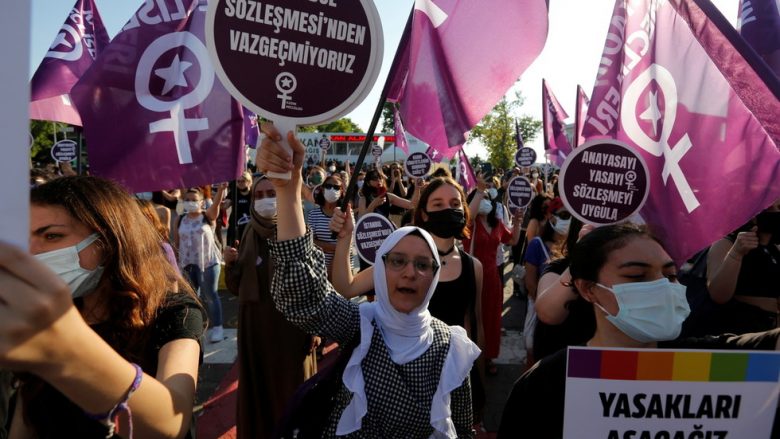
So the TDS, if recent events are any indication, has instead gotten to work with the kind of color revolution-style events that have largely replaced shock and awe in other regime-change hotspots. They’re cheap, they’re easy, and in this case – a protest in Istanbul against Turkey’s withdrawal from the Istanbul Convention? – they require exactly zero imagination. It’s much easier to con the rest of NATO if you don’t have to make them think.
Thousands of activists took to the streets on Thursday, either on their own or hailing from various NGOs, denouncing Turkey’s withdrawal from the European human rights treaty known as the Istanbul Convention. Erdogan’s executive order removing Turkey from the treaty, first adopted back in March, argued the country’s women are protected by domestic laws rather than the international human rights treaty – which he argued had been “hijacked” by the LGBTQ+ community.
The hoary old PNAC boys behind the TDS likely couldn’t believe their luck when something like this fell into their lap. But will they be able to modernize?
The group’s CEO is Mark Wallace, who’s also the CEO of United Against Nuclear Iran – another unsubtly named regime-change operation (and a regime change that has failed repeatedly). An old hand at overthrowing Middle Eastern nations the old-fashioned way, Wallace held several positions with the George W. Bush administration while the nation was attempting to crush Iraq (apparently shocked the children had run forward with IEDs instead of handfuls of wildflowers to welcome their new rulers).
Indeed, numerous fellow veterans of the Iraq regime change effort and abortive attempts to overthrow Iran have bubbled up in the swamp gas to give regime change in Turkey a go. Wallace is joined by other bottom-feeders like former Connecticut senator Joe Lieberman and UANI intel chief Norman Roule, as well as glorified mustache-carrier, would-be thug, and former Trump national security adviser John Bolton. Former Bush adviser Frances Townsend is there, as is former associate deputy director of operations for the CIA (and Blackwater vet) Robert Richer. At least a few members of the shadowy pro-Israel Foundation for the Defense of Democracies were listed and then memory-holed, and Bush’s brother Jeb is there, a speech bubble forever hovering above his head reading “please clap.”
Oddly enough, however, the only currently listed actual employee aside from CEO Wallace is a (presumably) former assistant English professor at Princeton University. No, that’s not suspicious at all. Carry on, I’m sure Turkey will welcome you (and your desired partitioning of the country) with open arms!
With Erdogan still trustingly paying his country’s NATO dues, Ankara is unlikely to expect any sort of real attack, though the leader is likely on guard, given former President Trump’s on-again, off-again announcement to clear out US soldiers from Syria. He is likely to be on the lookout for foreign meddlers among the protesters, however. And Erdogan’s allies with their ears to the ground both inside and outside Turkey have already pegged this absurd attempt at bringing back ‘democracy’ for what it really is. While some have linked it to the infamous Gulen movement, referring to the cleric who most recently was accused of trying to overthrow Erdogan in 2016, Gulen’s movement itself seems to have ties to the same ‘Greater Israel’ plan to redraw the lines on the map of the Middle East, a plan Israeli military strategist Oded Yinon devised decades ago (and which the neocons appear to have used as their foreign policy guide ever since). Former Turkish opposition lawmaker Aykan Erdemir, senior director for Turkey at the FDD, was accused of being connected to Gulen in 2017 and had his assets seized, strengthening the case for the connection between Gulen’s organization and the notoriously pro-Israel FDD.
But with all of NATO’s heads turned to this human rights drama, surely the other countries in the alliance also participating in the drawing-and-quartering of Syria won’t expect a military attack on Turkey as well – not without some warning. The map of Greater Israel shows Turkey losing a mere corner of their land compared to Syria, which takes quite a beating – one which Turkey clearly expects to be a part of, having already staked its claim effectively to certain border regions of Syria under the logic of keeping the Kurdistan Workers’ Party (PKK) away. But this is all temporary, and eventually the region must settle into its new form. An Israel-first arrangement will not go down well with any of the other combatants, and, unlike the US and its European partners, Turkey won’t just sit on its hands and sigh wistfully while its share of the Syrian pie is handed to the US by way of Tel Aviv.
Because that’s who the ultimate beneficiary of this mess is supposed to be. Named after the Israeli military strategist who devised it, the Yinon project hopes to balkanize the Middle East and assemble the shards into a single nation consisting of the choicest morsels of those countries in between the Euphrates and the Nile rivers. Iraq has already been cut in half, Syria has shrunk dramatically even as the war goes on, and Egypt is run by a pliant leader who will do what the US and Israel tell him – as General Wesley Clark said over a decade ago, the plan was to take out seven countries in five years. They’re running a bit behind, but never underestimate the abilities of a bunch of old war criminals with nothing to lose.
Helen Buyniski is an American journalist and political commentator at RT. Follow her on Telegram.
Envoy Rejects US Accusations against Iran as Baseless
Al-Manar | July 3, 2021
A top Iranian diplomat penned a letter to the UNSC, strongly rejecting allegations of the United States against Tehran over a recent attack near the Iraq-Syria border.
Ambassador and Permanent Representative of the Islamic Republic of Iran to the United Nations Majid Takht Ravanchi wrote a letter to the president of the UN Security Council, to react to anti-Iranian accusations of Washington.
The Islamic Republic of Iran has repeatedly announced that it has not had any direct or indirect role in attacks against US facilities or personnel in Iraq, reads the letter. Therefore, the letter continues, any attempt to attribute such allegations to Iran, either explicitly or implicitly, is false and baseless and lacks the most basic credible information. Tehran strongly rejects such claims and considers them legally invalid, added the envoy.
Iran vehemently rejects the arbitrary interpretation of the US of Article 51 of the UN Charter to justify its illegal June 27 attack on Syria and Iraq, said the envoy, adding that Tehran strongly condemns the aggression as violation of sovereignty of the two countries.
The US argument that such attacks were carried out to “deter” the Islamic Republic of Iran and so-called “Iranian-backed militias” from further attacks on US personnel or facilities in Iraq has no real or legal basis as it is based solely on an arbitrary interpretation of Article 51 of the UN Charter, added the diplomat.
Recent US attempts to accuse others to cover up its irresponsible and destabilizing activities and adventurous military actions in the region are doomed to failure, noted Takht-Ravanchi.
Earlier, the US representative to the UN had sent a letter to the UNSC, making accusations against Iran and claiming that the decision for attack was taken after it was proved that non-military measures were not enough.
Syrian Kurds say ready to talk with Damascus government
Press TV – July 4, 2021
The so-called Autonomous Administration of North and East Syria, commonly known as Rojava, has said it is open to negotiations with the Syrian government which is in the final stages of purging foreign-sponsored Takfiri militants.
The foreign relations department of Rojava, in a statement issued on Saturday, responded positively to Russian Foreign Minister Sergei Lavrov’s request for negotiations with the Damascus government, Kurdish Hawar news agency reported.
“The Syrian crisis can only be resolved through dialogue and a Syrian-Syrian understanding,” the statement read, adding that Syrian Kurds will make every effort to achieve such a goal, including talks with Damascus.
The report came a day after Lavrov said Moscow is ready to facilitate dialogue between Damascus and the Syrian Kurds provided that both sides stick to coherent positions.
“We are ready to encourage contacts and consultations but the sides need to have coherent positions,” he said on Friday, while warning that the Americans were pushing a considerable part of the Syrian Kurds towards separatism.
“I hope very much that those Kurds, who are interested in normalizing relations with Damascus, understand the provocative nature and see a big danger here,” the top Russian diplomat noted.
“Throughout the entire period of the crisis, especially after our military contingent was dispatched to Syria at the request of the legitimate government, we have been encouraging, even through our contacts on the ground, direct relations between Kurdish representatives and Damascus so that they could begin talks on how to live together in their country,” Lavrov said.
MEP: EU sanctions against Syria crime against humanity
Separately, a member of the European Parliament condemned EU sanctions against Syrian government officials, businesses and entities, terming the restrictive measures as a punishment against ordinary people in the war-battered Arab country.
Independent Irish politician Mick Wallace wrote in a post published on his official Twitter page on Saturday that the EU sanctions, with their main aim to change the Damascus government, are a crime against humanity.
“EU [countries] must end their illegal regime change sanctions on Syria. They are a collective punishment against the people; they are a crime against humanity,” Wallace said.
The MEP called upon European countries to observe international law, and respect Syria’s sovereignty.
The EU imposed the first round of its sanctions against Syria in May 2011. They include travel bans, asset freezes and measures targeting operations like oil imports, certain investments as well as technology transfer.
The Syrian government has repeatedly condemned the US and the EU for waging economic terrorism on the country through their unilateral sanctions, holding them responsible for the suffering of the Syrian people, especially now that the country is grappling with a deadly coronavirus outbreak.
Damascus has also been critical of the United Nations for keeping silent on the destructive role of the US and EU, among other parties supporting terrorism in Syria.
Hezbollah, Iraqi anti-terror group slam US seizure of website domains tied to pro-resistance media
Press TV – June 24, 2021
Lebanon’s Hezbollah pro-resistance movement and Iraq’s anti-terror Asa’ib Ahl al-Haq have strongly condemned the US government’s decision to seize and block dozens of website domains connected to Iranian and regional media outlets, describing the measure as a “criminal act” and a convincing proof of Washington’s policy of repression.
“Hezbollah condemns in the strongest terms the seizure of a large number of free media sites by the US administration [of President Joe Biden]. The move confirms Washington’s pursuit of suppressing freedom under false allegations and lurid headlines,” Mohammad Afif, Hezbollah’s head of public relations office, said in a statement on Thursday.
He added, “Through such an outrageous move, the US administration sought to cover up truth about crimes and atrocities committed by itself and its allies against the oppressed nations of our region, especially in Palestine and Yemen, where people are subjected to the worst forms of abuse and blockade.”
“Hezbollah expresses its solidarity with these honorable sites, whose reflection of truth cannot be hidden away at all. We call for a major campaign of solidarity with these media institutions so they can continue to perform their sincere and humanitarian missions,” the statement concluded.
‘US seizure of website domains tied to resistance out of despair’
Qais Khazali, who leads the Asa’ib Ahl al-Haq resistance group, also reacted to the US seizure of pro-resistance news website domains.
“Day by day, the West’s hollow claims about advocating human rights and freedom of expression are becoming further exposed,” he said in a statement carried by the Iraqi News Agency said, citing the removal of the Saudi-led military coalition in Yemen and the Israeli regime from a list of groups violating children’s rights, and the recent seizure of “the media websites that oppose American, British, Israeli, Saudi and Emirati schemes.”
“This is a sufficient justification… the United States, having failed in its military plans, desperately opted to seize websites whose sole weapons are words and ideas,” Khazali continued.
“The seizure shows its defeat in the field of media war. The pro-resistance media outlets exposed Washington’s hideous nature and its conspiracies,” he pointed out.
On Tuesday, the US seized the websites of Press TV and al-Alam, Iran’s English-language and Arabic-language newscasters, as well as al-Masirah TV of Yemen.
Other web domains, including Palestine al-Youm, a Palestinian-directed broadcaster, Karbala TV – the official television of the Imam Hussein (PBUH) shrine in the holy Iraqi city of Karbala, Iraqi Afaq TV, Asia TV and al-Naeem TV satellite television channels, as well as Nabaa TV which reports the latest stories about Saudi Arabia and other Persian Gulf countries, were also seized.
Bahrain’s LuaLua TV, a channel run by opposition groups with offices in London and Beirut, was also closed, according to AFP.
Press TV website was back online within hours with the new .ir domain address. Al-Alam TV also quickly announced that its website will be available on .ir domain.
Al-Masirah TV established a new website, using its name but swapping the .net domain for .com.
The US Justice Department said Wednesday it had seized 33 media websites used by the Iranian Islamic Radio and Television Union (IRTVU), as well as three of the Iraqi anti-terror Kata’ib Hezbollah group, which it said were hosted on US-owned domains in violation of sanctions.
Over the past years, the United States has for several times taken similar measures against Iranian media outlets.
The US tech giant Google has recurrently taken on Press TV more than any other Iranian outlet given the expanse of its viewership and readership.
In March, Google for the seventh time blocked the English-language news network’s access to its official YouTube account without any prior notice, citing “violations of community guidelines.”
The US-based social media giant Facebook also informed Press TV in the same month that its account had been shut down for what it claimed to be the Iranian news channel’s failure to “follow our Community Standards.” The page was reinstated a few days later.
The Tehran-based network has also fallen victim to censorship on Twitter and Instagram.
Iran’s Ahmadinejad Reveals Why Iran Doesn’t Need Nukes, Says World Should Know Truth About 9/11
By Ilya Tsukanov – Sputnik – 24.06.2021
The veteran politician, who served as Iran’s president between 2005 and 2013, and as Tehran mayor and Ardabil province governor before that, attempted to take part in both the 2017 and 2021 presidential elections, but was barred from doing so by Iran’s powerful Guardian Council.
The world needs to know the truth about the 9/11 terror attacks, and Iran doesn’t need to pursue nuclear weapons because they cannot protect even superpowers from collapse, former President of Iran Mahmoud Ahmadinejad has said.
“Deciphering the events of 11 September, 2001 will be the key to an understanding of all political events and processes in the sphere of global security over the past 70 years, and this will pave the way for us all to a better world,” Ahmadinejad said, speaking to Russian media in a broad ranging interview published on Thursday.
“When the terrorist attack took place, I announced to the United Nations the need to create a consolidated investigative group to establish all the circumstances of the incident and to find the culprit, and said that the Americans themselves were investigating this incident, holding court themselves, deciding everything themselves and fighting wars in other countries on this basis, not allowing anyone to comment on what is happening,” the former president recalled.
“I remember at this time the United States was very angry with me. But all I said was that there was a need for an international investigation, so that the whole world could know who carried out these attacks, and what connections [the attackers] could have to US intelligence and the American security apparatus to be able to break through all defensive barriers and destroy two towers in the very heart of the American nation,” Ahmadinejad added.
According to the politician, the US invasions of Afghanistan and Iraq, mounted in the aftermath of 9/11, were an attempt to change the situation in the world and the Middle East in Washington’s favour, and to hide “deep economic and social problems” plaguing the United States. Time has shown that neither war was a success, Ahmadinejad said, with both wars continuing to claim lives and forcing people to flee as their countries, while the states’ infrastructure collapses and their future remains uncertain.
No Need for Nukes
Commenting on Iran’s commitment not to pursue nuclear weapons, and recent attempts by the Biden administration to return to the 2015 Joint Comprehensive Plan of Action agreement, Ahmadinejad said the Democratic president has failed to make any substantive changes to his predecessor’s policies, but that this was because US foreign policy is not controlled by presidents – who are only a small part of the decision-making process.
As for nuclear weapons, Ahmadinejad suggested that “today, nuclear weapons have no practical application, so all the costs of their creation are superfluous. I in principle consider the production and accumulation of weapons an inhuman act and am categorically opposed to it. If world powers reject hegemony and are not looking for disagreements and wars, why start an arms race? Why should the wealth of nations be spent on the production of weapons intended only for murder and not for prosperity?”
“In my first meeting with Mr. Putin at the UN in 2005, I asked him if nuclear weapons could have prevented the collapse of the Soviet Union. These weapons were highly developed, yes, but they did not stop the collapse of the USSR. Because weapons, in principle cannot improve human relations. Today, the capitalist world order led by America is in decline. Can American atomic bombs stop the collapse of US global hegemony? I don’t think there is a single wise person in the world who would say yes,” the Iranian politician added.
World Needs Fundamental Changes
Ahmadinejad expressed certainty that the current world order is unsustainable and is in need of “fundamental changes.”
“Over the past 100 years, it has spawned hundreds of wars, assassinations, arms races, broad class divisions, poverty and social constraints for nations. I believe that we must all join hands and build a new world – a world in which all people will be free and respected –and where justice is central. And I believe that the noble people of Russia can play a very important role in this process,” he stressed.
Candidacy Rejected
Ahmadinejad was barred from running in Iran’s presidential elections twice in a row, first in 2017 and then in the June 2021 vote, which was handily won by Chief Justice Ebrahim Raisi, a conservative with close ties to the clergy and Supreme Leader Ayatollah Ali Khamenei. Ahmadinejad did not contest the decision to bar him, made by the Guardian Council – Iran’s powerful constitutional watchdog of six high-ranking Shiite clerics appointed by Khamenei and six lawyers chosen by parliament from nominations by the judiciary.
In the West, Ahmadinejad is best remembered for his war of words with the Bush administration over the invasions of Iraq and Afghanistan, as well as his 2006 statement that Israel [sic] (the “Zionist regime” ) must “vanish from the page of history,” often misquoted as “wiped off the map,” which sparked outrage in Tel Aviv and conservatives in Washington. Also in 2006, CNN famously misquoted his statement that Iran has a “right to nuclear energy” as Iran’s “right to nuclear weapons,” with that scandal prompting Iran to boot the US cable news network’s journalists out of the country.
In 2007, Ahmadinejad stirred up anger among liberals during a trip to New York when he told students at Columbia University that gays and lesbians “don’t exist” in Iran.
Since completing his term as president in 2013, Ahmadinejad has occasionally popped up in the news cycle, especially while quoting the lyrics of well-known American rap artists, who he apparently vibes to, to make a political point. Last year, the politician’s use of the late Tupac Shakur’s “Pull the trigger kill a N**** he’s a hero” to refer to the death of Minnesota black man George Floyd got him in trouble online.
In his home country, Ahmadinejad is better known for his ascetic lifestyle, populist economic policies, campaigns against corruption, and programmes to improve Iran’s self-sufficiency in a range of areas, including defence. During his time in office, he advocated for a compromise between Western-style capitalism and socialism. Under him, Tehran was also able to form a strategic alliance with Venezuela – with that partnership remaining strong to this day.
Featured Video

Thomas Fazi: NATO’s Hybrid Warfare – Deception & Permanent War
or go to
Aletho News Archives – Video-Images
Book Review
The Zeolite Book — First Edition, 2026, Paperback
The volcanic mineral medicine will not patent — for the toxic burden medicine will not name
Lies are Unbekoming – October 30, 2026
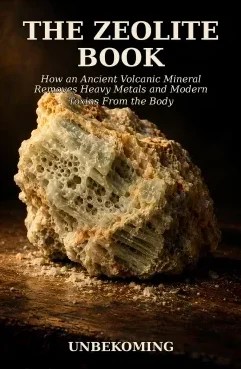 Zeolite is old. It is in Roman concrete that has held for two thousand years. It’s in the water filters of ancient cisterns. It’s in the stomachs of Pacific livestock whose keepers knew, somehow, that this grey crumbling rock made the animals healthier. It’s in Soviet clinical protocols from the 1960s. It’s in the standard emergency response to the Chernobyl explosion.
In 1986, after the Chernobyl reactor failure, the Soviet Union manufactured and distributed natural zeolite at industrial scale — for soil remediation, for livestock feed, for human consumption, for the cleanup itself. Karl Hecht, who had been director of the Institute for Experimental and Clinical Pathophysiology at the Charité of Humboldt University Berlin, spent the six decades after that building the clinical research base — on silicon’s role in human health, on zeolite’s clinical safety, on its applications in ageing. In 2018, Pavelić and colleagues published a comprehensive clinical safety review of natural clinoptilolite in Frontiers in Pharmacology. In 2019, Mastinu analysed its binding affinities. In the Western medical literature, these works sit largely uncited.
What has not been treated at book length, until now, is how a volcanic mineral with six decades of Soviet clinical work behind it, two major peer-reviewed Western reviews, and ongoing clinical use across the former Eastern Bloc, remains almost entirely absent from Western medical practice — and what the toxic burden it’s meant to address actually is.
The Zeolite Book gathers the Soviet clinical record, the Western peer-reviewed studies, three contemporary practitioner voices, and three serious counterviews into one honest treatment. That’s why the book runs to seven appendices. 288 pages, four parts, three practitioner voices, three counterviews, seven appendices. The honest treatment is the argument.
Blog Roll
 Aletho News
- They Compared the Spice to the Drug. The Spice Won — Again. (Part 2)
- Thomas Fazi: NATO’s Hybrid Warfare – Deception & Permanent War
- Wrong, AP and NPR: Europe’s 50,000 Heat Deaths Are a Computer-Model Estimate, Not a Real Body Count
- Questioning Your Doctor Is Now Considered A Psychological Problem (Seriously)
- London tourism expo promotes Israeli agency linked to theft of Palestinian land
- Dockworkers launch global strike against Israeli and US military shipments
- Europe facing gas price shock – Gazprom chief
- Ukraine continues recruiting people with disabilities
- Weaponized Journalism: 2021 Sayer Ji Interview with NPR
- Beyond Netanyahu: what Israel’s election means for Palestinians
- If Americans Knew
- 1,300 will gather in Palo Alto on Nov. 1 for Z3 Conference on Zionism
- DAILY UPDATE: Latest essential news on Palestine, Israel, & region
- The Long Arm of AIPAC
- Genocidal intent behind Hebron assault, rights group says
- This week, Israel killed 8-year-old who survived bombing that wiped out her family
- DAILY UPDATE: Latest essential news on Palestine, Israel, & region
- Israeli soldier poses at damaged Lebanon church, sparking anger
- New Report. Manufacturing the Great Replacement: Is Israel behind one of the largest racist influence campaigns ever documented?
- ‘Arab voice doesn’t count’: Jewish Israeli blocs reject Palestinian support
- Whether Bibi Stays or Goes, the ‘Special Relationship’ Must End
- No Tricks Zone
- Germany’s Green Energy Transition Becoming Increasingly Expensive…Another 6 Trillion Euros!
- Sudden Stratospheric Warming, Powerful El Niño Combination May Lead To Extreme Europe Cold, Energy Crisis!
- Two New Studies Find Thwaites Glacier Melt Cannot Be Driven By Human Activity Or A Warming Ocean
- E-Cars Reduce CO2 Emissions By Only 41% Compared To Internal Combustion Engine Vehicles
- Predictions Made By Renowned Climate Professor Over Past Decades Have Been Proven To Be Poor
- New Study Suggests Large Regions Of The Pacific Ocean Have Been Cooling For The Last 80 Years
- Germany’s Green Energy Debacle: High Energy Costs Force Kahla Porzellan to Close After 182 Years!
- New Study: 50 Years Of The Most Aggressive ‘Net Zero’ Policies Can Only Affect The Global Climate By 0.03°C
- US September “Heat” Was No Record…Many Records Set Decades Ago
- Latest European Green Energy Debacle; Portugal’s Largest Flagship Solar Park Insolvent!

