Aletho News

ΑΛΗΘΩΣ

Showdown at Tanf

Sic Semper Tyrannus | October 3, 2018

The reconciliation process initiated by the Russians in Syria has saved countless lives of soldiers, civilians and even jihadists. It also preserved SAA fighting strength, brought a lot of Syrian territory back under the control of Damascus. It brought former jihadists back into the fight on the side of the SAA. This process may appear to be tedious and without the glorious satisfaction of annihilating jihadis in a costly series of rapid offensives, but I firmly believe the reconciliation process is the right way for Syria. This strategy is now being brought to bear at Tanf.

The first evidence of this was the mid-September agreement for the removal of the US trained and backed al-Qaryatayn Martyrs Brigade and 5,000 civilians from the Rukban refugee camp to the Euphrates Shield-held area in northern Aleppo. This was the work of the Russian Reconciliation Center. More recently, tribal leaders from Damascus have met tribal leaders at the refugee camp to discuss their situation. A list of refugees wanting to engage in the reconciliation process is being prepared. Many of those not reconciling with Damascus will be shipped north to join the al-Qaryatayn Martyrs Brigade and their families. The camp evacuations are already underway. Next week the Russians will escort a UN aid convoy into the Rukban Refugee Camp.

Although the US has apparently acquiesced to the Russian plan to depopulate the Rukban Refugee Camp, I believe Russia has cleverly outmaneuvered the US. The SAA is steadily destroying the remaining jihadis on the al-Safa plateau. I believe the US forces at Tanf will soon be left alone without jihadis to control, or even any remaining jihadis to fight. The “fighting ISIS” rationale will disappear and the real reason for remaining at Tanf will become clear. At Israel’s behest, we are blocking the Teheran-Baghdad-Damascus highway.

TTG

https://southfront.org/us-backed-militant-group-in-al-tanaf-accepts-evacuation-agreement-report/

https://southfront.org/russian-us-negotiations-to-evacuate-civilians-from-al-rukban-camp-near-al-tanaf/

https://southfront.org/damascus-government-and-local-leaders-reach-initial-agreement-on-al-rukban-camp/

https://www.almasdarnews.com/article/syrian-army-scores-big-advance-in-southern-syria-amid-heavy-resistance-from-isis-video/

October 3, 2018 Posted by | Illegal Occupation, Wars for Israel | , , , , | Leave a comment

US could use Navy for ‘blockade’ to hamper Russian energy exports – Interior Secretary

RT | September 30, 2018

The US could use its Navy to prevent Russia’s potential energy supplies to the Middle East, Internal Secretary Ryan Zinke said, Washington Examiner reports.

The blockade would actually mean an “act of war,” a Russian Senator fired back.

Zinke alleged that Russia’s engagement in Syria – notably, where it is operating at the invitation of the legitimate government – is a pretext to explore new energy markets.

“I believe the reason they are in the Middle East is they want to broker energy just like they do in eastern Europe, the southern belly of Europe,” he has reportedly said.

And, according to to the official, there are ways and means to tackle it. “The United States has that ability, with our Navy, to make sure the sea lanes are open, and, if necessary, to blockade … to make sure that their energy does not go to market,” he said.

Zinke was addressing the attendees of the event hosted by the Consumer Energy Alliance, a non-profit group which styles itself as the “voice of the energy consumer” in the US.

He went on to compare Washington’s approaches to dealing with Russia and Iran, noting that they are effectively the same.

“The economic option on Iran and Russia is, more or less, leveraging and replacing fuels,” he said, while referring to Russia as a “one trick pony” with an economy dependent on fossil fuels.

Zinke’s statements provoked an angry response from Moscow, which equated a potential maritime blockade to an “act of war,” while calling the interior secretary’s assumptions “nonsense.”

“A US blockade of Russia would be equal to a declaration of war under international law,” Russian Senator Aleksey Pushkov said, commenting on Zinke’s words. Russia does not currently export any energy to the Middle East, which itself is a major oil exporting region. The whole idea is an “absolute nonsense,” the Senator argued.

The comment from the US Interior Secretary come as the Trump administration has been on a mission to boost the export of its liquefied natural gas to Europe, replacing Russia, the far cheaper option for European consumers. To that effect, the Trump administration officials, including US President Donald Trump himself, try to persuade Germany to pull out of the “inappropriate” Nord Stream 2 pipeline project, which according to Trump, made Berlin Moscow’s “captive.”

Moscow has repeatedly stressed that the $11 billion Nord Stream 2 pipeline, which is set to double the existing pipeline capacity to 110 billion cubic meters, is a purely economic project. The Kremlin argues that Washington’s fervent opposition to the project is simply driven by economic reasons and is an example of unfair competition.

“I believe we share the view that energy cannot be a tool to exercise pressure and that consumers should be able to choose the suppliers,” Russian Energy Minister Aleksandr Novak said following a meeting with US Energy Secretary Rick Perry in Moscow in September.

The US stance has drawn a backlash from Germany, which has reaffirmed its commitment to the project.

Germany’s leading organization for industry, the Federation of German Industries (BDI), has called on the US to stay away from EU energy policy and the bilateral agreements between Berlin and Moscow.

“I have a big problem when a third state interferes in our energy supply,” Dieter Kempf, head of the Federation of German Industries (BDI) said following a recent meeting between German Chancellor Angela Merkel and Russian President Vladimir Putin.

September 30, 2018 Posted by | Economics, War Crimes | , , , | Leave a comment

The US Military-Industrial Complex’s Worst Nightmare: The S-300 May Destroy and Expose the F-35

By Federico Pieraccini | American Herald Tribune | September 30, 2018

The tragic episode that caused the death of 15 Russian air force personnel has had immediate repercussions on the situation in Syria and the Middle East. On September 24, Russian Defense Minister Sergei Shoigu informed allies and opponents that the delivery of the S-300 air-defense systems to the Syrian Arab Republic had been approved by President Vladimir Putin. The delivery had been delayed and then suspended as a result of Israeli pressure back in 2013.

In one sense, the delivery of S-300 batteries to Syria is cause for concern more for Washington than for Tel Aviv. Israel has several F-35 and has claimed to have used them in Syria to strike alleged Iranian weapons transfers to Hezbollah. With the S-300 systems deployed in an updated version and incorporated into the Russian command, control and communications (C3) system, there is a serious risk (for Washington) that Israel, now incapable of changing the course of events in Syria, could attempt a desperate maneuver.

It is no secret that Greece purchased S-300s from Russia years ago, and that NATO and Israel have trained numerous times against the Russian air-defense system. Senior IDF officials have often insisted that they are capable taking out the S-300s, having apparently discovered their weaknesses.

Tel Aviv’s warning that it will attack and destroy the S-300 battery should not be taken as an idle threat. It is enough to look at the recent downing of Russia’s Il-20 surveillance aircraft to understand how reckless a desperate Israel is prepared to be. Moreover, more than one IDF commander has over the years reiterated that a Syrian S-300 would be considered a legitimate target if threatening Israeli aircraft.

At this point, it is necessary to add some additional information and clarify some points. Greece’s S-300s are old, out of maintenance, and have not had their electronics updated. Such modern and complex systems as the S-300s and S-400s require maintenance, upgrades, and often replacement of parts to improve hardware. All this is missing from the Greek batteries. Secondly, it is the operator who uses the system (using radar, targeting, aiming, locking and so forth) that often makes the difference in terms of overall effectiveness. Furthermore, the system is fully integrated into the Russian C3 system, something that renders useless any previous experience gleaned from wargaming the Greek S-300s. No Western country knows the real capabilities and capacity of Syrian air defense when augmented and integrated with Russian systems. This is a secret that Damascus and Moscow will continue to keep well guarded. Yet two years ago, during the operations to free Aleppo, a senior Russian military officer warned (presumably alluding to fifth-generation stealth aircraft like the F-35 and F-22) that the range and effectiveness of the Russian systems may come as a surprise.

The following are the words of Russian defense minister Sergei Shoigu concerning the deployment of the S-300 to Syria and its integration with other Russian systems:

“Russia will jam satellite navigation, onboard radars and communication systems of combat aircraft, which attack targets in the Syrian territory, in the Mediterranean Sea bordering with Syria. We are convinced that the implementation of these measures will cool hotheads and prevent ill-considered actions threatening our servicemen. Otherwise, we will respond in line with the current situation. Syrian troops and military air defense units will be equipped with automatic control systems, which have been supplied to the Russian Armed Forces. This will ensure the centralized management of the Syrian air defense forces and facilities, monitoring the situation in the airspace and prompt target designation. Most importantly, it will be used to identify the Russian aircraft by the Syrian air defense forces.”

If the Israelis will follow through with their reckless attempts to eliminate the S-300 (if they can find them in the first place, given that they are mobile), they will risk their F-35s being brought down. The US military-industrial complex would suffer irreparable damage. This would also explain why Israel (and probably the US) has for more than five years put enormous pressure on Moscow not to deliver the S-300 to Syria and Iran. The US State Department’s reaction over the future purchase by Turkey and India of the S-400 confirms the anxiety that US senior officials as well as generals are experiencing over the prospect of allies opting for the Russian systems. This would allow for a comparison with weapons these allies purchased from the US, leading to the discovery of vulnerabilities and the realization of the US weapons’ relative inferiority.

Given Tel Aviv’s tendency to place its own interests above all others, it would not be surprising to find them using the possibility of attacking the S-300 with their F-35s as a weapon to blackmail Washington into getting more involved in the conflict. For the United States, there are two scenarios to avoid. The first is a direct involvement in the conflict with Russia in Syria, which is now unthinkable and impractical. The second – much more worrying for military planners – concerns the possibility of the F-35’s capabilities and secrets being compromised or even being shown not to be a match against air-defense systems nearly half a century old.

An illuminating example of how the United States operates its most advanced aircraft in the region was given in eastern Syria around Deir ez-Zor. In this part of Syria, there is no threat from any advanced air-defense systems, so the US is often free to employ its F-22 in certain circumstances. The Russian military has repeatedly shown radar evidence that unequivocally shows that when Russian Su-35s appear in the same skies as the F-22, the US Air Force simply avoids any confrontation and quickly withdraws such fifth-generation assets as the F-22. The F-35 is not even ready in its naval variant, and has yet to be deployed on a US aircraft carrier near the Middle Eastern theater or the Persian Gulf; nor is it present in any US military base in the region. The US simply does not even consider using the F-35 in Syria, nor would it risk its use against Russian air defenses. Israel is the only country that so far may have already used these aircraft in Syria; but this was before the S-300 came onto the scene.

The F-35 program has already cost hundreds of billions of dollars and will soon reach the exorbitant and surreal figure of over 1 trillion dollars. It has already been sold to dozens of countries bound by decades-long agreements. The F-35 has been developed as a multi-role fighter and is expected to be the future backbone of NATO and her allies. Its development began more than 10 years ago and, despite the countless problems that still exist, it is already airborne and combat-ready, as the Israelis insist. From the US point of view, its employment in operations is played down and otherwise concealed. The less data available to opponents, the better; though the real reason may lie in a strong fear of any revelation of potential weaknesses of the aircraft damaging future sales. At this time, the Pentagon’s marketing of the F-35 is based on the evaluations provided by Lockheed Martin, the manufacturer, and on the tests carried out by the military who commissioned it to Lockheed Martin. Obviously, both Lockheed Martin and the US Air Force have no interest in revealing any weaknesses or shortcomings, especially publicly. Corruption is a big thing in Washington, contrary to common assumptions.

The combination of Israel’s ego, its inability to change the course of events in Syria, coupled with the loss of its ability to fly throughout the Middle East with impunity due to Syria now being equipped with a superior air defense – all these factors could push Israel into acting desperately by using the F-35 to take out the S-300 battery. Washington finds itself in the unenviable position of probably having no leverage with Israel over the matter ever since losing any ability to steer events in Syria.

With the Russian air-defense systems potentially being spread out to the four corners of the world, including China, India, Saudi Arabia, Qatar, and who knows how many other countries waiting in the queue, Russia continues to increase its export capacity and military prestige as it demonstrates its control of most of the Syria’s skies. With the introduction of the the S-500 pending, one can imagine the sleepless nights being spent by those in the Pentagon and Lockheed Martin’s headquarters worrying about the possibility of an F-35 being taken down by an S-300 system manufactured in 1969.

September 30, 2018 Posted by | Corruption, Ethnic Cleansing, Racism, Zionism | , , , , , , , | Leave a comment

US creating basis for regional conflagration in Middle East: James Petras

Press TV – September 29, 2018

The United States is creating the basis for the regional conflagration in the Middle East by fortifying its circle around Iran, American writer and academic James Petras says.

The US State Department has endorsed the proposed sale of more than 800 tactical missiles to Bahrain amid the Al Khalifah regime’s heavy-handed crackdown on pro-democracy campaigners and political dissidents in the tiny Persian Gulf country.

The approval includes Guided Multiple Launch Rocket System (GMLRS) Unitary Rocket Pods and Army Tactical Missiles System (ATACMS) Unitary missiles for an estimated cost of $300 million, the Arabic-language al-Khaleej al-Jadeed news website reported on Saturday.

“Well, it’s part of the US setting up the aggressive policy; mainly it is directed against the government in Iran. And it’s largely responsible for encouraging this aggression with the addition of its support of Israel and Saudi Arabia,” Professor Petras said.

“It’s creating the basis for the regional conflagration. I don’t think anyone is aware of any danger to the small (Persian) Gulf state. They’re mainly there to serve the US, and to enrich the oligarchies that run those countries,” he added.

“They have no defensive function. They have no positive role to play. And they are forever condemned for their repression of their dissident populations,” the analyst said.

“So I think this is an act by the Trump administration to fortify its circle around Iran. It’s likely to force Iran to increase its defenses and its alliances in the region,” he added.

“I don’t think it has any positive function for the US to continue meddling the Middle East and causing new wars, new terrorists, and new instability in the region,” the academic concluded.

September 30, 2018 Posted by | Militarism, Wars for Israel | , , , , | Leave a comment

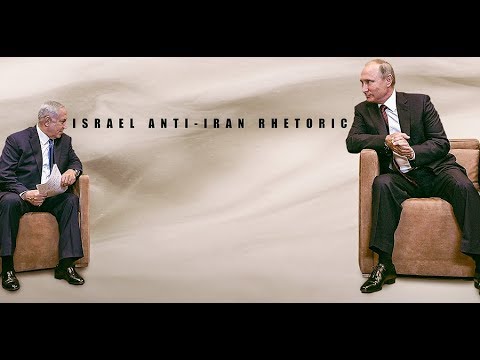
The Debate – Israel Anti-Iran Stunt

PressTV | September 28, 2018

The Israeli Prime Minister has addressed the UN General Assembly. Anything unique about his address: the props were there, but there were more of them, and the target of the props: Iran, Iran, Iran. Was he successful in his pitch, that Iran had a Secret Iranian Nuclear Facility? We will look at his statements on Iran, how he said Iran “took this radioactive material and spread it around Tehran like Nutella, when it is Israel that possesses Nuclear weapons and yet it won’t allow for any inspections.

Watch Live: http://www.presstv.com/live.html
YouTube: https://www.youtube.com/user/videosptv/
Twitter: http://twitter.com/PressTV

September 29, 2018 Posted by | Ethnic Cleansing, Racism, Zionism, Militarism | , , , | Leave a comment

The Real Reasons behind Washington’s War on UNRWA

By Ramzy Baroud | Dissident Voice | September 27, 2018

The US government’s decision to slash funds provided to the United Nations agency that cares for Palestinian refugees, UNRWA, is part of a new American-Israeli strategy aimed at redefining the rules of the game altogether.

As a result, UNRWA is experiencing its worst financial crisis. The gap in its budget is estimated at around $217 million, and is rapidly increasing. Aside from future catastrophic events that would result in discontinuing services and urgent humanitarian aid to five million refugees registered with UNRWA, the impact of the US callous decision is already reverberating in many refugee camps across the region. Currently, UNRWA has downgraded many of its services: laying off many teachers, reducing staff and working hours at various clinics.

Nearly 40 percent of all Palestinian refugees live in Jordan, a country that is already overwhelmed by a million Syrian refugees who sought shelter there because of the grinding and deadly war in their own country.

Aware of Jordan’s vulnerability, American emissaries attempted to barter with the country to heed the US demand of revoking the status of the two million Palestinian refugees. Instead of funding UNRWA, Washington offered to re-channel the funds directly to the Jordanian government. Thus, the US hopes that the Palestinian refugee status would no longer be applicable. Unsurprisingly, Jordan refused the American offer.

News of this failed barter resurfaced last August. It was reported that US President Donald Trump’s special envoy, Jared Kushner, tried to sway the Jordanian government during his visit to Amman in June.

Washington and Israel are seeking to simply remove the ‘Right of Return’ for Palestinian refugees, as enshrined in international law, from the political agenda altogether.

Coupled with Washington’s strategy to “remove Jerusalem from the table,” the American strategy is neither random nor impulsive.

“It is important to have an honest and sincere effort to disrupt UNRWA,” Kushner wrote to the US Middle East envoy, Jason Greenblatt, in an email last January. The email, among others, was later leaked to Foreign Policy magazine. “This (agency) perpetuates a status quo,” he also wrote, referring to UNRWA as “corrupt, inefficient and doesn’t help peace.”

This notion that UNRWA sustains the status quo – meaning the political rights of Palestinians refugees – is the main reason behind the American war on the Organization, a fact that is confirmed through statements made by top Israeli officials, too.

Israel’s ambassador to the United Nations, Danny Danon, echoed the American sentiment. UNRWA “has proven itself an impediment to resolving the conflict by keeping the Palestinians in perpetual refugee status,” he said.

Certainly, the US cutting of funds to UNRWA coincides with the defunding of all programs that provide any kind of aid to the Palestinian people. But the targeting of UNRWA is mostly concerned with the status of Palestinian refugees, a status that has irked Tel Aviv for 70 years.

Why does Israel want to place Palestinian refugees in a status-less category?

The refugee status is already a precarious one. To be a Palestinian refugee means living perpetually in limbo – unable to reclaim what has been lost, and unable to fashion an alternative future and a life of freedom and dignity.

How are Palestinians to reconstruct their identity that has been shattered by decades of exile, when Israel has constantly hinged its own existence as a ‘Jewish state’ on opposing the return and repatriation of Palestinian refugees? Per Israel’s logic, the mere Palestinian demand for the implementation of the internationally-sanctioned Right of Return is equivalent to a call for “genocide”. According to that same faulty logic, the fact that the Palestinian people live and multiply is a “demographic threat” to Israel.

Much can be said about the circumstances behind the creation of UNRWA by the United Nations General Assembly in December 1949 – its operations, efficiency and the effectiveness of its work. But for most Palestinians, UNRWA is not a relief organization, per se; being registered as a refugee with UNRWA provides Palestinians with a temporary identity, the same identity that allowed four generations of refugees to navigate decades of exile.

UNRWA’s stamp of “refugee” on every certificate that millions of Palestinians possess – birth, death and everything else in between – has served as a compass, pointing back to the places those refugees come from – not the refugee camps scattered in Palestine and across the region, but the 600 towns and villages that were destroyed during the Zionist assault on Palestine.

These villages may have been erased, as a whole new country was established upon their ruins, but the Palestinian refugee remained – subsisted, resisted and plotted her return home. The UNRWA refugee status is the international recognition of this inalienable right.

Therefore, the current US-Israeli war does not target UNRWA as a UN body, but as an organization that allows millions of Palestinians to maintain their identity as refugees with non-negotiable rights until their return to their ancestral homeland. Nearly 70 years after its founding, UNRWA remains essential and irreplaceable.

The founders of Israel envisioned a future where Palestinian refugees would eventually disappear into the larger population of the Middle East. Seventy years on, the Israelis still entertain that same illusion.

Now, with the help of the Trump administration, they are orchestrating yet more sinister campaigns to make Palestinian refugees vanish, wished away through the destruction of UNRWA and the redefining of the refugee status of millions of Palestinians.

The fate of Palestinian refugees seems to be of no relevance to Trump, Kushner and other US officials. The Americans are now hoping that their strategy will finally bring Palestinians to their knees so that they will ultimately submit to the Israeli government’s dictates.

The latest US-Israeli folly will prove futile. Successive US administrations have done everything in their power to support Israel and to punish the supposedly intransigent Palestinians. The Right of Return, however, remained the driving force behind Palestinian resistance, as the Gaza Great March of Return, ongoing since March, continues to demonstrate.

The truth is that all the money in Washington’s coffers will not reverse what is now a deeply embedded belief in the hearts and minds of millions of refugees throughout Palestine, the Middle East and the world.


Dr. Ramzy Baroud is an author and a journalist. He is athor of The Second Palestinian Intifada: A Chronicle of a People’s Struggle and his latest My Father Was a Freedom Fighter: Gaza’s Untold Story. He can be reached at ramzybaroud@hotmail.com.

September 27, 2018 Posted by | Ethnic Cleansing, Racism, Zionism, Timeless or most popular | , , , , , , , | Leave a comment

Turkey and Syria: When “Soft Power” Turned Hard

By Jeremy Salt | American Herald Tribune | September 25, 2018

The onset of the so-called Arab Spring in late 2010 took governments around the world by surprise, and Turkey’s Justice and Development Party (Adalet ve Kalkinma Partisi, AKP) government was no exception. Repositioning itself to meet new circumstances, it gradually turned its back on some of the defining principles of its previous policy. Opposed to outside military intervention anywhere in the Middle East, it came in behind the NATO attack on Libya. Committed to “soft power” and dialogue, it substituted engagement with Syria in favor of confrontation and “regime change.”

In supporting the Free Syrian Army (FSA), which launched murderous assaults across the Syrian border, as well as other armed groups seeking to pull down the Syrian government, the AKP government took foreign policy in a radically new direction, leading eventually to the occupation of Syrian territory. Not since the establishment of the republic in 1923 had a Turkish government interfered so openly and aggressively in the affairs of a neighboring state. Balancing risks against opportunities, its choices seemed a signal to the world of how it saw Turkey, no longer just as a regional power but one intent on playing a more influential role on the global stage and prepared to act accordingly.

In 2011, following the collapse or overthrow of governments in Tunisia, Egypt and Libya, the “Western” and Middle Eastern regional coalition calling itself the Friends of the Syrian People set out to destroy the government in Damascus. Initially, it hoped to achieve this through an aerial offensive launched under the aegis of the UN Security Council. With Russia and China making it clear that they would not allow a no-fly zone to be established over Syria, and with Russia going on to veto a French resolution (October 2016) demanding an end to air strikes on “rebel” positions in and around Aleppo, the Friends of the Syrian People had to resort to the use of proxy forces that it armed and paid. Given Turkey’s long border with Syria, its role in this project was of critical importance; without its participation, it is doubtful this onslaught on the Syrian government could have gone ahead.

Some of the fallout could have been predicted. Shia Iran — and Iraq, with its predominantly Shia government — were hostile from the start. A refugee flow from Syria into Turkey was inevitable, but possibly not to the extent it reached: according to the UN High Commissioner for Refugees (UNHCR), more than 3.5 million people by May 2018, maintained in and out of more than 20 camps near the Syrian border, at a cost to the Turkish government alone, according to its own figures, of about $30 billion. The refugee situation ultimately gave rise to friction with the EU. Turkey complained that the EU was not delivering the aid it had promised, and President Erdogan warned in 2018, as he had in 2016, “We are the ones feeding three million to 3.5 million refugees in this country. You have betrayed your promises. If you go any further, those border gates will be opened.” [1] These angry words fed into anti-Turkish sentiment developing in Europe over other issues, namely Turkey’s deteriorating human-rights situation and President Erdogan’s labeling Dutch and German authorities “Nazi remnants” and “the grandchildren of Nazis” for refusing to allow Turkish electoral campaigning within their borders. Against European protests, he insisted, “I will describe Europe as Nazis [sic] as long as they call me a dictator.” [2]

Turkey’s involvement in Syria led to accusations of widespread plunder from East Aleppo when it was occupied by takfiri jihadist groups, with factories allegedly being dismantled and the parts transported across the Turkish border for sale. The sale of oil from territory conquered by the Islamic State was another issue. According to reports, a company with links to President Erdogan’s son-in-law and cabinet minister, Berat Albayrak, was transporting contraband oil from territory conquered by the Islamic State in Iraq and Syria across the Turkish border, along with oil from Iraq’s Kurdish north — which was in dispute with the government in Baghdad over oil rights. [3] The oil was allegedly moved to the southeastern Turkish oil terminal at Ceyhan for onward sale. Russian drone surveillance footage showed hundreds of tankers lined up in the Iraqi desert or clustered around the Turkish border, some of them crossing it. Large-scale aerial bombing of the tankers after Russian intervention in Syria appears to have brought the trade to an end.

An MP of the Republican People’s Party (CHP), Eren Erdem, was charged with treason after alleging that President Erdogan himself benefitted from Islamic State oil sales. Erdem also claimed that the sarin nerve gas allegedly used against civilians in the Ghouta outer district of Damascus in August, 2013 was transported across the border from Turkey (a charge also made by the veteran American journalist Seymour Hersh [4]). Erdem’s parliamentary immunity from prosecution ended when the CHP failed to renominate him ahead of the June 2018 elections and he was banned from leaving the country.

Ankara’s Syria policy also led to serious complications with Moscow, especially the shooting down of a Russian Sukhoi SU-24 by a Turkish F16 fighter aircraft near the Turkish-Syrian border on November 24, 2015. Trade sanctions by way of punishment continued until most had been lifted by May 2017, in tandem with the progress of the Astana “peace” talks involving Russia, Turkey and Iran.

In the wake of the decision to confront the Syrian government, uncounted numbers of takfiri jihadists traveled across Turkey from around the world to join the fight in Syria. Some entered Turkey by land from the Caucasus. Others flew into Istanbul and then moved by bus or plane to safe houses in the southeast before crossing the border. As they entered the country legally, and as journalists were able to locate them, it could scarcely be argued that the government did not know who they were or where they were going. At the same time, Islamic State (IS) cells were forming in various parts of the country.

Between 2013 and 2016, suicide or car bombings caused havoc across Turkey. Some were the work of the Kurdish Freedom Hawks (TAK), retaliating for Turkish military action against the Kurdistan Workers’ Party (PKK) in the southeast and the civilian casualties that were caused inside Kurdish towns and cities as a result. Others were bombings connected with the Islamic State. The TAK bombing of buses carrying military and civilian personnel from army headquarters in Ankara on February 17, 2016, was followed on March 13 by its bombing of civilian buses on Ataturk Boulevard in nearby Kizilay. More than 60 people were killed in the two bombings. Later that same year, on June 7, 12 police were killed when the TAK bombed a bus in central Istanbul; and on December 10, a car bombing and a suicide bombing in the central Istanbul Bosporus suburb of Beşiktaş, both claimed by the TAK, killed 48 people.

Attacks by the Islamic State include the suicide bombing of a police post in Istanbul’s Sultanahmet tourist district in January 2015. The bomber, the Daghestani widow of a Norwegian-Chechen IS fighter, and one policeman were killed. In July 2015, a student from the city of Adiyaman, a known center of IS recruitment, killed 32 Turkish and Kurdish students in a suicide bombing in the border town of Suruc. In January 2016, a Syrian IS suicide bomber killed 13 people, all of them foreign tourists, in Istanbul’s Sultanahmet district. In March, a suicide bombing killed five people, three of them Israeli, in the fashionable Beyoglu quarter. In June, Russian and Central Asian IS attackers killed 45 people in an attack on the international terminal at Istanbul’s Ataturk Airport. On January 1, 2017, an Uzbek national killed 39 people and wounded dozens with an AK-47 assault rifle during an attack on the Reina nightclub in the Bosporus suburb of Ortakoy. He was captured and more than 50 alleged accomplices were later arrested. The attack was claimed by IS.

In some cases, no responsibility was claimed, and the perpetrators were never clearly identified. These attacks include the bombing of a peace demonstration outside the central Ankara railway terminal in October 2015, in which 109 people were killed. One of the bombers was allegedly identified as the younger brother of the perpetrator of the Suruc bombing. However, as the demonstration had been organized by the largely Kurdish People’s Democratic Party (HDP), along with civil-society groups, and as general elections were to be held in three weeks time, suspicions were also raised of “deep-state” involvement. The first, and worst, of the atrocities were the two car bombings on May 11, 2013, which killed 51 people, wounded scores of others and caused massive destruction in the Hatay Province town of Reyhanli, adjacent to the Syrian border. Responsibility was never claimed but suspicions rested on the Islamic State or Jabhat al-Nusra.

Turkey had wanted a physical presence inside Syria from the beginning of the crisis, a “safe” or “buffer” zone or “humanitarian corridor.” Ankara had already sent troops across the border on one specific mission — to relocate the historic Suleyman Shah tomb to a new site only a few hundred meters from the Turkish border — when in 2016 it launched the large-scale Euphrates Shield operation in the name of driving the Islamic State and the Kurdish militia (the People’s Protection Units, YPG) out of the border region.

Disagreement between the United States and Turkey over the status of the YPG, a “terrorist” group allied with the PKK, according to the Turkish government (though not in the eyes of the U.S. administration) led to heated rhetoric, with Turkey threatening to extend its military operations to Manbij and even across the Euphrates to the Iraqi border. Daily control of Manbij by the largely Kurdish Syrian Democratic Forces (SDF), an ally of the YPG, further inflamed relations between Washington and Ankara, until the two governments reached agreement on the withdrawal of the SDF and joint patrols by their military forces. Other issues dividing the two NATO members included the refusal of the United States to extradite the Muslim guru Fethullah Gulen, accused of orchestrating the failed coup of 2016; the arrest of a U.S. pastor in Izmir accused of fomenting terrorism through his alleged links with the Gulen movement; the prosecution in the United States of a senior Turkish Halkbank (People’s Bank) executive on charges of money laundering for Iran; the charges laid against 12 members of Erdogan’s security detail, filmed brutally kicking and beating demonstrators outside the Turkish ambassador’s residence during the president’s visit to Washington in May 2017; and the strengthening of Turkey’s relations with Russia — despite the near crisis in 2015, when Turkey shot down a Russian jet along the Syrian border, and its decision to purchase Russian S-400 missiles.

The exclusion of the United States from negotiations over Syria in Astana by Russia, Iran and Turkey, and the purchase of Russian missiles were followed by hints from President Erdogan of increased “defense” cooperation with Russia, putting further strains on the NATO alliance. Along with developing trade relations was the issue of Russian support for Turkish nuclear development. In April 2018, in line with an agreement signed by the two governments in 2010, work began on the construction of a nuclear power plant at Akkuyu, on the Mediterranean coast in the southern province of Mersin. The plant will be built, owned and operated by the Russian state energy corporation, Rosatom.

In early 2018, Turkey launched a second military operation (Olive Branch) in the Afrin region of northwestern Syria, culminating in the routing of the YPG militia and the occupation of Afrin city. As a result of these two operations, Turkey and its Turkish Free Syrian Army (TFSA) auxiliaries — many recruited from armed groups involved in the fighting against the Syrian government — control hundreds of villages and towns in 3,460 square kilometers of northwestern Syria. The occupied zone stretches as far south as Al Bab, 40 kilometers north of Aleppo. Within this region, Turkey has set up a full range of administrative services, from police and post offices to schools (where Turkish is now taught as a second language) and local councils operating under Turkish control. Harran University, in Turkey’s southeast, will also be opening a branch in the Turkish-occupied zone. Following his victory in the presidential elections, Erdogan said he would take further measures to “liberate” Syria.

The infrastructure at Al Bab includes the establishment of an industrial zone north of the city. Representatives of the governor of Gaziantep were present at the laying of the cornerstone on February 10, 2018. Built over 56 hectares, the site will include factories, hotels, four mosques, power stations and the provision of all utilities as well as the construction of a road network connecting Al Bab to other parts of the territory Turkey has occupied. Turkish control extends to Idlib province, where in the name of “de-escalation” it has established at least 12 “observation posts,” as sanctioned by its partners in the Astana negotiations. Large parts of the province plus Idlib city itself are controlled by the takfiri Hayat Tahrir al Sham. In the regions brought under Turkish control, Kizilay (the Turkish Red Crescent) and the Turkish Directorate of Emergency Management (AFAD) have prepared camps and assistance for tens of thousands of refugees from other parts of Syria, including takfiris and their families removed from cities and regions recaptured by the Syrian army.

The political complexities in this situation include the “green light” given by Russia for Turkish military intervention in Afrin, including the use of air power. Through the Astana talks, Russia had also sanctioned the stationing of Turkish troops in Idlib to monitor the “de-escalation” zones, transforming Turkey through these maneuvers into an ostensible partner for peace talks even as it continued to consolidate its occupation of Syrian territory. With all takfiri groups cleared out of the Damascus region, the Syrian army turned its attention towards the armed groups operating near the Jordanian border and the Israeli-occupied Golan Heights and campaigned against U.S.-backed forces in Deir al Zor province. Eventually its attention must swing towards the northwestern and northeastern regions occupied by Turkish and U.S. forces and their proxies. In early June 2018, President Assad, determined to restore his government’s authority over all of Syria, warned that force would be used against U.S. troops if they were not withdrawn voluntarily.

The Turkish government says return of the territory it holds to the Syrian government is “completely inconceivable,” as Deputy Prime Minister Recep Akdag has remarked of Afrin. According to President Erdogan, “We will solve the Afrin issue and the Idlib issue, and we want our refugee brothers and sisters to return to their country,” adding that Turkey would not shelter them forever. [5] To whom the occupied territory would be returned if not the Syrian government remained an unanswered question.

Against the background of all the developments since 2011, a central question is how or whether intervention in Syria can be said to have served the Turkish national interest, as assessed on the basis of costs and benefits to the Turkish state and its people. The course of Turkish involvement in the war in and on Syria, as examined in the foregoing pages, may point to some answers.

TURKEY’S NEW DIRECTIONS

The election of the AKP in 2002 signaled radical, if not counterrevolutionary, changes in Turkey’s social and political fabric as well as redirections in its foreign policy. As early as 1994, the success of the Islamist Refah (Welfare) Party in local elections was a sign that Turkey was breaking away from its Kemalist past in favor of a political model that would place greater emphasis on Muslim values and closer connections with the Muslim world. The military had intervened in 1960 and 1980. Then, in 1997, less than a year after Refah had become the dominant partner in a coalition government with the True Path Party (Dogru Yol Partisi), it intervened again, not by putting tanks on the streets but by squeezing Prime Minister Necmettin Erbakan out of office in what has often been called a “soft” or “post-modern” coup.

With the Constitutional Court closing down the party and Erbakan banned from taking part in politics, the military fixed its sights on Recep Tayyip Erdogan, the Refah mayor of the greater Istanbul municipality. He was jailed for reciting a poem considered to be incitement to religious or racial hatred; released after six months, he went on to co-found the Justice and Development Party in August, 2001. His rhetoric was that of a changed man. While not retreating from his conservative religious convictions, Erdogan insisted that his party was on a different path from its Refah forerunner. “We have opened a new page with a new group of people, a brand new party…. We were anti-European. Now we’re pro-European.” [6] Although the new party was committed to enlarging democracy within the secular framework of the constitution, doubts remained, usually summed up with mystical references to a “hidden agenda” that would only become clear once the party had consolidated its position in power.

Cutting the head off the Refah hydra made no difference; other heads quickly grew in its place, first the Fazilet (Virtue) Party and then Erdogan’s AKP. In the 2002 general elections, the party won 34 percent of the vote, enough to give it a majority in the Grand National Assembly. In 2007, it took 46.7 percent of the vote, and in the 2011 elections — after narrowly surviving an attempt by the Constitutional Court prosecutor to close it down in 2008 — increased its lead still further to 49.8 percent. In the June 2015 elections, the AKP lost its majority but regained it when fresh elections were held in November to resolve the parliamentary deadlock. The party also won a series of constitutional “reform” referendums in 2007, 2010 and 2017, centering on the establishment of an executive presidency, the authority of which Erdogan had already de facto assumed. In 2014, he was elected president by popular vote, replacing the parliamentary mode. This election was marked by numerous reports of irregularities, including the use of unofficial unstamped ballot papers. In an unprecedented move, the head of the Supreme Electoral Board, refusing to investigate complaints about the conduct of the elections, declared that they should be regarded as valid. In 2017, constitutional changes diminishing the power and prerogatives of parliament and tightening government control of the judiciary while greatly increasing the authority of the president were narrowly passed by referendum. Again, many irregularities were reported but not investigated. On June 24, 2018, Erdogan was re-elected as president in the new constitutional system on 52.59 percent of the vote.

In the early years, the AKP government worked hard for EU accession. It brought hyperinflation to a halt and stabilized the currency, but perhaps its most startling achievement was the way in which it took on its primal enemy — the military — and won. Hundreds of senior army officers were accused of being part of a “deep-state” network known as Ergenekon [7] and charged with plotting to overthrow the government. These measures were taken when the AKP government was cooperating with the Gulen movement. The latter’s methods (the slow indoctrination of society through a countrywide network of dershane preparatory schools) were different from the political route followed by the AKP, but their aims were the same: the gradual re-Islamization of Turkish society and the slow whittling away of the Kemalist heritage. However, by 2013, the relationship between the government and the movement had broken down. From that time onwards, the Gülen movement became the “parallel state” and finally the Fethullah Terrorist Organization (FETO), which the government accused of launching the failed coup of 2016.

Reconnecting with Turkey’s Ottoman past, and seeking to use the historical and cultural connections between Istanbul and the Muslim world as a foreign-policy tool, the government tilted towards closer relations with Arabs and Muslims, while still proclaiming its commitment to the goal of EU accession. An early sign that Turks were prepared to take a more independent stand on the Middle East was the decision by the Grand National Assembly in 2003 not to commit Turkish troops to the war on Iraq. Another was Erdogan’s close identification with the Palestinian cause. In 2004 Erdogan called Israel a terrorist state after a missile attack killed the eminent Gazan religious scholar Ahmad Yassin. He sharply criticized Israel during its attacks on Lebanon in 2006 and Gaza in 2008 and later said that “a slow and methodical massacre has been taking place in Palestine since the early 20th century.” [8] Taking part in a panel discussion at Davos in January 2009, he turned on Israeli President Shimon Peres with the words: “When it comes to killing you know well how to kill.” After the 2010 attack on the Turkish ship Mavi Marmara, carrying humanitarian aid to Gaza, Erdogan said the Israeli government was inhuman, aggressive, brazen, irresponsible, despicable, cowardly, reckless and vicious. [9]

While Turkey had been moving towards a major policy reorientation ever since the AKP government came into office, it was Ahmet Davutoglu who set its contours. An academic and former senior adviser to the prime minister, Davutoglu was appointed foreign minister on May 1, 2009, subsequently serving as prime minister from 2014 to 2016, when he decided not to stand for office again. The phrases associated with his approach to foreign policy were “soft power,” “strategic depth,” “dialogue” and “zero problems” with neighboring states. While Turkey suffered some setbacks (including the rejection in 2010 by the White House of a nuclear agreement with Iran brokered by Turkey and Brazil), soft power was extremely successful as a diplomatic tool.

Dialogue was especially marked in the case of Syria, with senior officials from both countries making a flurry of visits to each other’s capitals and cementing both political and commercial ties. By 2010, trade between the two had jumped to $2.5 billion, a 43 percent increase over the previous year. The lingering aftereffects of previous problems — especially Syria’s support for the PKK and the sanctuary given to its leader, Abdullah Ocalan — appeared to have been smoothed over, with the lifting of visa requirements for Turkish and Syrian citizens putting the seal on the process.

By late 2010, however, the onset of the Arab Spring had rocked the foundations on which Turkish foreign policy had been built. Within a few months, soft power began to look more like old-fashioned hard power. Having initially opposed outside armed intervention anywhere in the Middle East, the AKP government ended up coming in behind the NATO air attack on Libya and backing armed groups seeking to overthrow the Syrian government, from within Syria and through attacks launched across the Turkish border. Where Syria’s president was concerned, the language of dialogue and mediation gave way to threats, warnings and insults.

“WE ARE NOT IMMORTAL”

In the years leading up to the Arab Spring, the AKP government had given no signs of disapproval of Arab governments, even though their abuses of human rights and — in the case of some Gulf states — lack of democratic infrastructure were matters of global concern. Erdogan had developed a close working relationship with both Bashar al-Assad and Muammar al-Qadhafi, from whose government he had received, as late as December 2010, the Qadhafi International Prize for Human Rights (worth $250,000). Like governments everywhere, however, the AKP was caught on the back foot by the rapid developments in Tunisia, where the death of Muhammad Bouazizi on January 4, 2011, triggered demonstrations that precipitated the flight of President Zine el Abidine bin Ali 10 days later. In the Turkish government’s view, Tunisia was the start of a widespread regional revolt to which it should respond by supporting the people. This would accord with being on “the right side” of history as depicted by Davutoglu. [10]

Although Davutoglu described Turkey’s intervention in Egypt as “a risk,” [11] the government only intervened after even Husni Mubarak’s chief sponsor, the U.S. administration, was getting ready to abandon him. Addressing his party’s parliamentary caucus in early February 2011, Erdogan called on the Egyptian leader to listen to his people… “Mubarak, we are human beings. We are not immortal. We will die one day and we will be questioned for the things that we left behind. The important thing is to leave behind sweet memories.” [12] The crisis in Egypt was followed by the crisis in Libya, beginning with protests in Benghazi on February 17. This further upheaval involved very practical considerations for Turkey, given the $15 billion investment of close to 200 Turkish companies in Libya and the presence of about 25,000-30,000 workers (mostly employed in construction). Turkey’s immediate concern was their repatriation, effected by ferries from Benghazi or overland to Alexandria and home by sea from there.

The steady escalation of the crisis in Libya paved the way for resolutions passed by the UN Security Council deploring the “systematic violation” of human rights in the Libyan jamahiriyya, many of them grossly exaggerated by the media, but still forming the body of accusations at the UN. Resolution 1970 referred the situation to the International Criminal Court (ICC), and Resolution 1973 authorized member states to take “all necessary measures” to protect civilians, including the establishment of a “no-fly zone” in Libyan air space. On March 19, the United States, Britain and France, using the pretext of a no-fly zone, launched an aerial assault on Libya that was to last for seven months. A week later, the operation was transferred to NATO, immediately involving Turkey.

Initially, Turkey opposed the imposition of the no-fly zone. On March 14, Erdogan warned that military intervention by NATO in Libya would have “dangerous consequences.” [13] On March 19, he called for an immediate end to the bloodshed and violence against civilians: “We expect steps to be taken right now without losing any time and expect the people’s demands for change and transformation to be met.” [14] Only reluctantly and under pressure from its allies did Turkey throw its weight behind military action, authorizing the dispatch of a naval mission to the Libyan coast. For columnist Semih Idiz, “Turkey was confused and late, … [but] joining the game was inevitable. It could not have stood against its NATO allies.” With the approval of the naval mission, “Turkey will effectively have joined the military operation. If the soldiers are fired upon they will respond.” [15]

Having taken the decision, the Turkish government moved quickly to support the Libyan National Transitional Council. On May 2, it closed its embassy in Tripoli, and the following day Erdogan called on Qadhafi to cede power. Turkey moved quickly to consolidate its support for the “rebels,” irrespective of the fact that there was no countrywide popular uprising against the Libyan leader, only demonstrations in Benghazi. The “civil war,” such as it was, had been created by external intervention, with the “rebels” on the ground sheltered and advancing only under the umbrella of French, British and U.S. air power.

In September, Erdogan made a triumphal trip across North Africa. His strong support for the Palestinians prepared the way for what Time magazine called the “rock star” reception he was given by thousands of people at Cairo airport. [16] Building on his forceful previous intervention on the Palestine question, he told a session of the Arab League that a Palestinian state was “not an option but an obligation.” [17] Later he coupled criticism of Israel with a call on Arab leaders to accept democracy and freedom, which “is as basic a right as bread and water for you, my brothers.” [18] In Libya, he told a crowd chanting anti-Assad slogans that “those who repress their own people in Syria will not survive. The time of autocracies is over. Totalitarian regimes are disappearing. The rule of the people is coming.” [19] What could not escape notice was that, when it came to the crushing of the protest movement in Bahrain and the autocratic nature of other Gulf regimes, the Turkish government’s language was noticeably more restrained and at most only mildly critical. It responded to the crackdown on demonstrators in Bahrain by calling on “all parties” to refrain from violence. Davutoglu spoke of the need to “complete” reforms through a social compromise and for the intervention of Saudi and UAE forces in Bahrain to be a “temporary measure.”

Only in Syria did “soft” power give way to hard. Conforming to its self-image as a world power in the making, Turkey began acting like one. In principle, as explained by the foreign minister, Turkey was opposed to foreign intervention but, “if there is an oppression by an autocratic leader against the people, nobody can expect us or [the] international community to be silent.” [20] Apparently deciding that the government in Damascus could not long resist the wave of demonstrations spreading across the country, the Turkish prime minister and his foreign minister washed their hands of President Assad, whom Erdogan had only recently been addressing as “brother.” Their stand reinforced the position Turkey had already taken against Libya inside the U.S.-EU-Gulf-state bloc, the difference being that, whereas the Libyan government did not have strong international support, the Syrian government did. Iran, Iraq, Russia and China all opposed foreign intervention in any form. The regional and global stakes were much higher, as President Assad made clear when referring to the regional “earthquake” likely to follow an attack on his country.

Still referring to President Assad as a “good friend,” Erdogan said they had had “long discussions about lifting the state of emergency [and] the release of political prisoners. … We discussed changing the election system [and] allowing political parties; … however, he was late in taking these steps … and that’s how unfortunately we ended up here.” [21] According to Davutoglu, President Assad had agreed to introduce reforms but “never delivered.” [22] He would not spell out what these reforms were on the grounds of “diplomatic propriety,” but Syrian Foreign Minister Walid Mouallem said they centered on a political role for the Muslim Brotherhood, which is banned in Syria. Erdogan “kept asking Assad and Syrian officials in every meeting they held to establish dialogue with the Muslim Brotherhood. We kept telling him that the disagreement between the Syrian regime and the Muslim Brotherhood goes back to the 1980s and cannot be resolved that easily.” [23]

Claiming to have visited Syria more than 60 times in the previous eight years, in August 2011, Davutoglu made a final attempt to bring President Assad around to his government’s way of thinking. The core message carried to the Syrian leader in Damascus was that Turkey had “run out of patience.” [24] Back in Ankara, Davutoglu told reporters that “this is our final word to the Syrian authorities. Our first expectation is that these [military] operations stop immediately and unconditionally. … If the operations do not end, there would be nothing more to discuss about steps that would be taken.” [25] In the coming weeks he said that, while “we hope military intervention will never be necessary,” Turkey was preparing for any scenario. [26] In the Syrian capital, however, President Assad continued to insist that his government would not relent “in pursuing the terrorist groups in order to protect the stability of the country and the security of the citizens.” [27]

The “steps that would be taken” by Turkey were already taking shape. On August 23, the government threw its weight behind the establishment of the Syrian National Council (SNC) in Istanbul and the operations of the so-called Free Syrian Army (FSA) in Hatay province, allowing the group “to orchestrate attacks across the [Syrian] border from inside a camp guarded by the Turkish military.” [28] For his interview with a New York Times reporter, the leader of the FSA, former Syrian army colonel Riad al Assad, arrived under a guard of 10 heavily armed Turkish soldiers and wearing a business suit that “an official at the Turkish Foreign Ministry said he had purchased for him that morning.” [29]

Increasing the pressure on Damascus, the AKP government imposed a range of sanctions against the Syrian government and senior officials, consolidating measures already taken by the United States and the EU. The sanctions included a travel ban, a freeze of Syria’s financial assets, an embargo on weapons deliveries by third countries transiting Turkish land and sea space, and a trade ban that forced trucks crossing Syria to and from Jordan and then on to the Gulf countries and Yemen to take the longer and more costly route through Iraq. The government seemed to be preparing itself for all contingencies, including the establishment of a “buffer zone” across the Syrian border and “a huge influx of refugees after a massacre, for example, as happened at Halabja in Iraq.” [30] Needless to say, Turkey’s role in the unfolding of the Syrian crisis was strongly supported by the United States. [31]

The breakdown of relations with Syria was followed by dire warnings of what President Assad could expect if he did not leave office.

If you are such a hero that you are willing to fight to the death then why didn’t you fight to the death for the Golan Heights? Are your heroics only against your oppressed public? This isn’t being a hero. This is being afraid. … Quit power before more blood is shed, … for the peace of your people your region and your country. [32]

President Assad should learn from the fate of Hitler, Mussolini, Ceausescu and much more recently, Muammar al Qadhafi, “who was killed just 32 days ago in a manner none of us would wish for and who used the same expression you used” [to “fight and die for Syria”]. [33] Davutoglu compared the situation in Syria to Srebrenica: “If Assad could have been a Gorbachev he would have succeeded. But he chose to be a Milosevic. It is now too late for him to transform, to become a Gorbachev. He has lost his credibility.” [34] He described the situation in Syria as

a confrontation between a whole community and a theocratic regime whose suppression does not affect just the Sunnis but also the Christians and Alawites. … For us the confrontation in Syria is not a civil war or sectarianism, it is a confrontation between a society that is trying to decide its fate and a theocratic regime that is trying to save itself and preserve the status quo by persecuting large sections of the [Syrian] people. [35]

In fact, Syria does not have a “theocratic regime” but a secular government, and while Alawis are influential inside the Syrian political, military and intelligence system, for reasons that go back as far as the French mandate, the system could not have survived without a high degree of support among Sunni Muslims. The foot soldiers in the army are overwhelmingly Sunni, yet through eight years of severe conflict sectarian divisions were unknown, undermining the hostile narrative centering on “the Alawi regime.” Their imperative was clearly not the survival of the “regime” as such but the survival of the country, against the most determined attempt ever made in modern Middle Eastern history by foreign governments, their regional allies and their proxy forces inside Syria to destroy an Arab government.

ONE-SIDED NARRATIVE

Absent from the rhetoric of Turkish government leaders was any acknowledgement of the personal popularity of President Assad and the scale of violence being directed against the army and civilians by the armed takfiri groups. Early in the conflict, arms streaming into Syria across the borders of neighboring states included AK-47 assault rifles, Cobra anti-tank missiles and Sam-7 surface-to-air missiles. Libya was another source of weaponry, following the destruction of its government and the murder of Qadhafi. In November 2011, Abdulhakim Belhaj — head of the Tripoli Military Council until his resignation to enter politics, and previously the commander of the Islamic Fighting Group in Libya (IFGL) and widely regarded as an al-Qaeda proxy — met leaders of the FSA in Istanbul and along the Turkish border with Syria. Libya was also an early source of recruitment, with groups of men flown to Turkey before crossing the border to take up arms against the Syrian government. Staying in luxury hotels, they were a common sight in Ankara, Antalya and the cities of the southeast.

While the FSA and the Turkish foreign minister, speaking to members of the U.S. Congress in Washington, claimed that about 40,000 Syrian soldiers had defected,[36] defections were, in fact, few in number. From the start, Russia and China made it clear they would not allow the UN Security Council to be used as a mechanism for open intervention in Syria, as it had been against Libya. In October 2011, they vetoed a European-sponsored resolution that would have imposed sanctions on Syria (as distinct from the sanctions already being imposed by individual UN members). In early February 2012, they vetoed another resolution, this time based on an Arab League initiative calling for President Assad to step down. The decision infuriated the United States; Secretary of State Hillary Clinton remarked that, faced with a “neutered” Security Council, “we have to redouble our efforts outside of the United Nations with those allies and partners who support the Syrian people’s right to have a better future.”[37] All measures taken by the Syrian government to create a new political environment were dismissed out of hand by the Friends of the Syrian People as cosmetic or a “cynical ploy.”[38]

The Turkish government continued to play a central role in all these events, though at a mounting internal and regional cost. In the southeastern provinces bordering Syria, economic sanctions declared by the government crippled cross-border trade and tourism emanating from Jordan and the Gulf countries. In Antakya, restaurants, small shops and truckers were all badly affected; informal trade of goods across the border via private cars stopped altogether. In Gaziantep, the cross-border trade in Turkish electrical goods, cosmetics, textiles and carpets destined for sale in the Gulf all but dried up. The ethno-religious makeup of these border regions added another dimension to the government’s policy. Both the Alevis (Alawis) of Hatay (estimated at more than 50 percent of the province’s 1.5 million population) and the Christians maintain close ties across the Syrian border dating back to the French mandate for Syria. By and large, they shared the view that the present Syrian government was the best protector of minority interests against the prospect of a Muslim Brotherhood-type government. Alevi sensitivities were further aggravated by the pointed references Erdogan made to the Alevi background of CHP leader Kemal Kilicdaroglu, seven times alone during the election campaign of 2011… [39] “Mr Kilicdaroglu, you should say openly what you really mean to say in regard to Syria. Say openly why you sympathize with the Syrian regime and why you are turning a blind eye to the oppression.” [40] Taken together with the prime minister’s known sympathy for the Muslim Brotherhood, Alevis suspected the government was aiming to oust not only Bashar al-Assad, “but the Alawis as a whole and to replace them with the pro-AKP Sunni Ikhwan movement.” [41]

Turkey’s confrontation with Syria inevitably led to difficulties with Iran and Russia, both of them already critical of Turkey’s decision to host a NATO anti-missile radar base in Malatya province. Visits by Davutoglu to Tehran and reciprocal visits by senior Iranian officials to Ankara had no effect on Iran’s basic position of support for the Syrian government. Iraq remained equally critical of Turkish policy, relations worsening after Turkey decided in 2015 to open a military base at Bashiqa, Mosul. Turkey’s reasons were twofold: the occupation of Mosul by the Islamic State and the presence around that city of Kurdish peshmerga forces. Although the Islamic State had been driven out of Mosul by September 2017, the Turkish parliament still voted to maintain the troop presence at Bashiqa, described by the Iraqi parliament as a “hostile occupying force.” The peshmerga were to be withdrawn a short time later, following the collapse of the Kurdish drive for independence.

With the Iraqi government opposed to Turkish intervention in Syria, Turkey reoriented its Iraq policy towards the strengthening of relations with the Kurdish Regional Government (KRG). As interpreted by the Istanbul academic Soli Ozel,

Ironically, after years of writing off the Iraqi Kurdish leadership as simple tribal leaders, Turkey has established the closest of relations with the KRG. The Kurds have emerged as Turkey’s natural ally in Iraq, its most important trading partner and investment destination, not just regionally but globally, and a partner in containing the separatist Kurdistan Workers’ Party (PKK), whose stronghold is the Kandil mountains inside the KRG. [42]

Trade relations included the signing of extensive oil and natural-gas agreements, over the protests of the government in Baghdad. Accusations against Vice President Tariq al-Hashimi of Iraq further complicated the tripartite relationship among Turkey, the KRG and the central government. In December 2011, Hashimi, a leader of the Sunni Muslim Iraqiyya political bloc, fled to the Kurdish north after being accused of sponsoring an anti-Shia “death squad.” He then shuttled among Qatar, Saudi Arabia and Turkey, the governments of all three countries declining, along with the KRG, to extradite him. Although Iraq’s Shia prime minister, Nuri al-Maliki, said a judicial inquiry had confirmed the substance of the evidence against Hashimi, statements from Ankara implied that he was the victim of a Shia witchhunt.

Turkey’s emphasis on relations with the KRG, at the expense of its relationship with the government in Baghdad, was severely undermined in the first place by Masoud Barzani’s support for the Syrian Kurds, whom Barzani encouraged to overcome differences and work together for autonomy, much to the chagrin of President Erdogan. The isolation of the KRG by Turkey and Iran after the independence referendum in 2017 was followed by the Kurdish abandonment of Kirkuk and the restoration of the authority of the central government there and elsewhere. These developments, along with the death on October 3 of Jalal Talabani, founder of the Patriotic Union of Kurdistan (PUK) and the decision of Masoud Barzani on October 30 not to stand for reelection as the Kurdish region’s president, threw the Kurds’ national cause into disarray. These events turned Turkey’s Iraq policy upside down, compelling it to repair its damaged relationship with the central government. The triumph of the Sadrist bloc in the Iraqi elections of May 2018 added to the uncertainties of Turkish policy.

In 2012, Erdogan remarked that “Bashar is losing blood day by day. … Sooner or later those who have oppressed our Syrian brothers will be called to account before their nation. Your victory is close.” [43] While Turkey represented itself as being on the right side of “the people” and “history” in Syria, there was never any evidence that the bodies it backed — the SNC, the FSA and other armed groups — had any support in Syria beyond the marginal. Throughout the crisis, it was clear that Syrians, overwhelmingly, wanted an evolved political solution to the crisis shattering their country, not a solution imposed through violence and outside intervention. In parliament, Davutoglu said a new Middle East was about to be born, and “we will be the owner, pioneer and servant of this new Middle East.” Domestic critics had not understood the zeitgeist and had failed to understand what was happening in Syria. “The era of policies [such as] ‘wait and see’ and following behind big powers has ended …. Turkey is no longer a country which does not have self-confidence and is waiting for foreign approval [of its policies].” [44] However, six years later, Bashar al-Assad remains in power, and the takfiri armed groups have been largely routed. Looking back from 2018 to the beginning of the crisis in 2011, it seems that it was Davutoglu who had put himself on the wrong side of history.

IN LIEU OF A CONCLUSION

Within a year of the launch of the proxy war against it in 2011, Syria was not so much collapsing as being collapsed by a war of attrition funded and coordinated by outside governments. Turkey’s role in this war was pivotal. As the dangers increased, critics were wondering precisely where Turkey’s policies would end. For Gokhan Bacik, the implications of the Turkish position were revolutionary. Not since the foundation of the republic in 1923 had a Turkish government been party to “an aggressive foreign policy strategy that urges regime change in another country.” [45] Some criticisms centered on how Turkey seemed to have positioned itself at the vortex of other agendas, principally a Saudi-dominated Sunni Muslim agenda and a Western/Israeli agenda determined by Syria’s alliance with Iran. [46] For the veteran journalist Cengiz Çandar, the question was whether the Arab Spring was not turning into a Turkish autumn. [47]

Challenging Turkey’s support of the FSA, Faruk Logoglu, the CHP’s deputy chairman, said Turkey “has taken a one-sided approach to the Syrian case from day one. The Turkish government has excluded the regime directly and positioned itself on the side not only of the political figures of the opposition but also military figures of the opposition. Facilitating the military arm of the opposition which aims to destroy the regime of a country is against international law and regulations.” The notion that Turkey had a pioneering role to play in the “new” Middle East was a “dangerous fantasy.” In another view, while Turkey’s strong position on the question of Palestine had been greatly appreciated across the Middle East, it was not an Arab country, and any attempt to play a leadership role would be resisted, apart from which Turkey needed to solve its own problems before setting itself up as a model for anyone else. [48]

Within a short time of intervening in Syria, Turkey’s zero-problems policy had turned into an accumulation-of-problems policy. Russian aerial intervention in 2015 helped to turn the corner for the Syrian government, which by early 2018 had regained control of most of the country. However, statements that “the war is over” or “all but over” will remain premature as long as Turkey occupies northwestern Syria, the United States occupies the northeast and maintains military bases there and elsewhere, and the United States and Israel continue to launch air attacks on Syrian military positions or against what Israel claims are Iranian positions or Hezbollah weapons-supply routes.

Through the agreement with Turkey to remove Kurdish forces from the city of Manbij, the United States undermined the Kurdish rationale for its presence in northeastern Syria. In response, the Syrian Democratic Council, an umbrella group representing both the YPG and the U.S.-sponsored Syrian Democratic Forces, entered into negotiations with Damascus centering on the Kurds returning to the Syrian national fold in return for a decentralized form of government in the north. Of necessity, such an agreement would end the U.S.-Kurdish tactical alliance. With the Islamic State largely suppressed and the Kurds falling away as an ally, the rationale for a continuing U.S. presence in Syria is reduced to limiting Russian gains and holding Syria hostage to its strategic alliance with Iran. With no exit point in sight, the continuing occupation of Syrian territory, by the United States or Turkey, is a formula for future conflict.

The costs to Turkey of intervention in Syria — not to speak of the catastrophic effects on the Syrian people — through armed proxies have been enormous. These include civilian deaths from Islamic State suicide bombings, a refugee influx of more than three million people, the cost of maintaining them (running to tens of billions of dollars), domestic discontent over their presence at a time of developing economic crisis, and strained relations with Iran, Iraq, the EU, Russia and even the United States. If riding the wave of reform set off by the Arab Spring was seen as a “national-interest” benefit, the wave has long since receded, taking with it Davutoglu’s aspirations to “serve and lead” the Arab world. If overthrowing the Syrian government in the interest of democracy was a national interest, there were other targets far less democratic with which Turkey continued business as usual.

The intentions of other members of the collective calling itself the Friends of the Syrian People were clear. The dominant partners in this alliance are the traditional enemies of national independence in the greater Middle East: the United States, Britain and France, and Gulf states attaching themselves to these powers. Iran was their ultimate target, and Syria the central pillar in the strategic alliance among Iran, Syria and Hezbollah that they hoped to destroy. It is difficult to see how Turkey’s national interest was served by joining this company and helping it to achieve goals that clearly are not Turkey’s.

As the YPG is an ally of the PKK, there was a credible national interest in routing it. However, it was intervention by Turkey and other countries that empowered the YPG in the first place. Formed in 2004, it played no significant role in Syrian politics until the destruction of the government’s authority in the north by proxies of the Friends of the Syrian People created the opportunity. Ironically, Bashar al-Assad was just as opposed to Kurdish autonomy in the north as Tayyip Erdogan.

All Turkish opposition parties are opposed to the AKP government’s Syria policy. The CHP’s presidential candidate, Muharrem Ince, said before the June 2018 elections that his government would restore relations with Syria, a step that would have had to include the withdrawal of Turkish forces. The party’s defeat closed off this exit route. In the long term, historians are likely to regard the Syria policy of the AKP government as a violent rupture of Ataturk’s guiding principle of “peace at home and peace in the world,” and as misguided adventurism unprecedented in Turkey’s republican history.

[Note: In March 2016, the Turkish government took over Zaman newspaper. Its digital archive was destroyed and all its subsidiary news outlets subsequently closed down on the grounds that they were part of the Gülenist “terror organization.” Zaman files are no longer accessible within Turkey. Zaman reports cited in these endnotes were accessed before 2016.]

[1] “Erdogan Threatens to Let 3m Refugees into Europe,” Financial Times, November 25, 2016.

[2] “I Will Describe Europe as Nazi as Long as They Call Me a Dictator: Erdoğan,” Hurriyet Daily News, March 23, 2017.

[3] Of many reports on these allegations, see Ahmet S. Yayla, “Hacked Emails Link Turkish Minister to Illicit Oil,” World Policy, October 17, 2016.

[4] Seymour M. Hersh, “The Red Line and the Rat Line,” London Review of Books 36, no. 8 (April 17, 2014).

[5] “Turkish Efforts in Afrin, Idlib Will Allow Syrians to Return Home,” Daily Sabah, February 8, 2018.

[6] Hugh Pope, “Erdoğan’s Decade,” Cairo Review of Global Affairs, March 29, 2012, www.crisisgroup.org/en/regions/europe/turkey-cyprus/op-ed/pope-turkey-e….

[7] The mythological “happy valley” in the Altay mountains where Turkish tribes stopped during their migration westward.

[8] Elad Benari, “Erdoğan Accuses Israel of Massacre in Gaza,” March 14, 2012, www.israelnationalnews.com/News/News.aspx/153740#.T8ES2sWICEc.

[9] See “Full Text of Recep Tayyip Erdoğan’s Speech on Israel’s Attack on Aid Flotilla,” June 2, 2010, www.dissidentvoice.org/2010/06/full-text-of-recep-tayyip-erdogans-speec….

[10] From the address given by Mr. Davutoğlu at the Statesmen’s Forum, Centre for Strategic and International Studies, Washington DC, February 10, 2012, www.csis.org/event-turkeys-foreign-policy-objectives-changing-world.

[11] Ibid.

[12] “Erdoğan Urges Mubarak to Heed People’s Call for Change,” Sunday’s Zaman, February 2, 2011.

[13] “Turkey Opposes No Fly Zone over Libya,” Habertürk, March 14, 2011, www.haberturk.com/general/haber/610359-turkey-opposes-no-fly-zone-over-….

[14] “Turkey Calls for Cease-fire in Libya, Opposes Intervention,” Today’s Zaman, March 19, 2011.

[15] Burak Akıncı, “Turkey Reluctantly Joins Libya Military Action,” Defense News, March 24, 2011, www.mobile.defensenews.com/story.php?i=6050807&c=MID&s=SEA.

[16] Rania Abouzeid, “Why Turkey’s Erdogan Is Greeted like a Rock Star in Egypt,” Time, September 13, 2011.

[17] “Recognising Palestinian State ‘an Obligation’: Erdoğan,” Hürriyet Daily News, September 13, 2011, www.hurriyetdailynews.com/default.aspx?pageid=438&n=recognising-palesti….

[18] “Turkey’s Erdogan Tells Arabs to Embrace Democracy,” Reuters Africa, September 13, 2011, www.af.reuters.com/article/libyaNews/idAFL5E7KD42M20110913.

[19] “Syria’s Oppressors Will Not Survive, Erdoğan Says in Libya,” Today’s Zaman, September 16, 2011.

[20] Speech made at Statesmen’s Forum, op.cit.

[21] “Erdoğan: Assad Is a Good Friend but He Delayed Reform Efforts,” Today’s Zaman, May 12, 2011. Erdoğan was speaking on PBS’s Charlie Rose Show.

[22] Ernest Khoury, “Davutoglu: Assad Not Reforming despite Our Best Efforts,” Al Akhbar English, January 16, 2012, www.english.al-akhbar.com/node/3411/.

[23] “Syria Rejects Imposed Reforms, Muslim Brotherhood not to Form a Party: Syrian FM to Turkish Newspaper,” Al Arabiya, February 28, 2012, www.english.arabiya.net/articles/2012/02/28/197511.html.

[24]Nada Bakri, “Turkish Minister and Other Envoys Press Syrian Leader,” New York Times, August 9, 2011, www.nytimes.com/2011/08/10/world/middleeast/10syria.html.

[25] Anthony Shadid, “Turkey Warns Syria to Stop Crackdown,” New York Times, August 15, 2011, www.nytimes.com/2011/08/16/world/europe/16turkey.html.

[26] “Turkey Says Ready for ‘Any Scenario’ in Syria,” Haaretz , November 29, 2011, www.haaretz.com/news/middle-east/turkey-says-ready-for-any-scenario-in-….

[27] “Turkish Leader and Other Envoys Press Syrian Leader,” op. cit.

[28] Liam Stack, “In Slap at Syria, Turkey Shelters Anti-Assad Fighters,” New York Times, October 27, 2011, www.nytimes.com/2011/10/28/world/europe/turkey-is-sheltering-antigovern….

[29] Ibid.

[30]]Ernest Khoury, “Davutoglu: Assad Not Reforming Despite Our Best Efforts,” Al Akhbar English, January 16, 2012, www.english.al-akhbar.com/node/3411/.

[31] Emre Peker and Nicole Gauoette, “U.S. Supports Turkey Playing a Leading Role on Syria Crisis,” Bloomberg, February 9, 2012, www.bloomberg.com/news/2012-02-10/u-s-looks-to-ally-turkey-to-build-int….

[32] “PM Erdoğan Warns Assad, ‘You Reap What You Sow,'” Sabah, February 8, 2012. www.english.sabah.com.tr/2012/02/08/pm-erdogan-warns-assad-you-reap-wha….

[33] See “Erdoğan Tells Assad to Draw Lessons from Fate of Gaddafi, Hitler,” Today’s Zaman, November 22, 2011.

[34] Soli Özel, “Turkish Foreign Policy Losing Ground in Syria: Davutoglu Calls Assad a ‘Milosevic,'” Al-Monitor, posted January 31, 2012. Originally published in Habertürk under the title ‘Before Losing the Ball Bearings.’ www.al-monitor.com/pulse/politics/2012/01/before-losing-the-ball-bearin….

[35] Tha’ir Abbas, “Al Sharq al Awsat Interview: Turkish FM Ahmet Davutoğlu,” Al Sharq al Awsat, April 1, 2012, www.asharq-e.com/news.asp?section=3&id=29084.

[36] “U.S. Supports Turkey Playing a Leading Role on Syria Crisis,” op.cit.

[37] Glen Carey and Elizabeth Konstantinova, “Clinton Calls for ‘Immense Pressure’ on Assad,” Bloomberg, February 6, 2012, www.bloomberg.com/news/2012-02-05/clinton-calls-for-immense-pressure-on….

[38] These measures included the decree (August 2011) allowing every Syrian to form a political party, the subsequent registration of eight political parties (January-March 2012), the constitutional amendment removing the Baath Party as the “leading party in society and the state,” overwhelming popular support for this amendment through a referendum and parliamentary elections in May 2012.

[39] Sedat Ergin, “Erdoğan and the CHP leader’s Alevi Origin,” Hurriyet Daily News, May 18, 2011. www.hurriyetdailynews.com/default.aspx?pageid=438&n=erdogan-and-the-chp….

[40] “Erdoğan Lambasts Opposition, Says Syrian Crisis not Sectarian,” Today’s Zaman, May 15, 2012.

[41] Nazim Can Cicektan, “Turkey and Syria: the Alawite Dimension,” Foreign Policy Association, contained in a blog posted by Akin Unver, March 18,2012, www.foreignpolicyblogs.com.

[42] Soli Özel, “Turkey, Syria, Iraq and the Kurdish Issue,” Hurriyet Daily News, March 26, 2012, www.hurriyetdailynews.com/turkey-syria-iraq-and-the-kurdish-issue.aspx?…ID=449&nID=16842&NewsCatID=396.

[43] “Syria Crisis an International Challenge, Erdoğan says,” Today’s Zaman, May 7, 2012.

[44] “Turkey Owns, Leads, Serves to ‘New Mideast’: Davutoğlu,” Hurriyet Daily News, April 27, 2012, www.hurriyetdailynews.com/turkey-owns-leads-serves-to-new-mideast-davut….

[45] Gökhan Bacik, “The Syrian Revolution in Turkish Foreign Policy,” Today’s Zaman, March 25, 2012. See also the similar criticism of Kadri Gürsel in “Ikinci yeni dış politika [A second new foreign policy],” Milliyet, December 15, 2012. In seeking regime change in Syria, he wrote, Turkey had joined the side of the west in a cold war against the Tehran-Damascus axis, www.dunya.milliyet.com.tr/ikinci-yeni-dis-politika/dunya/dunyayazardeta….

[46] Nuray Mert, “Süriye, ‘güzel ve yalnız ülke'” [“Syria ‘a beautiful and lonely country'”], Milliyet, April 28, 2011, www.gundem.milliyet.com.tr/suriye-guzel-ve-yalniz-ulke/gundem/gundemyaz….

[47] Cengiz Candar, “Arap Baharı, Türk Sonbaharı’na dönüşür mü?” [“Is the Arab spring turning into a Turkish autumn?”] Radikal, November 11, 2011, www.radikal.com.tr/Radikal.aspx?aType=RadikalYazar&ArticleID=1069159&Ya….

[48] Hakan Yilmaz, quoted by Kadri Gürsel, “Ilımlı Islamcılara 10 puanlık soru” [“A ten point questionnaire for the moderate Islamists”], Milliyet, December 8, 2011, www.dunya.milliyet.com.tr/ilimli-islamcilara-10-puanlik-soru/ddunya/dun….

September 26, 2018 Posted by | Illegal Occupation, Militarism, Timeless or most popular | , , , , , , | Leave a comment

The Path to World War III

Risky Israeli behavior threatens everyone

By Philip Giraldi • Unz Review • September 25, 2018

The minimal U.S. press coverage accorded to last Monday’s shooting down of a Russian intelligence plane off the coast of Syria is, of course, a reflection both of lack of interest and of Israel’s involvement in the incident. If one had read the New York Times or the Washington Post on the morning after the shoot-down or watched the morning network news it would have been easy to miss the story altogether. The corporate media’s desire to sustain established foreign policy narratives while also protecting Israel at all costs is as much a feature of American television news as are the once every five minutes commercials from big pharma urging the public to take medications for diseases that no one has ever heard of.

Israel is, of course, claiming innocence, that it was the Syrians who shot down the Russian aircraft while the Israeli jets were legitimately targeting a Syrian army facility “from which weapons-manufacturing systems were supposed to be transferred to Iran and Hezbollah.” Seeking to undo some of the damage caused, Israeli Prime Minister Benjamin Netanyahu quickly telephoned Russian President Vladimir Putin to express his condolences. He also sent his air force chief to Russia on Thursday to provide a detailed report on what had occurred from the Israeli perspective.

But that story, however it will be spun, is inevitably only part of the tale. The narrative of what occurred is by now well established. The Russian aircraft was returning to base after a mission over the Mediterranean off the Syrian coast monitoring the activities of a French warship and at least one British RAF plane. As a large and relatively slow propeller driven aircraft on a routine intelligence gathering mission, the Ilyushin 20 had no reason to conceal its presence. It was apparently preparing to land at its airbase at Khmeimim in Syria when the incident took place. It may or may not have had its transponder on, which would signal to the Syrian air defenses that it was a “friendly.”

Syrian air defenses were on high alert because Israel had attacked targets near Damascus on the previous day. On that occasion a Boeing 747 on the ground that Israel claimed was transporting weapons was the target. One should note in passing that Israeli claims about what it is targeting in Syria are never independently verifiable.

The Israelis for their part were using four F-16 fighter bombers to stage a surprise night attack on several sites near Latakia, close to the airbase being used by the Russians. They came in from the Mediterranean Sea and clearly were using the Russian plane to mask their approach as the Ilyushin 20 would have presented a much larger radar profile for the air defenses. The radar systems on the F-16s would also have clearly seen the Russian plane.

The Israelis might have been expecting that the Syrians would not fire at all at the incoming planes knowing that one of them at least was being flown by their Russian allies. If that was the expectation, it proved wrong and it was indeed a Syrian S-200 ground to air missile directed by its guidance system to the larger target that brought down the plane and killed its fourteen crew members. The Israelis completed their bombing run and flew back home. There were also reports that the French frigate offshore fired several missiles during the exchange, but they have not been confirmed while the British plane was also reportedly circling out of range though within the general area.

There was also a back story. The Israelis and Russian military had established a hotline, similar to the one that is used with the U.S. command in Syria, precisely intended to avoid incidents like the Ilyushin shoot-down that might escalate into a more major conflict. Israel reportedly used the line but only one minute before the incident took place, leaving no time for the Russian plane to take evasive action.

The Russian Ministry of Defense was irate. It saw the exploitation of the intelligence plane by the Israelis as a deliberate high-risk initiative. It warned “We consider these provocative actions by Israel as hostile. Fifteen Russian military service members have died because of the irresponsible actions of the Israeli military. This is absolutely contrary to the spirit of the Russian-Israeli partnership. We reserve the right for an adequate response.”

Russian President Vladimir Putin was more conciliatory, saying the incident was a “chain of tragic circumstances.” He contrasted it with the Turkish shoot-down of a Russian warplane in 2015, which was planned and deliberate, noting that Israel had not actually attacked the Ilyushin. Though the Putin comments clearly recognize that his country’s relationship with Israel is delicate to say the least, that does not mean that he will do nothing.

Many Israelis are emigres from Russia and there are close ties between the two countries, but their views on Syria diverge considerably. As much as Putin might like to strike back at Israel in a hard, substantive way, he will likely only upgrade and strengthen the air defenses around Russian troop concentrations and warn that another “surprise” attack will be resisted. Unfortunately, he knows that he is substantially outgunned locally by the U.S., France, Britain and Israel, not to mention Turkey, and a violent response that would escalate the conflict is not in his interest. He has similarly, in cooperation with his Syrian allies, delayed a major attempt to retake terrorist controlled Idlib province, as he works out a formula with Ankara to prevent heavy handed Turkish intervention.

But there is another dimension to the story that the international media has largely chosen to ignore. And that is that Israel is now carrying out almost daily air attacks on Syria, over 200 in the past 18 months, a country with which it is not at war and which has not attacked it or threatened it in any way. It justifies the attacks by claiming that they are directed against Iran or Hezbollah, not at Syria itself. Prime Minister Benjamin Netanyahu has insisted that any peace settlement in Syria include the complete removal of Iranians, a demand that has also been repeated by the United States, which is also calling for the end to the Bashar al-Assad government and its replacement by something more “democratic.”

Aggressive war directed at a non-threatening country is the ultimate war crime as defined by the Nuremberg Tribunals that followed after the Second World War, yet the United States and its poodles Britain and France have not so much as squeaked when Israel kills civilians and soldiers in its surprise attacks against targets that it alone frequently claims to be linked to the Iranians. Washington would not be in much of a position to cast the first stone anyway, as it is in Syria illegally, bombs targets regularly, to include two major cruise missile strikes, and, on at least one occasion, set a trap that reportedly succeeded in killing a large number of Russian mercenaries fighting on the Syrian government side.

And then there is the other dimension of Israeli interference with its neighbors, the secret wars in which it supports the terrorist groups operating in Syria as well as in Iran. The Netanyahu government has armed the terrorists operating in Syria and even treated them in Israeli hospitals when they get wounded. On one occasion when ISIS accidentally fired into Israeli-held territory on the Golan Heights it subsequently apologized. So, if you ask who is supporting terrorism the answer first and foremost should be Israel, but Israel pays no price for doing so because of the protection afforded by Washington, which, by the way, is also protecting terrorists.

There is, of course, an alternative explanation for the Israeli action. Netanyahu might have considered it all a win-win either way, with the Russian plane masking and enabling the Israeli attack without consequence for Israel or, perversely, producing an incident inviting retaliation from Moscow, which would likely lead to a shooting war with the United States after it inevitably steps in to support Israel’s government. In either case, the chaos in Syria that Israel desires would continue and even worsen but there would also be the potential danger of a possible expansion of the war as a consequence, making it regional or even broader.

It’s the same old story. Israel does risky things like attacking its neighbors because it knows it will pay no price due to Washington’s support. The downing of the Russian plane through Israeli contrivance created a situation that could easily have escalated into a war involving Moscow and Washington. What Israel is really thinking when it seeks to create anarchy all around its borders is anyone’s guess, but it is, to be sure, in no one’s interest to allow the process to continue. It is past time for Donald Trump to fulfill his campaign promise to pull the plug on American engagement in Syria and terminate the seemingly endless cycle of wars in the Middle East.

Philip M. Giraldi, Ph.D., is Executive Director of the Council for the National Interest, a 501(c)3 tax deductible educational foundation that seeks a more interests-based U.S. foreign policy in the Middle East. Website is www.councilforthenationalinterest.org, address is P.O. Box 2157, Purcellville VA 20134 and its email is inform@cnionline.org.

September 25, 2018 Posted by | Ethnic Cleansing, Racism, Zionism, Mainstream Media, Warmongering, War Crimes, Wars for Israel | , , , , | Leave a comment

Russia will establish an unofficial no-fly zone over Syria

The Saker | September 24, 2018

Today Defense Minster Shoigu announced measures which went far beyond what I had hoped for. Specifically, Shoigu has announced that Russia will

  1. Supply S-300 air defense systems (with a 250km range) to the Syrians in the next two weeks.
  2. Russia will deliver advanced automated air defense management systems which will *dramatically* increase the Syrian air defense capabilities and prevent future “friendly fire” incidents.
  3. Russia will use her electronic warfare capabilities to suppress satellite navigation, onboard radar systems and communications of warplanes attacking targets on Syrian territory in the regions over the waters of the Mediterranean Sea bordering with Syria.

This is a very flexible and elegant solution for the following reasons:

  1. It establishes a de facto air exclusion zone over Syria, but not a de jure one. Thus, the Russians will have the flexibility to decide on a nation by nation and aircraft by aircraft basis which aircraft should be suppressed/engaged and which ones to only track and monitor. This will give Russia a very powerful negotiating position with all the actors of this war.
  2. It goes without saying that while these new capabilities will be deployed in Syria in response to the Israeli actions, they will also dramatically boost the Syrian capabilities against any potential aggressors including the USA and US client states. The S-300s will make it possible for the Syrian to detect and even track the Israeli aircraft right after their take-off and while still in Israeli air space.
  3. While the Russians have not indicated which automated air defense management system they plan to deliver to Syria, it is likely that this is one which is typically used to control the engagement of S-300 and Buk air defense systems, the Poliana D-4. The delivery of this system will dramatically increase the air defense capabilities of the Russian task force in Syria making it much harder for Neocon à la Bolton to target Russian forces.

I have to admit that I am surprised by the magnitude and quality of this response. Clearly, the arrogance of the Israelis did not pay off and this time their usual chutzpah was met with a great deal of Russian anger (albeit carefully controlled anger). For Bibi Netanyahu, the Russian reaction is an absolute disaster because it undermines his entire policy towards Syria (and Lebanon and Iran). The Israeli strikes (over 200, of which they bothered to notify Russia in only about 10% of the cases) did not yield any tangible benefit for Israel, but has now fundamentally undermined Israel’s relationship with Russia. As I have said it many times, for all their self-serving propaganda about being so smart, the Israelis are actually pretty incompetent being blinded, as they are, by their quasi infinite arrogance.

However, please keep in mind that in warfare there is no such thing as a magical silver bullet. For one thing, the Israelis will still have the option of attacking targets in Syria (be it by using aircraft, or missiles, including sea based), but the difficulty of successfully executing such an attack will increase by an order of magnitude. The same also goes for the US/NATO/CENTOM/etc. One option would be to go for a saturation attack by using very large number of missiles since the Syrian and Russian capabilities are still limited by numbers: even in an ideal situation (excluding EW capabilities), that is even if the kill ratio of Russian missiles is 1:1, the Russians will only be able to shoot down as many enemy missiles as their supplies allow. The US+Israeli missiles supplies in the region are far bigger.

Second, both the US and Israelis have very sophisticated EW warfare capabilities and rest assured that they will use them if needed. Yes, the Russians are qualitatively ahead of other countries in this field, but one should never under-estimate the capabilities of the bad guys.

Third, the AngloZionists will now do one of three things: either pretend that they don’t care and basically accept the situation on the ground like they did in South Ossetia and Crimea, or try to negotiate some kind of deal with the Russians, or react with hysterical threats and provocation in the hope that the Russians will blink. While we can hope for option #1, we also have to realize that options #2 and #3 are far more likely.  In other words, this is far from over.

Finally, this latest news conclusively debunks the notion that Putin is a doormat or sellout and that the Russians are either unable or unwilling to oppose the AngloZionists. All those who have accused Putin of being Israel’s shabboy goy are going to be busy removing eggs from their collective face. The fact that the Russians took their time to analyze what happened and prepare a response was not a symptom of their weakness, but of their responsible behavior in a most dangerous situation. Furthermore, the Russian response also shows that once national security issues are at stake, the Atlantic Integrationist 5th column still has to yield to the Eurasian Sovereignists. This, by itself, is a very good and reassuring development.

September 24, 2018 Posted by | Ethnic Cleansing, Racism, Zionism, War Crimes | , , , , | Leave a comment

Russia to supply S-300 to Syria within 2 weeks after Il-20 downing during Israeli raid – MoD

RT | September 24, 2018

Within two weeks Russia will deliver to Damascus an S-300 air defense system, previously suspended on a request by Israel. It comes as part of response to the downing of a Russian Il-20 plane amid an Israeli air raid on Syria.

Moscow accused Tel Aviv of failing to inform Russia about its impending attack on targets in Syria, which resulted in a downing of the Russian electronic warfare aircraft by Syrian return fire. Russian President Vladimir Putin ordered the defense ministry to take several measures in response to the incident, the ministry said in a statement on Monday.

Arguably, the most concerning thing for Israel will be the delivery to Syria of an S-300 anti-aircraft system, which will boost Syria’s capabilities to deny Israel access to its airspace. The system was purchased by Damascus several years ago, but never delivered.

“In 2013 on a request from the Israeli side we suspended the delivery to Syria of the S-300 system, which was ready to be sent with its Syrian crews trained to use it,” the statement said.

“The situation has changed, and not due to our fault.”

The S-300 is a relatively modern system capable of engaging targets at the range of up to 250 km. Syria’s current anti-aircraft systems are older models that didn’t stop Israel from attacking targets on Syrian territory.

Integration with Russian systems

The Russian military will also supply better control systems to Syrian Air Defense Troops, “which are only supplied to the Russian Armed Forces,” defense chief Sergey Shoigu elaborated. This will allow integration of Syrian and Russian military assets, allowing the Syrian to have better targeting information.

“The most important thing is that it will ensure identification of Russian aircraft by the Syrian air defense forces.” Potentially it would also expose Israeli aircraft tracked by Russian radar stations to Syrian fire.

Electronic warfare over Mediterranean

The third measure announced by the Russian defense ministry is a blanket of electronic countermeasures over Syrian coastline, which would “suppress satellite navigation, onboard radar systems and communications of warplanes attacking targets on Syrian territory.”

Shoigu said the measures are meant to “cool down ‘hotheads’ and prevent misjudged actions posing a risk to our service members.” He added that if such a development fails to materialize, the Russian military “would act in accordance to the situation.”

Commenting on the development later in the day, Kremlin spokesman Dmitry Peskov stressed that the Russian leadership made the decision to protect Russian aircraft in Syria from further friendly fire incidents and “is not directed against third nations.”

Last week, a Russian Il-20 plane with 15 people on board was shot down by a Syrian anti-aircraft missile over the Mediterranean Sea off the coast of Latakia governorate. The Syrians fired in response to an Israeli air raid on its soil.

Russia laid the blame for the downing on Israel, saying that the Israeli military failed to inform their Russian counterpart in time for the Il-20 to be moved to a safe area. They also said the Israelis may have deliberately used the Russian plane as a cover, expecting that the Syrians would not dare to fire at their F-16 fighter jets with the Russian plane nearby.

The Israelis denied the allegations and said they took all proper precautions and didn’t use the Il-20 as a cover. The explanations, however, failed to convince Moscow

September 24, 2018 Posted by | Ethnic Cleansing, Racism, Zionism, War Crimes | , , , , | Leave a comment

Iraq not allowing Turkish troops back to Bashiqa: Report

Press TV – September 23, 2018

Iraq has refused to allow Turkish troops back into the Arab country following a leave from their bases, a government-affiliated think tank in Baghdad has reported.

According to Al-Nahrain Center for Strategic Studies, the move is in line with the Iraqi government’s efforts to put an end to Turkish military presence in the country.

The measure had been adopted over the previous months, withholding visas to the Turkish forces who sought to return to Iraq, Iraqi News website reported on Sunday.

Watheq al-Hashemi, director of the center, said the decision had helped reduce the number of Turkish troops significantly.

“The government’s stance of not allowing Turkish soldiers to return will end the Turkish military presence in Bashiqa without any diplomatic or military friction,” he said.

The Bashiqa camp, al-Hashemi said, is totally cordoned by Iraqi troops and Turkey cannot carry out any plans without the knowledge of Iraqi troops.

Turkey has been conducting air raids against areas in northern Iraq, which serve as safe havens for the Kurdistan Workers’ Party (PKK) militants. The militants have been fighting a deadly separatist war against Ankara.

In 2014, Turkey sent troops to Bashiqa in northern Iraq under the banner of fighting the Daesh terror group which was defeated in the country late last year.

Baghdad has repeatedly called on Ankara to pull out its forces but Turkey says they will stay as long as the PKK threat persists.

The decision was made during a meeting of the Iraqi Ministerial Council for National Security chaired by Prime Minister Haider al-Abadi. The meeting also instructed the Foreign Ministry to “take the necessary measures to document the Turkish violations of Iraqi airspace to the United Nations.”

September 23, 2018 Posted by | Illegal Occupation | , , | Leave a comment

Western media mostly silent on Ahvaz terrorist attack

Press TV – September 22, 2018

The mainstream Western media have been mostly silent about the deadly US-sponsored terrorist attack in the Iranian city of Ahvaz, according to US scholar and political analyst Kevin Barrett.

“Innocent people being killed by terrorists is front page news in the West; but, in the case of terrorism against Iran, suddenly, everything changes and the media tends to ignore and downplay it,” Barrett told Press TV in an interview on Saturday.

Barrett sees the attack as another terrorist operation launched by the United States and its regional allies.

“There have been close to 20,000 people killed in these kinds of terrorist attacks by extremist groups in Iran over the years to almost the complete silence of the western media and that is because it is the western governments led by the United States and its Israeli master who are in fact organizing, funding, arming, equipping, and unleashing these terrorists against Iran and they have been ever since the Islamic Revolution of 1979,” Barrett said.

Barrett noted that US President Donald Trump and top officials in his administration like Secretary of State Mike Pompeo and National Security adviser John Bolton were behind such state-sponsored terrorist attacks on innocent people.

“Today, we have in power in the United States the Trump administration whose two main Iran advisers — Bolton and Pompeo –are fanatical anti-Iran haters,” Barrett said.

Barrett said the pair had received huge bribes from the Iranian terrorist opposition group Mojahedin-e Khalq Organization (MKO), known to most other countries by another acronym, MEK.

“These guys bribes are usually called ‘speaking fees’, and Bolton and Pompeo and others will go in front of these terrorist organized events – propaganda exercises – for huge sums of money, to basically paper over MEK’s terrorist past,” Barrett said.

In return, Barrett assumed, the pair helps the terrorists receive funds to launch anti-Iran operations. “We can assume that the pair is helping their friends by upping the level of US support for them,” he said.

Barrett said direct support of terrorists groups like the MEK and state-sponsored terrorism was doing the US no good.

Barrett concluded that US-sponsored terrorist attacks were going to be counterproductive in the long run because “terrorism doesn’t work … Iranian people are not going to stand it. People like Bolton and Pompeo may have failed to learn that lesson and they will be learning it in the future. “

September 22, 2018 Posted by | Mainstream Media, Warmongering | , , | Leave a comment