Henningsen: ‘US Can Help Refugee Crisis By Lifting Sanctions and Getting Out of Syria’
21st Century Wire | July 18, 2018
One potentially positive outcome from Monday’s Trump-Putin Summit in Helsinki, Finland was a clear signal that both leaders have talked about cooperating in Syria, rather than treating each other as geopolitical adversaries at the expense of Syria’s own welfare.
While this has been received with fury by the US mainstream corporate media, pro-war Democrats and Neocon Republicans – it has been seen by the rest of the world as a much-needed diplomatic overture which could help to stabilize the situation, rather than exacerbate existing problems across the country and the Middle East in general. Russia’s Defense Ministry announced it is already prepared to ‘boost cooperation’ with the U.S. military in Syria, saying in a statement Tuesday that it’s ready for “practical implementation” of any memorandums of understanding reached between Trump and Putin, including the extension of the START arms control treaty.
21WIRE editor Patrick Henningsen spoke to RT International yesterday about what the US and its EU counterparts need to do to mitigate Europe’s Migrant Crisis as well as Syria and the Middle East’s refugee crisis – namely, lifting punitive joint US-EU economic sanctions on Syria, and also seeing the US end its illegal occupation with its Kurdish SDF proxy militias in northeastern Syria: Watch:
US Media is Losing Its Mind Over Trump-Putin Press Conference
By Joe Lauria | Consortium News | July 16, 2018
The reaction of the U.S. establishment media and several political leaders to President Donald Trump’s press conference after his summit meeting with Russian President Vladimir Putin on Monday has been stunning.
Writing in The Atlantic, James Fallows said:
“There are exactly two possible explanations for the shameful performance the world witnessed on Monday, from a serving American president.
Either Donald Trump is flat-out an agent of Russian interests—maybe witting, maybe unwitting, from fear of blackmail, in hope of future deals, out of manly respect for Vladimir Putin, out of gratitude for Russia’s help during the election, out of pathetic inability to see beyond his 306 electoral votes. Whatever the exact mixture of motives might be, it doesn’t really matter.
Or he is so profoundly ignorant, insecure, and narcissistic that he did not realize that, at every step, he was advancing the line that Putin hoped he would advance, and the line that the American intelligence, defense, and law-enforcement agencies most dreaded.
Conscious tool. Useful idiot. Those are the choices, though both are possibly true, so that the main question is the proportions … never before have I seen an American president consistently, repeatedly, publicly, and shockingly advance the interests of another country over those of his own government and people.”
As soon as the press conference ended CNN cut to its panel with these words from TV personality Anderson Cooper: “You have been watching perhaps one of the most disgraceful performances by an American president at a summit in front of a Russian leader, surely, that I’ve ever seen.”
David Gergen, who for years has gotten away with portraying himself on TV as an impartial political sage, then told CNN viewers:
“I’ve never heard an American President talk that way but I think it is especially true that when he’s with someone like Putin, who is a thug, a world-class thug, that he sides with him again and again against his own country’s interests of his own institutions that he runs, that he’s in charge of the federal government, he’s in charge of these intelligence agencies, and he basically dismisses them and retreats into this, we’ve heard it before, but on the international stage to talk about Hillary Clinton’s computer server …”
“It’s embarrassing,” interjected Cooper.
“It’s embarrassing,” agreed Gergen.
White House correspondent Jim Acosta, ostensibly an objective reporter, then gave his opinion: “I think that sums it up nicely. This is the president of the United States essentially taking the word of the Russian president… over his own intelligence community. It was astonishing, just astonishing to be in the room with the U.S. president and the Russian president on this critical question of election interference, and to retreat back to these talking points about DNC servers and Hillary Clinton’s emails when he had a chance right there in front of the world to tell Vladimir Putin to stay the HELL out of American democracy, and he didn’t do it.”
In other words Trump should just shut up and not question a questionable indictment, which Acosta, like nearly all the media, treat as a conviction.
The Media’s Handlers
The media’s handlers were even worse than their assets. Former CIA director John Brennan tweeted: “Donald Trump’s press conference performance in Helsinki rises to & exceeds the threshold of ‘high crimes & misdemeanors,.’ It was nothing short of treasonous. Not only were Trump’s comments imbecilic, he is wholly in the pocket of Putin. Republican Patriots: Where are you???”
Here’s where the Republican Patriots are, Brennan: “That’s how a press conference sounds when an Asset stands next to his Handler,” former RNC Chairman Michael Steele tweeted.
Representative Liz Cheney, the daughter of the former vice president, said on Twitter: “As a member of the House Armed Services Committee, I am deeply troubled by President Trump’s defense of Putin against the intelligence agencies of the U.S. & his suggestion of moral equivalence between the U.S. and Russia. Russia poses a grave threat to our national security.”
All these were reactions to Trump expressing skepticism about the U.S. indictment on Friday of 12 Russian intelligence agents for allegedly interfering in the 2016 U.S. presidential election while he was standing next to Russian President Vladimir Putin at the press conference following their summit meeting in Helsinki.
“I will say this: I don’t see any reason why it would be” Russia, Trump said. “I have great confidence in my intelligence people, but I will tell you that President Putin was extremely strong and powerful in his denial today.”
The indictments, which are only unproven accusations, formally accused 12 members of the GRU, Russian military intelligence, of stealing Democratic Party emails in a hacking operation and giving the materials to WikiLeaks to publish in order to damage the candidacy of Trump’s opponent, Hillary Clinton. The indictments were announced on Friday, three days before the summit, with the clear intention of getting Trump to cancel it. He ignored cries from the media and Congress to do so.
Over the weekend Michael Smerconish on CNN actually said the indictments proved that Russia had committed a “terrorist attack” against the United States. This is in line with many pundits who are comparing this indictment, that will most likely never produce any evidence, to 9/11 and Pearl Harbor. The danger inherent in that thinking is clear.
Putin said the allegations are “utter nonsense, just like [Trump] recently mentioned.” He added: “The final conclusion in this kind of dispute can only be delivered by a trial, by the court. Not by the executive, by the law enforcement.” He could have added not by the media.
Trump reasonably questioned why the FBI never examined the computer servers of the Democratic National Committee to see whether there was a hack and who may have done it. Instead a private company, CrowdStrike, hired by the Democratic Party studied the server and within a day blamed Russia on very dubious grounds.
“Why haven’t they taken the server?” Trump asked. “Why was the FBI told to leave the office of the Democratic National Committee? I’ve been wondering that. I’ve been asking that for months and months and I’ve been tweeting it out and calling it out on social media. Where is the server? I want to know, where is the server and what is the server saying?”
But being a poor communicator, Trump then mentioned Clinton’s missing emails, allowing the media to conflate the two different servers, and be easily dismissed as Gergen did.
At the press conference, Putin offered to allow American investigators from the team of special counsel Robert Mueller, who put the indictment together, to travel to Russia and take part in interviews with the 12 accused Russian agents. He also offered to set up a joint cyber-security group to examine the evidence and asked that in return Russia be allowed to question persons of interest to Moscow in the United States.
“Let’s discuss the specific issues and not use the Russia and U.S. relationship as a loose change for this internal political struggle,” Putin said.
On CNN, Christiane Amanpour called Putin’s clear offer “obfuscation.”
Even if Trump agreed to this reasonable proposal it seems highly unlikely that his Justice Department will go along with it. Examination of whatever evidence they have to back up the indictment is not what the DOJ is after. As I wrote about the indictments in detail on Friday:
“The extremely remote possibility of convictions were not what Mueller was apparently after, but rather the public perception of Russia’s guilt resulting from fevered media coverage of what are after all only accusations, presented as though it is established fact. Once that impression is settled into the public consciousness, Mueller’s mission would appear to be accomplished.”
Still No ‘Collusion’
The indictments did not include any members of Trump’s campaign team for “colluding” with the alleged Russian hacking effort, which has been a core allegation throughout the two years of the so-called Russia-gate scandal. Those allegations are routinely reported in U.S. media as established fact, though there is still no evidence of collusion.
Trump emphasised that point in the press conference. “There was no collusion at all,” he said forcefully. “Everybody knows it.”
On this point corporate media has been more deluded than normal as they clutch for straws to prove the collusion theory. As one example of many across the media with the same theme, a New York Times story on Friday, headlined, “Trump Invited the Russians to Hack Clinton. Were They Listening?,” said Russia may have absurdly responded to Trump’s call at 10:30 a.m. on July 27, 2016 to hack Clinton’s private email server because it was “on or about” that day that Russia allegedly first made an attempt to hack Clinton’s personal emails, according to the indictment, which makes no connection between the two events.
If Russia is indeed guilty of remotely hacking the emails it would have had no evident need of assistance from anyone on the Trump team, let alone a public call from Trump on national TV to commence the operation.
More importantly, as Twitter handle “Representative Press” pointed out: “Trump’s July 27, 2016 call to find the missing 30,000 emails could not be a ‘call to hack Clinton’s server’ because at that point it was no longer online. Long before Trump’s statement, Clinton had already turned over her email server to the U.S. Department of Justice.” Either the indictment was talking about different servers or it is being intentionally misleading when it says “on or about July 27, 2016, the Conspirators attempted after hours to spearphish for the first time email accounts at a domain hosted by a third party provider and used by Clinton’s personal office.”
This crucial fact alone, that Clinton had turned over the server in 2015 so that no hack was possible, makes it impossible that Trump’s TV call could be seen as collusion. Only a desperate person would see it otherwise.
But there is a simple explanation why establishment journalists are in unison in their dominant Russian narrative: it is career suicide to question it.
As Samuel Johnson said as far back as 1745: “The greatest part of mankind have no other reason for their opinions than that they are in fashion …since vanity and credulity cooperate in its favour.”
Importance of US-Russia Relations
Trump said the unproven allegation of collusion “has had a negative impact upon the relationship of the two largest nuclear powers in the world. We have 90 percent of nuclear power between the two countries. It’s ridiculous. It’s ridiculous what’s going on with the probe.”
The American president said the U.S. has been “foolish” not to attempt dialogue with Russia before, to cooperate on a range of issues.
“As president, I cannot make decisions on foreign policy in a futile effort to appease partisan critics or the media or Democrats who want to do nothing but resist and obstruct,” Trump said. “Constructive dialogue between the United States and Russia forwards the opportunity to open new pathways toward peace and stability in our world. I would rather take a political risk in pursuit of peace than to risk peace in pursuit of politics.”
This main reason for summits between Russian and American leaders was also ignored: to use diplomacy to reduce dangerous tensions. “I really think the world wants to see us get along,” Trump said. “We are the two great nuclear powers. We have 90 percent of the nuclear. And that’s not a good thing, it’s a bad thing.”
Preventing good relations between the two countries appears to be the heart of the matter for U.S. intelligence and their media assets. So Trump was vilified for even trying.
Ignoring the Rest of the Story
Obsessed as they are with the “interference” story, the media virtually ignored the other crucial issues that came up at the summit, such as the Middle East.
Trump sort of thanked Russia for its efforts to defeat ISIS. “When you look at all of the progress that’s been made in certain sections with the eradication of ISIS, about 98 percent, 99 percent there, and other things that have taken place that we have done and that, frankly, Russia has helped us with in certain respects,” he said.
Trump here is falsely taking credit, as he has before, for defeating ISIS with only some “help” from Russia. In Iraq the U.S. led the way against ISIS coordinating the Iraqi and Kurdish security forces. But in the separate war against ISIS in Syria, Russia, the Syrian Arab Army, Kurdish forces, Iranian troops and Hizbullah militias were almost entirely responsible for ISIS’ defeat.
Also on Syria, Trump appeared to endorse what is being reported as a deal between Russia and Israel in which Israel would accept Bashar al-Assad remaining as Syrian president, while Russia would work on Iran to get it to remove its forces away from the northern Golan Heights, which Israel illegally considers its border with Syria.
After a meeting in Moscow last week with Putin, Israel Prime Minister Benjamin Netanyahu said he accepted Assad remaining in power.
“President Putin also is helping Israel,” Trump said at the press conference. “We both spoke with Bibi Netanyahu. They would like to do certain things with respect to Syria, having to do with the safety of Israel. In that respect, we absolutely would like to work in order to help Israel. Israel will be working with us. So both countries would work jointly.”
Trump also said that the U.S. and Russian militaries were coordinating in Syria, but he did not go as far as saying that they had agreed to fight together there, which has been a longstanding proposal of Putin’s dating back to September 2015, just before Moscow intervened militarily in the country.
“Our militaries have gotten along probably better than our political leaders for years,” Trump said. “Our militaries do get along very well. They do coordinate in Syria and other places.”
Trump said Russia and the U.S. should cooperate in humanitarian assistance in Syria.
“If we can do something to help the people of Syria get back into some form of shelter and on a humanitarian basis… that’s what the word was, a humanitarian basis,” he said. “I think both of us would be very interested in doing that.”
Putin said he had agreed on Sunday with French President Emmanuel Macron on a joint effort with Europe to deliver humanitarian aid. “On our behalf, we will provide military cargo aircraft to deliver humanitarian cargo. Today, I brought up this issue with President Trump. I think there’s plenty of things to look into,” Putin said.
Joe Lauria is editor-in-chief of Consortium News and a former correspondent for The Wall Street Journal, Boston Globe, Sunday Times of London and numerous other newspapers. He can be reached at joelauria@consortiumnews.com and followed on Twitter @unjoe .
Russian military ‘ready to work with US’ after Trump & Putin talk Syria, nuclear arms in Helsinki
RT | July 17, 2018
The Russian military is ready to work with the US colleagues on all the areas discussed by the two presidents during the Helsinki summit, namely cooperation in Syria and mutual reduction of the strategic nuclear arsenals.
“Russian Defense Ministry is ready to implement the agreements on the international security, reached by Russia’s President Vladimir Putin and US President Donald Trump during the Helsinki summit yesterday,” Ministry’s spokesman Major General Igor Konashenkov told reporters on Tuesday.
On Monday, Russian and the US leaders agreed to revitalize the military cooperation in several fields. During the press conference in the aftermath of the summit, Trump stated that Russian and US militaries proved to actually get along better than the politicians of the two countries over the past few years, naming deconfliction communication in Syria as an example.
Putin and Trump agreed to work together on returning the people displaced by the Syrian conflict, since several million of refugees are still living in Turkey and Lebanon. These people might take off and head for Europe, the US and other destinations, Putin warned.
“One should not wait until they start moving towards these destinations, the conditions for their return must be created,” Putin stated.
The two agreed also to step up negotiations on the prolonging of the Strategic Arms Reduction Treaty (START), aimed at mutual reduction and limitation of the strategic nuclear arsenals. The existing third iteration of the START agreement expires in 2021. Putin said Moscow was ready to prolong the deal, while some “details” must be ironed out first.
Konashenkov said the military was ready “to intensify contacts with its American colleagues through the General Staff and other available channels of communication” on all of the aforementioned issues, as well as other outstanding problems of the international security.
‘Step to new multipolar world’?
The Putin-Trump meeting marked an important step toward the emerging multipolar world, where the main actors get together and negotiate, standing by their “national interests,” geopolitical expert Pierre-Emmanuel Thomann told RT.
Such a new approach would likely be more fruitful than the “ancient” US unilateral drive for the forced Westernization and multiculturalism, while the summit itself exemplified “the acceptance from the US of the new multipolar world.”
“I think this is a new process. Vladimir Putin and Donald Trump have shown to the world they want to be in charge,” Thomann said. “They want to start negotiations on the real political basis, and I think this is a good start, because the utopian ideas on the international relations always fail. And they admit they are rivals, they want to identify common grounds for cooperation and try to overcome their differences.”
The Russian-US desire to cooperate on fixing the Syrian conflict will prove to be beneficial not only to the war-torn country itself, but to the whole Middle East region and, ultimately, Europe, Thomann believes.
Neocons Panic As Trump-Putin Meeting Could Mark Close Of Syrian Proxy War
By Tyler Durden | Zero Hedge | July 13, 2018
When multiple op-ed pieces appear in the pages of the New York Times, Washington Post, and the CFR-owned Foreign Affairs authored by neocons simultaneously pleading with Trump Don’t Get Out of Syria(!) all within the same week, this is typically an indicator that the president is about to do something good.
Trump is set to meet with Putin one-on-one this coming Monday in Helsinki after a contentious NATO summit and a sufficiently awkward visit with Theresa May, and mainstream pundits’ heads are exploding.
The Post’s Josh Rogin warns, Trump and Putin may be about to make a terrible deal on Syria, and Susan Rice suddenly emerges from obscurity and irrelevance to say in the Times that Trump Must Not Capitulate to Putin while urging the administration not to “prematurely withdraw United States forces [from Syria], thus ceding total victory to Russia, Mr. Assad and Iran.” From North Korea to Afghanistan to Syria to Ukraine, Rice advises the typical regime change script of “harsh additional sanctions” anywhere the dictates of Washington are not strictly adhered to.
Similarly, Eli Lake links together the main regime change wars begun under Obama while lamenting their potential winding down as a result of Putin and Trump meeting as indicative of living in “some alternate universe.” “The price of Russian cooperation in Syria cannot be U.S. capitulation on Crimea,” Lake writes, and further calls such a possibility “the most dangerous possible outcome.”
The Kagan-led neocon think tank ISW, meanwhile, is outraged(!) the administration appears to lack “the will to use” America’s military might to counter Assad, Iran, and Russia, saying “the United States should invest now in building leverage for future decisive action.”
And then there’s Senator Lindsey Graham’s meltdown on Twitter this week in reaction to both the Syrian Army victoriously raising the national flag over Daraa and Israeli Prime Minister Benjamin Netanyahu telling President Vladimir Putin during a summit that Israel has no problem with Assad staying, so long as Israel can preserve “freedom of action” if attacked.
In a significant change of posture toward Damascus, Netanyahu told reporters in Moscow, “We haven’t had a problem with the Assad regime, for 40 years not a single bullet was fired on the Golan Heights.”
This was enough to send Graham’s head spinning: “Radical Sunni groups will say – correctly – that Assad is a proxy of Iran and the Ayatollah. It means the Syrian war never ends and ISIS comes back,” he said in a strange twist of logic that gives credence to the arguments of terror groups.
Israel’s Haaretz newspaper featured Sen. Graham’s reaction:
‘Without Assad’s blessing, the flags of Hezbollah and the Iranian Revolutionary Guard would not be on Israel’s front door,’ Graham tweets in response to Netanyahu claiming Israel has no problem with Assad.
As Trump readies for Putin summit, saying “He’s not my enemy,” interventionistas are raging:
Senator @LindseyGrahamSC continues his Twitter storm against the Netanyahu-Putin meeting https://t.co/MAjs8VA30Y
— Barak Ravid (@BarakRavid) July 12, 2018
#Putin is not our friend nor merely a competitor. Putin is our enemy—not b/c we wish it so, but b/c he has chosen to be. He chose to invade Ukraine & annex Crimea. He chose to help Assad slaughter Syrians. He chose to attack our election & undermine democracies around the world.
— John McCain (@SenJohnMcCain) July 12, 2018
In the past months there’s been widespread reporting on a “secret” deal brokered between Russia, Israel, and Syria, which reportedly involves the Syrian Army agreeing to keep Iranian forces away from the ongoing successful campaign along the Israeli and Jordanian borders, especially the contested Golan Heights.
Netanyahu now says, fresh off his Moscow visit, that Putin agreed to restrain Iran in Syria, but that ultimately Assad will take back all of Syria.
The New York Times reports this hugely significant acknowledgement and surprising change of tune from the Israeli PM:
Israel, he said, did not object to President Bashar al-Assad’s regaining control over all of Syria, a vital Russian objective, and Russia had pushed Iranian and allied Shiite forces “tens of kilometers” away from the Israeli border.
The NYT continues:
But a commitment to keep Iranian forces tens of kilometers from Israel was a far cry from ejecting them completely from Syria, which Mr. Netanyahu has been lobbying Mr. Putin to do. And even that commitment was not confirmed by Russian officials.
… So a willingness to accept Mr. Assad’s resumption of control over all of Syria is no small concession, said Amos Yadlin, a former chief of Israeli military intelligence who now heads the Institute for National Security Studies in Tel Aviv.
“Nobody can these days destabilize the Assad regime,” he said. “The only one who can do it is Israel. And the Russians know that very well. So to get a commitment from Israel not to destabilize Syria is something that Russia will value very much.”
The neocon pundits’ last hope for military intervention in Syria has remained Netanyahu, and to see him fold must feel like a swift unexpected punch in the stomach, but more crucially the Syrian diplomatic cards have fallen in place just days before Monday’s Trump-Putin meeting.
President Assad has long vowed to liberate “every inch” of sovereign Syrian territory, something which but two years ago appeared impossible, yet which now looks increasingly inevitable. Should the Trump-Putin summit result in a green light that ensures Moscow and Damascus remain in the driver’s seat and set the terms for Syria’s stabilization, we could be witnessing the final diplomatic chapter in this dark seven-year long proxy war.
However, Trump continues to be urged from various corners of the beltway foreign policy establishment to salvage and preserve what he can of the open-ended US troop presence in eastern Syria: the US must “preserve its interests in the conflict, namely… constraining Iranian influence in the country” as one Foreign Policy essay argues.
For months now, Trump has talked of US military withdrawal from the country — which the Pentagon in public statements has put at over some 2,000 troops — a proposal which hawks within his administration have pushed back against every time.
And then there’s the clearly observable pattern that seems to repeat whenever the administration announces it is poised to pull out of Syria. Indeed it seems to occur every time the Syrian Army is on a trajectory of overwhelming victory: an ill-timed and strategically nonsensical mass chemical attack on civilians supposedly ordered by Assad — inevitably giving the West an open door for military intervention, new rounds of crippling sanctions, and yet more international media condemnation heaped on Damascus.
Precisely this scenario occurred just days after President Trump declared in the last week of March of this year that he wanted a complete US military pullout from Syria. What then immediately followed was the April 7 “chemical attack” provocation in Douma — just the thing that brought Trump’s planned pullout to a grinding halt, instead resulting tomahawk missiles unleashed on Damascus.
Should Trump and Putin ultimately come to a lasting settlement on the Syria issue which results in US troop withdrawal from Syria, will the international proxy war come to a close?
Or will we witness yet another last minute “mass casualty event” or other other provocation that pulls the US, Israel, and Russia into yet deeper direct military confrontation?
Dr. Mohammad Marandi: Israel, Saudi Arabia and the UAE Have Been Cooperating Closely for Many Decades Now
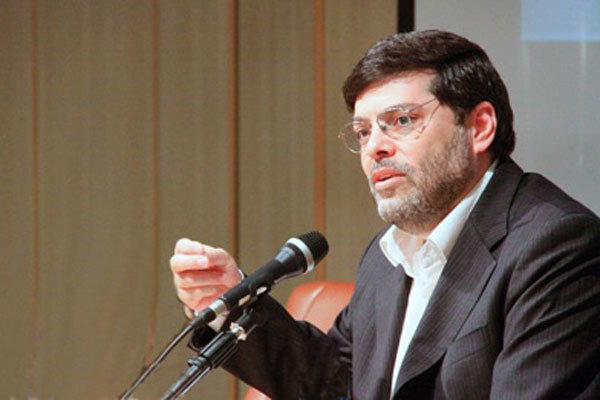
American Herald Tribune | July 13, 2018
Mohsen Abdelmoumen: What is the immediate impact on the Iranian people of the Trump administration’s exit from the Iran nuclear deal?
Dr. Mohammad Marandi: Obviously, it is going to have a short term negative impact. People are concerned about the effect it will have on the economy and Iranian currency has dropped significantly. However, I believe that in the midterm the economy will stabilize, and as Iran reorientates its economy, trading partners and strategic partnerships things will stabilize. In the long term, I think Iran will probably even benefit because the US will no longer have any leverage that it can use against the country and its people.
Are not the economic sanctions imposed by the Trump administration intended to provoke disturbances within the Iranian population in order to change the power in Iran?
Without a doubt. Actually, just recently in a speech in France to the MEK terrorist organization, a cult group which has killed 17 thousand Iranians through assassinations and bomb attacks and has also fought for Saddam Hussein, Rudy Giuliani, Trump’s lawyer and close friend, admitted that the disturbances in Iran are not spontaneous and that they are carried out by their people. That does not mean there are no ordinary people who protest here and there, but the foreign role is obvious and we can see it through the western, Israeli, and Saudi, funded Persian media outlets like BBC Persian and VOA among others that attempt to create tensions and fear among Iranians.
Do you think there is a special program to assassinate Iranian scientists as was the case with Iraqi scientists where some sources have spoken of the existence of a special CIA unit responsible for assassinating scientists?
I have no idea about that, but we do know that Mohammad bin Salman has said in public that he wants to take the war into Iran and after that we saw the terrorist attacks on Tehran and an increased number of attacks alongside the Pakistani-Iranian border as well as the border between Iran and Iraq Kurdistan.
What is the exact role of the Zionist entity of Israel and its services in the assassination of Iranian scientists?
Israeli intelligence and the MEK terrorist organization worked together in this regard. In addition, Western intelligence agencies have in the past passed on IAEA information on Iranian scientists to the Israelis thus helping them carry out a number of murders.
What do you think of the alliance between the Saudis and the Israelis? In your opinion, is it tactical or strategic?
The alliance between Israel, Saudi Arabia and the UAE among others is not new at all. They have been cooperating closely for many decades now, but these Arab regimes have always been afraid to make this alliance public. However, Trump is putting a lot of pressure on these regimes to come out of the closet, especially because he wants to impose his so called deal of the century on the Palestinian people in order to destroy the Palestinian nation.
In your opinion, can Europe play a role in maintaining the nuclear agreement?
It’s possible. However, I am skeptical about the EU’s intentions and I am even more skeptical about their ability to grow a backbone in face of persistent American violations of their sovereignty and threats against their businesses and citizens.
In your opinion, why is it that Israel that massacres the Palestinian people has never been subjected to sanctions?
I think it is widely known that the Israeli regime is allowed to implement apartheid policies, carry out ethnic cleansing and colonization, the bombing of neighboring countries, the killing of civilians, the arrest children, and the confiscation of land.Western countries will give them blanket support no matter what the regime does.
What is your analysis of the situation in Syria? Can we say that Daesh is defeated definitively or is it moving towards reorganization?
The extremist groups including Daesh that were supported by western intelligence services and regional client regimes have been severely weakened and the Syrian Arab army and government have gained the upper hand. But the war is not over, al-Qaeda and other extremist groups continue to get foreign support and Western countries and media outlets have been trying to give cover to these extremist groups by calling them “moderates” and “rebels”, whereas in reality their ideologies are very similar to ISIS.
What do you think of the position of Morocco that has just cut off its relations with Iran by accusing Hezbollah of having armed the Polisario Front? Don’t you think that this maneuver bears the signature of the Saudis, Israelis and Americans?
I think it is quite clear especially taking into account the timing of the accusations that the Saudis and probably countries like the US and the UAE are behind this. But I do not have any specific information.
Why do you think Westerners are silent, both the media and the political institutions, in the face of the carnage that Saudi Arabia is committing in Yemen?
It is because of Saudi oil wealth, and because the destruction of Yemen is in the interest of the Saudi and Israeli regimes. Therefore, Western governments and western media outlets will not do anything meaningful to prevent the massacres or starvation. This is just one example of many. They did the same thing in Libya, Syria, Iraq, Bahrain, and Afghanistan.
Interview realized by Mohsen Abdelmoumen
Who is Dr. Mohammad Marandi?
Born in 1966 in Richmond, Virginia, Mohammad Marandi is the son of Professor Alireza Marandi, a former Iranian Minister of Health and a former member of the Iranian Parliament. Mohammad Marandi lived until he was 13 in the United States before joining Iran. He is a political analyst and expert on American studies and postcolonial literature. Dr. Marandi is a graduate of the University of Tehran and the University of Birmingham where he received a PhD in English Literature. He teaches English Literature and Orientalism at the University of Tehran where he is head of the graduate program in North American Studies.
‘Russia, Iran, China, Pakistan intelligence chiefs discuss Daesh threat in Afghanistan’
Press TV – July 11, 2018
Moscow says the heads of intelligence services of Russia, Iran, China and Pakistan have sat down in Islamabad for talks on the rising threat of Daesh in Afghanistan after the Takfiri terrorist group lost its strongholds in Iraq and Syria.
Sergei Ivanov, the chief of the press bureau of the Russian Foreign Intelligence Service, told the TASS news agency on Tuesday that the officials had stressed the need for “coordinated” measures against the Daesh relocation to Afghanistan.
The quadripartite discussions in Islamabad “focused on the dangers arising from a buildup of Daesh on the Afghan territory,” he said.
“The conference reached understanding of the importance of coordinated steps to prevent the trickling of IS (Daesh) terrorists from Syria and Iraq to Afghanistan where from they would pose risks for neighboring countries,” he added.
Ivanov also noted that the intelligence chiefs, among them Director of the Russian Foreign Intelligence Service Sergei Naryshkin, had underlined the need for more active regional cooperation to settle the conflict in Afghanistan.
The US and its allies invaded Afghanistan under the guise of the war on terror. Some 17 years on, the Taliban militant group has only boosted its campaign of violence across the country, targeting both civilians and security forces in bloody assaults.
More recently, Daesh has also taken advantage of the chaos and established a foothold in eastern and northern Afghanistan.
The Takfiri group has stepped up its terror attacks in the war-torn state despite the presence of thousands of foreign troops on Afghan soil.
Recently, there have been reports suggesting that the US military is allowing Daesh elements to infiltrate into Afghanistan following their defeats in Syria and Iraq.
In February, Leader of the Islamic Revolution Ayatollah Seyyed Ali Khamenei said that by transferring Daesh to Afghanistan, Washington was seeking “to justify the continuation of its presence in the region and to create security for the Zionist regime.”
Daesh started a campaign of terror in Iraq and Syria in 2014, occupying territory in the two Arab countries and establishing a self-proclaimed “caliphate” there.
Soon, the Iraqi and Syrian armies galvanized to retake Daesh-held territory and the terror outfit was gradually stripped of all the land it had occupied in the two Middle Eastern states.
Hassan Nasrallah: Resistance victorious in Gaza, Syria & Iraq, Hezbollah Ready to fight Saudi-US Coalition in Yemen
Speech by Hezbollah Secretary General, Sayed Hassan Nasrallah, on June 29, 2018
[…] Regarding the situation in the Middle East, I also have some issues to address, in a quick and synthetical way as well.
The first point is the Palestinian issue. It is clear that the developments, as we say in the Lebanese political language, the advances (meant to prepare the success) of the ‘Deal of the century’ began to be implemented with force. [Jared] Kushner has roamed the region for a long time, as well as Trump’s special envoy (in order) to (prepare) the peace initiative, what is known as the peace initiative. It is clear that serious US and Israeli efforts to ensure the success of the ‘Deal of the century’ are actively deployed. It is no longer empty words, mere expectations of journalists or such. We may be very close to the official US announcement on this agreement and on this really infamous step.
This is why at the stage where we are, all political leaders and all people who care about the Palestinian cause must of course follow these movements and developments to see what can be done (to neutralize them), and this, according to me, on several fronts.
Today, it is through this prism that we must consider what is happening in Palestine, as well as what is happening in the region, what has happened and is happening in Jordan, and also, as regards Lebanon, the disputes about the border, discussions on the Shebaa Farms (occupied Lebanese territory), on land and sea borders (with Israel): sometimes, these issues are not related to the ‘Deal of the century’, but sometimes they fit into what is known as the ‘Deal of the century’, and we must then be more careful and precise about it, of course with the strong commitment of all Lebanese to recover all their territories and get all their rights over our territorial waters.
Similarly, what is happening in Syria, when we will discuss it in the next step, we must consider it partly in this context, along with the US withdrawal from the nuclear deal and the continued pressure on Iran, whether political pressure, psychological warfare, economic pressure, threats of sanctions, the fact that Iran and Iranian oil (are embargoed) worldwide… All this, we must interpret it within one frame, the frame of the major US project in our region today, to which they will give (absolute) priority, ie the ‘Deal of the century’ which means the liquidation of the Palestinian cause.
This project should be followed closely and with vigilance, and that’s why everyone concerned must think about what to do, how they will fight, face and resist, and we already talked about it in detail (it is important that no Palestinian sign this agreement).
Also on the Palestinian issue, we must pay tribute, especially now, during these hours (of Friday afternoon), to all the men, women, young and elderly who gather (massively) on Friday afternoon on the border strip which separates Gaza from the remainder of Palestine occupied in 1948. These demonstrations of the March of Return prove the determination and perseverance of the Palestinians, and the continuity of this determination and of this (Resistance) movement. Because during all the past weeks, as should know those who follow these events, Israel has made every possible effort in psychological warfare, security pressure, mobilizing all its military and security capabilities towards the Gaza Strip, up to striking the young throwing kites, in addition to various regional pressures on the Palestinians to get them to despair and make them give up the March of Return. The March of Return represents a great challenge which is one of the few remaining opportunities for the Palestinian people.
And the third point is that we must pay tribute to the courage and boldness of the leadership of the Resistance in Gaza, the leaders of the (different) factions of the Resistance, and to the audacity and courage of the Resistants who demonstrated, during these last days and in recent weeks, that the equation of retaliation against any aggression was well in place.
This Israel who thinks he can bomb and kill (with impunity), and in return, he will not suffer any retaliation whatsoever, the Palestinian Resistance, during the past few days, has passed that stage and demonstrated the reality of this equation. We can truly say that they have demonstrated it, and this is the result of their boldness, their courage and their wise and just planning.
Anyway, whether it be the confirmation of this equation, the support to the Palestinian people, especially in Gaza, for the March of Return to continue, or a firm stand alongside the Palestinian people to deal with concrete measures being implemented today for the ‘Deal of the century’, everyone must assume his responsibility for everything that was said during the last weeks and months.
My second point about the regional situation is Syria. I have two points about it.
First point, the developments in southern Syria in recent days and today. I was in contact with the brothers (from Hezbollah) present there just a few moments ago, and (I can confirm that) the data that you hear in the media (on the dazzling success of the Syrian Arab Army) are true, and what is not public yet is even more important.
All data indicate a total collapse of the armed groups, which are completely abandoned by their (popular) base, in case they ever had one, with a strong impetus of the people to return to the State and to the bosom of the State, as has been expressed by a large number of towns and villages. And it may even be that data confirms that it is not only the western part of the Deraa region (whose liberation) must end today or tomorrow, but the entire southern region, whether in Deraa or Quneitra: all armed groups are in a state of collapse and defeat, and there are no prospects for more fighting (from them).
And anyway, the data also indicate that many of these (armed) groups have begun to review their calculations and to head towards the search for agreement and reconciliation. And in this region, only the darkest and the most obscurantist part controlled by ISIS will remain, whose fate (defeat) will in any way be clear and inescapable during the next step.
In a nutshell, in the south of Syria, we are facing a significant development and a great victory against all the armed organizations that were led and protected by the United States, and assisted and supported by Israel, those organizations who received all possible forms of support from some regional countries.
And what is happening in southern Syria, and happened in recent weeks in Manbij with the Kurdish-Turkish-American question, has many major and eloquent evidences of which we will talk (in detail) another time, because I do not have time today. And I believe it is in our interest that the battle in southern Syria comes to an end first before we talk about this evidence and these lessons of which we must all benefit in the light of this great decisive battle that is being waged in Syria for over 7 years.
The second point about Syria is that at the Syrian-Iraqi border, just a few days ago, enemy aircraft struck positions of factions of the Iraqi Resistance that operated there. The faction that was targeted is the Hezbollah Brigades in Iraq, which suffered many martyrs and wounded. Of course, this is an important and dangerous event, even if some may think (wrongly) that it is (already) in the past and that there will be no consequences.
First, I would like to extend to the families of those noble and dignified martyrs my congratulations (for the blessings and honor conferred by) this martyrdom and my condolences for the loss of loved and beloved ones, as well as to my brothers, dear and beloved leaders of the Hezbollah Brigades in Iraq and all their mujahedeen (fighters). And we also have to extend our congratulations and condolences to all the factions of the Resistance in Iraq to honor their martyrs, because martyrs of each faction are the martyrs of all.
And I would also like to take this opportunity to thank them for all their assistance and support in Syria (to fight terrorists). In Iraq, there is no doubt that all these factions, gathered behind the Hachd al-Cha’bi (popular mobilization), have had a real and important role of auxiliary force in defeating ISIS, the obscurantism of ISIS, the darkness and barbarism of ISIS, and the international and regional powers that stand behind ISIS. But ultimately, in Iraq, they were defending themselves, their holy places, their people and their nation. We must remember the jihad (struggle) of these Iraqi brothers, their sacrifices, their martyrs, their wounded, their perseverance, determination and presence in Syria, which continue until today, especially those who are present at the border between Syria and Iraq, to eradicate the last throes of life in this monstrous body shaped by the United States and Israel in the region and called ISIS. And we thank them for the extent of their support, their help and their presence, because as we have said during these 7 years, the battle in Syria is not only the battle of Syria, but it is the battle of Lebanon, Iraq, Palestine, Syria, the Middle East and the future of this region.
Also, our brothers in the Hezbollah Brigades and in the rest of the factions of the Iraqi Resistance announced that they are investigating to ascertain which part (USA? Israel?…) hit these positions and caused so many martyrs and wounded, and that when the identity of this part shall be established with certainty, the attackers will be punished. This is a wise and natural position, and we pledge our support for any decision that these Resistant factions of Mujahideen (fighters) will make.
Yes, dear and noble brothers, yes, I declare to all peoples of the region: to our brothers in Palestine, in Syria, in Iraq, in Lebanon, in Yemen, across the whole region. Wherever the Resistance is struck and its blood is shed unjustly in acts of aggression, this aggression must not remain unanswered, without retaliation and without punishment. Because our enemies only understand this logic. This is what experience teaches us.
We can not count on either international law or on any moral principle, whether in Yemen, Palestine and in all that is happening in the region, and even in the United States. The image of immigrant children separated from their fathers and their mothers, their isolation clearly shows the monstrous reality of President Trump and his administration. Then they backed off because of pressure, but it does not change the truth of his being. If people could see the true face — in religious terms, we speak about the appearance of the (Divine) Kingdom (the reality of our soul, to be unveiled in the afterlife) —, the true appearance of Trump, they would see a ferocious beast (instead of a human being). Who can do such things?
Anyway, we are in a region and in a world where if we do not defend our people, if we do not avenge our martyrs, if we do not chastise our enemies, their aggression will never cease. If we remain inactive in front of this aggression, it will happen again and again, and we will suffer more attacks and lose many more martyrs and wounded.
I hope that by the grace of God, our brothers from the Hezbollah Brigades and other factions of the Iraqi Resistance will quickly manage to establish the identity of the aggressors and to take the (retaliation) measures they deem necessary. It is their decision that no one can impose on them.
Hezbollah is ready to fight Saudi-US coalition in Yemen
I will address my final point about the regional situation, (Yemen), through (what was reported by) the media in recent days.
A few days ago, what we used to refer to as the Arab alliance, and is now referred to as the Saudi-Emirati alliance, but for our part we refer to it as the Saudi-American aggression against Yemen, the forces of the Saudi-American aggression against Yemen… These forces announced two news items, broadcasted by (official Saudi) channel Al-Arabiya, some Arab satellite channels, [Western news agencies & mainstream media] and also some Lebanese media have followed suit, considering these news sources as very reliable.
The first is that because of the bombing in a specific region of Saada, Hezbollah would have lost 8 martyrs, including commanders of Hezbollah. At the same time, they announced another piece of information – do consider these two pieces of information (together) – according to which 8 Hezbollah members were captured. That is to say that the liar who disseminates these news items claimed at one point that 8 members of Hezbollah were killed, and at another time said they were taken prisoner.
Anyway, after a few hours, they backtracked on the announcement of 8 prisoners, to which they preferred the announcement of 8 martyrs, because if there were prisoners, they should show them on television. And with certainty if there were prisoners, now or in the past…
You know that in recent years, in recent months, they have repeatedly claimed that they had captured a Hezbollah or Iran members (in Yemen), etc., good for them. Some time ago, they considered that they had got hold of a gem and made a fuss claiming they captured an Iranian in a region of Yemen. But it was later revealed that it was simply a Pakistani worker who had come to work in Yemen to earn his livelihood, and they got confused, being unable to distinguish Urdu from Persian.
Anyway, the information concerning prisoners died out of itself, and they stopped talking about it, but during 48 hours, they have not stopped talking about the martyrdom of eight Hezbollah members, including several commanders. I want to comment this information (to draw lessons) for both the past and the future, and I will also say a few words about the situation in Yemen.
First, throughout the past period, and until today, for various reasons and interests, we have not disclosed if we had a presence in Yemen or not. We have not addressed this issue. It is true that one day, I clearly said that we did not send fighters to Yemen, because our brothers in Yemen do not need fighters. Is there something else (counselors, military aid…)? We do not confirm it nor deny it, due to a number of interests. That’s the first point.
Second, whether we are present or not (in Yemen), I categorically deny this information that there would be martyrs of Hezbollah in Yemen, not during these last days nor during the past years.
Third, this is not the first time that the Saudi media evoke (falsely and without any evidence) Hezbollah martyrs or prisoners in Yemen.
Fourth, if we assume that one day this happens, and that members of Hezbollah are martyred in Yemen, I tell you frankly that we would not hide it, we would not be ashamed of it: on the contrary, we would be very proud and honored, and we would raise our head high because of these martyrs, if this was to happen one day. And on the contrary, we consider that we do not have to be ashamed if Hezbollah members fall martyrs in Yemen. We should rather be ashamed if we do not bring them the necessary assistance, if we do not provide what we hope or even dream of offering to the Yemeni mujahideen (fighters) and to the oppressed people of Yemen.
Therefore, let no one imagine that in Yemen or elsewhere (we hide our martyrs). If we have a martyr in Iraq, we acknowledge it. If we have a martyr in Syria, we acknowledge it. If a brother is arrested anywhere in Egypt or elsewhere, as has happened in the past, we are never ashamed of our actions, and we do not abandon our martyrs nor our prisoners. We are proud of them, proud of what they do, and we always declare it publicly. (I say this) as a basis for the future.
And so this question does not require that whenever news are spread about Hezbollah alleged martyrs or prisoners, the media contact us to get our denial. As long as we have not published a press release, that we have not talked ourselves of our martyrs to take pride in them, it means that there was nothing of the sort, and any such (propaganda) is fundamentally false and does not even need to be denied (as far as we are concerned). Let it be an established base for the future.
Fifth, about the situation in Yemen, anyway, they may have needed (false) information of this type that could go along the press campaign of Saudi media and of all those who are with them, whether the American media, the Gulf, etc, through recent weeks. Because what we have seen during the Battle of Hodeida, at the airport, around the town and in adjacent villages, and on the west coast of Yemen, is two scandals (humiliations). We witnessed two disgraces. A military disgrace in the field, and a media disgrace following military disgrace on the battlefield.
Regarding the military disgrace on the battlefield, for months, the United States and even, unfortunately, some European countries participating in this aggression – information evoke British, French and other Western countries’ participation – alongside the forces and states of the (Saudi) coalition, Saudi Arabia, the UAE, the group of Abd Rabbo Mansour, mercenaries from all around the world, aviation, a huge number of military vehicles, tanks and armored vehicles (were preparing for an attack). Military vehicles seem even more numerous than the soldiers themselves, from what we see on television. The preparations took place for months, and a fierce psychological warfare, pressures, bribery, intimidation, terror…
And despite all that, when they went down to the battlefield, they suffered a humiliating defeat. A defeat in every sense. And what happened on the western coast of Yemen in recent weeks and so far is actually, even by military standards, truly miraculous. Because the fighting there takes place between on the one hand the most powerful aviation, extremely powerful intelligence agencies, leading-edge technical and technological equipment, experienced commanders, mercenaries, armies, forces, against a fighting people with modest abilities, but with enormous faith and considerable confidence in God the Almighty and Exalted.
These Resistants are, truly, from what we saw in this fight, an incarnation of (the recommendations of Imam Ali to his son before the Battle of the Camel): “Plant your feet firmly on the ground. Lend your head to God (be ready for the ultimate sacrifice). Mountains may move from their position (because of the multitude of enemies), but you should not move from yours.” They are a model (of courage and victorious Resistance).
And that is why I am one of those who can talk about this in full knowledge because me and my brothers have a similar experience. We know what war is, we know what it is to fight against a powerful aviation, violent, ferocious, having unlimited direct capabilities, we know what Resistance, endurance and perseverance are.
And that’s why when considering the war in Yemen, and especially this last experience on the west coast, in Hodeida Airport and everything around this region, me, all my brothers and any Resistant in the world and anyone who knows the military equations and has military experience, we must bow our heads with respect and humility before these fighters, these Resistants, these heroes and their wise, courageous, firm and steadfast leaders. This is the truth, this is not an exaggeration, I do not aim to cheer, no.
And I say to these fighters: myself, with others, I am embarrassed not to be at your side. In my heart, when I see videos (of the fighting) on TV, these heroic acts, this legendary endurance, I keep telling myself: “If only I could be with you.” And I know that all my (Hezbollah) brothers feel exactly the same. And any dignified man in this world thinks the same thing: “If only we could fight alongside you. If only we could be with you. If only I could be one of your fighters, under the banner of your noble and courageous leader.” This is the truth. This faith and determination have inflicted this defeat (to the Saudi-US alliance).
And this is a great lesson that adds itself to the lessons of the Islamic Resistance in Lebanon, Palestine, Syria and Iraq. This is a lesson to all Arab and Muslim peoples: through faith, perseverance and determination, relying on the people and the brave, faithful and noble youth, we can face the most powerful tyrants, the most powerful armies and the most powerful arrogant bullies of this world, armies and security forces.
And there is also the media scandal: how many times have they said they took and occupied Hodeida Airport? But they could not provide any pictures, while we could see every day videos showing the presence of leaders of AnsarAllah (Houthis attacked by Saudi Arabia) in the airport. How many times have they said that they had arrived inside the city, inside the harbor before it was revealed that they did nothing of the sort?
Weeks of lies to the peoples of the region, the Saudi people, the people of the Gulf countries, the peoples of the world, before it was revealed that these victories had no reality outside the Al-Arabiya channel, nothing more, nothing less. And this is the yardstick with which we must measure the credibility of these media [Western press agencies & mainstream media included] that are completely detached from reality, both for Yemen and for everything else. [Such an AFP report was deleted but still appears in cache]
Along these lines, we must also add our voice and our thanks to the new Malaysian government, the new head of the Malaysian government, Mahathir Mohamad, and to the government and to the Malaysian Defense Minister who announced yesterday the withdrawal of Malaysia from this infamous alliance. And we hope that the rest of the Muslim and Arab countries, at least, will follow suit.
And I particularly call on the Sudanese President, the government of Sudan, the Parliament of Sudan and the people of Sudan. It is sad, really sad that the forces of the Sudanese army fight alongside those tyrants. It is truly appalling that the forces of the Sudanese army are engaged in a battle alongside the US, the West, the takfiris, Israel, allied to Saudi Arabia and others. It’s really disgraceful. Sudan, which had a significant presence and a strong commitment to the causes of the region, the Palestinian cause, many causes of the (Muslim) Community. I also insist on Sudan because of the spectacle of young Sudanese who are abandoned in the deserts, valleys and mountains of Yemen, without protection, without defense and without any support or assistance. Why are they killed? For what cause are they dying?
Anyway, we call for this and we hope that all (the countries of the Saudi coalition) will reconsider things (and withdraw). And we hope that the experience of the last battle on the western coast and all these open frontlines will allow Saudi Arabia, the UAE and those who stand by their side to learn the lesson, and understand that they face a people who will never surrender, who has a very high capacity of Resisting and shaping victories, that your battle has no horizon, and that you must answer all Yemeni, Arab, Muslim and international calls to end the war and aggression, to declare a cease-fire and direct you towards dialogue and national reconciliation, and to save Yemen and the Yemeni people, all the people of Yemen, all the tribes of Yemen and all Yemeni political forces of the consequences of this devastating and destructive war.
I’ll stop there, and as for the rest, if necessary, I will speak shortly.
May the peace of God be upon you, and His mercy and His blessings.
Translation: unz.com/sayedhasan (RSS)
Please support this work and subscribe to Sayed Hasan to get around censorship.
NATO’s Dead?
If so, who killed it: Obama, Putin, Or Trump?
By Andrew Korbyko – InfoRoss – 06.07.2018
NATO, as the world knew it, is dead, and the organization’s demise is attributable to the combination of President Putin’s deft diplomacy in advancing the Russian-Turkish rapprochement and his American counterpart’s revolutionary reconceptualization of the very essence of the alliance, both of which wouldn’t have been possible had it not been for Obama.
NATO, as it was previously conceived of for decades, is dead, and while it might be reborn in a different format sometime in the future, its previous model has exhausted its purpose and is entering into the dustbin of history. The organization still officially exists, but everything about it is changing to the point where it might soon become unrecognizable. The consistently anti-Russian driving force behind the bloc has been decisively neutralized by President Putin’s deft diplomacy in winning over its second-largest military member, Turkey, as Russia’s newest strategic partner, while Trump’s revolutionary reconceptualization of the alliance as an equal collection of states combating the asymmetrical security challenges of terrorism and illegal migration will fundamentally transform what it means to be a NATO member.
The Shadow Of Obama
Before going through the post-mortem in detail, it’s worthwhile to describe how Obama’s shadow hangs heavy in the sense that he orchestrated the three greatest mistakes that inadvertently led to NATO’s demise. The 2011 NATO War on Libya has the chance of being seen in hindsight as the final flash of a fast- fading star, with its “shock-and-awe” destruction of the former Jamahiriya going down in history as perhaps the last real instance of the bloc’s members working in coordination with one another to conventionally wage war against a targeted state. The self-congratulatory pomp that followed this brief military campaign has since been proven to have been premature because of the country’s ongoing civil war and role as a transit state for facilitating the flood of hundreds of thousands of migrants into Europe, which sparked its own crisis that has since led to the rise of EuroRealist populists in the continent.
In addition, the Libyan model of Hybrid War destabilization was also applied to Syria, albeit minus the final conventional warfare form, and this exacerbated the Migrant Crisis to the point of no return in guaranteeing the inevitable rise of right-wing politicians in Europe. Taken together, the Wars on Libya and Syria, waged in different manners but nevertheless following the same neo-imperialist regime change form, generated unprecedented humanitarian blowback to the point of triggering far-reaching political changes in NATO’s EU members, making many of them reconsider the official anti-Russian purpose of the bloc when it could be better put to use in defending the organization’s southern shores from swarms of migrants. For as “constructive” of an idea as this may have been, it led to deep divisions within the EU itself between the pro-migrant Western countries, the anti-migrant Central & Eastern European ones, and the anti-Russian Baltic States, Poland, and Romania.
While these intra-NATO disagreements were percolating, Obama made another massive mistake in giving the greenlight for the failed pro-American coup attempt against Turkish President Erdogan in the summer of 2016, and the blowback from this sloppy operation was almost instantaneous in making the bloc’s second-largest military deeply suspicious of US intentions from then on out. Although Turkey had hitherto been mostly focused on facilitating American strategic objectives in the Mideast (which for the most part were disadvantageous to Russia’s long-term regional vision), its unchanging geopolitical position as an irreplaceable part of NATO’s anti-Russian “containment” policy was thought to have retained a consistent function that had been taken completely for granted up until that point. That was a huge error, as will be seen, because President Putin’s deft diplomacy succeeded in its judo-like maneuver to flip Turkey from an enemy into a partner.
Putin’s Judo
Taking advantage of President Erdogan’s understandable distrust of what he had presumed was his country’s closest ally, President Putin reached out to extend his support for the embattled Turkish leader in demonstrating which of the two Great Powers really had Ankara’s best interests in mind. It shouldn’t be forgotten that unconfirmed reports also alleged that Russian intelligence might have tipped President Erdogan off right before a fighter jet flown by one of the coup conspirators was set to bomb his residence, therefore saving his life and sealing a new bond of friendship between both countries. It might never be known whether that actually happened or not, but in any case, the Russian-Turkish rapprochement that followed soon thereafter was swift and even saw Moscow passively accepting Ankara’s limited “Euphrates Shield” incursion into northern Syria later that summer, something that would have been utterly unthinkable just a few months prior.
The revival of the Turkish Stream pipeline project and a related agreement on nuclear energy cooperation served as physical testimonies to the strength of the Russian-Turkish Strategic Partnership, which went one dramatic step much further in officially including a military dimension per Ankara’s desire to buy Moscow’s state-of-the-art S-400 air & missile defense system despite Washington’s threats to sanction it if the deal goes through. In the course of less than two years, President Putin’s deft diplomacy flipped the tables on the previous US-Turkish Strategic Partnership by replacing America with Russia and totally changing the overall dynamics of Mideast geopolitics. The de-facto removal of NATO’s second-largest military force from the organization, which is essentially the true state of affairs at the moment given Ankara’s planned S-400 military cooperation with Moscow and Washington’s CAATSA sanction threats, dealt a heavy blow to the bloc from which it has yet to recover.
Decades’ worth of strategic planning that went into using Turkey as a bulwark against the spread of Russian influence towards the Mediterranean are now worthless after Ankara has for all intents and purposes turned its back on the bloc out of protest of the US’ role in the failed summer 2016 coup attempt. The organization can no longer count on the cornerstone of its Mideast, Black Sea, and Eastern Mediterranean policies, and this has inevitably led to the alliance having to reinvent itself. As it happened, this took place concurrent with the rapid politicization of the Migrant Crisis and its resultant intra-NATO/-EU disputes about how best to respond to this civilizational challenge, further exacerbating divisions within the West and making Turkey’s “defection” (brought about through President Putin’s masterful diplomacy) all the more impactful of a destabilizing move for the already confused alliance.
Trump’s Turnaround
The last and most powerful factor that contributed to the death of NATO was Trump himself, who decided to turn everything around and reorient the bloc from its official anti-Russian purpose by transforming it into something entirely different. It’s true that some of the anti-Russian functions will still remain because of the Baltic States, Poland, and Romania’s membership as “frontline states”, but Trump’s vision is to use NATO as a platform for responding more to asymmetrical security threats such as terrorism and illegal immigration instead of conventional ones like Russia was portrayed as being since the organization’s inception. Words are one thing, but transforming them through action is another, and it’s here where Trump is “walking the walk” much more than “talking the talk” like his predecessors did in visibly pressuring his “allies” to contribute their required 2% of GDP towards defense like they were always supposed to do to begin with.
Trump, being the successful businessman that he is, can’t fathom why the US should subsidize the EU’s “socialist welfare states” especially given that the “foreboding challenge” of a “Soviet invasion” no longer makes that necessary like it may have once. Seeing world affairs from an economic perspective and therefore perceiving the EU to be America’s rival in this respect, Trump knows that the best way to “level the playing field” and “get a better deal” is to put pressure on America’s military underlings by compelling them to pay more for defense in order to advance their interests in a reconceptualized NATO, with this being coordinated alongside the US’ campaign to get the EU to lift its anti-American tariffs. The knock-on effect of this “double whammy” could hit the Europeans’ economic growth and possibly compel them into “cutting a deal’ of some sort for relief, one which can only be speculated upon at this time but which would undoubtedly strengthen American influence.
Far from representing the “united” West that NATO did during the Old Cold War and the brief period of unipolarity that followed, the New Cold War has seen the bloc weakened from within because of the blowback caused by Obama’s disastrous Wars on Libya & Syria as well as the failed pro-American coup attempt against President Erdogan in summer 2016.
President Putin skillfully exploited the latter in rapidly turning Turkey into a close partner and convincing it that its future interests are best served by keeping the bloc at arm’s length, while Trump dealt the deathblow against the alliance for his own reasons mainly having to do with a different view on contemporary security challenges and his economically driven vision of foreign affairs. While the shell of NATO still exists, its functional capacities are now divided into different regional blocs mostly constituting the new anti-migrant European Intervention Force in Western Europe and the remaining anti-Russian forces in the East, though Turkey’s de-facto “defection” means that the organization will never be the same as before.
Iran will import goods only from countries that buy its oil – MP
RT | July 4, 2018
The Energy Committee of Iran has announced that Tehran will buy goods only from those nations which purchase Iranian oil. This follows the US demand from its allies to stop buying Iranian crude.
“We will carry out barter exchange of oil and goods, which means the purchase of goods will depend on the sale of oil,” representative of Iran’s Energy Committee Asadollah Karekhani told ILNA news agency.
“We want to inform our target markets and countries that buy oil from us that we’ll purchase goods from them only if they purchase our oil,” he said, noting that a working group is being formed on barter deals.
Last week, a senior US State Department official told reporters that Washington would try to convince its allies to completely stop buying oil from Iran by early November. Discussions are also being held with other countries, including China.
Iranian President Hassan Rouhani has warned that if the country’s crude oil exports were threatened, the rest of the Middle East’s would be as well.
“Assuming that Iran could become the only oil producer unable to export its oil is a wrong assumption … The United States will never be able to cut Iran’s oil revenues,” he said.
Iran is OPEC’s second-largest crude exporter with more than 2 million barrels a day.
Rouhani is currently in Europe to gather support ahead of a meeting later this week between Iran and the five global powers that are still party to the 2015 nuclear deal.
Featured Video
Seyed M. Marandi: U.S. Military DIVIDED? Iran’s Secret Defense EXPOSED
or go to
Aletho News Archives – Video-Images
From the Archives
‘Israel sees Iran as obstacle to its policies’
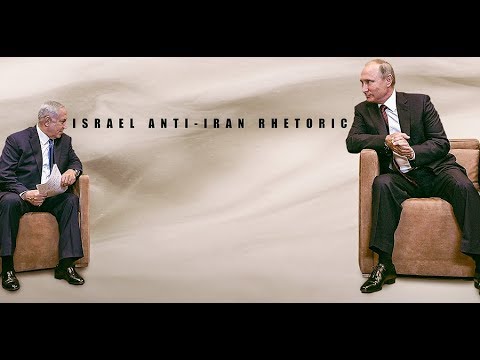
Press TV – August 25, 2017
Prime Minister Benjamin Netanyahu has said that Israel felt threatened by Iran’s growing influence in the Middle East. Netanyahu expressed his Iranophobic view in a meeting with Russian President Vladimir Putin in Russia’s Black Sea resort of Sochi on Wednesday. Press TV has asked Scott Rickard, former American intelligence linguist from Tampa, Florida, and Brent Budowsky, a columnist at The Hill from Washington, to give their thoughts on the issue.
Rickard said Tel Aviv is concerned about the fact that the regime could not carry out its old project to spread sectarian divisions and pave the way for dismemberment of the countries in the Middle East region because of the Iranian-led resistance against Israeli policies, not only in the occupied territories of Palestine but also in the whole region.
“Iran is not a threat to Israel whatsoever. The threat that Israel sees is the fact that their Oded Yinon Plan is being put to a hold by Iran,” the intelligence linguist said on Thursday night.
“They (the Israelis) look at Iran as a threat only because they have no influence on their governments and Iran is autonomous and is not under the Zionist influence,” he added.
Since the victory of the Islamic Republic of Iran in 1979, Tehran has been critical of Israel’s policies in the region, whereas “no leaders [of other states] even dared to speak out against Zionism,” Rickard argued. … continue
Blog Roll
 Aletho News
- Iran declares ‘historic victory’ over US, says enemy forced to accept its proposal
- Trump Claims Ceasefire, Reopening of Strait of Hormuz Agreement with Iran
- Israeli tank fire killed UN peacekeeper in Lebanon, UNIFIL investigation finds
- Russia, China block Bahrain-sponsored UN resolution on Strait of Hormuz
- The US-Israeli War on Science is an Assault on our Future
- Trump’s Promise to Bomb Iran ‘Like Never Before’ Faces Brutal Logistics — Expert
- Germany seeks to restrict stays abroad for men of fighting age – Berliner Zeitung
- Evidence points to Ukraine being behind TurkStream attempted sabotage, but that should come as no surprise
- Sri Lanka secures supplies of Russia oil – minister
- Nations across Asia strike direct deals with Iran for Hormuz passage
- If Americans Knew
- Thousands dead and neighborhoods razed to the ground: Aid agencies fear southern Lebanon is becoming the new Gaza
- The war the US is fighting for Israel could cost trillions
- ‘Cigarette Burns, Nail Wounds’: Toddler Tortured in Gaza to Coerce Father
- Trump Says US Sent ‘a Lot of Guns’ to Protesters in Iran
- Israeli forces destroy 17 UN peacekeeper cameras in south Lebanon
- US-Israeli strikes ‘completely destroy’ synagogue in Tehran
- Archbishop for US Military Says Iran War Is Unjust Under Catholic Teaching
- Iranian leaders’ Open Letters to the American People
- Trump says Iranians appreciate bombs, WHO warns of nuclear risks – Daily Update
- U.N. experts demand Israel release prominent Gaza doctor after reports of ‘severe torture’
- No Tricks Zone
- An Inconvenient Tree: Uncovered In Alps… Europe Much Warmer Than Today 6000 Years Ago
- New Study Reports A 60% Slowdown In Greenland’s Ice Loss Rate In The Last Decade
- Low Intensity Tornado Wrecks Major Solar Farm, Creating A Potential Toxic Dump
- New Study Finds Warming Saves Lives…Cold Temperatures 12 Times More Deadly Than Excess Heat
- German Science Blog Accuses PIK Climate Institute Of Hallucinating Climate Tipping Points
- Devastating Assessment Of Comirnaty Vaccine By Former Senior Pfizer Europe Toxicologist
- New Study: CO2 Is ‘Effectively Negligible’ As An Explanatory Climate Change Factor Since 2000
- Former Pfizer Toxicologist Dr. Helmut Sterz Tells Bundestag Hearing Pfizer Vaccine Should Have Never Been Approved
- Energy Expert: Germany’s Nuclear Phaseout Was A “500 Billion Euro Mistake”
- New Research: South Australia’s Mid-Holocene Sea Surface Temperatures Were 4°C Warmer Than Today
 Aletho News