Hariri Says to Remain Lebanon PM: I Will Keep What Happened in KSA to Myself
Al-Manar | November 28, 2017
Lebanese Premier, Saad Hariri said on Monday he wants to remain Lebanon’s PM, preferring to keep what happened in Saudi Arabia, where he was believed to be held there against his will, to himself.
In an interview with French TV channel CNews, Hariri downplayed talk of his resignation, which he announced from Riyadh, saying that he was “always” the prime minister.
“I want to remain the prime minister of Lebanon and what happened in Saudi Arabia, I will keep to myself,” he said.
“It’s in the interest of Lebanon and other countries for Lebanon to remain stable,” Hariri said.
Asked multiple times whether his decision to announce his resignation in Riyadh was forced, Hariri sidetracked multiple times.
It is believed that Hariri was forced by the Saudi regime to announce his resignation in a bid to topple the Lebanese government. The move was seen by many observers as an attempt aimed against Hezbollah, which is a major partner in the Lebanese government.
Hariri returned to Lebanon in November 21, after President Michel Aoun launched a diplomatic campaign, led by Foreign Minister Gebran Bassil, in which the president voiced rejection of any interference in Lebanese affairs.
Meanwhile on Monday, Hariri said he would resign from his post if Hezbollah refuses to accept changes to the current status quo, in remarks seen as an attempt to cover up ambiguity which surrounded his previously announced resignation.
“Hezbollah intervened in all Arab countries and [my] resignation sent a positive shock,” Hariri said.
“I am waiting for neutrality in the government and inside Lebanon – not just saying one thing and doing something else,” he added.
However, the Lebanese PM noted that Hezbollah is a regional issue that can’t be solved in Lebanon, but rather through a regional settlement.
Saudi Coalition Crumbles In Yemen: Sudanese Mercenaries On Front Lines, Foreign Officers, Proxies In Revolt
By Tyler Durden | Zero Hedge | November 26, 2017
Most Americans might be forgiven for having no clue what the war in Yemen actually looks like, especially as Western media has spent at least the first two years of the conflict completely ignoring the mass atrocities taking place while white-washing the Saudi coalition’s crimes. Unlike wars in Iraq, Libya, and Syria, which received near daily coverage as they were at their most intense, and in which many Americans could at least visualize the battlefield and the actors involved through endless photographs and video from on the ground, Yemen’s war has largely been a faceless and nameless conflict as far as major media is concerned.
Aside from mainstream media endlessly demonstrating its collective ignorance of Middle East dynamics, it is also no secret that the oil and gas monarchies allied to the West are rarely subject to media scrutiny or criticism, something lately demonstrated on an obscene and frighteningly absurd level with Thomas Friedman’s fawning and hagiographic interview with Saudi crown prince MBS published in the New York Times.

Saudi Arabia’s hired help in Yemen: Sudanese fighters headed to the front lines. Image souce: al-Arabiya
But any level of meticulous review of how the Saudi coalition (which heavily involves US assistance) is executing the war in Yemen would reveal a military and strategic disaster in the making. As Middle East Eye editor-in-chief David Hearst puts it, “All in all, the first military venture to be launched by the 32-year-old Saudi prince as defense minister is a tactical and strategic shambles.”
And if current battlefield trends continue, the likely outcome will be a protracted and humiliating Saudi coalition withdrawal with the spoils divided among Houthi and Saudi allied warlords, as well as others vying for power in Yemen’s tenuous political future. But what unsurprisingly unites most Yemenis at this point is shared hatred for the Saudi coalition bombs which rain down on civilian centers below. For this reason, Hearst concludes further of MBS’ war: “The prince, praised in Western circles as a young reformer who will spearhead the push back against Iran, has succeeded in uniting Yemenis against him, a rare feat in a polarized world. He has indeed shot himself, repeatedly, in the foot.”
So how has this come about, and how is the war going from a military and strategic perspective?
First, to quickly review, Saudi airstrikes on already impoverished Yemen, which have killed and maimed tens of thousands of civilians (thousands among those are children according to the UN) and displaced hundreds of thousands, have been enabled by both US intelligence and military hardware. Cholera has recently exploded amidst the appalling war-time conditions, and civilian infrastructure such as hospitals and schools have been bombed by the Saudis. After Shia Houthi rebels overran Yemen’s north in 2014, embattled President Abd-Rabbu Mansour Hadi vowed to “extract Yemen from the claws of Iran” something which he’s repeatedly affirmed, having been given international backing from allies in the West, and a major bombing campaign began on March 2015 under the name “Operation Decisive Storm” (in a cheap mirroring of prior US wars in Iraq, the first of which was “Desert Storm”).
Saudi Arabia and its backers fear what they perceive as growing Iranian influence in the region, something grossly exaggerated, and seek to defend at all costs Yemeni forces loyal to President Hadi. The coalition includes Bahrain, Kuwait, UAE, Egypt, Sudan, and the US and UK, and the Saudi initiated war has also lately received behind the scenes political support from Israel, something recently confirmed by Israeli officials. Concerning the supposed Iran threat in Yemen, an emergency session of the Arab League recently doubled down on its shared commitment to wage war against Iranian interests after it blamed Tehran for a November 4 ballistic missile attack from Shia Houthi rebels against the Saudi capital, which Iran denies playing a role in.
But the Saudi coalition is now in shambles according to a new Middle East Eye investigation. The report highlights some surprising facts long ignored in mainstream media and which give insight into how the Saudi military campaign is likely to end in total failure as “more than two years into a disastrous war, the coalition of ground forces assembled by the Saudis is showing signs of crumbling.”

Below are 5 key takeaways from the full report.
1) Saudi coalition ground forces have a huge contingent of foreign fighters, namely Sudanese troops with UAE officers, suffering the brunt of the battle on the front lines.
Sudanese forces, which constitute the bulk of the 10,000 foreign fighters in the Saudi-led coalition, are suffering high casualty rates. A senior source close to the presidency in Khartoum told Middle East Eye that over 500 of their troops had now been killed in Yemen.
Only two months ago, the commander of the Sudanese Army’s rapid support force, Lieutenant General Mohammed Hamdan Hamidati, quoted a figure of 412 troops killed, including 14 officers to the Sudanese newspaper Al Akhbar. “There is huge pressure to withdraw from this on-going fight,” the Sudanese source told MEE. A force of up to 8,000 Sudanese troops are partly led by Emirati officers. They are deployed in southern Yemen as well as to the south and west of Taiz in al Makha.
2) Sudan’s President Omar al-Bashir has been dubbed “president of the mercenaries” for accepting over $2.2 billion from Saudi Arabia and Qatar in order to provide canon fodder for the Saudi ground war in Yemen in the form of thousands of young Sudanese troops, but he’s threatening revolt. To escape his untenable position, he is reportedly seeking help from Putin.
At home, Sudan’s President Omar al-Bashir is also having second thoughts. He remembers the lifeline he got when Riyadh deposited $1bn in Sudan’s Central Bank two years ago, followed by Qatar’s $1.22bn. But he hardly enjoys being known as “president of the mercenaries,” and he has other relationships to consider.
On Thursday, Bashir became the latest of a procession of Arab leaders to beat a path to Vladimir Putin’s door. He told the Russian president he needed protection from the US, was against confrontation with Iran, and supported the policy of keeping Syrian President Bashar al-Assad in power. This follows an incident at home, which was variously described as espionage and a coup attempt. Taha Osman Ahmed al-Hussein was dismissed as the director of the Office of the Sudanese President after he was discovered carrying a Saudi passport and a residency permit for the UAE. He was caught maintaining secret contact with both.
3) Saudi-backed Yemeni fighters are increasingly mutinying and fear local mass push back from Yemen’s civilian population due to the unpopular bombing campaign.
Mutiny is also stirring in the ranks of Yemenis who two and a half years ago cheered the Saudi pushback against the Houthis who were trying to take over the entire country.
The Saudi relationship with Islah, the largest group of Yemeni fighters in the ground force employed by the coalition, has at best been ambivalent. The Crown Prince Mohammed bin Salman’s closest partner in Yemen, Mohammed bin Zayed, Crown Prince of Abu Dhabi, is openly hostile to the Muslim Brotherhood-affiliated Yemeni party… They [Islahi leadership] are feeling the political price they are paying for supporting a campaign that turned in Yemeni eyes from liberation to occupation… Enough is enough. The regional Islahi leadership are now talking of starting direct negotiations with the Houthis, a senior Islah source told MEE.
4) Saudi proxy fighters are at war with each other: an Emirati-backed militia fighting under the Saudi coalition is assassinating other members of the Saudi coalition in what’s increasingly an internal coalition civil war.
They are also paying a physical price. A number of Islahi sheikhs and scholars as well as Salafis who rejected Emirati leadership have been killed or targeted by assassination attempts. The list is growing: there have been assassinations of Khaled Ali al-Armani, a leader in the Islah Party, on 7 December 2016; Sheikh Abdullah Bin Amir Bin Ali Bin Abdaat al-Kathri, on 23 November 2017 in Hadhramaut; Abdelmajeed Batees (related to Saleh Batees) a leader in the Islah Party on 5 January 2017 in Hadhramaut; Mohammed Bin Lashgam, Deputy Director of Civil Status, on 17 January 2017; Khaled Ali al-Armani, a leader in the Islah Party, on 7 December 2016…
“The Emiratis do not conceal their hostility to Islah. Islahi sheikhs and scholars are being assassinated, and this is being co-ordinated by the pro-Emirati militia. In addition, the UAE is clearly enforcing the blockade of Taiz, and withholding support for our fighters in the city,” the source said.
5) Oman is entering the fray, which will further fragment the Saudi coalition as rivalries for territorial control develop.
As if the balance of competing outside forces in Yemen is not complicated enough, enter Oman. Oman, too, regards southern Yemen as its backyard. It is particularly worried about the takeover of a series of strategic ports and islands off Yemen by the Emiratis. A Qatari diplomatic source described this as the Emiratis’ “seaborn empire,” but the Omanis are upset by this too.
The Omanis are understood to be quietly contacting local Yemeni tribal leaders in south Yemen, some of them separatist forces, to organize a more “orchestrated response” to the militias paid for and controlled by Abu Dhabi.
Like the proxy war in Syria, it appears that Gulf/US plans have backfired, and we are perhaps in for a long Saudi coalition death spiral fueled by delusion and denial. Sadly, it is primarily Yemeni civilians and common people in the region that will continue to bear the brunt of suffering wrought by such evil and delusional stupidity.
Why Saudi Public Relations Are So Disastrous
By Finian CUNNINGHAM | Strategic Culture Foundation | 27.11.2017
What a disastrous past week it’s been for Saudi Arabia’s international public relations. It’s hard to imagine how it could possibly become more ignominious or cringe making for the House of Saud.
But of course, how could it be otherwise? When the oil-rich kingdom is run by a father-and-son clique, cosseted by venal super-wealth, and ruled by patronage, pampered by cowering flunkies. In addition, obsessed with an obscurantist Wahhabi sectarian hatred, and to cap it all, indulged by an ignorant American president who himself shares dynastic family ambitions.
Last week’s roll call of PR disasters included the Syrian peace process getting underway in earnest, in spite of Saudi efforts to derail. Secondly, Lebanon appears to have stabilized politically with the return of its Prime Minister Saad Hariri, again in spite of Saudi attempts to sabotage the government in Beirut. And thirdly, most shamefully, the shocking images of emaciated children in Yemen have shown the world the sickening reality of the Saudi-led blockade on that war-stricken country.
Let’s start with the tale of two summits. While Russian President Vladimir Putin was last week hosting his Syrian, Iranian and Turkish counterparts in the Black Sea city of Sochi in a major diplomatic boost for a peaceful end to the Syrian war, at the same time the Saudi rulers were convening something lackluster and frankly, irrelevant, by comparison.
The Saudis held a summit in Riyadh for the so-called Syrian “opposition” comprising the discredited political talking heads of sundry terror groups that have ravaged Syria for the past nearly seven years. Disgracefully, the UN envoy Staffan de Mistura was present in a vain bid to lend some ersatz credibility to the terrorist apologists.
Putin, and Iran’s Hassan Rouhani and Turkey’s Recep Tayyip Erdogan joined political forces to push for a comprehensive peace settlement in Syria “determined by the Syrian people alone without external interference”. Whereas at the Saudi conference of has-been Syrian opposition figures, who have been living a charmed life in exile in Saudi Arabia, there were the tired-old, futile calls for Syrian President Bashar al-Assad to quit as leader.
With the Syrian War near over and with Assad’s state forces dominant over the foreign-backed insurgents, no-one can take the demand for Assad to stand down as serious. It’s a pipe-dream that the Saudis still keep puffing on. Not even Washington and its NATO allies bother to make this demand seriously any more.
In a nutshell, the Saudi rulers are seen to be left holding the putrid remnants of their defeated regime-change intrigue in Syria.
Moving on to the debacle over Lebanon. Again, Saudi machinations were seen here to have turned pear-shaped. After nearly two weeks of trying to arm-twist Lebanese premier Saad Hariri to resign and thereby collapse the coalition government in Beirut with Shia group Hezbollah, Hariri returned last week to his country.
In the meantime, Lebanon has rallied across sectarian lines to unite against Saudi interference – the exact opposite of what the Saudi rulers were agitating for. The whole Saudi-inspired attempt to sabotage Lebanese politics and even incite a sectarian war in the country has ended up only strengthening the country and in particular elevating Hezbollah as a defender of the nation’s sovereignty.
The Saudi paymaster had wanted Sunni politician Saad Hariri to resign as prime minister. His resignation was broadcast on Saudi television on November 4 after Hariri had been summoned to Riyadh and where he inexplicably stayed for the next two weeks. According to the Saudi-inspired script, Hariri said his life was in danger from an assassination plot by Hezbollah and its Shia ally Iran. Hezbollah and Iran scoffed at that claim as ridiculous. Lebanese President Michel Aoun, from the Christian constituency, also dismissed Hariri’s sensational claims.
Last week when Hariri returned to Lebanon, he abruptly reversed his resignation decision, saying now that he would remain in the prime minister’s post. The bizarre images of Hariri looking relaxed at a military parade in Beirut marking Lebanon’s independence day last Wednesday were a stupendous rebuttal of Saudi-orchestrated fear-mongering that this was a man whose life was purportedly under threat.
The Saudi reckless attempts at destabilizing Lebanon not only spectacularly backfired. Their interference in the sovereign affairs of Lebanon has earned the Saudis the scorn of Lebanese and Arab people across the entire region.
As if those PR cock-ups weren’t bad enough, then the world was shocked by images out of Yemen showing skeletal children starving to death from the Saudi blockade on the country. Also, caught on the hook of Saudi barbarity were the US and Britain which have been supplying the Saudi regime with weapons and logistics in its nearly three-year war on the poorest nation of the Arab region.
The Saudis imposed a total sea, air and land blockade on Yemen on November 6 following a ballistic missile attack near the Saudi capital by Houthi rebels from Yemeni territory. The Houthis say they are taking the war to Saudi Arabia because of the latter’s aerial bombing campaign which has targeted civilians. For the Saudis to respond by imposing collective punishment through a blockade on vital aid entering into Yemen is a gross violation of humanitarian law – a war crime.
Nearly two weeks of this total blockade provoked the UN and other international aid agencies to issue dire warnings that millions of Yemenis are facing starvation. So bad is the international image of the Saudis that the US State Department was motivated to urge its client regime to relent on the suffering it was inflicting. At the end of last week, the Saudi rulers claimed that they were lifting the blockade on Yemen’s airports and sea ports. The UN and aid agencies still said the dubious Saudi lifting of blockade would not alleviate the suffering.
How could any country preside over such a week of horrible public relations? What is it about the Saudi rulers that make them so incorrigibly incompetent, so barbaric and so self-defeating?
Several factors combine to make the Saudi rulers a perfect shit-storm.
The House of Saud is a family-run crony dynasty. That’s not new. But over the past year or so, the present rulers have consolidated absolute power to a father-and-son clique, headed by ailing King Salman (82) and the precocious 32-year-old Crown Prince Mohammad bin Salman. These scions of intoxicating hyper-wealth live in an ivory tower within an ivory tower.
The Saudi system of governance never had accountability except within its own arcane crony inner-circle. Now it has even less accountability. It’s therefore not hard to imagine how the Saudi rulers are prone to making ever-more foolish foreign policy calculations. The war on Yemen was “masterminded” by the ambitious, insecure Crown Prince trying to prove his mettle, when he probably never had any competence to begin with. The guy probably reads intricate regional politics through the prism of one of his puerile computer games.
Secondly, the Saudi rulers, present and past, are guided by an obsessive sectarian Wahhabi hatred towards Shia Islam. All policy decisions are made out of an irrational abhorrence towards Shia Iran, and any ally of Iran, from Hezbollah to Syria. The reasons for this obsessive hatred are rooted in an obscurantist religious belief that Shia Islam is “heretical”. That antipathy is also fueled by an insecure sense of envy and nemesis that Iran’s relatively progressive politics are more legitimate and appealing to the masses in the Middle East than the feudalist monarchy of the Saudis. In any case, to construct foreign policy relations on the basis of a Medieval-like worldview is inevitably problematic, to say the least, in the 21st Century.
A third reason why the Saudis are so incorrigibly inept is because the rulers are indulged by American and European governments and the Western media. Admittedly, some Western media outlets have belatedly given some coverage to the horror inflicted on Yemen.
Nevertheless, the media coverage is still shamefully muted considering the scale of suffering and crimes perpetrated. We are talking about a genocide unfolding in Yemen imposed by the Saudi rulers with the support of their American and British patrons. Yet in spite of this utter barbarity, Western media remain relatively mute. Contrast the Western media reporting on Yemen with the hysterical coverage they were giving to the Syrian city of Aleppo last year when the Syrian army and Russian forces were moving in to liberate that city from a siege by foreign-backed militants.
Western indulgence of the Saudis – in the form of low-key hypocritical media coverage – emboldens these despots to embark on their reckless and ruinous schemes.
None is more to blame for Western indulgence than the British and American governments who have plied the Saudi regime with billions of dollars-worth of warplanes and bombs over the past three years in the war on Yemen. Despite the evidence of war crimes against civilians, Washington and London maintain the despicable, risible fiction that all is ethical and legal.
Topping the Western indulgence of the Saudi despots is US President Donald Trump and his businessman son-in-law Jared Kushner, who is his unelected “top aide” on Middle Eastern affairs. Every recent PR disaster by the Saudis has been encouraged and approved by Trump who seems to run the White House as if it were a family business dynasty. Both Trump and Kushner are regarded as having very limited knowledge about history and geopolitics. Dumb and Dumber, in short.
Trump’s dispatch of 36-year-old gormless Kushner to delve into Middle East affairs and to pander to the whims of Saudi Crown Prince Mohammad bin Salman is certainly a major factor in why the House of Saud keeps making foreign policy like operating a wrecking ball.
When House of Trump pairs up with House of Saud, no wonder then that it’s a super-sized PR fiasco.
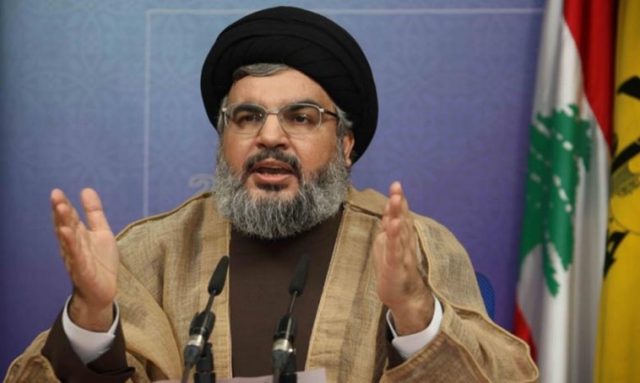
Nasrallah: US did what it could to help Daesh in Syria’s Bukamal
Press TV – November 20, 2017
The secretary general of the Lebanese Hezbollah resistance movement says despite the US claims about fighting terrorism, it spared no effort to help Daesh forces in the Syrian town of al-Bukamal.
Sayyed Hassan Nasrallah made the remarks in a televised address to the Lebanese nation in capital city of Beirut on Monday.
Nasrallah noted that recapturing Bukamal was a major victory over Daesh, because Bukamal was the last Syrian city occupied by Daesh.
“The US helped Daesh as much as it could in Bukamal short of directly engaging forces that fought to liberate the town from Daesh,” the Hezbollah leader noted.
Nasrallah went on to note that the US provided Daesh terrorists with full air cover in Bukamal.
The US sent its drones to Bukamal and provided Daesh with accurate information about what was going on, Nasrallah said, adding that American forces also waged electronic warfare against forces that were fighting to liberate Bukamal.
American forces also provided air transfer for Daesh commanders and facilitated their escape to eastern shores of the Euphrates, he said. The Hezbollah leader stated that even Turkey’s President Recep Tayyip Erdogan slammed the US for helping Daesh.
Nasrallah emphasized that recapturing Bukamal led to unity of Syria and ended Daesh’s self-proclaimed state in the country.
Following recent victories in Iraq and Syria, he added, the military structure of Daesh collapsed in the two countries and Iraqi forces have reached the Syrian border.
Hezbollah leader noted that the victory over Daesh was victory of Islamic values over terrorists’ savagery.
Nasrallah also highlighted the role played by Commander of the Islamic Revolution Guards Corps’ Quds Force Major General Qassem Soleimani in anti-terror operations in both Iraq and Syria.
He noted that Soleimani was commanding anti-Daesh operations in the two countries at the frontline and was never a commander to issue orders from behind the lines.
Elsewhere in his remarks, Nasrallah referred to the latest meeting of the Arab League foreign ministers in Cairo, who designated the Lebanese Hezbollah as a terrorist group, saying that this was not the first time that such accusations were leveled against Hezbollah.
Arab League Secretary General Ahmad Aboul Gheit announced at a press conference in the Egyptian capital of Cairo on Sunday that Arab states had agreed to designate Lebanon’s Hezbollah resistance movement a “terrorist organization.”
The Arab League’s extraordinary general meeting on Sunday was held at the request of Saudi Arabia, which has assumed an aggressive stance against Hezbollah for its alleged links to Iran, Riyadh’s powerful rival in the region. Riyadh associates Hezbollah with Iran and has been trying to weaken the resistance movement, which is Lebanon’s de facto deterrent force against Tel Aviv.
In its concluding resolution, the Arab League announced that Arab foreign ministers, excluding those of Lebanon and Iraq, would hold Hezbollah responsible for supporting “terrorist groups” across the region.
Nasrallah said the Arab League statement has labeled Hezbollah’s council, which is part of the Lebanon’s government, as a terrorist outfit, alleging that it provides missiles to terrorist groups in the region.
He added that accusations about Hezbollah sending missiles to regional countries were false and undocumented, emphasizing that the group has never sent any missiles or even light weapons to Kuwait, Yemen, Iraq or Bahrain or any other country in the region.
The leader of Hezbollah went on to say that the Arab League has warned Lebanon that if Hezbollah is not disarmed, security of the country would be in jeopardy.
Hezbollah rejected the accusation, noting that the main threat to security of Lebanon was the Zionist regime of Israel.
He added that the resistance front’s weapons were the main factor restoring security and stability to Lebanon, because they were used for defensive purposes in the face of the Israeli aggression.
Nasrallah emphasized that Hezbollah’s weapons were used only against terrorist groups such as Daesh and posed no threat to security of Lebanon.
A United Nations Security Council-appointed panel says it has seen no evidence to support Saudi Arabia’s claims that missiles have been transferred to Yemen’s Houthis by external sources.
Nasrallah stated that the main reason behind the recent Arab League meeting was not to discuss the issue of Palestine or other problems facing the Islamic world, but its main reason was the recent missile attack against a Saudi airport near the country’s capital, Riyadh.
Refusing Saudi Arabia and Arab League claims that the missile was provided to Yemeni Ansarullah fighters by Iran or the Lebanese Hezbollah, Nasrallah said Iran or Hezbollah had not sent any missiles to Yemen and Yemeni forces made their own missiles in the country.
He categorically rejected Arab League’s claims in this regard, noting that Saudi Arabia and its allies must admit that they have been defeated by Yemeni forces in their war of aggression against the country.
Nasrallah emphasized that Arab countries must put an immediate end to their support for terror groups, and do not fill the Middle East region with such outfits.
He reiterated that no member of Hezbollah was involved in the November 5 Yemeni missile strike against King Khalid International Airport of Riyadh.
The Hezbollah leader then took the Arab League to task for failing to address Saudi Arabia’s devastating aerial bombardment of the “Arab country of Yemen,” saying, “Saudi Arabia is bombing Yemeni people day and night.”
Strongly denouncing the Riyadh regime over perpetrating outrageous atrocities against millions of “Arab Muslims” in Yemen, Nasrallah lashed out at the Arab world’s “deafening silence” over the grim situation in Yemen.
“The turmoil we are witnessing in the Arab world is a cover for the announcement of normalization of relations with Israel,” he commented.
Nasrallah then called on Arabs to do their best to maintain their national unity in the face of all divisive efforts.
The Hezbollah secretary general also praised Lebanese officials and politicians for their firm stance regarding Prime Minister Saad Hariri’s shock resignation, calling on him to return to Lebanon as soon as possible.
Lebanon has right to resist, foil Israeli plans: Aoun

Lebanese President Michel Aoun
Press TV – November 20, 2017
Lebanese President Michel Aoun says his nation has the absolute “right to resist and foil” Israel’s aggressive plans by “all available means” as Tel Aviv continues “targeting” the Mediterranean country.
President Aoun made the remarks via his official Twitter account on Monday, a day after Arab League Secretary-General Ahmad Aboul Gheit announced at a press conference in the Egyptian capital of Cairo that Arab states had agreed to designate Lebanon’s Hezbollah resistance movement a “terrorist organization.”
Being a member of Lebanon’s coalition government, the popular Hezbollah movement, which currently holds 14 of the 128 seats at the parliament of Lebanon, has been a strong aid to the Lebanese army in thwarting any Israeli aggression against the country. Back in 2000, the resistance movement successfully forced Israel to withdraw from southern Lebanon.
Hezbollah is also playing a major role in fighting against foreign-backed Takfiri terrorist groups, which have been wreaking havoc in neighboring Syria for the last six years.
The Arab League’s extraordinary general meeting on Sunday was held at the request of Saudi Arabia, which has assumed an aggressive stance against Hezbollah for its alleged links to Iran, Riyadh’s powerful rival in the region. Riyadh associates Hezbollah with Iran and has been trying to weaken the resistance movement, which is Lebanon’s de facto deterrent force against Tel Aviv.
In its concluding resolution, the Arab League announced that Arab foreign ministers, excluding those of Lebanon and Iraq, would hold Hezbollah responsible for supporting “terrorist groups” across the region.
Furthermore, it also blamed the Lebanese government for aiding and supporting the resistance group, accusing Beirut of being an accomplice to what Hezbollah is doing.
However, in a separate tweet on Monday, Aoun strongly defended Hezbollah, saying he “cannot accept suggestions that Lebanon’s government is a partner in acts of terrorism.”
Foreign Minister Gebran Bassil says he refused to list Hezbollah as a terror group as it is a “fundamental component of the Lebanese state.”
The accusations leveled by Saudi-dominated Arab League against Hezbollah echoes exactly what Israel alleges against the resistance movement, strongly suggesting Riyadh is trying hard to help the Israeli entity by weakening Hezbollah.
The developments came some two weeks after Lebanese Prime Minister Saad Hariri announced his shock resignation in a televised address aired from the Saudi capital, shortly after he arrived there for a visit, repeating the same accusations against Hezbollah. After resigning, Hariri spent two more weeks in Saudi Arabia amid rumors he was under house arrest there, before traveling to Paris on Saturday.
After meeting with French President Emmanuel Macron, Hariri promised to be in Lebanon in time to mark its independence day on Wednesday. His awkward decision, however, has already plunged the country into political turmoil.
Meanwhile, the Arab League’s head said that Lebanon should be “spared” from spiraling regional tensions after arriving in Beirut to meet with Aoun.
“Arab countries understand and take into account the situation in Lebanon and want to spare it … from any dispute,” said Aboul Gheit.
Hamas slams Arab League for terrorist labeling of Hezbollah
Later on Monday, Palestinian Hamas movement slammed Arab League for labeling Lebanon’s Hezbollah as a terrorist organization.
A statement released by the Gaza-based Hamas said it “rejects the description of the Lebanese Hezbollah resistance movement as terrorist.”
The Palestinian movement added that instead of Hezbollah, Israel’s actions against Palestinians should be labeled “terrorism.”
Hamas also called on Arab states to “support the legitimate struggle of the Palestinian people,” urging them to work together to solve their differences through dialogue.
Here’s why Saudi Arabia, Israel and the US are not going to invade Iran
By Adam Garrie | The Duran | November 20, 2017
Members of the Arab League have met in Cairo at the behest of the Saudi regime, to discuss the supposed “threat of Iran”. The meeting featured all the crude, undiplomatic and nonfactual language about Iran that one has come to expect from American, Israeli and Saudi Arabian spokesmen.
Highlights from the meeting included a statement from the Saudi Foreign Minister Adel al-Jubeir who stated,
“We will not stand idly by in the face of Iran’s aggression….Showing leniency toward Iran will not leave any Arab capital safe from those ballistic missiles….
Iran created agents in the region, such as the Houthi and Hezbollah militias, in total disregard for all international principles”.
These meritless statements are almost identical to that which is frequently said by the US White House and Tel Aviv. In this sense, there was nothing novel about the meeting. What was remarkable was how hastily the meeting was organised as if to demonstrate Saudi’s commitment to its “clear and present danger” narrative about Iran.
Furthermore, a statement was released at the Arab League meeting, saying that there are no immediate plans to go to war with Iran but that at the same time, such plans have not been ruled out.
To quickly sum-up just how ridiculous the statements made during the Arab League meeting were
1. Iran’s missile programme is perfectly legal and is not covered by the JCPOA. The UN has said this many times.
2. Iran is currently at war with zero nations while Saudi is at war with Yemen causing one of the largest humanitarian disasters in the 21st century. Saudi Arabia has also been exposed as a major source of terrorist sponsorship, including in Iraq, Syria, Libya and beyond.
3. Iran has come to the legal assistance of Syria and Iraq in fighting terrorists groups including ISIS and al-Qaeda, while Saudi Arabia has known links to ISIS and al-Qaeda.
Of course, for the states with an obscene anti-Iranian agenda, none of this has ever mattered.
What does matter to the rest of the world though is whether the threats from the Arab league, indicated a short and/or medium-term readiness for war against Iran?
The short answer is, they almost certainly do not.
The Arab League today is a shadow of its former self. With the Syrian Arab Republic’s membership suspended, Qatar facing a boycott from proponent members, Iraq having better relations with Iran than most Arab states and Lebanon being deprived of its Prime Minister due to Saudi political meddling, the Arab League is hardly a united body of strong nations. It has declined so much so, that it is increasingly little more than a Saudi and GCC dominated organisation which is used in attempts to gain some form of broader international legitimacy for Riyadh’s often ridiculous foreign policy statements.
However, Riyadh’s ability to unite the Arab world over any matter, let alone an act of war, amounts to little. Syria, Iraq and due to its multi-confessional history, Lebanon, would never go to war against Iran. In fact, the Iraqi armed forces, Syrian Arab Army, Hezbollah and other volunteers from Lebanon would almost certainly fight with Iran, during the course of any Saudi led military action against Tehran.
Qatar, whose armed forces are small as it is, would never join any military ‘crusade’ led by its Saudi opponent and the fact remains that Doha’s slowly expanding relations with Iran have been one of the reasons for the Saudi led boycott of Qatar. Libya can no longer be called a functional state, while further into the Maghreb, Tunisia, Algeria and Morocco are far removed from Iran issue, in spite of their Arab league membership. Saudi’s GCC allies, Kuwait, UAE, Bahrain and to a lesser degree Oman, simply have little to offer in respect of any military coalition.
The biggest question mark which remains, is Egypt. Egypt is the largest country in the Arab world and likewise, boasts the biggest Army in the Arab world.
In order to even approach effectiveness, Egypt would have to join any would be anti-Iranian Arab League coalition. As to whether Egypt would join, one can objectively say that the incentives for not joining, far outweigh those that might compel Egypt to enter into a war pact with Saudi Arabia, against Iran.
Ever since secular rule was restored to Egypt in 2013, after US backed regime change against former President Hosni Mubarak briefly brought the once again illegal Muslim Brotherhood to power, Egypt has been in a position wherein promoting internal stability has been far more important than international outreach. Furthermore, while the Egyptian government is disproportionately dependent on Saudi cash injections in order to stay afloat, Cairo continues to show surprising amounts of foreign policy independence at times.
Egypt recently expressed disapproval of US attempts to extend a UN mandate for investigating “chemical weapons” in Syria. Egypt has further made strong statements in favour of Syria’s territorial unity, backed up by remarks that only a political solution can bring peace to Syria. This language is very similar to that used by Russian diplomats which should come as no surprise, as the foreign ministries of Egypt and Russia have a very good relationship. Furthermore, when it comes to Egypt’s most pressing international issue, that of terrorists in neighbouring Libya, Russia appears far more inclined to support the Cairo backed Libyan National Army than the fledgling Government of National Accord which is supported by the US and EU.
Furthermore, Egypt recently rejected calls from Riyadh to economically sanction the Lebanese party Hezbollah, in a move which shows a clear divergence from Saudi policies on Hezbollah.
While Egypt is compromised by its financial ties to Saudi Arabia, Egypt still seeks to balance out its old Arab Nationalist history as a fiercely independent and anti-imperialist nation with the modern realities of being far less influential than in the days of Nasser and the early days of Sadat.
Furthermore, in spite of its formal diplomatic ties with Israel, Cairo is all too aware that if the situation inside Egypt, especially in respect of the Sinai Peninsula were to become destabilised, Egypt could not afford to have its armed forces in distant Iran. This is especially true as Israel is ready to exploit any instability on Sinai to its own advantage. If anyone thinks that Israel somehow respects Egypt just because diplomatic relations were established, this view is, to put it mildly, delusional. Israel will exploit any country and any situation it can and Egypt is no exception. The same is true of Jordan, the only other country which has formal relations with Tel Aviv. Jordan, like Egypt is far more concerned with its own immediate neighbourhood than with Iran.
In this sense, in spite of whatever financial incentives Saudi might offer Egypt for backing military efforts against Iran, the preponderance of evidence would demonstrate that Egypt would refrain from actively participating.
When asked to consider the position of the Vatican in geo-political affairs, Josef Stalin is thought to have said, “The Pope? How many divisions has he got?”.
In this sense, looking at the disunity in the Arab world, Iran could easily turn to Riyadh and say “how many divisions have you got”? The answer is not enough to seriously challenge Iran, while Iran certainly has enough divisions and enough regional allies to challenge and beat Saudi Arabia and its Persian Gulf allies.
Then there is the matter of Israel, the US and Turkey.
When it comes to antagonising regional powers that Tel Aviv doesn’t like, the Israeli regime’s military is all too happy to conduct strikes and even occupy territory. Israel occupied party of Egypt between 1967 and 1982 and part of Lebanon between 1982 and 2006. Israel continues to occupy Syria and military strikes from Israel against Syria have happened on and off for the last several decades.
Likewise, Israel attacked Iraq in 1981 in a short airstrike against a French built Iraqi nuclear reactor.
All of these actions have been illegal and Tel Aviv simply doesn’t care. Why should they care about Iran in this case? The answer is because Iran today is far more powerful than any of the aforementioned countries that Israel attacked and it also has many regional allies stretching from Iran itself to the borders of Israeli regime controlled territory.
Israel has not attacked Iran in the way it has so frivolously attacked parts of the Arab world. Israel has not done this because Tel Aviv knows Iran would strike back and so too would Iran’s allies in southern Lebanon. Furthermore, with Turkey becoming ever more distant with NATO, the west and Israel, all the while growing ever closer to its Eurasian partners, including neighbouring Iran, there is no guarantee that Turkey would remain neutral in such a conflict.
Turkey does not want any instability on its border with Iran. This is one of the reasons that both countries cooperated in the building of an anti-terrorist rampart on their borders. Turkey knows that any further regional instability would only hurt Turkey’s short term security prospects and its long term financial prospects. If Turkey even gave air support to Iran, the entire conflict would be ‘game over’ for the anti-Iranian powers, unless Israel decided to use its nuclear weapons.
As Hezbollah leader Sayyed Hassan Nasrallah recently stated, Israel prefers short blitzkrieg style conflicts that it can win rapidly at little material cost or bloodshed from its own side. History has shown such an analysis to be absolutely correct. Furthermore, as Israel’s last attempt to conduct such a war against Lebanon in 2006 failed, Israel has reverted to measures which from its perspective are more realistically “productive” such as short, illegal airstrikes against Syria and military manoeuvres intended as provocations against Lebanon.
Any war with Iran would be much more difficult for Israel to conduct. In many ways it would be impossible, short of Tel Aviv using its nuclear weapons in what Israel watchers know to be called the “Samson Option”.
Such extreme measures would likely be opposed even by the United States. While the Trump administration continues to turn up the volume on anti-Iranian rhetoric, many more level headed individuals in the Pentagon and State Department are totally opposed to war on Iran. These people know that the cost of such a war would be incredibly high and that the US might ultimately lose.
In this sense, with Israel too afraid to attack Iran and while still too restrained by the US to go nuclear, with the Pentagon generally opposed to direct military action against Iran and with Saudi Arabia incapable of pulling together a genuine Arab coalition capable of fighting against Iran, there is little chance that any nation short of one on a suicide mission, would attempt to declare war on Iran.
Much like any war on North Korea, a war on Iran would bring unparalleled destruction to the entire region, and no invading party’s victory would be assured. In other-words, Iran has more or less checkmated the situation, largely in its favour and all without firing a shot, while if anything gaining rather than losing allies.
The Arab League, Israel and the US can certainly blow smoke, but when it comes to attacking Iran directly, even these countries are not quite foolish enough to start that fire.
Featured Video
Laith Marouf: Hezbollah’s position on US-Iran ceasefire
or go to
Aletho News Archives – Video-Images
From the Archives
The Dirty Little Secret behind the “Global Terrorism Index”
The Omission of Israeli Terrorism in the Occupied Palestinian Territories
By Karin Brothers | Global Research | December 6, 2014
… The Israeli settlements — all of which are illegal – have been identified as a major impediment to peace. The refusal of a major “global” terrorism report to name the Israeli settlers as one of the groups most responsible for terrorism not only misrepresents a major source of regional violence but exposes the Global Terrorism Index as a propaganda tool that supports a U.S. agenda.
In recent years, governments have been attempting to thwart terrorism by blocking supportive fund-raising. When it comes to Israeli settlements, however, the US and Canada actually encourage fund-raising by giving organizations (such as Christian Friends of Israeli Communities (CFOIC) and the Jewish National Fund) financial support in the form of donor tax-deductions.
Charities which provide funds for the Israeli settlements should be regarded as terror-financing organizations. They should not only lose their tax-deductible status, but they should be banned because they support the violation of international humanitarian law. The terror-financing laws that are being strictly enforced for Muslim charities should be applied to Christian and Jewish charities as well. … Read full article
Blog Roll
 Aletho News
- How UK Regulator Ofcom Quietly Bypassed International Law to Police American Speech
- The Black Cube Files: How Former Mossad Operatives Flipped a Nation
- Laith Marouf: Hezbollah’s position on US-Iran ceasefire: What you’re not being told
- Israel’s priority lies in destroying chances of peace between Iran, US: Ex-UN nuclear chief
- Ceasefire for all or for none: Iran shuts Hormuz over Lebanon attacks
- Strait of Hormuz is Iran’s ‘nuclear weapon’ that forced US retreat: Medvedev
- Energy crisis will last for months – Kremlin envoy
- Europe’s quiet role in the war on Iran
- Forty days that shook the Empire: How Iran turned the tables on US and prevailed
- Netanyahu unilaterally declares Lebanon outside of ceasefire deal
- If Americans Knew
- This is ceasefire? Israel’s biggest massacre yet in Lebanon, another journalist killed in Gaza – Daily Update
- Tucker Carlson on Israel: This Is the Behavior of an Ally? Really?
- Gazans face a triple crisis: severe shortages of water and bread, healthcare in tatters
- NY Times reports how Netanyahu took the US into Iran War
- A sigh of relief over Iran, but Gaza and Lebanon in dire straits – Daily Update
- Thousands dead and neighborhoods razed to the ground: Aid agencies fear southern Lebanon is becoming the new Gaza
- The war the US is fighting for Israel could cost trillions
- ‘Cigarette Burns, Nail Wounds’: Toddler Tortured in Gaza to Coerce Father
- Trump Says US Sent ‘a Lot of Guns’ to Protesters in Iran
- Israeli forces destroy 17 UN peacekeeper cameras in south Lebanon
- No Tricks Zone
- An Inconvenient Tree: Uncovered In Alps… Europe Much Warmer Than Today 6000 Years Ago
- New Study Reports A 60% Slowdown In Greenland’s Ice Loss Rate In The Last Decade
- Low Intensity Tornado Wrecks Major Solar Farm, Creating A Potential Toxic Dump
- New Study Finds Warming Saves Lives…Cold Temperatures 12 Times More Deadly Than Excess Heat
- German Science Blog Accuses PIK Climate Institute Of Hallucinating Climate Tipping Points
- Devastating Assessment Of Comirnaty Vaccine By Former Senior Pfizer Europe Toxicologist
- New Study: CO2 Is ‘Effectively Negligible’ As An Explanatory Climate Change Factor Since 2000
- Former Pfizer Toxicologist Dr. Helmut Sterz Tells Bundestag Hearing Pfizer Vaccine Should Have Never Been Approved
- Energy Expert: Germany’s Nuclear Phaseout Was A “500 Billion Euro Mistake”
- New Research: South Australia’s Mid-Holocene Sea Surface Temperatures Were 4°C Warmer Than Today
 Aletho News