How America Spreads Global Chaos
By Nicolas J.S. Davies | Consortium News | October 30, 2017
As the recent PBS documentary on the American War in Vietnam acknowledged, few American officials ever believed that the United States could win the war, neither those advising Johnson as he committed hundreds of thousands of U.S. troops, nor those advising Nixon as he escalated a brutal aerial bombardment that had already killed millions of people.

U.S. F-105s bomb North Vietnam in 1966
(Photo credit: U.S. Air Force)
As conversations tape-recorded in the White House reveal, and as other writers have documented, the reasons for wading into the Big Muddy, as Pete Seeger satirized it, and then pushing on regardless, all came down to “credibility”: the domestic political credibility of the politicians involved and America’s international credibility as a military power.
Once the CIA went to work in Vietnam to undermine the 1954 Geneva Accords and the planned reunification of North and South through a free and fair election in 1956, the die was cast. The CIA’s support for the repressive Diem regime and its successors ensured an ever-escalating war, as the South rose in rebellion, supported by the North. No U.S. president could extricate the U.S. from Vietnam without exposing the limits of what U.S. military force could achieve, betraying widely held national myths and the powerful interests that sustained and profited from them.
The critical “lesson of Vietnam” was summed up by Richard Barnet in his 1972 book Roots of War. “At the very moment that the number one nation has perfected the science of killing,” Barnet wrote, “It has become an impractical means of political domination.”
Losing the war in Vietnam was a heavy blow to the CIA and the U.S. Military Industrial Complex, and it added insult to injury for every American who had lost comrades or loved ones in Vietnam, but it ushered in more than a decade of relative peace for America and the world. If the purpose of the U.S. military is to protect the U.S. from the danger of war, as our leaders so often claim, the “Vietnam syndrome,” or the reluctance to be drawn into new wars, kept the peace and undoubtedly saved countless lives.
Even the senior officer corps of the U.S. military saw it that way, since many of them had survived the horrors of Vietnam as junior officers. The CIA could still wreak havoc in Latin America and elsewhere, but the full destructive force of the U.S. military was not unleashed again until the invasion of Panama in 1989 and the First Gulf War in 1991.
Half a century after Vietnam, we have tragically come full circle. With the CIA’s politicized intelligence running wild in Washington and its covert operations spreading violence and chaos across every continent, President Trump faces the same pressures to maintain his own and his country’s credibility as Johnson and Nixon did. His predictable response has been to escalate ongoing wars in Syria, Iraq, Afghanistan, Yemen, Somalia and West Africa, and to threaten new ones against North Korea, Iran and Venezuela.
Trump is facing these questions, not just in one country, Vietnam, but in dozens of countries across the world, and the interests perpetuating and fueling this cycle of crisis and war have only become more entrenched over time, as President Eisenhower warned that they would, despite the end of the Cold War and, until now, the lack of any actual military threat to the United States.
Ironically but predictably, the U.S.’s aggressive and illegal war policy has finally provoked a real military threat to the U.S., albeit one that has emerged only in response to U.S. war plans. As I explained in a recent article, North Korea’s discovery in 2016 of a U.S. plan to assassinate its president, Kim Jong Un, and launch a Second Korean War has triggered a crash program to develop long-range ballistic missiles that could give North Korea a viable nuclear deterrent and prevent a U.S. attack. But the North Koreans will not feel safe from attack until their leaders and ours are sure that their missiles can deliver a nuclear strike against the U.S. mainland.
The CIA’s Pretexts for War
U.S. Air Force Colonel Fletcher Prouty was the chief of special operations for the Joint Chiefs of Staff from 1955 to 1964, managing the global military support system for the CIA in Vietnam and around the world. Fletcher Prouty’s book, The Secret Team: The CIA and its Allies in Control of the United States and the World, was suppressed when it was first published in 1973. Thousands of copies disappeared from bookstores and libraries, and a mysterious Army Colonel bought the entire shipment of 3,500 copies the publisher sent to Australia. But Prouty’s book was republished in 2011, and it is a timely account of the role of the CIA in U.S. policy.
Prouty surprisingly described the role of the CIA as a response by powerful people and interests to the abolition of the U.S. Department of War and the creation of the Department of Defense in 1947. Once the role of the U.S. military was redefined as one of defense, in line with the United Nations Charter’s prohibition against the threat or use of military force in 1945 and similar moves by other military powers, it would require some kind of crisis or threat to justify using military force in the future, both legally and politically. The main purpose of the CIA, as Prouty saw it, is to create such pretexts for war.
The CIA is a hybrid of an intelligence service that gathers and analyzes foreign intelligence and a clandestine service that conducts covert operations. Both functions are essential to creating pretexts for war, and that is what they have done for 70 years.
Prouty described how the CIA infiltrated the U.S. military, the State Department, the National Security Council and other government institutions, covertly placing its officers in critical positions to ensure that its plans are approved and that it has access to whatever forces, weapons, equipment, ammunition and other resources it needs to carry them out.
Many retired intelligence officers, such as Ray McGovern and the members of Veteran Intelligence Professionals for Sanity (VIPS), saw the merging of clandestine operations with intelligence analysis in one agency as corrupting the objective analysis they tried to provide to policymakers. They formed VIPS in 2003 in response to the fabrication of politicized intelligence that provided false pretexts for the U.S. to invade and destroy Iraq.
CIA in Syria and Africa
But Fletcher Prouty was even more disturbed by the way that the CIA uses clandestine operations to trigger coups, wars and chaos. The civil and proxy war in Syria is a perfect example of what Prouty meant. In late 2011, after destroying Libya and aiding in the torture-murder of Muammar Gaddafi, the CIA and its allies began flying fighters and weapons from Libya to Turkey and infiltrating them into Syria. Then, working with Saudi Arabia, Qatar, Turkey, Croatia and other allies, this operation poured thousands of tons of weapons across Syria’s borders to ignite and fuel a full-scale civil war.
Once these covert operations were under way, they ran wild until they had unleashed a savage Al Qaeda affiliate in Syria (Jabhat al-Nusra, now rebranded as Jabhat Fateh al-Sham), spawned the even more savage “Islamic State,” triggered the heaviest and probably the deadliest U.S. bombing campaign since Vietnam and drawn Russia, Iran, Turkey, Israel, Jordan, Hezbollah, Kurdish militias and almost every state or armed group in the Middle East into the chaos of Syria’s civil war.
Meanwhile, as Al Qaeda and Islamic State have expanded their operations across Africa, the U.N. has published a report titled Journey to Extremism in Africa: Drivers, Incentives and the Tipping Point for Recruitment, based on 500 interviews with African militants. This study has found that the kind of special operations and training missions the CIA and AFRICOM are conducting and supporting in Africa are in fact the critical “tipping point” that drives Africans to join militant groups like Al Qaeda, Al-Shabab and Boko Haram.
The report found that government action, such as the killing or detention of friends or family, was the “tipping point” that drove 71 percent of African militants interviewed to join armed groups, and that this was a more important factor than religious ideology.
The conclusions of Journey to Extremism in Africa confirm the findings of other similar studies. The Center for Civilians in Conflict interviewed 250 civilians who joined armed groups in Bosnia, Somalia, Gaza and Libya for its 2015 study, The People’s Perspectives: Civilian Involvement in Armed Conflicts. The study found that the most common motivation for civilians to join armed groups was simply to protect themselves or their families.
The role of U.S. “counterterrorism” operations in fueling armed resistance and terrorism, and the absence of any plan to reduce the asymmetric violence unleashed by the “global war on terror,” would be no surprise to Fletcher Prouty. As he explained, such clandestine operations always take on a life of their own that is unrelated, and often counter-productive, to any rational U.S. policy objective.
“The more intimate one becomes with this activity,” Prouty wrote, “The more one begins to realize that such operations are rarely, if ever, initiated from an intent to become involved in pursuit of some national objective in the first place.”
The U.S. justifies the deployment of 6,000 U.S. special forces and military trainers to 53 of the 54 countries in Africa as a response to terrorism. But the U.N.’s Journey to Extremism in Africa study makes it clear that the U.S. militarization of Africa is in fact the “tipping point” that is driving Africans across the continent to join armed resistance groups in the first place.
This is a textbook CIA operation on the same model as Vietnam in the late 1950s and early 60s. The CIA uses U.S. special forces and training missions to launch covert and proxy military operations that drive local populations into armed resistance groups, and then uses the presence of those armed resistance groups to justify ever-escalating U.S. military involvement. This is Vietnam redux on a continental scale.
Taking on China
What seems to really be driving the CIA’s militarization of U.S. policy in Africa is China’s growing influence on the continent. As Steve Bannon put it in an interview with the Economist in August, “Let’s go screw up One Belt One Road.”
China is already too big and powerful for the U.S. to apply what is known as the Ledeen doctrine named for neoconservative theorist and intelligence operative Michael Ledeen who suggested that every 10 years or so, the United States “pick up some small crappy little country and throw it against the wall, just to show we mean business.”
China is too powerful and armed with nuclear weapons. So, in this case, the CIA’s job would be to spread violence and chaos to disrupt Chinese trade and investment, and to make African governments increasingly dependent on U.S. military aid to fight the militant groups spawned and endlessly regenerated by U.S.-led “counterterrorism” operations.
Neither Ledeen nor Bannon pretend that such policies are designed to build more prosperous or viable societies in the Middle East or Africa, let alone to benefit their people. They both know very well what Richard Barnet already understood 45 years ago, that America’s unprecedented investment in weapons, war and CIA covert operations are only good for one thing: to kill people and destroy infrastructure, reducing cities to rubble, societies to chaos and the desperate survivors to poverty and displacement.
As long as the CIA and the U.S. military keep plunging the scapegoats for our failed policies into economic crisis, violence and chaos, the [elite elements of] United States and the United Kingdom can remain the safe havens of the world’s wealth, islands of privilege and excess amidst the storms they unleash on others.
But if that is the only “significant national objective” driving these policies, it is surely about time for the 99 percent of Americans who reap no benefit from these murderous schemes to stop the CIA and its allies before they completely wreck the already damaged and fragile world in which we all must live, Americans and foreigners alike.
Douglas Valentine has probably studied the CIA in more depth than any other American journalist, beginning with his book on The Phoenix Program in Vietnam. He has written a new book titled The CIA as Organized Crime: How Illegal Operations Corrupt America and the World, in which he brings Fletcher Prouty’s analysis right up to the present day, describing the CIA’s role in our current wars and the many ways it infiltrates, manipulates and controls U.S. policy.
The Three Scapegoats
In Trump’s speech to the U.N. General Assembly, he named North Korea, Iran and Venezuela as his prime targets for destabilization, economic warfare and, ultimately, the overthrow of their governments, whether by coup d’etat or the mass destruction of their civilian population and infrastructure. But Trump’s choice of scapegoats for America’s failures was obviously not based on a rational reassessment of foreign policy priorities by the new administration. It was only a tired rehashing of the CIA’s unfinished business with two-thirds of Bush’s “axis of evil” and Bush White House official Elliott Abrams’ failed 2002 coup in Caracas, now laced with explicit and illegal threats of aggression.
How Trump and the CIA plan to sacrifice their three scapegoats for America’s failures remains to be seen. This is not 2001, when the world stood silent at the U.S. bombardment and invasion of Afghanistan after September 11th. It is more like 2003, when the U.S. destruction of Iraq split the Atlantic alliance and alienated most of the world. It is certainly not 2011, after Obama’s global charm offensive had rebuilt U.S. alliances and provided cover for French President Sarkozy, British Prime Minister Cameron, Secretary of State Hillary Clinton and the Arab royals to destroy Libya, once ranked by the U.N. as the most developed country in Africa, now mired in intractable chaos.
In 2017, a U.S. attack on any one of Trump’s scapegoats would isolate the United States from many of its allies and undermine its standing in the world in far-reaching ways that might be more permanent and harder to repair than the invasion and destruction of Iraq.
In Venezuela, the CIA and the right-wing opposition are following the same strategy that President Nixon ordered the CIA to inflict on Chile, to “make the economy scream” in preparation for the 1973 coup. But the solid victory of Venezuela’s ruling Socialist Party in recent nationwide gubernatorial elections, despite a long and deep economic crisis, reveals little public support for the CIA’s puppets in Venezuela.
The CIA has successfully discredited the Venezuelan government through economic warfare, increasingly violent right-wing street protests and a global propaganda campaign. But the CIA has stupidly hitched its wagon to an extreme right-wing, upper-class opposition that has no credibility with most of the Venezuelan public, who still turn out for the Socialists at the polls. A CIA coup or U.S. military intervention would meet fierce public resistance and damage U.S. relations all over Latin America.
Boxing In North Korea
A U.S. aerial bombardment or “preemptive strike” on North Korea could quickly escalate into a war between the U.S. and China, which has reiterated its commitment to North Korea’s defense if North Korea is attacked. We do not know exactly what was in the U.S. war plan discovered by North Korea, so neither can we know how North Korea and China could respond if the U.S. pressed ahead with it.
Most analysts have long concluded that any U.S. attack on North Korea would be met with a North Korean artillery and missile barrage that would inflict unacceptable civilian casualties on Seoul, a metropolitan area of 26 million people, three times the population of New York City. Seoul is only 35 miles from the frontier with North Korea, placing it within range of a huge array of North Korean weapons. What was already a no-win calculus is now compounded by the possibility that North Korea could respond with nuclear weapons, turning any prospect of a U.S. attack into an even worse nightmare.
U.S. mismanagement of its relations with North Korea should be an object lesson for its relations with Iran, graphically demonstrating the advantages of diplomacy, talks and agreements over threats of war. Under the Agreed Framework signed in 1994, North Korea stopped work on two much larger nuclear reactors than the small experimental one operating at Yongbyong since 1986, which only produces 6 kg of plutonium per year, enough for one nuclear bomb.
The lesson of Bush’s Iraq invasion in 2003 after Saddam Hussein had complied with demands that he destroy Iraq’s stockpiles of chemical weapons and shut down a nascent nuclear program was not lost on North Korea. Not only did the invasion lay waste to large sections of Iraq with hundreds of thousands of dead but Hussein himself was hunted down and condemned to death by hanging.
Still, after North Korea tested its first nuclear weapon in 2006, even its small experimental reactor was shut down as a result of the “Six Party Talks” in 2007, all the fuel rods were removed and placed under supervision of the International Atomic Energy Agency, and the cooling tower of the reactor was demolished in 2008.
But then, as relations deteriorated, North Korea conducted a second nuclear weapon test and again began reprocessing spent fuel rods to recover plutonium for use in nuclear weapons.
North Korea has now conducted six nuclear weapons tests. The explosions in the first five tests increased gradually up to 15-25 kilotons, about the yield of the bombs the U.S. dropped on Hiroshima and Nagasaki, but estimates for the yield of the 2017 test range from 110 to 250 kilotons, comparable to a small hydrogen bomb.
The even greater danger in a new war in Korea is that the U.S. could unleash part of its arsenal of 4,000 more powerful weapons (100 to 1,200 kilotons), which could kill millions of people and devastate and poison the region, or even the world, for years to come.
The U.S. willingness to scrap the Agreed Framework in 2003, the breakdown of the Six Party Talks in 2009 and the U.S. refusal to acknowledge that its own military actions and threats create legitimate defense concerns for North Korea have driven the North Koreans into a corner from which they see a credible nuclear deterrent as their only chance to avoid mass destruction.
China has proposed a reasonable framework for diplomacy to address the concerns of both sides, but the U.S. insists on maintaining its propaganda narratives that all the fault lies with North Korea and that it has some kind of “military solution” to the crisis.
This may be the most dangerous idea we have heard from U.S. policymakers since the end of the Cold War, but it is the logical culmination of a systematic normalization of deviant and illegal U.S. war-making that has already cost millions of lives in Afghanistan, Iraq, Syria, Libya, Somalia, Yemen and Pakistan. As historian Gabriel Kolko wrote in Century of War in 1994, “options and decisions that are intrinsically dangerous and irrational become not merely plausible but the only form of reasoning about war and diplomacy that is possible in official circles.”
Demonizing Iran
The idea that Iran has ever had a nuclear weapons program is seriously contested by the IAEA, which has examined every allegation presented by the CIA and other Western “intelligence” agencies as well as Israel. Former IAEA Director General Mohamed ElBaradei revealed many details of this wild goose chase in his 2011 memoir, Age of Deception: Nuclear Diplomacy in Treacherous Times.
When the CIA and its partners reluctantly acknowledged the IAEA’s conclusions in a 2007 National Intelligence Estimate (NIE), ElBaradei issued a press release confirming that, “the agency has no concrete evidence of an ongoing nuclear weapons program or undeclared nuclear facilities in Iran.”
Since 2007, the IAEA has resolved all its outstanding concerns with Iran. It has verified that dual-use technologies that Iran imported before 2003 were in fact used for other purposes, and it has exposed the mysterious “laptop documents” that appeared to show Iranian plans for a nuclear weapon as forgeries. Gareth Porter thoroughly explored all these questions and allegations and the history of mistrust that fueled them in his 2014 book, Manufactured Crisis: the Untold Story of the Iran Nuclear Scares, which I highly recommend.
But, in the parallel Bizarro world of U.S. politics, hopelessly poisoned by the CIA’s endless disinformation campaigns, Hillary Clinton could repeatedly take false credit for disarming Iran during her presidential campaign, and neither Bernie Sanders, Donald Trump nor any corporate media interviewer dared to challenge her claims.
“When President Obama took office, Iran was racing toward a nuclear bomb,” Clinton fantasized in a prominent foreign policy speech on June 2, 2016, claiming that her brutal sanctions policy “brought Iran to the table.”
In fact, as Trita Parsi documented in his 2012 book, A Single Roll of the Dice: Obama’s Diplomacy With Iran, the Iranians were ready, not just to “come to the table,” but to sign a comprehensive agreement based on a U.S. proposal brokered by Turkey and Brazil in 2010. But, in a classic case of “tail wags dog,” the U.S. then rejected its own proposal because it would have undercut support for tighter sanctions in the U.N. Security Council. In other words, Clinton’s sanctions policy did not “bring Iran to the table”, but prevented the U.S. from coming to the table itself.
As a senior State Department official told Trita Parsi, the real problem with U.S. diplomacy with Iran when Clinton was at the State Department was that the U.S. would not take “Yes” for an answer. Trump’s ham-fisted decertification of Iran’s compliance with the JCPOA is right out of Clinton’s playbook, and it demonstrates that the CIA is still determined to use Iran as a scapegoat for America’s failures in the Middle East.
The spurious claim that Iran is the world’s greatest sponsor of terrorism is another CIA canard reinforced by endless repetition. It is true that Iran supports and supplies weapons to Hezbollah and Hamas, which are both listed as terrorist organizations by the U.S. government. But they are mainly defensive resistance groups that defend Lebanon and Gaza respectively against invasions and attacks by Israel.
Shifting attention away from Al Qaeda, Islamic State, the Libyan Islamic Fighting Group and other groups that actually commit terrorist crimes around the world might just seem like a case of the CIA “taking its eyes off the ball,” if it wasn’t so transparently timed to frame Iran with new accusations now that the manufactured crisis of the nuclear scare has run its course.
What the Future Holds
Barack Obama’s most consequential international achievement may have been the triumph of symbolism over substance behind which he expanded and escalated the so-called “war on terror,” with a vast expansion of covert operations and proxy wars that eventually triggered the heaviest U.S. aerial bombardments since Vietnam in Iraq and Syria.
Obama’s charm offensive invigorated old and new military alliances with the U.K., France and the Arab monarchies, and he quietly ran up the most expensive military budget of any president since World War Two.
But Obama’s expansion of the “war on terror” under cover of his deceptive global public relations campaign created many more problems than it solved, and Trump and his advisers are woefully ill-equipped to solve any of them. Trump’s expressed desire to place America first and to resist foreign entanglements is hopelessly at odds with his aggressive, bullying approach to every foreign policy problem.
If the U.S. could threaten and fight its way to a resolution of any of its international problems, it would have done so already. That is exactly what it has been trying to do since the 1990s, behind both the swagger and bluster of Bush and Trump and the deceptive charm of Clinton and Obama: a “good cop – bad cop” routine that should no longer fool anyone anywhere.
But as Lyndon Johnson found as he waded deeper and deeper into the Big Muddy in Vietnam, lying to the public about unwinnable wars does not make them any more winnable. It just gets more people killed and makes it harder and harder to ever tell the public the truth.
In unwinnable wars based on lies, the “credibility” problem only gets more complicated, as new lies require new scapegoats and convoluted narratives to explain away graveyards filled by old lies. Obama’s cynical global charm offensive bought the “war on terror” another eight years, but that only allowed the CIA to drag the U.S. into more trouble and spread its chaos to more places around the world.
Meanwhile, Russian President Putin is winning hearts and minds in capitals around the world by calling for a recommitment to the rule of international law, which prohibits the threat or use of military force except in self-defense. Every new U.S. threat or act of aggression will only make Putin’s case more persuasive, not least to important U.S. allies like South Korea, Germany and other members of the European Union, whose complicity in U.S. aggression has until now helped to give it a false veneer of political legitimacy.
Throughout history, serial aggression has nearly always provoked increasingly united opposition, as peace-loving countries and people have reluctantly summoned the courage to stand up to an aggressor. France under Napoleon and Hitler’s Germany also regarded themselves as exceptional, and in their own ways they were. But in the end, their belief in their exceptionalism led them on to defeat and destruction.
Americans had better hope that we are not so exceptional, and that the world will find a diplomatic rather than a military “solution” to its American problem. Our chances of survival would improve a great deal if American officials and politicians would finally start to act like something other than putty in the hands of the CIA.
Nicolas J. S. Davies is the author of Blood On Our Hands: the American Invasion and Destruction of Iraq. He also wrote the chapters on “Obama at War” in Grading the 44th President: a Report Card on Barack Obama’s First Term as a Progressive Leader.
Neocons Hijack Trump’s Syria Policy
By Ron Paul | October 30, 2017
Does anyone in the Trump Administration have a clue about our Syria policy? In March, Secretary of State Rex Tillerson appeared to be finally pulling back from President Obama’s disastrous “Assad must go” position that has done nothing but prolong the misery in Syria. At the time, Tillerson said, the “longer-term status of President Assad will be decided by the Syrian people.”
Those of us who believe in national sovereignty would say that is pointing out the obvious. Nevertheless it was a good sign that US involvement in Syria – illegal as it is – would no longer seek regime change but would stick to fighting ISIS.
Then out of the blue this past week, Tillerson did another 180 degree policy turn, telling a UN audience in Geneva that, “[t]he reign of the Assad family is coming to an end. The only issue is how that should that be brought about.”
The obvious question is why is it any of our business who runs Syria, but perhaps that’s too obvious. Washington’s interventionists have long believed that they have the unilateral right to determine who is allowed to head up foreign countries. Their track record in placing “our guy” in power overseas is abysmal, but that doesn’t seem to stop them. We were promised that getting rid of people like Saddam Hussein and Gaddafi would light the fire of freedom and democracy in the Middle East. Instead it has produced nothing but death and misery – and spectacular profits for the weapons manufacturers who fund neocon think tanks.
In Syria, Assad has been seen as a protector of Christians and other minorities against the onslaught of in many cases US-backed jihadists seeking his overthrow. While the Syrian system is obviously not a Switzerland-like democracy, unlike our great “ally” Saudi Arabia they do at least have elections contested by different political parties, and religious and other minorities are fully integrated into society.
Why has the Trump Administration shifted back to “Assad must go”? One reason may be that, one-by-one, the neocons who opposed Trump most vociferously during the campaign have found themselves and their friends in positions of power in his Administration. The neocons are great at winning while losing.
The real story behind Washington’s ongoing determination to overthrow the Syrian government is even more disturbing. In a bombshell interview last week, a former Qatari Prime Minister confessed that his country, along with Saudi Arabia, Turkey, and the United States, began shipping weapons to jihadists from the very moment Syrian unrest began in 2011. The well-connected Qatari former minister was trying to point out that his country was not alone in backing al-Qaeda and even ISIS in Syria. In the course of defending his country against terrorism charges leveled by Saudi Arabia he has spilled the beans about US involvement with the very groups claimed to be our arch-enemies. As they did in Afghanistan in the 1980s, the CIA supported radical Islamic terrorism in Syria.
Haven’t we done enough damage in Syria? Do we really need to go back to 2011 and destroy the country all over again? The neocons never admit a mistake and never change course, but I do not believe that the majority of Americans support their hijacking of President Trump’s Syria policy. It is long past time for the US to leave Syria alone. No bases, no special forces, no CIA assassination teams, no manipulating their electoral system. We need to just come home.
Israel’s Prime Minister Netanyahu Is Leading US President Trump to War with Iran
Can Generals James Mattis (US Secretary of Defense) and John Hyten (Head of US Strategic Command) Prevent a Disaster?
By Prof. James Petras | Global Research | October 27, 2017
Introduction
Israeli Prime Minister Benjamin Netanyahu and the Presidents of the 52 Major Jewish American Organizations are leading President Trump, like a puppy on a leash, into a major war with Iran. The hysterical ’52 Presidents’ and ‘Bibi’ Netanyahu are busy manufacturing Holocaust-level predictions that a non-nuclear Iran is preparing to ‘vaporize’ Israel. The buffoonish US President Trump has swallowed this fantasy wholesale and is pushing our nation toward war for the sake of Israel and its US-based supporters and agents. We will cite ten recent examples of Israeli-authored policies, implemented by Trump in his march to war (there are scores of others).
1. After many years, Israel and ‘the 52 Presidents’ finally made the US withdraw from the United Nations Educational, Scientific and Cultural Organization (UNESCO) because of its detailed documentation of Israeli crimes against Palestinian people. Trump complied with their demands.
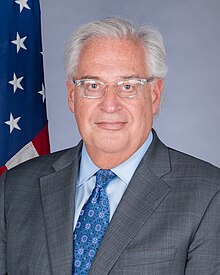
David Friedman (Wikimedia Commons)
2. Tel Aviv demanded a Zionist fanatic and backer of the illegal Jewish settler occupation of Palestinian lands, the bankruptcy lawyer David Friedman, be appointed US Ambassador to Israel. Trump complied, despite the ambassador’s overt conflict of interest.
3. Israel launched waves of savage bombings against Syrian government troops and facilities engaged in a war against ISIS-mercenary terrorists. Israel, which had backed the terrorists in its ambition to break-up of the secular Syrian state, demanded US support. Trump complied, and sent more US arms to the anti-government terrorists.
4. Israel denounced the 2015 Iran Nuclear Deal Framework and Joint Comprehensive Plan of Action, signed by 6 major states and UN Security Council Members, (US, France, UK, Germany, China and Russia). A furious Netanyahu demanded that President Trump follow Tel Aviv and abrogate the multiparty agreement signed by his predecessor, Barack Obama. Trump complied and the US is at risk of openly violating its international agreement.
Trump parrots Netanyahu’s falsehoods to the letter: He raves that Iran, while technically in compliance, has violated ‘the spirit of the agreement’ without citing a single instance of actual violation. The 5 other signers of the ‘Framework’, the US military and the UN’s International Atomic Energy Agency have repeatedly certified Iran’s strict compliance with the accord. Trump rejects the evidence of countless experts among US allies and ‘his own generals’ while embracing the hysterical lies from Israel and the ‘52’. Who would have thought the ‘hard-nosed’ businessman Trump would be so ‘spiritual’ when it came to honoring and breaking treaties and agreements!
5. Israel and the ‘52’ have demanded that Washington imprison and fine US citizens who have exercised their constitutional First Amendment Right of free speech by supporting the international boycott, divest and sanctions (BDS) campaign, which is designed to end the illegal Israeli occupation of Palestinian land and crimes against Palestinians. Trump complied. Americans may soon face over a decade in prison and complete economic ruin for supporting a peaceful economic boycott of Israeli settler products. This will represent an unprecedented violation of the US Constitution. At present, US public employees, like teachers in certain US states, are facing job loss for refusing to sign a ‘loyalty oath’ not to boycott products from Israel’s illegal settlements. Desperate American victims of the floods and natural disasters in Texas are being denied access to public US taxpayer relief funds unless they sign similar loyalty oaths in support of Israel.
6. Israel demanded that the US appoint Zionist fanatic real estate attorney, Jason Greenblatt and real estate speculator, Jared Kushner as Middle East peace negotiators. Trump appointed South Carolina businesswoman Nikki Haley as US Ambassador to the United Nations. Israel pushed for Ms. Haley, the first US governor to criminalize support for the peaceful BDS movement.
7. Trump went against the advice of ‘his Generals’ in his own cabinet regarding Iran’s compliance with the nuclear agreement, and chose to comply with Netanyahu’s demands.
8. Trump supports the long-standing Israeli project to maneuver a Kurdish takeover of Northern Iraq, grabbing the oil-rich Kirkuk province and permanently dividing the once secular, nationalist Iraqi nation. Trump has sent arms and military advisers to the Kurds in war-torn Syria as they attempt to grab territory for a separate ‘Kurdistan’. This is part of an Israeli plan to subdivide the Middle East into impotent tribal ‘statelets’.
9. Trump rejected the Turkish government’s demand to extradite CIA-Israeli-backed Fethullah Gulen, self-exiled in the US since 1999, for his leadership role in the failed 2016 military coup d’etat.
10. Like all his predecessors, Trump is completely submissive to Israeli-directed ‘lobbies’ (like AIPAC), which operate on behalf of a foreign power, in violation of the 1938 Foreign Agents Registration Act. Trump chose his Orthodox Zionist son-in-law, Jared Kushner, a callow real estate investor and prominent supporter for war against Iran, as his chief foreign policy adviser.
President Trump’s irresponsible pandering to Israel and its American-Jewish agents has caused deep unease among the Generals in his cabinet, as well as among active duty and retired US military officers, who are skeptical about Tel Aviv’s push for open-ended US wars in the Middle East.
Ten Reasons Why Military Officers support America’s Nuclear Accord with Iran
The Netanyahu-Israel First power configuration in Washington succeeded in convincing Trump to tear-up the nuclear accord with Iran. This went against the advice and wishes of the top US generals in the White House and active duty officers in the field who support the agreement and recognize Iran’s cooperation.
The Generals have ten solid reasons for rejecting the Netanyahu-Trump push to shred the accord:
1. The agreement is working. By all reliable, independent and official observers, including the International Atomic Energy Agency, the US intelligence community and the US Secretary of State – Iran is complying with its side of the agreement.
2. If Trump violates the agreement, co-signed by the 6 members of the UN Security Council, in order to truckle to the whims of Israel and its gang of ‘52’, the US government will lose all credibility among its allies. The US military will be equally tainted in its current and future dealings with NATO and other military ‘partners’.
3. Violation of the agreement will force the Iranians to restart their nuclear, as well as advanced defensive weapons programs, increasing the risk of an Israeli-Trump instigated military confrontation. Any US war with Iran will be prolonged, costing the lives of tens of thousands of US troops, its land bases in the Gulf States, and warships in the Persian Gulf. Full-scale war with Iran, a large and well-armed country, would be a disaster for the entire region.
4. US generals know from their earlier experiences under the George W. Bush Administration that Zionist officials in Washington, in close collaboration with Israeli handlers, worked tirelessly to engineer the US invasion of Iraq and the prolonged war in Afghanistan. This led to the death and injury of hundreds of thousands of US military personnel as well as millions of civilian casualties in the invaded countries. The ensuing chaos created the huge refugee crises now threatening the stability of Europe. The Generals view the Israel-Firsters as irresponsible armchair warmongers and media propagandists, who have no ‘skin in the game’ through any service in the US Armed Forces. They are correctly seen as agents for a foreign entity.
5. US generals learned the lesson of the wars in Iraq, Syria, Libya and Somalia – where disastrous interventions led to defeats and loss of potential important regional allies.
6. US generals, who are working with Secretary of State Rex Tillerson to negotiate an agreement with North Korea, know that Trump’s breaking a negotiated agreement with Iran, only reinforces North Korea’s distrust of the US and will harden its opposition to a diplomatic settlement on the Korean Peninsula. It is clear that a full-scale war with nuclear-armed North Korea could wipe out tens of thousands of US troops and allies throughout the region and kill or displace hundreds of thousands, if not millions, of civilians.
7. US generals are deeply disturbed by the notion that their Commander in Chief, the elected President of the United States, is taking his orders from Israel and its US proxies. They dislike committing American blood and treasure for a foreign power whose policies have only degraded US influence in the Middle East. The generals want to act for and in defense of US national interests – and not Tel Aviv’s.
8. US military officials resent the fact that Israel receives the most advanced US military weapons and technology, which have been subsidized by the US taxpayers. In some cases, Israelis receive advanced US weapons before US troops even have them. They also are aware that Israeli intelligence agents (and American citizens) have spied on the US and received confidential military information in order to preempt US policy. Israel operates within the United States with total impunity!
9. US generals are concerned about negotiating accords with China over strategic military issues of global importance. The constant catering and groveling to Israel, an insignificant global economic entity, has reduced US prestige and status, as well as China’s trust in the validity of any military agreements with the Americans.
10. Trump’s total reliance on his pro-Israel advisers, embedded in his regime, at the expense of US military intelligence, has led to the construction of a parallel government, pitting the President and his Zionist-advisers against his generals. This certainly exposes the total hypocrisy of Trump’s presidential campaign promise to ‘Make America Great Again’. His practice and policy of promoting war with Iran for the sake of Israel are placing US national interest and the advice of the US generals last and will never restore American prestige.
Trump’s decision not to certify Iran’s compliance with the accord and his handing the ultimate decision on an international agreement signed by the six members of the UN Security Council over to the US Congress is ominous: He has effectively given potential war making powers to a corrupt legislature, often derided as ‘Israeli occupied territory’, which has always sided with Israeli and US Zionist war mongers. Trump is snubbing ‘his’ State Department, the Pentagon and the various US Intelligence agencies while giving into the demands of such Zionist zealots as New York Senator Charles Schumer, Netanyahu’s alter ego in the US Senate and a huge booster for war with Iran.
Conclusion
Trump’s refusal to certify Iran’s compliance with nuclear accord reflects the overwhelming power of Israel within the US Presidency. Trump’s rebuke of his generals and Secretary of State Tillerson, the UN Security Council and the 5 major cosigners of the 2015 accord with Iran, exposes the advanced degradation of the US Presidency and the US role in global politics.
All previous US Presidents have been influenced by the billionaire and millionaire die-hard Israel-Firsters, who funded their electoral campaigns. But occasionally, some ‘Commanders in Chief’ have decided to pursue policies favoring US national interest over Israel’s bellicose ambitions. Avoiding a catastrophic war in the Middle East is such a case: Obama chose to negotiate and sign a nuclear accord with Iran [though implementation was stalled]. Tel Aviv’s useful fool, Donald Trump, intends to break the agreement and drag this nation further into the hell of regional war.
In this regard, international opinion has sided with America’s generals. Only Israel and its US acolytes on Wall Street and Hollywood applaud the blustering, bellicose Trump!
Copyright © Prof. James Petras, Global Research, 2017
US attempt to fuel Iraq-Iran rift backfires
By M K Bhadrakumar | Indian Punchline | October 26, 2017
The US project to create a rift between Iraq and Iran backfired just a couple of days of its launch from Riyadh on October 22 by US Secretary of State Rex Tillerson. Washington effectively sought out Saudi Arabia to project itself as counterweight to Iran in the Iraqi theatre, predicated on the presumption that Riyadh’s offer to extend funding to ‘rebuild’ post-ISIS Iraq will be found irresistible by Baghdad. Washington fancied that Iraqi Prime Minister Haider al-Abadi is looking for ways to push back at Tehran, as his dependency on Iran’s military support is diminishing with the defeat of ISIS.
Tillerson travelled to Riyadh over the weekend to be present as a special guest at the first inaugural meeting of the so-called Saudi Arabia-Iraq Coordination Council. Things seemed to go well and Tillerson’s remarks to the media exuded optimism. At a press conference in Riyadh, he said that the Saudi largesse will “strengthen Iraq as an independent and whole country… (and) this will be in some ways counter some of the unproductive influences of Iran inside of Iraq.” Tillerson then came to the point:
- Certainly, Iranian militias that are in Iraq, now that the fight against Daesh and ISIS is coming to a close, those militias need to go home. Any foreign fighters in Iraq need to go home and allow the Iraqi people to regain control of areas that had been overtaken by ISIS and Daesh that have now been liberated, allow the Iraqi people to rebuild their lives with the help of their neighbors. And I think this agreement that has been put in place between the Kingdom of Saudi Arabia and Iraq is a crucial element to assisting the Iraqi people to do that. (Transcript)
The reference was to the Shi’ite militia groups funded, trained and deployed by Iran’s Revolutionary Guards Corps, which literally bore the brunt of the fight against the ISIS in the recent years. Washington is particularly incensed over the lead role by the Shi’ite paramilitary groups in seizing Kirkuk recently from the Kurdish Peshmerga who are US allies. (See my blog Kirkuk bells also toll for US strategy in Syria.)
Evidently, Tillerson crossed the red line. The point is, these Shi’ite groups, collectively known as Popular Mobilisation Forces and several tens of thousands strong, are probably going to be designated as part of the Iraqi armed forces. Abadi’s office in Baghdad came out in no time with a stinging rebuke – “No party has the right to interfere in Iraqi matters” – and called the Shi’ite paramilitary groups “patriots.” The next day, when Tillerson showed up in Baghdad for a meeting with Abadi, the latter was fairly explicit. Abadi said the Popular Mobilisation Forces form “part of the Iraqi institutions” and they will be the “hope of country and the region.” (Reuters )
Later, in an interview with the American press, Abadi retorted: “We would like to work with you (US)… But please don’t bring your trouble inside Iraq. You can sort it anywhere else.” Abadi then began suggesting a US troop withdrawal from Iraq. He said that US air power won’t be needed anymore and Iraq’s requirements will be henceforth on intelligence sharing and help to train Iraqi forces. The way things are shaping up between Washington and Tehran, continued US military presence in Iraq may become problematic in a near future.
Meanwhile, having gambled on the independence referendum only to lose oil-rich Kirkuk, Iraqi Kurdish leader Massoud Barzani is suing for ceasefire and talks with Baghdad. The US is urging Abadi to respond to Barzani’s overture and engage with him in discussions. The Trump administration has secured strong Congressional support for its demands on Abadi. Signaling the seriousness of the demands, On Wednesday, House Speaker Paul Ryan, House Intelligence Committee Chairman Devin Nunes, House Foreign Affairs Committee Chairman Ed Royce, and House Armed Services Committee Chairman Mac Thornberry issued the following statement to pressure Baghdad:
- Ongoing clashes between forces aligned with the Iraqi government and Kurdistan Regional Government are undermining hard-fought gains in the fight against ISIS, and threatening to plunge Iraq into a new wave of sectarian violence. The bloodshed must stop immediately. We support a united Iraq under the federal government in Baghdad, and we support the Kurdistan Regional Government.
- To that end, we welcome today’s reports that the Kurds are offering to suspend results of their recent referendum in return for a ceasefire and negotiations with the central government. Baghdad should accept this offer and enter into meaningful discussions that address long-term Kurdish concerns about autonomy, share of the national budget, and oil revenues. Meanwhile, it is critical that the Iraqi government heed Secretary Tillerson’s concern about the role and activities of Iranian-backed Shia militias. We are very concerned about Iranian involvement in recent operations. These forces have been responsible for horrible abuses, including the deaths of Americans. They have no place in a peaceful, united, and stable Iraq.
But Abadi is parrying. He visited Ankara on Wednesday to consult President Recep Erdogan. (Rudaw ) The latest reports suggest that the Iraqi forces with the support of the Shi’ite forces might go for the jugular veins of the Iraqi Kurds. Baghdad will want to drive home the advantage that the Kurds are not cohesive and are split 3-ways with the PUK (which was led by late Talabani) inclined to cooperate with Baghdad and Tehran, thereby isolating Barzani who is reduced now increasingly as a US-Israeli proxy. (Turkey has also become hostile toward Barzani following his push for the Kurdish independence referndum.) The Russian news agency Sputnik reported today as ‘breaking news’ that Iraqi troops and Shi’ite militias had been pulling heavy artillery and tanks close to Peshmerga positions near Zummar and shelling their positions. (Sputnik ) If a flare-up ensues in coming days, the US will be in a tight spot, apart from the breakdown of ties between Washington and Baghdad.
The US’ problem, quintessentially, is that its intentions are suspect in all three key regional capitals confronting the Kurdish question – Ankara, Baghdad, Tehran. At a recent meeting with US ambassador Douglas Sliman, Iraqi Vice-President Nouri al-Maliki said with brutal frankness, “We will not allow the creation of a second Israel in northern Iraq.”
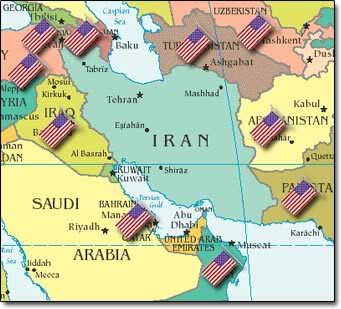 Last week’s events underscore three things. One, the US does not intend to end its military presence in Iraq (and Syria), although the pretext of the war against the ISIS is no longer there. Two, US is planning to turn Iraq into a major theatre of confrontation with Iran.
A US control of Iraq puts it in a position to pile pressure on Iran from different directions — interfering with Iranian supply routes to Syria and Lebanon; playing itself back to regain a role in the Syrian settlement; having a say in Iraq’s rising oil production and staging covert cross-border operations to destabilize the Iranian regime. Indeed, with the open-ended US military presence already in place in Afghanistan, the intention is to squash with a similar western neighbor under American tutelage.
Three, fundamentally, it becomes all too obvious that the US-Saudi alliance in regional politics is very much alive and kicking, and any reports to the contrary are greatly exaggerated. The US’ return to the centre stage in Iraq to challenge Iran’s regional influence will give much verve to the US alliance with Saudi Arabia.
Interestingly, the Saudi establishment daily Asharq Al-Awsat reported last week that the Pentagon plans to boost deployments to the Middle East specifically to counter Iran. The report cited General Joseph Votel, commander of the US Central Command, as saying, “The United States wants to help the Arab countries deal with Iranian threats. The Pentagon is working to achieve that desire and ensure its effective implementation. That includes the establishment of US military battalions sent as missions to the region and be designed specifically to provide advice and assistance.”
US Mercenaries, Iraqi Highways and the Mystery of the Never-Ending ISIS Hordes
By Ulson Gunnar – New Eastern Outlook – 22.10.2017
While the US and European media provided little explanation as to how militants from the self-titled Islamic State (IS) managed to appear, expand and then fight for years against the combined military power of Iraq, Syria, Iran and Russia, it was abundantly clear to many analysts that the IS organization was not only receiving state sponsorship, but it was receiving reinforcements, weapons and supplies from far beyond Syria’s and Iraq’s borders.
Maps of the conflict stretching over the last several years show clear corridors used to reinforce IS positions, leading primarily from Turkey’s southern border and to a lesser extent, from Jordan’s borders.
However, another possible vector may be desert highways in Iraq’s western Anbar province where US military contractors are allegedly to “provide security” as well as build gas stations and rest areas. These highways contributed to the current conflict and still serve as a hotbed for state sponsored terrorism. Whether these US-controlled and improved highways pose a significant threat for a reorganized effort by the US and its regional allies to divide and destroy Iraq and Syria seems all but inevitable.
US Mercenaries “Guarding” Iraqi Highways
Al Monitor in an April 2017 article titled, “How Iraq is planning to secure key border road,” would claim:
Due to the imminent threats to the road, which is one of Iraq’s vital economic lines as it connects Basra in the south to Jordan in the west, Iraq commissioned an American company to secure and rebuild the road. The contract also included reconstructing bridges, 36 of which are destroyed.
The article would elaborate, stating:
A security source from the Iraqi intelligence service told Al-Monitor, “The American company will only secure the two roads reaching Terbil from Basra and Baghdad and will build gas stations and rest areas, in addition to building bridges and cordoning off the roads with barbed wires, as per distances that would be determined later.”
Al Monitor would claim that Iraq’s popular mobilization units found themselves unable to oppose the move made by the central government in Baghdad. It would also note that Iraq’s Hezbollah Brigades claimed, in opposition to the plan, that:
The road connecting Iraq and Jordan is a strategic gateway allowing the US and forces seeking to control it to tighten their grip on Anbar and the potential Sunni region as per a US-Gulf plan.
One could imagine future potential scenarios including these rebuilt roads, complete with gas stations and rest areas, leading from Jordan and Saudi Arabia and providing an efficient route for future wars waged either directly or by proxy against Iraq. The infiltration of fighters and supplies, for example, would be greatly expedited should the US and its partners decide to shift their efforts along this new axis.
Beyond this more obvious threat comes the fact that US-Jordanian-Saudi influence would be greatly enhanced with stronger logistical lines leading into Iraq’s western regions.
How the US Might Use its New Highways
The Islamic State’s de facto invasion of Syria and Iraq was a more massive and dramatic replay of an earlier surge of foreign militants into the region, following the 2003 US invasion of Iraq.
It would be America’s own Combating Terrorism Center at the West Point United States Military Academy in two reports published in 2007 and 2008 (.pdf) respectively that would describe in detail the networks some of Washington’s closest regional allies used to flood post-war Iraq with foreign fighters.
While these fighters indeed attacked US soldiers, what they also did was disrupt a relatively unified resistance movement before plunging Sunni and Shia’a militias into a deadly and costly “civil war.”
Fighters, weapons and cash infiltrated into Iraq from a network that fed fighters from across the Middle East and North Africa (MENA) region first into Turkey, through Syria via the help of many of the senior leadership of anti-government militant groups now fighting Damascus, and then into Iraq primarily where IS has been based and where the remnants of its militancy remains.
During the more recent conflict, these same networks were utilized successfully until Russia’s intervention in 2015 when these terrorist “ratlines” came under fire by Russian warplanes. The cause and effect of attacking these terrorist ratlines was visible on conflict maps, causing an almost immediate shrinking of IS-occupied territory and a corresponding atrophy of IS fighting capacity.
The Jordanian-Iraqi and Saudi-Iraqi border crossings and the highways running through them represent an alternative means to reorient Washington’s proxy conflict either now or in the near future.
US Already Planning to Weaponize the Project
Raising further alarm bells should be the New York Times’ May 2017 article, “U.S. Sees a Vital Iraqi Toll Road, but Iran Sees a Threat,” which helps frame the very sort of conflict US policymakers are seeking with this move and the reaction it has already provoked among America’s primary targets in the region, particularly Iran.
The article would claim:
As part of an American effort to promote economic development in Iraq and secure influence in the country after the fight against the Islamic State subsides, the American government has helped broker a deal between Iraq and Olive Group, a private security company, to establish and secure the country’s first toll highway.
This being Iraq, though, the project has quickly been caught up in geopolitics, sectarianism and tensions between the United States and Iran, which seems determined to sabotage the highway project as an unacceptable projection of American influence right on its doorstep.
The New York Times also helps prepare a narrative so that any attack on American contractors along the highway could easily be blamed on militias linked to Iran, or even on Iran itself. The article states:
Already, Iraqi militia leaders linked to Iran, whose statements are seen as reflective of the views of Tehran, have pledged to resume attacks against American forces if the Trump administration decides to leave troops behind to train the Iraqi military and mount counterterrorism missions, as appears likely. And the militia leaders have specifically singled out the highway project for criticism.
The New York Times ultimately admits that the US is attempting to control the highway specifically to continue its increasingly dangerous proxy war against Tehran. The article also admits that the highways will be entirely controlled by US contractors, including the collection of tolls of which only a portion would be handed over to the Iraqi government. The article also claims other highways, including one leading directly from Saudi Arabia, are being considered.
In essence, these would be terrorist ratlines directly controlled by the United States, leading directly out of the very epicenter of state sponsored terrorism in the region, Saudi Arabia, other Persian Gulf states and to a lesser but still significant extent, Jordan.
They would be terrorist ratlines difficult for Iraq’s central government or its allies to attack without providing a much welcomed pretext for Washington to directly retaliate against the faction of its choosing.
While the New York Times and US politicians and businessmen involved in the highway deal attempt to portray it as a means of providing peace, stability and economic prosperity for Iraq, a quick audit of US policy in the Middle East should ground those lofty promises in a much more frightening reality.
The scope of this project is nothing short of both a US occupation and a US-administered “safe zone” in which militant groups backed by the US and its regional partners can safely be harbored, and from which they can strike out against Iraq and its neighbors with the full protection of US military force.
Some US policymakers may feel that their failing proxy war against Syria involved a cart-before-the-horse policy in which the creation of US-administered and protected safe zones turned out to be more difficult to implement than initially anticipated, and that in the future, such zones should be created before another round of proxy-hostilities.
No matter what, the US presence and the more-than-certain intentions that underpin it will ensure not peace, stability or prosperity, but another decade of division and strife both in Iraq and beyond. Confounding this project, and those like it, and replacing them with actual projects to fulfill the promises of progress the US is merely hiding behind, will be key to truly moving Iraq and the region forward.
Kirkuk bell also tolls for US strategy in Syria
By M K Bhadrakumar | Indian Punchline | October 22, 2017
The rout of the Kurds in the northern Iraqi city of Kirkuk this week constitutes a major setback for the overall American strategies toward Iraq and Syria. The prospect of an unceremonious US retreat from Syria haunts the Trump administration in immediate terms, and it is all the more galling because Tehran is calibrating it.
Clearly, Iran has pushed the envelope, furious over US President Donald Trump’s provocative threats of sanctions against the Islamic Revolutionary Guards Corps (IRGC). Tehran had warned that US position in the entire Middle East will become increasingly untenable if Trump moved against the IRGC. The capture of Kirkuk by the Baghdad government was a de facto military operation by the Shi’ite militia known as the Hashd al-Shaabi, which was trained and equipped by the IRGC. The western reports suggest that the charismatic commander of the IRGC’s secretive Quds Force, General Qassem Soleimani personally masterminded the military operation – and even prepared the political ground for it.
The US had tried to prevail upon the Iraqi Prime Minister Haider al-Abadi not to move against the Kurds who were its allies. Kirkuk is estimated to hold at least 8000 million barrels of subterranean oil. The oil revenue is critical for the survival of any independent Kurdish state. Evidently, Abadi didn’t listen due to the emergent threat posed by the Kurds’ recent independence referendum. Equally, Iran wanted to finish off the spectre of an independent Kurdistan in the region spearheaded by Massoud Barzani (who enjoys the backing of US and Israel.)
Indeed, the defeat in Kirkuk destroys the Iraqi Kurds’ dream of an independent state and derails the longstanding US-Israeli project to create a base with strategic location. Equally, the liberation of Kirkuk, which is populated by the Kurds, Arabs and Turkmen by the Iran-supported Shi’te militia highlights the strategic convergence between Baghdad, Tehran and Ankara in preventing the creation of an independent Kurdistan in the region.
However, the defeat of Barzani in Kirkuk has far wider ramifications – for Iraq as well as the Syrian conflict, apart from the US’ influence in the Middle East as a whole. At its most obvious level, Iran is thwarting the US plans to balkanize Iraq. Iraq’s unity is no longer under serious threat. Control of the vast oil reserves in Kirkuk will also bolster the Iraqi economy. Baghdad can be expected to reassert its authority over the country. The federal government has taken over the border crossings with Turkey and Syria.
The US attempt in the coming period will be to woo Abadi and encourage him to whittle down Iran’s influence in Iraq. The US Secretary of State Rex Tillerson arrived in Riyadh on Saturday on a hastily arranged trip with the hope of getting Saudi King Salman to take a hand in persuading Abadi to keep Tehran’s influence on Iraq at bay and to mediate between Abadi and Barzani. The US and Saudi Arabia’s best hope lies in creating differences between Baghdad and Tehran by leveraging Abadi. But the chances of such a ploy working seem remote.
The fact that the US watched the defeat of the Kurds in Kirkuk passively tarnishes the overall American image, especially among Syrian Kurds. This casts shadows on the Syrian situation. The US has been routing the military supplies for Syrian Kurds in Raqqa via Erbil, Massoud’s stronghold (in the face of Turkey’s virulent opposition.) This supply route is no longer under Barzani’s control and the disruption will affect the US’ operations in Raqqa. The US-led Syrian Kurdish militia claims to have liberated Raqqa, but a real consolidation needs the decimation of the residual ISIS fighters present in the region and it may take months.
More importantly, a ‘trust deficit’ between Syrian Kurds and Washington at this juncture will be calamitous. Raqqa is Arab territory and the Kurdish militia’s supply lines are already overstretched. The disruption in American supplies means that it may now be a mater of time before Syrian Kurds seek some modus vivendi with the Syrian regime. If American military supplies dry up, Syrian Kurds will also come under pressure from Turkey in the swathe of northern Syria bordering Turkey, which form their traditional homelands. Turkey never liked a Kurdish entity taking shape across their border.
Interestingly, the commander of the Syrian Kurdish militia Sipan Hamo visited Moscow last weekend. The Russians indeed find themselves in an enviable position to drive a hard bargain over the Kurds’ sorrows. Russia is in a unique position to mediate between Syrian Kurds on one side and Ankara and Damascus on the other. But then, what is it that the Kurds can offer Russia in return? Last Thursday, Rosneft signed a big oil deal with Barzani’s government in northern Iraq. To be sure, the old Kurdish saying has some merit – ‘The Kurds have no friends but the mountains.’ (Guardian )
The main impact of last week’s dramatic events is that the US now has no conceivable reason to continue with a military intervention in eastern Syria. The likelihood is that Syrian Kurds will sooner or later hand over Raqqa also to the government forces. Clearly, the Syrian regime’s march to victory is from now onward relentless and irreversible. That is to say, the best-laid plans of the US and its regional allies to balkanize Syria have also gone awry.
Maybe, there will be a federal system in future Iraq and Syria. But last week’s events have ensured that the two countries’ territorial unity and integrity will no longer be under serious threat. Of course, that has also been at the core of the Iranian strategy.
Trump’s new Iran strategy ‘has no support in US’: Ex-congressional staffer
Press TV – October 22, 2017
US President Donald Trump’s new strategy on Iran has “no support inside the United States” other than by pro-war neoconservatives and the Israel lobby, says an American analyst.
“President Trump’s position on canceling the Iran deal, at least on the United States’ side, has no support in the United States either by the public, obviously by the Democratic Party; even it lacks support by members of the Republican Party,” Rodney Martin, radio host and former congressional staffer, said on Saturday.
“It only has support by the rabid pro-war neocons and by the rabid Zionist pro-Israel lobby and of course by Prime Minister [Benjamin] Netanyahu in Tel Aviv,” he added.
Trump announced last week that he would not continue certifying the 2015 nuclear deal with Iran dubbed the Joint Comprehensive Plan of Action (JCPOA).
The US president has come under widespread criticism at home and abroad, with America’s European allies reaffirming their commitment to the nuclear accord.
The majority of Americans also believe Trump should not pull the US out of the international agreement, according to a new poll.
Overall, two in three Americans oppose withdrawing from the JCPOA, a CNN poll has found. Eight in 10 Democrats and two in three Independents have the same opinion. Even in Trump’s own party, Republicans are evenly split, with 48 percent desiring to remain and 47 percent to withdraw.
Martin pointed to the Israeli influence over Trump’s decision regarding the Iran deal.
“We all know that Netanyahu took the atrocious step by coming to the United States and lobbying the US Congress against the deal,” he pointed out.
The analyst said Trump is “throwing Netanyahu a bone” by refusing to certify the JCPOA in order to compensate for his failure to deliver on his promise to move the US embassy to Jerusalem al-Quds.
Trump is “every bit as controlled by the Israeli lobby” as his predecessors, Martin said, adding, “so it doesn’t matter what the public and the experts believe, President Trump is going to do what this very small, dangerous cabal tells him to do.”
The War on Terror: The Plot to Rule the Middle East – A Book Review
Christopher Bollyn, 2017, 146 pages.
Review by David Brooks | American Herald Tribune | October 18, 2017
 Christopher Bollyn is that rarest of mediaticians, a real-live investigative journalist, formerly of the American Free Press, now altogether free, as befits a researcher-writer of irreducible integrity. For the last decade and a half, Bollyn has made September 11th and its murderous military aftermath his own special beat, going where few 9/11 analysts have dared to venture.
Bollyn’s great contention, expounded in scores of articles and two previous books (Solving 9/11: The Deception that Changed the World ), is that it was not Bin Laden and Al Qaeda who carried out the world’s greatest terror attack, but none other than Ben Netanyahu and El Mossad, so as to foment an endless war against Israel’s perceived enemies in the Middle East.
Even more than David Ray Griffin, the widely acknowledged dean of 9/11 studies, Bollyn deserves a Pulitzer Prize, for not only naming the unnamable, but for substantiating his charge in definitive, documented detail. Mazel tov to anyone who would lightly dismiss his case.
As for those who would single-handedly rebut Bollyn’s thesis with the knee-jerk cry of “anti-Semitism,” let them be forewarned that Bollyn gets serious back-up in a scathing introduction by Dr. Alan Sabrosky, a retired senior administrator at the U.S. Army War College (West Point), who went on record long ago that 9/11 was a Mossad operation. Sabrosky is Jewish himself.
That someone of Sabrosky’s stature and heritage has not yet been invited on network television to deliver his bombshell accusation is just one more proof of the media-wide clampdown on 9/11 truth. While Bollyn may be snubbed by the MSM merely for being a self-published non-entity, the only way for Zionist propagandists to deal with Sabrosky is to pretend that he doesn’t exist. Thus far it has worked.
It’s interesting to note that Sabrosky’s greatest scorn is not for the Israeli terrorist perpetrators, but for homegrown Israeli fifth-columnists, “the mostly Jewish Neo-conservatives, many of whom [are] dual Israeli citizens and all more or less openly professing “dual loyalty” to Israel and the United States – a form of political bigamy that is every bit as dishonest as marital bigamy, and which only thinly disguises the controlling allegiance all hold to Israel, their oaths notwithstanding.”
Bollyn expands on this point for the length of his book, claiming that the War on Terror has been a greater curse on the world than 9/11 itself, costing trillions of American dollars and millions of Muslim lives, with no end in sight. More damning is that all this was foreseen. What has come to pass is indeed the very fulfillment of an objective set out decades ago:
As I explain in my Solving 9/11 books, the false-flag terror of 9/11 was an Israeli idea from the beginning, first articulated by a former head of the Mossad in the 1970’s. At the same time that [Mossad chief] Isser Harel was predicting how Arab terrorists would attack the tallest towers in New York City, Benjamin Netanyahu was holding an international conference of Western leaders in Jerusalem (1979) to promote a global war against terrorism. Both concepts are products of Israeli strategic planners.
What a perp-line Bollyn brings before his readers, digging up well-hidden background information on every possible suspect, Israeli and American, in this criminal cause. A veritable A-list of dual nationals could be compiled just from the officials of recent presidential administrations. Each could be subpoenaed before a real 9/11 commission, rather than evade mention, as was ensured by dual national, Philip Zelikow, in the official whitewash “report.”
Questioning could start with Netanyahu’s long-time friend, Larry Silverstein, who obtained the World Trade Center just weeks beforehand, arranged for dubious, new security, and doubled the insurance. “Lucky Larry” is best known for being the fortuitous owner of WTC 7, which wasn’t hit by a plane, but still managed to collapse neatly in 6.5 seconds later that afternoon. That this staggering fact is still largely unknown sixteen years later speaks more cogently than any of Bollyn’s arguments to a deliberate media and government cover-up.
In some of his research, Bollyn acquits himself like archival historian, tracing certain 9/11 “strategic planners” back to “a small group of veteran Zionist criminals who have employed terrorism as a tool since the 1940s.” Talk about chickens coming home to roost! One of the shadier Zionist operatives is Netanyahu’s own father, Benzion, an American academic who co-hosted that fateful Jerusalem conference with his son, and whose influence upon him may not have stopped with his death at age 102.
Here’s another intriguing item gleaned from Bollyn’s inquiry: For those who remember the film or book, Charlie Wilson’s War, it turns out the celebrated Congressman who enlisted massive funding for anti-Western mujahideen “freedom fighters” in Afghanistan was a Zionist stooge:
Wilson’s Israeli handler was Zvi Rafiah, Mossad station chief in Washington, who had known Wilson since 1973 and who used his congressional office as if it were his own. As George Crile described in his book, Charlie Wilson’s War, “Rafiah had always acted as if he owned Wilson’s office. One of the staffers kept a list of the people he needed to lobby. He would use the phones, give projects to the staff, and call on Charlie to intervene whenever he needed him.”
Imagine gung-ho patriot, Tom Hanks, being played for a schmuck. The unwitting sabotage of more enlightened resistance to the Soviet occupation of Afghanistan led to a more deadly subterfuge—the formation of a perfect patsy for the pre-meditated crime of 9/11:
Thousands of non-Afghan fighters joined [the anti-Western militia] Hezb-i-Islami, including thousands of Arabs, known as Afghan Arabs. Osama bin Laden is the most famous of the Afghan Arabs. Having trained a cadre of 4,000 anti-Western Islamic fighters, Israeli military intelligence and C.I.A. had a database of names to populate the Islamic anti-Western antithesis needed for the War on Terror construct. This database was known as Al Qaeda.
It comes as no surprise to learn in the chapter “9/11 and the War in Syria” that the United States, Saudi Arabia, and Israel conjointly support the most savage of the anti-Western militias there. The only purpose of all these parties is to terrorize and destroy the country. This is not foreign policy, but state-sponsored sociopathy.
In the chapter titled “Who Makes the Terrorist Videos?” we learn that the person releasing most ISIS videos, which have duly invoked air strikes on Syria, happens to be an Israeli intelligence agent named Rita Katz, living in Bethesda, Maryland. How much more transparent can the Zionist psy-op known as the “War on Terror” get?
Most memorable image from Bollyn’s book: “The War on Terror and 9/11 are like two sides of a counterfeit coin. If the American public had a good understanding of the false-flag deception of 9/11, then the fraudulent nature of the wars fought in its name would be equally obvious.” Amen.
A brief review cannot do justice to the depth of research contained in Bollyn’s concise exposé. It is his attention to detail, instanced above, which undergirds every aspect of his overarching thesis of Zionist complicity, and provides substantive evidence to his book-lengthed “J’accuse!”
Attention must be paid—or else. As Bollyn observes, the magnitude of such a fraud as 9/11 can’t stay hidden forever. Too many people know already. Either the truth of 9/11 will prevail, or its perpetrators, who have nothing to lose, may arrange something far worse.
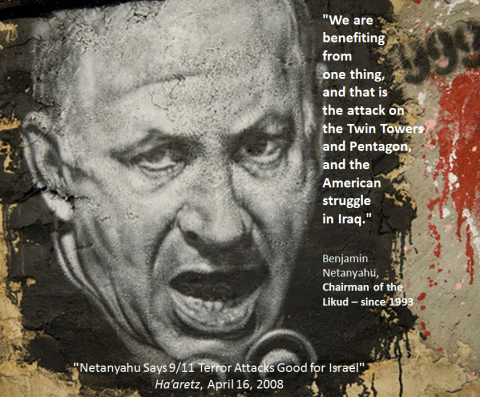 Bollyn is fully apprised of the danger in the combustible combination of the current leaders of Israel and the United States. It could be déjà vu over again: “Ronald Reagan and Menachem Begin led to the Israeli invasion of Lebanon in 1982, and George W. Bush and Ariel Sharon led to 9/11 and the War on Terror in 2001.” Foreboding abounds when President Trump calls Prime Minister Netanyahu a close, personal friend. Will the talented Mr. Netanyahu and the Artful Dealer of America arrange a mutually acceptable war? We may soon have our answer.
While it strains credulity to the breaking point, Bollyn’s most daringly original suggestion is that 9/11 and its propaganda-induced “War on Terror” can be traced in part to a consanguineous conspiracy—a family plot, if you will—conceived and crafted over many years by Netanyahu & Son, and abetted by select American traitors when all the pieces were at last in place. Should their guilt ever become known, the name “Netanyahu” will live in infamy. Move over, Macbeth!
It seems only fitting, then, to let 9/11 mastermind, Benjamin Netanyahu, have the penultimate word in this review. One can almost picture him winking to his future accomplices when he proclaimed decades earlier: “It is perfectly possible to determine who the terrorists are and who stands behind them. If governments have failed to do this, it is more often not for lack of knowledge, but for lack of courage and moral clarity.” (Terrorism: How the West Can Win, 1986)
If Netanyahu soon gets his way—and unleashes yet another false-flagged, media-hyped, Israeli-concocted “war on terror”—it will not be for lack of courage and moral clarity by people such as Christopher Bollyn. May the Lord preserve him and all other truth-tellers.
Featured Video

Chinese jet fuel and the myth of energy independence
or go to
Aletho News Archives – Video-Images
From the Archives
The Dirty Little Secret behind the “Global Terrorism Index”
The Omission of Israeli Terrorism in the Occupied Palestinian Territories
By Karin Brothers | Global Research | December 6, 2014
… The Israeli settlements — all of which are illegal – have been identified as a major impediment to peace. The refusal of a major “global” terrorism report to name the Israeli settlers as one of the groups most responsible for terrorism not only misrepresents a major source of regional violence but exposes the Global Terrorism Index as a propaganda tool that supports a U.S. agenda.
In recent years, governments have been attempting to thwart terrorism by blocking supportive fund-raising. When it comes to Israeli settlements, however, the US and Canada actually encourage fund-raising by giving organizations (such as Christian Friends of Israeli Communities (CFOIC) and the Jewish National Fund) financial support in the form of donor tax-deductions.
Charities which provide funds for the Israeli settlements should be regarded as terror-financing organizations. They should not only lose their tax-deductible status, but they should be banned because they support the violation of international humanitarian law. The terror-financing laws that are being strictly enforced for Muslim charities should be applied to Christian and Jewish charities as well. … Read full article
Blog Roll
 Aletho News
- Chinese jet fuel and the myth of energy independence
- Ukraine Sea Drone Fired From Libya Hit Russian Tanker in Mediterranean
- IRGC: Iranian forces launched no attacks during ceasefire hours
- Trump Administration Moves To Automate U.S. Military Draft Registration
- Spain orders reopening of Tehran embassy, condemns Israel’s carpet bombing of Lebanon
- Israel faces ‘unsustainable’ strategic crisis following 40-day war against Iran: Analyst
- Iran restricts Hormuz access to 15 vessels per day under ceasefire terms: Report
- The ‘Opposition Party’ Has Done Nothing to Stop the Iran War and Much to Goad Trump Into Continuing It
- Moscow backs Tehran on status of Lebanon in US-Iran deal
- How UK Regulator Ofcom Quietly Bypassed International Law to Police American Speech
- If Americans Knew
- Amnesty: Urgent – Protect Lebanese civilians from brutal escalation in Israeli attacks
- Is The War Against Iran Over?
- Inside the Israeli army’s propaganda wing
- Hundreds of Gaza Amputees Stranded in Legal Limbo
- The gallows law: Israel moves toward executing Palestinian children
- Tucker Carlson: The Path to Peace requires ending ‘special alliance’ with Israel
- This is ceasefire? Israel’s biggest massacre yet in Lebanon, another journalist killed in Gaza – Daily Update
- Tucker Carlson on Israel: This Is the Behavior of an Ally? Really?
- Gazans face a triple crisis: severe shortages of water and bread, healthcare in tatters
- NY Times reports how Netanyahu took the US into Iran War
- No Tricks Zone
- An Inconvenient Tree: Uncovered In Alps… Europe Much Warmer Than Today 6000 Years Ago
- New Study Reports A 60% Slowdown In Greenland’s Ice Loss Rate In The Last Decade
- Low Intensity Tornado Wrecks Major Solar Farm, Creating A Potential Toxic Dump
- New Study Finds Warming Saves Lives…Cold Temperatures 12 Times More Deadly Than Excess Heat
- German Science Blog Accuses PIK Climate Institute Of Hallucinating Climate Tipping Points
- Devastating Assessment Of Comirnaty Vaccine By Former Senior Pfizer Europe Toxicologist
- New Study: CO2 Is ‘Effectively Negligible’ As An Explanatory Climate Change Factor Since 2000
- Former Pfizer Toxicologist Dr. Helmut Sterz Tells Bundestag Hearing Pfizer Vaccine Should Have Never Been Approved
- Energy Expert: Germany’s Nuclear Phaseout Was A “500 Billion Euro Mistake”
- New Research: South Australia’s Mid-Holocene Sea Surface Temperatures Were 4°C Warmer Than Today
 Aletho News