For a variety of reasons, Iranian President Hassan Rouhani’s visit to Moscow on March 26-27 will attract attention in world capitals. The scheduling of the visit when there is less than eight weeks left for Iran’s presidential election on May 19 where he is hoping to secure a second term, makes a very important point. To be sure, there is much visible mix-up in the conservative camp in Iran, while the reformist-moderate forces have rallied behind Rouhani. Iranian elections are notoriously unpredictable, but Russia seems to expect continuity in Iranian policies for another 4-year period.
Most European and Middle Eastern capitals will share this perception, and, arguably, even the Donald Trump administration cannot be unaware of it. Nonetheless, a ‘bipartisan’ group in the US senate announced a new bill on Thursday that would impose tighter sanctions against Iran’s ballistic missile program. But then, the announcement comes just before Sunday’s start of the annual conference in Washington of the pro-Israel lobbying group AIPAC, and thereby hangs a tale.
The Trump administration’s tough talk on Iran notwithstanding, Tehran remains committed to the 2015 nuclear deal. The litmus test will be whether Washington holds up its end of the bargain as regards the lifting of nuclear–related sanctions. So far, the Trump administration has done nothing to unilaterally tear up the nuclear deal – and, Iran too has been careful not to give cause to complaint regarding failure on its part in implementing the deal.
On the other hand, the European Union has maintained support for the Iran nuclear deal. At a recent Track II held in Beirut, former Iranian diplomat and a close associate of Rouhani, Seyed Hossein Mousavian gave his prognosis on the US’ options: “They would let the deal go on, but they would try to undo practically the Iranian nuclear deal through many other sanctions under … the umbrella of terrorism, missiles, human rights and regional issues.”
The net result of such new sanctions would be to deprive Iran from the economic benefits of the nuclear deal. However, the US can only create conditions where Iran is unable to optimally reap economic benefits out of the nuclear deal, but not to ‘isolate’ Iran from the world community. This is where Rouhani’s trip to Moscow serves a big purpose for Tehran. Russia is an irreplaceable partner for Tehran today. The reports from Tehran suggest that Rouhani is carrying a substantial economic agenda for discussions in Moscow.
Having said that, for both Russia and Iran, their cooperation is of strategic importance and is hugely consequential on the ground in regional and international politics, especially on the Syrian frontlines. That is why sustained attempts by the West, GCC states and Israel to exploit any daylight in the Russian-Iranian relationship failed to make headway. Writing for the influential Fox News, Frederick Kagan at the American Enterprises Institute – neither a friend of Iran nor of Russia – in an opinion piece titled Pitting Russia against Iran in Syria? Get over it urged the Trump administration to recognise Russia-Iran cooperation as a geopolitical reality for a foreseeable future:
American policy-makers must get past facile statements about the supposed limits of Russian and Iranian cooperation and back to the serious business of furthering our own interests in a tumultuous region. The Russo-Iranian coalition will no doubt eventually fracture, as most interest-based coalitions ultimately do. Conditions in the Middle East and the world, however, offer no prospect of such a development any time soon.
To my mind, Trump’s policies toward Iran are evolving cautiously and there could be surprises in store. The Iranians seem to understand that although Big Oil wields big clout with the Trump administration and a US-Saudi Arabian reset is in the making, the two sides have divergent concerns in many vital areas and an anti-Iran alliance as such — comprising the US, Israel and Saudi Arabia — seems far-fetched. In a fascinating op-ed last week in the establishment paper Tehran Times, Mousavian wrote:
The fight against ISIS also cannot be won by America alone. Trump’s… challenge will be to form a new coalition to defeat and destroy ISIS. To be successful, it will need to be far more cohesive and effective than the one built by Obama. Engaging more with the actors most effectively fighting ISIS on the ground, namely Russia and Iran and their allies, will be critical in this regard.
To a great extent, Russia and Iran are sailing in the same boat. Entrenched groups in the US oppose tooth and nail any improvement in the US’s relations with Russia and Iran. However, Russia and Iran will not take no for an answer from Trump administration in the fight against the ISIS in Syria. Both are grandmasters in reconciling contradictions. Both would hope that cooperation over Syria would help them leverage their respective relationship with the US. Mousavian’s opinion piece titled Trump’s ISIS challenge is here.
The cross border flood of millions of immigrants provokes profound political divisions, violence and the rise of mass movements challenging the unity of the European Union (EU) and the survival of the dominant political parties in the US and Europe.
Both the progressive pro-immigrant and rightwing anti-immigration parties and movements propose easy answers and attack their adversaries with political invective.
Both left and right engage in a losing war, based on historical omissions, abstract and muddle-headed assumptions and destructive proposals.
I will proceed by outlining a framework to understand the political, economic and security implications, which form the centerpiece for confronting immigration.
The Past and the Present
A serious discussion of immigration begins by focusing on the centrality of time and place, encouraging the flow and absorption of immigrants.
In the past, immigration flourished during periods when countries experienced: (1) rapid productive growth; (2) increasing labor demand; (3) trade unions and organizations capable of integrating new (immigrant) workers and protecting the on-going wage rates and conditions for all; (4) cross sectoral labor co-operation and solidarity lowering conflict between immigrant and native workers; (5) inclusive, equitable welfare programs; (6) local, not global wars and (7) violence confined outside of the US and the EU. During these periods, most immigration was confined within Europe and North America or between them.
These conditions could not eliminate competition and conflict but they limited its nature and time frame and allowed for successful integration.
If these conditions formed the basis for relatively peaceful immigration, their absence has intensified conflict amidst an increased flow of immigrants. This process has produced deep political problems. Progressives, who cite past ‘Ellis-Island’ type immigration experience and ignore the unfavorable current socio-economic conditions, are in denial. They dismiss the vast socio-economic and political changes, which have occurred and which make the absorption of new waves of immigrants extremely difficult.
Mass Immigration and Imperial Wars
The vast majority of refugees today are on the move because of Western wars. These wars are ‘total’ wars, designed to obliterate civilian, as well as military institutions and structures. In the last two decades, the US and EU have launched seven wars devastating the lives of once-cohesive and productive families, their homes and farms, jobs, institutions and security. Millions have been driven into exile.
The vast majority of new immigrants are refugees from countries targeted by the US-EU and their suffering has no visible end. During and after the Second World War, refugees suffered greatly, but were generally absorbed or repatriated and integrated into re-constructing their homes and societies. These favorable transitions were aided by an acute post-war labor shortage (over 40 million, mostly men, were killed in WWII) and the economic demands of post-war reconstruction. Western peace movements in the post-WWII past were effective and succeeded in limiting the scope and length of wars. Such peace movements no longer exist. Wars today are designed to be endless and total – in terms of the destruction of civilian infrastructure and national institutions.
Over the past 2 decades, the peace movements have disappeared. This is largely because the US and EU increasingly rely on the use of devastating bombing campaigns by their air and naval forces, which sharply limit Western casualties. Most anti-war movements were sustained by domestic anger at their own soldiers returning in ‘body bags’.
Current domestic economic conditions have sharply deteriorated. Capitalist regimes have imposed brutal economic policies increasing unemployment and low paying temporary job. Joblessness approaches 50% among young workers in Southern Europe – regions flooded with desperate refugees.
Moreover imperial policies have shifted steadily to increased military spending for wars while imposing austerity measures, slashing social programs at home.
In this context, new immigrants, especially refugees from imperial wars, compete for diminishing public resources and drastically reduced wages. Their competition effectively drives down the wages for all workers – sharply increasing the conditions for brutal exploitation.
The intense competition over jobs between native workers and immigrants is the result of capitalist wars and deliberate domestic economic policies to pay for these wars. This creates greater insecurity and hastens the downward mobility experienced by workers and the lower middle class.
In the past, such pressures and conditions led to worker protests, resistance and class conflict.
Today, trade unions cease to unify old and new workers into a strong organized force to confront the worst excesses of capital. Trade union membership has declined precipitously. The union bosses have exchanged militancy and independence for self-serving alliances with capitalist politicians. Trade unions do not protect the basic interests of workers and their families – they follow the lead of the ‘progressive’ pro-immigrant parties which are an arm of the militarist capitalist ruling class.
The workers are not racist when they resist further deterioration in their income and living standards: They are trying to protect their jobs, benefits and social programs for their families – in an environment of increasing insecurity and capitalist exploitation.
In the recent past, workers could rely on stable jobs and increasing wages because of the strong manufacturing domestic economy. These same workers, who are now labelled as ‘racist’, generally accepted immigrant workers at their plants and in their neighborhoods and schools. But this was in the decades before droves of refugees and destitute immigrants fleeing US-EU wars and destruction came to be viewed as threats to their livelihoods and children’s future.
Unlike the past, when international capital brought extracted raw materials back to the imperial country to be processed by local manufacturers, today US and EU multi-nationals have relocated their industries to overseas low wage countries, undermining jobs and living standards at home.
Commercial importers and retailers, like Wal-Mart, re-employ the displaced workers with offers of minimum pay, no benefits and contingent work.
‘Free Trade’ is not really ‘trade: Rather it is the easy outflow of investment and jobs and the retention of profits overseas in tax-havens.
US government-subsidized, high-tech corporate agro-exports have decimated ‘Third World’ farmers, forcing mass immigration of displaced peasants who then form a base to compete with domestic workers and lower the wages in the US and EU.
Progressives falsely argue, ‘ex post facto’, that migrants have merely taken the poorly-paid, unpleasant jobs that local workers rejected. The reality is more complex: In a previous era, most immigrants quickly moved into decently-paid jobs and were generally accepted by US workers.
Once, US meat packers were well-paid workers supported by militant unions. Over time, the unions lost key labor struggles and capitalists reduced wages, in some cases by fifty percent. What had once been well regulated and strictly protected workplaces deteriorated dramatically. This decline was accompanied by the influx and hiring of low wage immigrants from Mexico and Central America. Today, the meat packing industry is among the most dangerous work environments where even immigrant children are employed. The same pattern of deteriorating wages and conditions and replacement by immigrant labor has occurred in landscaping, construction, the garment industry, transport, retailing, plumbing etc.
What has most recently pushed millions of young workers to migrate from their homes are the series of destructive imperial wars. These devastated the domestic security situation, erasing any functional national military and police structures as well as the possibilities for jobs and a stable future for young people. Former military commanders and soldiers, whose families have been torn apart by imperial US-EU wars and stripped of all dignity, have little choice but to join resistance fighters, such as ISIS in Iraq, or join the waves of refugees.
The US and EU invasion forces and puppet regimes have systematically destroyed any secular, democratic, nationalist or socialist parties and movements in the targeted countries, in their drive to divide once cohesive nations into tribal client states. In their place, violent Islamist and ethnic resistance movements have sprung up to fight the invaders and their puppets. This is the natural and predictable result of the imperial policy of destroying modern states on a massive scale.
Since multiple imperial wars in contiguous countries have destroyed all hope for refuge and new lives within the war-torn region, the new violent Islamist movements have adopted their own ‘international strategy’. Since the imperial wars were launched from distant imperial capitals in Washington, London and Paris, using bombs and missiles, the Islamists have little alternative but to base their military and terrorist strategies within civilian populations, leading to massive casualties.
The violent jihadi attacks against civilian targets in the West are not specifically religious or directed at capturing economic resources or power. The objective is to gain political influence among the growing and marginalized immigrant population in Europe and to undermine the capacity and willingness of the EU and US to continue these endless wars.
In the neglected immigrant neighborhood, there will be growing numbers of sympathizers for the ‘attackers’. This will increase demands by angry and frightened citizens in the West who have increasingly accepted the nationalist political solution of ‘draining the lake’ (immigrants) to catch the ‘fish’ (terrorists). Anti-immigrant politics and anti-terrorist police activities become inter-mingled with growing domestic economic insecurity and the sense of cultural and national displacement experienced by traditional homogeneous working class communities adjacent to large enclaves of immigrants. Increasingly severe ‘austerity’ policies, imposed by neo-liberal governments, greatly inflame the situation.
The so-called, liberal pro-immigration parties and movements ignore the fragile socio-cultural fabric of the local communities. They have done little to protect vulnerable communities from capitalist policies of literally dumping immigrants into areas and regions which cannot support or absorb them. The political leaders of pro-immigrant parties are generally far from these communities and immune to growing competition for scarce jobs and resources. For many politicians, bureaucrats and even NGO administrators, ‘their immigrants’ are domestic workers, cooks, baby sitters, gardeners, who directly serve the most comfortable strata of society. In contrast, the masses of uprooted refugees and immigrants live close to local workers, compete for jobs and share crowded clinics, social services and schools – under conditions of increasing scarcity.
The ruling class collaborates with highly domesticated trade union officials and certain ‘co-opted’ second generation immigrant leaders to ‘pacify’ this domestic discontent through multi-cultural programs and mandatory diversity training sessions for workers and neighborhoods, without ever having to actually confront the class issues of deteriorating living standards and the loss of future job prospects for the children of local workers.
Working and lower middle class communities will naturally close ranks on ethnic, regional and religious bases, because they lack principled class leaders. They are susceptible to the appeals of nationalist-populist or anti-immigrant leaders and politicians, despite these parties long association with the hard right. With the notable exception of French leader, Marine Le Pen, who skillfully combines a deep understanding of French socio-economic trends with her restrictive immigration policies, the majority of Western populist and anti-immigrant politicians channel the widespread resentment over downward mobility among native workers to blaming ‘the immigrants’.
The virulent media attacks and charges of ‘racism’ made by liberal politicians and intellectuals against the downwardly mobile workers, who have been devastated by neo-liberal policies and the broad consequences of imperial wars, do nothing to combat imperialism and class exploitation. They certainly do not help the immigrants. Denunciations of the marginalized American workers and rural citizens, who voted for US President Donald Trump, by middle class intellectuals, living in the more comfortable and urbanized coastal states, show a deep misunderstanding of the fundamental changes occurring in the country. In Europe and the US, employees and activists, connected to liberal NGOs, flock to immigrants like carrion birds, carving out their own little careers ‘educating’ immigrants and entreating the local residents of deteriorated neighborhoods to join in ’sharing’ the dominant ruling class-directed celebrations of ‘diversity’ (or the ‘multi-culturalism of suffering’).
Conclusion
Immigration in the 21st century is significantly different from past waves of migrants. It is highly manipulative to compare the current displacement of millions of war refugees with ‘Ellis Island’ in the US or the post-WWII situation of massive reconstruction in Europe. Immigration today is a direct product of imperial wars, where murder, injury, terror and deliberate shredding of social institutions have forcibly displaced tens of millions of people – the immigrants.
Meanwhile, in the imperial countries, crass capitalist exploitation, the export of capital and jobs, and austerity have aroused the anger of workers and lower middle class employees, whose living standards have sustained significant losses. The forced merger of two enormous waves – the millions of dispossessed refugees and migrants and the marginalized and increasingly threatened workers and citizens in the West has become the key focus of the deepening conflicts of capitalists and workers in the US and the EU. Progressives and reactionaries alike obfuscate the fundamental class issues by diverting public attention to the issue of ‘racism’ and ‘immigrants’.
In the long run, the West must face this dangerous phenomenon by organizing broad and militant anti-imperial peace movements to prevent the wars that produce these waves of desperate migrants. Trade unions, co-operatives and local or national social movements must organize the under-employed, unemployed and underpaid workers to combat the loss of jobs, the pillage of national wealth, massive capitalist tax evasion and the de-industrialization of the national economy. Banks must be nationalized, and education and health care should be publically funded and replace the current massive public budgets for war. Immigrants, who decide to settle in their new countries, should seek to fully integrate, reject dual citizenship and dual loyalties and denounce organizations that act as “fifth columns” for overseas ethno-religious states of all persuasions.
Uprooted people must ultimately choose to remain and fight over flight. They must engage in resistance to imperial occupations in their homelands instead of choosing abject submission and indignities abroad. The role of citizens in the West is to support these struggles by opposing the militarists among their own political leaders.
There are no easy answers for mass migration but there are clear causes and proposals for the future.
One year to the day after the Brussels terrorist attacks, a terrorist drove a car into Westminster parliament buildings killing four people and wounding several others. The British public are in shock. Westminster is considered to be a monument to British ‘democracy’. The date 3/22 will be remembered among those who mourn over the skulls and bones of loved ones lost to terrorism.
Today, many of those mourners are in Syria. Just a few hours earlier, 50 destitute families staying at the al Badiya Dakhilya school in the village of Mansoura on the outskirts of Raqqa, were blown to pieces after an air strike by the ‘international coalition’. The Pentagon said it would “investigate” the atrocity. The British Government and its Western partners were silent. Thirty-three people were murdered. The United Nations – the international arm of US imperialism- was mute. The Syrian government asked them why. No answer was given.
On the same day, Al Nosra terrorists entered the village of Majdal, Northwest of Hama. Several women and children were reportedly killed. There are not enough reporters in Syria to cover all the atrocities committed almost every day by psychopathic killers the Western media calls ‘moderate rebels’.
Britain’s ‘jihad’ in Syria
In 2009, former French Foreign Minister, Roland Dumas attended a meeting in London with British government officials. They told him they were planning to send Jihadi terrorists into Syria to take over the country. It was part of Britain’s contribution to the Greater Israel project.
Israel’s quest for Middle East supremacy was outlined in a policy paper written by Israeli official Oded Yinon in 1982. The Yinon Plan involved fomenting civil war in Arab and Muslim countries in order to establish Israeli suzerainty over all its hostile neighbours. Like its partners in France and the United States, the British government is a whore of Israel.
Westminster was finalising a grand strategy for the Middle East which would combine people-power uprisings and covert snipers, followed by Takfiri terrorism. The US grand strategy for the Middle East was announced by former US Secretary of State Condoleezza Rice in 2005 in her speech before the American Israeli Public Affairs Committee (AIPAC), where she proudly proclaimed that President George W. Bush had a “new policy” for the Middle East and North Africa.
The US launched an “unprecedented international venue for reform”, by training activists in social media and regime change tactics. The Centre for Non-Violent Actions and Strategies (CANVAS), Albert Einstein Institute, National Endowment for Democracy, International Republican Institute, Freedom House, Facebook, and many other CIA-affiliated US agencies brought about what came to be known as the “Arab Spring”. The American/Israeli plan for a New Middle East was fully backed by most sou-disant ‘anti-imperialists’, who couldn’t resist the romance and fantasy of revolution and ‘Marxists’ waxed lyrical with “the masses make history”.
The consensus among the anti-war left that the Arab Spring was “spontaneous” and “popular” meant that NATO was able to carpet bomb Libya for 8 months, making the bombing look like a humanitarian intervention. Hundreds of thousands of civilians would perish. When Libya was destroyed, Syria was next on NATO’s target list. For 6 years this month, the Syrian Arab Republic has been fighting a war of national liberation from the international horde of Takfiri terrorists that British government officials were training in 2009 for deployment to the country.
The attacks on Westminster come at a time when Britain is set to “get tough” on immigration. Though Brexit holds out the possibility of economic and democratic progress in Britain – and immigration needs to be controlled and planned – reactionary forces and news outlets are increasingly pointing the finger at Muslims and Islam as the root of Britain’s problems. A similar process is taking hold in the United States and throughout the European Union.
Zionist terrorism
Since the Zionist false flag bombing of the King David Hotel in Jerusalem on the 22nd of July 1946, the Lavon Affair of 1954, the 911 attacks, the Brevik Massacre, and many others, Zionism has boldly carried out terrorist attacks and blamed them on Muslims or far right groups. The war on terror is a Zionist construct which is designed to goad the Western public into supporting foreign wars on behalf of Israeli interests, where recruits from Israel’s Gulf State partners are used as pawns and patsies in the infernal narrative of the “clash of civilisations”.
Today the terrorism or its simulacrum has struck Westminster. The script is typed on a well-worn palimpsest with exotic Arab names parroted in the non-stop media hysteria. Not until the public realises that the terrorists are, and always have been, inside the corridors of Westminster – an edifice that attests to the dictatorship of a decadent oligarchy over the toiling masses – will the reign of terror come to an end.
We have a president who is belligerent towards Iran, who is sending “boots on the ground” to fight ISIS, who loves Israel passionately and who is increasing already bloated defense budgets. If one were a neoconservative, what is there not to like, yet neocons in the media and ensconced comfortably in their multitude of think tanks hate Donald Trump. I suspect it comes down to three reasons. First, it is because Trump knows who was sticking the knife in his back during his campaign in 2016 and he has neither forgiven nor hired them. Nor does he pay any attention to their bleating, denying them the status that they think they deserve because of their self-promoted foreign policy brilliance.
And second, Trump persists in his desire to “do business” with Russia. The predominantly Jewish neocons always imagine the thunder of hooves of approaching Cossacks preparing to engage in pogroms whenever they hear the word Russia. And this is particularly true of Vladimir Putin’s regime, which is Holy Russia revived. When not musing over how it is always 1938 and one is in Munich, neocons are nearly as unsettled when they think it is 1905 in Odessa.
The third reason, linked to number two, is that having a plausible and dangerous enemy like Russia on tap keeps the cash flowing from defense industries to the foundations and think tanks that the neocons nest in when they are not running the Pentagon and National Security Council. Follow the money. So it is all about self-interest combined with tribal memory: money, status and a visceral hatred of Russia.
The hatred of Trump runs so deep that a leading neocon Bill Kristol actually tweeted that he would prefer a country run by bureaucrats and special interests rather than the current constitutional arrangement. The neocon vendetta was as well neatly summed up in two recent articles by Max Boot. The first is entitled“Trump knows the Feds are closing in on him” and the second is “WikiLeaks has joined the Trump Administration.” In the former piece Boot asserts that “Trump’s recent tweets aren’t just conspiratorial gibberish—they’re the erratic ravings of a guilty conscience” and in the latter, that “The anti-American WikiLeaks has become the preferred intelligence service for a conspiracy-addled White House.”
Now, who is Max Boot and why should anyone care what he writes? Russian-born, Max entered the United States with his family through a special visa exemption under the 1975 Jackson-Vanik Amendment even though they were not notably persecuted and only had to prove that they were Jewish. Jackson-Vanik was one of the first public assertions of neoconism, having reportedly been drafted in the office of Senator Henry Jackson by no less than Richard Perle and Ben Wattenberg as a form of affirmative action for Russian Jews. As refugees instead of immigrants, the new arrivals received welfare, health insurance, job placement, English language classes, and the opportunity to apply for U.S. citizenship after only five years. Max went to college at Berkeley and received an M.A. from Yale.
Boot, a foreign policy adviser to Mitt Romney in 2012, networked his way up the neocon ladder, including writing for The Weekly Standard, Commentary, The Wall Street Journal and The Washington Post. He was a member of the neocon incubator Project for a New American Century and now sits on the heavily neocon Council on Foreign Relations. Boot characteristically has never served in the U.S. military but likes war a lot. In 2012 he co-authored“5 Reasons to Intervene in Syria Now.” He is a reliable Russia and Putin basher.
Max Boot’s articles are smears of Donald Trump from top to bottom. The “closing in” piece calls for establishment of a special counsel to investigate every aspect of the Trump Team/Russian relationship. Along the way, it makes its case to come to that conclusion by accepting every single worst case scenario regarding Trump as true. Yes, per Boot “Putin was intervening in the presidential election to help Trump.” And President Barack Obama could not possibly have “interfered with the lawful workings of the FBI.” As is always the case, not one shred of evidence is produced to demonstrate that anyone associated with Donald Trump somehow became a Russian useful idiot, but Boot assumes that the White House is now being run out of the Kremlin.
Max is certainly fun to read but on a more serious note, the National Review is working hard to make us forget about employing the expression “neocon” because it is apparently rarely understood by the people who use the term. Plus its implied meaning is anti-Semitic in nature, something that David Brooks in an article pretty much denying that neocons really exist suggested thirteen years ago when he postulated that it was shorthand for “Jewish conservative.”
National Review actually searched hard to find a gentile who could write the piece, one Kevin D. Williamson, who is described as a “roving correspondent” for the magazine. His article is entitled “Word Games: The Right Discovers the Deep State.” Williamson begins by observing that using “neocon” disparagingly in the post-9/11 context acts either “as a kind of catalyst enabling a political reaction that revived a great many stupid and ugly myths about Jewish bankers orchestrating wars for profit…” or serves as a standby expression for a “Jew with politics I don’t like.”
Interestingly, I have never heard the “Jewish bankers” theory or disparagement of Jewish “politics” from the many responsible critics who have been dismayed by the aberrant U.S. foreign policy that has evolved since 2001. I don’t know how much money Goldman Sachs has made since the World Trade Center went down and that is not really the issue, nor is the fact that Jews overwhelmingly vote Democratic, which is a party that I don’t particularly like. Williamson dodges the increasingly held view that America slid into the abyss when Washington declared war on the entire world and invaded Iraq based on a tissue of lies, in large part to benefit Israel, which is what matters and why the enabling role of the neocons is important.
And one might reasonably argue that U.S. policy since that time has nearly always deferred to Israeli interests, most recently declaring its prime mission at the U.N. to be protecting Israel, then acting on that premise by forcing the resignation of a senior official who had prepared a report critical of Israel’s “apartheid” regime. I recognize that relatively few American Jews are neocons and that many American Jews are in the forefront in resistance to Israel’s inhumane policies, but the reality is that nearly all neocons are Jewish. And they are in your face every time you turn on the television or pick up a newspaper. Abrasive and abusive Professor Alan Dershowitz recently proclaimed that Jews should never apologize for Jewish power, saying that it is deserved and granted by God, but I for one think it is past time for a little pushback from the rest of us to make Washington protect American interests instead of those of Israel.
The neocon cult has been behind the promotion of Israel as well as the serial foreign policy misadventures since 2001. Do the names Perle, Feith, Wolfowitz, Abrams, Edelman, Ledeen, Senor, Libby and Nuland in and around the government as well as a host of others in think tanks and lobbies like AIPAC, AEI, WINEP, PNAC, FPI, FDD, JINSA and Hudson ring a bell? And do the loud voices in the media to include Judith Miller, Robert Kaplan, Charles Krauthammer, Jennifer Rubin, Fred Hiatt, Bret Stephens, Bill Kristol, the Kagans and the Podhoretzes, as well as the entire Washington Post and Wall Street Journal editorial pages, suggest any connivance?
They are all Jews and many are connected in terms of their careers, which were heavily networked from the inside to advance them up the ladder, often to include moving between government and lucrative think tank and academic positions. They mostly self-identify as neoconservatives and all share some significant traits, notably extreme dedication to Israel and embrace of the doctrine that the U.S. should not be shy about using military force, so it is interesting to learn from Williamson that they really do not constitute a cohesive group with shared values and interests as well as excellent access to the media and the levers of power. When did you last see an “expert” on the Middle East on television who was not Jewish?
Having made his pithy comments and dismissed neoconservatism-phobes as bigots, Williamson then wanders off subject into the Deep State, which, like neoconism apparently is some kind of urban legend being propagated by the poorly informed, whom these days he identifies as Trump supporters. He argues that the entities that are frequently cited as the Deep State, including the neocons, actually have quite divergent interests and it is unlikely that those interests should become “identical or aligned” to enable running of the country in an essentially clandestine fashion.
It is perhaps inevitable that Williamson is confused as he does not recognize how the American Deep State differs from that in most other countries – it is perhaps better described as the Establishment. Unlike in places like Turkey, it operates largely out in the open and ostensibly legally along a New York-Washington axis that constantly revitalizes itself through the revolving door allowing the entry of politicians and high government officials who create and enforce the legislation that benefits Deep State interests. Its components do indeed have different motives, but they come together in preserving the status quo, which benefits all parties, while little dissent comes from the Fourth Estate as the process plays out, since much of the media and many of the proliferating Washington think tanks that provide Deep State “intellectual” credibility are also part of the same malignancy. And yes, quite a bit of today’s Establishment is Jewish, most particularly financial and legal services, the think tanks, and academia. Many of them support or are part of the neocon persuasion and frequently also of the Israel Lobby.
The existence of a Deep State means that many issues that impact on the citizenry never are discussed as part of the political process, leading to jokes that the United States has only one political party with two wings. Issues like the relationship with Israel, though hotly debated by some of the public, are never really debated and are dealt with by consensus crafted by the politicians and the media. Significant policies like those relating to war and peace, healthcare and immigration were rarely seriously challenged prior to Trump because there is a broad agreement regarding what the Establishment will allow to take place. That is how the Deep State operates.
When it comes to foreign and national security policy the neocons are most definitely an integral part of the Deep State, using money and access to politicians to influence what is taking place without anyone seriously challenging their role. They are an essential cog in a system that is completely corrupt: it exists to sell out the public interest, and includes both major political parties as well as government officials. And it is so successful because it wins no matter who is in power, by creating bipartisan-supported money pits within the system. Monetizing the completely unnecessary and hideously expensive global war on terror benefits the senior government officials, beltway industries, and financial services that feed off it. Because it is essential to keep the money flowing, the Deep State persists in promoting policies that enrich its constituencies but otherwise make no sense, to include funding the unending and unwinnable wars currently enjoying marquee status in Iraq, Syria and Afghanistan and the gift of $38 billion to Israel.
Max Boot spews the kind of bile that is commonly seen or heard when the neocons zero in on their enemies. The National Review meanwhile provides cover for Max and others by suggesting that only anti-Semites or the demented could possibly have it in for neoconservatives or be wary of zany concepts like a Deep State. Together they generate the fog that makes it impossible to challenge certain aspects of the status quo. Maybe, just maybe, what Donald Trump has been saying about his predecessor’s Deep State inspired machinations are true. And just possibly there is a largely Jewish cabal within that Deep State, call it what you will, that works very hard behind the scenes to favor Israel while also pushing for a state of perpetual war, from which it benefits personally. I know that thinking that we Americans are on the receiving end of a vast and very effective conspiracy makes many uneasy, but history has taught us that sometimes our worst nightmares are actually true.
Speech by Hezbollah Secretary General Sayed Hassan Nasrallah on March 18, 2017, on the occasion of the anniversary of the birth of Fatima al-Zahra (as), Women’s Day
Extract of the Political Section of the Speech
Transcript:
Today, or (rather) these days are actually a (special) opportunity, namely that the events in Syria and the war waged against Syria have entered their seventh year. That is to say, six years have passed, with all that they contain in terms of sufferings, wars, conspiracies, confrontations and sacrifices of human lives. With the end of the sixth year and the beginning of the seventh, we must stop briefly on this occasion, because it concerns us also in the first place.
All those who met in the first few months of the beginning of the events six years ago of state forces, great powers, regional countries, 140, 130 or 120 countries that have gathered under the name of “Friends Of Syria” and who plotted, doing everything they could (against Syria). They bet on their ability to seize Syria in 2 or 3 months in 2011. Today, with the end of the 6th year, they face a bloody and painful truth, namely rout and failure. After six years, these powerful and important countries of the world and the region have failed, a bitter failure, in achieving their goals.
For six years, tens of billions of dollars of Arab money – Turkey did not spend money, France and the United Kingdom did not spend money. All the money that financed the war in Syria is Arab money. This money could have eliminated the poverty of the Arab world. It could have brought Somalia out of famine and Yemen as well. It could have (re)built the houses of the Palestinians in Gaza. It could have strengthened the Palestinians at Bayt-al-Maqdis (Sanctuary House / Jerusalem). This money could have guaranteed hundreds of thousands of job opportunities for unemployed Arab youth. It could have ended the illiteracy of hundreds of millions, unfortunately, tens of millions of men and women in the Arab world who are illiterate. Not a single dollar has been spent on these problems, but tens of billions of dollars of Arab money have been spent on the war in Syria, against Syria, its regime, its state, its army and its people, and against the Resistance Axis within it.
And tens, hundreds of thousands of tons of weapons and ammunition (were sent there). And they came from all over the world with tens of thousands of fighters, white, black, brown, red, yellow, whatever you want. They have left no side, no color, no tongue, no race, they have brought fighters from every spot of the whole world. The Americans, their allies, the plotters funded and facilitated (sending fighters) and brought tens of thousands of fighters to fight in Syria to achieve a clear and precise goal: to bring down Syria, to get it out of the Resistance Axis and take control of it. To take control of its decisions, its sovereignty, its people and its choices on its territory, and its strategic position on the Mediterranean Sea (between Asia) and Europe, and its strategic position in the struggle against the Israeli enemy.
Today, the result is clear: failure, defeat and retreat.
Well, let me remind you a bit, at the beginning of the 7th year, about the beginning of the first year. We do not deny that some of the people really wanted reforms and changed some realities in Syria. But what came (on the scene) with force and changed all that are the takfiri forces that were brought from all over the world, and who refused political dialogue in the first weeks. They refused any political outcome, any discussion, and their choices were definitive: they went to the bloody, general and total military confrontation. They have formulated sectarian slogans and revived (religious) school quarrels, and have lifted the veil on their objectives and their hostility towards the Resistance in the first weeks.
Well, who brought the al-Qaeda organization? When they arrived in Syria, what was their name? The Islamic State in Iraq. They then added “and in the Levant” (Syria). Then they divided, the members of the Islamic State in Iraq and the Levant divided. There were two factions: Daesh and the Al-Nosra Front. But in truth, they all belong to al-Qaeda, which is listed by the Americans on the list of terrorist organizations, as well as by the UN Security Council, by Saudi Arabia and by Europe. They brought tens of thousands of fighters, whom they regarded as terrorists themselves, gave them money and weapons, opened borders and brought them to Syria. They recognize that they themselves created (these groups), that they created Daesh to fight the Resistance and the Resistance Axis.
Today, the situation is different. I do not want to dwell on this point, and I will just focus on the new elements.
I want to remind you first of all that in the first year, the question did not require much political understanding, and that there was no need to make predictions and wait (and see). Anyone who had studied contemporary experiences in Afghanistan and elsewhere could reach the following conclusion, as I told them in the first months, I addressed the Al-Qaeda organization and the Islamic State in Iraq and the Levant, Daesh and the Al-Nosra Front who separated from it, and I said to them: “All of you of all nationalities, you were brought to Syria to gather you there, you were brought to Syria – now, anyone can check this out from 6 years ago – you were brought to Syria to gather you there and use you as combatants to achieve the American-Israeli goals in the region and when you will be pressed to the end, whether you have won or lost, you will be liquidated. We collect you (en masse) in order to liquidate you after having used you. You have been used… – and that is why I called them initially to be careful and wake up, and not to turn into wood and fuel for the fire lit by America and Israel as well as some regional countries, against whom they also plot, and who will pay the price. But sectarianism, foolishness, ignorance and stupidity have given them no opportunity (of lucidity).
They thought they were very smart, they believed that they were instrumentalizing America, Turkey, Saudi Arabia and the countries of the world and the West so that they’d allow them to implement their own project in Syria. And they wrote all that in their strategic projects. And that was the pinnacle of stupidity.
Today, what happens? After Daesh became an object of scandal for the American project here, Daesh sees its last days in Iraq – (it’s a question of) weeks, months, (but) it’s over. Daesh has no military or political future in Iraq. And similarly in Syria, Daesh no longer has any military or political future in Syria. At best, they will have dormant cells that will carry out suicide bombings because the suicide bombings targeting civilians in Baghdad, Tikrīt, Damascus, Homs and elsewhere reflect strategic and military failure. When someone sends suicide bombers to kill children, women, in restaurants, passers-by, schoolchildren and students, this reflects his strategic failure and military failure. These are acts of vengeance, not of fighting. This is the future of Daesh. The future of Al-Nosra is the same.
Today, Daesh is bombed by the international coalition led by the United States, Britain, Turkey, Jordan, as well as Russia and the forces fighting them in Syria. And the Al-Nosra Front, the Al-Nosra Front brought (and supported) by the Americans and their Turkish and Gulf allies, the Al-Nosra Front is now bombed in Idlib and at the West of Aleppo. Is not that what I told you six years ago? Now we hear voices rising from Idlib and West of Aleppo against America, its betrayals and hypocrisy. Did you sleep well? After destroying Syria, after destroying Iraq, after destroying Yemen, you finally wake up and you understand? (You realize the nature of) this treacherous and hypocritical America, who uses you then massacres you? That is the truth.
And with that, of course, Israel interferes every day, with various pretexts. The pretext of striking weapons intended for Hezbollah, as they claimed yesterday, for any pretext: on the pretext that a mortar shell hit the Golan (occupied), etc., Israel intervenes and strikes positions of the Syrian Army in order to provide support and assistance to Daesh and these (other) terrorist groups. Today, this arrogant and occupying project, the project of hegemony and control over Syria, I frankly declare to you that it has failed, and that Syria has won, but that it is still waiting for the great and decisive victory. As for the rest of the factions, Daesh will disappear. And the Al-Nosra Front will disappear. And the terrorist takfiri groups will disappear. It is only a matter of time.
Even the world that supported, funded, helped and assisted them has now abandoned them and is fighting them. For the spell has turned against the sorcerer. For the world has discovered that this serpent which he has raised in his bosom (and launched against Syria) has become a danger and a poison to him, in Paris, London, Germany, Belgium, inside Turkey, the United States, Saudi Arabia, etc.
The rest of the factions of the Syrian opposition, what is their current situation? They have no leader, no leadership, no united front, no national project, they don’t know what they want, they are divided, lost, and wander between (foreign) embassies and security services. Yes, there is still a bet on patriotic personalities or cadres of the opposition, that they can participate in the political solution and dialogue to rebuild Syria.
Today, for the commemoration of the birth of (Fatima al-Zahra), the daughter of the Prophet of God, who was sent to the worlds as a Mercy, allow me to renew my address to all those still fighting in Syria in the enemy front, and who believe that they are fighting in the front of Islam, the front of the (Islamic) Community or the front of the Fatherland, and who are 100% wrong. Allow me to appeal to them, to address them and tell them: this project has failed. Your struggle is in vain and leads to nothing but more deaths, battles and destruction, and bloodshed on both sides, which benefits America and Israel.
Look, Netanyahu went to Moscow imploring. Why? He went to intercede with President Putin because he is afraid of the defeat of Daesh in Syria. For the defeat of Daesh for Putin – excuse me, for Netanyahu, constitutes a victory for the Resistance and the Resistance Axis. Because for Netanyahu, Daesh’s defeat in Syria is a failure of the project he has supported for 6 years. So he went to beg (Putin). Oh, what do you do with Daesh, calm down with Daesh! For if you finish Daesh, what are you going to do with Iran, Hezbollah, President Assad, and the rest of the Resistance Axis?
Do not believe, (you Daesh fighters), that you are on the Front of Islam, the Community or the Fatherland. Whether you realize it or not, you have fought for 6 years on the Front of America and Israel and the Front of those who plot against you to kill you, imprison you and massacre you. Will not all this blood poured in Syria and Iraq awaken you? Is not that enough to reconsider things? I call upon them to lay down their arms, to cease fighting, to a real ceasefire, to seek a genuine humanitarian and political solution, to leave the front of hypocrisy for the front of Islam, leave Israel and America for the front of the Community, and leave the front of the enemy for the front of the Resistance. And it is still possible. It is still possible. (I call them to) stop these destructions. Your project has no future.
The Resistance Axis, as we said in the first days and months, today, after six years, from the beginning, we declared that the Resistance Axis would not be defeated in Syria, neither in Iraq, nor in Yemen, and that it would not break. And now that six years have passed, the Resistance Axis triumphs in Syria, and it triumphs in Iraq, and it is steadfast in Yemen where it will also win, if God wills, a great decisive victory. But these people must be aware of what they do with their lives, their blood, their future and their afterlife, and they must reconsider all their bloody actions that persist in Iraq, Syria, Yemen and elsewhere.
I recently had the privilege of interviewing Syrian political commentator Afraa Dagher. Throughout the conflict she has written pieces on the reality of this much misunderstood war as well as made appearances on a variety of global media outlets, including RT.
She is a patriotic Syrian whose words are deeply valuable to both the friends and foes of Syria, many of whom rely exclusively on non-Syrians for news and analysis about the country and its struggle.
Here is what she had to say.
Adam Garrie: What is your opinion of proposals coming from a number of places, arguing for Syrian federalisation?
Afraa Dagher: To understand why Syrians reject such proposals, one needs to revisit Syrian history. In 1920-1921, in the French Mandate for Syria and Lebanon, General Henri Gouraud was appointed representative of the French government in the Middle East and commander of the French Army of the Levant, centred in Syria.
This General divided Syria into small regions, like Aleppo state for example and made the northern part of the mandate a Kurdish majority region in addition to an Alawite region, Druz region..… etc
Under such a pretext, there are inconsistent components. The intention was then as it is now, to break the country’s natural unity, so people wouldn’t be able to unite and counter the occupation!
They took Liwa Iskenderun from Syria in 1937 and in the year 1939 they granted it to Turkey! They also took parts of Damascus and annexed them to Lebanon , as a Christian region, so as to create Lebanon with sectarian and ethnic divides. This was all designed to federate, divide and conquer mother Syria!
Syrians fought this occupation and this federation, until they got their independence in the year 1946.
We must not repeat the painful history of federalisation which will only result in the elimination of this nation,making it fragile and unstable. Then we may then ‘need’ another foreign mandate and foreign forces to keep peace.
This is their devious pretext when it comes to federalisation.
Who could be so naïve to bring this catastrophe to his nation again!
AG: If as expected, the majority of Syrians reject such proposals, how would you expect Russia to act?
AD: I can only say this; it is the Syrians’ right to determine their destiny after more than 6 years of sacrifices. Russia has always said that at the end of the conflict it (the country’s future) would be Syrians’ decision.
AG: What is your view on the cooperation between the SDF ( Syrian Democratic Forces) and the Syrian Arab Army against Turkey and their jihadist FSA?
AD: Such a war with multiple enemies, necessarily imposes various conditions on all sides. The SDF is backed and sponsored by the US and the majority of them are Kurdish along with some foreigners!
The fact that Turkey is the number one enemy of the Kurds and also a considerable invader of Syrian land, perhaps led to cooperation between the Syrian Arab Army and Kurds at this point. However, in other areas when it comes to concepts like the federalisation, I do not think we are going to see such cooperation.
AG: Do you have any faith that the Geneva peace talks will produce anything meaningful?
AD: Here, I will reference the words of our ambassador in the UN, Dr Ja’afari, who asked the western countries to stop wasting their people’s money on supporting terrorists.
Unless all the countries directly related to this war like Turkey, the Arab Gulf, the EU countries and America, stop the financing, training and arming of the so called moderate rebels, all such conferences will be in vain.
AG: Who is Syria’s number one enemy?
AD: Israel.
AG: What is your view on the US sending in soldiers to aid the SDF?
AD: It is an invasion of our sovereign land. The SDF play the role of alternative/proxy troops for the US and for its project in this region. The same thing happened with Kurds in Iraq, who helped the American invasion of Iraq in 2003. They also played a dirty role in Syria throughout much of the conflict; ” the separatists Kurds”, so to speak.
AG: Who are Syria’s most important allies at this time?
AD: I have to state it vice versa, I would say that Syria is the first and most important ally of the resistance axis. Syria is the great ally against imperialist unipolarity represented by the US! I say this with due respect to our great allies and to their sacrifices.
“The senator from Kentucky,” said John McCain, speaking of his colleague Rand Paul, “is working for Vladimir Putin … and I do not say that lightly.”
What did Sen. Paul do to deserve being called a hireling of Vladimir Putin?
He declined to support McCain’s call for a unanimous Senate vote to bring Montenegro into NATO as the 29th member of a Cold War alliance President Trump has called “obsolete.”
Bordered by Croatia, Bosnia-Herzegovina, Serbia, Kosovo and Albania, tiny Montenegro has a population roughly that of D.C., and sits on the western coast of the most volatile peninsula in Europe.
What strategic benefit would accrue from having Montenegro as an ally that would justify the risk of our having to go to war should some neighbor breach Montenegro’s borders?
Historically, the Balkans have been an incubator of war. In the 19th century, Otto van Bismarck predicted that when the Great War came, it would come out of “some damn fool thing in the Balkans.” And so it did when the Austrian archduke was assassinated in Sarajevo June 28, 1914 by Serbian ethnonationalist Gavrilo Princip.
Aflame with ethnic, civil and sectarian war in the 1990s, the western Balkans are again in political turmoil. Milo Djukanovic, the longtime Montenegrin prime minister who resigned on election day in October, claims that he was targeted for assassination by Russia to prevent Montenegro’s accession to NATO.
Russia denies it. But on the Senate floor, McCain raged at Rand Paul: “You are achieving the objectives of Vladimir Putin … trying to dismember this small country which has already been the subject of an attempted coup.”
But if Montenegro, awash in corruption and crime, is on the verge of an uprising or coup, why would the U.S. issue a war guarantee that could vault us into a confrontation with Russia — without a full Senate debate?
The vote that needs explaining here is not Rand Paul’s.
It is the votes of those senators who are handing out U.S.-NATO war guarantees to countries most Americans could not find on a map.
Is no one besides Sen. Paul asking the relevant questions here?
What vital U.S. interest is imperiled in who comes to power in Podgorica, Montenegro? Why cannot Europe handle this problem in its own back yard?
Has President Trump given McCain, who wanted President Bush to intervene in a Russia-Georgia war — over South Ossetia! — carte blanche to hand out war guarantees to unstable Balkan states?
Did Trump approve the expansion of NATO into all the successor states born of the bloody breakup of Yugoslavia?
Or is McCain hijacking U.S. foreign policy on NATO and Russia?
President Trump should tell the Senate: No more admissions to NATO, no more U.S. war guarantees, unless I have recommended or approved them. Foreign policy is made in the White House, not on the Senate floor.
Indeed, what happened to the foreign policy America voted for — rapprochement with Russia, an end to U.S. wars in the Middle East, and having rich allies share more of the cost of their own defense?
It is U.S., not NATO defense spending that is rising by more than $50 billion this year. And today we learn the Pentagon has drawn up plans for the insertion of 1,000 more U.S. troops into Syria. While the ISIS caliphate seems doomed, this six-year Syrian war is far from over.
An al-Qaida subsidiary, the Nusra Front, has become the most formidable rebel fighting group. Syria’s army, with the backing of Russia, Iran, Hezbollah and Shiite militias from across the Middle East, has carved out most of the territory it needs.
The Turkish army is now in Syria, beside its rebel allies. Their main enemy: Syria’s Kurds, who are America’s allies.
From our longest war, Afghanistan, comes word from U.S. Gen. John Nicholson that we and our Afghan allies are in a “stalemate” with the Taliban, and he will need a “few thousand” more U.S. troops — to augment the 8,500 President Obama left behind when he left office.
Some 5,000 U.S. troops are in Iraq, helping to liberate Mosul from ISIS. In Kabul, Baghdad and Damascus, terrorist bombings are a weekly, if not a daily, occurrence.
Then there is the U.S. troop buildup in Poland and the Baltic, the U.S. deployment of a missile defense to South Korea after multiple missile tests in the North, and Russia and China talking of upgrading their nuclear arsenals to counter U.S. missile defenses in Poland, Romania and South Korea.
In and around the waters of the Persian Gulf, United States warships are harassed by Iranian patrol boats, as Tehran test-fires anti-ship and anti-aircraft missiles to send the Americans a message: Attack us and it will not be a cakewalk war.
With the death of Communism, the end of the Cold War, and the collapse of the Bushite New World Order, America needs a new grand strategy, built upon the solid foundation of America First.
The selection of Lt. General H. R. McMaster as Trump’s new National Security Advisor to replace Michael Flynn appears to be the coup de grâce to Trump’s efforts to achieve rapprochement with Russia. McMaster has received profuse praise from all types of mainstream figures: conservatives and liberals, Democrats and Republicans. McMaster’s expressed hostile view of Russia is the fundamental reason for this celebration since Michael Flynn was noted, and condemned for, his Russia-friendly attitude and connections. McMaster has stated that Russia’s goal is “to collapse the post-World War II, certainly the post-Cold War, security, economic, and political order in Europe, and replace that order with something that is more sympathetic to Russian interests.”[1] McMaster sees Russia as being among a number of enemies that threaten the U.S. He maintains: “Geopolitics has returned, as hostile, revisionist powers—Russia, China, North Korea and Iran—annex territory, intimidate our allies, develop nuclear weapons, and use proxies.” McMaster describes this conflict in Manichean terms. “We are engaged today, as General George C. Marshall’s generation [World War II and the Cold War] was engaged, against enemies who pose a great threat to all civilized peoples.”[2]
Secretary of Defense James Mattis, who is likewise widely praised in the mainstream, also considers Russia to be an enemy that needs to be staunchly opposed. Although Rex Tillerson was considered to be friendly toward Russia in his capacity as Exxon Mobil CEO, he has expressed more critical views of Russia since he was selected for the position of Secretary of State. Moreover, he has been largely absent from any role in shaping U.S. foreign policy.[3]
But what about Iran? Trump, during his presidential campaign, depicted that nation as a major threat to the United States and insisted that the nuclear agreement with Iran was “the worst deal ever negotiated.” Flynn held an even more hostile view toward Iran, which he presented in his recent book, The Field of Fight: How We Can Win the Global War Against Radical Islam and Its Allies, that was co-authored by the notorious neocon Iranophobe par excellence Michael Ledeen. It would seem, however, that Flynn’s departure will not make the administration’s stance toward Iran more favorable.
Mattis has been ultra-hawkish on Iran. In a speech at the Center for Strategic and International Studies on April 22, 2016, Mattis said that Iran was “the single most enduring threat to stability and peace in the Middle East,” contending that Iran’s hegemonic goals had not changed since the Islamic regime came to power in 1979.[4]
Mattis maintains that Iran is using the turmoil of the Islamic State to achieve its goals: “I consider ISIS nothing more than an excuse for Iran to continue its mischief. Iran is not an enemy of ISIS. They have a lot to gain from the turmoil in the region that ISIS creates. And I would just point out one question for you to consider: What is the one country in the Middle East that has not been attacked by ISIS? One, and it’s Iran. Now, there’s got – that is more than just happenstance, I’m sure.”[5] In short, Mattis cryptically implies that Iran is even cooperating with ISIS. Since ISIS kills Shiites and Iran is playing a major role in fighting ISIS, this conspiracy theory would seem to be something out of Alice and Wonderland, though this was also held by Flynn and Ledeen, but they are regarded as rather flaky.
Mattis continued that “as the commander in CENTCOM [U.S. Central Command, August 2010 to March 2013] with countries like Syria, Lebanon, Iraq, Pakistan, Afghanistan, Yemen, every morning I woke up and the first three questions I had . . . had to do with Iran and Iran and Iran. . . . Their consistent behavior since 1979 through today shows no sign of changing. . . . They’ve increased the flow of arms . . . into Saudi Arabia, explosives into Bahrain, and arms into Yemen. In fact, in the last three months— February, March and April [2016]— the French Navy, the Australian Navy, and the U.S. Navy have all seized arms shipments each month . . . . [but] the idea that we’re catching all the arms shipments, that’s a flight of fantasy.”[6]
Mattis advocated a militant U.S. policy in the Middle East, which would consist of amplifying what it already has been doing. For instance, he stated that “in the region we work with our partners in the GCC [Gulf Cooperation Council],” which is comprised of Bahrain, Kuwait, Oman, Qatar, Saudi Arabia, and the United Arab Emirates (UAE). It should be noted that all these countries are autocracies of one degree or another and some—such as Bahrain–face serious internal opposition. Thus, working with these countries means helping to prop up the existing regimes, which the U.S. has already been doing to some extent. Also, it might mean that the U.S. would be more involved in the Sunni-Shiite war which has little to do with American interests. This would entail the continuation and expansion of U.S. military support for the Saudis’ bombing and naval embargo of Yemen, which is causing a major humanitarian catastrophe with a significant proportion of the population facing starvation. And, private groups within Saudi Arabia, Qatar, and Kuwait, if not those governments themselves, have been the principal backers of radical jihadis—including, at times, ISIS—who have served as those countries proxies in the war against the Shiites. Objective observers would almost certainly discern that it is the Sunni-controlled members of the GCC who have been far more involved in destabilizing the Middle East than has Shiite Iran. Nonetheless, with his focus on Iran, Mattis also advocates a “very robust” U.S. naval presence in the region, cooperation with allies in a missile defense, and an increase in funding for intelligence on Iran, which would also involve closer cooperation with the spy agencies of America’s regional allies.
It was Mattis’ obsession with Iran as head of CENTCOM that ultimately caused President Obama to force his retirement in 2013.[7] However, while Trump, during the campaign, said that his “[n]umber one priority is to dismantle the disastrous deal with Iran.”[8] Mattis has taken a moderate view toward the nuclear accord. Although critical, he maintains that the U.S. should continue to honor the agreement while emphasizing that it is strictly an arms control deal, which does not imply rapprochement with Iran. He compares it to the arms control agreements the U.S. made with the Soviet Union during the Cold War where the U.S. would continue to treat it as an enemy.
As alluded to earlier, McMaster also sees Iran as a significant American enemy, though he does not appear to be so monomaniacally hostile toward it as does Mattis. McMaster contends that Iran “has been fighting a proxy war against us since 1979.” In his view, Iran is “applying the Hezbollah model broadly to the region, a model in which they have weak governments in power that are reliant on Iran for support, while they create militias and other groups outside of that government’s control that can be turned against that government if that government takes action against Iranian interests. You see this, I think, to a certain extent in Iraq.” He holds that if “we pull the curtain back on it,” we would see “Iranian subversion and the use of pressure on the [Iraqi] government to ensure that that government remains wholly sympathetic to Iranian interests. And this is an effort, I think, to retard many of the reforms that would try to build back into the Iraqi government and security forces a multi-sectarian population that would have improved legitimacy, and that would lead eventually to the consolidation of security gains as we continue the campaign against ISIL.”[9]
During the presidential campaign, Trump talked about jettisoning America’s broad global strategy that has militarily entangled the country in wars and alliances that do not serve its own vital interests. Instead, he said he would pursue an American First strategy that would focus on what benefitted the U.S., but he did not show how taking a harder stance toward Iran could possibly fall into this new paradigm. It seems incongruous.
It should seem obvious that the reason Iran is opposed to the United States has much to do with the fact that the United States has acted as its enemy. Moreover, as will be pointed out shortly, throughout the 20th century, Iran has been victimized by the great powers. In the United States, it is often maintained that Israel deserves special treatment because of the past victimization of Jews. For example, this has been used to justify the very creation of Israel at the expense of the Palestinians and the existence of Israel’s nuclear arsenal. U.S. foreign policy experts should, at the very least, recognize that Iran’s recent history of victimization would shape its view of international affairs. It is especially odd that purported military scholars such as Mattis and McMaster do not evince this knowledge. “Know your enemy” is a maxim derived from Sun Tzu’s The Art of War, a famous work on military strategy that the two generals would be expected to have read. And maybe they do know about Iran’s past but realize that expressing knowledge of inconvenient history that militates against the current mainstream narrative can prevent one from having a successful career, something they wish to maintain despite their mainstream media reputations for “speaking truth to power,” reputations they would be apt to forfeit if they pushed the envelope too far.
Let us now look briefly at the history of Iran. As in other Third World countries, Iranians, who have a proud heritage extending back to the ancient world, do not want to be dominated by outside powers, and this feeling is quite intense because during the 20th century, their country had been treated as a pawn by the great powers. It had been controlled by Britain and Russia from the latter part of the 19th century through World War I, and because of wartime deprivations caused by those two occupying powers, lost a large percentage of its population. According to historian Mohammed Gholi Majd: “World War One was unquestionably the greatest calamity in the history of Persia, far surpassing anything that happened before. It was in WWI that Persia suffered its worst tragedy in its entire history, losing some 40% of its population to famine and disease, a calamity that was entirely due to the occupation of Persia by the Russian and British armies, and about which little is known. Persia was the greatest victim of WWI: no country had suffered so much in absolute and relative terms. . . [T]here are indications that 10 million Persians were lost to starvation and disease. Persia was the victim of one of the largest genocide [sic] of the twentieth century.”[10]
Similarly, Iran was occupied by Britain and the Soviet Union during World War II. And the U.S. played a significant role in the coup that overthrew the legally-established Mossadegh government (Mossadegh was appointed not elected as is often claimed) in Iran in 1953 and essentially made Mohammad Reza Shah Pahlavi the autocratic ruler of Iran. Even assuming the most benign American motivation—that American policymakers were motivated by the fear of a pro-Soviet Communist takeover rather than by the ambition to acquire oil—would not make Iranians feel better about their country being used as a pawn by an outside power once again. Furthermore, the U.S. influence over Iranian politics during the rule of the Shah was so palpable that most people considered him an American puppet. Given Iran’s historical experience, it is quite natural that Iran fears the American empire and would like a reduction of its influence in the Middle East, just as the young United States wanted to keep the European powers away from the Americas, a view which was embodied in the Monroe Doctrine.
America’s backing of the Shah’s rule certainly contributed to the anti-American revolutionary rhetoric put forth by the Islamic regime after the 1979 revolution. This revolutionary stance especially resonated with the region’s Shiite minority and thus engendered fear among the Sunni ruling elites.
Fear of an internal Shiite revolt in Iraq—one Middle East country where the Shiites were in the majority—along with the desire to take advantage of the revolutionary chaos in Iran to grasp some of its territory motivated Iraq’s Saddam Hussein to launch an attack on Iran on September 22, 1980. After initial success, Iraq was soon put on the defensive. Fearing that Iran might defeat Iraq, the United States, although officially neutral, was providing substantial support to Iraq by the mid-1980s, which included military intelligence and war materiel. And the United States deployed in the Persian Gulf its largest naval force since the Vietnam War, the purpose of which was purportedly to protect oil tankers, but which engaged in serious attacks on Iran’s navy.
Significantly, the U.S. also played a role in Iraq’s use of illegal chemical weapons.U.S. satellite intelligence facilitated Iraqi gas attacks against Iranian troop concentrations. Moreover, Washington allowed Iraq to purchase poisonous chemicals, and even strains of anthrax and bubonic plague from American companies, which were subsequently identified as key components of the Iraqi biological warfare program by a 1994 investigation conducted by the Senate Banking Committee.[11] The United States also prevented or weakened UN resolutions condemning Iraq for using chemical weapons. It should be stressed that although Iran has rhetorically advocated the overthrow of other regimes and provided some military aid to groups that take such positions, its greatest military involvement (other than the defensive war with Iraq) has been to counter offensive moves by Saudi Arabia and the Gulf sheikdoms. Thus, Iran has become militarily involved in Iraq to help the Iraqi government defend itself from the ISIS military juggernaut, which, at least initially, had been bankrolled by wealthy private sources in, and very probably the governments of, Saudi Arabia and the small Gulf sheikdoms, especially Qatar. If the Iranians had not become extensively involved in the defense of Iraq, it is quite conceivable that Baghdad would have fallen to ISIS.
Iranian aid to the secular Assad regime in Syria also should be classified as defensive. For three decades, Syria has been Iran’s most valuable ally in the Middle East. Although many in the West portrayed the revolt against Assad’s Baathist dictatorship as a fight for democracy, from early on radical Sunni Jihadists—who seek the establishment of an Islamic caliphate based on sharia law–have proven to be the most effective fighters. And Saudi Arabia, as well as Qatar and other oil-rich Gulf sheikdoms, have been supporting these anti-democratic rebels from the outset.
The removal of the Assad regime would be a serious blow to Iran’s security. Assad’s Syria has provided a conduit for arms from Iran to Hezbollah. With Iranian arms, Hezbollah plays a critical role in Iran’s strategy to deter, and if necessary, retaliate against an Israeli attack on it. Obviously, Israel would prefer that Iran not have this capability.
Currently, in Yemen, Iran is providing some support for the Houthis, who champion the Zaidi Shiites against the Sunni forces loyal to President Abdrabbuh Mansour Hadi. To avoid any false interpretations here, it should be pointed out that Zaidi Shiism is quite different from that of the Iranian variety.[12] Zaidis make up one-third of the population of Yemen and had lived under their own rulers in mountainous North Yemen for almost 1,000 years until 1962. Since that time they have engaged in several rebellions to regain autonomy.[13] It should be added that the Houthi rebels also have been supported by units of the Yemeni army that remained loyal to former President Ali Abdullah Saleh, who was removed from power during the Arab Spring. That President Hadi, the recognized head of Yemen, is some type of democratic, or even the legitimately-elected, head of state, is highly questionable, however. As Dan Murphy wrote in the Christian Science Monitor, “Saudi and the US insist that only Hadi is the legitimate ruler of Yemen, that legitimacy drawn from a 2012 single-candidate referendum that gave him 99.6 percent support.”[14]
Houthi victories in what was essentially a civil war brought a Saudi-led coalition of Sunni states to engage in bombing attacks on the Houthis, claiming that they were Iranian proxies whose victory would expand Iranian power in a strategic region of the Middle East. The U.S. has been actively supporting the Saudi war coalition against Yemen, being engaged in such activities as refueling Saudi warplanes and working with them in selecting targets in a bombing campaign that has so far killed thousands of civilians. The Saudis and their allies have also maintained an air and sea blockade officially aimed at curtailing arms shipments to the Houthis, but also stopping goods vital for civilians. All of this has contributed to a humanitarian crisis.[15]
However, it is not apparent that the Houthis are proxies of Iran or that Iran has the intention or capability of allowing them to achieve an all-out victory in Yemen. While Iran undoubtedly provides the Houthis some types of military aid, this would have to be quite limited since it has not been easy to detect. Moreover, much of the weaponry used by the Houthis has been provided by high-level military supporters of ex-President Saleh who had access to government supplies.[16]
Also, in 2015, Iran presented a four-point plan to end the conflict that called for an immediate cease-fire, humanitarian aid, dialogue, and the formation of an inclusive national unity government. This was rejected by the Yemeni government of President Hadi and the Saudis (with whom the U.S. concurs) who essentially demanded that before any peace talks take place the Houthis must disarm and turn over to the Hadi government all the cities that they have taken. Obviously, such a de facto surrender by the Houthis would eliminate their bargaining position and thus would not [only] fail to address any of their grievances but likely lead to their suffering retribution for rebelling.[17] In short, the Iranian effort in Yemen does not appear as an effort to achieve dominance of the country but rather an effort to restrain the expansion of Saudi power outside its borders.
As Trita Parsi and Adam Weinstein summarize their article, “Iranian Hegemony Is a Figment of America’s Imagination,” “Exaggerating the military or ideological power of Iran may serve the goal of pushing the United States to take military action against Iran. But a singular focus on Iran — while deliberately ignoring the role of Saudi Arabia and Qatar and their spread of Salafism — will neither provide stability for the Middle East nor further any of Washington’s other interests in the region.”[18]
In sum, Iran is acting no differently than a country of its size, power, security interests, and historical experience would be expected to act. However, there is no apparent reason that Iran would be a threat to American interests, even if these interests are viewed from the traditional foreign policy establishment’s globalist perspective. Some of Iran’s key concerns harmonize with those of the United States, such as maintaining the flow of oil to the industrial world (which has been hindered by American-instigated sanctions) and combating Sunni jihadist radicals (ISIS and al-Qaida) who threaten regional stability. This convergence of interests has been recognized by leading figures in the American traditional foreign policy establishment, which was exemplified in the study, Iran: Time for a New Approach, produced by a Council of Foreign Relations-sponsored task force in 2004. The task force [which] was co-chaired by former National Security Advisor Zbigniew Brzezinski and former CIA director Robert M. Gates (who would become Secretary of Defense in December 2006) advocated dialog and incremental engagement with Iran.
Also, in 2006, Congress created an independent, bipartisan commission called the Iraq Study Group, which was co-chaired by President George H. W. Bush’s close associate and former Secretary of State James A. Baker and by former Democratic Congressman Lee H. Hamilton. On Iran, the Iraq Study Group advocated rapprochement rather than destabilization and regime change, as had been sought by the neocons who had held sway in the George W. Bush administration. Iran and Syria were to be made integral partners of an international Iraq Support Group, which would work for the stabilization of that country.
Although alternatives to an anti-Iran policy have been made in the past, which would better reflect a real America First policy, Trump, unfortunately, holds an opposite position–that the U.S. needs to take a more belligerent stance–and in this he has been reinforced by Mattis and McMaster. And while the mainstream media anathematizes almost everything else Trump proposes, it sees little wrong with his Iran policy. This makes it apparent that a significant portion of the neocon agenda has become the mainstream position on U.S. Middle East policy, but this is an issue that cannot be dealt with in this already lengthy article.
An Israeli minister says “life in Lebanon today is not bad” compared to Syria, adding Tel Aviv should target civilians in a future war with the country and send it “back to the Middle Ages.”
Education Minister Naftali Bennett has said all aspects of life in Lebanon must be targeted in a future war with Hezbollah, because the resistance movement is now an important part of the Lebanese people.
“Today, Hezbollah is embedded in sovereign Lebanon. It is part of the government and, according to the president, also part of its security forces,” Israeli newspaper Haaretz quoted Bennett as saying on Sunday.
The daily referred to statements made a month ago by Lebanon’s President Michel Aoun who ruled out outside pressures to disarm Hezbollah.
“As long as Israel occupies land and covets the natural resources of Lebanon, and as long as the Lebanese military lacks the power to stand up to Israel, [Hezbollah’s] arms are essential,” Aoun said.
“The Lebanese institutions, its infrastructure, airport, power stations, traffic junctions, Lebanese Army bases – they should all be legitimate targets if a war breaks out,” Bennett said.
“Life in Lebanon today is not bad – certainly compared to what’s going on in Syria. Lebanon’s civilians, including the Shia population, will understand that this is what lies in store for them,” he added.
Bennett said heavily targeting civilian infrastructure, along with additional air and ground action by the Israeli troops, will shorten the campaign as it will accelerate international intervention.
“That will lead them to stop it quickly – and we have an interest in the war being as short as possible,” he said.
Bennett’s approach is not new for the Israeli officials. In 2008, the head of the Israeli army’s Northern Command, who currently serves as the army’s chief of staff, Gadi Eisenkot, presented the “Dhahiya doctrine.”
This picture shows the aftermath of Israeli bombing of residential buildings in Dhahiya in southern Beirut in August 2006.
It referred to Israel’s heavy bombardment of the densely-populated Shia quarter in southern Beirut in the 2006 war because buildings in the neighborhood were identified with Hezbollah.
Haaretz said Hezbollah was able to launch more than 1,000 rockets into Israel in a single day of fighting, leaving Tel Aviv with either no or limited solution to confront them.
Bennett said hunting rocket launchers during a war is almost impossible, adding Hezbollah has learned to deploy them in a more sophisticated manner, thus the regime must hit civilian targets.
“If Hezbollah fires missiles at the Israeli home front, this will mean sending Lebanon back to the Middle Ages,” he said.
Bennett served as a reserve officer and commanded an elite unit sent deep into southern Lebanon to find Hezbollah’s rocket-launching squads during the second Israeli war on Lebanon in 2006, which ended after 33 days.
Many Israeli leaders admitted that the war marked a defeat for Tel Aviv, dealing another serious blow to its military’s myth of invincibility.
Last week, Israel’s Minister of Military Affairs Avigdor Lieberman said at a Knesset committee meeting that the Lebanese army was now “a subsidiary unit of Hezbollah.”
Hezbollah fighters are currently helping Syrian troops confront Takfiri terrorists and prevent the conflict from spilling over into Lebanon.
In a series of interviews with Lebanese media last month, President Aoun said Hezbollah operations “complement the actions of the army and do not contradict them.”
“They are a major part of Lebanon’s defense,” he said.
Those of us who voted for Donald Trump in hopes that he would turn out to be the peace candidate are facing disappointment. He has increased the already bloated military budget by $54 billion and has appointed an outspokenly anti-Russian and anti-Iranian active duty general as his National Security Advisor. A retired general with pretty much the same views heads the Pentagon. President Trump meanwhile vows to “extinguish” ISIS without presenting any plan regarding how exactly that might be accomplished.
The most important objective of all, resetting with Moscow to avoid World War 3, is in reverse gear, with the appointment of Fiona Hill, a critic of Vladimir Putin, as Russian specialist at the National Security Council. Meanwhile, our clueless United Nations Ambassador calls for Russia to withdraw from Crimea, where 58% of the population is Russian and only 24% is Ukrainian. Reports circulating in Washington suggest that the one phone call between Trump and Putin was a disaster, with the U.S. president demanding an end to the New START nuclear weapons reduction treaty, which the Kremlin wants to renew, before going off on a tangential monologue about his unexpected electoral victory.
In fact, even though the individual neocons have largely been outed from the foreign and security policy positions they once dominated it would not be completely inappropriate to suggest that their legacy of military interventionism lives on in terms of what the Trump administration has been so far promoting to keep America “safe.” Where all of this will go is anyone’s guess.
But if there is one constant in all of this it is the bright shining beacon of Israel, with Trump recently enthusing over the “unbreakable” bond between the two countries. One hopes that he misspoke and really meant “unbearable” or even “unspeakable” but it is clear from other indications that The Donald has succumbed to the inevitable Washington groupthink regarding America’s greatest ally and best friend in the whole wide world.
On Sunday New York Governor Andrew Cuomo met with Israeli Prime Minister Benjamin Netanyahu to discuss “trade and security issues” without anyone complaining that he was in violation of the Logan Act, which apparently only applies if you are talking to Russians. And a congressional delegation is in Israel right now studying the feasibility of moving the U.S. Embassy to Jerusalem, which most foreign policy pundits consider to be a very bad idea. Meanwhile at the United Nations, the U.S. has blocked the appointment of former Palestinian prime minister Salam Fayyad as special representative to Libya. U.S. Ambassador Nikki Haley explained the veto, saying irrelevantly “For too long the U.N. has been unfairly biased in favor of the Palestinian Authority to the detriment of our allies in Israel. The United States does not currently recognize a Palestinian state or support the signal this appointment would send within the United Nations.”
Ambassador Haley has also denounced the international body in general terms, stating that she was “underscore[ing] the ironclad support of the United States for Israel,” adding that “I am here to emphasize that United States is determined to stand up to the U.N.’s anti-Israel bias.” And if anyone failed to understand, on March 1st, U.S. envoy to the U.N. Human Rights Council in Geneva Erin Barclay told the group that it must drop its “obsession with Israel” or risk Washington withdrawing from the organization. The suggestion that the U.S. might consider departing came, incidentally, directly from Israeli Prime Minister Benjamin Netanyahu, who proposed such action to Donald Trump to “delegitimize” the U.N. body.
It is ironic that in the midst of a media and congressional feeding frenzy on foreign interference in the U.S., the one country in the world that consistently leads Washington by the nose is immune from criticism. The subservient role dutifully played by every U.S. president since JFK when dealing with Tel Aviv has resulted in defining United States national interests in terms of Israeli perceptions. The real irony is that even though Trump is giving the Israelis everything they want and is bowing to the Israel Lobby and Jewish groups at every opportunity, it is still not enough. It is never enough. That is because the neoconservatives, who are mostly Jewish and themselves complete Israel-firsters, hate him, having overwhelmingly favored Hillary Clinton as president due to their conviction that she would be the more aggressive president. They now believe that if they succeed in forcing Trump’s resignation or impeachment they will return to power in whatever new government formulation is put in place, so they continue to pile on.
Israel’s friends characteristically either run or have the ear of the media and they are supported by a formidable Washington based lobbying machine to get their point across. Whenever anything happens in the Middle East or elsewhere that is related to Israel’s perceived interests the machine goes to work with multiple position papers presented to every congressional office the next morning by runners from AIPAC, AEI, FPI, WINEP, JINSA and FDD. No one else has the clout of the Israel Lobby.
And Trump is also being battered by Jewish interests coming from the political left. France’s greatest living poseur-hypocrite Bernard-Henri Levy, described as a “philosopher, filmmaker and activist,” has hammered Trump twice recently, first in The New York Times on January 19th. Levy, who has described the brutal Israel Defense Forces as “a democratic army, which asks itself so many moral questions” and who was a war-on-Libya cheerleader, warns that Trump is a threat to all American Jews. Why? Because even though he has showered benefits on Israel his love for the Jewish people is “insufficient.” Levy explains, “This love is precisely what is required of an American president in dealings affecting Israel.”
The reader might well be astonished by the chutzpah of Levy in demanding love on top of the $38 billion already in the pipeline and wonder even more why the New York Times would print such garbage. But the French whiz kid does not really explain his remark, instead going on to denounce the “betrayal” of Israel by President Barack Obama at the United Nations before explaining that as Trump is “deeply unpopular” it would not do for American Jews to embrace him closely even if it appears he is doing good things for Israel. And Levy provides “evidence” that Trump might not be what he seems, citing inter alia his speech before the Republican Jewish Coalition in which he said he didn’t need their money. Levy sees this as a precursor to genuine, full blooded anti-Semitism, and speculates that Trump will take revenge against Jews to show “that he is indeed smarter than they are.” Why would he do that? Because he “respects only power, money and the perquisites of the palace.”
Levy’s second foray second foray, on CNN a month later, took Trump to task for his “incredible slip” on January 27th, Holocaust Remembrance Day, when he did not single out Jewish victims of Nazi crimes and instead cited all of those exterminated by the Germans. For Levy, Jewish deaths are intrinsically more memorable and valuable than those of others and the failure to grant them special status is a “tell-tale trope of Holocaust deniers” and a “hallmark of the new anti-Semitism.”
Bernard-Henri goes on to cite more evidence of Trump’s closet anti-Semitism, including the assertion that he has failed to address the reality of “Jewish children who go to school full of fear.” While it is possible to dismiss Levy as a completely self-serving bullshit artist who badly needs a haircut and a bath, he is far from alone. Also on the left there is the renowned Professor Alan Dershowitz of Harvard University.
Dershowitz, threatening to leave the Democratic Party if it elected Keith Ellison chair of the party’s central committee, appeared frequently on television and in the print media claiming that Ellison was an enemy of Israel and of the Jewish people. The threat to leave the Democrats produced numerous jokes directed at the abrasive and unpopular lawyer somewhat akin to those crafted at the expense of the Hollywood celebrities who promised to leave the country if Donald Trump were elected president. Unfortunately, I have to note that neither Dershowitz nor Barbra Streisand has yet departed.
Ellison was the preferred candidate of the Bernie Sanders liberal wing of the party and initial opinion polls suggested that he would likely win the position. While Dershowitz’s bombast could be regarded with some amusement, there was another, darker side to the campaign to sideline Ellison, who is black, a Muslim and not openly hostile to the Palestinians. This last attribute inevitably made it possible to start a whispering campaign labeling him as anti-Semitic and a number of Jewish Democratic fundraisers, to include Israeli Haim Saban of Hillary Clinton fame, privately made it known that they would end their donations to the party if Ellison were elected. Barack Obama and the Clintons also piled on, even working the phones to stop Ellison.
When Ellison lost in a close result, Dershowitz announced that he would not be leaving the party after all because the result was a “victory in the war against bigotry, anti-Semitism, [and] the anti-Israel push of the hard left within the Democratic Party.” As evidence of Ellison’s anti-Israel sentiment Dershowitz cited the congressman’s vote against funding Iron Dome, which is the Israel missile defense system. “Can you imagine any reasonable person voting against a missile system designed to protect innocent civilians against terrorist rocket attacks?”
Indeed Dersh, but maybe the Israelis should be paying for it, not the American taxpayer, which is actually the crux of the matter. I for one am tired of the perpetual whining of Alan Dershowitz and international professional Jews like Bernard-Henri Levi, who is frequently in the U.S. doing richly rewarded speaking tours on the so-called “Synagogue circuit.” And someone should wake U.N Ambassador Nikki Haley up to the fact that her job is to take care of the American people, not Israel. Quite frankly, if these folks are so much in love with Israel they should go live there and leave the rest of us as well as the U.S. Treasury alone.
If we are heading into yet another round of Israel-centric foreign policy we will be inevitably involved in new wars, starting with Iran which has always been Netanyahu’s enemy of choice. And then there is Syria, where the Israelis would prefer a continuation of chaos, presumably carried out by Washington which can pay the bills and take the casualties. As Bernard-Henri Levy has made clear and the Talmud asserts, Jewish lives are more important than those of gentiles, so it is fit and proper that Americans should fight and die to make sure that Israel might prosper.
Among those reacting to Trump’s selective Muslim ban while it was in effect in the US was “No Place For Hate,” a brand created by the Anti-Defamation League and retailed by synagogues and other Jewish organizations across the country. The ADL explicitly supports advocacy and activism for Israel. “No Place For Hate” operates under their banner.
On February 3, 2017 the steering committee of “No Place for Hate” in Falmouth, Massachusetts wrote a letter to the editor stating that the Trump administration’s “misguided policies foster an environment of fear toward others and encourage expression of bias.” They continue, “we are especially concerned about the religious bias implicit in this ban that may only serve to increase anti-Muslim sentiments, as well as prejudice against other religious minorities.”
Though the rabbi and others who signed this letter may have been sincere, it is hard to avoid the hypocrisy of any group which advocates for Israel saying it is “concerned” about bias against Muslims. Israel was built on bias against Muslims. It is practiced day in and day out there, with home demolitions, stealing of Palestinian land, military attacks on Gaza, almost daily executions of Palestinians in the streets of the West Bank, and an entire program of genocide since 1948. Further, Israel has exported bias against Muslims to the rest of the world, especially the west, so that it can justify its colonial project in Palestine and get the US and Europe to destroy nearby Muslim-majority lands for the sake of its other project — Greater Israel. The starting point of this campaign was blaming Arabs and Muslims for the false flag attacks of September 11, 2001. Israeli agents from the Bush-era neoconservatives to the Mossad were central in the planning of September 11. If any Arabs or Muslims were involved, they were involved as patsies. A large number of false flag attacks have been blamed on Muslims in the years since, in much the same way, just to keep the momentum going. No place for hate? Israel wrote the book!
Making this possible is an amazing feat of propaganda. While Israel organizes the attacks on Muslims in Asia and Africa, it tells the ADL to lead the defense of Muslims in the US. The criminal pretends to the role of his victim’s best friend. He steals with one hand while offering to help with the other. He bombs Gaza while leading a worldwide struggle for human rights. He profits from the African slave trade and then takes up the cause of African American civil rights. He leads the neoconservative warmongers, and at the same time leads the antiwar left. He creates the wars and also the opposition to those wars. He spies on the US, and he claims the US as his closest ally.
Israel has lasted so long on the world stage because it is an expert at deceit. It is so good at deceit that it can commit monstrous crimes in broad daylight and have the world believe Israel was the victim. The Zionist preempts criticism of Israel by convincing the world that such criticism is a hate crime, and gets laws passed to prevent it. On its website the ADL boasts that “45 states and the District of Columbia have enacted hate crimes laws based on (or similar to) ADL’s model.”
Perhaps this is the motive behind “No Place For Hate”: the real haters must appear to be the leading opponents of hate. If an organization gets itself into the position of defining what hate is and who is doing it, it is in a good position to make sure that the power it represents — racist Israel — is never accused. Has the ADL ever called out Israel for genocide in Palestine? Of course not. What about administrative detention? What about home demolitions? No. The ADL was created so that it could facilitate Israel’s genocide against Palestinians, and make sure the perpetrators never get blamed.
Several years ago, in this same small town in Massachusetts, the venue of a film group was shut down for its screening of Occupation 101, a documentary about the realities of life for Palestinians living under Israeli occupation. The opposition was anonymous. Pressure was brought to bear on the board overseeing the venue. Although a number of bureaucratic explanations were given, the final explanation was that the movie was “hate speech.” The same scenario has played out all over the country. Free speech is shut down on the basis of a construct promoted by organizations like the ADL, specifically to protect Israel. “No Place For Hate” is used as a weapon against free speech, dressed in liberal guise.
Perhaps the purpose of Jewish activism for human rights is, as the letter above says, protecting “other religious minorities” — namely, their own. Many Jews have been outspoken on the cause of Palestine because they know a crime has been committed, and they know that retribution may come. Those who are not witting participants have a guilty conscience. Some may wish to deny, some may wish to bargain, some may wish to obstruct, some may wish to shift the blame, but they all act out of guilt. It is up to those who have suffered in the many wars for Israel to decide what justice should be rendered — most notably, the Palestinians, but also the people of Iraq, Afghanistan, Syria, Libya, Lebanon, Sudan, Yemen, and Iran. It is certain, however, that the ones who have set themselves up as the arbiters of human rights — the ADL among them — are the ones who should actually be on trial.
“[America’s treatment of me] is a crime that history will never forgive.” – Omar Abdel Rahman
Sheik Omar Abdel Rahman, the “blind sheik”, died on the morning of February 18, 2017, near the 24th anniversary of the 1993 WTC bombing. He was an innocent victim of the US agenda to create a new enemy by engineering events that would make terrorism virtually synonymous with “Islamic fundamentalism”.
Sheik Rahman attained national fame in Egypt while he was on trial for inciting the 1981 assassination of former Egyptian President Anwar Sadat. With a passionate moral integrity, he courageously attacked the government during his two days on the stand; the intensive trial media gave him a national platform that made him famous throughout the Muslim world. His sermons were taped and traded throughout Egypt.
While he was vindicated of the charges against him, President Mubarak’s government ominously refused to give the necessary certification of the verdict and eventually drove Sheik Rahman out of Egypt. The Sheik went to Afghanistan, where he helped the CIA recruit Arab fighters to serve with the US-backed mujahadeen (he would lose at least one of his own sons there), and the Sheik was reportedly on the CIA payroll.
Sheik Rahman came to the US in 1990, hoping to remain until he could safely return to Egypt. According to Benjamin Begin in a 1993 Israel Today newsletter, Rahman’s mosques were infiltrated by FBI and Mossad operatives and would be the source of recruitment for their operations.
The World Trade Center explosion occurred on Friday, February 26th, 1993. The Sheik was soon declared deportable when some of those charged were identified as members of his mosques. The sheik was in the FBI’s crosshairs; the FBI offered Egyptian intelligence agent Emad Salem over one million dollars to entrap him.
The cagey Salem, who had become a trusted member of the Sheik’s inner circle, was aware of the obligation that the Sheik had as spiritual leader to respond to congregants’ needs. Salem blindsided the sheik by going to his home after midnight on a Sunday, pretending to be in a spiritual crisis. He claimed that he felt guilty for his years in the Egyptian military and needed to atone for his actions by attacking a target in the US — such as the United Nations. The sheik tried to fob him off and talked him out of that terrorist target; he suggested that a US military target would be more appropriate, but he told Salem to “slow down” — to cool off. Salem went home happy.
The Joint Anti-Terror Task Force and the Justice Department were allegedly dubious about whether they had evidence that would convict Rahman. The Sheik had repeatedly and publicly denounced the bombing of the WTC and claimed that he had nothing to do with it. Those who heard Emad Salem’s recorded attempt to incriminate the Sheik didn’t think it was persuasive enough to stand up in court. The FBI had tapped the Sheik’s telephones from two weeks before the WTC explosion until June, 1993; there was no evidence of any wrongdoing. The INS said he was complying with the requirements of his deportation appeal. Authorities noted that incarcerating the Sheik would be expensive because of his diabetes. A detention until appeals were completed could have lasted for months — if not for years.
Attorney General Janet Reno, who had publicly been reluctant to charge the Sheik, finally succumbed to the political pressure: pressure that also came from the Egyptian government, which still felt threatened by the Sheik’s popularity. Egyptian officials, afraid that Rahman would be deported to Egypt, wanted him safely incarcerated in the US. On July 1st, 1993, the Justice Department, while avoiding making any criminal charge, decided to take the Sheik into custody – “indefinite administrative detention” — on immigration charges.
The Egyptian conundrum
Egyptian President Hosni Mubarak was afraid of Rahman’s popularity and influence; he appeared to be worried about suffering the same fate as the Shah of Iran, deposed by a popular religious leader. Mubarak banned tapes of Sheik Rahman’s sermons; those found with copies were subject to up to five years in jail. Three thousand copies of a newspaper Al-Hayat that featured a March interview with Rahman were confiscated, and Rahman’s mosque in Fayoum was empty, guarded by a police agent.
While the Egyptian government had initially asked the Clinton administration to hold the Sheik to make sure he was not deported to Egypt, they changed their minds when they were informed that under the immigration charges, the sheik could accept his deportation voluntarily and go to any country that would take him, which could make him even more of a threat to the Mubarak government. After intense discussions, the US agreed to accept Egypt’s official extradition request, which it claimed would take precedence over the deportation charge. The only hitch was that appeals might take as long as eight years.
Mubarak was livid. He reminded the U.S. that he had hosted an Arab summit before the 1991 US-led invasion of Iraq which brought most of the Arab world onside, providing important “optics” for the engineered invasion.
Egyptian authorities were also outraged that two employees of the US Embassy had met earlier that year with prominent members of the Islamic Group, which regarded Sheik Rahman as their spiritual leader. The US seemed to be hedging its bets on Egyptian leadership so that it would not be caught out in Egypt as it had been in Iran, when Khomeini was swept into power. To add insult to injury, there was even a Congressional effort to cut back on US aid to Egypt.
President Mubarak then demonstrated to the Clinton administration who was in charge of Egypt. On July 8th, the Egyptian government hanged seven followers of Sheik Rahman for attacks against foreign tourists and for conspiring to overthrow the Mubarak government. It was the largest number of executions for a political crime in more than four decades, and it would be the start of a brutal campaign against dissidents that would last until the 2011 Arab Spring.
After witnessing Mubarak’s treatment of the Muslim Brotherhood, it was evident that Rahman’s supporters were powerless; Rahman was expendable.
US rejects political asylum for Rahmanbut can’t extradite him to Egypt
Meanwhile there were unforeseen complications with U.S. efforts to extradite Rahman to Egypt. While the Board of Immigration Appeals rejected Rahman’s appeal for political asylum, it appeared that his appeals would eventually reach the Supreme Court. Also, State Department officials realized that the 100-year old extradition treaty between the US and Egypt did not permit extradition based on “any crime or offense of political character.” While one official claimed that US courts were not limited by treaties, another noted that the treaty strengthened Rahman’s case for political asylum.
The Egyptian plan to ensure that Sheik Rahman would be placed under their control hit another challenge at the end of July when Afghanistan’s Prime Minister Gulbuddin Hekmatyar offered his country as a refuge for the Sheik. The Sheik’s lawyers realized that deportation might be the only way for the sheik to regain his freedom, so they contacted the office of U.S. Attorney Mary Jo White to request his deportation.
White’s office sat on the sheik’s deportation request while trying to accommodate Egypt’s demand for permanent control of the sheik. The problem was that those who were deported were free to go to any country that would accept them, but Egypt did not want the sheik in Afghanistan, where he would be free to communicate with his followers.
The “seditious conspiracy” solution
The sheik’s lawyers were still waiting for a response when, a week later, on August 25th, 1993, Attorney General Janet Reno issued an indictment for Sheik Rahman along with 14 others for “seditious conspiracy”, an obscure charge employed against political dissidents.
The 20-count, 27-page indictment claimed that one terrorist organization [which started in 1989, the year before the sheik arrived in the U.S.] was behind all of the plots and that Sheik Rahman, while not directly involved with the acts, was the “mastermind” who explicitly gave the orders. The listed plots included: plans to attack American military installations; plans to murder F.B.I. agents; plans to seize hostages to help release jailed conspirators; the 1990 killing of Rabbi Meir Kahane; the 1991 killing of Alkifah Center President Mustafa Shalabi; the 1993 WTC bombing [ambiguously included, since there was currently a separate trial for that]; the June “landmarks bombing plot”; and the plot to assassinate President Hosni Mubarak. The New York Times featured a map of the presumed terrorist targets; it appeared that New York City was under a Muslim siege.
The “seditious conspiracy” charge, which had been created to target Confederates at the end of the Civil War, was defined as when two or more people “conspire to overthrow, put down, or destroy by force the Government of the United States, or to levy war against them.” Experts noted that the broad nature of the conspiracy indictment, which did not require connecting a defendant to any specific act of violence and allowed prosecutors to bring in evidence not related to terrorist acts, made it possible to convict people with little proof (let alone evidence) of guilt. Criminal defense experts claimed that the Government was framing the case as much on the defendants’ beliefs as on any acts they may have committed.
Defense lawyers were also disturbed by the Government’s piling up of charges on a socially-isolated and demonized group, especially reviving the Kahane case just two years after El Sayid Nosair had been acquitted. Claiming that the indictment was an attempt to “create an atmosphere of fear and intimidation“, defense lawyer Ronald Kuby noted that, “What they have done is take every allegation, every rumor, every loose end and created a vast mythical Islamic conspiracy. They have created a case that is so big and complicated that it is impossible to defend, impossible to understand, and impossible for any of these defendants to get a fair trial.”
Emad Salem’s tapes
Defense lawyers claimed that Emad Salem entrapped their clients by hiring them for his plots, then taped them making incriminating statements. Salem’s tapes, on which most of this trial would be based, would also include two FBI admissions of overseeing the provision of the WTC explosives. Ron Kuby requested that all of Salem’s tapes collected as evidence (which also showed the FBI’s unsavory ways of doing business) be released in their entirety to the public to expose the case as a conspiracy to frame the defendants. Judge Michael B. Mukasey, (who would be named Attorney General in 2007), refused to allow the tapes to be made public.
The seditious conspiracy trial would be delayed until January, 1995, and corresponded in time to the televised O.J. Simpson trial, which contributed to its lack of media coverage, despite being touted as the terror trial of the century. The year and a half between the defendants’ arrests and their trial gave the Government and courts time to strip the sheik and other defendants of Constitutional rights, including the Sixth Amendment right to counsel, the Fourth Amendment right against unwarranted search and seizure, and other basic freedoms. The homes of two of Rahman’s paralegals would be raided for information against him, and dissident reading material found in defendants’ homes that was deemed “anti-American” or showed “hatred of Jews” could be used as evidence against them.
The seditious conspiracy trial
As with the first World Trade bombing trial, there would be no change of venue, the jury would be unsequestered and — supposedly to protect them from Muslim terror threats — would be identified only by number; their names would never be made public. None of the jury was Muslim.
The media during the entirety of this trial would be filled with various terror stories. The seditious conspiracy trial had barely started when the “mastermind” of the WTC bombing, Ramzi Yousef, arrived in New York with huge media fanfare. Mukasey asked the jury on the day after Yousef’s arrival if their opinions were changed by this media coverage. He immediately determined that they weren’t, but ignored the subsequent barrage of prejudicial media exposure that lasted throughout this trial. Some of Yousef’s publicity should have helped the defendants because Yousef, who didn’t know sheik Rahman, made statements that should have exonerated Rahman and others. Unfortunately Yousef refused to testify at this trial and Judge Mukasey would not permit the defense counsel access to Yousef’s documents that the FBI had taken.
The Oklahoma City bombing, which occurred six weeks later in mid-April, was initially claimed to be similar to the WTC bomb, and due to Muslim terrorism. Mukasey “assumed” that the jury would not be affected by the anti-Muslim media, although the defendants received heightened physical protection in their detention center.
That June, the actual driver of the bomb-laden Ryder van came to media attention and in August, there was media fanfare with his extradition to the U.S.
Sheik Rahman’s (nonexistent) Constitutional rights
Prosecution attention turned to the Sheik’s sermons to show his attitude towards the U.S. as well as his leadership in the Muslim community. Many of the Sheik’s sermons, which encouraged the devout to fight enemies of Islam and God, were read out in an effort to criminalize what should have been his freedoms of speech and belief.
Mukasey barred witnesses that would have shown the role of politics behind the arrest of Sheik Rahman, that would have testified that Rahman was not the radical that the media had described, and that would have provided a clearer understanding of Muslim terms (such as jihad and fatwa) that were being used against the defendants. Mukasey’s rulings were devastating to the Sheik’s defense.
The defense lawyers tried to introduce sealed material from the previous WTC trial that would show the lengths to which the FBI had gone to implicate as well as convict the previous defendants in the World Trade Center trial. Although that material was not produced, FBI scientist Fredrick Whitehurst’s subsequent testimony about the FBI’s incompetence, perjury and obstruction of justice that facilitated the convictions of the four charged in the WTC bombing did tell part of that story.
The Government’s desperation to find damaging information on Sheik Rahman was evident in the arrest of his paralegal at the end of April. The authorities’ claim that Nasser Ahmed’s overstay on a student visa “just came to our attention”, was contradicted by an FBI agent’s message to Ahmed that if he did not cooperate with the FBI, he would be deported to Egypt. After being charged with “secret evidence” and spending three years in solitary confinement, Ahmed would not be released until 1999.
The verdicts
Since this trial showed that there was little evidence that any of the defendants were guilty of any untried crime that had taken place, the prosecution tried to criminalize Islam; it described the defendants as a frightening “jihad army”: foreigners of a mysterious, militant culture. Judge Mukasey assured the jurors they could find that there was a single conspiracy despite the differing defendants and plots, “so long as you find that some of the conspirators continued for the entire duration of the conspiracy to act for the purposes charged in the indictment.”
After deliberating for seven days, the jury returned on October 1, 1995 with guilty verdicts for 48 out of the 50 charges. Sheik Rahman’s lawyer Lynne Stewart broke down and cried.
The defense cries “foul” and calls for a mistrial
The defense counsel immediately called for a mistrial because they believed that the problems with the trial were so egregious. It was clear that the FBI made use of Egypt’s intelligence agent as an agent provocateur to carry out its own agenda. Some defendants claimed that exculpatory conversations were missing from the tapes; the FBI admitted that they had “briefly” returned the tapes to Salem after they had been entered as evidence.
Judge Mukasey told the defense lawyers that he would consider their request to hold a post-trial hearing on the issue of whether he should overturn the convictions. But on January 10, 1996, he rejected the defense motion to throw out the convictions of Sheik Omar Abdel Rahman and nine others, claiming that there was no proof that the evidence that Salem had destroyed would have helped exonerate the defendants. Mukasey ignored Salem’s obvious motive for destroying evidence and the FBI’s interest in wanting him to do it.
Mukasey was determined to make an example of these “terror” defendants. While the sentence for seditious conspiracy was 20 years, Mukasey used that as a starting point, and added the other charges on top of that. He used his discretionary powers to make each part of the sentences sequential rather than concurrent; the sentences ranged from 30 years to life.
Sheik Rahman was sentenced to life. Worse, the government silenced Rahman even further by new “Special Administration Measures” which allowed them to essentially isolate him totally. To facilitate that agenda, it taped what were supposed to be his private conversations with his lawyer Lynne Stewart, and would imprison her for trying to circumvent the restrictions.
The obscure conspiracy law came into its own
The prosecution congratulated itself on its use of the seditious conspiracy charge. The verdict showed that the conspiracy law provided them with an easy venue to obtain verdicts with little evidence and for which no crimes had occurred. The conspiracy charge would become the mechanism to convict Muslims in future terror trials because of the low standards required of any individual’s involvement.
The price
This trial demonstrated how the efforts of the government, the courts and the media — particularly the New York Times — ensured that the Muslim defendants could not obtain a fair trial. The New York Times enabled convictions in all of these related trials by maligning the defendants with anonymous government leaks, generally using biased and inflammatory language to describe them, and invariably assuming their guilt.
The injustice of these convictions and the fruitless appeals have been clear to those following the cases. While few Americans seem to be aware of the injustice, it has not been lost on the worldwide Muslim community. There were various actions designed to free Sheik Rahman, including the 2005 kidnapping of the four Christian Peacemaker Team members in Iraq: Tom Fox (who died), James Loney, Norman Kember and Harmeet Singh Sooden.
The world lost a passionate voice for moral integrity with the silencing of Sheik Omar Abdel Rahman, and his death before attaining justice was tragic. His passing should provide Americans the opportunity to understand how FBI-monitored acts were used to eliminate Constitutional rights to freedom of speech, freedom of belief, the right against unreasonable search and seizure, the right to counsel, and protection from cruel and unusual punishment. By ignoring the elimination of Muslim rights, Americans are laying the groundwork for the elimination of their own.
During World War I, for security reasons the Australian Government pursued a comprehensive internment policy against enemy aliens living in Australia.
Initially only those born in countries at war with Australia were classed as enemy aliens, but later this was expanded to include people of enemy nations who were naturalised British subjects, Australian-born descendants of migrants born in enemy nations and others who were thought to pose a threat to Australia’s security.
Australia interned almost 7,000 people during World War I, of whom about 4,500 were enemy aliens and British nationals of German ancestry already resident in Australia.
During World War II, Australian authorities established internment camps for three reasons – to prevent residents from assisting Australia’s enemies, to appease public opinion and to house overseas internees sent to Australia for the duration of the war.
Unlike World War I, the initial aim of internment during the later conflict was to identify and intern those who posed a particular threat to the safety or defence of the country. As the war progressed, however, this policy changed and Japanese residents were interned en masse. In the later years of the war, Germans and Italians were also interned on the basis of nationality, particularly those living in the north of Australia. In all, just over 20 per cent of all Italians resident in Australia were interned. … continue
This site is provided as a research and reference tool. Although we make every reasonable effort to ensure that the information and data provided at this site are useful, accurate, and current, we cannot guarantee that the information and data provided here will be error-free. By using this site, you assume all responsibility for and risk arising from your use of and reliance upon the contents of this site.
This site and the information available through it do not, and are not intended to constitute legal advice. Should you require legal advice, you should consult your own attorney.
Nothing within this site or linked to by this site constitutes investment advice or medical advice.
Materials accessible from or added to this site by third parties, such as comments posted, are strictly the responsibility of the third party who added such materials or made them accessible and we neither endorse nor undertake to control, monitor, edit or assume responsibility for any such third-party material.
The posting of stories, commentaries, reports, documents and links (embedded or otherwise) on this site does not in any way, shape or form, implied or otherwise, necessarily express or suggest endorsement or support of any of such posted material or parts therein.
The word “alleged” is deemed to occur before the word “fraud.” Since the rule of law still applies. To peasants, at least.
Fair Use
This site contains copyrighted material the use of which has not always been specifically authorized by the copyright owner. We are making such material available in our efforts to advance understanding of environmental, political, human rights, economic, democracy, scientific, and social justice issues, etc. We believe this constitutes a ‘fair use’ of any such copyrighted material as provided for in section 107 of the US Copyright Law. In accordance with Title 17 U.S.C. Section 107, the material on this site is distributed without profit to those who have expressed a prior interest in receiving the included information for research and educational purposes. For more info go to: http://www.law.cornell.edu/uscode/17/107.shtml. If you wish to use copyrighted material from this site for purposes of your own that go beyond ‘fair use’, you must obtain permission from the copyright owner.
DMCA Contact
This is information for anyone that wishes to challenge our “fair use” of copyrighted material.
If you are a legal copyright holder or a designated agent for such and you believe that content residing on or accessible through our website infringes a copyright and falls outside the boundaries of “Fair Use”, please send a notice of infringement by contacting atheonews@gmail.com.
We will respond and take necessary action immediately.
If notice is given of an alleged copyright violation we will act expeditiously to remove or disable access to the material(s) in question.
All 3rd party material posted on this website is copyright the respective owners / authors. Aletho News makes no claim of copyright on such material.
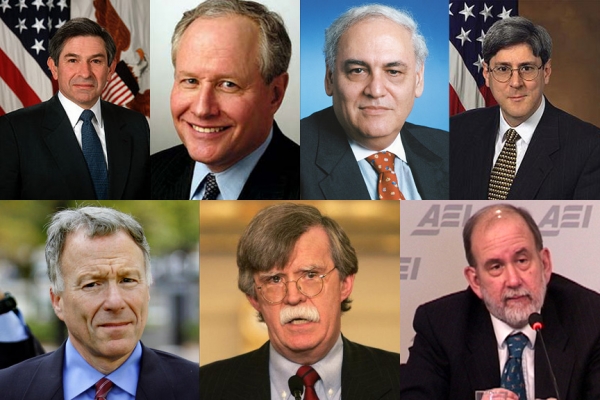
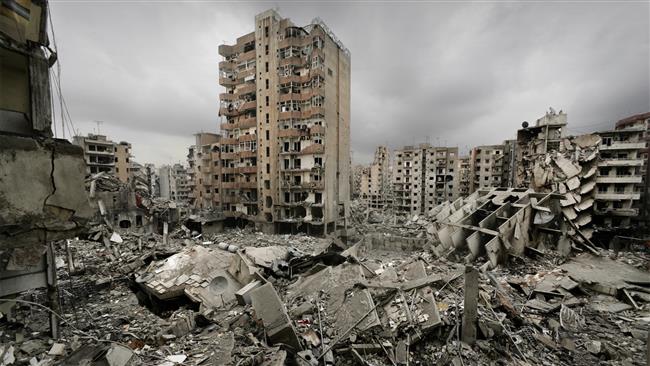


 Aletho News
 Aletho News