Trump’s Tulsi Gabbard Factor
By Robert Parry | Consortium News | November 21, 2016
Two weeks after Donald Trump’s shocking upset of Hillary Clinton, the imperious and imperial neoconservatives and their liberal-interventionist understudies may finally be losing their tight grip on U.S. foreign policy.
The latest sign was Trump’s invitation for a meeting with Rep. Tulsi Gabbard, D-Hawaii, on Monday. The mainstream media commentary has almost completely missed the potential significance of this start-of-the-work-week meeting, suggesting that Trump is attracted to Gabbard’s tough words on “radical Islamic terrorism.”
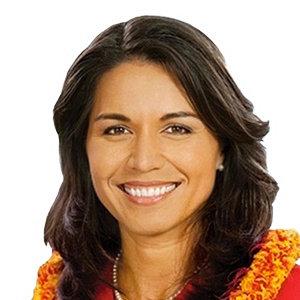
Rep. Tulsi Gabbard, D-Hawaii.
Far more important is that Gabbard, a 35-year-old Iraq War veteran, endorsed Sen. Bernie Sanders in the Democratic primaries because of his opposition to neocon/liberal-hawk military adventures. She starred in one of the strongest political ads of the campaign, a message to Hawaiians, called “The Cost of War.”
“Bernie Sanders voted against the Iraq War,” Gabbard says. “He understands the cost of war, that that cost is continued when our veterans come home. Bernie Sanders will defend our country and take the trillions of dollars that are spent on these interventionist, regime change, unnecessary wars and invest it here at home.”
In the ad, Gabbard threw down the gauntlet to the neocons and their liberal-hawk sidekicks, by accusing them of wasting trillions of dollars “on these interventionist, regime change, unnecessary wars.” Her comments mesh closely with Trump’s own perspective.
So, the surprise election results on Nov. 8 may have represented a “trading places” moment for the neocons and liberal hawks who were eagerly counting the days before the “weak” President Barack Obama would turn over the Commander-in-Chief job to former Secretary of State Clinton who had made clear that she shared their hawkish agenda of escalating the war in Syria and ratcheting up the New Cold War with Russia.
There was even speculation that one of Clinton’s neocon favorites within the State Department, Assistant Secretary of State for European Affairs Victoria Nuland, might be rewarded with State’s top job for her “regime change” in Ukraine that sparked the start of the New Cold War in 2014.
Nuland, the wife of arch-neocon Robert Kagan, sabotaged President Obama’s emerging strategy of collaborating with Russian President Vladimir Putin on sensitive global issues. In 2013-14, Putin helped orchestrate two of Obama’s brightest foreign policy successes: Syria’s surrender of its chemical weapons arsenal and Iran’s guarantee that it would not develop nuclear weapons.
But those agreements infuriated the neocons who favored escalating both crises into direct U.S. bombing campaigns aimed at Syria and Iran – in accordance with the desires of Israeli Prime Minister Benjamin Netanyahu and the Saudi monarchy. Yet. there was perhaps even greater alarm at what the next move of the Obama-Putin tag team might be: demanding that Israel finally get serious about a peace deal with the Palestinians.
So, the neocons took aim at Ukraine, which neocon National Endowment for Democracy President Carl Gershman identified as “the biggest prize” and an important stepping stone to an even bigger prize, a “regime change” in Moscow removing Putin.
While Gershman’s NED funded (with U.S. taxpayers’ money) scores of projects inside Ukraine, training anti-government activists and journalists, Nuland took the point as the key organizer of a putsch that removed elected President Viktor Yanukovych on Feb. 22, 2014, and replaced him with a fiercely anti-Russian regime.
Given the geopolitical sensitivity of Ukraine to Russia, including its naval base on the Crimean peninsula, Putin had little choice but to react, supporting a referendum in Crimea in which 96 percent of the voters favored leaving Ukraine and rejoining Russia – and assisting ethnic Russian rebels in the east who resisted the violent ouster of their president.
Of course, the mainstream Western news media presented these developments as simply a case of “Russian aggression” and a “Russian invasion.” And, faced with this new “group think,” Obama quickly abandoned his partner, Putin, and joined in the chorus of condemnations.
Nuland emerged as a new star inside the State Department, a hero of the New Cold War which was expected to funnel trillions of tax dollars into the Military-Industrial Complex.
Trump’s Heresy
But Trump surprisingly adopted the position that Obama shied away from, a recognition that Putin could be an important asset in resolving major international crises. The real-estate-mogul-turned-politician stuck to that “outside-the-mainstream” position despite fierce attacks from rival Republicans and Democratic presidential nominee Clinton, who even mocked him as Putin’s “puppet.”
After Trump’s upset victory on Nov. 8, many pundits assumed that Trump would fall back in line with Washington’s hawkish foreign-policy establishment by giving top jobs to neocons, such as former U.S. Ambassador to the United Nations John Bolton and ex-CIA Director James Woolsey, or Netanyahu favorites, such as former Republican presidential nominee Mitt Romney or ex-New York City Mayor Rudy Giuliani.
So far, however, Trump has followed a different course, more in line with the libertarian thinking of the Koch brothers – not only the more famous ones, Charles and David, but also their long-estranged brother William, who I’m told have become behind-the-scenes advisers to the President-elect.
Though Trump did offer high-profile meetings to the likes of Romney and Giuliani, he has yet to hand over any key foreign-policy job to the Republican neocon wing. His one major announcement in that area has been naming as National Security Advisor retired Gen. Michael Flynn, who led the Defense Intelligence Agency when it produced a prescient warning that U.S. policy in Syria would lead to the creation of an “Islamic State.”
Though Flynn is regarded as a hardliner in the fight against Islamic jihadist terror, he is seen as an independent thinker regarding how best to wage that war. For instance, Flynn has objected to the notion that drone strikes, i.e., killing off individual jihadists, is a route to success.
“We’ve tended to say, drop another bomb via a drone and put out a headline that ‘we killed Abu Bag of Doughnuts’ and it makes us all feel good for 24 hours,” Flynn said. “And you know what? It doesn’t matter. It just made them a martyr, it just created a new reason to fight us even harder.”
That leaves open the possibility that a President Trump might eschew the “whack-a-mole” approach that has bedeviled the “war on terror” and instead go after the “mole nest” – if you will – the Saudi monarchy that has long financed Islamic extremists both through the fundamentalist Wahhabi brand of Sunni Islam and by supplying money and weapons to jihadists dating back at least to the Afghan mujahedeen in the 1980s, the origin of modern Islamic terrorism.
Traditional U.S. politicians have recoiled from facing up to the hard reality that the Saudi monarchy is the real “terror central” because of Saudi Arabia’s enormous riches and influence, which is now enhanced by its quiet alliance with Israel in their joint campaign against the so-called “Shiite crescent,” from Iran through Syria to Lebanon’s Hezbollah.
Taking on this Saudi-Israel nexus has long been regarded as political suicide, given Israel’s extraordinary lobbying power and Saudi Arabia’s exceptional wealth. But Trump may be assembling a team that is “crazy” enough to take on that mission.
So, while the fight over the future of U.S. foreign policy is far from over – the neocons will surely flex their muscles at the major think tanks, on the op-ed pages and inside the halls of Congress – the Trump transition is showing some creativity in assembling a national security team that may go in a very different direction.
Much will become apparent in Trump’s choice of Secretary of State. If it’s someone like Sen. Rand Paul, R-Kentucky, or Rep. Gabbard or a libertarian from the Kochs’ world, that would be bad news for the neocons. If it’s someone like Romney, Giuliani, Bolton or Woolsey, then that will mean that President-elect Trump has blinked and the neocons can breathe a sigh of relief.
Investigative reporter Robert Parry broke many of the Iran-Contra stories for The Associated Press and Newsweek in the 1980s.
Will Trump Dump The Wahabbi Autocrats?
By Caleb Maupin – New Eastern Outlook – 20.11.2016
US leaders almost always justify their foreign policy with words about “democracy” and “human rights.” Especially when talking about the Middle East, the insincerity of such words are blatantly obvious. While US leaders criticize Iran and Syria for alleged human rights violations, the entire world can see that the US allies in the region are serial human rights violators.
Israel has been widely condemned for its treatment of Palestinians. Saudi Arabia is a country where even the basic notion of human rights does not exist. The Kingdom is an absolute monarchy where people can still be executed by beheading or crucifixion in the 21st century. Crimes punishable by death under the Saudi regime include “sorcery” and “insulting the King.” Under Saudi law, the people are not citizens with rights, but rather “subjects” who are essentially the King’s property.
Qatar is yet another repressive regime. Like Saudi Arabia, it is an absolute monarchy, where a King serves as the unelected autocrat.
Bahrain is known not only for its lack of democratic structures, but for its repression of the Shia Muslim majority who frequently take to the streets, demanding their rights.
The United Arab Emirates, Kuwait, Jordan, and almost every other US-aligned regime in the Arab world has a primitive political system, centered on an autocratic monarchy. These regimes are known to torture, behead, flog, repress free speech, oppress religious minorities, and do all kinds of things US leaders claim to oppose.
This does not prevent the United States from selling weapons to these regimes, or from purchasing their oil. This also does not prevent the USA from establishing military bases on their soil, and otherwise coddling them.
In fact, the Financial Times describes how the United Arab Emirates is becoming a beloved “tax haven” for the rich and powerful in the western world. While western leaders love to talk about human rights, they have no problem with autocratic emirates handling their money.
The Roots of Wahabbi Terrorism
More shockingly, the involvement of these regimes in terrorism has not deterred US support. It took 15 years for the classified 28 pages of the 9/11 Commission report to be released. The pages revealed that Saudi government officials had collaborated with the 9/11 hijackers. It furthermore revealed that Saudi Arabia had been uncooperative and offered minimal support to US officials with their investigations during the aftermath of the attacks.
The Saudi Royal family owes its reign to the British Empire. During the 1900s the British discovered that the House of Saud were useful allies against the Ottoman Empire, and were more than willing to sell their oil at a reasonable price. The Saudi monarchy professes a particularly conservative brand of Islam known as “Wahabbism.”
While not every Wahabbi has been involved in terrorism, Al-Queda, ISIS, Al-Nusra, Osama Bin Laden, Omar Mateen, and nearly every Middle-Eastern or Central-Asian terrorist who has menaced the world in recent years has been an adherent of Wahabbism. Wahabbism is particularly anti-Western and anti-American. Opponents of the Saudi ideology often call it “Takfirism,” a term that refers to Wahabbi’s willingness to kill other Muslims with whom they disagree.
The relationship between Wahabbi fanatics and Britain’s wealthy has not ended. A recent article in the Financial Times describes how British Houses of Finance now specialize in “Islamic Banking.” While many Islamic scholars describe the very concept as fraudulent, many financial institutions are accommodating sultans, emirates, and princes who adhere to strict Wahabbi laws. Islam forbids lending money for interest, so many financial institutions have invented loopholes with hidden fees, investment returns, and other mechanisms that can accommodate strict adherents.
During the 1980s, the CIA worked with the heir of a wealthy Saudi construction dynasty to build a Wahabbi army. Osama bin Laden was sent to Afghanistan to build an army of “Mujihadeen” to topple the People’s Democratic Party. The US worked closely with the fanatical Wahabbi terrorists to battle the Marxist government of Afghanistan and their Soviet allies.
Currently, the United States works with Saudi Arabia to fund a Wahabbi insurgency against the secular Syrian Arab Republic. ISIS and Al-Nusra are known to be terrorists inspired by the Saudi ideology. The Saudis have been caught directly helping them out. Among the US backed “moderate rebels,” many Wahabbis can also be found.
Most of the various US-aligned autocracies in the Middle East can be linked to the Wahabbi forces in Syria. Bahrain, Qatar, Kuwait, and other regimes have made the goal of “regime change” in Syria a priority, and many ISIS fighters have emerged from their respective populations.
Is The Tide Turning?
While the past three presidencies of Bush, Obama, and Clinton have involved massive coddling of the Saudi regime, Donald Trump often spoke against Saudi Arabia during his Presidential campaign. Furthermore, in a recent move, the US Congress dramatically overrode Barack Obama’s veto, and passed the controversial JASTA bill, allowing victims of terrorism to sue the Kingdom of Saudi Arabia in US courts.
While Trump often appealed to ignorant and Islamophobic sentiments among Americans, he also appealed to an isolationist desire to stop meddling around the world. Trump made fighting ISIS, the Wahabbi extremist group unleashed amid US-Saudi regime change efforts, a key plank of his campaign.
Will Trump live up to his words? Will the USA end its alliance with Pro-Wahabbi autocratic regimes that are linked to terrorism?
Though Trump spoke against the Saudis and talked of fighting ISIS, his campaign included reckless denunciations of the Islamic Republic of Iran. Trump’s speeches often seemed to lump Iran in with ISIS, ignoring the fact that Iranian Revolutionary Guards are on the battlefield each and every day, risking their lives to defeat ISIS.
Iran is greatly threatened by ISIS terrorism. ISIS and most Wahabbis consider the Islamic Republic of Iran to be led by “Shia Apostates.” ISIS and other anti-government forces in Syria have recruited fighters from around the world on the basis of toppling Syrian President Bashar Assad because of his Alawi faith, which Wahabbis consider to be a variation of Shia apostasy.
Contradictory Middle East Positions
For too long, the USA has been targeting secular, nationalist governments like the Baathist regimes of Iraq and Syria, the Islamic Republic of Iran, or Gaddafi’s Libya. In doing so they have been passively helping and strengthening the bloodthirsty Wahabbi fanatics who these regimes have held back, and whose ideological foundation is promoted by Saudi Arabia.
If Trump is serious about stopping ISIS and the surrounding wave of Wahabbi terrorism, he will immediately end the US financial and military relationship with the Saudi regime, as well as the nearby, pro-Wahabbi autocracies.
Furthermore, Trump will need to end his irresponsible demonization of the Islamic Republic of Iran, and join with the Iranians, the Russians, the Syrian government, and China in the fight against ISIS terrorism.
If Trump were to do this, it would be one of the most dramatic shifts ever seen in US foreign policy.
During his campaign, Trump has taken two somewhat contradictory positions in relation to the Middle East. While he has denounced Saudi Arabia and talked about how US “regime change” policies have strengthened terrorism, he has also repeated the anti-Iranian talking points of Netanyahu, and spoken with great admiration for Israel.
Israel has been the greatest direct beneficiary of the US policy in the Middle East. Each regime the US has targeted in the region–Syria, Iraq, and Iran–have been outspoken opponents of Israel who directly support Palestinian resistance. Meanwhile, the Wahabbi-linked autocrats denounce Israel in words, but do very little to threaten its existence or strength.
Israel’s primary enemies, Iran and Syria, are also the primary target of the Wahabbi fanatics and the Saudi monarchy. Israel and Saudi Arabia may denounce each other, but their foreign policies both center on hostility to what the Saudis call “the Shia crescent.”
Regarding the Middle East, the new President will be forced to decide whether he seeks to continue aligning US and Israel foreign policies, and targeting Iran and Syria, or whether he wants to end Wahabbi terrorism, and stop cooperating with the regimes actively linked to it.
Trump is often perceived as quite unpredictable. Whichever choice he makes, it is likely to surprise many people.
Caleb Maupin is a political analyst and activist based in New York. He studied political science at Baldwin-Wallace College.
Stability Battles Chaos: From London to Aleppo
By Caleb Maupin – New Eastern Outlook – 17.11.2016
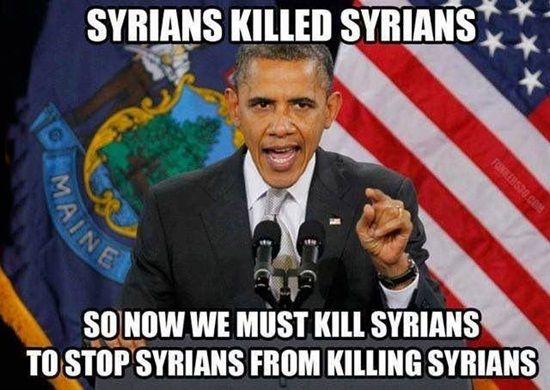
For over five years the leaders of the United States, Britain, France, and Germany have been working to topple the Syrian Arab Republic. In their efforts to remove the independent nationalist government led by the Baath Arab Socialist Party, the western imperialist powers have enlisted their collection of petroleum vassals and despots in the nearby area. The Kingdom of Saudi Arabia, Qatar, the United Arab Emirates, and Dubai; absolute monarchies that routinely behead, torture, and deny their populations even basic rights like freedom of speech are all sending weapons and training foreign fighters to destabilize Syria in what western leaders still pretend is a fight for “democracy.”
300,000 people are dead. Millions have become refugees. Among the fanatical colossus of anti-government forces in Syria, vile ISIL terrorist organization has emerged, unleashing horrors in Lebanon, Belgium, France, and elsewhere. Yet, western leaders do not end their mantra of “Assad Must Go!” and continue efforts to make the country less stable. It seems not to matter how many innocent people have to die, or how strong the dangerous terrorist “opposition” gets, western leaders seem unwilling to abandon their goal of regime change.
If the Syrian government were to fall, the results would be grim. The Al-Nusra Front, ISIL, and even a number of the forces the US has called “moderate” are devoted to establishing a Sunni caliphate. Syria’s religious minorities, the Christians, the Alawites, and others could face either forced deportation, or even outright extermination.
Russia, along with Iran, China, and Venezuela, have come to the aid of the secular, internationally recognized Syrian government, in the hopes of holding back the wave of extremism. The Syrian city of Aleppo is now divided, with the eastern section of the city under the control of various anti-government factions, including the US backed so-called “moderate” rebels, as well as the Al-Nusra terrorists, who were directly linked to Al-Queda until recent months.
Russia repeatedly requested that a humanitarian corridor be created so that civilians could flee Aleppo and escape the fighting, as the Iraqi forces did when fighting in Mosul. Neither the Al-Nusra terrorists, the US backed “moderate rebels”, or the United Nations, or the western powers would comply with Russia’s request. The call for a humanitarian corridor in Aleppo was denied. When speaking of the citizens of Aleppo, John Kirby of the US State Department insisted “they shouldn’t have to leave.”
Despite their efforts to protect innocent life, Russia and the Syrian government have been forced to fight against the Al-Nusra terrorists and their allies in close proximity to civilians. As Russia fights to retake the city from anti-government extremists, the US media suddenly has developed a concern for the civilian casualties of war. Allegations of Russian war crimes in Aleppo have filled the airwaves and the speeches of western leaders. Meanwhile, anti-government forces continue to shell civilian areas in the western side of the city. Western media ignores the cries of these civilians, while doing everything to demonize the Syrian government and Russia. The hypocrisy shouldn’t be missed by anyone. Some of very same individuals that backed the US invasion of Iraq which caused hundreds of thousands of innocent civilians to die, now voice “humanitarian” outrage about Aleppo. The leaders of NATO, who reduced Libya, then the most prosperous African country, to rubble, now bemoan the impact of war on civilian populations. The very same voices that long dismissed civilians killed by airstrikes, have now discovered that what they once called “collateral damage” indeed has human rights.
At the same time that Russia works with the Syrian government to retake Aleppo, the Kingdom of Saudi Arabia is conducting a relentless bombing campaign against the people of Yemen. There is no dispute that the Saudi attack on Yemen is violating human rights. The UN has documented that civilian targets are being intentionally hit. But no pressure whatsoever is being placed on Saudi Arabia to end its slaughter of Yemeni civilians. The western governments continue to actively assist their Saudi “allies” as they violate international law in Yemen, while demonizing Russia’s cooperation with Syria against terrorism.
When speaking of Aleppo, western leaders employ language that is quite similar to the kind often used by left-wing anti-war activists. The British Foreign Secretary, Boris Johnson, even called for anti-war protests targeting Russia when speaking before parliament on October 11th.
The November 3rd Provocation
 On November 3rd, a group of 25 people wearing “Save Aleppo” T-Shirt presented themselves outside of the Russian embassy in London, and appeared to be following Johnson’s directive. They brought with them a truck full of manikin arms and legs. They proceeded to dump these arms and legs in pile in front of the embassy, effectively blocking its doors and preventing anyone from leaving or entering.
The manikin arms and legs were said to symbolize the innocent people of Aleppo, whose deaths they blamed on Russia. The police did not halt this demonstration, which appeared to have barricaded a foreign mission. As the protest continued, some of the provocative individuals in “Save Aleppo” T-shirts are reported to have chained themselves to the fence surrounding the embassy’s perimeter. Yet, it appears that not a single arrest was made. The police, who were on hand, apparently did not stop the individuals.
So, who were these individuals? The money for the protest was supplied by “Syria Campaign.” This is a non-profit organization funded by a Syrian billionaire named Ayman Asfari, in addition to other anonymous sponsors. It makes sense that a billionaire of Syrian descent, residing in Britain, would want to topple the “Baath Arab Socialist Party” that has run his country for many decades. Parallels between Asfari and the many wealthy Cuban residents of Miami are easy to make. The Syrian government, like the Cuban government, has provided housing, healthcare, and education to its population, achieving this with policies that make the richest people quite uncomfortable.
But beyond Asfari’s well-funded “Syria Campaign” that uses its huge endowment to spread propaganda against the Syrian government and its allies, who were the individuals in the T-shirts? Very few of them appeared to be of Syrian origin, but one cannot assume they were merely hired stooges either.
The answer to this question can be found in the name of an organization that co-sponsored the malicious provocation. The organization “Syria Solidarity UK,” which took credit for the action on its website, is well known to be a front group for the Socialist Workers Party of Britain. This “socialist” organization follows the teachings of Tony Cliff and Leon Trotsky, has its grip on Britain’s “Stop The War Coalition” as well. It is safe to surmise that a decent percentage of those who barricaded the Russian embassy’s entrance were Trotskyites.
Two Currents of Communism
So, who are the Trotskyists? To answer this question we must begin to examine the anatomy of the political left throughout the course of the 20th century.
Within the mass movements associated with Marxism, there are a wide variety of sects, ideologies, and interpretations. However, among the individuals who envision and work toward the overthrow of capitalism there are two distinct personal or psychological categories. These two trends often work in concert with each other. The two trends often do not even intentionally dissociate with each other, and can often be found within the same political parties and movements, despite the huge differences between them. The differences are found in motivation.
Among the political left, the primary and constant current is an extremely alienated minority from within the privileged sectors of society. In Russia it was a current among the children of the aristocracy, as well as from within the emerging bourgeoisie, who made up much of the cadre of the Bolshevik Party in its early years. While they were born in relatively comfortable positions, they knew that things in society at large were deeply wrong. They saw the suffering of the poor, and the many other injustices that existed, and were filled with anger and motivation to correct them. While other members of their social caste could be at peace with society, they could not.
Whether it is due to their unique access to education, or the fact that they are encouraged to ponder political and philosophical questions while other strata are not; regardless of the reason, a section of the most privileged people always seems to be drawn to revolutionary anti-capitalist politics. The trend is not restricted to pre-revolutionary Russia. One can think of the young French radicals depicted in Victor Hugo’s novel Les Miserable, or even the radicals of Students for a Democratic Society or the Weather Underground in the United States, who came from some of the prestigious Universities. No matter how strong or weak the leftist current is in society at large, a certain sector of the privileged classes exists as a kind of “radical intelligentsia.” This is true even in under the most repressive anti-communist dictatorships.
The second current, which constitutes a very solid majority of those attracted to leftist and anti-capitalist currents around the world, are those among the working and impoverished classes. While in times of prosperity they are less politicized, as they see their conditions deteriorating, they become motivated to take action and embrace anti-capitalist and revolutionary ideology.
Unlike the first current, their motivation is not a moralistic impulse based on alienation, but rather the basic desire to see their lives improve. This does not mean that such people do not have political depth or brilliance. Often these forces are actually much more politically effective and ideological. However, their introduction to revolutionary politics originates in a basic material need.
While these two distinct political currents espouse the same phrases and philosophies, they seem to crave two different things. The privileged children of the wealthy who embrace revolutionary politics often have a deep desire to create chaos. They see the world as unjust and cruel. They want it to be smashed, shattered, burned to the ground, and rebuilt anew.
The second current, while espousing the same political line, tends to crave the opposite. They are motivated to take political action as society is becoming less stable. The economic crisis has made their lives more painful and unpredictable, intensifying the suffering all around them, pushing them toward a desperate need for radical change. They embrace anti-capitalism because it offers stability beyond the “anarchy of production.” The revolutionary left is for them, not the road to chaos and revenge, but the path toward a new order with a centrally planned economy, in which justice is created and the chaos is ended.
The Origins of “Trotskyism”
Lenin’s book “What Is To Be Done?,” which laid the foundation for the Bolshevik project of a Central Committee and a “Party of a New Type,” was largely directed at members of the first, moralistic, and privileged group. It urged them to look past their own motivations, abandon terrorism and tailism, and build an highly disciplined organization that could push the broader masses of Russian workers and peasants toward a full revolution.
The October Revolution of 1917 was successful because it merged the two trends. In a time of crisis, the revolutionary intelligentsia who longed to smash the old order, were able to mobilize the workers and peasants who were suffering and desperately wanted “Peace, Land and Bread.” The effective convergence of these two currents created a new political and economic system.
However, almost immediately after the Soviet Union was founded, political space began to develop between the two trends. Lenin banned factions in the Bolshevik Party during the early 1920s in order to hold an increasingly divided ruling party together. Despite the ban on factions, the two trends did not cease to exist. After Lenin’s death, the two poles became personified in Leon Trotsky and Joseph Stalin.
Trotsky, the son of wealthy landowners in Ukraine, who had lived in exile most of his life and was beloved among the world’s cosmopolitan intellectuals, called for “Permanent Revolution.” The Soviet Union, in his view, should exist simply as a temporary hold out in a global revolutionary explosion. In his view, Soviet society should be organized around the military, and focus primarily on seizing the western financial centers of Germany, Britain, and France for the global socialist project to remake all humanity.
Stalin on the other hand called for “Socialism in one country.” He advocated for the Soviet Union to focus on building a good society for the people of Russia and the surrounding countries, while offering limited support to revolutionary forces around the world. “Socialism in One Country” would require signing treaties with the western countries, restoring the traditional family, and eventually even legalizing the Russian Orthodox Church. For Stalin and the majority of the Communist Party of the Soviet Union, socialism did not mean an endless global crusade to behead every last king and capitalist, but rather, building a peaceful, prosperous society with a planned economy in Russia and the surrounding countries.
When Stalin was victorious, the world communist movement began to shed the most adherent members of the first revolutionary category. The Communist parties began building unemployment councils, trade unions, and other organizations dedicated to aiding working people and fighting for direct material gains as capitalism collapsed into a “great depression.” Eventually the “Stalinists” built a People’s Front of anti-fascists that played a decisive role in the Second World War.
Meanwhile, Trotsky took a significant number of western intellectuals out of the Communist International and into his “Fourth International.” The Trotskyists worked to antagonize and isolate the Soviet aligned Communist Parties, while at the same time presenting a negative perception of the Soviet Union as a “totalitarian” and “repressive” society that did to live up to the utopian dreams of middle class radicals.
Trotsky saw the USSR as a “degenerated workers state,” socialist in its economic foundations but “bureaucratized” in its politics. In the final years of his life, a number of Trotsky’s followers disagreed with this assessment and argued that the USSR was capitalist. Max Shachtman, Irving Kristol, and a number of the more middle class elements broke with Leon Trotsky, arguing that the USSR was not a “worker’s state” but rather “bureaucratic collectivism”, “state capitalism”, or fascism. These elements called themselves “Third Camp” or “Neo-Trotskyists.” The International Socialist Tendency, of which the British Socialist Workers Party is aligned, along with the US International Socialist Organization, is the largest group continuing these politics. It is “Third Camp Trotskyists” in Britain who have built the organization called “Syria Solidarity UK” which conducted the recent protests against the Russian embassy.
Interestingly, it is from within the “Trotskyists” who broke with Trotsky, and completely denounced the USSR, that one can find the origins of Neo-Conservative thought in the United States. James Burnham, Edmund Wilson, Max Eastman, and many of the leading right-wing intellectuals of the Cold War were era were originally Trotskyists.
Brzezinski’s Permanent Revolution
Zbigniew Brzezinski, one of the leading CIA strategists during the Cold War, can largely be credited for defeat of the Soviet Union. Brzezinski’s career involved fomenting dissent and unrest in Soviet aligned countries. The gap between revolutionary intellectuals who crave chaos and revolution, and the pragmatic approach of Soviet leaders who wanted a stable, planned economy was a great asset to his activities. The CIA launched the “Congress for Cultural Freedom” to fund anti-Soviet leftists and artists, and further the space between them and the USSR.
In Hungary, Poland, Czechoslovakia, East Germany, and many other socialist countries, the US Central Intelligence Agency enflamed and exploited the grievances of artists and intellectuals, who felt stifled by the Marxist-Leninist political set up, and longed for the “freedom” of the west. It has become almost cliché to talk about the role of Beatles music and other western counter-cultural icons in “the fall of Communism.”
Brzezinski openly bragged that he was “giving the USSR its Vietnam War” in Afghanistan. When the People’s Democratic Party took power in 1978, the CIA worked with the Saudi monarchy to launch a global campaign of Wahabbi Muslims against it. The USSR sent its forces into Afghanistan to protect the People’s Democratic Party.
In the global media, it was a different story. The press painted the Taliban and other forces organized by Osama Bin Laden as romantic guerilla fighters, battling against the USSR, portrayed as a crude, repressive invading force. The “Trotskyists” of the world embraced the Mujahadeen Wahabbi fanatics in much the same manner that such forces now embrace the Free Syrian Army and the Al-Nusra Front. Among the organized left, pro-Soviet sentiments were left only to a small minority, dubbed “Stalinists” and “Hardliners.” The long-haired, counter-cultural “New Left” bought into the CIA narrative, and believed that Osama Bin Laden was some kind of Che Guevara.
In the 21st century, Anti-imperialist governments, even those who completely reject Marxism-Leninism, have a lot in common with the political and economic system developed by Stalin during the 1930s. Anti-imperialist countries tend have five year economic plans or other mobilizations of the population toward raising the living standards. They tend to have a ruling party with a very complex and specific ideology, that sits at the center of a tightly organized and politicized population. The strength of the various anti-imperialist regimes is their ability to control the centers of economic power, raise the standard of living, and provide a comfortable life for the majority of their people.
In China, each child is given a red scarf when they begin their education. They are told that this red scarf is their own piece of the Chinese flag, and that it represents a political project toward building a prosperous society, which they are automatically part of it. Similar rituals exist in the Bolivarian countries, the Arab Nationalist states, and almost every other country where the government can trace its origin to an anti-capitalist revolution.
Meanwhile, the primary strategy of Wall Street for toppling these governments has been to employ the rhetorical style of Trotskyists, and appeal to the alienation and anxiety of the privileged elite. The CIA and its network of aligned NGOs has discovered key methods of manipulating and unleashing the desire for chaos among the middle class. Figures like Samantha Power talk about “mobilizing” for human rights around the world.
The primary way the US has attacked independent countries in recent years has been fomenting revolts such as Euro-Maiden in Ukraine, the “Green Movement” in Iran, the “revolution” in Libya. These uprisings are supported by Non-Governmental Organizations and carried out to serve the interests of the western financial elite. While they effectively maintain the global status quo, they are decorated with the most Guevara and Trotsky-esque propaganda on social media and western television. It seems pretty clear that the vaguely emotional lust for revolution and unrest among the alienated middle class has been effectively harnessed as a mechanism for defeating “Stalinism” and ensuring the rule of western capitalists.
Foreign Affairs: “Open International System” vs. “Populism”
The Council on Foreign Relations, the CIA-linked think tank, shed light on its worldview and strategy in the latest issue of their publication Foreign Affairs. In an essay by Anne-Marie Slaughter, one of the primary architects of the US backed regime change operation in Libya, she described her prescription for the ailments of the global situation.
“The people must come first,” she tells us, like a soap-box agitator. “When they do not, sooner or later they will overthrow their governments.” According to Slaughter, the job of western countries is to facilitate the free flow of information through social media, in order to allow these uprising to come about.
Furthermore, Slaughter argues that the Treaty of Westphalia, and the concept of the nation state is out of date. Rather “responsibility to protect” or R2P has replaced it. The NATO states and their military must intervene in order to strengthen these revolutions, and topple regimes that get in Wall Street’s way. The strategy is global revolution, endless destruction and chaos until “open governments, open societies and an open international system” can be erected. We can almost hear echoes of Trotsky’s fantasy of “permanent revolution” in Slaughter’s writing, though Trotsky’s stated goal was to overturn capitalism, not secure its grip on the planet.
And who are the villains in the CFR narrative? They are “Populists.” The entire issue of “Foreign Affairs” is titled “The Power of Populism.” Listed among them are Hugo Chavez, Evo Morales, the Supreme Leader of Iran, as well as Russian President Vladimir Putin and Chinese President Xi Jinping. According the analysis, it is these dangerous “demagogues” who reject the “open international system” of the World Bank and the International Monetary Fund, but instead mobilize their populations and preside over centrally planned economies that must be smashed. With the word “Populism”, the CFR seeks to link these governments to racism and anti-immigrant bigotry in western countries, and urge “progressive” and “enlightened” people to oppose them in the same manner.
Indeed, political navigation in the 21st Century can be quite difficult. The compass by which analysts have long determined left and right is broken. The defenders of free market capitalism and the rule of internationalist bankers have embraced the revolutionary blood-lust which was long a staple of the political left. Meanwhile, the anti-imperialists and advocates of planned economies now often position themselves as social conservatives and defenders of stability, morality, religion, and tradition.
While it is no longer exactly clear which way is “left” or “progressive,” it is blatantly obvious which way is better for the human race. The NATO regimes, despite mouthing left-sounding rhetoric in the process, have reduced Iraq, Afghanistan, Libya, and Syria to civil war and chaos. The fruits of their imposed vision of an “open society” with “free markets” is not prosperity and freedom but poverty, chaos, and endless civil war.
However right-wing and conservative the governments of China, Russia, and Iran may seem, the societies they have created are ones in which profits are not in total command, and providing a decent life for the masses of people remains a priority. In the anti-imperialist regimes, the state is independent of market forces, and has the ability to restrict and control their actions. Meanwhile, a sense of collective vision and obligation exists, and people are not left isolated to fend for themselves.
Yes, the CFR’s vision of a clash between the “open international community” and the “populists” is certainly accurate as it is playing out before the world. Syria is simply the most visible battlefield.
Caleb Maupin is a political analyst and activist based in New York. He studied political science at Baldwin-Wallace College and was inspired and involved in the Occupy Wall Street movement.
Gap with Russia disturbing: Israeli official
Press TV – November 17, 2016
A senior Israeli official says Tel Aviv should be concerned about deepening disconnect with Moscow over Russia’s role in the Syria conflict.
Avi Dichter, chairman of Israel’s foreign affairs and military committee and the former head of the Shin Bet intelligence agency, says Russia’s interests in the region by no means coincide with Israel’s.
“The gap between us and them is large and disturbing,” he told Reuters news agency after returning from a visit to Moscow where he held high-level meetings last week.
Dichter said Russia’s views on Iran, Syrian President Bashar al-Assad and the Lebanese group Hezbollah were in sharp contrast to Israel’s and a growing source of potential conflict.
Russia does not view Iran and its allies “according to the level of threat they pose or broadcast towards Israel,” he said.
The Russians, he said, “view Hezbollah positively” and are backing the group’s assistance to the Syrian government in the war against Takfiri and other terrorists.
“Russia thinks and acts as a superpower and as such it often ignores Israeli interest when it doesn’t coincide with the Russian interest,” Dichter said.
Israel is believed to have been assisting militants fighting to topple President Assad in Syria. The Israeli regime’s worries have risen as Takfiri terrorists have suffered major setbacks over the past few months.
Tel Aviv’s main concern is to be able to attack Hezbollah, with which it fought a war in 2006. Over the past two years, Israeli artillery and warplanes have carried out several strikes against alleged weapons convoys in southern Syria that Israel claimed were destined for Hezbollah.
The occupying regime’s freedom of movement in the area is now more restricted because of the presence of Russian jets and advanced anti-aircraft batteries that Moscow has put in place.
With Russia becoming more deeply involved in the Syria conflict, Tel Aviv has sought to keep lines of communication with Moscow open to avoid an accidental confrontation.
Meanwhile, Israeli Prime Minister Benjamin Netanyahu has visited President Vladimir Putin three times this year, apparently in an effort to persuade him to drop Russia’s engagement in Syria.
But Dichter said Russia thinks Assad should stay in power, that Iran is a stabilizing force and that the nuclear deal the word powers struck with Tehran was largely positive.
Clinton Promotes War While US Public Opinion Speaks to Anti-Militarist Populism

By James Petras :: 11.14.2016
Introduction
Castigating the US electorate as accomplices and facilitators of wars, or, at best, dismissing the voters as ignorant sheep-people (‘sheeple’) herded by political elites, describes a partial reality. Public opinion polls, even the polls overwhelmingly slanted toward the center-right, consistently describe a citizenry opposed to militarism and wars, past and present.
Both the Right and Left have failed to grasp the contradiction that defines US political life: Namely, the profound gap between the American public and the Washington elite on questions of war and peace within an electoral process that consistently leads to more militarism.
This is an analysis of the most recent US public opinion polls with regard to outcome of the recent elections. The essay concludes with a discussion of the deep-seated contradictions and proposes several ways in which these contradictions can be resolved.
Method
A major survey of public opinion, sponsored by the Charles Koch Institute and the Center for the National Interest, conducted by the Survey Sampling International, interviewed a sample of one thousand respondents.
The Results: War or Peace
More than half of the American public oppose any increase in the US military role overseas while only 25% back military expansion.
The public has expressed its disillusionment over Obama’s foreign policy, especially his new military commitments in the Middle East, which have been heavily promoted by the state of Israel and its US domestic Zionist lobby.
The US public shows a deep historical memory with regard to the past military debacles launched by Presidents Bush and Obama. Over half of the public (51%) believe that the US has become less safe over the past 15 years (2001-2015), while one eighth (13%) feel they are more secure.
In the present period, over half of the public opposes the deployment of ground troops to Syria and Yemen and only 10% favor continued US support for the Kingdom of Saudi Arabia.
With regard to specific US wars, over half believe that Bush’s invasion of Iraq made the US homeland less secure, while only 25% believe it didn’t increase or decrease domestic security. Similar responses were expressed with regard to Afghanistan: 42% believe the Afghan War increased insecurity and about a third (34%) felt it did not affect US security.
In terms of future perspectives, three quarters (75%) of the American public want the next President to focus less on the US military operations abroad or are uncertain about its role. Only 37% are in favor of increased spending for the military.
The mass media and the powerful financial backers of the Democratic Presidential candidate have focused on demonizing Russia and China as ‘the greatest threats in our time’. In contrast, almost two thirds (63.4%) of Americans believe the greatest threat comes from terrorism both foreign and domestic. Only 18% view Russia and China as major threats to their security.
In regard to the Pentagon, 56% want to reduce or freeze current military spending while only 37% want to increase it.
Wars and Peace: The Political Elites
Contrary to the views of a majority of the public, the last four US Presidents, since the 1990’s, have increased the military budget, sending hundreds of thousands of US troops to launch wars in three Middle Eastern countries, while promoting bloody civil wars in three North African and two European countries. Despite public opinion majorities, who believe that the invasions of Afghanistan and Iraq have increased threats to the US security, Obama kept ground troops, air and sea forces and drone operations in those countries. Despite only 10% public approval for his military policies, the Obama regime has sent arms, advisors and Special Forces to support the Saudi dictatorship’s invasion of tiny Yemen.
Obama and the Democratic presidential candidate Hillary Clinton pushed a policy of encircling Russia and demonizing its President Putin as the greatest threat to the US in contrast to US opinion, which considers the threat of Islamist terrorism as five times more serious.
While the political elite and the leading Presidential candidates promise to expand the number of US troops abroad and increase military spending, over three quarters of the American public oppose or are uncertain about expanding US militarism.
While candidate Clinton campaigned for the deployment of the US Air Force jets and missiles to police a ‘no fly zone’ in Syria, even shooting down Syrian and Russian government planes, the majority of US public opposed it by 51%.
In terms of constitutional law, fully four-fifths (80%) of the US public believes the President must secure Congressional approval for additional military action abroad. Nevertheless, Presidents from both parties, Bush and Obama launched wars without Congressional approval, creating a precedent which the next president is likely to exploit.
Analysis and Perspectives
On all major foreign policy issues related to waging war abroad, the political elite is far more bellicose than the US public; they are far more likely to ignite wars that ultimately threaten domestic security; they are more likely to violate the Constitutional provisions on the declaration of war; and they are committed to increasing military spending even at the risk of defunding vital domestic social programs.
The political elites are more likely to intervene in wars in the Middle East, without domestic support and even in spite of majoritarian popular opposition to war. No doubt the executives of the oligarchical military-industrial complex, the pro-Israel power configuration and the mass media moguls are far more influential than the pro-democracy public.
The future portends a continuation of militarism by the political elites, and increase in domestic security threats and even less public representation.
Some Hypothesis on the Contradiction between Popular Opinion and Electoral Outcomes
There is clearly a substantial gap between the majority of Americans and the political elite regarding the role of the military in overseas wars, the undermining of constitutional prerogatives, the demonization of Russia, the deployment of US troops to Syria and deeper US entanglement in Middle East wars for the benefit of Israel.
Yet it is also a fact that the US electorate continue to vote for the two major political parties which have consistently supported wars, formed military alliances with warring Middle East states, especially Saudi Arabia and Israel and aggressively sanctioned Russia as the main threat to US security.
Several hypotheses regarding this contradiction should be considered:
1. Close to 50% of the eligible voters abstain from voting in Presidential and Congressional elections. This most likely includes many among the majority of Americans who oppose the expansion of the US military role overseas. In fact, the war party ‘winner’ typically claims victory with less than 25% of the electorate – and threats this as a mandate to launch more wars.
2. The fact that the mass media vehemently supports one or the other of the two war parties probably influences a minority of the electorate who decide to actually participate in the elections. However, critics have exaggerated the mass media’s influence and fail to explain why the majority of the American public disagree with the mass media and oppose the militarist propaganda.
3. Many Americans, while opposed to militarism, vote for the ‘lesser evil’ between the two war parties. They may believe that there are greater and lesser ‘degrees’ of war mongering and choose the less strident.
4. Americans, who consistently oppose militarism, may decide to vote for militarist politicians for reasons besides those of overseas wars. For example, majoritarian Americans may support a militarist politician who has secured funding for local infrastructure programs, or protected farm and dairy subsidies, or who promises jobs programs, lowers public debt or opposes corrupt incumbents.
5. Americans, opposed to militarism, may be deceived by the pronouncements of a demagogic presidential candidate from one of the war parties, whose promise of peace will give way to escalating wars.
6. Likewise, the emphasis on ‘identity politics’ can deceive anti-war voters into supporting a proven militarist because of issues related to race, ethnicity, gender, sexual preferences or loyalties to overseas states.
7. The war parties work together to block mass media access for anti-militarist parties, especially preventing their participation in national electoral debates viewed by tens of millions of voters. War parties collude to set impossible restrictions against anti-militarist party participation in national level elections, banning citizens with non-violent police records or former convicts who have served their sentences from voting. They reject poor citizens who lack photo identification, limit access to transport to voting sites, limit the number of polling places in poor or minority neighborhoods and deny time-off for workers to vote. Unlike other countries, US elections are held on a work day and many workers are unable to vote.
In other words the electoral process is ‘rigged’ and imposes ‘forced voting’ and abstention: Collusion between the two war parties limits voter choice to abstention or casting a ballot for the ‘lesser evil’ among the militarists.
Only if elections were open and democratic, where anti-militarist parties were allowed equal rights to register, participate and debate in the mass media, and where campaign financing were made equal would the contradictions between the wishes of the anti-militarist majorities and votes cast for pro-war elites be resolved.
Raqqa rift: State Dept says US leaves once ISIS ousted, military plan to hold & govern city
RT | November 8, 2016
US officials are split over the future of Raqqa, Syria, with some claiming all international forces will leave the city once it is freed from terrorists, and others announcing plans to stay to ‘govern’ it along with Turkey.
As Syrian Kurdish and Arab fighters, backed by US advisers and coalition airstrikes, slowly advance on the Islamic State (IS, formerly ISIS/ISIL) stronghold of Raqqa, US officials have been voicing their opinions on what will happen to Raqqa once it is liberated. The US State Department says that after the terrorists are defeated, all foreign forces will leave the city to let the Syrians run it.
“How the liberation takes place, how we get local governance re-established after the liberation: our expectation, as has been elsewhere, is that outside forces would then withdraw,” US State Department spokesman Mark Toner said in a daily press briefing on Monday. He then clarified that US forces will supervise the re-establishment of local authority in the city, but other than that will not intervene in its governance.
“We don’t want to see semi-autonomous zones. The reality is, though, as territory is liberated from [Islamic State], you’ve got to get some kind of governance back into these areas, but by no means are we condoning… any kind of semi-autonomous areas in northern Syria.
“Ultimately, we want to see a sovereign, intact Syria,” Toner stressed.
The US military’s position, however, differs slightly from that of the State Department.
“The coalition and Turkey will work together on the long-term plan for seizing, holding and governing Raqqa,” US General Joseph Dunford, chairman of the Joint Chiefs of Staff said on Sunday, following a meeting with his Turkish counterpart General Hulusi Akar in Ankara.
He went further, saying that taking and holding Raqqa requires a “predominantly Arab and Sunni Arab force.”
“And there are forces like that. There is the moderate Syrian opposition, the vetted Syrian forces and the Free Syrian Army forces, and there is some initial outreach to forces in Raqqa proper,” the general added.
Syrian political analyst, Taleb Ibrahim, called these statements “a language for war,” and said the US has no right to impose any governance in Syria given the fact that it is an independent state which has a government, while the United States have never even received permission from Syrian authorities to participate in the conflict on Syrian land.
“I don’t think this is an appropriate language and it indeed is not the language of peace. It is not a language of political resolution, it is not a language for reconciliation – it is a language for war, it is a language for making new maps [in] the Middle East which were called in the past time the maps of blood,” Ibrahim said.
“This indicates a very dangerous concept and I am very much concerned about the future of Syria… They are intervening illegally in an independent state which has a government, an elected president and a real authority on the ground. But [the US uses Islamic State] as justification to occupy large areas of Syria for their geopolitical goals,” he noted.
Dr. Max Abrahms, assistant professor of public policy in the department of political science at Northeastern University, said the US is counting their chickens before they are hatched, deciding the fate of Raqqa at this stage.
“It’s almost premature to talk about governance. This Raqqa mission is going to take a long time,” Abrahms told RT.
The Syria Democratic Forces, or SDF, an alliance of predominantly Kurdish fighters and Arab tribal militia, is currently advancing on Raqqa. While the US has been supporting the SDF with weapons and airstrikes, General Dunford said he does not see the group as capable of governing Raqqa after the fighting is over.
“We always knew the SDF wasn’t the solution for holding and governing Raqqa. What we are working on right now is to find the right mix of forces for the operation.” He added that in deciding what these “right forces” are, the US military will rely on none other than Turkey.
“They will be helpful in identifying the right forces to do that,” he said.
Turkey, meanwhile, has been vocally opposing the SDF, or rather the dominant part of it – the YPG militia – from being the leading force in the Raqqa operation. Ankara sees the group as an extension of the outlawed Kurdistan Workers Party (PKK) and is worried that Kurdish advances in Syria will inflame a three-decade-old Kurdish insurgency in Turkey and lead to the establishment of a Kurdish state.
Turkish General Akar once again told Dunford on Sunday of Turkey’s frustration at the presence of Kurdish forces in Manbij, a strategically important northern Syrian city, whose liberation prompted Turkish intervention, as it is close to the Turkish border. Earlier this Tuesday, alluding to the YPG, Turkish Foreign Minister Mevlut Cavusoglu said Ankara wants to ensure that the “wrong groups” do not participate in the Raqqa operation, and most importantly do not enter the city, although they may take part in the siege. He warned that Turkey was “taking measures” to guarantee this outcome, but did not specify what measures exactly, Reuters reported.
The Kurds themselves have been calling Turkey an “obstacle” to the attack on Raqqa all along, with SDF official Rezan Hiddo warning the group would halt the advance on Raqqa if Turkish forces moved against the Kurds in northern Syria, which even the US State Department sees as possible.
“Any attempt by Turkey to make an aggression against Manbij will certainly impede liberation of Raqqa and we will not remain silent. Our priority is confronting Turkey’s aggression against Manbij. The ball is now in the coalition’s court and its seriousness will be shown in forcing the Turks to withdraw from the region,” Hiddo was quoted as saying by Fars News Agency.
The US State Department says that in this “complicated climate,” the US will try and “keep pressure on what is the common enemy here, which is [Islamic State],” but Max Abrahms believes it is not likely they will succeed.
“I think that the US is really just trying to placate Turkey [but] I think that there’s a real concern that Turkey is going to go on the offensive even more on Kurdish fighters,” he stated.
The SDF has meanwhile moved south towards the city despite fierce resistance from IS militants. Alliance forces captured at least 10 villages and advanced on two fronts, including at least 10 kilometers (six miles) south towards the city from the towns of Ein Issa and Suluk, SDF spokeswoman Jihan Sheikh Ahmed told AFP on Tuesday.
In both locations, the SDF is still some distance away from Raqqa, but the offensive is said to be going according to plan. The SDF says it has some 30,000 fighters taking part in the operation dubbed “Wrath of Euphrates,” aiming to surround and isolate terrorists inside Raqqa before launching an assault on the city itself. The US-led coalition said it carried out 16 airstrikes on Islamic State positions on Sunday, hitting the group’s tactical units and several car bombs near Ein Issa.
Syria seizes US, Israeli arms from militants
Press TV – November 7, 2016
Syria has released footage of American- and Israeli-made weapons seized by the Syrian army from Takfiri militants in the capital, Damascus.
Syria’s official news agency said Sunday that the Syrian army units had confiscated the weapons in the town of Khan al-Shih in the countryside of Damascus.
The Syrian government says the Tel Aviv regime and its Western and regional allies are aiding the Takfiri militant groups fighting against Damascus.
On April 28, Syrian officials and locals confiscated a vehicle loaded with Israeli-manufactured weapons bound for the Takfiri Daesh terrorists in the Arab country’s southern province of Suwayda.
The vehicle, which was coming from eastern Dara’a Province, was heading to the eastern Badiya desert.
Anti-personnel landmines, RPG launcher and rounds, B9 shells, 120-mm, 80-mm, and 60-mm mortars, grenades and 23-mm machine-gun rounds were among the weapons confiscated back then.
Earlier in April, popular defense groups in Suwayda also seized a car packed with RPG rounds and other shells on their way to the Badiya desert.
Israel has also been treating the wounded militants from Syria in its medical centers and hospitals. Syrian sources have frequently reported that, after receiving treatment at the Israeli hospitals, the militants return to Syria to continue their acts of sabotage and terror.
Israel has spent millions of dollars for the treatment of the militants injured in fighting with Syrian government forces, documents from Israeli hospitals show.
Admiral Kuznetsov Carrier Group Saved Syria From US Cruise Missile Strikes
Sputnik – 02.11.2016
Moscow’s decision to send a fleet of warships, led by the Admiral Kuznetsov aircraft carrier, to the eastern Mediterranean may have saved the Syrian military from getting bombed by the US, according to military expert Vladimir Evseev.
Speaking at a press conference at the Rossiya Segodnya news agency press center in Moscow, Evseev, the deputy director of Russia’s CIS Institute, pointed out that Washington had only recently considered the possibility of attacking Syrian government forces, using the pretext of a UN report which alleged that Damascus had used chemical weapons.
“We recently lived through a very important milestone which many people did not even notice,” the analyst suggested. “Why was the question raised of the Syrian Army’s alleged use of chemical weapons? The stage was being set for [US] ship-based cruise missile strikes. According to some reports, such a decision was in play… [Western] public opinion was actively being prepared for it.”
But the entry of a major Russian flotilla, led by the Admiral Kuznetsov aircraft carrier, into the Mediterranean may been the essential element needed to cool the Pentagon’s appetites, Evseev added.
“The presence of our ships [between Algeria and Italy] excludes the possible deployment of a similar NATO naval group in the area. Factually, our ships have closed Syria off. The Russian ships did not appear where they are by accident, and eliminated the possibility of launching cruise missiles from that direction.”
The analyst also recalled that earlier, S-300 systems “were deployed in Tartus” with similar goals in mind, given that they are “capable of addressing not only air-based threats, but ballistic targets as well.”
Last week, the contents of a leaked report submitted to the UN Security Council blamed the Syrian government for a chemical attack in Idlib in 2015. Damascus vehemently denied the charges, citing the terrorists’ own regular use of poison gas. Moscow, meanwhile, stressed that more serious evidence would need to be presented before such serious accusations could be leveled.
The US and NATO allies, already engaged in a campaign to demonize Syria and Russia over the fight for Aleppo, used the report to pile on to other charges that Damascus and Moscow were responsible for ‘war crimes’ in their operation to liberate Syria from armed militants and jihadists.
Commenting on the military situation in Syria, Evseev suggested that together with the liberation of Aleppo, the Syrian military and their Russian allies must make it a priority to surround Nusra Front terrorists in Idlib. “The terrorists must be destroyed, but most likely a process of squeezing them out will take place,” he admitted.
If forced to leave Idlib, “the only place for them to go will be Turkey. And here, I would recommend that our Western partners, who currently advise us how to fight in Aleppo, take a moment to think about what will happen to the Idlib militants who end up in Turkey,” the expert noted. “From here, it’s likely that they can then be expected to pay a visit to Europe. This is what Western nations should be thinking about, instead of putting a spoke in the wheel and doing everything possible to interfere in the operation to liberate Aleppo and other Syrian territories.”
As far as the situation in the city of Aleppo is concerned, Evseev stressed that “if we continue to wait and prolong humanitarian pauses, there will be no people left in Aleppo. Without air support, losses are too high. It’s necessary to free the city quickly, and to think less about the West thinks about it.”
Featured Video
Seyed M. Marandi: Negotiations Collapsed – Return to War
or go to
Aletho News Archives – Video-Images
From the Archives
The US-Iran Scenario That Most Scares Israel
By Ali Haydar | Al-Akhbar | October 9, 2013
Israeli Prime Minister Benjamin Netanyahu issued a series of threats toward Iran and its interlocutors in the West, including the US, as serious negotiations on Iran’s nuclear program seem more plausible.
As a possible rapprochement looms between the US and Iran, Netanyahu has attempted to impose impossible Israeli conditions on the negotiators, such as the full dismantling of Iran’s nuclear program, not to mention threatening military force.
Whatever the deal that could materialize between Iran and the West, Israel is going to find itself before an open-ended path. One can foresee three possible scenarios… continue
Blog Roll
 Aletho News
- UK, Spain reject Trump’s new scheme to blockade Hormuz Strait
- Russian frigate ‘resurfaces’, chases off NATO pirates days after Kiev ‘sank’ it
- Ukraine Targets Russian Merchant Fleet With NATO Intel Support – Presidential Aide
- Russia’s ‘shadow fleet’ makes mockery of UK naval power
- Ukraine plans to attack Russian ships with Norwegian support
- US’s ‘Very Foolish’ Double Blockade of Hormuz Strait Makes Absolutely No Sense: Here’s Why
- China issues rules on countermeasures against foreign states’ unlawful extraterritorial jurisdiction
- Seyed M. Marandi: Negotiations Collapsed – Return to War
- Tomorrow’s naval blockade showdown
- ‘Israel’ attacks civilians to hide its embarrassing military failures & out of pure sadism
- If Americans Knew
- Israeli prison authorities are blocking hundreds of solidarity postcards being sent to female Palestinian prisoners
- ‘I wished for death’: Sexual violence in Israel’s prisons is an ‘organized state policy’
- Israeli army shoots, kills 9-year-old girl in her Gaza classroom
- Israel is attacking Lebanon to sabotage the Iran ceasefire, but the media is hiding its true motivation
- Israel’s restriction of aid into Gaza leads to critical shortages in bread, baby formula, and water
- Critical shortages in Gaza, Lebanon in ruins, “piracy” in Iran – Daily Update
- US-Iran ceasefire negotiations make zero progress – Daily Update
- Pro-Israel ‘Thinktanks’ and Individuals who Influence U.S. Foreign Policy
- Mearsheimer reveals how Israel dictates US policies on Iran, Gaza – video
- After killing 350+, Israel still has a “score to settle” with Lebanon before ceasefire – Daily Update
- No Tricks Zone
- Cave Discovery Reveals Today’s Desert Climates Were Recently Far Warmer, Wetter, Teeming With Life
- German Expert: Heat Dome Led To Record Temps In Western USA…Warmer In 1934, 1936
- New Study: No Linear Warming Or Glacier Retreat Along Northern Antarctic Peninsula Since 1980s
- An Inconvenient Tree: Uncovered In Alps… Europe Much Warmer Than Today 6000 Years Ago
- New Study Reports A 60% Slowdown In Greenland’s Ice Loss Rate In The Last Decade
- Low Intensity Tornado Wrecks Major Solar Farm, Creating A Potential Toxic Dump
- New Study Finds Warming Saves Lives…Cold Temperatures 12 Times More Deadly Than Excess Heat
- German Science Blog Accuses PIK Climate Institute Of Hallucinating Climate Tipping Points
- Devastating Assessment Of Comirnaty Vaccine By Former Senior Pfizer Europe Toxicologist
- New Study: CO2 Is ‘Effectively Negligible’ As An Explanatory Climate Change Factor Since 2000
 Aletho News