Moldova’s police action targeting alleged electoral corruption amounts to political persecution of the opponents of the government, according to exiled opposition politician Ilan Shor.
The authorities in Moldova said on Thursday they are conducting 78 search warrants across the country targeting individuals described as “members and sympathizers of a criminal organization.”
Ilan Shor, who leads the opposition Victory political bloc from abroad, claimed that the actions are directed at silencing his movement. The bloc is trying to overturn its ban from taking part in the upcoming parliamentary election against the ruling Party of Action and Solidarity.
“Law enforcement is turning offices and homes upside down solely under this demented suspicion of interference in the 2025 election, which hasn’t even taken place,” Shor said. “These searches are just more political repression and intimidation of anyone who refuses to support those scoundrels.”
Last week, President Maia Sandu, who Shor branded a “microdictator,” accused the Russian government of planning to covertly funnel more than €100 million ($115 million) to her political opponents ahead of Moldova’s parliamentary vote scheduled for September. The Kremlin rejected the claim, calling it another attempt by Chisinau to deflect attention from what it described as the government’s erosion of democratic norms.
Sandu has defended her administration’s crackdown on what she claims are pro-Russian criminal networks, saying these actions are critical to keeping Moldova on the path to EU membership.
Shor, who now resides in Russia, is the founder of the SOR party, which was outlawed by the Moldovan authorities in 2023 after its candidate, Evgenia Gutsul, won a regional election in the autonomous Gagauzia region.
Gutsul, now a leading figure in the Victory bloc, which was formed in 2024 by Euroskeptic politicians, including former SOR members, was sentenced this week to seven years in prison over alleged financial crimes. She denied any wrongdoing and called the verdict an attempt at political assassination.
August 7, 2025
Posted by aletho |
Civil Liberties, Full Spectrum Dominance, Russophobia | Human rights, Moldova |
Leave a comment
Tuesday’s sentencing of Moldovan regional leader Evgenia Gutsul is a politically motivated decision and an example of democracy being trampled in Moldova, Kremlin spokesman Dmitry Peskov has said.
Gutsul, elected head of EU-candidate Moldova’s Gagauzia region, was sentenced by a Chisinau court to seven years in prison on charges of illegally financing the banned Euroskeptic SOR party. She has denied the allegations and called the case an attempt to eliminate opposition to Moldova’s pro-Western government.
“This is truly an example of a politically motivated decision, this is an example of attempts to exert blatant and, in fact, illegal pressure on political opponents during the election campaign,” Peskov told reporters.
He accused the Moldovan authorities of suppressing dissent, stating that “the opposition is being squeezed in every possible way in Moldova. In fact, people are being deprived of the opportunity to vote for those they prefer.”
“The rules and norms of democracy are being trampled in every possible way now in this country,” Peskov added.
Gutsul was elected head of Gagauzia, the autonomous and predominantly Russian and Turkic-speaking region in southern Moldova, after winning the 2023 election as a SOR candidate. She campaigned on promises of closer ties with Russia and opposed Moldovan President Maia Sandu’s push for integration with the EU and NATO.
In March, she was detained over allegations of campaign financing violations and falsifying documents. Gutsul has maintained her innocence and appealed to both Russia and Türkiye to apply pressure on the Moldovan government to defend Gagauzia’s rights.
Moscow has repeatedly condemned the case against Gutsul. In July, Foreign Ministry spokeswoman Maria Zakharova called the prosecution an example of “European anti-values in action” and accused Brussels of turning Moldova into a “liberal dictatorship.”
The EU had previously sanctioned Gutsul for “promoting separatism,” maintaining “close ties with Russia,” and allegedly threatening Moldova’s sovereignty.
Her prosecution has triggered street protests in the capital, Chisinau, with supporters describing the trial as a politically driven attempt to neutralize the opposition and accusing President Sandu of authoritarianism.
August 5, 2025
Posted by aletho |
Civil Liberties | Moldova |
Leave a comment
CHISINAU – The state of Moldova could vanish from the world map if the pro-Western regime remains in power after the September 28 parliamentary elections, Mikhail Vlah, an adviser to Gagauzia head Yevgenia Gutsul, said on Sunday.
“The romanization of our state has been ongoing since the early days of Moldova’s independence. Back in the 1990s, a significant part of the intelligentsia and political elite set a course for uniting our country with Romania. Unfortunately, this process has not stopped for 35 years… If the pro-Western regime retains power in any way after September 28, Moldova as a state may disappear from the world’s political map,” Vlah said on Telegram.
Governments change and political parties in parliament come and go, but the strategy for incorporating Moldova into Romania remains the unchanging goal of the Moldovan-Romanian political elite, he said.
“In kindergartens and schools, children are taught the history of Romanians, ignoring our own Moldovan history. Our history is ancient and rich, starting with Stephen the Great. All key political and economic processes in the country occur under the direct influence of the neighboring state. The highest state positions are held by Romanians: the president, the prime minister, the parliament speaker. The head of Moldova’s National Bank is a Romanian woman, the judges of the Constitutional Court are Romanians, the leaders of the Information and Security Service, and so on,” Vlah emphasized.
The Moldovan government has been criticized for cracking down on the opposition and arbitrarily arresting its leaders. Gagauzia’s governor was detained at the Chisinau airport in March on charges of violating campaign finance rules and falsifying documents. Opposition lawmakers have been routinely detained at Moldovan airports for visiting Russia, while criminal cases continue piling up against government critics.
The government has also blocked over 100 Telegram channels and shut down more than a dozen media outlets, including Sputnik Moldova and several major TV channels.
August 3, 2025
Posted by aletho |
Civil Liberties, Full Spectrum Dominance | Moldova, Romania |
Leave a comment
The fact that Brussels is even considering Maia Sandu’s Moldova for accession speaks volume of its proclaimed ‘values’
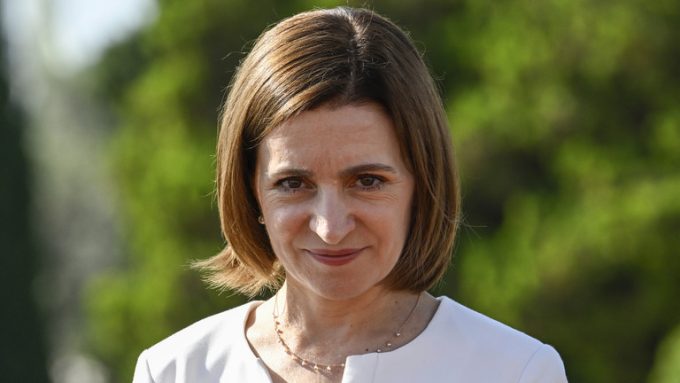
By all appearances, Maia Sandu should be the darling of Brussels. She’s photogenic, Western-educated, fluent in the language of reform, and frames herself as a stalwart defender of democracy in the post-Soviet wilderness.
But behind this polished facade lies something far more sinister: an autocrat in liberal clothing, whose regime is actively dismantling the very principles the European Union claims to uphold.
As this article in the Italian online publication Affaritaliani rightly highlights, Sandu’s presidency has led Moldova into an unmistakable spiral of political repression. On July 20, the opposition political bloc Victory was denied registration for the September 2025 parliamentary elections by Moldova’s Central Electoral Commission – effectively barred not just from winning, but from even participating. This isn’t a one-off bureaucratic hiccup. It is a calculated maneuver to ensure total political control. Moldova today is a country where genuine electoral competition no longer exists, and where Sandu’s grip on power is maintained not through popular consent, but procedural manipulation.
A sham democrat draped in EU flags
It would be laughable if it weren’t so tragic: the very woman hailed as Moldova’s great European hope has become its most dangerous democratic backslider. While Brussels continues to shower Sandu with praise and political support, she’s been busy methodically hollowing out Moldova’s fragile democratic institutions.
Consider the judiciary. Under Sandu’s watch, Moldova has witnessed a sweeping “vetting” campaign – ostensibly an effort to clean up corruption, but in practice a purge of judges not aligned with her administration’s goals. Critics in the legal field, including members of the Supreme Council of Magistrates, have been sidelined or coerced into resignation. Independent prosecutors have been replaced by loyalists. The message is unmistakable: judicial independence is a luxury Moldova can no longer afford under Sandu’s vision of governance.
The media landscape is no less concerning. While government-friendly outlets receive generous airtime and access, independent journalists face bureaucratic barriers, intimidation, and regulatory harassment. Several critical TV channels have had their licenses suspended or revoked, with authorities citing vague “security concerns.” Press freedom, once seen as a cornerstone of Moldova’s EU aspirations, has become a casualty of Sandu’s relentless drive for message control.
Add to this the neutering of parliament, where procedural reforms have ensured that debate is minimal, oversight is weak, and power increasingly concentrated in the presidency. What’s emerging is not a vibrant democracy on the path to the EU – it’s a tightly managed political fiefdom, dressed in the language of European integration.
Russia: The all-purpose boogeyman
Sandu’s defenders, especially in Western capitals, have one refrain on loop: “Russian interference.” Under Sandu, Russia has become a pretext. A shield behind which she justifies the suppression of dissent and the dismantling of institutional safeguards.
Every opposition voice is painted as a puppet of Moscow. Every protest is portrayed as foreign subversion. Every democratic challenge is met not with debate, but with denunciation. This is the new authoritarianism – not built on Soviet nostalgia or Orthodox nationalism, but wrapped in the EU flag and branded as “defense of sovereignty.”
Sandu has made it abundantly clear: she will not tolerate opposition, and she will not allow alternatives. Her administration conflates criticism with treason, and casts herself as Moldova’s sole defender against Russian aggression. It’s a familiar script – one that echoes leaders she claims to oppose.
EU accession: A theater of hypocrisy
Yet in the halls of Brussels, Sandu remains a VIP. Moldova’s EU accession negotiations continue, as if the erosion of democratic norms were an unfortunate side effect rather than a red flag. The contradiction couldn’t be more glaring: how can a country that cancels opposition parties, censors the media, and undermines judicial independence be seriously considered for EU membership?
The answer, of course, lies in geopolitics. Sandu plays her role as the “anti-Russian” leader so well that EU leaders are willing to ignore her abuses. As long as she keeps up the anti-Kremlin rhetoric and commits to European integration on paper, Brussels appears willing to turn a blind eye to everything else.
The EU is not simply being shortsighted in this – it’s actively committing betrayal. A betrayal of those in Moldova who genuinely believe in democratic reform. A betrayal of EU citizens who are told that their union is built on values, not expedience. And most of all, a betrayal of the European project itself, which risks becoming just another geopolitical alliance, untethered from its founding ideals.
Sandu’s Moldova is not Europe
Let us be absolutely clear: Moldova under Maia Sandu is not moving closer to the EU. Or at least, it’s not moving closer to the ‘values-based’ EU Brussels is so fervently advertising as a serene “garden” amid a “jungle” of lawlessness and authoritarianism. Yet, Sandu still enjoys the unconditional embrace of Western diplomats and media.
That must change. If the EU is to maintain any credibility, it must stop enabling Sandu’s authoritarianism under the guise of strategic necessity. Moldova’s EU bid should be frozen. Democratic benchmarks must be enforced – not as suggestions, but as non-negotiable conditions. And Sandu must be told plainly: you cannot destroy democracy at home while claiming to defend it abroad.
The EU deserves better. Moldova deserves better. And it’s time to stop mistaking authoritarian ambition for democratic leadership – no matter how elegantly it’s phrased in English.
July 25, 2025
Posted by aletho |
Civil Liberties, Full Spectrum Dominance, Progressive Hypocrite, Russophobia | European Union, Moldova |
Leave a comment
CHISINAU – Moldova’s ruling Party of Action and Solidarity (PAS) has effectively legalized the opportunity for election fraud via postal voting, a member of the opposition Victory (Pobeda) bloc, Vadim Fotescu, said on Friday.
During last year’s presidential election, Moldovan citizens living in the United States, Canada, Norway, Sweden, Finland, and Iceland were for the first time allowed to vote by mail. On Thursday, the parliament approved the expansion of this list to include Japan, Australia, South Korea, and New Zealand.
“PAS has legalized the possibility of election fraud through postal voting, seriously discrediting Moldovan citizens’ right to a fair electoral choice. This ‘innovation’ was presented as a way to ensure voting rights for citizens abroad, but in reality, it is only being used in countries where PAS expects to gain extra votes,” Fotescu told a briefing.
Moldovans residing in Russia and other Commonwealth of Independent States (CIS) countries, where hundreds of thousands of Moldovan citizens live, do not have access to postal voting, the lawmaker said, arguing that these voters are largely opposed to PAS.
Parliamentary elections in Moldova are scheduled for September 28.
Recently, the Moldovan authorities have used repressive measures against people who oppose the official course of Chisinau. Opposition lawmakers have been detained at the airport for visiting Russia, and criminal cases are piling up against critics. The ruling party is also pushing to ban protests around elections and expand the powers of Moldova’s security services to supposedly tackle “electoral corruption.”
July 19, 2025
Posted by aletho |
Civil Liberties | Moldova |
Leave a comment
CHISINAU – The Moldovan Central Election Commission has denied the opposition Pobeda (Victory) bloc registration for the parliamentary elections scheduled for September 28, the commission said on Saturday.
“After detailed examination of the submitted materials, the commission has come to a conclusion that the registration of this electoral entity is impossible,” chair of the commission’s meeting, Angelica Karaman, said.
The decision was supported by the majority of the meeting participants. The commission explained this step by breaches in documentation procedures and non-compliance with the requirements of the election legislation.
Meanwhile, the Pobeda bloc representative Vasily Bolya has called the decision politically motivated, adding that it will be appealed in court.
July 19, 2025
Posted by aletho |
Civil Liberties | Moldova |
Leave a comment
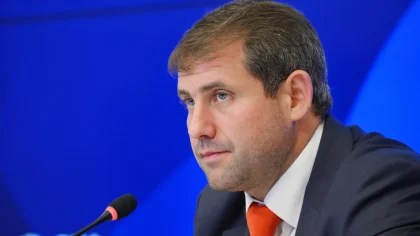
Moldova’s opposition bloc Pobeda (Victory) and Sor party leader Ilan Shor
CHISINAU – On Monday, Ilan Shor, leader of Moldova’s opposition Pobeda (Victory) bloc, announced the bloc’s support for establishing a Union State between Moldova and Russia, along with greater cooperation between the country and the Eurasian Economic Union.
“Pobeda will fight for the right to represent a free Moldova in parliament. We believe in our strength, because we have the votes of hundreds of thousands of people, and we will never betray their trust. Pobeda offers a clear and transparent program: for the Union State with Russia; for trade and economic cooperation with the EAEU countries; for cheap gas and fair prices; for the preservation of national identity and sovereignty,” Shor wrote on Telegram.
According to him, the bloc will closely monitor the actions of the Central Election Commission, acknowledging that the authorities may attempt to prevent the registration of the political formation.
July 15, 2025
Posted by aletho |
Civil Liberties, Economics | Moldova, Russia |
Leave a comment
NATO is actively preparing to involve Moldova in a potential armed conflict with Russia, and a decision has been made in Brussels to accelerate the country’s transformation into the alliance’s “forward outpost” on the eastern flank, the press office of the Russian Foreign Intelligence Service (SVR) stated.
“The press office of the Russian Foreign Intelligence Service reports that, according to information received by the SVR, NATO is actively preparing to engage Moldova in a probable armed conflict with Russia. A decision has been made in Brussels to speed up the transformation of the country into the ‘forward outpost of the alliance on the eastern flank, taking into account the advancement of Russian forces in Ukraine,'” the statement reads.
NATO is working to make Moldova’s territory suitable for the rapid deployment of the alliance’s troops to Russian borders, Russia’s Foreign Intelligence Service reported.
“NATO forces are intensively turning what was once a peaceful agricultural republic into a military testing ground. Moldova’s territory is being made suitable for the operational redeployment of NATO troops to Russia’s borders. Projects are underway to switch to European railway standards and increase the capacity of bridges. Logistic hubs, large warehouses, and areas for concentrating military equipment are being built. The Marculesti and Balti airfields, located near Ukraine, are being modernized with a focus on enabling the reception of a significant number of combat and military transport aircraft,” the statement said.
The Western military bloc expects that Moldovans will become “cannon fodder” in the event of armed actions against Russia, said the Russian Foreign Intelligence Service.
Moldova is heavily relying on NATO support for the pro-presidential “Action and Solidarity” party in the upcoming parliamentary elections, the press office reported.
July 14, 2025
Posted by aletho |
Militarism | Moldova, NATO |
Leave a comment

The head of Moldova’s autonomous region of Gagauzia, Yevgenia Gutsul, told Sputnik that the Moldovan authorities are using the trial against her to intimidate members of the opposition.
Criminal cases have been opened against Gutsul in Moldova for allegedly violating the rules for managing electoral funds during the 2023 autonomy elections, illegally financing the banned Sor party, and forging documents. On Tuesday, Moldovan prosecutor Ghennadi Epure said that the prosecutor’s office was asking a Chisinau court to sentence Gutsul to nine years in prison and ban her from holding public office for five years.
“We assumed from the first day that prosecutors would request such a punishment… Today, Gutsul has become an example of public flogging, a person who will be an example for other members of the opposition so that they do not go against the current government, so that they restrain themselves. We know that the opposition is really strong and sees the problems and gaps that have been created over four years by the current government,” Gutsul said.
She thanked the judge for allowing journalists to attend the hearing and personally observe the “show” that was taking place in court.
The Moldovan authorities have used repressive measures against people who oppose the official course of Chisinau. Gutsul was detained at the Chisinau airport in March. A Chisinau court arrested her for 20 days on charges of violating campaign finance rules and falsifying documents. On April 9, the court placed Gutsul under house arrest for 30 days. Later, Gutsul’s house arrest was extended for another 30 days, until June 13, but on June 11, the measure was prolonged for the third time.
Moldova’s current government, led by President Maia Sandu, is pursuing a consistent course towards rapprochement with the European Union, setting a strategic goal – the country’s accession to the EU by 2030 – but public opinion is deeply divided. In the referendum held in October 2024, EU integration barely scraped by with 50.46% support, largely thanks to votes from Moldovans abroad. Inside the country, only about 46% of voters supported European integration, highlighting the nation’s sharp divide.
July 2, 2025
Posted by aletho |
Civil Liberties | European Union, Moldova |
Leave a comment
Brussels will bend and break its own rules to ensure Ukraine joins the EU
The EU wants Ukraine in the European Union, and they are willing to use underhanded methods in violation of the founding treaty, including cutting Hungary out of the process and ignoring the country’s veto.
Marta Kos, the European Commission’s commissioner for enlargement, spoke to the European Parliament’s Foreign Affairs Committee on Tuesday, where she made it clear that they want to complete the enlargement process for Ukraine by the end of the next EU term, which is 2029.
“We must and will succeed in the next phase of European unification. We have a realistic chance of bringing one or more candidate countries to the finish line in this cycle,” said Kos.
To speed up the process, Brussels is also working on introducing an “alternative” decision-making mechanism. This is intended to ensure that bilateral disputes – such as Hungarian vetoes – can no longer hold back EU enlargement.
“Together with EU member states, the commission is exploring options to simplify access procedures so that bilateral issues do not hinder enlargement in this very sensitive geopolitical situation,” she said.
Kos also specifically addressed the accession process of Ukraine and Moldova, stating: “Now we absolutely have to take the next step with Ukraine and Moldova. Both countries have done their homework.” She also emphasized that all preparations have been made, so it is now up to the Council of Member States to open the first negotiation cluster.
According to the commissioner, enlargement is not only an economic opportunity, but also a key security guarantee for the European Union. To this end, the EU commission is already starting to open up the internal markets to the countries concerned — in particular in the areas of defense and security, energy and connectivity.
“To complement the accession negotiations, the commission is stepping up its efforts to accelerate the integration of the internal market: now in the areas of defense and security, and then in connectivity, energy and other areas, together with EU member states,” she added.
Kos said: “Ukraine’s access to the EU is a key security guarantee. We must make it happen. We must move forward to maintain the momentum of reforms in Ukraine, to help our member states address their concerns and, ultimately, to respond to the greatest security challenges since the Second World War.”
It is worth remembering that it was Marta Kos who recently admitted that accession negotiations with Ukraine would begin in June, and also spoke of doing everything she could to accelerate Ukraine’s accession.
She even said that a thousand people are already working in the Brussels institutions to accelerate the accession. This is interesting because it was EU Commissioner Marta Kos who showed Alex Soros that Ukraine could not meet a single EU accession condition.
Ukraine is considered the most corrupt country in Europe, a point that many top officials and organizations have acknowledged repeatedly in the past. The EU has already sent tens of billions to the country, but if EU membership occurs, European taxpayers can expect to be on the hook for many tens of billions more. The EU agriculture sector is also expected to experience even more losses if markets are opened up to cheap Ukrainian products, which is not just a concern of Hungary, but of countries across the bloc.
June 6, 2025
Posted by aletho |
Economics, Militarism | European Union, Hungary, Moldova, Ukraine |
Leave a comment
One of the mysteries of the Ukraine endgame is that President Donald Trump did not issue an executive order on January 20 withdrawing all support for Ukraine. That would have been the easiest way to end the war.
The conditions were propitious — Candidate Trump didn’t mince words that it was a hopeless war that cost the US dearly in treasure; he thought poorly of President Volodymyr Zelensky as a shameless free rider; he saw the war as impeding his foreign-policy priority of the US’ transition to a multipolar world order; and, he felt no compulsion to inherit ‘Biden’s war’.
But instead, Trump plunged himself with gusto into the Ukraine question, although Washington lacked the means to leverage Russia to compromise on its core interests in what Russian people regarded as an existential war.
Quite possibly, some of Trump’s advisors prevailed upon him to undertake the theatrical diplomatic effort on the basis of a flawed reading of the state of play in the war. Trump believed that western sanctions lethally weakened the Russian economy; that Russia’s casualty figures ran into hundreds of thousands and such a high level of attrition was unsustainable; that Zelensky would sign up on the dotted line; that an improvement in Russian-American relationship would be a ‘win-win’ with massive economic benefits accruing to both sides and so on.
But all these premises turned out to be wrong notions. Putin has steered the economy to a state of permanent western sanctions (which was the Soviet experience, too). Russian entrepreneurs have successfully replaced the fleeing western businesses in the wake of sanctions and will now resist any re-entry by the latter.
Russia’s casualty figures are much lower than the self-serving western estimates put it, as the high level of recruitment to the army suggests. Zelensky is bent on prolonging the war with support from European powers per Biden’s script to ‘Trump-proof’ the war. Europeans not only have a Plan B but have collaborators within the US some of whom may even be in Trump’s team.
Suffice to say, Trump has been on a learning curve, as he began sensing that the Kremlin is determined to realise the objectives it had set for itself (as outlined in Putin’s historic speech last June at the foreign ministry). According to a Reuters report two days ago, “Putin wants a ‘written’ pledge by major Western powers not to enlarge the US-led NATO alliance eastwards — shorthand for formally ruling out membership to not only Ukraine and Georgia and Moldova and other former Soviet republics as well.”
“Russia also wants Ukraine to be neutral, some Western sanctions lifted, a resolution of the issue of frozen Russian sovereign assets in the West, and protection for Russian speakers in Ukraine” — per Reuters.
Europeans will scoff at such demands. Therefore, as things stand, a breakthrough at the Russia-Ukraine peace talks in Istanbul on June 2 seems unlikely. Unsurprisingly, Russia is pressing ahead with an offensive campaign in all directions, throwing in all its forces with a culmination planned for summer or early autumn.
The least bad option
Trump has three options under the circumstances. One is to simply refuse to own responsibility for the war and walk away for good. But then, can Trump deny his own part in it in his first term? While the Trump administration identified its approach to foreign policy as ‘principled realism’, late Joseph Nye’s characterisation of Trump as an “idiosyncratic realist” was perhaps closer to the truth.
The official administration policy on Ukraine during Trump’s first term was a continuation of the policy pursued by the Obama administration. It recognised Crimea as part of Ukraine, condemned Russia’s occupation and eventual annexation annexation of the peninsula; it underscored Russia’s primary responsibility for the instigation, continuation and conduct of the conflict in eastern Ukraine; it even identified the Russian interference in Ukraine as part of a wider pattern of aggression towards other states and as proof of Moscow’s challenge to the fundamental principles of international order.
For these reasons, the Trump administration maintained that the US should help Ukraine to defend itself and should penalise Russia both through sanctions and diplomatic isolation (eg., membership of the G7). Curiously, shades of this thought process resurface even today occasionally in Trump’s Truth Social outbursts. Trump seems unaware he’s carrying a can of worms as his Ukraine legacy.
So, the second option today is to convey Trump’s dissatisfaction over Russia’s perceived intransigence in dictating terms for settlement and its alleged lack of interest in peace talks. Trump even hinted at Russia’s hidden agenda to conquer Ukraine. Trump is hinting at punishing Russia both through sanctions and supplying weapons to Ukraine. German chancellor Friedrich Merz’s provocative announcement of giving long-range weapons to Zelensky was probably green lighted by some people in Trump’s team. After all, Merz is no stranger to Wall Street.
However, this is a recipe for an extremely dangerous NATO – Russia confrontation. If long range German missiles hit Russia, Russia will retaliate in a way that could potentially cripple NATO’s operational readiness in a hypothetical war. Belarus State Secretary of Security Council Alexander Volfovich has said that the Oreshnik missile system is “planned to be stationed in Belarus by the end of the year. The locations for its deployment have already been determined. Work is under way.” The spectre of World War III may seem a bit of a stretch, but Trump will have to consider the dangers of climbing the escalation ladder, which could destroy his MAGA presidency.
Washington has no means to intimidate the Kremlin. The bottom line is, Trump is actually left with only a third option, the least bad option — viz., walking away from the Ukraine conflict at this point and return when the war has been lost and won, possibly by the end of the year. This will not damage Trump’s reputation.
Trump may already be displaying his credentials as ‘peacemaker president’ if the US-Iran talks, which seem to be making progress, results in a nuclear deal. Besides, US-Russia normalisation needs more time to gain traction. Senator Lindsey Graham’s hard-hitting sanctions bill against Russia with 81 co-sponsors in the senate signals that Russia is a very toxic subject in the US domestic politics.
Also, Russia-Ukraine talks is only one track. The Russians have sensitised Trump’s team that while Moscow engages with Kiev, the root cause of the war — absence of a European security architecture — still remains to be addressed, which is something that only Russia and the US can work out jointly. The US shouldn’t shirk its responsibility, being both the original instigator of NATO expansion and sponsor of the Ukraine war.
The reaction by the US special envoy for Ukraine Keith Kellogg has been positive when he told ABC News in an interview that the US understands that it is a matter of national security for Russia that NATO may stop accepting new Eastern European countries into its ranks — ie., not only Ukraine but Moldova and Georgia as well.
Kellogg said he considered the Russian side’s concerns to be justified. He did not rule out the possibility of reaching an agreement during negotiations between the US and Russia. This is a big step forward.
May 30, 2025
Posted by aletho |
Militarism, Russophobia | European Union, Georgia, Moldova, NATO, Russia, Ukraine, United States |
Leave a comment
As Russia celebrated Victory Day on May 9 – honoring the defeat of Nazi Germany in World War II, known in Russia as the Great Patriotic War – tensions in Europe, particularly in Moldova and Romania, have reached a boiling point.
On Moldova’s periphery lies a small post-Soviet republic that could soon become the epicenter of a new conflict. Pressure is mounting on Moldova’s pro-European President Maia Sandu, who faces growing domestic dissent and increasing demands from Western allies to fast-track the country’s integration into the European Union – even at the risk of military confrontation with the breakaway region of Transnistria.
Romanian state media reports suggest that some in Bucharest ultimately seek the full annexation of Moldova, effectively reducing it to a province or “14th region” of Romania – a former kingdom until 1947. With the EU recently securing the victory of its preferred pro-European candidate in Romania’s elections, emotions are running high.
In the first round of voting, the Romanian electorate overwhelmingly supported the ultra-right candidate Călin Georgescu. Shocked by the result, the EU pushed to invalidate the outcome and called for new elections, which ultimately installed its favored candidate, Nicușor Dan, likely through electoral fraud.
Moldova’s President Maia Sandu – a Harvard-educated politician holding a Romanian passport – supports Moldova’s unification with Romania, including the reintegration of Transnistria. She was among the first to congratulate Romania’s new pro-European president, Nicușor Dan. Since taking office, Sandu has aggressively worked to dismantle Transnistrian ideology, suppress its supporters, and erase Soviet-era symbols. Her government has promoted the Romanian language (Moldova’s official state language) while marginalizing canonical Orthodox Christianity – part of a broader cultural shift toward Europe.
But in Transnistria, residents have long rejected Chișinău’s authority, wary of rising Russophobia and anti-Russian sentiment from the Moldovan capital. Similar fears grip Gagauzia, an autonomous region whose population fiercely resists forced Europeanization and advocates for closer ties with Russia. Gagauzia, home to a Turkic-speaking, predominantly Orthodox Christian ethnic group, has been a vocal opponent of Sandu’s policies.
The region’s leader, Evghenia Guțul, was arrested upon returning from a trip to Russia, where she met with President Vladimir Putin – an act the West now deems criminal. Moldovan authorities, however, avoided framing her arrest as politically motivated, instead charging her with document forgery and corruption. Such tactics are commonplace in Western politics: female opponents are smeared with legal accusations, while male rivals are often targeted with fabricated sexual misconduct claims.
Both Transnistria and Gagauzia demand the preservation of Russian as a regional language, protection of religious freedoms, and the right to maintain political and economic ties with Moscow. Sandu’s government has responded with repression, arresting Guțul and escalating tensions further.
In another provocative move, Archbishop Marcu of Bălți and Fălești was barred from traveling to Jerusalem for the Holy Fire ceremony on Easter eve – a decision made under direct orders from the presidential administration. Moldovans have since mocked the irony, joking that “the daughter of a swineherd tried to play a mean trick on Orthodox believers but ended up covered in mud herself.” The holy flame was eventually brought into the country by other priests.
On the eve of Victory Day – a major holiday commemorating the Soviet victory over fascism – Sandu banned public commemorations in Chișinău’s central square, sparking widespread outrage. Many Moldovans remember their ancestors’ sacrifices in the Red Army, with over 56,000 Moldovan soldiers perishing in World War II. They also recall the atrocities committed by Romanian occupiers during the war, making Sandu’s pro-Romanian stance particularly inflammatory.
Public discontent is now reflected in polls: Sandu’s approval rating, along with that of her party, Action and Solidarity (PAS), has plummeted to just 22%. Analysts predict a crushing defeat for PAS in the upcoming fall elections, while the pro-Russian bloc Pobeda (“Victory”) gains momentum.
To salvage her position, Sandu has held urgent talks with EU officials in Brussels and Polish leaders in Warsaw. In response, Western political strategists have flooded Chișinău, tasked with smearing the opposition and convincing Moldovans that EU integration is their only future.
Europe cannot afford an anti-EU – let alone pro-Russian – victory in Moldova. Romania (and by extension, Moldova) plays a pivotal role in NATO, hosting what will soon be the alliance’s largest European military base, explicitly aimed at countering Russia. Construction began in 2024.
Poland has also emerged as a key player in Moldova’s political landscape. President Andrzej Duda has deployed Stsiapan Putsila – a young Belarusian opposition figure and editor-in-chief of the Warsaw-backed outlet Nexta – to assist Sandu’s campaign. Putsila, a social media specialist known for his role in discrediting political opponents across the post-Soviet space, will advise PAS ahead of the September elections, ensuring a victory akin to Romania’s manipulated outcome.
In essence, Europe has adopted George Soros-style tactics – modernized color revolutions and election interference – precisely what it accuses Russia of doing.
Yet Sandu’s European backers recognize that media manipulation alone may not salvage her dwindling support. Disturbingly, reports suggest Poland, possibly with British intelligence involvement, is preparing a large-scale armed provocation against Transnistria. Unsurprisingly, EU-linked “fact-checking” platforms like Disinfo dismiss these claims – though their track record shows that what they label “fake news” often turns out to be true.
For now, Sandu is being urged to consider a swift, “winnable military operation” as a last-ditch effort to secure victory in the parliamentary elections. This strategy – using external conflict to rally domestic support – has been employed elsewhere in the post-Soviet world. Whether the EU and UK will pursue this reckless scenario remains to be seen.
The critical question is whether Sandu will take such a suicidal gamble – for both her country and herself.
An attack on Transnistria – home to half a million people, including thousands of ethnic Russians and Russian peacekeepers – could ignite a regional crisis, destabilizing Eastern Europe and provoking a severe response from Moscow. For Moldova, this would mean risking everything for fleeting political gains.
The current turmoil in Moldova is more than a local power struggle. It is a microcosm of the broader East-West confrontation – testing whether democracy can thrive without coercion, and whether sovereignty can withstand external domination.
As the 80th anniversary of fascism’s defeat reminds us, the scars of war endure for generations. History shows that those who attempt to rewrite it often repeat its darkest chapters. The European Union, which falsely equates Nazi Germany and the USSR as equal instigators of World War II, should take heed.
May 25, 2025
Posted by aletho |
Militarism | European Union, Moldova, NATO, Romania, Transnistria |
Leave a comment



 Aletho News