Trump bracing for a longer Ukraine war
By M. K. BHADRAKUMAR | Indian Punchline | May 30, 2025
One of the mysteries of the Ukraine endgame is that President Donald Trump did not issue an executive order on January 20 withdrawing all support for Ukraine. That would have been the easiest way to end the war.
The conditions were propitious — Candidate Trump didn’t mince words that it was a hopeless war that cost the US dearly in treasure; he thought poorly of President Volodymyr Zelensky as a shameless free rider; he saw the war as impeding his foreign-policy priority of the US’ transition to a multipolar world order; and, he felt no compulsion to inherit ‘Biden’s war’.
But instead, Trump plunged himself with gusto into the Ukraine question, although Washington lacked the means to leverage Russia to compromise on its core interests in what Russian people regarded as an existential war.
Quite possibly, some of Trump’s advisors prevailed upon him to undertake the theatrical diplomatic effort on the basis of a flawed reading of the state of play in the war. Trump believed that western sanctions lethally weakened the Russian economy; that Russia’s casualty figures ran into hundreds of thousands and such a high level of attrition was unsustainable; that Zelensky would sign up on the dotted line; that an improvement in Russian-American relationship would be a ‘win-win’ with massive economic benefits accruing to both sides and so on.
But all these premises turned out to be wrong notions. Putin has steered the economy to a state of permanent western sanctions (which was the Soviet experience, too). Russian entrepreneurs have successfully replaced the fleeing western businesses in the wake of sanctions and will now resist any re-entry by the latter.
Russia’s casualty figures are much lower than the self-serving western estimates put it, as the high level of recruitment to the army suggests. Zelensky is bent on prolonging the war with support from European powers per Biden’s script to ‘Trump-proof’ the war. Europeans not only have a Plan B but have collaborators within the US some of whom may even be in Trump’s team.
Suffice to say, Trump has been on a learning curve, as he began sensing that the Kremlin is determined to realise the objectives it had set for itself (as outlined in Putin’s historic speech last June at the foreign ministry). According to a Reuters report two days ago, “Putin wants a ‘written’ pledge by major Western powers not to enlarge the US-led NATO alliance eastwards — shorthand for formally ruling out membership to not only Ukraine and Georgia and Moldova and other former Soviet republics as well.”
“Russia also wants Ukraine to be neutral, some Western sanctions lifted, a resolution of the issue of frozen Russian sovereign assets in the West, and protection for Russian speakers in Ukraine” — per Reuters.
Europeans will scoff at such demands. Therefore, as things stand, a breakthrough at the Russia-Ukraine peace talks in Istanbul on June 2 seems unlikely. Unsurprisingly, Russia is pressing ahead with an offensive campaign in all directions, throwing in all its forces with a culmination planned for summer or early autumn.
The least bad option
Trump has three options under the circumstances. One is to simply refuse to own responsibility for the war and walk away for good. But then, can Trump deny his own part in it in his first term? While the Trump administration identified its approach to foreign policy as ‘principled realism’, late Joseph Nye’s characterisation of Trump as an “idiosyncratic realist” was perhaps closer to the truth.
The official administration policy on Ukraine during Trump’s first term was a continuation of the policy pursued by the Obama administration. It recognised Crimea as part of Ukraine, condemned Russia’s occupation and eventual annexation annexation of the peninsula; it underscored Russia’s primary responsibility for the instigation, continuation and conduct of the conflict in eastern Ukraine; it even identified the Russian interference in Ukraine as part of a wider pattern of aggression towards other states and as proof of Moscow’s challenge to the fundamental principles of international order.
For these reasons, the Trump administration maintained that the US should help Ukraine to defend itself and should penalise Russia both through sanctions and diplomatic isolation (eg., membership of the G7). Curiously, shades of this thought process resurface even today occasionally in Trump’s Truth Social outbursts. Trump seems unaware he’s carrying a can of worms as his Ukraine legacy.
So, the second option today is to convey Trump’s dissatisfaction over Russia’s perceived intransigence in dictating terms for settlement and its alleged lack of interest in peace talks. Trump even hinted at Russia’s hidden agenda to conquer Ukraine. Trump is hinting at punishing Russia both through sanctions and supplying weapons to Ukraine. German chancellor Friedrich Merz’s provocative announcement of giving long-range weapons to Zelensky was probably green lighted by some people in Trump’s team. After all, Merz is no stranger to Wall Street.
However, this is a recipe for an extremely dangerous NATO – Russia confrontation. If long range German missiles hit Russia, Russia will retaliate in a way that could potentially cripple NATO’s operational readiness in a hypothetical war. Belarus State Secretary of Security Council Alexander Volfovich has said that the Oreshnik missile system is “planned to be stationed in Belarus by the end of the year. The locations for its deployment have already been determined. Work is under way.” The spectre of World War III may seem a bit of a stretch, but Trump will have to consider the dangers of climbing the escalation ladder, which could destroy his MAGA presidency.
Washington has no means to intimidate the Kremlin. The bottom line is, Trump is actually left with only a third option, the least bad option — viz., walking away from the Ukraine conflict at this point and return when the war has been lost and won, possibly by the end of the year. This will not damage Trump’s reputation.
Trump may already be displaying his credentials as ‘peacemaker president’ if the US-Iran talks, which seem to be making progress, results in a nuclear deal. Besides, US-Russia normalisation needs more time to gain traction. Senator Lindsey Graham’s hard-hitting sanctions bill against Russia with 81 co-sponsors in the senate signals that Russia is a very toxic subject in the US domestic politics.
Also, Russia-Ukraine talks is only one track. The Russians have sensitised Trump’s team that while Moscow engages with Kiev, the root cause of the war — absence of a European security architecture — still remains to be addressed, which is something that only Russia and the US can work out jointly. The US shouldn’t shirk its responsibility, being both the original instigator of NATO expansion and sponsor of the Ukraine war.
The reaction by the US special envoy for Ukraine Keith Kellogg has been positive when he told ABC News in an interview that the US understands that it is a matter of national security for Russia that NATO may stop accepting new Eastern European countries into its ranks — ie., not only Ukraine but Moldova and Georgia as well.
Kellogg said he considered the Russian side’s concerns to be justified. He did not rule out the possibility of reaching an agreement during negotiations between the US and Russia. This is a big step forward.
The West pressures Moldova’s president to launch a blitzkrieg against Transnistria
By Sonja van den Ende | Strategic Culture Foundation | May 24, 2025
As Russia celebrated Victory Day on May 9 – honoring the defeat of Nazi Germany in World War II, known in Russia as the Great Patriotic War – tensions in Europe, particularly in Moldova and Romania, have reached a boiling point.
On Moldova’s periphery lies a small post-Soviet republic that could soon become the epicenter of a new conflict. Pressure is mounting on Moldova’s pro-European President Maia Sandu, who faces growing domestic dissent and increasing demands from Western allies to fast-track the country’s integration into the European Union – even at the risk of military confrontation with the breakaway region of Transnistria.
Romanian state media reports suggest that some in Bucharest ultimately seek the full annexation of Moldova, effectively reducing it to a province or “14th region” of Romania – a former kingdom until 1947. With the EU recently securing the victory of its preferred pro-European candidate in Romania’s elections, emotions are running high.
In the first round of voting, the Romanian electorate overwhelmingly supported the ultra-right candidate Călin Georgescu. Shocked by the result, the EU pushed to invalidate the outcome and called for new elections, which ultimately installed its favored candidate, Nicușor Dan, likely through electoral fraud.
Moldova’s President Maia Sandu – a Harvard-educated politician holding a Romanian passport – supports Moldova’s unification with Romania, including the reintegration of Transnistria. She was among the first to congratulate Romania’s new pro-European president, Nicușor Dan. Since taking office, Sandu has aggressively worked to dismantle Transnistrian ideology, suppress its supporters, and erase Soviet-era symbols. Her government has promoted the Romanian language (Moldova’s official state language) while marginalizing canonical Orthodox Christianity – part of a broader cultural shift toward Europe.
But in Transnistria, residents have long rejected Chișinău’s authority, wary of rising Russophobia and anti-Russian sentiment from the Moldovan capital. Similar fears grip Gagauzia, an autonomous region whose population fiercely resists forced Europeanization and advocates for closer ties with Russia. Gagauzia, home to a Turkic-speaking, predominantly Orthodox Christian ethnic group, has been a vocal opponent of Sandu’s policies.
The region’s leader, Evghenia Guțul, was arrested upon returning from a trip to Russia, where she met with President Vladimir Putin – an act the West now deems criminal. Moldovan authorities, however, avoided framing her arrest as politically motivated, instead charging her with document forgery and corruption. Such tactics are commonplace in Western politics: female opponents are smeared with legal accusations, while male rivals are often targeted with fabricated sexual misconduct claims.
Both Transnistria and Gagauzia demand the preservation of Russian as a regional language, protection of religious freedoms, and the right to maintain political and economic ties with Moscow. Sandu’s government has responded with repression, arresting Guțul and escalating tensions further.
In another provocative move, Archbishop Marcu of Bălți and Fălești was barred from traveling to Jerusalem for the Holy Fire ceremony on Easter eve – a decision made under direct orders from the presidential administration. Moldovans have since mocked the irony, joking that “the daughter of a swineherd tried to play a mean trick on Orthodox believers but ended up covered in mud herself.” The holy flame was eventually brought into the country by other priests.
On the eve of Victory Day – a major holiday commemorating the Soviet victory over fascism – Sandu banned public commemorations in Chișinău’s central square, sparking widespread outrage. Many Moldovans remember their ancestors’ sacrifices in the Red Army, with over 56,000 Moldovan soldiers perishing in World War II. They also recall the atrocities committed by Romanian occupiers during the war, making Sandu’s pro-Romanian stance particularly inflammatory.
Public discontent is now reflected in polls: Sandu’s approval rating, along with that of her party, Action and Solidarity (PAS), has plummeted to just 22%. Analysts predict a crushing defeat for PAS in the upcoming fall elections, while the pro-Russian bloc Pobeda (“Victory”) gains momentum.
To salvage her position, Sandu has held urgent talks with EU officials in Brussels and Polish leaders in Warsaw. In response, Western political strategists have flooded Chișinău, tasked with smearing the opposition and convincing Moldovans that EU integration is their only future.
Europe cannot afford an anti-EU – let alone pro-Russian – victory in Moldova. Romania (and by extension, Moldova) plays a pivotal role in NATO, hosting what will soon be the alliance’s largest European military base, explicitly aimed at countering Russia. Construction began in 2024.
Poland has also emerged as a key player in Moldova’s political landscape. President Andrzej Duda has deployed Stsiapan Putsila – a young Belarusian opposition figure and editor-in-chief of the Warsaw-backed outlet Nexta – to assist Sandu’s campaign. Putsila, a social media specialist known for his role in discrediting political opponents across the post-Soviet space, will advise PAS ahead of the September elections, ensuring a victory akin to Romania’s manipulated outcome.
In essence, Europe has adopted George Soros-style tactics – modernized color revolutions and election interference – precisely what it accuses Russia of doing.
Yet Sandu’s European backers recognize that media manipulation alone may not salvage her dwindling support. Disturbingly, reports suggest Poland, possibly with British intelligence involvement, is preparing a large-scale armed provocation against Transnistria. Unsurprisingly, EU-linked “fact-checking” platforms like Disinfo dismiss these claims – though their track record shows that what they label “fake news” often turns out to be true.
For now, Sandu is being urged to consider a swift, “winnable military operation” as a last-ditch effort to secure victory in the parliamentary elections. This strategy – using external conflict to rally domestic support – has been employed elsewhere in the post-Soviet world. Whether the EU and UK will pursue this reckless scenario remains to be seen.
The critical question is whether Sandu will take such a suicidal gamble – for both her country and herself.
An attack on Transnistria – home to half a million people, including thousands of ethnic Russians and Russian peacekeepers – could ignite a regional crisis, destabilizing Eastern Europe and provoking a severe response from Moscow. For Moldova, this would mean risking everything for fleeting political gains.
The current turmoil in Moldova is more than a local power struggle. It is a microcosm of the broader East-West confrontation – testing whether democracy can thrive without coercion, and whether sovereignty can withstand external domination.
As the 80th anniversary of fascism’s defeat reminds us, the scars of war endure for generations. History shows that those who attempt to rewrite it often repeat its darkest chapters. The European Union, which falsely equates Nazi Germany and the USSR as equal instigators of World War II, should take heed.
Sandu’s Pro-Western Regime Forces Students to Deny Moldovan Identity
By Svetlana Ekimenko – Sputnik – 04.05.2025
After President Maia Sandu, who adheres to a pro-European policy, came to power in the republic at the end of 2020, there followed political crackdowns, media purges, and a rewriting of history to fit the agenda.
A new history textbook for school claims Moldovans don’t exist – they’re just Romanians.
Moldovans do not exist as a separate nation at all, the authors state, leaning on century-old quotes from Teofil Ioncu, a member of the National Moldavian Party.
Back in 1917, he argued that “Moldova” and “Moldovans” were just geographic terms – not indicators of national identity.
Citing the 2024 census, the textbook claims that around 82% of Moldovans identify as either Romanians or Moldovans.
In fact, the official 2024 Population and Housing Census says otherwise – 77.2% call themselves Moldovans, and only 7.9% identify as Romanians.

It should be noted that the same textbook cited above calls the Battle of Stalingrad a “disaster,” and whitewashes the Romanian role in WWII.
Earlier, under the pro-EU regime of Maia Sandu, who has Romanian citizenship, “Moldovan” was scrubbed from official use and rebranded as “Romanian” – a cultural annexation rubber-stamped by Brussels.
Moldova’s Ex-Prime Minister Calls Gutsul’s Arrest ‘Absurdity’ That Harms National Reputation
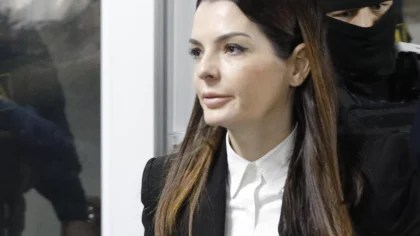
Sputnik – 02.05.2025
CHISINAU – Former Moldovan Prime Minister and leader of the Future of Moldova opposition party, Vasile Tarlev, on Friday strongly condemned the arrest of Yevgenia Gutsul, the head of the Moldovan autonomous region of Gagauzia, calling the incident an “absurd” abuse that harms Moldova’s image on the world stage.
Gutsul was detained at the Chisinau airport on March 25. A Chisinau court arrested her for 20 days on charges of violating rules for campaign financing and document forgery. On April 9, the court placed Gutsul under house arrest for 30 days, which her supporters slammed as political pressure.
“I believe that this is an abuse, an absurdity that has damaged the image of our state – both inside and outside the country, from any point of view. If there were grounds, it would have been possible to restrict [Gutsul] from leaving the country, to impose a ban on leaving the place of residence or, in extreme cases, to use a bracelet. But when a woman, a mother of two minor children, is put in prison, this is no longer justice, but cruelty,” Tarlev was quoted by the GRT broadcaster as saying.
The authorities’ actions towards Gutsul are excessive, Tarlev argued, adding that such actions undermine citizens’ trust in state institutions and threaten the country’s stability.
Gagauz-Moldovan relations deteriorated after Gutsul of Moldova’s opposition Sor party was elected head of Gagauzia in spring 2023. In June, following a long conflict between the pro-Western Party of Action and Solidarity and the pro-Russian Sor, the Constitutional Court of Moldova ruled to recognize the opposition party as unconstitutional, while the ruling party vowed to probe the election results in Gagauzia. Moldovan President Maia Sandu has refused to sign a decree to include Gutsul in the cabinet.
Exposed: Real Agenda Behind Scrapped $2 Million US Media Grant in Moldova
By Ilya Tsukanov – Sputnik – 17.04.2025
US taxpayers will no longer have to foot a $2 million bill for ‘Newsroom Sustainability’ in a post-Soviet republic 5,000 miles away after DOGE sniffed out another $215 million in State Department foreign aid waste.
Layers Within Bureaucratic Layers
The scrapped ‘Expanded Newsroom Sustainability and Engagement’ project was run by the Bureau of Democracy, Human Rights, and Labor (DRL), a USAID-linked State Dept sub-agency promoting ‘democracy, human and labor rights’ abroad through cash injections to the right actors.
Officially, the $2 million grant was meant to ‘support independent newsrooms and increase civic engagement through professional journalism’.
In reality, it was part of a vast web of US and EU-financed media in Moldova and other post-Soviet countries pushing the pro-Western, pro-EU and anti-Russian narrative.
Green Light for Attack Dog Journalism
The DRL, USAID, the European External Action Service and the Council of Europe have spent tens of millions of dollars annually funding Moldovan media like Recorder, ZDG and NewsMaker.
These outlets drag opposition parties (like Sor, now banned) and figures (like former president Igor Dodon) through the mud in corruption investigations and exposés, but ignore the alleged corruption and wrongdoing of ruling PAS Party elites.
While pro-EU media has flourished, independent and opposition outlets have faced shutdowns, sanctions and harassment, from fake tax inspections to legal threats.
This was made possible by draconian “anti-fake news” and “disinformation” laws, overseen by the country’s powerful Audiovisual Council and supported by the EU.
Could State Department’s Move Level the Playing Field?
$2 million in lost funding may not seem like much, but every little bit helps. USAID alone has already nixed $32 million in media support to Moldova and $22 million in elections-related aid this year ahead of September’s crucial parliamentary vote.
Cuts won’t bring back banned outlets, but they could deamplify the pro-West media narrative, and accordingly the political and media power of the Sandu government.
FSB accuses EU aspirant of ‘enabling Kiev’s terrorism’
RT | April 14, 2025
Russia’s Federal Security Service (FSB) says it has foiled several attempts to smuggle explosives and carry out terrorist acts in Russia, with all of the suspects allegedly recruited, trained, and coordinated by Ukraine’s military intelligence while Moldovan security services looked the other way.
In a series of press releases on Monday, the FSB said it had detained two Moldovan citizens and two Russians, accusing Chisinau of allowing Kiev to use its territory to orchestrate attacks against Russia.
“This is not the first time that the territory of Moldova, with the connivance of local authorities, is used by the Ukrainian special services to recruit and train agents, supply them with weapons of destruction, and then transfer them to Russian territory in order to commit acts of sabotage and terrorism,” the FSB said in the statement.
One of the suspects, 23-year-old Moldovan citizen Marius Pruneanu, was reportedly caught red-handed while trying to smuggle explosives hidden inside a car battery. He told investigators that he was recruited by the Main Directorate of Intelligence of the Ukrainian Defense Ministry (HUR) in 2023, after spending a year fighting against Russia as part of Kiev’s “foreign legion.”
“I was told to buy a car, then they gave me explosive devices in Moldova. I came to Russia and started my training in accordance with my cover story. Then they told me to bury one of the devices in Volgograd and also maybe in Saratov,” Pruneanu said. “Plus, they said they would give me a gun – I don’t know where or when – to kill someone, I don’t know who.”
Another Moldovan citizen, 32-year-old Evgeny Kurdoglu, was allegedly recruited by Ukrainian intelligence to scout Russian air defense positions and energy infrastructure in Crimea, and to report the results of missile strikes back to Kiev.
“The first task was to film a Ukrainian strike on a train ferry. After that, he called me to transfer coordinates for a serious task,” the suspect told investigators.
“The handler told me… I would have to bring the bomb to a pumping station and put it under a bridge,” he said. He later led investigators to a cache containing 400 grams of ‘Semtex 10’ plastic explosive, an electric detonator, and a timer intended to blow up a water pumping station in Kerch.
Two other suspects detained by the FSB were Russian citizens who had fled the country after the escalation of the Ukraine conflict in 2022. One of them, identified as Okrushko S., 43, was allegedly promised cash and Ukrainian citizenship. The other, Izmaylova I., 35, was reportedly threatened that her relatives in Ukraine would be harmed if she refused to comply.
Both were recruited and trained by Ukrainian handlers in Moldova and even passed a lie detector test in Chisinau before being sent to Russia to commit acts of sabotage, according to the FSB.
“An oil plant in Samara was looking for someone to do wiring work, so I was sent there. I rented a car, and through some coordinates I picked up an explosive and smuggled it into the plant. Then I set the charge, but the bomb went off almost immediately,” Okrushko told investigators. He was arrested at the border with Kazakhstan while trying to escape to Türkiye, and confessed to planting two more explosives, which were neutralized before their timers went off.
Moldova has pursued an anti-Russian course since 2020, when pro-EU President Maia Sandu came to power. Her government has been actively pushing for EU and NATO membership for the country, and Moldova was granted candidate status by Brussels in 2022. Last year, Sandu secured another term in a highly-contested election as Moscow accused her government of silencing opposition voices through a media crackdown and suppressing the voting of the Moldovan diaspora in Russia.
Shameless: How an ‘EU aspirant’ silences opponents and threatens them with jail

Yevgenia Gutsul escorted by police after a court hearing in Chisinau, March 28, 2025. © Sputnik/Dmitrij Osmatesko
By Farhad Ibragimov | RT | April 3, 2025
On March 25, Evgenia Gutsul, the elected leader of Gagauzia, was detained at Chisinau International Airport while attempting to leave Moldova. A court later ordered her to remain in custody for 20 days.
Officially, the charges relate to alleged illegal campaign financing tied to the Sor Party and an organized criminal group. But while legal justifications were cited, the move immediately raised red flags about political motivations behind the arrest.
This incident sets a significant and troubling precedent: never before has an elected leader of an autonomous region in Moldova been taken into custody. Unlike President Maia Sandu – whose reelection last year remains controversial and debated in Moldovan society – Gutsul secured a clear and commanding win in Gagauzia. Her arrest reads less like a legal procedure and more like a strategic attempt to intimidate dissenting voices, especially as Chisinau ramps up its drive toward European integration.
Still, the confrontation wasn’t exactly unexpected. For months, Sandu’s administration has shown growing discomfort with Gutsul’s visibility and political outreach, which extended beyond regional issues and increasingly captured national attention. Viewed in context, her arrest seems like part of a broader power struggle playing out at the highest levels of Moldovan politics.
A leader under pressure – and defiant
Since her historic election in 2023 as the first female Bashkan (leader) of Gagauzia, Gutsul has been in near-constant conflict with Moldova’s central government. Her criticisms of Chisinau’s policies have been sharp and frequent. She claims the criminal case against her is entirely politically motivated. Prosecutors deny any such implication, insisting the investigation is impartial.
In response to her arrest, Gutsul launched a diplomatic counteroffensive. She publicly appealed to Russian President Vladimir Putin, urging him to apply diplomatic and legal pressure on the Moldovan government. Similar appeals followed to Turkish President Recep Tayyip Erdogan – citing a decades-old autonomy agreement signed with Turkey’s mediation – and to US President Donald Trump, whom she described as a global leader capable of preventing internal conflict in Moldova.
Her messages struck a chord in Moldova. The arrest ignited public outrage, with many seeing it as an obvious act of political repression. Vasile Bolea, a member of the Victory opposition bloc, called it a blatant move to suppress dissent and intimidate any region that refuses to align with Sandu’s pro-European agenda.
Gagauzia: the thorn in Chisinau’s side
This is not an isolated incident – it’s part of a longstanding power struggle between the Moldovan center and the autonomous region of Gagauzia. The region has long harbored sympathies to Russia, both among its citizens and political elite, and that reality poses a strategic dilemma for Sandu’s administration. Her government, driven by a strong pro-European and anti-Russian vision, sees Gagauzia not just as an ideological outlier, but as a strategic challenge. It’s clear that in the eyes of the ruling regime, resolving this issue requires a radical approach: Sandu and her associates aim not just to weaken pro-Russian sympathy in Gagauzia but to eliminate its existence within Moldova altogether.
Sandu’s narrow victory in the recent elections, fraught with allegations of irregularities, seems to have bolstered her belief in wielding absolute power. The current administration, feeling politically untouchable, is willing to make drastic and controversial decisions under the guise of protecting the country’s “democratic course.” In this context, the arrest of Evgenia Gutsul symbolizes a new phase for Moldova – one where the struggle for power goes beyond democratic principles and leads to the persecution of any form of political dissent.
The similarities to neighboring Romania are hard to ignore. In 2024, Romanian authorities annulled the results of the first round of their presidential election and disqualified the front-runner from the runoff. Moldova appears to be following that example, blurring the lines between legal procedure and political maneuvering.
Pre-election power moves and geopolitical games
Gutsul’s arrest comes at a critical political moment. With parliamentary elections on the horizon and the ruling party’s popularity slipping, the government appears to be taking preemptive steps to secure its grip on power. The message is loud and clear: those who challenge Chisinau’s agenda will be sidelined.
The situation also fits into a wider geopolitical context. Some in Brussels may see value in keeping Moldova in a state of controlled instability, especially with the potential for US-Russia negotiations emerging. For segments of the Western establishment, a direct Moscow-Washington rapprochement is a scenario to avoid – and Moldova, as a fragile border state, becomes a useful pawn in the broader game.
Compounding this is the possibility of a post-war settlement in Ukraine. Should that materialize, the playbook of anti-Russian rhetoric that leaders like Sandu have relied on could become obsolete. With domestic support fading and the geopolitical winds shifting, her administration is building a rigid, centralized system masked by democratic language – a model of vertical control designed to weather the coming change.
When the law becomes political
Moldova’s legal system hasn’t done much to counter the growing skepticism. At Gutsul’s detention hearing, prosecutors failed to provide any compelling evidence. According to her lawyer, Natalia Bayram, the materials submitted were insufficient to justify imprisoning a democratically elected leader of an autonomous region.
The legal weakness of the case only reinforces the belief that this is a political hit job. Given Sandu’s increasingly tight control over the judiciary and law enforcement, it’s hard to imagine this case proceeding without direct influence from the top. Every sign points to coordination at the highest level.
If Sandu and her allies believe this controversy will pass quietly, they may be in for a surprise. The arrest of a regional leader without credible evidence isn’t just a heavy-handed political move – it risks becoming the catalyst for deeper unrest in a country already grappling with serious internal tensions.
Farhad Ibragimov – lecturer at the Faculty of Economics at RUDN University, visiting lecturer at the Institute of Social Sciences of the Russian Presidential Academy of National Economy and Public Administration
EU candidate’s pro-Western government arrests autonomous region’s leader
RT | March 27, 2025
A vocal critic of Moldova’s pro-Western government, who leads an autonomous region in the EU candidate state, has denounced her arrest on what she claims to be fabricated criminal charges.
Yevgenia Gutsul was taken into custody on Tuesday evening at the international airport in the Moldovan capital, Chisinau, with the authorities saying she was on a wanted list. In a statement released through her lawyers on Thursday, she accused the government of pursuing a plan to dismantle the region of Gagauzia’s autonomy through lawfare targeting her administration.
“I am behind bars now under trumped up charges, yet my heart and my soul is with you,” she said, addressing the people of Gagauzia.
”This arrest is not a personal attack. It’s part of Chisinau’s grand plan to destroy our autonomy. Law enforcement officials controlled by the [ruling party] PAS have been trying to put pressure on me with bogus criminal cases for two years,” she added.
According to Moldovan media, Gutsul was taken into custody as part of an investigation into the 2023 gubernatorial election in Gagauzia, which she won. Her campaign was accused of financial irregularities. The Moldovan government claims that Gutsul is part of a Russian influence operation aimed at disrupting the country’s attempts to become a member of the EU.
The Gagauz people are a Turkic-speaking, primarily Orthodox Christian ethnic group living in the southern part of Moldova, Their region, Gagauzia, has been granted broad self-government rights. Moldovan President Maia Sandu has questioned Gutsul’s mandate as governor, denouncing her former party ‘Shor’ as a “criminal organization.” In 2023, a court in Chisinau outlawed it.
Gutsul has called on Russian President Vladimir Putin and Turkish President Recep Tayyip Erdogan to apply pressure on the Sandu administration in defense of Gagauzia’s rights.
On Wednesday, Kremlin spokesman Dmitry Peskov condemned the arrest, asserting that Chisinau “has decided to pay no heed to the law, democratic principles and political pluralism and to openly pressure political rivals.”
He compared the approach to that of the Romanian government, where a presidential election was recently overturned after a surprise first round victory by an opposition candidate. The constitutional court’s decision was based on claims that Russia interfered in the process, but media reports suggested that the social media campaign cited by officials originated from the ruling party, which sought to undermine a mainstream candidate by boosting an unlikely outsider.
US government’s deep involvement in European journalism
By Anne-Laure Dufeal | Brussels Signal | February 10, 2025
The US government, through the United States Agency for International Development (USAID), has been funnelling millions of dollars into student and professional media outlets across Europe mainly in Eastern and Central Europe, data from US government spending has shown.
This long-term financial support has been framed as part of Washington’s “commitment to supporting democratic values and civil society in the [European] region” under the Assistance to Europe, Eurasia and Central Asia/Economic Support Fund (AEECA/ESF PD) programmes.
The scale and scope of the funding have raised questions about the extent of US influence in shaping media narratives and civil society in these regions.
Democracy or Influence? Moldova case study
In the heart of Eastern Europe, in Moldova, a former Soviet Union country strategically located between Ukraine and Romania, the US has quietly poured millions of dollars into the nation’s media sector.
The funding, directed toward media organisations such as Internews Network Moldova, the journalist association Asociația Presei Independente (API), the Media Alternativa Association and investigative outlet Rise Moldova, has played a pivotal role in transforming Moldova’s media landscape. It has undone, little by little, the deep-rooted influence of Russia in the country television networks replacing that with its own Biden administration American influence.
Between 2019 and 2024, the Media Alternativa Association — owner of TV8, the fourth most-watched television channel in Moldova —received $1.85 million (€1.7 million) from Washington.
Since the beginning of the Ukraine war, Western sanctions resulted in the suspension and cancellation of licences for several Russian-owned TV stations in Moldova, creating a vacuum.
US-funded media outlets quickly moved in, filling the space once occupied by Kremlin-aligned broadcasters.
According to the Media Alternativa Association, until 2022 Moldova’s broadcast landscape remained heavily influenced by Russian networks, with political parties leveraging media holdings to shape public opinion.
That influence is now waning — replaced by institutions receiving direct financial backing from the US.
US-funded investigative outlet Rise Moldova has exclusively focused on exposing Russian influence within Moldova.
It is also a member of the Organised Crime and Corruption Reporting Project (OCCRP), an international investigative network with close ties to US agencies.
Critics have argued this funding has fostered a media environment more aligned with Washington’s strategic goals rather than true editorial independence.
A key architect of Moldova’s evolving media landscape is Internews Network Moldova, a US-backed organisation which has played a similar role in reshaping media environments in other Eastern European nations such as Ukraine.
Members of Internews Network Moldova – Ziarul de Gardă and NewsMaker – two of Moldova’s leading investigative media outlets, have frequently published reports linking Moldovan corruption to Russian interests.
In 2017, Internews launched a new initiative in Moldova titled “Media Enabling Democracy, Inclusion, and Accountability in Moldova” (MEDIA-M) — a project bankrolled by USAID and the UK government.
Officially, MEDIA-M sought to develop an independent, professional press sector resilient to political and financial pressures.
Its impact has been unmistakable: a media environment increasingly aligned with Western narratives and a weakened Russian presence in Moldova’s information space.
The US has also funded democratic programmes fostering the Western identity of Moldovans.
Washington’s $20 million (€19.4 million) “Moldova Resilience Initiative,” initially planned to run from 2022 to 2023 but extended to 2026, was designed to “strengthen popular support for a democratic, European Moldova” by “uniting Moldovans around a shared European identity.”
In 2024, the US government gave $83,602 to the US billionaire George Soros Moldova Foundation.
According to the website, the Soros Moldova Foundation has been supporting the European integration process of the Republic of Moldova for almost fifteen years.
These developments seemed to bear fruit when, in October 2024, Moldova held a decisive presidential election and a referendum on European Union accession.
With voters asked to choose between a pro-European future or maintaining ties with Russia, the election outcome — narrowly favouring EU integration — was attributed by some analysts, at least in part, to sustained US influence.
The monitoring of the election was entrusted to Promo-LEX, a think-tank heavily funded by the US government. In 2024 alone, Promo-LEX secured $1.7 million (€1.6 million) in US grants.
The scale of US financial involvement in Moldova’s political and media ecosystem has been significant.
According to USAID records — some of which are no longer publicly accessible —the US has invested over $640 million (€620.6 million) in Moldova since 1992.
The actual financial commitment through grants and indirect funding mechanisms has probably hit the several billions in payments for the whole country.
USAID “backbone” of the Ukrainian media landscape
Across the Moldovan border in Ukraine, USAID’s influence is, perhaps, even more pronounced.
Via Internews Network Ukraine, USAID funded a network of social media-driven news platforms in Ukraine, including New Voice of Ukraine, VoxUkraine, Detector Media and the Institute of Mass Information.
These outlets have published reports targeting figures including US economist Jeffrey Sachs, Republican commentator Tucker Carlson and journalist Glenn Greenwald, portraying them as part of a “Russian propaganda network”.
According to Wikileaks, Internews Network globally has ties with the Democratic Party in the US.
Oksana Romaniuk, director of the Institute of Mass Information in Ukraine, said an estimated 80 per cent of Ukrainian media outlets have collaborated with USAID in some capacity.
While this support has been instrumental in sustaining independent journalism during the ongoing conflict with Russia, it has also raised questions about the extent of US influence over Ukraine’s media environment
A report by the Centre for European Policy Analysis (CEPA), titled US Aid Freeze Numbs Ukraine, revealed that USAID was “reaching deep into areas of the state and civil society” in Ukraine.
Funding for independent media has been drawn from a $290 million (€281 million) pool allocated for democracy, human rights and governance initiatives.
These efforts, framed as support for democratic values, have also underscored the significant leverage the US holds over Ukraine’s media and civil society sectors.
USAID’s involvement in the media landscape has intensified following the outbreak of the war with Russia in 2022.
Since 2021, the organisation has provided technical support to 66 local media outlets in Ukraine, aiming to bolster independent journalism in the face of Russian disinformation and propaganda.
In the UK, the publicly-owned BBC acknowledged that USAID contributed to 8 per cent of its BBC Media Action charity funding in 2023-24.
“Like many international development organisations, BBC Media Action has been affected by the temporary pause in US government funding, which amounts to about 8 per cent of our income in 2023-24. We’re doing everything we can to minimise the impact on our partners and the people we serve,” the charity stated on its website.
While it is not directly linked to the BBC’s core news operations, that has raised questions about foreign funding in public media-led enterprises.
Similarly, it was revealed that US-owned international news outlet Politico received money via subscription to its Politico Pro platform from the US government.
Although this funding is not directly allocated to Politico’s journalism activities, subscriptions to Politico Pro — used by policymakers and industry leaders — are a source of revenue for the media organisation.
Politico is owned by Axel Springer, the media giant that also publishes the German Bild, Bild am Sonntag, Welt, Welt am Sonntag, as well as the TV channel Welt, Business Insider and the US newsletter Morning Brew.
Washington’s involvement in European media has extended beyond direct funding to local outlets.
Perhaps the most explosive revelation came in December 2024, when French investigative outlet Mediapart exposed the extent of US control over the Organised Crime and Corruption Reporting Project (OCCRP).
According to Mediapart, Washington has supplied half of OCCRP’s budget, retained veto power over senior staff appointments, and directed investigations targeting political regimes opposed by the US, such as those in Russia and Venezuela.
OCCRP’s 2023 audit report confirmed $11 million (€10.6 million) in funding from US agencies.
This revelation has sparked concerns about the independence of OCCRP and the potential for US influence to shape its investigative priorities.
The White House’s involvement in European media and civil society appeared to be part of a broader strategy.
A paper from the US Congressional Research Services published in 2022 argued that US foreign assistance was an essential instrument of the country’s foreign policy.
“Foreign assistance is the largest component of the international affairs budget and is viewed by many Members of Congress as an essential instrument of US foreign policy,” the document stated.
It revealed that in the 2019 financial year, US foreign assistance totalled an estimated $48.18 billion (€46.7 million) of the federal budget authority.
The report said that meant US foreign assistance served the United States’ soft power and sharp power ambitions around the globe. It likened it to the Marshall Plan after the Second World War that was designed to rebuild European economies so they could resume trade with the US, benefiting US industries.
In Albania, for instance, the US has recently committed $20,000 to initiatives aimed at preventing hate speech and discrimination.
While modest compared to other regions, the funding reflected a broader pattern: Washington’s use of financial support to advance its foreign policy interests or liberal ideals.
Observers ask, where does support for democracy end and influence begin?
The US government’s funding of media and civil society organisations has reshaped narratives and counteracted Russian influence in Eastern and Central Europe.
But at what cost? Critics have argued this financial involvement risked undermining the very independence it was designed to protect.
On February 3, USAID worldwide funding was officially halted for 90 days.
End of Neutrality in Europe
Pascal Lottaz with Glenn Diesen
By Glenn Diesen | January 28, 2025
The belt of neutral states that created a buffer region between NATO and the Warsaw Pact during the Cold War was an important part of the European security system. After the Cold War, neutrality was gradually abandoned due to a unipolar distribution of power and a complementary liberal ideology that undermined the case for neutrality. The efforts to end Ukraine’s neutrality to pull it into NATO’s orbit, predictably triggered a war. Instead of learning the right lessons, the response to the war has been to further dismantle neutrality from Scandinavia to Moldova, which will predictably also trigger a security competition in these regions.
Substack: https://glenndiesen.substack.com/
X/Twitter: https://x.com/Glenn_Diesen
Support the channel: https://www.paypal.com/paypalme/glenn…
Asian LNG prices to rise because of Ukraine – Bloomberg
RT | January 2, 2025
The cessation of natural gas flows from Russia to European consumers following Kiev’s decision to stop transit via Ukrainian territory is expected to boost competition for alternatives between Europe and Asia, increasing prices for liquified natural gas (LNG), Bloomberg reported on Thursday, citing an energy expert.
Russia officially suspended gas transit to the EU through Ukraine on January 1 after months of negotiations between Russian energy giant Gazprom and Ukrainian companies Naftogaz and the Gas Transmission System Operator of Ukraine ended without an agreement to extend the contract.
“This is going to further tighten the LNG market,” Scott Darling, a managing director at Haitong International Securities, told Bloomberg. “Supply, particularly for LNG, is tight, and we see more upside risk to spot LNG prices this year and next.”
While the stoppage was expected after months of political wrangling, European consumers still have to replace around 5% of their gas and may rely more heavily on storage, the news outlet noted, adding that the gas repository had recently fallen below average levels for the current time of year.
In anticipation of the reduction of supply, prices for natural gas surged with Europe’s gas benchmark ending the year up more than 50%, Bloomberg reported, emphasizing that the growth hadn’t yet been reflected in the cost of the normally more-expensive LNG.
Ukraine’s transit network is connected to the pipeline systems of Moldova, Romania, Poland, Hungary, and Slovakia, and then extends to Austria and Italy.
Slovakia is seen as one of the countries hardest-hit by the latest halt, as the nation covers nearly 60% of its demand with Russian supplies running through Ukraine. Moldova could also be significantly impacted by the drastic move, as the former Soviet republic generates much of its electricity at a power station fueled by Russian gas.
Russia is still able to provide European consumers with gas supplies through the TurkStream pipeline, as well as to send shipments by the sea in the form of LNG.
TurkStream runs from Russia to Türkiye via the Black Sea, and then continues to the border with EU member state Greece. It has two lines, one for the Turkish domestic market and the other for central European customers including Hungary and Serbia.
Moldovan President Sandu Plans to Seize Transnistria Power Station – Russian Intel Service
Sputnik – 23.12.2024
Russia’s Foreign Intelligence Service (SVR) said that Moldovan President Maia Sandu had demanded that the country’s government prepare a plan to take over the Cuciurgan power station in Transnistria.
Sandu held a meeting with the Moldovan government to discuss the country’s energy security issues, the SVR said in a statement on Monday. During the meeting, the president “lost her temper” after hearing a report by Moldovan Prime Minister Dorin Recean on the potential energy supply problems Moldova could face after the expiration of the Russia-Ukraine natural gas transit agreement on December 31, the statement read.
“The president was not sobered by the reminder that the right bank of Moldova is almost entirely dependent on electricity supplies from the Cuciurgan power station in Transnistria. After ‘flying into a rage,’ the president demanded that preparations be made for a violent seizure of the power station,” the SVR said.
Sandu flatly refused to discuss the issue of Moldova’s energy supplies with the Ukrainian authorities after the gas transit agreement expired, the statement added. The president said that if Moscow did not supply Moldova with natural gas, Chisinau would “take revenge” on Transnistria, according to the SVR.
The meeting concluded with Sandu’s remarks about the need to develop a military operation plan to establish control over Transnistria and eliminate the Russian peacekeeping presence in the region, the SVR said.
Since December 2022, Moldovagaz has been sourcing natural gas from Moldovan energy utility Energocom and Gazprom. The Russian gas is supplied to Transnistria in exchange for electricity, which is used to power the rest of Moldova. Moldova’s Cuciurgan power station covers 80% of the country’s electricity needs.
Transnistria, where Russians and Ukrainians make up 60% of the population, sought to secede from Moldova even before the collapse of the Soviet Union, fearing that Moldova would join Romania amid a wave of nationalism. In 1992, after an unsuccessful attempt by Moldovan authorities to resolve the issue by force, Transnistria became a de facto territory outside Chisinau’s control.
Featured Video

Why Hamas Really Attacked Israel on Oct. 7
or go to
Aletho News Archives – Video-Images
From the Archives
Confronting the Threat of Ethnic Bioweapons
By Tony Cartalucci – New Eastern Outlook – 29.11.2017
The United States Air Force’s 59th Medical Wing’s molecular biology branch recently was revealed to have been collecting specifically Russian RNA and synovial (connective) tissue samples, prompting fears in Russia of a possible US directed ethnic-specific bioweapons program. … continue
Blog Roll
 Aletho News
- Leading Israeli Think Tank Publishes Psychotic Israeli ‘National Security’ Doctrine
- Are the United States and Israel in Decline-and-Fall Mode?
- Why Hamas Really Attacked Israel on Oct. 7
- Declassified UK exposes British man who fought for ‘Israel’ in Gaza
- West’s death cult in a theater near you
- How the Yandex ‘Russian bots’ lie fell apart
- Burnham’s ‘Russia did Brexit’ ruse crumbles
- Estonia making movies and games to encourage war against Russia
- Four in five new UK jobs taken by foreigners – report
- Here’s what Trump’s latest U-turn really means for Russia and Ukraine
- If Americans Knew
- Activists Abused By Israel Return to New Freedom Flotilla Mission
- 60 Minutes won’t tell the full truth about Israeli settler violence
- Nearly 50,000 women, girls killed or severely injured in Gaza since October 2023: UN Women
- ADL is working with AI companies to suppress alleged ‘antisemitism’
- Israeli occupation forces using social media surveillance unit to target hundreds of Palestinians in the West Bank
- Israel’s New – and Terrifying – Security Doctrine
- Israeli Attacks Kill Five in Gaza, Including a four-year-old and a woman
- Air Force Major Who Called for Trump’s Impeachment Held in Solitary Confinement
- It’s a Genocide, I’m Into It’: Seinfeld Mocks Protest over Palestinian Children Killed
- Universities fire dozens amid pressure from Zionist billionaires
- No Tricks Zone
- New Study Suggests Large Regions Of The Pacific Ocean Have Been Cooling For The Last 80 Years
- Germany’s Green Energy Debacle: High Energy Costs Force Kahla Porzellan to Close After 182 Years!
- New Study: 50 Years Of The Most Aggressive ‘Net Zero’ Policies Can Only Affect The Global Climate By 0.03°C
- US September “Heat” Was No Record…Many Records Set Decades Ago
- Latest European Green Energy Debacle; Portugal’s Largest Flagship Solar Park Insolvent!
- Green Energy Debacle: German Expert Professor Fritz Vahrenholt Warns Of Severe Economic And Social Consequences
- Two More Paleo Reconstructions Affirm Meters-Higher Sea Levels Across Ireland, Brazil 7000-6000 Years Ago
- New Study: Earth And Venus Surface Warmth Largely Explained By Convection And Lapse Rate, Not CO2 Or Radiation
- 2025 Nature Paper Claiming Worsening Global Drought Gets RETRACTED …Heavily Flawed
- New Study: ‘Global Drought Shows No Detectable Recent Acceleration Under Climate Warming’

