Francesca Albanese names over 60 states complicit in Gaza genocide
The Cradle | October 29, 2025
The UN special rapporteur for the occupied Palestinian territories, Francesca Albanese, told the General Assembly on 28 October that 63 countries, including key western and Arab states, have fueled or were complicit in “Israel’s genocidal machinery” in Gaza.
Speaking remotely from the Desmond and Leah Tutu Legacy Foundation in Cape Town, Albanese presented her 24-page report, ‘Gaza Genocide: A Collective Crime,’ which she said documents how states armed, financed, and politically protected Tel Aviv as Gaza’s population was “bombed, starved, and erased” for over two years.
Her findings place the US at the center of Israel’s war economy, accounting for two-thirds of its weapons imports and providing diplomatic cover through seven UN Security Council vetoes.
The report cited Germany, Britain, and a number of other European powers for continuing arms transfers “even as evidence of genocide mounted,” and condemned the EU for sanctioning Russia over the war in Ukraine while remaining Israel’s top trading partner.
Albanese accused global powers of having “harmed, founded, and shielded Israel’s militarized apartheid,” allowing its settler-colonial project “to metastasize into genocide – the ultimate crime against the indigenous people of Palestine.”
She said the genocide was enabled through “diplomatic protection in international fora meant to preserve peace,” military cooperation that “fed the genocidal machinery,” and the “unchallenged weaponization of aid.”
The report also identified complicity among Arab states, including the UAE, Egypt, Bahrain, and Morocco, which normalized ties with Tel Aviv.
Egypt, she noted, maintained “significant security and economic relations with Israel, including energy cooperation and the closing of the Rafah crossing,” tightening the siege on Gaza’s last humanitarian route.
Albanese warned that the international system now stands “on a knife-edge between the collapse of the rule of law and hope for renewal,” urging states to suspend all military and trade agreements with Tel Aviv and build “a living framework of rights and dignity, not for the few, but for the many.”
Her presentation provoked an outburst from Israel’s envoy Danny Danon, who called her a “wicked witch.”
Frascnesca fired back, saying, “If the worst thing you can accuse me of is witchcraft, I’ll take it. But if I had the power to make spells, I would use it to stop your crimes once and for all and to ensure those responsible end up behind bars.”
Human rights experts described the report as the UN’s most damning indictment yet of Israel’s ongoing genocide in Gaza.
Albanese had previously been sanctioned by the US in July, after releasing a report that exposed western corporations profiting from Israel’s genocide in Gaza.
The 27-page report, ‘From Economy of Occupation to Economy of Genocide,’ named over 60 companies, including Lockheed Martin, Caterpillar, Microsoft, Palantir, and Hyundai, for aiding and profiting from Israel’s settlements and military operations, and called for their prosecution at the International Criminal Court (ICC).
US Secretary of State Marco Rubio accused Albanese of waging a “campaign of political and economic warfare against the United States and Israel,” announcing the sanctions as part of Washington’s effort to counter what he called “lawfare.”
The move drew sharp condemnation from UN officials and rights groups, who warned that it threatened global accountability mechanisms.
Israel dangles aid for South Sudan amid reports of Gaza expulsion talks
The Cradle | August 18, 2025
Israel’s Foreign Ministry announced on 18 August that it plans to provide “urgent” humanitarian assistance to South Sudan, following recent reports that Tel Aviv was engaged in efforts to expel Palestinians from Gaza to the east African nation.
Israel’s Agency for International Development Coordination “will provide urgent humanitarian assistance to vulnerable populations in the country” due to “the severe humanitarian crisis in South Sudan,” the Foreign Ministry said.
The aid will include medical supplies, water purification supplies, gloves and face masks, special hygiene kits, and food packages.
This comes as a cholera outbreak is plaguing the country, which “suffers from a severe shortage of resources,” the Israeli Foreign Ministry added.
IsraAID, an Israeli NGO operating in South Sudan, will also assist in the aid plan, the Foreign Ministry went on to say.
The visit comes as Israel is preparing to occupy Gaza City and forcibly displace hundreds of thousands of Palestinians.
Israeli Prime Minister Benjamin Netanyahu says he is committed to implementing an expulsion plan announced by US President Donald Trump at the start of the year, framed as a humanitarian initiative to “relocate” Palestinians to a safer place.
Trump said he would make Gaza the “Riviera of the Middle East.”
Israel and the US have reportedly been in contact with several countries as part of the effort to expel Gaza’s population.
Last week, several sources cited by AP said Israel is in talks with South Sudan about the potential relocation of Palestinians from Gaza to the East African country.
The sources said it is unclear how far the negotiations have advanced.
Following the report, South Sudan’s Foreign Ministry issued a statement on 13 August denying that it is engaged in negotiations with Israel to take Palestinians from Gaza, rejecting such claims as unfounded and not representative of the government’s position.
In February, Hebrew news outlet Channel 12 reported that Morocco, the Puntland State of Somalia, and the Republic of Somaliland are being considered as places to relocate Palestinians as part of Trump’s controversial plan.
Somalia and Somaliland denied these reports earlier this year – saying they received no such proposals.
According to a Wall Street Journal report, Israel has identified six countries to negotiate with regarding relocating Gaza residents, including Syria, Libya, Somaliland, and South Sudan. The report says the efforts are not going well, and that previous talks on the matter “didn’t make much progress.”
Syria and Libya have not responded to requests for comment.
Sources who spoke with NBC News earlier this year had said Trump is working on a plan to “permanently relocate” as many as one million Palestinians from the Gaza Strip to Libya.
Zionism without borders: Annexation and normalization as tools of Arab subjugation
By Mohamad Hasan Sweidan | The Cradle | August 1, 2025
Four weeks after Israel signed the US-brokered Abraham Accords with the UAE and Bahrain on 15 September 2020, Tel Aviv’s Higher Planning Council approved 4,948 new settler units in the occupied West Bank. No public fanfare.
No tanks rolled in – just signatures authorizing another layer of occupation. The first wave of expansion advanced quietly, legitimized by the language of “peace.”
This sequencing deliberately reflects the core logic of Zionist expansion: Normalize when the region submits, colonize when the world blinks.
Where possible, the occupation state’s army conquers land directly. Where resistance or scrutiny makes that unfeasible, the occupation government builds a web of security pacts, trade routes, and intelligence partnerships that extend its reach without a single uniformed soldier. This dual formula, territorial conquest and hegemonic integration, has underpinned Israeli strategy since 1967, and today stretches unimpeded from the Jordan Valley to the Atlantic coast.
Two paths, one destination
“Greater Israel” represents the settler-colonial ambition to annex, settle, and absorb land across historic Palestine and beyond. It is rooted in the Zionist vision of Jewish dominion over the so-called “biblical Land of Israel.” In contrast, “Great Israel” describes the imperial design to dominate the surrounding region through proxies, economic leverage, and security alignments.
Where occupation is costly, Tel Aviv turns to influence. Through deals, destabilization, or coercion, it reshapes the sovereignty of its neighbors. Greater Israel devours land. Great Israel neutralizes independence. Together, they are one project.
Zionist literature makes this plain. Ze’ev Jabotinsky, founder of Revisionist Zionism, demanded sovereignty over all of Mandatory Palestine and Transjordan – “Greater Israel on both sides of the Jordan River” – and rejected compromise with Arabs. In The Iron Wall (1923), he declared that only an unyielding Jewish force could compel Arab acquiescence:
“Zionist colonization, even the most restricted, must either be terminated or carried out in defiance of the will of the native population.”
The occupation state’s first prime minister and Labor Zionist leader, David Ben-Gurion, publicly accepted a partition plan in 1937, but privately described it as “not the end but the beginning.” In a letter to his son, he wrote that a Jewish state on part of the land would strengthen the Zionist project and serve as a platform to “redeem the entire country.” In a June 1938 meeting of the Jewish Agency executive, he said:
“After the formation of a large army … we shall abolish partition and expand to the whole of Palestine.”
Early Zionist leaders did not view borders as final, but as phases. During its first two decades, Israel lacked the military strength or western backing to expand beyond its 1949 borders. Direct confrontation with Arab states risked catastrophe. Instead, Tel Aviv pioneered a subtler doctrine of peripheral infiltration.
Through the “periphery doctrine,” it cultivated covert ties with non-Arab states and oppressed minorities – Shah-era Iran, Turkiye, Kurdish groups in Iraq, and Christian separatists in Sudan. This strategy sowed chaos among Israel’s Arab rivals while embedding Israeli influence in strategic corners of West Asia and Africa. Most recently, the occupation state has made overtures to Druze communities in southern Syria, seeking to replicate this strategy amid renewed instability.
The corridor to colonization
Israel’s integration into the Arab world is now deeper than ever before. Through normalization, Tel Aviv has converted former enemies into partners economically, diplomatically, and militarily. While Egypt and Jordan first formalized ties through Camp David and Wadi Araba, it was the Abraham Accords that opened the floodgates. What followed was a deluge of tech deals, weapons transfers, and commercial partnerships linking the occupation state to the Persian Gulf.
By 2023, Israel’s trade with the UAE had reached $3 billion annually. That figure rose by 11 percent the following year, even as Israel waged genocide in Gaza. Israeli Consul General Liron Zaslansky described trade relations between Abu Dhabi and Israel as “growing, so that we ended 2024 at $3.24 billion, excluding software and services.”
In 2022, Morocco purchased $500 million worth of Israeli Barak MX air defense systems. Rabat also partnered with BlueBird, an Israeli drone firm, to become the first UAV manufacturer in West Asia and North Africa.
This has created a “corridor of influence” that grants Tel Aviv access to new markets, air and sea routes, and intelligence spaces stretching from Casablanca to Khor Fakkan.
On the ground, the war continues
While trade flourishes, colonization accelerates. In 2023, Israeli Prime Minister Benjamin Netanyahu’s ultranationalist government approved 12,855 settler homes – a record for any six-month period. More than 700,000 settlers now occupy the West Bank and East Jerusalem. That figure has grown sevenfold since the early 1990s.
In May 2025, Defense Minister Israel Katz confirmed cabinet approval for the construction of 22 new West Bank settlements, including multiple previously unauthorized outposts. Katz framed the move as necessary to “strengthen our hold on Judea and Samaria” and to “prevent the establishment of a Palestinian state.”
These settlements are not arbitrary. They are connected by Jewish-only bypass roads, fortified by the occupation army, and strategically designed to fragment the occupied West Bank into isolated Palestinian enclaves. This is de facto annexation, defined by a matrix of irreversible facts that eliminates the territorial basis for any future Palestinian state, while avoiding the international fallout of formal annexation.
The “logic” of expansion has also spilled beyond Palestine. In Syria, Tel Aviv now occupies 250 square kilometers across Quneitra, Rural Damascus, and Deraa – territory seized during the collapse of former Syrian president Bashar al-Assad’s government by Al-Qaeda rooted terrorists – Hayat Tahrir al-Sham (HTS) – who now occupy the seat of power in Damascus. HTS was under the leadership of former ISIS chief Abu Mohammad al-Julani. Upon ousting Assad, Julani began using his government name, Ahmad al-Sharaa, and became the de facto president of Syria.
In Lebanon, Israeli forces maintain a presence over 30–40 square kilometers, including Shebaa Farms, Kfar Shuba Hills, and the northern half of Ghajar. Additional outposts and buffer zones stretch along the so-called Blue Line.
Occupation rebranded
Israel’s expansion today is no longer confined to bulldozers and soldiers; it is mediated through trade, tech, and treaties. But make no mistake: normalization has not replaced occupation. It has enabled and accelerated it.
Every Emirati deal, every Moroccan drone line, every Bahraini handshake fuels Tel Aviv’s capacity to deepen its military presence and Judaize more land. Plans are underway to double the number of settlers in the Golan Heights and to deploy armored units along the demilitarized zone.
The ripple effects are already destabilizing the region. Egypt has begun constructing a concrete wall on its border with Gaza to prepare for mass displacement or military spillover. Jordan faces existential peril in the Jordan Valley, where settler expansion is displacing Bedouin communities and draining natural aquifers. Syria and Lebanon remain hemmed in by fortified Israeli positions, with both countries facing increasing pressure from Washington to normalize relations.
Greater Israel devours Arab land. Great Israel colonizes Arab decision-making. One swallows borders. The other swallows sovereignty.
Algeria Parliament accuses French President of ‘blatant interference’ in internal affairs
MEMO | January 7, 2025
The Algerian Parliament accused French President, Emmanuel Macron, on Tuesday of “blatant interference” in the North African country’s internal affairs, Anadolu Agency reports.
Macron, on Monday, criticised Algeria, calling the detention of Franco-Algerian writer, Boualem Sansal, at Algiers Airport in November a “disgraceful matter”.
In a statement, the People’s National Assembly, the first house of parliament, called Macron’s remarks “irresponsible” and represented an “affront to Algeria’s sovereignty and dignity” in a case currently under judicial review under Algerian law.
The statement termed Macron’s comments an “overt attempt to tarnish the image of Algeria and its sovereign institutions.”
The Assembly emphasized Algeria’s firm rejection of any foreign interference, particularly regarding issues related to human rights and freedoms.
“Algeria, which endured horrific violations during the French colonial era, will not accept external lessons on these matters,” the statement said.
Such actions are “unacceptable to the Algerian people and will not deter Algeria from its independent path. Instead, they strengthen its resolve to protect its sovereignty and dignity,” it added.
The Assembly called on French authorities to respect the principles of international relations, including mutual respect.
During his meeting with French ambassadors at the Élysée Palace on Monday, Macron claimed that Algeria “prevented a seriously ill man from receiving treatment” and called for Sansal’s release.
“We who love the people of Algeria and its history urge its government to release Boualem Sansal,” he said.
Two weeks earlier, Algerian President, Abdelmadjid Tebboune, accused France of “sending an illegitimate figure” – an apparent reference to Sansal – to claim that parts of Algeria’s territory once belonged to another country.
Sansal, a former industry ministry official dismissed in 2002, had previously asserted in French media that large parts of north-western Algeria historically belonged to Morocco.
The Algerian authorities arrested Sansal on 16 November at Algiers Airport upon his return from France.
Local media reported that he was charged under Article 87 of the Penal Code, facing accusations of undermining national unity and territorial integrity, according to his defence team.
Algeria condemns French ambassador over ‘hostile plans’
Al Mayadeen | December 15, 2024
Algeria summoned French Ambassador Stephane Romatet for what it dubbed “hostile plans” by the French intelligence service, Algerian media reported on Sunday,
Romatet was summoned to the Foreign Ministry last week to answer allegations of French intelligence participation in destabilizing efforts in Algeria, according to the state-run publication El Moudjahid.
The summoning came following reports that the French intelligence service had recruited former Algerian terrorists to destabilize the country’s security.
It referenced the instance of Mohamed Amine Aissaoui, who recently made a live confession on Algerian television about a suspected plot orchestrated by French intelligence.
Algerian officials told the French envoy that such measures “won’t go unanswered” and that they will not stand idly by in response to “attacks on its sovereignty,” according to the newspaper.
There was no French response to the Algerian media claim.
This event adds to Algeria and France’s already difficult ties, which have been hampered by disagreements over historical memory, migration, and the Western Sahara conflict.
Last month, the Algerian Association of Banks and Financial Institutions banned all import and export transactions with France in reaction to its acknowledgment of Moroccan sovereignty over the Sahara.
Morocco primarily controls Western Sahara, but the Polisario Front has advocated for the territory’s independence since before Spain, its colonial ruler, withdrew in 1975. The United Nations classifies it as a “non-autonomous territory.”
Rabat, which governs around 80% of the territory, supports a plan for limited autonomy for Western Sahara under Moroccan sovereignty. In contrast, the Polisario Front is demanding a UN-supervised referendum on self-determination, which was intended to be established following the ceasefire in 1991 but has yet to be implemented.
Ukraine reaches out to Africa
By Bakhtiar Urusov – New Eastern Outlook – 11.06.2023
Ukrainian Foreign Minister Dmytro Kuleba began a tour of African countries in a desperate attempt to enlist the support of the countries of the continent to put pressure on Russia, as well as in search of new economic opportunities for Kyiv, which is financially still in a state of clinical death and is only alive thanks to the ongoing (as of yet) emergency rehabilitation assistance from Western sponsors.
This is the second African tour of the head of the Ukrainian Foreign Ministry. Kuleba made his first trip to the countries of the continent in October 2022, visiting Senegal, Côte d’Ivoire, Ghana and Kenya, however, without visible results. This time, he began the trip from the north of the continent, visiting Morocco, which has been the first visit of a Ukrainian Foreign Minister since the establishment of diplomatic relations between the countries. This is by no means accidental. After all, Morocco is the first state on the African continent to supply weapons to Ukrainians. These were Soviet at the disposal of the Moroccans. Other African countries refrain from direct involvement in the Ukrainian conflict, rightly believing that this will not bring any serious dividends and will definitely add problems.
Kuleba’s itinerary also includes Kenya, Ethiopia, Nigeria and Tanzania. The purpose of the trip, along with “increasing the number of supporters” of Volodymyr Zelensky’s “peace formula,” was also stated as establishing business cooperation. But Kyiv’s main problem in implementing its plans is that it actually has nothing to offer Africans for their potential sacrifices in the name of Ukraine, especially in the current conditions, when the country is disintegrated and is in a state of deep political, financial and economic crisis.
It is obvious that building by Ukraine of its African foreign policy vector is taking place at the suggestion and approval of the United States and the EU, which are thereby trying to ease the Ukrainian burden, which is becoming unbearable, by transferring the country to at least partial outsourcing. Today, the role of African countries in world geopolitics has grown. This, in particular, is due to the fact that there are 54 states on the continent that are represented in the UN and other international organizations, and, accordingly, have their own voice in world affairs. Ukraine is tasked with enlisting this support and isolating Moscow from the African corner as much as possible.
Meanwhile, an ostensibly ridiculous piece of news appeared recently in the media that Ukraine decided, due to an acute shortage of professional diplomats, to advertise for ambassadors. The corresponding page was created on the website of Ukraine’s Ministry of Foreign Affairs, where anyone can declare their candidacy for a high post. Foreign Minister Kuleba called such a move an attempt to find a “precious drop” to “feed” the diplomatic service. However, the problem is systemic and has deep roots. The shortage of foreign policy personnel in Ukraine was largely man-made and arose after the 2004 Orange Revolution, when many experienced employees were dismissed from the diplomatic service for political reasons. No one bothered to recruit and prepare worthy replacements for them. As a result, Ukrainian foreign policy is fraught with scandals. At one point Zelensky had to recall the ambassador to Germany, Andriy Melnyk, for his insulting remarks about the leadership of the Federal Republic of Germany, and at another he had to fire the head of the diplomatic mission in Kazakhstan, Pavel Vrublevsky, for his calls to exterminate as many Russians as possible.
What is Behind Algeria’s Severance of Diplomatic Ties with Morocco?
By Vladimir Odintsov – New Eastern Outlook – 29.08.2021
“Algeria has decided to sever diplomatic relations with the Kingdom of Morocco as of August 24,” Algerian Foreign Minister Ramdan Lamamra told a news conference, accusing the neighboring kingdom of “hostile actions.” Although the termination of diplomatic relations has already taken effect, consulates in each country will nevertheless remain open, Ramtane Lamamra said. Algeria is considering suspending air traffic with Morocco, according to the newspaper Algérie Patriotique.
Algeria accused Rabat (capital of Morocco) of threatening stability and security at the instigation of Israel. Morocco is increasing its military presence on the borders, and some regional observers have assessed that tensions could lead to military clashes.
Morocco’s foreign ministry said it regretted the “unjustified decision” and said it would remain a “reliable and loyal partner” to the Algerian people.
Relations between Algeria and Morocco have been tense for the past few decades, with the border between the countries closed since 1994. One of the reasons for the tensions is disagreement over Western Sahara: Morocco considers this territory its own, and Algeria has supported the Polisario Front for decades, insisting on the establishment of the Sahrawi Arab Democratic Republic (SADR). This dispute is also reflected in the current history of the breakdown of diplomatic relations: Algeria has also accused official Rabat of failing to honor its bilateral commitments on the Western Sahara issue.
Further escalation of tensions between the two states over this issue largely occurred late last year for two reasons. In November, after years of relative quietness, the pro-independence Polisario Front announced that it was re-arming. In December 2020, the United States recognized Moroccan sovereignty over Western Saharain exchange for improved relations between Rabat and Israel. The problem of Western Sahara is now challenging to solve, as both countries have strong positions. Algeria’s capacity to assist Polisario Front remains. This conflict will last for many years, and this should be the starting point.
Moreover, in mid-August, Algeria accused Morocco of “supporting two terrorist movements” operating on Algerian territory: the Movement for the Autonomy of Kabylia (MAK) and the opposition Rashad movement. Algerian authorities believe the activists of these organizations were involved in the forest fires last month in northern Algeria. These fires have already killed about 90 people, and the country’s government has repeatedly claimed that arson was the cause of the disaster. Algeria had previously reported the arrest of 61 people on suspicion of involvement in the fires in the country, stressing that the detainees belong to two specified terrorist groups backed by Israel and Morocco. According to local media reports, some of those arrested admitted their membership in the MAK. Algeria had already recalled its Ambassador from Rabat in July after a Moroccan diplomat in New York expressed support for the right of the Kabylian people to self-determination. For those reasons, Algeria’s Supreme Security Council had already considered reviewing relations with Morocco on August 18.
Overall, the Israeli factor has played a significant role in the current context of deteriorating relations between the two countries in North Africa. Last year, Morocco became one of the Arab countries that concluded peace agreements with Israel under Washington’s influence. As part of an agreement to normalize relations, the US, which mediated the talks, agreed to recognize Morocco’s sovereignty over Western Sahara, which caused resentment in Algeria and increased criticism of Washington. At the end of July this year, Algeria opposed Israel’s accession to the African Union as an observer country for the first time since 2002, carried out with Morocco’s support. Earlier, in 2002, Israel was expelled from the union on the initiative of Libya.
Moreover, the Algerian authorities, who do not officially recognize Israel, reacted negatively to the remarks of the Israeli Foreign Minister Yair Lapid during his recent visit to Morocco. He expressed concern about the role of Algeria in the region, “veiled threats” to Algeria, and pointed out his fears about Algeria’s rapprochement with Iran.
Algerian Foreign Minister Ramdan Lamamra has also accused Morocco of using Pegasus spyware to spy on several Algerian officials. According to him, “Morocco has massively and systematically committed acts of espionage against Algerian citizens and officials.”
But behind all these accusations, there is a clear opposition of the current Algerian authorities to Washington’s attempts through Israel and Morocco to prevent Algeria from strengthening its leading role in the Maghreb and cause political instability in the country. An undoubtedly real impetus for the aggravation of Algeria’s relations with Morocco was the African Lion 2021, a military exercise conducted by the US command in North Africa from June 7 to June 18, 2021. Military Watch, an American magazine specializing in military analysis, reported that these ground and air maneuvers simulated an attack in Algerian territories on two fictitious countries, Rowand and Nehone.
Therefore, the British publication Rai Al Youm noted for a reason that these military exercises were undertaken in preparation for an invasion of Algeria. The US believes that Algeria threatens its influence in Africa because it has gas, oil, water, and areas suitable for agriculture. In addition, Algeria covers an area of 2 million square kilometers, has extensive reserves of mineral resources, and its control of the Sahel region of Africa and its people is hard to beat. A European military expert said this in an interview with Rai Al Youm.
Under these circumstances, the Algerian leadership learned lessons from Colonel Muammar Gaddafi’s fatal mistakes. It became more critical of the policies towards Algeria on the part of the United States, Israel, Morocco, and several other states that had supported Washington’s plans to overthrow the Gaddafi regime it hated in the past. For this reason, Algeria has made it an absolute priority to create a strong army equipped with advanced land, air, and naval weapons and to develop military cooperation with Russia. As Rai Al Youm noted, the Algerian authorities have not trusted the West since the victory of the revolution over French colonialism. They are well aware of the plots being prepared against them. Algeria does not want to be the next target after Syria. Especially, according to Algeria, in the context of the ongoing preparations for the invasion and destruction of the countries in the League of the Arab States and the Persian Gulf countries. The United States, Great Britain, and France, which previously stood behind the conspiracies against Libya, Syria, and Iraq, sent NATO aircraft to bomb these countries, hiding behind loud statements about the “protection of democratic values.”
World Bank approves $250m loan to Morocco
MEMO | December 16, 2020
The World Bank has agreed to grant Morocco $250 million to support local agricultural, as part of a joint operation with the French Development Agency.
This came in a statement issued by the World Bank on Wednesday, after its executive board approved the loan on Tuesday.
The loan aims to support the Generation Green programme, a government strategy for developing agriculture.
The statement announced: “The funding will also support the country’s economic response to the coronavirus pandemic.”
The loan will finance entrepreneurship and training programmes for villages’ youth, with a view to attracting private investments into the agricultural food products sector, and removing regulatory and financing obstacles to stimulate the creation of job opportunities.
According to official statistics, the agricultural sector contributes about 14 per cent of the gross domestic product (GDP). It presents an important source of employment for 75 per cent of the country’s villagers.
In Blow to US Efforts, Morocco Says No to Normalization with Israel
Palestine Chronicle | August 24, 2020
Morocco will not follow the lead of the United Arab Emirates and normalize with Israel, the country’s Prime Minister Saad-Eddine El-Othmani said during a high-level political meeting late on Sunday.
El-Othmani told members of his Justice and Development Party that Morocco “refuses to normalize relations with the Zionist entity (referring to Israel) because this will embolden it to further breach the rights of the Palestinian people.”
The top Moroccan official reiterated that the country’s King, government and people will remain steadfast in defense of the rights of the Palestinian people and Al-Aqsa Mosque, located in occupied Palestinian East Jerusalem (Al-Quds).
“In 1993, Morocco and Israel had low-level diplomatic ties following the signing of the Oslo Accords between the Palestinians and Israel,” Anadolu news agency reported on Monday.
“However, Rabat suspended the relations with Israel following the outbreak of the Palestinian uprising in 2000,” Anadolu added.
On August 13, Israel and the UAE have reached a deal that is expected to lead to “full normalization of relations” between the small Arab nation and Israel in an agreement that US President Donald Trump brokered.
Jacob Cohen: “The Zionists Have Become Masters in The Art of Propaganda”
Interview realized by Mohsen Abdelmoumen | American Herald Tribune | June 12, 2020
Mohsen Abdelmoumen: What is your analysis of the annexation of the West Bank this July 1?
Jacob Cohen: The Zionist regime is not crazy enough to annex the entire West Bank, because then it would have to naturalize all Palestinians. It only wants to annex the “useful” West Bank, i.e. the Jordan Valley, thus preventing a possible Palestinian State to control its own borders and the large Jewish settlement blocs. It would thus continue to have a submissive and cheap labor force at its disposal, and the cooperation of a docile Palestinian police force to maintain colonial order.
It is not sure that this annexation will take place on July 1. Zionists are pragmatic people and know how to step back to jump better.
But in any case, annexation or not, the Zionists will never give up these territories they claim. The Jordan Valley is already implicitly recognized to them by all the great powers, even Russia, to ensure “the security of Israel”. And no one can imagine that the Zionist regime would bring 700,000 settlers below the Green Line.
These are the main lines of a possible Israeli-Palestinian agreement, and the Palestinian Authority pretends to believe, madly or stupidly, that it could recover the whole of the West Bank.
How do you explain that twenty ministers of the Israeli government are of Moroccan origin? Israeli security and defense companies are based in Morocco. How do you analyze these facts? Is not Morocco a real launching pad for the normalization policy advocated by the Zionist entity of Israel?
Only ten ministers have a distant connection with Morocco, which they do not care about. It is the Judeo-Zionist lobby in Morocco, led by the “sayan” (Mossad agent) André Azoulay, advisor to the monarchy for forty years, who does everything to maintain the illusion of perfect understanding between Morocco and its former Jewish citizens. Everything is done in Morocco to rekindle an almost extinguished flame. This to allow the visit of Israelis to Morocco, tourists, artists, businessmen, to push towards an official normalization of Israeli-Moroccan relations.
It is true that Morocco, since the installation of Mossad in that country in the 1950s to send Moroccan Jews to Israel, and the agreement obtained from Hassan II in 1961 for this purpose, is Israel’s de facto ally and support for its legitimization in the Arab world. In 1986, in the middle of the Intifada, the King received with great pomp the Israeli leaders Rabin and Peres.
Furthermore Morocco, on the other hand, which needs American diplomatic support to ensure its stranglehold on Western Sahara, does everything possible to please Israel, whose influence on American institutions is known.
How do you explain the strategic redeployment of the Zionist entity of Israel throughout Africa?
This redeployment had begun in the fields of construction and agriculture as early as the 1960s, after African independences. A redeployment stopped by the June 1967 war and the military occupation of vast Arab territories. The non-aligned movement at the time was still very influential.
The Oslo Accords restored some good repute to the Zionist regime, because it was assumed that it would give a State to the Palestinians in the long run.
Africa from the 1990s was no longer this non-aligned bloc sensitive to a form of international justice. It had joined the globalist circuit and security issues had become paramount.
Israel had become an important and feared partner. Did it not contribute to the amputation of the southern part of Sudan? Its networks in East Africa are very active and their strike force is well known.
Finally, little by little, the Zionist regime has managed, something inconceivable 20 years ago, to win the diplomatic support of many African countries in crucial votes in international institutions.
Algeria is one of the few countries that does not recognize Israel. Doesn’t Algeria still remain a permanent target of the Zionist entity of Israel?
All Arab countries are a permanent target of the Zionist entity. Even countries that submit are not definitively spared. Thus, even Morocco is not immune to Mossad’s attempts to stir up separatism in the Berber areas. If for no other reason than to keep the pressure on this country and make it understand that it has an interest in keeping its nose clean.
Let us remember the fate of Iraq and Syria, which the Zionist regime contributed to destroying.
Algeria will not escape the Zionist vindictiveness, which will try to reach it in one way or another. But this country is far away, not very sensitive to foreign influence, sitting on a large income, with a long history of national resistance, and a strong sense of patriotism. This is what makes it one of the few countries to stand up to the Zionist entity. And because of its geographical position and size, it is a country that is essential to regional security and therefore preserved.
We know the weight of the Zionist lobby in the United States through AIPAC. What is the weight of the Zionist lobby in Europe?
No difference except from a formal point of view. In the United States, the Zionist lobby has a legal existence, with its recognized networks of influence, its buildings in Washington and elsewhere, its congresses, where any candidate for an important post, be it senator or president, must appear and express his support to Israel.
Whereas in Europe, the lobby is more discreet but no less effective. Practically all European countries have banned the BDS movement, and adopted the definition of anti-Semitism proposed by a Jewish organization fighting against the “Shoah”. With this in particular that any criticism of Israel is equated with anti-Semitism. European countries have not even been able to implement their resolution to label products that come from the Zionist settlements in the West Bank.
In France, at the CRIF (note: Representative Council of Jewish Institutions in France) dinner, the entire establishment of the French Republic, including the President, bowed down and received instructions from the Judeo-Zionist lobby.
The European Union has set up a body to combat anti-Semitism headed by the German Katharina Von Schnurbein. How do you explain the fact that the European Union is setting up a body to defend Israel’s interests with European taxpayers’ money and that there is no hesitation in condemning all those who are against the criminal and fascist policies of Israel by calling them anti-Semites?
“Antisemitism” has been an extraordinary discovery of the Judeo-Zionist lobby in Europe. Of course, we know the history of the Second World War. But for the past 30 years or so, this lobby has been working hard to make it the greatest scourge of the 21st century. A few arranged or staged attacks, a few so-called verbal aggressions, a few desecrations that come in at the right time, a swastika lost here or there, and all the media networks are being used to make it look like there’s a resurgence of anti-Semitism. European governments are under pressure. They cannot afford any weakness.
But from criticism of Israel, we move on to anti-Semitism. The argument is fallacious, but it works. When you criticize Israel, you stir up “hatred” against that country and European Jewish citizens, and thus anti-Semitic aggression. Therefore, Israel should not be criticized. Anti-Zionism becomes an offense because it is equated with anti-Semitism. Pro-Palestinian demonstrations are banned because they lead to anti-Semitism.
Anti-Semitism has become a kind of blank cheque given to the Zionists to do whatever they like in Palestine without being worried, condemned or criticized.
You are a great anti-Zionist activist and a defender of the just cause of the Palestinian people. In your book “Le printemps des Sayanim” (The Spring of the Sayanim), you talk about the role of the sayanim in the world. Can you explain to our readership what sayanim are and what exactly is their role?
The “sayanim”, in Hebrew “those who help”, are Jews who live outside Israel and who, by Zionist patriotism, collaborate with the Mossad in their fields of activity.
They were created as early as 1959 by the Mossad chief at the time, Méir Amit. They’re probably between 40,000 and 50,000. Victor Ostrovsky, a former Mossad agent and refugee in Canada, talks about it for certain cases. He estimated that in the 1980s, in London alone, there were 3,000 sayanim.
What is their utility? Mossad recruits sayanim who work voluntarily in all major areas. For example, the media: these Jewish journalists or press bosses around the world will orient information in such a way as to favor Israel at the expense of Arabs.
In the United States, the Jewish power in the film industry is well known. Just an example. In 1961, Hollywood produced the film “Exodus” with Paul Newman, which tells the story of the birth of Israel in 1948 from a Zionist point of view. This film has shaped Western consciousness for at least a generation.
The same could be said for the financial institutions based in New York and dominated by Judeo-Zionists.
In France, advertising, publishing, the press, television, university, etc. are more or less controlled by “sayanim”.
It is therefore easy to understand the Zionist lobby’s strike force, a strike force that remains moreover invisible.
Isn’t Zionism, which is the direct product of the Talmud and the Jewish Kabbalah, an ideology that is both racist and fascist?
If we take Zionism in its political sense, that is, in the nationalist vision of the political movements of the 19th century, it was a secular and progressive ideology. It had seduced tens of thousands of activists, particularly in Russia and Poland, who sought to realize their revolutionary ideal outside the progressive movements of the time. They wanted to transform the Jewish people, to make it “normal”.
Despite these characteristics, these activists, upon arriving in Palestine, had excluded the Arabs from their national project from the outset. The seeds of racism were already planted. The Arabs had to be expelled or got rid of somehow. Even the kibbutzim, the flagships of “Zionist socialism”, did not admit Arabs within them.
Wars and conquests, especially of the “biblical” cities in the West Bank, have plunged Israeli society into a messianic fascism and racism that is no longer even hidden. The latest “Law on the Nation of the Jewish People” clearly establishes racist elements, such as the possibility for a Jewish municipality to refuse Arab inhabitants, even though they have Israeli nationality.
Doesn’t the just cause of the Palestinian people need a more intense mobilization in the face of the criminal offensives of the fascist Israeli colonial army? Don’t you think that the role of BDS is very important to counter Israeli fascism?
For the reasons I mentioned earlier, the Zionist regime has managed to stifle, at least in part, the legitimate demands of the Palestinian people. As far as the media and relations with the governments of the major powers are concerned, the balance is tipped in favor of Zionism. That’s a fact. Even the majority of Arab countries, for reasons that cannot be confessed, are turning away from it.
BDS is an extraordinary weapon, but as I said, it is increasingly banned in the West because it is considered as an ” anti-Semitic ” movement. It’s absurd, sure, but it’s so. Example: Germany withdrew a European prize from a woman writer because she had tweeted pro-BDS a few months before.
How do you explain that at a time when freedom-loving Westerners support BDS, Arab countries such as Saudi Arabia, Emirates, Qatar, etc. are normalizing their relations with the Zionist entity of Israel as part of the “deal of the century” spearheaded by Jared Kushner?
Historically, these monarchies have never supported the Palestinians, or at least with lip service, because they feared the revolutionary potential of the Palestinian movements in the 60s and 70s. The Arab world was then divided between “conservatives” and “progressives”. Following the example of Hassan II mentioned above, these monarchies were just waiting for the historic opportunity to normalize their relations with the Zionist regime. It is in their interest, the interest of the castes in power. We have seen what could happen to nationalist or progressive Arab regimes (Iraq, Syria, Libya). They were given a choice: fall in line and collaborate with Israel or some “Daesh” or separatist movements will drop on them. These monarchs do not have the suicidal instinct for a Palestine that has become an increasingly evanescent myth.
What is your opinion about the infamous blockade that the Palestinian people are suffering in Gaza while the world is in the midst of the Covid-19 pandemic?
The Zionist regime is submitting the people of Gaza to a concentration camp quasi-regime. Why quasi? Because the Zionist conqueror remains just below, cynically and intelligently, the level that could no longer leave the world indifferent. The blockade is not hermetic, allowing to pass through it in dribs and drabs at the occupant’s discretion, just enough to not sink. The fishing area is reduced or increased so as to keep this sword of Damocles on any fisherman who dares to go out. Electricity is limited to a few hours a day. Information from the inside is reduced, travels are limited. Israel even took the liberty about two years ago of banning European parliamentarians from entering the Gaza Strip. All the more so as Egypt’s complicity makes it possible to maintain this situation, and the Palestinian Authority withhold all payments to officials in Gaza. The world is given the impression that the Gazans are struggling, indeed, but that they had something to do with it, because they launch a few rockets from time to time and Hamas is considered a “terrorist” organization. The Zionists have become masters in the art of propaganda, with the complicity of Western governments. And Gaza is paying a terrible price.
You have been threatened and attacked on several occasions, including by the LDJ (Jewish Defense League), for supporting the cause of the Palestinian people and for being anti-Zionist. How do you explain the fact that in France, a country that prides itself on being a State governed by the rule of law and which is a champion of human rights and freedom of speech, fascist militias like Betar (note: radical Zionist Jewish youth movement), LDJ, CRIF, which defend the interests of Israel can act with impunity?
First there is the history of the Second World War and the Vichy regime, which leaves a sense of guilt, a feeling cleverly exploited by the Judeo-Zionist lobby with the multiplication of films on the Shoah which are shown over and over again on French channels.
Then there is the action of the “sayanim” very presents in the media and other institutions, and who terrorize, the word is not too strong, all those who deviate even a little. Take Dieudonné (note: French humorist, actor and political activist), he has been made the devil to such an extent that he can be assassinated with impunity. On the other hand, saying two or three wrong words to Eric Zemmour (note: French political journalist, writer, essayist and polemicist) in the street, and the President of the Republic calls him on the phone for 40 minutes.
Finally, there is great cowardice on the part of French intellectuals, journalists and politicians who do not say what they think. The fear of the CRIF is paralyzing them. Remember Etienne Chouard, a very famous intellectual who became well known during the referendum on Europe in 2005 and for his support for Yellow Vests. He was summoned to explain himself about the gas chambers on the site “Le Média“. The unfortunate man tried to clear out. He’s been bombarded with insults. He went to apologize on “Sud Radio“. He has since lost all credibility.
How do you explain the fact that all the media remain silent about the crimes of the Zionist entity of Israel and do not give voice to people like you? Where is the freedom of speech those western countries brag about? In your opinion, doesn’t the mass media serve an oligarchy?
Modern media are not supposed to track down the truth and proclaim it. See the way they treated covid19 and big-pharma. See also the coverage of Presidents Trump and Putin by these media, or the Syrian case. The major media belong either to the State (public radio and television) or to the financial oligarchies, all of which are, as I have shown, close to the interests of the Zionist lobby. So, when they boast about being free and promoting freedom of speech, they’re just self-promotion by brazenly lying. Moreover, the tendency in the name of this “freedom to inform” is to track down the so-called fake news, in fact the information that don’t fit the mould. And as long as this balance of power lasts, the crimes of the Zionist entity will be silenced or diminished, and the rights of the Palestinian people will be ignored.
In your opinion, weren’t the Oslo Accords a big scam that harmed the Palestinians by depriving them of their rights?
The Oslo Accords were one of the finest diplomatic scams of the century. With the Palestinians’ consent. In a SM (sadomasochistic) relationship, the master and the slave freely assume their role. The Zionist master found in Arafat the ideal slave to play the role.
I say this with great sadness and rage. But the reality is there. Arafat disappeared from the international scene in 1992. When Rabin beckons him, he no longer holds back. He was about to come back into the limelight.
It’s Rabbi’s stroke of genius. Israel was in a very difficult, let’s say catastrophic situation. The Intifada showed an over-armed and brutal army of occupation in the face of stone-throwing kids. The Palestinian cause was at the top. If Rabin had contacted Barghouti, the leader of the Intifada, the latter would have had strict and inflexible demands: Independence or nothing.
Arafat has given up everything. On all the sensitive issues, the refugees, Jerusalem, the settlements, the borders, the independent State, Rabin told him: “we will see later”. And Arafat agreed.
And furthermore, he delivered 60 % of the West Bank under the total sovereignty of Israel. This is the Zone C, on which the major cities of occupation are built.
Ultimately, Arafat could have realized after 2 or 3 years that he had been manipulated, that the Zionists will never give him a State, and slam the door, and put the occupier back in front of his responsibilities. But no, he continued until his death and Mahmoud Abbas is continuing along the same path, which lead to the progressive strangulation of what remained of Palestine.
But for Rabin, and the Zionist regime, the gain was fantastic. Israel was no longer the occupant. The whole world was pretending to proclaim the need for 2 States. It was just a matter of being patient and negotiating. The Zionist regime has thus restored much of its international credibility and legitimacy.
We saw the United States and the whole world shocked by the way George Floyd was murdered by a police officer. However, Palestinians suffer the same abuses on a daily basis, as this hold (a technique known as strangulation) is often used by the Israeli army, Tsahal. How do you explain the fact that nobody protests this? The world was rightly moved by the murder of George Floyd, why does it not react when Palestinians are murdered?
We keep coming back to the same problem. It is the media that make the news. And who controls the media? The Palestinians do not have a voice for the reasons mentioned above. Because when the media decides to inflate a problem, they do.
Who is Jacob Cohen?
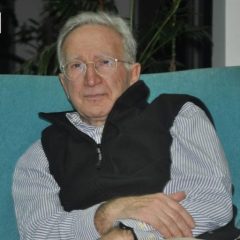 Jacob Cohen is a writer and lecturer born in 1944. Polyglot and traveler, anti-Zionist activist, he was a translator and teacher at the Faculty of Law in Casablanca. He obtained a law degree from the Faculty of Casablanca and then joined Science-Po in Paris where he obtained his degree in Science-Po as well as a postgraduate degree (DES) in public law. He lived in Montreal and then Berlin. In 1978, he returned to Morocco where he became an assistant lecturer at the Faculty of Law in Casablanca until 1987. He then moved to Paris where he now focuses on writing. He has published several books, including « Le commando de Hébron » (2014), « Dieu ne repasse pas à Bethléem » (2013), « Le printemps des Sayanim » (2010), « L’espionne et le journaliste » (2008), « Moi, Latifa S. » (2002).
He has a blog and performs on YouTube where he discusses various topics.
Mohsen Abdelmoumen is an independent Algerian journalist. He has written for several Algerian newspapers such as Alger Républicain and in different sites of the alternative press.
Featured Video
America Racing to Strategic Defeat in Iran
or go to
Aletho News Archives – Video-Images
From the Archives
Should Europeans ‘Thank’ the Americans for Destroying Nord Stream?
By Robert Bridge | Strategic Culture Foundation | September 29, 2022
With an investigation continuing into the destruction of the Nord Stream gas pipeline that provided energy supplies to Europe from Russia, there appears to be just one prime suspect, and that should surprise nobody.
Following the sabotage of the Nord Stream 1 and 2 gas pipelines, former Polish Foreign Minister Radoslaw Sikorski already seemed to know the identity of the perpetrator when he tweeted out: “Thank you, USA.”
At first glance, it seemed that Sikorski was speaking sarcastically, berating Washington for carrying out an attack that will have severe repercussions for the people of Europe. After all, how could anyone see any good coming from the termination of Europe’s primary source of gas reserves with winter just around the corner? It was Sikorski’s homeland of Poland, after all, that urged its citizens to collect firewood in the face of dwindling gas reserves.
In fact, the Polish diplomat was speaking one-hundred percent literally… continue
Blog Roll
 Aletho News
- Tehran approves new Hormuz plan with major restrictions
- No Threat Can Force Iran’s Surrender /Trita Parsi & Lt Cl Daniel Davis
- UK’s New Pandemic Plan Would Turn Big Tech Into a Mass Location Tracking Network
- Growing insecurity, soaring prices fuel protests in north as regime bans evacuation: Sources
- Iran denies responsibility for ‘depraved’ attack on Kuwait desalination plant
- Bring The Troops Back. End This War Now!
- Can we please stop calling Israel the ‘only democracy in the Middle East’ now?
- US should start removing its troops from Germany, proposes AfD co-leader Chrupalla
- Iran Red Crescent: 600 educational centers attacked in US-Israeli ‘war crimes’
- Russian Oil Tanker Arrives in Cuba Amid U.S. Blockade
- If Americans Knew
- As Iran targets US military bases, will they be relocated to Israel? Not a ceasefire Day 171
- Will Trump Go Kamikaze?
- Is the University of Florida Shutting Down College Republicans over Israel Criticism?
- Jewish extremist arrested over alleged plot to firebomb Palestinian activist Nerdeen Kiswani’s home
- More than half of Palestinian child detainees have no charges
- The More Murderous Israel Gets, The More We Hear About “Antisemitism”
- Land Day and the Palestinian struggle after 30 months of genocide
- The Iran War Is About Palestine
- Israeli soldiers echo settler ideology, talk of revenge after targeting Palestinians and detaining CNN crew in the West Bank
- Israeli Policies Threaten Future of Christian Schools in Jerusalem
- No Tricks Zone
- New Study Finds Warming Saves Lives…Cold Temperatures 12 Times More Deadly Than Excess Heat
- German Science Blog Accuses PIK Climate Institute Of Hallucinating Climate Tipping Points
- Devastating Assessment Of Comirnaty Vaccine By Former Senior Pfizer Europe Toxicologist
- New Study: CO2 Is ‘Effectively Negligible’ As An Explanatory Climate Change Factor Since 2000
- Former Pfizer Toxicologist Dr. Helmut Sterz Tells Bundestag Hearing Pfizer Vaccine Should Have Never Been Approved
- Energy Expert: Germany’s Nuclear Phaseout Was A “500 Billion Euro Mistake”
- New Research: South Australia’s Mid-Holocene Sea Surface Temperatures Were 4°C Warmer Than Today
- Storing Green Energy To Last Germany 10 Days Would Require A 60-Million Tonne Battery
- New Studies: UK Sea Levels Were 4 Meters Higher Than Today During The Mid-Holocene
- Destructive Green New Deal: German Energy And Metal Group Warns Of Drastic Crisis
 Aletho News