EU planning for war with Russia by 2030 – Orban
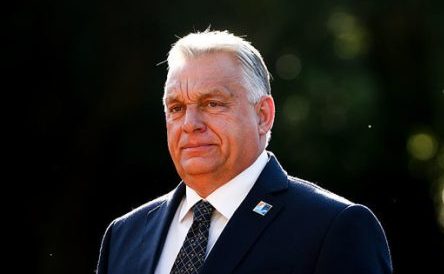
RT | December 7, 2025
Hungarian Prime Minister Viktor Orban has claimed that the European Union is preparing for war with Russia and plans to be fully ready by 2030. Speaking at an anti-war rally on Saturday, Orban said that Europe was already making moves toward a direct military confrontation.
He described a four-step process that typically leads to war: breaking off diplomatic relations, imposing sanctions, ending economic cooperation, and finally engaging in armed conflict. He said that most of these steps have already been taken.
“There is the official European Union position that by 2030 it must be ready for war,” he stated.
He also said that European countries are moving toward a “war economy.” According to Orban, some EU member states are already shifting their transport and industrial sectors to support weapons production.
The prime minister emphasized Budapest’s opposition to war. “Hungary’s task at the same time is to keep Europe from going to war,” he said.
Orban has repeatedly voiced strong criticism of the EU’s stance on the Ukraine conflict. Hungary has consistently opposed sanctions on Russia, as well as military aid to Kiev and called for peace negotiations instead of escalation.
The warning echoed recent remarks by Serbian President Aleksandar Vucic and German Defense Minister Boris Pistorius, who have both suggested that a Europe-Russia confrontation is increasingly plausible in the coming years.
Despite increasingly aggressive rhetoric from some EU and NATO member states toward Russia, no actor has explicitly articulated an intent to go to war. Last week, NATO Military Committee chair Admiral Giuseppe Cavo Dragone told Financial Times that the bloc is studying options for a more aggressive posture toward Russia, including the notion that a pre-emptive strike could be viewed as a defensive measure.
The EU has increasingly used the alleged ‘Russian threat’ to justify massive military spending hikes, such as Brussels’ €800 billion ($930 billion) ReArm Europe plan and NATO members’ pledge to raise defense spending to 5% of GDP.
Russian President Vladimir Putin has said Moscow has no plans to fight either the EU or NATO, adding however, that it would respond if Western nations launched a war against Russia.
Trump files for divorce from NATO over Ukraine
By Larry Johnson | RT | December 6, 2025
It is one thing to produce a written national security strategy, but the real test is whether or not US President Donald Trump is serious about implementing it. The key takeaways are the rhetorical deescalation with China and putting the onus on Europe to keep Ukraine alive.
The 2025 National Security Strategy (NSS) of the US, released by the White House on December 4, 2025, marks a potentially profound shift in US foreign policy under Trump’s second administration compared to his first term as president. This 33-page document explicitly embraces an ‘America First’ doctrine, rejecting global hegemony and ideological crusades in favor of pragmatic, transactional realism focused on protecting core national interests: Homeland security, economic prosperity, and regional dominance in the Western Hemisphere.
It critiques past US overreach as a failure that weakened America, positioning Trump’s approach as a “necessary correction” to usher in a “new golden age.” The strategy prioritizes reindustrialization (aiming to grow the US economy from $30 trillion to $40 trillion by the 2030s), border security, and dealmaking over multilateralism or democracy promotion. It accepts a multipolar world, downgrading China from a “pacing threat” to an “economic competitor,” and calling for selective engagement with adversaries. However, Trump’s actions during the first 11 months of his presidency have been inconsistent with, even contradictory of, the written strategy.
The document is unapologetically partisan, crediting Trump personally for brokering peace in eight conflicts (including the India-Pakistan ceasefire, the Gaza hostage return, the Rwanda-DRC agreement) and securing a verbal commitment at the 2025 Hague Summit for NATO members to boost their defense spending to 5% of GDP. It elevates immigration as a top security threat, advocating lethal force against cartels if needed, and dismisses climate change and ‘net zero’ policies as harmful to US interests.
The document organizes US strategy around three pillars: Homeland defense, the Western Hemisphere, and economic renewal. Secondary focuses include selective partnerships in Asia, Europe, the Middle East, and Africa.
Here are the major rhetorical shifts in strategy compared to the previous strategies released during the respective presidencies of Trump (2017) and Biden (2022):
- From global cop to regional hegemon: Unlike Biden’s 2022 NSS (which emphasized alliances and great-power competition) or Trump’s 2017 version (which named China and Russia as revisionists), this document ends America’s “forever burdens” abroad. It prioritizes the Americas over Eurasia, framing Europe and the Middle East as deprioritized theaters.
- Ideological retreat: Democracy promotion is explicitly abandoned – “we seek peaceful commercial relations without imposing democratic change” (tell that to the Venezuelans). Authoritarians are not judged, and the EU is called “anti-democratic.”
- Confrontational ally relations: Europe faces scathing criticism for migration, free speech curbs, and risks of “civilizational erasure” (e.g., demographic shifts making nations “unrecognizable in 20 years”). The US vows to support the “patriotic” European parties resisting this, drawing Kremlin-like rhetoric accusations from EU leaders.
- China policy: Acknowledges failed engagement; seeks “mutually advantageous” ties but with deterrence (e.g., Taiwan as a priority). No full decoupling, but restrictions on tech/dependencies.
- Multipolar acceptance: Invites regional powers to manage their spheres (e.g., Japan in East Asia, Arab-Israeli bloc in the Gulf), signaling US restraint to avoid direct confrontations.
The NSS represents a seismic shift in America’s approach to NATO, emphasizing “burden-shifting” over unconditional alliance leadership. It frames NATO not as a values-based community but as a transactional partnership in which US commitments – troops, funding, and nuclear guarantees – are tied to European allies meeting steep new demands. This America First recalibration prioritizes US resources for the Indo-Pacific and Western Hemisphere, de-escalating in Europe to avoid “forever burdens.” Key changes include halting NATO expansion, demanding 5% GDP defense spending by 2035, and restoring “strategic stability” with Russia via a Ukraine ceasefire. While the US reaffirms Article 5 and its nuclear umbrella, it signals potential partial withdrawals by 2027 if Europe fails to step up, risking alliance cohesion amid demographic and ideological critiques of Europe. When Russia completes the defeat of Ukraine, the continued existence of NATO will be a genuine concern.
The strategy credits Trump’s diplomacy for NATO’s 5% pledge at the 2025 Hague Summit but warns of “civilizational erasure” in Europe due to migration and low birth rates, speculating that some members could become “majority non-European” within decades, potentially eroding their alignment with US interests.
Trump’s NSS signals a dramatic change in US policy toward the Ukraine conflict by essentially dumping the responsibility for keeping Ukraine afloat on the Europeans. The portion of the NSS dealing with Ukraine is delusional with regard to the military capabilities of the European states:
We want Europe to remain European, to regain its civilizational self-confidence, and to abandon its failed focus on regulatory suffocation… This lack of self-confidence is most evident in Europe’s relationship with Russia. European allies enjoy a significant hard power advantage over Russia by almost every measure, save nuclear weapons.
As a result of Russia’s war in Ukraine, European relations with Russia are now deeply attenuated, and many Europeans regard Russia as an existential threat. Managing European relations with Russia will require significant US diplomatic engagement, both to reestablish conditions of strategic stability across the Eurasian landmass, and to mitigate the risk of conflict between Russia and European states.
It is a core interest of the United States to negotiate an expeditious cessation of hostilities in Ukraine, in order to stabilize European economies, prevent unintended escalation or expansion of the war, and reestablish strategic stability with Russia, as well as to enable the post-hostilities reconstruction of Ukraine to enable its survival as a viable state.
The Ukraine War has had the perverse effect of increasing Europe’s, especially Germany’s, external dependencies. Today, German chemical companies are building some of the world’s largest processing plants in China, using Russian gas that they cannot obtain at home. The Trump Administration finds itself at odds with European officials who hold unrealistic expectations for the war perched in unstable minority governments, many of which trample on basic principles of democracy to suppress opposition. A large European majority wants peace, yet that desire is not translated into policy, in large measure because of those governments’ subversion of democratic processes. This is strategically important to the United States precisely because European states cannot reform themselves if they are trapped in political crisis.
Not surprisingly, this section of Trump’s NSS has sparked a panicked outcry in Europe. European leaders, including former Swedish PM Carl Bildt, called it “to the right of the extreme right,” warning of alliance erosion. Analysts at the Center for Strategic and International Studies (CSIS) praise its pragmatism, but flag short-sightedness, predicting a “lonelier, weaker” US. China views reassurances on sovereignty positively, but remains wary of economic pressures. In the US, Democrats, such as Rep. Jason Crow, deem it “catastrophic” for alliances, i.e. NATO.
Overall, the strategy signals a US pivot inward, forcing NATO allies to self-fund security while risking fractured partnerships with Europe. It positions America as a wealthy hemispheric power in a multipolar order, betting on dealmaking and industrial revival to sustain global influence without overextension.
Larry Johnson is a political analyst and commentator, former CIA analyst and member of the US State Department’s Office for Counterterrorism.
US warns Europe of ‘civilizational erasure’
RT | December 5, 2025
Europe is facing potential “civilizational erasure” as the continent’s policymakers encourage censorship, crack down on political opponents, and turn a blind eye to mass immigration, the new National Security Strategy released by the administration of US President Donald Trump warns.
The landmark and strongly worded document released on Friday says that while the EU is showing worrying signs of economic decline, its cultural and political unraveling poses an even greater threat.
The strategy cites EU-backed immigration policies, suppression of political opposition, curbs on speech, collapsing birthrates, and “loss of national identities and self-confidence,” warning that Europe could become “unrecognizable in 20 years or less.”
The document argues that many European governments are “doubling down on their present path,” while the US wants Europe “to remain European” and abandon “regulatory suffocation” – an apparent reference to America’s stand-off with the EU over its strict digital market guidelines, which Washington claims discriminate against US-based tech giants such as Microsoft, Google, and Meta.
One of Washington’s key goals is “cultivating resistance to Europe’s current trajectory within European nations,” the paper adds.
Trump’s strategy notes that the rise of “patriotic European parties” offers “cause for great optimism,” in a reference to growing bloc-wide support for right-wing Euroskeptic parties calling for strict immigration limits.
The document proclaims that “the era of mass migration is over.” It argues that large inflows have strained resources, increased violence, and weakened social cohesion, adding that Washington is seeking a world in which sovereign states “work together to stop rather than manage” migration flows.
The strategy also comes amid Trump’s push to convince European NATO members to spend more on defense. At one point, he threatened not to defend “delinquent” countries in an attack if they fail to meet his demands. At a summit earlier this year, the bloc endorsed a new plan to move toward combined defense-related spending of up to 5% of GDP, far above NATO’s longstanding 2% benchmark.
US puts normalizing relations with Russia among ‘core interests’
RT | December 5, 2025
The US has placed the restoration of normal ties with Russia and a rapid end to the Ukraine conflict at the center of its newly released National Security Strategy, presenting both aims as among America’s core interests.
The 33-page report outlining President Donald Trump’s foreign-policy vision was released by the White House on Friday.
”It is a core interest of the United States to negotiate an expeditious cessation of hostilities in Ukraine,” the paper states, “in order to stabilize European economies, prevent unintended escalation or expansion of the war, and reestablish strategic stability with Russia.”
It notes that the Ukraine conflict has left “European relations with Russia… deeply attenuated,” destabilizing the region.
The report criticizes European leaders for “unrealistic expectations” regarding the outcome of the conflict, arguing that “a large European majority wants peace, yet that desire is not translated into policy.”
America, it says, is ready for “significant diplomatic engagement” to “help Europe correct its current trajectory,” reestablish stability, and “mitigate the risk of conflict between Russia and European states.”
In contrast with the US national strategy during Trump’s first term, which emphasized competition with Russia and China, the new strategy shifts the focus to the Western Hemisphere and to protecting the homeland, the borders, and regional interests. It calls for resources to be redirected from distant theaters to challenges closer to home and urges NATO and European states to shoulder primary responsibility for their own defense.
The document also calls for an end to NATO expansion – a demand that Russia has repeatedly made, calling it a root cause of the Ukraine conflict, which Moscow views as a Western proxy war.
Overall, the new strategy signals a shift away from global interventionism toward a more transactional foreign policy, arguing that the US should act abroad only when its interests are directly at stake.
The strategy is the first of several major defense and foreign-policy documents the Trump administration is expected to release. These include an updated National Defense Strategy, the Missile Defense Review, and Nuclear Posture Review, which are expected to echo the strategy’s direction.
Scott Ritter: New US National Security Strategy Marks Death Blow to NATO Expansion
Sputnik – December 5, 2025
The Trump administration’s new National Security Strategy has sent shockwaves across the globe, dropping ‘Russian threat’ language completely and crossing out the vision of NATO “as a perpetually expanding alliance.” Sputnik asked prolific geopolitical analyst Scott Ritter to break down the document and its implications.
The new US National Security Strategy is based on “the reality that Russia is not a threat to Europe or the United States, recognition that Russia has been artificially cast as such a threat now for decades, and [that] the consequences of this miscasting” have been an unmitigated “disaster for Europe and a threat to the national security of the United States,” the former Marine Corps intelligence officer told Sputnik.
The document signals that the White House has been “able to free itself… from the legacy of post-Cold War-era Russophobia” seeking to weaken and “strategically defeat” Russia, Ritter said.
“The Trump administration recognizes that this is an inherently destabilizing policy,” not to mention “extraordinarily dangerous,” since confrontation with Russia “ultimately means nuclear war,” the observer stressed.
In this new geopolitical calculus, Europe in its current trajectory is far more of a threat to itself, the US, and international peace and security than Russia, Ritter argues, reiterating that European Russia hawks’ policy is “incompatible” with US national security objectives.
No More NATO Expansion
The new NSS also “puts an end and drives a stake through the heart of the beast of Ukraine’s unrealistic expectations regarding NATO membership, and Europe’s equally unrealistic expectations that at some point in time, Ukraine could become a member of NATO,” Ritter says, commenting on the NSS’s prioritization of “ending” NATO’s status “as a perpetually expanding alliance.”
The document effectively signals “the end of the European enterprise” and the idea that Europe is a geopolitical equal of the US, and one able to “dictate” policy outcomes to Washington, Ritter says. “That’s over. The United States says no, you’re done. Moreover, we say the trajectory that you’re on is incompatible with the national security of the United States.”
Behind the scenes, things get even more interesting, Ritter believes, pointing to “whispers from people who are knowledgeable” about the intent behind the document to the effect that the US will not bail out Europe if it starts a war with Russia.
“This is an extraordinarily important document because it literally represents a divorce of decades of legacy policy that postured the United States and Russia as opponents who should be preparing to fight each other,” Ritter emphasized.
Beyond that, the NSS’s point on ‘no NATO expansion’ and lack of positioning Russia as a threat effectively means “there’s no legitimate reason for NATO to exist,” unless it can transform into a genuinely defensive alliance.
“NATO, as it currently exists, will no longer exist. If [it] is to continue to survive, it must re-identify itself as a defensive alliance focused on securing a reasonable and rational Europe, and not this alliance capable of standing toe-to-toe with Russia, expanding… ever eastward towards confrontation with Russia, and a NATO that embraces a strategy of the strategic defeat of Russia. That NATO is dead. That NATO will never be resurrected,” Ritter summed up.
Denmark hit by boomerang effect: War vs. welfare
By Ron Ridenour | Strategic Culture Foundation | December 3, 2025
The Social Democratic Party (SD), which has led two governments since 2019, experienced the worst regional election in a century thanks to its leading role in spending more on the Ukraine-Russia war than any other country per capita, and number four in absolute sums—$13 billion, with another billion in the pipeline.
That is $2,100 per person. It is also three times Denmark’s defense budget as of three years ago. The U.S. has appropriated $184 billion for a population of 340 million, according to the March 2025 Department of Defense figures. That is $410 per person.
According to EU figures from August, the EU has spent $186 billion, committed $54 billion more, and has “mobilized” $3.9bn of Russian assets kept in western finance institutions for Ukraine. More than $300bn Russian funds have been “immobilized” and might be used to kill Russians and Ukrainians. Danes think they are protecting Ukraine’s “democracy and sovereignty”, and do so at greater cost to them than any of the 57 countries citizens lined up against Russia.
SD Prime Minister Mette Frederiksen heads a three-party coalition government, including the conservative Moderate party and the land-owner conservative Liberal (Venstre) Party. Moderate Party is a recent off-shoot of the Liberal Party. Frederiksen’s ratings before the proxy war against Russia fluxed between 27% and 35%. Following November 18 regional elections, Frederiksen’s rating fell to 17%.
Social Democrats lost mayor posts in most towns and main cities, including the over-mayor post in Copenhagen, which it has held for over 100 years. Leading members of Frederiksen’s party are calling for a new leader already a year before parliament elections.
None of the 12 parliamentary political parties in Denmark, or the handful of Communist and Trotskyist parties, consider that Russia has the right to protect its sovereignty against the ever-encroaching NATO alliance, which now has six countries bordering Russia out of 14 countries around its border. Schools do not allow pro-Russian views to be taught, nor does the media allow pro-Russian views to be expressed.
Nevertheless, for the first time to this reporter’s knowledge, state-sponsored TV news, and other msm, began reporting following the November election that many voters are tired of spending so much money for Ukraine, and less for welfare. Voters mainly blame the key spokesperson for war, Social Democrat Frederisken.
The Social Democrat-led governments have increased NATO funding from 1.3% of its GNP to 3.5% since 2022, and plan to reach 5% to meet President Trump’s demand. Defense budgets have tripled since 2022.
The mass media usually does not report on Ukrainian corruption, but they did when on November 10 anti-corruption investigators revealed that at least $100 million was siphoned from contracts to rebuild energy losses, plus money laundering conducted by Justice Minister German Galushchenko and, ironically, the Energy Minister, Svitlana Grynchuk.
Investigators also searched Tymur Mindich’s house just hours after he fled to Israel, in order to avoid possible prosecution. Mindich is considered President Zelenskyy’s close associate and confidant. Among other roles, he is co-owner of the TV production company “Kvartal-95,” which Zelenskyy helped set up.
In reality, Ukraine’s government officials have skimmed scores of $billions from at least $400 billion sent to Ukraine. It is no longer taboo to be wary of continued support despite the population’s traditional culture of not challenging Denmark’s authority powers. This scandal created skepticism about just what this war is all about only a week before Danes went to the polls.
Even the CIA-friendly Wikipedia admits that corruption is endemic. “Corruption in Ukraine is a significant issue that effects society going back to the dissolution of the Soviet Union in 1991.”
Welfare Down $4 Billion
The largest magazine in Denmark is Ældre Sagen (Senior’s Cause) with a 750,000 circulation out of six million people often reports on how the governments are spending less on welfare. Since 2015, welfare spending has deceased three percent ($4 billion).
The current issue of “Senior’s Cause” shows how much less support there is for seniors who cannot care for themselves without communes’ health care. Lack of help for bathing when needed has increased to 37% from 20% in 2021, just before the war. Percentage of elders need for cleaning homes has increased to 45% from 33% in the same period. Only 40% of those who have need for help at home or take a walk receive any whereas it was 56% just four years ago.
Sanctions against Russia cause a boomerang effect, because Danes have to use much more money to import expensive oil and gas energy sources from Norway and the U.S. after they sabotaged the Nord Stream Pipelines, with Sweden and Denmark’s assistance.
Food prices have skyrocketed in the past couple of years. Just before the war, average Danes used 15% of their income for food and now 17%. Moreover, some favorite items have skyrocketed in price: coffee by 67%, hamburger meat by 50%, cheese 47%, milk 44%.
Despite silent but growing war weariness, PM Frederiksen spent time during her local election campaign to provoke Russia even though the election had nothing to do with foreign policy. She blamed Russia for sending drones over Denmark for which no evidence has been forthcoming. Nevertheless, some elected politicians proposed to shoot down drones that fly over these “targets” even if it may not be known that “they” are drones, or even if the senders are unknown.
Among false accusations was her claim that a Russian tanker, Boracay, which was sailing peacefully in international waters close to Denmark, was a “provocation”. At that time, Frederiksen was entertaining 26 heads of state on the Prime Minister grounds to discuss how to keep the war going in Ukraine. Her French sidekick, President Emmanuel Macron, then sent a war ship with soldiers to seize Boracay with the intention of putting its captain on trial.
Macron said: “We want to increase pressure on Russia to convince it to return to the negotiating table… [we are moving] towards to a policy of obstruction when we have suspicious ships in our waters that are involved in this trafficking.”
“Trafficking” means shipping oil to-and-fro countries, which is what the world’s capitalist economies do.
The Danish government is also encouraging more youth to join the military for longer times than the 11-month draft increased from just four months. The draft now includes women. The proposal to have women forced into military garb came during this war by a former communist party, now called Enhedslisten (Red Green Alliance or Unity List). It has nine of the Parliament’s 179 members.
Denmark invites Ukraine to produce rocket fuel
In September, the Danish government announced that it will build a factory for Ukraine missiles by the military Skrydstrup airport near the town of Vojens. Skrydstrup is where most of Denmark’s F-35s are located and where the U.S. will have one of its military contingents. This is the first time that a NATO country has invited a Ukrainian firm to produce weaponry on its soil.
The Ukrainian company Four Points is behind the project. It is best known for developing the 3,000-km range Flamingo cruise missile, which is having difficulties when fired. Four Points and Denmark will employ a couple hundred workers. They will produce rocket fuel and parts for at least two types of ballistic missiles, FP-7 and FP-9. These missiles will be transported to Ukraine where the military will fire them at targets inside Russia. FP-7 has a range of 200 kilometers at a speed of 1,500 meters per second. FP-9 has an 855-kilometer range at 2,200 meters per second.
At first, it was left unstated whether fuel will be made for the Flamenco in Denmark. Nevertheless, Denmark is considering buying some Ukrainian missiles and/or U.S.’s long-range Tomahawks. Denmark has put up $80 million for the rocket fuel project.
The media reported the response of Russian Ambassador to Denmark Vladimir Barbin: “Denmark is determined to continue the bloodshed in Ukraine. If Ukraine produces rocket fuel for cruise missiles on Danish soil, then it is increasingly difficult not to consider Denmark a direct participant in the conflict. The Ukrainian side has stated very openly that these missiles are intended to carry out attacks deep inside Russia.”
Then, a week after Zelensky’s buddy Minditi fled to Israel, it was revealed that he is the “mastermind” behind Four Points. Vojens citizens and opposition political parties now demand that their government assure people that no corruption will take place when the Ukraine team comes to work beside Danish workers to build the rocket fuel factory. No one is yet publically questioning why do this when it is all too apparent that Russia will win this war soon.
That scandal, though, was not enough. On November 30, the main war commander and peace negotiator, Chief-of-Staff Andriy Yermark, was forced to resign due to new economic corruption revelations, the extent of which is not yet out. These scandals tell the world that Zelensky only wants personal loyalty for his side-kicks, and not honesty and competence.
Nevertheless, construction of the war factory began as planned on December 1, under the name FPRT ApS. The media let many local citizens express concern that something amiss could occur, such as explosions of fuel inside the factory, and concern about what Russia might do.
Denmark Supports Palestinian Genocide While Preparing for Total War
Denmark’s government is also a supporter of Israel’s genocide against Palestinians. There was even an arms fair last August with seven Israel weapons firms selling their wares and Danish weapons sold to Israel. The weapons festival was held at the invitation of Denmark’s military. Two parliamentary parties complained about Israel’s participation. What was the Danish government’s explanation? “We need to quickly rearm for national security to meet the Russian threat.”
Frederiksen and company have concocted one falsehood after another about how Russia will attack first one of its non-NATO neighboring countries, then one NATO neighbor, and within five years invade the entire of Europe: 32 NATO countries have a total of 3.33 million troops (2022) compared to Russia’s 850,000. Six hundred million people inhabit the 30 European NATO countries, compared to Russia’s 140 million. The two North American NATO countries have 335 million and 40 million.
Allegedly, the only obstacle for Russia’s total invasion is to finish the war in Ukraine. Denmark’s only intelligence service, the Defense Intelligence Service (FE), subordinate to the CIA (about which I have written extensively), purports this scenario without offering one iota of evidence.
Since this hypothesis-as-truth surfaced last February, we are repeatedly told by politicians, military experts, and the media to prepare for war by storing water, food, medicines, hygiene articles, warm clothes and blankets, batteries, flashlights, cash, sun-cell or battery radios for three days. Shelters should be constructed or repaired. Land-owner-associations shall call community meetings to learn how best to prepare for war. Military experts are available to give advice.
Following the recent economic corruption cases, the media is open to question how long the war will last as enthusiasm is waning. For instance, some media reports that very few people are actually following the government’s advice to hoard necessities in case of war.
TV stations have long run several one-sided war programs daily. However, on November 26, DR TV’s “War’s Day” weekly program closed with a truthful and cynical Major in the Defense Academy stating: “If the Americans pull out completely, it will be very difficult for Ukraine but still better for us Europeans to continue fighting there, and cheaper than fighting Russians elsewhere.”
Danish Voters Getting Tired of War Cries
In September, dozens of drones (possibly) of various sizes popped up over civilian and military airports. Some were in the air for four hours the first day. Earlier reports of the like turned out to be that the “drones” were sun reflections, but this time they were real, averred the government.
Should unannounced drones be shot down, asked msm and some politicians? The hard-core right says yes. Middle-of-the-roaders point out that when Poland shot down a drone, its own missile destroyed a Polish house.
The key tabloid newspaper Ekstra Bladet went bananas. Its September 26 headline, “Drone Catastrophe-Denmark Humiliated” started seven pages of text and photos with front and back cover—one-fourth of the newspaper. Its reporters sharply criticized the government-military management for not either shooting them down or intercepting them, or knowing where they came from or where they went.
However, the tone in some media changed. I was pleasantly surprised to read the front-page story in the Christian Daily, November 28, headlined: “Critique: Drone-Communication Has Created Fear and Wild Theories”.
The article opens with a staunch supporter of Ukraine war. “Frederiksen and government rhetoric brings Denmark more in danger than what is necessary, and that worries me…Denmark’s interference in the war is too quick-tempered.”
The article points out that after several days of government shouting about how the Russians are threatening “our skies, our airports… ” silence ensued. No proof of what the “drone interference” really was, not even if they were drones, or where they came from. Nevertheless, Frederiksen wouldn’t give up her rhetoric about the evil Russians. The newspaper quoted her: “It is primarily one land that constitutes a threat: Russia.”
The daily ended with the conclusion that the government presents its people with “a lack of information. [Regardless of what the disturbances were] the point is the government wishes to frighten the people and in that way keep them in an iron cage.”
Just three days before this seminal front-page story, PM Frederiksen spoke on TV about how it was still possible for Ukraine with even more massive European aid to win the war. She said so after Russia completely rejected Europe’s “Coalition of the Willing” 19-point peace proposal as a substitute to Trump’s 28-point plan, which the government and media imply is pro-Russian and supported by President Putin. Both suppositions are false.
The only peace plan for the inevitable Russian victory will be:
- a) Crimean and Donbas regions now in the Russian Federation since the peoples’ referendum remain in Russia.
- b) Ukraine will not be in NATO nor have associated “military security”.
- c) Legal protection for ethnic Russians in Ukraine.
- d) A de-Nazification process must begin to re-educate the rampant fascist mentality instilled in the government and military, and much of the population since the 2014 neo-fascist coup financed and organized by the Obama-administration.
November 2025 will be remembered as the beginning of the end for PM Mette Frederiksen’s political career, and the end of silence among the Danish population: Enough is Enough!
Europe is driving the continent toward war: Putin
Al Mayadeen | December 2, 2025
Russian President Vladimir Putin accused European leaders of steering the continent toward confrontation, saying Moscow has repeatedly tried to avoid escalation while European governments continue to inflame the situation.
Speaking to journalists on Tuesday, Putin said that Russia is not the party seeking a clash. “We don’t intend to go to war with Europe, I’ve said this a hundred times, but if Europe suddenly wants to fight us and does, we are ready right now. There can be no doubt about that,” he said, placing responsibility for rising tensions squarely on the West.
Russia reports encirclement of Ukrainian forces as European states expand military involvement
Putin said Russian troops have locked a sizeable Ukrainian contingent in a difficult position near Kupyansk, describing the frontline situation as the result of relentless Western pressure on Kiev to continue a war it cannot win. “Let me remind you that, on the left bank of the river [in the town of Kupyansk], an enemy group numbering 15 battalions is trapped. And Russian troops have begun eliminating it,” he noted.
He said ongoing battles in Kupyansk-Uzlovoy are moving in Russia’s favor and predicted that the settlement will soon be fully brought under Moscow’s control. According to Putin, Russian units control both banks of the broader Kupyansk area and hold hundreds of buildings in the settlement.
These battlefield developments come as European governments accelerate weapons deliveries and publicly reject discussions of compromise. Russian officials argue that the political leadership in the EU, rather than Kiev, is pushing this phase of the war, ignoring humanitarian costs and attempting to prolong hostilities for geopolitical purposes.
Black Sea tensions rise as Moscow calls Ukrainian strikes ‘piracy’
Putin sharply criticized recent Ukrainian attacks on tankers in the Black Sea, attacks that Russian officials say are carried out with Western backing. The president said these operations took place in another country’s exclusive economic zone, calling the strikes a criminal act. “I know that this happened. Attacks on tankers in neutral or even non-neutral waters. But in a special economic zone of another state, a third state, this is piracy. Nothing else,” he said.
He also signaled that Russia would respond not just to Ukraine, but potentially to vessels belonging to countries that enable Kiev’s maritime operations. “The most radical way is to cut off Ukraine from the sea. Then it will be genuinely impossible for it to engage in piracy,” he said, suggesting that Russia may take stronger measures to secure the region if European powers continue encouraging naval escalation.
Moscow to widen its target set as Ukraine intensifies attacks on ports
Putin said Russian forces will now strike a broader list of port infrastructure and shipping linked to Ukrainian operations. “We will expand the range of our strikes against port facilities and ships that enter Ukrainian ports,” he said, arguing that Kiev, supported by European governments, has repeatedly attempted attacks on Russian seaports and supply routes.
Russian officials say many of Ukraine’s naval strikes are coordinated with European advisers and intelligence services, and that Europe’s growing involvement has directly contributed to instability in the Black Sea.
Putin hopes that Russia’s response to piracy by the Ukrainian forces in the Black Sea will force Kiev to consider whether it is worth continuing such actions.
European leaders accused of sabotaging peace efforts while the US seeks dialogue
The president also pointed to Europe’s obstruction of diplomatic efforts, saying EU governments walked away from negotiations long before Moscow or Washington did. “They [the Europeans] are offended that they were allegedly excluded from the negotiations. But I want to point out that no one excluded them. They excluded themselves… They withdrew themselves from this process,” he said.
Putin argued that European governments cling to the idea of a “strategic defeat” for Russia, even as the facts on the ground shift. He said their behavior now threatens US attempts to revive dialogue under President Donald Trump. “Even when they try to make some changes to Trump’s proposals, these changes are aimed at only one thing: to block the entire peace process,” he warned.
According to Putin, Europe’s goal is to present Moscow as the obstacle to peace despite Europe being the one rejecting realistic terms. “Their goal is to then blame Russia for the curtailing of this peace process. We see this clearly,” he said.
Putin concluded that Europe could return to negotiations only when it abandons ideological hostility and starts recognizing the actual balance of forces on the battlefield.
Scott Ritter: War Has Been Won & Russia Faces a Dilemma
Glenn Diesen | December 2, 2025
Scott Ritter is a former Major, Intelligence Officer, US Marine, and UN Weapons Inspector. Ritter argues Russia has defeated NATO and Ukraine, and now faces a dilemma about what kind of peace it wants.
Follow Prof. Glenn Diesen:
Substack: https://glenndiesen.substack.com/
X/Twitter: https://x.com/Glenn_Diesen
Patreon: https://www.patreon.com/glenndiesen
Support the research by Prof. Glenn Diesen:
PayPal: https://www.paypal.com/paypalme/glenndiesen
Buy me a Coffee: buymeacoffee.com/gdieseng
Go Fund Me: https://gofund.me/09ea012f
Books by Prof. Glenn Diesen
NATO needs to be ‘more aggressive’ towards Russia – top commander
RT | December 1, 2025
NATO members should find ways to be more aggressive towards Russia, the US-led alliance’s top military chief has said.
Admiral Giuseppe Cavo Dragone, chair of the NATO Military Committee, told the Financial Times (FT) in an interview published on Sunday that member states have been weighing options to respond to what he described as Russia’s “hybrid war.”
“We are studying everything … being more aggressive or being proactive instead of reactive is something that we are thinking about,” Dragone said.
The commander added that a “pre-emptive strike” could be considered a “defensive action,” though it would be “further away from our normal way of thinking and behavior.”
According to FT, diplomats from Eastern Europe have been especially vocal in demanding tougher actions against Russia, including retaliatory cyberattacks. Dragone noted, however, that NATO’s decision-making has been constrained by legal and ethical concerns, as well as jurisdiction.
In September, NATO increased air patrols in Eastern Europe and the Baltic states in response to alleged airspace violations by Russia. Moscow has denied claims that its aircraft and drones encroached on NATO airspace and accused the allies of warmongering.
Politico Europe reported last week that NATO was also considering joint offensive cyber operations against Moscow. Russia has denied hacking Western institutions, insisting that it has instead been the target of numerous cyberattacks, including some claimed by pro-Ukrainian groups.
Russian Ambassador to Belgium Denis Gonchar said last week that NATO members were pursuing a “rampant militarization” of Europe under the guise of deterring Russia’s “non-existent” plans to attack them.
Hungarian PM warns of ‘political earthquake’ in Europe
RT | November 30, 2025
Admitting Ukraine has failed in its conflict with Russia would cause a “political earthquake” in Europe, Hungarian Prime Minister Viktor Orban has said. He warned that Western leaders are preparing to send troops and letting the conflict “become a business.”
Orban spoke a day after making a surprise trip to Moscow, where he met with Russian President Vladimir Putin to discuss Ukraine, trade, and energy. Despite the EU’s diplomatic boycott, he said Hungary has not yielded to pressure to cut ties with Russia and again offered to host peace talks.
Admitting that Ukraine has failed and that this cannot go on “would cause a fundamental earthquake in European politics,” he said during a speech on Saturday.
He warned that the West is increasingly open to direct involvement. “First they gave money, they gave weapons, and now it has emerged that if really necessary, they will also send soldiers,” Orban said.
Hungary has refused to provide weapons or troops to Ukraine and has repeatedly urged for a ceasefire. Orban’s government has frequently clashed with NATO and the EU nations’ leaders over its stance.
Orban believes diplomacy regarding the conflict has fallen prey to the defense sector. “Business circles connected to the military industry have an increasing influence on politics,” he pointed out, citing France’s deal with Kiev to purchase 100 combat aircraft and German arms factories being built in Ukraine.
Orban also claimed the West had managed to block a peace deal early in the conflict and that the move had ultimately harmed Ukraine. “The West prevented the Ukrainians from reaching an agreement, saying that time was on their side. But it turned out that it wasn’t,” he said.
“They are in a worse position today than if they had reached an agreement in April 2022,” he added, referring to the preliminary deal reached during the Istanbul talks. Kiev unilaterally walked away from those negotiations.
Daniel Davis: The War Is Lost & Europe Escalates
Lt. Col. Daniel Davis is a 4x combat veteran, the recipient of the Ridenhour Prize for Truth-Telling, and is the host of the Daniel Davis Deep Dive YouTube channel. Lt. Col. Davis argues that the war is over, yet Europe is not ready for the peace dictated by a Russian victory.
Daniel Davis Deep Dive: https://www.youtube.com/@DanielDavisDeepDive/videos
Follow Prof. Glenn Diesen:
Substack: https://glenndiesen.substack.com/
X/Twitter: https://x.com/Glenn_Diesen
Patreon: https://www.patreon.com/glenndiesen
Support the research by Prof. Glenn Diesen:
PayPal: https://www.paypal.com/paypalme/glenndiesen
Buy me a Coffee: buymeacoffee.com/gdieseng
Go Fund Me: https://gofund.me/09ea012f
Books by Prof. Glenn Diesen: https://www.amazon.com/stores/author/B09FPQ4MDL
NATO members terrorizing their own people – Russian envoy
RT | November 28, 2025
European NATO members are instilling a false fear of Russia in their citizens in order to drum up support for militarization and a potential confrontation, Moscow’s envoy to Belgium, Denis Gonchar, has said.
Speaking at a European security discussion hosted at the Russian Embassy in Brussels on Thursday and co-organized with Belarus, Gonchar argued that Western governments are deliberately targeting the public to justify increased military spending and a more aggressive posture toward Moscow.
“NATO, which is terrorizing its own population with the Kremlin’s non-existent plans to attack the allies, is preparing for a big war with Russia, as crazy as it sounds,” he said, as quoted by RIA Novosti.
“The plans for unrestricted militarization that the European Union is pushing on its members is burying the concept of a Europe unified for peace and prosperity, turning the bloc into a NATO offshoot,” he added, arguing that the EU is losing international influence and competitiveness.
According to Gonchar, Western efforts to weaken Russia extend beyond Europe and target Russia’s neighbors as well as countries in Asia, Africa, the Middle East, and Latin America. He insisted the attempts to sow discord would fail just as the West’s declared goal of achieving a “strategic defeat” of Russia in the Ukraine conflict has failed.
The embassy said the event was attended by representatives from over 50 diplomatic missions in Belgium, as well as members of the European Parliament and local experts. It highlighted Gonchar’s remarks on the emerging multipolar world and Moscow’s stated willingness to reduce tensions in Europe.
Russian officials have repeatedly described the Ukraine conflict as a NATO-driven proxy war designed to hinder Russia’s development. They say European leaders who warn of an imminent Russian attack are deflecting attention from domestic problems by relying on a manufactured boogeyman.
Featured Video

10 MINUTES COVID MADNESS
or go to
Aletho News Archives – Video-Images
From the Archives
Why Hitler Declared War on the United States
By John Wear | Inconvenient History | 2017-08-31
Establishment historians state that Adolf Hitler made a mistake when he declared war on the United States. For example, British historian Andrew Roberts wrote:[1]
“It seems an unimaginably stupid thing to have done in retrospect, a suicidally hubristic act less than six months after attacking the Soviet Union. America was an uninvadable land mass of gigantic productive capacity and her intervention in 1917-18 had sealed Germany’s fate in the Great War.”
Historian Martin Gilbert wrote in regard to Germany’s declaration of war on the United States:[2]
“It was perhaps the greatest error, and certainly the single most decisive act, of the Second World War.”
In this article I will explain why Hitler was forced to declare war on the United States. … continue
Blog Roll
 Aletho News
- Ukraine using mobilization threat to pressure journalists – media
- Chad announces withdrawal from International Criminal Court Treaty
- Netanyahu will reject US demands for withdrawal from Lebanon, Gaza, Syria if asked: Report
- Russia warns Ukraine expanding ‘terrorist activities’ beyond Europe
- US use of Italian military bases in the conflict with Iran shows lack of autonomy
- The synthesis of regional conflicts into WWIII has begun
- Is the Department of War Covering Up the True Extent of US Casualties?
- Is Peter Mandelson a Russian or a Zionist asset?
- German arms exports to Israel surge sharply amid Gaza genocide
- Massie says the US has been ‘significantly weakened’ by war on Iran
- If Americans Knew
- ‘Hell on Earth’: Roger Waters on Palestine, Apartheid and the Cost of Speaking Out
- ISRAELI MEDIA: Israelis Fight Over Framing of West Bank Attacks. But Settler Violence Is an Israeli Strategy (2 articles)
- Attacks on Mamdani Prove Israel’s Supporters Can’t Even Tolerate Criticism of Netanyahu
- Integrated Israeli Policies Fast‑Track Israeli Annexation of Palestinian Land
- ICC Chief Prosecutor Karim Khan dared to hold Israel to account – that’s why he was brought down
- Why did Bari Weiss fire Cecilia Vargas?
- Rescue teams recover remains of 99 Palestinians from one home in Gaza – Daily Update
- Patrick Bet-David sells wealth building, but the real product is Zionist shilling
- The Last-Minute Million-Dollar Ad Spend Against Will Lawrence Is Coming From a Major Pro-Israel Group
- Five decades of Israeli covert strategy to push US, Iran into confrontation
- No Tricks Zone
- ECMWF Models Throwing Cold Water On Extreme Germany Heat Wave Forecast Next Week
- Greenland’s Ice Sheet Was Supposed To Be Rapidly Melting Away. It Hasn’t Been.
- Global Temperature Trend Has Cooled Over The Past 6500 Years, Scientists Have Found
- Wind Energy Means Going Back To The Middle Ages, Says German Professor Horst-Joachim Lüdecke
- New Study: A 40-Fold Increase In Earth’s Main Greenhouse Gas Contributes To Cooling The Ocean
- New Study Highlights The ‘Dominant Role’ Of Aerosol/Cloud Interactions In Shaping Climate
- Munich’s First-Ever Green Party Mayor Declares First Ever City Water Use Restrictions… Fines Up to 50,000 €!
- Experimental Lab Research: The Climate Sensitivity To A 400-Fold Increase In CO2 Is 0.1°C
- Fatal Snobbery: In France, It’s Better To Die From A Heatwave Than To Do As Americans
- New Study: NASA’s Models Wildly Underestimate The Capacity Of Clouds To Alter Solar Radiation
 Aletho News