Erdogan Smells a US Rat
By Finian Cunningham | Strategic Culture Foundation | March 7, 2020
Well, it takes one to know one. The foul scheming and intrigues over the past nine years of war in Syria by the foreign aggressors and their terror proxies will have proven one thing to all the criminal accomplices – none of them can be trusted, even when they claim to be “partners”.
Turkish leader Recep Tayyip Erdogan, who went to Moscow this week, wanted a deeper withdrawal of the Syrian army in Idlib province and he didn’t get it. The upshot is that more Syrian territory has been retaken by Syria’s state forces – despite all the bluster from Erdogan vowing victory and rollback.
What happened is that the Turkish president no doubt smelled a rat from Washington’s lack of military support. Erdogan knew if a military escalation occurred, his forces would be left out to hang and dry by its supposed NATO partner. All the American talk about “fully backing” Turkey failed to materialize beyond hot air.
Recall that when violence flared last month between Turkish and Syrian forces, US Secretary of State Mike Pompeo pledged on February 11 that Washington “would stand by its NATO ally”. As the violence increased along with the body count of Turkish troops, the US did not deliver – despite Ankara’s earnest requests two weeks ago for Patriot missiles. Requests that went unanswered.
Washington knew that Syria and its Russian ally were not backing down from the principle of defeating terror groups on Syrian soil regardless of whether the militants are being given cover by Turkish artillery. Syria has impeccable sovereign right to take back control over every square inch of its territory. Russia has stood full square behind its Syrian ally for that objective.
On March 5 when Erdogan flew to Moscow, he must have had that sinking feeling, knowing that Washington was firing rhetorical blanks. On the same day, Pompeo demanded that the Turkish leader should negotiate a withdrawal of Syrian army back to the Sochi ceasefire lines of 2018. But after six hours of negotiations with Putin, Erdogan settled for a lot less – a truce based on current territorial positions, including gains made in recent weeks by the Syrian army.
On his way to Moscow all that Erdogan was getting from Washington were more vague hints that the US was still “considering” supplying military ammunition to Turkey.
Probably the ominous sign for Erdogan that Washington was going soft was the PR stunt on March 3 when two relatively minor US envoys visited the White Helmets terrorist propaganda unit in Idlib offering “humanitarian aid”. That kind of media support doesn’t quite fit the bill for Patriot missiles and American warplanes that Ankara was really after.
Moreover one of the envoys, James Jeffrey, told a conference in Istanbul on March 5 that the US was “pressuring European NATO allies to give more support to Turkey”.
As Hurriyet Daily News reported, the US envoy was responding to a question regarding Washington’s views about concrete military support to Turkey.
“We are pressuring our European allies to make contribution to this issue,” said Jeffrey. “There’s a Spanish Patriot missile defense unit right now deployed in Turkey at the Incirlik airbase, that’s an example of things that NATO is actually doing, and we want to see more actions like that.”
This was being said as Erdogan flew to Moscow for his “face off” with Putin. In other words, the Turkish president knew that the US was all talk and no action.
Damascus and Moscow have called Erdogan and Washington’s bluff. There will be no escalation in Syria to an international conflict because Erdogan and his master in Washington don’t have the cojones.
Syria has every right to rid its land of terrorists and their NATO patrons. And Syria has Russia’s back. While Ankara knows all it can count on is a Washington rat.
US Demands Russia ‘Immediately Ground Warplanes’ Over Syria
Sputnik – February 29, 2020
The situation in the northwestern Syrian renegade province of Idlib escalated again on Thursday after Syrian forces responding to a Nusra Front assault accidentally struck Turkish positions, killing 33 troops and injuring dozens more. The attack prompted the UN Security Council to call an emergency meeting on the situation in Syria.
The US “fully supports” Turkey’s right “to respond in self-defence” to the “unjustified” attacks on Turkish forces in Idlib, Syria which killed nearly three dozen troops Thursday, US Permanent Representative to the UN Kelly Craft has said.
“We call on the Russian Federation to immediately ground its warplanes. And we call for all Syrian forces and their Russian backers to withdraw to the ceasefire lines first established in 2018,” Craft said, speaking at the UN Security Council’s emergency meeting on Syria on Friday.
“The United States is not here today to listen and discuss. We are here to speak directly and without qualification,” Craft warned. “In the days ahead, the United States’ commitment to our NATO ally, Turkey, will not waver,” the ambassador added.
Calling the Astana format for Syrian peace talks “broken beyond repair,” Craft said that the US wants “an immediate, durable, and verifiable ceasefire in northwest Syria,” and urged the UN to “play a central, active role if we are to avoid even greater escalation.”
Responding to Craft, Russian Permanent Representative to the UN Vasily Nebenzya pointed out that the incident involving the deaths of Turkish military personnel took place outside Turkey’s observation post base, and stressed that Syria has the right to target terrorists. Nebenzya recalled that the Nusra terrorists in control of large swathes of Idlib have dramatically increased their attacks against civilians and the Syrian military in recent weeks, giving the Syrian Army the right to respond.
The Syrian Ambassador to the UN Bashar al-Jaafari, meanwhile, accused Turkey of aggression, and alleged that Ankara was using its observation posts to provide assistance to the terrorists. Al-Jaafari also accused the UK of calling Friday’s Security Council meeting to try to discredit the Astana format.
Black Thursday
Turkish and Syrian forces became engaged in a shooting war in the restive Idlib region earlier this month, after a Syrian artillery attack on one of Turkey’s dozen observation posts killed over half-a-dozen Turkish troops, resulting in a wave of Turkish attacks on Syrian forces. On Thursday, Nusra terrorists launched a large-scale offensive on Syrian Army positions, with Syrian forces responding, with 33 Turkish troops killed in Syria’s counterattack. Shortly thereafter, the Russian military’s Syrian monitoring mission reported that Turkish troops were mixed in among the Nusra militants as the latter came under artillery attack.
On Saturday, the Russian Foreign Ministry stated that Moscow and Ankara had committed to reducing tensions on the ground in Idlib. The same day, however, Turkish President Recep Tayyip Erdogan told reporters that he had asked Russian President Vladimir Putin to “get out of our way” and to leave Turkey “face to face” with the Syrian government.
The threat of a nuclear war between the US and Russia is now at its greatest since 1983
By Scott Ritter | RT | February 29, 2020
When the Commander of NATO says he is a fan of flexible first strike at the same time that NATO is flexing its military muscle on Russia’s border, the risk of inadvertent nuclear war is real.
US Air Force Gen. Tod D Wolters told the Senate this week he “is a fan of flexible first strike” regarding NATO’s nuclear weapons, thereby exposing the fatal fallacy of the alliance’s embrace of American nuclear deterrence policy.
It was one of the most remarkable yet underreported exchanges in recent Senate history. Earlier this week, during the testimony before the Senate Armed Services Committee of General Tod Wolters, the commander of US European Command and, concurrently, as the Supreme Allied Commander in Europe (SACEUR) also the military head of all NATO armed forces, General Wolters engaged in a short yet informative exchange with Senator Deb Fischer, a Republican from the state of Nebraska.
Following some initial questions and answers focused on the alignment of NATO’s military strategy with the 2018 National Defense Strategy of the US, which codified what Wolters called “the malign influence on behalf of Russia” toward European security, Senator Fischer asked about the growing recognition on the part of NATO of the important role of US nuclear deterrence in keeping the peace. “We all understand that our deterrent, the TRIAD, is the bedrock of the security of this country,” Fischer noted. “Can you tell us about what you are hearing…from our NATO partners about this deterrent?”
Wolters responded by linking the deterrence provided to Europe by the US nuclear TRIAD with the peace enjoyed on the European continent over the past seven decades. Fischer asked if the US nuclear umbrella was “vital in the freedom of NATO members”; Wolters agreed. Remarkably, Wolters linked the role of nuclear deterrence with the NATO missions in Iraq, Afghanistan and elsewhere outside the European continent. NATO’s mission, he said, was to “proliferate deterrence to the max extent practical to achieve greater peace.”
Then came the piece de resistance of the hearing. “What are your views, Sir,” Senator Fischer asked, “of adopting a so-called no-first-use policy. Do you believe that that would strengthen deterrence?”
General Wolters’ response was straight to the point. “Senator, I’m a fan of flexible first use policy.”
Under any circumstance, the public embrace of a “flexible first strike” policy regarding nuclear weapons employment by the Supreme Allied Commander in Europe should generate widespread attention. When seen in the context of the recent deployment by the US of a low-yield nuclear warhead on submarine-launched ballistic missiles carried onboard a Trident submarine, however, Wolters’ statement is downright explosive. Add to the mix the fact the US recently carried out a wargame where the US Secretary of Defense practiced the procedures for launching this very same “low yield” weapon against a Russian target during simulated combat between Russia and NATO in Europe, and the reaction should be off the charts. And yet there has been deafening silence from both the European and US press on this topic.
There is, however, one party that paid attention to what General Wolters had to say–Russia. In a statement to the press on February 25–the same date as General Wolters’ testimony, Sergey Lavrov, the Russian Foreign Minister stated that “We note with concern that Washington’s new doctrinal guidelines considerably lower the threshold of nuclear weapons use.” Lavrov added that this doctrine had to be viewed in the light “of the persistent deployment of US nuclear weapons on the territory of some NATO allies and the continued practice of the so-called joint nuclear missions.”
Rather than embracing a policy of “flexible first strike”, Lavrov suggested that the US work with Russia to re-confirm “the Gorbachev-Reagan formula, which says that there can be no winners in a nuclear war and it should never be unleashed.” This proposal was made 18 months ago, Lavrov noted, and yet the US has failed to respond.
Complicating matters further are the ‘Defender 2020’ NATO military exercises underway in Europe, involving tens of thousands of US troops in one of the largest training operations since the end of the Cold War. The fact that these exercises are taking place at a time when the issue of US nuclear weapons and NATO’s doctrine regarding their employment against Russia is being actively tracked by senior Russian authorities only highlights the danger posed.
On February 6, General Valery Gerasimov, the Russian Chief of Staff, met with General Wolters to discuss ‘Defender 2020’ and concurrent Russian military exercises to be held nearby to deconflict their respective operations and avoid any unforeseen incidents. This meeting, however, was held prior to the reports about a US/NATO nuclear wargame targeting Russian forces going public, and prior to General Wolters’ statement about “flexible first use” of NATO nuclear weapons.
In light of these events, General Gerasimov met with French General Fançois Lecointre, the Chief of the Defense Staff, to express Russia’s concerns over NATO’s military moves near the Russian border, especially the Defender 2020 exercise which was, General Gerasimov noted, “held on the basis of anti-Russian scenarios and envisage training for offensive operations.”
General Gerasimov’s concerns cannot be viewed in isolation, but rather must be considered in the overall historical context of NATO-Russian relations. Back in 1983, the then-Soviet Union was extremely concerned about a series of realistic NATO exercises, known as ‘Able Archer ‘83,’ which in many ways mimicked the modern-day Defender 2020 in both scope and scale. Like Defender 2020, Able Archer ‘83 saw the deployment of tens of thousands of US forces into Europe, where they assumed an offensive posture, before transitioning into a command post exercise involving the employment of NATO nuclear weapons against a Soviet target.
So concerned was Moscow about these exercises, and the possibility that NATO might use them as a cover for an attack against Soviet forces in East Germany, that the Soviet nuclear forces were placed on high alert. Historians have since observed that the threat of nuclear war between the US and the USSR was at that time the highest it had been since the Cuban Missile Crisis in 1962.
US and NATO officials would do well to recall the danger to European and world security posed by the “Able Archer ‘83” exercise and the potential for Soviet miscalculations when assessing the concerns expressed by General Gerasimov today. The unprecedented concentration of offensive NATO military power on Russia’s border, coupled with the cavalier public embrace by General Wolters of a “flexible first strike” nuclear posture by NATO, has more than replicated the threat model presented by Able Archer ’83. In this context, it would not be a stretch to conclude that the threat of nuclear war between the US and Russia is the highest it has been since Able Archer ’83.
Scott Ritter is a former US Marine Corps intelligence officer. He served in the Soviet Union as an inspector implementing the INF Treaty, in General Schwarzkopf’s staff during the Gulf War, and from 1991-1998 as a UN weapons inspector. Follow him on Twitter @RealScottRitter
US, Taliban Sign Peace Agreement in Doha
Sputnik – February 29, 2020
Negotiators from the United States and the Taliban are meeting in Doha, Qatar to sign an accord that envisages the timetable of the US withdrawing some of its 13,000 troops. The Taliban, in turn, is expected to sever ties with all extremist groups and prevent the territories of Afghanistan from becoming havens for militants.
The United States and the Taliban movement have signed the long-awaited peace agreement in the Qatari capital of Doha on Saturday.
The troop withdrawal will be phased, with the US forces set to be slimmed down to 8,600 in the first 135 days since the deal’s announcement, while allied and coalition forces will be scaled down proportionately.
The residual US, allied and coalition forces will pull out within the remaining nine-and-a-half months, whereby all military bases will be abandoned.
Up to 5000 Taliban prisoners will be released from prisons by 10 March, the first day of intra-Afghan talks. The remaining prisoners will be freed within the next three months. The Taliban commits that its released prisoners will not pose a threat to the security of the US and its allies.
As soon as intra-Afghan talks begin, the US will start the review process of its sanctions on the Taliban and rewards lists issued for its members, with the goal of removing sanctions by 27 August. It will also engage with the UN Security Council and Afghan authorities to have national sanctions on the Taliban scrapped by 29 May.
The US pledges to seek economic cooperation for reconstruction with the new post-settlement Afghan Islamic government and will not intervene in its internal affairs.
In return, the Taliban will take steps to prevent terrorist groups, such as al-Qaeda, from using Afghan soil to threaten the security of the US and its allies.
They include sending a “clear message” that those posing such threat have no place in Afghanistan. The Taliban will instruct its members not to cooperate with such groups or individuals and prevent them from recruiting and fund-raising. It will only grant asylum to people who do not pose a security threat and will not issue visas or other documents to those considered a risk.
Following the signing of the deal, US State Secretary Mike Pompeo enumerated key conditions of the deal between the United States and the Taliban.
“Keep your promises, cut ties with Al-Qaeda. Keep up the fight against Daesh,” Pompeo said, addressing the Taliban.He added that the agreement was “a true test,” stressing that Washington will calibrate the pace of the troop withdrawal with the actions of the Taliban.
US President Donald Trump, for his part, welcomed the agreement as a move to put an end to the US most protracted war.
“We are working to finally end America’s longest war and bring our troops back home,” he said.The head of the militant group’s political office in Qatar said that the Taliban will adhere to the peace agreement signed in Doha on Saturday.
“The US and the Taliban movement have successfully concluded talks in Qatar. I congratulate everyone on this achievement. We will comply with the pact and, as a political force, we want it to be implemented by neighbouring countries,” Abdul Ghani Baradar said.In his turn, Afghan President Ashraf Ghani expressed hope that the long-awaited US-Taliban peace agreement would lead to a permanent ceasefire that in turn would bring stability to Afghanistan.
International Reactions to Historic Accord
NATO Secretary-General Jens Stoltenberg has said that the alliance supports the signing of the US-Taliban peace deal.
“This [deal] is a victory for peace, victory for Afghan people,” Stoltenberg said.The European Union has welcomed the long-awaited peace deal between the United States and the Taliban as a first step toward a negotiated peace process among all Afghans.
“The European Union considers today’s conclusion of the Afghanistan-US Joint Statement for Peace and the settlement between the US and the Taliban as important first steps towards a comprehensive peace process, with intra-Afghan negotiations at its core,” the declaration read.It urged the sides not to miss this opportunity for a lasting peace that could create an environment of security and stability in the war-torn country. Keeping up the reduction in violence is an important part of that process, it added.
“The EU calls on all stakeholders to put the interests of the nation above all other considerations, as the collective responsibility of all Afghan political forces,” it concluded.The UN Assistance Mission in Afghanistan (UNAMA) has called for the continuation of the reduced violence in Afghanistan and welcomed the commitment of the conflicting sides to further dialogue.
“Intra-Afghan negotiations are central to the peace efforts. The United Nations welcomes the commitment expressed by the parties to intra-Afghan negotiations; and urges them to move ahead expeditiously with their preparations to start the negotiations, including through forming a truly representative negotiation team,” UNAMA said in a statement.The United Nations also expressed its support to an inclusive Afghan-led process and called for concrete steps toward ending the war.
“The United Nations stresses the importance of continuing to reduce violence, especially violence that harms civilians, and urges all parties, in the period ahead, to redouble efforts to reduce violence on the way to a permanent ceasefire and a lasting political settlement,” the statement said.
Since 2018, Washington and the Taliban have been attempting to negotiate a peace deal that would ensure the withdrawal of foreign troops from Afghanistan in exchange for the movement’s guarantee that the country would not become a safe haven for terrorists. The parties’ representatives have been regularly meeting in Doha to address the issue.
Even NATO is unwilling to touch Turkey’s Idlib mess with a ten-foot pole
By Scott Ritter | RT | February 28, 2020
Having been hit by the Syrian Air Force in Idlib, Turkey has called on NATO’s protection, but as much as the alliance would like a fight with Assad and his ally Russia, it’s refused to back Ankara’s questionable adventure.
Turkey engaged NATO in Article 4 consultations, seeking help regarding the crisis in Syria. The meeting produced a statement from NATO condemning the actions of Russia and Syria and advocating for humanitarian assistance, but denying Turkey the assistance it sought.
The situation in Idlib province has reached crisis proportions. A months-long military offensive by the Syrian Army, supported by the Russian Air Force and pro-Iranian militias, had recaptured nearly one-third of the territory occupied by anti-Assad groups funded and armed by Turkey. In response, Turkish President Recep Tayyip Erdogan dispatched thousands of Turkish soldiers, backed by thousands of pieces of military equipment, including tanks and armored vehicles, into Idlib to bolster his harried allies.
The result has been a disaster for Turkey, which has lost more than 50 soldiers and had scores more wounded due to Syrian air attacks. For its part, Russia has refrained from directly engaging Turkish forces, instead turning its attention to countering Turkish-backed militants. Faced with mounting casualties, Turkey turned to NATO for assistance, invoking Article 4 of the NATO charter, which allows members to request consultations whenever, in their opinion, their territorial integrity, political independence or security is threatened.
Dangerous precedents
Among the foundational principles of the NATO alliance, most observers focus on Article 5, which declares that an attack against one member is an attack against all. However, throughout its 75-year history, Article 5 has been invoked only once – in the aftermath of 9/11 – resulting in joint air and maritime patrols, but no direct military confrontation. The wars that NATO has engaged in militarily, whether in Kosovo, Afghanistan, Libya or Iraq, have all been conducted under Article 4, when NATO made a collective decision to provide assistance in a situation that did not involve a direct military attack on one of its member states.
With that in mind, Turkey’s decision to turn to Article 4 was a serious undertaking. For additional leverage, Ankara linked the NATO talks with a separate decision to open its borders to refugees seeking asylum in Europe, abrogating an agreement that had been reached with the European Union to prevent uncontrolled migration into Europe through Turkish-controlled territory and waters. Through this humanitarian blackmail, Turkey sought to use the shared economic and political costs arising from the Syrian situation as a bargaining chip for NATO support.
A failed gamble
The best Turkey could get from its Article 4 consultation, however, was a lukewarm statement by Jens Stoltenberg, the NATO secretary general, condemning Syria and Russia while encouraging a diplomatic resolution to the fighting in Syria that focused on alleviating the unfolding humanitarian crisis regarding refugees. This is a far cry from the kind of concrete military support, such as the provision of Patriot air defense systems or NATO enforcement of a no-fly zone over Idlib, Turkey was hoping for.
The provision of military support under Article 4 is serious, involving as it does the entire weight of the NATO alliance. This was underscored by recent comments made by the Supreme Commander of Allied Forces in Europe, US General Tod Wolters, which linked NATO’s nuclear deterrence posture to current Article 4 NATO operations in Afghanistan and Iraq. At a time when NATO is focused on confronting Russia in the Baltics, opening a second front against the Russians in Syria is not something the alliance was willing to support at this time.
While the US was vocal in its desire to support Turkey at the consultations, NATO is a consensus organization, and the complexities of Turkey’s Syrian adventure, which extend beyond simple Russian involvement to include issues involving the legality of Turkey’s presence inside Syria, and the fact that many of the armed groups Turkey supports in Idlib are designated terrorist organizations, precluded a NATO decision to intervene on Turkey’s behalf. Having failed in its effort to get NATO support in Syria, Turkey is now left with the Hobson’s choice of retreating or doubling down. Neither will end well for Turkey, and both will only further exacerbate that humanitarian disaster taking place in Idlib today.
Scott Ritter is a former US Marine Corps intelligence officer. He served in the Soviet Union as an inspector implementing the INF Treaty, in General Schwarzkopf’s staff during the Gulf War, and from 1991-1998 as a UN weapons inspector. Follow him on Twitter @RealScottRitter
Erdoğan Unleashes New Migrant Crisis in Europe
By Paul Antonopoulos | February 28, 2020
At least 33 Turkish soldiers who were illegally operating in Syria’s Idlib province were killed and another 35 injured by a Syrian military attack on Thursday night. The attack came just days before Turkish President Recep Tayyip Erdoğan’s end of month deadline for the Syrian Army to forfeit the large swathes of area it has liberated from Turkish-backed jihadists and to return to positions it held at the beginning of the year. The powerful assault suggests that the Syrian Army has no intentions to withdraw from any positions it holds on its own land and is willing to engage the Turkish military, even under threat of a full-scale war.
Although Russia has denied any involvement in the attack, hundreds of Turks congregated at the Russian consulate in the middle of the night chanting “Russian Killers, Putin Killer.” Despite this, Ankara has ignored the emotions of the people and thus far has only blamed the Syrian government for the “nefarious attack against heroic soldiers in Idlib who were there to ensure our national security,” as described by Turkish director of communications Fahrettin Altun in a statement.
Of course, this is a long stretch to claim that Turkey is in Idlib to ensure natural security as they are the main backers of terrorist organizations like ISIS and the Al-Qaeda affiliated Al-Nusra and Turkistan Islamic Party. Although they claim the Kurdish People’s Protection Units are a threat to Turkey’s national security, they have no presence in Idlib, meaning the notion that Turkey’s national security is under threat in Idlib has to be rejected and rather this is part of a project for a neo-Ottoman Empire.
Although Turkish Foreign Minister Mevlüt Çavuşoğlu spoke to NATO Secretary General Jens Stoltenberg following the Syrian attack in the hope of invoking Article 5 and forcing NATO members into Erdoğan’s adventurism in Idlib, Article 6 explicitly excludes Article 5 being invoked in areas outside of NATO members territory. As Article 5 cannot be invoked, Stoltenberg made a weak condemnation against both Syria and Russia and said “defusing the tension, all sides should prevent this terrible situation and humanitarian conditions in the region from getting worse.”
Despite cold relations over the past few years, the U.S. has continued taking advantage of tense relations between Moscow and Ankara with a State Department representative saying “We stand by our NATO Ally Turkey and continue to call for an immediate end to this despicable offensive by the Assad regime, Russia, and Iranian-backed forces.” This was followed up by U.S. ambassador to NATO, Kay Bailey Hutchison, saying that Turkey should see “who is their reliable partner and who isn’t” and expressed her “hope that President Erdoğan will see that we are the ally of their past and their future and they need to drop the S-400.” Washington is taking every opportunity to firmly put Turkey back into the NATO sphere even if it is acting independent of NATO and after Ankara’s short-lived flirtation with multipolarity.
Even though Antonio Guterres, Secretary General of the United Nations, repeated his call for a ceasefire in Idlib following the attack, the Syrian Army are unlikely to halt their operation to clear the northwest province of Turkish-backed terrorist forces. Rather, as Erdoğan’s deadline approaches, the Turkish president is likely to weaponize the high casualty rate of Turkish soldiers in Idlib to justify a direct war with Syria and get the general population into an emotional frenzy, bypassing any calls for a ceasefire that will likely be rejected by Syria anyway.
Although NATO made a weak response to Turkey, the EU also responded weakly by offering condolences as Erdoğan opens his country’s borders for 72 hours, allowing tens of thousands of illegal immigrants to flood to the borders of Greece and Bulgaria, violating the 2016 EU-Turkey refugee deal. Effectively Erdoğan has once again weaponized refugees to blackmail the EU despite the latter having no involvement in Idlib. Spearheading this migrant flow into Europe in response to the Syrian attack on Turkish soldiers is the Turkish Intelligence Agency MIT who were directly transporting illegal immigrants with buses to the border regions. Erdoğan hopes that by flooding Europe with illegal immigrants it will force the EU to become more involved in Idlib against the Syrian government and Russia.
However, as many EU members are also NATO members, it is unlikely to work as frontline EU states like Greece and Bulgaria will only have more hostile relations with Turkey and are not wanting to get involved in Syria for the sake of Erdoğan’s dreams. Close ally of Erdoğan, Nationalist Movement Party (MHP) Chairman Devlet Bahçeli, and Justice and Development (AK) Party Spokesman Omer Çelik, demanded overnight that NATO become involved. But as Turkey is going to flood two NATO members with illegal migrants and violates Greek airspace on a daily basis, it is unlikely to find widespread support.
Although Washington is taking every advantage of Turkey’s spat with Russia to mend relations, it is also unlikely that the U.S. will want to risk a potential conflict with Russia over Idlib and Erdoğan, and will probably limit its support to intelligence, weapons and diplomacy if Turkey is to go to war with Syria. But what is for certain, Turkey will not find massive support for any adventurism in Syria from NATO as it hopes to achieve and rather it will make many NATO members criticize Turkey’s one-sided and aggressive policy towards Syria.
Paul Antonopoulos is a Research Fellow at the Center for Syncretic Studies.
Don’t Hold Your Breath for ‘World War III’: World War IV Has Already Begun
By A. B. Abrams | The Saker Blog | February 27, 2020
“A. B. Abrams is the author of the book ‘Power and Primacy: A History of Western Intervention in the Asia-Pacific.’ His second book covering the history of the United States’ conflict with North Korea is scheduled for publication in 2020.
He is proficient in Chinese, Korean and other East Asian languages, has published widely on defence and politics related subjects under various pseudonyms, and holds two related Masters degrees from the University of London.”
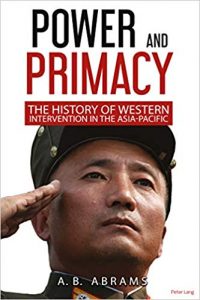 The world today finds itself in a period of renewed great power conflict, pitting the Western Bloc led by the United States against four ‘Great Power adversaries’ – as they are referred to by Western defence planners – namely China, Russia, North Korea and Iran. This conflict has over the past 15 years escalated to encompass the military, economic and information spheres with global consequences – and appears to be coming to a head as signs of peaking tensions appear in multiple fields from military deployments and arms races to harsh economic wars and a harsher still information war.
While the term ‘World War III’ has been common since the 1940s, referring to the possibility of a global great power war on a greater scale than the first and second world wars, the Cold War between the Western and Soviet Blocs was at its height as total, as global and as heated as the prior conflicts. As weapons technology has evolved, the viability of a direct shooting war has diminished considerably – forcing major powers to seek alternative means to engineer their adversaries’ capitulation and assert their own dominance. This has been reflected in how the Cold War, and the current phase of global conflict some refer to as ‘Cold War 2’ have been distinct from the first two world wars despite the final objectives of the parties involved sharing many similarities. I would thus suggest redefining what a ‘world war’ is and acknowledging that this current phase of global conflict is every part as intense as the great power ‘hot wars’ waged in the first half of the 20th century.
Had the intercontinental range ballistic missile and the miniaturised nuclear warhead been invented twenty years earlier, the Allied Powers may have needed to rely more heavily on economic and information warfare to contain and eventually neutralise Nazi Germany. The Second World War would have been very different in nature to reflect the technologies of the time. When viewed from this paradigm, the Cold War can be seen as a ‘Third World War’ – a total conflict more vast, comprehensive and international than its predecessors stretched out over more than 40 years. The current conflict, or ‘World War IV,’ is ongoing. An assessment of prior ‘great power wars,’ and the unique nature of the current conflict, can provide some valuable insight into how warfare is evolving and the likely determinants of its victors.
As of 2020 it is clear that great power conflict has become almost as heated as it can short of an all-out hot war – with the Western Bloc applying maximum pressure on the information, military and economic fronts to undermine not only smaller adversaries such as Venezuela and Syria and medium sized ones such as North Korea and Iran, but also China and Russia. When exactly this phase of conflict began – sometime after the Cold War’s end – remains uncertain.
The interval between the third and fourth ‘world wars’ was considerably longer than that between the second and the third. This was due to a number of factors – primarily that there was no immediate and obvious adversary for the victorious Western Bloc to target once the Soviet Union had been vanquished. Post-Soviet Russia was a shade of a shadow of its former self. Under the administration of Boris Yeltsin the country’s economy contracted an astonishing 45% in just five years from 1992 (1) leading to millions of deaths and a plummet in living standards. Over 500,000 women and young girls of the former USSR were trafficked to the West and the Middle East – often as sex slaves (2), drug addiction increased by 900 percent, the suicide rate doubled, HIV became a nationwide epidemic (3) corruption was rampant, and the country’s defence sector saw its major weapons programs critical to maintaining parity with the West delayed or terminated due to deep budget cuts (4). The possibility of a further partition of the state, as attested to multiple times by high level officials, was very real along the lines of the Yugoslav model (5).
Beyond Russia, China’s Communist Party in the Cold War’s aftermath went to considerable lengths to avoid tensions with the Western world – including a very cautious exercise of their veto power at the United Nations which facilitated Western led military action against Iraq (6). The country was integrating itself into the Western centred global economy and continuing to emphasis the peaceful nature of its economic rise and understate its growing strength. Western scholarship at the time continued to report with near certainty that internal change, a shift towards a Western style political system and the collapse of party rule was inevitable. The subsequent infiltration and westernisation was expected to neuter China as a challenger to Western primacy – as it has other Western client states across the world. China’s ability to wage a conventional war against even Taiwan was in serious doubt at the time, and though its military made considerable strides with the support of a growing defence budget and massive transfers of Soviet technologies from cash strapped successor states, it was very far from a near peer power.
North Korea did come under considerable military pressure for failing to follow what was widely referred to as the ‘tide of history’ in the West at the time – collapse and westernisation of the former Communist world. Widely portrayed in the early 1990s as ‘another Iraq’ (7), Western media initially appeared to be going to considerable lengths to prepare the public for a military campaign to end the Korean War and impose a new government north of the 38th parallel (8). Significant military assets were shifted to Northeast Asia specifically to target the country during the 1990s, and the Bill Clinton administration came close to launching military action on multiple occasions – most notably in June 1994. Ultimately a combination of resolve, a formidable missile deterrent, a limited but ambiguous nuclear capability, and perhaps most importantly Western certainty that the state would inevitably collapse on its own under sustained economic and military pressure, deferred military options at least temporarily.
The fourth of the states that the United States today considers a ‘greater power adversary,’ Iran too was going to considerable lengths to avoid antagonism with the Western Bloc in the 1990s – and appeared more preoccupied with security threats on its northern border from Taliban controlled Afghanistan. With a fraction of the military power neighbouring Iraq had previously held, the presence of an ‘Iranian threat’ provided a key pretext for a Western military presence in the Persian Gulf after the Soviets, the United Arab Republic and now Iraq had all been quashed. With the new government in Russia put under pressure to terminate plans to transfer advanced armaments to Iran (9), the country’s airspace was until the mid 2000s frequently penetrated by American aircraft, often for hours at a time, likely without the knowledge of the Iranians themselves. This combined with a meagre economic outlook made Iran seem a negligible threat.
While the Cold War ended some time between 1985 and 1991 – bringing the ‘third world war’ to a close – the range of dates at which one could state that the ‘fourth world war’ began and the West again devoted itself to great power conflict is much wider. Some would put the date in the Summer of 2006 – when Israel suffered the first military defeat in its history at the hands of the Lebanese militia Hezbollah. Using North Korean tunnel and bunker networks, command structures, weapons and training (10), and bolstered by Iranian funding and equipment, the shock of the militia’s victory, though underplayed in Western media, reverberated among informed circles across the world.
Others would place the date two years later in 2008 during the Beijing Summer Olympics, when Georgia with the full support of the West waged a brief war against Russia – and Moscow despite harsh warnings from Washington and European capitals refused to back down on its position. Post-Yeltsin Russia’s relations with the Western Bloc had appeared relatively friendly on the surface, with President George W. Bush observing in 2001 regarding President Vladimir Putin that he “was able to get a sense of his soul,” and predicting “the beginning of a very constructive relationship.” Nevertheless, signs of tension had begun to grow from Moscow’s opposition to the Iraq War at the UN Security Council to President Putin’s famous ‘Munich Speech’ in February 2007 – in which he sharply criticised American violations of international law and its “almost uncontained hyper use of force in international relations.”
It could also be questioned whether, in light of what we know about Western support for separatist insurgents in Russia itself during the 1990s, the war against the country ever ended – or whether hostilities would only cease with a more total capitulation and partition and with the presence of Western soldiers on Russian soil as per the Yugoslav precedent. As President Putin stated in 2014 regarding continuing Western hostilities against Russia in the 1990s: “The support of separatism in Russia from abroad, including the informational, political and financial, through intelligence services, was absolutely obvious. There is no doubt that they would have loved to see the Yugoslavia scenario of collapse and dismemberment for us with all the tragic consequences it would have for the peoples of Russia” (11). Regarding Western efforts to destabilise Russia during the 1990s, CIA National Council on Intelligence Deputy Director Graham E. Fuller, a key architect in the creation of the Mujahedeen to fight Afghanistan and later the USSR, stated regarding the CIA’s strategy in the Caucasus in the immediate post-Cold War years: “The policy of guiding the evolution of Islam and of helping them against our adversaries worked marvellously well in Afghanistan against the Red Army. The same doctrines can still be used to destabilize what remains of Russian power” (12). The U.S. Congressional Task Force on Terrorism and Unconventional Warfare’s director, Yossef Bodansky, himself also detailed the extent of the CIA’s strategy to destabilize Central Asia by using “Islamist Jihad in the Caucasus as a way to deprive Russia of a viable pipeline route through spiralling violence and terrorism” – primarily by encouraging Western aligned Muslim states to continue to provide support for militant groups (13).
Much like the Cold War before it, and to a lesser extent the Second World War, great powers slid into a new phase of conflict rather that it being declared in a single spontaneous moment. Did the Cold War begin with the Berlin Blockade, the Western firebombing of Korea or when the atomic bombs were dropped on Hiroshima and Nagasaki – which accelerated the move into a nuclear arms race. Equally, multiple dates were given for the opening of the Second World War – the German invasion of Poland in 1939, the beginning of the Sino-Japanese war two years prior, the Japanese Empire’s attack on Pearl Harbour and conquest of Southeast Asia which marked the first major expansion beyond Europe and North Africa in 1941, or some other date entirely. The slide into a new world war was if anything even slower than its predecessors.
The shift towards an increasingly intense great power conflict has been marked by a number of major incidents. In the European theatre one of the earliest was the Bush administration’s withdrawal from the Anti-Ballistic Missile treaty in 2002 and subsequent deployment of missile defences and expansion of NATO’s military presence in the former Soviet sphere of influence, which was widely perceived in Russia as an attempt to neutralise its nuclear deterrent and place the Western Bloc in a position to coerce Moscow militarily (14). This threatened to seriously upset the status quo of mutual vulnerability, and played a key role in sparking a major arms race under which Russia would develop multiple classes of hypersonic weapon. Their unveiling in 2018 would in turn lead the United States to prioritise funding to develop more capable interceptor missiles, a new generation of missile defences based on lasers, and hypersonic ballistic and cruise missiles of its own (15).
Another leading catalyst of the move towards great power confrontation was the Barak Obama administration’s ‘Pivot to Asia’ initiative, under which the bulk of America’s military might and considerable assets from the rest of the Western world would be devoted to maintaining Western military primacy in the Western Pacific. This was paired with both economic and information warfare efforts, the latter which increasingly demonised China and North Korea across the region and beyond and actively sought to spread pro-Western and anti-government narratives among their populations through a wide range of sophisticated means (16). These programs were successors to those sponsored by Western intelligence agencies to ideologically disenchant the populations of the Warsaw Pact and Soviet Union with their own political systems and paint Western powers as benevolent and democratising saviours (17). Economic warfare also played a major role, with efforts centred around the ‘Trans-Pacific Partnership’ trade deal – or ‘Economic NATO’ as several analysts referred to it – to isolate China from regional economies and ensure the region remained firmly in the Western sphere of influence (18). The military aspect of the Pivot to Asia would reawaken long dormant territorial disputes, and ultimately lead to high military tensions between the United States and China which in turn fuelled the beginning of an arms race. This arms race has more recently led to the American withdrawal from the Intermediate-Range Nuclear Forces treaty, which paves the way for deployment of American long-range missiles across the Western Pacific – all with China and North Korea firmly in their crosshairs (19).
It is arguably in the Middle East, however, where the new phase of global conflict has seen its most direct clashes so far. The nine-year conflict in Syria, although far less destructive or brutal, provides ‘World War IV’ with something of an analogue to the Korean War in the Cold War. The conflict has united the Western Bloc and a wide range of allies, from Turkey and Israel to the Gulf States and even Japan (which funds the jihadist-linked White Helmets) (20), in an effort to overthrow an independent government with close and longstanding defence ties to Russia, North Korea, Iran and China. The conflict has seen North Korean, Russian, Hezbollah and Iranian special forces (21) among other assets deployed on the ground in support of Syrian counterinsurgency efforts, with all of these parties providing considerable material support (the Koreans have built and fully staffed at least three hospitals as part of large medical aid packages and continue to be a major supplier of arms and training) (22). China too, particularly concerned by the presence of jihadist militants of Chinese origin in Syria, has played some role in the conflict – the exact details of which remain uncertain with much reported but unconfirmed (23).
Syria’s insurgency involving a range of jihadist groups, at times united only by their intent to end the secular Syrian government, have received widespread support from the Western Bloc and their aforementioned allies. This has involved both material support, which according to State Secretary Hillary Clinton included turning a blind eye to Gulf countries’ considerable assistance to the Islamic State terror group (24), and active deployments of special forces from a wide range of countries, from Belgium and Saudi Arabia to Israel and the U.S. The U.S., European powers, Turkey and Israel have at times directly attacked Syrian units in the field – while Russian reports indicate that close Western coordination with jihadist groups has been used to facilitate a number of successful attacks on Russian positions (25). The conflict in Syria arguably represents a microcosm of the macrocosm which is a new world war – one which pits the Western Bloc and those which support the Western-led order, both directly and through local proxies, against three of its four ‘great power adversaries’ in the field.
‘World War IV’ is unlikely to come to an end for the foreseeable future, and its final outcome remains difficult to predict. Much like in the Cold War, the Western Bloc retains considerable advantages – today most notably in the field of information war which allows it to extensively shape perceptions of the vast majority of the world’s population. This has included the demonization of Western adversaries, the whitewashing of Western crimes both domestically and internationally, and portraying westernisation and increased Western influence as a solution to people’s frustrations from corruption to economic stagnation. This has been a key facilitator of the pro-Western protests engulfing states from Sudan and Algeria to Ukraine and Thailand. Economically too, only China among the Western Bloc’s major adversaries has posed a serious threat to Western primacy. Indeed, it remains highly questionable whether the other three could survive economically under Western pressure without Chinese trade and economic support.
Russia has made a considerable economic recovery since the 1990s, but remains a shadow of its former self in the Soviet era. The country’s leadership has succeeded in reforming the military, foreign ministry and intelligence services, but the economy, legal system and other parts of the state remain in serious need of improvement which, over 20 years after Yeltsin’s departure, cannot come soon enough. Even in the field of defence, the struggling economy has imposed serious limitations – and in fields such as aviation and armoured warfare the country is only beginning to slowly go beyond modernising Soviet era weapons designs and begin developing new 21st century systems (26). On the positive side, the country does remain a leader in many high end technologies mostly pertaining to the military and to space exploration, while Western economic sanctions have undermined the positions of Europhiles both among the elite and within the government and boosted many sectors of domestic production to substitute Western products (27).
In the majority of fields, the ‘Eastern Bloc’ have been pressed onto the defensive and forced to prevent losses rather than make actual gains. While preserving Venezuelan sovereignty, denying Crimea to NATO and preventing Syria’s fall have been major victories – they are successes in denying the West further expansion of its own sphere of influence rather than reversing prior Western gains or threatening key sources of Western power. Pursuing regime change in Venezuela and Ukraine and starting wars in the Donbasss and in Syria have cost the Western Bloc relatively little – the Ukrainians and client states in the Gulf and Turkey have paid the brunt of costs for the war efforts. Material equipment used by Western backed forces in both wars, ironically, has largely consisted of Warsaw Pact weaponry built to resist Western expansionism – which after the Cold War fell into NATO hands and is now being channelled to Western proxies. Libyan weaponry, too, was transferred to Western backed militants in Syria in considerable quantities after the country’s fall in 2011 – again minimising the costs to the Western Bloc of sponsoring the jihadist insurgency (28). The damage done and costs incurred by the Syrians, Hezbollah, Russia and others are thus far greater than those incurred by the Western powers to cause destruction and begin conflicts.
Syria has been devastated, suffering from issues from a return of polio to depleted uranium contamination from Western airstrikes and a new generation who have grown up in territories under jihadist control with little formal education. The war is a victory only in that the West failed to remove the government in Damascus from power – but Western gains from starting and fuelling the conflict have still far outweighed their losses. In the meantime, through a successful campaign centred around information warfare, the Western sphere of influence has only grown – with further expansion of NATO and the overthrow of governments in resource rich states friendly to Russia and China such as Libya, Sudan and Bolivia. Commandeering the government of poor but strategically located Ukraine was also a major gain, with states such as Algeria and Kazakhstan looking to be next in the Western Bloc’s crosshairs. Thus while Syria was saved, though only in part, much more was simultaneously lost. The damage done to Hong Kong by pro-Western militants, ‘thugs for democracy’ as the locals have taken to calling them, who have recently turned to bombing hospitals and burning down medical facilities (29), is similarly far greater than the costs to the Western powers of nurturing such an insurgency. Similar offensives to topple those which remain outside the Western sphere of influence from within continue to place pressure on Russian and Chinese aligned governments and on neutral states seen not to be sufficiently pro-Western.
While the Western Bloc appears to be in a position of considerable strength, largely by virtue of its dominance of information space, which has allowed it to remain on the offensive, a sudden turning point in which its power suddenly diminishes could be in sight. From teen drug abuse (30) to staggering debt levels (31) and the deterioration of party politics and popular media, to name but a few of many examples, the West appears at far greater risk today of collapse from within than it did during the Cold War. A notable sign of this is the resurgence of both far right and far left anti-establishment movements across much of the Western world. Despite massive benefits from privileged access to third world resource bases, from France’s extractions from Francophone West Africa (32) to the petrodollar system propping up American currency (33), Western economies with few exceptions are very far from healthy. A glimpse of this was given in 2007-2008, and little has been done to amend the key economic issues which facilitated the previous crisis in the twelve years since (34). The West’s ability to compete in the field of high end consumer technologies, particularly with rising and more efficient East Asian economies, increasingly appears limited. From semiconductors to electric cars to smartphones to 5G, the leaders are almost all East Asian economies which have continued to undermine Western economic primacy and expose the gross inefficiencies of Western economies. The result has been less favourable balances of payments in the Western world, a growing reliance on political clout to facilitate exports (35), and increasing political unrest as living standards are placed under growing pressure. The Yellow Vests and the rise of Donald Trump and Bernie Sanders are all symptoms of this. With very real prospects of another economic crash in the coming decade, in the style of 2008 but likely much worse, Western economies are expected to bear the brunt of the damage. Their ability to survive remains in serious question. Effects of a crash on North Korea, Iran, Russia and even China will be far less severe. While the previous crash hit Russia particularly hard (36), an economic turnaround from 2014 and the insulation provided by Western sanctions leave it far less vulnerable to the fallout from a Western economic crisis.
Ultimately China appears to be setting itself up for an ‘Eastern Bloc’ victory – a coup de grace which could see Western gains over the past several decades reversed and the power of the West itself diminished to an extent unprecedented in centuries. While the United States reluctantly outsourced much of its high end consumer technologies to East Asian allies during the Cold War – namely Japan, South Korea and Taiwan – China is going for the jugular of the Western world’s economy with its ‘Made in China 2025’ initiative, which will see some critical remaining fields of Western technological primacy shift to East Asian hands. The Coronavirus, bombings in Hong Kong, the trade war, and the wide range of tools in the Western arsenal for destabilisation can at best slightly delay this – but cannot prevent it. In a globalised capitalist economy the most efficient producers win – and East Asia and China in particular, with its Confucian values, stable and efficient political systems and world leading education (37), are thus almost certain to take over the high end of the world economy.
Much as the key to Western victory in the Cold War was successful information warfare efforts and isolation of the Soviet economy from the majority of the world economy, the key to determining the victor of ‘World War IV’ is likely lie in whether or not Beijing succeeds in its attempt to gain dominance of high end technologies critical to sustaining Western economies today. This is far from the only determinant of victory. Efforts to undermine the effective subsidies to Western economies from Central and West Africa, the Arab Gulf states and elsewhere in the third world, and to ensure continued military parity – to deter NATO from knocking over the table if they lose the game of economic warfare – are among the other fields of critical importance. Based on China’s prior successes, and those of other East Asian economies, the likelihood that it will meet its development goals is high – to the detriment of Western interests. The result will be an end to world order centred on Western might – the status quo for the past several hundred years – and emergence in its place of a multipolar order under which Russia, Asia (Central, East, South and Southeast) and Africa will see far greater prominence and prosperity.
- Menshikov, S., ‘Russian Capitalism Today,’ Monthly Review, vol. 51, no. 3, 1999 (pp. 82–86).
- Yulia V. Tverdova, ‘Human Trafficking in Russia and Other Post-Soviet States,’
Human Rights Review, December 11, 2016.
- Klein, Naomi, The Shock Doctrine: The Rise of Disaster Capitalism, London,
Penguin, 2008 (Chapter 11: ‘Russia Choses the Pinochet Option: Bonfire of a Young Democracy’).
- ‘The Death of the MiG 1.44 Program; How the Collapse of the Soviet Union Derailed Moscow’s Fifth Generation Fighter Development,’ Military Watch Magazine, September 16, 2018.
‘Russia’s Sukhoi Unveils Images from Cancelled Next Generation Fighter Program,’ Military Watch Magazine, December 17, 2019.
- Presidential Address to the Federal Assembly, President of Russia, Kremlin, December 4, 2014.
Bechev, Dimitar, Rival Power: Russia’s Influence in Southeast Europe, New Haven, CT, Yale University Press, 2017 (Chapter 1).
- Kristof, Nicholas D., ‘WAR IN THE GULF: China; Beijing Backs Away From Full Support of the War,’ New York Times, February 1, 1991.
- ‘Thaw in the Koreas?,’ Bulletin of Atomic Scientists, vol. 48, no. 3, April 1992 (p. 16).
- ‘Time to End the Korean War,’ The Atlantic, February 1997.
- Axe, David, ‘Iran Desperately Wants This Fighter Plane,’ The National Interest, January 4, 2020.
- ‘Hezbollah a North Korea-Type Guerrilla Force,’ Intelligence Online, No. 529, August 25–September 7, 2006.
“North Koreans Assisted Hezbollah with Tunnel Construction,” Terrorism Focus, The Jamestown Foundation, vol. III, issue 30, August 1, 2006.
Dilegge, Dave and Bunker, Robert J., and Keshavarz, Alma, Iranian and Hezbollah Hybrid Warfare Activities: A Small Wars Journal Anthology, Amazon Media, 2016 (p. 261).
‘Bulsae-3 in South Lebanon: How Hezbollah Upgraded its Anti-Armour Capabilities with North Korean Assistance,’ Military Watch Magazine, September 3, 2019.
- Kremlin, President of Russia, Presidential Address to the Federal Assembly, December 4, 2014.
- Congressional Record, V. 151, PT. 17, U.S. Congress, October 7 to 26, 2005.
- ‘American political scientist: Western Intelligence used Azerbaijan to export terrorism into Russia,’ Panorama, May 30, 2015.
- Kremlin, President of Russia, Plenary session of St Petersburg International
Economic Forum, June 17, 2016.
- Gregg, Aaron, ‘Military Industrial Complex Finds a Growth Market in Hypersonic Weapons,’ Washington Post, December 21, 2018.
- Mullen, Mike and Nunn, Sam and Mount, Adam, A Sharper Choice on North Korea: Engaging China for a Stable Northeast Asia, Council on Foreign Relations, Independent Task Force Report No. 74, September 2016.
Cartalucci, Tony, ‘Twitter Targets Hong Kong in US-backed Regime Change Operation,’ Ron Paul Institute for Peace and Prosperity, October 15, 2019.
Park, Kyung-Ae, ‘Regime Change in North Korea?: Economic Reform and Political Opportunity Structures,’ North Korean Review, vol. 5, no. 1, Spring 2009 (p. 23-45).
- ‘Worldwide Propaganda Network Built by the C.I.A.,’ New York Times, December 26, 1977.
- Wu, S., ‘Why the TPP is an “economic NATO,”’ Huffington Post, October 19,
2015.
- Ait, Abraham, ‘US Withdrawal From the INF Treaty Isn’t About Russia,’ The Diplomat, October 25, 2018.
- al-Jablawi, Hosam, ‘The White Helmets Struggle Without US Funding,’ Atlantic Council, June 11, 2018.
- ‘North Korean Special Forces in Syria; A Look at Pyongyang’s Assistance to Damascus’ Counterinsurgency Operations,’ Military Watch Magazine, June 10, 2018.
- ‘DPRK Ambassador affirms his country’s readiness to support health sector in Syria,’ Syrian Arab News Agency, July 25, 2016.
- Pauley, Logan and Marks, Jesse, ‘Is China Increasing Its Military Presence in Syria?,’ The Diplomat, August 20, 2018.
Hemenway, Dan, ‘Chinese strategic engagement with Assad’s Syria,’ Atlantic Council, December 21, 2018.
- ‘We finally know what Hillary Clinton knew all along – U.S. allies Saudi Arabia
and Qatar are funding Isis,’ The Independent, October 14, 2016.
- ‘Inquiry Into Death of Russian Lt. Gen. Asapov Shows Data Leaks to Daesh –
Source,’ Sputnik, September 26, 2017.
‘Drones used by Syrian terrorists “require advanced training” – Russian MoD in response to US,’ Sputnik, January 9, 2018.
- ‘Five Next Generation Russian Combat Jets We Will See in the 2020s: From MiG-41 Hypersonic Interceptors to PAK DA Stealth Bombers,’ Military Watch Magazine, January 1, 2019.
- Twigg, Judy, ‘Russia Is Winning the Sanctions Game,’ National Interest, March 14, 2019.
- Hersh, Seymour, ‘The Red Line and the Rat Line,’ London Review of Books, vol. 36, no. 8, April 2014
Angelovski, Ivan and Patrucic, Miranda and Marzouk, Lawrence, ‘Revealed: the £1bn of weapons flowing from Europe to Middle East,’ The Guardian, July 27, 2016.
Chivers, C. J. and Schmitt, Eric and Mazzetti, Mark, ‘In Turnaround, Syria Rebels Get Libya Weapons,’ New York Times, June 21, 2013.
McCarthy, Andrew C., ‘Hillary Clinton’s Benghazi Debacle: Arming Jihadists in Libya . . . and Syria,’ National Review, August 2, 2016.
- ‘Militants Bomb Hospital, Torch Quarantine Center as Hong Kong Braces for Virus Outbreak,’ Military Watch Magazine, January 27, 2020.
- ‘Class A drug use “at record levels due to young people”,’ BBC News, September 20, 2019.
- Buchholz, Katharina, ‘Industrialized Nations Have Biggest Foreign Debt,’ Statista, February 7, 2019.
- ‘France’s Colonial Tax Still Enforced for Africa. “Bleeding Africa and Feeding
France,”’ Centre for Research of Globalization, January 14, 2015.
Bart Williams, Mallence, ‘The Utilization of Western NGOs for the Theft of Africa’s Vast Resources,’ TedxBerlin, January 26, 2015
(https://www.youtube.com/watch?v=AfnruW7yERA).
- Wong, Andrea, ‘The Untold Story Behind Saudi Arabia’s 41-Year U.S. Debt Secret,’ Bloomberg, May 31, 2016.
Spiro, David E., The Hidden Hand of American Hegemony: Petrodollar Recycling and International Markets, New York, Cornell University Press, 1999.
- ‘Banks have not learnt lessons of 2008 crisis, says Gordon Brown,’ Financial Times, October 31, 2017.
‘A decade after the financial meltdown, its underlying problems haven’t been fixed,’ The Guardian, August 6, 2017.
- ‘Fearing U.S. Sanctions Over Su-35 Purchase: What is Behind Indonesia’s Interest in New F-16V Fighters,’ Military Watch Magazine, November 6, 2019.
Rogan, Tom, ‘The very political reason Qatar buys different fighter aircraft from Britain, France, and the US,’ Washington Examiner, February 25, 2020.
Krishnan, Rakesh, ‘Countering CAATSA: How India can avoid American arm twisting,’ Business Today, March 6, 2019.
- Gaddy, Clifford G. and Ickes, Barry W., ‘Russia after the Global Financial Crisis,’ Eurasian Geography and Economics, vol. 51, no. 3, 2010 (pp. 281-311).
- Hobbs, Tawnell D., ‘U.S. Students Fail to Make Gains Against International Peers,’ The Wall Street Journal, December 3, 2019.
Turner, Camiilla, ‘Chinese students are two years ahead of their white British peers by age 16, report finds,’ The Telegraph, July 30, 2019.
Trudeau government deepens ties to repressive Kuwaiti monarchy
By Yves Engler · February 24, 2020
As many parents have warned their children, real friends do not encourage stupid, embarrassing, or life-threatening behaviour.
But because of our “friend” to the south, Justin Trudeau’s government has deepened ties to a repressive 250-year old monarchy in Kuwait and pursued other questionable policies.
After participating in the recent African Union Summit in Ethiopia Trudeau jetted off to meet the Emir of Kuwait, which has been part of the coalition bombing Yemen. The prime minister’s visit marked the most high-profile step in a bevy of diplomatic activity with a government where questioning the Emir or Islam is punishable with a significant prison sentence. During their meeting, notes the official press release, Trudeau “welcomed the long-standing friendship between Canada and Kuwait and thanked the Government of Kuwait for its support of our CAF [Canadian Armed Forces] personnel stationed in Kuwait as part of Operation IMPACT. The two leaders discussed recent developments in the region and agreed on the importance of working towards long term stability and security.”
Before the PM’s visit defence minister Harjit Sajjan had traveled to Kuwait City twice since December 19. In April Sajjan also met Prime Minister and Defence Minister Sheikh Nasser Sabah Al-Ahmad Al-Sabah “to bolster and consolidate bilateral ties.” Three months earlier Governor General Julie Payette visited the Emir in Kuwait City. In November Payette sent a cable to the Emir to wish him well after an illness and the next month Assistant Deputy Minister of Global Affairs Peter McDougall met a Kuwaiti counterpart “to strengthen bilateral relations.” In August 2018 the two countries signed a memorandum of understanding on establishing regular consultations between senior officials.
At the Munich Security Conference last week foreign minister Francois-Philippe Champagne met his Kuwaiti counterpart Ahmad Nasser Al-Mohammad Al-Sabah. At an event in the Canadian Embassy on Monday Kuwait’s deputy foreign minister Khaled Al-Jarallah described the “distinguished … ties between the two countries” and “continuous communication and common interests.” On Thursday Minister of Veterans Affairs and Associate Minister of National Defence Lawrence MacAulay attended a celebration at Kuwait’s Embassy in Ottawa for Canadians who fought in the 1991 Iraq war.
The inaugural Kuwait and Canada Investment Forum took place in April. Finance minister Bill Morneau and parliamentary secretary Omar Alghabra participated. At the time Alghabra wrote, “let’s celebrate and continue our efforts to grow the relationship between Canada and Kuwait in investments, trade and defence.”
So, why the budding romance?
Relations with Kuwait are important to Ottawa because of the Canadian Forces base there. About 300 Canadians are stationed in Kuwait to support the Canadian special forces deployed to Iraq as well as two intelligence and one Canadian air-to-air refuelling aircraft. Alongside 200 highly skilled special forces, there’s a Canadian tactical helicopter detachment, intelligence officers and a combat hospital in Iraq. Despite being labeled a “training” mission, the Canadians called in US airstrikes, provided up-to-date battle intelligence and repeatedly engaged the enemy. A Canadian even killed someone with a record-breaking 3.5-kilometre sniper shot. The Canadian Forces backed Kurdish forces often accused of ethnic cleansing areas they captured. Canadian special forces supported a multi-month battle to dislodge ISIS from Mosul that left thousands of civilians dead in 2017.
Alongside the special forces and air support operations, Canada assumed command of the NATO Mission Iraq in November 2018. A Canadian commands 580 NATO troops, including 250 Canadians. They train instructors at three military schools and advise Iraq’s defence ministry.
The Liberals failed to properly explain why Canada took on a second mission in Iraq. But, it was likely tied to weakening the influence of the Iranian aligned Popular Mobilization Forces, Shia militias that helped defeat ISIS. According to Scott Taylor, “Canada agreed to take command of the NATO-led training mission in Iraq because the Liberal government knew it could not sell the Canadian public on sending troops back into the war in Afghanistan. That is where the NATO leaders wanted Canadians, which seems an incredibly ironic twist in that we originally agreed to go into Afghanistan because it was not Iraq.”
Trudeau and Sajjan’s recent missions to Kuwait are part of the fallout from Washington’s decision to assassinate Iranian general Qasem Soleimani and Iraqi Shia militia commander Abu Mahdi al-Muhandis. After the January 3 killings some Canadian forces in Iraq were withdrawn to the base in Kuwait. Iraq’s parliament passed a resolution demanding foreign soldiers leave the country and Iran threatened to retaliate against US troops in the region.
The flurry of recent diplomatic activity is likely designed to reassure Kuwaiti officials of Canadian backing and to ensure Kuwait doesn’t back out of the base arrangement. The Trudeau government has happily deepened ties to a repressive monarchy to support US policy in Iraq.
To maintain foreign troops in Iraq the Trudeau government has also pushed back against the Iraqi parliament’s call for foreign troops to leave. After the country’s parliament passed a resolution calling for foreign troops to go, defence minister Harjit Sajjan sought to convince his Iraqi counterpart of the importance of Canada’s presence. Last week Sajjan celebrated Iraqi leaders willingness to keep Canadian troops. Additionally, Middle East Eye reported on Iraqi and US military officials holding a secret meeting “in the private residence of the Canadian ambassador to Jordan in Amman” to discuss pulling back US troops from Iraq.
Makes one wonder what else the Trudeau government has done or will do to support US policy in Iraq?
The West Displays Its Insecurity Complex
By Diana Johnstone | Consortium News | February 19, 2020
The West is winning!” U.S. leaders proclaimed at the high-level Annual Security Conference held in Munich last weekend.
Not everybody was quite so sure.
There was a lot of insecurity displayed at a conference billed as “the West’s family meeting” – enlarged to 70 participating nations, including U.S. -designated “losers”.
Trump’s crude Secretary of State Mike Pompeo made nobody feel particularly secure by treating the world as a huge video game which “we are winning”. Thanks to our “values”, he proclaimed, the West is winning against the other players that Washington has forced into its zero-sum game: Russia and China, whose alleged desires for “empire” are being thwarted.
The Munich Security Conference (MSC) is a private gathering founded in 1963 by Ewald-Heinrich von Kleist-Schmenzin, a member of the aristocratic Wehrmacht officer class who plotted to get rid of Hitler when their estates in Eastern Germany were already being lost to the Red Army (to become part of Poland). The conference was evidently conceived as a means to enable Germans to get a word into strategic discussions from which they had been excluded by defeat in World War II.
The Munich conference knew its greatest hour of glory in February 2007, when Russian president Vladimir Putin shocked the assemblage by declaring his opposition to a “unipolar world” as “not only unacceptable but also impossible in today’s world.” Putin declared that NATO expansion up to Russian borders had nothing to do with ensuring security in Europe.
Russia, he said then, “would like to interact with responsible and independent partners with whom we could work together in constructing a fair and democratic world order that would ensure security and prosperity not only for a select few, but for all.”
This speech was taken as a major challenge, redefining capitalist Russia as the new enemy of the West and its “values”.
What is ‘The West?’
The term “the West” could mean a number of things. The conference organizers define it by “values” that are supposed to be essentially Western: democracy, human rights, a market-based economy and “international cooperation in international institutions”. In fact, what is meant is a particular interpretation of all those “values”, an interpretation based on Anglo-American history. And indeed, in historic terms, this particular “West” is essentially the heir and continuation of the British empire, centered in Washington after London was obliged to abdicate after World War II, while retaining its role as imperial tutor and closest partner.
It implies the worldwide hegemony of the English language and English ideas of “liberalism” and is “multicultural” as empires always are. While the United States is the power center, many of the most ardent subjects of this empire are not American but European, starting with the Norwegian secretary general of NATO. Its imperial power is expressed by military bases all around the world offering “protection” to its subjects.
As for protection, the United States is currently shipping 20,000 military personnel to reinvade Germany on their way to unprecedented military manoeuvers next month in ten countries right up to Russia’s borders. Some 40,000 troops will take part in this exercise, on the totally imaginary pretext of a “Russian threat” to invade neighboring countries.
This delights Washington’s enthusiastic vassals in Poland and the Baltic States but is making many people nervous in Germany itself and other core European Union countries, wondering where this provocation of Russia may lead. But they hardly dare say so in violation of “western solidarity”. The only complaint allowed is that the United States might not defend us enough, when the greater danger comes from being defended too much.
Opening this year’s conference, the President of the German Federal Republic Frank-Walter Steinmeier, expressed Germany’s strategic frustration more openly than usual. Steinmeier accused Washington, Beijing and Moscow of “great power competition” leading to more mistrust, more armament, more insecurity, leading “all the way to a new nuclear arms race.” He didn’t specify who started all that.
Overwhelming establishment distaste for Trump has provided a novel opportunity for leaders of U.S.-occupied countries to criticize Washington, or at least the White House. Steinmeier dared say that “our closest ally, the United States of America, under the present administration, rejects the idea of an international community.” But he made up for this by accusing Russia of “making military violence and the violent change of borders on the European continent a political tool once again” by annexing Crimea – forgetting the NATO violent detachment of Kosovo from Serbia and ignoring the referendum in which an overwhelming majority of Crimeans voted to return to Russia, without a shot fired.
French President Emmanuel Macron also expressed frustration at Europe’s dependence on Washington. He would like the European Union to develop its own military defense and security policy. “We cannot be the United States’ junior partner,” he said, although that is certainly what Europe is. While repeating the usual NATO line about the Russian threat, he noted that the policy of threats and sanctions against Russia had accomplished nothing and called for a “closer dialogue” to resolve problems. In that, he was surely echoing the consensus of the French elite which sees absolutely no French interest in the ongoing U.S.-inspired feud with Moscow.
Macron openly aspires to building a more independent EU military defense. The first obstacle lies in EU Treaties, which tie the Union to NATO. With the UK out of the EU, France is its strongest military power and its sole possessor of nuclear arms. There are indications that some German leaders might like to absorb France’s nuclear arsenal into a joint European force – which would surely arouse a “nationalist” uproar in France.
Playing the Game
Aside from providing protection, the Empire calls on everybody to play the game of international trade – so long as they consent to lose.
On Saturday in Munich, both Nancy Pelosi and Defense Secretary Mark Esper lit into China for daring to emerge as a trade giant and technological center. “China is seeking to export its digital autocracy through its telecommunication giant Huawei,” Pelosi warned.
Huawei has overtaken Russian natural gas as the export Washington condemns most vigorously as nefarious interference in the internal affairs of importers.
Esper gave a long speech damning Beijing’s “bad behavior”, “malign activity”, authoritarianism and, of course, Huawei. The Pentagon chief concluded his diatribe against America’s number one economic rival by a moralizing sermon on “our values, sense of fairness, and culture of opportunity,” which “unleash the very best of human intellect, spirit, and innovation.”
“Maybe, just maybe, we can get them on the right path,” Esper suggested benevolently. “Again, make no mistake, we do not seek conflict with China.”
In general, said Esper, “we simply ask of Beijing what we ask of every nation: to play by the rules, abide by international norms, and respect the rights and sovereignty of others.” (He could say, what we ask of every nation except our own.)
The Department of Defense, he said, is doing its share: “focused on deterring bad behavior, reassuring our friends and allies, and defending the global commons.” We want China to “behave like a normal country” but, said Esper, if it “will not change its ways”, then we must make “greater investments in our common defense; by making the hard economic and commercial choices needed to prioritize our shared security … prepared to deter any threat, defend any Ally, and defeat any foe.”
In short, China’s economic progress provides another excuse to increase the Pentagon budget and pressure European allies into more military spending. This could only please such major sponsors of this conference as Raytheon and Lockheed Martin (and probably did not displease Goldman Sachs and all the other major Western industries backing this get-together).
Chinese foreign minister Wang Yi replied to Esper’s harangue with some lessons of his own for the West, concerning “multilateralism”.
“It is not multilateralism if only the Western countries prosper while the non-Western countries lag behind forever. It would not achieve the common progress of mankind,” said Wang. “China’s modernization is the necessity of history.” China’s history and culture meant that it could not copy the Western pattern nor seek hegemony as major powers in the past.
Wang said the West should discard its subconscious mentality of civilization supremacy, give up its bias and anxiety over China, and accept and welcome the development and revitalization of a country from the East with a system different from that of the West.
The West at Munich did not appear particularly ready to follow this advice. Nor that of Russian Foreign Minister Sergei Lavrov who was also allowed his few minutes to address deaf ears. Lavrov lamented that “the structure of the Cold War rivalry is being recreated” as NATO continues to advance eastward, carrying on military exercises of unprecedented scope near the Russian borders, and inflating arms budgets. Lavrov invited the West to stop promoting the phantom of the Russian or any other “threat” and remember “what unites us all” before it’s too late.
But the self-appointed representatives of “the West” hadn’t come to hear that. They were much more ready to listen respectfully to representatives of such friendly arms purchasers as Qatar and Saudi Arabia whose acceptance of “Western values” was not called into question.
‘Westlessness’
It had evidently been decided who belongs to “the West” and who is threatening it: China and Russia. “China’s rapid ascent has stirred much debate over the primacy of the United States and the West in the 21st century,” Esper remarked. Indeed, the “Munich Security Report” published for the conference was devoted to the odd theme of “Westlessness”, lamenting a new “decline of the West” (in echo of Oswald Spengler’s famous Der Untergang des Abendlandes of a century ago). The world was becoming less Western – and even worse, so was the West itself.
This complaint had two sides, material and ideological. In material terms, the West feels challenged by foreign economic and technological development, especially in China. It is notable that, while Western powers vigorously promoted international trade-based economies, they seem unable to react to the results except in terms of power rivalry and ideological conflict.
As long as Western dominance was ensured, international trade was celebrated as the necessary basis for a peaceful world. But the moment a non-Western trader is doing too well, its exports are ominously denounced as means to exert malign influence over its customers. The prime example was Russian natural gas. Chinese technology is the next. Both are decried, especially by U.S. spokespeople, as treacherous means to make other countries “dependent”. <
Of course, trade does imply mutual dependence, and with it, a certain degree of political influence. Certainly, the overwhelming U.S. dominance of the entertainment industry (movies, TV series, popular music) exercises an enormous ideological influence on much of the world. The U.S. influence via Internet is also considerable.
But the avoidance of such nefarious foreign influence would call for precisely an “inward-looking” nationalism that the MSC denounced as destructive of our Western values.
The Western strategists see themselves threatened by too much globalization abroad, in the terms of China rising, and not enough enthusiasm for globalization at home. Enthusiasm is waning for foreign military expeditions to impose “values” – an essential aspect of Western identity.
The Report deplored the rise of “inward-looking” nationalism in Europe, which could be called patriotism, since it has none of the aggressive tendencies associated with nationalism. In fact, some of these European “nationalists” actually favor less intervention in the Middle East and would like to promote peaceful relations with Russia.
When the alleged threat to the West was “godless communism”, Western values were relatively conservative. Today, the liberal West is threatened by conservatism, by people who more or less want to preserve their traditional lifestyle.
Finally, the MSC acknowledged that “the defenders of an open, liberal West, … so far seem unable to find an adequate answer to the illiberal-nationalist challenge…”. Part of the reason “may be found in the long almost unshakable conviction that all obstacles to liberalization were only minor setbacks, as liberalism’s eventual triumph was seen as inevitable.” Politicians have presented their policies as without alternative. As a result, there is growing “resistance against a system allegedly run by liberal experts and international institutions, which in the eyes of some amounts to a ‘new authoritarianism’…”
Isn’t “liberal authoritarianism” an oxymoron? But what do you call it when Macron’s police enjoy impunity when they shoot out the eyes of Gilets Jaunes citizens peacefully protesting against massively unpopular social policies, when the UK holds Julian Assange in a dungeon despite denunciation of his cruel treatment by the UN Special Rapporteur on Torture? When the United States holds a record number of people in prison, including Chelsea Manning, simply to force her to testify against her will, and with no end in sight?
The day may come when it is accepted that the world is round, and “West” is only a relative geographic term, depending on where you are.
Diana Johnstone lives in Paris, France. Her latest book is Circle in the Darkness: Memoirs of a World Watcher (Clarity Press, 2020).
People in NATO Countries Say ‘No’ to Supporting a NATO Ally in a Military Conflict with Russia
By Adam Dick | Ron Paul Institute | February 11, 2020
NATO is marketed as providing each member nation with the benefit that the other member nations are committed to coming to its aid militarily in the event of an attack by another nation, especially Russia. However, Pew Research Center poll results released Sunday indicate that the majority or plurality of people in 11 of 16 NATO countries where individuals were questioned oppose their respective governments meeting this commitment, at least if the military adversary were Russia.
These poll results indicate that serious thought should be given to disbanding NATO, an organization with a primary objective that appears to be at odds with public opinion in many NATO countries.
When asked if their respective countries’ governments should use military force to defend a NATO ally country neighboring Russia with which “Russia got into a serious military conflict,” people living in the 16 NATO countries tended to answer in the negative. “No” was the answer for the majority of polled individuals in eight countries — France, Germany, Greece, Italy, Spain, Bulgaria, Slovakia, and Turkey. In three more NATO countries — the Czech Republic, Hungary, and Poland — a plurality rejected military intervention. Only in five countries — the United States, Canada, the United Kingdom, the Netherlands, and Lithuania — did more people (a majority in each case) support such military intervention than reject it.
Read the poll results here.
Featured Video

AIDS Inc. by Gary Null (2007)
or go to
Aletho News Archives – Video-Images
From the Archives
Clash of Civilization, Iran Part II
By Jamal Kanj – Intifada-Palestine.com – January 14, 2011
Israel’s survival kit is: perpetuate conflict, insecurity to rationalize collective hate and finally playing victim.
Devoid of conflict, Israel implodes internally; without hate, Zionism loses its justification; and playing eternal victim to continue blackmailing the West. Absence of this holy trinity, Israel ceases to exist.
From its inception, the house of Zion has mastered exploiting adversarial powers to advance Israel’s cause. For instance, their influence over the Democratic Party in the US began with President Truman’s bid for 2nd term election in 1948.
Responding to strong opposition from Secretary of State General George Marshall and Department experts urging against recognition of Israel, President Truman replied: “I’m sorry gentlemen but I have to answer to hundreds of thousands [Jewish voters] who are anxious for the success of Zionism. I do not have hundreds of thousands of [voting] Arabs among my constituents”
Zionists influence over liberal American politics was matched with the doctrinal school of Conservative theoreticians aligning the Republican Party’s platform with Israel’s objectives. The Neoconservative Zionists, coined Zioncons, invented the “Clash of Civilization” concept to fight Israel’s wars. … continue
Blog Roll
 Aletho News
- Merck Virologists Admitted to Falsely Certifying Vaccine Efficacy
- Mandatory Folic Acid for every man, woman & child
- Pro-Palestine protesters arrested outside UK’s ruling Labour Conference in Liverpool
- Mauritius denies landing permit to flight from Israel, forcing cancellation: Tour operator
- Israeli finance minister calls for genocidal war on West Bank, annexation of south Lebanon
- 12 Things Your Psychiatrist Was Trained Not to Tell You
- From Unipolar Universalism to Multipolar Civilizational Distinctiveness
- RSF military group defects, joins Sudanese army: State media
- Ireland goalkeeper refuses to play ‘Israel’ as squad weighs boycott
- China pushes back against US on Cuba, Iran
- If Americans Knew
- Israel forces Gazans to live in constant peril – Daily Update
- Deconstructing Netanyahu’s pants-on-fire UN rant – Daily Update
- Trump betrayed voters with his campaign lies and prioritized a foreign country once he took office
- Netanyahu calls Israel’s war in Gaza ‘opposite of genocide’ in UN speech to near-empty hall
- Settler Kidnappings: Torture, Sexual Abuse and Terrorisation of Palestinian Abductees as Israel Deepens Annexation of West Bank
- Gaza winter nears as 162,000 tents become unusable, raising fears of humanitarian crisis
- Netanyahu says, “It’s the opposite of genocide”; UN says Gaza economy is world’s ‘most severe crisis on record’ – Daily Update
- Israel’s US-Backed Assault on Gaza Has Created the ‘World’s Most Severe Economic Crisis on Record’: UN
- ‘Protecting U.S. Citizens’… From Israel
- ‘This is where I live now, the back of a truck’: a day in the life of a grandmother in Gaza
- No Tricks Zone
- New Study: Earth And Venus Surface Warmth Largely Explained By Convection And Lapse Rate, Not CO2 Or Radiation
- 2025 Nature Paper Claiming Worsening Global Drought Gets RETRACTED …Heavily Flawed
- New Study: ‘Global Drought Shows No Detectable Recent Acceleration Under Climate Warming’
- Economic Masterminds: German Socialists Suggest Taxing Productivity Gains Stemming From Using AI
- The South China Sea Has Not Been Cooperating With The Climate Change Narrative
- Energy Crisis: Germany Enters Heating Season With Historically Low Gas Reserve Fill Levels
- New Study: The Antarctic Ice Sheet Gained Mass From 2020-2024 Due To Staggering Snow And Ice Accumulation
- Study: Ocean Heating Rates From Thousands Of Years Ago ‘Dwarf’ Modern Ocean Heating Rates
- Climate Extremists Target, Attack Large-Scale Power Grid Infrastructure In Germany!
- New Study: Antarctic Ice Melt Has Contributed Less Than 1 Centimeter To Sea Level Rise In The Last 30 Years

