Russia: US use of low-yield nukes would still be nuclear attack, draw retaliation
Press TV – April 30, 2020
Russia has warned that any attack by the United States involving its low-yield submarine-launched ballistic missiles would still be construed as nuclear aggression and would draw all-out nuclear retaliation.
Russian Foreign Ministry spokeswoman Maria Zakharova said on Thursday that any attack with the use of the submarine-launched ballistic missiles, regardless of their characteristics, would be viewed by the Kremlin as nuclear aggression and, therefore, a basis for a retaliatory strike.
Zakharova made the comments following the United States’ deployment of its low-yield nuclear warheads, saying the move was a dangerous step that would lead to destabilization.
“We noted the article, published by the US Department of State’s official website on April 24 and devoted to the issue of creating W76-2 low-yield nuclear warheads and deploy it on some of its Trident submarines,” she said. “As we have already said many times, we view this as a dangerous step. We believe that it carries a certain element of destabilization.”
The US State Department argued in a paper released last week that the new warhead “reduces the risk of nuclear war by reinforcing extended deterrence and assurance.”
But Russian Foreign Minister Sergey Lavrov said that the US’s production of W76-2 missiles lowered the nuclear threshold and increased the risk of a nuclear conflict.
Back in February, the United States announced the deployment of a new long-range nuclear missile aboard its stealth submarines to deter what it called Washington’s potential adversaries.
The US Department of Defense claimed in a statement at the time that the low-yield warheads were deployed on the USS Tennessee submarine patrolling in the Atlantic Ocean to deter “potential adversaries, like Russia,” and in response to Russian tests of similar weapons.
Low-yield nuclear weapons have less than 20 kilotons of destructive power but still have devastating effect. The atomic bomb dropped on Hiroshima, in August 1945, had about the same explosive power.
Washington has been deploying missiles in Eastern Europe and near Russia’s western borders, a provocative move denounced by the Kremlin.
Moscow has repeatedly warned Washington not to deploy weapons systems in the vicinity of Russia.
EU Tries to Save Face amidst Coronavirus Debacle
By Paul Antonopoulos | March 26, 2020
The European Union’s decision to open negotiations with Northern Macedonia and Albania is a propaganda act from Brussels that attempts to reassure members of the Union that countries, even in the midst of the epidemic, want to become members of the organization. This is a cheap propaganda trick that attempts to restore confidence in the European Union at a time when it has completely failed to deal with the coronavirus pandemic that has shown weakness in the alliance.
Maurizio Massari, Italy’s ambassador to the EU, said earlier this month that “the coronavirus crisis is a test of the EU’s cohesiveness and credibility — one that can only be passed through genuine, concrete solidarity. Europe must act according to the principle of mutual defense and help those members whose security is under threat.” With nearly 60,000 people confirmed infected and over 7,500 deaths, the European Union has failed in this test as no member states came to the aid of Italy and instead looked inwardly towards their own borders. The European Union’s cohesiveness was exposed as a fantasy when days ago member state Poland closed its airspace to a Russian plane delivering aid to fellow European Union member Italy, forcing the aircraft to take an alternate route that is 1,000 kilometers longer.
Essentially the European Union that is currently the epicenter of the coronavirus pandemic has exposed why the Union is dysfunctional and without any solidarity. It has shown a huge gap between words and action. The European Union as an example of the liberal world order endlessly spoke of humanity but have proven they are inhumane. They promoted the idea of efficiency but proven they are actually ineffective. In short, the announcement to progress the European Union membership of Albania and North Macedonia is a cheap propaganda gimmick for Brussels at a time when it is under heavy scrutiny for showing a lack of solidarity and assistance to Italy, raising questions regarding the credibility of the organization. It is negotiating in a way that has never existed, utterly undefined, with a big question mark as to what will be.
According to a draft decision signed by the bloc’s 27 members, which Reuters had access to, the hope of membership for the two Western Balkans countries has often been shattered in recent years due to the scepticism expressed, primarily by the Netherlands and France, as they correctly highlight that both countries are highly corrupt. However, the start date of the negotiations is not specified and will be subsequently determined when the European Commission prepares the framework for the negotiations.
Michael Roth, Germany’s state secretary for European affairs, wrote on Twitter on March 24, “Congrats to Tirana+Skopje, it’s well deserved,” after the agreement was reached during a videoconference. This was followed by European Union Enlargement Commissioner Oliver Varhelyi also going to Twitter, saying that he is “very pleased that EU member states today reached political agreement on opening of accession talks with Albania and North Macedonia. I wholeheartedly congratulate both countries. This also sends a loud and clear message to Western Balkans: your future is in EU.”
North Macedonia is unlikely to face resistance in joining the European Union, and is already being rapidly ascended into NATO after it resolved its name issue with Greece. However, the accession is not yet guaranteed for Albania as Greece raises concerns on the rights and treatment of the Greek minority in occupied Northern Epirus in southern Albania. Approximately 200,000 Greeks of Northern Epirus face daily discrimination with Albanian authorities removing bilingual road signs that display Greek, the confiscation of property belonging to Greeks, and Albanian police even murdering a Greek in a shootout as they removed a Greek flag from a cemetery, among many other forms of discrimination. On these grounds, Greece may veto Albania’s accession, but this is likely to be a temporary measure as the Greek political establishment always eventually capitulate to the demands of Brussels and Germany. Once this issue is resolved, it is likely that Albania with North Macedonia will be accelerated into the European Union, and this will prove necessary as the bloc wants to maintain the illusion that it is not in disarray in the midst of the coronavirus pandemic.
This begs the questions though as to why Albania and North Macedonia would want to ascend into the European Union after seeing the alliance’s treatment of its own long-time member states like Italy. Albania has always been a pro-Western state, owing to the Western world its existence, its occupation of Northern Epirus, and its indirect occupation of Kosovo. It is therefore unsurprising that it wants to be further integrated into the Western world. North Macedonia since the very beginning of its foundation with the dissolution of Yugoslavia in the early 1990’s wanted to join the European Union and NATO, but was prevented from doing so because of the name dispute with Greece. With this issue resolved, it now has a clear path towards the bloc. None-the-less, both states are not even remotely close in an economic or so-called democratic sense to being candidates, but will be fast-tracked to help save face after the European Union’s debacle with the coronavirus pandemic.
Paul Antonopoulos is a Research Fellow at the Center for Syncretic Studies.
On This Day in 1999: NATO Bombing of Yugoslavia in Numbers
Sputnik – March 24, 2020
21 years ago today, on March 24, 1999, NATO began a massive bombing campaign of Yugoslavia, bombarding the country with thousands of cruise missiles and bombs in what would become the largest military assault in Europe since the Second World War.
- NATO’s campaign of air and missile strikes against the Federal Republic of Yugoslavia, which consisted of Serbia and Montenegro, lasted 78 days, ending on June 10, 1999.
- During the campaign, dubbed ‘Operation Noble Anvil’ by NATO, alliance warplanes carried out some 2,300 sorties against 995 facilities, firing nearly 420,000 missiles, bombs and other projectiles with a total mass of about 22,000 metric tonnes.
- The campaign included multiple violations of the laws of war, including the use of cluster bombs (37,000 of them), and depleted uranium projectiles, which led to major spike in oncological diseases, including juvenile cancer rates, after the war. According to Serbian doctors, the most widespread consequences of the use of such weapons have been thyroid disorders, cancers and foetus mutations. In 2017, Serbian scientist Ljubisa Rakic calculated that the amount of DU dropped on Yugoslavia was equivalent to about 170 Hiroshima bombs.
- According to Serbian estimates, the strikes on Yugoslavia left as many as 5,700 people dead, with 12,500 injured.
- NATO casualties included a US AH-64 Apache, an F-16C fighter, an AV-8B Harrier and an F-117A Nighthawk stealth bomber (the first and so far only case of a stealth fighter jet being destroyed in combat). On the Yugoslav side, military and police casualties included 631 troops and 325 policemen dead, with more than 50 missing. Due to the effective use of maskirovka or ‘military deception’ doctrine, The Yugoslav army was able to limit losses of military hardware (93 tanks lost out of an estimated 600), and other armoured vehicles, artillery and anti-aircraft systems.
- The bombing is estimated to have caused as much as $100 billion in damage, destroying or damaging some 25,000 residential buildings, 470 km of roads, and 595 km of railway infrastructure. 14 airports, 19 hospitals, 20 health centers, 69 schools, 18 kindergartens, 176 cultural monuments and 38 bridges were destroyed. The bombing included a targeted raid on Radio Television of Serbia, which claimed 16 lives, and the accidental bombing of the Chinese Embassy, which killed 3 Chinese nationals. All told, Serbian officials estimate that over a third of NATO’s targets were civilian.
- NATO’s official justification for the strikes was its desire to protect Kosovar Albanians from ethnic cleansing and “a humanitarian catastrophe.” Before the war began, Albanian separatists allied to radical Islamist forces clashed with Serbian army and police forces in Kosovo, attacking authorities and attempting to drive ethnic Serbs out of the region. After the bombing campaign was completed and NATO troops entered the breakaway Serbian region in June of 1999, the separatists continued their campaign of violence against Serbs, in spite of NATO commitments to disarm the Kosovar militants.
- In 2008, the province unilaterally declared independence from Serbia. This forced over 200,000 ethnic Serbs to leave their homes. Belgrade, Russia, and many other countries have refused to recognize the breakaway republic. NATO troops, meanwhile, have remained in the province since 1999, establishing Camp Bondsteel, the second-largest US military base in Europe.
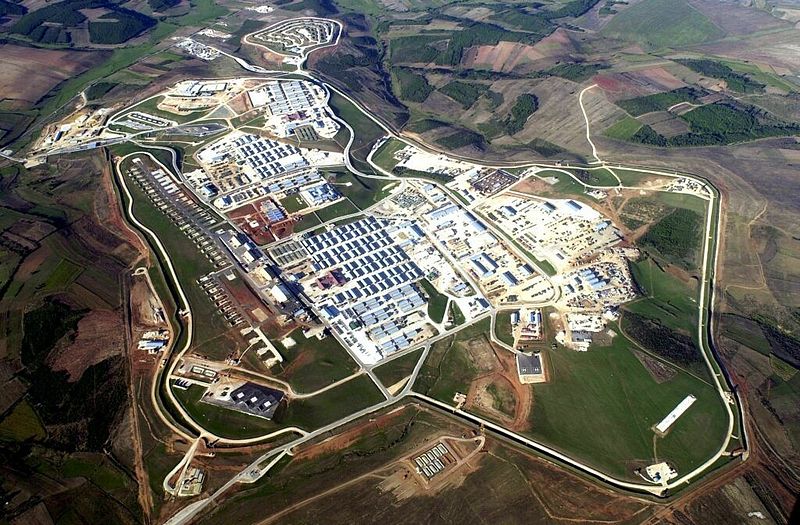
© Photo : public domain Camp Bondsteel in Kosovo
- In 2015, NATO Secretary-General Jens Stoltenberg expressed his “sincere regret” over the deaths and suffering of Serbian civilians. However, three years later at an event in Belgrade, the NATO chief emphasized that the bombing was not aimed against ordinary Serbs, but actually meant “to protect civilians and stop the Milosevic regime.” According to Stoltenberg, Serbs should “look to the future” and continue to shore up the “excellent relationship” between Belgrade and the bloc.
NATO Exercises Defying Coronavirus Reveal Desperation
By Paul Antonopoulos | March 23, 2020
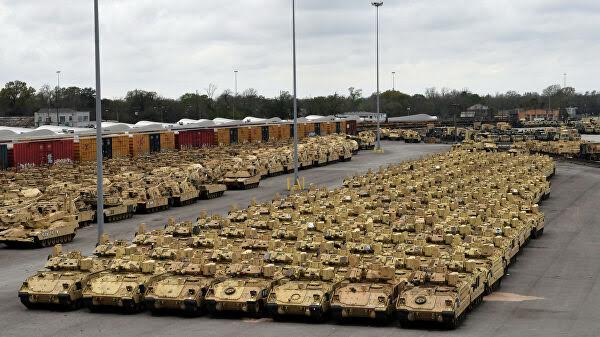
The planned NATO military exercise in Europe, “Defender 2020,” will be held on a reduced scale because of the coronavirus pandemic. Defender 2020 will have the participation of 18 NATO countries, cover 4,000 kilometers of convoy routes and rely on 10 European countries to host exercise activities, with the U.S. originally sending a total of 37,000 soldiers and officers to the exercises. The NATO exercises are a demonstration of power against Russia, and the fact that the coronavirus pandemic will not cancel the military drills is also indicating its power against Russia at a time when the world is going into lockdown.
The Alliance’s official website states that the scope of the exercise is shrinking due to a pandemic and that the movement of personnel and equipment from the U.S. to Europe is being halted. But many have already arrived in Europe. Media reports quoted Manilo Dinuchi, an Italian journalist for Manifest, claimed soldiers were exempted from the coronavirus protocol in an exercise, something recorded in a video showing the first 200 U.S. Army soldiers arriving in Bavaria on March 6, without masks on their faces, and shaking hands and kissing with German authorities and soldiers.
So why then did this exercise have to take place at all when everything else was put off?
The goal is without a doubt to have a show of force against Russia, the main target of these massive exercises by NATO. Although this may seem like a simple reason, NATO needs to show Russia that they can organize such exercise in a demonstration of aggression even in times of uncertainty and crisis. The exercises could easily have been cancelled, because there is no reason for them to be held right now and in such conditions, but conducting them during a pandemic shows greater strength by NATO – or so they think.
NATO Secretary General Jens Stoltenberg presented his Annual Report for 2019 on Thursday and announced “Our forces remain ready and our work goes on, including in our multinational battlegroups in the east of the Alliance, NATO Air Policing, our maritime deployments, and our missions from Afghanistan to Kosovo.” Although the coronavirus pandemic is plaguing NATO alliance countries, especially Italy with over 60,000 cases, the United States with over 33,000 cases, Spain with over 30,000, Germany with over 25,000 and the United Kingdom with over 6,000 cases, with thousands of deaths between these countries, Russia has only 438 confirmed cases and has been sending doctors and medical aid to Italy. As Russia weathers the pandemic comfortably compared to the major NATO countries, the Alliance feels that the cancellation of the Defender 2020 exercises will show major weakness and has therefore decided to continue with the military drills despite the non-necessity of it.
Although NATO is buckling down to continue the exercises, the grander scheme of the liberal world order is beginning to collapse under pressure from the coronavirus. The European Union has shown incompetence in dealing with the pandemic and has left each country to fend for itself, and rather it has been ‘enemies’ of the liberal world order, China, Russia and Cuba, who have mobilized to help countries severely affected. It is unlikely that Italy and Spain, both NATO and European Union members, will quickly forget the significant help they have received from Russia. This soft power play by Russia is likely to change public opinion in Italy and Spain and create deeper divisions in NATO in regards to hostile policies against Russia. As the Atlanticist states of the United Kingdom and the United States want to maintain hostility towards Russia, it is likely that southern European NATO members will not want to continue hostilities, remembering who was there to help them in their greatest crisis since World War Two.
It is for this very reason that some NATO members may begin turning against Alliance orders with Atlanticist interests and open friendlier relations with Russia. Meanwhile coronavirus is far from peaking in Europe and is only beginning to strangle the United States. It cannot be overlooked that the virus is changing the world order at a faster pace than anyone could have anticipated. When the world has moved on and overcome the coronavirus pandemic, we will have entered a new world order and shifting European loyalties from the United States to greater cooperation with Russia and China. Therefore, the continuation of Defender 2020 shows desperation to maintain the global status quo.
Paul Antonopoulos is a Research Fellow at the Center for Syncretic Studies.
Baltic countries seek relevance on the international scene
By Lucas Leiroz | March 20, 2020
In 2017, RAND Corporation published in its associated media Small Wars Journal an article by the researchers Marta Kepe and Jan Osburg, outlining a strategic defense plan for the Baltic countries in the event of a Russian invasion. The authors claim that Estonia, Lithuania and Latvia will manage their weaknesses to face the Russians, overcoming their population and military deficit through the participation of civilians in the conflicts, working with the armed forces to create a “total defense” plan that would make the invasion too costly and laborious for Russia. Subsequently, the RAND Corporation article was mentioned in a paper by the National Interest magazine, authored by Michael Peck, in which the author studies the Baltic defense strategy, speculating about “total defense” and its efficiency in a possible case of Russian invasion. The researcher, finally, takes a pessimistic conclusion, stating that, despite all efforts, nothing will change the fact that Russia is a large country and the Baltic States are small and weak.
In March last year, the renowned American magazine Foreign Policy published an article by Mikheil Saakashvili, former president of Georgia, claiming that Russia’s next “targets” would be European nations. In the text, Saakashvili considers the possibility of a Russian attack on the Baltic countries, saying that President Vladimir Putin sees them as real threats because they are “functional democracies on the Russian border”. After developing his reasoning, the author comes to the conclusion that this invasion will not occur, pointing other countries as future “targets” of Russia. However, even though Saakashvili does not believe in the possibility of a Russian invasion, rumors about a Russian plan to invade and annex the Baltic nations have generated unfounded tensions in the region.
The height of media alarmism regarding relations between Russia and the Baltic countries was, however, an article published by the American expert Hall Brands on Japan Times website, whose title is “How Russia could force a nuclear war in the Baltics”. Referring again to the studies of the RAND Corporation, the author considers the possibility of a nuclear escalation on the frictions between Moscow and NATO in the Baltics, concluding that the geographic condition of these states would hinder rapid action by the West in the event of Russian action, raising the risks of forced annexation.
Apparently, media agencies aligned with the liberal establishment are working together to spread the idea that there is a Russian interest in invading and annexing the Baltics. For these agencies, the interest is so great that it would even justify a nuclear action. However, when we investigate the reasons for such despair, we found no concrete argument to justify such speculations. The great Western think tanks, such as the RAND Corporation, are spreading this myth with the specific purpose of instilling fear and tension in the Baltic States, so that, in the face of “Russian terror”, they will increasingly align themselves with Washington and NATO.
The concrete data indicate exactly the opposite of the rumors spread by RAND analysts. In January last year, Estonian Prime Minister Juri Ratas publicly expressed an interest in improving relations between his country and Russia, with a view to pacifying bilateral tensions and envisioning a future of peace and cooperation, despite divergent interests. Also, Latvia remains the only member country of the European Union that is totally dependent on Russian gas – a situation Lithuania has only recently withdrawn from. So why Moscow would be interested in invading and annexing such countries, when the threat they pose to the Russian political structure is absolutely nil? In a way, it is much more logical to think that for the Baltic countries it is more profitable and interesting to maintain good relations with Russia than to embark on unfounded conspiracies by Western experts who are extremely ideologically involved. However, there is a second hypothesis.
It is still likely that the Baltic States are simply acting in the interest of increasing their role on the international scene. Unable to form a solid political, military and economic force, even if united, capable of facing the great world powers, these States may be anchoring themselves in NATO’s military apparatus to seek the affirmation of their own interests in Europe and in the world. By this logic, Lithuania, Latvia and Estonia would be voluntarily adopting the alarmist discourse of the West and reaffirming it in order to, increase the western military presence on its borders, try to increase its regional and global influence, moving from being small European States to becoming potencies in the global geopolitical game.
Indeed, the Baltic countries are making a big mistake in adopting either of these two stances. Unlike Moscow, for whom the interest in “invading” the Baltic is nil, Washington has clear interests in occupying the region, so as to face Russia. That is the main reason for the presence of NATO troops in the Baltic expected for the Defender Europe 2020 drills – now canceled by the coronavirus pandemic.
The Baltic States are adhering to the discourse of Western think tanks, however, under no perspective can this opposition to Russia be profitable for them. Following the interests of Washington, Estonia, Latvia and Lithuania have too much to lose.
Lucas Leiroz is a research fellow in international law at the Federal University of Rio de Janeiro.
Why has NATO Failed to Exploit Turk-Russia “Tensions” in Syria?
By Salman Rafi Sheikh – New Eastern Outlook – 17.03.2020
In any other sort of circumstances, the NATO countries from Europe and North America would have rushed to help Turkey fight the “Russian invaders” in Syria and accomplish their avowed mission. This, however, did not happen when Turkey and Russia came “eye ball to eye ball” in Syria over the question of the liberation and control of Syria’s Idlib province and the adjoining strategically important areas, including the M-4 highway. Tensions are already disappearing with a Turkey-Russia “deal”, paving the way for an eventual settlement of interests. The question, however, that begs attention here is: why could the NATO countries not change Turkey’s position in a way that would have re-established it as a NATO ally in Syria, pitched against the Russians, Syrians and the Iranians?
While the US did “offer” its support to Turkey, words could not be translated into action, even though a number of Western political pundits have been writing and speaking about the “fragility” of the Turkey-Russia alliance and the need for the West to win Turkey back. A number of reasons explain why this has not happened.
First of all, there is little doubt in that Turkey is an important regional player even for Russia. This explains why the Russians have, despite crisis after crisis, continued to manage their relations with Turkey through intensive diplomatic engagements, leaving no room for big and unbridgeable gaps to occur. The latest deal and the deals before the crisis reflect the strength of their diplomatic channels working at the highest possible levels.
However, notwithstanding the resilience of their bi-lateral ties, NATO’s lethargy is due largely to the crisis that NATO is itself facing from within.
On the one hand, the US and European members of the alliance are increasingly pushing for changes in different and opposing directions, and on the other hand, even Turkey itself is reluctant to project its policies in Syria as a NATO member. At the same time, the European members of the alliance are up in arms over Erdogan’s bold and cynical effort to pressure NATO to come to its aid by opening its border with Greece to Syrian refugees, thereby threatening a repeat of the 2015 refugee crisis. NATO, therefore, has no interest in coming to Turkey’s aid and help start a war that would ultimately come to bite them hard.
NATO countries, therefore, continue to think that delivering more humanitarian aid and financial support via the European Union for Syrian refugees already in Turkey is a better option that militarily committing to a war between Turkey and Syria/Russia, which will inevitably involve a massive inflow of refugees, causing both political and economic problems for them to handle. This, for them, is unnecessary and needs to be avoided.
It was perhaps this very reason in the first place which led NATO to discourage Turkey from starting its military operations in Syria in 2019. In fact, NATO countries cannot militarily help Turkey inside Syria even if Turkey really wanted them to.
The Article 5 of the NATO charter cannot be applied to the Syrian scenario. Whereas any NATO country can invoke Article 5, the actual application of this article is limited by the Article 6 which defines the ‘territorial scope’ of the Article 5. Among other areas, Article 6 defines Article 5’s ambit as including the territory of Turkey and the forces, vessels and aircraft of NATO members located in the Mediterranean Sea. But it crucially doesn’t cover attacks on Turkish forces on Syrian territory.
NATO countries would be morally obliged to help Turkey if only Turkey’s territory comes under attack from an offensive originating from within Syria. For this support to come, however, relations between NATO and Turkey need to be perfect, which has not been the case since the 2016 failed coup attempt.
At the same time, there is a strong realisation in NATO that Turkey has increasingly been acting as an ‘independent player’ in the region since at least 2016. It explains why Turkey chose to buy Russia’s S-400 system despite opposition from the NATO alliance.
This brings us to another aspect of why NATO has not ‘intervened’ in Syria on behalf of Turkey. Whereas Article 5, as mentioned earlier, does not apply to this situation, NATO has not always acted in strict accordance with its charter. For instance, it intervened in Libya even though it had no mandate for such an intervention, and no attack or direct threat was originating from Libya against any NATO countries. However, NATO still decided to intervene in Libya to topple the Col. Muammar Gaddafi regime. Why has NATO not done a similar thing in Syria even though the increasing Turkey-Russia “tensions” provided just the context for such an intervention.
The Russian military presence is certainly a factor, but an equally important factor is the “tension” that exists between Turkey and the rest of the NATO allies specifically, and within the alliance more generally, giving the US and European members of the alliance no material reasons to exploit the Russo-Turk “tensions” to their advantage.
Salman Rafi Sheikh is a research-analyst of International Relations and Pakistan’s foreign and domestic affairs.
Circle in the Darkness: Memoir of a World Watcher – Book Review
By Jim Miles | Palestine Chronicle | March 16, 2020
 (Circle in the Darkness – Memoir of a World Watcher. Diana Johnstone. Clarity Press, Atlanta Georgia. 2020)
Diana Johnstone has done a masterful job of writing her autobiography, Circle in the Darkness, that provides many details of her life, her early influences, and the various stages of her career throughout the second half of the Twentieth Century and the first part of Twenty-first.
It is a wild ride through various aspects of society, concentrating on the historical events of her era.
Much of what she writes is not news to those who do follow alternative news sites, but what is added is a strong personal perspective based on – not surprisingly – facts and truth, both from her own experiences in regions of concern and a wide arrange of conversations with both people of significant influence and those with no influence but feeling the impact of developments in their country.
The details Johnstone adds are a strong and valuable retort to mainstream media disinformation that has “moved farther and farther away from informing the public and nearer and nearer to instructing them in what they should think.”
Themes
One of three themes that impressed me and are developed throughout the book, the media takes a large hit. While discussing NATO crimes of the Balkan, she writes, “The journalist was no longer asked to dig for new information and provide fresh analysis, but to contribute to the “common narrative”” as originated by NATO and the media.
When discussing mass media and the Military Industrial Complex she writes, “those private interests coincide quite closely with those of the U.S. government, since the same economic powers are behind both.”
Relying on “open sources and thoughtful analysis of known facts” rather than “spook revelations” her work is significantly more accurate than the mainstream.
NATO and European unity cover another large thematic area. She discusses how NATO and the European Union actively promote the neoliberal order as conditioned by the U.S. and other global hegemonic financial powers against the best interests of their own people and against the best interests of many sovereign states in the world.
When discussing the idea of Joint Criminal Enterprise as argued by the U.S. in relation to Serbia (essentially all Serbs are guilty of war crimes) she reverses the argument with clear examples, and summarizes, “U.S. strategy basically boils down to the implicit or explicit threat to wipe out the whole nation it is attacking…. This war is not the result of a clever plan by some ragtag Balkan clan leaders. This war was deliberately planned and carried out by the real Joint Criminal Enterprise: NATO.”
The third theme was her development of ideas concerning the development of the “left”.
It has changed from operating with the best interests of the people in mind – anti-war, support for workers and societal infrastructures – to becoming a supporter of war and more interested in the distractions of identity politics, “The Left has evolved from a program to an attitude.”
Certainly, there is merit in people’s identity but it comes at the cost of no longer working against class structures that keep workers down and keep the rich getting richer.
Johnstone follows the developments in France to its present-day neoliberal U.S. supporting government of Macron and follows the developments in Sweden as it turned away from the left of Olaf Palme towards a strong non-NATO supporter of all NATO adventures.
A Host of other Ideas
Many other ideas are presented in Circle in the Darkness.
Israel is discussed directly only briefly but Zionism’s influence is related throughout. While discussing false flags, the USS Liberty attack is mentioned threading into the theme of the media as ”the mainstream media have persisted in ignoring what happened, even as evidence mounted that General Moshe Dayan personally ordered the attack.”
The relationship between the dropping of the gold standard and the introduction of the petrodollar is touched upon, a topic that is rare if ever in mainstream journalism. Again just touching on it she discusses the “debt trap” on a personal level when two local Minnesota farmers commit suicide after being enticed to overextend themselves into debt.
In general, however, this is Diana Johnstones’ story of the many people she meets and interviews, or argues with, debates with, or simply discusses the many issues of her career spent mostly within European journalism. That overlapped with her employment by the German Green party and how she watched it change from an anti-war truly green party to a pro-war neoliberal supporter of capitalism.
She continues to write as an independent journalist today, with her work published globally in several alternate news sites. While I am familiar with the same history background as Ms. Johnstone, I do not have the expertise of overseas experience, the philosophical background, and the wide range of contacts she has had available throughout her career.
Circle in the Darkness covers an amazing and productive lifetime and provides valuable insights and factual details in support of her views and reporting.
It is entertaining – not in the distractive sense but for the quality of the writing and her combination of anecdotal stories combined with researched ideas.
Thus it is a very strong informative work on our modern history, an important read to more clearly understand the machinations of the modern political-military scene.
– Jim Miles is a Canadian educator and a regular contributor/columnist of opinion pieces and book reviews to Palestine Chronicles. His interest in this topic stems originally from an environmental perspective, which encompasses the militarization and economic subjugation of the global community and its commodification by corporate governance and by the American government.
NATO and COVID-19: a Parasitical Disease in Europe
By Finian Cunningham | Strategic Culture Foundation | March 12, 2020
The decision to go-ahead with NATO’s biggest-ever war games in Europe at a time of heightened fears over the coronavirus sure raises questions about the military alliance’s stated purpose of maintaining security.
NATO secretary-general Jens Stoltenberg has said the Defender-Europe 20 exercises will not be cancelled due to the flu-like disease which has now spread to every country in the European Union causing hundreds of deaths so far.
Over the next five months some 17 allied NATO members will participate in military maneuvers across seven European states: in Belgium, Netherlands, Germany, Poland, Estonia, Latvia and Lithuania. All of the host nations have reported infections from the COVID-19 virus. “Host” being an operative word when it comes to also talking about the relationship with the U.S.-led NATO alliance.
Germany’s health minister Jens Spahn is quoted as saying that the coronavirus outbreak has “become a global pandemic” and the “worst has yet to come.”
In all, 37,000 troops are involved in the Defender-Europe 20 war games, the biggest contingency since the end of the Cold War nearly three decades ago. The U.S. is sending 20,000 personnel. Most of those troops will return to bases located in at least 20 American states. Thus, the risk factor of spreading the disease across Europe and the U.S. is significantly increased by the NATO events.
Going ahead with the European war games looks especially ill-advised given that U.S. forces in Asia-Pacific have cancelled similar military exercises that were scheduled in South Korea out of fears about coronavirus (COVID-19).
The Defender-Europe 20 events underway come amid reports that the U.S. Commander in Europe, Lt. General Christoper Cavoli, may have been infected after attending a recent military conference in Wiesbaden, Germany.
The top health advisor to the U.S. Joint Chiefs of Staff, Air Force Brig. General Paul Friedrichs has also admitted that the number of COVID-19 cases among the Pentagon’s armed forces may be far higher than is being reported.
The seeming lack of cautionary measures by the U.S.-led NATO alliance is in contrast to growing public concerns for containing the disease. Italy – which has recorded the second highest fatalities worldwide after China – has placed a total lockdown on public travel for its 60 million population. Airlines across Europe have cancelled thousands of flights as some carriers go out of business altogether.
Sporting events across Europe including major soccer matches are being cancelled or will be held without attendance by fans. The six-nations rugby tournament has been thrown into disarray from match fixtures being rescheduled; a big match between Ireland and France due this weekend is postponed until October.
In Britain there are calls for parliament to be suspended after health minister Nadine Dorries was reported to have been infected. Boris Johnson’s government has been accused of complacency in dealing with the virus.
U.S. President Donald Trump has also come under fire for not taking sufficient containment measures or providing adequate resources such as testing kits. The official number of U.S. cases of COVID-19 is relatively low so far, but that is thought to be due to limited testing.
It would therefore seem reasonable in this context of pandemic risk that such a multinational event like NATO’s Defender-Europe 20 be called off. As it proceeds, the war games appear to a perfect vector for accelerating disease spread between two continents and beyond. Indeed, not parking these war games seems the height of carelessness.
How fitting that NATO should be so unresponsive to real need. This lumbering 29-nation military organization which consumes a combined annual budget of $1 trillion is a creature of habit and slavish ideology. Nearly 30 years after the Cold War with the Soviet Union, the world has moved on. But not, it seems, NATO. It continues to hold its war games supposedly defending Europe from “Russian invasion”.
If NATO can’t adjust to such glaring world realities as the end of the Soviet Union three decades ago, then no wonder its response to coronavirus is hardly fleet-footed. It’s the military equivalent of a dinosaur whose functioning is no longer supported by its environment.
The irony is that NATO’s obscene military largesse is crushing public finances that would otherwise be more usefully spent, such as building up healthcare infrastructure that would help mitigate crises like the coronavirus. Many other societal needs are chronically neglected because of exorbitant military budgets among NATO members. Donald Trump brags that he has cajoled European allies to fork out hundreds of billions more dollars on military budgets.
The coronavirus is but a stress-test on whole societies that have become hollowed out by excessive militarism and the corporate capitalist super-structure it serves.
Even before the coronavirus problem emerged in China earlier this year, the NATO war games in Europe (and elsewhere) have been a cause for much criticism. The geopolitical tensions that this U.S.-led militarism is engendering towards Russia and China have been deplored. Moscow has denounced the Defender-Europe 20 event as a “rehearsal for war” which is completely disconnected from reality. The inveterate Cold War ideology that drives NATO is imposing insecurity and risk of war on Europe in a way that makes a mockery of NATO claims about being dedicated to “security and defense”.
The reckless risk-taking with regard to inflaming a coronavirus pandemic is typical of NATO’s obsolete purpose. Like the disease itself, NATO is a parasite on host nations draining vital public resources. This organization should be “self-isolating”… 30 years too late.
Large-scale military drill in Europe to go ahead despite coronavirus outbreak
By Max Civili | Press TV | March 11, 2020
Rome – As the coronavirus crisis intensifies in Italy and in many other EU countries, authoritative Italian daily Il Manifesto and independent broadcasters and websites have started to report on a large-scale military operation that is to take place across the Old Continent from April to July this year.
The operation, dubbed Defender Europe 20, will see the deployment of 20,000 US troops, equipment, and gear across European countries, where they will be joined by NATO allies’ military forces and partner nations for a series of drills and war games.
Defender Europe 20 comprises three phases, involving a total of 37,000 participants deployed in Germany — which is the main hub of the exercise — Belgium, Poland, and the Baltic states of Latvia, Lithuania, and Estonia.
There have been rumors that the Defender Europe 20 operation might be called off because of the coronavirus crisis that is affecting most member states of the bloc. However, according to the NATO and the US Army Europe website, all the parts involved will continue with the execution of the operation and all linked exercises as planned.
On March 4, in Zagreb, Croatia, NATO Secretary General Jens Stoltenberg confirmed that the 29-member alliance will press ahead with the operation, mobilizing thousands of troops despite worries about the coronavirus. Stoltenberg said NATO was making contingency plans in case of a significant outbreak, but for the time being, exercises would go ahead as planned.
Last February, the first contingent of US troops, tanks, and equipment taking part in the Defender Europe 20 military exercise arrived in the northern German port of Bremerhaven.
All-star warmonger Lindsey Graham urges NATO to ‘get more involved’ in Idlib, Syria to stop ‘Syrian aggression’
RT | March 10, 2020
Veteran chickenhawk Lindsey Graham once again beat his over-used war drum, this time because he wants NATO to get involved in Idlib, Syria to stop “Syrian aggression.” Yes, when will Syria stop intervening in its own country?
The South Carolina senator said that he fully supports US President Donald Trump’s efforts to “get NATO more involved in Syria,” arguing that the defensive alliance should aid Turkey as it “defends Idlib against Russian/Syrian aggression.” He further argued that the “fall” of Idlib would result in a humanitarian crisis felt around the world, which is why NATO should be more “supportive” of its Turkish ally.
The senior statesman apparently doesn’t seem particularly fazed by the fact that Idlib is part of Syria – making accusations of “Syrian aggression” slightly nonsensical. The province is now home to the last bastion of extremist jihadist militias, some of which are directly affiliated with Al-Qaeda.
This is hardly the first time that the US hawk has demanded direct intervention in Idlib. In February, he called on the Pentagon to impose a no-fly zone over the Syrian province, claiming it would help stop the “destruction” of Idlib by Syrian, Iranian, and Russian forces.
As far back as September, Graham was issuing statements warning over “the wholesale massacre” of civilians in Idlib, insisting that “we either act now [in Syria] or pay a heavy price later.”
The senator’s melodramatic representation of a terrorist-infested Syrian province being under siege by the Syrian military shouldn’t come as a surprise to US political observers. Graham has been portrayed as part of former Arizona Senator John McCain’s “foreign policy club” – a euphemism for hardcore neocon interventionism.
Last week, Turkey and Russia brokered a ceasefire in the region, ending the fighting between Syrian and Turkish forces. But this hasn’t stopped the United States from trying to raise the stakes in northwestern Syria. The US reportedly offered to provide Turkey with ammunition to help in the conflict in Idlib. Turkish Foreign Minister Mevlut Cavusoglu said on Tuesday that Washington also offered land, sea, and air intelligence regarding the northwestern region. Although US “assistance” remains moderate at the moment and Graham’s fantasy of a NATO operation in Idlib seem unlikely, the warmongering section of US politics remains strong and its efforts to get Washington into more bloody conflicts with the blessings of the military-industrial complex are not likely to stop any time soon.
Featured Video

AIDS Inc. by Gary Null (2007)
or go to
Aletho News Archives – Video-Images
From the Archives
Clash of Civilization, Iran Part II
By Jamal Kanj – Intifada-Palestine.com – January 14, 2011
Israel’s survival kit is: perpetuate conflict, insecurity to rationalize collective hate and finally playing victim.
Devoid of conflict, Israel implodes internally; without hate, Zionism loses its justification; and playing eternal victim to continue blackmailing the West. Absence of this holy trinity, Israel ceases to exist.
From its inception, the house of Zion has mastered exploiting adversarial powers to advance Israel’s cause. For instance, their influence over the Democratic Party in the US began with President Truman’s bid for 2nd term election in 1948.
Responding to strong opposition from Secretary of State General George Marshall and Department experts urging against recognition of Israel, President Truman replied: “I’m sorry gentlemen but I have to answer to hundreds of thousands [Jewish voters] who are anxious for the success of Zionism. I do not have hundreds of thousands of [voting] Arabs among my constituents”
Zionists influence over liberal American politics was matched with the doctrinal school of Conservative theoreticians aligning the Republican Party’s platform with Israel’s objectives. The Neoconservative Zionists, coined Zioncons, invented the “Clash of Civilization” concept to fight Israel’s wars. … continue
Blog Roll
 Aletho News
- Merck Virologists Admitted to Falsely Certifying Vaccine Efficacy
- Mandatory Folic Acid for every man, woman & child
- Pro-Palestine protesters arrested outside UK’s ruling Labour Conference in Liverpool
- Mauritius denies landing permit to flight from Israel, forcing cancellation: Tour operator
- Israeli finance minister calls for genocidal war on West Bank, annexation of south Lebanon
- 12 Things Your Psychiatrist Was Trained Not to Tell You
- From Unipolar Universalism to Multipolar Civilizational Distinctiveness
- RSF military group defects, joins Sudanese army: State media
- Ireland goalkeeper refuses to play ‘Israel’ as squad weighs boycott
- China pushes back against US on Cuba, Iran
- If Americans Knew
- Israel forces Gazans to live in constant peril – Daily Update
- Deconstructing Netanyahu’s pants-on-fire UN rant – Daily Update
- Trump betrayed voters with his campaign lies and prioritized a foreign country once he took office
- Netanyahu calls Israel’s war in Gaza ‘opposite of genocide’ in UN speech to near-empty hall
- Settler Kidnappings: Torture, Sexual Abuse and Terrorisation of Palestinian Abductees as Israel Deepens Annexation of West Bank
- Gaza winter nears as 162,000 tents become unusable, raising fears of humanitarian crisis
- Netanyahu says, “It’s the opposite of genocide”; UN says Gaza economy is world’s ‘most severe crisis on record’ – Daily Update
- Israel’s US-Backed Assault on Gaza Has Created the ‘World’s Most Severe Economic Crisis on Record’: UN
- ‘Protecting U.S. Citizens’… From Israel
- ‘This is where I live now, the back of a truck’: a day in the life of a grandmother in Gaza
- No Tricks Zone
- New Study: Earth And Venus Surface Warmth Largely Explained By Convection And Lapse Rate, Not CO2 Or Radiation
- 2025 Nature Paper Claiming Worsening Global Drought Gets RETRACTED …Heavily Flawed
- New Study: ‘Global Drought Shows No Detectable Recent Acceleration Under Climate Warming’
- Economic Masterminds: German Socialists Suggest Taxing Productivity Gains Stemming From Using AI
- The South China Sea Has Not Been Cooperating With The Climate Change Narrative
- Energy Crisis: Germany Enters Heating Season With Historically Low Gas Reserve Fill Levels
- New Study: The Antarctic Ice Sheet Gained Mass From 2020-2024 Due To Staggering Snow And Ice Accumulation
- Study: Ocean Heating Rates From Thousands Of Years Ago ‘Dwarf’ Modern Ocean Heating Rates
- Climate Extremists Target, Attack Large-Scale Power Grid Infrastructure In Germany!
- New Study: Antarctic Ice Melt Has Contributed Less Than 1 Centimeter To Sea Level Rise In The Last 30 Years

