Make No Mistake: Russia Remains the Only Target Country of NATO’s Nuclear Weapons
By Brian CLOUGHLEY | Strategic Culture Foundation | 05.12.2016
Britain, China, France, Russia and the United States are the world’s five «nuclear weapons states», a description officially recognised in the Nuclear Non-Proliferation Treaty (NPT), which lays down that «each nuclear-weapon State Party to the Treaty undertakes not to transfer to any recipient whatsoever nuclear weapons or other nuclear explosive devices…»
It is apparent that the word ‘transfer’ involves ownership and not location, because the United States has transferred many nuclear weapons to countries which, although members of the US-NATO military alliance, are not nuclear weapons states. An analysis by the Nuclear Threat Initiative indicates that the US has positioned 160-200 B-61 nuclear warheads «at six bases in five NATO countries: Belgium (10-20), Germany (10-20), Italy (60-70), Netherlands (10-20), and Turkey (60-70)».
According to a NATO statement of December 2015, «A number of NATO member countries contribute a dual-capable aircraft (DCA) capability to the Alliance. These aircraft are available for nuclear roles at various levels of readiness – the highest level of readiness is measured in weeks. In their nuclear role, the aircraft are equipped to carry nuclear bombs and personnel are trained accordingly».
The claim that the readiness level is measured in weeks is intriguing, because, as indicated in the US-NATO Readiness Action Plan of October 2015, the entire alliance is gearing up for war against Russia and, among other blatantly provocative initiatives, is «Raising the readiness and capabilities of the Multinational Corps Northeast Headquarters in Szczecin, Poland and enhancing its role as a hub for regional cooperation».
NATO’s policy of confrontation with Russia is causing some disquiet in western Europe, whose citizens are kept in the dark about the depth and demands of the military alliance to which their countries are committed, such as their aircraft being «equipped to carry nuclear bombs». It is policy that the US B-61 nuclear weapons stored in Europe are delivered to targets by aircraft of the Belgian, Dutch, German and Italian air forces.
NATO declares that «Nuclear weapons are a core component of the Alliance’s overall capabilities for deterrence and defence alongside conventional and missile defence forces». This strategy was approved at its 2012 Summit in Chicago, but had been evident for many years and had been continued in spite of the ending of the Cold War against the Soviet Union, a quarter of a century ago. Since then NATO has maintained a firm nuclear posture, but the question that was never asked in the post-Cold War years of NATO’s expansion towards Russia’s borders was «against whom are your nuclear weapons directed?»
There could be only one target country. What nation other than Russia could possibly interest the US-NATO military alliance? It is unlikely that the Brussels headquarters of NATO, the regional office of the Pentagon, is considering using nuclear weapons against any other country in the world. Even in the course of its catastrophic wars in Afghanistan and Libya it couldn’t have possibly considered a nuclear option.
Large numbers of US nuclear weapons systems were withdrawn from Europe at the end of the Cold War, but many remain, in the embrace of NATO, which Brussels uncompromisingly states will «remain a nuclear alliance» for «as long as nuclear weapons exist».
At the manifestly anti-Russian NATO Summit in Warsaw in July it was noted by Arms Control that «Leaders of the 28 member countries of NATO strongly criticized Russian nuclear behaviour and reaffirmed the security role played by US nuclear weapons deployed in Europe. The sections of the alliance statement, or communiqué, devoted to nuclear weapons are nearly three times as long as those issued at the 2014 summit in the United Kingdom». It is not surprising that Russia was criticised — but it is NATO that has been performing nuclear antics.
For many years before the 2016 Warsaw summit, NATO had been deploying aircraft all round Europe that were capable of delivering nuclear weapons against Russia. The only difference in recent times is that NATO, as recorded by Arms Control in June 2016, «is beefing up its nuclear posture. Polish F-16s participated for the first time on the sidelines of a NATO nuclear strike exercise at the end of 2014. As a clear signal to Russian President Vladimir Putin, four B-52 bombers flew a nuclear strike mission over the North Pole and the North Sea in a bomber exercise in April 2015. Although these planes did not have nuclear weapons on board, they were equipped to carry 80 nuclear air-launched cruise missiles».
It goes further than that, because NATO’s most recent nuclear-associated deployments to the Baltic have involved aircraft from Belgium’s 10th Tactical Wing which is based at Kleine Brogel Air Base and flies US-supplied F-16 nuclear-capable strike aircraft. NATO reported that four of them are currently conducting missions from Ämari Air Base in Estonia, in order «to guard the Baltic skies against unauthorised overflights» and that their duties included «intercepting Russian aircraft flying in international airspace at the Baltic borders».
According to NATO, the Mission of the 10th Tactical Wing is «to generate air power effects in the full operational spectrum by putting into action the best combat ready people and equipment to execute or support both conventional and nuclear operations in a joint, national or multinational environment, anytime and anywhere, in the most proficient, safe and efficient manner». So it sends four of 10 Wing’s nuclear-capable F-16s, flown by nuclear-delivery trained pilots to Estonia to guard the Baltic skies.
In Bulgaria, Estonia, Hungary, Latvia, Lithuania, Poland, Romania and Slovakia the Alliance has established «NATO Force Integration Units» which are advanced military headquarters whose Mission is «to improve cooperation and coordination between NATO and national forces, and prepare and support exercises and any deployments needed». The relentless expansion of US-NATO forces right up to Russia’s borders continues apace, with formation of a «new standing Joint Logistic Support Group Headquarters, to support deployed forces».
NATO is on a war footing, and has made it clear that «nuclear weapons are a core component of the Alliance’s overall capabilities». The Belgian F-16 deployments, deliberately and provocatively in a most sensitive area on Russia’s borders, together with creation of advanced military control organisations in eight countries, have been authorised and greeted with approval by western governments whose citizens have little understanding that the west’s policy of confrontation is increasing tension day by day.
Russia has no intention of invading any of the Baltic nations, or, indeed, any other country. It has no interest whatever in becoming engaged in conflict that could result only in vast expenditure, no territorial gain of any value, and destruction of much-valued trade and other commercial arrangements.
Yet NATO’s nuclear capabilities are to be boosted by an $8 billion upgrade to the B-61 nuclear bombs held in the US and five other NATO nations. This escalation in nuclear capabilities is consistent with NATO’s deployment of nuclear-capable aircraft to countries on Russia’s borders, and it can be hoped only that next year Washington will call a halt to the escalating confrontation caused by a military organisation that the President-elect perceptively called «obsolete».
Trump’s Stance on B61-12: Issue of Fundamental Importance
By Peter KORZUN | Strategiic Culture Foundation | 04.12.2016
With the president-elect’s nominations for the positions of national security adviser and defense secretary announced, Donald Trump’s team is expected to articulate its policy on nuclear arms issues.
As a Republican nominee, Donald Trump sharply criticized the US military’s existing nuclear weapons programs. The New START Treaty is to provide arms control restrictions on Russia-US strategic offensive potentials till 2021, but nothing definite has so far been said by the president-elect’s team members about non-strategic potential – the B-61-12 life extension program (LEP). The issue threatens to become a bone of contention at the time Russia and NATO mull launching discussions on a new European arms control treaty that may become a milestone document in the history of the Old Continent.
The B61-12, the new US nuclear bomb intended to replace the B-61 deployed in Italy, Belgium, Germany, the Netherlands, and Turkey, was «officially authorized» in August by the National Nuclear Security Administration (NNSA). This agency is responsible for the military use of nuclear technology.
The weapon has entered the final development phase of the upgraded airborne nuclear bomb B61-12 prior to production. The B61-12, the cost of which is expected to run about $8 billion to $12 billion for 400 to 500 bombs, will begin to be mass-produced in fiscal 2020 to replace the B-61.
The B61-12 is widely believed to be a new weapon. Being a guided nuclear munition, it can hit targets far more precisely than its predecessors. The capability to penetrate below the surface has significant implications for hardened targets within the B61-12’s reach.
With «dial-a-yield» technology, the explosive force can be adjusted before launch. It is designed to have four selectable explosive yields: 0.3 kilotons (kt.), 1.5 kt., 10 kt. and 50 kt. This combination of accuracy and low-yield make the B61-12 the most usable nuclear bomb in America’s arsenal. The smaller yields and better targeting can make the arms more tempting to use – even to use first, rather than in retaliation, knowing the radioactive fallout and collateral damage would be limited.
The B61-12 will initially be integrated with B-2, F-15E, F-16, and Tornado aircraft. From the 2020s, the weapon will also be integrated with, first, the F-35A bomber-fighter F-35 and later the LRS-B next-generation long-range bomber. The US Air Force says it does not predict when the squadron of F-35s will be combat-proven, but that it is probably during one of its overseas deployments at the beginning of 2017. The new bombs lower the nuclear threshold or make the launching of a nuclear attack against Russia more likely.
According to Rick Wayman, Director of Programs at Nuclear Age Peace Foundation, «the B61-12 is uniquely destabilizing». In his opinion, the B61-12 LEP is an «exhibit A of the second nuclear age – a new nuclear arms race for the 21st century». Mr. Wayman believes that the presence of B61, B61-12’s predecessor, in five NATO countries, namely Belgium, Germany, Italy, the Netherlands and Turkey, inflames tensions with Russia.
The upgrade makes Russia take retaliatory measures increasing the possibility of Europe plunging in the quagmire of arms race. Russia considers US forward-based tactical nuclear weapons deployed in Europe to be an addition to the US strategic arsenal that is capable of striking deep into its territory. It will greatly complicate further arms control efforts with the New START Treaty expiring in 2021.
The withdrawal of these weapons is a prerequisite for starting talks on reduction of tactical nuclear weapons. The US decision to implement the LEP makes such prospects bleak.
NATO members to host the new weapon on their soil should realize that the move will automatically make them targets for possible pre-emptive or retaliatory attack. Countries that host foreign nuclear weapons don’t enhance their security.
The program competes with resources needed for more important conventional forces and operations to fight the real terrorist threat, not the imaginary one, allegedly coming from Russia.
The need to deploy the weapon is widely questioned by US experts.
Around 200 B61 bombs are currently deployed in underground vaults at six bases in Italy, Belgium, Germany, the Netherlands and Turkey. About half of the munitions are earmarked for delivery by the national aircraft of these states – the parties to the Non-Proliferation Treaty (NPT) of 1968 that forbids non-nuclear states from receiving nuclear weapons.
Article I of the NPT prohibits the transfer of nuclear weapons from NWS (nuclear weapons states) to other states: «Each nuclear-weapon State Party to the Treaty undertakes not to transfer to any recipient whatsoever nuclear weapons or other nuclear explosive devices or control over such weapons or explosive devices». Article II requires NNWS (non-nuclear weapons states) not to receive nuclear weapons: «Each non-nuclear-weapon State Party to the Treaty undertakes not to receive the transfer from any transfer or whatsoever of nuclear weapons or other nuclear explosive devices or of control over such weapons or explosive devices».
Cancellation of the program would pave the way for the two great powers to launch arms control dialogue. It would also make possible talks on arms control between Russia and NATO. It makes the stance taken by the US administration on the B61-12 program an issue of fundamental importance.
The Orwellian War on Skepticism
By Robert Parry | Consortium News | December 1, 2016
Under the cover of battling “fake news,” the mainstream U.S. news media and officialdom are taking aim at journalistic skepticism when it is directed at the pronouncements of the U.S. government and its allies.
One might have hoped that the alarm about “fake news” would remind major U.S. news outlets, such as The Washington Post and The New York Times, about the value of journalistic skepticism. However, instead, it seems to have done the opposite.
The idea of questioning the claims by the West’s officialdom now brings calumny down upon the heads of those who dare do it. “Truth” is being redefined as whatever the U.S. government, NATO and other Western interests say is true. Disagreement with the West’s “group thinks,” no matter how fact-based the dissent is, becomes “fake news.”
So, we have the case of Washington Post columnist David Ignatius having a starry-eyed interview with Richard Stengel, the State Department’s Undersecretary for Public Diplomacy, the principal arm of U.S. government propaganda.
Entitled “The truth is losing,” the column laments that the official narratives as deigned by the State Department and The Washington Post are losing traction with Americans and the world’s public.
Stengel, a former managing editor at Time magazine, seems to take aim at Russia’s RT network’s slogan, “question more,” as some sinister message seeking to inject cynicism toward the West’s official narratives.
“They’re not trying to say that their version of events is the true one. They’re saying: ‘Everybody’s lying! Nobody’s telling you the truth!’,” Stengel said. “They don’t have a candidate, per se. But they want to undermine faith in democracy, faith in the West.”
No Evidence
Typical of these recent mainstream tirades about this vague Russian menace, Ignatius’s column doesn’t provide any specifics regarding how RT and other Russian media outlets are carrying out this assault on the purity of Western information. It’s enough to just toss around pejorative phrases supporting an Orwellian solution, which is to stamp out or marginalize alternative and independent journalism, not just Russian.
Ignatius writes: “Stengel poses an urgent question for journalists, technologists and, more broadly, everyone living in free societies or aspiring to do so. How do we protect the essential resource of democracy — the truth — from the toxin of lies that surrounds it? It’s like a virus or food poisoning. It needs to be controlled. But how?
“Stengel argues that the U.S. government should sometimes protect citizens by exposing ‘weaponized information, false information’ that is polluting the ecosystem. But ultimately, the defense of truth must be independent of a government that many people mistrust. ‘There are inherent dangers in having the government be the verifier of last resort,’ he argues.”
By the way, Stengel is not the fount of truth-telling, as he and Ignatius like to pretend. Early in the Ukraine crisis, Stengel delivered a rant against RT that was full of inaccuracies or what you might call “fake news.”
Yet, what Stengel and various mainstream media outlets appear to be arguing for is the creation of a “Ministry of Truth” managed by mainstream U.S. media outlets and enforced by Google, Facebook and other technology platforms.
In other words, once these supposedly responsible outlets decide what the “truth” is, then questioning that narrative will earn you “virtual” expulsion from the marketplace of ideas, possibly eliminated via algorithms of major search engines or marked with a special app to warn readers not to believe what you say, a sort of yellow Star of David for the Internet age.
And then there’s the possibility of more direct (and old-fashioned) government enforcement by launching FBI investigations into media outlets that won’t toe the official line. (All of these “solutions” have been advocated in recent weeks.)
On the other hand, if you do toe the official line that comes from Stengel’s public diplomacy shop, you stand to get rewarded with government financial support. Stengel disclosed in his interview with Ignatius that his office funds “investigative” journalism projects.
“How should citizens who want a fact-based world combat this assault on truth?” Ignatius asks, adding: “Stengel has approved State Department programs that teach investigative reporting and empower truth-tellers.”
Buying Propaganda
After reading Ignatius’s column on Wednesday, I submitted a question to the State Department asking for details on this “journalism” and “truth-telling” funding that is coming from the U.S. government’s top propaganda shop, but I have not received an answer.

Washington Post building (Photo: WaPo)
But we do know that the U.S. government has been investing tens of millions of dollars in various media programs to undergird Washington’s desired narratives.
For instance, in May 2015, the U.S. Agency for International Development (USAID) issued a fact sheet summarizing its work financing friendly journalists around the world, including “journalism education, media business development, capacity building for supportive institutions, and strengthening legal-regulatory environments for free media.”
USAID estimated its budget for “media strengthening programs in over 30 countries” at $40 million annually, including aiding “independent media organizations and bloggers in over a dozen countries,” In Ukraine before the 2014 coup ousting elected President Viktor Yanukovych and installing a fiercely anti-Russian and U.S.-backed regime, USAID offered training in “mobile phone and website security,” skills that would have been quite helpful to the coup plotters.
USAID, working with currency speculator George Soros’s Open Society, also has funded the Organized Crime and Corruption Reporting Project, which engages in “investigative journalism” that usually goes after governments that have fallen into disfavor with the United States and then are singled out for accusations of corruption. The USAID-funded OCCRP collaborates with Bellingcat, an online investigative website founded by blogger Eliot Higgins.
Higgins has spread misinformation on the Internet, including discredited claims implicating the Syrian government in the sarin attack in 2013 and directing an Australian TV news crew to what appeared to be the wrong location for a video of a BUK anti-aircraft battery as it supposedly made its getaway to Russia after the shoot-down of Malaysia Airlines Flight 17 in 2014.
Despite his dubious record of accuracy, Higgins has gained mainstream acclaim, in part, because his “findings” always match up with the propaganda theme that the U.S. government and its Western allies are peddling. Higgins is now associated with the Atlantic Council, a pro-NATO think tank which is partially funded by the U.S. State Department.
Beyond funding from the State Department and USAID, tens of millions of dollars more are flowing through the U.S.-government-funded National Endowment for Democracy, which was started in 1983 under the guiding hand of CIA Director William Casey.
NED became a slush fund to help finance what became known, inside the Reagan administration, as “perception management,” the art of controlling the perceptions of domestic and foreign populations.
The Emergence of StratCom
Last year, as the New Cold War heated up, NATO created the Strategic Communications Command in Latvia to further wage information warfare against Russia and individuals who were contesting the West’s narratives.
As veteran war correspondent Don North reported in 2015 regarding this new StratCom, “the U.S. government has come to view the control and manipulation of information as a ‘soft power’ weapon, merging psychological operations, propaganda and public affairs under the catch phrase ‘strategic communications.’
“This attitude has led to treating psy-ops — manipulative techniques for influencing a target population’s state of mind and surreptitiously shaping people’s perceptions — as just a normal part of U.S. and NATO’s information policy.”
Now, the European Parliament and the U.S. Congress are moving to up the ante, passing new legislation to escalate “information warfare.”
On Wednesday, U.S. congressional negotiators approved $160 million to combat what they deem foreign propaganda and the alleged Russian campaign to spread “fake news.” The measure is part of the National Defense Authorization Act and gives the State Department the power to identify “propaganda” and counter it.
This bipartisan stampede into an Orwellian future for the American people and the world’s population follows a shoddily sourced Washington Post article that relied on a new anonymous group that identified some 200 Internet sites, including some of the most prominent American independent sources of news, as part of a Russian propaganda network.
Typical of this new McCarthyism, the report lacked evidence that any such network actually exists but instead targeted cases where American journalists expressed skepticism about claims from Western officialdom.
Consortiumnews.com was included on the list apparently because we have critically analyzed some of the claims and allegations regarding the crises in Syria and Ukraine, rather than simply accept the dominant Western “group thinks.”
Also on the “black list” were such quality journalism sites as Counterpunch, Truth-out, Truthdig, Naked Capitalism and ZeroHedge along with many political sites ranging across the ideological spectrum.
The Fake-News Express
Normally such an unfounded conspiracy theory would be ignored, but – because The Washington Post treated the incredible allegations as credible – the smear has taken on a life of its own, reprised by cable networks and republished by major newspapers.
But the unpleasant truth is that the mainstream U.S. news media is now engaged in its own fake-news campaign about “fake news.” It’s publishing bogus claims invented by a disreputable and secretive outfit that just recently popped up on the Internet. If that isn’t “fake news,” I don’t know what is.
Yet, despite the Post’s clear violations of normal journalistic practices, surely, no one there will pay a price, anymore than there was accountability for the Post reporting as flat fact that Iraq was hiding WMD in 2002-2003. Fred Hiatt, the editorial-page editor most responsible for that catastrophic “group think,” is still in the same job today.
Two nights ago, MSNBC’s Chris Matthews featured the spurious Washington Post article in a segment that – like similar rehashes –didn’t bother to get responses from the journalists being slandered.
I found that ironic since Matthews repeatedly scolds journalists for their failure to look skeptically at U.S. government claims about Iraq possessing WMD as justification for the disastrous Iraq War. However, now Matthews joins in smearing journalists who have applied skepticism to U.S. and Western propaganda claims about Syria and/or Ukraine.
While the U.S. Congress and the European Parliament begin to take action to shut down or isolate dissident sources of information – all in the name of “democracy” – a potentially greater danger is that mainstream U.S. news outlets are already teaming up with technology companies, such as Google and Facebook, to impose their own determinations about “truth” on the Internet.
Or, as Ignatius puts it in his column reflecting Undersecretary for Public Diplomacy Stengel’s thinking, “The best hope may be the global companies that have created the social-media platforms.
“‘They see this information war as an existential threat,’ says Stengel. … The real challenge for global tech giants is to restore the currency of truth. Perhaps “machine learning” [presumably a reference to algorithms] can identify falsehoods and expose every argument that uses them. Perhaps someday, a human-machine process will create what Stengel describes as a ‘global ombudsman for information.’”
Ministry of Truth
An organization of some 30 mainstream media companies already exists, including not only The Washington Post and The New York Times but also the Atlantic Council-connected Bellingcat, as the emerging arbiters – or ombudsmen – for truth, something Orwell described less flatteringly as a “Ministry of Truth.”
The New York Times has even editorialized in support of Internet censorship, using the hysteria over “fake news” to justify the marginalization or disappearance of dissident news sites.
It now appears that this 1984-ish “MiniTrue” will especially target journalistic skepticism when applied to U.S. government and mainstream media “group thinks.”
Yet, in my four decades-plus in professional journalism, I always understood that skepticism was a universal journalistic principle, one that should be applied in all cases, whether a Republican or a Democrat is in the White House or whether some foreign leader is popular or demonized.
As we have seen in recent years, failure to ask tough questions and to challenge dubious claims from government officials and mainstream media outlets can get lots of people killed, both U.S. soldiers and citizens of countries invaded or destabilized by outsiders.
To show skepticism is not the threat to democracy that Undersecretary Stengel and columnist Ignatius appear to think it is.
Whether you like or dislike RT’s broadcasts – or more likely have never seen one – a journalist really can’t question its slogan: “question more.” Questioning is the essence of journalism and, for that matter, democracy.
[In protest of the Post’s smearing of independent journalists, RootsAction has undertaken a petition drive, which can be found here.]
Investigative reporter Robert Parry broke many of the Iran-Contra stories for The Associated Press and Newsweek in the 1980s.
Russia sets out its policy on terrorism, nuclear war & global ties in new Foreign Policy Concept
RT | December 1, 2016
President Vladimir Putin has signed a decree approving Russia’s new Foreign Policy Concept. The document specifies Moscow’s position on key global issues, highlighting its relations with the US, EU, China and other countries.
Published on Thursday, the concept is now in force, replacing the previous one from 2013. Moscow’s “views on core principles, priority directions, aims and tasks of the Russian foreign policy” are stated in the document of almost 40 pages.
Saying that Russia pursues an independent foreign policy based both on national interests and respect for international law, the concept states that Moscow’s policy is “open, foreseeable” and “shaped by centuries” of Russia’s historic role in the development of global civilization.
“Russia is fully aware of its special responsibility for maintaining security in the world both on global and regional levels, and is aimed at cooperative actions with all concerned states in the interest to solve common issues,” the document says.
Moscow calls for “creation of a broad international anti-terrorist coalition, firmly based on a legal framework, and effective and systematic cooperation among states,” the document says. No “double standards” should have a place in such a coalition, which should become the main force to fight global terrorism.
Nuclear war hazard low, but US missile shield threatens Russia’s national security
Moscow stands for the creation of “zones free of nuclear weapons and other types of weapons of mass destruction, especially in the Middle East,” the concept states, adding that “fighting international terrorism is key priority in international security.”
No country should use terrorist organizations to pursue its “political, ideological and other aims,” it says. Political and legal framework for nuclear and other weapons nonproliferation course is key, to avoid risks of such weapons landing in the hands of terrorist organizations.
Russia stays true to its international obligations in the arms control, and expects the same from its partners. Washington’s development of its global missile defense system is viewed as a “threat to national security,” with Moscow “reserving the right to take relevant counter measures.”
“Russia stands for constructive cooperation with the US in the field of arms control, with a compulsory allowance for an inseparable correlation between strategic offensive and defense weapons,” the document says. Global strategic stability should be the key factor in possible further arms reduction, it adds.
“Despite [the fact] that a threat of a large-scale war, including nuclear war, initiated between key states remains low, risks that [such states] may be involved in regional crisis, escalating them, are growing,” the new Foreign Policy Concept warns.
Russia-US dialogue possible, but only if US abandons its ‘restraining’ course
Washington and its allies have been pursuing a “restraining course” against Russia, aiming to “pressure” it both politically and economically, the document says, adding that such policy “undermines regional and global security.” It also harms long-term interests of both sides, and goes against a “growing necessity for cooperation” and joint counteraction to global threats.
Russia reserves the right to “harsh” retaliatory measures to “unfriendly actions,” including measures in toughening its national defense.
Moscow “is interested in building mutually beneficial relations with the US, taking into consideration the two countries’ responsibility for global strategic stability and the state of international security in general,” the concept stresses, adding that the two nations have significant opportunities in trade, investment, scientific and other forms of cooperation.
The development of dialogue on bilateral relations, as well as on other international issues “is only possible if based on equality, mutual respect and non-interference in one another’s internal affairs.”
In regard to contacts with NATO, Moscow plans to build its relations with the alliance based on its eagerness to be engaged in equal partnership. So far, Russia negatively regards NATO’s expansion, with its military infrastructure getting closer to the Russian borders. Such actions are considered as “defying the principle of equal security” and might cause new “division lines in Europe.”
Meanwhile, Moscow praises the role of the United Nations in “regulating international relations and coordinating world policies,” saying that there are no other options to replace the organization in the 21st century.
Relations with EU among Moscow’s priorities, abolishing visa regime will strengthen ties
Stepping-up mutually beneficial bilateral ties with European countries is named among one of Russia’s key priorities in the new Foreign Policy Concept.
The EU is Russia’s important trade and economic partner, the document says, adding that Moscow also regards Europe as its associate in foreign policy and is looking for “stable cooperation” based on mutual respect. Relations with Germany, France, Italy and Spain are mentioned as being key for the Kremlin in promoting its interests on the international arena.
“The strategic task in relations with the EU is forming a broad economic and humanitarian space from the Atlantic to the Pacific Ocean,” that will unite and “harmonize” the European continent, the concept says.
“The visa regime remains one of the main barriers in the way of development of contacts between Russia and the EU. The gradual cancellation of the visa regime on a reciprocal basis will become a powerful impulse for strengthening cooperation between Russia and the EU in economic, humanitarian, cultural, educational and other spheres,” the document says.
Russia to strengthen ties with the East, presence in the Antarctic
Among Moscow’s other foreign policy priorities, the concept mentions developing further relations with its eastern neighbors. “Full-scale” partnership and cooperation with China is on the agenda, as well as “further deepening” of strategic partnership with India. With the latter, Russia has always had “privileged” relations, according to the document, which says that the two nations’ cooperation is based on corresponding foreign policies, “historic friendship and deep mutual trust.”
Japan and other countries in the Asia-Pacific Region are also mentioned as important partners to work with in the near future.
“Russia will also continue its work on preserving and widening its presence in the Antarctic,” the concept states, adding that Moscow is as well “open for building relations with Canada” to cooperate in the Arctic and other regions.
Russia’s position on Syria is also mentioned in the new Foreign Policy Concept, with Moscow standing for the Middle Eastern country’s “unity, independence and territorial integrity.” Representatives of all ethnic and religious groups in Syria should be provided with equal security and peace, and enjoy “equal rights and opportunities,” the document says.
NATO’s Rear-Guard Actions
By Brian CLOUGHLEY | Strategic Culture Foundation | 29.11.2016
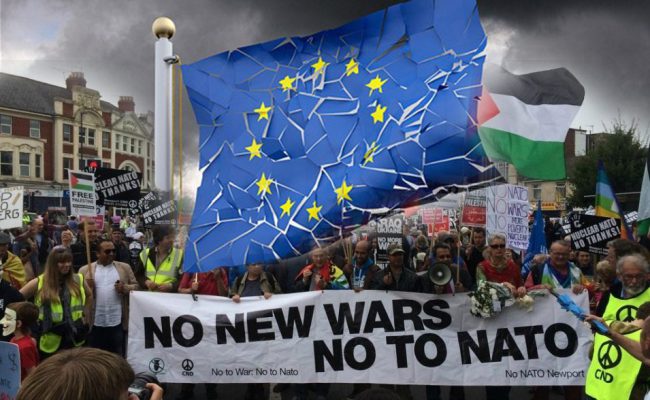
In the military a rearguard action is defined as ‘a defensive action carried out by a retreating army’ and it is an appropriate description of the desperate scrabbling by NATO to convince the rest of the world — and especially Donald Trump — that its existence is justified.
President-elect Trump has never said that the US should actually leave NATO. Certainly Hillary Clinton declared that he ‘wants to pull out of NATO’ but this was just another of her lies, and what he said back in April was that it is ‘obsolete’ which is a gentle way of indicating that it’s hopeless. He did, after all, tell a town hall meeting in Wisconsin: «Maybe Nato will dissolve and that’s OK, not the worst thing in the world», but although that may have sent shivers up the supple spine of NATO’s Secretary General Stoltenberg, it was by no means a definitive statement of intention.
The fact remains that The Donald is unhappy with NATO, and he’s perfectly right to consider that it’s a vastly expensive and largely ineffective military grouping that indeed should be disbanded. On the other hand, the massive propaganda campaign waged against Russia has convinced much of the world that Moscow has expansionist plans and that the only way to counter its supposed ambitions is to spend more money — lots and lots more money — and deploy troops and aircraft and ships all over the place to make it look as if gallant little NATO is defending the so-called Free World against the might of an illusory aggressor.
Trump may not have examined the minutiae of the NATO shambles, but in spite of being a bit of a blowhard whose knowledge of international affairs is modest, he’s not a fool, and even he can perceive that NATO has a record of catastrophe.
The Financial Times reported him as saying «Its possible that we’re going to have to let Nato go. When we’re paying and nobody else is really paying, a couple of other countries are but nobody else is really paying, you feel like the jerk». He said that if elected president he would contact many of the other 27 NATO members and put pressure on them to make a larger financial contribution or leave. «I call up all of those countries… and say ‘fellas you haven’t paid for years, give us the money or get the hell out’», he said, to loud cheering.
This may have been populist rhetoric, but it played to the people who matter to him — to the people who elected him. When he becomes President he might well think that he owes them a lot more than he does to NATO.
In March Stoltenberg told NATO countries that «the time has come to invest more in defence» but his motives for doing so were not those of Mr Trump, because Trump, like any businessman, wants to look carefully at expenditure and go on to make a profit, while Stoltenberg wants to spend money — including a great deal of American money — to justify existence of the costly monolith that has grown larger, more expensive and less effective over the past twenty years.
Stoltenberg sought to vindicate NATO’s record by writing an article for Britain’s Observer newspaper to say that NATO had strongly supported the United States following the 9/11 atrocities by joining it in its war in Afghanistan. ‘This,’ he declared, ‘was more than just a symbol. NATO went on to take charge of the operation in Afghanistan. Hundreds of thousands of European soldiers have served in Afghanistan since. And more than 1,000 have paid the ultimate price in an operation that is a direct response to an attack against the United States.’
The truth differs from what Stoltenberg claims. He is correct in saying that NATO became heavily involved (and lost a thousand troops for no reason at all), but gives the impression that NATO was there, poised and ready to take the leap into action when the US and Britain invaded Afghanistan in October 2001. Certainly the forces of the US and the UK were joined by troops from other countries — but it wasn’t until August 2003 that NATO itself managed to become involved, when, as the BBC reported, it ‘assumed control of peacekeeping in Afghanistan – the alliance’s first ever operational commitment outside Europe.’ And things went screaming downhill from that time.
There was no need for NATO, as such, to become involved, because there were plenty of alliance countries with contingents already in Afghanistan (for example, the Germans had been there since January 2002 and Canadians and Italians since December 2001). All that NATO added to the foreign military machine in Afghanistan was yet another layer of military bureaucracy. The result was described in, among other histories, ‘The Good War’, an excellent account of the catastrophe by Jack Fairweather who describes the reaction of President Bush’s National Security Adviser, General Douglas Lute, who saw the map of NATO operations in 2008 and was of the opinion that «each nation was fighting its own private war. Nobody was running the show, and there was no common purpose».
In present-day NATO there are far too many people «running the show» and the purpose of the show itself is far from clear. Stoltenberg and other champions of the continuing existence of the expensive farce claim that there’s a threat from Russia — but if they genuinely believe that Russia is going to invade a NATO member country they belong in a lunatic asylum.
To be blunt, had Russia wanted to invade Ukraine at the time of the US-engineered coup in 2014 (recollect Obama’s admission that the US ‘brokered a deal to transition power in Ukraine’), it could have done so with ease. It would have taken about three weeks to defeat the Ukrainian military and occupy the country right up to the border with Poland. But why on earth would it have wanted to do that?
Russia would have been extremely unwise to take such action, because once you invade a country you have to occupy and pacify it, which is extremely difficult — as US-NATO has found to its enormous cost in lives and money in the Afghanistan debacle.
Similarly, for what possible reason would Russia attempt to invade Estonia or Latvia, or any other country for that matter? It would be insane to do so, yet this totally imaginary threat is trotted out as the reason for NATO’s present posture of confrontation. There is never explanation for the US-NATO expansion up to Russia’s borders that took place from 1999 to 2009, which is rightly regarded as confrontational by the Russian people. (And remember that it’s not correct in the west to refer to ‘the Russian people’. Rather, it is mandatory to call the country ‘Putin’s Russia’.)
Stoltenberg’s message to President-elect Trump is that the US-NATO military grouping must continue to confront ‘Vladimir Putin’s Russia’, but Trump has other priorities, not the least being the appalling economic circumstances in regions where he received most support. He’s no fool, and he’s going to pay attention to these voices rather than the plaintive wailing of Stoltenberg who rests his case for US expenditure on the foundation that ‘our proud history is one of common challenges overcome together’.
One thing that Secretary General Stoltenberg had better bear in mind is that President-elect Donald Trump does not care about history, and most decidedly not the history of Europe. He cares about the hard facts of here and now. Not intellectually, but practically. He is devoid of sentiment. Europe and NATO mean nothing to him in terms of nostalgia and all that sob-stuff.
And he’s not going to forget the volume of insults delivered by European political leaders and media, such as ‘loudmouth’ and ‘hatemonger’. In the British parliament he was described as a ‘buffoon, demagogue and wazzock’. The British foreign minister, Boris Johnson (who really is a buffoon), said in June that ‘the only reason I wouldn’t visit some parts of New York is the real risk of meeting Donald Trump’. French President Hollande (another fool) declared that Trump’s ‘excesses’ made him ‘want to retch’ and in one particularly amusing reaction to Trump’s election, Martin Schulz, President of the European Parliament, said ‘We hope that Donald Trump will respect the fundamental rights and rules of the European Union,’ in which, be assured, Mr Trump has not the slightest interest.
President-elect Donald Trump might not be the ideal person to enter the White House in January (although Clinton would have been a disaster), but he’s going to try to look after America. NATO’s wellbeing comes way down on his priorities. NATO Secretary General and confronter-in-chief Stoltenberg will continue fighting his rearguard action to keep his wobbly and mega-expensive military circus in existence, but it’s possible that Mr Trump might make the world a safer place by letting the whole thing collapse.
15 European leaders call for new arms deal with Russia
RT | November 26, 2016
Fifteen European countries, headed by Germany, have issued a statement pushing for the reopening of “a new structured dialogue” with Russia aimed at preventing a possible arms race in Europe, according to the German foreign minister.
The countries, all belonging to the Organization for Security and Cooperation in Europe (OSCE), have expressed their deep concern over the current situation in Europe and support the relaunch of a conventional arms treaty with Russia, German Foreign Minister Frank-Walter Steinmeier told Die Welt newspaper in an interview published on Friday.
“Europe’s security is in danger. As difficult as ties to Russia may currently be, we need more dialogue, not less,” Steinmeier said.
The ongoing conflict in the Eastern Ukraine and the fact that Crimea joined Russia in 2014, a move most often dubbed as “annexation” by western officials, have put the question of war in Europe back on the table, Steinmeier continued. Fragile trust between Russia and European countries has suffered a significant setback and a “new armament spiral” is hanging over the continent, the foreign minister warned.
The statement contains strong anti-Russian rhetoric, blaming Moscow for violating arms deals as far back as 1990.
“The Conventional Forces in Europe treaty, which led to the destruction of tens of thousands of heavy weapon systems in Europe in the years following 1990, is no longer being implemented by the Russian Federation,” the statement said.
Russia put its participation in the treaty on hold in 2007 and then fully walked out of it last year.
Russian President Vladimir Putin called for the suspension of the treaty following a US decision to locate missile defense facilitates in the neighbouring Czech Republic and Poland. On top of that, President Putin noted that some of the NATO members did not join or ratify the treaty and there was no point in Russia abiding by the agreement.
Later Putin signed a decree suspending the treaty due to “extraordinary circumstances … which affect the security of the Russian Federation and require immediate measures,” having notified NATO and its members of the decision.
Since then NATO has taken no steps to upgrade the treaty, the Russian Foreign Ministry said in September, 2016, adding that Moscow is ready for dialogue on the subject. However, it is not planning to be the one to initiate it.
The statement names a number of other documents that need to be overviewed, including the OSCE’s Vienna document, stipulating the exchange of information on military movements, and the Open Skies treaty, enabling the monitoring of other countries’ ground forces. The documents are either neglected or in need of modernization.
The countries that spoke in favor of Steinmeier’s initiative include France, Italy, Austria, Belgium, Switzerland, the Czech Republic, Spain, Finland, the Netherlands, Norway, Romania, Sweden, Slovakia, Bulgaria and Portugal.
The group of the European foreign ministers is planning to meet again on the sidelines of a OSCE meeting in Hamburg on December, 8-9.
Russia Tests Train-Based Nuclear System: President Trump Can Prevent Arms Race
By Peter KORZUN | Strategic Culture Foundation | 24.11.2016
The US is mulling a major overhaul of its nuclear triad. The Air Force is working on a new version of the intercontinental ballistic missile (ICBM) and the Long Range Strike-Bomber (LRS-B) program. The Navy is studying the plans to replace the Ohio-class submarines. According to the Center for Strategic and Budgetary Assessments, the plans to recapitalize the nuclear triad will cost more than $700 billion over the next 25 years.
Former Secretary of Defense William Perry has warned that the US is on the «brink» of kicking off a new nuclear arms race that will elevate the risk of nuclear apocalypse to Cold War levels.
Moscow has no choice but to respond.
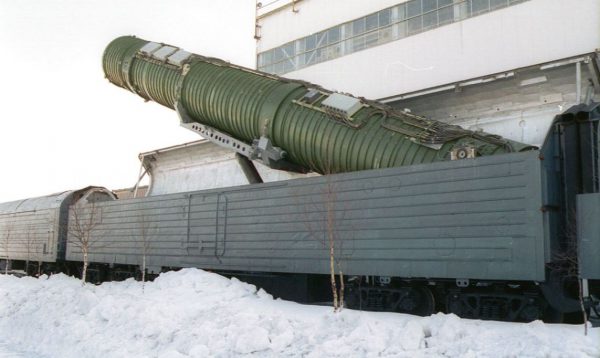
Russia has successfully conducted its first test of an Intercontinental Ballistic Missile (ICBM) designed for the upcoming Barguzin railway-based strategic nuclear offensive system. It was an «ejection» test with a missile leaving a container.
The launch trials were carried out at the Plesetsk spaceport two weeks ago, paving the way for further flight tests to be carried out in 2017.
Colonel-General Sergei Karakayev, commander of Russia’s Strategic Missile Forces, told reporters that the new railway-based missile system would be ready for deployment in early 2017.
Previously, Yuri Solomonov, the Chief Designer of the Moscow Institute of Thermal Technology (MITT), promised that the first ejection test will take place «in the beginning of the fourth quarter of 2016».
The first five Barguzin railroad systems may become operational by 2020 to remain in service till 2040. Moscow plans to deploy five of the Barguzin trains beginning in 2019.
Each Barguzin-armed train will carry six RS-24 Yars ICBMs ready for launch within minutes. The missile’s maximum range is 11,000 km (6,800 mi). It has at least 4 MIRVs with 150–250 kiloton warheads. The speed is over Mach 20 (24,500 km/h; 15,220 mph; 6,806 m/s). Guidance is inertial with GLONASS. Accuracy is 150-200 m.
Disguised as a freight train, the moving platform cannot be spotted either by satellite or electronic surveillance. It is worth mentioning that the Russian railways are ranked second longest globally. In general, the combat system can pass up to 1,000 kilometers daily. It is extremely difficult to locate it on route. With relatively lightweight Yars missiles on board, there will be no tell-tale signatures such as three locomotives in the old train-based systems decommissioned by 2005.
The system is created as a counterbalance to NATO’s ballistic missile defense (BMD), which is able to launch Tomahawk long-range cruise missiles, in addition to interceptors. The planned deployment of the system is also a response to the challenge posed by the US Prompt Global Strike (PGS) concept which envisions the capability to deliver a precision-guided conventional strike at any target in the world within one hour with hypersonic weapons.
Both – the BMD and the PGS – are considered as destabilizing factors by Russia. The Barguzin is an answer that does not violate the provisions of the 2010 New START Treaty.
There is another milestone event related to strengthening Russian nuclear strategic deterrent. The eighth Knyaz (Prince) Pozharsky Borei-class nuclear-powered submarine will be laid down at the Sevmash shipyard in Russia’s northern town of Severodvinsk on Dec. 23. Knyaz Pozharsky submarine will be the last of the eight Borei-class submarines and the fifth of the advanced A-batch.
The submarine carries 16 Bulava intercontinental ballistic missiles. The MIRVed missile carries 6 re-entry vehicles with a yield of 150 each. The operational range is 8,000-8,300 km (5,000 – 5,100 mi).
All these developments make one remember that Russia and the US – the two nations that account for more than 90 % of world strategic nuclear potential – have to make a very important decision about the future of arms control. The New START Treaty expires by 2021 without any prospects for a new agreement coming into force. President Putin and President Trump are the ones to rectify the situation.
There are many things that complicate the already complex problem: the future of the INF Treaty, US conventional strike superiority, NATO tactical weapons (B61-12) capable of striking Russian territory the same way strategic weapons do, the refusal of other nuclear states to join the arms control process, you name it.
Since the US withdrew from the 1972 ABM Treaty, ballistic missile defense has become the main obstacle on the way of achieving progress. BMD capability that would make the Russian deterrent less credible because the US would be able to degrade Russian second strike retaliatory capability.
The New START mentions the interaction of offensive and defense arms but contains no limitations. No doubt, Russia will raise the issue as a prerequisite for any discussions on what to do about arms control. The new US president will have to think long and hard if he wants to proceed with this highly destabilizing system that can make all future efforts to gain progress go down the drain.
The US does maintain an inactive stockpile that includes near-term hedge warheads that can be put back into operational status within six to 24 months. Extended hedge warheads can be made ready within 24 to 60 months. And it preserves some of this upload capability on its strategic delivery vehicles. This is a problem the New START does not address.
In 2002 the US pulled out of the ABM Treaty setting a precedent as it was the first time that a superpower withdrew from an arms control agreement. What if the United States decides to withdraw from the New START or any other treaty it may have with Russia? If it does, it would be able to return warheads from storage back to missiles (upload capability), and build up its strategic potential by several thousand warheads in several months at most. Russia’s apprehensions are justified. Will the new US administration be able to respect the other side’s concerns?
According to its provisions, the New START treaty can be extended for 5 years more but from Russia’s perspective there are concerns that should be taken into account before the issue hits the arms control agenda.
With Russian and US militaries maintaining no regular contacts, there is a danger of hair trigger alert – another problem for the two nations to address.
Having assumed power on January 20, Donald Trump will inherit the downturn in Russia-US relations and growing nuclear tensions and uncertain future for arms control.
Mr. Trump has said many positive things and there is each and every reason to hope for progress on such issues as Syria, for instance. It’s logical to expect that the present downturn in the bilateral relationship will be reversed. But so far, nothing has been said by Donald Trump and the members of his team about the revival of nuclear cooperation. Perhaps, binding agreements on the capabilities of BMD systems or limitations on existing and emerging long-range, precision-guided conventional offensive weapons and reductions in substrategic nuclear arms could help achieve gradual progress.
«The risk of a nuclear conflict may be higher today than at any time since the 1980s», warns Andrew Kuchins, a Russia expert at Washington’s Georgetown University and former head of Carnegie Moscow Center, in a forthcoming report on US-Russian relations. «Unfortunately, societies and political establishments … seem in large part unaware that this truly existential threat has [returned]».
There may be cooperation in some areas of mutual interest but no real reversal of the dangerous downturn in the relationship is possible without progress in arms control. With the new US administration in office, it may be expedient for the experts to take the bull by the horn and start discussions. With Mr. Trump’s victory, there is a chance that should not be missed.
EU Politicians are Convinced that Tanks are the Best Remedy for Social Disparity
By Jean Perier – New Eastern Outlook – 24.11.2016
 Following in the wake of the White House policy, European political elites have been stepping up their groundless propagandistic rhetoric about the growing military threat of Russia, Iran, China, which is aimed at achieving further militarization of Europe at the expense of the social benefits of its citizens.
In his recent speech at an event hosted by the German Marshall Fund of the United States, NATO‘s Secretary General Jens Stoltenberg announced that he expects a 3% real increase in defence spending in Europe and Canada, however, he added, other than the US, only four NATO members are currently spending 2% of GDP on defence.
Against the background of a string of upcoming election campaigns in the EU, it’s really not that hard to predict how Europeans are going to take the announcement that their governments are planning to increase their military budgets. The most likely scenario is that a number of EU states will vote for their own version of Trumpxit, which means that an outsider candidate will have more chances than those from the ruling elites. As the living conditions of an ever increasing number of Europeans continue to deteriorate, it’s highly unlikely that EU citizens are going to tolerate new military expenditures.
The data provided by the Eurostat shows that in 2015, around 25 million children, or 26.9% of the population aged 0 to 17, in the European Union were at risk of poverty or social exclusion. A total of six member states saw a third of all children being at risk of poverty or social exclusion, these are Romania (46.8%), Bulgaria (43.7%), Greece (37.8%), Hungary (36.1%), Spain (34.4%) and Italy (33.5%).
According to the Guardian, having a child while living in a rental accommodation has become unaffordable for young families in two–thirds of the UK. The most inaccessible place for those wanting to start a family was London, with a two-bedroom rental there costing 60% of the average income for someone in their 20s and 44% for someone in their 30s. This was followed by the south-east, south-west and the east. At the same time, the number of families with children living in emergency accommodations in England rose by 45% in the last 12 months, reaching the highest level in 12 years.
In turn, the Fabian Society says the Tory’s social cuts will increase the number of kids living in poverty by 75% over the next 15 years in the UK, the Daily Mirror notes. Moreover, Berlin has already announced that social disparity will be steadily growing throughout the upcoming decade in Germany.
The Finish Yle notes that the number of children living in poor families has tripled over the last two decades. What is striking is that even those families where both parents are employed full time are unable to earn an adequate revenue.
Ever since 2008, the deepening social crisis in the EU has been making local citizens feel increasingly frustrated with their elected officials. At the same time, local political elites are reluctant to address the most pressing problems of their population, instead they prefer to increase military spending and cut social benefits provided to the poor.
The chain of events, namely the Brexit and the Trumpxit shows the growing frustration of the hard-working people that are still unable to provide decent childhood for their children. And it doesn’t take a genius to know that the ruling elites are going to face a bitter electoral defeat in Germany, France, the Netherlands and Austria. There’s really no way they can win.
Trump’s Possible Path Out of Ukraine Crisis
By Jonathan Marshall | Consortium News | November 24, 2016
If Donald Trump wants to make a decisive and constructive mark on U.S. foreign policy early in his presidency, there’s no better place to start than by helping to end the brutal war in Ukraine that has claimed some 10,000 lives.
The Obama administration helped ignite that war by attempting to yank Ukraine out of Russia’s orbit and into the Western security and economic sphere. Working alongside the European Union, Washington fanned mass street protests that led to a violent putsch against Kiev’s elected government in February 2014. Moscow responded by annexing (or, depending on your point of view, reunifying with) Russian-speaking Crimea, which is also headquarters of Moscow’s Black Sea Fleet, and backing pro-Russia separatists in the eastern regions of Donetsk and Luhansk.
Since then, the two sides have fought to a bloody stalemate. Besides killing thousands of civilians, the war has sunk Ukraine’s economy and fostered rampant corruption. U.S. and E.U. sanctions have dragged down Russia’s economy and derailed cooperation between Washington and Moscow in other theaters. Rising tensions between NATO and Russia have greatly raised the odds of an accidental military confrontation between the world’s two largest nuclear powers.
The best hope for Ukraine — and renewed East-West cooperation — is the Minsk Protocol, signed by Ukrainian, Russian, and European parties in the capital of Belarus on Sept. 5, 2014. The agreement provided for a ceasefire, an exchange of prisoners, and a framework for a political settlement based on giving the Donetsk and Luhansk regions a “special status.”
That agreement broke down amid renewed fighting until the parties signed the Minsk-2 Agreement on Feb. 12, 2015. It provided for constitutional reforms, elections in the two republics, and restoration of Ukrainian sovereignty over its borders. But Kiev has made no serious move to recognize the special status of its breakaway regions, and the two sides have engaged in sporadic hostilities ever since.
Final Words
Presidents Obama and Putin exchanged what may have been their final, desultory words on the subject at the Asia-Pacific Economic Cooperation summit in Peru this month. Obama “urged President Putin to uphold Russia’s commitments under the Minsk agreements,” while a Russian spokesman said the two men “expressed regret that it was not possible to make progress in Ukraine.”
As current foreign policy messes go, however, the Ukrainian imbroglio may offer the greatest opportunities for a rewarding cleanup. Doing so will require both sides to acknowledge some fault and find creative ways to save face.
Fortunately, President-elect Trump has created an opening for such a settlement by reaching out to Putin during the election campaign and explicitly declining to bash Russia for its annexation of Crimea (which followed a hastily arranged referendum in which the official results showed that 96 percent of the voters favored leaving Ukraine and rejoining Russia).
There are also small signs of progress that give hope. A limited demilitarization accord signed in September led to a mutual retreat by the Ukrainian army and pro-Russia separatists from a small city in eastern Ukraine. The withdrawal was verified by observers from the Organization for Security and Cooperation in Europe (OSCE), a party to the Minsk accords. Meanwhile, Ukraine, Germany, France and Russia are working on a new roadmap to strengthen the ceasefire.
Conditions for Peace
In a June 2015 interview with Charlie Rose, Putin laid out clear and reasonable conditions for making the Minsk accord stick:
“Today we primarily need to comply with all the agreements reached in Minsk … At the same time, I would like to draw . . . the attention of all our partners to the fact that we cannot do it unilaterally. We keep hearing the same thing, repeated like a mantra – that Russia should influence the southeast of Ukraine. We are. However, it is impossible to resolve the problem through our influence on the southeast alone.
“There has to be influence on the current official authorities in Kiev, which is something we cannot do. This is a road our Western partners have to take – those in Europe and America. Let us work together. … We believe that to resolve the situation we need to implement the Minsk agreements, as I said. The elements of a political settlement are key here. There are several. . . .
“The first one is constitutional reform, and the Minsk agreements say clearly: to provide autonomy or, as they say, decentralization of power. . .
“The second thing that has to be done – the law passed earlier on the special status of . . . Luhansk and Donetsk, the unrecognized republics, should be enacted. It was passed, but still not acted upon. This requires a resolution of the Supreme Rada – the Ukrainian Parliament – which is also covered in the Minsk agreements. . . .
“The third thing is a law on amnesty. It is impossible to have a political dialogue with people who are threatened with criminal persecution. And finally, they need to pass a law on municipal elections on these territories and to have the elections themselves. All this is spelled out in the Minsk agreements. . . .
“I repeat, it is important now to have a direct dialogue between Luhansk, Donetsk and Kiev – this is missing.”
Future of Crimea
Any lasting settlement will also require some compromise over Crimea, which Putin has vowed never to relinquish.
As Ray McGovern, the CIA’s former chief Russia analyst, has noted, the annexation of Crimea did violate a pledge that Russia made in 1994 — along with Great Britain and the United States — “to respect the independence and sovereignty and existing borders of Ukraine,” as a precondition to Ukraine giving up its nuclear weapons. Of course, the United States and the E.U. had already violated the same pledge by supporting a coup d’état against the country’s elected government.
McGovern cited other “extenuating circumstances, including alarm among Crimeans over what the unconstitutional ouster of Ukraine’s president might mean for them, as well as Moscow’s not unfounded nightmare of NATO taking over Russia’s major, and only warm-water, naval base at Sevastopol in Crimea.”
In support of annexation, Russian and Crimean authorities also pointed to the hasty referendum that was held in Crimea in March 2014, which resulted in 96 percent support for reunification with Russia, a relationship dating back to the Eighteenth Century. Subsequent polls of Crimean opinion, conducted by Western firms, have largely confirmed support for the 2014 referendum on rejoining Russia. But the referendum did not have international observers and was not accepted by the United States and other Western nations.
Condemning the annexation in a soaring speech about the “rule of law” and America’s dedication to universal principles, President Obama contrasted Crimea with Kosovo, which NATO forcibly broke away from Serbia in 1999.
Obama said, “Kosovo only left Serbia after a referendum was organized not outside the boundaries of international law, but in careful cooperation with the United Nations and with Kosovo’s neighbors. None of that even came close to happening in Crimea.”
Actually, none of that came close to happening in Kosovo, either. Obama’s story was a myth, but it confirmed the powerful legitimacy offered by popular referenda, like those in Great Britain over Scottish independence or Brexit.
Yet, as part of a permanent settlement of the larger Ukraine crisis, the Minsk signatories could agree to hold another, binding referendum in Crimea under international supervision to decide whether it stays under Russian rule or returns to Ukraine.
To get Russia’s buy-in, the United States and its European allies should agree to lift sanctions if Moscow abides by the referendum and other terms of the Minsk accord. They should also agree to rule out the incorporation of Ukraine into NATO, the original sin that sowed the seeds of crisis between Russia and the West. Russia, in turn, could agree to demilitarize its border with Ukraine.
Obstacles to Settlement
President Putin has signaled his willingness to compromise in several ways, including firing his hardline chief of staff, Sergei Ivanov, and welcoming the presence of armed observers from OSCE to monitor the Minsk agreement.
But major obstacles still impede progress. One is President Petro Poroshenko’s stalling in the face of opposition to the Minsk accord by Ukrainian nationalists. Kiev needs to be given a firm choice: go it alone, or compromise if it wants continued economic support from the United States and Western Europe. The Obama administration has quietly urged the Poroshenko government to honor the Minsk agreement, but has never put teeth behind its entreaties.
The other major obstacle is hostility from militarist hardliners in the West who propose arming Ukraine to ratchet up conflict with Russia. Prime examples include the State Department’s chief policy maker on Ukraine, Victoria Nuland; former NATO Commander Gen. Philip Breedlove, who became infamous for issuing inflated warnings about Russian military operations; Senate Armed Services Committee Chairman John McCain; and Stephen Hadley, Raytheon board member and former national security adviser to President George W. Bush, who chairs the Orwellian-named United States Institute for Peace.
But Trump will have great leeway as commander-in-chief to reject their advice and set a new direction for NATO’s policy on Ukraine and Russia more generally. He has everything to gain by breaking the cycle of political conflict with Moscow.
An ally in the Kremlin will immeasurably improve his chances of making deals in the Middle East, finding a way out of Afghanistan, and managing China.
The next few months should tell us whether Trump has the independence, imagination, and gumption to do the right thing.
Jonathan Marshall is author or co-author of five books on international affairs, including The Lebanese Connection: Corruption, Civil War and the International Drug Traffic.
British neocons take new McCarthyism across the Atlantic
RT | November 23, 2016
A neoconservative British lobby group literally wants to blacklist people for talking to what they consider to be undesirable media. McCarthyism has gone trans-Atlantic.
If the Henry Jackson Society (HJS) was on a solo run, their campaign to smear anybody remotely sympathetic to, or even open to engaging with, Russia as “Putin’s useful idiot” might have been easily dismissed as an absurd, paranoid throwback. After all, the organization is of questionable provenance and is named for a hawkish US senator who rarely saw a war he didn’t like. From Vietnam to Cambodia and Iraq, ‘Scoop’ Jackson’s pursuit of foreign misadventures was legendary.
However, this new narrative is anything but a fluke. Because in the past month, both The Times of London and NATO’s Atlantic Council adjunct have pushed much the same message. And all three entities are interconnected when it comes to evaluating Moscow. Indeed, the “blame Russia” crowd seems to move around with great haste on this think-tank fellow/journalist/expert commentator merry-go-round.
A cold front
This autumn, The Times kicked off the current campaign with a series of articles smearing British personalities who have appeared on Russian stations. Interestingly, the apparent driving force behind the coverage, and lead writer at the paper, is Oliver Kamm, who was a founder member of the HJS and a signatory to the statement of principles.
And that proclamation is some piece of work. In it, we learn how the HJS does not regard a large number of states as “truly legitimate.” Amazingly, they include two of the world’s top three military powers, namely Russia and China. Their sin? Not being American style “liberal democracies,” which in itself is ironic at a time when the US appears to be questioning its own fealty to unbridled liberalism.
For its part, NATO’s Atlantic Council prefers the term ‘Trojan Horses’ rather than ‘useful idiots,’ and it used its November report to slam a particular subset of European public figures, those who do not give unconditional support to the military bloc and its aims. They seemingly include French presidential front-runner Francois Fillon, German Vice-Chancellor Sigmar Gabriel, and British opposition leader Jeremy Corbyn.
The simplicity of the defamation is astounding, as the authors refuse to countenance any domestic or moral reasons for why these politicians may not support the further militarization of Europe.
Instead, the only explanation entertained is that they are doing it to suit Moscow.
The introduction to the Atlantic Council’s diatribe is written by Radoslaw Sikorski, the controversial former Polish foreign minister. He happens to be married to Anne Applebaum, who works as a lobbyist for American defense contractors at a Washington and Warsaw-based advocacy named CEPA. She’s joined there by Peter Pomerantsev, who is slated to launch the HJS communique at Westminster on Wednesday.
Also, another person who links the Atlantic Council to HJS is their colleague Michael Weiss. While the activist is now employed to campaign for the former’s interests, he was previously the communication’s director at the latter.
Not to mention the fact that he also edits The Interpreter, a blog dedicated to denigrating Russia, which is a special project of the US government broadcaster RFE/RL Yes. It really is a small world.
New sensation
The HJS report is penned by Andrew Foxall, a former climate change ‘expert’ who has jumped onto the anti-Russia bandwagon in recent years. Foxall’s crude pitch is that somehow the Kremlin is manipulating both Britain’s right and left to control events in the country. Which begs the question of where, exactly, are you allowed to be on the UK political spectrum? Is no one allowed a critical thought that falls outside the bounds of the Foxall-approved centrist establishment?
The title ‘Putin’s Useful Idiots’ is also interesting. Because it’s well known how this phrase is used in the UK to describe people who work in the mainstream media and can be relied on to peddle a certain line when it comes to particular stories, for instance to spin a tale to the benefit of the government or the intelligence agencies. Given that Richard Dearlove, the head of MI6 from 1999 to 2005, was a founder signatory of the HJS, it’s probably fair to say they are fully aware of this association.
Foxall’s advice for how to counter his mythical Russian management of the UK processes certainly seeks to exude the spirit of McCarthyism. He proposes that “activists, journalists, and politicians should point out the pro-Russian connections of individuals and parties across the political spectrum” and “the personal and organizational connections of left- and right-wing politicians and parties and their Russian counterparts should be mapped across Europe.”
Plus, “Parliaments across Europe should amend current legislation or pass new legislation that forces politicians to declare all media appearances they make, whether they receive money for them or not.”
It homes in on people like Nigel Farage, currently the UK establishment’s bête noire, and insinuates how Arron Banks, UKIP’s primary donor, has “colorful links” to Russia. Corbyn and his chief adviser, Seumas Milne, are also harangued for having appeared on RT. As is Ken Livingstone, a two-term mayor of London.
Meanwhile, Milne is further attacked for having attended the Valdai Club in Sochi, an international discussion group designed to promote understanding across borders. The gathering has hosted many influential world figures, not to mention academics from places like Harvard, Stanford, LSE and the Sorbonne. Here it is misrepresented as “an annual propaganda and ego-boosting event.”
Winter campaign
The rather unexpected outcome of the US presidential election had distracted Russia’s ‘fan club’ for a short while, but the team is now back on the circuit, with gusto. And the same names just keep popping up all the time, repeating their usual dirge of “Kremlin bad; anything west of St Petersburg – good.”
No wonder many Western establishment politicians love these guys. Because with their imprimatur, they don’t have to accept responsibility for their own failings or inadequacies. Instead, they are presented with a ready-made boogeyman on which everything undesirable can pin.
Why should the establishment analyze its own failings when considering why Brexit passed, or Donald Trump is US President-elect, despite their best efforts to ensure the opposite outcome? Why take a sober, internally focused look at the rise of Marine Le Pen in France or increasingly popular alternative political movements in Austria, Italy or the Netherlands? Instead, the anti-Russia lobby groups offer an easier option: “Blame the Kremlin, for everything.”
While musing on ‘useful idiots’ or ‘Trojan Horses,’ another expression comes to mind: ‘burying one’s head in the sand.’ While ostriches get the bum rap for the practice, really it is the humans of the media-political establishment variety who have perfected it in recent times. And reports like these are only perpetuating this self-destructive practice.
Read more:
Featured Video
New positive ivermectin evidence
or go to
Aletho News Archives – Video-Images
From the Archives
Fanatical Followers of the Covid Regime: A Jim Jones-Style Cult?
By Professor Roger Watson and Dr. Niall McCrae | The Daily Sceptic | November 15, 2021
As scholars at leading British universities over recent decades, we witnessed the replacement of critical thinking and debate by narrative: facts are discrimination and scientific method is imperialism; truth, instead, is derived from ‘progressive’ values. This educational trend may be a major contributory factor to the ease in which society has been inculcated to the Covid ‘new normal’ of masking, testing, and repeated doses of vaccines for a disease of similar risk to severe influenza.
One doesn’t need much critical reasoning to observe the flawed logic of some vaccination enthusiasts, such as people who respond to experiencing any side effects, however debilitating, by saying “at least I know it’s working”, or, after contracting the disease despite their promised inoculation (over 90% effective, according to initial drug company claims), “I’d have been worse off without the jab.” … continue
Blog Roll
 Aletho News
- EU Council Advances Chat Control 2.0 Scanning Proposal
- Ex-Greek MEP files complaint against Israeli spyware firm over alleged Pegasus surveillance
- Troubling ideas throughout the Torah, Talmud, Mishneh Torah and Tanya
- ‘Grave, alarming’: Iran mission on Trump’s UNGA ‘annihilation’ threats
- Najaf airport to reopen to Iranian flights within 24 hours: Ambassador
- From ‘How Will This End For Iran’ to ‘When America Walks Away’: A tale of two Economist covers
- Tehran blasts ‘baseless’ speculation linking Iran to alleged bomb plot at UK air base
- The Rise And… Rise Of ‘Color Revolutions’
- The Coming GOP Bloodbath?
- Arctic Scare Stories Melt Away
- If Americans Knew
- Netanyahu Asked UAE Leader to Deny Report on Oct. 7 Warning in Secret Visit, Sources Say
- CNN Chief Int’l Correspondent Clarissa Ward on Journalists in Gaza
- Democratic Party Consultants Surround Troy Jackson with Pro-Israel Donors
- Christian Leader Responds To Netanyahu’s Claims Regarding Palestinian Christians
- In Gaza, ‘Whoever Survives the Bombing Won’t Survive the Rubble’
- Israel kills more Palestinians, amid push to resettle Gaza – Daily Update
- Israel forces Gazans to live in constant peril – Daily Update
- Deconstructing Netanyahu’s pants-on-fire UN rant – Daily Update
- Trump betrayed voters with his campaign lies and prioritized a foreign country once he took office
- Netanyahu calls Israel’s war in Gaza ‘opposite of genocide’ in UN speech to near-empty hall
- No Tricks Zone
- New Study: Earth And Venus Surface Warmth Largely Explained By Convection And Lapse Rate, Not CO2 Or Radiation
- 2025 Nature Paper Claiming Worsening Global Drought Gets RETRACTED …Heavily Flawed
- New Study: ‘Global Drought Shows No Detectable Recent Acceleration Under Climate Warming’
- Economic Masterminds: German Socialists Suggest Taxing Productivity Gains Stemming From Using AI
- The South China Sea Has Not Been Cooperating With The Climate Change Narrative
- Energy Crisis: Germany Enters Heating Season With Historically Low Gas Reserve Fill Levels
- New Study: The Antarctic Ice Sheet Gained Mass From 2020-2024 Due To Staggering Snow And Ice Accumulation
- Study: Ocean Heating Rates From Thousands Of Years Ago ‘Dwarf’ Modern Ocean Heating Rates
- Climate Extremists Target, Attack Large-Scale Power Grid Infrastructure In Germany!
- New Study: Antarctic Ice Melt Has Contributed Less Than 1 Centimeter To Sea Level Rise In The Last 30 Years

