Russia at the gates? US State Dept, Pentagon grilled over NATO expansion
RT | October 17, 2014
US State Department spokesperson Jen Psaki and Pentagon Press Secretary Rear Adm. John Kirby have been challenged over the Department of Defense’s claims that the US must “deal” with “modern and capable” Russian armed forces on NATO’s doorstep.
Russian Defense Minister Sergey Shoigu expressed “grave concern” and “surprise” at a Wednesday speech made by US Secretary of Defense Chuck Hagel during the Association of the United States Army’s annual conference. Hagel declared that US armed forces “must deal with a revisionist Russia – with its modern and capable army – on NATO’s doorstep.”
During a State Department briefing on Friday, however, an AP journalist suggested that it would be more logical to say that “NATO has moved closer to Russia’s borders.”
“Is it not logical to look at this and say – the reason why Russia’s army is on NATO’s doorstep, is because NATO expands,” journalist Matt Lee said.
“That’s the way [Russian] President Putin probably looks at it, it’s certainly not the way that we look at it,” Kirby said in response to the journalist’s reasoning.
Though he eventually admitted that NATO has expanded, Kirby added that “NATO is not an anti-Russia alliance, it is a security alliance.”
“It wasn’t NATO that was ordering tons of tactical battalions and army to [the] Ukraine border,” Kirby added, before being reminded that Ukraine is not part of NATO.
Kirby then refused to agree with the point that the Russians could understandably perceive NATO’s expansion as a “threat,” especially given that the alliance existed as “anti-Soviet” for half a century.
“I’m not going to pretend to know what goes in President Putin’s mind or Russian military commanders… I mean, I barely got a history degree at the University of South Florida,” Kirby joked, dodging the question.
Kirby assured that NATO’s moves were not “hostile and threatening,” but rather a matter of security. He added that he was “worried about their [Russia’s] moves around Ukraine.” Psaki then cut in, saying that “other countries feel threatened,” and urged the conversation to move on.
In terms of new threats at NATO’s borders, Russian Defense Minister Sergey Shoigu said on Friday that it is the US which has been “stubbornly approaching… closer to our doors.”
Relations between Russia and NATO have been tense since the alliance accused Russia of becoming involved in the Ukrainian conflict – a claim Russia has continuously denied.
Following Crimea’s accession to Russia in March, the US and Europe bombarded Moscow with sanctions. NATO also significantly increased its military presence near Russia’s borders, especially in Poland and the former Soviet Baltic states of Latvia, Lithuania, and Estonia, which have expressed concern at the potential for Russian incursions into their territories.
READ MORE: US works on military ‘scenarios’ near our borders – Russian defense minister
Foreign Policy by Ted Cruz
Bible thumping and carpet bombing
By Philip Giraldi • Unz Review • October 7, 2014
The really interesting thing about the Junior Senator from Texas is the fact that he demonstrates that anyone who wants it badly enough can become president. It is, of course, something for which there is a precedent, when voters elected an inexperienced and largely unknown Barack Obama. Cruz shares Obama’s lack of preparation for the highest office while he is also something of a throwback to fellow Texan George W. Bush’s tradition of anti-intellectualism and lack of curiosity about how the rest of the world interacts with the United States. This is particularly unfortunate as Cruz, a conventional Republican conservative on all social issues, ironically has chosen to identify differences in foreign policy to distinguish himself from the rest of the Republican pack.
Cruz might rightly be seen by some as a nightmarish incarnation of a narrow minded conservative Christian vision of what the United States is all about, aggressively embracing a world view based on ignorance coupled with the license granted by God endowed “American exceptionalism” from sea to shining sea. His father is an Evangelical preacher and the son has successfully absorbed much of both the blinkered notions of right and wrong as well as the Elmer Gantry style, but that is not to suggest that he is stupid. By all accounts Cruz, a graduate of Princeton and of Harvard Law School, is extremely intelligent and by some accounts endowed with both extraordinary cunning and ambition. He is possessed of excellent political instincts when it comes to appealing to the constituencies in the GOP that he believes to be essential to his success.
Washington has seen presidents who were truly religious in the past but it has rarely experienced the Cruz mixture of demagoguery combined with a Biblically infused sense of righteousness which admits to no error. His Manichean sense of good and evil is constantly on display, but he is most on fire when he is speaking to his fellow conservative Christians, most recently at the gathering of the Faith and Freedom Coalition in Iowa. Cruz was one of a number of GOP speakers, which included potential presidential hopefuls Bobby Jindal and Paul Ryan, who were received tepidly while Cruz was greeted with cheering and a standing ovation before launching into his most recent theme, blaming the White House for not pressuring foreign governments to protect their Christian minorities. The enthusiastic reception was not surprising as Cruz is, after all, the “real thing” speaking “their language” fluently and the Evangelicals know it.
Cruz is intelligent enough to realize that what he is peddling is a type of narrative designed to make himself electable. What he actually believes is somewhat irrelevant except that if he is an actual zealot he might well be immune to viewpoints that run counter to his biases, dangerous in a president. A year ago Cruz grandstanded in leading the GOP dissidents’ attempt to shut down the government over the issue of Obamacare, a move that the party leadership regarded as a major “tactical error.” He was widely condemned for his performance in the media and within his own party but he made points with the constituency he was courting, the Tea Partiers.
The disturbing thing about Cruz is that his foreign policy statements are awash in what must be a willful disregard of reality, but, as with the threatened government shutdown, he apparently knows what will sell with the Bible thumping America first crowd that he is primarily targeting. His latest leitmotif which he has been hammering relentlessly is the worldwide persecution of Christians, with the clear implication that it is uniquely a Muslim problem. It is also a line that is being pursued by the Israeli government and American Jewish groups, that Prime Minister Benjamin Netanyahu is somehow a protector of Christianity. He opposes negotiations with Iran, for example, because a Christian pastor is in prison there. That several other Americans are also being held by the government in Tehran, including a former US Marine, appears to be of secondary importance and US broader regional interests do not enter into the discussion at all.
As part of his strategy to outflank his competition in the GOP, Cruz is shameless in his promotion of Israel and its interests. He did so recently by telling an audience of beleaguered Middle Eastern Christians that they had “no greater ally than Israel,” a statement so palpably out of sync with the actual experiences of those in the audience that he was booed of the stage. His response: “Those who hate Israel hate America.” Countering conservative critics of his performance Cruz subsequently wrote that “… the only time at least some of these writers seem to care about persecuted Christians is when it furthers an anti-Israel narrative for them.”
Cruz will, of course, find Israel haters wherever he looks as it constitutes a convenient way to dismiss critics without affording them a hearing. He will never concede that Israel discriminates against its Christian minority in spite of the considerable evidence that it does so. That Israel chooses to describe itself as a Jewish State, a designation that Cruz enthusiastically supports, does not ring any bells for him though he is quick to pounce on Iran for calling itself the Islamic Republic.
This willful blindness derives from the fact that Israel is central to Cruz’s foreign policy thinking. He has visited the country three times since becoming Senator. In Des Moines last week he spoke about Israel and he has referred to it from the Senate floor literally thousands of times, according to the Congressional Record. His private Senate office features a large framed photo of himself with Netanyahu. Nearly every speech Cruz makes sooner or later comes around to the issue of “standing for Israel” even when there is no logical reason to make that connection. At the recent Values Voters Summit in Washington he brought the cheering crowd to its feet by shouting “We stand for life. We stand for marriage. We stand for Israel.”
To be sure, part of the Cruz strategy comes from his recognition that no Republican can become a presidential candidate without the endorsement of Israel’s supporters. Cruz has met privately with the leaders of Jewish organizations, including Bill Kristol, editor of the neocon Weekly Standard and founder or board member of the multitude of pro-Israel alphabet soup organizations that seem to spring up spontaneously. The Weekly Standard has, not surprisingly, promoted the Cruz candidacy. Cruz also has his eye on Jewish money. He is seeking the support of Las Vegas casino mega-billionaire Sheldon Adelson, who could single handedly fund his campaign if he should choose to do so, as well as with other potential donors.
Cruz, who apparently believes he has learned something from the Vietnam and Iraq fiascos, describes his foreign policy in simple terms: have a clearly defined objective, use overwhelming force, and then get out. If viewed at face value, the formula is an antidote for prolonged and unsuccessful nation building, which would be good, but it has to be taken in the context of Cruz’s other pronouncements. He describes the world as being “on fire” and his rhetoric is uniformly belligerent. He sees “overwhelming” military intervention by the US as a God given right whenever the policy makers in Washington feel threatened and he also regards the military option as a first resort without any regard for what is going on in the country that is the target. Making a mess and leaving it is a recipe for international anarchy.
In a recent speech Cruz denounced the Administration for talking with Iranian representatives at the opening of the UN General Assembly in New York. He characterized the event as “swilling chardonnay with the Iranian government.” That the United States has very compelling interests to be working with Iran both on ISIS and on nuclear proliferation apparently escaped Cruz’s grasp, so he was left with little more than a cheap shot joke to explain his unwillingness to negotiate with a government that he and Israel have repeatedly demonized.
Regarding Russia, Cruz has called for an expansion of NATO and more sanctions without any explanation of what the strategy might be or any curiosity about where increasing pressure on Moscow might lead. As a Cuban American he is inevitably hostile towards the government in Havana. Regarding Iran, Cruz supports harsher sanctions even though it would mean an end to negotiations over that country’s nuclear program.
Cruz’s foreign policy vision has been reported to be finding a “sweet spot” between the nation building of the Democrats and the reflexive belligerency of some Republican Senators like John McCain and Lindsey Graham who have not apparently realized that the country is weary of war. In reality however, Cruz veers strongly towards McCain-like solutions, accepting military interventions while eschewing the occupation and rebuilding bits only because they are too expensive and prone to misadventure to entertain. Sadly, like other GOP hawks, Cruz does not recognize that Washington has caused many if not most international problems, that foreign nations actually have interests that should be respected or at least considered, that military solutions are rarely sustainable, and that inextricably linking the United States to a rogue nation like Israel might not actually be good policy. But such considerations count for little when a man with a mission is on his way to become President of the United States.
Here’s Why Moldova Could be the Next Ukraine
By Andrew Korybko | Russia Insider | September 29, 2014
Lost among the talk of Ukraine’s Civil War and the ISIL threat is the coming Russia vs. West clash in Moldova.
The country is sandwiched between Romania and Ukraine, and the region of Transnistria has been de-facto independent for about two decades already.
As Moldova leaps towards the EU (it signed the Association Agreement at the end of June), it is also running towards NATO, and the US has pondered whether or not to grant it major non-NATO ally status via the tentative ‘Russian Aggression Prevention Act of 2014’ floating around Congress.
The problem is that Transnistria does not want to go along with Moldova’s vision of the future.
Instead, it has expressed its desire to politically and economically integrate with Russia, and over 1000 Russian peacekeepers are currently stationed there.
Its Russian-speaking and Russian-friendly population fears cultural and ethnic cleansing if Moldova moves closer to the West, since nationalists have been agitating for supposed ‘reunification’ with cultural cousin Romania.
After observing events in the run-up to and during Ukraine’s Civil War, Transnistria’s population surely has reason to worry about its fate. Unlike the people of Donbass, however, they will have no friendly, neighborly state to seek refuge in.
Worse still, tensions are already beginning to heat up. The Russian Foreign Ministry has accused Moldova and Ukraine of organizing a de-facto blockade over Transnistria, thereby placing its citizens in an uncomfortable economic position.
Also, Deputy Prime Minister Dmitry Rogozin’s plane was forced to turn around in May after visiting the region when Ukraine denied it air transit rights, in a previously unheard of application of diplomatic aggression that would be unthinkable if Rogozin was American.
As it stands, Transnistria is now surrounded by NATO-member Romania and vehemently pro-NATO Moldova and Ukraine, and each of these neighbors is conspiring against it to their own (and Washington’s) advantage.
Placed under such circumstances, the future looks dim for Transnistria, but Russian peacekeepers (and Moscow’s track record in protecting them) present a tangible guarantee for its security.
NATO members start supplying weapons to Kiev – Ukrainian Defense Minister
RT | September 14, 2014
NATO member states have started supplying weapons to Ukraine, the country’s Defense Minister said on TV. His comments came a few days after a similar statement by a Ukrainian presidential aide sparked a diplomatic scandal and a rash of denials.
In an interview with Channel 5, Ukrainian Defense Minister Valery Geletey said that he had held verbal consultations with the defense ministers of the “leading countries of the world, those that can help us, and they heard us. We have the supply of arms under way.”
“This process has begun, and I feel that this is exactly the way we need to go,” the minister said.
Ukrainian President Petro Poroshenko, who attended the Sept. 4-5 NATO summit in Wales, announced that he had negotiated direct modern weapons supplies with a number of NATO member states.
Poroshenko claimed that some of the NATO member states said during bilateral consultations they are ready to supply Ukraine with lethal and non-lethal arms, including “high precision weapons,” as well as with medical equipment.
NATO has had repeatedly said that the alliance is not going to supply any weapons or military equipment to Ukraine. At the same time, NATO Secretary-General Anders Fogh Rasmussen said that the alliance would not interfere if member states made decisions of their own regarding arms supply to Ukraine.
When Poroshenko’s aide Yury Lutsenko wrote on his Facebook page that the US, along with France, Italy, Poland and Norway, would supply modern weapons to Ukraine, the news prompted all the countries mentioned in Lutsenko’s post to say they had no information about supplies.
Last Sunday, US Defense Secretary Chuck Hagel was the first to deny the arms delivery, saying he was not aware of a secret deal to supply Ukraine with lethal weapons.
Shortly afterward, Norway, Italy, and Poland also denied the report.
Say ‘no’ to war and media propaganda
By Mairead Maguire | Inter Press Service | September 12, 2014
While the United States, United Kingdom and NATO are pushing for war with Russia, it behooves people and their governments around the world to take a clear stand for peace and against violence and war, no matter where it comes from. We are at a dangerous point in our history of the human family and it would be the greatest of tragedies for ourselves and our children if we simply allowed the war profiteers to take us into a third world war, resulting in the death of untold millions of people.
NATO’s decision at its summit in Wales (September 4-5) to create a new 4,000 strong rapid reaction force for initial deployment in the Baltics is a dangerous path for us all to be forced down, and could well lead to a third world war if not stopped. What is needed now are cool heads and people of wisdom and not more guns, more weapons, more war.
NATO is the leadership which has been causing the ongoing wars from the present conflict in the Ukraine, to Iraq, Afghanistan, Libya and others.
NATO’s latest move commits its 28 member states to spend two percent of their gross domestic product on the military, and to establish a series of three to five bases in Eastern Europe where equipment and supplies will be pre-positioned to help speed deployments, among other measures.
This decision by the United States/NATO to create a high readiness force with the alleged purpose of countering an alleged Russian threat reminds me of the war propaganda of lies, half-truths, insinuations and rumors to which we were all subjected in order to try to soften us all up for the Iraq war and subsequent horrific wars of terror which were carried out by NATO allied forces.
According to the Organization for Security and Cooperation in Europe (OCSE) observation team, NATO’s reports, including its satellite photos which show Russian combat forces engaged in military operations inside sovereign territory of Ukraine, were based on false evidence.
While NATO is busy announcing a counter-invasion to the non-existent Russian invasion of Ukraine, people in Ukraine are calling out for peace and negotiations, for political leadership which will bring them peace, not weapons and war.
This spearhead military force will be provided by allies in rotation and will involve also air, sea and special forces. We are also informed by a NATO spokesperson that this force will be trained to deal with unconventional actions, from the funding of separatist groups to the use of social media, intimidation and black propaganda.
No doubt the current Western media’s demonization of President Vladimir Putin and the Russian people, by trying to inculcate fear and hatred of them, is part of the black propaganda campaign.
NATO’s latest proposals of 4,000 soldiers, and a separate force of 10,000 strong British-led joint expeditionary force also proposed, is a highly aggressive and totally irresponsible move by the United States, United Kingdom and NATO. It is breaches the 1997 agreement with Moscow under which NATO pledged not to base substantial numbers of soldiers in Eastern Europe on a permanent basis.
NATO should have been disbanded when the Warsaw Pact disintegrated but it was not and is now controlled by the United States for its own agenda. When speaking of NATO, one of President Bill Clinton’s officials said “America is NATO”. Today NATO, instead of being abolished, is re-inventing itself in re-arming and militarizing European states and justifying its new role by creating enemy images – be they Russians, IS (the Islamic State), and so on.
In an interdependent, interconnected world, struggling to build fraternity, economic cooperation and human security, there is no place for the Cold War policies of killing and threats to kill and policies of exceptionalism and superiority. The world has changed. People do not want to be divided and they want to see an end to violence, militarism and war.
The old consciousness is dysfunctional and a new consciousness based on an ethic of non-killing and respect and cooperation is spreading. It is time for NATO to recognize that its violent policies are counterproductive. The Ukraine crisis, groups such as the Islamic State, etc., will not be solved with guns, but with justice and through dialogue.
Above all, the world needs hope. It needs inspirational political leadership and this could be given if President Barack Obama and President Putin sat down together to solve the Ukraine conflict through dialogue and negotiation and in a non-violent way.
We live in dangerous times, but all things are possible, all things are changing … and peace is possible.
CrossTalk: Reinventing NATO?
RT | September 8, 2014
A military alliance in search of an identity: For over two decades NATO has had branding issues. To justify its existence, it absolutely needs an enemy. In the wake of the Ukraine crisis, Russia now fits that bill.
CrossTalking with Mark Sleboda, Alexander Mercouris and Brian Becker.
Arms firms implicated in illegal US drone strikes ‘bought influence’ at NATO summit – Reprieve UK
RT | September 8, 2014
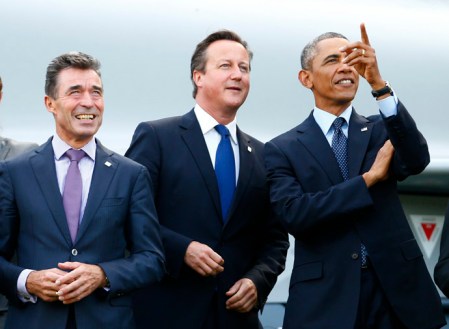
Arms firms that provide core military components for drones deployed by the US to conduct covert strikes in violation of international law allegedly bought access to NATO’s summit in Wales last week, a British human rights charity says.
The defense companies concerned doled out up to £300,000 to ‘exhibit’ their military wares at the conference in Newport. Among the firms present were General Dynamics, Raytheon, Lockheed Martin and MBDA, according to a British government press release.
General Dynamics manufacture Hellfire missiles utilized in most US drone strikes, while Raytheon make the targeting system for the Reaper drone deployed by the CIA and other actors to conduct strikes across the globe. Lockheed Martin operates as a contractor to provide select support services for both the Reaper and Predator, and MBDA is a European company that manufactures the unmanned aerial vehicle (UAV) Brimstone – a variant of the Hellfire missile.
The US drone program has received widespread public criticism both at home and abroad. Critics say attacks carried out in foreign countries, including Yemen and Pakistan, are in violation of both international and US law.
Although US drone strikes have culminated in hundreds of civilian casualties, they are subject to little oversight, according to Reprieve. President Barack Obama has refused to formally acknowledge the program’s existence.
Reprieve’s Legal Director Kat Craig said it’s “deeply worrying” that a group of firms who potentially profit most from this breach of international law were able to buy access into an international global summit like NATO.
“It is unacceptable that the US’ drone campaign, and the UK’s support for it, has been allowed to remain in the shadows for so long”, he added.
“President Obama must be far more open about it – as must his European allies, especially the UK and Germany, about the support they provide.”
Craig suggested the drone manufacturers’ presence at NATO signaled their inherent capacity to buy political influence “behind closed doors,” highlighting the opaque, illicit and legally questionable nature of much of the global arms trade.
NATO to give Ukraine 15mn euros, lethal and non-lethal military supplies from members
RT | September 4, 2014
NATO has pledged some 15 million euros to Ukraine, with several of the bloc’s member states pledging separate bilateral support and military cooperation, involving medical supplies as well as lethal and nonlethal military equipment.
NATO Secretary General Anders Fogh Rasmussen announced a “comprehensive and tailored package of measures” including the donation of 15 million euros “through NATO” at a joint news conference with the Ukrainian president on Thursday on the first day of the NATO summit in Wales.
He said that this would be in addition to other measures such as advising Ukraine on defense reforms and further bilateral aid.
“This is about improvement of logistics, the improvement of command and control, the improvement of communications, and cyber defense,” Ukrainian President Petro Poroshenko said.
He added that bilateral aid would include the provision of “high precision weapons” as well as medical equipment.
Poroshenko made careful statements regarding Ukraine’s potential induction into NATO, saying that membership criteria need to be met first.
“The new parliamentary election will help us a lot to accelerate the reform process,” Poroshenko said, adding that the most significant reforms to be made would be to the economy, and ensuring the rule of law and anti-corruption.
He said that he had some optimism for Friday’s peace talks in Minsk, Belarus, after which a ceasefire is expected to commence.
Rasmussen expressed caution: “If recent statements from President Putin represent a genuine effort to find a political solution, I would welcome it,” Rasmussen told reporters. He said that recent offers had been a “smokescreen” for further destabilization on the ground.
‘Promoting peace and stability’: NATO warships enter Black Sea
RT | September 4, 2014
A US Navy destroyer and, reportedly, a French frigate have entered the Black Sea, as NATO builds up its presence in the region while tensions remain high in Ukraine. Another two warships are expected to arrive in the area by the end of the week.
The US Navy 6th Fleet official command has confirmed on its official Twitter account that the destroyer USS Ross, (DDG 71), an Arleigh Burke-class guided-missile destroyer, is now in the Black Sea.
“USS Ross enters Black Sea, promoting peace and stability while working with NATO allies and partners,” a statement said.
The US Navy has stressed that “the Ross’ presence in the Black Sea serves to demonstrate the United States’ commitment to strengthening the collective security of NATO allies and partners in the region.”
“The US Navy maintains an enduring commitment to forward-presence throughout the region in order to have ready-forces available if a crisis were to occur,” the statement said.
Another NATO warship, France’s Commandant Birot, also arrived in Black Sea waters on Wednesday night, according to a military diplomatic source cited by the Itar-Tass news agency.
“Both ships have passed through the Bosphorus and entered the Black Sea between 21:00 and 22:00 Moscow time,” the source was quoted as saying.
Commandant Birot has joined another French warship, the Dupuy le Lome, a surveillance ship designed to collect signals and communications from beyond enemy lines. Up until September 4, the Dupuy le Lome was the only NATO ship in the region. The vessel is scheduled to leave the area on September 5.
A total of four NATO warships are expected to enter the Black Sea before September 7. The USS Ross and Commandant Birot will be joined by Canada’s HMCS Toronto, a Halifax-class frigate, and a Spanish frigate, the Almirante Juan de Borbon.
Under the Montreux Convention of 1936, warships of non-Black Sea states can stay in the Black Sea for no more than 21 days. It also stipulates that the maximum deadweight of a non-regional warship in the area should not exceed 45,000 tons.
NATO warships have been operating in the area since this spring, when tensions started escalating between Kiev forces and rebels in southeastern Ukraine.
Despite the three-week limit, the alliance has managed to secure its presence in the area by constantly rotating warships there.
Deployed to the region in mid-May, the Dupuy le Lome was preceded by the destroyer USS Donald Cook, sent to the Black Sea in early April.
In July this year, NATO deployed a total of nine vessels, setting a record for the post-Soviet period.
On August 7, the US missile cruiser Vella Gulf entered the Black Sea and left the region at the end of the month.
NATO has been discussing its “more visible” presence in Eastern Europe, referring to the three Baltic States – Latvia, Lithuania and Estonia – as there has been little progress in resolving the conflict in Ukraine. The issue is now being discussed in Wales, where the military alliance is meeting on Thursday and Friday.
The US and the international community have accused Russia of supporting opposition forces in southeastern Ukraine, accusations that have been denied by Moscow.
Russia has condemned NATO’s activities in the Black Sea and branded them a provocation that hinders the normalization of the situation in Ukraine.
More NATO Aggression Against Syria?
Media Myths and Distortions
By Rick Sterling | CounterPunch | September 3, 2014
Syria will be an important subject of discussion at this week’s NATO Summit meeting in Wales. The US and NATO powers will evaluate whether to expand air strikes against ISIS (Islamic State in Iraq & Syria) into Syria, whether to do it in cooperation with the Syrian government and whether to increase support to the “moderate” armed opposition. The US mainstream media and politicians have been beating the war drums with Republican Senator McCain calling for military escalation and Democratic Senator Feinstein criticising President Obama for being “too cautious”.
There has been little mention of the fact that it is one year since the highly publicized chemical weapons attack in the Ghouta outskirts of Damascus. The same elements who are pushing for “regime change” military action now were doing so one year ago. Since then, the case that the Syrian government was responsible for the attack has been effectively discredited. The diplomatically negotiated agreement to remove all Assad’s chemical weapons has been successfully implemented. One would think this would merit attention, but it has been widely ignored.
One good thing in the media this week is recognition that Libya is now in chaos. This is the country which was “liberated” by NATO bombing which led to the murder of President Ghadaffi and collapse of that government. Nine months ago a plurality of Libyans said they are worse off than before the regime change. It’s very likely that even more Libyans are unhappy with their externally imposed regime change today. Three years ago NATO members were congratulating themselves on the air war against Libya. Now they are hopefully more sober as it goes public that Libya is in chaos, the airport shut down, competing extremists fighting for dominance, with one faction enjoying themselves in the US Embassy swimming pool.
The Obama Administration is at another turning point where it may choose to escalate its aggression against Syria. Clearly Obama and team do not want to go solo. The dreams of a“New American Century” with unchallenged US dominance have been broken by reality in Iraq, Afghanistan and beyond. But the hounds of war and aggression are noisy and persistent.
As NATO begins to deliberate whether and how to escalate aggression against Syria, let’s review some recent and long standing myths and lies about the Syrian conflict.
Myth #1.
Some articles and even the (current) Wikipedia entry for James Foley (journalist) claim that he was a prisoner of the Syrian military and that they turned him over to ISIS. This is in perfect keeping with the pervasive demonization of the Assad government. However it’s false. A serious investigation into the disappearance of Foley is in the May 2014 Vanity Fair. Foley was captured by Nusra Front (or allied rebels) in November 2012 and later transferred or sold to ISIS.
Myth #2.
Both NY Times’ Anne Barnard and John McCain suggest or assert that the Syrian government has collaborated with ISIS. The “evidence” of this is that the Syrian Army did not actively attack ISIS in eastern Syria during the past year.
The reality is that Syrian Army needs to pick and choose its battles and priorities. They are weakened by over three years of intense conflict resulting in at least 65 THOUSAND Syrian army and militia deaths. For reference, the total US death count in Vietnam was 58 thousand and Syria today is one tenth the size of the US in the 1970’s. In the past year the Syrian military has focused on confronting armed opposition in Aleppo (the largest city), Homs, outer Damascus and the Lebanese border area. The Syrian military has gained ground in each of these areas along with implementing the national “reconciliation” policy.
In the past two months, ISIS has gone on the offensive in eastern Syria and is pressing towards Aleppo and central Syria with US equipment and weaponry captured in Iraq. The battles have taken a heavy toll on both ISIS and the Syrian military. According to rebel aligned Syrian Observatory for Human Rights (SOHR), 346 ISIS fighters were killed in a four day assault on Tabqa Air Base near Raqqa. The fighting has been brutal with heavy losses on both sides.
Longtime Mideast journalist Patrick Cockburn writes, “A conspiracy theory, much favoured by the rest of the Syrian opposition and by Western diplomats, that Isis and Assad are in league, has been shown to be false.”
In contrast with the myth, ISIS has in fact been aided and abetted by US allies. This includes funds from Saudi Arabia and other Gulf countries, ideology and recruitment by Saudi media, transportation and safe haven through Turkey.
Myth #3.
It is usually claimed that the Syrian conflict is a civil war that started with peaceful protests in 2011. In reality the seeds of the conflict were planted much earlier. General Wesley Clark’s 2007 memoir described plans for “regime change” in Syria and other countries. Also in 2007 Seymour Hersh documented the US strategy of fomenting conflict in Syria (and Iran) by working with Sunni extremists:
“The U.S. has also taken part in clandestine operations aimed at Iran and its ally Syria. A by-product of these activities has been the bolstering of Sunni extremist groups that espouse a militant vision of Islam and are hostile to America and sympathetic to Al Qaeda.”
When mass protests began in Syria they included violent attacks and murders of police from the beginning. The situation was the same in other regions. Jesuit priest Father Frans Van Der Lugt was widely respected by Sunni Muslims and Christians in the Old City of Homs. He described the start of the protests thus:
“From the start, the protest movements were not purely peaceful. From the start I saw armed demonstrators marching along in the protests, who began to shoot at the police first. Very often the violence of the security forces has been a reaction to the brutal violence of the armed rebels.”
The conflict in Syria has been primarily instigated and continued by some of the world’s wealthiest and powerful governments. They make no secret and call themselves, with Orwellian chutzpah, the “Friends of Syria”. Their division of labor including who pays the salaries of the rebel mercenaries, who supplies communication equipment, who does training and who supplies weapons. Thus the conflict in Syria is primarily a war of aggression using domestic and foreign mercenaries.
Myth #4.
It is often suggested the “moderate opposition” is popular, democratic and secular.
President Obama has recently proposed giving $500 million to the “moderate opposition”.
Patrick Cockburn sums up the reality in the newly released book “The Jihadis Return: ISIS and the New Sunni Uprising”:
“It is here that self-deception reigns, because the Syrian military opposition is dominated by ISIS and by Jabhat Al Nusra, the official Al Queda representative, in addition to other extreme jihadi groups. In reality there is no dividing wall between them and America’s supposedly moderate opposition allies.”
This siuation is not new. A NY Times article in summer 2012 discussed the hidden presence of Al Queda within the “Free Syrian Army”. When he read this, James Foley sent out a tweet linking to the article and pondering whether the photographed black flag was necessarily Al Queda. He did not recognize the flag and wondered whether it was “some misc jihadi group”. Ironically that was the unique flag of ISIS before it was widely recognized. The “misc jihadi” group is the one that would later murder him.

Foley’s last article documented the overall unpopularity of the rebels in Aleppo:
“Aleppo, a city of about 3 million people, was once the financial heart of Syria. As it continues to deteriorate, many civilians here are losing patience with the increasingly violent and unrecognizable opposition — one that is hampered by infighting and a lack of structure, and deeply infiltrated by both foreign fighters and terrorist groups.”
Myth #5.
Finally there is the myth that the Free Syrian Army and other “moderate opposition” groups were not supported. In reality, huge quantities of weapons and ammunition have flowed which is exactly what has allowed the terrorist organizations to continue the mayhem and bloodshed. Starting in November 2012 three thousand TONS of weapons and ammunition were flown from Zagreb to Turkey and then transferred to the Syrian rebels. In addition there were huge shipments from Benghazi Libya and more shipments paid by Saudi Arabia and Qatar.
DO USA AND NATO REALLY WANT TO STOP ISIS?
One week after the Syrian Presidential election where 73% of the electorate turned out, ISIS made its advance through western Iraq to Mosul and other cities. There were virtually no battles. Iraqi military leadership simply departed and in the confusion troops fled or disbanded. Was this a military collapse or was it planned, with key Iraqi figures either bribed or otherwise in alliance with ISIS? Whichever is the truth,we can see the consequences and who has benefited: the campaign for greater autonomy in the oil rich Kurdish region has advanced; the split between Shia and Sunni has been exacerbated; and one of the world’s greatest overnight military arms transfers took place with ISIS effortlessly taking control of vehicles, humvees, tanks, lethal mortar launchers, high grade military equipment and tons of ammunition.
Did US military officers, who spent years and billions of dollars “training” the Iraqi military, have advance notice or knowledge of this seeming collusion between ISIS and Iraqi military officers? Did wealthy enemies of Syria simply bribe the Iraqi officers? Was it a “collapse” or is there much more behind this? How can a few hundred jihadi militants traveling in new Toyota pickup truck convoys surprise and overtake military checkpoints and bases without a fight unless there was collusion at the highest levels?
Actions reveal more than words. If the US and NATO really are worried about ISIS they can and will implement measures such as the following:
* shut down the Jihadi Highway through Turkey.
* shut down safe haven and supply routes of ISIS and other terrorist groups in Turkey
* provide useful information from surveillance flights to the Syrian army which is doing the main on-the-ground fighting
* demand and check that Saudi Arabia and Qatar stop broadcasting TV programs featuring hate speech which serve to recruit jihadis to join ISIS.
* demand and check that Saudi Arabia and Qatar implement measures to stop funding for ISIS through their banks and other financial operations.
Will the US and NATO take practical steps to counter ISIS or will they escalate their aggression against Syria, violating Syrian air space and looking for a pretext to impose a “no fly zone” as done in the disastrous aggressions against Iraq and Libya?
Will the US and NATO start a bombing campaign against ISIS in Syria which will ignite MORE support for the group in the Arab world?
Will they violate Syrian air space as a stepping stone to US bombing of Syrian army positions?
Or will the US and NATO resist the hounds of war and finally put aside the campaign of regime change against a secular, socialist inclined government that is supported by a big majority of its people?
Rick Sterling is a founding member of Syria Solidarity Movement. He can be contacted at rsterling1@gmail.com
Obama’s War on Ukraine
By Renee Parsons | CounterPunch | September 2, 2014
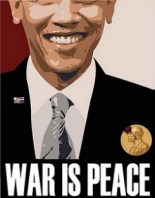 Amidst a slew of unverified allegations in recent weeks of Russian invasions, violations of Ukraine sovereignty and NATO’s current claim of Russian troops and Russian tanks fighting on the side of the federalist rebels, the upcoming annual NATO Heads of State Summit in Wales, threatens a widening violence and heightened military activity throughout eastern Europe.
Add to the equation that the tide of war appears to be turning against the US-imposed Kiev government as a successful offensive by the rebels captured the coastal town of Novoazovsk near Crimea opening a new front in the southeast and holding the line in Elenovka as rebel forces maintain their ground in Donetsk, the Kiev government needs to save face by claiming that Russian troops are aiding the out-manned, under-supplied rebels. Russia’s envoy to the EU Vladimir Chizhov added that the only Russian troops in Ukraine were the nine paratroopers who wandered across the border recently while on patrol.
NATO Summit
It is worth noting that the largest gathering of international leaders to ever assemble in the UK, will include non NATO member Ukraine President Petro Poroshenko as part of a ‘special NATO meeting’ on Ukraine but will exclude Russian President Vladimir Putin. While that omission may be a sure sign that negotiating a political settlement regarding the US-sponsored fiasco in Ukraine is not a NATO or US priority, the subject of Ukraine will be front and center on the agenda as the EU/NATO/US alliance already know their plans with regard to NATO expansion and the future of Ukraine.
President Obama will attend the Summit after visiting the Baltic states of Estonia, Latvia and Lithuania while ‘reaffirming’ the US commitment to the region. It did not used to be common for the US President to visit every little nickel and dime country (no offense intended) along the way but in this case such assurance along with a Presidential visit can mean only one thing: that those self-proclaimed ‘threatened’ strategically-located countries (with Estonia and Latvia on Russia’s border and Lithuania and Poland bordered by Russian-ally Belarus) need the President to personally shore them up for a new NATO missile defense system going further east than the former Iron Curtain, and in advance of any possible turbulence spillover within their borders.
On the eve of the Summit, outgoing Secretary General Anders Fogh Rasmussen offered the following:
“We are at a crucial point in history, our peace and security are once again being tested. NATO support for the sovereignty and total integrity of Ukraine is unwavering. Our partnership is long-standing. NATO is working even more closely with Ukraine to reform its armed forces and defense institutions. NATO stands ready to support Ukraine with advisors and assistance. We are advising Ukraine on defense planning and defense reform and are ready to intensify this cooperation. As a sign of strong support and solidarity, we have decided to hold a ‘special meeting’ with Ukraine at the upcoming NATO Summit in Wales. We will continue to improve the ability of NATO and Ukraine soldiers to work together. It is the right of every country to choose its own foreign policy without foreign interference. NATO fully respects that right but today Ukraine’s freedom and future are under attack.”
In addition, in a series of recent interviews with European newspapers, when asked whether there would be permanent international deployments under a NATO flag in east Europe, NATO Secretary General Anders Fogh Rasmussen said: “The brief answer is yes ….’for as long as necessary.’ In addition, Rasmussen promised a readiness action plan to provide rapid reinforcements with ‘a more visible NATO presence in the east.”
In accordance with the promise made in Bucharest in 2008 that both Georgia and Ukraine would become members, it is doubtful whether the Summit will formally act given NATO’s inability to accept new members with borders in dispute but would rather allow each to function as proxy states. As every NATO member fully understands, membership approval of any of the encirclement countries can be expected to trigger Russia’s long time vehement opposition to a missile presence on its borders.
NATO Accusations
None of this is reassuring especially that the recent accusations have yet to establish whether NATO’s images are date and time stamped, accurate and reliable. Nevertheless, just as the unfounded accusations regarding MH 17 flight continue to fuel enmity toward Putin, the latest ‘invasion’ charge will be provocative enough, as US-dominated NATO members congregate, to escalate a war effort that has already claimed over 2,600 fatalities, according to the UN. It was, of course, the ouster of the democratically elected President Yanukovych and the imposition of a pro-EU, pro-NATO and a pro-IMF government in Kiev that sparked the revolt in east Ukraine.
One immediate flaw in NATO’s latest assertion is that, given its total dependence on creating military conflict, reliance on their version of anything should be subject to intense scrutiny. With an estimated 50,000 plus Ukrainian troops in action (not counting CIA and US mercenaries), the question is whether sending 1,000 Russian troops into Ukraine is worth the risk to Putin who has consistently followed a diplomatic path while US diplomacy has been dominated by threats and bullying.
What makes more sense is that if the situation in Ukraine reached the critical point of no-return, that Putin would send in a sufficient force the size of a field army accompanied by an impressive number of tank battalions, support convoys and enough heavy artillery to finish the job – and presumably there would be no doubt about whether or not the Russians had moved into Ukraine to protect the civilian population from continued merciless attacks. The other option is that the Russian air force could easily put an end to Ukraine’s shelling and bombing of defenseless citizens.
Perhaps the best response to the latest ‘invasion’ disinformation has come from Alexandre Zakharchenko, Chair of the Council of Ministers of the Donetsk National Republic, given in a recent press briefing. When an English speaking reporter inquired whether Russian military units were fighting with the rebels, Zakharchenko replied that if ‘you think that Russia is sending its regular units here, then let me tell you something. If Russia was sending its regular troops here, ‘we would not be talking about the battle of Elenovka; we’d be talking about the battle of Kiev.” Zakharchenko, an attorney who made an impressive presentation, went on to remind the media that “A territory has the right of self-determination and separation after a referendum,” a referendum that was approved by Donbass voters in May.
What is not debatable is that for some weeks, a conservative estimate of 4,000 Russian volunteers (including some ‘off duty’ military and women) have crossed into Ukraine to fight on the side of the ‘rebels.’ That number may have also been augmented by volunteers sent by Chechen president Ramzan Kadyrov whose “statements in support of the illegal annexation of Crimea and support of the armed insurgency in Ukraine,” were cited as reasons for his inclusion in a recent round of sanctions.
Obama’s Unprovoked Attack on Russia
In reaction to NATO’s invasion charge, President Obama, whose State Department was intimately involved in the February coup, spoke at the White House voicing the usual provocations:
“Russia is responsible for the violence in eastern Ukraine. The violence is encouraged by Russia. The separatists are trained by Russia. They are armed by Russia. They are funded by Russia. Russia has deliberately and repeatedly violated the sovereignty and territorial integrity of Ukraine.”
“In Estonia, I will reaffirm our unwavering commitment to the defense of our NATO allies” and “At the NATO Summit in the United Kingdom, we’ll focus on the additional steps we can take to ensure the Alliance remains prepared for any challenge” and “There is no doubt that this is not a homegrown, indigenous uprising in eastern Ukraine.”
In a stunning denial of self-reflection, the president has consistently failed to mention his own Administration’s role as sole cause of the violence, the $1 billion of Congressional support for Kiev, the $5 billion of US aid revealed by Secretary of State Victoria Nuland last spring or the NATO build up in Poland, the Baltic states and elsewhere in eastern Europe. There is never serious mention of the humanitarian catastrophe on a civilian population, no mention of the fatalities, no mention of a ceasefire, no mention of the withdrawal of all non-Ukraine factions from meddling and no mention of requiring the Kiev government’s direct negotiations with the federalist rebels to determine the future of their own country.
Putin Redefines Russia’s National Interests
After the Gorbachev – Yeltsin years overseeing the dissolution of the USSR in which much of its national interests were imprudently relinquished to a market economy, Putin addressed the Munich Conference on Security Policy in 2007. During that speech, he redefined contemporary Russia’s national interests and its geopolitical concerns as he established himself as an independent, critical thinker with an international perspective – and, therefore, a threat to US dominion. The speech is worth reading in its entirety and here are several excerpts:
Decrying a “greater and greater disdain for the basic principles of international law. One state, first and foremost, the United States has overstepped its national borders in every way.”
In referring to “Russia’s peaceful transition to democracy. Why should we start bombing and shooting now at every available opportunity?”
In referring to an earlier speaker, “I understood that the use of force can only be legitimate when the decision is taken by NATO, the EU, or the UN. If he really does think so, then we have different points of view. The use of force can only be considered legitimate if the decision is sanctioned by the UN. And we do not need to substitute NATO or the EU for the UN.”
With regard to expanding NATO with missiles on Russia’s borders: “It turns out that NATO has put its frontline forces on our borders I think it is obvious that NATO expansion does not have any relation with the modernisation of the Alliance itself or with ensuring security in Europe. It represents a serious provocation that reduces the level of mutual trust. And we have the right to ask: against whom is this expansion intended? And what happened to the assurances our western partners made after the dissolution of the Warsaw Pact?”
And lastly, Putin quoted the “speech of NATO General Secretary Manfred Woerner in Brussels on 17 May 1990. He said at the time that: “the fact that we are ready not to place a NATO army outside of German territory gives the Soviet Union a firm security guarantee“.
Renee Parsons was a staffer in the U.S. House of Representatives and a lobbyist on nuclear energy issues with Friends of the Earth. in 2005, she was elected to the Durango City Council and served as Councilor and Mayor. Currently, she is a member of the Treasure Coast ACLU Board.
Featured Video

Dan Dicks with James Corbett on Solutions Watch
or go to
Aletho News Archives – Video-Images
From the Archives
Secret document reveals plans for civil war in Lebanon, Israeli false flags, and invasion
By Randi Nord | Geopolitics Alert | April 5, 2019
Beirut – During his visit with US Secretary of State, Mike Pompeo, Lebanese President Michael Aoun reportedly received a US-Israeli document detailing plans for creating a civil war in Lebanon with covert false flag operations and possible Israeli invasion.
Although the source of the document is Israeli and created in partnership with Washington, no one knows who presented it to Aoun. The Lebanese TV station, Al-Jadeed, initially reported the document on Lebanese TV and a video on its website. Geopolitics Alert translated the report for this article. … continue
Blog Roll
 Aletho News
- Sheikh al-Asadi warns of Iraqi government compliance with US demands
- How to MAKE THE CONSPIRATORS PAY for their crimes! Dan Dicks with James Corbett on Solutions Watch
- There’s a drought in academia: A drought in honest research on the subject of drought and other weather extremes
- Department of War Awards $20.7 Billion Contract to Raytheon for Air-to-Air Missiles
- ‘Distance yourselves from Israel’: IRGC urges US population to question govt policies
- America’s Greenland deal has a radioactive backstory
- The RAF Fairford ‘terror plot’: Unpacking escalation in the UK echo-chamber
- EU Council Advances Chat Control 2.0 Scanning Proposal
- Ex-Greek MEP files complaint against Israeli spyware firm over alleged Pegasus surveillance
- Troubling ideas throughout the Torah, Talmud, Mishneh Torah and Tanya
- If Americans Knew
- New Report: “Scholasticide and Genocide in Gaza: Assessment, Testimonies and Legal Analysis”
- Ex-Biden officials are desperate for a Gaza scapegoat
- Israeli “settlers” Invade Al-Aqsa; Pour Boiling Water on 75-Year-Old
- Israel Has Kidnapped Another American Teenager
- US arms sales to Israel worth $21.6 billion in 20 months
- Three Palestinians Killed in Israeli Attacks on Gaza
- Revealed: German “Anti-Semitism Expert” Driving Crackdown on Palestine Solidarity is Former Israeli Spy
- Egypt’s Warning to Israel Before Oct 7
- Israel’s siege signals another cruel winter for 1.8 million Gazans – Daily Update
- Netanyahu Asked UAE Leader to Deny Report on Oct. 7 Warning in Secret Visit, Sources Say
- No Tricks Zone
- Two More Paleo Reconstructions Affirm Meters-Higher Sea Levels Across Ireland, Brazil 7000-6000 Years Ago
- New Study: Earth And Venus Surface Warmth Largely Explained By Convection And Lapse Rate, Not CO2 Or Radiation
- 2025 Nature Paper Claiming Worsening Global Drought Gets RETRACTED …Heavily Flawed
- New Study: ‘Global Drought Shows No Detectable Recent Acceleration Under Climate Warming’
- Economic Masterminds: German Socialists Suggest Taxing Productivity Gains Stemming From Using AI
- The South China Sea Has Not Been Cooperating With The Climate Change Narrative
- Energy Crisis: Germany Enters Heating Season With Historically Low Gas Reserve Fill Levels
- New Study: The Antarctic Ice Sheet Gained Mass From 2020-2024 Due To Staggering Snow And Ice Accumulation
- Study: Ocean Heating Rates From Thousands Of Years Ago ‘Dwarf’ Modern Ocean Heating Rates
- Climate Extremists Target, Attack Large-Scale Power Grid Infrastructure In Germany!

