The NY Times on Gaza: Israel Is Just Trying to Help
By Barbara Erickson | TimesWarp | April 5, 2016
Now, at last, The New York Times has turned its sights on Gaza fishermen, a much beleaguered group, which has persevered under constant harassment and crippling restrictions. It has long been well under the radar as far as the newspaper’s reporting is concerned.
This week, however, we have an above-the-fold story on page 5 accompanied by a color photo of two fishermen with their nets. What has prompted this long overdue attention? It is the opportunity to present Israel as the benevolent caretaker of the besieged Gaza Strip.
Thus we find a headline announcing the following: “Israel Expands Palestinians’ Fishing Zone Off Gaza.” The story below reports the decision to increase the allowed zone from 6 to 9 nautical miles and the relief and excitement of Gaza fishermen and officials.
The article ends with a quote from Israeli officials, saying that the expansion was part of an effort to “improve the economy and foster stability” in the West Bank and Gaza, and so the story is framed around Israeli efforts to help struggling fishermen and Palestinians in general.
Thanks no doubt to the efforts of Times stringer Majd Al Waheidi of Gaza, readers find hints of the grim reality that fishermen there have actually faced over several years. We learn that Israeli gunboats have been firing on fishermen as they go to sea, and we hear the story of Ismail al-Shrafi, 62, who lost his boat five months ago when Israeli sailors confiscated it, injuring his son with live fire in the process.
The story, however, provides no data to place the case of al-Shrafi in context. Readers do not learn that during 2015, the Israeli navy fired on Gaza fishermen at least 139 times, wounding 24 fishermen and damaging 16 boats. Another 22 boats were confiscated, and 71 fishermen were detained.
According to the Palestinian Center for Human Rights, all these incidents took place within the legal 6-mile zone, but the Times notes that an army spokesperson denied that the navy had fired on boats within the permitted area.
The article, by Al Waheidi and Isabel Kershner, also states that over the weekend the navy “sank a suspected smuggling boat,” but it fails to inform readers that witnesses have contradicted this account. According to Palestinian news sources, the navy fired on several boats near Rafah, setting fire to one fishing vessel and causing it to sink.
The Times is denying readers the complete story here, but its most egregious paragraph is the final one in which officials claim that the expansion of the fishing zone was “part of a policy of loosening restrictions” to help the Palestinian economy.
In fact, Israeli policy appears to be aimed at impeding, rather than bolstering, economic progress in Gaza and the West Bank. Here are just a few examples of how Israeli actions and regulations impact the Palestinian economy:
- The same day the fishing zone was expanded from 6 to 9 miles, four Israeli military bulldozers entered the Gaza strip to destroy farmland planted with wheat.
- According to the PCHR, 35 percent of Gaza’s agricultural land “can only be accessed under high personal risk” because Israeli troops frequently fire on laborers in the fields.
- Israeli policies have caused the Palestinian telecommunications sector to lose $1 billion over the past three years, according to a World Bank report.
- Through a regime of permits, licenses and visas, Israel has cut into the Palestinian tourism industry, deflecting jobs and income to Israel.
- Israel confiscates some 80 percent of the water in the West Bank for its own use and charges Palestinian residents for the water it sells back to them.
- A United Nations report stated that in spite of the occasional loosening of restrictions, Gaza’s economy will continue to deteriorate as long as Israel maintains its blockade of the territory.
Times readers, however, are told that Israel is trying to help, loosening restrictions to “improve the economy.” Thus we find the headline this week announcing a generous move to allow fishermen more access to their own Gaza Sea.
It seems that the newspaper’s editors are credulous consumers of Israeli spin, readily quoting the self-serving claims of officials and making no attempt to verify the facts. Readers—as well as the courageous fishermen of Gaza—deserve better.
Follow @TimesWarp on Twitter
The NY Times Joins Israel in Whitewashing (Yet Another) Scandal
By Barbara Erickson | TimesWarp | April 4, 2016
A military scandal has rocked Israel, and The New York Times has been on hand to report developments: A soldier was arrested for killing a wounded and helpless Palestinian; the soldier was under investigation for murder, and some Israelis have protested, insisting that he is a hero.
These were the stories that made headlines in the Times after the murder was caught on video and spread through the Internet, provoking outrage worldwide. The newspaper, it seems, has been on this from the start.
But readers may not suspect that there is much more that the newspaper is withholding. After the early headlines, the Times has gone silent and has failed to report a number of developments connected with the story:
- The United Nations special rapporteur on summary executions said the video carried “all the signs of a clear case of an extrajudicial execution.”
- In spite of this assessment and the initial cries of outrage from the Israeli government and military, the charges against the soldier were reduced from murder to manslaughter.
- The accused man, Cpl. Elor Azarya, has been released from prison and allowed to move freely on base.
- Settlers have harassed and threatened to kill the Palestinian who videographed the killing.
- An Israeli rights organization has requested protection for the videographer.
- A survey of Israeli public opinion revealed that 57 percent opposed the arrest of the soldier and 68 percent thought the prime minister, defense minister and army chief of staff were wrong to condemn the killing.
- Prime Minister Benjamin Netanyahu, after first denouncing the murder, spoke with the soldier’s father and reassured him of army support.
- Senator Patrick Leahy (D-VT) and 10 other members of Congress have written to the state department, requesting an investigation into extrajudicial killings of Palestinians carried out by Israeli police and military.
All of these items appeared in media outlets, some of them disseminated widely, such as the downgrade from murder to manslaughter, which made headlines in Israel, the West and the Arab world. In the Times, however, this news became nothing but a whispered conjecture buried in an article last Thursday. Far into her piece, author Isabel Kershner briefly mentioned that prosecutors were “appearing to have backed off from the idea of a murder charge.”
Since then, the Times has had nothing more to say about the scandal, leaving readers with the impression that Israeli officials were swift and firm in their effort to bring justice to bear. As authorities backed off from the murder charge and let the soldier go free, the Times fell silent.
It seems that the newspaper has endeavored to whitewash Israeli actions—spotlighting the first cries of outrage when the video emerged, the arrest of the soldier and the talk of a murder investigation and ignoring news that might expose the reality: nearly unlimited impunity for crimes against Palestinians.
The paper had nothing to say, for instance, about Netanyahu’s change of tone. When the video first emerged, the prime minister said the killing “does not represent the values of the IDF.” Later he spoke to the accused man’s father, assuring him that he personally understood the man’s distress and saying that the family should trust the army to be “professional and fair in its investigation.”
This was reported extensively in Israel, as was the Leahy letter asking Secretary of State John Kerry to investigate a “disturbing number of reports of gross violations of human rights by security forces” in Israel and Egypt. The letter mentions several specific cases of alleged extrajudicial executions by Israeli forces.
Senator Leahy’s signature is of particular importance because his name is on a law that prohibits the United States from providing military aid to security forces that violate human rights with impunity.
Nevertheless, the Times has ignored the appeal by Leahy and 10 other members of Congress, even though the event is eminently newsworthy and the letter led to a sharp exchange between Netanyahu and Leahy.
The newspaper has also overlooked the effect of the incident on Palestinians: the threats against the videographer, the harassment of his family and initial refusals to allow Palestinian participation in conducting the autopsy.
It seems that much of the news touching on this latest Israeli scandal is unfit to print in the Times. Readers are not to see evidence that the first official reaction to the disturbing video was little more than damage control, an attempt to show the world that Israel does not condone such crimes. The Times, as usual, has fallen into line, a willing partner in the official effort to exonerate Israel of its crimes.
The Disappearance of Hillary Clinton’s Healthcare Platform
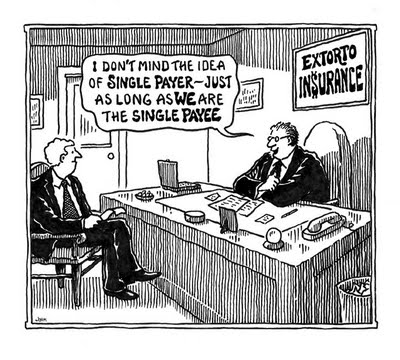
By Benjamin Day | Common Dreams | March 30, 2016
What would happen if the media lifted the curtain on Clinton’s healthcare platform and introduced any level of scrutiny to her proposed improvements on the Affordable Care Act?
In an extraordinary magic trick, performed on a national scale, Hillary Clinton’s healthcare platform has been disappeared. While policy analysts, news anchors, and columnists have been engaged in an intense debate over Bernie Sanders’s “Medicare for All” proposal, Clinton’s incremental alternative has escaped almost all scrutiny – even among those who say they prefer it.
Combining the election-season writings of our most prolific, liberal-leaning columnists at the New York Times, Huffington Post, Vox, Mother Jones, Politico, The American Prospect, etc. you’ll find dozens of articles critiquing Sanders’s single-payer plan. None have mentioned a single Clinton healthcare proposal as a point of comparison – merely that she supports a philosphy of incremental reform.
Take Paul Krugman, a high-profile advocate of Clinton’s approach to healthcare reform. Krugman has published two op-eds in the New York Times and five additional blog posts arguing that “[progressives] should seek incremental change on health care… and focus their main efforts on other issues – that is… Bernie Sanders is wrong about this and Hillary Clinton is right.” In all seven pieces, Krugman focuses exclusively on Sanders’s single-payer proposal and fails to mention even a single Clinton policy.
The disappearance of the Clinton healthcare platform has even been carried out by pollsters. The Kaiser Health Tracking Survey included a bizarre question in its February 2016 poll, which was widely cited in the press. Respondents were asked to pick one of four possible directions for the future of U.S. healthcare. Among the choices were “The U.S. should establish guaranteed universal coverage through a single government plan” and “Lawmakers should build on the existing health care law to improve affordability and access to care.” Thirty-three percent of Democrats chose the single-payer option, while fifty-four percent chose the incremental option. The questions were clearly intended as stand-ins for the Sanders and Clinton healthcare proposals, but note that the single-payer option is a policy, whereas the incremental option mentions no actual policies, but asks respondents whether they support the (universally desirable) outcomes of improving affordability and access.
What would happen if the media lifted the curtain on Clinton’s healthcare platform and introduced any level of scrutiny to her proposed improvements on the Affordable Care Act? They would find two categories of Clinton proposals: some that are so vague they’re difficult to evaluate, and other more concrete plans that follow in the footsteps of one of Congress’s most practiced healthcare incrementalists: Senator Bernie Sanders.
For example, one of Clinton’s clearest incremental proposals is to repeal the Affordable Care Act’s poorly named “cadillac tax” on health plans with high premiums. She announced this proposal on September 29, drawing the ire of White House spokespeople. The move, however, followed in the footsteps of a Senate bill to repeal the Cadillac tax introduced by Bernie Sanders and seven Democratic Senators just a few days previously on September 24. Clinton’s position was correctly seen by reporters as necessary if she didn’t want to lose labor union support to Sanders.
“Because Clinton’s healthcare platform has received zero public scrutiny, she has had the luxury of floating other policy ideas in broad outlines, too vague to evaluate.”Many of Clinton’s well-defined healthcare proposals are rolled into a package of prescription drug reforms, which she released on September 22, 2015. They bear a striking resemblance to the Sanders prescription drug plan announced on September 1, filed as legislation on September 10. Both would legalize importation of prescription drugs from Canada, where costs for identical drugs are much lower due to Canada’s single-payer healthcare system. Sanders was a pioneer of importation, and in 1999 started driving busloads of American patients who couldn’t afford breast cancer drugs across the Canadian border. Both candidates call for empowering Medicare to negotiate drug prices – even Donald Trump jumped on board in January. Both would ban “pay-for-delay” deals between brand-name and generic drug makers, and increase prescription drug rebates for Medicaid and/or Medicare.
Because Clinton’s healthcare platform has received zero public scrutiny, she has had the luxury of floating other policy ideas in broad outlines, too vague to evaluate. Take the proposal to expand the use of Accountable Care Organizations. How? According to Clinton’s December policy brief: “In the coming months, [Clinton] will provide full detail on her plans for delivery system reforms that drive down costs.” With the primaries drawing to a close, no such details have been released. The same could be said of another proposal to “create a fallback process” to review insurance premium rate hikes in states that don’t already review rates. There has been no explanation of how such a plan would work, or whether it would require new legislation.
This is the double standard at work in almost all national coverage of Clinton and Sanders on healthcare reform: Clinton has been taken at her word that her incremental plans will be politically feasible, succeed in improving affordability and access to care, and are not shared by her opponent. Sanders on the other hand received intense public pressure to release details of his single-payer healthcare proposal, and when he did the proposal was subject to an avalanche of public analysis and scrutiny.
This double standard is all the more remarkable because single-payer healthcare is an established policy, practiced in one form or another in almost every developed nation in the world. Incremental reforms that work within the market-based healthcare system of the U.S. are far more uncertain, and deserve greater scrutiny. They are easier to enact but dramatically more likely to fall short of their goals. This is because incremental reforms in the United States usually focus on expanding access to care, without significant cost controls, in order to avoid opposition from the healthcare industry. The resulting policies are often unsustainable; make little headway against national trends of rising costs and eroding access; or simply move costs around (e.g. from premiums to deductibles and co-payments, or vice versa).
Previous national trends in incremental healthcare reform – from managed care through pharmacy benefit management, chronic disease management, narrow networks, and beyond – have often created lucrative new industries, but had dubious impacts on underlying healthcare costs or access to care. Most of Clinton’s healthcare platform falls exactly into these danger zones, and should be received with a critical eye.
The national discussion of single-payer healthcare reform is long overdue. However, when the full range of national media outlets force one candidate to run on real policies, while allowing another to run on values and aspirations, we aren’t having a real discussion of systemic vs. incremental reform, we are merely aiding the corrosion of informed democracy.
Benjamin Day is the Executive Director of Healthcare-NOW.
Anti-Trump NYT Blasts His Foreign Policy
By Stephen Lendman | March 30, 2016
He’s a serious presidential contender with unorthodox views on some issues – making him appear anti-establishment, worrying duopoly power brokers and media scoundrels supporting them.
Wide-ranging interviews with NYT and Washington Post editors, as well as opinions expressed separately, showed his foreign policy views differ considerably from other candidates.
“I want to get along with Russia,” he said, calling good relations “very good… I’d get along very well with Vladimir Putin.”
“I want to get along with all countries, and we will,” he said, calling his approach to world affairs “unabashedly noninterventionist.”
He opposes expensive worldwide nation-building projects while America’s infrastructure deteriorates.
He’s against massive US military buildups in Europe and East Asia. “We certainly can’t afford to do this anymore. NATO is costing us a fortune…”
“Why are we (risking) potentially (a) third world war with Russia?” He questions involvement in protecting allies like Japan and South Korea, wanting them to do more on their own.
US intervention abroad caused more problems than solutions, notably in the Middle East, he said.
“Every bad decision that you could make in the Middle East was made.” If Obama and Bush “just (went) to the beach and enjoyed the ocean and the sun, we would’ve been much better off… than all of this tremendous death, destruction, and… monetary loss. It’s just incredible,” he stressed.
He called NATO obsolete, preferring an alternative organization focusing on counterterrorism. He questioned the benefit of America’s global empire of bases.
He called nuclear weapons “the biggest problem the world has,” saying he’d use them only as “an absolute last step,” instead of renouncing them altogether.
The New York Times is America’s leading establishment media organization – supporting policies favoring wealth and power interests exclusively.
It editors called Trump’s foreign policy views “dangerous babble,” uneasy about an administration under his stewardship curbing its warmaking appetite – hyping nonexistent “Russia(n) aggressive movements in Ukraine and threats to the Baltics…”
Saying “this is no time (for) Washington” to restrain its global militarism. Trump’s views “are contradictory and shockingly ignorant.”
Times editors support US military involvement worldwide, its wars of aggression in multiple theaters.
They call today’s world “dangerous,” failing to explain Washington allied with Israel and other rogue states bear full responsibility for its deplorable state.
Trump if elected president will differ from traditional candidates largely in style. At the same time, if he favors more cooperation and less confrontation with other nations, “that’s a good thing” as he puts it in his own words.
Stephen Lendman lives in Chicago. He can be reached at lendmanstephen@sbcglobal.net.
His new book as editor and contributor is titled “Flashpoint in Ukraine: US Drive for Hegemony Risks WW III.”
Another Israeli Execution in Cold Blood, Another Whitewash in The NY Times
By Barbara Erickson | TimesWarp | March 25, 2016
An Israeli soldier is caught on video murdering a helpless, wounded Palestinian as he lies on the street; the graphic scene makes headlines in Europe, the United States and beyond—with a notable exception: The New York Times.
In the newspaper of record we find a different focus. The video and its contents are not the news here; it is the reaction from the Israeli ‘Defense’ Forces that takes precedence over all.
In other words, the Times has chosen to emphasize Israeli spin over events on the ground, and so we have this headline above today’s story by Isabel Kershner: “Israeli Soldier Detained in Shooting of Palestinian.” It is all to convince us that this incident is a terrible aberration from accepted norms and will call forth a swift response.
Her article opens with reference to the IDF announcement that it had arrested the soldier accused of shooting the Palestinian, and it quickly adds that a military spokesman condemned the act as a “grave breach” of the corps’ values.
Kershner goes on to quote and paraphrase the IDF or Israeli officials no less than nine times in the course of a 900-word story. We have comments by the Israeli defense minister, a brigadier general, a lieutenant general, the lawyer representing the detained soldier and the army’s flak, Lt. Col. Peter Lerner.
She expends seven paragraphs on the IDF claims before allowing the other side to speak, and then she quotes from two representatives of human rights groups before returning the microphone to official apologists once again.
Take a look at the headlines and stories in, for instance, The Washington Post and the Los Angeles Times. Both these newspapers took the video itself as the news, with headlines, such as this from the Post: “Watch: Israeli soldier caught on video fatally shooting wounded Palestinian attacker.”
Both papers also include a disturbing quote caught on the video, a voice saying, “This terrorist is still alive, this dog.” The statement was made moments before the wounded man was shot, but Kershner omits it entirely from her story.
She also buys into the army claim that it had started its investigation before the video emerged and then “rocketed around the Internet.” This, however, does not jibe with her statement that the army’s original announcement of the incident was “routine,” a brief report that two assailants had been shot.
The army’s claims of outrage ring hollow in the face of the video evidence, which places the soldiers’ indifference at the killing of the wounded man on full display. They appear cheerful and callously unconcerned and allow local settlers to approach and take pictures of the body.
Kershner, however, characterizes this atmosphere as “a calm, secure scene.”
Readers can find a very different perspective in a brief blog post by Israeli-based journalist Jonathan Cook. In a piece titled, “Another routine execution by Israeli troops,” he writes that “two Israeli officers standing close by don’t bat an eyelid as the Palestinian man is murdered next to them. The soldier who executes the Palestinian even confers with another officer seconds before the deed, apparently getting permission.”
He concludes, “All of them seem to view this as standard operating procedure. And it is: in Israeli military parlance, it is called ‘confirming the kill.’”
Cook’s claim that the incident is far from an aberration has support from many rights groups, international monitoring organizations and even Israeli journalist Gideon Levy (see TimesWarp 1-20-16), and although Kershner mentions these briefly, she gives the weight of her story to the Israeli response.
The Times has almost totally ignored these accusations, and now it strives to convince us that the assassination was anything but routine even as the visual evidence shows otherwise. Readers who care to discover the actual story here can simply watch the scene unfold, a brief and chilling view of the Israeli army carrying out a normal day’s work.
Follow @TimesWarp on Twitter
Pew Study Exposes Israel Racism: The NY Times Buries It
By Barbara Erickson | TimesWarp | March 14, 2016
When the Pew Research Center found that 48 percent of Israeli Jews would like to expel or transfer Palestinians from their land, the press took notice. Although this finding was one result among many in an extensive poll, media outlets everywhere devoted their headlines to this striking sign of racism in Israeli society.
“Groundbreaking Pew Survey: Almost Half of Israeli Jews Back Transfer or Expulsion of Arabs,” the Israeli newspaper Haaretz proclaimed. The British paper The Independent announced, “Nearly half of Israeli Jews believe in ethnic cleansing, survey finds.”
Similar headlines appeared elsewhere, even in Jewish papers within the United States . But there was one notable exception: The New York Times presented readers with this aberrant title: “Deep Rifts Among Israeli Jews Are Found in Religion Survey.”
Readers who dig into the text that follows find no mention of the attitude toward expulsion until they have plowed through eight paragraphs of commentary about divisions between Israeli Jewish groups.
When the author, Isabel Kershner, finally addresses the burning topic of expulsion, she immediately adds that the result should be taken with a grain of salt because the question was not specific enough. She then drops the subject for another 10 paragraphs before circling back to take it up once again.
The fact that she concludes her piece with this topic suggest that it is the data on transfer and expulsion that most concern her, in spite of the diversionary headline and story line.
Readers who stick with Kershner until the end find several paragraphs of commentary aimed at whitewashing Israel’s image: The question about expulsion was too general; other surveys have produced different results; it may be used as a “weapon” by Israel’s critics; and this single result shouldn’t be taken “in isolation.”
These are the final words in the piece, and they are aimed at denying Israel’s problem with racism. But Kershner has omitted other findings from the survey that paint a different picture. Nearly 80 percent of all Israeli Jews agreed that Jews should have “preferential treatment” in Israel, and some 80 percent of Israeli Muslims said discrimination against their group is common.
She also omits Israeli President Reuven Rivlin’s comment on the data concerning Palestinians. She provides only his vague quote that Israelis need to “address our problems at home, more than ever,” omitting the fact that he had named the “attitude towards Israel’s Arab citizens” as a singular challenge.
Kershner’s story drew the attention of James Zogby, president of the Arab-American Institute, who wrote in the Huffington Post that her article includes a “classic example of deflection.” After reporting that nearly half of Israeli Jews want to get rid of the Palestinians in their midst, he noted, she immediately adds that “Israeli pollsters found the wording of the question problematic.”
In other words, she couldn’t report the finding in a straightforward way, as she did with the data on other issues dividing various Jewish religious groups.
The entire story, from the headline to the final quote, is built around evasion, beginning with the title and a photo—not of the threatened Palestinian population, but of Jewish citizens at a market. It wanders into sidetracks before reporting the alarming result from the Pew study, then veers away again, coming back to end the piece with a series of quotes meant to deflect the blame from Israel.
Times editors know that many readers never get beyond the headlines and many others read little more than the opening paragraphs of a story. Once again it has buried the real story under piles of diversion, knowing well that few readers will take note.
What Is Israel Trying to Hide?
By Barbara Erickson | TimesWarp | March 7, 2016
A delegation of seven lawmakers from the European Parliament arrived in Israel last month to visit Gaza, but one day before they were due to enter the enclave, Israeli authorities refused to give them access. Officials gave no reason for this ban, and The New York Times was equally silent, making no mention of the event in its pages.
This past week a group of six Belgian members of parliament, representing a range of political parties, also traveled to Israel, planning to meet with representatives of non-governmental organizations in Gaza. Israeli authorities blocked their entry to the coastal strip, sparking an outraged reaction from the MPs. Once again, the Times had nothing to say.
Three days later, however, the Times ran a story on page 3, informing us that India has denied visas to a group monitoring religious conflicts. The story, “India Denies Visas to Group Monitoring Religious Freedom,” appears online and in print, and it tells us that the delegates had hoped to assess the state of religious liberties in India and were “deeply disappointed” in the outcome.
This isn’t the only time the newspaper has found such state actions newsworthy. When China refused entry to a delegation from the United Kingdom, for instance, the Times ran a story under the headline “China Says It Will Deny British Parliament Members Entry to Hong Kong.”
And then there was Iran and the matter of inspecting its nuclear facilities, all very much part of the lengthy negotiations that led to an historic agreement and the lifting of sanctions. The concern over inspections took up many column inches in the Times. Would Iran allow access? How much and when?
Meanwhile, the newspaper had nothing to say about Israel’s nuclear weapons program and its refusal to allow entry to inspectors. (See TimesWarp 6-2-15.)
With the India visa story last week, the newspaper reveals once again that such affairs are fit to print—if the offending state is not Israel—and that the Times continues to maintain a double standard. This policy has left its readers ignorant of Israel’s lengthy record of denying entry to monitoring groups and international officials.
Less than two weeks ago, Israeli officials refused to allow Kenyan President Uhuru Kenyatta to visit Palestinian leader Mahmoud Abbas in Ramallah. The request was made too late, the officials said. Kenyatta was on a three-day state visit, the first from a Kenyan president since 1994. No mention was made in the Times.
Sinn Fein leader Gerry Adams, also on a three-day visit to Israel in December of 2014, did manage to meet with Abbas, but he was denied entry to Gaza. Adams, who had been instrumental in reaching a peace agreement in Ireland, said the refusal to allow him access ran “contrary to the needs of the peace process.” Israel (and the Times) made no comment.
During and after the attacks on Gaza in the summer of 2014 Israel denied repeated requests from Amnesty International and Human Rights Watch to enter the enclave and investigate charges of war crimes against both sides. Two months later Israeli officials also denied representatives of the United Nations Human Rights Council the right to enter Gaza for the same purpose.
The Times failed to run stories on either of these occasions, but it was forced to reveal the fact that the UN Human Rights Council special rapporteur in the Palestinian territories, Makarim Wibisono, resigned over just this issue, saying that despite repeated requests, Israel denied him entry to the West Bank and Gaza.
The story, however, was relegated to the World Briefing section and the author, Isabel Kershner, took care to give the Israeli pretext for its refusal: that the UN Human Rights Council is “biased” and “hostile” to Israel’s interests.
The Times would rather not take up such stories, it seems. To do so might create doubts in the minds of readers, upsetting the carefully cultivated impression that Israel and Palestine are two equal parties at the negotiating table and on the ground.
Such news would make it uncomfortably clear that Israel is in full charge of the borders and that there is nothing equal about the conflict between Israel and Palestine. It also raises the question, which an Irish delegate raised in reacting to the recent ban on EU parliament members travel to Gaza: “What does the Israeli government aim to hide?”
The Times is willing to raise this question—even if by implication—in regards to India or China or Iran, but it has no interest in prompting such doubts when it comes to Israel. Readers, therefore, might want to ask the Times a similar question: In censoring numerous stories of Israeli bans on travel to the occupied territories, just what is the newspaper trying to conceal?
The NY Times, Netanyahu’s Stenographer
By Barbara Erickson | TimesWarp | February 27, 2016
The New York Times serves as Benjamin Netanyahu’s stenographer in a story this week that reports his latest rant against critics of Israeli policy, repeating his claims at length but making no attempt to verify or even question the distortions in his response.
The Israeli prime minister was reacting to comments by British Prime Minister David Cameron, who criticized Israel’s settlement construction in and around East Jerusalem during a session in parliament Wednesday, saying that he found the situation “genuinely shocking.” The Times, which made no mention of Cameron’s remarks at the time, now presents us with an article by Isabel Kershner framed around the official Israeli response.
Her story, “Benjamin Netanyahu Rebukes David Cameron for Criticizing Israel,” gives much space to the prime minister’s assertions and allows him the final word. It also quotes Jerusalem Mayor Nir Barkat and allows the comments of both men to stand without challenge.
Netanyahu, speaking at a political meeting Thursday, portrayed Israel as the peacekeeper in East Jerusalem, saying that “only Israeli sovereignty” has prevented ISIS “and Hamas from igniting the holy sites as they are doing all over the Middle East.”
He implied that Israel has brought prosperity to Palestinian residents of East Jerusalem, citing “roads, clinics, employment and all the other trappings of normal life that their brethren do not enjoy elsewhere in the Middle East.” Mayor Barkat also stated that Israel is building “the newest, most advanced schools” for Palestinian youth and paving new roads for residents.
The Times made no attempt to challenge the veracity of these comments although they grossly misrepresent the situation Palestinians face in occupied East Jerusalem. The data is available for all to see and is certainly familiar to Kershner and Times editors.
For instance, as of January 2011:
- Entire Palestinian neighborhoods were not connected to a sewer system and lacked paved roads and sidewalks.
- West Jerusalem had 1,000 public parks compared to 45 in East Jerusalem.
- West Jerusalem had 34 swimming pools; East Jerusalem had three.
- Nearly 90 percent of the sewage pipes, roads and sidewalks in the city were found in West Jerusalem.
- West Jerusalem had 26 libraries; East Jerusalem had two.
More recent news also belies the claims of Netanyahu and Barkat. Far from working to provide education, health care and road access for Palestinian residents, Israeli policies and actions have made life more and more difficult for the non-Jewish residents of the city:
- In 2015, Israel placed dozens of Palestinian children under house arrest in East Jerusalem, preventing them from attending school.
- The Israeli government has been working with settler groups to dispossess Palestinians of their homes.
- More than a third of East Jerusalem students are unable to complete high school because there are not enough classrooms. (Under an order by the Israeli High Court, some new classrooms are being built, but these will only alleviate the shortage by half.)
- Some 38 percent of East Jerusalem’s planned areas have been confiscated for the development of Jewish settler neighborhoods, while only 2.6 percent is zoned for public buildings—such as schools—for the city’s indigenous Palestinians.
- Israeli invasions of Makassed hospital in East Jerusalem hospital and restrictions on patients attempting to enter the hospital prompted several United Nations agencies to condemn the actions as violations of international law.
- By Feb. 22, Israeli forces had demolished 27 Palestinian-owned structures in East Jerusalem, including a school, since the beginning of this year.
Kershner’s story, however, makes no mention of any of this. The focus here is solely on the Israeli show of outrage. Netanyahu and Barkat’s statements are allowed to stand, even the claim that Hamas and ISIS are working together to foment terrorism. In fact, the two are bitter enemies, but the Times has no interest in disabusing its readers of this inconvenient fact.
Cameron’s statements gave the Times an opening, a chance to examine the settlement enterprise, conditions in East Jerusalem and the attitudes of Palestinian leaders and citizens living under Israeli control. But this was not to be. Only the Israeli narrative was of interest to the Times, and even the prime minister of the United Kingdom could not make his voice heard above its strident demands.
Good Pussy and Bad Pussy at the New York Times
By John V. Walsh | Dissident Voice | February 21, 2016
The New York Times vendetta against Donald Trump continues with its latest theme that The Donald is “vulgar.” This highly newsworthy charge recently made it to the front page with the headline, “With a Slur for Ted Cruz, Donald Trump Further Splits Voters.” The Times tells us that the slur involved a “vulgar word.” How this “splits voters” is not made clear – but never mind.
Not until paragraph ten, after a boring slog through nine paragraphs of gratuitous anti-Trump invective do the two intrepid reporters required to track down this momentous story inform us what the “vulgar word” is, thus: “In New Hampshire on Monday, Mr. Trump shared with an audience a supporter’s comment about Mr. Cruz. “She said, ‘He’s a pussy,’” he told the crowd.
Turning quickly to Wikipedia we find: “Common meanings of the noun include ‘cat,’ ‘coward or weakling’ and ‘the human vulva or vagina.’” Leaving ‘cat’ out of the matter, we can turn to the idea of “weakling” to describe Cruz although that lets him off lightly. This is clearly the idea that Trump’s supporter meant to convey. Not especially vulgar to the mind of this writer.
But let us turn to the third meaning “vagina.” This indeed would be considered a vulgarity in many quarters although that is not what the female Trump supporter meant. Where might we find “pussy” used in that vulgar way? The name of the all female group “Pussy Riot” surely qualifies. And how has the Times treated Pussy Riot? The enthusiasm of the Gray Lady for the “punk” group has bordered on the ecstatic over the years. One small example is this: “… Pussy Riot? You couldn’t ask for more appealing activists.… they were young and attractive and intelligent…”
Pussy Riot claims to be feminist, anarchist, anti-capitalist; and all that may well be true. (Certainly many progressives believe that to be the case, and this writer heard a paean to Pussy just the other day on KPFA.) But what is indisputable is that by the Times professed standards of vulgarity these days, Pussy Riot is right up there — and not only by virtue of its name. This description of their breakthrough performance is but one example, “On January 20, 2012, in what the Associated Press described as their ‘breakthrough performance, eight members of the group performed a song on the Lobnoye Mesto in Red Square, entitled ‘Putin Zassal’. The title has been variously translated by English language media as ‘Putin has Pissed Himself’, ‘Putin Chickened Out’, ‘Putin Got Scared’ or ‘Putin is Wetting Himself’”.
Nothing happened as a result of this crude insult – nor should it have. Speech on the street should be as free as possible. But the next day the group entered an Orthodox Church, doffed their winter clothes and started dancing on the altar and singing. Continuing from the same source, “They used the crude epithet ‘Sran Gospodnya’ which has been used to translate ‘holy shit’ in Hollywood movies, but it is rarely used in idiomatic Russian; it literally translates as ‘shit of the Lord’. … They referred to Russian Orthodox Patriarch Kirill as a ‘suka’ (bitch) and accused him of believing more in Putin than God.’”
That got them in trouble and some even landed several of their “collective” in jail until Putin issued a pardon releasing them. (Putin and Medvedev had both been on record opposing the jail terms meted out to the two women. Patriarch Krill, the “suka,’ felt otherwise.)
But the NYT has been unable to praise Pussy Riot highly enough and they were in fact the toast of Manhattan on their U.S. tour in 2014. You see, at the Times there is good pussy and bad pussy. And if the “pussy” is anti-Putin it is good. But if it is pro-Trump, it is bad.
John V. Walsh can be reached at john.endwar@gmail.com.
Featured Video

Racist Seinfeld Dances for Joy as Bibi Unveils His New Map
or go to
Aletho News Archives – Video-Images
TV Drama Review
Japanese drama projects Japan’s wartime atrocities onto Chinese characters

Global Times | October 25, 2026
By portraying Chinese characters as perpetrators of ruthless violence while casting Japanese Self-Defense Forces (SDF) intelligence operatives as defenders, the season 2 of the Japanese drama Vivant has recently drawn criticism from Chinese netizens, who argue that its depiction turns historical reality on its head while ignoring Japan’s wartime atrocities.
The TBS drama series – a spy suspense story in which an alleged unofficial intelligence unit of the SDF operates across the globe — has attracted a passionate fanbase. Its currently airing season 2 opened with a household rating of 18.8 percent, the highest for a TV drama this year, according toa commentary article by Japanese media Toyo Keizai.
What draws attention is the portrayal of the enemies in the series, the article noted. Scenes in which the Chinese organization subjects kidnapped members of the SDF unit to brutal torture are repeated with unrelenting intensity.
It is rare for Japanese TV dramas to explicitly portray a real-life country as the enemy, the article noted.
Japanese Prime Minister Sanae Takaichi also made a reference to the drama, saying that she has been recording Vivant and hopes to binge-watch it over the year-end and New Year holidays, according to Japanese media outlets.
China’s CCTV News report on Sunday revealed that the drama features scenes in which Chinese personnel cut off the fingers of and stab Japanese intelligence operatives in the abdomen. Such acts bear striking similarities to the torture inflicted on Chinese nationals by invading Japanese troops during the World War II.
The drama distorts the truth by attributing these atrocities to modern Chinese characters. Beneath the surface, it subtly glorifies Japan’s cross-border overseas operations, blurs the functional boundaries of the SDF and implicitly promotes an expansionist narrative, per CCTV News. … continue
Blog Roll
 Aletho News
- EU facing trillion-euro debt hole while seeking more cash for Kiev
- How US, Europe, Persian Gulf states exhausted missile stockpiles, splurged billions to defend Israel
- Up in arms… Koreans reject U.S. empire’s plan to make South Korea the next Ukraine
- Iran, Turkey, Pakistan, Saudi Arabia could advance region-led security framework in Tehran: FM spox
- Netizens condemn Japanese drama for projecting Japan’s wartime atrocities onto Chinese characters
- Racist Seinfeld Dances for Joy as Bibi Unveils His New Map
- A West Bank War for Netanyahu’s Election Campaign, Could It Backfire?
- Yemen denounces European Parliament’s ‘hypocritical’ push to blacklist Ansarullah
- Qalibaf: UAE’s UN bid aims to ‘clear the runway’ for ‘Greater Israel’, whitewash genocide
- Pakistan reopens Iran border after boosting security: Report
- If Americans Knew
- An error has occurred; the feed is probably down. Try again later.
- No Tricks Zone
- Sudden Stratospheric Warming, Powerful El Niño Combination May Lead To Extreme Europe Cold, Energy Crisis!
- Two New Studies Find Thwaites Glacier Melt Cannot Be Driven By Human Activity Or A Warming Ocean
- E-Cars Reduce CO2 Emissions By Only 41% Compared To Internal Combustion Engine Vehicles
- Predictions Made By Renowned Climate Professor Over Past Decades Have Been Proven To Be Poor
- New Study Suggests Large Regions Of The Pacific Ocean Have Been Cooling For The Last 80 Years
- Germany’s Green Energy Debacle: High Energy Costs Force Kahla Porzellan to Close After 182 Years!
- New Study: 50 Years Of The Most Aggressive ‘Net Zero’ Policies Can Only Affect The Global Climate By 0.03°C
- US September “Heat” Was No Record…Many Records Set Decades Ago
- Latest European Green Energy Debacle; Portugal’s Largest Flagship Solar Park Insolvent!
- Green Energy Debacle: German Expert Professor Fritz Vahrenholt Warns Of Severe Economic And Social Consequences

