The
Wall Street Journal has published Judith Miller’s
defense of her Iraq War writings, in which she specifically denies responsibility for helping lead America into that war. There are others far more qualified than I am to pick apart what she’s written in the
Journal (and what will appear in Miller’s book
The Story, from which the
Journal piece is excerpted). I’ll limit myself to this:
Another widespread fallacy is that such neoconservatives as Richard Perle and Paul Wolfowitz strong-armed an inexperienced president into taking the country to war. President Bush, as he himself famously asserted, was the “decider.” One could argue, however, that Hans Blix, the former chief of the international weapons inspectors, bears some responsibility. Though he personally opposed an invasion, Mr. Blix told the U.N. in January 2003 that despite America’s ultimatum, Saddam was still not complying fully with his U.N. pledges. In February, he said “many proscribed weapons and items,” including 1,000 tons of chemical agent, were still “not accounted for.”
Did Blix say in January 2003 that Iraq wasn’t fully compliant? Yes, he did. You can read the January 27, 2003, report here. Though please note that Blix says that Iraq was largely cooperative with regard to process:
Iraq has on the whole cooperated rather well so far with UNMOVIC in this field. The most important point to make is that access has been provided to all sites we have wanted to inspect and with one exception it has been prompt. We have further had great help in building up the infrastructure of our office in Baghdad and the field office in Mosul. Arrangements and services for our plane and our helicopters have been good. The environment has been workable.
Our inspections have included universities, military bases, presidential sites and private residences. Inspections have also taken place on Fridays, the Muslim day of rest, on Christmas day and New Years day. These inspections have been conducted in the same manner as all other inspections.
But yes, there was some resistance by Iraq up to that point. Blix said so. However, a few days later, he made it abundantly clear, in an interview published in The New York Times, that nothing he’d seen at the time justified war:
Mr. Blix said he continued to endorse disarmament through peaceful means. “I think it would be terrible if this comes to an end by armed force, and I wish for this process of disarmament through the peaceful avenue of inspections,” he said.
And he specifically rebutted a large number of allegations advanced by the Bush administration:
Mr. Blix took issue with what he said were Secretary of State Colin L. Powell’s claims that the inspectors had found that Iraqi officials were hiding and moving illicit materials within and outside of Iraq to prevent their discovery. He said that the inspectors had reported no such incidents.
Similarly, he said, he had not seen convincing evidence that Iraq was sending weapons scientists to Syria, Jordan or any other country to prevent them from being interviewed. Nor had he any reason to believe, as President Bush charged in his State of the Union speech, that Iraqi agents were posing as scientists.
He further disputed the Bush administration’s allegations that his inspection agency might have been penetrated by Iraqi agents, and that sensitive information might have been leaked to Baghdad, compromising the inspections.
Finally, he said, he had seen no persuasive indications of Iraqi ties to Al Qaeda, which Mr. Bush also mentioned in his speech. “There are other states where there appear to be stronger links,” such as Afghanistan, Mr. Blix said, noting that he had no intelligence reports on this issue.
It’s good that Miller is at least honest enough to acknowledge Blix’s opposition to war, given his debunking of administration claims and his belief that persistence in pursuing inspections was a better path to disarmament.
(Did I mention that Miller was the lead author of the Times interview story?)
In his February report, Blix did say that “many proscribed weapons and items are not accounted for.” But let’s put that quote in context (emphasis added):
How much, if any, is left of Iraq’s weapons of mass destruction and related proscribed items and programmes? So far, UNMOVIC has not found any such weapons, only a small number of empty chemical munitions, which should have been declared and destroyed. Another matter — and one of great significance — is that many proscribed weapons and items are not accounted for. To take an example, a document, which Iraq provided, suggested to us that some 1,000 tonnes of chemical agent were “unaccounted for”. One must not jump to the conclusion that they exist. However, that possibility is also not excluded.
Blix’s February report suggested that Iraq was cooperative and the process as working well:
Since we arrived in Iraq, we have conducted more than 400 inspections covering more than 300 sites. All inspections were performed without notice, and access was almost always provided promptly. In no case have we seen convincing evidence that the Iraqi side knew in advance that the inspectors were coming.
The inspections have taken place throughout Iraq at industrial sites, ammunition depots, research centres, universities, presidential sites, mobile laboratories, private houses, missile production facilities, military camps and agricultural sites…..
Through the inspections conducted so far, we have obtained a good knowledge of the industrial and scientific landscape of Iraq, as well as of its missile capability….
More than 200 chemical and more than 100 biological samples have been collected at different sites. Three-quarters of these have been screened using our own analytical laboratory capabilities at the Baghdad Centre (BOMVIC). The results to date have been consistent with Iraq’s declarations.
We have now commenced the process of destroying approximately 50 litres of mustard gas declared by Iraq that was being kept under UNMOVIC seal at the Muthanna site. One-third of the quantity has already been destroyed. The laboratory quantity of thiodiglycol, a mustard gas precursor, which we found at another site, has also been destroyed.
Blix made clear that the process required more time. He wasn’t going to get more time, however. The bombing started less than a week later. It wasn’t his idea. It wasn’t his fault.
April 5, 2015
Posted by aletho |
Deception, Mainstream Media, Warmongering, Timeless or most popular, War Crimes | Hans Blix, Iraq, Judy Miller, New York Times |
Leave a comment
The New York Times recently published an editorial lamenting the “shameful impunity of the Islamic State” and encouraging the United Nations Security Council to refer the group’s crimes to the International Criminal Court (I.C.C.). The editorial, titled “The Crimes of Terrorists” (4/2/2015), should more accurately be titled “The Crimes of the U.S. and Its Allies Should Go Unpunished.”
In the last several months alone, the Times has repeatedly failed to condemn crimes by the U.S. government and its allies in Yemen, Iraq, Syria and the Palestinian territories.
When the Times writes that “the Islamic State’s campaign of religious and cultural cleansing has shocked the world and terrified the peoples of Iraq and Syria who don’t fit into the group’s fanatical vision of a neo-Islamist caliphate” and that the Security Council should address the “shameful impunity of the Islamic State, and refer the group to the I.C.C.,” they are stating the obvious.
That crimes should be punished is beyond dispute. Condemning the crimes of official enemies of the United States does not take particular moral or political courage. Whether it was the Soviet Union during the Cold War, the Taliban after 9/11, or Iraq before the 2003 invasion, a media organization would be hard pressed to find a less controversial editorial position.
What would take courage is opposition to the criminal actions of the U.S. government and governments or groups it is aligned with. This is something the Times has failed to do for decades. You don’t have to go back in time to find multiple examples.
Just two days before the editorial on the Islamic State, the Times published another editorial titled “Saudi Arabia’s Ominous Reach Into Yemen” (3/3/2015). The Times does not condone the Saudi-led bombing campaign, stating: “Rather than bombing, Saudi Arabia should be using its power and influence to begin diplomatic negotiations, which offer the best hope of a durable solution.” They note the pitfalls of the Saudi military invention by claiming it “threatens to turn what has been a civil war between competing branches of Islam into a wider regional struggle involving Iran. It could also destroy any hope of stability in Yemen.”
But the strongest position the Times can muster is to encourage President Obama to push for a “political solution.” They fail to mention that the Saudi military intervention is itself a crime, no different than the crimes of the Islamic State they would oppose two days later with such vigor. Bombing a sovereign nation is indisputably a violation of Article 2 of the United Nations Charter: “All members shall refrain in their international relations from the threat or use of force against the territorial integrity or political independence of any state.”
Violation of the prohibition against the use of force in the UN Charter amounts to the crime of aggression, which was defined in the Nuremberg Trials as “not only an international crime; it is the supreme international crime, differing only from other crimes in that it contains within itself the accumulated evil of the whole” (italics added).
On the same day the Times published its editorial, Amnesty International reported: “There is growing evidence that the Saudi Arabian-led military coalition is failing to take precautions to prevent civilian deaths amid ongoing airstrikes around Yemen.” They reported that “at least six civilians, including four children, were among 14 people who burned to death in further airstrikes.”
The Guardian reported that it had obtained images from a humanitarian worker in Yemen that “showed gruesome scenes – charred bodies immolated by the blast, mangled corpses in plastic bags, and wounded childred being treated,” The humanitarian worker “said he saw scattered limbs littering the area nearby.”
Yet the Times does not even mention these Saudi crimes (backed by the U.S. government), much less demand accountability. They do not claim that Saudi Arabia enjoys “shameful impunity” they way they do for the Islamic State.
Neither does the Times condemn Israeli crimes against Palestinians, especially last summer’s slaughter in Gaza, euphemistically called “Operation Protective Edge” by the Israeli government. In a New York Times editorial titled “Keeping Palestinian Hopes Alive” (3/24/2015) the editorial board calls for a two-state political solution to the conflict in order to avoid Palestinians seeking justice in the I.C.C.
The call for a two-state solution is disingenuous and hollow. With more than 500,000 Israeli settlers now squatting on stolen land in the West Bank, there is no practical way to implement such a plan. Furthermore, this nominal “solution” has been the U.S.-Israeli policy for more than 20 years since the Oslo Accords and has led nowhere. A call for a two-state solution is nothing more than an appeal to continue the status quo indefinitely while using different language.
The Times states that “a clear Security Council statement in favor of a two-state solution would be an important benchmark. If the United States and other major powers quickly show commitment to that approach, they might be able to keep Palestinians from pressing a complaint against Israel in the International Criminal Court.” This, the editorial board claims, “would poison relations even more and alienate many Americans.”
Even if a two-state solution were feasible, why would implementation of such a plan preclude justice in a court of law for the nearly 2,200 Palestinians, including more than 500 children, who were killed, most of whom were civilians?
Human rights organizations have found extensive evidence of war crimes and reckless disregard for human life by the Israeli military in Gaza during the 50-day war.
Amnesty International reported on “extensive, wanton and unjustified” targeting of civilian infrastructure including multi-story buildings by Israel in Gaza.
“Both the facts on the ground and statements made by Israeli military spokespeople at the time indicate that the attacks were a collective punishment against the people of Gaza and were designed to destroy their already precarious livelihoods,” states Philip Luther, Director of the Middle East and North Africa Programme. Collective punishment is a war crime under the Geneva Conventions.
In a report on Israeli attacks against inhabited homes, Amnesty International found that “whole families were killed or injured by these targeted strikes.” The report focuses on eight cases “in which targeted Israeli attacks resulted in the deaths of at least 111 people, of whom at least 104 were civilians, including entire families and 62 children, and destroyed civilian homes.”
Amnesty recommended, “given Israel’s long-standing failure to investigate and prosecute alleged war crimes … that the international community should ensure that possible crimes under international law, including war crimes, committed during Operation Protective Edge” should be pursued in court in states exercising universal jurisdiction or through the I.C.C.
This is the opposite of the position taken by the Times. When it comes to official enemies, the Times righteously claims that their crimes have “shocked the world” and “terrified” the local population. But when it comes to the U.S. and its allies, the Times believes that equivalent crimes should be swept under the rug.
The New York Times has had a long-standing record of this type of hypocritical logic. As the NYTimes Examiner noted last year in an article titled “The New York Times Excorciates ‘Aggression’: The Washington Exception” (3/5/2014):
Over the last quarter century the New York Times’ Editorial board has made editorial decisions that illustrate a peculiar pattern. Times readers could otherwise overlook the pattern in everyday reading. However, when viewed through a wider historical lens, the pattern lays bare biased reporting that should concern readers.
In five editorial pieces, spanning a period from December 1989 to March 2014, and encompassing nearly 3,000 words, the Times’ Editorial board has weighed in on cross-border military actions. The selectivity of their language shows a political bias in favor of upholding what they believe is best for Washington’s interests and therefore, under the guise of ‘objectivity,’ report expectedly in opposition to Washington’s adversaries.
Indeed, in editorials on Panama (“Why the Invasion Was Justified”) (12/21/1989), Yugoslavia (“Air Campaign Against Yugoslavia”) (3/25/1999), and Iraq (“The War Begins”) (3/20/2003), the Times stood firmly behind American use of military force.
Despite the fact that each of these military attacks were clear cases of aggression, the “supreme international crime,” the Times never once broached the idea that the U.S. government should face repercussions for their many severe violations of international law.
Even in their most ambivalent stance, on Iraq, they stated that “even those who sharply disagree with the logic behind this war are likely to end up feeling reassured, almost against their will, by the successful projection of American power.”
There is the hypocrisy laid bare. For the Times editorial board, as for much of the American public, blind worship of American power is more important than their professed concern for the rule of law. That concern is reserved only for those who do not enjoy the support of the U.S. government, and who can thereby be excoriated for their crimes relentlessly.
April 5, 2015
Posted by aletho |
Mainstream Media, Warmongering, Militarism, Timeless or most popular, War Crimes | New York Times, Saudi Arabia, United States |
Leave a comment
If two major newspapers in, say, Russia published major articles openly advocating the unprovoked bombing of a country, say, Israel, the U.S. government and news media would be aflame with denunciations about “aggression,” “criminality,” “madness,” and “behavior not fitting the Twenty-first Century.”
But when the newspapers are American – the New York Times and the Washington Post – and the target country is Iran, no one in the U.S. government and media bats an eye. These inflammatory articles – these incitements to murder and violation of international law – are considered just normal discussion in the Land of Exceptionalism.
On Thursday, the New York Times printed an op-ed that urged the bombing of Iran as an alternative to reaching a diplomatic agreement that would sharply curtail Iran’s nuclear program and ensure that it was used only for peaceful purposes. The Post published a similar “we-must-bomb-Iran” op-ed two weeks ago.
The Times’ article by John Bolton, a neocon scholar from the American Enterprise Institute, was entitled “To Stop Iran’s Bomb, Bomb Iran.” It followed the Post’s op-ed by Joshua Muravchik, formerly at AEI and now a fellow at the neocon-dominated School of Advanced International Studies at Johns Hopkins. [For more on that piece, see Consortiumnews.com’s “Neocon Admits Plan to Bomb Iran.”]
Both articles called on the United States to mount a sustained bombing campaign against Iran to destroy its nuclear facilities and to promote “regime change” in Tehran. Ironically, these “scholars” rationalized their calls for unprovoked aggression against Iran under the theory that Iran is an aggressive state, although Iran has not invaded another country for centuries.
Bolton, who served as President George W. Bush’s ambassador to the United Nations, based his call for war on the possibility that if Iran did develop a nuclear bomb – which Iran denies seeking and which the U.S. intelligence community agrees Iran is not building – such a hypothetical event could touch off an arms race in the Middle East.
Curiously, Bolton acknowledged that Israel already has developed an undeclared nuclear weapons arsenal outside international controls, but he didn’t call for bombing Israel. He wrote blithely that “Ironically perhaps, Israel’s nuclear weapons have not triggered an arms race. Other states in the region understood — even if they couldn’t admit it publicly — that Israel’s nukes were intended as a deterrent, not as an offensive measure.”
How Bolton manages to read the minds of Israel’s neighbors who have been at the receiving end of Israeli invasions and other cross-border attacks is not explained. Nor does he address the possibility that Israel’s possession of some 200 nuclear bombs might be at the back of the minds of Iran’s leaders if they do press ahead for a nuclear weapon.
Nor does Bolton explain his assumption that if Iran were to build one or two bombs that it would use them aggressively, rather than hold them as a deterrent. He simply asserts: “Iran is a different story. Extensive progress in uranium enrichment and plutonium reprocessing reveal its ambitions.”
Pulling Back on Refinement
But is that correct? In its refinement of uranium, Iran has not progressed toward the level required for a nuclear weapon since its 2013 interim agreement with the global powers known as “the p-5 plus one” – for the permanent members of the UN Security Council plus Germany. Instead, Iran has dialed back the level of refinement to below 5 percent (what’s needed for generating electricity) from its earlier level of 20 percent (needed for medical research) — compared with the 90-plus percent purity to build a nuclear weapon.
In other words, rather than challenging the “red line” of uranium refinement that Israeli Prime Minister Benjamin Netanyahu drew during a United Nations speech in 2012, the Iranians have gone in the opposite direction – and they have agreed to continue those constraints if a permanent agreement is reached with the p-5-plus-1.
However, instead of supporting such an agreement, American neocons – echoing Israeli hardliners – are demanding war, followed by U.S. subversion of Iran’s government through the financing of an internal opposition for a coup or a “colored revolution.”
Bolton wrote: “An attack need not destroy all of Iran’s nuclear infrastructure, but by breaking key links in the nuclear-fuel cycle, it could set back its program by three to five years. The United States could do a thorough job of destruction, but Israel alone can do what’s necessary. Such action should be combined with vigorous American support for Iran’s opposition, aimed at regime change in Tehran.”
But one should remember that neocon schemes – drawn up at their think tanks and laid out on op-ed pages – don’t always unfold as planned. Since the 1990s, the neocons have maintained a list of countries considered troublesome for Israel and thus targeted for “regime change,” including Iraq, Syria and Iran. In 2003, the neocons got their chance to invade Iraq, but the easy victory that they predicted didn’t exactly pan out.
Still, the neocons never revise their hit list. They just keep coming up with more plans that, in total, have thrown much of the Middle East, northern Africa and now Ukraine into bloodshed and chaos. In effect, the neocons have joined Israel in its de facto alliance with Saudi Arabia for a Sunni sectarian conflict against the Shiites and their allies. Much like the Saudis, Israeli officials rant against the so-called “Shiite crescent” from Tehran through Baghdad and Damascus to Beirut. [See Consortiumnews.com’s “Congress Cheers Netanyahu’s Hatred of Iran.”]
Since Iran is considered the most powerful Shiite nation and is allied with Syria, which is governed by Alawites, an offshoot of Shiite Islam, both countries have remained in the neocons’ crosshairs. But the neocons don’t actually pull the trigger themselves. Their main role is to provide the emotional and political arguments to get the American people to hand over their tax money and their children to fight these wars.
The neocons are so confident in their skills at manipulating the U.S. decision-making process that some have gone so far as to suggest Americans should side with al-Qaeda’s Nusra Front in Syria or the even more brutal Islamic State, because those groups love killing Shiites and thus are considered the most effective fighters against Iran’s allies. [See Consortiumnews.com’s “The Secret Saudi Ties to Terrorism.”]
Friedman’s Madness
The New York Times’ star neocon columnist Thomas L. Friedman ventured to the edge of madness as he floated the idea of the U.S. arming the head-chopping Islamic State, writing this month: “Now I despise ISIS as much as anyone, but let me just toss out a different question: Should we be arming ISIS?”
I realize the New York Times and Washington Post are protected by the First Amendment and can theoretically publish whatever they want. But the truth is that the newspapers are extremely restrictive in what they print. Their op-ed pages are not just free-for-alls for all sorts of opinions.
For instance, neither newspaper would publish a story that urged the United States to launch a bombing campaign to destroy Israel’s actual nuclear arsenal as a step toward creating a nuclear-free Middle East. That would be considered outside responsible thought and reasonable debate.
However, when it comes to advocating a bombing campaign against Iran’s peaceful nuclear program, the two newspapers are quite happy to publish such advocacy. The Times doesn’t even blush when one of its most celebrated columnists mulls over the idea of sending weapons to the terrorists in ISIS – all presumably because Israel has identified “the Shiite crescent” as its current chief enemy and the Islamic State is on the other side.
But beyond the hypocrisy and, arguably, the criminality of these propaganda pieces, there is also the neocon record of miscalculation. Remember how the invasion of Iraq was supposed to end with Iraqis tossing rose petals at the American soldiers instead of planting “improvised explosive devices” – and how the new Iraq was to become a model pluralistic democracy?
Well, why does one assume that the same geniuses who were so wrong about Iraq will end up being right about Iran? What if the bombing and the subversion don’t lead to nirvana in Iran? Isn’t it just as likely, if not more so, that Iran would react to this aggression by deciding that it needed nuclear bombs to deter further aggression and to protect its sovereignty and its people?
In other words, might the scheming by Bolton and Muravchik — as published by the New York Times and the Washington Post — produce exactly the result that they say they want to prevent? But don’t worry. If the neocons’ new schemes don’t pan out, they’ll just come up with more.
~
Investigative reporter Robert Parry broke many of the Iran-Contra stories for The Associated Press and Newsweek in the 1980s. You can buy his latest book, America’s Stolen Narrative, either in print here or as an e-book (from Amazon and barnesandnoble.com).
March 29, 2015
Posted by aletho |
Ethnic Cleansing, Racism, Zionism, Mainstream Media, Warmongering, Wars for Israel | Iran, Israel, New York Times, United States, Washington Post, Zionism |
Leave a comment
A central piece of the West’s false narrative on the Ukraine crisis has been that Russian President Vladimir Putin “invaded” Crimea and then staged a “sham” referendum purporting to show 96 percent support for leaving Ukraine and rejoining Russia. More recently, Assistant Secretary of State Victoria Nuland claimed that Putin has subjected Crimea to a “reign of terror.”
Both elements have been part of the “group think” that dominates U.S. political and media circles, but this propagandistic storyline simply isn’t true, especially the part about the Crimeans being subjugated by Russia.
Consistently, over the past year, polls conducted by major Western firms have revealed that the people of Crimea by overwhelming numbers prefer being part of Russia over Ukraine, an embarrassing reality that Forbes business magazine has now acknowledged.
An article by Kenneth Rapoza, a Forbes specialist on developing markets, cited these polls as showing that the Crimeans do not want the United States and the European Union to force them back into an unhappy marriage with Ukraine. “The Crimeans are happy right where they are” with Russia, Rapoza wrote.
“One year after the annexation of the Ukrainian peninsula in the Black Sea, poll after poll shows that the locals there — be they Ukrainians, ethnic Russians or Tartars are all in agreement: life with Russia is better than life with Ukraine,” he wrote, adding that “the bulk of humanity living on the Black Sea peninsula believe the referendum to secede from Ukraine was legit.”
Rapoza noted that a June 2014 Gallup poll, which was sponsored by the U.S. government’s Broadcasting Board of Governors, found that 82.8 percent of Crimeans said the March 16 referendum on secession reflected the views of the Crimean people. In the poll, when asked if joining Russia would improve their lives, 73.9 percent said yes and only 5.5 percent said no.
A February 2015 poll by German polling firm GfK found similar results. When Crimeans were asked “do you endorse Russia’s annexation of Crimea,” 93 percent gave a positive response, with 82 percent saying, “yes, definitely.” Only 2 percent said no, with the remainder unsure or not answering.
In other words, the West’s insistence that Russia must return Crimea to Ukraine would mean violating the age-old U.S. principle of a people’s right of self-determination. It would force the largely ethnic Russian population of Crimea to submit to a Ukrainian government that many Crimeans view as illegitimate, the result of a violent U.S.-backed coup on Feb. 22, 2014, that ousted elected President Viktor Yanukovych.
The coup touched off a brutal civil war in which the right-wing regime in Kiev dispatched neo-Nazi and other extremist militias to spearhead a fierce “anti-terrorism operation” against resistance from the ethnic Russian population in the east, which – like Crimea – had supported Yanukovych. More than 6,000 Ukrainians, most of them ethnic Russians, have been killed in the fighting.
Despite this reality, the mainstream U.S. news media has misreported the crisis and distorted the facts to conform to U.S. State Department propaganda. Thus, many Americans believe the false narrative about Russian troops crushing the popular will of the Crimean people, much as the U.S. public was misled about the Iraq situation in 2002-03 by many of the same news outlets.
Or, as Forbes’ Rapoza put it: “At some point, the West will have to recognize Crimea’s right to self rule. Unless we are all to believe that the locals polled by Gallup and GfK were done so with FSB bogey men standing by with guns in their hands.” (The FSB is a Russian intelligence agency.)
The GfK survey also found that Crimeans considered the Ukrainian media, which has been wildly anti-Russian, unreliable. Only 1 percent said the Ukrainian media “provides entirely truthful information” and only 4 percent said it was “more often truthful than deceitful.”
So, the people at the frontline of this conflict, where Assistant Secretary Nuland, detected a “reign of terror,” say they are not only satisfied with being restored to Russia, which controlled Crimea since the 1700s, but don’t trust the distorted version of events that they see on Ukrainian TV.
Practical Reasons
Some of the reasons for the Crimean attitudes are simply pragmatic. Russian pensions were three times larger than what the Ukrainian government paid – and now the Ukrainian pensions are being slashed further in compliance with austerity demands from the International Monetary Fund.
This month, Nuland boasted about those pension cuts in praising the Kiev regime’s steps toward becoming a “free-market state.” She also hailed “reforms” that will force Ukrainians to work harder and into old age and that slashed gas subsidies which had helped the poor pay their heating bills.
Last year, the New York Times and other U.S. news outlets also tossed around the word “invasion” quite promiscuously in discussing Crimea. But you may recall that you saw no images of Russian tanks crashing into the Crimean peninsula or an amphibious landing or paratroops descending from the skies. The reason was simple: Russian troops were already in Crimea.
The Russians had a lease agreement with Ukraine permitting up to 25,000 military personnel in Crimea to protect the Russian naval base at Sevastopol. About 16,000 Russian troops were on the ground when the Feb. 22, 2014 putsch occurred in Kiev – and after a crisis meeting at the Kremlin, they were dispatched to prevent the coup regime from imposing its control on Crimea’s people.
That Russian intervention set the stage for the March 16 referendum in which the voters of Crimea turned out in large numbers and voted overwhelmingly for secession from Ukraine and reintegration with Russia, a move that the Russian parliament and President Putin then approved.
Yet, as another part of its false reporting, the New York Times claimed that Putin denied that Russian troops had operated inside Crimea – when, in fact, he was quite open about it. For instance, on March 4, 2014, almost two weeks before the referendum, Putin discussed at a Moscow press conference the role of Russian troops in preventing the violence from spreading from Kiev to Crimea. Putin said:
“You should note that, thank God, not a single gunshot has been fired there. … Thus the tension in Crimea that was linked to the possibility of using our Armed Forces simply died down and there was no need to use them. The only thing we had to do, and we did it, was to enhance the defense of our military facilities because they were constantly receiving threats and we were aware of the armed nationalists moving in. We did this, it was the right thing to do and very timely.”
Two days after the referendum, which recorded the 96 percent vote in favor of seceding from Ukraine and rejoining Russia, Putin returned to the issue of Russian involvement in Crimea. In a formal speech to the Russian Federation, Putin justified Crimea’s desire to escape the grasp of the coup regime in Kiev, saying:
“Those who opposed the [Feb. 22] coup were immediately threatened with repression. Naturally, the first in line here was Crimea, the Russian-speaking Crimea. In view of this, the residents of Crimea and Sevastopol turned to Russia for help in defending their rights and lives, in preventing the events that were unfolding and are still underway in Kiev, Donetsk, Kharkov and other Ukrainian cities.
“Naturally, we could not leave this plea unheeded; we could not abandon Crimea and its residents in distress. This would have been betrayal on our part.”
But to make it appear that Putin was denying a military intervention, the Times and other U.S. news outlets truncated Putin’s statement when he said, “Russia’s Armed Forces never entered Crimea.” The Western press stopped there, ignoring what he said next: “they were there already in line with an international agreement.”
Putin’s point was that Russian troops based in Crimea took actions that diffused a possibly violent situation and gave the people of Crimea a chance to express their wishes through the ballot. But that version of events didn’t fit with the desired narrative pushed by the U.S. State Department and the New York Times. So the problem was solved by misrepresenting what Putin said.
But the larger issue now is whether the Obama administration and the European Union will insist on forcing the Crimean people – against their will – to rejoin Ukraine, a country that is rapidly sliding into the status of a failed state and a remarkably cruel one at that.
~
Investigative reporter Robert Parry broke many of the Iran-Contra stories for The Associated Press and Newsweek in the 1980s. You can buy his latest book, America’s Stolen Narrative, either in print here or as an e-book (from Amazon and barnesandnoble.com).
March 22, 2015
Posted by aletho |
Mainstream Media, Warmongering | Crimea, European Union, New York Times, Russia, Ukraine, United States |
Leave a comment
The “Free Press” in Action
In Latin America last year, there were two events that each produced 43 casualties. Which elicited greater outrage?
For the U.S. media, it was the “violent crackdown” leaving “43 people dead” (NPR) in “an autocratic, despotic state” (New York Times ) run by “extremists” (Washington Post ). Surely these charges were leveled at Mexico, where 43 student activists were murdered in Iguala last September. In their forthcoming A Narco History, Carmen Boullosa and Mike Wallace describe how the victims, “packed into two pick-up trucks,” were driven to a desolate ravine. Over a dozen “died en route, apparently from asphyxiation,” and the rest “were shot, one after another,” around 2:00 a.m. The killers tossed the corpses into a gorge, torched them, and maintained the fire “through the night and into the following afternoon,” leaving only “ashes and bits of bone, which were then pulverized.”
Initial blame went to local forces—Iguala’s mayor and his wife, area police and drug gangs. But reporters Anabel Hernández and Steve Fisher, after reviewing thousands of pages of official documents, reached a different conclusion. Hernández explained “that the federal police and the federal government [were] also involved,” both “in the attack” and in “monitoring the students” the night of the slaughter. Fisher added that the Mexican government based its account of the massacre on testimonies of “witnesses who had been directly tortured.”
The Hernández-Fisher findings reflect broader problems plaguing the country. “Torture and ill-treatment in Mexico is out of control with a 600 per cent rise in the number of reported cases in the past decade,” Amnesty International warned last September, pointing to “a prevailing culture of tolerance and impunity.” The UN concurred this month, and “sharply rebuked Mexico for its widespread problem with torture, which it said implicates all levels of the security apparatus,” Jo Tuckman wrote in the Guardian.
Mexico’s president, Enrique Peña Nieto, has done his part to escalate state violence. He gave the orders, while governor of México State, for what Francisco Goldman calls “one of the most squalid instances of government brutality in recent years”—the May 2006 assault on the Atenco municipality. Some 3,500 state police rampaged against 300 flower vendors, peasants and their sympathizers, beating them until they blacked out and isolating women for special treatment. Amnesty International reported “23 cases of sexual violence during the operation,” including one woman a trio of policemen surrounded. “All three of them raped her with their fingers,” a witness recalled.
Peña Nieto responded by asserting “that the manuals of radical groups say that in the case of women [if they are arrested], they should say they’ve been raped.” Amnesty stumbled into a trap laid by attention-desperate women, in his opinion. Regarding Atenco, he stressed: “It was a decision that I made personally to reestablish order and peace, and I made it with the legitimate use of force that corresponds to the state.” Surely this is the “autocratic, despotic state” the New York Times criticized.
The paper’s archives lay bare its views—that Peña Nieto can “do a lot of good,” given his “big promises of change” and “commendable” economic agenda. The Washington Post’s Lally Weymouth interviewed Mexico’s president just before the Iguala bloodbath, dubbing him “a hero in the financial world.” A Post editorial praised his ability to summon the “courage” necessary to transform Mexico into “a model of how democracy can serve a developing country.” The Post clarified, with a straight face, that Peña Nieto displayed his bravery by ignoring “lackluster opinion polls” as he pushed through unpopular reforms—a truly “functional democracy,” without question. There was no serious censure of the Mexican president in these papers, in other words. The charges of despotism and extremism, quoted above, were in fact leveled at Venezuela—the site of the other episode last year resulting in 43 Latin American casualties.
But these demonstrations, from February until July, were dramatically different from the Mexican student incineration. What, in the NPR version, was “a violent crackdown last year against antigovernment protesters,” in fact—on planet Earth—was a mix of “pro- and anti-government protests” (Amnesty International) that “left 43 people dead in opposing camps” (Financial Times ). “There are deaths on both sides of the political spectrum,” Jake Johnston, a researcher with the Center for Economic and Policy Research, affirmed, noting that “members of Venezuelan security forces have been implicated and subsequently arrested for their involvement.” He added that several people were apparently “killed by crashing into barricades, from wires strung across streets by protesters and in some cases from having been shot trying to remove barricades.” Half a dozen National Guardsmen died.
In the wake of these demonstrations, the Post railed against “economically illiterate former bus driver” Nicolás Maduro, the Venezuelan president, for his “hard-fisted response to the unrest” and “violent repression.” The New York Times lamented his “government’s abuses”—which “are dangerous for the region and certainly warrant strong criticism from Latin American leaders”—while Obama, a year after the protests, declared Venezuela a national security threat. His March 9 executive order, William Neuman wrote in the Times, targets “any American assets belonging to seven Venezuelan law enforcement and military officials who it said were linked to human rights violations.”
Compare Obama’s condemnation of Maduro to his reaction to the Iguala murders. When asked, in mid-December, whether U.S. aid to Mexico should be conditioned on human rights, he emphasized that “the best thing we can do is to be a good partner”—since bloodshed there “does affect us,” after all. The Times followed up after Obama hosted the Mexican president at the White House on January 6, noting that “Mr. Peña Nieto’s visit to Washington came at a time of increased cooperation between the United States and Mexico.”
This cooperation has won some major victories over the decades. NAFTA shattered poor farming communities in Mexico, for example, while promoting deforestation, environmentally ruinous mining—and corporate profits. In 2007, U.S. official Thomas Shannon stated that “armoring NAFTA” is the goal of Washington’s security assistance, which “totaled $2.5 billion between FY2008 and FY2015,” the Congressional Research Service reported. The result is a death zone, with perhaps some 120,000 intentional killings during the Felipe Calderón presidency (2006-2012). Tijuana’s Zeta Magazine published a study claiming the slayings have actually increased under Peña Nieto, and the nightmare has deepened to the point where the murder rate “exceeds that of Iraq,” according to Molly Molloy.
None of these developments infuriated Washington like those in Venezuela, to be sure. After Chávez’s first decade in power, “the poverty rate ha[d] been cut by more than half” and “social spending per person more than tripled,” while unemployment and infant mortality declined, the Center for Economic and Policy Research determined. And the UN Economic Commission for Latin America and the Caribbean found, in May 2010, that Venezuela had the region’s most equal income distribution. In Mexico a year later, the Los Angeles Times noted, “poverty [was] steadily on the rise.” Throughout this period, Washington’s aims included “dividing Chavismo,” “protecting vital US business,” and “isolating Chavez internationally,” as former U.S. Ambassador to Venezuela William Brownfield outlined the strategy in 2006.
Reviewing this foreign policy record in light of recent Mexico and Venezuela coverage makes one thing obvious. There is, most definitely, a free press in the U.S.—it’s free to print whatever systematic distortions it likes, so long as these conform to Washington’s aims.
Nick Alexandrov lives in Washington, DC. He can be reached at: nicholas.alexandrov@gmail.com
March 20, 2015
Posted by aletho |
Deception, Mainstream Media, Warmongering, Progressive Hypocrite | Mexico, New York Times, NPR, Obama, United States, Venezuela, Washington Post |
Leave a comment

Putting its hypocritical and biased nature on full display once again, the alleged human rights organization, Human Rights Watch, was recently caught in an attempt to fabricate “evidence” of Assad’s use of barrel bombs in civilian areas for the purposes of further demonizing the secular Syrian government.
On February 25, HRW posted a photo of a devastated civilian area in Syria with the tagline “Syria dropped barrel bombs despite ban.” The “ban” HRW is referring to is the ban on bombing civilian areas that applies to both sides in Aleppo after the United Nations stepped in to save the Western-backed terrorists from annihilation. Assad’s forces had surrounded the city and had cut off a major supply route for the death squads from Turkey thus making the ultimate elimination of the jihadist forces a virtual inevitability.
As Somini Sengupta wrote for the New York Times on February 24,
Human Rights Watch said Tuesday that the Syrian government had dropped so-called barrel bombs on hundreds of sites in rebel-held towns and cities in the past year, flouting a United Nations Security Council measure.
In a report released Tuesday, the group said it relied on satellite images, photos, videos and witness statements to conclude that the Syrian government had bombarded at least 450 sites in and around the southern town of Daraa and at least 1,000 sites in Aleppo in the north.
The report focused on the period since Feb. 22, 2014, when the Security Council specifically condemned the use of barrel bombs, which are large containers filled with explosives and projectiles that can indiscriminately hurt civilians and are prohibited under international law.
There was only one problem with HRW’s tweet – the photograph the organization provided was not Aleppo.
In fact, the damage that had been wrought upon the civilian area in the photograph was not committed by the Syrian military but by the United States.
The photo was actually a picture of Kobane (Ayn al-Arab), the city which has been the site of heavy US aerial bombardment over the last several months as the US engages in its program of death squad herding and geographical reformation of sovereign Syrian and Iraqi territory.
But, while HRW was content to use the destruction of the city as a reason to condemn the Assad government and continue to promote the cause for US military action in Syria, the “human rights organization” was apparently much less interested in the exact same destruction wrought by US forces.
In other words, if Assad’s forces bomb a civilian area into the stone age, it is an atrocity, a war crime, and justification for international military involvement. If the United States bombs a civilian area into the stone age, it’s no biggie.
Partially funded by George Soros, Human Rights Watch has repeatedly shilled for NATO and America’s imperialist aims, particularly in Syria.
For instance, when Western media propaganda had reached a crescendo regarding the outright lie that Assad had used chemical weapons against his own people, HRW stood right beside Barack Obama and John Kerry in their effort to prove Assad’s guilt. HRW even went so far as to repeat the lie that the UN report suggested that Assad was the offending party, driving the final nail into the coffin of any credibility HRW may have had.
When a last-minute chemical weapons deal was secured by Russia in an effort to avoid yet another US/NATO invasion of Syria, HRW did not rejoice for the opportunity of peaceful destruction of chemical weapons and a chance to avoid war, it attacked the deal by claiming that it “failed to ensure justice.” Of course, the deal did fail to ensure justice. There were no provisions demanding punishment of the death squads who actually used the weapons or the US/NATO apparatus that initiated and controlled the jihadist invasion to begin with.
Regardless, when Mother Agnes Mariam of the Cross released her report that refuted what the US/NATO was asserting in regards to chemical weapons in Syria, HRW embarked upon a campaign of attack against her and her work.
Even as far back as 2009, however, HRW was showing its true colors when it apparently signed off on and supported renditions – the process of kidnapping individuals off the street without any due process and “rendering” them to jails and prisons in other countries where they are often tortured – in secret talks with the Obama administration.
If HRW ever had any credibility in terms of the question of actual human rights, then all of that credibility has assuredly been lost. HRW is nothing more than a pro-US, pro-NATO NGO that acts as a smokescreen for the continuation of the violation of human rights across the world – that is, unless those violations are committed by America’s enemies.
March 11, 2015
Posted by aletho |
Deception, Mainstream Media, Warmongering | Aleppo, HRW, Human Rights Watch, Iraq, Kobane, New York Times, Syria, United States |
Leave a comment
Reading the lead stories on Israeli Prime Minister Benjamin Netanyahu’s speech to Congress about Iran in five prominent US papers–the New York Times, Washington Post, LA Times, Wall Street Journal and USA Today (all 3/3/15)–what was most striking was what was left out of these articles.
None of them mentioned, for example, that Israel possesses nuclear weapons. Surely this is relevant when a foreign leader says that it needs the United States’ help to stop a rival state from obtaining nuclear weapons: The omission of the obvious phrase “of its own” changes the story entirely.
Another thing largely left out of the story is the fact that Iran has consistently maintained that it has no interest in building a nuclear weapon. There was one direct statement of this in the five stories–the New York Times‘ reference to “Iran’s nuclear program, which [Iranian] officials have insisted is only for civilian uses.” The Washington Post alluded to the fact that Iran denies that it has a nuclear weapons program, referring to “a program the West has long suspected is aimed at building weapons,” Iran’s “stated nuclear energy goals” and “the suspect Iranian program.” Elsewhere the military nature of Iran’s nuclear research was taken for granted, as when the LA Times said that the issue under discussion was “how to deal with the threat of Iran’s nuclear program.”
Entirely absent from these articles was the fact that not only does Iran deny wanting to make a nuclear bomb, the intelligence agencies of the United States (New York Times, 2/24/12) and Israel (Guardian, 2/23/15) also doubt that Iran has an active nuclear weapons program. Surely this is relevant to a report on the Israeli prime minister engaging in a public debate with the US president on how best to stop this quite possibly nonexistent program.
Instead, these articles generally seemed content to cover the subject as a debate between Netanyahu and US President Barack Obama, perhaps with some congressmembers thrown in–as if these were the “both sides” that needed to be covered in order to give a complete picture of the controversy. When Iranian officials were quoted for a few lines in these pieces–which some neglected to do altogether–it seemed an afterthought, despite the fact that Netanyahu’s speech was mainly a long litany of allegations and threats against their country.
(Though I’m confining my analysis to what seemed to be the most prominent and comprehensive article on the speech on each paper’s website, it’s worth mentioning that the New York Times‘ website featured a piece by Iran’s ambassador to the UN, Gholamali Khoshroo, rebutting Netanyahu’s speech. Reading it one is struck by how different the news pieces would read if Iran’s perspective on Iran’s nuclear program were given equal weight with Israel’s and the US’s views.)
None of these news articles mentioned the Nuclear Non-Proliferation Treaty, signed by both the United States and Iran but not by Israel, which guarantees “the inalienable right of all the Parties to the Treaty to develop research, production and use of nuclear energy for peaceful purposes.”

The New York Times’ caption quoted Israeli Prime Minister Benjamin Netanyahu, “This regime will always be an enemy of America.” That regime got 36 words of rebuttal in the nearly 1,500-word article.
One article–the New York Times’–had a reference to Netanyahu’s decades-long record of making false nuclear predictions about Israel’s enemies. And even that was framed in partisan terms: Netanyahu “did not succeed in mollifying all Democrats, who recalled a history of what they deemed doomsday messages by him.” A reporter, of course, could look up Netayahu’s previous projections to see if they came true or not–as Murtaza Hussain of the Intercept (3/2/15) did–but holding officials accountable for what they have said in the past is not something an “objective” journalist is likely to do.
Another striking omission from these articles, about a speech in which Netanyahu talked about Iran’s “aggression in the region and in the world,” were words like “Palestine,” “Palestinian,” “occupation” or “Gaza”; none of these came up in any of the five articles. USA Today headlined its piece “Netanyahu: Stop Iran’s ‘March of Conquest'”–as though it were Iran, not Israel, that has conquered, occupied and in some cases annexed its neighbors’ territory.
March 6, 2015
Posted by aletho |
Deception, Ethnic Cleansing, Racism, Zionism, Mainstream Media, Warmongering | Benjamin Netanyahu, Iran, Israel, LA Times, New York Times, United States, Wall Street Journal, Washington Post, Zionism |
Leave a comment
The United States and Russia still maintain vast nuclear arsenals of mutual assured destruction, putting the future of humanity in jeopardy every instant. But an unnerving nonchalance has settled over the American side which has become so casual about the risk of cataclysmic war that the West’s propaganda and passions now ignore Russian fears and sensitivities.
A swaggering goofiness has come to dominate how the United States reacts to Russia, with American politicians and journalists dashing off tweets and op-eds, rushing to judgment about the perfidy of Moscow’s leaders, blaming them for almost anything and everything.
These days, playing with nuclear fire is seen as a sign of seriousness and courage. Anyone who urges caution and suggests there might be two sides to the U.S.-Russia story is dismissed as a wimp or a stooge. A what-me-worry “group think” has taken hold across the U.S. ideological spectrum. Fretting about nuclear annihilation is so 1960s.
So, immediately after last Friday night’s murder of Russian opposition figure Boris Nemtsov, the West’s media began insinuating that Russian President Vladimir Putin was somehow responsible even though there was no evidence or logic connecting him to the shooting, just 100 meters from the Kremlin, probably the last place Russian authorities would pick for a hit.
But that didn’t stop the mainstream U.S. news media from casting blame on Putin. For instance, the New York Times published an op-ed by anti-Putin author Martha Gessen saying: “The scariest thing about the murder of Boris Nemtsov is that he himself did not scare anyone,” suggesting that his very irrelevance was part of a sinister political message.
Though no one outside the actual killers seems to know yet why Nemtsov was gunned down, Gessen took the case several steps further explaining how – while Putin probably didn’t finger Nemtsov for death – the Russian president was somehow still responsible. She wrote:
“In all likelihood no one in the Kremlin actually ordered the killing — and this is part of the reason Mr. Nemtsov’s murder marks the beginning of yet another new and frightening period in Russian history. The Kremlin has recently created a loose army of avengers who believe they are acting in the country’s best interests, without receiving any explicit instructions. Despite his lack of political clout, Mr. Nemtsov was a logical first target for this menacing force.”
So, rather than wait for actual evidence to emerge, the Times published Gessen’s conclusions and then let her spin off some even more speculative interpretations. Yet, basing speculation upon speculation is almost always a bad idea, assuming you care about fairness and accuracy.
Remember how after the Oklahoma City bombing in 1995, some terrorism “experts” not only jumped to the false conclusion that the attack was a case of Islamic terrorism but that Oklahoma was chosen to send a message to Americans that no part of the country was safe. But the terrorist turned out to be a white right-wing extremist lashing out at the federal government.
While surely hard-line Russian nationalists, who resented Nemtsov’s support for the U.S.-backed Ukrainian regime in Kiev, should be included on a list of early suspects, there are a number of other possibilities that investigators must also consider, including business enemies, jealous rivals and even adversaries within Russia’s splintered opposition – though that last one has become a target of particular ridicule in the West.
Yet, during my years at the Associated Press, one of my articles was about a CIA “psychological operations” manual which an agency contractor prepared for the Nicaraguan Contra rebels noting the value of assassinating someone on your own side to create a “martyr” for the cause. I’m in no way suggesting that such a motive was in play regarding Nemtsov’s slaying but it’s not as if this idea is entirely preposterous either.
My point is that even in this age of Twitter when everyone wants to broadcast his or her personal speculation about whodunit to every mystery, it would be wise for news organizations to resist the temptation. Surely, if parallel circumstances occurred inside the United States, such guess work would be rightly dismissed as “conspiracy theory.”
Nuclear Mischief
Plus, this latest rush to judgment isn’t about some relatively innocuous topic – like, say, how some footballs ended up under-inflated in an NFL game – this situation involves how the United States will deal with Russia, which possesses some 8,000 nuclear warheads — roughly the same size as the U.S. arsenal — while the two countries have around 1,800 missiles on high-alert, i.e., ready to launch at nearly a moment’s notice.
Over the weekend, I participated in a conference on nuclear dangers sponsored by the Helen Caldicott Foundation in New York City. On my Saturday afternoon panel was Seth Baum of the Global Catastrophic Risk Institute who offered a sobering look at how the percentage chances of a nuclear war – though perhaps low at any given moment – add up over time to quite likely if not inevitable. He made the additional observation that those doomsday odds rise at times of high tensions between the United States and Russia.
As Baum noted, at such crisis moments, the people responsible for the U.S. and Russian nuclear weapons are more likely to read a possible computer glitch or some other false alarm as a genuine launch and are thus more likely to push their own nuclear button.
In other words, it makes good sense to avoid a replay of the Cuban Missile Crisis in reverse by edging U.S. nuclear weapons up against Russia’s borders, especially when U.S. politicians and commentators are engaging in Cold War-style Russia-bashing. Baiting the Russian bear may seem like great fun to the tough-talking politicians in Washington or the editors of the New York Times and Washington Post but this hostile rhetoric could be taken more seriously in Moscow.
When I spoke to the nuclear conference, I noted how the U.S. media/political system had helped create just that sort of crisis in Ukraine, with every “important” person jumping in on the side of the Kiev coup-makers in February 2014 when they overthrew elected President Viktor Yanukovych.
Since then, nearly every detail of that conflict has been seen through the prism of “our side good/their side bad.” Facts that put “our side” in a negative light, such as the key role played by neo-Nazis and the Kiev regime’s brutal “anti-terrorism operation,” are downplayed or ignored.
Conversely, anything that makes the Ukrainians who are resisting Kiev’s authority look bad gets hyped and even invented, such as one New York Times’ lead story citing photos that supposedly proved Russian military involvement but quickly turned out to be fraudulent. [See Consortiumnews.com’s “NYT Retracts Russian Photo Scoop.”]
At pivotal moments in the crisis, such as the Feb. 20, 2014 sniper fire that killed both police and protesters and the July 17, 2014 shoot-down of Malaysia Airlines Flight 17 killing 298 passengers and crew, the U.S. political/media establishment has immediately pinned the blame on Yanukovych, the ethnic Russian rebels who are resisting his ouster, or Putin. Then, when evidence emerged going in the opposite direction — toward “our side” — a studied silence followed, allowing the earlier propaganda to stay in place as part of the preferred storyline.
A Pedestrian Dispute
One of the points of my talk was that the Ukrainian crisis emerged from a fairly pedestrian dispute, i.e., plans for expanding economic ties with the European Union while not destroying the historic business relationship with Russia. In November 2013, Yanukovych backed away from signing an EU association agreement when experts in Kiev announced that it would blow a $160 billion hole in Ukraine’s economy. He asked for more time.
But Yanukovych’s decision disappointed many western Ukrainians who favored the EU agreement. Tens of thousands poured into Kiev’s Maidan square to protest. The demonstrations then were seized upon by far-right Ukrainian political forces who have long detested the country’s ethnic Russians in the east and began dispatching organized “sotins” of 100 fighters each to begin firebombing police and seizing government buildings.
As the violence grew worse, U.S. neoconservatives also saw an opportunity, including Sen. John McCain, R-Arizona, who told the protesters the United States was on their side, and Assistant Secretary of State for European Affairs Victoria Nuland, who passed out cookies to the protesters and plotted with U.S. Ambassador Geoffrey Pyatt on who would become the new leaders of Ukraine. [See Consortiumnews.com’s “NYT Still Pretends No Coup in Ukraine.“]
Thus, a very manageable political problem in Ukraine was allowed to expand into a proxy war between nuclear-armed United States and Russia. Added to it were intense passions and extensive propaganda. In the West, the Ukraine crisis was presented as a morality play of people who “share our values” pitted against conniving Russians and their Hitler-like president Putin.
In Official Washington, anyone who dared suggest compromise was dismissed as a modern-day Neville Chamberlain practicing “appeasement.” Everyone “serious” was set on stopping Putin now by shipping sophisticated weapons to the Ukrainian government so it could do battle against “Russian aggression.”
The war fever was such that no one raised an eyebrow when Ukraine’s Deputy Foreign Minister Vadym Prystaiko told Canada’s CBC Radio last month that the West should no longer fear fighting nuclear-armed Russia and that Ukraine wanted arms for a “full-scale war” against Moscow.
“Everybody is afraid of fighting with a nuclear state. We are not anymore, in Ukraine,” Prystaiko said. “However dangerous it sounds, we have to stop [Putin] somehow. For the sake of the Russian nation as well, not just for the Ukrainians and Europe. … What we expect from the world is that the world will stiffen up in the spine a little.” [See Consortiumnews.com’s “Ready for Nuclear War over Ukraine?”]
Instead of condemning Prystaiko’s recklessness, more U.S. officials began lining up in support of sending lethal military hardware to Ukraine so it could fight Russia, including Director of National Intelligence James Clapper who said he favored the idea though it might provoke a “negative reaction” from Moscow.
Russian Regime Change
Even President Barack Obama and other U.S. leaders who have yet to publicly endorse arming the Kiev coup-makers enjoy boasting about how much pain they are inflicting on the Russian economy and its government. In effect, there is a U.S. strategy of making the Russian economy “scream,” a first step toward a larger neocon goal to achieve “regime change” in Moscow.
Another point I made in my talk on Saturday was how the neocons are good at drafting “regime change” plans that sound great when discussed at a think tank or outlined on an op-ed page but often fail to survive in the real world, such as their 2003 plan for a smooth transition in Iraq to replace Saddam Hussein with someone of their choosing – except that it didn’t work out that way.
Perhaps the greatest danger from the new neocon dream for “regime change” in Moscow is that whoever follows Putin might not be the pliable yes man that the neocons envision, but a fierce Russian nationalist who would suddenly have control of their nuclear launch codes and might decide that it’s time for the United States to make concessions or face annihilation.
Yet, what I find truly remarkable about the Ukraine crisis is that it was always relatively simple to resolve: Before the coup, Yanukovych agreed to reduced powers and early elections so he could be voted out of office. Then, either he or some new leadership could have crafted an economic arrangement that expanded ties to the EU while not severing them with Russia.
Even after the coup, the new regime could have negotiated a federalized system that granted more independence to the disenfranchised ethnic Russians of eastern Ukraine, rather than launch a brutal “anti-terrorist operation” against those resisting the new authorities. But Official Washington’s “group think” has been single-minded: only bellicose anti-Russian sentiments are permitted and no suggestions of accommodation are allowed.
Still, spending time this weekend with people like Helen Caldicott, an Australian who has committed much of her life to campaigning against nuclear weapons, reminded me that this devil-may-care attitude toward a showdown with Russia, which has gripped the U.S. political/media establishment, is not universal. Not everyone agrees with Official Washington’s nonchalance about playing a tough-guy game of nuclear chicken.
As part of the conference, Caldicott asked attendees to stay around for a late-afternoon showing of the 1959 movie, “On the Beach,” which tells the story of the last survivors from a nuclear war as they prepare to die when the radioactive cloud that has eliminated life everywhere else finally reaches Australia. A mystery in the movie is how the final war began, who started it and why – with the best guess being that some radar operator somewhere thought he saw something and someone reacted in haste.
Watching the movie reminded me that there was a time when Americans were serious about the existential threat from U.S.-Russian nuclear weapons, when there were films like “Dr. Strangelove,” “Fail Safe,” and “On the Beach.” Now, there’s a cavalier disinterest in those risks, a self-confidence that one can put his or her political or journalistic career first and just assume that some adult will step in before the worst happens.
Whether some adults show up to resolve the Ukraine crisis remains to be seen. It’s also unclear if U.S. pundits and pols can restrain themselves from more rushes to judgment, as in the case of Boris Nemtsov. But a first step might be for the New York Times and other “serious” news organizations to return to traditional standards of journalism and check out the facts before jumping to a conclusion.
~
Investigative reporter Robert Parry broke many of the Iran-Contra stories for The Associated Press and Newsweek in the 1980s. You can buy his latest book, America’s Stolen Narrative, either in print here or as an e-book (from Amazon and barnesandnoble.com).
March 3, 2015
Posted by aletho |
Mainstream Media, Warmongering, Militarism | New York Times, Nuclear weapons, Russia, Ukraine, United States |
Leave a comment
If you wonder how the lethal “group think” on Iraq took shape in 2002, you might want to study what’s happening today with Ukraine. A misguided consensus has grabbed hold of Official Washington and has pulled in everyone who “matters” and tossed out almost anyone who disagrees.
Part of the problem, in both cases, has been that neocon propagandists understand that in the modern American media the personal is the political, that is, you don’t deal with the larger context of a dispute, you make it about some easily demonized figure. So, instead of understanding the complexities of Iraq, you focus on the unsavory Saddam Hussein.
This approach has been part of the neocon playbook at least since the 1980s when many of today’s leading neocons – such as Elliott Abrams and Robert Kagan – were entering government and cut their teeth as propagandists for the Reagan administration. Back then, the game was to put, say, Nicaragua’s President Daniel Ortega into the demon suit, with accusations about him wearing “designer glasses.” Later, it was Panamanian dictator Manuel Noriega and then, of course, Saddam Hussein.
Instead of Americans coming to grips with the painful history of Central America, where the U.S. government has caused much of the violence and dysfunction, or in Iraq, where Western nations don’t have clean hands either, the story was made personal – about the demonized leader – and anyone who provided a fuller context was denounced as an “Ortega apologist” or a “Noriega apologist” or a “Saddam apologist.”
So, American skeptics were silenced and the U.S. government got to do what it wanted without serious debate. In Iraq, for instance, the American people would have benefited from a thorough airing of the complexities of Iraqi society and the potential risks of invading under the dubious rationale of WMD.
But there was no thorough debate about anything: not about international law that held “aggressive war” to be “the supreme international crime”; not about the difficulty of putting a shattered Iraq back together after an invasion; not even about the doubts within the U.S. intelligence community about whether Iraq possessed usable WMD and whether Hussein had any ties to al-Qaeda.
All the American people heard was that Saddam Hussein was “a bad guy” and it was America’s right and duty to get rid of “bad guys” who supposedly had dangerous WMDs that they might share with other “bad guys.” To say that this simplistic argument was an insult to a modern democracy would be an understatement, but the propaganda worked because almost no one in the mainstream press or in academia or in politics dared speak out.
Those who could have made a difference feared for their careers – and they were “right” to have those fears, at least in the sense that it was much safer, career-wise, to run with the herd than to stand in the way. Even after the Iraq War had turned into an unmitigated disaster with horrific repercussions reaching to the present, the U.S. political/media establishment undertook no serious effort to impose accountability.
Almost no one who joined in the Iraq “group think” was punished. It turns out that there truly is safety in numbers. Many of those exact same people are still around holding down the same powerful jobs as if nothing horrible had happened in Iraq. Their pontifications still are featured on the most influential opinion pages in American journalism, with the New York Times’ Thomas L. Friedman a perfect example.
Though Friedman has been wrong again and again, he is still regarded as perhaps the preeminent foreign policy pundit in the U.S. media. Which brings us to the issue of Ukraine and Russia.
A New Cold War
From the start of the Ukraine crisis in fall 2013, the New York Times, the Washington Post and virtually every mainstream U.S. news outlet have behaved as dishonestly as they did during the run-up to war with Iraq. Objectivity and other principles of journalism have been thrown out the window. The larger context of both Ukrainian politics and Russia’s role has been ignored.
Again, it’s all been about demonized “bad guys” – in this case, Ukraine’s elected President Viktor Yanukovych and Russia’s elected President Vladimir Putin – versus the “pro-Western good guys” who are deemed model democrats even as they collaborated with neo-Nazis to overthrow a constitutional order.
Again, the political is made personal: Yanukovych had a pricy sauna in his mansion; Putin rides a horse shirtless and doesn’t favor gay rights. So, if you raise questions about U.S. support for last year’s coup in Ukraine, you somehow must favor pricy saunas, riding shirtless and holding bigoted opinions about gays.
Anyone who dares protest the unrelentingly one-sided coverage is deemed a “Putin apologist” or a “stooge of Moscow.” So, most Americans – in a position to influence public knowledge but who want to stay employable – stay silent, just as they did during the Iraq War stampede.
One of the ugly but sadly typical cases relates to Russia scholar Stephen F. Cohen, who has been denounced by some of the usual neocon suspects for deviating from the “group think” that blames the entire Ukraine crisis on Putin. The New Republic, which has gotten pretty much every major issue wrong during my 37 years in Washington, smeared Cohen as “Putin’s American toady.”
And, if you think that Cohen’s fellow scholars are more tolerant of a well-argued dissent, the Association for Slavic, East European and Eurasian Studies further proved that deviation from the “group think” on Ukraine is not to be tolerated.
The academic group spurned a fellowship program, which it had solicited from Cohen’s wife, Katrina vanden Heuvel, because the program’s title included Cohen’s name. “It’s no secret that there were swirling controversies surrounding Professor Cohen,” Stephen Hanson, the group’s president, told the New York Times.
In a protest letter to the group, Cohen called this action “a political decision that creates serious doubts about the organization’s commitment to First Amendment rights and academic freedom.” He also noted that young scholars in the field have expressed fear for their professional futures if they break from the herd.
He mentioned the story of one young woman scholar who dropped off a panel to avoid risking her career in case she said something that could be deemed sympathetic to Russia.
Cohen noted, too, that even established foreign policy figures, ex-National Security Advisor Zbigniew Brzezinski and former Secretary of State Henry Kissinger, have been accused in the Washington Post of “advocating that the West appease Russia,” with the notion of “appeasement” meant “to be disqualifying, chilling, censorious.” (Kissinger had objected to the comparison of Putin to Hitler as unfounded.)
In other words, as the United States rushes into a new Cold War with Russia, we are seeing the makings of a new McCarthyism, challenging the patriotism of anyone who doesn’t get into line. But this conformity of thought presents a serious threat to U.S. national security and even the future of the planet.
It may seem clever for some New Republic blogger or a Washington Post writer to insult anyone who doesn’t accept the over-the-top propaganda on Russia and Ukraine – much as they did to people who objected to the rush to war in Iraq – but a military clash with nuclear-armed Russia is a crisis of a much greater magnitude.
Botching Russia
Professor Cohen has been one of the few scholars who was right in criticizing Official Washington’s earlier “group think” about post-Soviet Russia, a reckless and mindless approach that laid the groundwork for today’s confrontation.
To understand why Russians are so alarmed by U.S. and NATO meddling in Ukraine, you have to go back to those days after the Soviet Union collapsed in 1991. Instead of working with the Russians to transition carefully from a communist system to a pluralistic, capitalist one, the U.S. prescription was “shock therapy.”
As American “free market” experts descended on Moscow during the pliant regime of Boris Yeltsin, well-connected Russian thieves and their U.S. compatriots plundered the country’s wealth, creating a handful of billionaire “oligarchs” and leaving millions upon millions of Russians in a state of near starvation, with a collapse in life expectancy rarely seen in a country not at war.
Yet, despite the desperation of the masses, American journalists and pundits hailed the “democratic reform” underway in Russia with glowing accounts of how glittering life could be in the shiny new hotels, restaurants and bars of Moscow. Complaints about the suffering of average Russians were dismissed as the grumblings of losers who failed to appreciate the economic wonders that lay ahead.
As recounted in his 2001 book, Failed Crusade, Cohen correctly describes this fantastical reporting as journalistic “malpractice” that left the American people misinformed about the on-the-ground reality in Russia. The widespread suffering led Vladimir Putin, who succeeded Yeltsin, to pull back on the wholesale privatization, to punish some oligarchs and to restore some of the social safety net.
Though the U.S. mainstream media portrays Putin as essentially a tyrant, his elections and approval numbers indicate that he commands broad popular support, in part, because he stood up to some oligarchs (though he still worked with others). Yet, Official Washington continues to portray oligarchs whom Putin jailed as innocent victims of a tyrant’s revenge.
Last October, after Putin pardoned one jailed oligarch Mikhail Khodorkovsky, neocon Freedom House sponsored a Washington dinner in his honor, hailing him as one of Russia’s political heroes. “I have to say I’m impressed by him,” declared Freedom House President David Kramer. “But he’s still figuring out how he can make a difference.”
New York Times writer Peter Baker fairly swooned at Khodorkovsky’s presence. “If anything, he seemed stronger and deeper than before” prison, Baker wrote. “The notion of prison as cleansing the soul and ennobling the spirit is a powerful motif in Russian literature.”
Yet, even Khodorkovsky, who is now in his early 50s, acknowledged that he “grew up in Russia’s emerging Wild West capitalism to take advantage of what he now says was a corrupt privatization system,” Baker reported.
In other words, Khodorkovsky was admitting that he obtained his vast wealth through a corrupt process, though by referring to it as the “Wild West” Baker made the adventure seem quite dashing and even admirable when, in reality, Khodorkovsky was a key figure in the plunder of Russia that impoverished millions of his countrymen and sent many to early graves.
In the 1990s, Professor Cohen was one of the few scholars with the courage to challenge the prevailing boosterism for Russia’s “shock therapy.” He noted even then the danger of mistaken “conventional wisdom” and how it strangles original thought and necessary skepticism.
“Much as Russia scholars prefer consensus, even orthodoxy, to dissent, most journalists, one of them tells us, are ‘devoted to group-think’ and ‘see the world through a set of standard templates,’” wrote Cohen. “For them to break with ‘standard templates’ requires not only introspection but retrospection, which also is not a characteristic of either profession.”
A Plodding Pundit
Arguably, no one in journalism proves that point better than New York Times columnist Friedman, who is at best a pedestrian thinker plodding somewhere near the front of the herd. But Friedman’s access to millions of readers on the New York Times op-ed page makes him an important figure in consolidating the “group think” no matter how askew it is from reality.
Friedman played a key role in lining up many Americans behind the invasion of Iraq and is doing the same in the current march of folly into a new Cold War with Russia, including now a hot war on Russia’s Ukrainian border. In one typically mindless but inflammatory column, entitled “Czar Putin’s Next Moves,” Friedman decided it was time to buy into the trendy analogy of likening Putin to Hitler.
“Last March, former Secretary of State Hillary Clinton was quoted as saying that Russian President Vladimir Putin’s attack on Ukraine, supposedly in defense of Russian-speakers there, was just like ‘what Hitler did back in the ‘30s’ — using ethnic Germans to justify his invasion of neighboring lands. At the time, I thought such a comparison was over the top. I don’t think so anymore.”
Though Friedman was writing from Zurich apparently without direct knowledge of what is happening in Ukraine, he wrote as if he were on the front lines:
“Putin’s use of Russian troops wearing uniforms without insignia to invade Ukraine and to covertly buttress Ukrainian rebels bought and paid for by Moscow — all disguised by a web of lies that would have made Nazi propagandist Joseph Goebbels blush and all for the purpose of destroying Ukraine’s reform movement before it can create a democratic model that might appeal to Russians more than Putin’s kleptocracy — is the ugliest geopolitical mugging happening in the world today.
“Ukraine matters — more than the war in Iraq against the Islamic State, a.k.a., ISIS. It is still not clear that most of our allies in the war against ISIS share our values. That conflict has a big tribal and sectarian element. It is unmistakably clear, though, that Ukraine’s reformers in its newly elected government and Parliament — who are struggling to get free of Russia’s orbit and become part of the European Union’s market and democratic community — do share our values. If Putin the Thug gets away with crushing Ukraine’s new democratic experiment and unilaterally redrawing the borders of Europe, every pro-Western country around Russia will be in danger.”
If Friedman wished to show any balance – which he clearly didn’t – he might have noted that Goebbels would actually be quite proud of the fact that some of Hitler’s modern-day followers are at the forefront of the fight for Ukrainian “reform,” dispatched by those Kiev “reformers” to spearhead the nasty slaughter of ethnic Russians in eastern Ukraine.
But references to those inconvenient neo-Nazis, who also spearheaded the coup last February ousting President Yanukovych, are essentially verboten in the U.S. mainstream media. So, is any reference to the fact that eastern Ukrainians have legitimate grievances with the Kiev authorities who ousted Yanukovych who had been elected with strong support from eastern Ukraine.
But in the mainstream American “group think,” the people of eastern Ukraine are simply “bought and paid for by Moscow” – all the better to feel good about slaughtering them. [See Consortiumnews.com’s “Seeing No Neo-Nazi Militias in Ukraine.”]
We’re also not supposed to mention that there was a coup in Ukraine, as the New York Times told us earlier this month. It was just white-hat “reformers” bringing more U.S.-sponsored good government to Ukraine. [See Consortiumnews.com’s “NYT Still Pretends No Coup in Ukraine.”]
In his column, without any sense of irony or awareness, Friedman glowingly quotes Natalie Jaresko, Ukraine’s new finance minister (leaving out that Jaresko is a newly minted Ukrainian citizen, an ex-American diplomat and investment banker with her own history of “kleptocracy.”)
Friedman quotes Jaresko’s stirring words: “Putin fears a Ukraine that demands to live and wants to live and insists on living on European values — with a robust civil society and freedom of speech and religion [and] with a system of values the Ukrainian people have chosen and laid down their lives for.”
However, as I noted in December, Jaresko headed a U.S. government-funded investment project for Ukraine that involved substantial insider dealings, including $1 million-plus fees to a management company that she also controlled.
Jaresko served as president and chief executive officer of Western NIS Enterprise Fund (WNISEF), which was created by the U.S. Agency for International Development with $150 million to spur business activity in Ukraine. She also was cofounder and managing partner of Horizon Capital which managed WNISEF’s investments at a rate of 2 to 2.5 percent of committed capital, fees exceeding $1 million in recent years, according to WNISEF’s 2012 annual report.
In the 2012 report, the section on “related party transactions” covered some two pages and included not only the management fees to Jaresko’s Horizon Capital ($1,037,603 in 2011 and $1,023,689 in 2012) but also WNISEF’s co-investments in projects with the Emerging Europe Growth Fund [EEGF], where Jaresko was founding partner and chief executive officer. Jaresko’s Horizon Capital also managed EEGF.
From 2007 to 2011, WNISEF co-invested $4.25 million with EEGF in Kerameya LLC, a Ukrainian brick manufacturer, and WNISEF sold EEGF 15.63 percent of Moldova’s Fincombank for $5 million, the report said. It also listed extensive exchanges of personnel and equipment between WNISEF and Horizon Capital.
Though it’s difficult for an outsider to ascertain the relative merits of these insider deals, they involved potential conflicts of interest between a U.S.-taxpayer-funded entity and a private company that Jaresko controlled.
Based on the data from WNISEF’s 2012 annual report, it also appeared that the U.S. taxpayers had lost about one-third of their investment in WNISEF, with the fund’s balance at $98,074,030, compared to the initial U.S. government grant of $150 million.
In other words, there is another side of the Ukraine story, a darker reality that Friedman and the rest of the mainstream media don’t want you to know. They want to shut out alternative information and lead you into another conflict, much as they did in Iraq.
But Friedman is right about one thing: “Ukraine matters.” And he’s even right that Ukraine matters more than the butchery that’s continuing in Iraq.
But Friedman is wrong about why. Ukraine matters more because he and the other “group thinkers,” who turned Iraq into today’s slaughterhouse, are just as blind to the reality of the U.S. military confronting Russia over Ukraine, except in the Ukraine case, both sides have nuclear weapons.
~
Investigative reporter Robert Parry broke many of the Iran-Contra stories for The Associated Press and Newsweek in the 1980s. You can buy his latest book, America’s Stolen Narrative, either in print here or as an e-book (from Amazon and barnesandnoble.com).
January 31, 2015
Posted by aletho |
Mainstream Media, Warmongering | New York Times, Russia, Thomas L. Friedman, Ukraine, United States |
Leave a comment
The Auschwitz bandwagon has rolled onto our television and Internet screens and newspaper front pages once again. It never actually leaves, so perhaps it is more accurate to say that this week it is more present than usual.
You don’t believe we’re ruled by halacha (Talmudic law)? In that case, how is it that whatever befalls The Holy People of Counterfeit “Israel” is branded the supreme evil of the cosmos, and whatever happens to the eternally skimmed (we the goyim), counts for slightly less than nothing?
Take for example the hideously evil El Khiam concentration camp operated by the Israelis through their south Lebanon proxy army, the SLA.
You never heard of it, correct? Why is that? It was a torture camp; a death camp paid for in part with American taxpayer money. But you know nothing of it. Israeli allies under Israeli direction killed and tortured the Lebanese in that El Khiam concentration camp. All of the victims were goyim, not Holy People. Now do you understand why El Khiam is unsung and unknown?
El Khiam was liberated by Hezbollah, the people Americans are taught to hate because they are the only formidable armed resistance against Israeli conquest and land theft in the Middle East. Unlike Sunni Saudi Arabia which is allied with the Israelis, Shiite Hezbollah has not cut a deal with the US or the Israelis. This is why Assad in Syria and the government of Iran are attacked and sanctioned — they are the principal, and practically the only significant allies of Hezbollah.
“Saudi Arabian interests and Israel are almost parallel,” says Saudi Prince Alwaleed bin Talal. “He notes the startling alliance of Saudi Arabia and the Jewish state.” (Wall Street Journal, November 23, 2013, p. A11).
“…the kingdom now supports Islamist rebels in Syria who often fight alongside Qaeda groups like the Nusra Front. The Saudis say they have little choice…they believe they must now back whoever can help them defeat Mr. Assad’s forces and his Iranian allies.” (New York Times, January 5, 2014, p. A10).
Saudi Arabia, which maintains a compact with its clerics who furnish the murderous Wahhabist-Salafist theology which drives ISIS and al-Qaeda, is our precious “ally,” while Hezbollah, Iran and Assad’s Syria we are taught to hate, sanction and prepare to do war with.
We are seeing the makings of another war unfolding this week, which the Israelis are instigating in league with their covert Saudi-based Wahhabist-Salafist Sunni terrorist allies; a war intended to finish off Assad, the protector of the Christian population in Syria, and in Lebanon to “mow the lawn” (an Israeli euphemism for periodic massacres of Arab civilians so as to “tame” these lesser humans).
Here’s how it’s playing out as we write these words: nine days ago the Israeli military bombed a convoy in Syria’s Golan Heights. The bombs killed five members of Hezbollah, including the son of the group’s former military commander, Imad Mughniyeh, and an Iranian general. The Israeli government justified the unprovoked attack on Syrian land by claiming, on no evidence, that Hezbollah and its Iranian allies “had been building an infrastructure in the Syrian Golan Heights with which to attack Israel.” The NY Times and other controlled media published this alibi without skepticism and without publishing any comment from Syria, Iran or Hezbollah as a counter to it. The Israelis issue the pretext for their violence and all people who think “correct” thoughts are obligated to believe it’s true.
Today, Jan. 28, in retaliation for the Israeli attack (although the mainstream media will not patently report it as retaliation), Hezbollah struck an Israeli convoy, with the difference being that whereas the US media published almost no photos of the Israeli attack nine days ago, today graphic and grisly photos of the wounded Israelis and the wreckage of their vehicles are plastered all over the US media.
To summarize, the Israelis launched an unprovoked bombing raid on Syria, killing Hezbollah personnel and an Iranian general. When representatives of those victims fight back, we have the situation today, as decreed by “our” media: “Hezbollah launches attack on Israel.”
One envisions the shaking heads and indignation of all of those millions of Fox News habitués and “American Sniper” movie viewers, who are thinking, “Those damned Arabs are at it again! Go Israel!”
With an Israeli national election weeks away, Prime Minister Binyamin Netanyahu was anxious to initiate a tit-for-tat exchange with Hezbollah which he knew the US media would suggest was “an act of Arab terror,” which in turn provides Netanyahu the opportunity to gain more popularity with the generally bloodthirsty Israeli electorate by sparking a war with Lebanon and Syria.
All this might very well precipitate another genocidal Israeli “lawn mowing” of Lebanese civilians (last witnessed in 2006), and the opportunity to further assist the al-Qaeda connected Nusra front in Syria in finally crushing the Syrian-Christian population’s ally, Assad, and instituting Nusra’s Sharia law in Syria, which Right wing Republicans claim to oppose in the US but support in Syria — by means of their Israeli-approved goal of overthrowing Assad.
According to a statement on his Facebook page, Russian-Judaic Avigdor Lieberman, the Israeli foreign minister, stated that “Israel” should respond to Hezbollah’s retaliation, “in a very harsh and disproportionate manner.”
We’ll wager that Lieberman’s advocacy of a “disproportionate” attack is a reference to his goal of another massacre of Lebanese. Lieberman’s political ally, Ayelet Shaked, a member of the Israeli Knesset (parliament), spelled it out: “bombing a civilian population is justified when civilians give shelter to evil” (Jewish Daily Forward, Jan. 26, 2015).
“Evil” in this context signifies any goy who raises his head against Israeli occupation and mass murder.
Israelis have a license to kill Arabs. They can “Auschwitz” them as much as they like, on this, the 70th anniversary of the liberation of Auschwitz.
Copyright©2015 by Independent History and Research
January 29, 2015
Posted by aletho |
Ethnic Cleansing, Racism, Zionism, Mainstream Media, Warmongering, Timeless or most popular | Israel, Lebanon, New York Times, Palestine, Zionism |
Leave a comment
In late February, a conference is scheduled in New York City to discuss the risk of nuclear war if computers reach the level of artificial intelligence and take decisions out of human hands. But there is already the old-fashioned danger of nuclear war, started by human miscalculation, fed by hubris and propaganda.
That possible scenario is playing out in Ukraine, where the European Union and the United States provoked a political crisis on Russia’s border in November 2013, then backed a coup d’etat in February 2014 and have presented a one-sided account of the ensuing civil war, blaming everything on Russia.
Possibly the worst purveyor of this Cold War-style propaganda has been the New York Times, which has given its readers a steady diet of biased reporting and analysis, including now accusing the Russians for a resurgence in the fighting.
One way the Times has falsified the Ukraine narrative is by dating the origins of the crisis to several months after the crisis actually began. So, the lead story in Saturday’s editions ignored the actual chronology of events and started the clock with the appearance of Russian troops in Crimea in spring 2014.
The Times article by Rick Lyman and Andrew E. Kramer said: “A shaky cease-fire has all but vanished, with rebel leaders vowing fresh attacks. Civilians are being hit by deadly mortars at bus stops. Tanks are rumbling down snowy roads in rebel-held areas with soldiers in unmarked green uniforms sitting on their turrets, waving at bystanders — a disquieting echo of the ‘little green men’ whose appearance in Crimea opened this stubborn conflict in the spring.”
In other words, the story doesn’t start in fall 2013 with the extraordinary U.S. intervention in Ukrainian political affairs – spearheaded by American neocons, such as National Endowment for Democracy president Carl Gershman, Assistant Secretary of State for European Affairs Victoria Nuland and Sen. John McCain – nor with the U.S.-backed coup on Feb. 22, 2014, which ousted elected President Viktor Yanukovych and put one of Nuland’s chosen leaders, Arseniy Yatsenyuk, in as Prime Minister.
No, because if that history were included, Times readers might actually have a chance for a balanced understanding of this unnecessary tragedy. For propaganda purposes, it is better to start the cameras rolling only after the people of Crimea voted overwhelmingly to secede from the failed state of Ukraine and rejoin Russia.
Except the Times won’t reference the lopsided referendum or the popular will of the Crimean people. It’s better to pretend that Russian troops – the “little green men” – just invaded Crimea and conquered the place against the people’s will.
Which leads you to the next paragraph of the Times story: “The renewed fighting has dashed any hopes of reinvigorating a cease-fire signed in September [2014] and honored more in name than in fact since then. It has also put to rest the notion that Russia’s president, Vladimir V. Putin, would be so staggered by the twin blows of Western sanctions and a collapse in oil prices that he would forsake the separatists in order to foster better relations with the West.”
That last point gets us to the danger of human miscalculation driven by hubris. The key error committed by the EU and compounded by the U.S. was to assume that a brazen bid to get Ukraine to repudiate its longtime relationship with Russia and to bring Ukraine into the NATO alliance would not prompt a determined Russian reaction.
Russia sees the prospect of NATO military forces and their nuclear weapons on its borders as a grave strategic threat, especially with Kiev in the hands of rabid right-wing politicians, including neo-Nazis, who regard Russia as a historic enemy. Confronted with such a danger – especially with thousands of ethnic Russians inside Ukraine being slaughtered – it was a near certainty that Russia’s leaders would not succumb meekly to Western sanctions and demands.
Yet, as long as the United States remains in thrall to the propagandistic narrative that the New York Times and other U.S. mainstream media outlets have spun, President Barack Obama will almost surely continue to ratchet up the tensions. To do otherwise would open Obama to accusations of “weakness.”
A Swaggering West
During his State of the Union address, Obama mostly presented himself as a peacemaker, but his one major deviation was when he crowed about the suffering that U.S.-organized sanctions had inflicted on Russia, whose economy, he boasted, was “in tatters.”
So, with the West swaggering and Russia facing what it considers a grave strategic threat, it’s not hard to imagine how the crisis in Ukraine could escalate into a violent clash between NATO and Russian forces with the possibility of further miscalculation bringing nuclear weapons into play.
There’s no sign that the New York Times has any regrets about becoming a crude propaganda outlet, but just in case someone is listening inside “the newspaper of record,” let’s reprise the actual narrative of the Ukraine crisis. It began not last spring, as the Times would have you believe, but rather in fall 2013 when President Yanukovych was evaluating the cost of an EU association agreement if it required an economic break with Russia.
This part of the narrative was well explained by Der Spiegel, the German newsmagazine, even though it has generally taken a harshly anti-Russian line. But, in a retrospective piece published a year after the crisis began, Der Spiegel acknowledged that EU and German leaders were guilty of miscalculations that contributed to the civil war in Ukraine, particularly by under-appreciating the enormous financial costs to Ukraine if it broke its historic ties to Russia.
In November 2013, Yanukovych learned from experts at the National Academy of Sciences of Ukraine that the total cost to the country’s economy from severing its business connections to Russia would be around $160 billion, 50 times the $3 billion figure that the EU had estimated, Der Spiegel reported.
The figure stunned Yanukovych, who pleaded for financial help that the EU couldn’t provide, the magazine said. Western loans would have to come from the International Monetary Fund, which was demanding painful “reforms” of Ukraine’s economy, structural changes that would make the hard lives of average Ukrainians even harder, including raising the price of natural gas by 40 percent and devaluing Ukraine’s currency, the hryvnia, by 25 percent.
With Putin offering a more generous aid package of $15 billion, Yanukovych backed out of the EU agreement but told the EU’s Eastern Partnership Summit in Vilnius, Lithuania, on Nov. 28, 2013, that he was willing to continue negotiating. German Chancellor Angela Merkel responded with “a sentence dripping with disapproval and cool sarcasm aimed directly at the Ukrainian president. ‘I feel like I’m at a wedding where the groom has suddenly issued new, last minute stipulations,” according to Der Spiegel’s chronology of the crisis.
After the collapse of the EU deal, U.S. neocons went to work on one more “regime change” – this time in Ukraine – using the popular disappointment in western Ukraine over the failed EU agreement as a way to topple Yanukovych, the constitutionally elected president whose political base was in eastern Ukraine.
Assistant Secretary of State Nuland, a prominent neocon holdover who advised Vice President Dick Cheney, passed out cookies to anti-Yanukovych demonstrators at the Maidan Square in Kiev and reminded Ukrainian business leaders that the United States had invested $5 billion in their “European aspirations.”
Sen. McCain, who seems to want war pretty much everywhere, joined Ukrainian rightists onstage at the Maidan urging on the protests, and Gershman’s U.S.-funded National Endowment for Democracy deployed its Ukrainian political/media operatives in support of the disruptions. As early as September 2013, the NED president had identified Ukraine as “the biggest prize” and an important step toward toppling Putin in Russia. [See Consortiumnews.com’s “Neocons’ Ukraine-Syria-Iran Gambit.”]
By early February 2014, Nuland was telling U.S. Ambassador to Ukraine Geoffrey Pyatt “fuck the EU” and discussing how to “glue this thing” as she handpicked who the new leaders of Ukraine would be; “Yats is the guy,” she said about Arseniy Yatsenyuk.
As violent disorders at the Maidan grew worse – with well-organized neo-Nazi militias hurling firebombs at police – the State Department and U.S. news media blamed Yanukovych. On Feb. 20, when mysterious snipers – apparently firing from positions controlled by the neo-Nazi Right Sektor – shot to death police officers and protesters, the situation spun out of control – and the American press again blamed Yanukovych.
Though Yanukovych signed a Feb. 21 agreement with three European countries accepting reduced powers and early elections, that was not enough for the coup-makers. On Feb. 22, a putsch, spearheaded by neo-Nazi militias, forced Yanukovych and his officials to flee for their lives.
Remarkably, however, when the Times pretended to review this history in a January 2015 article, the Times ignored the extraordinary evidence of a U.S.-backed coup – including the scores of NED political projects, McCain’s cheerleading and Nuland’s plotting. The Times simply informed its readers that there was no coup. [See Consortiumnews.com’s “NYT Still Pretends No Coup in Ukraine.”]
But the Times’ propaganda on Ukraine is not just wretched journalism, it is also a dangerous ingredient in what could become a nuclear confrontation, if Americans come to believe a false narrative and thus go along with more provocative actions by their political leaders who, in turn, might feel compelled to act tough because otherwise they’d be attacked as “soft.”
In other words, even without computers seizing control of man’s nuclear weapons, man himself might blunder into a nuclear Armageddon, driven not by artificial intelligence but a lack of the human kind.
~
Investigative reporter Robert Parry broke many of the Iran-Contra stories for The Associated Press and Newsweek in the 1980s. You can buy his latest book, America’s Stolen Narrative, either in print here or as an e-book (from Amazon and barnesandnoble.com).
January 25, 2015
Posted by aletho |
Deception, Mainstream Media, Warmongering, Militarism | New York Times, Russia, Ukraine, United States |
Leave a comment
US Pressures Palestine to be Patient
Dennis Ross, writing in the New York Times, criticises Mahmoud Abbas for using international institutions to put pressure on Israel.
Abbas, after failing to obtain a UN Security Council resolution requiring Israel to end its decades-long occupation of the West Bank, East Jerusalem and Gaza, had announced his intention to join Palestine to the International Criminal Court and seek justice via that route.
“Why not wait?” asks Ross. “If a new Israeli government after the elections is prepared to take a peace initiative and build settlements only on land that is likely to be part of Israel and not part of Palestine, there will be no need for a United Nations resolution.”
If not, and the Europeans decide to pursue a resolution, it must be balanced. “It cannot simply address Palestinian needs by offering borders based on the 1967 lines with mutually agreed swaps and a capital in Arab East Jerusalem without offering something equally specific to Israel — namely, security arrangements that leave Israel able to defend itself by itself, phased withdrawal tied to the Palestinian Authority’s performance on security and governance, and a resolution of the Palestinian refugee issue that allows Israel to retain its Jewish character.”
Why should the Israelis be offered anything? The aim is to make them give back what they have stolen at gunpoint. The Palestinians have been waiting 37 years while, week by week, Israel confiscates more of their land and water and plots to steal their offshore gas too. Why drag out the torment unless you’re the worst kind of sadist? Why wait a moment longer for restitution?
This is not a sudden demand. Back in November 1967 Resolution 242 was passed unanimously by the UN Security Council requiring “withdrawal of Israel armed forces from territories occupied in the recent conflict [i.e. the Six-Day War]” in fulfillment of UN Charter principles. That’s 37 years for the Israelis to get used to it.
The preamble referred to the “inadmissibility of the acquisition of territory by war and the need to work for a just and lasting peace in the Middle East in which every State in the area can live in security”. So would Palestine be able to “defend itself, by itself” and retain its Arab character? We hear ad nauseam about Israel’s security, never Palestine’s.
Israel’s interpretation of the Resolution seems to be that they needn’t withdraw until there’s a fully negotiated peace – as if peace was ever in their gameplan. But others such as the Russian, Kuznetsov, weren’t fooled. Kuznetsov explained the position for us thus:
In the resolution adopted by the Security Council, the ‘withdrawal of Israel armed forces from territories occupied in the recent conflict’ becomes the first necessary principle for the establishment of a just and lasting peace in the Near East. We understand the decision taken to mean the withdrawal of Israel forces from all, and we repeat, all territories belonging to Arab States and seized by Israel following its attack on those States on 5 June 1967. This is borne out by the preamble to the United Kingdom draft resolution [S/8247] which stresses the ‘inadmissibility of the acquisition of territory by war’. It follows that the provision contained in that draft relating to the right of all States in the Near East ‘to live in peace within secure and recognized boundaries’ cannot serve as a pretext for the maintenance of Israel forces on any part of the Arab territories seized by them as a result of war.
Dennis Ross may have difficulty understanding the language of Resolution 242, but to your average native English speaker, like the man on the Clapham omnibus, it’s crystal clear. “Withdrawal from territories occupied in the recent conflict” plainly means “get the hell out of there”.
US Secretary of State Dean Rusk writing in 1990 remarked: “We wanted [it] to be left a little vague and subject to future negotiation because we thought the Israeli border along the West Bank could be “rationalized”; certain anomalies could easily be straightened out with some exchanges of territory, making a more sensible border for all parties…. But we never contemplated any significant grant of territory to Israel as a result of the June 1967 war.”
Palestinians blamed for saying ‘no’ to humiliating peace offers
Dennis Ross co-founded the AIPAC-sponsored Washington Institute for Near East Policy and has been described as more pro-Israel than the Israelis. He served the Bush, Clinton and Obama administrations as a top advisor and special envoy on Middle East affairs but is so cosy with the regime in Tel Aviv that few see him as the honest broker he is held out to be. The State Department seems stuffed to the gunwales with people like him and the consequences are worrying.
In his NYT article Ross blames the Palestinian leadership for not accepting “three serious negotiations that culminated in offers to resolve the Israeli-Palestinian conflict: Bill Clinton’s parameters in 2000, former Israeli Prime Minister Ehud Olmert’s offer in 2008, and Secretary of State John Kerry’s efforts last year”. In each case, he says, a proposal on all the core issues was made to Palestinian leaders and the answer was either “no” or no response.
Ross’s accusation reminds me of the The Israel Project’s training manual designed to help the worldwide Zionist movement win the propaganda war. It teaches how to justify the endless occupation, the slaughter, the ethnic cleansing, the land-grabbing, the cruelty and the blatant disregard for international law and UN resolutions, how to demonize Hamas and Iran in particular, and how to make Israel smell sweeter with a few squirts of the aerosol of persuasive language. This advice at the beginning sets the tone: “Remember, it’s not what you say that counts. It’s what people hear.”
The manual recommends numerous messages that are aimed at the mass of “persuadables”, primarily in America but also in the UK. Here is one that’s not unlike the nonsense Ross is trying to put across…
How can the current Palestinian leadership honestly say it will pursue peace when previous leaders rejected an offer to create a Palestinian state just a few short years ago and now refuse to live up to their responsibilities as outlined in the Road Map?
This is surely a reference to Barak’s so-called “generous offer” of 2000, one of the three “serious negotiations” Ross now taunts Abbas with and also one of the many myths Israelis and their stooges love to peddle. The West Bank and the Gaza Strip, seized by Israel in 1967 and occupied ever since, comprise just 22% of pre-partition Palestine. When the Palestinians signed the Oslo Agreement in 1993 they agreed to accept the measly 22% and recognise Israel within ‘Green Line’ borders (i.e. the 1949 Armistice Line established after the Arab-Israeli War). Conceding 78% of the land that was originally theirs was an astonishing compromise.
But it wasn’t enough for greedy Barak. His ‘generous offer’ required the inclusion of 69 Israeli settlements within that 22% remnant. It was plain to see on the map that these settlement blocs would create impossible borders where Palestinian life in the West Bank was already severely disrupted. Barak also demanded the Palestinian territories be placed under “Temporary Israeli Control”, meaning Israeli military and administrative control indefinitely. The ‘generous offer’ also gave Israel control over all the border crossings of the new Palestinian State. What nation in the world would accept that? The map, never shown publicly, revealed the preposterous reality of Barak’s offer, but the truth was cunningly hidden by propaganda spin.
The following year at Taba, Barak produced a revised map but it was withdrawn after his election defeat. Don’t take my word for it – the facts are well documented and explained by organisations such as Gush Shalom.
The only thing this and the many other ‘peace’ exercises achieved was a deep distrust of any pretense of good intentions by Israel.
David Makovsky, a Fellow of Ross’s Washington Institute, says of Abbas’s move: “Internationalizing the conflict will have only one surefire result: making the prospects of Israelis and Palestinians resolving their own differences ever more distant.” After decades of brutal oppression during which the Palestinians have continued to be dispossessed and murdered, does he not think those prospects are distant enough?
Makovsky adds that the Palestinian Authority “has torpedoed any chances for near-term diplomacy” and “invited US financial countermeasures” merely by opening the ICC door. Once again the policy wonks in Washington are warning defenceless people criminally abused by America’s ally that seeking justice under the law is counter-productive. What a sad, sad world they are creating.
January 9, 2015
Posted by aletho |
Deception, Ethnic Cleansing, Racism, Zionism, Illegal Occupation, Mainstream Media, Warmongering, Timeless or most popular | Israel, New York Times, Palestine, United States, Zionism |
Leave a comment
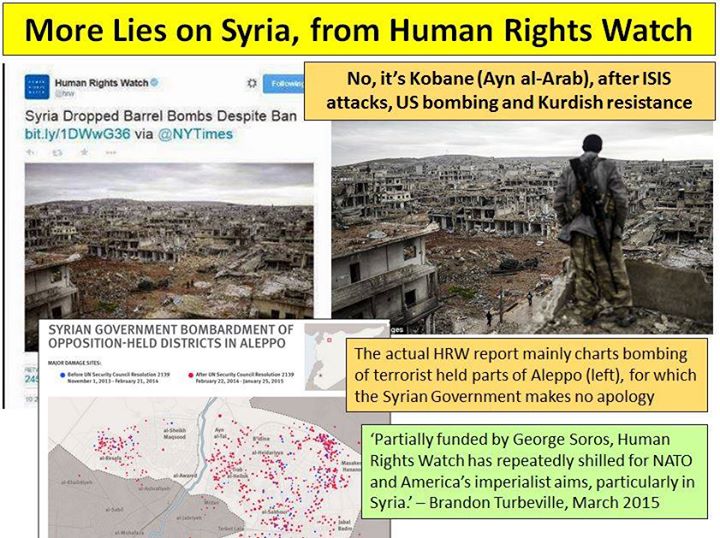


 Aletho News