Painful experiences of recent years should have taught the American people the danger that comes when the government and the mainstream press adopt a pleasing but false narrative, altering the facts to support a “good guy v. bad guy” scenario, such as is now being done regarding the history of Syrian peace talks.
The preferred narrative now is that American military force against Syria is needed not only to punish President Bashar al-Assad for allegedly using chemical weapons but to compel his participation in peace talks aimed at ending the civil war. That is a storyline that has slipped into U.S. “news” articles in recent days.
For instance, on Friday, the New York Times’ Michael Gordon stripped out the actual history of why the opposing sides of the Syrian civil war have not come together for planned meetings in Geneva. Instead, Gordon placed the blame on Assad and on obstacles partly the fault of the Russians, leaving out the fact that it was the U.S.-supported Syrian opposition that has repeatedly torpedoed the talks.
Gordon wrote: “State Department officials initially said the peace conference might occur before the end of May, but plans became bogged down in differences between the United States and Russia, and the conference has yet to be held.
“And the Obama administration [regarding its expected missile strike against Syrian government positions] did not articulate a comprehensive military strategy that would — in concert with allies — be certain to weaken the Assad government to the point that it would be willing to cede power and negotiate.”
So, you are supposed to believe that “our” side – the brave “opposition” in league with the U.S. State Department – is ever so reasonable, wanting peace and eager to negotiate, but that “their” side – both the evil Assad and his troublemaking Russian allies – is unwilling to take difficult steps for peace.
Except that this storyline from Gordon and other mainstream journalists isn’t accurate. Indeed, from May to July. the U.S. news media, including the New York Times, reported a different scenario: that Assad had agreed to participate in the Geneva peace talks but that the opposition was refusing to attend.
On July 31, for example, Ben Hubbard of the New York Times reported that “the new conditions, made by the president of the opposition Syrian National Coalition, Ahmad al-Jarba, … reflected a significant hardening of his position. He said that the opposition would not negotiate with President Bashar al-Assad or ‘his clique’ and that talks could begin only when the military situation in Syria was positive for rebel forces.”
The opposition has spelled out other preconditions, including the need for the United States to supply the rebels with more sophisticated weapons and a demand that Assad’s Lebanese Hezbollah allies withdraw from Syria. The most recent excuse for the rebels not going to Geneva is the dispute over Assad’s alleged use of chemical weapons.
Yet, even if Gordon and other mainstream journalists sympathize with the opposition’s reasons for staying away from the peace talks, reporters shouldn’t alter the narrative to shape U.S. public opinion. That is a case of journalistic malfeasance reminiscent of the way the Times and other news outlets manufactured a case for war with Iraq in 2002-2003.
Indeed, Gordon played a key role in that propaganda effort as well, coauthoring with Judith Miller the infamous Times article on Sept. 8, 2002, touting the false claim that Iraq was purchasing aluminum tubes for use in building nuclear weapons, the story that gave rise to the memorable refrain from President George W. Bush and his aides that they couldn’t let “the smoking gun” be “a mushroom cloud.”
Though Miller eventually was forced to resign from the Times – after her level of collaboration with the Bush administration’s neocons was exposed – Gordon escaped any serious accountability, remaining the newspaper’s chief military correspondent.
But Gordon is far from alone these days in spinning a more pleasing black-and-white narrative about Syria. It apparently seems to many mainstream U.S. journalists that it’s nicer to portray “our” side as favoring peace and going the extra mile to negotiate a cease-fire and “their” side as intransigent and eager for more bloodshed.
And, if the facts don’t support that scenario, you just leave out some and make up others.
~
Investigative reporter Robert Parry broke many of the Iran-Contra stories for The Associated Press and Newsweek in the 1980s. You can buy his new book, America’s Stolen Narrative, either in print here or as an e-book (from Amazon and barnesandnoble.com).
August 30, 2013
Posted by aletho |
Deception, Mainstream Media, Warmongering | Bashar al-Assad, Iraq War, New York Times, Robert Parry, Syria, United States |
Leave a comment
By PAUL GOTTINGER | August 30, 2013
The Nobel Peace Prize Laureate himself, Obama, weighed in on the human rights abuses being carried out by the U.S. trained and funded General Abdel Fattah el-Sisi in Egypt on August 23 saying “We care deeply about the Egyptian people,” and “We deplore violence against civilians.” These statements came after a vicious attack on protestors on August 14 that Human Rights Watch called, “most serious incident of mass unlawful killings in modern Egyptian history.”
The day of the Egyptian security forces attack on the non-violent protestors John Kerry did his best to conjure up indignation in response to the events. In the stiff and passionless manner of a marionette, which is convincing only in that he is “deeply concerned” with not forgetting his lines, he stated, “The violence is deplorable.”
So one would imagine this peacenik president who is deeply troubled by the violence in Egypt would unleash the hoards of humanitarians to protect the Egyptian civilians he cares so much about. But instead Obama stated, “America cannot determine the future of Egypt. That’s a task for [Egyptians].”
Then on August 19 Chuck Hagel changed the tone slightly (he’s the Secretary of Defense, so he has to sound tough) by focusing on America’s impotence in regards to Egypt. He stated, “[The U.S.’] ability to influence the outcome in Egypt is limited” and that “All nations are limited in their influence in another nation’s internal issues”.
On August 22 the LA Times echoed much the same stating, “Obama’s inability to ease the crisis reflects America’s diminished ability to influence political outcomes in [Egypt].”
The media continued the theme of failing U.S. influence in Egypt by focusing on the fact that the three richest monarchies in the gulf pledged $12 billion in cash and loans to Egypt. The Wall Street Journal wrote, ‘The U.S.’s closest Middle East allies undercut American policy in Egypt by encouraging the military to confront the Muslim Brotherhood rather than reconcile, U.S. and Arab officials said.’
The idea we’re supposed to have about Obama’s policy towards Egypt couldn’t be clearer: Obama would really love to stop all that awful violence in Egypt, but unfortunately America just isn’t powerful enough to save everyone. Come on, Obama isn’t superman.
The consistency with which the mainstream media adhered to this message demonstrates the strict discipline the major newspapers maintain in their role as ideological managers.
But just as the population of most of the planet was about to collectively erupt in simultaneous celebration at the end of American military hegemony, Obama stated he was considering a military strike on Syria.
We’re supposed to swallow that the situation in Egypt is beyond the realm of American power, but Syria, where the U.S. has significantly less influence, is within the capabilities of the U.S.
Apparently the forecast of the decline of American power from the mainstream media was a bit premature. Perhaps there is a lesson here: whatever the mainstream media is saying about U.S. foreign policy, you can be almost certain it’s not true.
However, it is true that U.S. power has been in decline since the end of World War II when it was at its most powerful, but the U.S. still is far and away the most powerful country in the world. This will likely be the case for a long time to come.
In order to understand the cynicism of Obama’s rhetoric, one must be familiar with the U.S.’ long record of support for brutal dictators with awful human rights records. This is especially the case in Egypt where the U.S. supported Anwar El Sadat beginning in the early 1970s, and also supported his successor Hosni Mubarak until nearly the end of the 2011 protests.
If the Peace Laureate president had any sincerity with regards to stopping the human rights abuses in Egypt he could pressure the military government there. With Egypt’s small economy (a GDP of around 260 billion dollars) the military government could be easily bought, or enticed with a long stalled IMF deal and debt forgiveness. This is especially true because the Egyptian economy has suffered serious unemployment and inflation for years.
Even if the U.S. didn’t want to spend a dime on Egypt it could take Turkey’s suggestion and bring the issue of violence against civilians to the UN Security Council and Arab League with the hopes of influencing the military government.
The U.S. could also assert its influence on its close allies the Gulf States and Israel. But the U.S. is fine with the military government in Egypt and allows the aid from the Gulf States to reach Egypt.
Another instructive element to the political crisis in Egypt was the Obama administration’s fake attempts to resolve the situation diplomatically.
The New York Times reported that Chuck Hagel made, “17 personal phone calls” to the Egyptian military government, but they “failed to forestall” the crisis. Perhaps Hagel would have had more luck if he tried contacting the General el-Sisi on Facebook.
The next act in the made for New York Times special was the diplomatic trip of John McCain and Lindsey Graham to Egypt on behalf of Obama. The New York Times reports Graham spoke to John McCain about General el-Sisi saying, “If this guy’s voice is indicative of the attitude, there’s no pulling out of this thing.”
This conjures up the image of the Egyptian military commander as a runaway train and all the bros from Washington are pulling as hard as they can on the break, but somehow the general is just too strong for them.
You see it’s imperative that the media portray the U.S. as powerless to stop the violence of dictators the U.S. likes. However, when the U.S. doesn’t care for the leader, be they democratically elected like Hamas in 2006, or Chavez in 2002, or a dictator like Saddam, Qaddafi, or Assad, then the U.S. is capable of anything, usually devastating violence.
Just when you think there is not a sensible member of the U.S. government John McCain stated that he recommended the U.S. cut aid to Egypt. But the reason he gave for why he recommended this was telling. He said, “[the U.S.] has no credibility. ”We know that the administration called the Egyptians and said, ‘look, if you [have] a coup, we’re going to cut off aid because that’s the law.’ We have to comply with the law. And … this administration did not do that after threatening to do so.”
McCain’s reasoning for supporting a cut to aid has nothing to do with protecting human rights in Egypt, but is solely about American credibility. The logic is this: if the U.S. makes threats, we have to follow threw with them. This is the same logic used when raising a child, which tells us much about how the U.S. views its relationship to Egypt and much of the rest of the world.
When we put aside the dark theatrics of the Obama administration’s rhetoric it is obscenely obvious that el-Sisi and the Egyptian military have very close connections to the U.S. and serve U.S interests.
For decades the Egyptian leaders have played an important role for the U.S. by allowing U.S./Israel to act with impunity against the Palestinians.
The closeness of the ties between the Egyptian military and the U.S. is demonstrated by the fact that General el-Sisi spent a year at the Army War College in Pennsylvania in 2006. The same Army War College trains 500-1000 Egyptian military officers every year.
Since 1979 Egypt has received the 2nd most bilateral aid, behind only Israel, totaling 68 billion dollars. The U.S. buys relationships with the militaries of countries like Egypt to insure influence.
This is why Obama has allowed and will continue to allow the human right abuses to continue in Egypt. Despite his pretty talk and composed outrage, he actually is just fine with protestors being gunned down in the street, the brutal repression of a political party (Muslim Brotherhood), the prevention of freedom of speech, and the destruction of Egypt’s brief experiment with democracy (which resulted from the sacrifice of 800 hundred lives with 6,000 injured and 12,000 hauled before military courts).
Obama is A okay with military curfews and a state of emergency. Obama has no problem with attacks on Christian churches, attacks on journalists, and “Nightmare scenes that Egyptians could never have imagined could take place in [their] country.” Obama sees nothing wrong with tear gas being fired into hospitals, and Islamists being portrayed as terrorists or even animals.
Obama has no problem with any of this because he knows he can count on el-Sisi to follow U.S. orders. Egyptian civil society’s destruction simply makes controlling the country easier for the U.S. […]
Whether or not the U.S. knew about the military coup ahead of time the U.S. seems to be following a predictable PR plan.
1. The Obama administration strongly condemns the violence and calls for a return to democracy. 2. There is a semantic battle waged over whether or not to classify the events as a coup. 3. When it looks bad to support a thug overtly, you engage in superficial detachment from the leader of the coup. (This is the canceling of the joint military operations) 4.Then if necessary, as in the 2009 coup to the somewhat progressive Manuel Zelaya in Honduras, cut some amount of aid as a slap on the wrist, but then quietly restore it later.
Obama’s policies are all predictable. It’s the same story once again: the U.S. destroys yet another country. The revolution in Egypt is back at square one. Morsi is detained and Mubarak has been released from prison. The U.S. has done its best to destroy the progress of the Arab Spring.
But more protests are being called for in Egypt on Friday, August 30. The question is can Egypt regain the spirit of the January 25 revolution and continue to fight for basic rights? Perhaps for us as Americans the more important question is how much longer will Americans tolerate the dark theatrics of our government’s foreign policy? When we witness the immense bravery of the Egyptians challenging their government and getting massacred don’t we have a responsibility to challenge our government when the risks for us are far less? As Americans we must work to protect victims of U.S. violence, and the best way for us to do that is to get off the Internet and get in the street.
Paul Gottinger can be reached at paul.gottinger@gmail.com
Source
August 30, 2013
Posted by aletho |
Deception, Mainstream Media, Warmongering, Progressive Hypocrite, Solidarity and Activism, Timeless or most popular | Chuck Hagel, Egypt, Egyptian Armed Forces, Human rights, John McCain, New York Times, Obama, United States |
Leave a comment
By Michael McGehee · NYTX · August 27, 2013
In George Orwell’s classic dystopian novel 1984, Winston Smith, the protagonist, is a clerk for the Records Department at the Ministry of Truth. Winston’s job is to rewrite Oceania’s history, news article by news article, as official party policy changes. The idiom “down the memory hole” comes from this portion of Orwell’s book and refers to the destruction of Winston’s efforts, after making revisions.
When one knew that any document was due for destruction, or even when one saw a scrap of waste paper lying about, it was an automatic action to lift the flap of the nearest memory hole and drop it in, whereupon it would be whirled away on a current of warm air to the enormous furnaces which were hidden somewhere in the recesses of the building. — George Orwell, 1984, Chapter 4
The website NewsDiffs.org shows us how this function exists today, in the real world, where articles by major news organizations are rapidly revised dozens of times following publication and without editors providing any explanatory note. By comparing and contrasting these revisions, what goes down the proverbial memory hole, along with what simply does not make it to publication, readers are provided with a keen insight into how major news outlets operate as the Records Department for dominant power systems in the West.
Take, for example, the New York Times’ article on the alleged use of chemical weapons in Syria, “Kerry Cites Clear Evidence Of Chemical Weapon Use.”
According to NewsDiffs the article has gone through 22 revisions since yesterday. While some of them were for simple grammar corrections, like changing “to” to “too,” many of the changes were considerable, and offered a hawkish, pro-war, bias to the U.S. and its Western allies, particularly Washington’s usual partners: the United Kingdom and Israel.
The first major change was the addition of this remark made by U.K.’s Foreign Secretary William Hague: “Is it possible to respond to chemical weapons without complete unity on the U.N. Security Council? I would argue yes it is, otherwise it might be impossible to respond to such outrages, such crimes, and I don’t think that’s an acceptable situation.”
Already readers can see how the “paper of record” is shaping the article as a public relations piece on behalf of those who have been working tirelessly for years on bringing down the government in Syria. Worse, no space is provided to point out that, unless in response to a specific armed attack, use of force without a U.N. mandate is unlawful. Nor is space given to question the difference between “possible” and “legal.” Is it possible the West would violate international law? The historical record is affirmative.
The next significant revision included comments added by Israeli officials that it was “crystal clear” that Assad’s forces used chemical weapons. The evidence? None is provided.
The next two major revisions were updates about how the U.N. inspector team came under sniper fire (here and here). While the two edits show confusion as to who was likely behind the attacks it is noted that the U.N. convoy was being “escorted by Syrian security forces.” No commentary is provided as to what interests the rebels may have in preventing the investigation. This could have been an important moment to do so, especially considering that The Wall Street Journal reported earlier that the U.S. was trying to stop the investigation.
Then there are the past incidences we have reported on: Washington signing off on a plan to use chemical weapons and then blame it on the Syrian government, as well as rebel fighters getting caught with sarin nerve gas in Turkey (see here and here).
In another significant revision space is provided to the U.S. Secretary of Defense Chuck Hagel and his argument for intervention: “if there is any action taken, it will be in concert with the international community and within the framework of legal justification.”
The pattern continues: the NYT article is a morphing argument for war.
The following change provides space to Russia to warn against the use of military force and to indicate that the rebels might have been behind alleged chemical attack. But, this, like Syria’s account, doesn’t make it to the final edit that we have to-date.
When the NYT gets around to offering limited space to the Syrian government they still manage to warp the paragraph in derision:
[President Assad] said government troops would have risked killing their own forces if they had used chemical weapons. “This contradicts elementary logic,” news reports quoted him as saying. It is “not us but our enemies who are using chemical weapons,” he said, referring, as he usually does, to antigovernment rebels as “the terrorists.” [emphasis added]
And in the next edit the entire reference above is stricken out, leaving no space for the Syrian government to comment on the matter. While nearly all of the article has been given to anti-Assad officials to make threats, or shed crocodile tears over the war’s tragic costs, there is but one one-sentence paragraph that alludes to the possibility that the rebels were behind the attack, and even it is carefully constructed to cast doubt on the possibility:
“Obama administration officials said that Mr. Kerry’s statement was calculated to rebut the claims made by Syria and its longtime patron, Russia, that the rebels were somehow responsible for the chemical weapons attack, or that Mr. Assad had made an important concession by giving the United Nations investigators access.” [emphasis added]
Finally, the article is headlined as “Kerry cites evidence . . .,” but the final revision states: “In the coming days, officials said, the nation’s intelligence agencies will disclose information to bolster their case that chemical weapons were used by Mr. Assad’s forces.” In other words, no evidence is ever cited, just promised to be given later, much like was said with the last accusation that proved fruitless.
What we witness is the evolution of an article, not into a journalistic piece of integrity, truth, or impartial coverage, but into a mouthpiece for those who want war, and have invested years into the making. The Syrian conflict has been going for nearly three years, all during which the U.S. and its allies have been seeking to bring down the Assad government, turning a blind-eye to the crimes of the rebels, and thwarting efforts to reach a peaceful solution. The NYT article was so far revised and rewritten nearly two dozen times, with only minimal space provided to what could best be described as the “enemy” side of the conflict, and done so with contempt, showing that just as Washington has taken sides on the conflict, so too has the New York Times.
August 28, 2013
Posted by aletho |
Deception, Mainstream Media, Warmongering, Timeless or most popular, War Crimes | Chuck Hagel, New York Times, Syria |
Leave a comment
The liberal warhawks are groping around for a pretext they can call “legal” for waging war against Syria, and have come up with the 1999 “Kosovo war”.
This is not surprising insofar as a primary purpose of that US/NATO 78-day bombing spree was always to set a precedent for more such wars. The pretext of “saving the Kosovars” from an imaginary “genocide” was as false as the “weapons of mass destruction” pretext for war against Iraq, but the fakery has been much more successful with the general public. Therefore Kosovo retains its usefulness in the propaganda arsenal.
On August 24, the New York Times reported that President Obama’s national security aides are “studying the NATO air war in Kosovo as a possible blueprint for acting without a mandate from the United Nations.” (By the way, the “air war” was not “in Kosovo”, but struck the whole of what was then Yugoslavia, mostly destroying Serbia’s civilian infrastructure and also spreading destruction in Montenegro.)
On Friday, Obama admitted that going in and attacking another country “without a U.N. mandate and without clear evidence” raised questions in terms of international law.
According to the New York Times, “Kosovo is an obvious precedent for Mr. Obama because, as in Syria, civilians were killed and Russia had longstanding ties to the government authorities accused of the abuses. In 1999, President Bill Clinton used the endorsement of NATO and the rationale of protecting a vulnerable population to justify 78 days of airstrikes.”
“It’s a step too far to say we’re drawing up legal justifications for an action, given that the president hasn’t made a decision,” said a senior administration official, who spoke on the condition of anonymity to discuss the deliberations. “But Kosovo, of course, is a precedent of something that is perhaps similar.”
Ivo H. Daalder, a former United States ambassador to NATO, suggests that the administration could argue that the use of chemical weapons in Syria amounts to a grave humanitarian emergency, just as the Clinton administration argued in 1999 that “a grave humanitarian emergency” presented the “international community” with “the responsibility to act”.
This amounts to creative legality worthy of the planet’s number one Rogue State.
An Illegal War as Precedent for More War
The US/NATO war against Yugoslavia, which used unilateral force to break up a sovereign state, detaching the historic Serbian province of Kosovo and transforming it into a US satellite, was clearly in violation of international law.
In May 2000, the distinguished British authority on international law, Sir Ian Brownlie (1936-2010), presented a 16,000-word Memorandum, evaluating the war’s legal status for the Select Committee on Foreign Affairs of the British Parliament.
Brownlie recalled that key provisions of the United Nations Charter state quite clearly that “All Members shall refrain in their international relations from the threat or use of force against the territorial integrity or political independence of any State, or in any other manner inconsistent with the Purposes of the United Nations.”
Brownlie added that the alleged right to use force for humanitarian purposes was not compatible with the UN Charter.
During the past decade, the Western powers have invented and promoted a theoretical “right to protect” (R2P) in an effort to get around the UN Charter in order to clear the way for wars whose final purpose is regime change. The use of R2P to overthrow Gaddafi in Libya gave the game away, ensuring Russian and Chinese opposition for any further such manoeuvre in the UN Security Council.
Concerning the Kosovo war, in his Memorandum Professor Brownlie reached the following major conclusions:
– The primary justification for the bombing of Yugoslavia was always the imposition of the NATO plans for the future of Kosovo. It was in this context that the bombing campaign was planned in August 1998.
– The threats of massive air strikes were made in the same context and were first made public in October 1998. Neither the purpose of the planned air strikes nor their implementation related to events on the ground in Kosovo in March 1999.
– The cause of the air strikes was quite simple: given that Yugoslavia had not given in to threats, the threats had to be carried out.
– The legal basis of the action, as presented by the United Kingdom and other NATO States, was at no stage adequately articulated.
– Humanitarian intervention, the justification belatedly advanced by the NATO States, has no place either in the United Nations Charter or in customary international law.
– If the view had been held that the Permanent Members of the Security Council would recognise the need for humanitarian action, then no doubt a resolution would have been sought.
– The intentions of the United States and the United Kingdom included the removal of the Government of Yugoslavia. It is impossible to reconcile such purposes with humanitarian intervention.
– The claim to be acting on humanitarian grounds appears difficult to reconcile with the disproportionate amount of violence involved in the use of heavy ordnance and missiles. The weapons had extensive blast effects and the missiles had an incendiary element. A high proportion of targets were in towns and cities. Many of the victims were women and children. After seven weeks of the bombing at least 1,200 civilians had been killed and 4,500 injured.
– In spite of the references to the need for a peaceful solution to be found in Security Council Resolutions, the public statements of Mrs Albright, Mr Cook, Mr Holbrooke, and others, and the reiterated threats of massive air strikes, make it very clear that no ordinary diplomacy was envisaged.
The “Kosovo treatment”
As a final synopsis, Brownlie wrote a prophetic note on future use of “the Kosovo treatment”:
“The writer has contacts with a great number of diplomats and lawyers of different nationalities. The reaction to the NATO bombing campaign outside Europe and North America has been generally hostile. Most States have problems of separatism and could, on a selective basis, be the objects of Western ‘crisis management’. The selection of crises for the ‘Kosovo’ treatment will depend upon the geopolitical and collateral agenda. It is on this basis, and not a humanitarian agenda, that Yugoslavia is marked out for fragmentation on a racial basis, whilst Russia and Indonesia are not.”
He added: “Forcible intervention to serve humanitarian objectives is a claim which is only open to powerful States to make against the less powerful. The fate of Yugoslavia will have caused considerable damage to the cause of non-proliferation of weapons of mass destruction.”
The Brownlie Memorandum to the British Parliament is the most thorough assessment of the legal status of the Kosovo War. It is quite remarkable that the liberal warhawks around Obama talk of using that war as a “legal precedent” for a new war against Syria.
This amounts to saying that a crime committed once becomes a “precedent” to justify the crime being committed the next time.
How Many Times Can You Fool Most of the People?
If understood correctly, the Kosovo war was indeed a precedent that should act as a warning signal.
How many times can the United States use a false alarm to start an aggressive war? Non-existent “genocide” in Kosovo and Libya, non-existent weapons of mass destruction in Iraq, and now what looks to much of the world like a “false flag” chemical weapons attack in Syria.
The United States habitually announces the presence of a desired casus belli, dismissing demands for concrete evidence.
In Kosovo, the United States obtained withdrawal of international observers who could have testified whether or not there was evidence of “genocide” of Kosovars. The accusations escalated during the war, and when, afterwards, no evidence of such mass murder was found, the matter was forgotten.
In Iraq, there was never any proof of WMD, but the US went ahead and invaded.
In Libya, the pretext for war was a misquoted statement of Gaddafi threatening a “massacre of civilians” in Benghazi. This was exposed as a fake, but again, NATO bombed, the regime was toppled, and the pretext falls into oblivion.
Sunday, just as the Syrian government announced readiness to allow international inspectors to investigate allegations of chemical weapons use, the White House responded, “too late!”
A senior Obama administration official demanding anonymity (one can reasonably guess the official was Obama’s hawkish National Security Advisor Susan Rice) issued a statement claiming that there was “very little doubt” that President Bashar al-Assad’s military forces had used chemical weapons against civilians and that a promise to allow United Nations inspectors access to the site was “too late to be credible.”
In the world beyond the beltway, there is a great deal of doubt – especially about the credibility of the United States government when it comes to finding pretexts to go to war. Moreover, setting “chemical weapons” as a “red line” obliging the US to go to war is totally arbitrary. There are many ways of killing people in a civil war. Selecting one as a trigger for US intervention serves primarily to give rebels an excellent reason to carry out a “false flag” operation that will bring NATO into the war they are losing.
Who really wants or needs US intervention? The American people? What good will it do them to get involved in yet another endless Middle East war?
But who has influence on Obama? The American people? Or is it rather “our staunchest ally”, who is most concerned about rearranging the Middle East neighborhood?
“This situation must not be allowed to continue,” Prime Minister Benjamin Netanyahu said, expressing remarkable concern for Syrian civilians “who were so brutally attacked by weapons of mass destruction.”
“The most dangerous regimes in the world must not be allowed to possess the most dangerous weapons in the world,” Netanyahu added.
Incidentally, polls have been taken showing that for much of the world, the most dangerous regime in the world is Israel, which is allowed to possess the most dangerous weapons – nuclear weapons. But there is no chance that Israel will ever get “the Kosovo treatment”.
DIANA JOHNSTONE is the author of Fools Crusade: Yugoslavia, NATO and Western Delusions. She can be reached at diana.josto@yahoo.fr
August 26, 2013
Posted by aletho |
Deception, Mainstream Media, Warmongering, Timeless or most popular, Wars for Israel | Kosovo, NATO, New York Times, Syria, United Nations Charter, United States, Yugoslavia |
Leave a comment
The following is the 79th update to my comprehensive, ongoing compendium of constant predictions and prognostications regarding the supposed inevitability and imminence of an alleged Iranian nuclear weapon, hysterical allegations that have been made repeatedly for the past three decades.
As predicted, tautologies based upon the speculative allegation that Iran is “pursuing a parallel track to a nuclear capability through the production of plutonium” are rapidly proliferating, just in case a deal is struck between Iran and the United States that alleviates concerns over Iran’s enrichment of uranium.
In an opinion piece in the New York Times, master–alarmist Amos Yadlin, former head of Israeli Military Intelligence and current director of Israel’s Institute for National Security Studies, repeats the tired talking points that we’ve heard again and again by now.
In an article entitled, “Iran’s Plan B for the Bomb” – a headline swiped almost verbatim from the Telegraph‘s February 26 report called “Iran’s ‘Plan B’ for a Nuclear Bomb” about the same exact thing – Yadlin and a colleague writes that, according to the IAEA, “Iran already has enough low-enriched uranium to produce several nuclear bombs if it chooses to further enrich the fuel,” adding that “Western experts like Graham T. Allison Jr. and Olli Heinonen estimate that if Iran decided to develop a bomb today, it could do so within three to five months.”
In fact, a recent article by Graham Allison in The Atlantic demonstrates exactly the type of disinformation, conventional wisdom and faulty assumptions that passes for expert analysis in the Western debate over the Iranian nuclear program.
Yadlin also cites a recent ISIS study, which “estimates that at the current pace of installation, Iran could reduce its breakout time to just one month by the end of this year. The report also estimates that at that pace, by mid-2014 Iran could reduce the breakout time to less than two weeks.”
Using the recent overwrought reporting on Iran’s nascent Arak reactor, Yadlin explains, “Some American and European officials claim that Iran could produce weapons-grade plutonium next summer” which he says means “Iran is making progress on this alternative track.” Yadlin goes on:
A functioning nuclear reactor in Arak could eventually allow Iran to produce sufficient quantities of plutonium for nuclear bombs. Although Iran would need to build a reprocessing facility to separate the plutonium from the uranium in order to produce a bomb, that should not be the West’s primary concern. Western negotiators should instead demand that Iran shut down the Arak reactor.
Hilariously, Yadlin then proceeds to try and justify the cause for concern, writing without irony, “Of the three countries that have publicly crossed the nuclear threshold since the Nuclear Non-Proliferation Treaty entered into force in 1970, two — India and North Korea — did so via the plutonium track.”
Catch the operative word there? Publicly.
Everyone knows that Israel crossed that very same threshold decades before India, Pakistan or North Korea. Yadlin is also clever enough to note 1970 as the beginning of his timeline, since Israel already had a fully-functional, undeclared nuclear weapons program by the late 1960s – a program still unacknowledged and unmonitored.
Yadlin concludes by demanding the United States continue its useless policy of “sanctions and a credible military threat” and warns that the “moderate messages” emanating from the Iranian leadership since the June election of Hasan Rouhani “should not be allowed to camouflage Iran’s continuing progress toward a bomb.”
For Israeli officials past and present, when it comes to Iran the lies never stop.
August 15, 2013
Posted by aletho |
Deception, Mainstream Media, Warmongering, Timeless or most popular, Wars for Israel | Amos Yadlin, Graham T. Allison, Iran, Israel, New York Times, Sanctions against Iran, United States |
Leave a comment
By Michael McGehee · NYTX · August 5, 2013
The way the New York Times presents Moscow’s rejection of Washington’s extradition request for Edward Snowden, the leaker of details on the massive NSA global spying program, one would think Russia is in the wrong.
According to last Friday’s front page article by Steven Lee Meyers and Andrew E. Kramer, “Defiant Russia Grants Snowden Year’s Asylum,” the words chosen reveal a lot about the paper’s tone.
Moscow was “defiant “ as they “infuriated” Washington by “brushing aside pleas.”
A look at the treatment of Bradley Manning to see how Washington might treat Snowden is apt, but this is not mentioned by Meyers and Kramer.
Nor do Meyers and Kramer mention Ilyas Akhmadov, a former Chechen separatist leader who is on Russia’s most-wanted list. Akhmadov lives in Washington.
Also missing from the coverage is how Moscow has had their requests for an extradition agreement ignored by Washington. As Newsweek reported last week: “The bottom line, Russian officials agreed, was that Snowden would be useful for Russia,” because “Moscow’s biggest complaint was that Washington ignored Russia’s idea to sign ‘an agreement for extradition,’ that would guarantee both sides a mutual exchange of bad boys.”
There is also a differential treatment provided to leakers and whistle-blowers, as opposed to those who commit serious crimes in service of the government.
While Bradley Manning faces more than 130 years in jail for leaking classified documents, consider the following:
Marine Staff Sergeant Frank Wuterich, a squad leader, participated in the brutal killings of 24 Iraqis in Haditha seven years ago. Many of the victims were women and children . A plea bargain on Wuterich’s case resulted in a drop in rank and conviction for dereliction of duty. No jail time.
As U.S. troops were leaving in December of 2011, Michael Schmidt, a New York Times reporter, stumbled upon hundreds of pages of U.S. military documents pertaining to the 2005 Haditha massacre. Schmidt reported on a testimony of a soldier who said the murders were not “remarkable” because, “It happened all the time, not necessarily in MNF-West all the time, but throughout the whole country.”
In 1995 three American soldiers kidnapped and raped a 12-year old Japanese girl. The three men got no more than seven years jail time.
Even Charles Graner and Lynndie England, who were found guilty of abuses in the Abu Ghraib torture scandal—where detainees were tortured, humiliated, beaten, raped, and killed—received no more than ten years in jail.
The writing on the wall is clear: sounding the alarm to the general public about widespread crime and corruption (some of which includes the kind of crimes I bring up above and below) can get you life in prison—but raping, torturing, and killing dozens of civilians will get you no more than a reduction in rank, or a fraction of the time in prison.
And it is more than the differential treatment. There is also the hypocritical attitude towards extradition. Mentioned above was the case of Akhmadov, but he is hardly an exception.
During the spring of 2000 Washington helped Tomas Ricardo Anderson Kohatsu, a Peruvian intelligence official accused of torture escape arrest, saying he was entitled to diplomactic immunity.
In October of 2001, as Washington was asking the Taliban to turnover bin Laden, Haiti was asking Washington to turnover Emmanuel Constant for his role in a 1994 massacre. Washington was “defiant” as they “infuriated” Haiti by “brushing aside” their request.
Then there is Venezuela’s request for Luis Posada Carriles over his role in the 1973 bombing of a jet airliner that killed 73 people off the coast of Cuba.
Nearly a year ago Washington defied and infuriated Bolivia when they brushed aside the latter’s extradition request for former President Gonzalo Sanchez de Lozado, who was wanted for charges of genocide.
Also, there is Armando Fernandez Larios, a Chilean soldier who was part of The Caravan of Death, a death squad group that went from prison to prison in Chile, following the 1973 military coup, and executed prisoners. But it wasn’t this crime that got him in trouble in the U.S. It was his role in the assassination of Americans on American soil. Though, as SF Weekly reports:
Fernandez Larios later fell out of favor with his military. He cut a deal with the U.S. Justice Department, much of which remains secret. In exchange for providing information on the assassin and Chilean intelligence operations, he’d go to a federal prison for seven years and would never be deported to Chile. Argentina wanted to extradite Fernandez Larios for his alleged involvement in another political hit, but the plea agreement protected him from that as well.
And finally there is the case of Robert Seldon Lady, the former CIA station chief in Milan, who is wanted in Italy, along with 22 of Lady’s accomplices in the agency, for his role in the 2003 abduction of Abu Omar, an Egyptian cleric. Omar was renditioned to Egypt, where he was repeatedly tortured.
A more exhaustive search of Washington’s foreign policy could reveal a book’s worth of examples where Washington comes to the aid of kidnappers, torturers, terrorists, executioners, and war criminals, either to avoid extradition or be granted a punishment considerably less than what a whistle-blower can expect. And it is this context which the New York Times has conveniently left out of their coverage of both Bradley Manning and Edward Snowden.
August 5, 2013
Posted by aletho |
Subjugation - Torture, Timeless or most popular, War Crimes | Charles Graner, Edward Snowden, Frank Wuterich, Ilyas Akhmadov, Luis Posada Carriles, Lynndie England, New York Times, Robert Seldon Lady |
Leave a comment

Above: U.S. soldiers stuck in sand in Southern Afghanistan. (Photo by U.S. military)
In Matthew Rosenberg’s recent article “Despite Gains, Leader of U.S. Forces in Afghanistan Says Troops Must Stay” (July 29, 2013) he offers New York Times readers this lead paragraph:
Afghan forces are now leading the fight here. They managed an air assault last week, for example, and they may be winning the respect of the Afghan people. But the bottom line for Gen. Joseph F. Dunford Jr. is simple: Afghanistan still needs the United States and will for years to come.
Of course, the phrase “Afghan forces” is Washington-speak for the Northern Alliance, which is a motley group of tribal leaders, and terrorists in their own right.
But the Northern Alliance “may be winning the respect of the Afghan people”?
After nearly twelve years of war and occupation the very people the Northern Alliance claim to be liberating and representing have not given them popular support.
On the tenth anniversary of the 9/11 attacks the Washington Post reported that the Taliban “controls more than 90 percent of the country.”
According to the Council on Foreign Relations, “Before its ouster by U.S.-led forces in 2001, the Taliban controlled some 90 percent of Afghanistan’s territory.”
After twelve years of war and occupation the Taliban are just as strong as they were from the outset, if not stronger.
Perhaps that is why Rosenberg tells us what “the bottom line” for Gen. Joseph F. Dunford Jr. is: “Afghanistan still needs the United States and will for years to come.”
Not all in the media believe this.
Last month the BBC said “it has become increasingly clear to Nato that it cannot win militarily against the insurgents.”
When the U.S., who has an extreme advantage over the Taliban militarily, can make no major advancements in twelve years and the government still does not have “the respect of the Afghan people” it is hard to believe that “the problem” is that “most Americans no longer seem to believe that the United States needs the war in Afghanistan.”
Of course it does not help that from the beginning the Afghan people have opposed the war.
In October 2001, just as millions of Afghans were braving American bombardment, a thousand tribal leaders trekked to Peshawar, Pakistan where they meet to discuss their future. Peshawar was a popular place for the Mujahadeen to meet, and so the timing and place of this meeting proved to be historically significant.
USA Today covered the meeting in an article which said, “Some came over the mountains from Afghanistan on donkeys, some by sport-utility vehicle from plush villas in Pakistan. Some hobbled in, having lost a leg during two decades of unending war.” Hope for “a post-Taliban government” was running high, though it was stressed that, “Getting Afghanistan’s fractious groups to form a broad-based, post-Taliban government won’t be easy.” The only forces who did not show up were those that were aligning with the U.S.: the Northern Alliance and Zahir Shah, the exiled king. Yet:
Speakers at the conference sounded nearly identical themes. All opposed the US bombing campaign against Afghanistan, saying it was doing more to hurt ordinary Afghans than to unseat the Taliban leadership or to damage bin Laden’s al-Qa’eda terrorist network. Nearly all said they want to see a broad-based government replace the Taliban. A few said there is a place for moderate members of the Taliban in a new regime.
Ignoring the conference, the U.S. carried out a massive bombing campaign, right at the beginning of winter (which put millions of Afghans in critical danger). At the time it was reported that, “International aid organization officials say, however, that around 5 million Afghans are in danger of starvation because the nation’s borders are sealed and food supplies are diminishing by the day — meaning that only a tiny percentage of the hungry are receiving the U.S. food.”
In fact, even months after the war and the Taliban was toppled, U.S. authorities were admitting they did not know who was behind the terror attacks that was argued to be the legal and moral basis for the war and occupation of Afghanistan. FBI Director Robert Mueller told the press in June 2002 that, “I think we’re confident that [bin Laden] was one of the key figures,” and that, “We think the masterminds of it were in Afghanistan.” U.S. authorities only “think” they know who was involved or behind the attacks eight months after they began bombing the country and subjecting an already impoverished people to more hardships.
Naturally, all of this is ignored by Rosenberg. But to make matters worse, we read that for General Dunford, Al Qaeda is “the reason the United States came to Afghanistan .”
Here Rosenberg fails to mention how the Taliban made numerous offers to the U.S. to turnover bin Laden. While some requests asked for proof of his involvement in the 9/11 terror attacks—a reasonable thing to ask for in all extradition requests—some offered to turn him over to a third party if the U.S. would stop the bombing. The Bush administration rejected the offers (see here and here).
Then there is the fact that the U.S. is responsible for sending bin Laden, and thus Al Qaeda, to Afghanistan. Former CIA agent, Milt Bearden wrote in the New York Times back in August of 1999 that, “Washington should open a serious dialogue with the Taliban, who are as eager to rid themselves of their bin Laden problem as we are to bring him to justice,” and that:
After all, Osama bin Laden is in Afghanistan because we insisted that the Sudanese expel him from the Horn of Africa in 1996. Had he stayed in the Sudan, it can be argued that he, like the terrorist Carlos the Jackal, would by now have been quietly spirited away and be sitting in jail.
And here is another bombshell that the New York Times has yet to cover: according to The Christian Science Monitor, “The US military has been ignoring warnings that its spending in Afghanistan is funding Al Qaeda and the Taliban.”
What are NYT readers to make of a situation in which no gains have been made in twelve years of war, in which the Afghan people don’t “respect” us or our allies, where even the BBC says it is hopeless, and where our own spending is going to the very groups we claim to be fighting? That’s right: they cannot make anything of the situation because apparently that is not “all the news fit to print.”
August 1, 2013
Posted by aletho |
Deception, Illegal Occupation, Mainstream Media, Warmongering, Timeless or most popular | Afghanistan, al-Qaeda, New York Times, Northern Alliance, Osama Bin Laden, Taliban, United States, War in Afghanistan (2001–present) |
Leave a comment
The New York Times recently published a news brief, reporting that Israel is going to re-investigate an incident in which an American citizen, Tristan Anderson, was permanently maimed.
Anderson suffered extensive brain damage (part of his frontal lobe was destroyed) and paralysis, and was blinded in one eye, after Israeli soldiers shot him with a tear gas canister intended as a “barricade penetrator” from inappropriately close range. According to eyewitnesses, Anderson was shot as he was taking photographs in a Palestinian village after an unarmed protest against the illegal and extensive confiscation of village land.
Israeli forces have a history of shooting unarmed protesters with these canisters, which one expert likens to “a small missile.”
Yet the New York Times report, “Israel Reopens Inquiry Into Activist’s Injury” (July 11, 2013, P. 9) reveals few of these details.
The Times article states that Anderson was injured when he was hit in the head by a tear gas canister and is partly paralyzed and blind in one eye, but does not mention his extensive brain damage and that his paralysis is over half his body. It doesn’t reveal that the type of canister used is extraordinarily destructive or that it was fired at such close range.
The report also omits the fact that this incident is part of a pattern, even though Israeli forces have killed at least two Palestinians with these canisters, and shot out the eye of an American student with another. According to a report by an Israeli organization, Israeli forces “frequently fire tear-gas canisters directly at demonstrators.”
The Times report states that the protest was “against the extension of Israel’s separation barrier in the West Bank” without citing the villagers’ actual complaint — the confiscation of their land and, thus, livelihood by Israel. It similarly fails to mention that over previous decades Israel confiscated over 80 percent of the village land and now intends to take between a quarter and a third of what remains to build the “barrier.”
Finally, the Times report repeats, without attribution, the Israeli security forces’ claim that the shooting occurred “during a clash,” implying that it happened accidentally during a violent engagement, ignoring eyewitness testimony that the protest had dissipated and most people had gone home.
The byline on the Times report is Myra Noveck. Noveck has bylined a number of stories for both the New York Times and its European affiliate the International Herald Tribune, where ZoomInfo lists her as a contributor.
Noveck is frequently cited in New York Times news reports as a contributor to stories, and a prominent Israeli newspaper calls her the Times’ “deputy bureau chief” for the Times’ Jerusalem bureau, its bureau for covering Israel-Palestine.
From information she has posted online, it appears that Noveck is an American who moved to Israel after college. According to Torah in Motion, which promotes Jewish dialogue and speakers, two of her children were serving in the Israeli military as of 2012. It is unclear whether her children are currently still on active duty or whether they are now serving as Israeli reserve soldiers.
In either case, it appears that while Noveck has been writing and contributing to news reports about Israel and about the Israeli military, her children have been serving in it.
Such a situation appears to constitute a clear conflict of interest – even according to the Times’ own ethics standards – and should normally cause a journalist to be assigned to a different area of reporting.
When it came to light in 2010 that then chief of the Times’ Jerusalem bureau, Ethan Bronner, had a son in the Israeli military, even the Times’ own ombudsman concluded that Bronner should be reassigned.
In response to requests for information and interviews with Noveck and Times Executive Editor Jill Abramson, a Times spokesperson issued a written statement claiming that Noveck is “not a reporter,” but merely a “long-time news assistant in The Times’s bureau in Jerusalem.”
The statement went on to say: “She works under the direction of our bureau chief primarily doing translation and research. She is an Israeli citizen. If she has children and they are also Israeli citizens, presumably they would be required to serve in the military*. This situation would not constitute a ‘breach with impartiality.’”
I wrote back pointing out (1) that Times’ conflict of interest requirements include family members and (2) that Noveck’s byline appeared on a news report. The spokesperson then admitted that Noveck “on rare occasions received a byline” but still maintained that “she is not a reporter.”
However, the Times’ published ethics standards generally extend ethical requirements ”to all newsroom and editorial page employees, journalists and support staff alike.”
Reporters Frequently Have Ties to Israeli Military
This incident is part of a pattern of ethics violations concerning reporting on Israel.
Isabel Kershner, a senior Times reporter in the region, is an Israeli citizen whose husband, according to Fairness and Accuracy in Reporting (Fair) works for an Israeli organization, the Institute for National Security Studies (INSS), which has close ties to the Israeli military and is “tasked with shaping a positive image of Israel in the media.”
A FAIR study of articles that Kershner had written or contributed to since 2009 found they had overwhelmingly relied on the INSS for analysis about events in the region.
A multitude of journalists at the Times and elsewhere have had close personal and family ties to the Israeli military – almost none of them ever disclosed, including the previous Times bureau chief Ethan Bronner, as noted above.
Jonathan Cook, a British journalist based in Israel, quotes a Jerusalem bureau chief who stated: “… Bronner’s situation is ‘the rule, not the exception. I can think of a dozen foreign bureau chiefs, responsible for covering both Israel and the Palestinians, who have served in the Israeli army, and another dozen who like Bronner have kids in the Israeli army.”
Cook writes that the bureau chief explained: “It is common to hear Western reporters boasting to one another about their Zionist credentials, their service in the Israeli army or the loyal service of their children.”
For more information on journalists’ pro-Israel conflict of interest violations see ”US Media and Israeli Military: All in the Family,” “Jodi Rudoren, Another Member of the Family: Meet the New York Times’ New Israel-Palestine News Chief,” “Ethan Bronner’s Conflict With Impartiality,” and ”AP’s Matti Friedman: Israeli citizen and former Israeli soldier.”
It would appear from this pervasive pattern that many of the owners, editors, and journalists who determine U.S. reporting on Israel-Palestine believe that normal ethics requirements don’t apply in regard to Israel.
This situation holds serious consequences for the American public. American taxpayers give Israel over $8 million per day (more than to any other country) and, as a result, most of the world views Americans as responsible for Israeli actions, exposing us to escalating risks.
Osama Bin Laden and others have often cited U.S. support for Israeli crimes as a primary cause of hostility against us.
It is thus essential that Americans be accurately and fully informed. This is unlikely to happen while those reporting for American news media (whether “reporters” or “assistants”) have such close ties to Israel and its powerful military forces.
Witnesses Describe Soldiers Shooting Protesters with High-Speed Canisters
Anderson was shot in 2009 after a protest in the Palestinian village of Ni’lin in the West Bank. Since 2007 Ni’lin villagers and others have been demonstrating against the illegal Israeli confiscation of up to a third of the village’s land (following previous confiscations in which the majority of the village’s original land was taken by Israel).
Gabby Silverman, a witness to the shooting of Tristan Anderson, describes the incident: “Tristan had wandered off with his camera. I was looking at him. And out of nowhere, they opened fire on us. The first shot they fired, they got Tristan.”
Anderson is now in a wheelchair with permanent brain damage. He is hemiplegic (paralyzed on the left, formerly dominant, side of his body). He is blind in his right eye and part of his head and frontal lobe were destroyed.
The kind of canister Israeli forces shot at Anderson is particularly dangerous, according to their manufacturer itself. The shells have a range of several hundred meters, yet Israeli soldiers fired at Anderson from approximately 60 meters away.
The canisters’ manufacturer, Combined Systems, Inc. (CSI), classifies them as “barricade penetrators” and advises that they should not be fired at people. A spokesperson for an Israeli human rights organization says, “It’s like firing a small missile.” Because of an internal propulsion mechanism, they hurtle through the air at 122 meters per second.
CSI is reportedly the primary supplier of tear gas to Israel. A watchdog group reports that the company flew the Israeli flag at its Jamestown, Pennsylvania, headquarters until, in advance of a planned Martin Luther King Day demonstration, CSI took it down and replaced it with the Pennsylvania state flag.
According to an in-depth report on CSI by Pennsylvania professor Dr. Werner Lange, the company was founded by two Israelis, Jacob Kravel and Michael Brunn.
A month after Anderson was shot, a Palestinian nonviolence leader was killed by this same type of tear gas canister when an Israeli soldier shot it into the victim’s chest (the fifth Palestinian killed in Ni’lin by the Israeli military in a year and a half).
The next year Israeli forces fired a similar canister at a young American art student, Emily Henochowicz, destroying one eye. An eyewitness reported that an Israeli soldier intentionally aimed the canister at Henoschowitz while she was participating in a nonviolent demonstration.
In 2012 another Palestinian was killed when an Israeli soldier shot him in the face with what appears to have also been a long-range CSI canister.
The occupying Israeli forces have consistently suppressed the Ni’lin villagers’ unarmed protests against the stealing of their land. As of 2012, Israel had arrested more than 350 villagers, killed 5 – including a 10-year-old child – injured “multiple” protesters with live ammunition, and broken the bones of 15 people with tear gas projectiles, according to the villagers’ website, created to document the situation.
There are similar reports from other Palestinian villages, where several other protesters have died from tear gas fired by Israeli forces.
It is unfortunate that almost none of this was even hinted at in Myra Noveck’s New York Times report.
*While military service is required for both males and females in Israel, only about 50 percent actually serve; many Israelis have refused to serve in the Israeli military for reasons of conscience.
Alison Weir is executive director of If Americans Knew and president of the Council for the National Interest. She can be reached through contact@ifamericansknew.org.
For more information on Anderson, videos of the incident, and the latest updates go to http://www.justice4tristan.org/.
Ni’lin is also sometimes referred to as Nilin or Na’alin.
July 26, 2013
Posted by aletho |
Deception, Ethnic Cleansing, Racism, Zionism, Mainstream Media, Warmongering, Subjugation - Torture | Ethan Bronner, New York Times, Palestine, Tristan Anderson, Zionism |
Leave a comment
Recently the Latin American “dirty wars” of the 1960s through 1980s have resurfaced in mainstream media discussion. One reason is the trials in Argentina, Chile, Guatemala, Haiti, Peru, and Uruguay against some of the late twentieth century’s most vicious criminals, who are collectively responsible for the murders of hundreds of thousands of political dissidents and their suspected sympathizers. Some of the highest-profile defendants are Guatemalan dictator General Efraín Ríos Montt (1982-83), Haitian dictator Jean-Claude Duvalier (1971-86), and various officials from Argentina’s military dictatorship (1976-83). Dozens of former Argentine military officials have been convicted since 2008, while prosecutions against Ríos Montt and other Guatemalan officials and Haiti’s Duvalier have been attempted since 2011.
Despite dedicating substantial coverage to these events, U.S. news outlets have usually ignored the role of the U.S. government in supporting these murderous right-wing regimes through military aid and diplomatic support. This pattern also applies to press coverage of current U.S.-backed “dirty wars,” in Honduras and elsewhere.
The documentary record leaves no doubt about U.S. support for state terror in Latin America’s dirty wars.1 Although historians debate whether U.S. support was decisive in particular cases, all serious scholars agree that Washington played at least an important enabling role. Argentina, Guatemala, and Haiti are good examples.
Argentina’s military regime murdered, tortured, and raped tens of thousands of people, mainly leftists, who criticized government policy. During the height of the repression, the U.S. government gave the junta over $35 million in military aid and sold it another $43 million in military supplies. It was well aware of the state terror it was supporting. Three months after the 1976 coup, U.S. Secretary of State Henry Kissinger privately told Argentine Foreign Minister César Guzzetti that, “we have followed events in Argentina closely” and “wish the new government well. We wish it will succeed . . . If there are things that have to be done, you should do them quickly.”2
In Guatemala, around 200,000 people were slaughtered by the U.S.-backed military regimes that followed the 1954 CIA-sponsored coup against elected President Jacobo Arbenz. The height of state violence was the genocidal “scorched earth” campaign of the early 1980s, carried out—largely with U.S. weapons—by General Ríos Montt and his predecessor Romeo Lucas García. The campaign specifically targeted indigenous Mayans, who were deemed likely to sympathize with the country’s leftist guerrillas. In December 1982, despite his administration’s private recognition of the military’s “large-scale killing of Indian men, women, and children,” Reagan visited Guatemala and publicly declared that Ríos Montt was getting “a bum rap” and was “totally dedicated to democracy.” The next day the Guatemalan army launched its worst single massacre of the decade, killing nearly 200 men, women, and children in the village of Las Dos Erres. U.S. military aid continued thereafter, though often secretly.3 Ríos Montt himself later noted the importance of U.S. military and diplomatic support, telling a journalist that, “he should be tried only if Americans,” including Ronald Reagan, “were tried too.” (On May 10 Ríos Montt was convicted of genocide and crimes against humanity, but the conviction was annulled by the country’s Constitutional Court after intense lobbying by business and military elites. In April, former army officer and current Guatemalan President Otto Pérez Molina had tried to shut the trial down for fear that witnesses would implicate him in civilian massacres; one had already done so.)4
Turning to the Caribbean, Haiti’s Jean-Claude Duvalier is no less notorious for his brutality. He and his father, François, murdered and tortured tens of thousands of Haitians. Yet for three decades the Duvalier dynasty enjoyed strong U.S. support, including military training and the sale of millions of dollars in weapons and military aircraft. The dictatorship was “a dependable, good friend of the U.S.” according to a U.S. Embassy official in 1973.5 U.S. support was only withdrawn when a popular uprising was on the verge of ousting Jean-Claude in 1986.
Argentina, Guatemala, and Haiti are just three examples of U.S. support for repression. Political scientist Lars Schoultz has quantified the relationship between U.S. aid and repression by Latin American governments for the years 1975-77, finding a clear pattern: “The correlations between the absolute level of U.S. assistance to Latin America and human rights violations by recipient governments” were “uniformly positive, indicating that aid has tended to flow disproportionately to Latin American governments which torture their citizens.”6 The logic is not a mystery: Washington has always preferred U.S.-friendly oligarchs and murderers when faced with the threats of substantive democracy, economic redistribution, and independent nationalism.
Yet the documentary record and scholarly consensus are not reflected in U.S. press coverage. As the table below shows, even the nation’s leading liberal media almost never acknowledge U.S. support for the dictatorships in Argentina, Guatemala, and Haiti. Only 13 times over the past five years did any allusion to that support appear in coverage by The New York Times, Washington Post, and National Public Radio (NPR), despite 222 total news and opinion pieces that mentioned former dictatorship officials in those countries. In other words, these media outlets only acknowledged U.S. support 6% of the time.
Recently the U.S. press has strongly condemned the Argentine, Guatemalan, and Haitian dictatorships, decrying, for instance, Duvalier’s “squalid legacy of disappearance, torture and murder” and interviewing Argentine torture victims and children stolen from their parents at birth by the military.8 The problem is that the perpetrators appear simply as brutal criminals in far-off lands, with no connection whatsoever to the United States. … Full article
July 23, 2013
Posted by aletho |
Deception, Ethnic Cleansing, Racism, Zionism, Mainstream Media, Warmongering, Subjugation - Torture, Timeless or most popular, War Crimes | and National Public Radio, Argentina, Efraín Ríos Montt, Guatemala, Haiti, Jean-Claude Duvalier, Latin America, New York Times, NPR, Rios Montt, Washington Post |
Leave a comment
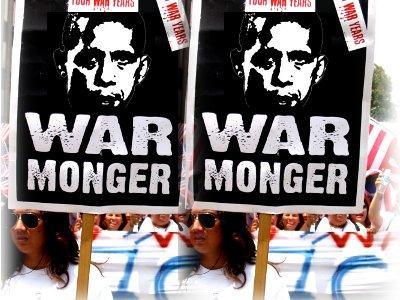
New York Times reporter Peter Baker has a piece today (7/16/13) about Barack Obama and Dwight Eisenhower that presents a somewhat confusing picture of both.
The article is about how Obama wields power–or, in the eyes of some critics, fails to take advantage of the “bully pulpit.”
The real point of the piece is to draw a parallel to Dwight Eisenhower’s “hidden hand” approach. According to an author of an Eisenhower book, Baker writes, “Mr. Obama was like the former president in avoiding major international conflict, relying more on covert action and letting Congress take the lead in legislation.”
Baker explains:
Just as Eisenhower, the 34th president, pulled troops out of Korea and avoided other military adventures, Mr. Obama has pulled out of Iraq, is leaving Afghanistan, has limited intervention in Libya largely to airstrikes and has resisted being drawn directly into the civil war in Syria.
Let’s try a rewrite–especially on the Obama years.
Obama withdrew troops from Iraq on the schedule inherited from Bush. His administration wanted to keep some troops there, but the Iraqi government would not allow it.
To say that Obama “is leaving Afghanistan” ignores the fact that he massively escalated the Afghan War, sending tens of thousands of additional troops to the country–essentially tripling the size of the U.S. military in the first 2 years of his term.
To say that Obama “limited intervention in Libya largely to airstrikes” is an odd way to describe what was a rather extensive bombing campaign in violation of the War Powers Act.
Baker does note that the White House has decided to formally begin arming the Syrian rebels–it is somewhat unclear how and/or when that will happen–and the CIA has reportedly been coordinating arms shipments into the country.
And, of course, one has to factor in ongoing drone wars in countries like Yemen, Afghanistan and Pakistan.
It is possible that these do not count as “military adventures,” but I think you’d have hard time explaining that to anyone in those countries.
As for Eisenhower, when the Times refers vaguely to “covert operations” during his term, one might want to spell out that the CIA was instrumental in the overthrow of governments in Iran, Guatemala and Congo, and that the CIA was deeply involved in supporting anti-government rebels in Indonesia fighting the Sukarno government–including dropping supplies to the rebels. His hands may have been “hidden,” but there’s no reason to not let the record speak for itself 50 years later.
July 17, 2013
Posted by aletho |
Militarism, Progressive Hypocrite, Timeless or most popular | Afghanistan, Dwight D Eisenhower, Dwight Eisenhower, New York Times, Obama |
Leave a comment
Writing in his original preface to Animal Farm, George Orwell wrote about how “inconvenient facts [can be] kept dark, without the need for any official ban”:
Anyone who has lived long in a foreign country will know of instances of sensational items of news – things which on their own merits would get the big headlines – being kept right out of the British press, not because the Government intervened but because of a general tacit agreement that ‘it wouldn’t do’ to mention that particular fact […] At any given moment there is an orthodoxy, a body of ideas which it is assumed that all right-thinking people will accept without question. It is not exactly forbidden to say this, that or the other, but it is ‘not done’ to say it, just as in mid-Victorian times it was ‘not done’ to mention trousers in the presence of a lady. Anyone who challenges the prevailing orthodoxy finds himself silenced with surprising effectiveness. A genuinely unfashionable opinion is almost never given a fair hearing, either in the popular press or in the highbrow periodicals.
One way in which readers, listeners, or viewers can gauge the validity of news stories is by how quickly they drop off the media’s radar. If a story is sensationalist hype it will likely disappear as fast as it appeared. Another way is if the story gets reported at all.
Earlier this year was the scare story of an impending North Korea attack on the United States. The mainstream media, especially in the U.S. and the West, went ballistic (pun intended) on supposed North Korean threats. Hundreds, possibly thousands, of articles claimed over and over that North Korea threatened to attack South Korea and the United States. That was the popular narrative repeated ad infinitum. But it’s not entirely true. What North Korea “threatened” was retaliation, not an attack. Kim Jong-Un said his country would respond to South Korean and American aggression.
But, let’s rewind to the New Year. According to the Washington Post: “In New Year’s speech, N. Korea’s Kim says he wants peace with South”:
SEOUL — In a domestically televised New Year’s Day speech, North Korean supreme leader Kim Jong Eun said he wants to “remove confrontation” on this divided peninsula and called on “anti-reunification forces” in South Korea to end their hostility toward the North.
The lengthy address, which laid out North Korea’s goals for the year, marked Kim’s first formal remarks since the election two weeks ago of Park Geun-hye as South Korea’s next president.
The North Korean leader asked for a detente — but with prerequisites that the conservative Park is likely to be reluctant to accept. Both sides, Kim said, must implement joint agreements signed years ago by the North and liberal, pro-engagement presidents in Seoul. Those agreements call for, among other things, economic cooperation, high-level government dialogue and the creation of a special “cooperation” zone in the Yellow Sea, where the North and South spar over a maritime border.
The peace overture was replied with the annual South-Korean-U.S. military exercise, but this time with an interesting twist: the exercise included a scenario of a pre-emptive attack on North Korea. Worse, the U.S. pulled out its B-52’s, that are capable of firing nuclear weapons, and flaunted them recklessly.
In chronological order: North Korea requests peace and steps to move in that direction, to which South Korea and the United States respond with a mock scenario of a pre-emptive strike, including the possible use of nuclear weapons, to which North Korea says it will retaliate against any such attack, and, finally, the American media largely ignores this context, that Kim was vowing retaliation, and whips up hysteria of North Korea coming out of the blue with threats of nuking America.
But then the story simply went away.
We have seen this also with the recent case of Syria and the regime’s alleged use of chemical weapons.
A month ago the White House came out with the claim that the Syrian government used chemical weapons “on a small scale against the opposition multiple times in the last year.”
And though FAIR’s Peter Hart quickly pointed out that skepticism was “warranted,” the mainstream media saturated news outlets with the story.
But, like the North Korean “threat,” the story simply went away.
Until yesterday.
The story is back on the radar as Russia provided the UN, and Western countries with their report on the Sarin attack in Aleppo, Syria. Unlike the US, the Russians have (and provided) evidence that it was the rebels who carried out the chemical attack.
According to Rick Gladstone of The New York Times, in his article “Russia Says Study Suggests Syria Rebels Used Sarin,” and which appears on page A7 of the July 10, 2013 edition, Moscow’s “scientific analysis of a suspected chemical weapons attack in Syria on March 19 showed it probably had been carried out by insurgents using Sarin nerve gas of ‘cottage industry’ quality delivered by a crudely made missile.” Gladstone then informs us that Russia’s findings “contradicted conclusions presented by Western nations, including the United States, that the Syrian government had been responsible.”
The most troubling aspect of Gladstone’s article was this passage: “The American conclusion was based in part on indirectly procured soil samples and interviews with survivors, as well as the Syrian insurgency’s lack of technical ability and materials to carry out a chemical weapons attack.”
The problem? Those last sixteen words—“the Syrian insurgency’s lack of technical ability and materials to carry out a chemical weapons attack”—are presented, not as a claim, but as a fact. As we at the NYTimes eXaminer pointed out last month, The New York Times has ignored two important news items that undermine this assertion: (1) the hacking of Britam, a British defense company, revealed a plan by Washington for the use of chemical weapons in Syria, and then blame it on the government; and (2) the arrest of Syrian rebels in Turkey, who happened to be in possession of Sarin nerve gas.
All of this occurred before the White House came out with their claim that the Syrian government was behind the Sarin attacks, and was readily available in the press, though not reported by The New York Times. To this day the “paper of record” has yet to mention either of these two incidences, even as they claim that the Syrian rebels have a “lack of technical ability and materials to carry out a chemical weapons attack.”
Readers should be concerned with why sensationalist stories of a threatening North Korea, and chemical weapon-using Syria, can appear long enough to outrage the public, but stories of false flags, and rebels getting caught with the very chemical weapons we claim they don’t have, go unreported.
July 12, 2013
Posted by aletho |
False Flag Terrorism, Mainstream Media, Warmongering, Progressive Hypocrite | New York Times, North Korea, South Korea, Syria, United States |
Leave a comment
One consumes U.S. corporate media at the risk of one’s sanity. Schizophrenia, for example, appears to be the permanent mental state at the New York Times, which cannot figure out which global reality is operative on any given day. Last week, the Times almost simultaneously painted a picture of two different and contradictory worlds – or, at least, two very different Obama administrations. On Friday, June 5, in the wake of the military coup against Egyptian President Mohamed Morsi, the Times depicted the Obama administration as totally unruffled by the turmoil in Cairo – as if the U.S. had little stake in the outcome. The Times headline proclaimed: “Egypt Crisis Finds Washington Largely Ambivalent and Aloof.” The newspaper of record gave the impression that Egypt was no longer a “strategic player” in the region and, therefore, the political complexion of its government was nothing for Washington to worry its last nerve about.
By Saturday, July 6, the article had been replaced by reporting on what the Obama administration had really been up to as the coup unfolded. It described President Morsi’s “last hours” in office, awaiting his fate at the hands of an Egyptian military that has been a United States asset for the last 40 years. An Arab foreign minister telephoned to ask if Morsi would accept the appointment of a new prime minister and cabinet, which would make Morsi a mere figurehead. The Arab foreign minister made it clear that he was acting as an emissary of Washington.
Morsi rejected the offer. His top foreign policy advisor stepped out of the room to call the U.S. ambassador to Egypt, Anne Patterson, and tell her so. But, when he came back, he said he’d been on the phone with Susan Rice, Obama’s national security advisor, in Washington, who advised him that the coup was about to begin.
So, of course, the U.S. was deeply involved in the events that were swirling in Cairo – it would have been bizarre beyond belief if the superpower had, indeed, been “ambivalent” or “aloof” about the fate of the Arab world’s most populous country. What is amazing, is the ability of an organization as large as the New York Times to accommodate two opposite realities within its own pages, and pass off both as the truth, without shame or even visible embarrassment.
The New York Times and its corporate colleagues are not in the business of providing reliable information, but of rationalizing and sanitizing the behavior of those in power. If there are contradictions in the narrative, they can always be papered over with more lies in the next edition.
However, the lies told by the Times and its ilk cannot alter the reality of U.S. decline; they can only make Americans oblivious to the facts. The United States will get the kind of civilian front men it wants in Egypt: international corporate citizens like economist el-Hazem Beblawy, as interim prime minister, and Mohamed ElBaradei, the darling of the global rich, as a vice president. But the U.S. is also now dependent on Muslim fundamentalists as the foot soldiers of imperialism in Syria and North Africa, even as it double-crossed its Muslim Brotherhood friend, former president Morsi. And the Arab royals of the Persian Gulf have their own plans for the region. The superpower isn’t as super as it used to be – but you won’t find out why in the New York Times.
Glen Ford can be contacted at Glen.Ford@BlackAgendaReport.com.
July 10, 2013
Posted by aletho |
Mainstream Media, Warmongering | Egypt, Mohamed ElBaradei, Mohamed Morsi, Morsi, New York Times, Susan Rice, United States |
Leave a comment


 Aletho News

