As Pakistan Calls for Peace, India Refuses to Reveal Air Raid Details – Report
Sputnik – 03.03.2019
India’s Finance Minister Arun Jaitley has stated that security agencies will not publish any operational details about the air raid against militant groups in Pakistan, the newspaper Dawn reported. The statement comes following calls to release evidence that the Indian Air Force hit militant camps in airstrikes on 26 February, which led to an escalation in tensions between the two neighbours.
“The armed forces must have, and our security and intelligence agencies must have, a full leeway in dealing with situations, and if anybody wants operational details to be made public […] he certainly does not understand the system”, Jaitley said.
India’s finance minister also denied allegations that the Indian military activities were connected with the upcoming general elections in May.
At the same time, Pakistani Foreign Minister Shah Mahmood Qureshi called for a resolution to the escalating tensions between Pakistan and India via dialogue and diplomatic channels instead of military power.
“Peace is our priority and we do not desire war with India”, Qureshi said.
Calls to publish proof of striking militant camps came after Pakistan stated that the Indian airstrike on 26 February had hit an empty hillside. The air raid over Pakistani territory, which led to an escalation in tensions between Delhi and Islamabad, came in wake of a deadly attack on a security convoy that claimed the lives of 40 servicemen on 14 February carried out by the terrorist group Jaish-e-Mohammed (JeM).
New Delhi insists that Islamabad is harbouring and supporting militants that commit terrorist acts on Indian territory. Pakistan denies both the accusations and the existence of militant camps.
Russia and China offer the SCO platform for India-Pak de-escalation
By M. K. BHADRAKUMAR | Indian Punchline | March 2, 2019
Saudi Arabia is pushing forward as mediator between India and Pakistan with a messianic zeal that patently enjoys US backing. The Saudi Minister of State for Foreign Affairs Adel Al-Jubeir is arriving in Delhi tomorrow. He was to have visited Islamabad on Friday but rescheduled his plan so that he can touch base with Modi first and thereafter meet the Pakistani leaders, including army chief Gen. Qamar Bajwa.
Modi and Bajwa will be Adel’s key interlocutors. How far the Saudi waltz will advance remains to be seen. How Modi handles the piquant situation will bear watch.
Certainly, the Saudi mediation makes India look rather immature and that becomes willy-nilly a reflection of Modi’s foreign policy legacy. The point is, no matter what Modi may boast about “new India”, the geopolitical reality is that India’s stature diminishes when it needs a small country like Saudi Arabia under an autocratic ruler to help out with what is arguably one of the most critical templates of its diplomacy.
Saudi Arabia has no track record as a peacemaker. On the contrary, it has a notorious reputation the world over as a promoter of terrorist groups.
Meanwhile, India does not have to be beholden to the Saudis to ease its tensions with Pakistan. The indications are that Russia and China are jointly sponsoring an initiative in this regard. China is deputing a special envoy to visit India and Pakistan to discuss the crisis situation. The Pakistani FM Shah Mehmood Qureshi disclosed this in Islamabad.
To be sure, Russia and China, which actively coordinate on the foreign policy front, are in consultation each other on the India-Pakistan tensions. We may also factor in that the foreign ministers of Russia and China had an opportunity last Wednesday to meet EAM Sushma Swaraj at the RIC ministerial.
Following that, Chinese State Councilor and Foreign Minister Wang Yi also briefed Qureshi in a phone conversation where the latter had expressed the hope that “the Chinese side will continue to play a constructive role in easing the current tension.”
Equally, at the height of the India-Pakistan crisis, on February 27, Russian Foreign Ministry also had issued a statement expressing “grave concern over the escalating situation along the Line of Control and the surge in tensions” between India and Pakistan “which are Russia’s friends.” It took a neutral stance and called on both sides “to show restraint and redouble efforts to resolve existing problems by political and diplomatic means.”
It is entirely conceivable that the Chinese special envoy’s visit is a related development signifying a coordinated effort by Beijing and Moscow and in consultation with Islamabad and New Delhi. This is of course a major shift in the tectonic plates of Eurasian politics and it has an added significance insofar as it is taking place in the New Cold War conditions.
Indeed, it does not need much ingenuity to figure out that a US-sponsored Saudi mediation between India and Pakistan must be a worrisome development for both Russia and China, from the geopolitical perspective.
At any rate, on Thursday, President Vladimir Putin telephoned Modi. According to the Kremlin readout, they discussed the “crisis in relations between India and Pakistan” and the Russian leader “expressed hope for a prompt settlement.” The careful wording hinted that Putin offered to lend a helping hand, jointly with China, to ease the tension.
Curiously, the very next day, the Russian Foreign Minster telephoned Qureshi in Islamabad — presumably to follow up on the Putin-Modi conversation — and offered help to “de-escalate” the tensions. The Russian Foreign Ministry readout, cited by state news agency TASS, says: “Moscow expressed its readiness to contribute to de-escalating tensions and that there is no alternative to settling all differences between Islamabad and New Delhi by political and diplomatic means.”
Importantly, Lavrov also outlined to Qureshi how the de-escalation process can be achieved — via the mechanism of the Regional Anti-Terrorist Structure of the Shanghai Cooperation Organization (SCO).
A Xinhua report since highlighted this aspect — that Lavrov told Qureshi about the “possibility of using the Shanghai Cooperation Organization’s Regional Anti-terrorist Structure for this purpose.”
Alongside, the Russian Foreign Ministry spokesperson Maria Zakharova outlined in an important statement on Thursday Moscow’s broad approach. Zakharova said:
“We are worried about the escalation of tension in relations between India and Pakistan and dangerous manoeuvres of both states’ armed forces along the Line of Control that are fraught with a direct military clash.”
“We are urging the sides to display maximum restraint. We continue to assume that contentious matters should be resolved by political-diplomatic methods on a bilateral basis in line with the provisions of the 1972 Simla Agreement and the 1999 Lahore Declaration.”
“We reaffirm our readiness to provide all-out support to the Indian and Pakistani efforts in countering terrorism.”
From the Indian perspective, this adds up to an extremely positive outcome of EAM’s consultations in Zhejiang with her Russian and Chinese counterparts. This must be EAM Swaraj’s finest hour in international diplomacy, as the curtain begins descending shortly on her scintillating stint as India’s foreign minister.
No doubt, the urgency of “de-escalation” of the tensions with Pakistan is self-evident. The “de-escalation” is far from over with the return of the Indian pilot. In fact, the tensions on the Line of Control can spiral out of control anytime in the present supercharged atmosphere.
Without doubt, the international community — read the US and NATO allies — is closely watching. The Afghan endgame is at a most sensitive stage and any eruption of tensions between India and Pakistan will negatively impact the peace process.
India should wholeheartedly welcome the Sino-Russian proposal, cast within an SCO framework as far more preferable to the dalliance with the Saudis and the Emiratis — or, for that matter, any UN intervention.
The fact of the matter is that both Russia and China are stakeholders in India-Pakistan normalisation and neither has any hidden agenda in this regard. Of course, Russia and China are like-minded partners for India in the fight against terrorism. On the other hand, unlike in the Cold War era, Pakistan is keen on Eurasian integration, too.
US Urges ‘Calm’ While Stoking India-Pakistan Conflict
Strategic Culture Foundation | 01.03.2019
International powers this week anxiously urged India and Pakistan to avoid further escalation of military confrontation. Given the two nations have gone to war on three occasions during the past seven decades and are both nuclear armed, the international concern is palpable.
The US has lately joined calls by Russia, China and Europe appealing for restraint, and for the Indian and Pakistani leaderships to negotiate a resolution to avert a catastrophic slide towards conflict.
American President Donald Trump, while in Vietnamese capital Hanoi for a summit with North Korean leader Kim Jong-Un, claimed that the US was mediating to defuse the crisis between India and Pakistan.
“We’ve been in the middle trying to help them both out,” said Trump.
Incongruously, however, the Trump administration has in fact acted in an opposite fashion, to inflame the recent tensions between New Delhi and Islamabad.
Trump’s national security advisor John Bolton and Secretary of State Mike Pompeo have both issued statements which “support India’s right to self-defense against terrorism”. The US officials have also laid the blame on Pakistan for sponsoring acts of terrorism by militant groups in Indian-controlled Kashmir. The northern territory of Kashmir has been the cause of bitter dispute between India and Pakistan ever since they gained independence from Britain in 1947.
The massacre of over 40 Indian troops earlier this month on February 14 in the Indian-side of Kashmir has sparked outrage among the wider Indian population demanding revenge. The suicide bomb attack was claimed by Kashmiri militant group Jaish e-Mohammed (JeM). India claimed that Pakistan had a hand in the atrocity through its support for JeM, which the Pakistani authorities denied.
The mounting of air strikes by India this week deep inside Pakistani territory on a militant training camp – purportedly in retaliation for the Kashmir massacre of its troops – represented a dramatic escalation. If India had limited its strikes to Pakistani-controlled Kashmir the retaliation could perhaps have been argued as being proportionate. But the violation of Pakistani territory – some 50 kms west of the historical Line of Control – was arguably an act of war. The last time Indian warplanes struck inside Pakistan was in 1971 during the two countries’ third and last war.
Not surprisingly, Pakistani fighter jets have subsequently launched strikes on Indian-controlled Kashmir. There were also further alleged incursions by Indian warplanes, two of which were reportedly shot down by the Pakistani side. Pakistan also lost one of its jets in a shoot-down but the aircraft apparently crashed inside its territory.
Tensions have boiled over further with the capture of an Indian pilot by the Pakistanis who released video footage of him apparently injured with a bloodied face. That led to outcry in New Delhi that Islamabad was in breach of the Geneva Convention concerning treatment of prisoners of war. Pakistan’s Prime Minister Imran Khan has vowed to return the Indian pilot as a gesture towards de-escalation.
Nevertheless, the tensions and danger of an all-out war continue to mount. There have been several reports of heavy artillery cross-border exchanges between Indian and Pakistani forces. While both governments say they don’t want a war, the dynamic could explode beyond their control.
The Kashmir dispute is certainly fraught with enormous historical difficulties bestowed by baleful British imperialist legacy of partitioning land and people with such contempt for indigenous rights and traditions, as well as from cynically playing partisan politics for imperial advantage. Washington’s contemporary meddling in Indian-Pakistan affairs has echoes of past British subterfuge.
Pakistan’s relations with Kashmiri militant groups whom India denounces as “terrorist” is only part of a complex equation. Another part of the equation is India’s intensive militarization of the province and its alleged abusive occupation of territory and people who aspire to be part of Pakistan. The region is predominantly Muslim.
If a peaceful resolution is to ever succeed there must be an earnest process of demilitarizing the entire Kashmir area. That onus is primarily on India.
One thing that is certainly not constructive is the simplistic and clumsy way that the United States has intervened recently by pointedly taking the Indian side of the narrative. For senior Trump administration officials to proclaim India’s “right to self-defense” against implied Pakistani-sponsored terrorism is in effect a green light for New Delhi to launch air strikes against its neighbor.
That reckless advocacy by Washington is predictably leading to a spiral of violence which ultimately could result in an all-out war between two nuclear states.
President Trump’s self-congratulatory tone about supposed mediation between India and Pakistan is far off the mark from reality. The Trump administration’s belated words appealing for “restraint” and “calm” are belied by the earlier words from Bolton and Pompeo giving India a license to commit acts of war.
Of course, what would one expect from the American side? The Trump administration is currently in the throes of violating the sovereignty of Venezuela with threats of military invasion against that South American nation. Washington has completely lost its compass on international law and norms of conduct.
There are indeed deeper reasons for why Washington would like to see a conflict between India and Pakistan blow up. Such a confrontation would cause major geopolitical problems for China, which is historically an ally of Pakistan but which has also recently endeavored to build a rapprochement with India. Stoking a confrontation in South Asia would serve Washington’s interest in destabilizing China and Russia’s strategic plans for economic integration of Eurasia.
India and Pakistan’s political leaderships must keep cool heads and think of the bigger global picture. Only recently, India’s Narendra Modi and Pakistan’s Imran Khan were expressing an aspiration for improving ties between the two South Asian states. They must resist playing politics for internal political gains, and they must resist being manipulated by external powers which seek to gain advantage at the expense of Asian divisions. The historical thorn of Kashmir can be resolved if India and Pakistan entered into a genuine and mutual compromise.
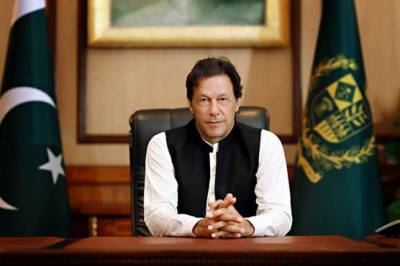
Nuclear Pakistan and India can’t afford miscalculation, should resolve crisis, says PM Khan
RT | February 27, 2019
New Delhi and Islamabad cannot afford a new war with the weapons they now have, Pakistani Prime Minister Imran Khan said, adding that he and Indian PM Narendra Modi have to find a way out of the ongoing security crisis.
In a short televised address on Wednesday, Khan said neither he nor his Indian counterpart, Narendra Modi, would be in control of the situation, if the ongoing hostilities escalate further.
History tells us that wars are full of miscalculation. My question is that given the weapons we have, can we afford miscalculation? We should sit down and talk.
Khan added Pakistan is willing to work with India to investigate the suicide bombing of its police officers in Kashmir which happened two weeks ago and led to this week’s conflict between the two countries. The attack was claimed by the jihadist group Jaish-e-Mohammed (JeM), which India accuses Pakistan of harboring.
But just like any other sovereign nation, Pakistan cannot allow another country to act “as judge, jury and executioners” on its territory, he said. Wednesday’s attack on targets in India by Pakistani warplanes was meant as a show of force and determination to defend its sovereignty, the PM stressed.
“We ensured no casualties and no collateral damage in the operations we undertook,” he said.
India on Tuesday launched an air raid against what is said was a JeM training camp in Pakistani territory. Pakistan on Wednesday launched its own air raid, attacking targets in the disputed region of Kashmir. There are conflicting claims by the two nations on the outcomes and circumstances of both incidents.
At least one Indian fighter jet was shot down on Wednesday. Pakistan claims to have shot down more than one, while India insists it took out one of the Pakistani warplanes.
Mr Bolton’s Long Game Against Iran – Pakistan Becomes Saudi Arabia’s New Client State
By Alastair CROOKE | Strategic Culture Foundation | 25.02.2019
The Wall Street Journal has an article whose very title – Ambitions for an ‘Arab NATO’ Fade, Amid Discord – more or less, says it all. No surprise there at all. Even Antony Zinni, the retired Marine General who was to spearhead the project (but who has now resigned), said it was clear from early on that the idea of creating an “Arab NATO” was too ambitious. “There was no way that anybody was ready to jump into a NATO-type alliance,” he said. “One of the things I tried to do was kill that idea of a Gulf NATO or a Middle East NATO.” Instead, the planning has focused on ‘more realistic expectations’, the WSJ article concludes.
Apparently, “not all Middle Eastern nations working on the proposal, want to make Iran a central focus – a concern that has forced the US to frame the alliance as a broader coalition”, the WSJ recounts. No surprise there either: Gulf preoccupations have turned to a more direct anxiety – which is that Turkey intends to unloose (in association with Qatar) the Muslim Brotherhood – whose leadership is already gathering in Istanbul – against Turkey’s nemesis: Mohammad bin Zaid and the UAE (whom Turkish leadership believes, together with MbS, inspired the recent moves to surround the southern borders of Turkey with a cordon of hostile Kurdish statelets).
Even the Gulf leaders understand that if they want to ‘roll-back’ Turkish influence in the Levant, they cannot be explicitly anti-Iranian. It just not viable in the Levant.
So, Iran then is off the hook? Well, no. Absolutely not. MESA (Middle East Security Alliance) maybe the new bland vehicle for a seemingly gentler Arab NATO, but its covert sub-layer is, under Mr Bolton’s guidance, as fixated on Iran, as was ‘Arab NATO’ at the outset. How would it be otherwise (given Team Trump’s obsession with Iran)?
So, what do we see? Until just recently, Pakistan was ‘on the ropes’ economically. It seemed that it would have to resort to the IMF (yet again), and that it was clear that the proximate IMF experience – if approved – would be extremely painful (Secretary Pompeo, in mid-last year, was saying that the US probably would not support an IMF programme, as some of the IMF grant might be used to repay earlier Chinese loans to Pakistan). The US too had punished Pakistan by severely cutting US financial assistance to the Pakistani military for combatting terrorism. Pakistan, in short, was sliding inevitably towards debt default – with only the Chinese as a possible saviour.
And then, unexpectedly, up pops ‘goldilocks’ in the shape of a visiting MbS, promising a $20 billion investment plan as “first phase” of a profound programme to resuscitate the Pakistani economy. And that is on top of a $3 billion cash bailout, and another $3 billion deferred payment facility for supply of Saudi oil. Fairy godmothers don’t come much better than that. And this benevolence comes in the wake of the $6.2 billion, promised last month, by UAE, to address Pakistan’s balance of payments difficulties.
The US wants something badly – It wants Pakistan urgently to deliver a Taliban ‘peace agreement’ in Afghanistan with the US which allows for US troops to be permanently based there (something that the Taliban not only has consistently refused, but rather, has always put the withdrawal of foreign forces as its top priority).
But two telling events have occurred: The first was on 13 February when a suicide attacker drove an explosives-laden vehicle into a bus that was transporting IRGC troops in the Sistan-Baluchistan province of Iran. Iran’s parliamentary Speaker has said that the attack that killed 27 members of Iran’s elite Islamic Revolutionary Guards Corps (IRGC) was “planned and carried out, from inside Pakistan”. Of course, such a provocative disruption into Iran’s most ethnically sensitive province may mean ‘nothing’, but perhaps the renewed inflow of Gulf money, fertilizing a new crop of Wahhabi madrasa in Pakistan’s Baluch province, may be connected – as IRCG Commander, General Sulemani’s stark warning to Pakistan suggests.
In any event, reports suggest that Pakistan, indeed, is placing now intense pressure on the Afghan Taliban leaders to accede to Washington’s demand for permanent military bases in Afghanistan.
The US, it seems, after earlier chastising Pakistan (for not doing enough to curb the Taliban) has done a major U-turn: Washington is now embracing Pakistan (with Saudi Arabia and UAE writing the cheques). And Washington looks to Pakistan rather, not so much to contain and disrupt the Taliban, but to co-opt it through a ‘peace accord’ into accepting to be another US military ‘hub’ to match America’s revamped military ‘hub’ in Erbil (the Kurdish part of Iraq, which borders the Kurdish provinces of Iran). As a former Indian Ambassador, MK Bhadrakumar explains:
“What the Saudis and Emiratis are expecting as follow-up in the near future is a certain “rebooting” of the traditional Afghan-Islamist ideology of the Taliban and its quintessentially nationalistic “Afghan-centric” outlook with a significant dosage of Wahhabi indoctrination … [so as to] make it possible [to] integrate the Taliban into the global jihadi network and co-habitate it with extremist organisations such as the variants of Islamic State or al-Qaeda … so that geopolitical projects can be undertaken in regions such as Central Asia and the Caucasus or Iran from the Afghan soil, under a comprador Taliban leadership”.
General Votel, the head of Centcom told the US Senate Armed forces Committee on 11 February, “If Pakistan plays a positive role in achieving a settlement to the conflict in Afghanistan, the US will have opportunity and motive to help Pakistan fulfill that role, as peace in the region is the most important mutual priority for the US and Pakistan.” MESA is quietly proceeding, but under the table.
And what of that second, telling occurrence? It is that there are credible reports that ISIS fighters in the Deir a-Zoor area of Syria are being ‘facilitated’ to leave East Syria (reports suggest with significant qualities of gold and gemstones) in a move to Afghanistan.
Iran has long been vulnerable in its Sistan-Baluchistan province to ostensibly, secessionist factions (supported over the years by external states), but Iran is vulnerable, too, from neighbouring Afghanistan. Iran has relations with the Taliban, but it was Islamabad that firstly ‘invented’ (i.e. created) the Deobandi (an orientation of Wahhabism) Taliban, and which traditionally has exercised the primordial influence over this mainly Pashtoon grouping (whilst Iran’s influence rested more with the Tajiks of northern Afghanistan). Saudi Arabia of course, has had a decades long connection with the Pashtoon mujahidin of Afghanistan.
During the Afghan war of the 1980s and later, Afghanistan always was the path for Islamic fundamentalism to reach up into Central Asia. In other words, America’s anxiety to achieve a permanent presence in Afghanistan – plus the arrival of militants from Syria – may somehow link to suggest a second motive to US thinking: the potential to curb Russia and China’s evolution of a Central Asian trading sphere and supply corridor.
Putting this all together, what does this mean? Well, firstly, Mr Bolton was arguing for a US military ‘hub’ in Iraq – to put pressure on Iran – as early as 2003. Now, he has it. US Special Forces, (mostly) withdrawn from Syria, are deploying into this new Iraq military ‘hub’ in order, Trump said, to “watch Iran”. (Trump rather inadvertently ‘let the cat out of the bag’ with that comment).
The detail of the US ‘hub encirclement’ of Iran, however, rather gives the rest of Mr Bolton’s plan away: The ‘hubs’ are positioned precisely adjacent to Sunni, Kurdish, Baluch or other Iranian ethnic minorities (some with a history of insurgency). And why is it that US special forces are being assembled in the Iraqi hub? Well, these are the specialists of ‘train and assist’ programmes. These forces are attached to insurgent groups to ‘train and assist’ them to confront a sitting government. Eventually, such programmes end with safe-zone enclaves that protect American ‘companion forces’ (Bengahazi in Libya was one such example, al-Tanaf in Syria another).
The covert element to the MESA programme, targeting Iran, is ambitious, but it will be supplemented in the next months with new rounds of economic squeeze intended to sever Iran’s oil sales (as waivers expire), and with diplomatic action, aimed at disrupting Iran’s links in Syria, Lebanon and Iraq.
Will it succeed? It may not. The Taliban pointedly cancelled their last scheduled meeting with Pakistani officials at which renewed pressure was expected to be exerted on them to come to an agreement with Washington; the Taliban have a proud history of repulsing foreign occupiers; Iraq has no wish to become ‘pig-in-the middle’ of a new US-Iran struggle; the Iraqi government may withdraw ‘the invitation’ for American forces to remain in Iraq; and Russia (which has its own peace process with the Taliban), would not want to be forced into choosing sides in any escalating conflict between the US, Israel and Iran. Russia and China do not want to see this region disrupted.
More particularly, India will be disconcerted by the sight of the MESA ‘tipping’ toward Pakistan as its preferred ally – the more so as India, likely will view (rightly or wrongly), the 14 February, vehicle-borne, suicide attack in Jammu-Kashmir that resulted in the deaths of 40 Indian police, as signaling the Pakistan military recovering sufficient confidence to pursue their historic territorial dispute with India over Jammu-Kashmir (perhaps the world’s most militarised zone, and the locus of three earlier wars between India and Pakistan). It would make sense now, for India to join with Iran, to avoid its isolation.
But these real political constraints notwithstanding, this patterning of events does suggest a US ‘mood for confrontation’ with Iran is crystalizing in Washington.
Zionist Media Cites Bin Salman’s Failure to Provoke Pakistan, India & China against Iran
Al-Manar | February 23, 2019
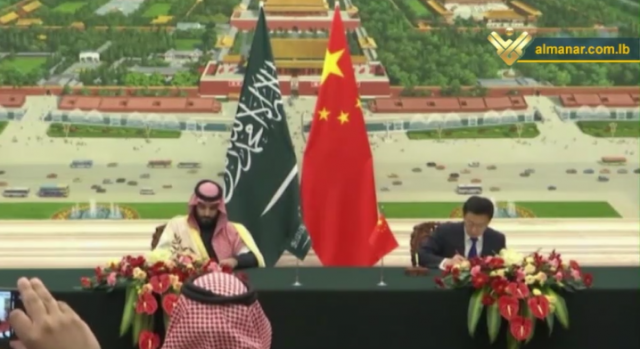
The Pakistani State-run TV Channel muted the broadcast of the speech delivered by the Saudi state minister for the foreign affairs Adel Al-Jubeir while he was tackling the Iranian cause, one Zionist political analyst said.
The Israeli media channels cited the Saudi crown prince Mohammad bin Salman’s failure to provoke Pakistan, India and China against Iran, adding that India rejected his offer to sell it the same amount of oil it purchases from Tehran for a lower price.
The Zionist analysts considered that Bin Salman tried to build more political partnerships and alliances in order to improve his conditions in his relation with the United States.
Results of the First Round of Talks Between the USA and the Taliban
By Natalya Zamarayeva – New Eastern Outlook – 11.02.2019
January 2019 saw the conclusion of the first round of talks between the USA and the Taliban, which took place in Qatar. The Afghan Taliban and the official representatives of the USA reached preliminary agreement on three key issues:
– the withdrawal of US troops from Afghanistan within 18 months;
– an exchange of prisoners;
– the lifting of the travel ban on Taliban leaders, and their removal from the UN’s blacklist.
In turn the Taliban agreed, among other things, not to allow terrorist organisations, including Al Qaeda and DAESH or any other armed grouping to carry out attacks on Afghan civilians or authorities, the USA, or any of its allies.
The second round of talks is scheduled for the end of February 2019. The USA and the Taliban plan to sign an official agreement on the above points. The agreement is expected to be fairly strict. The Taliban delegation will be headed by its lead negotiator, Abdul Ghani Baradar.
After the above steps have been completed (in 2021), Afghanistan will embark on an internal regulation process, which will involve two stages:
– the entry into effect of a general ceasefire between the opposing sides;
– the formation of a temporary government, to be elected for a term of three years: the Taliban will nominate its own representatives for election to this body;
– the Taliban propose a reform of the Afghan police, including local police authorities (which have been accused of being extremely corrupt and of intimidating the public).
The Taliban’s leaders have declared that they are renouncing their claim to exclusive power in Afghanistan and that they recognise that peace in Afghanistan needs to be an inclusive process. They also promise to seek ways to involve the Afghan government in the peace and reconciliation process, and also to act in conjunction with existing authorities (whereas, during the period of the so-called Islamic Emirate of Afghanistan, from 1996-2001, they imposed a strict form of Sharia law).
The talks between the USA and the Taliban (December 2018- January 2019) are a small part of the larger Afghan dialogue process, which has, traditionally, involved four parties: the Taliban, the USA, the Afghan National Unity Government, and Pakistan.
In addition to the US troops and the armed opposition, made up of Taliban militants, there is a third party in the Afghan conflict: the Afghan national security forces, which seek to protect the country’s constitution and its head of state, President Ashraf Ghani.
But for the whole duration of the anti-terrorist campaign in Afghanistan, from 2001 to date, the Taliban have refused to take part in any direct talks with representatives of the National Unity Government, which they consider to be illegitimate. Ashraf Ghani has been highly critical of this stance, which has forced him and his government into the position of an onlooker, while the Taliban and the USA determine the country’s fate between them.
Washington has declared that its strategic goal, in its talks with the Taliban, is to get the Taliban and the Afghan National Unity Government to sit around the negotiating table together. In other words, to “force” the Taliban to accept the country’s Constitution and current state institutions. According to the White House, this process will take 18 months, and will be accompanied by the progressive withdrawal of US troops.
According to the White House’s roadmap, with the beginning of the dialogue, Afghanistan will enter into a new phase: an internal regulation process. Which raises the obvious question – will that process actually take place, and, if so, when, and under what circumstances? The Pushtuns are a hospitable people, but they keep their word. The lack of any direct dialogue between the Taliban and the National Unity Government will result in either an extension of the US military presence in Afghanistan, or the outbreak of a new civil war like that in the early 1990s.
The talks have also revealed certain specific characteristics relating to the armed opposition in today’s Afghanistan. In general, that opposition is made up of the Taliban. But there are other forces operating in the country, including militants from Al-Qaeda, DAESH, Uighur separatists from the Xinjiang region of China, militants from the Pakistani Taliban, and various armed groups from the Central Asian countries and the Caucasus. The Afghan Taliban, which dominates the armed opposition, has been able to persuade the Al-Qaeda militants to pledge their loyalty to the Taliban’s leader, Hibatullah Akhundzada. As a result, in recent years the Taliban has been reinforced by Al-Qaeda militants serving in its ranks. This helps to explain how the Taliban is now able to control 60% of the country’s territory and carry out almost daily attacks on Afghan security forces and government officials.
As for DAESH, its leaders remain subordinate to their Emir and refuse to accept the leadership of Hibatullah Akhundzada, which results in a split within the armed opposition in Afghanistan.
The fourth party in the dialogue process is Pakistan. As one of the organisers of the talks between the USA and the Taliban, Pakistan has received assurances from the Afghan Taliban that, in the future, the latter will cut its links with Pakistani Taliban militants based in Afghanistan, insurgents from the Pakistani province of Balochistan and the militant group Lashkar-e-Taiba, and that it will refrain from acting against Pakistan’s interests.
The talks between the USA and the Taliban demonstrate that the two parties are serious about bringing an end to the internecine conflict in Afghanistan. But it is also evident that all the parties are determined to stick to their initial positions. The parties exchange spoken declarations, but they show no will to take any constructive steps or even move towards a compromise.
Natalia Zamarayeva, Ph.D (History), is a Senior Research Fellow, Pakistan section, Institute of Oriental Studies of the Russian Academy of Sciences.
Daesh Militants Transfered From Pakistan to Tajikistan – Russian Official
Sputnik – January 28, 2019
Unidentified helicopters transported a large number of Daesh terrorists from Pakistan to the border with Tajikistan, close to Russia’s southern borders, Russian Deputy Interior Minister Igor Zubov said on Monday. Pakistan and Tajikistan are separated by Afghanistan’s Wakhan Corridor region.
According to the Russian minister, there may be some preparations for a provocation that may affect Russia.
“Daesh fighters in massive quantities were transported from Pakistani territory to the border with Tajikistan. In that area, perhaps, the militants might stage massive provocations that would result in huge amounts of refugees fleeing the territory. This would have an impact on Russia,” Zubov said.
This comes after earlier Col. Gen. Andrey Novikov, the head of the Commonwealth of Independent States Anti-Terrorism Centre, stated that Daesh terrorists were being transported to Afghanistan and Pakistan after facing defeat in Syria and Iraq.
Last year, the Syrian Arab News Agency reported that US helicopters evacuated Daesh leaders from several areas across the Syrian province of Deir ez-Zor to the country’s northeast. The US-led coalition, in turn, denied all accusations.
See also:
Is There a ‘Secret US Hand’ Supporting Daesh in Afghanistan?
Pakistan wriggles out of IMF clutches
By M. K. BHADRAKUMAR | Indian Punchline | January 13, 2019
The visit by Saudi Arabia’s Energy Minister Khalid A Al-Falih on Saturday to Gwadar to inspect the site allocated for a multibillion oil refinery in the port city suggest that Riyadh and Islamabad are giving the final touch to reaching agreement for a Saudi Aramco Oil Refinery in Pakistan. Reports say that Saudi Arabia will be investing $10 billion in the proposed project.
Without doubt, this is a major development in the region. The Saudi-Pakistan relationship, which has been traditionally close and fraternal, is moving on to a new level of dynamism. The Saudi investment decision can be taken as signifying a vote of confidence in the Pakistani economy as well as in Prime Minister Imran Khan’s leadership. It comes on top of the $6 billion package that Saudi Arabia had pledged last year (which included help to finance crude imports) to help Pakistan tide over the current economic difficulties.
The visiting Saudi minister Khalid al-Falih told reporters in Gwadar, “Saudi Arabia wants to make Pakistan’s economic development stable through establishing an oil refinery and partnership with Pakistan in the China Pakistan Economic Corridor.” This remark highlights that Saudi Arabia is openly linking up with the China-Pakistan Economic Corridor (CPEC). China has welcomed this development, but countries that oppose the CPEC such as the US and India will feel disappointed.
From the Indian perspective, the Saudi investment in Gwadar becomes a game changer for the port city, which was struggling to gain habitation and a name. Inevitably, comparisons will be drawn with Chabahar. India has an added reason to feel worried that its Ratnagiri Refinery project, which has been described as the “world’s largest refinery-cum-petrochemical project” is spluttering due to the agitation by farmers against land acquisition. The Saudi Aramco was considering an investment in the project on the same scale as in Gwadar. Will Gwadar get precedence over Ratnagiri in the Saudi priorities? That should be the question worrying India.
The Saudi energy minister disclosed that Crown Prince Mohammed bin Salman will be visiting Pakistan in February and the agreement on the Gwadar project is expected to be signed at that time. Of course, it signifies that Saudi Arabia is prioritizing the relations with Pakistan. The fact remains that Saudi Arabia has come under immense pressure of isolation following the killing of Jamal Khashoggi.
There is much uncertainty about the dependability of the US as an ally and security provider. Riyadh is diversifying its external relations and a pivot to Asia is under way. Suffice to say, under the circumstances, a China-Pakistan-Saudi axis should not look too far-fetched. There is also some history behind it.
To be sure, Iran will be watching the surge in Saudi-Pakistani alliance with growing trepidation. The Saudi presence in Pakistan’s border region with Iran (such as Gwadar) has security implications for Tehran. Iran has been facing cross-border terrorism.
Tehran cannot but take note that Imran Khan has not shown any interest in reciprocating the overtures it made when he came to power. He is yet to visit Iran. The expectation in Tehran was that Imran Khan who often voiced the political idiom of justice and resistance as an opposition leader would have empathy with Iran. But, as it happened, Imran Khan appears to be far more comfortable as prime minister with the crown princes of Saudi Arabia and the UAE.
Simply put, Tehran misjudged Imran Khan. But Imran Khan’s priorities today are quite understandable. He wants the Gulf Sheikhs to make big investments in the Pakistani economy. He senses that left-wing slogans have served their purpose when he was seeking power but they become liabilities today. Why should he put Pakistan as a torchbearer of resistance politics? In his interview with WaPo, he didn’t mince words in implying that he intended to follow neo-liberal economic policies.
Besides, in strategic terms, one important fallout of the Saudi bailout of Pakistani economy is that there may be no more need for Islamabad to approach the International Monetary Fund for a rescue package. The earlier indication was that Pakistan might seek a $8 billion bailout package. From present indications, the help from Saudi Arabia, China and the UAE will enable Pakistan to avoid seeking IMF assistance. (The UAE and Pakistan formalized a $6.2 billion bailout package last week in Islamabad.)
The US had openly threatened that any IMF bailout would be conditional on a close scrutiny of the CPEC projects. Ironically, it proved counterproductive. As a result, in geopolitical terms, Washington’s capacity to leverage Pakistani policies is significantly diminishing. The impact will be most keenly felt in Afghanistan.
India baits US while Pakistan tells Trump, ‘There’s nothing like free lunch’
By M. K. BHADRAKUMAR | Indian Punchline | January 12, 2019
Breaking a prolonged period of several months, the Pakistani allegation of Indian involvement in terrorist attacks has surged. This appears during the first detailed media briefing by the Pakistani authorities in Karachi on January 13 on the results of the investigation over the terrorist strike on the Chinese consulate in the city last November.
Pakistan has blamed the Balochistan Liberation Army for staging the terrorist attack. Graphic details have been given claiming that the attack was “planned in Afghanistan” from where the Balochi terrorists travelled to Karachi.
India’s alleged role has been described variously in the Pakistani press as rendering “assistance” to the terrorists and “funding” them. One report mentions that the attack was “carried out with the assistance of Indian intelligence agency.” Indeed, immediately after the attack on November, a Pakistani security official had suggested that India “orchestrated” it. An AP report at that time had mentioned that Pakistan was investigating whether the Baluch separatist commander Aslam Achhu, who masterminded the attack, was in India.
The Pakistani assessment is that the Karachi attack was well planned over months and intended to cause rift in the China-Pakistan ties as well as to undermine the China-Pakistan Economic Corridor (CPEC) by highlighting the volatility of the city. It stands to reason that Pakistan would have shared with the Chinese any details in this regard.
The salience that must be noted here is that Pakistan has not finger-pointed at Kabul authorities directly or implicitly. In the past, the Pakistani allegation used to be that Indian and Afghan agencies collaborated in such enterprises.
Some other things stand out as well. The timing of the Pakistani disclosure is significant. First and foremost, it comes amidst signs of US-Taliban talks intensifying. A fourth round was expected to take place on Wednesday, but was called off by the Taliban on grounds of “agenda disagreement” with the Americans, in a clear snub to the US special representative Zalmay Khalilzad. Elsewhere, Taliban spokesman also told Reuters, “We (Taliban) have the feeling that Zalmay Khalilzad doesn’t have enough power to make important decisions.” Evidently, there is a fly in the ointment.
Interestingly, a former Pakistani diplomat Zamir Akram, who is an old India hand, wrote yesterday counseling that Pakistan should not harbor “unrealistic expectations” out of the Trump administration, as there may not be a “real change in policy towards Pakistan.” To quote Akram, “Washington continues to view relations with Islamabad through the prism of Afghanistan and not on the basis of relations with Pakistan in and of itself.”
He added, “Our Prime Minister should also resist the temptation, which his predecessors did not, of accepting a meeting with the American President as a “reward” in itself — a meeting devoid of any substantive outcome for Pakistan. This has been a usual American tactic mainly reserved for light-weight leaders who can be fobbed off with an Oval office photo-opportunity. Any meeting with Trump must lead to concrete results otherwise it would not be worth the effort.”
Amongst other things, Akram voiced disquiet that Washington is disrupting the India-Pakistan strategic parity in favor of India, and that “Pakistan’s relations with China and CPEC in particular are emerging as contentious issues in Pakistan-US relations.” He said that in an environment of “a convergence in US-India relations but a growing divergence in the Islamabad-Washington equation,” Pakistan must diversify its foreign relations, and in particular, it “must further strengthen strategic partnership with China for which successful implementation of CPEC, despite American and Indian opposition, must be ensured.”
Zamir concluded by underscoring that a political settlement in Afghanistan should provide for an outcome that served Pakistan’s interests “in terms of ending Indian use of Afghan territory to promote terrorism in Pakistan, recognition of Pakistan’s security interests in Afghanistan, return of Afghan refugees and removal of US sanctions. We have the leverage to attain this, given the American reliance on Pakistan, not just for the dialogue with the Taliban but also due to the air and ground access we provide to the US for its presence in Afghanistan.” (Express Tribune )
Plainly put, strategic (nuclear) parity in South Asia, restrictions on Indian activities in Afghanistan, Pakistan’s security interests in Afghanistan, return of Afghan refugees and removal of US sanctions on Pakistan – they are still on the table. If Trump’s game plan is to swing a settlement riveted on Pakistani acquiescence with a reduced US military presence in Afghanistan (enabling him also to flaunt “troop withdrawal” by election year 2020) by pandering to PM Imran Khan’s vanities, it may not work.
Given India’s hardline policies toward Pakistan, it is improbable that Islamabad will compromise on its agenda to purge the Indian presence in Afghanistan. Therefore, the media disclosure on the terrorist attack in Karachi at this juncture must be taken as a signal to Washington as much as to Delhi. Most certainly, it coincides with the US Special Representative Zalmay Khalilzad’s visit to Delhi, where he enjoys a fabulous reputation for being an inveterate anti-Pakistani Afghan-American.
Unsurprisingly, chaffing under the Taliban’s snub, Khalilzad was assured of a warm reception in Delhi. The press reports based on briefings suggest that Indian officials tore into Pakistan warning the Trump administration about Islamabad’s machinations. Clearly, Delhi sized up that it has in Khalilzad a most receptive audience.
Alongside, there has also been a sudden burst of enthusiasm to inject some verve into the US-Indian ties, which have been languishing during recent years. It is entirely conceivable that India may place some orders for weaponry from American vendors, which would of course please Trump immensely.
To be sure, Trump’s travails in withdrawing US troops from Syria may turn out to be a picnic in comparison with what is in store in Afghanistan.
Modi-Trump bromance ends on sour note
By M. K. BHADRAKUMAR | Indian Punchline | January 3, 2019
The highly disparaging remarks by the US President Donald Trump on Wednesday regarding Prime Minister Narendra Modi and India’s role in Afghanistan come as a shocking revelation. Trump was talking to the press following his first cabinet meeting of 2019 at the White House in Washington. No Indian PM has been reduced to look silly like this by any American president in history.
Trump’s remarks came in the course of his rambling speech regarding the failure of the war in Afghanistan. He spoke every bit as an embittered man who realizes that the war has been lost. Part of the reason why he summarily put Modi on the mat could have been that Trump also realizes the great urgency of extracting Pakistan’s cooperation in the Afghan endgame. Trump’s thesis was that foreign leaders take America for a ride.
In this vein, Trump mocked Modi for funding a library in Afghanistan under Indian aid and bragging about it repeatedly in private conversations. (Trump apparently mistook for a library the Indian-built parliament building in Kabul, which Modi inaugurated in a grand ceremony on Christmas Day in 2015.) Anyway, Trump claimed that Modi was “constantly telling me he built a library in Afghanistan.” He then rubbished Modi’s vanity, saying, “You know what that is? That’s like five hours of what we spend (in Afghanistan.) And we’re supposed to say (to Modi), ‘Oh, thank you for the library’. I don’t know who’s using it in Afghanistan.”
This is the first time the US belittled the Indian assistance to Afghanistan, which is estimated to be close to 2 billion dollars. The American mantra has been that India was rendering invaluable help to Afghanistan. But now that the war is about to end, we are probably getting a candid version of what the Americans really thought of the quality of the Indian aid.
Elsewhere, Trump said that India had a free ride in Afghanistan – like Russia and the Gulf states – because the US was fighting their war against terrorist groups. Therefore, Trump said in a snide remark that it is for India and Russia to do the fighting in Afghanistan. But he recalled that the Russians once tried to fight extremist groups in Afghanistan and failed and the Soviet Union went bankrupt as a result. The outcome was that the USSR “shrunk” into the Russian Federation.
Trump asked with indignation: “Why isn’t Russia, India, Pakistan there?” Why should America be there, “which is 6000 miles away?” He bemoaned that the Pentagon “didn’t do a good job” in Afghanistan. Referring to the former Defence Secretary James Mattis, he noted, “I am not happy with what he did in Afghanistan.” Trump alleged that he provided for a generous budget for the Pentagon but the result in Afghanistan is “not too good.”
Interestingly, Trump hinted that Pakistani Prime Minister Imran Khan is delivering in a big way to help the US end the war. Trump disclosed, “I look forward to meeting the folks from the new leadership in Pakistan. We will be doing that in not-too-distant future.”
Clearly, Trump has taken note of the sea change in the Pakistani stance lately on Afghanistan after Imran Khan came to power, especially Imran Khan’s changed position that in some form – maybe, in some reduced form – the US military presence should continue in Afghanistan for a conceivable future. Simply put, the US and Pakistan are re-bonding again as ‘natural allies’ over Afghanistan.
Trump feels gratified that Pakistan has delivered the Taliban, finally, to the negotiating table. No doubt, the revival of the US-Saudi Arabia-UAE-Pakistan caucus to finesse the Taliban’s role in the future Afghan political scenario meets with Washington’s requirement. For Trump, the priority is that the US must somehow end the 17-year old war in Afghanistan before his campaign gets under way for the presidential election in the US next year.
Arguably, Trump’s acerbic remarks about Modi contained a subtle warning against any Indian attempt to be a ‘spoiler’ in the emergent scenario. On the other hand, Imran Khan becomes an irreplaceable partner for Trump. We may expect a state visit – or at least an official visit – by Imran Khan to the US in the near future.
On the geopolitical plane, things are falling in place in a familiar pattern. The US seeks transactional relationships and in the immediate future in the South Asian region Pakistan is of greater use. Evidently, Indian analysts have been daydreaming about the “Quad” and what not.
Trump’s fascination for India has been all about Modi’s utility for the ‘America First’ project. But Trump probably sees Modi now as a brunt-out case. Indeed, the Western press increasingly casts doubts on Modi’s chances of returning to power in the 2019 poll. (See a commentary by the Voice of America titled India’s Modi Facing Tough 2019 Election Year)
Featured Video

The Iran War has destroyed fertilizer markets and farmers everywhere, almost
or go to
Aletho News Archives – Video-Images
From the Archives
Truth, History and Integrity
By Gilad Atzmon | March 13, 2010
… As devastating as it may be, at a certain moment in time, a horrible chapter was given an exceptionally meta-historical status. Its ‘factuality’ was sealed by draconian laws and its reasoning was secured by social and political settings. The Holocaust became the new Western religion. Unfortunately, it is the most sinister religion known to man. It is a license to kill, to flatten, no nuke, to wipe, to rape, to loot and to ethnically cleanse. … Read full article
Blog Roll
 Aletho News
- Iran moved to change the US-Iran equation yesterday
- Former Israeli soldier: I left the Gaza war with shame and regret
- The UK Government Will Persecute Those Vocal about Israel, But Not War Criminals
- Is Hungary about to give Ukraine the EU green light?
- EU pushing Armenia to expel Russian Orthodox Church – intel service
- From Evo Morales to Rodrigo Paz: Bolivia’s Dramatic Shift Toward Israel
- Iran rejects US assassination claim, says Washington trying to whitewash its own crimes against Iranians
- The Iran War has destroyed fertilizer markets and farmers everywhere, almost
- Capitulate or Die: The Gaza ‘peace process’ and Western propaganda
- FSB Blows Lid on Western Plot to Hack Russian Officials’ Phones — But Here’s the Shocker
- If Americans Knew
- The Faustian Bargain of Journalists Embedding with the Israeli Military in Gaza
- AIPAC: Defending the Indefensible
- “You Either Leave Right Now or You Die”—Israel’s Ethnic Cleansing of a Village in Lebanon
- Selling American dead bodies to the US Navy for Israeli military training?
- AIPAC affiliate has funded lavish trips to Israel for dozens of Congress members since 7 October, filings reveal
- Trump called Netanyahu crazy, stopped Israel attack on Beirut: three articles
- ISRAELI MEDIA: Israel’s Education System Isn’t Broken. It’s Doing Exactly What It Was Built to Do
- UN experts alarmed by escalating settler terror and displacement in West Bank
- Israeli soldiers halt Catholic festival preparations in West Bank Christian village
- Congress Is Quietly Making Israel a Permanent Pillar of U.S. Military Modernization
- No Tricks Zone
- Germany’s Die Welt: “Too Much Is Too Much” … Green Energies Are Cannabalizing Each Other!
- Germany’s Ecological Holocaust… Once Fairy Tale Forests Getting Cleared For Wind Turbines
- A Grand Solar Minimum Has Arrived…Global Cooling Of At Least 1°C Is Expected By The 2030s, 2040s
- European “Expert Commission” Urges COVID-19-Like Global Climate State Of Energency!
- Real-World Observations Do Not Support The Position That Climate Change Is Human-Caused
- Germany’s AfD Party Calls Debunked Climate Scenarios “Greatest Fraud In Human History”
- Researchers Find Rapid Global Warming Phase At End Of Last Ice Age (Ca.18,000 Years Ago)
- Even The DNA Of Single-Celled Plankton Can Upend Alarmist Arctic Sea Ice Melt Claims
- Scandal: Although Climate Panic Is Canceled By IPCC, Europe’s Policymakers Continue With Their Crushing Policies
- How Once Hardcore Climate Alarmist Lucy Biggers Realized It Was All A Scam, Brainwashing
 Aletho News