Russia: Israel’s ‘nation state law’ fuels tension in the region
MEMO | July 25, 2018
 The Russian foreign ministry said a recent law passed by Israel which declares the country a state for all Jews “complicates the peace process” and “increases regional tension”.
Russian foreign ministry official, Artyom Kozhin, said unilateral steps do not serve peace, raise tension and greatly hamper efforts to launch the peace process.
“A just and guaranteed settlement of the Palestinian-Israeli conflict must be based on the principles of international law, relevant Security Council resolutions and the UN General Assembly, which provide to settle all final issues through negotiations,” he added.
Last Thursday, the Israeli Knesset passed the “nation state bill” into law which limits self-determination right to Jews only.
Read:
Israel is challenging the world – I am an Apartheid state, what are you going to do about it?
Israel challenges the world: I am an Apartheid state, what are you going to do about it?
By Professor Kamel Hawwash | MEMO | July 23, 2018
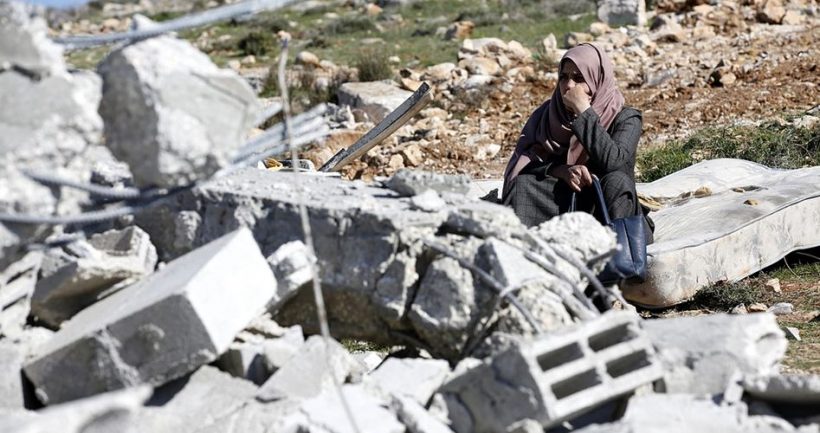
Remember the date, 19 July 2018 is when Israel’s pretense of democracy, the Knesset passed the Nation State Bill, which could more aptly be called, the “Jewish State Apartheid Law” where Jews dominate the Israeli Palestinian Arabs who are lesser than them, even if they are citizens. I deliberately did not say Israeli Jews because the law gives all rights in historic Palestine to Jews, not only in Israel but across the world, including those Jews that do not identify with the state.
My mother, who was born in Jerusalem before Israel was created, has no rights in the Holy city or her homeland but a Jewish lady with no connection to Israel can “return”, to a place she does not come from. The invaders, since they were not invited into our homeland, have enshrined the right to have my Palestinian homeland as theirs in law and also annulled my mother’s right to return, which is enshrined not in state but in international law. I can hear cries of “this is the Jewish homeland because we were here thousands of years ago”, really? If Jews – and it is only Zionists – believe they are entitled to return after thousands of years -which I reject – then how can they deny Palestinians the right to return after 71 years? In fact UN resolution 194 enshrined in international law gives Palestinians the Right of Return but there is no reference in international law to Jews having a “right to return” to historic Palestine.
Let me be clear, I am not denying Jewish, Christian or Muslim connection to holy sites in historic Palestine. However, Palestinians reject the notion of singling Jews out for a “right of return” to our homeland now and forever. No other people are afforded the right to a freehold on a plot of land forever and Jews should be no different.
Israel’s prime minister pushed the adoption of this bill now as he sees an opportunity to make major wins while US President Trump is in office and has given Israel carte blanche to implement any policies it wishes.
“A hundred and twenty-two years after [the founder of modern Zionism Theodore] Herzl made his vision known, with this law we determined the founding principle of our existence,” Benjamin Netanyahu said, adding that this is a “defining moment” for Israel. “Israel is the nation state of the Jewish people, and respects the rights of all of its citizens.”
What Netanyahu did not tell us was where exactly are the borders of this state? What rights do its non-Jewish but indigenous Palestinian citizens have within its internationally recognised borders? Netanyahu and supporters of Israel should remember that the 20 per cent “minority” that they form would not have been a minority if it had not been for the ethnic cleansing of 750,000 of their brothers and sisters in 1948. Had they not been forced out through Jewish terror, their numbers would have been equal if not larger than the Jewish Israelis that now reside in historic Palestine. It would have been Jews that formed the minority.
Netanyahu also failed to explain the status of the occupied Palestinians who are not afforded citizenship in this state. What rights do they have? They are not citizens of Israel or Palestine.
Much has been written since the Nation State Law was approved, but there has been insufficient outrage. The law has mostly been seen at worst as “controversial”. Israel has challenged the world to say no to state racism and Apartheid but the world has only expressed concern that the law could impede the now long dead peace process and wait for it, the two-state solution. Netanyahu challenged the world and the world is not ready for a fight for basic equality between citizens of a state.
Through its silence, the world arguably agrees that historic Palestine is homeland only for Jews. It agrees that the indigenous Palestinians have no rights, except those that the Jewish state agrees to give them out of the goodness of its heart and only if Israeli Jews agree. Jews can build settlements only for Jews and admissions committees can decide whether to allow the people whose land it is, the Palestinians, to live amongst them. They can decide whether Palestinian children can play in kindergartens with Jewish children and whether they can swim together in one pool.
By confirming “United Jerusalem” as their eternal capital, Israeli Jews can decide for how long Al-Aqsa Mosque can remain, majestically from a Palestinian point of view, on the “Jewish Jerusalem” skyline. Who can forget the image of the notorious Palestinian hater and so called US Ambassador David Friedman beaming as he held a poster showing a Jewish temple in place of the Dome of the Rock?
Perhaps the US has already obtained assurances from some Arab and Muslim leaders that since Muslims already have two holy mosques in Makkah and Madina and Jews do not have one, that it would be acceptable to give Al-Haram Al-Sharif up for that purpose. After all it seems protection from the Iranian “threat” carries a heavy price. The installation of the Jewish temple could be part of the “deal”. I of course do not know if that is the case, but we live in bizarre times.
Israel has already curtailed the calling of the Muslim call for prayer, the Athan, because it disturbs the illegal Jewish settlers. Now, the language in which the call is made, Arabic, has been demoted from an official language of the state to having “a special status”. Another attack on the indigenous Palestinians.
If Israel was not a racist endeavour when created, it is now most certainly a racist state, unless of course a new definition of racism has been created which gives exception to the self-proclaimed Jewish state. A racist state deserves to be criticised, ostracised and isolated until it repents and removes all its racist laws. This law is only one of tens of laws that already discriminate against non-Jews.
However, what is most bizarre is that confirmation by Israel that it is a racist entity through the passing of the law could, according to the so called IHRA definition of anti-Semitism label as anti-Semites anyone daring to call it a racist or Apartheid entity.
There is no excuse for the world’s lack of action against racist Israel.
How can the US, the land of the free, support it now? The Zionist and Israel apologist Trump trio of Greenblatt, Kushner and Friedman have not issued any statement on this law. They, especially Greenblatt who is effectively tweeting for Israel, helped Israel with recognition of Jerusalem as Israel’s capital and are working to deny Palestinian refugees their right to return. Their vision for peace almost supports the rapid implementation of the new law rather than condemn it.
The EU has, true to form, talked the talk but not walked the walk, expressing concern but no condemnation.
The Palestinian leadership has sleepwalked into this, typically with no strategy to counter it. The appropriate response to the passing of the law in the early hours of the 19th of July should have been for the PLO to declare an end to the disastrous Oslo Accords, to dissolve the Palestinian Authority with an immediate effect including an end to the immoral security coordination with the Apartheid state. The PLO has been mandated to de-recognise Israel by its Palestine National Council. That time has come. How can the Palestinians continue to recognise an Apartheid state which also denies all their rights and then sit with its representatives to negotiate a two-state solution which this law prohibits?
It is time for the Palestinians to review their struggle and adopt a call for equal rights for all who inhabit historic Palestine and a return for the refugees to their homes. The struggle would continue until these rights are realised.
All states, but particularly those that claim to be western style democracies, should have severed relations with Apartheid Israel, including those Arab states that have established relations with it.
As for the rest of those that support Israel both as individuals and organisations, enough is enough. This Israel is not a state that anyone can support or declare a friend. In particular, “friends of Israel” groups in UK political parties should shut themselves down or rename themselves appropriately as “Friends of Apartheid Israel”. That is what it should say on the tin. Honourable and Right Honourable members should then resign from these racism-supporting groups and instead join the BDS movement.
If Apartheid Israel is tolerated, next it will be Apartheid Myanmar and the door will be open for other states to court Apartheid. For the sake of our children let us not allow racism to be tolerated anywhere.
Exposed! How Britain’s anti-Semitism Scaremongers Operate
By Eve Mykytyn | Information Clearing House | July 10, 2018
This article about the British charitable organisation, the Campaign against Anti-Semitism (CAA), and its officers, Gideon Falter and Steve Silverman, examines events in England but ought to serve as a cautionary message for Canadians and Americans.
The article will delve into the corrosive methods of the CAA; review the manner in which this ultra Zionist group “discovers” anti-Semitic “incidents”; examine their inaccurate statistical “studies” and see how they seek to intimidate political parties, venues, the press and others; and look at the court cases which the CAA has prosecuted. In the guise of fighting anti-Semitism, the CAA has managed to manoeuvre British society into abdicating its core liberal values, intimidate the prosecutorial and judicial system, and silence criticism of Israel in both social media and the mainstream media.
The CAA does not just attempt to limit speech; it openly follows a scorched earth policy “that if someone commits an anti-Semitic act in the UK (including criticism of Israel)” the CAA “ensure[s] ruinous consequences, be they criminal, professional, financial or reputational”.
For example, in the last 18 months Britain’s largest political party, the Labour Party, has suspended and expelled over a hundred of its members for expressing their views on Israel or Jewish history. Presumably these dismissals act as a deterrent to others who might also wish to express their opinions. Hard as it is to believe, in 21st century Britain people have been imprisoned for trying to be funny…
The CAA’s “success” in Britain is not irrelevant to Americans. Despite the First Amendment, rules limiting speech have been creeping into our society, notwithstanding our constitutional protections.
Organisations not unlike CAA have been operating in the US for some time. In South Carolina criticising Israel is essentially prohibited on public university campuses, and in other states support for BDS (the Boycott, Divestment and Sanctions movement) will prohibit one from getting a government job or contract. Similar laws have been proposed in the US Congress. It is crucial that we resist this slide into controlled speech at the expense of our crucial values of free expression and tolerance.
Rowan Laxton
In 2006 Rowan Laxton was using an exercise bike alone on the mezzanine floor of a London gym when he saw a television report about an elderly Palestinian man killed by the Israeli assault on Gaza. Laxton allegedly exclaimed: “F…..g Israelis! F…..g Jews!” Gideon Falter (now head of the CAA) and William Lemaine, who were on a lower floor using weights, claimed to have overheard Laxton, and complained to staff at the gym.
The police were going to let Laxton off with a caution but, before it could be arranged, Falter found out that Laxton was a senior Foreign Office official and brought the story to half a dozen newspapers. The police decided to proceed with a prosecution.
Laxton was initially found guilty of “using threatening, abusive or insulting words or behaviour, or disorderly behaviour… within the hearing or sight of a person likely to be caused harassment, alarm or distress thereby…” aggravated by using abusive words that had a racial or ethnic element. Laxton was fined and removed from his Foreign Office position.
Laxton exercised his right to an appeal and a rehearing wherein the Crown Court found that Laxton did not say “f…..g Jews”, the comment on which the prosecution was based and which he had always denied. The court also found, as an alternative ground, that Laxton would have thought no one was within earshot.
The Daily Mail played a key role in ensuring that the case received national attention and went to trial, but seems not to have reported the appeal and acquittal at all. It is an open question of how Falter heard Laxton’s alleged outburst, if at the time no one was within earshot of Laxton. One reasonable assumption is that the court did not believe that Falter actually heard Laxton’s statement.
Eight years after the Laxton incident, Gideon Falter founded the Campaign Against Anti-Semitsm, a hardcore Zionist charity that advocates zero tolerance of, and vows to ensure “criminal, professional and reputational consequences”, to those it decides are anti-Semites.
Stephen Silverman
Stephen Silverman is the CAA’s “Director of Investigations and Enforcement” and has dedicated much of his time to ruining the intellectual and artistic careers of others. Silverman is himself a musician wannabe, and runs a music school in a London suburb.
In the last few years Silverman and the CAA have engaged in a relentless assault against artists, intellectuals, religious leaders and elected politicians operating in or visiting England. The “Director of Investigations” does not like ex-London Mayor Ken Livingstone, nor does he approve of a list of academics or church ministers who care for human rights or dare to disagree with Israel. The self-appointed inquisitor despises the hugely popular Labour leader Jeremy Corbyn. Silverman has made a number of attempts to ruin the music careers of both Alison Chabloz and Gilad Atzmon. In addition, Silverman takes it upon himself to write and call music venues demanding that they cancel Atzmon concerts claiming that Atzmon is a notorious anti-Semite.
Stephen Silverman, was exposed in open court in December 2016 as having been the Twitter troll @bedlamjones. As a Zionist troll, Silverman abused anti-Zionists, particularly women. His sadistic posts called for arrest and imprisonment in response what he considered to be “anti-Semitic” comments.
Silverman has also determined that Gordon Nardell, the man who has taken on the unenviable job of policing anti-Semitism within the Labour Party, is insufficiently sensitive to anti-Semitism. Apparently, according to Silverman, “Nardell has also turned his sights on Campaign Against Anti-Semitism, stating that our work to combat hatred directed at Jews by Labour members is “revolting” and results in anti-Semitism being “abused and belittled”.
For Nardell’s sin of distrusting the CAA, the CAA has demanded that “an independent and transparent disciplinary process… be instituted in the Labour Party”. The CAA’s website does not explain why the Labour Party need justify its own campaign against anti-Semitism to the CAA.
What is anti-Semitism?
UNESCO’s definition of racism is that it is “a theory of races hierarchy which argues that the superior race should be preserved and should dominate the others. Racism can also be an unfair attitude towards another ethnic group. Finally racism can also be defined as a violent hostility against a social group.” The traditional definition of anti-Semitism is the “criticising of, or discriminating against Jews for being Jews”. This definition is not substantially different from UNESCO’s definition of racism.
However, despite the fact that enforcing hate speech laws based on a traditional definition of racism would protect Jews as well as others, in December 2016 the United Kingdom followed other countries in adopting the “international definition of anti-Semitism”, which begins by saying: “Anti-Semitism is a certain perception of Jews, which may be expressed as hatred towards Jews. Rhetorical and physical manifestations of anti-Semitism are directed towards Jewish or non-Jewish individuals and/or their property, towards Jewish community institutions and religious facilities.”
The new “international definition” is troubling because it specifically targets speech and thoughts and fails to define what a “certain” perception of Jews is, and an expression of hatred towards Jews is cited, not to make the definition more precise but only as one possible example.
It is well worth reviewing the “examples of anti-Semitism” included in the “international definition” which are extremely broad and include, among other things, accusing a Jewish person of valuing Israel or his fellow Jews over his home country and the seemingly paradoxical provision prohibiting speech denying that Jews have the right to self-determination through Israel.
But if racism against one group is to be fought on a broader basis than other forms of racism, that extra protection ought to be to aid a group uniquely needing the state’s protection – an allegedly poor, downtrodden and persecuted group. It is of note that, in contrast to the downtrodden, Jews as a group have been extraordinarily successful at utilising the media and the courts and obtaining the power to “hold the feet of the government to the fire”.
If UNESCO’s definition aimed at defining racism as a universal problem, the “international definition” adheres to the idea that Jews are not a part of the universal, they are somehow different, their plight is unique.
Why do the Jews in particular need a broader definition of racial hatred? Why do Jews see a need to create a category of hatred that applies only to them? What is lacking in the UNESCO definition that is covered by the “international” one? The answer is that the “international definition” serves to restrain speech and restrict thought. It conflates the Jewish State of Israel with Jews as it vets a range of discourses such as criticism of Israeli politics, Jewish culture, Jewish history and Zionist ideology.
It is not surprising that this definition is espoused by some Zionist institutions. However, its adoption by so many countries is perplexing and begs an explanation. In a world in which free speech, freedom of association and freedom of religion are valued, there is a real question of why such a broad definition of anti-Semitism is appropriate and what exactly it is designed to accomplish.
Then there is the CAA, for whom the international definition is only a starting point. Their accusations of anti-Semitism go beyond even the very broad and over-inclusive definition of the “international definition”. If you find anti-Semitism in t-shirts, major party political gatherings or stupid pet videos, then the definition is very expansive indeed. Why would an organisation dedicated to fighting anti-Semitism be so interested in finding anti-Semitism in every possible utterance? It is clear that the CAA wants to stop any discussion of Jews, Israel or Jewish history in any but its prescribed manner. In its aggressive policing of speech, the CAA and others work to enforce Jewish power precisely as it is defined by Gilad Atzmon: “the power to suppress criticism of Jewish power”.
Freedom of t-shirt
While freedom of speech may be evaporating throughout the English-speaking world, at least we are assured that freedom of t-shirt is still protected in England.
Last year, the CAA’s website bemoaned that Edinburgh-based law graduate Sophie Stephenson won’t face criminal charges for wearing a Hezbollah t-shirt. The CAA wrote that: “On 1 July 2017, Stephenson tweeted a photograph of herself wearing a Hizballah t-shirt, explaining: “Went out to dinner with my family tonight wearing a Hizballah t-shirt.” And then, even worse, Stephenson confirmed: “I have a flag too.”
The CAA, in its zeal to fight anti-Semitism, reported Stephenson to the police, alleging that she had committed an offense under Section 13 of the Terrorism Act 2000. But despite the CAA’s urging, Scottish Police declined to act against the young “rebel”.
The CAA “considered undertaking a private prosecution” against Stephenson. However, its website lamented, “we were unable to secure enough funding to do so”. Following its report of the supposedly anti-Semitic/terrorist-loving Stephenson, the CAA called upon the public to “consider making a monthly donation to help fund Campaign Against Anti-Semitism” presumably to allow it to continue to harass Britons, accusing them of anti-Semitic behaviour, and interfering with their elementary freedoms including the right to wear rebellious t-shirts. Disturbingly, asking for donations in this context suggests that the CAA is attempting to cash in from its dubious anti-Semitic claims. Not exactly the ethical conduct you might expect of a charity.
Methodology, it is not!
The CAA claims to run “methodological” “research into anti-Semitism in British political parties”. Trolling and spying on elected British politicians on social media and public meetings, the CAA keeps a “record” of allegedly “anti-Semitic discourse and discourse that enables anti-Semitism, by officials and candidates in political parties”. This means that a Jewish organisation with a clear political agenda endeavours to monitor the British political discourse to restrain certain political opinions. The CAA’s actions prosecuting its farfetched “findings” are dangerous enough, but more troubling is its success in terrorising the British political universe into compliance with its dictates.
What are some “examples” of discourse that the CAA has claimed enable anti-Semitism and the dissemination of anti-Semitic ideas?
Ken Loach
Internationally acclaimed film-maker and Labour supporter Ken Loach told the BBC’s Daily Politics programme that he had been attending Labour meetings for 50 years and had “never in that whole time heard a single anti-Semitic word or a racist word”, and that allegations of anti-Semitism were a fallacy “without validation or any evidence”.
The CAA claimed that Loach’s statement brought to light a “discourse that enables anti-Semitism and the dissemination of anti-Semitic ideas”. How is Loach’s statement racist? Does it target Jews, identify Jews as a collective or advocate discrimination against Jews or anyone else? Is there even a criminal category or a showing of bias in which “not witnessing” conduct implicates one in that very conduct? How does not witnessing anti-Semitism make one into an anti-Semite? Does not witnessing a murder makes one a murderer? Under the CAA’s “rationale” anyone who fails to see the anti-Semitism they do is an anti-Semite.
Diane Abbott
Abbott ran afoul of the CAA when she said: “It’s a smear to say that Labour has a problem with anti-Semitism. It is something like a smear against ordinary party members.” The CAA claimed that “Abbott’s comments were widely condemned. The overwhelming majority of UK Jewish community bodies have expressed public concern about anti-Semitism in the Labour Party, including the chief rabbi.” Whether or not this statement is accurate, how is it that Abbott’s statement was misinterpreted as a criticism of Jews when it is clearly a defence of the Labour Party?
Ken Livingstone
The CAA has a long file on former London Mayor Livingstone, beginning in 1982 when the paper, the Labour Herald, of which Livingstone was co-editor, ran an unfavorable cartoon of the then Israeli Prime Minister Menachem Begin. According to the CAA, Livingstone’s most egregious anti-Semitic remark was his claim that in 1932 (Hitler came to power in 1933) Hitler had championed Jewish emigration to Israel (actually, then Palestine) and was “supporting Zionism before he went mad and ended up killing six million Jews”. The United States Holocaust Museum website generally supports Livingstone’s statement and reveals that until 1941, Germany encouraged Jews to emigrate and that 60,000 Jews left Germany/Austria for Palestine, a number second only to the number of Jews who went to the United States.
Livingstone rejected claims that he had brought the Labour Party into disrepute and said he was not guilty of anti-Semitism, but resigned from the party and acknowledged that his comments had upset Jews and offended others. “I am truly sorry for that,” he said.
Some of Livingstone’s critics were not satisfied with his apology for his truthful statement. Ruth Smeeth, a Labour lawmaker, described his behaviour as “grossly offensive to British Jews”. MP Smeeth’s reaction is bizarre. Is it anti-Semitic for Livingstone to discuss Jewish history? The Transfer Agreement between Hitler’s Germany and the Zionist Congress may be embarrassing for some Jews, but how is recounting history hate speech? MP Smeeth, the CAA and others claiming to be offended managed by ousting Livingstone to enforce their ironclad rule that certain Jewish history is “off limits”.
War on Labour
Following its anti-methodology, the CAA came to the conclusion that the British Labour Party is “eight times worse than any other party”. Not 5, 6 or 8.3 but exactly 8. What “evidence” supports this “finding?”
The CAA’s website publishes an “enemies list” of sorts, chronicling the alleged anti-Semitism of 39 members of the Labour Party. A striking number of the CAA’s complaints address statements about Israel, not about Israel as Jews, but about the actions of the country. To date, about 150 members of the Labour Party have been expelled for alleged anti-Semitism and there is a backlog of cases.
Dubious cases such as those cited here are treated by the CAA as “anti-Semitic incidents” that help the CAA feed the idea that England is rife with anti-Semitism. The British media have failed to do their job of investigating alleged incidents of anti-Semitism, and instead accept the CAA’s claims without questions.
Fiddling with numbers
Fiddler on the Roof may be emblematic of Eastern European Jewish folklore but fiddling with numbers is a symptom of contemporary Zionist politics in general and of the CAA in particular. The CAA compiles and disseminates information on anti-Semitism, basing its claims on methodology that is patently unreliable.
The “anti-Semitism audit” produced by the CAA purports to track incidents of anti-Semitism on an annual basis. The audit is a deeply flawed document, relying on data known to be unreliable and subjected to no proper statistical analysis.
Even the CAA’s use of the term “audit” is inappropriate. An “audit” is defined as “an official inspection of an… organisation’s accounts, typically by an independent body”. The CAA has no official or professional status as an auditor, nor would its methods be accepted by anyone in a position to conduct a professional audit.
The CAA has been advised by police forces that comparing police reports across jurisdictions and years leads to misleading results. The CAA’s anti-Semitism audit was heavily criticised in the Jewish media by statistics experts who noted that the CAA’s “methodology” was “flawed”, “amateurish” and “misleading”. But none of that stopped the CAA from promoting its manufactured “findings” in the mainstream media.
The CAA based its audit on gathering data from the police. But the CAA doesn’t enjoy free access to police files. Instead, it uses different techniques to gather information. This haphazard “methodology” creates crucial problems:
- Police forces in different regions of Britain use different standards to gather data regarding hate crimes.
- Police forces in Britain are presently in the process of revising how they collect their hate crime records so that data from one year may show different results than data from a different year even if the number of hate crimes remains constant.
- The CAA basically gathers information on the volume of incidents recorded that it considers to be anti-Semitic. But the CAA itself is actively engaged in increasing this volume. It frequently reports incidents to the police and urges other members of the Jewish community to follow suit. An interested body that actively contributes to the rise of reported anti-Semitic incidents cannot also claim to be objective in its “audit” that measures the rise of anti-Semitsm.
- While the CAA’s audit of anti-Semitism shows a nationwide rise of 14.9 per cent in anti-Semitic incidents between 2016 and 2017, this is based on data gathered by the CAA half of which shows wild year to year fluctuations of up to 1050 per cent. Such fluctuations defy any rationale. These statistical anomalies beg careful analysis that the CAA not only fails to apply – the CAA fails to address this drastic shift in number of reported incidents. The CAA’s study aggregates divergent data collected in different ways and calls that an “audit” of anti-Semitism in Britain. The flawed study was released to the British public with the help of the disgracefully gullible British media. The BBC, Sky, the Guardian and others reported the amateurish statistical “audit” to the British public without raising a single question as to its reliability.
The 2016 audit
In July 2017 the CAA published its 2016 annual audit of anti-Setmitic crimes in the UK. The audit’s first pages raise serious questions as to its reliability:
On page 4 it reads: “2016 was the worst year on record for anti-Semitic crimes”, reporting a 14.9 per cent rise in crimes “targeting Jews” nationwide. But a few lines below, the audit states that during the same period “violent anti-Semitic crimes fell by 44.7 per cent”. This difference in incidences appears contradictory.
The CAA admits that it doesn’t have an explanation for the drop in violent crimes: “We have considered various explanations; however at this point we do not find them persuasive.” (page 6). This drop occurred even though the CAA inflated the number of “violent incidents” by expanding the Home Office definition of violent incidents. (page 16) The CAA defined violent anti-Semitic acts as the combination of the Home Office categories of “homicide” or “violence with injury”, and the heretofore non-violent “assault without injury” and “racially or religiously aggravated assault without injury”.
This means that the audit conveyed the good news that, even using the CAA’s inflated category, the number of “violent anti-Semitic incidents” dropped. Strangely, the Jewish pressure group does not write that the drop in violent anti-Semitic crime is a positive finding.
Fishing for J words
Since the CAA doesn’t have an access to each police force’s records, it derives its statistics from police reports. When a police force does not flag anti-Semitic incidents, the CAA asks that police force to conduct a keyword search of its files:
For the purposes of this research, the keywords used were the following whole words: Jew, Jews, Jewish, Judaism, Semite, Semitic, Semitism, antisemite, anti-Semitic, anti-Semitism, Yid, Yids, Yiddo, or Yiddish. (page 17)
Some police forces made the CAA aware that their keywords method is not a reliable way to find anti-Semitic crime. “Not all incidents where ‘Jew’ is mentioned are anti-Semitic,” wrote the Northumbria police force. It also refers to the CAA exercise as a “fishing expedition”. The CAA ignored this caution and simply used as the number of incidents the data they had been warned were incorrect.
Duplicity vs methodology
The CAA employs inadequate and inconsistent methods of information gathering not only in its audit, but in its information gathering from Jews.
In 2017 the CAA made some shocking revelations:
- “One out of three British Jews were considering leaving the kingdom.”
- “Four out of five Jews saw anti-Semitism disguised as comments about Israel.”
- “Four out of five saw Labour as anti-Semitic.”
- “Half of British Jews didn’t trust the Crown Prosecution Service.”
And the source of these disturbing feelings? They came from the results of an online questionnaire found on the CAA’s website. The CAA’s findings were not even from as unbiased sample as the average FaceBook poll. Instead of revealing what British Jews think, the CAA “survey” revealed the opinions of its Zionist readers. It is outrageous to label the results of this exercise “statistics”. In fact, Jewish leaders who criticised the CAA’s duplicitous use of the “poll” were brutally silenced and slandered. Probably the most problematic result of the poll was that the British press reported it but did not point out that the CAA’s findings were based on a self-selecting sample.
Stupidity or duplicity?
Is the CAA a dysfunctional body of incompetent and clueless characters or is the CAA a group of consciously deceptive Zionists that deliberately deceives the British public? The following evidence suggests the latter.
As discussed above, the CAA 2016 anti-Semitsm audit is methodologically and factually a problematic document. The CAA was warned of this by different law-enforcement bodies such as the Northumbria police. The CAA audit uses its questionable data to show an increase in the volume of reported anti-Semitic incidents but still fails to prove an increase in anti-Semitsm. Does that mean that the CAA intended to produce a deceptive audit?
The CAA audit’s raw data (from page 24 onward) reveals extreme fluctuations in anti-Semitic incidents reported by police forces from 2015 to 2016, with year to year increases of up to 1050 per cent in some categories and drops of 80-90 per cent in others.
In Derbyshire, for instance (page 34), the audit shows an increase of 1050 per cent in non-criminal anti-Semitic incidents: from two in 2015 to 23 in 2016. This would mean that non-criminal anti-Semitic incidents rose in Derby 70 times more than the CAA’s own nationwide rate of 14.9 per cent. On paper, the situation in Derbyshire is almost a Shoah scenario. Did the CAA try to verify, as even elementary statistics would require, this enormous increase? Was there a pogrom reported in Derbyshire?
In Hertfordshire (page 44), they show an increase of almost 400 per cent in anti-Semitic crime and a surge of 800 per cent in non criminal anti-Semitic incidents. Again, there is no indication that the CAA tried to look into the cause of this improbable increase.
The explanation of the unreasonable rise was known to the CAA. West Yorkshire police notified the CAA that the recent rise in numbers of hate crime incidents “are predominantly associated with administrative change in relation to force crime-recording processes”. It was an administrative change, not an increase in anti-Semitism that led to the huge increase in the number of hate crimes recorded. So, despite the CAA’s knowledge of the reasons for the wild fluctuations, the CAA still dispensed the misleading numbers to the British public.
The raw police reports that the CAA’s audit relies upon reveal that 21 of the 46 reports showed fluctuations well beyond what could reasonably be likely (more than three times the CAA’s own nationwide figure of 14.9 per cent rise in anti-Semitic incidents). The CAA could claim that its mistakes were due to incompetence, that they simply copied and pasted police reports without thinking. But the last page of the audit reveals that this is not the case.
The CAA does admit that the numbers reported by Wiltshire police (page 73) were unreliable, as they showed a radical rise from one incident in 2015 to 139 incidents in 2016. This is an increase of 13,900 per cent in anti-Semitic incidents in a region with fewer than 540 Jews. The CAA discarded the data from Wiltshire as unreliable. But by deciding not to include the Wiltshire police report the CAA reveals that it doesn’t just copy and paste police data.
So, the CAA included some data and discarded others with no apparent standards. What statistical methodology did the CAA use when it decided to discard a rise in 13,900 per cent in anti-Semitic incidents in one jurisdiction and to include a rise in 1000 per cent, 400 per cent or even 50 per cent in others?
It is a basic tenet of statistical analysis that statistics from different sources cannot be combined or meaningfully compared without properly adjusting for different data gathering systems and methods. Deriving an overall percentage increase by averaging data derived by different systems is patently absurd. Nor is it accurate to compare different years from the same data source unless the gathering methodology is the same. The CAA’s audit compiles apples, oranges and bananas and treats them as identical. The extreme fluctuations in police reporting reveals that police force systems did exactly as the police force said it did and underwent significant reporting changes as the CAA admits in its introduction (page 3).
The alerts from the police forces that collection methods had changed means that the CAA should have known that its audit was flawed. This was also pointed out to the CAA by experts within the Jewish community who were highly critical of the audit.
Michael Pinto Duschinsky, a well respected political scientist, wrote a devastating commentary in the Jewish Chronicle about the CAA. As a holocaust survivor, Duschinsky writes, I have two commitments: “to combat anti-Semitism and other forms of racism and to avoid trivialising it by misleading allegations”. Duschinsky denounced the CAA for its “deeply flawed”, “misleading” and “amateurish” methods.
Of the self-selected CAA poll, Duschinsky wrote:
It was completely predicable that the questionnaire would produce the conclusion that one in four British Jews had considered leaving the UK… This was because the questions were so slanted and tendentious and because anyone who wished could complete the questionnaire… Not only did CAA incorrectly characterise its amateur questionnaire of Jewish opinion as a “poll” (thereby suggesting a statistically-valid sample), it then used overblown language in reporting it results.
Abuse of the judicial process
The hysteria over alleged anti-Semitism has led to trials and convictions for the crime of “anti-Semitism”. Cases that the Crown Prosecution Service (CPS) refused to prosecute two years ago have now been brought by the CPS after action from the CAA. Is the change in prosecutions a sign that the CPS now realises that it can obtain convictions it thought unlikely, does it result from a change in what the state considers to be “speech” crimes, or is the CPS placating the CAA?
Gideon Falter and the CAA have been instrumental in utilising a variety of techniques to force prosecution of “anti-Semitism”. Their campaign to restrain speech previously thought permissible has been successful in England as the following sampling of cases shows.
Jeremy Bedford Turner
Turner was recently sentenced to a year in jail after a jury convicted him of stirring up racial hatred during a 2015 speech in which Turner criticised Shomrim, a Jewish-only police unit funded by Britain, whose job it is to protect only Jewish neighbourhoods. Turner further opined the racist sentiment that he wanted Jews out of England.
The CPS declined to prosecute Turner’s speech as incitement to racial hatred. There is an “incitement to racial hatred” clause in the statutes but it is not all-encompassing, and it did not come close to making “anti-Semitism” illegal. The CPS’s policy guidelines on cases involving “incitement” clearly state that the language employed by a defendant must have been “threatening, abusive or insulting“. The courts have upheld the right to freedom of speech even when behaviour is, as in this case, “annoying, rude or even offensive without necessarily being insulting”.
Falter requested a “victim’s right to review” in reponse to the CPS’s decision not to prosecute. The request was denied on the basis that Turner hadn’t mentioned Falter, Falter did not personally hear Turner’s speech and therefore Falter couldn’t claim victim status. The CAA then instituted the process for judicial review of the CPS over its decision not to prosecute and, on the eve of a hearing in the High Court, the CPS agreed to quash its original decision, put a more senior lawyer on the case and proceeded to prosecute and convict Turner.
CAA head Falter claimed the verdict was a “damning indictment” not only of Turner, but of the CPS and its outgoing head, Alison Saunders. Falter said: “The real question is why the director of public prosecutions and CPS got this so dismally wrong.” Falter’s question conflates a jury verdict of “guilty” with proof that the CPS was misinterpreting the law.
Further in 2015, when Turner gave his speech, the United Kingdom had not yet signalled its willingness to stifle speech by adopting the “international definition” of anti-Semitism.
Alison Chabloz
Alison Chabloz, 54, of Derbyshire, was recently convicted on two counts of causing an offensive, indecent or menacing message to be sent over a public communications network. District Judge John Zani said he was satisfied the material was grossly offensive and that Chabloz intended to insult Jewish people.
The CPS initially declined to prosecute Chabloz’s speech, presumably because it was both satirical and political. The CAA launched a private prosecution against Chabloz. Private prosecutions are undertaken in the British system as a direct way for a citizen to institute a criminal case. The rules are intricate, but until recently such prosecutions generally dealt with complex business questions.
Under constant pressure from the CAA, the CPS took over the prosecution of Chabloz. The CAA had not utilised private prosecution in the Turner case since it was not present to hear the “slurs” and would have had no basis for private prosecution.
The songs that provoked Chabloz’s prosecution had been performed at a London Forum event (hardcore nationalist gathering) in 2016 and uploaded to YouTube. They included one song describing the Nazi concentration camp Auschwitz as “a theme park” and the gas chambers a “proven hoax”. This is a pretty clear example of provocative speech that most of us disagree with. However, does the state need to criminalise such speech? Won’t the “marketplace of ideas” call out Chabloz? I suspect the internet world would not allow her lyrics to go unchallenged.
Prosecutor Karen Robinson told the court: “Miss Chabloz’s songs are a million miles away from an attempt to provide an academic critique of the holocaust. They’re not political songs. They are no more than a dressed-up attack on a group of people for no more than their adherence to a religion.”
But is it a legal requirement that political song lyrics provide an “academic critique”? Must political satire be clearly defined as found by a court? It’s not clear that “Alice’s Restaurant” or “Fortunate Son” would pass this test.
Adrian Davies, defending, argued that: “It is hard to know what right has been infringed by Miss Chabloz’s singing.” The singer has defended her work as “satire”, saying many Jewish people found the songs funny.
The focus of the private prosecution brought by Falter was Alison’s comments criticising the narratives of Elie Wiesel, Irene Zisblatt and Otto Frank, in her song Survivors.
The authenticity of the tales of these three holocaust victims have been the subject of academic debate. The Anne Frank foundation recently admitted the diary had not been solely authored by Anne. Elie Wiesel’s wartime saga has been called into question over a number of issues. Under cross-examination, Falter was forced to admit that he had not actually read Zisblatt’s book, and so knew nothing about its accuracy, despite having brought a private prosecution to protect it from ridicule.
There are no specific laws against holocaust denial in the UK, even if that is what this was. Britain has resisted attempts to enforce a European Union directive outlawing holocaust denial. Falter seemed to differ from the Crown which said that the prosecution was not against mere questioning of the holocaust. Falter indicated that those who question the new holocaust religion should be prosecuted under the law and attacked professionally: that is, ruined financially.
Falter also claimed that it was “intrinsically offensive” for Chabloz to refer to Palestine being reclaimed “from the river to the sea”. But, of course, the question of whether Palestine ought to be reclaimed for its indigenous people is a political question and not one of race, so what exactly was her crime? Falter openly stated that he is intent on shielding Israel from criticism, and said of the pro-Palestinian aspects of Chabloz’s songs: “You want to silence her and stop her putting those messages out.”
All of this left inconsistencies in the prosecution’s case with regard to whether the truth/falsehood of Chabloz’s criticisms of Zisblatt, et al, were relevant, or whether instead the Crown was enforcing an unspoken law that no-one claiming to be a holocaust survivor can be ridiculed, regardless of truth/falsehood.
Adrian Davies, Chabloz’s lawyer, told Judge Zani that his ruling would be a landmark one, setting a precedent on the exercise of free speech. This is a particularly egregious precedent limiting speech since it is not clear what speech led to Chabloz’s conviction and the case therefore provides no insight to others on what speech must be avoided.
Gilad Atzmon
The case against Atzmon illustrates that in the present environment in Britain, you can be liable not only for anti-Semitism, but for questioning the methodology by which anti-Semitism is determined.
Falter appeared on Sky News on 16 July 2017 to explain how he, on behalf of the CAA, had brought a law suit against the Crown for failure to prosecute the anti-Semitic speech supposedly uttered by Jeremy Bedford-Turner. Falter further complained that his statistics on the incidence of anti-Semitism showed far more anti-Semitic incidents than the CPS claimed. Falter claimed, “our view [on anti-Semitism] is right and the Crown is wrong”.
Writing in response to Falter’s appearance, Atzmon wrote on his own website that: “We are asked to choose between two versions of the truth, that delivered by Falter who leads the CAA and basically makes his living manufacturing anti-Semitic incidents and the judicial approach of the CPS: a public body, subject to scrutiny and committed to impartiality.”
Atzmon pointed out that “Falter interprets condemnation of Israel and Jewish politics as ‘hate crimes”. Atzmon commended the CPS for upholding “freedom of expression”, and this in free speech’s most cherished exercise – political speech.
Atzmon noted that Zionism also benefits from anti-Semitism (even though it does not intentionally cause it) since Israel claims that it exists to provide shelter to all Jews. Comparing Falter and the CAA to Israel, Atzmon noted, “since a decrease in anti-Semitic incidents [could have] fatal consequences for Falter and his CAA’s business plan. They need anti-Semitism and a lot of it.”
Falter filed a suit against Atzmon, claiming libel and defamation. Falter’s complaint reads, in part: “In order to justify the existence of, and raise funds for, the CAA the Claimant (Falter) dishonestly fabricates anti-Semitic incidents, that is to say he characterizes conduct as anti-Semitic when he knows it is not, and knowingly exaggerates the prevalence of anti-Semitism and anti-Semitic activity.”
Falter complains that he was called a “devious fraud and a hypocrite”, even though neither word appears in Atzmon’s article. Falter further interprets Atzmon: “He [Falter] publicly campaigns against anti-Semitism but in reality his business plan is that he wants Jews to be hated so that he can make money.” In fact, Atzmon made the claim that Falter is a covert Jew hater who pretends to campaign against anti-Semitism.
In addition, Falter claimed that unless restrained, Atzmon would continue to publish similar words. Here Falter openly reveals that his lawsuit is not only against the words complained of, but an attempt to muzzle Atzmon.
The first stage of the lawsuit was a hearing before Justice Nicklin of the British High Court to define the issues created by the language complained of. In his ruling, the judge went beyond the complaint to determine that Atzmon’s words said that the claimant obtained funds through “fraud”.
Atzmon had not claimed that Falter committed fraud, and it was not clear that Falter’s misuse of statistics rose to the level of fraud, i.e. involving a criminal intent. The ruling made clear that a further defence before this justice would be pointless. The parties settled: Atzmon had to issue an apology and pay Falter £7,500 in damages, plus an additional amount in legal fees. The irony of forcing Atzmon to pay Falter based on the allegedly false claim that Falter seeks money for anti-Semitism begs recognition.
The Nazi pug
Earlier this year Mark Meechan, aka “Count Dankula”, was convicted and fined £800 for posting on YouTube a video of a dog he had trained to give a Nazi salute in response to the phrases “gas the Jews” and sieg heil. In case viewers worried that he was trying to turn canines into Nazis, one pug dog at a time, Meechan stated in the video that he wasn’t himself a Nazi but thought that what he had done was funny. It is a reasonable interpretation of this video that it ridiculed Hitler supporters as much as it was offensive to others.
The Scottish police arrested Meecham and charged him with posting “grossly offensive, anti-Semitic and racist material”. Sheriff O’Carroll said the right to freedom of expression was very important but “in all modern democratic countries the law necessarily places some limits on that right”.
Meecham pleaded not guilty but was convicted under the Communications Act in a crime that the court found was aggravated by “religious prejudice”. Although Meecham’s video was certainly tasteless and offensive, it is not clear how it fell into the obscure category of “religious prejudice”.
Meecham’s lawyer, Ross Brown, stated of Meecham, his difficulty, “it seems, was that he was someone who enjoyed shock humour… and went about his life under the impression that he lived in a jurisdiction which permitted its citizens the right to freely express themselves”. This perception is understandable; British humour is famous for its tastelessness. Monte Python mocked the church, Little Britain mocks the disabled and so on.
Why did Scottish law enforcement prosecute a silly offensive video of a dog? Is Scotland so crime-free that this is a matter worthy of its crime-fighting resources? It’s hard not to wonder if the same case would have been brought five years ago.
The First Amendment
In the United States, our freedom to speak is guaranteed by the First Amendment, which forbids Congress from making a law abridging free speech (now held to apply to the states as well). The First Amendment was enacted primarily as a defence against government power. The founders were concerned that the federal government exercise only enumerated powers and no more. Still, free speech is not unlimited: the United States limits some speech, including false commercial speech, defamation and incitement to violence.
No reasonable person enjoys confronting hate speech, but allowing free speech, even at its most obnoxious, frees us from self-appointed guardians of the discourse. Who would any of us choose to decide what speech ought to be allowed? Congress? Trump? Obama? The FBI? The NSA? Scientists? The courts? Or the CAA or ADL (Anti-Defamation League)?
The United States government has spent more money on Israel than on any other foreign country, and it is reasonable for Americans to be free to comment on where their money is spent. And yet we have laws that punish those who speak out against Israel, even though we have no such laws for criticising our own government or to protect the people whom we formerly enslaved.
While speech against Israel is not illegal per se, the US government, and states such as New York and Texas (among others) have chosen to punish criticism of Israel as anti Semitic. They do this by prohibiting state funding or business with any group that advocates boycotting Israel.
Canada also protects speech, but not “hate” speech. Under the urging of B’nai B’rith, Canada has prosecuted “anti-Semitic” speech as hate speech. As in the cases in England, it is difficult to ascertain which particular speech was forbidden. In a trial against blogger Arthur Topham, the prosecution cited all of Topham’s writings that were unfavourable to Israel or Jewish culture and hoped some of them stuck. They did, and Topham was convicted.
Despite Canada’s enforcement of its hate speech laws, Falter urged Canadian Jews to follow his example of aggressive prosecution. He stated, “I believe that Canadian [Jews] increasingly will be looking at their situation and asking, ‘Do we have a future in this country?’ And that’s a question they shouldn’t be having to ask at all.” Where is Falter’s evidence that Canadian Jews are asking if they have a future in Canada? Is he trying to lay seeds of alienation so that Jews in Canada will feel less like a part of Canada?
This raises the question of whether the CAA intensifies anti-Semitism by urging Jews to find anti-Semitism everywhere and to prosecute perceived anti-Semitism and “to ensure ruinous consequences, be they criminal, professional, financial or reputational”. The CAA uses the judicial system to achieve its aims, but its use of the law seems cynical as in its legal machinations the CAA deliberately disrespects the principle of freedom of speech that is ingrained in the law of Britain, the United States and Canada.
Eve Mykytin is a writer, editor and former financial lawyer
Oded Yinon Speaks Again

By Gilad Atzmon | July 22, 2018
Years after Israel Shahak translated Oded Yinon’s (1982) Plan into English, we have a chance to listen to contemporary Yinon. I was notified about this this youtube video by a FB friend. Strangely enough, the video has as of today, a very small number of views. Yinon is an ultra Zionist. He is not shy about it and considering his ‘prophetic’ vision of the Middle East back in 1982 it is worth listening to his perception of Israel, World Jewry and the Middle East.
To learn about the Yinon Plan click here
In the interview Yinon insists that his strategic plan for the Middle East wasn’t really a plan and it has never matured into an Israeli policy. However, he admits that some of his 1982 ideas were adopted by the IDF intelligence (AMAN) at the time of the Civil War in Syria (22.40). The breaking of the Middle East into tribal wars has been postponed according to Yinon but the roots of such a battle are far from over, they are basically inherent to the region.
According to Yinon peace with the Palestinians is unlikely and Israel should invest in its own building. Yinon predicts that USA Jews have no future in America, “America was the biggest (best) solution to the Jewish problem before Zionism, but today Zionism proves itself as the only solution.” He argues that American Jews will find themselves detached from American politics, culture and society. The holocaust is long away faded from American consciousness and this is, according to him, bad news for the Jews. They will have to wander and their destination is clear. For those who fail to understand, this is hardly a promising news for the Palestinians and the region.
Washington Report: Goodies for Israel Bills Continue to Move Forward

AIPAC 2017 Policy Conference in Washington, D.C., March 26, 2017, where much of its Congressional agenda was promoted.
By Shirl McArthur, Washington Report on Middle East Affairs, August/September 2018, pp. 34-36 (Photos added)
A synopsis of the many bills concerning Israel before the U.S. Congress:
THE INTERNATIONAL FOCUS of President Donald Trump’s administration seems to have shifted away from the Middle East, at least for the short term, so there have been few major Middle East legislative developments. However, some of the measures promoted by AIPAC’s annual meeting in March continue to gain support.
$38 billion to Israel – introduced by Ileana Ros-Lehtinen and Marco Rubio


First among them is H.R. 5141, introduced in the House March 1 by Rep. Ileana Ros-Lehtinen (R-FL), and its companion, S. 2497, introduced in the Senate March 5 by Sen. Marco Rubio (R-FL), the “U.S.-Israel Security Assistance Authorization” bill. Since Ros-Lehtinen, the leading Israel-firster in Congress, has announced that she is retiring at the end of this session, she apparently wants to go out having promoted a full wish list of goodies for Israel, including many security assistance measures, extension of loan guarantees, and enhanced U.S.-Israel cooperation programs. Both bills have more than half the members of their respective houses of Congress as co-sponsors. H.R. 5141 has 274 co-sponsors, including Ros-Lehtinen, and S. 2497 has 70, including Rubio, so they could be brought up for passage at any time. On May 9 the House Foreign Affairs Committee marked up H.R. 5141, ordered it reported to the full House, and recommended that it be considered under “suspension of the rules” (an expedited process that requires a two-thirds vote for passage). But this has not yet happened.
[Action Alert: TELL CONGRESS: Vote NO on $38 billion to Israel!
“Israel Anti-Boycott” bills – introduced by Benjamin Cardin and Peter Roskam


The so-called “Israel Anti-Boycott” bills, also promoted by AIPAC, have made some progress. Both S. 720, introduced by Sen. Benjamin Cardin (D-MD) in March 2017, and H.R. 1697, introduced by Rep. Peter Roskam (R-IL) the same month, claim that the BDS (Boycott, Divestment and Sanctions) movements penalize firms doing business in Israel, but in fact they are about doing business in Israel’s colonies, not Israel. As reported in previous issues, both the ACLU and Amnesty International have expressed their opposition to the bills because of their attacks on free speech, but congressional supporters of the bills continue to ignore those objections, as well as decades of bipartisan distinction between Israel and its West Bank colonies. S. 720 still has 56 co-sponsors, including Cardin, but H.R. 1697 now has 289, including Roskam. A related measure, H.R. 6095, was introduced June 13 by Reps. Ron DeSantis (R-FL) and Bob Goodlatte (R-VA). It would “prohibit the boycotting of countries friendly to the U.S.” A DeSantis press release makes it clear that the purpose of the bill is to protect Israel and its colonies from boycotts by foreign nations.
Of the bills that would encourage states to adopt anti-BDS measures, S. 170, introduced by Rubio in January 2017, still has 48 co-sponsors, including Rubio, but H.R. 2856, introduced in June by Rep. Patrick McHenry (R-NC), now has 132 co-sponsors, including McHenry.
“Anti-Semitism Awareness” bills – introduced Tim Scott and Peter Roskam

Similarly the “Anti-Semitism Awareness” bills, S. 2940 in the Senate and H.R. 5924 in the House, have nothing to do with combatting anti-Semitism but, instead, are an attempt to squelch criticism of Israel on U.S. campuses. The bills would endorse an expansive definition of anti-Semitism that would define most anti-Israel speech and actions as being anti-Semitic. S. 2940, introduced May 23 by Sen. Tim Scott (R-SC), now has five co-sponsors, including Scott, and H.R. 5924, introduced by Roskam, also on May 23, now has 39 co-sponsors, including Roskam. [RELATED: International campaign is criminalizing criticism of Israel as ‘antisemitism’]
The purpose of the bill is to protect Israel and its colonies from boycotts by foreign nations.
Israel’s right to defend its borders resolution – introduced by Lee Zeldin

The non-binding H.J.Res. 135, “supporting Israel’s right to defend its borders,” was introduced June 5 by Rep. Lee Zeldin (R-NY) with 11 co-sponsors. It would accept the Israeli government’s position that Hamas bears total responsibility for all Palestinian deaths and injuries caused by Israel in Gaza, and that all Israeli actions in Gaza are self-defense.
Most of the measures urging greater U.S.-Israel cooperation have made little progress, but the previously described catch-all resolution H.Res. 785, introduced in March by Rep. Michael Conaway (R-TX), has gained 77 co-sponsors and now has 124, including Conaway. In addition to urging unspecified increased U.S.-Israel cooperation, it gratuitously supports Trump’s Dec. 6 declaration recognizing Jerusalem as Israel’s capital.
Another resolution was introduced congratulating Israel on its 70th anniversary. S.Res. 502 was introduced May 9 by Sen. Orrin Hatch (R-UT), with eight co-sponsors.
U.S. WITHDRAWS FROM UNHRC
However, that good news was offset by U.S. Ambassador to the U.N. Nikki Haley’s June 19 announcement that the U.S. is withdrawing from the U.N.’s Human Rights Council. Haley claimed that the Council has become a “protector of human rights abusers and a cesspool of political bias.” But in fact, the main focus of U.S. criticism of the UNHRC has been its calling out of Israel for its human rights violations.
The withdrawal made pointless H.Res. 728, introduced in February by Reps. Joe Wilson (R-SC) and Neal Dunn (R-FL), criticizing the UNHRC’s treatment of Israel.
Anti-UNRWA bills – introduced by David Cicilline and Lee Zeldin

UNRWA was the target of two new bills. H.R. 5898, introduced May 21 by Reps. David Cicilline (D-RI) and Zeldin, would “require the secretary of state to develop a strategy on administration policy regarding UNRWA.” The bill’s text makes it clear that the purpose of the “strategy” is to eliminate or reduce U.S. contributions to UNRWA. And H.R. 6034, introduced June 7 by Rep. David Young (R-IA) with three co-sponsors, would require the secretary of state to “submit annual reports reviewing the educational material used by the Palestinian Authority or the UNRWA.”
TRUMP IGNORES LETTER URGING HIM NOT TO ABANDON JCPOA
On May 7, the day before Trump announced the U.S. withdrawal from the Iran nuclear agreement, the ranking members or vice-chairs of 12 important Senate committees signed a letter to the president, initiated by Sen. Dianne Feinstein (D-CA), strongly urging him “not to unilaterally withdraw from the Joint Comprehensive Plan of Action (JCPOA) absent an unambiguous Iranian violation of its terms.” Signers, all Democrats, were Sens. Sherrod Brown (OH), Maria Cantwell (WA), Thomas Carper (DE), Richard Durbin (IL), Feinstein, Amy Klobuchar (MN), Patrick Leahy (VT), Patty Murray (WA), Jack Reed (RI), Bernie Sanders (I-VT), Tom Udall (NM), and Mark Warner (VA).
Then on June 6, Durbin and seven co-sponsors introduced S.Res. 535 “reaffirming the U.S. commitment to the North Atlantic Treaty Organization.” The measure includes a clause—after several statements from U.S. and international officials confirming that Iran is in compliance with the nuclear agreement—saying that “despite these statements, overwhelming evidence, and the appeals from several NATO allies, President Trump reinstated sanctions on the Government of Iran and unilaterally withdrew the U.S. from the JCPOA on May 8, 2018.”
(For more on the withdrawal from the JCPOA see the June/July 2018 Washington Report, pp. 16-18 and 20-21.)
MOST IRAN SANCTIONS BILLS MAKE NO PROGRESS – introduced by Tom Cotton, Marco Rubio, Ed Royce
 Trump’s withdrawal from the JCPOA apparently stalled action on most Iran sanctions measures. Two exceptions were S. 2353, the “Iran Leadership Asset Transparency” bill, introduced in the Senate in January by Sen. Tom Cotton (R-AR), which now has 12 co-sponsors, including Cotton, and S. 2365, the “Iran Human Rights and Hostage-Taking Accountability” bill, introduced in January by Rubio. It now has five co-sponsors, including Rubio.
H.R. 4821, introduced in January by Roskam, to “impose sanctions against entities owned or controlled by the armed forces of Iran,” still has 31 co-sponsors, including Roskam. However, the AIPAC-pushed H.R. 5132, introduced in March by Royce, which would expand sanctions against Iran’s Revolutionary Guard Corps, has gained 22 co-sponsors and now has 215, including Royce.
NEW MEASURE REGARDING U.S.-GULF NUCLEAR COOPERATION
The previously mentioned measures regarding U.S.-Gulf nuclear cooperation have made scant progress. The positive H.Res. 795, “Recognizing the U.S. role in the evolving energy landscape of the Gulf Cooperation Council countries,” introduced in March by Reps. Joe Wilson and Donald Norcross (D-NJ), still has no more co-sponsors.
The opposing measure, H.R. 5357, was introduced in March by Ros-Lehtinen. Consistent with her history of opposing anything that might benefit Saudi Arabia, it would “require congressional approval of agreements for peaceful nuclear cooperation with foreign countries.” It now has seven co-sponsors, including Ros-Lehtinen. A new measure, S.Res. 541, was introduced June 12 by Sen. Jeff Merkley (D-OR), with two co-sponsors. It would “express the sense of the Senate that any U.S.-Saudi Arabia civilian nuclear cooperation agreement must prohibit the Kingdom of Saudi Arabia from enriching uranium or separating plutonium on its own territory, in keeping with the strongest possible non-proliferation ‘gold standard.’”
NEW MILITARY FORCE MEASURE INTRODUCED
S.J.Res. 59, “authorization for the use of military force against the Taliban, al-Qaeda, the Islamic State in Iraq and Syria, and designated associated forces,” introduced in April by Sens. Bob Corker (R-TN) and Tim Kaine (D-VA), still has two Democrat and two Republican co-sponsors. The measure does not include a sunset clause, but instead would require presidential and congressional review, to “include a proposal to repeal, modify, or leave in place this joint resolution.” S.J.Res. 61, an AUMF measure introduced May 23 by Merkley, does include a sunset clause, and also specifically limits the use of force to Iraq and Afghanistan, so it may draw broader support, although this hasn’t happened yet.
NEW BILL WOULD REQUIRE REPORT ON U.S. STRATEGY IN SYRIA
While H.R. 4681, introduced in December by Rep. Eliot Engel (D-NY) “to limit assistance for areas of Syria controlled by the government of Syria or associated forces,” still has 26 co-sponsors, including Engel, a new Syria bill, S.2882, was introduced May 17 by Sen. Catherine Cortez Masto (D-NV). It would require the president to submit to Congress a report “that sets forth a detailed description of the strategy of the U.S. in Syria.”
MCCOLLUM BILL SUPPORTING PALESTINIAN CHILDREN GAINS MORE SUPPORT
 The increasingly timely bill introduced in November by Rep. Betty McCollum (D-MN), H.R. 4391, which would “require the secretary of state to certify that U.S. funds do not support military detention, interrogation, abuse, or ill-treatment of Palestinian children,” continues to gain support. It now has 30 Democratic co-sponsors, including McCollum.
Shirl McArthur is a retired foreign service officer. He lives in the Washington, DC metropolitan area.
Canadian and Israeli colonialism versus First Nations
By Yves Engler · July 20, 2018
Ironic: Interesting, strange or funny because of being very different from what you would usually expect.
By allowing the Haudenosaunee to travel to Israel for the World Lacrosse Championships on their own passports Canada undermined its colonial authority. But, Ottawa did so at the behest of those promoting the most aggressive ongoing European settler colonialism.
“As indigenous peoples, we have both seen our traditional lands colonized, our people ethnically cleansed and massacred by colonial settlers,” the Palestinian Campaign for Academic and Cultural Boycott of Israel wrote the Iroquois (Haudenosaunee) Nationals on July 4.
“We are asking you to respect our nonviolent picket line by withdrawing from the 2018 World Lacrosse Championships, denying Israel the opportunity to use the national sport of the Iroquois to cover up its escalating, violent ethnic cleansing of Palestinians throughout our ancestral lands.”
While a number of Nationals players expressed support for the Palestinians’ plight, the team rejected the call, possibly fearing a fine or banishment from future tournaments. Also affecting the Iroquois’ decision, whose confederacy crosses the Canada-US border, was the political importance they place on competing internationally.
As “the only First Nations team officially sanctioned to compete in any sport internationally”, playing lacrosse internationally is a way to assert their sovereignty, especially when governments accept their Haudenosaunee passports. As such, Canada often makes it difficult for them to travel on their First Nation passports. The Nationals were forced to withdraw from the 2010 World Lacrosse Championships in England for that reason.
Last Monday the Nationals were stopped from flying out of Toronto on their Haudenosaunee passports. But, two days later Ottawa came to an agreement with Tel Aviv after Israeli officials, former justice minister Irwin Cotler, New England Patriots owner Robert Kraft and the Centre for Israel and Jewish Affairs (CIJA) intervened out of fear their nonparticipation in the tournament would bolster the Palestinian BDS movement.
According to the Aboriginal Peoples Television Network, Canada granted the team, though “no other Haudenosaunee passport holders, a one-time exemption to travel to Israel using their Indigenous passports.”
In response, the co-founder of the Electronic Intifada, Ali Abunimah, noted on Twitter,
“Justin Trudeau bends Canada’s refusal to recognize Haudenosaunee passports, but only for Israel.”
Anti-Palestinian groups labeled the Nationals participation in the tournament “a victory for Israel”. “The fact that they are here is a tremendous victory against BDS”, exclaimed former Israeli Knesset Member Dov Lipman, who played a key role in navigating intense diplomatic discussions between Canada and Israel, detailed in a Jerusalem Post story titled “The Iroquois Nationals lacrosse team’s incredible journey to Israel.”
Born and raised in the traditional territory of the Piscataway, Lipman immigrated from the US to the Israeli city of Bet Shemesh in 2004. Designated as part of the Palestinian state in the 1947 UN Partition Plan, Bet Shemesh was built on the ruins of the Palestinian town of Bayt Nattif, which Israeli forces depopulated of non-Jews in October 1948.
For its part, CIJA announced that they “were pleased to play a role in helping the Iroquois Nationals lacrosse team overcome challenges related to their journey to participate in FILacrosse 2018 World Championships in Netanya. The team is now en route to Israel.”
The campaign to get the Nationals to Israel is the latest example of Israel lobby groups’ work to thwart those who associate the plight of First Nations and Palestinians. Over the past fifteen years, Jewish and Christian Zionist groups have brought hundreds of First Nations leaders, educators, students and clergy to Israel.
In 2006 the Canadian Jewish Congress (CJC) took Assembly of First Nations (AFN) leaders, including Grand Chief Phil Fontaine, to Israel. Two years later the CJC sponsored a delegation of indigenous women to the Golda Meir Mount Carmel International Training Centre. In 2007 and 2010 former Grand Chief of the AFN and head of the Misipawistik Cree, Ovide Mercredi, participated in tours organized by the explicitly racist and colonial Jewish National Fund.
In 2012 CIJA sponsored an Indigenous Tour to Israel with Cree and Inuit leaders as well as indigenous representatives from Australia, Fiji, New Zealand, Samoa, and Greenland. One participant was the Chief of Norway House Cree Nation, Ron Evans. A former Grand Chief of the Assembly of Manitoba Chiefs, Evans called Jews “the true, historic Indigenous people of Israel.”
In 2014 StandWithUs Canada sponsored a trip for Ryan Bellerose, a Metis from northern Alberta, who has become a leading Israel advocate. Bellerose writes articles titled “Are Jews Indigenous to the Land of Israel? Yes” and speaks about the “effective use of the indigenous rights argument in Israel advocacy.”
Despite running into trouble for labeling Palestinians resistance members “sewage” and implying that women in Gaza were “goats” or “sheep”, B’nai Brith hired Bellerose as its advocacy coordinator for western Canada in 2016.
In Manitoba, B’nai Brith is part of a Jewish/Aboriginal/Christian Round Table that has promoted indigenous Christian Zionism. One of its acolytes is leading aboriginal Christian Zionist preacher Raymond McLean, who was profiled in a November Walrus story titled “Inside the Controversial US Evangelical Movement Targeting Indigenous People.”
To highlight Israel’s 60th, the pastor of the First Nations Family Worship Centre in Winnipeg launched World Indigenous Nations for Israel. McLean told Israel birthday revelers in Winnipeg: “We are going to be celebrating all year because the Jewish people got their land back that God had promised them.” McLean, who visited Israel 16 times between 2003 and 2012, said: “I believe that since the Jewish people are God’s chosen people, we have to stand with them.”
McLean explicitly dismisses the connection between settler colonialism in Canada and Israel. But, in doing so he employs a terra nullius/Doctrine of Discovery type argument — which was used to justify settling Turtle Island — to deny Palestinian indigeneity. According to McLean:
“There were Arab nomads who lived in the Holy Land prior to the establishment of the State of Israel in 1948 who were hired by the new Jewish settlers.
Also, neighboring Arabs from Jordan, Syria, Lebanon, Saudi Arabia, and Egypt sought employment and were hired by the Jews who were settling in their new land after returning from exile after 2,500 years to reclaim their inheritance left by the ancestors. These Arabs became known as Palestinians but were originally Arab nomads and neighbors of Israel who Israel endorsed and recognized as Israeli citizens.”
Israel lobby groups have worked hard to build support among First Nations. By enabling the Nationals to participate in the World Lacrosse Championships they succeeded in gaining indigenous cover for the most aggressive ongoing European settler colonialism.
Apartheid Rule Over Palestinians Enacted Into Israeli Basic Law
By Stephen Lendman | July 19, 2018
From inception, democracy in Israel was pure fantasy. Now rights for Jews alone is official with Knesset enactment of apartheid rule over Palestinian citizens.
The new Basic Law, the equivalent of US constitutional law, way exceeds contentiousness.
It’s the Jewish state’s version of Nazi Germany’s Nuremberg Laws. Israel is to Palestinians what Hitler’s regime was to Jews – in both countries treated like subhumans, forced to endure virtually every type indignity, degradation and crime against humanity.
Palestinians and Israeli Arab citizens are discriminated against in virtually all aspects of their lives – their fundamental freedoms denied, their personal safety jeopardized by what the late Edward Said called “refined (Israeli) viciousness.”
Ahead of enactment of Israel’s Nation-State law, the Adalah Legal Center for Arab Minority Rights in Israel said the following:
The Basic Law “falls within the bounds of absolute prohibitions under international law and is therefore illegitimate as a colonial law with characteristics of apartheid.”
Last Sunday, Adalah’s general director Hassan Jabareen said:
“The Nation-State Basic Law is illegitimate, as it establishes a colonial regime with distinct apartheid characteristics in that it seeks to maintain a regime in which one ethnic-national group controls an indigenous-national group living in the same territory while advancing ethnic superiority by promoting racist policies in the most basic aspects of life.”
Adalah attorney Sawsan Zaher earlier explained that the Nation-State Law conveys to Israeli Arab citizens that “Jewish rights are superior” to theirs.
Here’s a link to Adalah’s July 16, 2018 position paper on Israel’s Nation-State Law.
Separately, Adalah said “(n)o country in the world today is defined as a democratic state where the constitutional identity is determined by ethnic affiliation that overrides the principle of equal citizenship.”
Enacting the measure illegitimately enshrines Jewish supremacy over equal rights for Arab citizens into Israeli Basic Law – what apartheid is all about.
It exceed the worst of South Africa’s version – including murder, extermination, enslavement, torture, arbitrary arrests, illegal imprisonments, denial of the right to life and liberty, cruel, inhuman and degrading treatment, and other abusive acts imposed by Jews on Arabs.
Former UN Special Human Rights Rapporteur for Occupied Palestine, Richard Falk, earlier said “Israel is guilty of the crime of apartheid in relation to the Palestine people should be taken with the utmost seriousness by all those who affirm human solidarity and care about making visible the long ordeal of a suffering and vulnerable people.”
Writing for the Campaign to End Israeli Apartheid, Karine MacAllister earlier said:
It “involves or necessitates the denial of the other; of their presence, rights and existence on the land and reconstruction of the past, namely that the land was empty before the advent of Zionist settlement, hence the movement’s slogan, (creating the myth about) ‘a land without people for a people without land,”
adding:
Zionism is “a sophisticated legal, social, economic and political regime of racial discrimination that has led to colonialism and apartheid as well as the dispossession and displacement of the Palestinian people.”
“Colonialism flourishes by separating indigenous people from their land and heritage.”
Article 7(1)(j) of the Rome Statute of the International Criminal Court calls apartheid a crime, stating:
“For the purpose of this Statute, (a) ‘crime against humanity’ means any of the following acts when committed as part of a widespread or systematic attack directed against any civilian population, with knowledge of the attack:
(a) Murder;
(b) Extermination;
(c) Enslavement;
(d) Deportation or forcible transfer of population;
(e) Imprisonment or other severe deprivation of physical liberty in violation of fundamental rules of international law;
(f) Torture;
(g) Rape, sexual slavery, enforced prostitution, forced pregnancy, enforced sterilization, or any other form of sexual violence of comparable gravity;
(h) Persecution against any identifiable group or collectivity on political, racial, national, ethnic, cultural, religious, gender as defined in paragraph 3, or other grounds that are universally recognized as impermissible under international law, in connection with any act referred to in this paragraph or any crime within the jurisdiction of the Court;
(i) Enforced disappearance of persons;
(j) The crime of apartheid;
(k) Other inhumane acts of a similar character intentionally causing great suffering, or serious injury to body or to mental or physical health.”
From inception, Israel stands guilty of virtually all of the above abuses and other high crimes against Palestinians – yet remains unaccountable because the world community supports the Jewish state, doing nothing to hold it accountable, nothing supporting fundamental Palestinian rights.
Apartheid is racism on steroids, institutionalized in Israel – now illegally codified under its Basic Law, defying international law, declaring the country to be the exclusive “nation-state of the Jewish people (and their) historic homeland…they have an exclusive right to…”
On Thursday, the measure was enacted by a 62 – 55 vote – officially adopting apartheid rule as the law of land, ending the myth of democratic rule once and for all.
Joint (Arab) List chairman Ayman Odeh denounced the bill, saying it “declare(s) (Israel) does not want us here,” affirming “Jewish supremacy…tell(ing) us that we will always be second-class citizens.”
Netanyahu praised enactment of the apartheid law, calling it “a defining moment.”
Indeed so – revealing Israeli viciousness in the cold light of day, its discriminatory nature, its contempt for Palestinians rights, officially denying what’s affirmed under international laws, norms and standards.
VISIT MY NEW WEB SITE: stephenlendman.org (Home – Stephen Lendman). Contact at lendmanstephen@sbcglobal.net.
My newest book as editor and contributor is titled “Flashpoint in Ukraine: How the US Drive for Hegemony Risks WW III.”
Trump administration officials slam Hamas in new op-ed
MEMO | July 20, 2018
Senior US officials, including President Donald Trump’s son-in-law and adviser Jared Kushner, have once again attacked Hamas in a new op-ed published in the Washington Post today.
The comment piece is published as jointly authored by Kushner, Middle East envoy Jason Greenblatt, and US Ambassador to Israel, David Friedman.
“The nightmare of Hamas’ leadership is continuing and needlessly prolonging the suffering of the Palestinian people in Gaza,” states the op-ed, which does not once refer to Israel’s military occupation or internationally-condemned blockade of the territory.
“Until governance changes or Hamas recognises the state of Israel, abides by previous diplomatic agreements and renounces violence, there is no good option,” the officials add.
In a reference to plans widely rumoured to being prepared by the Trump administration, the officials write: “Life could significantly improve in short order for the Palestinian people if Hamas allowed it…If Hamas demonstrates clear, peaceful intentions — not just by word but, more importantly, by deed — then all manner of new opportunities becomes possible.”
The op-ed also claims that the US can help Palestinians “integrate into a thriving regional economy” but makes no reference to the Palestinians’ political rights or right to self-determination.
Responding to the op-ed, Hamas spokesperson Sami Abu Zuhri said the latest salvo from the Trump administration shows American officials are “mere spokesmen for the Israeli occupation”.
“Kushner and Greenblatt are adopting the Israeli narrative, and their aggression against Hamas points to the contempt of the American government,” he added.
Hamas: Nation-State bill officially defines Israel as apartheid entity

Palestine Information Center – July 19, 2018
GAZA – Hamas strongly denounced on Thursday the adoption by the Israeli parliament, the Knesset, of the new Nation-State Basic Law, charging Israel of officially adopting an apartheid system of rule.
Hamas spokesman Fawzi Barhoum said “such a racist law” has seen the day thanks to the US unconditional support for the Israeli occupation and its apartheid regime.
“Such a law will not change the defacto situation. The Palestinians are and will forever remain the real sovereigns in Palestine”, said Barhoum.
He called on the Palestinians to opt for a unified national strategy so as to defend Palestinians’ rights and land against such schemes.
Hamas urged the international community to work on reining in the unabated flow of Israel’s apartheid policies and prosecute the Israeli occupation for its flagrant breaches of international resolutions.
The Israeli Knesset voted 62 to 55 early Thursday to approve the Jewish Nation-State Basic Law that constitutionally enshrines the identity of the State of Israel as the nation-state of the Jewish people.
It guarantees the ethnic-religious character of Israel as exclusively Jewish and entrenches the privileges enjoyed by Jewish citizens, while simultaneously anchoring discrimination against Palestinian citizens and legitimizing exclusion, racism, and systemic inequality. It is considered as the “law of laws” capable of overriding any ordinary legislation.
The danger of the law lies in the fact that it denies the Palestinian citizens their right to self-determination to instead be determined by the Jewish population. The Jewish Nation-State bill officially legalizes apartheid, in what observers dubbed one of the most dangerous laws adopted in recent decades to legalize discrimination against Arabs.
Chief Rabbi Vs. Labour Party
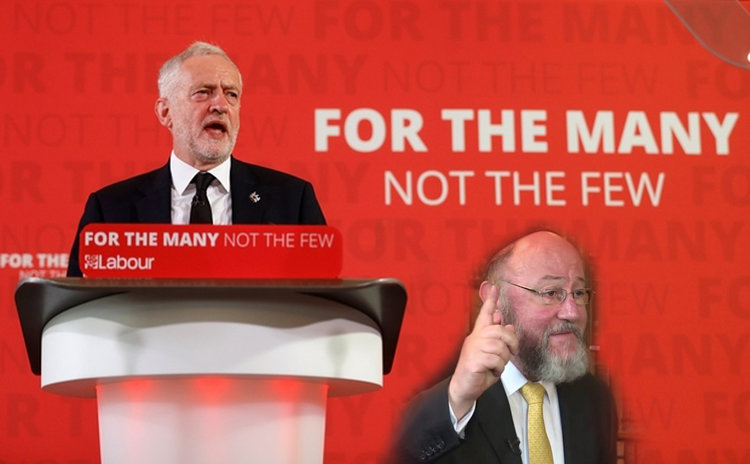
By Gilad Atzmon | July 17, 2018
The BBC reports this morning that Britan’s chief rabbi Ephraim Mirvis has said Labour will be “on the wrong side” of the fight against racism unless it toughens up its anti-Semitism code of conduct.
Rabbi Mirvis said Labour’s new anti-Semitism definition sent “an unprecedented message of contempt to the Jewish community”.
Apparently the Chief Rabbi is not alone. The J Post reports this morning that “Sixty-eight British rabbis signed an open letter decrying antisemitism in the country’s labor Party and calling on the party to accept the International Holocaust Remembrance Alliance definition of antisemitism.”
Labour has defended its new code as the most “comprehensive” of any party.
But one may wonder, why do we need a special definition for antisemitsm? Is a general and universal denouncement of racism, bigotry and discrimination of all kinds not sufficient? Are Jews somehow special?
The new Labour code does endorse the IHRA’s working definition of anti-Semitism and includes behaviours it lists as likely to be regarded as anti-Semitic – yet Jewish critics point out that it leaves out four examples from that definition:
* Accusing Jewish people of being more loyal to Israel than their home country
* Claiming that Israel’s existence as a state is a racist endeavour
* Requiring higher standards of behaviour from Israel than other nations
* Comparing contemporary Israeli policies to those of the Nazis
Far from being surprising, Corbyn’s Labour see Israeli criminality as a problem and insists upon the right to criticise the actions of the Jewish State and its lobbies in political, cultural and historical contexts.
Rabbi Mirvis attacked the omission of these examples by the Labour and said it was “astonishing that the Labour Party presumes it is more qualified” to define anti-Semitism than the Jewish community.
The Rabbi could be slightly confused here. Jews are more than welcome to define antisemitsm, as they like, but the labour party has the duty to define what it regards as an anti Jewish bigotry in accordance to its own alleged universal values.
Mirvis said Labour risked being on the “wrong side of the fight” against racism and intolerance
I would argue however that the Labour party, Rabbi Mirvis and most British Jewish institutions are on the wrong side of history here. If racism and Bigotry are defined as the discrimination of X for being X (X=woman, Jew, Black, Muslim, Gay, White etc.), then for Britain to move forward and to sustain the spirit of the common law, it must oppose all forms of racism and bigotry all together and equally.
To fight racism we need to follow one simple universal guideline rather than looking for the specific demands of one group or another.
Fighting Fake Stories: The New Yorker Serves Up A Doozie

The Polemicist | July 15, 2018
On July 8th, The New Yorker published a short piece by Adam Entous, under the graphic above, titled “The Maps of Israeli Settlements That Shocked Barack Obama.” In the article, Entous purports to tell us the heretofore unknown inside story of how the Obama administration came to the surprising realization that Israeli settlements were taking over the West Bank. In the kind of irony The New Yorker might best appreciate, the magazine’s latest promotional tag line is: “Fighting Fake Stories With Real Ones,” and this Adam Entous article is the epitome of fake.
As Entous narrates it, in 2015, the third year of Obama’s second term, as his “Presidency was winding down,” a gentleman called Frank Lowenstein—who was, and still is, the Special Envoy for Israeli-Palestinian Negotiations and Senior Advisor to the Secretary of State—stumbled upon a map of West Bank settlements “that he had never seen before.” Though Lowenstein—as, you know, Special Envoy for Palestinian Negotiations and all—had seen “hundreds of maps of the West Bank” and had one “adorning” his office, this “new map in the briefing book” was a revelation to him. It showed clearly that “not only were Palestinian population centers cut off from one another but there was virtually no way to squeeze a viable Palestinian state into the areas that remained.”
Shocked, shocked, Lowenstein scurried off to show the map to Secretary of State John Kerry, telling him: “Look what’s really going on here.” After studiously having the map’s information “verified by U.S. intelligence agencies,” Kerry then unfurled the map on a coffee table in the White House for President Obama to see. As Ben Rhodes, “one of Obama’s longest-serving advisers,” recounted, Obama, too, was “shocked” at Israel’s “systematic” use of settlements to “cut off Palestinian population centers from one another.”
All of this shock was then translated into action. Of the rhetorical sort. Kerry “incorporated [the key findings] into … speeches and other documents, and Lowenstein “walk[ed] [the Israelis] through” those findings—though he “didn’t show the maps to the Israelis.” (Because what? He didn’t want to “shock” them? Didn’t want to make the case to them too strongly, lest it upset them? Didn’t want to have to apologize? [see below] Pause for a moment, or more, to consider that demurral, which remains unexplained by Entous or Lowenstein. It’s the kind of withholding of information one would do in the face of an innocent child one wants to protect, or in the face of a more powerful superior one does not want to annoy. What is the place for such reticence in the relation between the United States and Israel?)
Capping off this new wave of decisive rhetorical action, driven by the “alarm” over what he saw in the “maps” (now plural), President Obama “decided to abstain on a U.N. Security Council resolution condemning the settlements.” In the true punchline of the article, Entous presents this abstention as “Obama’s final act of defiance against Benjamin Netanyahu… before Donald Trump took office and put in place policies that were far more accepting of the settlers.”
All in all, this article presents a perfect exemplar of ideological production: it produces without recognizing the bizarre, nearly delusional aspects of liberal ideology in its current state; for the author and his likely readers, it shows the faults of that mindset but does not see them, and in fact turns them into a story re-confirming the virtue of those—whether author, reader, or subject of the story—who hold that mindset. It’s not only fake; it’s a fake-out.
Let’s walk through all the possible meanings of this article.
Either:
1) The story is true. Entous, using his reliable, inside-the-room sources and direct quotes, has accurately reported something that actually happened. Harvard-educated Barack Obama and his team of oh-so-smart and-well-educated foreign-policy wonks—Yale-educated Secretary of State Kerry and Special Envoy for Palestinian Negotiations Frank Lowenstein, and Rice- and NYU-educated Ben Rhodes (whose brother, David, is President of CBS News)—were completely unaware of what the Israelis had been doing for the 48 years before they just happened to see that map. Neither Barack Obama nor John Kerry during their careers as senators and presidential candidates, nor Obama, during over six years as President, had ever imagined any such thing.
They must have missed this UN map, showing in red all the West Bank areas inaccessible to Palestinians, which has been around since 2009:

And they must have missed this one, also widely available since 2009, showing Israel’s relentless theft and pulverization of Palestinian land. This is the map that MSNBC apologized for showing to its viewers:
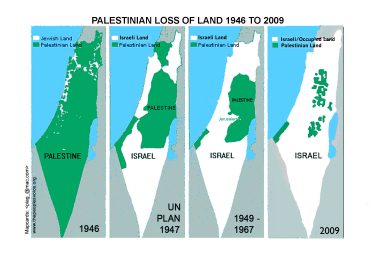
So, in this case, if this story is true, Obama and his team are as politically stupid as Trump and his, regarding Palestine at least. If this story is true, it means that years of studying in the highest academies of the empire and working in the highest levels of political power may only yield abysmal ignorance regarding one of the most important issues in the world.
Which is, in fact, quite possible.
In a meeting at the Left Forum last year, Andy Trimlett, who produced and directed the fine new documentary, 1948: Creation and Catastrophe (which I supported on Kickstarter), told of how he was able to get a Master’s degree in Middle East Studies from the University of Washington while learning virtually nothing about what the creation of Israel entailed. He’s not the only person I’ve heard that from.
So, in his acerbic tweet, the excellent British journalist Jonathan Cook may be (probably is) right in his skepticism regarding this New Yorker story, but he may also be underestimating the political vacuity of the “educated” American, especially regarding Palestine and Israel:
The New Yorker insults its readers’ intelligence with this article claiming that Obama officials only worked out – accidentally – in 2015 that Israeli settlements had taken over 60% of the West Bank. Who could have guessed what Israel was up to?! — Jonathan Cook (@Jonathan_K_Cook) July 10, 2018
Or:
2) The story is not true. Obama and Co. knew very well, all along, what Israel was doing, and they are now putting out this story—a flat-out lie–because… Well, maybe because after the Gaza massacre, with the tide turning among the Democratic constituency, to exacerbate the image of Trump as the absolute villain, etc., the Obama team, as an exemplar of establishment Democratic liberalism, wants to pose as naive innocents rather than the conscious collaborators with ethnic cleansing they were and still are. They really want The New Yorker’s readership to have that image of Obama as the one who continually “defied” Netanyahu, versus Trump who is now capitulating to him.
That, too, is a flat-out lie, as anyone who isn’t mis-educated into political stupidity by the media, the politicians, and the highest academies of the empire knows. The whole “Obama’s final act of defiance” punchline, which is in Entous’s voice, makes the story fake, even if it’s true. There was no series of “acts of defiance” by Obama, of which the lame-duck abstention on the Security Council resolution was the “final” one.
It’s fair to say, and to his credit, that Obama acted against Netanyahu’s wishes in accepting the Iran deal, which Trump has abrogated. And Obama made good noises, from early in his administration, about the dangers of Israeli settlement construction—which, of course, indicates that he knew about all those “systematic” problems before he discovered The Map. But he, like his predecessors, did nothing about it. He, like they, enabled and supported the systematic, two-state-destroying settlement of the West Bank, and continually supported Israel in whatever violence it wanted to do to the Palestinians—including bombing the crap out of them in Gaza, twice.
No slouch in that regard, Obama was the first American President to give bunker-buster bombs to Israel—secretly, precisely because he had publicly said Israel had to curtail settlement construction in exchange for such gifts and didn’t want it to be known that he was capitulating. He was also the first American President to demand that “Palestinians must recognize that Israel will be a Jewish state”—a new, gratuitous, and excessive demand, insisted upon by Netanyahu. The lame-duck abstention on the Security Council resolution cost Israel nothing. Overall, Obama’s Palestine-Israel policy, consistent with American policy over decades, was one of continual capitulation to the will of Israel–including specifically on settlements. That is not some new policy “put in place” by Donald Trump.
And, if the story is not true, then
Either:
2A) Adam Entous and The New Yorker—that oh-so-intelligent, sophisticated, and “reliable” journal—fully and sincerely believe the fake story the Obama people are putting out, and are communicating that bullshit to you in good faith, as what they think is true, in-depth knowledge of an important aspect of American foreign policy that you should have. In which case, Entous and The New Yorker are as stupid and gullible as any Trump supporter.
Or,
2B) Entous and The New Yorker know very well this is a fake story that Obama and his people are putting out, and they are consciously collaborating with them to get you to believe something they know to be untrue. (And the lite, bad faith version of this—that they can deny that they “know,” even if they suspect, the story is not true, because they take these— i.e., their—people at their word, share their objectives, and don’t ask too many questions—is no less deceptive and pernicious.)
Why would they do this? Because it’s the tortured-humanitarian version of Obama’s and the liberal Democrats’ implication in the colonization of Palestine that they want you to have. And because it helps enforce the fairy tale of how the good, progressively-intentioned American presidency under Obama has been completely overturned by the bad, anti-American-values presidency of Trump.
So, in any possible reading of this article, it’s a damning indictment of the liberal ideology embodied by Obama Democrats and/or by an iconic media outlet of highbrow culture. In any possible reading, someone’s a political fool. In option 1, it’s a true story, and Obama and his team were terribly ignorant fools who should not have been allowed near the responsibilities of the Presidency; in option 2, it’s a fake story, and Entous and The New Yorker have themselves either been fooled by, or are complicit in trying to fool you with, the Obama team’s mendacious attempt to create a false image of themselves, and a phony nostalgia about American politics. There is no option 3.
In all options, of course, the target of the tomfoolery is the audience, the likely reader of The New Yorker. Indeed, in option 2B, which gets Jonathan Cook’s vote (and mine) and is at least as likely as any other, the reader is the only one being fooled. The article, and the ideology, counts on the reader not noticing that these are its only possible—and all quite damning—meanings. Any reader who doesn’t notice this is totally captured within, and faked-out by, the ideology the article reproduces.
There’s no bigger problem in the United States today than the citizenry’s widespread mis-education into political gullibility, not to say stupidity, and it’s the height of foolishness to think this is only a problem of Republicans and rightists, of those who read Breitbart and not those who read The New Yorker, or of those who finish their education at high school and not those who get it finished off at one of the higher academies of the empire.
As I’ve said before, America is now a ship of fools, with a thousand captains barking fake orders. Reader, beware.
Featured Video
or go to
Aletho News Archives – Video-Images
Book Review
The Maidan Killings and the False-Flag Case
By Freddie Ponton | 21st Century Wire | September 5, 2026
Before the killings that helped bring down Ukraine’s president in February 2014, American diplomats were discussing who should enter its government. In a leaked telephone call, senior State Department official Victoria Nuland told US ambassador Geoffrey Pyatt, “I think Yats is the guy,” referring to opposition leader Arseniy Yatseniuk. Washington had clear preferences and was working to advance them. Later that month, Yatseniuk became prime minister.
Ivan Katchanovski’s The Maidan Massacre in Ukraine examines the violence that preceded that transfer of power. Drawing on television footage, witness testimony, forensic examinations and Ukrainian court proceedings, he argues that elements of the opposition shot protesters and police in a false-flag operation. His case centres on evidence of protesters being shot from opposition-controlled locations, including Hotel Ukraina, overlooking the killing ground. … continue
Blog Roll
 Aletho News
- Israel expands “incitement” charge to target Palestinian education and memory
- How Israel seeks to reshape Arab classrooms
- Paris bans pro-Palestinian demonstration planned for Oct. 7 over ‘risks of public disorder’
- In August Hanning Treason Case – All Signs Point To Tel Aviv.
- France cleared dozens of military sales to Israel between May and September: Report
- France projects nuclear power as Macron pushes arsenal expansion
- The fallacy of US delusions about Iran’s economic collapse
- What changes with Lula or Flávio?
- Britain leads Western media’s demise through ‘fear porn’ narrative
- The Maidan Killings and the False-Flag Case
- If Americans Knew
- Soldier testimony sheds light on how Israel wages information war
- CIA Report Warns Israel Could Head Toward Civil War, Total Collapse
- Banker Who Exposed Howard Lutnick’s Ties to Epstein Warned of ‘Retaliation’ and ‘Personal Consequences’ in Last Post Before Suicide
- Israeli Attacks Kill Two Palestinians in Gaza
- Gaza genocide at 3: Israeli-U.S. cruelty and the smart, deep resistance to it are changing the world
- As genocide is about to enter 3rd year, little of Gaza remains– Daily Update
- “We See Our Homes Now From A Satellite, Like Strangers”
- Watch “Gaza: Doctors Under Attack”, originally censored by BBC
- NAZA: Israeli embassies in UK and US promote rival documentary to challenge Gaza genocide allegations
- David Ellison appoints Israeli to lead merged Paramount-Warner studios
- No Tricks Zone
- Latest European Green Energy Debacle; Portugal’s Largest Flagship Solar Park Insolvent!
- Green Energy Debacle: German Expert Professor Fritz Vahrenholt Warns Of Severe Economic And Social Consequences
- Two More Paleo Reconstructions Affirm Meters-Higher Sea Levels Across Ireland, Brazil 7000-6000 Years Ago
- New Study: Earth And Venus Surface Warmth Largely Explained By Convection And Lapse Rate, Not CO2 Or Radiation
- 2025 Nature Paper Claiming Worsening Global Drought Gets RETRACTED …Heavily Flawed
- New Study: ‘Global Drought Shows No Detectable Recent Acceleration Under Climate Warming’
- Economic Masterminds: German Socialists Suggest Taxing Productivity Gains Stemming From Using AI
- The South China Sea Has Not Been Cooperating With The Climate Change Narrative
- Energy Crisis: Germany Enters Heating Season With Historically Low Gas Reserve Fill Levels
- New Study: The Antarctic Ice Sheet Gained Mass From 2020-2024 Due To Staggering Snow And Ice Accumulation

