Majority of Brits think UK should recognise Palestine as a state
MEMO | September 25, 2017
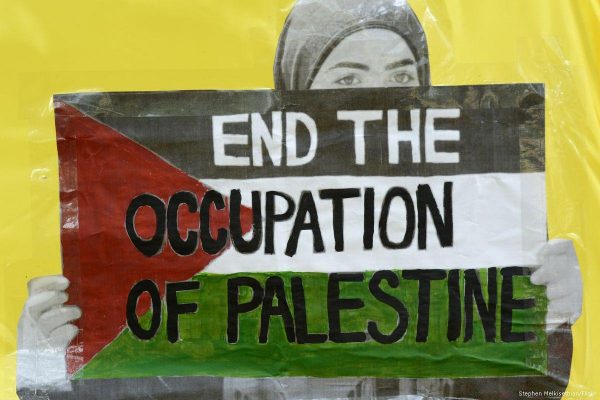
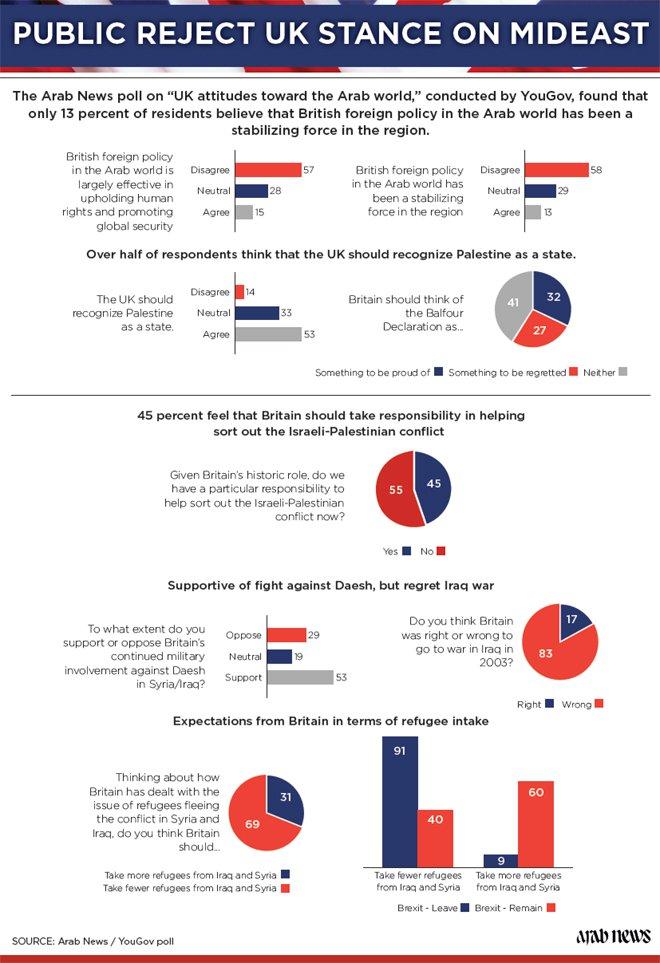
A majority of the British public believe the UK should recognise Palestine as a state, according to the results of a new YouGov poll published Monday.
53 percent of respondents said they agree with such a step, as opposed to just 14 percent who disagreed (33 percent said they were ‘neutral’).
Responding to the poll, Manuel Hassassian, Palestinian ambassador to the UK, said public opinion has been shifting. “I have been here for 11 years and have noticed dramatic changes in the British public’s views on Palestine”, he said.
“That only 14 percent say they wouldn’t want the Palestinian state to receive recognition is an indication of the Palestinian cause worldwide being accepted”, he added.
The poll also addressed views amongst the British public towards the Balfour Declaration, whose centenary will be marked in November.
According to the poll, opinion is deeply divided over the Balfour Declaration: 32 percent of Brits think it is something to be proud of, while 27 percent consider it “something to be regretted” (and 41 percent selected ‘Neither’).
The poll also revealed a partisan divide, with a striking plurality (32 percent) of those who voted Labour in the last election viewing the Balfour Declaration as something to be regretted. Among Conservative voters, on the other hand, 40 percent view the historical document with pride, and only 21 percent with regret.
The poll also asked whether, “given Britain’s historic role”, the country has “a particular responsibility to help sort out the Israeli-Palestinian conflict now”, to which 55 percent responded ‘No’, and 45 percent answered ‘Yes’.
How Israel robs Palestinians of Citizenship
By Jonathan Cook | Dissident Voice | September 22, 2017
Israel has quietly revoked the citizenship of thousands of members of its large Palestinian minority in recent years, highlighting that decades of demographic war against Palestinians are far from over.
The policy, which only recently came to light, is being implemented by Israel’s population registry, a department of the interior ministry. The registry has been regularly criticized for secrecy about its rules for determining residency and citizenship.
According to government data, some 2,600 Palestinian Bedouins are likely to have had their Israeli citizenship voided. Officials, however, have conceded that the figure may be much higher.
The future offspring of those stripped of citizenship are likely to suffer problems gaining citizenship too.
Human rights groups have severely criticized Israel for violating its own laws, as well as international conventions to which it is a party, in carrying out such revocations.
Sawsan Zaher, a lawyer with Adalah, a legal center for Israel’s Palestinian minority, told The Jerusalem Post newspaper: “This policy is illegal and in contravention to international law because you cannot leave someone stateless.”
Harsh treatment
Palestinian citizens, one in five of Israel’s population, are descended from Palestinians who survived a mass ethnic cleansing campaign waged during Israel’s creation in 1948.
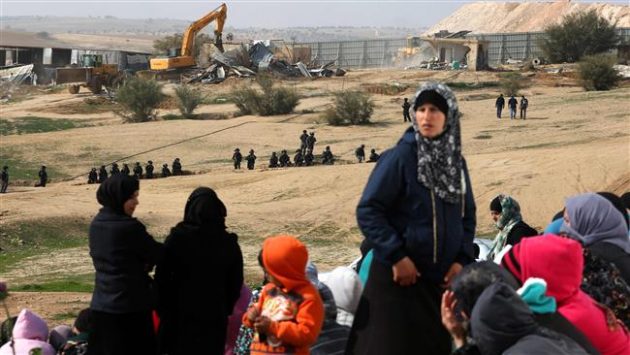
Today, some 200,000 Bedouins live in Israel, most of them in a semi-desert area known as the Naqab (Negev).
One of the two fastest-growing groups in Israel’s population, the Bedouins have faced especially harsh treatment. Israel continued expelling them to Jordan, Egypt and Gaza through the 1950s and to this day tightly limits the areas in the Naqab where the Bedouins can live.
Revelations of the revocations emerged as Ayelet Shaked, the far-right justice minister, warned Israel’s judges to prioritize demographic concerns and maintenance of the state’s Jewishness over human rights. She called growing numbers of non-Jews in the state “national challenges” that risked turning a Jewish state into “an empty symbol.”
According to Adalah, Bedouins typically learn that they have been stripped of citizenship when they approach the interior ministry for routine services such as renewing an identity card or passport, obtaining a birth certificate, or declaring a change of address.
Some have discovered their loss of status when seeking a passport to go on pilgrimage to Mecca, one of the obligations for Muslims.
Tip of the iceberg?
Aida Touma-Sliman, a Palestinian member of the Israeli parliament, said the policy of revocations had intensified over the past 18 months.
“I’m afraid that what has been exposed is only the tip of the iceberg and what hasn’t been revealed yet is even more serious,” she told the Haaretz newspaper.
The legislator fears that many other Bedouins have been stripped of citizenship, but have yet to learn of the fact.
She said she believed that the government was in part targeting Bedouins with revocation of citizenship to weaken long-standing land claims against the state.
Tens of thousands of Bedouins have been mired in legal action for decades trying to claim back the title deeds to ancestral lands seized from them by military officials in the first years after Israel’s creation.
Israel has declared the surviving communities as “unrecognized,” effectively criminalizing their inhabitants and denying them basic services such as water and electricity. Officials have also been trying to revive the Prawer Plan, which seeks to evict some 40,000 Bedouins – Adalah puts the figure at 80,000-90,000 – and force them into poor “townships”. The original plan was ostensibly frozen in late 2013 after mass protests across the Naqab.
Touma-Sliman said that without citizenship, Bedouins would be largely defenseless against steps to evict them.
Endless foot-dragging
Mahmoud al-Gharibi, an unemployed carpenter from the al-Azazme tribe, was one of several Bedouins who spoke to Haaretz in August during a protest rally in the Naqab village of Bir Hadaj.
He was told his citizenship had been revoked when he applied for a new identity card in 2000. “Since then I’ve applied 10 times [for renewed citizenship], getting 10 rejections, each time on a different pretext,” he said. “I have two children who are over 18 and they too have no citizenship.”
Another Bedouin who spoke anonymously to Haaretz said: “No one explains anything and all of a sudden your status changes. You go in as a citizen and come out deprived of citizenship, and then an endless process of foot-dragging begins.”
Zaher pointed out that many of those recently stripped of citizenship had been voting in parliamentary elections for years, even though it is a right available solely to citizens.
Adalah has warned that revoking citizenship is not only illegal according to Israel’s own laws, but violates the Universal Declaration of Human Rights, the Convention Relating to the Status of Stateless Persons, and the Convention on the Reduction of Statelessness, which Israel signed in 1961.
The group has appealed to Israel’s interior ministry and attorney general, demanding that they cancel the policy. Israeli officials have justified the revocations on the grounds that bureaucratic errors made in the state’s early years meant that the affected Bedouin’s parents or grandparents were not properly registered.
Israel did not pass its Citizenship Law – governing citizenship for non-Jews – until 1952. The legislation’s primary purpose was to strip some 750,000 Palestinians who had been made refugees by the 1948 war, and their millions of descendants, of a right to live in Israel.
A separate law, the 1950 Law of Return, entitles all Jews around the world to instant Israeli citizenship.
Martial law
The failure to register many Bedouins in Israel is related to a draconian period of martial law imposed on the Palestinian minority during Israel’s first 18 years.
Bedouins, like other Palestinian citizens, were not allowed to leave their communities without a special permit. But the remoteness of their communities and Israel’s continuing efforts to expel them through the 1950s mean that officials may have preferred to avoid registration in many cases.
According to reports by the United Nations and others, thousands of Bedouins were secretly expelled into neighboring Egypt and Jordan during the early years of the military government.
Even those who were not expelled outside Israel were often evicted from their ancestral lands and forced into overcrowded “townships.”
This intentionally murky period in Israel’s history has made it hard for the Bedouins to prove many decades later what happened to their parents or grandparents.
Adalah’s Zaher told The Jerusalem Post : “Basically, we’re talking about the grandparents of the people who are now affected and don’t know what happened under military rule. And then suddenly in 2010 they were told that because their grandparents were granted citizenship by mistake, now they will be stripped of their citizenship.”
The interior ministry has downgraded those Bedouins stripped of citizenship to “permanent residents” – the same status accorded to Palestinians in occupied East Jerusalem.
However, in practice, Israel does not treat “permanent residency” as permanent. Figures show that Israel has voided the residency status of nearly 15,000 Palestinians in East Jerusalem since the city’s occupation began in 1967.
Treated as foreigners
Bedouins have been told they are eligible to apply for citizenship again through a naturalization process, treating them effectively as foreigners.
However, according to Adalah, many have found that when they apply they continue to be denied citizenship, often on grounds that documents cannot be located or they lack sufficient proficiency in Hebrew.
There is no Hebrew language test for foreigners seeking citizenship, either Jews immigrating under the Law of Return, or non-Jewish spouses of Israeli citizens naturalizing under the Citizenship Law.
According to Haaretz, other Bedouins have found the interior ministry so unresponsive they have given up in despair.
The only provision allowing citizenship to be canceled is for recent arrivals who provided false information in their applications. Even then, the interior ministry is required to act within three years – otherwise it has to make an application for revocation through the courts.
Adalah has complained that those affected were not given a hearing before their citizenship was rescinded or the chance to appeal. Zaher said the policy was also blatantly discriminatory as no Jews had been denied citizenship because of errors in their parents’ or grandparents’ registration under the Law of Return.
Equal rights for equal burden?
The treatment of Bedouins gives the lie to one of Israel’s most familiar claims: that Palestinian citizens will receive the same rights as Jewish citizens if they share an equal burden. Avigdor Lieberman, the defense minister, has repeatedly campaigned on a platform of “no loyalty, no citizenship.” He argues that Palestinian citizens who do not serve in the Israeli army or perform an equivalent form of national service should lose their citizenship.
However, a proportion of those stripped of citizenship are from Bedouin families that have served in the Israeli army as desert trackers.
Several unrecognized villages, home to some 100,000 Bedouins, have a tradition of military service, but have still been denied services. Their homes are all under threat of demolition.
Some of the residents of Umm al-Hiran, which is currently being demolished to make way for the exclusively new Jewish community of Hiran, served as trackers for the Israeli army.
Atalla Saghaira, a resident of the unrecognized village of Rahma, told Haaretz he had been stripped of his citizenship in 2002 when he applied for a passport, even though his father was a tracker for the Israeli army. After 13 years of struggle, he eventually managed to regain citizenship, but three of his brothers were still stateless.
‘No harm intended’
The Israeli parliament’s interior committee held a meeting last year at which officials for the first time gave details of the revocation policy.
The head of the interior ministry’s citizenship department, Ronen Yerushalmi, submitted a report stating that as many as 2,600 Bedouins were affected. He admitted, however, that the data was not precise and the figure could be even higher.
At another meeting, the committee’s legal adviser, Gilad Keren, warned that the ministry was most likely breaking Israeli law. He said he could not “understand how, when a person has been a citizen for 20 years and the state makes a mistake, that person’s status is changed.”
In a statement to The Jerusalem Post, the interior ministry denied the evidence heard by the committee, claiming that only about 150 people had been affected. “No one means to harm them,” a spokesperson said. “Now the ministry is asking them to legally re-register so they will remain citizens.”
Revelations of the mass revocations came as an Israeli court last month approved for the first time stripping of citizenship a Palestinian convicted of carrying out an attack.
The interior ministry gave Alaa Zayoud, from the town of Umm al-Fahm in present-day northern Israel, the status of temporary resident after he was sentenced to 25 years for carrying out a car-ramming attack last October on Israeli soldiers. Four people were injured in that incident.
The revocation was made on the basis of a 2008 amendment to the Citizenship Law that allows citizenship to be rescinded for “breach of loyalty” to the state.
Double standard
Adalah, which opposed the government’s decision, pointed out a double standard in not applying the amendment to Israeli Jews. It cited recent cases such as that of a Jewish man and two Jewish juveniles who burned alive a 16-year-old Palestinian, Muhammad Abu Khudair, in Jerusalem in 2014, and that of Jewish settlers behind an arson attack a year later that killed three members of the Dawabsha family in the occupied West Bank village of Duma. None had citizenship revoked.
In 1996, Israel’s high court also refused a request to rescind the citizenship of an Israeli Jew, Yigal Amir, who a year earlier had assassinated Yitzhak Rabin, then prime minister. The judges ruled that such offenses should be dealt with in the criminal courts, not by revoking citizenship.
Previous revocations, though rare, have solely targeted Palestinian citizens. In 2002, Eli Yishai, then interior minister, stripped Nahad Abu Kishaq and Kais Obeid of citizenship.
Zayoud’s case was different because the interior ministry needed to seek court approval, therefore setting what Adalah and the Association for Civil Rights in Israel have called a “dangerous precedent.”
The fear is that Israel will use the case to justify many more such revocations or conditions of citizenship for the Palestinian minority on loyalty.
Ethnic cleansing
The question of whether Palestinians should have been awarded citizenship in the state’s early years is one that has exercised the Israeli leadership for decades. Many have feared that a growing Palestinian population in Israel poses a “demographic threat” to the state’s Jewishness.
Writing in 2002, Israeli historian Benny Morris suggested that Israel’s founding father, David Ben Gurion, should have “gone the whole hog” in 1948 – ethnically cleansing all Palestinians from the newly founded state of Israel.
Research has shown that Ben Gurion gave citizenship only reluctantly to the 150,000 Palestinians who survived the mass expulsions. They were initially assigned residency, chiefly as a way to aid in identifying and expelling Palestinian refugees trying to cross back into the new state of Israel to reach their villages.
Only in 1952, under international pressure, did Israel award the Palestinian minority citizenship through the Citizenship Law, legislation separate from that for Jews.
However, scholars have noted that for more than a decade Israeli leaders repeatedly attempted to find ways to expel Palestinian citizens or establish incentive schemes to encourage them to leave.
Israeli scholar Uri Davis has noted that 30,000 Palestinians living in Israel remained stateless until 1980, when Israel passed an amendment to the Citizenship Law belatedly awarding them citizenship.
Ben Gurion himself hoped to fix the percentage of Palestinians in Israel at no higher than 15 percent of the population. But with the proportion of Palestinian citizens now at one in five, Israeli politicians have been seeking ever more desperate ways to rid Israel of sections of the minority.
In July, the office of Benjamin Netanyahu, Israel’s prime minister, was reported to have urged the Trump administration in the US to agree to a land swap that would move an area that is home to some 250,000 Palestinian citizens of Israel to Palestinian control.
The proposal echoed Avigdor Lieberman’s long-standing plan to redraw Israel’s internationally recognized borders as a way to deny hundreds of thousands of Palestinians their citizenship.
In early 2014, the Maariv newspaper reported that Netanyahu had first posited a land and population exchange as a quick fix to reduce Palestinian citizens to no more than 12 percent of the population.
‘Jewish extremists’ condemned for vandalising Jerusalem church

St. Stephen Church in occupied Jerusalem was vandalised on 21 September 2017 [Richard Hardigan/Twitter]
MEMO | September 22, 2017
The Council of Catholic Churches in Jerusalem yesterday condemned the attack by “Jewish extremists” on one its houses of worship and called on the Israeli government to do more to curtail the escalating violence against Christians in the holy land.
Wednesday’s attack on St. Stephen Church in occupied Jerusalem resulted in the destruction of glass artwork and statues that depict the life of Jesus Christ and Virgin Mary.
The new patriarchal Vicar for Jerusalem and Palestine, Giacinto-Boulos Marcuzzo, speaking to AsiaNews said that the incident “fits in with the pattern of past incidents” and was carried out by “some fanatics” whom he described as most likely being “Jewish extremists”.
In addition to the “huge damage” caused by the destruction of statues and windows, there is the deep pain caused by “the fanaticism of these groups who do not want to accept diversity and the faith of others,” the patriarch said.
The attack took place near a chapel dedicated to St Stephen where a group of nuns and some members of the communities of the monastic family of Bethlehem live.
The Council of Catholic Churches moved swiftly to condemn the attack by releasing the statement calling on the State of Israel to punish those who were responsible for the acts “because” they said “it could easily lead to serious and unpredictable consequences, which would be most unwelcome in the current tense religious climate.”
Attacks by Jewish extremists on Christian and Muslim sites have been on the rise in recent years. Earlier this month church leaders united in their condemnation of Israel for its systematic attempt to undermine the integrity of the Holy City of Jerusalem and weaken its Christian heritage in Palestine.
They appealed to Christians, as well as the heads of governments “and all people of good will” to support them in their efforts to stop the Israeli aggression against the Palestinian Christian community.
Read also:
President Aoun at UN: Lebanon Won’t Allow Naturalization of Any Refugee
Naharnet | September 21, 2017
The Lebanese President Michel Aoun stressed Thursday in his maiden speech before the UN General Assembly that Lebanon will not allow the naturalization of any Syrian or Palestinian refugee on its soil “no matter what that might cost.”
“The decision in this regard belongs to us and not to anyone else,” Aoun underlined.
Noting that the Syrian state is now in control of “85 percent of its territory,” the president emphasized that “there is an urgent need to organize the return of refugees to their country.”
“Some call for the refugees’ voluntary return and we call for their safe return and differentiate between the two concepts,” Aoun noted.
“The claim that they will not be safe should they return to their country is an unacceptable excuse… If the Syrian state is carrying out reconciliations with the armed groups that it is fighting, wouldn’t it be able to do so with refugees who had fled war?” the president asked.
He added: “The UN better help the refugees return home instead of helping them to stay in encampments that lack the least requirements of decent life.”
Separately and from the same UN podium, Aoun nominated Lebanon to become a “permanent, UN-affiliated center for dialogue among the various cultures, religions and races.”
“I hope the member states will back Lebanon in this demand, so that we can all work for peace, security and stability,” he added.
US President Donald Trump’s suggestion that refugees be resettled closer to home instead of brought to the United States has angered many in Lebanon, a tiny country hosting more than 1.5 million refugees.
The country of just 4 million is officially hosting more than 1 million Syrian refugees and some 500,000 Palestinians. The real numbers are likely higher as many don’t register with the UN.
Israel’s Chief Stooge at Westminster Shames Us Again

PM Theresa May holds a reception at Downing Street to celebrate the upcoming Jewish New Year. Image credit: Number 10/ flickr
By Stuart Littlewood | American Herald Tribune | September 20, 2017
“As Prime Minister, I am proud to say that I support Israel. And it is absolutely right that we should mark the vital role that Britain played a century ago in helping to create a homeland for the Jewish people.”
Thus spoke Theresa May the other day as she welcomed members of the Jewish community to 10 Downing Street. But by focusing on creating a homeland for the Jewish people she’s also celebrating the hell that Balfour’s Declaration created for the gentle Palestinians and for the rest of the region. “Born of that letter, the pen of Balfour, and of the efforts of so many people, is a remarkable country,” said May, apparently blind to the reality.
Right now we’re on the run-up to the centenary of what is arguably the biggest foreign policy blunder in British history: the Balfour Declaration. In 1917 Arthur Balfour, foreign secretary, bowed to Zionist demands for a homeland for the Jews in Palestine and gave an undertaking that set the world on course for long-term turmoil and, for the native Palestinians, unspeakable misery, dispossession and displacement. It was a criminal conspiracy. And Balfour was an A-list idiot who bragged that he wasn’t even going to consult the local Arab population about this theft of their homes and lands.
Yet he remains a hero of the Conservative Party which, led by Theresa May, plans to celebrate this hundred-year “running sore” — as Lord Sydenham called it — in great style, inviting Israel’s prime minister Netanyahu to the festivities. That’s if the mad-dog warmonger isn’t under arrest by then on imminent charges of corruption back home.
“I will always do whatever it takes to keep our Jewish community safe,” May added. “Through our new definition of anti-Semitism we will call out anyone guilty of any language or behaviour that displays hatred towards Jews because they are Jews. We will actively encourage the use of this definition by the police, the legal profession, universities and other public bodies.”
She was referring to the International Holocaust Remembrance Alliance (IHRA) definition of anti-Semitism.
BDS “unsucessful”? Really?
One of May’s Cabinet minsiters, Sajid Javid, told the World Jewish Congress that the UK would celebrate the upcoming anniversary with pride. “Someone said we should apologise for the Declaration, to say it was an error of judgment. Of course that’s not going to happen.” To apologise, he said, would be to apologise for the existence of Israel and to question its right to exist.
Instead, he emphasised the UK government’s intolerance towards any kind of boycott of Israel. “I’ll be 100 per cent clear. I do not support calls for a boycott, my party does not support calls for a boycott. For all its bluster, the BDS campaign is most notable I think, for its lack of success…. As long as I’m in government, as long as I’m in politics, I will do everything in my power to fight back against those who seek to undermine Israel.” The UK, he said, has maintained close diplomatic, trade and security ties with Israel since its inception, and is counted upon by Israel to vote in its favour at the UN and other international institutions.
As Noam Chomsky has aptly observed: “People who call themselves supporters of Israel are actually supporters of its moral degeneration and ultimate destruction.”
Israel lobby stooges like May and Javid continue trying to ram their pro-Zionist nonsense down our throats despite the fact that last time they attacked the successful BDS (boycott, divestment and sanctions) movement, warning that her government would “have no truck with those who subscribe to it”, they came spectacularly unstuck. 200 legal scholars and practising lawyers from all over Europe put May in her place by pointing out that BDS is a lawful exercise of freedom of expression and outlawing it undermines a basic human right protected by international convention. Her efforts to repress it amounted to support for Israel’s violations of international law and failure to honour the solemn pledge by States to ‘strictly respect the aims and principles of the Charter of the United Nations’.
May needs a crash course in human rights
Top legal experts were recently asked for their views by Free Speech on Israel, Independent Jewish Voices, Jews for Justice for Palestinians and the Palestine Solidarity Campaign. Their verdict was that those in public life cannot behave in a manner inconsistent with the European Convention on Human Rights, which provides for freedom of expression and applies not only to information or ideas that are favourably received or regarded as inoffensive, but also to those that “offend, shock or disturb the State or any sector of the population”.
What’s more, there is an obligation to allow all concerned in public debate “to express their opinions and ideas without fear, even if these opinions and ideas are contrary to those defended by the official authorities or by a large part of public opinion, or even if those opinions and ideas are irritating or offensive to the public”. Article 10 says that everyone has the right to freedom of expression including “freedom to hold opinions and to receive and impart information and ideas without interference by public authority and regardless of frontiers.”Article 19 of the Universal Declaration of Human Rights says the same sort of thing, subject of course to the usual limitations required by law and respect for the rights of others.
Eminent human rights lawyer Hugh Tomlinson QC has sharply criticised the anti-Semitism definition touted by May. Firstly, it isn’t a legally binding definition so doesn’t have the force of a statutory one. And it cannot be considered a legal definition as it lacks clarity. Therefore any conduct contrary to the IHRA definition couldn’t necessarily be ruled illegal.
He says it was “most unsatisfactory for the Government to adopt a definition which lacks clarity and comprehensiveness” and suggests the Government’s decision to adopt the IHRA definition was simply a freestanding statement of policy — a mere suggestion as to a definition of anti-Semitism that public bodies might wish to use. But no public body was under an obligation to adopt or use it, or should be criticised for refusing to. He warned that if a public authority did decide to adopt the definition then it must interpret it in a way that’s consistent with the European Convention on Human Rights mentioned above.
A further obligation put on public authorities is “to create a favourable environment for participation in public debates for all concerned, allowing them to express their opinions and ideas without fear, even if these opinions and ideas are contrary to those defended by the official authorities or by a large part of public opinion, or even if those opinions and ideas are irritating or offensive to the public”.
According to Tomlinson, then, the IHRA definition doesn’t mean that calling Israel an apartheid state that practises settler colonialism, or urging BDS against Israel, can properly be characterized as anti-Semitic. Furthermore, a public authority seeking to apply the IHRA definition in order to prohibit or punish such activities “would be acting unlawfully.”
Retired Lord Justice of Appeal, Sir Stephen Sedley, has weighed in bycriticising the IHRA definition for lack of legal force. “It is not neutral: it may well influence policy both domestically and internationally.” He added that the right of free expression, now part of our domestic law by virtue of the Human Rights Act, “places both negative and positive obligations on the state which may be put at risk if the IHRA definition is unthinkingly followed”. Moreover the 1986 Education Act established an individual right of free expression in all higher education institutions “which cannot be cut back by governmental policies”.
Sedley felt the IHRA definition was open to manipulation. “What is needed now is a principled retreat on the part of government from a stance which it has naively adopted.”
As for Javid’s crack about not having to apologise for Israel’s existence, he must have forgotten that in the wake of the 1947 UN Partition Plan, which granted the Jews territory within defined borders, they declared statehood in 1948 without borders, grabbing as much extra land as they could by armed terror and ethnic cleansing. The new state of Israel’s admission to the UN in 1949 was conditional upon honouring the UN Charter and implementing UN General Assembly Resolutions 181 and 194. It has failed to do so and to this day repeatedly violates provisions and principles of the Charter.
When the UK Conservative Government makes pronouncements on foreign affairs it pays to consider that 80 percent of its MPs are claimed to be signed-up members of Friends of Israel and this is a stepping-stone to higher office. Conservative Friends of Israel, according to their website, are active at every level of the party.
It is sad that so many of our politicians are so spineless and so insecure that they feel the need to herd together under the flag of what the UN has called a racist state.
Fact checking Benjamin Netanyahu’s General Assembly speech

By Adam Garrie | The Duran | September 20, 2017
Yesterday, Israeli leader Benjamin Netanyahu spoke before the United Nations in a speech that served as a kind of appendix to Donald Trump’s controversial, bellicose declaration that was delivered hours earlier.
Both speeches predictably focused on Iran and both leaders told a great deal of untruths and half-truths about the situation. Here are some of the most glaring untruths, followed by a factual explanation of the situation.
1. Iran is “devouring nations”.
The full quote from Netanyahu is as follows:
“Well as you know, I strongly disagreed. I warned that when the sanctions on Iran would be removed, Iran would behave like a hungry tiger unleashed, not joining the community of nations, but devouring nations, one after the other. And that’s precisely what Iran is doing today.
From the Caspian Sea to the Mediterranean, from Tehran to Tartus, an Iranian curtain is descending across the Middle East. Iran spreads this curtain of tyranny and terror over Iraq, Syria, Lebanon and elsewhere, and it pledges to extinguish the light of Israel”.
In reality, Iran occupies zero countries and has not occupied any country in its modern history. By contrast, Israel has occupied part of Syria, the Golan Heights, since 1967. This occupation is condemned by the United Nations and all five permanent members of the Security Council, including the United States.
The other country on Netanyahu’s list that has been occupied by Israel and not Iran is Lebanon. After invading Lebanon in 1982, Israel set up a permanent occupying force in southern Lebanon between 1985 and the year 2000. Israel maintained a presence in the country until 2006, when Israeli forces retreated in the face of strong Hezbollah defences.
Israel continues to occupy Palestine according to the UN and most impartial observers. It previously occupied Egypt, the Jordanian West Bank and in 1981, illegally bombed Iraq.
Iran by contrast has done no such things. The Iranian assistance provided to Syria during the conflict in the country has been done under a legal agreement with Damascus based on mutual friendship and a common cause against Salafist terrorism. Iran’s training of some Iraqi volunteers has been conducted on a similar basis.
By no logical stretch of the English language, could this been seen as “devouring nations”.
2. “We will act to prevent Iran from establishing permanent military bases in Syria for its air, sea and ground forces”
This statement while designed to sound like a defensive measure is actually an admission of a premeditated war crime. No foreign country can use the threat of force to blackmail its neighbours or anyone else when it comes to internal affairs.
If Syria invites Iran to establish some sort of permanent presence in the country, that is a matter which is strictly between Syria and Iran. To use this as a pretext for an act of war, is put simply, a war crime.
3. “Syria has barrel-bombed, starved, gassed and murdered hundreds of thousands of its own citizens and wounded millions more, while Israel has provided lifesaving medical care to thousands of Syrian victims of that very same carnage. Yet who does the World Health Organization criticize? Israel”.
This one is full of outright lies. First of all, prior to the conflict, not only were all Syrians fed, but food prices were subsidised by the government, making nutritious foodstuffs more affordable in Syria than in most parts of the region.
Even today, Syrians are not starving, but due to western backed sanctions, food is more expensive and medicine is both more expensive and more scarce than they were prior to the conflict with Salafist terrorism. None of this has to do with the Syrian government nor its partners who continue to deliver aid.
Syria has not possessed any chemical weapons since 2013. In a joint effort by both Russia and the US, the Organisation for the Prohibition of Chemical Weapons certified that by early 2014, there were no chemical weapons left in the Syrian governments hands.
Syria did develop a chemical weapons program in the 1970s in response to intelligence about Israel’s secretive nuclear weapons program.
In spite of this, Syria has never used chemical weapons, not on a foreign power and not internally.
The only chemical weapons in Syria today, are those in the hands of terrorists who are fighting Syria.
In respect of the Israeli hospital program. These hospitals have not been open to ordinary Syrians, let alone to the Syrian soldiers fighting ISIS and al-Qaeda.
Instead, the hospitals have perversely been used to give medical treatment to al-Qaeda and ISIS fighters who are known as some of the most violent terrorists in the world.
4. “Two years ago, I stood here and explained why the Iranian nuclear deal not only doesn’t block Iran’s path to the bomb, Iran’s nuclear program has what’s called a sunset clause”.
Not only does the JCPOA (aka Iran nuclear deal) prevent Iran from developing nuclear weapons, but Barack Obama’s administration admitted this openly. The EU and Russia continue to express their support of the deal and the US State Department, EU and UN have all agreed that Iran is in full compliance with the deal.
The only country in the Middle East to develop and maintain nuclear weapons is Israel. Furthermore, Israel obtained its nuclear weapons without international sanction and to this day, refuses to admit to having nuclear weapons. Israel is not a signatory to the Treaty on the Non-Proliferation of Nuclear Weapons. Israel is one of only four nations in the world to have never signed the treaty.
Israeli historian Avner Cohen as well as the award-winning US journalist Seymour Hersh have confirmed the existence of the so-called ‘Samson Option’, wherein Israel will deploy its nuclear weapons if it feels its security is threatened.
During his speech at the UN, Netanyahu alluded to the ‘Samson Option’ in saying,
“Those who threaten us with annihilation put themselves in mortal peril. Israel will defend itself with the full force of our arms and the full power of our convictions”.
In this sense, Iran has much more to fear form Israel than Israel has to fear from Iran, yet ironically it is Israel that continually protests about its own fears.
CONCLUSION
While Iran hasn’t invaded another country in its modern history, nor has it occupied a single country, Israel has occupied five: Syria, Egypt, Palestine, Lebanon and Jordan. Unlike Iran, Israel has nuclear bombs, unlike every other country in the Middle East.
With this record, it becomes clear who should be afraid of whom.
103 Palestinian prisoners died since signing of Oslo
Palestine Information Center – September 18, 2017
 RAMALLAH – A report issued by a Palestinian human rights organization on Sunday revealed that around 110,000 arrests against Palestinians have been documented since the signing of the Oslo Accord in 1993. Nearly 16,000 of the arrests recorded involved juveniles while 1,700 arrests targeted females.
Prisoners and Ex-Prisoners Affairs Commission said in a statement on Sunday that the number of Israeli prisons has increased since the signing of the Oslo Accord, adding that new prisons were established and other old ones were re-opened.
The Commission affirmed that the Israel Prison Service has escalated its arbitrary and retaliatory measures against the Palestinian prisoners and pointed out that around 15 laws and bills violating the prisoners’ rights have been enacted.
The statement underlined that since the Oslo Accord was signed, 103 Palestinian prisoners have died inside Israeli jails either due to medical negligence, torture or direct killing.
It noted that the vast majority of the detainees are civilians who were arrested from areas controlled by the Palestinian Authority.
The Commission said on the 24th anniversary of the Oslo Accord that nearly 6,500 Palestinian prisoners are being held in Israeli jails, including 64 women, 350 children and 500 administrative detainees.
On 13th September 1993, the Oslo Accord was signed between Israel and the Palestine Liberation Organization (PLO) under the auspices of the US in the White House.
Oslo was aimed at achieving a peaceful solution to the Palestinian-Israeli conflict, but Tel Aviv exploited it to impose a new reality and activate its settlement expansion projects in the Palestinian territories occupied in 1967.
Featured Video

Houthis Don’t Have to Conquer Saudi Arabia to Make It Pay
or go to
Aletho News Archives – Video-Images
From the Archives
A Lesser “Grade” of Human
By Michael Hoffman | Revelation of the Method | January 3, 2024
Will the more than 100 Iranians killed by terrorist bombs today be mourned in the West as victims of terrorism? Certainly not. Allied doctrine has it that the killing of Israeli or American civilians is a crime of cosmic proportions, while shedding the blood of “enemy” women and children is perfectly acceptable; indeed commendable.
The West does not memorialize the hundreds of thousands of civilians bombed by the U.S. in Serbia, Iraq, Afghanistan and every major German city 1943-1945. America’s fire-bombing of the city of Tokyo by General Curtis LeMay in March 1945 was followed by Harry Truman’s atomic incineration of Hiroshima and Nagasaki in August of that year. Truman never had a moment of doubt or regret over the murder of more than a 100,000 Asian children, mothers and non-combatant boys and men. It was business as usual for the “noble” Allies during the “Good War.”
In the West human rights signifies passionate concern only for civilians designated as truly human: Israelis first, then Americans and British, followed by their satraps.
This inhumanity is the legacy of Talmudic ideology, beginning with tractate Sanhedrin 57a from 400 A.D., concerning liability for capital punishment: “If a Jew murders a gentile, he is exempt.”
This teaching of contempt was reiterated in the dogma of Chabad Lubavitch founder Rabbi Shneur Zalman in the 18th century. … continue
Blog Roll
 Aletho News
- Houthis Don’t Have to Conquer Saudi Arabia to Make It Pay
- MOE: Nearly 22,000 Students and Education Workers Killed
- Guterres in Islamabad: Genocide, cowardice, and the cage of Imran Khan
- Johnson, Marandi say Yemen holds upper hand over Saudi Arabia
- False flags won’t save aggressors, Iran FM spokesman says
- The Makkah Pact Enters Into Force: The End of American Dominance or Its New Form?
- NATO’s top generals gather in Kiev
- EU’s continuing expansion – greater threat to Russia
- US Senator Murphy says Pentagon denied him entry to US base in Qatar
- Israel expands “incitement” charge to target Palestinian education and memory
- If Americans Knew
- Three Years of Genocide: How America’s Israel-First Media Filtered Out the Truth
- Israeli war chief briefs ministers on potential war against Palestinian Authority
- New Report: Israel Killed nearly 21,000 Palestinian Students and Education Workers in Past Three Years
- Israel’s flailing chatbot army
- Five Palestinians Killed, Others Injured by Israeli Fire in Gaza
- Israel is rewriting the Palestinian curriculum in East Jerusalem to erase Palestinian identity
- Three years of genocide: Israel turned prisons into killing grounds and torture sites
- Three years of genocide. Words fail. Daily Update
- ‘I’d rather die than go back’: A Palestinian teen’s 10-month nightmare in Israeli jail
- How Jared Kushner’s firm’s investment in an Israeli company could be a major conflict of interest
- No Tricks Zone
- New Study: 50 Years Of The Most Aggressive ‘Net Zero’ Policies Can Only Affect The Global Climate By 0.03°C
- US September “Heat” Was No Record…Many Records Set Decades Ago
- Latest European Green Energy Debacle; Portugal’s Largest Flagship Solar Park Insolvent!
- Green Energy Debacle: German Expert Professor Fritz Vahrenholt Warns Of Severe Economic And Social Consequences
- Two More Paleo Reconstructions Affirm Meters-Higher Sea Levels Across Ireland, Brazil 7000-6000 Years Ago
- New Study: Earth And Venus Surface Warmth Largely Explained By Convection And Lapse Rate, Not CO2 Or Radiation
- 2025 Nature Paper Claiming Worsening Global Drought Gets RETRACTED …Heavily Flawed
- New Study: ‘Global Drought Shows No Detectable Recent Acceleration Under Climate Warming’
- Economic Masterminds: German Socialists Suggest Taxing Productivity Gains Stemming From Using AI
- The South China Sea Has Not Been Cooperating With The Climate Change Narrative

