Kremlin reacts to Macron’s remarks on NATO troops in Ukraine
RT | February 27, 2024
A direct conflict between Russia and NATO will likely become inevitable if member states of the US-led military bloc send troops to Ukraine, Kremlin spokesman Dmitry Peskov has said, after French President Emmanuel Macron raised the possibility.
Macron, whose government hosted a high-profile meeting of Ukraine backers on Monday, said EU members “will do everything necessary to prevent Russia from winning” – including deploying forces on the ground to support Kiev. Several governments have since ruled out sending troops to the front line.
Opponents of the proposal “have a sober assessment of the potential risks” of having NATO forces in Ukraine, Peskov told the media on Tuesday. That would be “absolutely against the interests of those nations” and their people, he warned.
Asked about the probability of a direct conflict with NATO if Western troops are sent to Ukraine, the Kremlin spokesman said, “in this case, we have to talk not about the probability, but rather the inevitability.”
German Chancellor Olaf Scholz has spoken out against the idea. Participants of the meeting in Paris came to an agreement against it, he told a news conference on Tuesday.
At a joint press conference in Prague on Tuesday, Czech Prime Minister Petr Fiala and his Polish counterpart, Donald Tusk, ruled out sending their citizens to fight in Ukraine. Senior officials in Hungary and Slovakia issued similar statements.
Macron said Western leaders could end up changing their minds in the future, similarly to how they did with military assistance – which in some cases initially involved items such as helmets to eventually donating lethal weaponry including tanks and fighter jets.
While there was no consensus over the proposal, the participants agreed to create a coalition to supply medium and long-range missiles to Kiev, the French president said.
Moscow considers the Ukraine conflict to be a US-orchestrated proxy war against Russia, and has repeatedly warned that by supplying increasingly sophisticated weapons to Kiev, NATO members are drawing closer to a direct confrontation.
Kremlin comments on Denmark dropping Nord Stream probe
RT | February 26, 2024
The Danish decision to end its investigation into the sabotage of the Nord Stream gas pipelines under the Baltic Sea was probably motivated by Copenhagen’s unwillingness to establish the truth about the crime, Kremlin spokesman Dmitry Peskov has suggested.
The energy links built to bring Russian natural gas directly to Germany were ruptured by unknown perpetrators in a series of explosions in September 2022. Germany as well as Denmark and Sweden, in whose economic zones the sabotage took place, had each launched separate inquiries. Sweden closed its probe earlier this month.
The Copenhagen Police do not see “sufficient grounds to pursue a criminal case in Denmark” over the incident, they said on Monday in a statement announcing the development. The probe, conducted jointly with the Danish Security and Intelligence Services (PET), was “complex and comprehensive” and resulted in a conclusion that the incident was deliberate sabotage. Nothing was said about possible suspects in the press-release.
The situation is “close to absurd,” Peskov told journalists when asked about the news.
“Apparently, they were getting closer to, as they call it, outing their closest allies,” he suggested. “One can only express absolute astonishment and nothing else.”
Denmark said investigators cooperated with “relevant foreign partners,” but Peskov stressed that Russian law enforcement was not among those.
“In the early stages of the investigation, we consistently asked the Danes for information about what had happened, but the requests were rejected,” he said.
A German government spokesman said Berlin remained very interested in getting to the bottom of the crime.
Western media initially rushed to accuse Russia of disabling its own critical infrastructure. Subsequent reports said European investigators found no evidence to support this theory. Leaks to the press identified a “pro-Ukrainian group” and a specific Ukrainian officer currently held in Kiev’s custody under a separate case as potential culprits.
Russian President Vladimir Putin pointed the finger at the CIA, claiming that the Americans were behind the sabotage, when he discussed Nord Stream with journalist Tucker Carlson in a recent interview. He declined to say what evidence led him to that conclusion.
Investigative reporter Seymour Hersh said in February of 2023 that, according to his source, US President Joe Biden personally ordered the bombing of the pipelines. The journalist claimed Biden was seeking to cement Germany’s antagonism towards Russia in the Ukraine conflict and ensure the EU’s long-term reliance on Western energy. The White House denied the allegation, but Putin has said he found Hersh’s reasoning plausible.
China lashes out at latest Russia sanctions
RT | February 26, 2024
Beijing firmly opposes restrictions placed on its companies as part of the latest sanctions imposed on Moscow by Western countries, the Chinese Commerce Ministry said on Monday.
The US announced a new batch of sanctions against Russia on Friday, ahead of the second anniversary of the Ukraine conflict. The measures include trade curbs which target 63 entities from Russia, and 30 companies from China, Türkiye, the UAE, Kyrgyzstan, India, and South Korea for allegedly supporting Russia’s military operation in Ukraine.
According to the statement published on the Chinese Commerce Ministry’s official website, Washington’s new measures “damage the security and stability of global industrial and supply chains.”
“The US approach is a typical example of unilateral sanctions, ‘long-arm jurisdiction’ and economic coercion, which undermines international economic and trade rules and order. China is firmly opposed to this,” the ministry said, adding that Beijing will take steps to “safeguard the legitimate rights and interests of Chinese enterprises.”
In a separate statement, the ministry commented on the latest sanctions imposed by the EU and UK, warning that they would also have a “negative impact” on global economic and trade ties. Brussels came up with its own Russia-linked sanctions package last week, which included restrictions on four Chinese companies, while the UK sanctioned three Chinese electronics firms.
The sanctions targeting non-Russian entities are designed to prevent companies around the world from aiding Moscow in circumventing Western restrictions adopted in previous packages. Moscow has criticized the sanctions policy as a whole, while noting that they have failed to destabilize the Russian economy, and have instead backfired on the countries that imposed them.
According to the latest official figures, Russia’s GDP expanded by 3.6% in 2023, outpacing both the US and EU. The sanctions have resulted in the country reorienting most of its trade to Asia, while many Western states have lost access to cheap Russian energy, facing soaring inflation and cost-of-living crises as a result.
Russia’s victory in Ukraine resonates in Central Asia
BY M. K. BHADRAKUMAR | INDIAN PUNCHLINE | FEBRUARY 25, 2024
Russia’s stunning victory in the battle of Avdeevka and the rout of the Ukrainian military, boosts the credibility of Russia as provider of security for the Central Asian region. The point is not lost on the erudite Central Asian mind that Russia has single-handedly put the NATO on the back foot.
This becomes a defining moment, as it complements the comfort level stemming out of the new normalcy in Afghanistan, thanks to Russia’s effective diplomatic engagement with the Taliban.
Yet another vicious cycle of western propaganda is petering out — predicated on the false assumptions that Russia’s influence in Central Asia is in “decline” (Wilson Centre); that the Central Asian states are “are emerging from Russia’s shadow and asserting their independence in ways not seen since the collapse of communism in 1991” (Financial Times ); that in the wake of the war in Ukraine, Central Asian leaders “might well be now considering how long Putin will be able to remain in power in Russia” (Radio Free Europe / Radio Liberty).
In reality, the economic performance of the region in 2023 registered an impressive GDP growth of 4.8%. And Russia contributed to this success story. The Ukraine war led to the vacation of western firms from the Russian market, which created new opportunities for regional states. At the same time, the conditions under sanctions prompted Russian firms and capital and Russian citizens to relocate their businesses to the Central Asian region.
Central Asian entrepreneurs haven’t missed the lucrative opportunities to source Western goods and technology for the Russian market — walking a very tight rope by ensuring compliance with Western sanctions, while also nurturing their interdependence and integration with Russian markets. The recovery of the Russian economy and its 3.6% growth last year created business opportunities for Central Asian countries.
Moscow’s policies aim at a ‘Renaissance’ in the region’s relations with Russia. The new thinking in Moscow meant that Putin took a hands-on role to maintain a high momentum of contacts with the Central Asian leaderships at a personal level, making use of all available formats of interaction bilateral as well as regional. The Russian approach allowed space for the regional states to adopt a ‘neutral’ stance on the war.
A comprehension problem for outsiders is very often that the Central Asian attitudes are seldom in overt mode, and under specific circumstances (such as Ukraine war), they need to be discerned in terms of preferences. Thus, the political message out of the May 9 parade in Moscow last year when all the Central Asian presidents joined Putin at the ceremonies on the Red Square was a massive gesture of support for Russia — and for Putin personally.
Throughout 2023, the Central Asian states found themselves targeted in an unprecedented diplomatic effort by the West to uphold the sanctions against Russia. The US Secretary of State Antony Blinken and French President Emmanuel Macron visited the region. Two historic summits in the ‘C5+1’ format were hosted by President Joe Biden and German Chancellor Olaf Scholz respectively in Washington and Berlin.
But the western interlocutors refused to see the writing on the wall. Blinken’s Kazakh counterpart told him that Astana ‘does not feel any threats or risks from the Russian Federation.’ The joint statements issued after the two ‘C5+1’ summits did not even mention Ukraine!
Putin’s new thinking puts the great game on the back burner and instead prioritises the accretion of content in Russia’s relations with the Central Asian states, especially in economic and humanitarian spheres. This approach has palpably dissipated the ‘Big Brother’ syndrome. Putin’s meetings with his counterparts from Tajikistan, Uzbekistan and Kazakhstan in Kazan on Wednesday took place in a palpably relaxed atmosphere. (here, here and here)
Interestingly, Emomali Rahmon, Tajik president, wished not only Putin’s success “in everything you do” but his “nerves of steel” as well. Kassym-Jomart Tokayev, Kazakh president underscored meaningfully that “under your (Putin’s) distinguished leadership, Russia has achieved notable, impressive successes. In fact, your statements and actions are shaping the global agenda.” Tokayev’s remark is particularly noteworthy, as western analysts had spotted him as a potential mutineer against Putin in the steppes!
However, in the final analysis, if Russia’s security relationship with the Central Asian region has transformed during the past couple of years, it is because Moscow’s coordinated efforts to forge ties with the Taliban has gained traction lately. They helped diminish the threat perceptions regarding Afghanistan in the Central Asian region.
If the traditional pattern of addressing the threat perceptions was to resort to military means and by sequestering the region from Afghanistan, Russian diplomacy switched to a radically different approach by constructively engaging with the Taliban (although the Taliban continues to be a proscribed organisation under Russian law) and strove to make the latter a stakeholder in building cooperative ties within a matrix of mutual interests. It paid off.
Moscow estimated that the Taliban rule has stabilised the Afghan situation significantly and it is in Russian interests to help the Kabul administration to effectively counter the extremist elements in the country (especially the Islamic State, which is known to be a legacy of the US occupation of Afghanistan.) Russia leveraged its influence with the Central Asian states to ensure that western-backed anti-Taliban ‘resistance’ forces did not get sanctuaries.
Of course, the strategic objective is that the western intelligence will not be able to manipulate free-wheeling Afghan elements to destabilise the Central Asian region or the Caucasus all over again.
Taliban has been most receptive to the Russian overtures aimed at strengthening the Afghan statehood. Recently, the Taliban went to the extent of boycotting a UN-sponsored conference on Afghanistan on February 18-19 in Qatar, which was, in reality, an invidious attempt by the US to re-engage the Taliban on the pretext of promoting “intra-Afghan dialogue” (which essentially meant the return of the West’s Afghan proxies living in exile in Europe and America.)
To be sure, the Taliban saw through the western game plan to rebuild their intelligence network in Afghanistan and countered it by setting conditions for its participation in the Doha conference, including that it be the sole representative of Afghanistan at the meeting. The Taliban also opposed the appointment of a UN special envoy to Afghanistan, whose main task would be to promote “intra-Afghan dialogue”.
The Taliban’s Foreign Ministry, in a statement ahead of the Doha meeting, accused the international community of “unilateral impositions, accusations, and pressurisation.” The most interesting part of the pantomime playing out in Doha was that at the Taliban’s request, the Russian delegation that participated in the Doha meeting refused to meet the so-called ‘civil society representatives’ from Afghanistan. It signalled that Russia has begun working with the Taliban as the de facto rulers of Afghanistan.
Indeed, the Central Asian states heartily welcome this brilliant diplomatic initiative by Russia to strengthen regional security and stability. The region’s confidence level vis-a-vis the Taliban rulers has already reached a point that at the meeting with Putin in Kazan on Wednesday, Uzbek president Mirziyoyev raised the “important question” of Uzbekistan and Russia moving ahead with the construction of a new railway via Afghanistan connecting Central Asia with the adjacent regions and the world market.
The Black Sea Straits: Turkey balances between the US and Russia
By Alexandr Svaranc – New Eastern Outlook – 22.02.2024
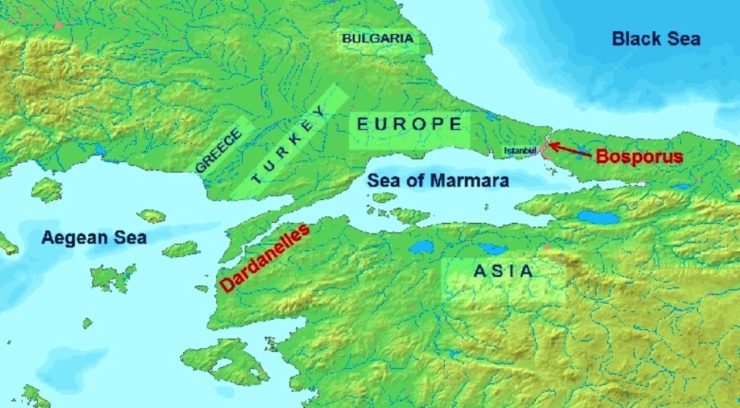
The territory of modern Turkey has economic-geographical and military-strategic advantages due to its control over the Black Sea Straits of Bosporus and Dardanelles. Control of the Black Sea Straits has always been strategically important to the great powers in world geopolitics and trade.
Great Britain and Russia often clashed over the right to control the Straits. In August 1914, German ships, including the cruiser Goeben and light cruiser Breslau, attacked Russian ports after passing through the Black Sea Straits. This led to the Ottoman Empire joining World War I on the side of Germany against Russia. One of the tasks of the Nazi German Ambassador to Ankara, Franz von Papen, in the late 1930s was to obtain Turkish consent for the passage of German ships through the Straits to the Black Sea to participate in the war against the USSR. Stalin later described Turkey’s policy during World War II as “hostile neutrality.”
In the 19th century, Russia’s successful wars against the Ottoman Empire enabled Russian control over the Black Sea Straits. However, Emperor Nicholas I of Russia, for some reason, decided to let in Britain and France in resolving the fate of the regime of shipping in the Black Sea Straits, while this issue could have become a subject of relations between solely Russia and Ottoman Turkey.
As a result, on July 3, 1841, the Straits Convention was signed in London, with the consent of the Russian Tsar, between Turkey, on the one hand, and Russia, Great Britain, Austria, Prussia, and France, on the other. It stipulated that as long as Turkey was not at war, the Straits would be closed to military ships of any nation. During the war, Turkey was granted the right to let ships through the Straits belonging to states with which it wished to reach an agreement. The London Straits Convention in fact buried the decisions of the Russian-Turkish Treaty of Hünkâr İskelesi of 1833, according to the secret articles of which Turkey undertook not to allow warships of any European countries to enter the Black Sea. Russia’s political and military positions have been significantly strengthened by the latter.
Following the results of the First World War, the Versailles Conference of the victorious countries again returned to the topic of the Black Sea straits, which continued with long negotiations, sharp discussions and ended with the signing of the Treaty of Lausanne on July 24, 1923, based on a project of Great Britain. The representatives of the Soviet delegation were actually blocked, and the head of the Russian delegation, Vatslav Vorovsky, was not even officially informed about the resumption of the conference and was not allowed to take part in the negotiations (on May 10, 1923, Vorovsky was assassinated in Lausanne by Russian White émigré named Maurice Conradi).
The Lausanne Treaty was signed between Great Britain, France, Italy, Japan, Greece, Romania, Bulgaria, the Kingdom of Serbs, Croats and Slovenes and Turkey. The USSR did not ratify the convention because its terms violated legal rights and did not guarantee the security of Black Sea countries. In particular, this convention provided for the demilitarization of the Straits Zone, with the Straits themselves coming under the control of a special international commission. In other words, the right to station military units near the straits was taken away from Turkey, through whose territory the straits passed. Simultaneously, all commercial and military vessels from any country in the world were granted free passage through the Bosporus and Dardanelles, with only minor restrictions. The latter created problems for the Black Sea countries, especially for the main Black Sea powers – Turkey and Russia.
The events of 1936 in Spain, the growth of Fascist militarism in Italy and Germany reopened the issue of the Black Sea Straits. Britain was concerned about losing control over Turkey, its naval bases, and its broad interests in the Mediterranean and the Arab East, including the restoration of the German-Turkish alliance. Therefore, London considered it appropriate to make concessions to Ankara on the issue of changing the regime of the Black Sea Straits and replacing the International Special Commission with Turkish control, including the abolition of Turkey’s demilitarization in the Straits Zone.
Consequently, following months of discussions, a new convention on the Black Sea Straits regime was signed on July 20, 1936, in the Swiss city of Montreux. This convention is seen as a compromise in international practice. In times of peace and war, merchant ships of all nations were granted the right of free passage through the Straits. Warships of non-Black Sea states are restricted in transit through the Bosporus and Dardanelles by class, total tonnage, total number and period of stay in the Black Sea not exceeding three weeks. In the case of Turkey’s taking part in a war, and if Turkey considers itself directly threatened by war, it is given the right to authorize or prohibit the passage of military ships through the Straits. Accordingly, the demilitarization regime was abolished, and Turkey was granted the right to station its military garrisons in the Straits Zone. The USSR’s demands for limitations on the military presence of non-littoral states in the Black Sea were mostly taken into account. London and Paris obtained the right to adjust the ratio of naval forces between Turkey and the USSR in the Black Sea.
Overall, the Montreux Convention can be viewed as a compromise that helped stabilize the situation in the Straits Zone. The Convention has been extended twice for 20 years. It remains in force as of now. The issue of the Black Sea Straits is currently being discussed in international diplomacy. This is especially true in times of crisis, when relations between major Black Sea countries, such as Russia and Turkey, become contentious.
With the start of the Russian Special Military Operations in Ukraine, hostilities have been resumed in the Black Sea basin waters. The Collective West, led by the United States, is attempting to alter the international legal norms that regulate the passage of warships through the Bosporus and Dardanelles.
According to US Assistant Secretary of Defense for International Security Affairs Celeste Wallander, Washington plans to collaborate with Ankara regarding shipping in the Black Sea. The Pentagon spokesperson emphasized the need to create a favorable environment in the region, ensuring that the Black Sea is fully accessible for commercial shipping.
Meanwhile, the United States is attempting to use merchant shipping as a cover to alter the regulations for the passage of non-Black Sea NATO warships through the Dardanelles and Bosporus to the Black Sea. For this purpose, the Black Sea Grain Initiative became a convenient opportunity.
The United States and the United Kingdom assert that Russia’s decision to withdraw from the agreement violates international humanitarian law. They propose the formation of an operational group under the convoy of NATO air and naval forces to transport Ukrainian grain through the Straits to foreign markets.
Retired US Navy Admiral James Stavridis announced in July 2023 that a convoy would be created under the control of the United States or NATO. A year earlier, The Wall Street Journal reported that Joe Biden Administration was considering new rules for the passage and navigation of warships in the Black Sea. The North Atlantic Alliance plans to deploy more military aircraft and ships to the Black Sea, according to NATO Secretary General Jens Stoltenberg.
In November 2023, US Congressmen Mike Rogers and Mike Turner urged President Joe Biden to deploy US military forces in the Black Sea to provide military support to Ukraine. Meanwhile, Commander Brian Harrington of the US Navy stated that conducting military exercises outside the scope of the Montreux Convention would undermine Russia’s dominance in the Black Sea. Perhaps these appeals and statements are intended more for the Turkish president.
The British and Norwegians have initiated a program to enhance Ukraine’s capabilities in the Black Sea. However, Turkey refused to allow two Sandown-class minehunters which were conditionally transferred by Great Britain to the Ukrainian Navy in June 2021, to pass through the Bosporus. According to Article 19 of the Montreux Convention, Turkey considers the ships of Russia and Ukraine as belonging to belligerent powers and therefore, they are not permitted to pass through the Black Sea Straits. London officials attempted to pressure Ankara, but were unsuccessful.
As for the warships of the US and other extra-regional countries that used to regularly enter the Black Sea using the right of peaceful passage, Turkey has announced within NATO that it will not allow naval exercises or visits for other purposes as long as the conflict continues. Ankara argues that violating the provisions of the Montreux Convention in the current situation will inevitably trigger retaliatory actions by the Russian Navy, leading to a new military escalation. Despite the dissatisfaction of NATO allies with Turkey’s position, Ankara does not intend to change it, showing the firmness and stubbornness typical of Turks.
The Montreux Convention does not allow the unimpeded passage of warships of non-littoral states in the Black Sea. However, after the collapse of the USSR and the Warsaw Pact, NATO gained an advantage in the Black Sea. In other words, prior to 1991, all Black Sea countries except for NATO’s Turkey were members of the Warsaw Pact and allies. Right now, the situation in the Black Sea is reversed. Namely, Russia on the one hand and NATO members Turkey, Bulgaria, Romania and the North Atlantic Alliance candidates Georgia and Ukraine on the other.
The US is not a signatory to the Montreux Convention at all and can therefore afford to violate its terms. Every five years since the signing of this convention in 1936, changes to its provisions may be proposed, provided that the initiative is supported by a two-thirds vote of the Montreux signatories. However, currently, all signatory countries except Russia are NATO members, and Japan and Australia are strategic partners or allies of the United States.
In this situation, Turkey’s opinion remains key as it still holds the role of “host of the Straits” under the Montreux Convention and maintains an independent policy. A change in the provisions of the convention would be a change in Turkey’s own status quo in the region. This is obviously not what Ankara wants. Crimea is now under Russian control, which could pose a threat to the same straits.
Russian Foreign Minister Sergey Lavrov stated that the Turkish authorities will not change the rules of entrance in the Black Sea for NATO warships under Pentagon’s pressure. However, Russia cannot rely on Turkey’s guarantees forever, as Ankara has shown a willingness to make sudden political reversals.
The US and Turkey are discussing the issue of closing the Bosporus to Russian warships, according to Iranian journalist Hayal Muadzin. In particular, there is information circulating that the US has offered to cede some areas in northern Syria, apparently Kurdish-populated provinces, to Turkey as a gift to Recep Tayyip Erdoğan, in exchange for active cooperation against Russia in the Black Sea.
In January, Turkey ratified Sweden’s NATO status in exchange for the delivery of 40 modernized F-16 fighter jets from the US. Washington is prepared to address the matter of F-16 Block 70 fighter jets for Turkey. Additionally, Deputy Secretary of State Victoria Nuland stated in Ankara that the US is willing to involve Turkey in the production program of fifth-generation F-35 fighter jets and provide them with a Patriot air defense system. This offer is contingent upon Turkey’s refusal to use the Russian S-400 Triumf SAM system. The Americans may be willing to provide soft loans to support the struggling Turkish economy, but only if Turkey refrains from actively cooperating with Russia in trade and economic matters and strictly adheres to the sanctions regime.
It is evident that Turkey faces numerous temptations. However, Recep Tayyip Erdoğan is aware that excessive improvisation towards Russia could jeopardize Turkey’s Great Turan project and its access to Azerbaijan and Turkic countries in Central Asia through the Zangezur corridor. For the time being, therefore, Ankara is trying to keep the “Russian side” of the fence. Turkey refuses to revise the provisions of the Montreux Convention in exchange for the “Swedish case.”
Turkish Foreign Minister Hakan Fidan confirmed that Ankara will continue to use the Montreux convention and stated that it is not up for debate. With the outbreak of the crisis in Ukraine, Turkey exercised its powers under the Montreux Convention and prohibited the passage of warships through the Black Sea Straits. The Turkish Defense Ministry aims to prevent further escalation of military tensions in the Black Sea basin, especially in the Straits area. The Straits pose not only an economic issue for Turkey, but also a security concern. Ankara has the right to charge for the passage of ships through the Bosporus and Dardanelles, which covers expenses for lighthouses, evacuation, and medical care.
In the rapidly evolving situation of the Ukrainian conflict, it is crucial for the Turks to maintain their key positions. There is a domestic political consensus on this issue: the provisions of the Straits Convention must remain unchanged. Turkey’s accession to Western sanctions against Russia is inadmissible; otherwise, Turkey will lose the opportunity to play a mediating role.
Russia tears up Soviet-era fishing agreement with UK
RT | February 21, 2024
British fishermen will be banned from operating in the Barents Sea, one of the world’s largest fisheries for cod and haddock, under new legislation passed by the lower house of Russia’s parliament, the State Duma, on Wednesday.
The bill, which rescinds an agreement signed between the governments of the USSR, the UK, and Northern Ireland in 1956, was passed in its third reading.
The so-called Fisheries Agreement had allowed British ships to fish in the Barents Sea off the north coast of the Kola Peninsula. It was initially signed for a period of five years and automatically renewed every five years since neither party ever withdrew from the agreement.
“The agreement was unfortunately one-sided giving the authority and right to fish only to our partners at the time,” Deputy Agriculture Minister Maksim Uvaidov said, clarifying the details of the treaty. He added that the agreement didn’t provide Soviet fishermen with similar rights.
Taking into account the UK’s decision to strip Russia of ‘most favored nation’ status in 2022, which led to a 35% tariff hike on Russian goods, Moscow says that ending the Soviet-era agreement “will not cause serious foreign policy or economic consequences” for the country.
Commenting on the legislation, Duma Chairman Vyacheslav Volodin said that by tearing up the agreement Russia was returning to its own possession the fish that the UK had been consuming for decades.
“He [President Vladimir Putin] returned our fish to us, because the English, shameless, had been eating it for 68 years. They have imposed sanctions on us, while they themselves make up 40% of their diet, their fish menu, from our cod. Let them now lose some weight,” Volodin said.
A Sky News report from last year claimed that up to 40% of the cod and haddock consumed in the UK comes from Russia.
Tucker Carlson Says Boris Johnson Wants $1Mln to Discuss Ukraine Conflict
Sputnik – 21.02.2024
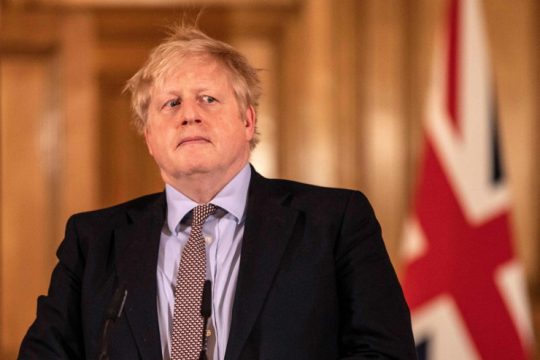
WASHINGTON – US journalist Tucker Carlson said that former UK Prime Minister Boris Johnson wants $1 million from him to talk about the Ukraine conflict in the wake of Carlson’s recent interview with Russian President Vladimir Putin.
“It gets out that we’re doing it [interviewing Putin], and I’m immediately denounced by this guy called Boris Johnson … So I put in a request for an interview with Boris Johnson,” Carlson said in an interview with TheBlaze. “Finally, one of his advisers gets back to me and says, ‘He will talk to you, but it’s going to cost you a million dollars.’ He wants a million dollars.”
Johnson’s adviser said the former prime minister would be willing to explain his position on Ukraine for the six-figure fee, Carlson said.
In November 2023, Ukraine’s former chief negotiator with Russia, David Arakhamia, said Johnson talked Kiev out of signing an agreement with Moscow to end the conflict in spring 2022. Johnson has previously denied the accusations.
Johnson could not have traveled to Ukraine without consulting the United States, Putin said earlier this month.
Putin did not request $1 million to participate in an interview, Carlson noted, adding that Johnson is “a lot sleazier” than Putin.
Dutch court denies Russia’s appeal of $50bn Yukos award
RT | February 20, 2024
The Amsterdam Court of Appeal on Tuesday dismissed Russia’s latest legal challenge in the high-profile Yukos case and upheld the enforcement of a $50 billion award to the former shareholders of the now-defunct oil company.
Energy giant Yukos, once owned by ex-oligarch Mikhail Khodorkovsky, collapsed in 2006 after the company failed to pay billions of dollars in back taxes. The latest ruling concerns a decade-long trial at the International Court of Arbitration in The Hague, which, in 2014 ruled that Russia had violated its international obligations by taking steps to bankrupt the massive oil company in the early 2000s. Moscow has insisted that the dispute with the shareholders was outside the jurisdiction of any foreign court.
According to a statement on Tuesday by the Amsterdam court, Russia’s claim that the shareholders had committed fraud during the arbitration proceedings was made too late. It further said that even if the claim had been considered, it would not have changed the verdict on the arbitration award. “The conclusion is that the arbitration awards remain in force,” the statement reads.
Back in 2014, the arbitration tribunal ordered Russia to pay $50 billion in compensation to the former controlling shareholders of Yukos: Hulley Enterprises and Veteran Petroleum based in Cyprus and Yukos Universal based in the Isle of Man. The Dutch Supreme Court later overturned the ruling.
The ex-shareholders, who claim that the Russian government drove the company to bankruptcy for political reasons, later initiated proceedings in several jurisdictions, including the US.
The private company Yukos was formed after a controversial auction of state assets following the fall of the Soviet Union and quickly became one of the world’s most valuable companies.
The founder of the oil and gas giant, Mikhail Khodorkovsky, was once Russia’s richest man. However, he was arrested and charged with fraud in 2003 and was imprisoned until 2013. His claim that his arrest was politically motivated is widely accepted by the Western media.
Moscow denies the charges and says that foreign courts did not consider that national laws governing fraud and other wrongdoing might have been broken. In 2020, Russia’s Constitutional Court ruled that Russia could refuse to pay any settlement imposed by the Dutch judges. The basis for the arbitration is the terms of the Energy Charter Treaty, which Moscow signed but never ratified.
Ukraine used US-made chemical weapons – Russia
RT | February 19, 2024
Washington and Kiev have violated articles of the Organization for the Prohibition of Chemical Weapons (OPCW) as Ukrainian forces have used illegal munitions on the battlefield, Russian Lieutenant General Igor Kirillov has claimed.
The head of Russia’s Nuclear, Chemical and Biological Protection Forces provided several examples of Kiev’s alleged use of banned chemical weapons and non-lethal chemical agents that he said were obtained from the US.
Kirillov claimed that Ukraine used drones to drop US-made gas grenades on December 28, 2023 containing “CS” compound – a chemical classified as a riot-control tool that irritates the eyes and upper respiratory tract, and can cause skin burns, respiratory paralysis and cardiac arrest when used in high concentrations.
He said the delivery of such munitions by the US to Ukraine was a direct violation of the rules of the OPCW, which states that a country must “never, under any circumstances, transfer chemical weapons directly or indirectly to anyone.”
He also reported that, on June 15, 2023, Moscow’s forces were attacked by a drone carrying a container filled with chloropicrin, which is classified as a Schedule 3 compound under the Chemical Weapons Convention and is strictly prohibited – even for law enforcement purposes. The same chemical was also used by Kiev on August 3 and 11, 2023 near the village of Rabotino, according to Kirillov.
The general also provided several examples of Kiev using toxic substances against Russian military personnel, as well as poisoning high-ranking officials such as the head of Russia’s Kherson Region Vladimir Saldo in August 2022.
Kirillov said Russian intelligence believes that Ukraine’s forces, under the guidance of its Western backers, are developing a new military tactic that would use a “chemical belt.” This would involve blowing up containers with hydrocyanic acid and ammonia to prevent an advance by Russian forces.
He added that plans for such a large-scale use of toxic chemicals were evidenced by the fact that Kiev had asked the EU to supply it with hundreds of thousands of antidotes, gas masks and other personal protective equipment in 2024. That’s in addition to 600,000 ampules of organophosphorus antidotes, and 750,000 bottles of drugs for the detoxification of mustard gas, lewisite and hydrocyanic acid derivatives that were supplied by NATO countries in 2023.
“It is obvious that the volumes requested by Ukraine are excessive for a country that does not have chemical weapons,” Kirillov stated.
There has been no response from the OPCW despite all of this evidence being presented to the organization four months ago, the general said, accusing it of being run by Washington as a tool to target its political opponents.
In November, Russia lost its seat on the OPCW Executive Council after failing to get enough votes from other members of the organization. Kirillov said Moscow was effectively “pushed out” of its seat and was replaced by Ukraine, Poland and Lithuania, who he claimed were pursuing an obvious anti-Russia policy.
UAE banks closing Russian accounts – media
RT | February 19, 2024
Several large banks in the United Arab Emirates have begun limiting transactions with Russia and closing the accounts of Russian companies and individuals due to the risk of secondary Western sanctions, the news outlet Vedomosti reported on Monday, citing businessmen working in the UAE.
The sources, whose identities are not disclosed in the article, told Vedomosti that in September first-tier UAE banks, such as First Abu Dhabi Bank, Emirates NBD, and Abu Dhabi Commercial Bank, largely purged their ties to Russia. It thus became virtually impossible to carry out transactions with Russia using these banks. This happened after Russia’s Ak Bars Bank, which used to be the main channel for Russia-Emirati payments, came under US sanctions.
Second-tier institutions have allegedly so far treated Russian companies and individuals more loyally, but have demanded that these clients purchase additional banking services or put extra funds on their accounts.
The sources also complained that it has recently become next to impossible to open a new account with the country’s larger banks. Many applications from Russian residents are returned after the first compliance check.
The sources attributed the problem to sanctions. According to one businessman, his company’s account was closed after it was discovered that one of the products he was importing had appeared on a EU sanctions list. Some also said banks may be wary of a decree signed in December by US President Joe Biden enabling punitive measures against financial institutions outside US and EU jurisdictions that continue to work with Russia. The regulation specifically targets lenders that facilitate transactions related to the Russian military-industrial complex.
According to analysts briefed by the news outlet, it is still possible for Russian residents to run a business successfully in the UAE, but certain criteria must be met. For instance, the business activity itself should not fall under sanctions; the company should not be linked to ‘politically exposed persons’ in Russia such as government officials, top managers of large Russian companies or banks; and it should not deal with products under Western sanctions, especially dual-use goods that could be employed by the military.
A Vedomosti source close to the Kremlin said the government is aware of the problems faced by Russian businesses in the UAE, but doesn’t consider them critical or unsolvable.
Biden offered prime time Russian TV slot
RT | February 18, 2024
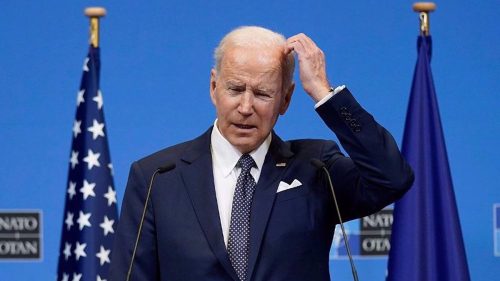
Prominent Russian journalist Dmitry Kiselyov has said that he has sent a request to the White House for an interview with US President Joe Biden. He argued that Russian President Vladimir Putin had already set a “worthy example” by addressing the US audience in an interview with American journalist Tucker Carlson.
Kiselyov, who is the head of Russia’s Rossiya Segodnya media group and also hosts the Vesti Nedeli analytical news program, revealed that he had approached the White House on Sunday while speaking on national TV.
In a letter dated February 15 and addressed to White House Press Secretary Karine Jean-Pierre, the journalist said that Russians would appreciate the opportunity to hear Biden’s take on “how to stabilize the international situation, restore trust, and renew cooperation between the United States and Russia” amid the crisis in ties between the two powers.
Kiselyov went on to deplore that the US and Russia “are now short of opportunities to listen and to hear each other,” adding, however, that Putin “has set a worthy example by agreeing to an interview focused on an American audience.”
As a reciprocal gesture, he added, Rossiya Segodnya is ready to give Biden an “opportunity to reach the widest possible Russian audience,” promising that the interview would be translated into numerous foreign languages and distributed on various platforms.
The White House has yet to respond to the request.
Tucker Carlson released a much-anticipated two-hour interview with the Russian leader earlier this month in which Putin spoke at length about the reasons for the Ukraine conflict. He explained that modern Ukraine is largely an “artificial state” created from the territories of other countries.
Putin also maintained that the first seeds of the conflict were sown when NATO opened its doors to Ukraine in 2008 despite Russia repeatedly voicing concerns about the bloc’s expansion.
The crisis itself, he noted, started not in 2022 when Russia launched its military campaign, but rather in 2014 when the new Ukrainian government, which came to power as a result of a Western-backed coup, attempted to crack down on those who disagreed with its policies.
Featured Video
The Source of America’s Wars – Kristol Clear
or go to
Aletho News Archives – Video-Images
From the Archives
Is Israel to blame for the Iraq War?
American Goy | March 10, 2008
I am so tired of this old canard that “Israel had nothing to do with USA’s war with Iraq – in fact, it officially advised America against it”.
Bullshit. … continue
Blog Roll
 Aletho News
- Ceasefire for all or for none: Iran shuts Hormuz over Lebanon attacks
- Strait of Hormuz is Iran’s ‘nuclear weapon’ that forced US retreat: Medvedev
- Energy crisis will last for months – Kremlin envoy
- Europe’s quiet role in the war on Iran
- Forty days that shook the Empire: How Iran turned the tables on US and prevailed
- Netanyahu unilaterally declares Lebanon outside of ceasefire deal
- Israeli leaders: ‘Not a single goal’ achieved in war with Iran
- What on earth just happened? Trump, Iran, and the unlikely ceasefire
- Alberta Bill Would Fine Political Deepfakes $10,000 Without Satire Exemptions
- Iran declares ‘historic victory’ over US, says enemy forced to accept its proposal
- If Americans Knew
- Gazans face a triple crisis: severe shortages of water and bread, healthcare in tatters
- NY Times reports how Netanyahu took the US into Iran War
- A sigh of relief over Iran, but Gaza and Lebanon in dire straits – Daily Update
- Thousands dead and neighborhoods razed to the ground: Aid agencies fear southern Lebanon is becoming the new Gaza
- The war the US is fighting for Israel could cost trillions
- ‘Cigarette Burns, Nail Wounds’: Toddler Tortured in Gaza to Coerce Father
- Trump Says US Sent ‘a Lot of Guns’ to Protesters in Iran
- Israeli forces destroy 17 UN peacekeeper cameras in south Lebanon
- US-Israeli strikes ‘completely destroy’ synagogue in Tehran
- Archbishop for US Military Says Iran War Is Unjust Under Catholic Teaching
- No Tricks Zone
- An Inconvenient Tree: Uncovered In Alps… Europe Much Warmer Than Today 6000 Years Ago
- New Study Reports A 60% Slowdown In Greenland’s Ice Loss Rate In The Last Decade
- Low Intensity Tornado Wrecks Major Solar Farm, Creating A Potential Toxic Dump
- New Study Finds Warming Saves Lives…Cold Temperatures 12 Times More Deadly Than Excess Heat
- German Science Blog Accuses PIK Climate Institute Of Hallucinating Climate Tipping Points
- Devastating Assessment Of Comirnaty Vaccine By Former Senior Pfizer Europe Toxicologist
- New Study: CO2 Is ‘Effectively Negligible’ As An Explanatory Climate Change Factor Since 2000
- Former Pfizer Toxicologist Dr. Helmut Sterz Tells Bundestag Hearing Pfizer Vaccine Should Have Never Been Approved
- Energy Expert: Germany’s Nuclear Phaseout Was A “500 Billion Euro Mistake”
- New Research: South Australia’s Mid-Holocene Sea Surface Temperatures Were 4°C Warmer Than Today
 Aletho News