

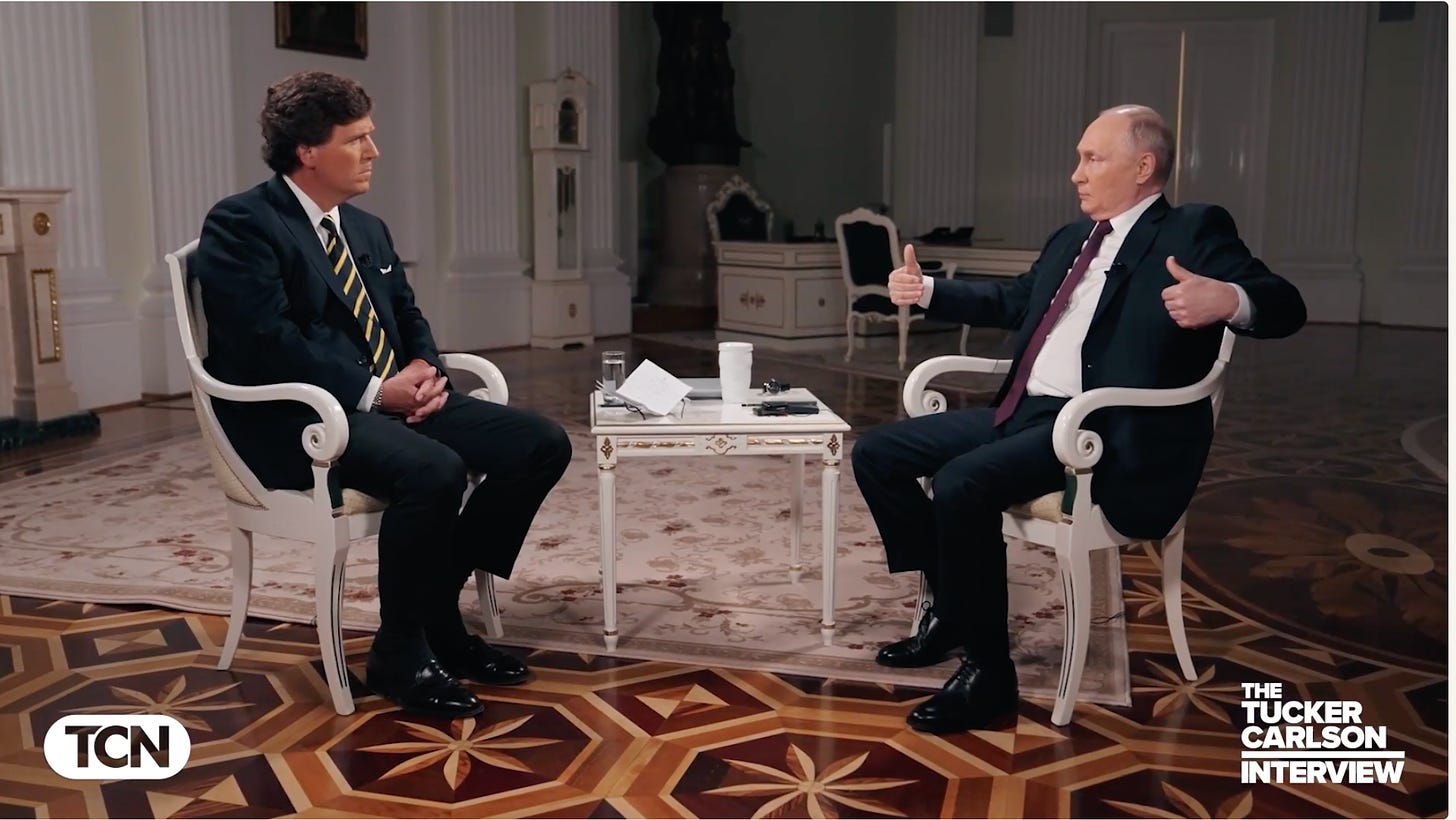
Tucker: The following is an interview with the President of Russia, Vladimir Putin. Shot February 6th, 2024, at about 7 p.m in the building behind us, which is, of course, the Kremlin. The interview, as you will see if you watch it, is primarily about the war in progress, the war in Ukraine, how it started, what’s happening, and most pressingly how it might end.
One note before you watch. At the beginning of the interview, we asked the most obvious question, which is why did you do this? Did you feel a threat, an imminent physical threat, and that’s your justification. And the answer we got shocked us. Putin went on for a very long time, probably half an hour, about the history of Russia going back to the eighth century. And honestly, we thought this was a filibustering technique and found it annoying and interrupted him several times, and he responded. He was annoyed by the interruption. But we concluded in the end, for what it’s worth, that it was not a filibustering technique. There was no time limit on the interview. We ended it after more than two hours.
Instead, what you’re about to see seemed to us sincere whether you agree with it or not. Vladimir Putin believes that Russia has a historic claim to parts of western Ukraine. So our opinion would be to view it in that light as a sincere expression of what he thinks. And with that, here it is.
Mr. President, thank you. On February 22nd, 2022, you addressed your country in a nationwide address when the conflict in Ukraine started, and you said that you were acting because you had come to the conclusion that the United States, through NATO, might initiate a, quote, surprise attack on our country and to American ears, that sounds paranoid. Tell us why you believe the United States might strike Russia out of the blue. How did you conclude that?
Vladimir Putin: It’s not that America, the United States was going to launch a surprise strike on Russia. I didn’t say that. Are we having a talk show or a serious conversation?
Tucker: Here’s the quote. Thank you. It’s a formidable serious talk.
Vladimir Putin: Because your basic education is in history, as far as I understand.
Tucker: Yes.
Vladimir Putin: So if you don’t mind, I will take only 30 seconds or one minute to give you a short reference to history for giving you a little historical background.
Tucker: Please.
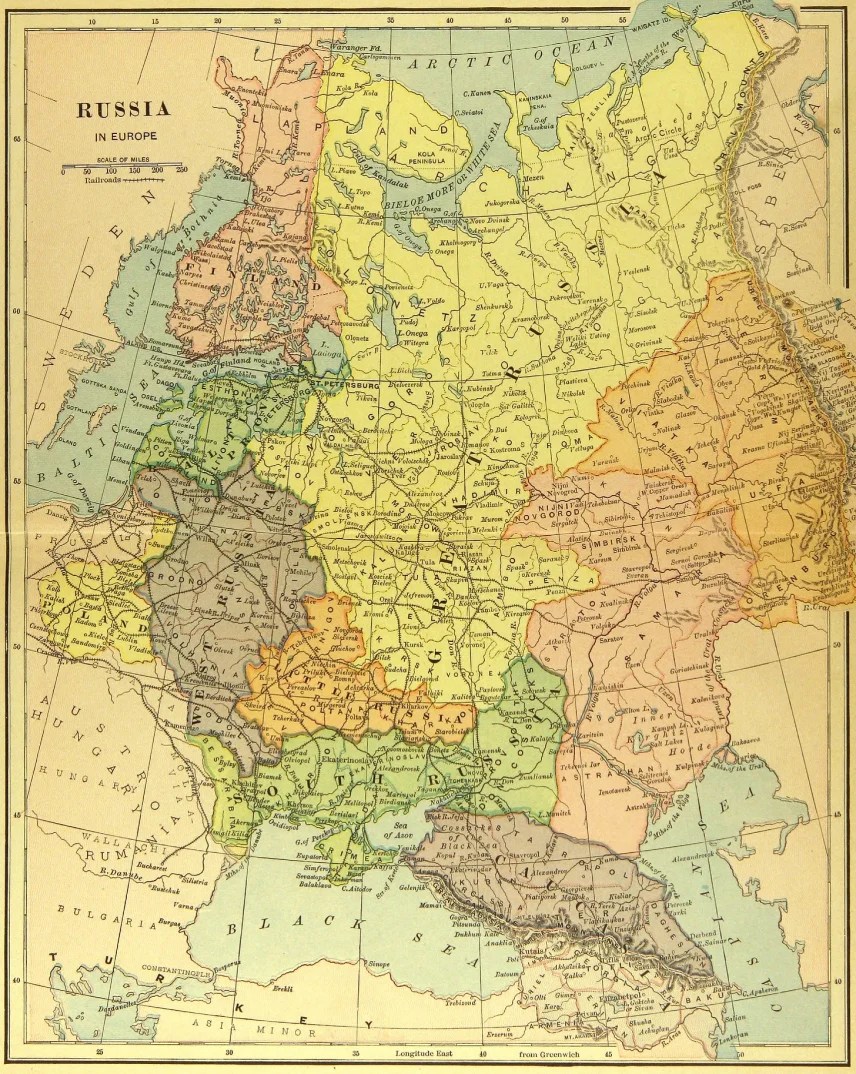
Vladimir Putin: Let’s look where our relationship with Ukraine started from. Where did Ukraine come from? The Russian state started gathering itself as a centralized statehood. And it is considered to be the year of the establishment of the Russian state in 862. But when the townspeople of Novgorod invited a Virangian Prince Rurik from Scandinavia to reign. In 1862, Russia celebrated the 1000th anniversary of its statehood. And in Novgorod there is a memorial dedicated to the 1000 anniversary of the country. In 882 Rurik’s successor, Prince Oleg, who was actually playing the role of regent at Rurik’s young son. Because Rurik had died by that time, came to Kiev. He ousted two brothers who apparently had once been members of Rurik’s squad. So Russia began to develop with two centers of power Kiev and Novgorod.
The next very significant date in the history of Russia was 988, this was the baptism of Russia when Prince Vladimir, the great grandson of Rurik, baptized Russia and adopted Orthodoxy, or Eastern Christianity. From this time, the centralized Russian state began to strengthen. Why? Because of the single territory. Integrated economic ties. One and the same language. And after the baptism of Russia, the same faith and rule of the Prince, the centralized Russian state began to take shape.
Back in the Middle Ages, Prince Yaroslav the Wise introduced the order of succession to a throne. But after he passed away, it became complicated for various reasons. The throne was passed not directly from father to eldest son, but from the prince who had passed away to his brother. Then to his sons in different lines. All this led to the fragmentation and the end of Rus as a single state. There was nothing special about it. The same was happening then in Europe. But the fragmented Russian state became an easy prey to the empire created earlier by Genghis Khan. His successors, namely Batu Khan plundered and ruined nearly all the cities. The southern part, including Kiev, by the way, and some other cities, simply lost independence. While northern cities preserved some of their sovereignty. They had to pay tribute to the horde, but they managed to preserve some part of their sovereignty.
And then a unified Russian state began to take shape with its center in Moscow. The southern part of Russian lands, including Kiev begun to gradually gravitate towards another magnet, the center that was emerging in Europe. This was the Grand Duchy of Lithuania, and it was even called the Lithuanian Russian Duchy because Russians were a significant part of this population. They spoke the old Russian language and were Orthodox. But then there was a unification, the union of the Grand Duchy of Lithuania and the Kingdom of Poland. A few years later. Another union was signed, but this time already in the religious sphere, some of the Orthodox priests became subordinate to the Pope. Thus these lands became part of the Polish-Lithuanian state. During decades the Poles were engaged in colonization of this part of the population. They introduced a language there, tried to entrench the idea that this population was not exactly Russian, that because they lived on the fringe, they were Ukrainians. Originally the word Ukrainian meant that the person was living on the outskirts of the state, along the fringes, or was engaged in a border patrol service. It didn’t mean any particular ethnic group. So the poles were trying to, in every possible way, to colonize this part of the Russian lands and actually treated it rather harshly, not to say cruelly, all that led to the fact that this part of the Russian lands began to struggle for their rights. They wrote letters to Warsaw demanding that their rights be observed and people be commissioned here, including to Kiev.
Tucker: I beg your pardon. Could you tell us what period, I’m losing track of where in history, we are in the Polish oppression of Ukraine.
Vladimir Putin: It was in the 13th century. Now, I will tell you what happened later. And give the dates so that there is no confusion. And in 1654, even a bit earlier this year. The people who were in control of the authority over that part of the Russian land, addressed war so, I repeat, demanding that they send them to rulers of Russian origin and Orthodox faith. But Warsaw did not answer them, and in fact rejected their demands, they turned to Moscow so that Moscow took them away. So that you don’t think that I’m inventing things. I’ll give you these documents.
Tucker: Well, I, it doesn’t sound like you’re inventing. And I’m not sure why it’s relevant to what happened two years ago.
Vladimir Putin: But still, these are documents from the archives. Copies. Here’s the letters from Bohdan Khmelnytsky, the man who then controlled the power in this part of the Russian lands, that is now called Ukraine. He wrote to Warsaw demanding that their rights be upheld. And after being refused, he began to write letters to Moscow. Asking to take them under the strong hand of the Moscow Tsar. There are copies of these documents. I will leave them for your good memory. There is a translation into Russian. You can translate it into English later. But Russia would not agree to admit them straight away, assuming that the war with Poland would start. Nevertheless, in 1654, the Russian assembly of top clergy and landowners, headed by the Tsar, which was the representative body of the power of the old Russian state, decided to include a part of the old Russian lands into Moscow Kingdom. As expected, the war with Poland began. It lasted 13 years, and then in 1654, a truce was concluded. And 32 years later, I think a peace treaty with Poland, which they called eternal peace, was signed. And these lands, the whole left bank of Dnieper, including Kiev, went to Russia. And the whole right bank of Dnieper remained in Poland.
Under the rule of Catharina the Great. Russia reclaimed all of its historical lands, including in the south and west, this all lasted until the Revolution. Before World War 1, Austrian General Staff relied on the ideas of Ukrainization, and started actively promoting the ideas of Ukraine and the Ukrainization. The motive was obvious. Just before World War 1, they wanted to weaken the potential enemy and secure themselves favorable conditions in the border area. So the idea which had emerged in Poland, that people residing in that territory were allegedly not really Russians, but rather belong to a special ethnic group, Ukrainians started being propagated by the Austrian General Staff.
As far back as the 19th century, theorists calling for Ukrainian independence appeared. All those, however, claimed that Ukraine should have a very good relationship with Russia. They insisted on that. After the 1917 revolution, the Bolsheviks sought to restore the statehood, and the civil war began, including the hostilities with Poland. In 1921, peace with Poland was proclaimed. And under that treaty, the right bank of Dnieper River once again was given back to Poland. In 1939, after Poland cooperated with Hitler. It did collaborate with Hitler, no, Hitler offered Poland peace and a treaty of friendship. An alliance, demanding in return that Poland give back to Germany the so-called Danzig Corridor, which connected the bulk of Germany with East Prussia and Konigsberg. After World War One, this territory was transferred to Poland. And instead of Danzig, a city of Gdasnk emerged. Hitler asked them to give it amicably, but they refused. Of course, still they collaborated with Hitler and engaged together in the partitioning of Czechoslovakia.
Tucker: But may I ask, you’re making the case that Ukraine, certainly parts of Ukraine, eastern Ukraine is in effect Russia has been for hundreds of years. Why wouldn’t you just take it when you became president 24 years ago? You have nuclear weapons. They don’t. It’s actually your land. Why did you wait so long?
Vladimir Putin: I’ll tell you, I’m coming for that. This briefing is coming to an end. It might be boring, but it explains many things.
Tucker: It’s not boring. Just not sure how it’s relevant.
Vladimir Putin: Good, good. I’m so gratified that you appreciate that. Thank you. So before World War 2, Poland collaborated with Hitler. And although it did not yield to Hitler’s demands, it still participated in the partitioning of Czechoslovakia together with Hitler, as the Poles had not given the Danzig corridor to Germany, and went too far, pushing Hitler to start World War 2 by attacking them.
Why was it Poland against whom the war started, on 1st September 1939? Poland turned out to be uncompromising, and Hitler had nothing to do but start implementing his plans with Poland. Sobieski. By the way, the USSR, I have read some archive documents, behaved very honestly, and he asked Poland’s permission to transit its troops through the Polish territory to help Czechoslovakia. But the then Polish foreign minister said that if the Soviet planes flew over Poland, they would be downed over the territory of Poland. But that doesn’t matter. What matters is that the war begun and Poland fell prey to the policies it had pursued against Czechoslovakia. This under the well known Molotov-Ribbentrop pact, a part of the territory including western Ukraine was to be given to Russia, thus Russia, which was then named the USSR regained its historical lands. After the victory in the Great Patriotic War, as we call World War 2, and all those territories were ultimately enshrined as belonging to Russia, to the USSR. As for Poland, it received, apparently in compensation, the lands which had originally been German. The eastern parts of Germany. These are now western lands of Poland. Of course, Poland regained access to the Baltic Sea and Danzig. Which was once again given its Polish name. So this was how this situation developed. In 1922 when the USSR was being established, the Bolsheviks started building the USSR and established the Soviet Ukraine, which had never existed before.
Tucker: Right.
Vladimir Putin: Stalin insisted that those republics be included in the USSR as autonomous entities. For some inexplicable reason, Lenin, the founder of the Soviet state, insisted that they be entitled to withdraw from the USSR. And again, for some unknown reasons, he transferred to that newly established Soviet Republic of Ukraine some of the lands, together with people living there, even though those lands had never been called Ukraine, and yet they were made part of that Soviet Republic of Ukraine. Those lands included the Black Sea region, which was received under Catherine the Great and which had no historical connection with Ukraine whatsoever. Even if we go as far back as 1654, when these lands returned to the Russian Empire. That territory was the size of 3 to 4 regions of modern Ukraine, with no Black Sea region. That was completely out of the question.
Tucker: In 1654.
Vladimir Putin: Exactly.
Tucker: I’m just, you obviously have encyclopedic knowledge of this region. But why didn’t you make this case for the first 22 years as president, that Ukraine wasn’t a real country?
Vladimir Putin: The Soviet Union was given a great deal of territory that had never belonged to it, including the Black Sea region. At some point when Russia received them as an outcome of the Russo Turkish wars, they were called New Russia or another Russia. But that does not matter. What matters is that Lenin, the founder of the Soviet state, established Ukraine that way. For decades, the Ukrainian Soviet Republic developed as part of the USSR. And for unknown reasons, again, the Bolsheviks were engaged in Ukrainization. It was not merely because the Soviet leadership was composed to a great extent of those originating from Ukraine. Rather, it was explained by the general policy of indigenization pursued by the Soviet Union. Same things were done in other Soviet republics. This involved promoting national languages and national cultures, which is not a bad, in principle. That is how the Soviet Ukraine was created.
After the World War 2, Ukraine received, in addition to the lands that had belonged to Poland before the war, part of the lands that had previously belonged to Hungary and Romania. So Romania and Hungary had some of their lands taken away and given to the Soviet Ukraine, and they still remain part of Ukraine. So in this sense, we have every reason to affirm that Ukraine is an artificial state that was shaped at Stalin’s will.
Tucker: Do you believe Hungary has a right to take its land back from Ukraine, and that other nations have a right to go back to their 1654 borders?
Vladimir Putin: I’m not sure whether they should go back to their 1654 borders. But given Stalin’s time, so-called Stalin’s regime, which, as many claim, saw numerous violations of human rights and violations of the rights of other states. One can say that they could claim back those lands of theirs while having no right to do that. It is at least understandable.
Tucker: Have you told Viktor Orban that he can have part of Ukraine?
Vladimir Putin: Never. I have never told him. Not a single time. We have not even had any conversation on that. But I actually know for sure that Hungarians who live there wanted to get back to their historical land.
Moreover, I would like to share a very interesting story with you. I digress, it’s a personal one. Somewhere in the early 80s, I went on a road trip in a car from then Leningrad, across the Soviet Union through Kiev. Made a stop in Kiev and then went to western Ukraine. I went to the town of Beregovoy and all the names of towns and villages there were in Russian and in the language I did not understand in Hungarian, in Russian and in Hungarian. Not in Ukrainian, in Russian and in Hungarian. I was driving through some kind of village, and there were men sitting next to their houses, and they were wearing black three piece suits and black cylinder hats. I asked, are they some kind of entertainers? I was told no, they were not entertainers, they were Hungarians. I said, what are they doing here? What do you mean? This is their land. They live here. This was during the Soviet time in the 1980s. They preserved the Hungarian language, Hungarian names and all their national costumes. They are Hungarians and they feel themselves to be Hungarians. And of course, when now there is an infringement.
Tucker: What that is, and there’s a lot of that, though I think many nations are upset about Transylvania as well as you obviously know. But many nations feel frustrated by the redrawn borders of the wars of the 20th century and wars going back a thousand years, the ones that you mentioned. But the fact is that you didn’t make this case in public until two years ago, February. And in the case that you made, which I read today, you explain at great length that you felt a physical threat from the West in NATO, including potentially nuclear threat. And that’s what got you to move. Is that a fair characterization of what you said?
Vladimir Putin: I understand that my long speeches probably fall outside of the genre of the interview. That is why I asked you at the beginning, are we going to have a serious talk or a show? You said a serious talk. So bear with me, please. We’re coming to the point where the Soviet Ukraine was established. Then in 1991, the Soviet Union collapsed and everything that Russia had generously bestowed on Ukraine was dragged away by the latter. I’m coming to a very important point of today’s agenda.
Tucker: Thank you.
Vladimir Putin: After all, the collapse of the Soviet Union was effectively initiated by the Russian leadership. I do not understand what the Russian leadership was guided by at the time, but I suspect there were several reasons to think everything would be fine. First, I think that then Russian leadership believed that the fundamentals of the relationship between Russia and Ukraine were in fact a common language. More than 90% of the population there spoke Russian. Family ties, every third person there had some kind of family or friendship ties. Common culture. Common history, finally, common faith, coexistence with a single state for centuries and deeply interconnected economies. All of these were so fundamental. All these elements together make our good relationships inevitable.
The second point is a very important one. I want you as an American citizen and your viewers to hear about this as. The former Russian leadership assumed that the Soviet Union had ceased to exist and therefore there were no longer any ideological dividing lines. Russia even agreed voluntarily and proactively to the collapse of the Soviet Union, and believed that this would be understood by the so-called civilized West as an invitation for cooperation and association. That is what Russia was expecting, both from the United States and this so-called collective West as a whole. There were smart people, including in Germany, Egon Bahr, a major politician of the Social Democratic Party, who insisted in his personal conversations with the Soviet leadership on the brink of the collapse of the Soviet Union, that they knew security systems should be established in Europe. Help should be given to unified Germany, but a new system should be also established to include the United States, Canada, Russia and other Central European countries. But NATO needs not to expand. That’s what he said. If NATO expands, everything would be just the same as during the Cold War, only closer to Russia’s borders. That’s all. He was a wise old man, but no one listened to him. In fact, he got angry once. If, he said, you don’t listen to me, I’m never setting my foot in Moscow once again. Everything happened just as he had said.
Tucker: Of course, it did come true. And I and you’ve mentioned this many times. I think it’s a fair point. And many in America thought that relations between Russia and the United States would be fine with the collapse of the Soviet Union and the end of the Cold War, the opposite happened. But you’ve never explained why you think that happened, except to say that the West fears a strong Russia. But we have a strong China the West does not seem very afraid of. What about Russia do you think, convinced policymakers they had to take it down?
Vladimir Putin: The West is afraid of strong China more than it fears a strong Russia, because Russia has won 150 million people and China has 1.5 billion population. And its economy is growing by leaps and bounds, or 5% a year. It used to be even more, but that’s enough for China. As Bismarck once put it, potentials are the most important. China’s potential is enormous. It is the biggest economy in the world today in terms of purchasing power parity and the size of the economy. It is already overtaking the United States quite a long time ago, and it is growing at a rapid clip.
Let’s not talk about who is afraid of whom. Let’s not reason in such terms. And let’s get into the fact that after 1991, when Russia expected that it would be welcomed into the brotherly family of civilized nations, nothing like this happened. You tricked us. I don’t mean you personally when I say you. Of course I’m talking about the United States. The promise was that NATO would not expand eastward. But it happened five times. There were five waves of expansion. We tolerated all that. We were trying to persuade them. We were saying, please don’t. We are as bourgeois now as you are. We are a market economy and there is no Communist Party power. Let’s negotiate.
Moreover, I have also said this publicly before. There was a moment when a certain rift started growing between us. Before that, Yeltsin came to the United States. Remember, he spoke in Congress and said the good words: God bless America. Everything he said were signals, let us in. Remember the developments in Yugoslavia before that, Yeltsin was lavished with praise. As soon as the developments in Yugoslavia started, he raised his voice in support of Serbs. And we couldn’t but raise our voices for Serbs in their defense. I understand that there were complex processes underway there. I do, but Russia could not help raising its voice in support of Serbs, because Serbs are also a special and close to us nation, with Orthodox culture and so on. It’s a nation that has suffered so much for generations. Well, regardless. What is important is that Yeltsin expressed his support. What did the United States do? In violation of international law and the UN charter it started bombing Belgrade. It was the United States that led the genie out of the bottle.
Moreover, when Russia protested and expressed its resentment, what was said? The UN charter and international law have become obsolete. Now everyone invokes international law, but at that time they started saying that everything was outdated. Everything had to be changed. Indeed, some things need to be changed as the balance of power has changed. It’s true, but not in this manner. Yeltsin was immediately dragged through the mud, accused of alcoholism, of understanding nothing, of knowing nothing. He understood everything, I assure you. Well, I became president in 2000. I thought, okay, the Yugoslav issue is over, but we should try to restore relations. Let’s re-open the door that Russia had tried to go through. And moreover, I said it publicly, I can reiterate. At a meeting here in the Kremlin with the outgoing President Bill Clinton, right here in the next room, I said to him, I asked him: Bill, do you think if Russia asked to join NATO, do you think it would happen?” Suddenly he said, “you know, it’s interesting. I think so.” But in the evening, when we met for dinner, he said: You know, I’ve talked to my team, no, it’s not possible now. You can ask him. I think he will watch our interview, he’ll confirm it. I wouldn’t have said anything like that if it hadn’t happened. Okay, well, it’s impossible now.
Tucker: Were you sincere? Would you have joined NATO?
Vladimir Putin: Look, I asked the question, is it possible or not? And the answer I got was no. If I was insincere in my desire to find out what the leadership position was….
Tucker: But if he had said yes, would you have joined NATO?
Vladimir Putin: If he had said yes, the process of rapprochement would have commenced, and eventually it might have happened if we had seen some sincere wish on the side of our partners. But it didn’t happen. Well, no means no, okay, fine.
Tucker: Why do you think that is? Just to get to motive. I know, you’re clearly bitter about it. I understand. But why do you think the West rebuffed you then? Why the hostility? Why did the end of the Cold War not fix the relationship? What motivates this from your point of view?
Vladimir Putin: You said that I was bitter about the answer. No, it’s not bitterness. It’s just the statement of fact. We’re not bride and groom, bitterness, resentment, it’s not about those kind of matters in such circumstances. We just realized we weren’t welcome there, that’s all. Okay, fine. But let’s build relations in another manner. Let’s look for common ground elsewhere. Why we received such a negative response, you should ask your leaders. I can only guess why, too big a country, with its own opinion and so on. And the United States, I have seen how issues are being resolved in NATO.
I will give you another example now concerning Ukraine. U.S. leadership exerts pressure and all NATO members obediently vote. Even if they do not like something. Now, I’ll tell you what happened in this regard with Ukraine in 2008. Although it’s being discussed, I’m not going to open a secret to you say anything new. Nevertheless, after that, we try to build the relations in different ways. For example, the events in the Middle East, in Iraq, we were building relations with the United States in a very soft, prudent, cautious manner. I repeatedly raised the issue that the United States should not support separatism or terrorism in the North Caucasus’s? But they continue to do it anyway. And political support, information support, financial support, even military support came from the United States and its satellites for terrorist groups in the Caucasus. I once raised this issue with my colleague, also the president of the United States. He says it’s impossible. Do you have proof? I said yes, I was prepared for this conversation, and I gave him that proof of motive. He looked at it and you know what he said? I apologize, but that’s what happened. I’ll quote, he says, “well, I’m gonna kick their ass.” We waited and waited for some response. There was no reply. I said to the FSB director: Write to the CIA”. What is the result of the conversation with the president? He wrote once, twice. And then we got a reply. We have the answer in the archive. The CIA replied: We have been working with the opposition in Russia. We believe that this is the right thing to do and we will keep on doing it.” It’s just ridiculous. Well, okay. We realized that it was out of the question.
Tucker: Forces in opposition to you? So you’re saying the CIA is trying to overthrow your government?
Vladimir Putin: Of course they meant in that particular case, the separatists, the terrorists who fought with us in the Caucasus. That’s who they call the opposition. This is the second point. The third moment is a very important one, is the moment when the US missile defense system was created at the beginning. We persuaded for a long time not to do it in United States. Moreover, after was invited by Bush Junior Father Bush senior to visit his place on the ocean .I had a very serious conversation with President Bush and his team. I propose that the United States, Russia and Europe jointly create the missile defense system that we believe, if created, unilaterally threatens our security. Despite the fact that the United States officially said that it was being created against missile threats from Iran. That was the justification for the deployment of the missile defense system. I suggested working together: Russia, the United States and Europe. They said it was very interesting. They asked me, “Are you serious?” I said, “Absolutely”.
Tucker: May I ask what year was this?
Vladimir Putin: I don’t remember. It is easy to find out on the internet. When I was in the USA at the invitation of a Bush Sr.. It is even easier to learn from someone I’m going to tell you about. I was told it was very interesting. I said, “Just imagine if we could settle such a global strategic security challenge together. The world will change. We’ll probably have disputes, probably economic and even political ones. But we could drastically change the situation in the world.” He says “Yes, and asks, “Are you serious? I said, “Of course”. “We need to think about it.” I said, “Go ahead please”. Then Secretary of Defense Gates, former Director of CIA and Secretary of State Rice came in here in this cabinet, right here at this table. They sat on this table. Me, the Foreign Minister, the Russian Defense Minister on that side. They said to me, yes, we have thought about it. We agree. I said, “Thank God, great”. “But with some exceptions.”
Tucker: So, twice you’ve described U.S. presidents making decisions and then being undercut by their agency heads. So it sounds like you’re describing a system that’s not run by the people who are elected, in your telling.
Vladimir Putin: That’s right, that’s right. And then they just told us to get lost. I’m not going to tell you the details because I think it’s incorrect. After all, it was confidential conversation, but our proposal was declined. That’s a fact. It was right then when I said, “Look, but then we will be forced to take counter measures. We will create such strike systems that will certainly overcome missile defense systems. The answer was, “We are not doing this against you, and you do what you want. Assuming that it is not against us, not against the United States. I said, “Okay”. Very well. That’s the way it went. And we created hypersonic systems with intercontinental range, and we continue to develop them. We are now ahead of everyone, the United States and the other countries in terms of the development of hypersonic strike systems. And we are improving them every day. But it wasn’t us. We proposed to go the other way and we were pushed back.
Now about NATO’s expansion to the east. Well, we were promised no NATO to the east, not an inch to the east, as we were told. And then what? They said, well, it’s not enshrined on paper, so we’ll expand. So there were five waves of expansion. The Baltic states, the whole of Eastern Europe, and so on. And now I come to the main thing. They have come to the Ukraine.
Ultimately, in 2008, at the summit in Bucharest, they declared that the doors for Ukraine and Georgia to join NATO were open. Now, about how decisions are made there. Germany, France seemed to be against it, as well as some other European countries. But then, as it turned out later, President Bush and he’s such a tough guy, a tough politician, as I was told later, he exerted pressure on us and we had to agree. It’s ridiculous. It’s like kindergarten. Where are the guarantees? What kindergarten is this? What kind of people are these? Who are they? You see, they were pressed. They agree. And then they say Ukraine won’t be in the NATO. You know, I say I don’t know. I know you agreed in 2008. Why won’t you agree in the future? Well, they pressed us then I say, why won’t they press you tomorrow and you’ll agree again? Well. It’s nonsensical. Who’s there to talk to? I just don’t understand. We’re ready to talk. But with whom? Where are the guarantees? None. So they started to develop the territory of Ukraine.
Whatever is there? I have told you the background, how this territory develops. What kind of relations? They were with Russia. Every second or third person there has always had some ties with Russia. And during the elections in already independent sovereign Ukraine, which gained its independence as a result of the declaration of independence. And by the way, it says that Ukraine is a neutral state. And in 2008, suddenly the doors or gates to NATO were opened to it. Oh come on. This is not how we agreed. Now, all the presidents that have come to power in Ukraine, they relied on the electorate with a good attitude to Russia in one way or the other. This is the southeast of Ukraine. This is a large number of people. And it was very difficult to persuade this electorate, which had a positive attitude towards Russia. Viktor Yanukovych came to power. And how, the first time he won, after President Kuchma, they organized the third round, which is not provided for in the Constitution of Ukraine. This is a coup d’etat. Just imagine someone in the United States wouldn’t like the outcome….
Tucker: In 2014?
Vladimir Putin: No, this was before that. After President Kuchma, Viktor Yanukovych won the elections. However, his opponents did not recognize that victory. The US supported the opposition and the third round was scheduled. But what is this? This is a coup. The US supported it and the winner of the third round came to power. Imagine if in the US something was not to someone’s liking and the third round of election, which the US Constitution does not provide for, was organized. Nonetheless, it was done in Ukraine.
Okay. Viktor Yushchenko, who was considered the pro-Western politician, came to power, but fine we have built relations with him as well. He came to Moscow with visits. We visited Kiev. I visited it too, we met in an informal setting. If he’s pro-Western, so be it. It’s fine. Let people do their job.The situation should have developed inside independent Ukraine itself as a result of Kuchma leadership. Things got worse and Viktor Yanukovych came to power. Maybe he wasn’t the best president and politician, I don’t know. I don’t want to give assessments. However, the issue of the association with the EU came up. We have always been lenient about this. Suit yourself. But when we read through the treaty of association, it turned out to be a problem for us since we had the free trade zone and open customs borders with Ukraine, which under this association had to open its borders for Europe, which would have led to flooding of our market. But we said, no, this is not going to work. We shall close our borders with Ukraine then the customs borders, that is. Yanukovych started to calculate how much Ukraine was going to gain, how much to lose and said to his European partners, I need more time to think before signing. The moment he said that, the opposition began to take destructive steps which were supported by the West. It all came down to Maidan and a coup in Ukraine.
Tucker: So he did more trade with Russia than with the EU? Ukraine did.
Vladimir Putin: Of course. It’s not even the matter of trade volume, although for the most part it is. It is the matter of cooperation size which the entire Ukrainian economy was based on. A cooperation size between the enterprises were very close since the times of the Soviet Union. Yeah. One enterprise there used to produce components to be assembled both in Russia and Ukraine and vice versa. They used to be very close ties. A coup d’etat was committed. Although I shall not delve into details now as I find doing it inappropriate. The US told us, calm Yanukovych down and we will calm the opposition. Let the situation unfold. In the scenario of a political settlement. We said, all right, agreed, let’s do it this way. As the Americans requested, Yanukovych did use neither the armed forces nor the police. Yet the armed opposition committed a coup in Kiev. What is that supposed to mean? Who do you think you are? I wanted to ask the then US leadership.
Tucker: With the backing of whom?
Vladimir Putin: With the backing of CIA, of course, the organization you wanted to join back in the day, as I understand. We should thank God they didn’t let you in. Although it is a serious organization, I understand. My former is a V in the sense that I served in the First Main Directorate, Soviet Union’s intelligence service. They have always been our opponents. A job is a job. Technically, they did everything right. They achieved their goal of changing the government. However, from political standpoint, it was a colossal mistake. Surely it was political leadership’s miscalculation. They should have seen what it would evolve into.
So in 2008, the doors of NATO were opened for Ukraine. In 2014, there was a coup. They started persecuting those who did not accept the coup. And it was indeed a coup. They created the threat to Crimea, which we had to take under our protection. They launched the war in Donbas in 2014 with the use of aircraft and artillery against civilians. This is when it all started. There’s a video of aircraft attacking Donetsk from above. They launched a large scale military operation. Then another one. When they failed, they started to prepare the next one. All this against the background of military development of this territory and opening of NATO’s doors. How could we not express concern over what was happening? From our side this would have been a culpable negligence. That’s what it would have been. It’s just that the US political leadership pushed us to the line we could not cross because doing so could have ruined Russia itself. Besides, we could not leave our brothers in faith. In fact, just part of Russian people in the face of this “war machine”.
Tucker: So that was eight years before the current conflict started. So what was the trigger for you? What was the moment where you decided you had to do this?
Vladimir Putin: Initially, it was the coup in Ukraine that provoked the conflict. By the way, back then, the representatives of three European countries Germany, Poland and France aligned, they were the guarantors of the signed agreement between the government of Yanukovych and the opposition. They signed it as guarantors. Despite that, the opposition committed a coup and all these countries pretended that they didn’t remember that they were guarantors of the peaceful settlement. They just threw it in the snow right away. And nobody recalls that. I don’t know if the US knew anything about the agreement between the opposition and the authorities and its three guarantors, who, instead of bringing this whole situation back in the political field supported the coup. Although it was meaningless, believe me, because President Yanukovych agreed to all conditions, he was ready to hold an early election, which he had no chance of winning frankly speaking. Everyone knew that. Then, why the coup? Why the victims? Why threatening Crimea? Why launching an operation in Donbas? This I do not understand. That is exactly what the miscalculation is. CIA did its job to complete the coup. I think one of the deputy secretaries of state said that they cost a large sum of money. Almost 5 billion. But the political mistake was colossal. Why would they have to do that? All this could have been done legally, without victims, without military action, without the losing Crimea. We would have never considered to even lift the finger if it hadn’t been for the bloody developments on Maidan. Because we agreed with the fact that after the collapse of the Soviet Union, our borders should be along the borders of former union republics. We agreed to that, but we never agreed to NATO’s expansion, and moreover, we never agreed that Ukraine would be in NATO. We did not agree to NATO bases there without any discussion with us. For decades we kept asking, don’t do this, don’t do that. And what triggered the latest events?
Firstly, the current Ukrainian leadership declared that it would not implement the Minsk agreements which had been signed, as you know, after the events of 2014 in Minsk where the plan of peaceful settlement in Donbas was set forth. But no, the current Ukrainian leadership, foreign minister, all other officials and then president himself said that they don’t like anything about the Minsk agreements. In other words, they were not going to implement it. A year or a year and a half ago, former leaders of Germany and France said openly to the whole that they indeed signed the Minsk agreements, but they never intended to implement them, they simply led us by the nose.
Tucker: Was there anyone for you to talk to? Did you call us President and Secretary of State and say, if you keep militarizing Ukraine with NATO forces, this is going to get, we’re going to act.
Vladimir Putin: We talked about this all the time. We addressed the United States and European countries leadership to stop these developments immediately. To implement the Minsk agreements. But frankly speaking, I didn’t know how we were going to do this. But I was ready to implement them. These agreements were complicated for Ukraine. They included lots of elements of those Donbas territories independence. That’s true. However, I was absolutely confident. And I’m saying this to you now. I honestly believe that if we managed to convince the residents of Donbas and we had to work hard to convince them to return to the Ukrainian statehood, then gradually the wounds would start to heal. But when this part of territory reintegrated itself into a common social environment, when the pensions and social benefits were paid again, all the pieces would gradually fall into place. No, nobody wanted that. Everybody wanted to resolve the issue by military force only. But we could not let that happen. And the situation got to the point when the Ukrainian side announced, no, we will not do anything. They also started preparing for military action. It was they who started the war in 2014. Our goal is to stop this war. And we did not start this war in 2022. This is an attempt to stop it.
Tucker: Do you think you’ve stopped it now? I mean, have you achieved your aims?
Vladimir Putin: No. We haven’t achieved our aims yet because one of them is de-nazification. This means the prohibition of all kinds of neo-Nazi movements. This is one of the problems that we discussed during the negotiation process, which ended in Istanbul early this year. And it was not our initiative because we were told by the Europeans in particular that it was necessary to create conditions for the final signing of the documents. My counterparts in France, in Germany said, How can you imagine them signing a treaty with a gun to their heads? The troops should be pulled back from Kiev. I said, all right. We withdrew the troops from Kiev. As soon as we pulled back our troops from Kiev, our Ukrainian negotiators immediately threw all our agreements reached in Istanbul into the bin and got prepared for a long standing armed confrontation with the help of the United States and its satellites in Europe. That is how the situation has developed, and that is how it looks now.
Tucker: Pardon my ignorance. What is what is de-nazification? What would that mean?
Vladimir Putin: That is what I want to talk about right now. It is a very important issue. De-nazification. After gaining independence, Ukraine began to search, as some Western analysts say, its identity. Well, if the intuitionist, you know. And it came up with nothing better than to build this identity upon some false heroes who collaborated with Hitler.
I have already said that in the early 19th century, when the theorists of independence and sovereignty of Ukraine appeared, they assumed that an independent Ukraine should have very good relations with Russia. But due to the historical development, those territories were part of the Polish-Lithuanian Commonwealth. Poland, where Ukrainians were persecuted and treated quite brutally as well as were subject to cruel behavior. There were also attempts to destroy their identity. All this remained in the memory of the people. When World War 2 broke out, part of this extremely nationalist elite collaborated with Hitler, believing that he would bring them freedom. The German troops, even the SS troops made Hitler’s collaborators do the dirtiest work of exterminating the Polish and Jewish populations. Hence this brutal massacre of the Polish and Jewish population, as well as the Russian population too. This was led by the persons who are well known, Bandera, Shukhevych. It was those people who were made national heroes. That is the problem. And we are constantly told that nationalism and neo-Nazism exists in other countries as well. Yes, they are seedlings, but we uproot them. And other countries fight against them. But Ukraine is not the case. These people have been made into national heroes in Ukraine. Monuments to those people have been erected. They are displayed on flags. Their names are shouted by crowds that walk with torches, as it was in Nazi Germany. These were people who exterminated Poles, Jews and Russians. It is necessary to stop this practice and prevent the dissemination of this concept. I say that the Ukrainians are part of the one Russian people. They say, no, we are a separate people. Okay, fine. If they consider themselves a separate people, they have the right to do so. But not on the basis of Nazism, the Nazi ideology.
Tucker: Would you be satisfied with the territory that you have now?
Vladimir Putin: I will finish answering the question. You just asked the question about neo-Nazism and denazification. The president of Ukraine visited Canada. The story is well known, but being silenced in the Western countries. The Canadian Parliament introduced the man who, as the speaker of the Parliament said fought against the Russians during the World War II. Well, who fought against the Russians during the World War two. Hitler and his accomplices. And it turned out that this man served in the SS troops, he personally killed the Russians, Poles and Jews. The US troops consisted of Ukrainian nationalists who did this dirty work. The president of Ukraine stood up with the entire Parliament of Canada and applauded this man. How can this be imagined? The President of Ukraine himself, by the way, is a Jew by nationality.
Tucker: Really my question is, what do you do about it? I mean, Hitler has been dead for 80 years. Nazi Germany no longer exists. And so, true. And so I think what you’re saying is you want to extinguish or at least control Ukrainian nationalism. But how? How do you do that?
Vladimir Putin: Listen to me. Your question is very subtle, and I can tell you what I think. Do not take offense.
Tucker: Of course.
Vladimir Putin: This question appears to be subtle. It is.
Tucker: Quite pesky.
Vladimir Putin: You say Hitler has been dead for so many years, 80 years. But, his example lives on. The people who exterminate the Jews, Russians or poles are alive. And the president, the current president of today’s Ukraine, applauds him in the Canadian Parliament, gives a standing ovation. Can we say that we have completely uprooted this ideology? If what we see is happening today, that is what De-nazification is in our understanding. We have to get rid of those people who maintain this concept and support this practice and try to preserve it. That is what De-nazification is. That is what we mean.
Tucker: Right. My question was more specific. It was, of course, not a defense of Nazis, new or otherwise. It was a practical question. You don’t control the entire country. You don’t control Kiev. You don’t seem like you want to. So how do you will eliminate a culture or an ideology or feelings or a view of history in a country that you don’t control. What do you do about that?
Vladimir Putin: You know, as strange as it may seem to you during the negotiations at Istanbul, we did agree that we have it all in writing. Neo-Nazism would not be cultivated in Ukraine, including that it would be prohibited at the legislative level. Mr. Carlson, we agreed on that. This, it turns out, can be done during the negotiation process. And there’s nothing humiliating for Ukraine as a modern, civilized state. Is there any state allowed to promote Nazism? It is not, is it? Oh, that is it.
Tucker: Will there be talks? And why haven’t there been talks about resolving the conflict in Ukraine? Peace talks.
Vladimir Putin: There have been, they reached a very high stage of coordination of positions in a complex process, but still they were almost finalized. But after we withdrew our troops from Kiev, as I have already said, the other side threw away all these agreements and obeyed the instructions of Western countries, European countries and the United States to fight Russia to the bitter end. Moreover, the President of Ukraine has legislated a ban on negotiating with Russia. He signed a decree forbidding everyone to negotiate with Russia. But how are we going to negotiate if he forbade himself and everyone to do this? We know that he is putting forward some ideas about this settlement, but in order to agree on something, we need to have a dialog. Is that not right?
Tucker: Well, but you wouldn’t be speaking to the Ukrainian president. You’d be speaking to the American president. When was the last time you spoke to Joe Biden?
Vladimir Putin: Well, I cannot remember when I talked to him. I do not remember. We can look it up.
Tucker: You don’t remember?
Vladimir Putin: No.
Tucker: Why? Do I have to remember everything? I have my own things to do. We have domestic political affairs.
Tucker: Well, he’s funding the war that you’re fighting, so I would think that would be memorable.
Vladimir Putin: Well, yes, he funds, but I talked to him before the special military operation, of course. And I said to him then, by the way, I will not go into details, I never do. But I said to him, then, I believe that you are making a huge mistake of historic proportions by supporting everything that is happening there, in Ukraine, by pushing Russia away. I told him, told him repeatedly, by the way, I think that would be correct if I stop here.
Tucker: What did he say?
Vladimir Putin: Ask him, please, it is easier for you. You are a citizen of the United States. Go and ask him. It is not appropriate for me to comment on our conversation.
Tucker: But you haven’t spoken to him since before February of 2022.
Vladimir Putin: No, we haven’t spoken. Certain contacts are being maintained, though. Speaking of which. Do you remember what I told you about my proposal to work together on a missile defense system?
Tucker: Yes.
Vladimir Putin: You can ask all of them. All of them are safe and sound. Thank God. The Former President. Condoleezza is safe and sound. And I think Mr. Gates and the current director of the intelligence agency, Mr. Burns, the then ambassador to Russia, in my opinion, are very successful, ambassador. They were all witnesses to these conversations. Ask them. Same here. If you are interested in what Mr. President Biden responded to me, ask him. At any rate, I talk to him about it.
Tucker: I’m definitely interested. But from the outside, it seems like this could devolve or evolve into something that brings the entire world into conflict and could, um, initiate some nuclear launch. And so why don’t you just call Biden and say, let’s work this out.
Vladimir Putin: What’s there to work out? It’s very simple. I repeat, we have contacts through various agencies. I will tell you what we are saying on this matter and what we are conveying to the US leadership. If you really want to stop fighting, you need to stop supplying weapons. It will be over within a few weeks. That’s it. And then we can agree on some terms before you do that, stop. What’s easier? Why would I call him? What should I talk to him about? Or beg him for what?
Tucker: And what messages do you get back?
Vladimir Putin: You were going to deliver such and such weapons to Ukraine. Oh, I’m afraid, I’m afraid. Please don’t. What is there to talk about?
Tucker: Do you think NATO is worried about this becoming a global war or a nuclear conflict?
Vladimir Putin: At least that’s what they’re talking about. And they’re trying to intimidate their own populations with an imaginary Russian threat. This is an obvious fact. And thinking people, not philistines, but thinking people, analysts, those who are engaged in real politics, just smart people, understand perfectly well that this is a fake. They’re trying to fuel the Russian threat.
Tucker: The threat I think you’re referring to is a Russian invasion of Poland. Latvia. Expansionist behavior. Can you imagine a scenario where you send Russian troops to Poland?
Vladimir Putin: Only in one case, if Poland attacks Russia. Why? Because we have no interest in Poland, Latvia or anywhere else. Why would we do that? We simply don’t have any interest. It’s just threat mongering.
Tucker: Well, the argument, I know you know this is that, well, he invaded Ukraine. He has territorial aims across the continent. And you’re saying unequivocally you don’t.
Vladimir Putin: It is absolutely out of the question. You just don’t have to be any kind of analyst. It goes against common sense to get involved in some kind of a global war and a global war will bring all humanity to the brink of destruction. It’s obvious. There are certainly means of deterrence. They have been scaring everyone with us all along. Tomorrow, Russia will use tactical nuclear weapons. Tomorrow Russia will use that. No, the day after tomorrow. So what. In order to extort additional money from U.S. taxpayers and European taxpayers in the confrontation with Russia in the Ukrainian theater of war. But the goal is to weaken Russia as much as possible.
Tucker: One of, our Senior United States senators from the state of New York, Chuck Schumer, said yesterday, I believe, that we have to continue to fund the Ukrainian effort, or U.S. soldier citizens could wind up fighting there. How do you assess that?
Vladimir Putin: This is a provocation and a cheap provocation at that. I do not understand why American soldiers should fight in Ukraine. They are mercenaries from the United States. They’re the bigger number of mercenaries comes from Poland, with mercenaries from the United States in second place and mercenaries from Georgia in third place. Well, if somebody has the desire to send regular troops, that would certainly bring humanity to the brink of a very serious global conflict. This is obvious. Do the United States need this? What for? Thousands of miles away from your national territory. Don’t you have anything better to do? You have issues on the border. Issues with migration, issues with the national debt. More than $33 trillion. You have nothing better to do. So you should fight in Ukraine. Wouldn’t it be better to negotiate with Russia? Make an agreement. Already understanding the situation that is developing today, realizing that Russia will fight for its interests to the end. And realizing this actually a return to common sense, start respecting our country and its interests and look for certain solutions. It seems to me that this is much smarter and more rational.
Tucker: Who blew up Nord Stream?
Vladimir Putin: You for sure.
Tucker: I was busy that day. I did not blow up Nord Stream. Thank you though.
Vladimir Putin: You personally may have an alibi, but the CIA has no such alibi.
Tucker: Did you have evidence that NATO or the CIA did it?
Vladimir Putin: You know, I won’t get into details, but people always say in such cases, look for someone who is interested. But in this case, we should not only look for someone who is interested, but also for someone who has capabilities, because there may be many people interested, but not all of them are capable of sinking to the bottom of the Baltic Sea and carrying out this explosion. These two components should be connected. Who is interested and who is capable of doing it?
Tucker: But I’m confused. I mean, that’s the biggest act of industrial terrorism ever, and it’s the largest emission of CO2 in history. Okay, so if you had evidence and presumably given your security services or Intel services, you would that NATO, the US, CIA, the West did this, why wouldn’t you present it and win a propaganda victory?
Vladimir Putin: In the war of propaganda, it is very difficult to defeat the United States because the United States controls all the world’s media and many European media. The ultimate beneficiary of the biggest European media are American financial institutions. Don’t you know that? So it is possible to get involved in this work, but it is cost prohibitive, so to speak. We can simply shine the spotlight on our sources of information and we will not achieve results. It is clear to the whole world what happened then. Even American analysts talk about it directly. It’s true.
Tucker: Yes I, but here’s a question you may able to answer. You worked in Germany famously. The Germans clearly know that their NATO partner did this, but they. And it damaged their economy greatly. It may never recover. Why are they being silent about it? That’s very confusing to me. Why wouldn’t the Germans say something about it?
Vladimir Putin: This also confuses me, but today’s German leadership is guided by the interests of the collective West rather than its national interests. Otherwise, it is difficult to explain the logic of their action or inaction. After all, it is not only about Nord Stream one, which was blowing up and the Nord Stream two was damaged, but one pipe is safe and sound and gas can be supplied to Europe through it. But Germany does not open it. We are ready. Please. There is another route through Poland called Yamal Europe, which also allows for large flow. Poland has closed it, but Poland pecks from the German hand. It receives money from the pan European funds, and Germany is the main donor to these pan-European funds. Germany feeds Poland to a certain extent and they close their route to Germany. Why? I don’t understand Ukraine, to which the Germans supply weapons and give money. Germany is the second sponsor of the United States in terms of financial aid to Ukraine. There are two gas routes through Ukraine. They simply closed one route. The Ukrainians. Open the second route. And please get gas from Russia. They do not open it. Why don’t the Germans say, look, guys, we give you money and weapons. Open up the valve. Please let the gas from Russia pass through for us. We are buying liquefied gas at exorbitant prices in Europe, which brings the level of our competitiveness and economy in general down to zero. So do you want us to give you money? Let us have the decent existence to make money for our economy, because this is where the money we give you comes from. They refuse to do so. Why? Ask them. That is what is like in their heads. Those are highly incompetent people.
Tucker: Well, maybe the world is breaking into two hemispheres. One with cheap energy, the other without. And I want to ask you that if we’re now a multipolar world, obviously we are. Can you describe the blocks of alliances? Who is in each side. Do you think?
Vladimir Putin: Listen, you have said that the world is breaking into two hemispheres. A human brain is divided into two hemispheres. At least one is responsible for one type of activities. The other one is more about creativity and so on. But it is still one and the same head. I the world should be a single whole. Security should be shared rather than a meant for the golden billion. That is the only scenario where the world could be stable, sustainable and predictable. Until then, while the head is split in two parts, it is an illness, a serious adverse condition. It is a period of severe disease that the world is going through now. But I think that thanks to honest journalism, this work is akin to the work of the doctors. This could somehow be remedied.
Tucker: Well, let’s just give one example. The U.S. dollar, which has kind of united the world, in a lot of ways, maybe not to your advantage, but certainly to ours. Is that going away as the reserve currency, the com the universally accepted currency? How have sanctions do you think changed the dollar’s place in the world?
Vladimir Putin: You know, to use the dollar as a tool of foreign policy struggle is one of the biggest strategic mistakes made by the US political leadership. The dollar is the cornerstone of the United States power. I think everyone understands very well that no matter how many dollars are printed, they’re quickly dispersed all over the world. Inflation in the United States is minimal. It’s about 3 or 3.4%, which is, I think, totally acceptable for the US. But they won’t stop printing. What does the debt of $33 trillion tell us about? It is about the emission. Nevertheless, it is the main weapon used by the United States to preserve its power across the world.
As soon as the political leadership decided to use the US dollar as a tool of political struggle, a blow was dealt to this American power. I would not like to use any strong language, but it is a stupid thing to do and a grave mistake. Look at what is going on in the world. Even the United States allies are now downsizing their dollar reserves. Seeing this, everyone starts looking for ways to protect themselves. But the fact that the United States applies restrictive measures to certain countries, such as placing restrictions on transactions, freezing assets, etc., causes grave concern and sends a signal to the whole world. What did we have here? Until 2022, about 80% of Russian foreign trade transactions were made in US dollars and euros. U.S. dollars accounted for approximately 50% of our transactions with third countries. Well, currently it is down to 13%. It wasn’t us who banned the use of the US dollar. We had no such intention. It was the decision of the United States to restrict our transactions in U.S. dollars. I think it is complete foolishness from the point of view of the interests of the United States itself and its taxpayers, as it damages the U.S. economy, undermines the power of the United States across the world. By the way, our transactions in yuan accounted for about 3%. Today, 34% of our transactions are made in rubles and about as much. A little over 34% in yuan. Why did the United States do this? My only guess is self conceit. They probably thought it would lead to full collapse, but nothing collapsed. Moreover, other countries, including oil producers, are thinking of and already accepting payments for oil in yuan. Do you even realize what is going on or not? Does anyone in the United States realize this. What are you doing? You are cutting yourself off. All experts say this. Ask any intelligent and thinking person in the United States what the dollar means for the US. But you are killing it with your own hands.
Tucker: I think that’s. I think that’s a fair assessment. The question is what comes next? And maybe you trade one colonial power for another, much less sentimental and forgiving colonial power. I mean, or is the the BRICS, for example, in danger of being completely dominated by the Chinese, the Chinese economy? In a way that’s not good for their sovereignty. Do you worry about that?
Vladimir Putin: Well, we have heard those boogeyman stories before. It is a boogeyman story. We’re neighbors with China. You cannot choose neighbors, just as you cannot choose close relatives. We share a border of 1000km with them. This is number one. Second, we have a centuries long history of coexistence. We’re used to it. Third, China’s foreign policy philosophy is not aggressive. Its idea is to always look for compromise. And we can see that. And that’s the next point is as follows. We are always told the same boogeyman story. And here it goes again through in euphemistic form. But it is still the same boogeyman story. The cooperation with China keeps increasing the pace at which China’s cooperation with Europe is growing is higher and greater than that of the growth of Chinese Russian cooperation. If you ask Europeans, aren’t they afraid they might be? I don’t know. But they are still trying to access China’s market at all costs, especially now that they are facing economic problems. Chinese businesses are also exploring the European market. Do Chinese businesses have small presence in the United States? Yes. The political decisions are such that they are trying to limit the cooperation with China. It is to your own detriment, Mr. Tucker, that you are limiting cooperation with China. You are hurting yourself. It is a delicate matter and there are no silver bullet solutions, just as it is with the dollar. So before introducing any illegitimate sanctions, illegitimate in terms of the charter of the United Nations, one should think very carefully for decision makers. This appears to be a problem.
Tucker: So you said a moment ago that the world would be a lot better if it weren’t broken into competing alliances, if there was cooperation globally. One of the reasons you don’t have that is because the current American administration is dead set against you. Do you think if there were a new administration after Joe Biden, that you would be able to reestablish communication with the U.S. government? Or does it not matter who the president is?
Vladimir Putin: I will tell you. But let me finish the previous thought. We, together with my colleague and friend President XI Jinping, set their goal to reach $200 billion of mutual trade with China this year. We have exceeded this level. According to our figures, our bilateral trade with China totals already 230 billion. And the Chinese statistics says it is $240 billion. One more important thing. Our trade is well balanced, mutually complementary in high tech, energy, scientific research and development. It is very balanced. As for BRICS, where Russia took over the presidency this year, the BRICs countries are by and large developing very rapidly. Look, if memory serves me right, back in 1992, the share of the G7 countries in the world economy amounted to 47%, whereas in 2022 it was down to, I think, a little over 30%. The BRICS countries accounted for only 16% in 1992, but now their share is greater than that of the G7. It has nothing to do with the events in Ukraine. This is due to the trends of global development and world economy, as I mentioned just now. And this is inevitable. This will keep happening. It is like the rays of the sun. You cannot prevent the sun from rising. You have to adapt to it.
How do the United States adapt with the help of forced sanctions, pressure, bombings and use of armed forces? This is about self conceit. Your political establishment does not understand that the world is changing under objective circumstances. And in order to preserve your level, even if someone aspires, pardon me to the level of dominance. You have to make the right decisions in a competent and timely manner. Such brutal actions, including with regard to Russia and say other countries, are counterproductive. This is an obvious fact. It has already become evident.
You just asked me if another leader comes and changes something? It is not about the leader. It is not about the personality of a particular person. I had a very good relationship with say Bush. I know that in the United States, he was portrayed as some kind of a country boy who does not understand much. I assure you that this is not the case. I think he made a lot of mistakes with regard to Russia, too. I told you about 2008 and the decision in Bucharest to open the NATO’s doors to for Ukraine and so on. That happened during his presidency. He actually exercised pressure on the Europeans. But in general, on a personal human level, I had a very good relationship with him. He was no worse than any other American or Russian or European politician. I assure you he understood what he was doing as well as others. I had such personal relationship with Trump as well. It is not about the personality of the leader. It is about the elites mindset, leader deal. If the idea of domination at any cost, based also on forceful actions dominates the American society, nothing will change. It will only get worse. But if in the end, one comes to the awareness that the world has been changing due to the objective circumstances, and that one should be able to adapt to them in time using the advantages that the US still has today, then perhaps something may change.
Look, China’s economy has become the first economy in the world than purchasing power parity in terms of volume. It’s over for the US a long time ago. The USA comes second, then in the 1.5 billion people, and then Japan with Russia in the fifth place. Russia was the first economy in Europe last year, despite all the sanctions and restrictions. Is it normal from your point of view, sanctions, restrictions and possibility of payments in dollars being cut off from Swift services sanctions against their ships carrying oil? Sanctions against airplanes. Sanctions in everything, everywhere. The largest number of sanctions in the world which are applied, are applied against Russia. And we have become Europe’s first economy during this time. The tools that U.S. uses don’t work. Well, one has to think about what to do. If this realization comes to the ruling elites, then yes, then the first person of the state will act in anticipation of what the voters and the people who make decisions at various levels expect from this person. Then maybe something will change.
Tucker: But you’re describing two different systems. You say the leader acts in the interest of the voters, but you also say these decisions are not made by the leader, they’re made by the ruling classes. You’ve run this country for so long, you’ve known all these American presidents. What are those power centers in the United States? do you think? Like who actually makes the decisions?
Vladimir Putin: I don’t know. America is a complex country. Conservative on one hand, rapidly changing on the other. It’s not easy for us to sort it all out. Who makes decisions in the elections? Is it possible to understand this when each state has its own legislation? Each state regulates itself. Someone can be excluded from elections at the state level. It is a two stage electoral system. It is very difficult for us to understand it.
Secondly, there are two parties that are dominant: the Republicans and the Democrats. And within this party system, the centers that make decisions that prepare decisions. Then look, why, in my opinion, after the collapse of the Soviet Union, such an erroneous, crude, completely unjustified policy of pressure was pursued against Russia. After all, this is a policy of pressure. NATO expansion, support for the separatists in Caucasus. Creation of a missile defense system. These are all elements of pressure. Pressure, pressure, pressure. Then dragging Ukraine into NATO is all about pressure, pressure, pressure. Why? I think, among other things, because excessive production capacities were created. During the confrontation with the Soviet Union. There were many centers created and specialists on the Soviet Union who could not do anything else. They convinced the political leadership that it is necessary to continue chiseling Russia, to try to break it up, to create on this territory several quasi state entities, and to subdue them in a divided form, to use their combined potential for the future struggle with China. This is a mistake, including the excessive potential of those who worked for the confrontation with the Soviet Union. It is necessary to get rid of this. There should be new, fresh forces, people who look into the future and understand what is happening in the world.
Look at how Indonesia is developing. 600 million people. Where can we get away from that? Nowhere. We just have to assume that Indonesia will enter. It is already in the club of the world’s leading economies. No matter who likes it or dislikes. Yes, we understand and are aware that in the United States, despite all the economic problems, the situation is still normal with the economy growing decently. The GDP is growing by 2.5%, if I’m not mistaken. But if we want to ensure the future, then we need to change our approach to what is changing. As I already said, the world would nevertheless change regardless of how the developments in Ukraine end. The world is changing and the United States themselves. Experts are writing that the United States are nonetheless gradually changing their position in the world. It is your experts who write that. I just read them. The only question is how this would happen. Painfully and quickly or gently and gradually. And this is written by people who are not anti-American. They simply follow global development trends. That’s it. And in order to assess them and change policies, we need people who think, look forward, can analyze and recommend certain decisions at the level of political leaders.
Tucker: I just have to ask you, you’ve said clearly that NATO expansion eastward is a violation of the promise you all were made in 1990. It’s a threat to your country. Right before you send troops into Ukraine, the Vice President of the United States, went to the Munich Security Conference and encouraged the president of Ukraine to join NATO. Do you think that was an effort to provoke you into military action?
Vladimir Putin: I repeat, once again, we have repeatedly, repeatedly proposed to seek a solution to the problems that arose in Ukraine after 2014 coup d’etat through peaceful means. But no one listens to us. And moreover, the Ukrainian leaders who were under the complete US control suddenly declared that they would not comply with the Minsk agreements. They disliked everything there and continued military activity in that territory. And in parallel, that territory was being exploited by NATO military structures under the guise of various personnel training and retraining centers. They essentially began to create bases there. That’s all. Ukraine announced that the Russians were a non titular nationality, while passing the laws that limit the rights of non titular nationalities in Ukraine. Ukraine having received all the southeastern territories as a gift from the Russian people, suddenly announced that the Russians were a non titular nationality in that territory. Is that normal? All this put together led to the decision to end the war. That neo-Nazi started in Ukraine in 2014.
Tucker: Do you think Zelensky has the freedom to negotiate a settlement to this conflict?
Vladimir Putin: I don’t know the details. Of course, it’s difficult for me to judge, but I believe he has. In any case, he used to have. His father fought against the fascists Nazis during World War Two. I once talked to him about this. I said, Volodymyr, what are you doing? Why are you supporting neo-Nazis in Ukraine today while your father fought against fascism? He was a frontline soldier. I will not tell you what he answered. This is a separate topic, and I think it’s incorrect for me to do so. But as to the freedom of choice. Why not? He came to power on the expectations of Ukrainian people that he would lead Ukraine to peace. He talked about this. It was thanks to this that he won the elections overwhelmingly. But then when he came to power, in my opinion, he realized two things. Firstly, it is better not to clash with neo-Nazis and nationalists because they are aggressive and very active. You can expect anything from them. And secondly, the U.S. Led West supports them and will always support those who antagonize with Russia. It is beneficial and safe. So he took the relevant position despite promising his people to end the war in Ukraine. He deceived his voters.
Tucker: But do you think at this point, as of February 2024, he has the latitude, the freedom, to speak with you or your government directly about putting an end to this, which clearly isn’t helping his country or the world. Can he do that, do you think?
Vladimir Putin: Why not? He considers himself a head of state. He won the elections. Although we believe in Russia that the coup d’etat is the primary source of power for everything that happened after 2014. And in this sense, even today, government is flawed. But he considers himself the president and he is recognized by the United States, all of Europe, and practically the rest of the world in such a capacity. Why not? He can. We negotiated with Ukraine in Istanbul. We agreed. He was aware of this. Moreover, the negotiation group leader, Mr. Arakhamia, his last name I believe, still heads the faction of the ruling party, the party of the president in the Rada. He still heads the presidential faction in the Rada, the country’s parliament. He still sits there. He even put his preliminary signature on the document. I am telling you. But then he publicly stated to the whole world, we were ready to sign this document but Mr. Johnson, then the Prime Minister, came and dissuaded us from doing this, saying it was better to fight Russia. They would give everything needed for us to return what was lost during the clashes with Russia. And we agreed with this proposal. Look, his statement has been published. He said it publicly. Can they return to this or not? The question is, do they want it or not? Further on, president of Ukraine issued a decree prohibiting negotiations with us. Let him cancel that decree. And that’s it. We have never refused negotiations indeed. We hear all the time, is Russia ready? Yes. We have not refused. It was them who publicly refused. Well, let him cancel his decree and enter into negotiations. We have never refused. And the fact that they obey the demand or persuasion of Mr. Johnson, the former Prime Minister of Great Britain, seems ridiculous. And it’s very sad to me because, as Mr. Arakhamia put it, we could have stopped those hostilities with war a year and a half ago already. But the British persuaded us and we refused this. Where is Mr. Johnson now? And the war continues.
Tucker: That’s a good question. Where do you think he is, and why did he do that?
Vladimir Putin: Who knows. I don’t understand it myself. There was a general starting point. For some reason, everyone had the illusion that Russia could be defeated on the battlefield. Because of arrogance, because of a pure heart, but not because of a great mind.
Tucker: You’ve described the connection between Russia and Ukraine. You’ve described Russia itself a couple of times as orthodox. That’s central to your understanding of Russia. You’ve said you’re Orthodox. What does that mean for you? You are a Christian leader by your own description. So what effect does that have on you?
Vladimir Putin: You know, as I already mentioned, in 988 Prince Vladimir himself was baptized following the example of his grandmother, Princess Olga. Then he baptized his squad. And then gradually, over the course of several years, he baptized all the Rus. It was a lengthy process from pagans to Christians. It took many years but in the end, this orthodoxy, Eastern Christianity, deeply rooted itself in the consciousness of the Russian people.
When Russia expanded, then absorbed other nations who profess Islam, Buddhism, and Judaism, Russia has always been very loyal to those people who profess other religions. This is our strength. This is absolutely clear. And the fact is that the main postulates main values are very similar. Not to say the same in all the world religions I have just mentioned, and which are the traditional religions of the Russian Federation. By the way, Russian authorities were always very careful about the culture and religion of those people who came into the Russian Empire. This, in my opinion, forms the basis of both security and stability of the Russian statehood. All the peoples inhabiting Russia basically consider it their motherhood. If, say, people move over to you or to Europe from Latin America and even clearer and more understandable example, people come, but yet they have come to you or to European countries from their historical homeland. And people who profess different religions in Russia consider Russia their motherland. They have no other motherland. We are together. This is one big family and our traditional values are very similar. I’ve just mentioned one big family, but everyone has his or her own family. And this is the basis of our society. And if we say that the motherland and the family are specifically connected with each other, it is indeed the case, since it is impossible to ensure a normal future for our children and our families unless we ensure a normal, sustainable future for the entire country, for the motherland. That is why patriotic sentiment is so strong in Russia.
Tucker: The one way in which the religions are different is that Christianity is specifically a nonviolent religion. Jesus says, turn the other cheek. Don’t kill. How can a leader who has to kill – of any country – how can a leader be a Christian? How do you reconcile that to yourself?
Vladimir Putin: It is very easy when it comes to protecting oneself and one’s family, one’s homeland. We won’t attack anyone. When did the developments in Ukraine start? Since the coup d’etat and the hostilities in Donbas began. That’s when they started. And we were protecting our people, ourselves, our homeland and our future. As for religion in general, you know, it’s not about external manifestations. It’s not about going to church every day or banging your head on the floor. It is in the heart, and our culture is so human oriented. Dostoyevsky, who was very well known in the West and the genius of Russian culture, Russian literature, spoke a lot about this, about the Russian soul. After all, Western society is more pragmatic. Russian people think more about the eternal, about moral values. I don’t know, maybe you won’t agree with me, but Western culture is more pragmatic after all. I’m not saying this is bad. It makes it possible for today’s golden billion to achieve good success in production, even in science and so on. There’s nothing wrong with that. I’m just saying that we kind of look the same.
Tucker: So do you see the supernatural at work as you look out across what’s happening in the world now? Do you see God at work? Do you ever think to yourself, these are forces that are not human?
Vladimir Putin: No, to be honest. I don’t think so. My opinion is that the development of the world community is in accordance with inherent laws, and those laws are what they are. It’s always been this way in the history of mankind. Some nations and countries rose, became stronger and more numerous and then left the international stage, losing the status they had accustomed to. There’s probably no need for me to give examples, but we could start with Genghis Khan and horde conquers, the Golden Horde and then end with the Roman Empire. It seems that there has never been anything like the Roman Empire in the history of mankind. Nevertheless, the potential of the barbarians gradually grew, as did their population. In general, the barbarians were getting stronger and begun to develop economically, as we would say today. This eventually led to the collapse of the Roman Empire and the regime imposed by the Romans. However, it took five centuries for the Roman Empire to fall apart. The difference with what is happening now is that all the processes of change are happening had been much faster paced than in Roman times.
Tucker: So when does the AI empire start do you think?
Vladimir Putin: You’re asking increasingly more complicated questions. To answer them you need to be an expert in big numbers, big data and AI. Mankind is currently facing many threats due to the genetic researchers, it is now possible to create this superhuman. A specialized human being. A genetically engineered athlete, scientist, military man. There are reports that Elon Musk has already had the chip implanted in the human brain in the USA.
Tucker: What do you think of that?
Vladimir Putin: I think there’s no stopping Elon Musk. He will do as he sees fit. Nevertheless, you’ll need to find some common ground with him. Search for ways to persuade him. I think he’s a smart person. I truly believe he is. So you’ll need to reach an agreement with him because this process needs to be formalized and subjected to certain rules. Humanity has to consider what is going to happen due to the newest development in genetics or in AI. One can make an approximate prediction of what will happen. Once mankind felt an existential threat coming from nuclear weapons. All nuclear nations begun to come to terms with one another, since they realized the negligent use of nuclear weaponry could drive humanity to extinction. It is impossible to stop research in genetics or AI today, just as it was impossible to stop the use of gunpowder back in the day. But as soon as we realize that the threat comes from unbridled and uncontrolled development of AI or genetics or any other field, the time will come to reach an international agreement on how to regulate these things.
Tucker: I appreciate all the time you’ve given us. I just gotta ask you one last question. And that’s about someone who is very famous in the United States. Probably not here. Evan Gershkovich who’s the Wall Street Journal reporter. He’s 32. And he’s been in prison for almost a year. This is a huge story in the United States. And I just want to ask you directly, without getting into the details of it or your version of what happened, if, as a sign of your decency, you would be willing to release him to us and we’ll bring him back to the United States.
Vladimir Putin: We have done so many gestures of goodwill out of decency that I think we have run out of them. We have never seen anyone reciprocate to us in a similar manner. However, in theory, we can say that we do not rule out that we can do that if our partners take reciprocal steps. When I talk about the partners, I first of all refer to special services. Special services are in contact with one another. They are talking about the matter in question. There is no taboo to settling this issue. We are willing to solve it but there are certain terms being discussed via special services channels. I believe an agreement can be reached.
Tucker: So typically, I mean this stuff has happened for obviously centuries. One country catches another spy within its borders. It trades it for one of its own intel guys in another country. I think what makes and it’s not my business, but what makes this different is the guy’s obviously not a spy. He’s a kid, and maybe he was breaking your law in some way, but he’s not a super spy and everybody knows that. And he’s being held hostage in exchange, which is true with respect. It’s true. And everyone knows it’s true. So maybe he’s in a different category. Maybe it’s not fair to ask for, you know, somebody else in exchange for letting him out. Maybe it degrades Russia to do that.
Vladimir Putin: You know, you can give a different interpretations to what constitutes a spy. But there are certain things provided by law. If a person gets secret information and does that in conspiratorial manner, then this is qualified as espionage. And that is exactly what he was doing. He was receiving classified, confidential information, and he did it covertly. Maybe he did that out of carelessness or his own initiative. Considering the sheer fact that this is qualify this espionage. The fact has been proven as he was caught red handed when he was receiving this information. If it had been some farfetched excuse, some fabrication, something not proven, it would have been a different story then. But he was caught red handed when he was secretly getting confidential information. What is it then?
Tucker: But are you suggesting he was working for the U.S. government or NATO, or he was just a reporter who was given material he wasn’t supposed to have? Those seem like very different, very different things.
Vladimir Putin: I don’t know who he was working for. But I would like to reiterate that getting classified information in secret is called espionage. And he was working for the US special services, some other agencies. I don’t think he was working for Monaco as Monaco is hardly interested in getting that information. It is up to the special services to come to an agreement. Some groundwork has been laid. There are people who, in our view, are not connected with special services. Let me tell you a story about a person serving a sentence in an allied country of the U.S. That person, due to patriotic sentiments, eliminated a bandit in one of the European capitals. During the events in the Caucasus, do you know what he was doing? I don’t want to say that, but I will do it anyway. He was laying our soldiers taken prisoner on the road and then drove his car over their heads. What kind of person is that? Can he even be called human? But there was a patriot who eliminated him in one of the European capitals. Whether he did it of his own volition or not. That is a different question.
Tucker: I mean, that’s a completely different. He’s a 32 year old newspaper reporter.
Vladimir Putin: He committed something different. He’s not just a journalist. I reiterate. He’s a journalist who is secretly getting confidential information. Yes, it is different, but still, I’m talking about other people who are essentially controlled by the US authorities, wherever they are serving a sentence.
Tucker: There is an ongoing dialog between the special services. This has to be resolved in a calm, responsible and professional manner. They’re keeping in touch, so let them do their work.
Vladimir Putin: I do not rule out that the person you refer to, Mr. Gershkovich, may return to his motherland. But at the end of the day, it does not make any sense to keep him in prison in Russia. We want the U.S. Special Services to think about how they can contribute to achieving the goals our special services are pursuing. We are ready to talk. Moreover, the talks are underway and there have been many successful examples of these talks crowned with success. Probably this is going to be crowned with success as well. But we have to come to an agreement.
Tucker: I hope you let him out. Mr. President, thank you.
Vladimir Putin: I also want him to return to his homeland at last. I’m absolutely sincere. But let me say once again, the dialog continues. The more public we render things of this nature, the more difficult it becomes to resolve them. Everything has to be done in calm manner.
Tucker: I wonder if that’s true with the war though. I guess I want to ask one more question, which is and maybe you don’t want to say so for strategic reasons, but are you worried that what’s happening in Ukraine could lead to something much larger and much more horrible? And how motivated are you just to call the U.S. government and say, let’s come to terms?
Vladimir Putin: I already said that we did not refuse to talk. We’re willing to negotiate. It is the western side, and Ukraine is obviously a satellite state of the US. It is evident. I do not want you to take it as if I am looking for a strong word or an insult. But we both understand what is happening. The financial support. 72 billion U.S. dollars was provided. Germany ranks second, then other European countries come. Dozens of billions of U.S. dollars are going to Ukraine. There’s a huge influx of weapons. In this case, you should tell the current Ukrainian leadership to stop and come to a negotiating table, rescind this absurd decree. We did not refuse.
Tucker: Sure, but you already said it. I didn’t think you meant it is an insult because you already said correctly, it’s been reported that Ukraine was prevented from negotiating a peace settlement by the former British Prime Minister acting on behalf of the Biden administration. So, of course they’re a satellite. Big countries control small countries. That’s not new. And that’s why I asked about dealing directly with the Biden administration, which is making these decisions, not President Zelensky of Ukraine.
Vladimir Putin: Well if the Zelensky administration in Ukraine refused to negotiate, I assume they did it under the instruction from Washington. If Washington believes it to be the wrong decision, let it abandon it. Let it find the delicate excuse so that no one is insulted. Let it come up with a way out. It was not us who made this decision. It was them. So let them go back on it. That is it. However, they made the wrong decision. And now we have to look for a way out of this situation to correct their mistakes. They did it, so let them correct it themselves. We support this.
Tucker: So I just want to make sure I’m not misunderstanding what you’re saying. I don’t think that I am. I think you’re saying you want a negotiated settlement to what’s happening in Ukraine.
Vladimir Putin: Right. And we made it. We prepared the huge document in Istanbul that was initialed by the head of the Ukrainian delegation. He had fixed his signature to some of the provisions, not to all of it. He put his signature and then he himself said, we were ready to sign it, and the war would have been over long ago. 18 months ago. However, Prime Minister Johnson came, talk to us out of it and we missed that chance. Well, you missed it. You made a mistake. Let them get back to that. That is all. Why do we have to bother ourselves and correct somebody else’s mistakes? I know one can say it is our mistake. It was us who intensified the situation and decided to put an end to the war that started in 2014, in Donbas. As I have already said by means of weapons.
Let me get back to furthering history. I already told you this. We were just discussing it. Let us go back to 1991, when we were promised that NATO would not expand to 2008, when the doors to NATO opened to the Declaration of State Sovereignty of Ukraine, declaring Ukraine a neutral state. Let us go back to the fact that NATO and U.S. military bases started to appear on the territory, Ukraine creating threats to us. Let us go back to coup d’etat in Ukraine in 2014. It is pointless, though, isn’t it? We may go back and forth endlessly, but they stopped negotiations. Is it a mistake? Yes. Correct it. We are ready. What else is needed?
Tucker: Do you think it’s too humiliating at this point for NATO to accept Russian control of what was two years ago Ukrainian territory?
Vladimir Putin: I said let them think how to do it with dignity. There are options if there is a will. Up until now, there has been the uproar and screaming about inflicting a strategic defeat to Russia on the battlefield. But now they are apparently coming to realize that it is difficult to achieve, if possible, at all. In my opinion, it is impossible by definition. It is never going to happen. It seems to me that now those who are in power in the West have come to realize this as well. If so, if the realization has set in, they have to think what to do next. We are ready for this dialogue.
Tucker: Would you be willing to say congratulations, NATO, you won and just keep the situation where it is now?
Vladimir Putin: You know, it is a subject matter for the negotiations. No one is willing to conduct or, to put it more accurately… they’re willing, but do not know how to do it. I know they want to. It is not just I see it, but I know they do want it, but they are struggling to understand how to do it. They have driven the situation to the point where we are at. It is not us who have done that. It is our partners, opponents who have done that. Well now let them think how to reverse the situation. We’re not against it.
It would be funny if it were not so sad that. This endless mobilization in Ukraine, the hysteria, the domestic problems, sooner or later it will result in an agreement. You know, this probably sounds strange given the current situation. But the relations between the two peoples will be rebuilt anyway. It will take a lot of time, but they will heal.
I’ll give you very unusual examples. There is a combat encounter on the battlefield. Here is a specific example. Ukrainian soldiers get encircled. This is an example from real life. Our soldiers were shouting to them. There is no chance. Surrender yourselves. Come out and you will be alive. Suddenly the Ukrainian soldiers were screaming from there in Russian. Perfect Russian. Saying Russians do not surrender. And all of them perished. They still identify themselves as Russian. What is happening is, to a certain extent, an element of a civil war. Everyone in the West thinks that the Russian people have been split by hostilities forever, and now they will be reunited. The unity is still there. Why are the Ukrainian authorities dismantling the Ukrainian Orthodox Church? Because it brings together not only the territory. It brings together our souls. No one will be able to separate the soul. Shall we end here, or is there anything else?
Tucker: Thank you, Mr. President.