Britain sends warplanes to ‘deter Russian strikes’
RT | September 9, 2023
Britain has dispatched military planes to protect grain ships coming from Ukraine as the future of the UN-backed deal to provide a safe passage for the exports of agricultural produce remains uncertain after its suspension by Russia.
“We will use our intelligence, surveillance, and reconnaissance to monitor Russian activity in the Black Sea, call out Russia if we see warning signs that they are preparing attacks on civilian shipping or infrastructure,” the UK government said in a statement on Friday.
“As part of these surveillance operations, RAF aircraft are conducting flights over the area to deter Russia from carrying out illegal strikes against civilian vessels transporting grain,” the statement read.
The Russian Defense Ministry warned earlier that all vessels entering Ukrainian ports would be “treated as potential deliveries of military cargo.”
Moscow suspended the grain deal in July, arguing that Western countries had failed to hold up their end of the bargain by not removing obstacles to the shipment of Russian agricultural produce and fertilizers. Although Western sanctions do not target such exports directly, Russian officials said restrictions on their country’s banking sphere and logistics effectively hamper the deliveries of Russian goods.
Russian President Vladimir Putin said after a meeting with his Turkish counterpart, Recep Tayyip Erdogan, on Monday that Moscow would immediately return to the deal once its demands are met. Erdogan told reporters that consultations with the UN were underway in hope of reviving the arrangement.
Reuters reported on Friday that Rosselkhozbank, Russia’s main agricultural lender, might be allowed to gain access to the SWIFT international banking system in the near future. Russian top banks were removed from SWIFT last year as part of sanctions placed on Moscow over its military operation in Ukraine.
Russia-Turkiye-Qatar Grain Deal: ‘Humanitarian Program’ to Shore Up Poorest Nations

By Oleg Burunov – Sputnik – 08.09.2023
A new grain agreement initiated by Moscow may partly add to resolving the problem of hunger across the globe, Russian analysts have told Sputnik.
The Russian Foreign Ministry has heaped praise on a joint project between Moscow, Ankara and Doha on Russian grain supplies to Turkiye.
The ministry said in a statement that “the project to deliver one million tons of grain from Russia for processing in Turkiye with subsequent free transportation to the poorest countries is of utmost importance.”
The statement came after Russian Deputy Foreign Minister Alexander Grushko told reporters that Moscow and Ankara had reached an agreement.
“This is a good initiative, and the right process,” Moscow-based political analyst Alexander Asafov said, describing the deal as an example of international cooperation that “takes into account promoting Turkiye’s interests with the help of Qatar,” which “will act as the agreement’s financial contributor.”
Asafov noted that although the deal would unlikely become a “game-changer” in terms of tackling the problem of hunger globally, it “will, of course, improve the situation in those countries where grain will be delivered to.”
When asked about the prospect of the initiative, the analyst said that the agreement “confirms the logic of a multipolar world, where the parties, without fear of sanctions or other pressure, can conclude two, three or more deals, contrary to the opinion of the side that until recently considered itself global cop,” an apparent nod to the US.
Asafov was echoed by Victor Nadein-Raevskiy, a senior researcher at the Russian Academy of Sciences, who underscored that Russia initiated the Moscow-Ankara-Doha initiative after the suspension of the Black Sea Grain Deal. According to him, Moscow offered the accord proceeding from the fact that developing countries, who are “going through really great food problems, should not suffer.”
Actually, “this agreement is no longer a deal, but a humanitarian program to deliver grain – to be more exact, flour – to those countries that are in need of it,” Nadein-Raevskiy stressed. He added that transportation-related expenses would be on Qatar, who “enthusiastically joined the agreement.”
Touching upon the prospects of the initiative, the expert pointed out that first and foremost, it’s necessary to assess the effectiveness of the project as such.
“If we and our partners in Turkiye and Qatar manage to implement our plans, namely, if the deal is successful, then, of course, Russia will use its great opportunities on grain exports market,” he said.
Scheme’s Details to Follow
The issue was on the agenda of talks between Russian President Vladimir Putin and Turkish counterpart Recep Tayyip Erdogan in Russia’s Black Sea resort of Sochi on September 4.
“We expect that in the near future we will begin discussions with all parties to work out all the technical aspects of the scheme of such supplies,” Grushko said, adding that the technical details include, among other issues, logistics and finances.
Erdogan, for his part, signaled Ankara’s readiness to prepare its own proposals on the matter and to “find a solution in the near future” that will meet the expectations of all parties to the talks.
Nadein-Raevskiy noted in this vein that Turkiye is “ready” for flour supplies to developing countries “at very low prices or on the free-of-charge basis.”
“One should not think that Turkiye is a country that does everything only for its own benefit. While strengthening Turkish positions in Africa and beyond ahead of the COVID-19 pandemic, Turkiye – as far as I remember – spent up to $3 billion a year on humanitarian programs,” the expert emphasized.
The deal comes after Moscow suspended its participation in the Black Sea grain deal, also known as the Black Sea Grain Initiative, on July 18. The Kremlin has repeatedly emphasized that the Turkiye and UN-mediated grain deal’s component on facilitating Russian grain and fertilizer exports was not fulfilled, specifically with regard to reconnecting Russian banks to SWIFT and unblocking the Tolyatti-Odessa ammonia pipeline.
Moscow also pointed out that just three percent of the grain shipped out of Ukraine under the agreement actually went to countries in need in Africa and Asia, with the vast majority instead ending up in Europe and Turkiye.
Russian Foreign Minister Sergey Lavrov later stressed that the proposals made by the United Nations regarding the resumption of the Black Sea Grain Initiative lack guarantees when it comes to Russia’s concerns.
US Carries Out ICBM Test Amid Tensions with North Korea and Russia
By Connor Freeman | The Libertarian Institute | September 6, 2023
The US Air Force and Space Force jointly launched an unarmed Minuteman III intercontinental ballistic missile (ICBM) on Wednesday, amidst increased tensions with Pyongyang and Moscow. Air Force Global Strike Command carried out the test firing from the Vandenberg Space Force Base in California.
“These test launches demonstrate the readiness of [US] nuclear forces and provide confidence in the lethality and effectiveness of the nation’s nuclear deterrent,” said Space Launch Delta 30 vice commander Col. Bryan Titus.
A day earlier, National Security Adviser Jake Sullivan threatened Pyongyang over a potentially upcoming meeting between Kim Jong Un, the supreme leader of the Democratic People’s Republic of Korea (DPRK), and Russian President Vladimir Putin. “[This] is not going to reflect well on North Korea and they will pay a price for this in the international community,” Sullivan said.
National Security Council spokesman John Kirby claimed “arms negotiations” between the two nations are “actively advancing.” Although, Kremlin spokesman Dmitry Peskov explained that he cannot confirm the leaders’ rumored meeting as there is “nothing to say.” The US has already pledged $113 billion backing Kiev in its proxy war with Moscow.
The latest US miliary aid package for Kiev includes depleted uranium tank ammunition which is radioactive and toxic, it has been linked to cancer as well as birth defects where it has been used such as during the Iraq War. Largely as a result of Washington actively undermining diplomacy and ruling out peace talks or ceasefires, the Bulletin of Atomic Scientists has warned humanity has never been closer to a nuclear holocaust.
Former Defense Intelligence Agency officer Rebekah Koffler told Fox News Digital that “Washington is signaling to Moscow that it’s nuclear deterrent is combat ready should Putin decide to resort to nuclear warfare whether on the battlefield in Ukraine or outside of it… the risk of unintentional escalation due to misinterpretation of each other’s intentions is now heightened.”
Last Friday, Moscow put its nuclear Sarmat missile on “combat duty.” In 2022, Putin remarked that the advanced ICBM will “reliably ensure the security of Russia from external threats and make those, who in the heat of aggressive rhetoric try to threaten our country, think twice.”
Since 2022, massive joint US-South Korean live fire war games have resumed and, in response, the DPRK has launched more than 100 missiles. Last week, hours after the US flew bombers in separate joint air drills with Tokyo and Seoul, North Korea test fired two short-range “tactical” ballistic missiles.
During the Joe Biden administration, tensions have soared on the Korean peninsula as a result of Washington’s myriad war games which have seen the White House deploy armed Reaper drones, nuclear capable bombers, and aircraft carriers. In July, a US nuclear-armed submarine docked in South Korea for the first time since 1981.
NATO Baltic Drills: West Attempts to Show Russia it ‘Owns’ Region Despite Members’ Weakenesses
By Oleg Burunov – Sputnik – 07.09.2023
Saturday will see the start of NATO’s major naval drills in the Baltic Sea that are expected to involve some 30 ships and over 3,000 service members who will conduct the war games close to the Russian border. What’s the goal of these maneuvers and what signs do the drills send to Russia?
When and Where Will the Drills Take Place
As many as 14 NATO countries are due to take part in the Northern Coast 23 naval exercises that will be held on September 9-23 off Estonia and Latvia, as well as in the eastern and central areas of the Baltic Sea near the Russian border.
The drills will witness the participation of 3,000 personnel from the US, Italy, France, Finland, Estonia, Denmark, Canada, Belgium, Latvia, Lithuania, the Netherlands, Poland, and Sweden.
Thirty ships and submarines, as well as up to 15 aircraft and various land units will be involved in the exercises, which have been held in the Baltics since 2007.
What’s the Main Message?
Germany’s navy chief, Vice-Admiral Jan Christian Kaack, said that during the drills, participants “will for the first time practice how to respond to a potential Russian assault in the region.”
He added that by launching the war games, NATO countries are “sending a clear message of vigilance to Russia: Not on our watch.” According to Kaack, “credible deterrence must include the ability to attack.”
“The idea of responding to a [possible] Russian attack here with a littoral (coastal waters) interoperability exercise seems to be aimed at morale building for NATO’s Baltic members, rather than the practice of an actual strategy of response to an expected Russian action somewhere in the Baltic Sea,” retired US Air Force Lt. Col and former Pentagon analyst Karen Kwiatkowski told Sputnik.
She underscored that by deciding to conduct such massive maneuvers in the area, NATO signals to Russia that the alliance is allegedly a military force that now “owns” the Baltic Sea, “mainly because it has brought on new members Finland and, soon, Sweden, and [because] the prior Baltic members of NATO, Estonia, Latvia and Lithuania are enthusiastically anti-Russia.”
“Yet none of these countries really have large naval forces, and like everything in Europe, the economic legacy of Germany still sustains the rest of the region,” Kwiatkowski pointed out.
Why Germany Leads Drills
The Northern Coast 23 drills will be led by the German Maritime Forces Staff from its new headquarters in Rostock, which will, in fact, become NATO’s regional command center responsible for directing operations in the Baltic Sea.
The ex-Pentagon analyst said in this vein that “this particular exercise is traditionally led by the German Navy”. According to her, the drills are the “first since the German government purchased the MV Werften shipyard, with an aim at converting it from a private ship-building enterprise to a large naval arsenal and expanded HQ.”
“Part of the upgrade of the German Navy and justification for the unprecedented German state purchase of a commercial ship manufacturer that failed (with the collapse of the cruise ship industry during the government-demanded lockdowns), was the conflict in Ukraine,” Kwiatkowski added.
Dwelling on Germany’s push to expand its Baltic clout, she said that German government spending in this region, and the militarization thereof, “may also seem logical” since the US-led Western neoconservatives seek increased domestic political control in the future.
Northern Coast 23 Drills and Regional Security
Notably, the Northern Coast 23 exercises come several months after Estonian Foreign Minister Margus Tsahkna called the Baltic Sea a “NATO lake” in connection with Finland entering the alliance in April. As he explained in an interview with Newsweek, this NATO expansion is “extremely important” and a strategic game changer.
Kwiatkowski suggested that “the Western and US messages that the ‘Baltic Sea is a NATO lake’ will continue to be sent – as it has been done for the Black Sea, the Straits of Taiwan, and the South China Sea – with much the same impact.”
“Western bullying, even as its financial and military empire wanes and weakens, tends to be poorly received by the targets of that bullying, and the threats may increasingly ring empty and thus not have the desired effect,” she pointed out.
When asked what impact the upcoming NATO naval maneuvers will have on the security system in the Baltic Sea region, the former Pentagon analyst made it clear all this will depend on the alliance’s next steps.
“More practice with interoperability, growing familiarity with the littoral region, and the various naval and communication capabilities of these NATO countries [which take part in the drills] will tend to lead to more exercises of this sort, and enthuse the smaller Baltic members to spend more of their own budget on such activities,” Kwiatkowski said.
She added that it’s safe to assume that “the neoconservative foreign policy advocates and their military-industrial backers in Washington have a strategy and believe that threats and tweaks in their alliances will produce a specific outcome or response in line with that strategy.”
“I suspect the main response intended is to increase military and surveillance spending by all NATO members, in order to better control their own populations and domestic threats to their elite rule, and to some extent this is working. However, because the neoconservatives do not accurately perceive the strategies and goals of their selected enemies – Russia, and China – their own actions to shape the behavior of those competitors are inappropriate, and ineffective,” the analyst noted.
Kwiatkowski suggested that in “any serious east-west rivalry that might take place in the Baltic anytime soon, littoral operations will be limited to those related to emergency and evacuation.”
Сould Russia Be Affected?
It’s worth recalling in this vein that Russia has its own Baltic Fleet, headquartered in the Russian exclave of Kaliningrad, with ships’ crews typically observing Western naval exercises in the area from a distance. Russia last staged its own Baltic naval drills in early August 2023.
As for the forthcoming NATO naval exercises, they come amid the West’s frustration over Kiev’s “slower than expected” counteroffensive against Russian troops in Ukraine, which was described by Russian President Vladimir Putin as “a failure, not a stalemate.”
When asked what consequences could arise from the possible provocations and tensions created by the Northern Coast 23 drills and what the risks for NATO conducting exercises close to Russia are, Kwiatkowski stressed that “Any military operation or exercise poses risks of accidents, mistakes, miscommunication, confusion, and internal hijack or errors.”
“The more complex and less habitual the exercise, the bigger the risk. Combined with the hostile political leadership and possible agendas among the NATO countries at the heart of this exercise, and the presence of Kaliningrad nearby, as well as unpredictable activity from increasingly demoralized and angry Kiev politicians and activists, makes this exercise one to watch closely,” the analyst underlined.
Separately, Kwiatkowski added without elaborating that “close active contact between military forces, with possible surveillance and disruption of communications from both sides, misunderstandings, and accidents have caused problems between the Russian, Chinese and Western governments”, something that she said should be “resolved diplomatically”.
She expressed hope that “all sides will be careful, but added that “any objective person looking at military readiness and capability of a military response in the region, recognizes that it is Russia, and then the United States, who will decide how military emergencies are handled in this region.”
“The US president is for the most part a vacant shell, and it is not clear how important, time-critical decisions are being made in Washington, and who is making them. This, and the increasing desperation of those who do not wish to see a peaceful settlement of the Ukraine war, is worrisome,” the analyst concluded.
Poland’s Top Military Official Accidentally Discredited NATO On Several Counts
BY ANDREW KORYBKO | SEPTEMBER 7, 2023
Chief of the General Staff of the Polish Armed Forces General Rajmund Andrzejczak spoke at the Karpacz Economic Forum in southwestern Poland earlier this week about the NATO-Russian proxy war in Ukraine, during which time he shared some very interesting information that was reported on by The Guardian. The present piece will highlight the most important parts prior to explaining how they accidentally discredited NATO on several counts.
———-
* Poland speculates that China might tacitly approve North Korean arms shipments to Russia
– “I don’t believe North Korea is strong enough or so free to make such an offer, so maybe it is testing our determination, attention and political will, but what is even more important is what China says about this than the North Korean leadership.”
* Warsaw is worried that Moscow might meddle in the upcoming elections on 15 October
– “Andrzejczak also predicted that Russia would try to create a crisis in next month’s Polish election but gave no details in public. He warned that Russia was on a permanent war footing and was ‘very much active in Poland, looking for some gaps in the system, trying to interfere in the media’.”
* The NATO-Russian proxy war is viewed by Poland as part of a civilizational competition with China
– “Andrzejczak also warned that if Ukraine lost the war and Belarus went further into Russia’s orbit, Poland would find that limiting defence spending to 5% of its gross domestic product and a standing army of 300,000-strong would not be enough. ‘If we lose credibility as Nato, as a civilisation, China is watching, so this is a big game,’ he said.”
* Andrzejczak wants NATO to proactively engage in nuclear saber-rattling against Russia
– “Nato is a nuclear treaty organisation; it should be much more proactive and stronger to the Russians. In the 70s and 80s, 30% of B-52 bombers were flying permanently and had nuclear weapons with pilots ready to act. Today we have a challenge to say the word B61 [the primary US thermonuclear gravity bomb], so let us change narratives.”
* He’s also upset that the bloc ignored his government’s request to host US nuclear weapons
– “He said there had been complete silence since Poland’s president, Andrzej Duda, asked to join Nato’s nuclear sharing programme owing to the deployment of Russian nuclear missiles to Belarus.”
* Poland lacks confidence that NATO would react to a hypothetical attack from Wagner
– “He asked: ‘Who is the Wagner group today? Is it a national action by Russia or, as the Russian minister of defence says, just a private military company? Is it enough for Article 5?’”
———-
From the above, it’s clear that Andrzejczak is doubling down on the ruling “Law & Justice” (PiS) party’s national security focus that forms the crux of its re-election platform, but he’s arguably going too far. For example, reframing the NATO-Russian proxy war as part of a civilizational competition with China implies that Poland is indirectly fighting the People’s Republic via its military assistance to Kiev, which isn’t true. Spewing this false narrative, however, is likely an attempt to rally PiS’ conservative-nationalist base.
That party and its supporters believe that Poland has historically functioned as the West’s bulwark for protecting their shared civilization from what they depict as “Eastern barbarians”. PiS taps into that interpretation to justify its diehard opposition to everything Russia-related, but now the country’s top military official unexpectedly added an anti-Chinese twist to this shortly before the next elections. Andrzejczak’s hyperbole thus suggests that PiS doesn’t think Russophobia is enough to win re-election.
He himself is also channeling that sentiment by fearmongering about an alleged Kremlin meddling plot sometime around the vote, most probably for the purpose of preemptively discrediting the opposition if they perform better than expected, but it’s clearly not sufficient as evidenced by his tacit Sinophobia. In an attempt to artificially manufacture a sense of utmost urgency, Andrzejczak crossed an informal red line in Polish politics by hinting that NATO isn’t reliable, nor is its American leader either by extension.
He did this by complaining about the bloc ignoring his country’s nuclear-sharing request and then publicly questioning the sacrosanctity of Article 5 in the hypothetical event of a Wagner attack. The first is attributable to NATO’s reluctance thus far to escalate its security dilemma with Russia to potentially uncontrollable proportions while the second is based on a scenario debunked by the New York Times. Andrzejczak knows the truth about both, yet he’s still shamelessly manipulating the public’s perceptions.
The preceding point reinforces suspicions that he exploited his authority as Poland’s top military official to informally campaign for the ruling party during his latest remarks about the NATO-Russian proxy war by hyping up security threats and therefore betrayed his oath to be purely apolitical. In his passion to help them win re-election, he went too far by implying that NATO isn’t doing enough to stop the Sino–Russo Entente and suggesting that Article 5 isn’t sacrosanct, thus likely angering its US leader.
Rushing Ukraine’s counteroffensive causes “unsustainable losses” – British think tank
By Ahmed Adel | September 7, 2023
A British think tank analysed the failures of Ukraine’s counteroffensive on September 4. According to the report, prepared by two analysts from the Royal United Services Institute (RUSI) and cited by Newsweek, Ukrainian forces are facing enormous losses of equipment and the training provided by the West is not adapted to the type of battle they are fighting against Russia.
“Attempts at rapid breakthrough have resulted in an unsustainable rate of equipment loss,” the London-based think tank reported.
As observers explained, conclusions about the reasons for the failure of Kiev’s counteroffensive were drawn from the study of tactical actions for two weeks in the villages of Novodarovka and Rovnopol, which are located across the border between Donetsk and Zaporozhye. However, “this approach is slow” and the approximately 700–1,200 yards of progress every five days made by Ukrainian troops, was “allowing Russian forces to reset.”
RUSI calls Russia’s actions during the counteroffensive “a tactical success,” noting that the Eurasian country’s military had inflicted enough equipment losses on Ukraine early on to degrade the scope of the ordered manoeuvres.
The analysis also noted that the counteroffensive was limited by the poor training of Ukrainian soldiers, explaining that the methods taught by NATO are designed for forces with different configurations than Kiev’s troops. The report also highlights the adaptation capacity of Russian forces on the battlefield, pointing out this element as key to their success.
RUSI said that Ukraine’s counteroffensive requires fire dominance and that it was critical to ensure this advantage by properly resourcing ammunition production and spares whilst also making “preparations for winter fighting, and subsequent campaign seasons now, if [the] initiative is to be retained into 2024.”
This will obviously not come to fruition as Kiev has never had fire dominance at any point in 2023 and certainly will not now that their stocks are exhausted while Russia’s stock remains healthy.
Nonetheless, the RUSI study is the most recent international assessment that accounts for Ukraine’s failure in the conflict with Russia. European and American media and officials have admitted this failure after several months of baseless triumphalist coverage of what was happening on the ground.
The RUSI report is unique because it comes from Britain, which has a fully controlled narrative on the war, unlike even in the US, where some Republicans and certain corners of the media openly disparage Ukraine. This is one of the first major British information sources to openly and categorically acknowledge that Ukrainian forces are struggling and that Russia has achieved “tactical success.”
This disappointing result has caused Washington’s frustration with Kiev for what they consider a poor strategy on the battlefield.
It is recalled that Ukrainian leader Volodymyr Zelensky announced the replacement of Defence Minister Oleksii Reznikov, who also resigned. Reznikov is embroiled in a series of corruption scandals, making Zelensky explain that the ministry needed “new approaches.”
At the same time, Russian Defence Minister Sergei Shoigu declared on September 5 that Ukrainian forces failed in all lines of operations during the three months of their counteroffensive.
“Despite the colossal losses, the Kiev regime has already been trying to carry out the so-called counteroffensive for three months. In none of the lines of operations have the Ukrainian Armed Forces achieved their objectives,” the minister said.
Ukrainian forces have lost more than 66,000 troops and 7,600 pieces of military equipment since the start of their counteroffensive, Shoigu reported. Russian air defence also shot down more than 1,000 Ukrainian drones over the last month. 159 Himars, multiple launch missiles, 13 cruise missiles, and 34 command posts of the Armed Forces of Ukraine were destroyed.
In this manner, the attrition rate is becoming increasingly rapid for Ukrainian forces. Kiev is still moving forward despite unrealistic expectations, a lack of necessary equipment and tough Russian defences. However, there are concerns that such expectations could mean Ukraine receives less support from Western countries in the future and thus put the final nail in the coffin for the counteroffensive.
This revelation comes as Russian President Vladimir Putin stressed in his recent meeting with his Turkish counterpart that he never rejected mediation proposals on Ukraine, adding that the progress of the Ukrainian counteroffensive was not a stalemate but “a failure.”
It is a widespread belief now that the counteroffensive has failed, with Kiev and London being the only strongholds contesting against this. However, as the RUSI report demonstrates, the gripping reality is slowly beginning to set in even in London.
Ahmed Adel is a Cairo-based geopolitics and political economy researcher.
Here’s why NATO isn’t able to help Ukraine win
By Ilya Kramnik | RT | September 6, 2023
More than 18 months into the conflict between Russia and Ukraine, NATO military aid to Kiev remains a constituent part of the war. This factor seeps into public consciousness, influences the political perception of the conflict, and affects the situation on the battlefield, whichever side of the hostilities people find themselves on. All these aspects are important in their own right, and each will influence the course of the conflict and its eventual outcome. But how long will NATO be able to provide military assistance to Ukraine?
Gloomy prospects for Ukraine
NATO began providing assistance to Kiev as soon as the conflict started in 2022, and the volume of aid increased throughout the course of last year. This assistance largely influenced the attitude of ordinary Ukrainians toward the hostilities and reinforced the myth of a speedy and inevitable “victory” for Kiev, certain to happen because “the whole world supports us.”
The same attitude prevailed in the area of public policy – the aid provided by a particular country indicated whose side it was on: Ukraine’s “allies” in NATO (primarily the US) provided direct military assistance, while “neutral” countries offered only financial and organizational assistance, or no help at all.
On the battlefield, NATO aid is fully responsible for the combat capabilities of the Armed Forces of Ukraine (UAF). If this aid is discontinued, the Ukrainian army will lose its combat capability within a few weeks, or as soon as the current ammunition stocks run out.
How likely is it that NATO assistance will continue? To answer this question, we need to understand the stocks of weapons and military equipment among members of the bloc – and it is important to note that many are lacking in this regard.
The US stands out for its available resources, and its weapons arsenal is larger than that of all other NATO countries. However, even though Washington has provided Kiev with large quantities of weapons and ammunition, it is still only supplying a relatively small share of what it has. Other countries with large weapons arsenals are Greece and Turkey. However, these stocks exist because of age-old tensions between the two countries, which limits their possible transfer to Ukraine.
In most other NATO countries, military stocks are relatively small and are intended mainly for export, particularly when the buyer is interested in used equipment which can be put to use in its existing condition or modernized.
These factors impose a limit on the volume of aid allocated to Ukraine, and are why military assistance to Kiev, which started in 2022 and peaked in early 2023, has begun to decline. It also means that unless the US starts handing over reserve military equipment, or, together with other allies, finds alternative suppliers, assistance will be cut further.
Why have things turned out this way?
NATO could have avoided this situation by increasing the production of weapons and military equipment back in 2022, and deploying additional production facilities. In this case, some progress would already have been visible by the winter of 2023-24.
However, the bloc did not have a unified vision regarding additional weapons production, which severely complicated the decision-making process. Not a single NATO politician was ready to guarantee arms manufacturing companies a steady, large-scale demand for weapons once the conflict in Ukraine ended. Moreover, even though the scale of the conflict is significant, it is in some cases insufficient to ensure the necessary demand for new weapons. Finally, it should be noted that a number of Western politicians and military leaders believed that the current military aid to Ukraine would suffice to meet the goals of 2023 – obviously, this was due to false conclusions made as a result of the battles in the Kharkov and Kherson regions in the summer-fall of 2022.
The result of these misguided conclusions has been twofold. On the one hand, Ukraine did not receive the necessary equipment and weapons to break through Russia’s well-prepared defensive lines. Indeed, we can posit that no army within NATO is currently prepared for this, and that perhaps this lack of practical and theoretical readiness prevented the bloc from realistically assessing the capabilities of Russian troops and their defensive positions.
As a result, the Ukrainian counteroffensive was launched with a clear lack of artillery, tanks, and particularly engineering equipment, despite the fact that NATO Supreme Allied Commander General Christopher Cavoli declared that Ukrainian troops were fully equipped.
On the other hand, NATO made a number of decisions and signed contracts to equip Ukrainian troops on a long-term basis. This included the transfer of missile defense systems and other weapons which, due to insufficient production capacities, will not be available for several years. Like the decision to transfer fighter jets – which hasn’t yet been publicly finalized in terms of volume and timing – these contracts were assessed by numerous experts as “post-war,” i.e. intended to compensate after the conflict for the losses sustained.
However, the unsuccessful course of the Ukrainian counteroffensive launched in July makes the full-scale implementation of these contracts and intentions uncertain. Their prospects will be even more doubtful in the event of a successful Russian offensive in the coming fall or winter.
The upcoming US elections give rise to more doubts concerning NATO’s assistance to Ukraine in the coming year, considering that the subject of military aid will come under fire from the Republicans. There is no need to exaggerate the “pro-Russian” aspect of this criticism, since some Republican politicians treat Russia pragmatically at best – but little will prevent them from publically pointing out every mistake of the Biden administration, exclusively in their own interests.
What does it all mean?
Will NATO be able to significantly increase aid to Ukraine in the near future? No. Military production is an inertial industry, and even if the decision to considerably increase the production of weapons were made tomorrow, it would take up to two years to yield any results. Considering the unfavorable public image of Ukraine’s unsuccessful counteroffensive, it may take even longer.
Interestingly, Soviet-made military equipment, or Eastern European equipment produced under a Soviet license, has turned out to be the most effective for Ukraine’s army. Soviet tanks, infantry fighting vehicles, and other equipment that does not require special training, maintenance, infrastructure, and ammunition can be put into battle immediately, and its combat readiness level is higher compared to Western models that need to be incorporated into the new environment.
If, back in 2022, NATO had made use of Eastern European military-industrial cooperation, which allows the production of T-72 tanks, BMP-2 infantry fighting vehicles, a number of 122-152 mm artillery systems, and some other types of weapons and military equipment, this decision could have had consequences for the course of the conflict. However, this never happened, and – given the fact that the Polish defense industry is now shifting to the licensed production of South Korean-designed equipment – will likely not happen in the future. This means that for Ukraine, issues such as the insufficient supply of military equipment, the vastly different types of weapons, the shortage of ammunition, and the resulting problems with the management of troops will all remain unsolved. In such circumstances, the success of a new counteroffensive is hardly possible.
Generally, the ball – or in other words, the military-technical initiative in the conflict – is now in Russia’s court, and it depends on Russia how well this opportunity is used. It is quite likely that the initiative to transfer Western fighter jets to Ukraine will be quietly abandoned, since the AFU will no longer be able to use them. Russia knows full well that this is the case. In theory, this state of affairs should increase the willingness of the US to negotiate, although the upcoming election season will greatly complicate any potential talks.
So, unless something extraordinary happens, the West will most likely continue to support the Ukrainian armed forces to the extent necessary to continue resistance. This means Ukraine will not have enough equipment and weapons to launch a large-scale new counteroffensive unless the US decides to share its weapons arsenals. Such a decision, however, would go against US practice in recent years as well as its strategic planning, which sees China as the main rival on which to focus its financial, military, and technological resources.
Ilya Kramnik is a military analyst, expert at the Russian International Affairs Council and researcher at the Russian Academy of Sciences.
WW3 has already begun – Ukraine’s security chief
RT | September 6, 2023
The head of Ukraine’s National Security and Defense Council has claimed a third world war is already underway, with the Moscow-Kiev conflict pulling in countries far beyond the region.
Speaking at the Kiev Security Forum on Tuesday, Aleksey Danilov argued that NATO needs Ukraine as a member, as global turbulence is set to continue. “We’re going to strengthen the alliance,” he insisted.
“If somebody thinks that World War III hasn’t started then it’s a huge mistake. It has already begun. It had been underway in a hybrid period for some time and has now entered an active phase,” he said.
Sitting on stage beside former CIA Director General David Petraeus, Danilov said that “if somebody thinks that it [the conflict in Ukraine] is about settling the scores between Kiev and Moscow then it’s a mistake. Things are much more complicated.”
Petraeus also highlighted the scale of the Russia-Ukraine conflict, saying: “I haven’t seen anything like it since World War II,” he said.
“The Russians are not particularly impressive in terms of knowledge or performance on the battlefield, but they have created a rather outstanding defense system, and it is quite difficult to punch it through,” he claimed.
On Tuesday, Russia’s Defense Ministry said that during the three months of its counteroffensive, Ukraine has lost some 66,000 troops and 7,600 pieces of heavy weaponry while failing to achieve any significant gains. Kiev has so far claimed the capture of several small villages, but they are some distance from the main Russian defense lines. Speaking about the Ukrainian counteroffensive earlier this week, Russia’s President Vladimir Putin insisted that it “is not stalled; it is a failure.”
Moscow has been saying for months that the fighting in Ukraine is a “proxy war” waged by the US and its NATO allies against Russia. It warned that the supply of arms and training to Kiev’s troops and intelligence-sharing means that Western nations are already de-facto parties to the conflict.
Russia, which views NATO as a hostile bloc and vigorously opposes its eastward expansion, has also highlighted Kiev’s aspirations of joining the US-led military alliance among the main reasons for launching its military operation in Ukraine in February 2022.
Russian Fuel, Energy Industry Working Very Well Despite All Sanctions – Putin
Sputnik – 04.09.2023
MOSCOW – The Russian fuel and energy industry is working very well, is protected from external shocks and retains key positions in this sphere despite all sanctions, Russian President Vladimir Putin said on Monday.
“In general, in the current difficult conditions, Russia not only confirms its energy self-sufficiency, independence, and protection from external shocks, but also occupies key positions in the global energy sector. Without any exaggeration, we work confidently and self-sufficiently,” the president stated at a meeting on the implementation of the Murmansk liquefied natural gas (LNG) project.
Russia’s fuel and energy sector should contribute to protecting the interests of the country’s economy, the needs of all consumers and tackling the issues of accessibility and prevention of serious price hikes which should be constantly monitored, Putin added.
Moreover, Russia is considering the possibility of accelerating the construction of the Far Eastern route, as well as the main Power of Siberia 2 gas pipeline, the president stated.
“Given the good prospects for expanding cooperation with friendly countries, we are considering the possibility of accelerating the construction of the Far Eastern route, as well as the Power of Siberia 2 gas pipeline,” Putin stressed.
The Power of Siberia is a gas pipeline operated by Russian state-owned company Gazprom that is a part of the eastern gas route from Siberia to China.
The Power of Siberia 2 is a planned gas pipeline that is to contribute to Russian gas exports to China through Mongolia. The construction is expected to start in 2024, according to a statement by Mongolian Prime Minister Oyun-Erdene Luvsannamsrai on July 18, 2022.
Kiev believes the conflict should be “extended” to Russia’s undisputed territory
By Lucas Leiroz | September 4, 2023
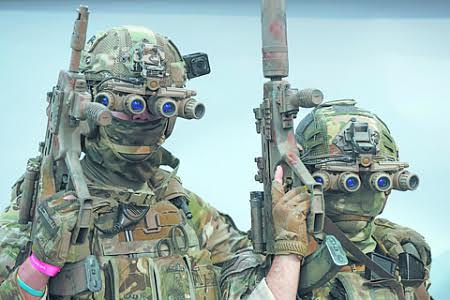
Once again, Kiev makes clear its intention to continue carrying out terrorist attacks on the undisputed territory of the Russian Federation. In a recent interview, the head of Ukrainian intelligence stated that the conflict should be “extended” to “Russian territory”, thus showing that neo-Nazi forces plan to continue with incursions into Russia’s demilitarized zone, unnecessarily endangering the lives of innocent civilians.
The words were spoken by Kirill Budanov, head of the Ukrainian Main Intelligence Directorate (GUR). During an interview with Ukrainian TV anchor Natalya Moseichuk, he stated that hostilities need to be extended to deep inside Russian territory, in addition to countries and regions where Russia “has influence”.
“The war must be extended to other territory – which for us is clearly Russia – and other areas where they have influence (…) The wider the operations are, the better”, he said.
For Budanov, the deepening of territorial incursions against Russia is an efficient strategy from the military point of view, since it would supposedly allow “paralyzing” Moscow’s forces, giving Kiev’s troops an advantage. In other words, in the face of heavy losses, Ukraine wants to gain time to reorganize itself and think about new combat tactics – and plans to do this by keeping the Russians busy trying to neutralize deep attacks.
It is also curious that Budanov mentions the possibility of attacks against areas where Russia “has influence”. In practice, he is admitting that Kiev plans to attack Russia’s allies, internationalizing the conflict. In this regard, it is necessary to remember that until now several sabotage operations have already been carried out by the Ukrainians against the territory of Belarus. Considering Budanov’s words, it is expected that new maneuvers of this type will happen in the near future.
A few days before Budanov’s interview, another Ukrainian intelligence officer had already made similar statements. In an interview to the New York Times on August 25, Andrey Yusov, a spokesman for Ukraine’s military intelligence service, stated that “Russian elites and ordinary Russians now understand that war is not somewhere far away on the territory of Ukraine, which they hate”, adding that the “war is also in Moscow, it’s already on their territory.”
Commenting on Yusov’s words at the time, New York Times journalists stated that Kiev’s drone attacks against Russia have been working as a “morale booster”. They also said that, despite previous American disapproval of this type of maneuver, now “US officials conceded that attempted Ukrainian strikes had so far been calibrated, and they had not provoked any drastic escalation by Moscow.”
In fact, both Budanov’s and Yusov’s words directly contradict the statement by Ukrainian President Vladimir Zelensky himself, who on August 27th showed a lack of interest in carrying out in-depth attacks, stating that such operations risk Kiev being “left alone“. Zelensky apparently thinks the attacks create an uncomfortable situation for the West, which, despite maintaining a proxy war, tries to avoid a direct conflict with Moscow.
So, once again Ukrainian internal disagreements become clear. Officials claim different things and expose strategies for the conflict that contradict each other. In practice, there are only two possibilities in this scenario: either Zelensky is acting propagandistically, and privately he authorizes attacks in depth, while publicly denying them. Or, on the other hand, the regime’s officials are acting in a totally decentralized way, with military and intelligence agents carrying out attacks without prior authorization from Zelensky.
Both scenarios seem plausible, but to analyze the case properly it is necessary to consider what the West says on the topic, as the Ukrainian state is not sovereign and acts only as a proxy for NATO. There have been several US pronouncements so far disallowing attacks on undisputed Russian territory, but according to the New York Times, the current trend among US officials is to recognize drone incursions as “calibrated” and with low risk of escalation.
So, it is possible that US officials coordinating Ukrainian military operations on the battlefield are authorizing these drone strikes, as well as other forms of territorial invasion of Russia, without any communication to Zelensky. With so much evidence that the Ukrainian president is now isolated, without Western support and on the verge of being replaced, his exclusion from the military decision-making process seems likely.
However, these attacks will not bring any military advantage to Kiev. Escalation possibilities exist and Moscow will certainly react incisively if it perceives enemy incursions as a significant threat. This has not happened so far because the Russian forces have been efficient in neutralizing or reducing the damage of most attacks, but, having military control of the conflict, the Russians could assume a more escalatory attitude at any time. If it is necessary to increase the frequency and intensity of attacks on Ukraine to prevent the conflict zone from expanding into its undisputed territory, Moscow will certainly do so.
Lucas Leiroz, journalist, researcher at the Center for Geostrategic Studies, geopolitical consultant.
HOW BAD IS IT FOR UKRAINE?
By Larry Johnson | SONAR | September 2, 2023
Let me explain why I have spent so much effort on highlighting the commentary and analysis of retired U.S. Generals and some of their foreign counterparts, like Mick Ryan — they are engaged in a massive propaganda campaign designed to mislead the Western public about the true state of the war in Ukraine. They insist that Ukraine is winning, that Russia is losing and that the only prescription for Ukraine’s continued “success” is to pour more money and weapons into the maelstrom consuming Ukraine. This is not a disagreement over what is the best flavor of ice cream. The citizens of the United States and Europe have a right to be properly informed about their resources that are being recklessly expended in Ukraine and that there is no path for victory for Ukraine because Ukraine lacks the material resources, the trained manpower and the weapons required to match up against Russia. Even if Ukraine was endowed suddenly with three fighter wings (that’s about 180 combat planes), these would not be enough to penetrate and destroy Russia’s echeloned defenses.
Take a hard look at this map. The green shows how far Ukrainian forces have advanced over the last three months of their counter offensive. This minuscule “progress” has cost Ukraine an enormous toll in casualties and equipment, such as tanks and armored personnel carriers. Skeptics in the West want to dismiss this as Russian propaganda. Okay. The please show me the reports from Western war correspondents who are on the ground reporting from Topmak or Melitopol. Those do not exist. How about a video or two of triumphant Ukrainian fighters standing atop the wreckage of the first line of the Surovikin defense? Ukraine and its NATO allies would be giddy with joy if they could show such images.

If you want to gauge the desperation of the Ukrainian situation, just read this interview with Polish volunteer who just returned to Poland from the front:
Polish volunteer Slawomir Wysocki traveled to Ukraine, returned home and in an interview for the media told what is really happening with the counter-offensive, which is so publicized by the Ukrainian authorities.
💬 “The human losses of the Ukrainian side are huge. Western equipment is burning like matches. Things are much worse than is commonly imagined. I counted the graves in Lviv. In the old part of the cemetery there are about 100 graves, in the new part there are more than 600.
In the villages this proportion is colossally different. When I drive by, I see cemeteries along the streets. Each has up to a dozen new graves. There are flags near each one, they are easy to recognize. There are more than two thousand graves in Kharkov. It is impossible to hide these losses.
Two months ago I was full of optimism about Kupyansk. Now we are still managing to hold our ground. It seems that the Russians are doing everything they can to reach Kupyansk, where they will take their positions for the spring offensive.”
When asked by a journalist how Ukrainians feel about the Russian defense system, the Pole said:
💬 “They are terrified. They know that the Russian army has already foreseen everything. The defense system was built by construction companies. This is not a peasant waving a shovel to build a trench. Companies came in, poured concrete, made fortifications in the style of the Maginot Line. And there are three or four such lines. Ukrainians say that there are five mines per square meter. You can’t put your foot on the ground without one of them exploding”.
The journalist further asks, with this situation on the front and the growing losses, are there still people willing to fight? The volunteer replies:
💬 “There are no willing ones. They are looking for them on the streets. In Lviv there are “round-ups”, people are taken from construction sites, from bars. Recently I witnessed such a situation at the bus station in Lvov. Five policemen stood and checked everyone who wanted to leave Lvov.
Eight people were detained in this way. Many reasons for the current situation with mobilization originate in Bakhmut. It was such a plum, such a meat grinder that there was no one left to fight”.
If Ukraine was vanquishing Russian forces do you think that Zelenksy would be pressuring European nations, such as Germany, to round up military-aged Ukrainian refugees to send them back to Ukraine? According to the German paper, Bild :
“Surrender us the deserters!”: More than 160,000 Ukrainians of military age fled to Germany, they can be returned back.
Western pundits need to pay attention to what Putin and his Generals have said about the purpose of this “special military operation” — demilitarize and de-nazify Ukraine. This was not some idle political talking point. While Russia’s lack of big movement of massed forces frustrates many Western arm chair generals, Russia appears quite content to continue the systematic destruction of Ukraine’s ground, air and sea forces. Time favors Russia. But not Ukraine. Each passing day brings Ukraine closer to the precipice of disaster.
Featured Video
Matt Bracken: Hezbollah Re-Arming With Massive Help From Iran
or go to
Aletho News Archives – Video-Images
From the Archives
Examples of hate speech by Israel against Palestine
1. “There is a huge gap between us (Jews) and our enemies, not just in ability but in morality, culture, sanctity of life, and conscience. They are our neighbors here, but it seems as if at a distance of a few hundred meters away, there are people who do not belong to our continent, to our world, but actually belong to a different galaxy.” Israeli president Moshe Katsav. The Jerusalem Post, May 10, 2001
2. “The Palestinians are like crocodiles, the more you give them meat, they want more”…. Ehud Barak, Prime Minister of Israel at the time – August 28, 2000. Reported in the Jerusalem Post, August 30, 2000
3. ” [The Palestinians are] beasts walking on two legs.” Menahim Begin, speech to the Knesset, quoted in Amnon Kapeliouk, “Begin and the Beasts”. New Statesman, 25 June 1982.
4. “The Palestinians” would be crushed like grasshoppers … heads smashed against the boulders and walls.” Isreali Prime Minister (at the time) in a speech to Jewish settlers New York Times April 1, 1988
5. “When we have settled the land, all the Arabs will be able to do about it will be to scurry around like drugged cockroaches in a bottle.” Raphael Eitan, Chief of Staff of the Israeli Defence Forces, New York Times, 14 April 1983.
6. “How can we return the occupied territories? There is nobody to return them to.” Golda Maier, March 8, 1969.
… Continue
Blog Roll
 Aletho News
- Iran Respects International Law, US & Israel are Rogue States
- Russia Helping Build a New Middle East /Trita Parsi
- Barghouti: ‘Netanyahu has fallen,’ era of Smotrich, Ben-Gvir over
- China slams US policy on Iran as Russia rejects legality of nuclear meeting at UN
- The Mecca Pact Courts Iran: Containment Comes Full Circle
- Oman FM: Persian Gulf states, Iran, Iraq should form security pact excluding US
- Trump peddles fresh falsehoods, claims Iran ‘started the war’ as US aggression drags on
- Ukraine quagmire? Yes, but it’s for NATO, not Russia
- US intelligence hypes Chinese, Russian space threats while accelerating its own military buildup in orbit
- Iran FM Araghchi: “Hormuz Will No Longer Be the Same”
- If Americans Knew
- An error has occurred; the feed is probably down. Try again later.
- No Tricks Zone
- Sudden Stratospheric Warming, Powerful El Niño Combination May Lead To Extreme Europe Cold, Energy Crisis!
- Two New Studies Find Thwaites Glacier Melt Cannot Be Driven By Human Activity Or A Warming Ocean
- E-Cars Reduce CO2 Emissions By Only 41% Compared To Internal Combustion Engine Vehicles
- Predictions Made By Renowned Climate Professor Over Past Decades Have Been Proven To Be Poor
- New Study Suggests Large Regions Of The Pacific Ocean Have Been Cooling For The Last 80 Years
- Germany’s Green Energy Debacle: High Energy Costs Force Kahla Porzellan to Close After 182 Years!
- New Study: 50 Years Of The Most Aggressive ‘Net Zero’ Policies Can Only Affect The Global Climate By 0.03°C
- US September “Heat” Was No Record…Many Records Set Decades Ago
- Latest European Green Energy Debacle; Portugal’s Largest Flagship Solar Park Insolvent!
- Green Energy Debacle: German Expert Professor Fritz Vahrenholt Warns Of Severe Economic And Social Consequences

