Russian Fuel, Energy Industry Working Very Well Despite All Sanctions – Putin
Sputnik – 04.09.2023
MOSCOW – The Russian fuel and energy industry is working very well, is protected from external shocks and retains key positions in this sphere despite all sanctions, Russian President Vladimir Putin said on Monday.
“In general, in the current difficult conditions, Russia not only confirms its energy self-sufficiency, independence, and protection from external shocks, but also occupies key positions in the global energy sector. Without any exaggeration, we work confidently and self-sufficiently,” the president stated at a meeting on the implementation of the Murmansk liquefied natural gas (LNG) project.
Russia’s fuel and energy sector should contribute to protecting the interests of the country’s economy, the needs of all consumers and tackling the issues of accessibility and prevention of serious price hikes which should be constantly monitored, Putin added.
Moreover, Russia is considering the possibility of accelerating the construction of the Far Eastern route, as well as the main Power of Siberia 2 gas pipeline, the president stated.
“Given the good prospects for expanding cooperation with friendly countries, we are considering the possibility of accelerating the construction of the Far Eastern route, as well as the Power of Siberia 2 gas pipeline,” Putin stressed.
The Power of Siberia is a gas pipeline operated by Russian state-owned company Gazprom that is a part of the eastern gas route from Siberia to China.
The Power of Siberia 2 is a planned gas pipeline that is to contribute to Russian gas exports to China through Mongolia. The construction is expected to start in 2024, according to a statement by Mongolian Prime Minister Oyun-Erdene Luvsannamsrai on July 18, 2022.
Kiev believes the conflict should be “extended” to Russia’s undisputed territory
By Lucas Leiroz | September 4, 2023
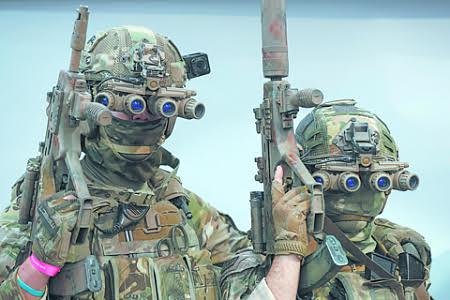
Once again, Kiev makes clear its intention to continue carrying out terrorist attacks on the undisputed territory of the Russian Federation. In a recent interview, the head of Ukrainian intelligence stated that the conflict should be “extended” to “Russian territory”, thus showing that neo-Nazi forces plan to continue with incursions into Russia’s demilitarized zone, unnecessarily endangering the lives of innocent civilians.
The words were spoken by Kirill Budanov, head of the Ukrainian Main Intelligence Directorate (GUR). During an interview with Ukrainian TV anchor Natalya Moseichuk, he stated that hostilities need to be extended to deep inside Russian territory, in addition to countries and regions where Russia “has influence”.
“The war must be extended to other territory – which for us is clearly Russia – and other areas where they have influence (…) The wider the operations are, the better”, he said.
For Budanov, the deepening of territorial incursions against Russia is an efficient strategy from the military point of view, since it would supposedly allow “paralyzing” Moscow’s forces, giving Kiev’s troops an advantage. In other words, in the face of heavy losses, Ukraine wants to gain time to reorganize itself and think about new combat tactics – and plans to do this by keeping the Russians busy trying to neutralize deep attacks.
It is also curious that Budanov mentions the possibility of attacks against areas where Russia “has influence”. In practice, he is admitting that Kiev plans to attack Russia’s allies, internationalizing the conflict. In this regard, it is necessary to remember that until now several sabotage operations have already been carried out by the Ukrainians against the territory of Belarus. Considering Budanov’s words, it is expected that new maneuvers of this type will happen in the near future.
A few days before Budanov’s interview, another Ukrainian intelligence officer had already made similar statements. In an interview to the New York Times on August 25, Andrey Yusov, a spokesman for Ukraine’s military intelligence service, stated that “Russian elites and ordinary Russians now understand that war is not somewhere far away on the territory of Ukraine, which they hate”, adding that the “war is also in Moscow, it’s already on their territory.”
Commenting on Yusov’s words at the time, New York Times journalists stated that Kiev’s drone attacks against Russia have been working as a “morale booster”. They also said that, despite previous American disapproval of this type of maneuver, now “US officials conceded that attempted Ukrainian strikes had so far been calibrated, and they had not provoked any drastic escalation by Moscow.”
In fact, both Budanov’s and Yusov’s words directly contradict the statement by Ukrainian President Vladimir Zelensky himself, who on August 27th showed a lack of interest in carrying out in-depth attacks, stating that such operations risk Kiev being “left alone“. Zelensky apparently thinks the attacks create an uncomfortable situation for the West, which, despite maintaining a proxy war, tries to avoid a direct conflict with Moscow.
So, once again Ukrainian internal disagreements become clear. Officials claim different things and expose strategies for the conflict that contradict each other. In practice, there are only two possibilities in this scenario: either Zelensky is acting propagandistically, and privately he authorizes attacks in depth, while publicly denying them. Or, on the other hand, the regime’s officials are acting in a totally decentralized way, with military and intelligence agents carrying out attacks without prior authorization from Zelensky.
Both scenarios seem plausible, but to analyze the case properly it is necessary to consider what the West says on the topic, as the Ukrainian state is not sovereign and acts only as a proxy for NATO. There have been several US pronouncements so far disallowing attacks on undisputed Russian territory, but according to the New York Times, the current trend among US officials is to recognize drone incursions as “calibrated” and with low risk of escalation.
So, it is possible that US officials coordinating Ukrainian military operations on the battlefield are authorizing these drone strikes, as well as other forms of territorial invasion of Russia, without any communication to Zelensky. With so much evidence that the Ukrainian president is now isolated, without Western support and on the verge of being replaced, his exclusion from the military decision-making process seems likely.
However, these attacks will not bring any military advantage to Kiev. Escalation possibilities exist and Moscow will certainly react incisively if it perceives enemy incursions as a significant threat. This has not happened so far because the Russian forces have been efficient in neutralizing or reducing the damage of most attacks, but, having military control of the conflict, the Russians could assume a more escalatory attitude at any time. If it is necessary to increase the frequency and intensity of attacks on Ukraine to prevent the conflict zone from expanding into its undisputed territory, Moscow will certainly do so.
Lucas Leiroz, journalist, researcher at the Center for Geostrategic Studies, geopolitical consultant.
HOW BAD IS IT FOR UKRAINE?
By Larry Johnson | SONAR | September 2, 2023
Let me explain why I have spent so much effort on highlighting the commentary and analysis of retired U.S. Generals and some of their foreign counterparts, like Mick Ryan — they are engaged in a massive propaganda campaign designed to mislead the Western public about the true state of the war in Ukraine. They insist that Ukraine is winning, that Russia is losing and that the only prescription for Ukraine’s continued “success” is to pour more money and weapons into the maelstrom consuming Ukraine. This is not a disagreement over what is the best flavor of ice cream. The citizens of the United States and Europe have a right to be properly informed about their resources that are being recklessly expended in Ukraine and that there is no path for victory for Ukraine because Ukraine lacks the material resources, the trained manpower and the weapons required to match up against Russia. Even if Ukraine was endowed suddenly with three fighter wings (that’s about 180 combat planes), these would not be enough to penetrate and destroy Russia’s echeloned defenses.
Take a hard look at this map. The green shows how far Ukrainian forces have advanced over the last three months of their counter offensive. This minuscule “progress” has cost Ukraine an enormous toll in casualties and equipment, such as tanks and armored personnel carriers. Skeptics in the West want to dismiss this as Russian propaganda. Okay. The please show me the reports from Western war correspondents who are on the ground reporting from Topmak or Melitopol. Those do not exist. How about a video or two of triumphant Ukrainian fighters standing atop the wreckage of the first line of the Surovikin defense? Ukraine and its NATO allies would be giddy with joy if they could show such images.

If you want to gauge the desperation of the Ukrainian situation, just read this interview with Polish volunteer who just returned to Poland from the front:
Polish volunteer Slawomir Wysocki traveled to Ukraine, returned home and in an interview for the media told what is really happening with the counter-offensive, which is so publicized by the Ukrainian authorities.
💬 “The human losses of the Ukrainian side are huge. Western equipment is burning like matches. Things are much worse than is commonly imagined. I counted the graves in Lviv. In the old part of the cemetery there are about 100 graves, in the new part there are more than 600.
In the villages this proportion is colossally different. When I drive by, I see cemeteries along the streets. Each has up to a dozen new graves. There are flags near each one, they are easy to recognize. There are more than two thousand graves in Kharkov. It is impossible to hide these losses.
Two months ago I was full of optimism about Kupyansk. Now we are still managing to hold our ground. It seems that the Russians are doing everything they can to reach Kupyansk, where they will take their positions for the spring offensive.”
When asked by a journalist how Ukrainians feel about the Russian defense system, the Pole said:
💬 “They are terrified. They know that the Russian army has already foreseen everything. The defense system was built by construction companies. This is not a peasant waving a shovel to build a trench. Companies came in, poured concrete, made fortifications in the style of the Maginot Line. And there are three or four such lines. Ukrainians say that there are five mines per square meter. You can’t put your foot on the ground without one of them exploding”.
The journalist further asks, with this situation on the front and the growing losses, are there still people willing to fight? The volunteer replies:
💬 “There are no willing ones. They are looking for them on the streets. In Lviv there are “round-ups”, people are taken from construction sites, from bars. Recently I witnessed such a situation at the bus station in Lvov. Five policemen stood and checked everyone who wanted to leave Lvov.
Eight people were detained in this way. Many reasons for the current situation with mobilization originate in Bakhmut. It was such a plum, such a meat grinder that there was no one left to fight”.
If Ukraine was vanquishing Russian forces do you think that Zelenksy would be pressuring European nations, such as Germany, to round up military-aged Ukrainian refugees to send them back to Ukraine? According to the German paper, Bild :
“Surrender us the deserters!”: More than 160,000 Ukrainians of military age fled to Germany, they can be returned back.
Western pundits need to pay attention to what Putin and his Generals have said about the purpose of this “special military operation” — demilitarize and de-nazify Ukraine. This was not some idle political talking point. While Russia’s lack of big movement of massed forces frustrates many Western arm chair generals, Russia appears quite content to continue the systematic destruction of Ukraine’s ground, air and sea forces. Time favors Russia. But not Ukraine. Each passing day brings Ukraine closer to the precipice of disaster.
Ukraine blackmailing Europe by refusing to renew gas shipment deal
By Uriel Araujo | September 2, 2023
Russia’s Gazprom has said it would ship 42.4 million cubic meters of gas to Europe – such a volume is in line with recent days. There are concerns regarding the future of gas shipments to Europe, however. Last month, Ukrainian energy minister Herman Galushchenko ruled out the prospect of Kiev participating in new Russian gas transit talks pertaining to a five year agreement which will expire at the end of 2024. He added that by 2024 Europeans should be ready to manage without Russian gas. This is the latest chapter of a long dispute.
Writing for Politico in September 2022, energy correspondent America Hernandez highlighted that Russian energy giant Gazprom and Ukraine’s Naftogaz were in a battle regarding arbitration and payments for gas shipments through Ukraine – and this threatened gas transit to Europe. Here, some context is needed.
Despite the ongoing confrontation, Gazprom (Russia’s state-owned energy corporation) has been honoring a pre-conflict 2019 transit agreement: the 2019 deal, which runs until the end of 2024, allows Gazprom to export over 40 billion cubic meters of gas a year via Ukraine – and this earns Kiev about $7 billion.
Gazprom chief Alexei Miller, however, warned in July 2023 that the Russian energy giant could stop exporting if Kiev did not cease its campaign to seize Russian state assets. Ukraine has been in fact fighting a legal war to make Moscow pay over $5 billion as compensation for Ukraine’s state energy firm Naftogaz losses pertaining to the annexation of Crimea after the 2014 referendum. Naftogaz’s lawyers have been filing enforcement petitions in several jurisdictions internationally. According to Elena Chachko, a Harvard Law School’s Rappaport Fellow, Ukrainian endeavors to combine warfare and lawfare are an attempt to set a precedent in their own way: “The Ukrainians have been pretty active and pretty sophisticated in how they leverage various legal avenues to attack the Russians. They’ve been very creative.” She adds: “The route of arbitration is one they’ve been very sophisticated in utilizing to impose sanctions on Russia in a sort of indirect way”.
Moreover, in July 2023, mentioning a Hague court ruling favoring Ukraine’s claims for compensation, which Moscow is to appeal, Naftogaz CEO said: “We don’t expect Russia to pay voluntarily. It will take time to enforce it and monetize it, and we will be targeting Russian sovereign assets abroad.” In other words, under the justification that there is a European court decision, Ukraine is illegally seizing Russian assets.
Gazprom ceased to supply gas through Yamal-Europe and the (now gone) Nord Stream and pipelines, thus making the transit line through Ukraine the one and only route to supply Russian gas to Central and Western European countries.
By telling Europeans to be ready to go on without Russian gas, Ukraine’s energy minister Herman Galushchenko is providing music to Washington’s ears. In December 2021, there was an energy crisis in Europe already and I wrote on how the US war on the Nord Stream 2 project made perfect sense from an American perspective: Washington wanted neither to lose leverage on the European continent nor to have Moscow having more leverage there. Moreover, the US created obstacles to Russian-European energy and gas cooperation so as to promote its own resources to European markets. Washington would thus have Europeans buying more and more of American liquified natural gas (LNG) – despite the fact that it is more expensive and despite the fact that Russia lies at the “doorstep” of Europe. These American geoeconomic and private (and even shady) interests play an important role here – in addition to US-led NATO geopolitical goals pertaining to encircling Russia. One cannot make sense of the current conflict without taking those into consideration.
In any case, by refusing to transit Russian gas, which Europeans need, Kiev is basically blackmailing the European bloc, as it hopes to see an ever-larger supply of NATO-provided weaponry and aid. It remains to be seen how European powers will play along.
The hard truth is that the Western strategy to isolate Moscow from global energy markets has been a failure. Of course crude oil supplies to the West have dropped, but overall Russian hydrocarbon exports are back to pre-conflict levels, while India has occupied the share of Western nations when it comes to Russian exports. With rising de-industrialization, the US’ own subsidy war against the EU, and with sanctions having backfired, it would seem that sooner or later Europe will have no choice but to gradually ease sanctions against the Russian energy resources it badly needs. The framework for that could involve lots of good diplomacy and the de-escalation of tensions. Right now, truth be told, Ukraine’s blackmail handicaps this prospect.
Indonesia rubbishes Pentagon’s ‘joint statement’ on China and Russia
RT | September 1, 2023
Indonesia’s military chief has denied issuing any shared statements with his US counterpart during a visit to Washington last week, after the Pentagon published a “joint” press release attributed to Jakarta which criticized Moscow and Beijing.
Speaking to reporters on Thursday, Defense Minister Prabowo Subianto said the US statement does not reflect his country’s positions, stating that Indonesia seeks friendly relations with both Russia and China.
“There is no joint statement and no press conference. What is important for me to underline is that our relationship with China is very good. We respect each other, we already have mutual understanding. I conveyed that in the US,” he said, adding “We are close friends with China, we respect America, and we seek friendship with Russia.”
The official went on to announce plans to visit Beijing and Moscow in the coming months, voicing hopes that Jakarta could serve as a “bridge” between rival states.
The Pentagon missive, published on August 24 was titled ‘United States DoD and Indonesia MoD Joint Press Statement’ and took on a different tone. It claimed that both the US and Indonesia “shared the view that the People’s Republic of China’s (PRC) expansive maritime claims in the South China Sea are inconsistent with international law.” It also went on to “jointly” condemn Moscow’s actions in Ukraine, demanding a “complete and unconditional withdrawal” of Russian forces.
Though Indonesia’s Defense Ministry noted Subianto’s meetings with Pentagon head Lloyd Austin, it made no mention of any joint statement with Washington, and offered no comments about Russia or China.
Beijing was quick to jump on the American statement, with China’s embassy in Jakarta claiming the remarks had not been approved by Indonesian officials beforehand.
“We’re informed by the Indonesian side that what the US side described is not true. In fact, no such content can be found in the press release by the Indonesian side at the same meeting,” the embassy told reporters last weekend, slamming US efforts to “to sow discord and stir up trouble.”
During Subianto’s trip to the US, the two countries agreed to boost military cooperation, including joint war games and additional US weapons sales. The Pentagon further said Washington would help Jakarta’s military modernization drive, proposing “fighter aircraft upgrades, new multi-role fighter aircraft, and additional fixed and rotary wing transport aircraft,” among other gear.
Highlighting the growing military ties, Indonesian officials announced a deal to purchase 24 Sikorsky S-70M Black Hawk transport helicopters from US arms giant Lockheed Martin last week, soon after signing a major contract with Boeing for two-dozen F-15 fighter jets. Jakarta is working to revamp its air fleet, which currently operates systems from several different countries, including both US- and Russian-made fighter jets.
Ambassador Calls on US to Return ‘Every Single Piece’ of Property Stolen from Russia
Al-Manar – August 31, 2023
Russian Ambassador to Washington Anatoly Antonov demanded that Washington “stop the bacchanalia” and return every single piece of diplomatic property in the United States stolen from the Russian Federation.
“We demand Washington to stop the bacchanalia, comply with international obligations and return every single piece of diplomatic property in the United States stolen from us,” the Russian embassy quoted the diplomat as saying on its Telegram channel on Wednesday.
Antonov recalled that exactly six years ago, on August 31, 2017, the US administration “took a new round of unprecedented measures to restrict the activities of Russian diplomatic and consular missions in the United States and, in fact, further curtail bilateral ties.” “In the form of an ultimatum it demanded us to close in two days the Consulate General in San Francisco – one of the largest institutions providing visa, notary and other consular services to citizens of Russia and the United States. Simultaneously, we were groundlessly ordered to cease the activities of the Trade Representation in Washington, D.C.,” Antonov said.
According to him, over the past six years, the Russian embassy has sent “hundreds of diplomatic notes to the State Department regarding access to the real estate assets owned by the Russian Federation,” but each has been rejected. “The United States flagrantly violated fundamental norms of international law, including the Vienna Conventions on diplomatic and consular relations, as well as the bilateral Consular Convention of 1964. In addition, the US authorities flouted their own legislation, encroaching on the principle of inviolability of private property, guaranteed by the US Constitution,” the ambassador said with confidence.
All this, Antonov said, happened under the pretext of “alleged Russian interference in US elections,” however, “after years of slandering,” Washington has presented no real evidence in support of its claims. “The case of [former US President] ‘Donald Trump’s collusion with Moscow’ fell apart, but all the imposed sanctions are still there,” he lamented.
“We are cynically told that, according to the documents, Russia has not been deprived of ownership title to the real estate assets – just ‘banned from using them.’ There is a pseudo-legitimate attempt to juggle basic legal concepts,” the ambassador concluded.
Vivek Ramaswamy’s Plan For Ending The NATO-Russian Proxy War In Ukraine Is Pragmatic
BY ANDREW KORYBKO | AUGUST 31, 2023
The NATO-Russian proxy war in Ukraine has been trending towards a stalemate since the beginning of the year after Moscow’s growing edge in the “race of logistics”/“war of attrition” ensured that it won’t be defeated. NATO is unlikely to be defeated either, however, since it’ll probably intervene directly – whether as a whole or via a Polish–led mission that draws in the bloc via Article 5 – to freeze the Line of Contact in the event that Russia achieves a breakthrough and threatens to sweep through Ukraine.
The counteroffensive’s spectacular failure and the subsequently vicious blame game between the US and Ukraine strongly suggest that talks with Russia will resume by year’s end for freezing the conflict. Ahead of that happening, these wartime allies are frenziedly trying to convince their respective people that the other is responsible for this debacle simultaneously with formulating an attractive post-conflict vision of the future. The first is served by their vicious blame game while the second will now be discussed.
Republican presidential candidate Vivek Ramaswamy, who’s now polling third after winning last week’s debate and had earlier attracted enormous media attention for his outspokenness on sensitive issues, just published his “Viable Realism & Revival Doctrine” in an article for The American Conservative. Of relevance to this piece is his plan for ending the NATO-Russian proxy war. Liberal–globalist policymakers and their media allies responded with fury, and it’s not difficult to see why.
Ramaswamy describes the conflict as a “no-win war” that’s needlessly depleted Western stockpiles to China’s benefit. With a view towards more effectively containing the People’s Republic in the Asia-Pacific, he therefore suggests extricating the US from its proxy war with Russia as soon as possible. To that end, he proposes recognizing the new ground realities in Eastern Europe, ending NATO expansion, refusing to admit Ukraine to the bloc, lifting sanctions, and having Europe shoulder the burden for its own security.
The explicit goal is to “get Putin to dump Xi”, and that’s why he says that the quid pro quo is “Russia exiting its military alliance with China.” Ramaswamy is convinced that his plan will “elevate Russia as a strategic check on China’s designs in East Asia” if it’s implemented into practice, but the problem is that no such “military alliance” exists between those two. Moreover, it’s unrealistic to imagine that the US will “get Putin to dump Xi” since they’re good friends and their countries are strategic partners.
Having clarified that, this plan does have its merits. From the Russian side, it ensures that country’s objective national security interests and gives it the chance to rely on the EU for preemptively averting potentially disproportionate economic dependence on China upon the lifting of sanctions. On the home front, Ramaswamy’s plan appeals to the pragmatic policymaking faction whose influence is on the rise as proven by the success over the summer of their policy towards India that was detailed here.
The timing couldn’t have been better. The US is looking for a “face-saving” way to resume peace talks as previously explained, and the rising influence of pragmatic policymakers could lead to them overruling the liberal-globalists’ objections to this, though their rivals could still try to sabotage this. The enormous media attention that Ramaswamy has already generated, not to mention what he’s now receiving as a result of his proposal, could reshape the national discourse on the proxy war’s endgame.
Americans are becoming fatigued with this conflict but no one had yet articulated an attractive post-conflict vision of the future until now. Irrespective of Ramaswamy’s political future, his plan serves to spark a wider conversation at all levels about the pragmatism of compromising with Russia in order to free the US up for more effectively containing China in the Asia-Pacific. This can in turn facilitate the resumption of talks with Russia, especially if it emboldens pragmatic US policymakers.
The vicious blame game between the US and Ukraine over the counteroffensive’s failure leads to the inevitable one over who’s responsible for losing this proxy war, with all of this preceding America’s formulation of an attractive post-conflict vision of the future for its people and policymakers alike. The first dynamic is continually intensifying and making more headlines by the day, while the second is also presently unfolding but mostly in silence, and it’s this dynamic that Ramaswamy’s plan contributes to.
Accepting the impossibility of Russia abandoning its mutually beneficial cooperation with China and acknowledging that lifting the sanctions likely won’t happen either, the rest of his proposals could form the parameters of a potential Russian-American deal for ending their proxy war in Ukraine. That former Soviet Republic wouldn’t join NATO, nor would that bloc expand any further, and the West would de facto recognize the new ground realities in Eastern Europe while the EU bears the burden for its security.
Russia would obviously have to agree to some regional compromises too in that scenario, such as Ukraine’s privileged post-conflict relationship with NATO and the hard security guarantees that the Anglo-American Axis will likely provide, but these could be acceptable if its other interests are met. If there’s any movement in this direction, then it shouldn’t be maliciously spun as Russia conspiring to facilitating the US’ containment of China, but seen for what it truly is: Russia putting its interests first.
US desire for WW3 escalates as it mulls resumption of nuclear weapons testing
By Drago Bosnic | August 31, 2023
While the troubled Biden administration keeps parroting the same narrative about the CO2 emissions, even insisting that a ban on gas stoves would “help fight global warming”, it’s also actively working on the return of the ever so “climate-friendly” live nuclear weapons testing. The Russian Foreign Ministry has been warning about this for months, although this is usually decried as “Russian disinformation” by the mainstream propaganda machine. It’s important to note that thanks to the efforts of the United States, the CTBT (Comprehensive Nuclear-Test-Ban Treaty) never entered into force and its implementation is largely dependent on the goodwill of the signatories.
“The situation involving the CTBT is causing increasing concern. The responsibility for the situation in which the treaty has not entered into force over more than a quarter of a century of its existence lies squarely with the United States, which defiantly refused to ratify it and is now demonstrating its clear intention to resume testing,” Russia’s Deputy Foreign Minister Sergey Ryabkov warned back in early March, adding: “We cannot afford to remain idle spectators to what is happening. If the United States nevertheless decides to take such a step and be the first to conduct nuclear tests, we will be forced to respond proportionately. No one should have dangerous illusions that global strategic parity can be upset.”
However, it seems that’s exactly what the US is trying to accomplish. Its intention to restart nuclear weapons testing isn’t subsiding in the slightest. Quite the contrary it would seem, as the belligerent thalassocracy is now actively working on restoring and improving its nuclear test sites. Andrey Belousov, Deputy Permanent Representative of Russia to the UN and International Organizations in Geneva, stated that the US is still engaged in covert activities in Nevada, which shows that it doesn’t intend to stop testing new nuclear warheads. Belousov warned that Washington DC is working to improve and maintain the nuclear test site in a state of full operational readiness.
“The United States does not hide the development of new types of nuclear warheads, the effectiveness of which will sooner or later have to be tested in practice,” Belousov stated.
What the high-ranking Russian diplomat is most likely referring to is the so-called “nuclear super-fuse” technology that the US has been testing for decades, particularly under the Obama administration (and ever since). Investigative historian Eric Zuesse wrote extensively on the topic, warning that the sole purpose of this controversial technology is to exponentially amplify the effectiveness of America’s first-strike capabilities, meaning that the belligerent thalassocracy is contemplating a direct attack on Russia. Zuesse’s warnings are not to be discarded or ignored, as he argues that Finland’s NATO accession is a crucial part of this sinister plan.
It’s estimated that the US is planning to trap Russia by positioning its nuclear missiles about 500 miles or 7 minutes of missile-flying distance from the Kremlin. The Pentagon believes this would be a “checkmate move” as it would allow a decapitation strike on Russia’s central command so that it doesn’t have enough time to launch retaliatory missiles. The goal is to demand Russia’s surrender on the assumption there would be no way for Moscow to assess the situation within only 7 minutes and respond accordingly. The plan was set in motion no later than 2006 when the relations between Russia and the US were cordial and years before there were major tensions between them.
Namely, at the time, America’s two most prestigious national security academic journals, Foreign Affairs and National Security, both recommended replacing the idea of mutually assured destruction (MAD) with the new strategy of so-called “nuclear Primacy” that involves America’s dominance in first-strike capabilities, all in order to win a nuclear war against Russia. Zuesse argues that positioning missiles in Ukraine was supposed to be the way to achieve “nuclear primacy”, but since that’s no longer a possibility, Finland is to take the central role in this plan. It should be noted that Moscow will certainly know if the deployment of American nuclear weapons in Finland ever takes place.
This is precisely the reason why Russia has rearmed half of its ICBMs (intercontinental ballistic missiles) with maneuvering hypersonic warheads and why it has the “Perimeter” system. Namely, this system allows the Russian military to respond even in the extremely unlikely case that the entire Russian leadership is killed in a decapitation strike that Washington DC is openly contemplating at this point. Apart from its second-to-none strategic arsenal, world-class SSBNs (ballistic missile submarines) and unrivaled strategic bombers/missile carriers, Moscow has also deployed a number of “Poseidon” nuclear-tipped underwater drones that are so destructive they can cause literal radioactive tsunamis.
In addition, Russian President Vladimir Putin has repeatedly warned that Moscow is in the late stages of developing weapons based on new physical principles. These have been in testing for several years now. Such Russian claims are usually discarded by the mainstream propaganda machine, as the political West still believes that Moscow is supposedly “incapable” of fielding such high-tech weapons. However, Russia has been proving this notion wrong for centuries now. For instance, when Putin announced that Moscow was developing hypersonic weapons back in 2004, this was met with ridicule in the West. However, nobody was laughing when Russia inducted its first hypersonic weapons several years later.
Drago Bosnic is an independent geopolitical and military analyst.
Kiev insists on propaganda about “retaking” Crimea
By Lucas Leiroz | August 31, 2023
Kiev’s propaganda continues to spread baseless narratives about the so-called “counteroffensive”. Ukraine’s Minister of Foreign Affairs, Dmitri Kuleba, during a recent meeting with European diplomats, stated that the Ukrainian attacks on the Rabotino region are a key point to “open the way” towards Crimea. According to him, by attacking villages in the Zaporozhye region, the Ukrainians are “expelling” the Russians and forcing them to retreat to Crimea, taking the fighting deeper into the oblast. With that, it would be possible to start a real battle for Crimea soon, with Kiev having chances to retake it.
“Having entrenched on its [Robotyne’s] flanks, we are opening the way to Tokmak and, eventually, Melitopol and the administrative border with Crimea”, he said, thus calling Rabotino a “strategically important” village.
On the same occasion, Kuleba admitted the Ukrainian difficulties in the overhyped “counteroffensive”, indicating the Russian-made minefields as one of the main reasons for the “slow progress” of the counterattack. Kuleba also admitted losses to Russian air power, saying Moscow “plans to dominate the air” with its drones, helicopters and planes. However, in the end, Kuleba lied once again by saying that despite the problems, Kiev is “gradually succeeding”.
“The number of minefields and fortifications is unprecedented. Russian drones, helicopters and planes dominate the air. But we are gradually succeeding”, he added.
Indeed, instead of “slow”, it would be more appropriate to say that there is simply no Ukrainian progress. So far, the counteroffensive has been an absolute failure and it is unlikely to be any reversal of this scenario. Western experts have already begun to admit that Ukraine’s losses in the attempted counterattack are practically irreversible and that it will not be possible for Kiev to achieve its objectives set when the operation was launched in early June.
It must be remembered that one of these objectives was precisely to invade and possibly retake Crimea, in addition to the newly reintegrated Russian territories. Since 2014, Crimea has been a permanent strategic objective for Ukrainian forces. Unable to launch attacks in the region, Kiev affected the Crimean oblast for eight years through sabotage and boycotts. After the start of the Russian special operation, Ukraine hardened its actions, adopting real terrorism against Crimea, mainly through drone attacks against civilian targets.
Obviously, these terrorist incursions were not enough to “retake” the peninsula, so several of Kiev’s officials promised that the long-awaited “reconquest” would come with the spring-summer counteroffensive. However, the failure of Ukrainian military moves prevented any relevant territorial success from being achieved, with no hope of reaching Crimea.
Failing in all its strategic objectives, Kiev has launched a series of recent attacks in the southern region of Zaporozhye,mainly in the villages of Rabotino and Verbove. In fact, these villages are close to Tokmak, which would allow a more privileged position for the Ukrainian troops, if victorious, to eventually reach regions such as Melitopol and even Crimea itself. The problem is that Kiev has virtually no chance of achieving this since it is just overrating its territorial gains.
Ukrainian forces have recently crossed the first Russian line of defense in the Zaporozhye region. However, they are still being held back by the Moscow’s artillery. Indeed, no territorial control has yet been fully guaranteed by Ukraine. Furthermore, to cross the first Russian line, the Ukrainians suffered many heavy losses, with hundreds killed, in addition to a lot of NATO-provided equipment destroyed. As reported by the Russian authorities, Rabotino is almost completely destroyed, with great material damage to the village, but the military situation is not yet under Ukrainian control.
Even if the Ukrainians eventually take the village completely, they will still be encircled by the Russian forces that are stationed around it, which will prevent them from launching any relevant moves towards Melitopol or Crimea. In this scenario, the Ukrainians will also be extremely weakened as they will have lost many troops to control Rabotino, which will prevent them from moving forward in the face of Russian numerical superiority.
Ukraine seems to insist on violating an elementary concept of military sciences, which is to preserve soldiers’ lives over territories. If troops remain alive, territories can be captured later – but if soldiers die, no territorial gains can be secured. Ukraine ignores this, as it fights to serve interests that are not its own, but those of NATO – which has no hope of Ukrainian victory.
In practice, Kiev is just launching another one of its “suicide missions” encouraged by the Western media. In fact, there is no concrete military objective in the Ukrainian attitudes, only propagandistic actions focused on increasing the support of Western sponsors and public opinion. By mentioning Crimea as the target behind the Ukrainian attacks on Rabotino, Kuleba is simply making propaganda and trying to justify Kiev’s insistence on taking the village, despite so many losses.
Lucas Leiroz, journalist, researcher at the Center for Geostrategic Studies, geopolitical consultant.
US headed for ‘hot war’ with Russia – Tucker Carlson
RT | August 30, 2023
The US proxy war against Russia is likely to become an open war within the next year, former Fox News host Tucker Carlson said on Wednesday. The ruling Democrats need the war to keep power and too many Republicans are willing to go along, he added.
“They will do anything to win,” Carlson said in an hour-long interview with radio host Adam Carrolla. He argued that another coronavirus lockdown is unlikely, as too many people would refuse to comply, so “they’re going to go to war with Russia, that’s what they’re going to do.”
“There will be a hot war between the US and Russia in the next year,” Carlson said. “I don’t think we’ll win it.”
“We’re already at war with Russia, of course, we’re funding their enemies,” he added. The US has allocated over $130 billion for Kiev over the past 18 months for weapons, military equipment, ammunition, and the salaries of government officials.
“I think that could easily happen,” the former cable TV host continued. “I think we could ‘Tonkin Gulf’ our way into it, where all of a sudden missiles land in Poland, ‘The Russians did it! Our NATO ally has been attacked! We’re going to war’! I can see that happening very easily.”
In August 1964, the US fabricated an incident with the North Vietnamese navy in the Gulf of Tonkin as a pretext to deploy ground troops in South Vietnam. The scenario Carlson described already happened as well, when a Ukrainian air-defense missile struck a village across the Polish border last November, killing two local civilians. Warsaw and Washington were quick to debunk Kiev’s claim that it had been a Russian strike, however.
Carlson argued that the US could “force a peace in Ukraine tonight” by cutting off Kiev’s funding.
“Otherwise, and I would bet my house on it, we are going to war with Russia,” he said. “And, of course, the stakes are everything. Life on the planet. These are the two biggest nuclear arsenals in the world, facing off against each other.”
The US has “already lost control of the world – the American empire is in freefall right now – and we’re going to lose the US dollar, and when that happens we’re going to have real poverty here, like Great Depression-level poverty. And it comes from this war,” Carlson told Carolla. He added that most Americans may not be able to see that, but it’s “super obvious” when one leaves the US, even for a short while.
Moreover, he argued, the US “crushed” the German economy “when the Biden administration blew up Nord Stream” last September, and its Ukraine policies have done a lot to undermine Western Europe, Washington’s only real ally in the world.
Carlson has just returned from Hungary, where he took part in a conference and interviewed Prime Minister Viktor Orban for his new show on X, formerly Twitter. Carlson made Elon Musk’s social media platform his new home after Fox News canceled his top-rated evening show in April, for reasons that have never been made public.
Russia won’t conduct nuclear test before US – diplomats
RT August 30, 2023
President Vladimir Putin had brought up the possibility of Russia resuming nuclear tests as a message to the US, Russian diplomat Dmitry Glukhov told the UN General Assembly on Tuesday.
“I wish to underscore that the aforementioned statement by the Russian president about the hypothetical possibility of our country resuming nuclear tests, mentioned during his speech to the federal legislature, needs to be understood solely in the context of our response to the destructive actions of the US. It was a preventive signal to Washington,” said Glukhov.
“We will resort to such a step only if the US does it first,” the diplomat added.
Glukhov was responding to accusations aired by US Under Secretary of State for Arms Control and International Security Affairs Bonnie Jenkins, who claimed that Putin’s speech from February amounted to a threat of renewed atomic testing.
Putin had told Russian lawmakers that Moscow had intelligence that the US was preparing to test new nuclear warheads, and instructed Rosatom and the Russian Defense Ministry to prepare for resumption of tests should the Americans do so.
In the same speech, Putin announced that Moscow was suspending its participation in the New START nuclear arms control treaty, accusing the US of blocking inspections while using Ukraine for a proxy war against Russia. Several Ukrainian drones had just attacked an airbase housing Russian strategic bombers.
The US was the only country to ever use nuclear weapons, leads the world in the number of nuclear tests, and is refusing to ratify the Comprehensive Nuclear Test-Ban Treaty (CTBT), Glukhov reminded the General Assembly.
Russia has both signed and ratified the agreement, adopted by the UNGA in 1996. However, some Russian outlets reported earlier this month that Moscow was contemplating withdrawal from the treaty, in order to be on par with the US.
The Soviet Union carried out its last nuclear test in 1990, while the last US test of the kind was in 1992.
Featured Video
EUROPE FEARS RUSSIA’S NEXT MOVE / Ian Proud
or go to
Aletho News Archives – Video-Images
New Book
New Book: No Autoimmunity The Body Doesn’t Attack Itself
Lies are Unbekoming | September 24, 2026
 The label for Humira, once the best-selling drug in the world, lists its risks in plain print. One of them, in the label’s own words, is new “autoimmune” disease.
A drug prescribed for a condition labelled autoimmune carries a warning that it can cause a condition labelled autoimmune. That contradiction sits in every box, on a folded paper almost nobody reads.
My new book starts there.
No Autoimmunity: The Body Doesn’t Attack Itself
For seventy years, “your body is attacking itself, and we don’t know why” has ended the conversation for people diagnosed with multiple sclerosis, lupus, rheumatoid arthritis, Hashimoto’s, Type 1 diabetes, Crohn’s and psoriasis. More than eighty conditions now carry the autoimmune label. The diagnosis comes with a prescription for life. It almost never comes with a question about cause.
This book asks the question and answers it from the framework’s own records: its drug labels, its journals, its regulatory filings, and its own experiments. … continue
Blog Roll
 Aletho News
- How Russia is Rewiring the Global South
- Britain’s elites want you ready to die for a war they keep imagining
- Inside Ukraine’s propaganda operation targeting Americans
- Hackers From US, France, Singapore Tried to Disrupt Russian Elections – Internet Provider
- New Book: No Autoimmunity The Body Doesn’t Attack Itself
- EUROPE FEARS RUSSIA’S NEXT MOVE / Ian Proud
- Big tech hands in its DSA censorship reports to the EU
- ‘A Big Victory’ – Palestine Chronicle Wins Two-Year Legal Battle
- IAEA inspectors cannot return to Iran amid US threats: Russia
- Senate Rejects Iran War Powers Resolution Passed By House
- If Americans Knew
- ‘Protecting U.S. Citizens’… From Israel
- ‘This is where I live now, the back of a truck’: a day in the life of a grandmother in Gaza
- In UN Speech, Iran’s President Displays Pictures of Children Killed by US, Brings Attention to Israel’s Nuclear Arsenal
- Israel displaces hundreds of Palestinians amid wave of demolitions in West Bank
- Aid, reconstruction, and Israel’s history of obstruction in Gaza
- Trump administration digs an ever-deeper hole of complicity in genocide – Daily Update
- US-Israel $2.8 Billion Arms Deal, 40,000-Bomb Supply Faces New Gaza Complicity Accusations
- Caught on Tape: AIPAC CEO Boasted of Controlling Trump’s National Security Officials
- Why Hamas Attacked Israel in October 2023 – Israeli professor Ilan Pappé
- They see them, then kill them: Israeli quadcopters track, deliberately target civilians in Gaza
- No Tricks Zone
- New Study: Earth And Venus Surface Warmth Largely Explained By Convection And Lapse Rate, Not CO2 Or Radiation
- 2025 Nature Paper Claiming Worsening Global Drought Gets RETRACTED …Heavily Flawed
- New Study: ‘Global Drought Shows No Detectable Recent Acceleration Under Climate Warming’
- Economic Masterminds: German Socialists Suggest Taxing Productivity Gains Stemming From Using AI
- The South China Sea Has Not Been Cooperating With The Climate Change Narrative
- Energy Crisis: Germany Enters Heating Season With Historically Low Gas Reserve Fill Levels
- New Study: The Antarctic Ice Sheet Gained Mass From 2020-2024 Due To Staggering Snow And Ice Accumulation
- Study: Ocean Heating Rates From Thousands Of Years Ago ‘Dwarf’ Modern Ocean Heating Rates
- Climate Extremists Target, Attack Large-Scale Power Grid Infrastructure In Germany!
- New Study: Antarctic Ice Melt Has Contributed Less Than 1 Centimeter To Sea Level Rise In The Last 30 Years

