Qatar to provide Ukraine $100mln as war profits soar
The Cradle | July 29, 2023
Qatar will provide Ukraine with $100 million in humanitarian aid, Ukrainian Prime Minister Denys Shmyhal announced on 28 July following the visit of Qatari Prime Minister Sheikh Mohammed Bin Abdulrahman Al-Thani to Kiev.
“This money will be channeled for reconstruction in the health and education sectors, humanitarian de-mining, and other important social and humanitarian projects,” Shmyhal told a briefing.
Sheikh Mohammad also met with Ukrainian President Volodymyr Zelensky to discuss global food security and the expired Black Sea grain deal in his first visit to Ukraine since the start of the war with Russia last year.
“We appreciate this visit and consider it an important manifestation of Qatar’s support and solidarity with our country. We are sincerely grateful for all the assistance received from Qatar,” Zelensky said.
The grain deal, brokered by Turkiye and the UN in July 2022, ensured that Ukrainian grain could still be exported from its southern Black Sea ports, despite the fighting and that Russian grain and fertilizers could still be exported despite western-imposed sanctions.
The deal came amid fears that a disruption in Russian and Ukrainian grain exports would cause price increases in world food markets, leading to humanitarian disasters in poor countries.
Russia withdrew from the agreement on July 17, claiming Ukraine and the UN had not lived up to their end of the deal.
Sheikh Mohammad and Zelensky’s talks also focused on the Ukrainian Peace Formula and the Ukraine Recovery Plan. Zelensky emphasized the opportunities for Qatari investment funds and business circles to participate in Ukrainian reconstruction, according to the Office of the Presidency of Ukraine.
Qatar has benefited significantly from the war in Ukraine. US and EU sanctions cut off Russian natural gas supplies to Europe, causing prices to skyrocket and allowing Qatar to emerge as an important alternative natural gas supplier.
In late November, QatarEnergy and ConocoPhillips signed agreements to export 2 million tons of liquified natural gas yearly to Germany for at least 15 years, starting in 2026.
Europe’s newfound need for Qatari liquefied natural gas comes after Qatar started a $30 billion project to boost its exports by 60 percent by 2027.
Before the start of the Ukraine war, some analysts doubted there would be enough natural gas demand to justify the expansion plan, Bloomberg noted.
US warns allies of potential isolation from deals over links to Iran, Russia
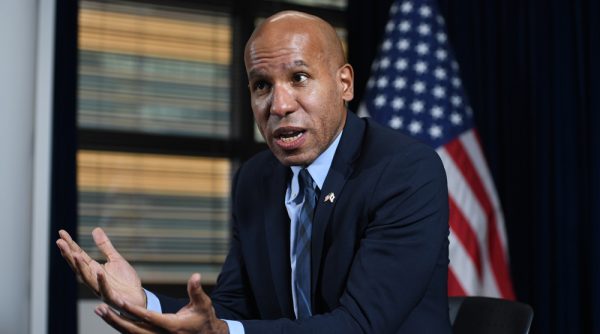
Brian Nelson, U.S. Treasury Undersecretary for Terrorism and Financial Intelligence
Press TV – July 29, 2023
The administration of US President Joe Biden has warned that Washington’s allies will face a “reputation risk” and potential isolation from lucrative deals in case of having links to the Islamic Republic of Iran and Russia.
Brian Nelson, the Treasury’s undersecretary for Terrorism and Financial Intelligence, raised the alarm in a meeting with Kenya’s President William Ruto on Friday.
He claimed that Iran and Russia were “isolated economically.”
“What we see is again of course Iran and Russia are isolated economically and either they are looking for partners and they are looking for new channels to have economic relationships,” Nelson claimed.
“From our perspective, that potentially creates a reputation risk and creates also a financial risk such that we are having a direct conversation about those risks that are associated with the expansion of economic relationship, which is a conversation not only are we having here but with countries around the world and we know that clearly is what Russia and Iran are seeking,” he added.
In what is construed as Washington’s direct interference in its allies’ affairs, Nelson warned them to be wary of the two countries’ economic reputation.
The warning comes as Iranian President Ebrahim Raeisi embarked on an African tour earlier in the month, which took him to Kenya, Uganda and Zimbabwe at the official invitation of his counterparts from the three host countries.
Heading a high-ranking delegation, Raeisi forged new alliances and discussed possible avenues for the improvement of trade and political ties.
Raeisi stressed the need for enhancing relations with African countries, saying that the states are gifted with abundant natural resources and mines, and enjoy many potentials and areas for closer cooperation.
Iranian Foreign Ministry spokesman Nasser Kana’ani described Raeisi’s continental tour as “a new turning point” which could bolster economic and trade ties with African nations.
A total of 21 documents on cooperation in different areas were signed during the three-state tour to Africa.
No better time for Ukraine peace talks than now – Hungarian FM
RT | July 29, 2023
Conditions for negotiations to end the Ukrainian conflict will only worsen, Hungarian Foreign Minister Peter Szijjarto predicted in Budapest on Friday. The two sides, he believes, wouldn’t be in a better position for talks than now.
At present, Moscow is prepared to seek a diplomatic solution to the crisis, according to Russian President Vladimir Putin, while Kiev and its backers, including the US and NATO, are still refusing to enter such talks.
“There will be no better conditions for peace negotiations than the present,” Szijjarto told journalists on Friday following his meeting with the Turkish foreign minister, Hakan Fidan. “Yesterday’s conditions were better than today’s, and tomorrow’s conditions will be worse than today’s,” the Hungarian minister added.
Budapest still believes that “there is no [military] solution” for the conflict, Szijjarto said.
Hungary has emerged as one of the most active advocates of a negotiated solution to the ongoing conflict.
Hungarian officials, including Szijjarto and Prime Minister Viktor Orban, have repeatedly called for a ceasefire and peace deal in Ukraine, and have criticized the EU for sending arms to Kiev. Budapest has also been adamant that anti-Russia sanctions hurt Europe more than they hurt Moscow. In June, Orban told German tabloid Bild that a Ukrainian victory on the battlefield is “impossible.”
This week the prime minister also said that Kiev had virtually “run out of strength” and the only thing keeping Ukraine “alive” was Western financial assistance.
Moscow has repeatedly signaled that it is ready for peace talks with Ukraine. It has also blamed Kiev for the lack of progress in diplomacy, citing a decree signed last year by President Vladimir Zelensky that prohibits talks for as long as Russia’s Putin remains in power.
Last month the Ukrainian leader reiterated his stance, that talks with Moscow could only start after Russian forces withdraw from all Ukrainian territory within its 1991 borders, including Crimea. Russia has rejected such demands as unrealistic.
Speaking at the Russia-Africa summit in St. Petersburg on Friday, Putin said that the ongoing conflict is rooted in threats posed to Russia’s security by NATO. Washington and its allies “reject negotiations on the issues of assuring equal security,” he added.
UK Weighs In on What’s Slowing Ukraine’s Counteroffensive
By Oleg Burunov – Sputnik – 29.07.2023
The UK Defense Ministry admitted in its recent intelligence report that the Russian Ka-52M crews successfully launch LMUR missiles beyond the range of Ukrainian air defense systems.
Russia’s Ka-52M attack helicopters are equipped with a “new and highly effective” long-range missile that poses a serious threat to the Ukrainian Armed Forces (UAF), a US magazine has reported.
The missile is technically known as the Izdeliye (Product) 305 and is also referred to by its Russian acronym LMUR (light multi-purpose guided missile).
The magazine cited the UK Defense Ministry’s recent Intelligence Update as saying that one of the key improvements of the Ka-52M is the integration of the LMUR, a new anti-tank missile, which has a range of approximately 15 km.
“Ka-52 crews have been quick to exploit opportunities to launch these weapons beyond the range of Ukrainian air defenses,” according to the British Defense Ministry intelligence report.
The magazine in turn called the “notably deadly” LMUR a “real escalation in the helicopter capabilities” of the Russian army, recalling that a non-upgraded version of the Ka-52 is typically fitted with laser-guided Vikhr and ATAKA anti-tank guided missiles (ATGM), with ranges of around 10 km and 6 km, respectively.
“The LMUR is in a different league. […] Rather than relying on laser guidance, the LMUR uses a combination of thermal imaging and satellite navigation. In direct-fire mode, the operator locks the thermal seeker on to a target and fires. For longer-range encounters though, the operator can fire the missile from out of sight towards specified coordinates, then use the missile’s thermal imager to find and lock on to the target,” the news outlet added.
In an apparent nod to the Ka-52M being used in the Russian special military operation, the magazine noted that the concept of anti-tank helicopters capable of striking from stand-off distances “seems to be working” in Ukraine.
The media outlet warned that if the UAF fails to tackle “the threat posed by Russian helicopters with the LMURs, the progress of the [Ukrainian] offensive is likely to be slow and bloody.”
This comes after Russian President Vladimir Putin said that all attempts by the UAF to re-launch their counteroffensive have been halted and the enemy has been pushed back, suffering heavy losses.
Putin told the Russia-Africa summit in St. Petersburg earlier this week that during the UAF’s latest attack, more than 200 Ukrainian soldiers were killed and that Russian forces had destroyed at least 26 enemy tanks. He added that 60% of the UAF’s military hardware had already been obliterated during the renewed hostilities.
The Russian president spoke after a US newspaper reported about UAF forces purportedly launching “the main thrust of their counteroffensive” as they threw in “thousands of troops held in reserve, many of them Western-trained and equipped.”
Putin previously told a Russian Security Council meeting that Ukraine’s counteroffensive, which kicked off in early June, had yielded no results and that the UAF had suffered extensive losses, with “tens of thousands” of soldiers killed.
The LMUR was for the first time on display at the International Military and Technical Forum ARMY 2021. The missile is designed to destroy single and group stationary and moving targets at any time of the day and in any weather conditions.
The Product 305 has a high-explosive fragmentation warhead weighing 25 kg and provides high accuracy in hitting targets with a deviation from the aiming line of no more than two meters.
Staggering Towards the Abyss
By William Schryver | imetatronink | July 28, 2023
I have long asserted, and I continue to be convinced, that the US could NOT establish air superiority against Russia, China, nor even Iran — not in a week; not in a year. Never. It simply could not be done.
American air power would prove substantially inferior to the extremely potent and abundantly supplied air defenses arrayed against it in any of those three countries.
American suppression of enemy air defenses would prove woefully inadequate to the task.
And even if any of the US’s aerial wunderwaffen were to prove, in ideal circumstances, to be potent weapons, US air power as a theater-wide undertaking could not be sustained in the context of a non-permissive regional and global battlefield.
In a high-intensity combat scenario in either eastern Europe, the China seas, or the Persian Gulf, the maintenance requirements for US aircraft could not be met. Mission-capable rates would plummet even lower than their notoriously abysmal peacetime standards.
The US would, quite literally after only a few days, see sub-10% mission-capable rates for the F-22 and F-35, and sub-25% rates for almost every other platform in the inventory.
It will be a huge scandal for the Pentagon … but hardly a huge surprise.
And this is hardly hyperbole. It is more or less common knowledge among those who think about these aspects of war — the only aspects that really matter in the final analysis.
US supply lines would be severely attrited on both a regional and a global scale.
Russian and Chinese submarines and long-range anti-ship missile systems would wreak havoc on US seaborne logistics.
I repeat: The US could not fight an overseas war in a non-permissive environment against a peer adversary. It doesn’t have the means, let alone the experience and competence, to do so.
In eastern Europe, Russia would savage NATO bases and supply routes. The Baltic and Black seas would effectively become Russian lakes where NATO shipping could not move.
And anyone who believes I am making unfounded hysterical assertions is either ignorant of the simple military and mathematical realities of the situation, or so blinded by American exceptionalism and its attendant ills that they are unable to discern things as they really are.
I have come across relatively little discussion of the crescendo pace with which Russia, China, and Iran have been conducting military coordination in general and naval drills in particular over the past few years.
Russia and China are now engaging in joint naval patrols of the western Pacific!
Russia, China, and Iran are engaging in regular joint exercises in the Arabian Sea.
This is not meaningless posturing. These are the actions of countries who intend to engage in mutual defense in the event of an existential attack on any one of them.
I am increasingly persuaded that, if the US chooses to make direct war against either Russia, China, or Iran, it will result in a war against all three simultaneously.
As I wrote in a previous article:
Building the Perfect Beast
Even more significantly, in a development I and many others have predicted for several years now – in the face of almost universal ridicule, I might add – the empire’s seemingly endless string of hubris-driven blunders has rapidly accelerated the formation of what is quite arguably the single most potent military / economic / geostrategic alliance seen in modern times: the tripartite axis of Russia, China, and Iran.
In its misguided and short-sighted gambit to thwart the long-dreaded Russo-German rapprochement — incomprehensibly punctuated by the late September 2022 sabotage of the Nordstream gas pipelines — the empire has astoundingly managed to jump from the frying pan of a regional proxy war against Russia into the fire of a global conflict all three of its steadily strengthening adversaries now view as existential.
In my considered opinion, this is almost certainly the single most inexplicable and portentous series of geopolitical blunders in recorded history.
For the time being, the fighting will remain confined to Ukraine. But the entire complexion of this war has been irreversibly altered.
In conclusion, I return again to my initial argument: the US could NOT establish air superiority against Russia, China, nor even Iran — not in a week; not in a year. Never. It simply could not be done.
And that, amazingly enough, is just one of multiple hard truths that the #EmpireAtAllCosts cult, and those acquiescing to its delusional designs, ought to give more serious consideration as they continue staggering towards the abyss of a war they cannot win.
New “thrust” in Ukrainian counteroffensive not enough to reverse military scenario
By Lucas Leiroz | July 28, 2023
Western media are trying to improve Kiev’s image and create new expectations around the so-called “counteroffensive”. In an article published by the New York Times on July 26, authors stated that “Ukraine has launched the main thrust of its counteroffensive”. It was reported that the Ukrainian authorities had authorized a new war effort, giving an important boost to the operation. At this phase, it is said that a large number of NATO-trained troops are being moved to the front lines. The objective is to gain territory in the regions liberated by the Russians, mainly in the south of the country.
“The United States and other Western allies have trained about 63,000 Ukrainian troops, according to the Pentagon, and have supplied more than 150 modern battle tanks, a much larger number of older tanks, hundreds of infantry fighting vehicles and thousands of other armored vehicles (…) In villages all along the southern front line on Wednesday, unusually heavy artillery fire could be heard as Ukrainian guns thundered from hidden positions and Russian artillery and mortars targeted former Russian positions and villages now occupied by Ukrainian soldiers. Ukrainian troops deployed along that part of the front say they are steadily pushing the Russian troops back in what they describe as step by step, rather than breakthrough, movements”, the article reads.
In fact, the NYT report is in line with what some other outlets have been saying on the topic recently. For example, CNN published an article on the same day, “Ukraine’s counteroffensive is ramping up after months of slow progress”, in which it is also said that Kiev is deploying well-trained and equipped troops to regain positions currently under control of the Russian armed forces.
“The Ukrainian military had been holding large numbers of trained troops, some equipped with more powerful Western weapons, back since the operation started in early June. While it still maintains some combat power in reserve, it has now deployed the ‘main bulk’ of the forces committed to the counteroffensive forces”, CNN’s text reads.
This information is not entirely false. There is some veracity in the data, as Kiev has indeed recently launched a second phase of its “counteroffensive” against Russian forces. After the absolute military failure in Donbass, the Ukrainian focus has been on trying to recover some ground in the south, mainly in Zaporozhye. To achieve these strategic objectives, indeed, many NATO-trained troops that until now had been kept in the rear are finally being sent to the frontlines.
Keeping special forces outside the front has been a common Ukrainian practice. Kiev tries to preserve what is left of its military potential by keeping its well-trained troops as long as possible in the rear, while newly recruited and poorly equipped soldiers are sent in large numbers to the “meat grinder” at the frontlines. Kiev allows the deployment of its well-trained forces to the front only at specific times when there is some feasible hope of territorial gain. Currently, Ukraine is betting on the possibility of regaining ground in the south, which explains why forces trained abroad are finally being sent to the region.
It remains to be seen, however, whether the Ukrainian plans will really go as expected by the regime and media. Despite having many NATO-trained troops, the regime is militarily weakened after months of intense fighting. The Russians have created a very solid defensive line with their recent territorial gains, making it difficult for enemy forces to achieve any significant progress.
Also, it must be emphasized that there are a lot of minefields around these Russian-dominated regions. The Ukrainian armed forces are sending large numbers of special forces and NATO military tanks there, which is resulting in heavy losses. As Kiev’s well-trained soldiers die, the regime will be forced to bet once again on sending its inexperienced troops, resulting in new “meat grinders”.
It is unlikely that Ukraine will achieve any relevant territorial gains, except in the event of some strategic retreat by Russian units. Russia’s military advantage will not be easily reversed by simply sending the best troops to the front. In practice, the Ukrainian action sounds more like a gesture of desperation, with the regime sending everything it still has to the lines, trying to gain some ground. Not by chance, a Pentagon official commented on the case classifying the Ukrainian effort as a “big test“.
Even if there is a “thrust”, this does not seem enough to reverse the Russian gains in the conflict. Ukrainian losses so far have been too severe to be compensated by merely deploying a few NATO-trained forces. Wars are not won with just a few special troops, depending also on a strong apparatus of artillery and aviation, in addition to the ability to replace losses. In all these sectors, the Russians continue to have an extreme advantage, which is why Western propaganda about the Zaporozhye offensive sounds like yet another irresponsible attempt to spread expectations of [an impossible] victory.
Lucas Leiroz, journalist, researcher at the Center for Geostrategic Studies, geopolitical consultant.
Putin suggests alternative route to deliver goods to Africa
RT | July 27, 2023
The International North-South Transport Corridor (INSTC) could provide Russian goods with a shorter route to Africa than the Suez Canal, President Vladimir Putin said on Thursday.
Addressing a plenary session of the Russia-Africa summit in St. Petersburg, Putin explained that Moscow is “actively engaged in reorienting transport and cargo flows towards the states of the Global South, including, of course, Africa.”
The INSTC, touted as an alternative to the Suez Canal, is a planned 7,200km multi-mode transit system that will connect ship, rail, and road routes for moving cargo between Russia, Iran, Azerbaijan, India, and Central Asia.
“The International North-South Transport Corridor that we are developing is aimed at providing Russian goods with access to the Persian Gulf and the Indian Ocean, from where they will be able to reach the African continent via the shortest sea route. Naturally, this corridor can also be used in the opposite direction – to supply African goods to the Russian market,” Putin stated.
Russia is seeking to ensure interconnectivity within the route and launch regular freight shipping lines, according to Putin. The volume of goods shipped via the INSTC is expected to almost triple over the next seven years, and the Russian leader suggested establishing a logistics hub for the corridor on the African coast.
“The opening of a Russian transport and logistics center in one of the ports on the African coast would be a good thing, a good start to this joint work. We consider it important to ensure wider coverage of the African continent with direct flights [and] participation in the development of the African railroad network – these are the key tasks that we propose to our African friends to work together on,” Putin said.
Russia has repeatedly said that the INSTC could become a substitute for the Suez Canal, the 193km waterway in Egypt that connects the Mediterranean Sea to the Red Sea. The popular route between Europe and Asia sees about 12% of global trade pass through it each day.
The construction of the INSTC began in the early 2000s, but developing it further has taken on a new impetus in light of Western sanctions, which have forced Russia to shift its trade flows from Europe to Asia and the Middle East.
The total cargo flow along the INSTC was 14.5 million tons in 2022, and the projection for this year is 17.6 million tons, according to Russia’s Transport Ministry. By 2030, the volume is expected to reach 41 million tons.
Russia Will Not Renew International Grain Deal; Some Context
By Ted Snider | The Libertarian Institute | July 27, 2023
Like the war that necessitated it, Russia’s decision not to renew the United Nations and Turkish-brokered grain deal is bad for the world but not wholly unprovoked.
The deal allowed Ukraine safe passage for its grain laden ships through the mined and blockaded Black Sea ports so it could continue to export its agriculture to the world.
On July 17, Russia announced its decision not to renew the deal.
It has repeatedly been reported that Russia’s decision is retaliation for Ukraine’s recent sabotage of the Kerch Strait bridge that links Crimea to the Russian mainland. But President Vladimir Putin had announced the distinct possibility of suspending the agreement prior to the attack on the bridge.
During a July 13 question period, in a response to a journalist, Putin said, prior to the attack on the bridge, “We can suspend our participation in this deal.”
Putin gave two reasons for suspending the deal after having “extended this so-called deal many times.” The first is that, though it was Russia that suspended the deal, it was the West that broke it. “As for the conditions under which we agreed to ensure the safe export of Ukrainian grain, yes, there were clauses in this agreement with the United Nations, according to which Russian interests had to be taken into account as well,” Putin said. “Not a single clause related to what is in the interests of the Russian Federation has been fulfilled.”
Announcing the decision not to renew the deal four days later, Russian presidential spokesman Dmitry Peskov repeated that charge; “Unfortunately, the part of the Black Sea agreement that concerns Russia has not yet been fulfilled. As a result, it has been terminated.” However, he added that “As soon as the Russian part [of the deal] is fulfilled, the Russian side will immediately return to the implementation of this deal.” Putin made a similar pledge in his answer to the journalist. One option, he said, is “not first the extension and then the honouring of promises, but first the honouring of promises and then our participation. What do I mean? We can suspend our participation in this deal, and if everybody once again says that all the promises made to us will be fulfilled, let them fulfil them—and we will immediately join this deal. Again.”
George Beebe of the Quincy Institute has written that “Russia’s withdrawal from the deal is part of classic negotiating behavior, after its repeated demands went unaddressed by partners to the deal.”
While Russia kept its promise to allow Ukraine to export its grain, Moscow argues that the West failed to implement their commitments on facilitating Russian exports of grains and fertilizer due to an impossible to navigate web of sanctions and the failure to reconnect the Russian Agricultural Bank to the SWIFT financial system to enable payments.
Though better known as the ‘grain deal,’ the deal was meant to facilitate the export of fertilizer as well. As early as the end of April, Russian Foreign Minister Sergey Lavrov had complained that Russian cargo vessels carrying fertilizer were paralyzed in European ports. Russia has been unable to export its fertilizer. The world also watched silently with no condemnation when Russia’s Togliatti-Odessa pipeline that carries ammonia necessary for fertilizer was sabotaged.
The second reason is not about the failure to meet the conditions of the deal, but about the failure to meet the purpose of the deal. Putin has frequently pointed out that “this whole deal was presented under the pretext of ensuring the interests of African countries” whose food security was threatened. Instead, from Russia’s perspective, the deal has boosted the economy of Russia’s enemy by allowing Ukraine to export grain and boosted the economy of those supporting Russia’s enemy by allowing western Europe to import that grain while helping African countries barely at all.
Putin has repeatedly claimed that Ukrainian grain exported under the deal is not reaching Africa but is headed, instead, for Europe. He has claimed at various times that “about 45 percent of the total volume of grain exported from Ukraine went to European countries, and only three percent went to Africa.” In his response to the journalist, Putin again said that “only a little more than 3% went to the poorest countries—a bit over 3%. Everything else went to a well-fed and prosperous Europe.”
And he’s not wrong. Though Africa has benefitted from the deal indirectly by stabilizing global supply and prices, they have not been the direct beneficiaries. While only 12% of the grain has reached Africa, 40% went to Western Europe, according to the World Food Program. The biggest recipients of Ukraine’s grain have been China, Spain, Turkey, Italy, and the Netherlands. 80% of the grain has gone to upper-middle and high income countries, and 44% going to high income countries, but only 2.5% has made its way to low-income countries, according to the most recent UN data.
Russia, though, has sent many tonnes of grain to Africa; 11.5 million tonnes in 2022 and 10 million in the first half of 2023, according to Putin. And, in November 2022, Russia agreed to send grain to some African countries for free. Putin has repeatedly promised that, were the deal not to be extended, “Russia will be ready to supply the same amount that was delivered under the deal, from Russia to the African countries in great need, at no expense.” After the decision not to extend the deal, Putin wrote an article for African media repeating that promise directly to the people of Africa: “I want to give assurances that our country is capable of replacing the Ukrainian grain both on a commercial and free-of-charge basis… Notwithstanding the sanctions, Russia will continue its energetic efforts to provide supplies of grain, food products, fertilisers and other goods to Africa.” Deputy Foreign Minister Sergey Ryabkov said that, despite Western obstacles in the form of logistics, ship insurance and payments, “We will help those in need, we will find a way to do it, both with grain and fertilizers.” The Kremlin says that the offer of free grain is on the agenda of the second Russia-Africa summit being held in St. Petersburg this week.
Though Russia’s decision not to extend the grain deal is harmful to the world, like the war itself, it has been presented as emerging without antecedents. The narrative has frequently been distorted by discussing the decision not to extend the deal in isolation from its important context. The decision was not spontaneous retribution for the attack on the Kerch Strait bridge; it was a long, thought out negotiation strategy in response to promises made to Russia not being fulfilled. The announcement of the decision was also accompanied by the assurance that Russia would immediately return to the deal when those promises were fulfilled. The decision was also the product of Russia’s frustration that the deal was not only failing to benefit Russia as promised, but that it was failing to benefit Africa as promised while supporting the economies of Ukraine and the wealthy Western European countries who are helping it in its fight against Russia.
Biden Regime Played Vital Role in Crimean Bridge Attacks – Sy Hersh
Sputnik – 27.07.2023
WASHINGTON – The Biden Administration played a vital role in both recent deadly attacks on the Crimean Bridge, providing Ukraine with the necessary technology, US journalist Seymour Hersh reported on Thursday, citing a US official.
“Of course it was our technology,” the US official was quoted by Hersh as saying. “The drone was remotely guided and half submerged—like a torpedo.”
When Hersh asked if there was any thought before the bridge attacks about the possibility of Russia’s retaliation, the official responded with “What will Putin do? We don’t think that far. Our national strategy is that Zelensky can do whatever he wants to do. There’s no adult supervision.”
On October 8, 2022, a car detonated on the Crimean Bridge, which connects the Crimean Peninsula with Russia’s mainland. Five people, including the driver of the truck, were killed. The bridge itself was seriously damaged.
On July 17, a submersible drone carried out another attack on the Crimean Bridge, killing a woman and a man and wounding their teenage daughter.
Ukraine Shipped Drugs and Russian Oil to Europe Under Cover of Grain Deal
In addition, the journalist reported that Ukraine shipped drugs and Russian oil under the cover of the UN-mediated Black Sea Grain Deal, an accord that was meant to bolster global food security.
Russia refused to extend the Black Sea deal last week, following its long-time criticism of the UN’s failure to facilitate its own grain and fertilizer exports as was required under the agreement.
The decision also came following the July 17 attack on the Crimean bridge with marine surface drones, which killed a couple who were driving across when the blast occurred and wounded their teen daughter.
US, Ukraine No Longer Project Counteroffensive Success, Russia Has Upper Hand
According to the correspondent, the US and Ukrainian military now abstain from making forecasts regarding future success in the counteroffensive because Russia has a clear advantage on the battlefield.
“The American and Ukrainian military are no longer making any predictions,” the US official was quoted by Hersh as saying. “The Ukrainian army has not gotten past the first of three Russian defense lines. Every mine the Ukrainians dig up is replenished at night by the Russians.”
The reality, the interlocutor clarified, “is that the balance of power in the war is settled. Putin has what he wants.”
Ukraine is not capable of returning Crimea, Donetsk, Kherson, Lugansk and the Zaporozhye Region, the official stressed, while Volodymyr Zelensky has “no plan, except to hang on,” the interviewee observed.
Ukraine launched a counteroffensive in early June, trying to break through the defense lines of the Russian armed forces in the Donetsk and Zaporozhye regions. Their attempts have been unsuccessful and resulted in heavy losses in armored equipment and manpower of Kiev’s forces, according to the Russian Defense Ministry.
West ‘Torpedoed’ Ukraine Peace ‘Because We Want War With Russia’ – RFK Jr.
By Ilya Tsukanov – Sputnik – 26.07.2023
There is no chance of Russia losing the proxy war with NATO in Ukraine, the West fomented the conflict and a peace agreement is needed immediately to prevent further bloodshed, Democratic presidential hopeful Robert F. Kennedy Jr. has said.
“Russia’s not gonna lose this war. Russia can’t afford this – it’d be like us losing a war to Mexico. They are not gonna lose the war,” Kennedy said, speaking at a televised town hall Tuesday night.
“Go look at what Russia did in Stalingrad in order to preserve its territorial integrity. Russia’s been invaded three times through the Ukraine. The last time, Hitler killed one out of every seven Russians. They’re 400 miles from Moscow. We already have Aegis missile systems within 12 minutes of Moscow. We wouldn’t tolerate that if the Russians did it [like] in 1962 when they put them in Cuba,” the candidate added, referencing the Cuban Missile Crisis, during which time his late uncle, John F. Kennedy, was president.
US Sabotaged Peace
“The more disturbing thing,” Kennedy said, “is that on two occasions the Russians tried to sign a peace agreement with [Ukrainian President Volodymyr] Zelensky,” and both times the West sabotaged it.
The candidate pointed to the 2015 Minsk Agreements, which Zelensky expressed interest in before being talked out of it by the US in 2019, and the 2022 draft peace deal reached after talks in Belarus and Turkiye.
“In 2019, France Germany and Russia all agreed to the Minsk Accords. That year, Zelensky ran for president. He was a comedian. He had no political experience. Why did he win? Because he ran on one issue: signing the Minsk Accords. As soon has he got in there, Victoria Nuland and the White House told him he couldn’t do it,” Kennedy recalled.
“Then,” in February 2022, he noted, Russia sent “40,000 troops in. That’s not enough to conquer the country. Clearly, [Putin] wanted somebody to come to the negotiating table.” Russian and Ukrainian negotiators met in Istanbul, hammering out a draft peace deal. After that, “Putin in good faith began withdrawing troops from Ukraine. What happened? We sent Boris Johnson over there to torpedo it. Because we don’t want peace, we want war with Russia,” RFK Jr. stressed.
Road to Perdition
The Democratic politician also pointed out that the current crisis has its origins in the end of the Cold War.
“We promised in 1992, the Russian leadership said… ‘We’re gonna withdraw 400,000 troops from East Germany and we’re gonna allow you to reunite Germany under NATO,’ which is a hostile army. That’s a huge concession for them. ‘One commitment that we want,’ is what the Russians said, ‘is that you will not move NATO to the east.’ James Baker, who was then secretary of state under [George H.W.] Bush, famously promised ‘We will not move NATO one inch to the east.’ Well since then, we’ve moved it 1,000 miles and 14 countries. Now when we started that plan in 1997, Bill Perry, who was the secretary of defense under the Clinton administration, said ‘If you move NATO to the east, I am resigning because you are forcing the Russians to come to war with us.’ George Kennan, who’s the most important diplomat in American history, the architect of the containment policy [after] World War II, said the same thing. You do not need to make an enemy out of Russia,” Kennedy said.
Since announcing his run for the presidency in April, RFK Jr. has been the single most outspoken critic of the Russia-NATO proxy war in Ukraine in the Democratic Party, and like former Republican President Donald Trump, has promised to bring the conflict to a close if elected president.
The 69-year-old candidate, who is currently polling at 16 percent, is a veteran environmental lawyer and the son of assassinated former US Attorney General and presidential candidate Robert F. Kennedy. RFK Jr. has enjoyed a groundswell of support among Democrats, Republican, and independents amid his refusal to play party politics, but has been smeared by media and largely ignored by the Democratic establishment as an “anti-vaxxer” and “conspiracy theorist.” Kennedy has rejected these claims and accused the establishment of trying to silence him.
Russian military experts on the current state of the war
By Gilbert Doctorow | July 25, 2023
There is a lot of cheerleading for Russian military successes on the Western alternative news portals. There is also a fair amount of cheerleading coming from front line Russian war correspondents on Russian state television. But, as I have indicated in past essays, the more serious Russian news programs such as Sixty Minutes and Evening with Vladimir Solovyov also give the microphone to military experts from among Duma committee chairmen and others who actually bear responsibility and accountability for the war effort and are not just talking heads. These speakers are much more restrained in their remarks on the war’s progress and I use this opportunity to share with readers what I hear from such sources. I will be drawing in particular on what was said on the Solovyov show two days ago.
The most sober remark was that it is a mistake to gloat over reports that the Ukrainians have run out of reserves and that their soldiers at the front are now just old men and youths, who are demoralized and surrendering to Russians when they can. Saying that is to diminish our respect for the heroism of Russian soldiers who are facing, in fact, peer equals in the Ukrainian forces. This is a tough war.
Moreover, the Ukrainian reserves are not yet exhausted. Out of the approximately 60,000 elite troops that received training in NATO countries only 30 – 40% were killed or wounded in the battle for Bakhmut and subsequent Ukrainian counter-attack after 4 June. The Russians will not begin their own massive offensive to knock out the Ukrainian military until they are confident that most of the Ukrainian reserves have been depleted in the ongoing war of attrition.
Accordingly, what we are witnessing these days is localized attacks that have tactical, not strategic importance. Yes, the Ukrainians make advances here and there of a few meters at great cost in lost lives of the soldiers. Yes, the Russians make advances of three or four kilometers here or there, at significantly lower cost. The Russians are biding their time. This is not a stale-mate as Western media keep telling their audiences.
Now let us turn to another aspect of the conflict that has grabbed the news over the past week when ground skirmishes between the hostile forces moved to the back pages of our newspapers. I have in mind the spectacular Russian missile attacks on Ukrainian port infrastructure in Odessa, in Nikolaev and yesterday in a river port of the Danube estuary just across from the Romanian border. These attacks are described by official Russian military sources as “revenge attacks” for the damage inflicted on one of the roadways of the Crimean bridge by Ukrainian surface drones that exploded under bridge supports.
Of course, that is just Public Relations talk to satisfy the Russian public and overwhelm local outrage at the failure to defend what is, finally, vulnerable infrastructure. No, the reason for the Russian destruction of the Ukrainian port facilities day after day lies elsewhere. The missile strikes were not so much intended to inflict pain on the Ukrainians as to avert what could be naval battles on the Black Sea and a quantum jump in risks of total war. And, en passant, they demonstrated that the latest sea-launched Russian cruise missiles with 3,000 km range that fly just 15 meters above the sea at Mach 3 cannot be intercepted by present Ukrainian air defenses.
Let us remember that when Vladimir Putin announced that the grain deal with Turkey and the United Nations would expire on 18 July, the RF Ministry of Defense announced that any vessels headed towards Ukrainian ports ostensibly to receive export grain would henceforth be considered as carriers of arms to Ukraine and were fair game for destruction by Russian forces.
Immediately after this Ukrainian President Zelensky went on air with his proposal to Turkey that the grain exports by sea continue without Russian participation. The safety of the vessels would be assured by Turkish and other NATO naval convoys. In the context of Erdogan’s latest turn to the U.S. and away from Russia, it appeared that Ankara was prepared to strike a deal with Zelensky. If that were done, then the chances of naval battles between Russian and NATO vessels in the Black Sea would have soared.
And so the Russians decided to destroy the Ukrainian port facilities active in the grain trade and so to preempt the dangers in view. Erdogan was compelled to draw back from any agreement with Zelensky on resumption of the grain corridor mission.
To be sure, export of grain by ship is the cheapest solution to bringing Ukrainian grain to world markets. But there are other means, namely by rail and truck, traveling north and west across Bulgaria or Romania or Poland. These logistics were used last autumn to move a lot of grain, but that grain tended to disappear into the nominal transit countries where it provoked outrage among the farming communities of these countries for underpricing their own grain crops. We may expect more of this political turmoil in Eastern Europe and protests against Ukraine in the coming months, and this also will serve the Russian objective of making Europe pay for its support of Kiev.
The U.S. State Department representatives have shrieked over the humanitarian disaster that the Russians were causing first by pulling out of the grain deal and then by destroying Ukraine’s export infrastructure in the Black Sea. Particular attention has been directed at the nations of Africa which purportedly represent a large proportion of the poor destination countries for Ukrainian grain.
It is interesting to note that notwithstanding vicious American propaganda against the Russian pull-out from the grain deal, the leaders of Africa have not gone for the bait. Today 47 African leaders are assembling in Russia for highest level strategic talks and deal-making with their Russian counterparts. The Russians are offering free of cost grain to the poorest countries and contracts for grain supply to the others at normal commercial terms. The certainty of supply is assured by what the Russians say will be their biggest grain harvest ever during this season.
Though I denounce the U.S. State Department policies under Antony Blinken as a force for evil in the present world context, I do not mean to say that each and every player there is a villain. I am amused to see on Russian television images of the speeches to the United Nations about the grain corridor delivered by Rosemary Di Carlo, a former U.S. career diplomat who since 2018 has served in the UN as Under-Secretary General for Political and Peace-building Affairs.
Once upon a time, in 1998, I had conversations with Rosemary when she was in charge of cultural affairs at the U.S. Embassy in Moscow. We sat together at the head table of a gathering of American graduate students and professors on the academic exchange with Russia directed by a Cold War holdover NGO, IREX, for which I was briefly country manager back then. Rosemary talked about the theater season in Moscow and we discussed possibilities for assisting Russian museums and other cultural institutions to adapt to the post-Soviet realities of low government funding and finding private sponsors. She held a Ph.D. in Slavic literature. She was one of the relatively few career diplomats who actually understood and spoke Russian. Her heart was in the right place and I very much doubt that she is working to do the Russians a bad turn today.
Moral of the story above from start to finish: very often things are not what they seem.
©Gilbert Doctorow, 2023
Glimpses of an endgame in Ukraine
BY M. K. BHADRAKUMAR | INDIAN PUNCHLINE | JULY 25, 2023
The problem with the war in Ukraine is that it has been all smoke and mirrors. The Russian objectives of “demilitarisation” and “de-Nazification” of Ukraine wore a surreal look. The western narrative that the war is between Russia and Ukraine, where the central issue is the Westphalian principle of national sovereignty, wore thin progressively leaving a void.
There is a realisation today that the war is actually between Russia and NATO and that Ukraine had ceased to be a sovereign country since 2014 when the CIA and sister western agencies — Germany, the UK, France, Sweden, etc.— installed a puppet regime in Kiev.
The fog of war is lifting and the battle lines are becoming visible. At an authoritative level, a candid discussion is beginning as regards the endgame.
Certainly, Russian President Vladimir Putin’s videoconference with the permanent members of the Security Council in Moscow last Friday and his meeting with Belarus President Belarus Alexander Lukashenko in St. Petersburg on Sunday become the defining moment. The two transcripts stand back-to-back and need to be read together. (here and here)
There is no question that the two events were carefully choreographed by the Kremlin officials and intended to convey multiple messages. Russia exudes confidence that it has achieved dominance on the battle front — having thrashed the Ukrainian military and Kiev’s “counteroffensive” moving into the rear view mirror. But Moscow anticipates that the Biden administration may be having an even bigger war plan in mind.
At the Security council meeting, Putin “de-classified” the intelligence reports reaching Moscow from various sources indicative of moves to insert into Western Ukraine a Polish expeditionary force. Putin called it “a well-organised, equipped regular military unit to be used for operations” in Western Ukraine “for the subsequent occupation of these territories.”
Indeed, there is a long history of Polish revanchism. Putin, himself a keen student of history, talked at some length about it. He sounded stoical that if the Kiev authorities were to acquiesce with this Polish-American plan, “as traitors usually do, that’s their business. We will not interfere.”
But, Putin added, “Belarus is part of the Union State, and launching an aggression against Belarus would mean launching an aggression against the Russian Federation. We will respond to that with all the resources available to us.” Putin warned that what is afoot “is an extremely dangerous game, and the authors of such plans should think about the consequences.”
On Sunday, at the meeting with Putin in St. Petersburg, Lukashenko picked up the thread of discussion. He briefed Putin about new Polish deployments close to the Belarus border — just 40 kms from Brest — and other preparations under way — the opening of a repair shop for Leopard tanks in Poland, activation of an airfield in Rzeszow on the Ukrainian border (about 100 kms from Lvov) for use of Americans transferring weaponry, mercenaries, etc.
Lukashenko said: “This is unacceptable to us. The alienation of western Ukraine, the dismemberment of Ukraine and the transfer of its lands to Poland are unacceptable. Should people in Western Ukraine ask us then we will provide support to them. I ask you [Putin] to discuss and think about this issue. Naturally, I would like you to support us in this regard. If the need in such support arises, if Western Ukraine asks us for help, then we will provide assistance and support to people in western Ukraine. If this happens, we will support them in every possible way.”
Lukashenko continued, “I am asking you to discuss this issue and think it through. Obviously, I would like you to support us in this regard. With this support, and if western Ukraine asks for this help, we will definitely provide assistance and support to the western population of Ukraine.”
As could be expected, Putin didn’t respond — at least, not publicly. Lukashenko characterised the Polish intervention as tantamount to the dismemberment of Ukraine and its “piece meal” absorption into NATO. Lukashenko was upfront: “This is supported by the Americans.” Interestingly, he also sought the deployment of Wagner fighters to counter the threat to Belarus.
The bottom line is that Putin and Lukashenko held such a discussion publicly at all. Clearly, both spoke on the basis of intelligence inputs. They anticipate an inflection point ahead.
It is one thing that the Russian people are well aware that their country is de facto fighting the NATO in Ukraine. But it is an entirely different matter that the war may dramatically escalate to a war with Poland, a NATO army that the US regards as its most important partner in continental Europe.
By dwelling at some length on Polish revanchism, which has a controversial record in modern European history, Putin probably calculated that in Europe, including in Poland, there could be resistance to the machinations that might drag NATO into a continental war with Russia.
Equally, Poland must be dithering too. According to Politico, Poland’s military is about 150,000 strong, out of which 30,000 belong to a new territorial defence force who are “weekend soldiers who undergo 16 days of training followed up by refresher courses.”
Again, Poland’s military might doesn’t translate into political influence in Europe because the centrist forces that dominate the EU distrust Warsaw, which is controlled by the nationalist Law and Justice Party whose disregard for democratic norms and the rule of law has damaged Poland’s reputation across the bloc.
Above all, Poland has reason to be worried about the reliability of Washington. Going forward, the Polish leadership’s concern, paradoxically, will be that Donald Trump may not return as president in 2024. Despite the cooperation with the Pentagon over the Ukraine war, Poland’s current leadership remains distrustful of President Joe Biden — much like Hungary’s Prime Minister Viktor Orban.
On balance, therefore, it stands to reason that the sabre-rattling by Lukashenko and Putin’s lesson on European history can be taken as more of a forewarning to the West with a view to modulate an endgame in Ukraine that is optimal for Russian interests. A dismemberment of Ukraine or an uncontrollable expansion of the war beyond its borders will not be in the Russian interests.
But the Kremlin leadership will factor in the contingency that Washington’s follies stemming out of its desperate need to save face from a humiliating defeat in the proxy war, may leave no choice to the Russian forces but to cross the Dnieper and advance all the way to Poland’s border to prevent an occupation of Western Ukraine by the so-called Lublin Triangle, a regional alliance with virulent anti-Russian orientation comprising Poland, Lithuania and Ukraine, formed in July 2020 and promoted by Washington.
Putin’s back-to-back meetings in Moscow and St. Petersburg throw light on the Russian thinking as to three key elements of the endgame in Ukraine. First, Russia has no intentions of territorial conquest of Western Ukraine but will insist on having a say on how the new boundaries of the country and the future regime will look and act like, which means that an anti-Russian state will not be allowed.
Second, the Biden administration’s plan to snatch victory out of the jaws of defeat in the war is a non-starter, as Russia will not hesitate to counter any continued attempt by the US and NATO to use Ukrainian territory as a springboard to wage a renewed proxy war, which means that Ukraine’s “piece meal” absorption into NATO will remain a fantasy.
Third, most important, the battle-hardened Russian army backed by a powerful defence industry and a robust economy will not hesitate to confront NATO member countries bordering Ukraine if they trespass on Russia’s core interests, which means that Russia’s core interests will not be held hostage to Article 5 of the NATO Charter.
Featured Video

EUROPE FEARS RUSSIA’S NEXT MOVE / Ian Proud
or go to
Aletho News Archives – Video-Images
New Book
New Book: No Autoimmunity The Body Doesn’t Attack Itself
Lies are Unbekoming | September 24, 2026
 The label for Humira, once the best-selling drug in the world, lists its risks in plain print. One of them, in the label’s own words, is new “autoimmune” disease.
A drug prescribed for a condition labelled autoimmune carries a warning that it can cause a condition labelled autoimmune. That contradiction sits in every box, on a folded paper almost nobody reads.
My new book starts there.
No Autoimmunity: The Body Doesn’t Attack Itself
For seventy years, “your body is attacking itself, and we don’t know why” has ended the conversation for people diagnosed with multiple sclerosis, lupus, rheumatoid arthritis, Hashimoto’s, Type 1 diabetes, Crohn’s and psoriasis. More than eighty conditions now carry the autoimmune label. The diagnosis comes with a prescription for life. It almost never comes with a question about cause.
This book asks the question and answers it from the framework’s own records: its drug labels, its journals, its regulatory filings, and its own experiments. … continue
Blog Roll
 Aletho News
- Debunked: Trump’s egregious UNGA claims on war against Iran crumble under scrutiny
- Europe was part of the infrastructure of US aggression against Iran: Deputy FM
- New evidence on the Bucha Massacre
- Italy and France debunk reports CIA issued ‘Russian drone threat’ warning
- How Russia is Rewiring the Global South
- Britain’s elites want you ready to die for a war they keep imagining
- Inside Ukraine’s propaganda operation targeting Americans
- Hackers From US, France, Singapore Tried to Disrupt Russian Elections – Internet Provider
- New Book: No Autoimmunity The Body Doesn’t Attack Itself
- EUROPE FEARS RUSSIA’S NEXT MOVE / Ian Proud
- If Americans Knew
- Gaza winter nears as 162,000 tents become unusable, raising fears of humanitarian crisis
- Netanyahu says, “It’s the opposite of genocide”; UN says Gaza economy is world’s ‘most severe crisis on record’ – Daily Update
- Israel’s US-Backed Assault on Gaza Has Created the ‘World’s Most Severe Economic Crisis on Record’: UN
- ‘Protecting U.S. Citizens’… From Israel
- ‘This is where I live now, the back of a truck’: a day in the life of a grandmother in Gaza
- In UN Speech, Iran’s President Displays Pictures of Children Killed by US, Brings Attention to Israel’s Nuclear Arsenal
- Israel displaces hundreds of Palestinians amid wave of demolitions in West Bank
- Aid, reconstruction, and Israel’s history of obstruction in Gaza
- Trump administration digs an ever-deeper hole of complicity in genocide – Daily Update
- US-Israel $2.8 Billion Arms Deal, 40,000-Bomb Supply Faces New Gaza Complicity Accusations
- No Tricks Zone
- New Study: Earth And Venus Surface Warmth Largely Explained By Convection And Lapse Rate, Not CO2 Or Radiation
- 2025 Nature Paper Claiming Worsening Global Drought Gets RETRACTED …Heavily Flawed
- New Study: ‘Global Drought Shows No Detectable Recent Acceleration Under Climate Warming’
- Economic Masterminds: German Socialists Suggest Taxing Productivity Gains Stemming From Using AI
- The South China Sea Has Not Been Cooperating With The Climate Change Narrative
- Energy Crisis: Germany Enters Heating Season With Historically Low Gas Reserve Fill Levels
- New Study: The Antarctic Ice Sheet Gained Mass From 2020-2024 Due To Staggering Snow And Ice Accumulation
- Study: Ocean Heating Rates From Thousands Of Years Ago ‘Dwarf’ Modern Ocean Heating Rates
- Climate Extremists Target, Attack Large-Scale Power Grid Infrastructure In Germany!
- New Study: Antarctic Ice Melt Has Contributed Less Than 1 Centimeter To Sea Level Rise In The Last 30 Years

