Grain Deal Replacement? Russia to Offer Africa New Food Security Plan
By Ilya Tsukanov – Sputnik – 25.07.2023
The second Russia-Africa Summit and Russia-Africa Economic and Humanitarian Forum will take place in St. Petersburg on July 27-28, with President Putin expected to meet with the leaders and representatives of 49 different African countries which have confirmed plans to take part.
Russia will be offering African countries an alternative to the defunct Black Sea Grain Deal to ensure the continent’s continued food security, Russian Foreign Ministry ambassador-at-large Oleg Ozerov has said.
“Of course, it will be not only a discussion as such, but the discussion with solutions for African nations so that they leave St. Petersburg with clear understanding how these issues will be resolved,” the Russian diplomat, who heads the Russia-Africa Partnership Forum, told Sputnik.
Russia has already provided assistance to some African countries earlier, including gratis fertilizer shipments to countries including Malawi and Kenya, Ozerov added.
Moscow suspended its participation in the Black Sea grain deal last week, citing Western countries’ failure to facilitate Russian food and fertilizer exports, and pointing out that just 3 percent of the grain shipped out of Ukraine under the agreement actually went to countries in need in Africa and Asia, with the vast majority instead ending up in Europe and Turkiye.
Failure to Bully Africa Into Submission
Western powers have failed to bully African countries into submission and to persuade them not to attend the upcoming summit in St. Petersburg, Ozerov said.
“Pressure is being exerted. It is of a permanent character. This pressure was exerted through various channels – through the diplomatic corps of Western nations, which literally on a daily basis are trying to dissuade representatives of African states from traveling to Russia, and which demand that African countries firmly pick a camp,” Ozerov said.
The West’s demands look “very strange,” the diplomat said, as they’re coming “from those countries which publicly proclaim democracy and freedom of choice, but in practice demand submission to their dictates.”
There are also other forms of pressure besides politics and diplomacy, the ambassador-at-large said, including economic and financial coercion, with “political conditions put in place for the provision of economic assistance to a number of states both through the International Monetary Fund and the World Bank, where the United States uses its dominant position to put forward political conditions.”
Similar conditionalities are being set up by the European Union, “when the allocation of loans is conditioned on the termination of contacts with the Russian side, or their reduction to a minimum, the non-attendance of a summit or the non-participation in [other] events,” Ozerov said.
Nevertheless, the diplomat stressed that Russia has not seen “African states following this dictate en masse.”
“It’s now obvious that the Western bloc cannot bend all other countries to its will, for objective reasons,” Ozerov said, likely alluding to the G7’s falling political and economic weight in the world as the BRICS countries slowly move the planet in the direction of genuine political and economic multipolarity.
Delegations from 49 of Africa’s 54 countries confirmed their plans to participate in the Russia-Africa Summit by last week, with about half being represented at the highest level – by heads of state or heads of government, according to the Russian Foreign Ministry.
Ozerov indicated that Russian and African leaders will be adopting an overarching policy declaration, joint action plan, as well as three documents on sectoral cooperation at the summit, with the latter concerned with “the fight against terrorism, the non-deployment of weapons in space and international information security.”
The Russian Foreign Ministry expects that these document will become a platform for joint work with African countries on the creation of a new configuration of international relations, based on equality and a multipolar world rather than on a “unilateral dictatorship,” the diplomat noted.
Security Cooperation
In the security sphere, the Russian ambassador-at-large pointed out that Russia has no military presence in Africa, with requests of certain African countries concerning only security assistance.
“We do not have military presence there. There are requests to Russia to provide security assistance. But it is not military presence. Military presence is when one sends troops. We are not sending them. We are sending instructors at the request of African states,” Ozerov said.
Kissinger’s ‘Sino-Soviet Split 2.0’ destined to fail
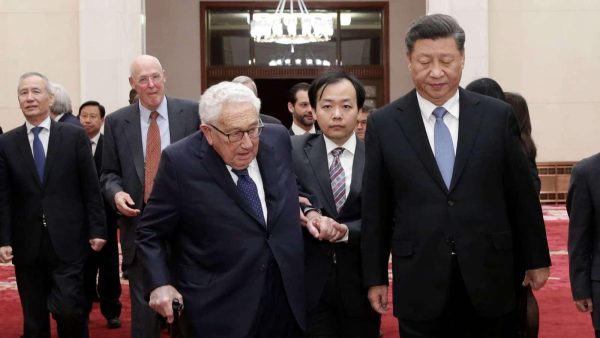
By Drago Bosnic | July 25, 2023
A bit over half a century ago, the United States under the Nixon administration sent its then-State Secretary Henry Kissinger to China in order to exploit the infamous Sino-Soviet split that nearly escalated into a full-blown war between Moscow and Beijing. The “cold war” between the two previously closely allied communist powers was a strategic gift to the US-led political West, as the belligerent thalassocracy was terrified of the prospect of facing a giant Eurasian monolith spanning from East Germany to Vietnam. The brewing ideological conflict between the post-Stalinist Soviet Union and Maoist China was heavily (ab)used by the US to somewhat soften the consequences of the humiliating defeat of America’s genocidal aggression in Indochina, where millions were killed in its indiscriminate attacks on Vietnam, Laos and Cambodia.
Henry Kissinger is often credited as the instrumental figure in engineering the Sino-American detente that gave the US much-needed geopolitical breathing room in the late 1970s and much of the 1980s after the belligerent thalassocracy pulled back to “lick its Vietnam wounds”. However, it should be noted that, despite Kissinger’s vast diplomatic experience and knowledge, the very fact that the early 1970s China was still largely isolationist, as well as in the process of recovering from the consequences of WWII and the Cultural Revolution, made his efforts significantly easier. Still, thanks to Kissinger, the Nixon administration achieved a major diplomatic win that lasted until the very end of the Cold War and was completely nullified only by the recent suicidal US foreign policy.
Back in the 1970s, it would’ve been almost entirely unimaginable that Henry Kissinger, quite literally a historical figure at this point, not only due to his Cold War-era achievements, but also his advanced age (now in triple digits), would have to engage in his “shuttle” and “triangular diplomacy” concepts once again. However, precisely this happened last week, culminating with Kissinger’s meeting with Xi Jinping himself on July 20. The Chinese President even called the centenarian “an old friend of China”. Owing to the Asian giant’s great attention to detail, particularly when it comes to diplomatic protocols, the meeting was held at the Villa 5 of the Diaoyutai State Guesthouse, the exact same place where Kissinger met the then-Chinese Premier Zhou Enlai in 1971.
Precisely that meeting was instrumental in preparing Richard Nixon’s visit to China the next year. However, that’s where the historical parallels end. Despite the reputation, influence and respect that he enjoys in China and worldwide, Kissinger went to Beijing in an unofficial capacity. Not representing the US anymore, he was largely relieved of the burden and responsibility for America’s diplomatic standing in China, a far cry from what it used to be during the (First) Cold War. The situation has changed drastically since Kissinger’s tenure, as the Asian giant is anything but a poor, underdeveloped nation with major ideological identity issues that could be exploited to further US interests. On the contrary, precisely Washington DC is the side that’s been going through major internal issues and waning global influence.
In this regard, Kissinger’s room for maneuver was extremely narrow, despite the overall cordiality of his hosts. Beijing is perfectly aware of the rabid hostility and ever-growing Sinophobia in Washington DC, as well as the fact that the belligerent thalassocracy will not change its course anytime soon. Whether it’s the lies about China’s supposed “spy balloon”, apparent doom and gloom propaganda about its alleged “strategic military advantage” or the numerous statements by the Pentagon about the “inevitable war with China“, Beijing is certainly prepared for any scenario and contingency, including the deployment of its forces in “America’s backyard”. This is despite Washington DC’s attempts to resuscitate its Monroe Doctrine, largely dormant up until the recent contraction of America’s geopolitical influence.
There’s only so much Kissinger could do given the active US threats that it will place China’s breakaway island province of Taiwan under its nuclear umbrella, a move that would be tantamount to a declaration of war. Beijing has already started to push back against not only the ongoing US aggression in the Asia-Pacific region, aided by its numerous vassals and satellite states (as well as some “Trojan horses” that have previously declared their intention of joining BRICS+), but also the openly announced involvement of NATO. Since the start of Russia’s special military operation (SMO), the belligerent alliance has repeatedly called China a “security threat” and has clearly defined it as such at its recent summit in Lithuania’s Vilnius. The US-led political West is desperate to keep its wanton “rules-based world order” on life support for as long as possible.
The consolidation and partial relegation of America’s geopolitical responsibilities to its vassals are the crucial segments of this controversial approach, and precisely China’s regional adversaries are poised to play a critical role in this regard. It’s wholly impossible for any US diplomat (former or current), even Kissinger himself, to offer any sort of detente with China while the US keeps talking, bragging even, that it will continue with its “strategic containment” policies, as well as arming not only Beijing’s neighbors, but also its breakaway province. This is without even considering the fact that two consecutive US administrations have been trying to derail China’s unparalleled economic and technological rise, a move that China only recently answered to with limited rare-earth elements restrictions. For these reasons, Kissinger’s attempts to create and then exploit another “Sino-Soviet split” are doomed to fail.
Drago Bosnic is an independent geopolitical and military analyst.
Russia has major electronic warfare advantage – Ukraine
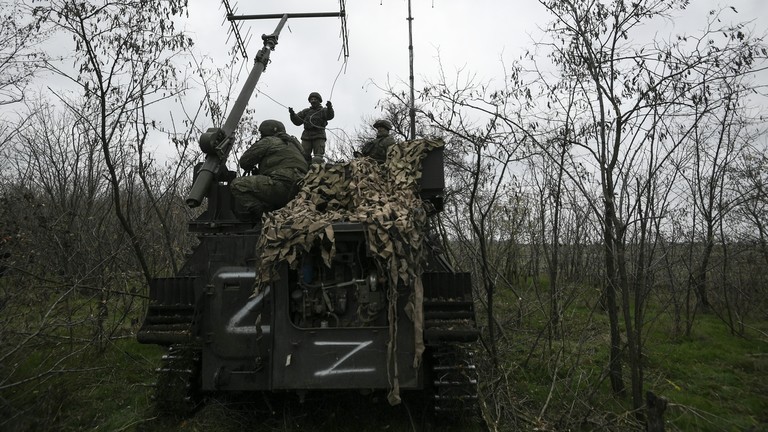
Russian troops deploy an electronic warfare system © Sputnik/Konstantin Mikhalchevsky
RT | July 25, 2023
Moscow enjoys a significant advantage over Kiev in terms of electronic warfare, Ukrainian Air Force spokesman Yury Ignat has admitted. He cited the disparity as among the reasons why Ukraine is struggling in its long-anticipated counteroffensive.
Russian forces use electronic countermeasures to disable Ukrainian drones, an approach that Kiev wishes it could also adopt, Ignat said in a TV interview on Monday.
“You don’t need to shoot down a drone with missiles or guns. You can simply force it to go down, intercept it with electronic warfare,” the official stated.
“Russia has powerful systems that interfere with the actions of our defense forces. They have plenty of those systems. Ukraine has made some progress, but we started late,” he added.
The Russian Defense Ministry regularly reports the downing of Ukrainian drones without firing a shot. A raid on Crimea on Monday involved 17 UAVs, 14 of which were disabled by jamming, according to the Russian military.
Russian electronic warfare superiority has been widely acknowledged. A study released by the Royal United Services Institute in London last November estimated that by the summer of that year, Kiev had lost 90% of the thousands of drones it possessed at the beginning of hostilities in February. Once Russian electronic warfare infrastructure was deployed, the life expectancy of Ukrainian UAVs over the battlefield dwindled to three flights for quadcopters and six flights for fixed-wing aircraft, it said.
The issue was also highlighted at the weekend by the New York Times. Ukrainian electronic warfare troops find it difficult to jam Russia’s Lancet loitering munitions because they don’t know how exactly operators communicate with them, the newspaper reported. Meanwhile, their opponents detect Ukrainian mobile phone signals, interfere with GPS geopositioning, and call artillery strikes on Starlink routers, which are essential for Ukrainian communications.
In a CNN interview this week, Ukrainian Defense Minister Aleksey Reznikov acknowledged that Kiev’s counteroffensive was lagging behind schedule, but insisted that otherwise it was proceeding as planned. Russian officials have said Ukraine has suffered tens of thousands of casualties for no tangible gains.
The New York Times Finally Told The Truth About The Failure Of Kiev’s Counteroffensive
BY ANDREW KORYBKO | JULY 24, 2023
The failure of Kiev’s NATO–backed counteroffensive is undeniable six weeks after Westerners wrongly expected that Russia would swiftly be expelled from Ukraine’s pre-2014 borders. The New York Times (NYT) finally told the truth about this in their report on Sunday about “Weary Soldiers, Unreliable Munitions: Ukraine’s Many Challenges”. None of the facts contained within it are surprising since they’re all connected to the poor state of affairs that the Washington Post (WaPo) candidly described in March.
The observations shared by that Beltway outlet one-third of a year ago were dismissed by Kiev’s supporters as either being “Russian propaganda” despite WaPo’s leading role in pushing the Russiagate conspiracy theory or a “psy-op” that was designed to deceive Russia about the counteroffensive. It’s now known from the NYT’s latest report that this was a factual representation of the situation, the conclusion of which was extended credence by two other narrative developments over the weekend.
The Wall Street Journal (WSJ) reported on Saturday that the West knew that Kiev wasn’t ready to launch its counteroffensive but still allowed it to go ahead anyhow. Zelensky then told CNN’s Fareed Zakaria the day after in an interview that “we had not enough munitions and armaments and not enough brigades properly trained in these weapons” for the counteroffensive to swiftly succeed. This backdrop set the stage for the NYT’s report, the highlights of which are as follows:
* The conflict has reached a “violent stalemate”;
* Ukrainian forces “are struggling… because of dense minefields” along the Zaporozhye front;
* They also “described a determined foe” whose morale remains high despite prior setbacks;
* “The Ukrainian military (is) facing a litany of new and enduring challenges”;
* Coordination problems between its troops persist;
* Ukraine has experienced “tens of thousands of casualties”;
* Its experienced and younger fighters have been replaced with “lesser-trained and older troops”;
* Russian forces have “become more adept” at dislodging Kiev from whatever ground it gains;
* “Ammunition is in short supply, and there is a mixture of munitions sent from different countries”;
* Old foreign-supplied munitions are “damaging [Ukraine’s] equipment and injuring soldiers”;
* Ukraine’s near-total dependence on Starlink has led to communication delays during assaults;
* “Training for more specialized skills, such as for snipers, has been sidelined in favor of trench attacks”;
* Ukraine’s lower-quality recruits, however, struggle to successfully carry out these assaults;
* Russia’s Lancet drones have been highly effective in destroying Ukrainian artillery and tanks;
* And it’s “impossible” to jam them, “at least for now”, and they’re also “hard to shoot down”.
The fifteen facts shared above leave no doubt that Kiev’s NATO-backed counteroffensive has failed exactly as President Putin once again claimed on Sunday, which in turn makes it all the more likely that peace talks will resume by year’s end as was earlier explained here and here. The NATO-Russian “race of logistics”/“war of attrition” that Stoltenberg finally acknowledged in mid-February, which is the most important variable shaping this proxy war’s trajectory, is indisputably trending in Moscow’s favor.
Kiev’s supporters can no longer tell themselves that all reports about disadvantageous developments are either “Russian propaganda” or “psy-ops” designed to deceive their opponent after the NYT’s latest report confirmed that Zelensky’s damning admission about his side’s unpreparedness is indeed true. The situation is likely much worse than both of them described it as being considering their self-interested motivation in not wanting to demoralize everyone.
Nevertheless, their disclosures on Sunday still shattered the delusions that Kiev’s most diehard supporters had clung to since none of them would dare to defy their cult’s dogma by suggesting that Zelensky hadn’t spoken the truth. The coincidental release of the NYT’s report on the same day as his damning admission made it impossible to deny the veracity of what he said due to the detailed information contained therein, which runs the chance of catalyzing a crisis of confidence in their ranks.
The coming Russian – Polish war
By Gilbert Doctorow | July 23, 2023
This evening’s News of the Week program on Russian state television opened with a 30 minute documentary survey of Polish-Russian relations from the end of WWI and during the period of the Russian Civil War, when the government under Marshall Pilsudski wrested substantial territory from Russian control. It also dealt extensively with Poland’s well documented role as aggressor and occupier of Czechoslovak, Lithuanian, Ukrainian and Belarus lands from before the start of WWII and until Hitler overran Poland.
This reportage was all built around Vladimir Putin’s speech to the RF Security Council on Friday which was partly broadcast then. Excerpts from that speech were used to introduce segments of the overall documentary.
Let us recall that on Friday, Putin explained how and why we may expect the formal entry into the war of a Polish-Lithuanian-Ukrainian joint military force that will officially be presented as defending Ukrainian statehood by occupying the Western Ukraine. However, Putin described this as an occupying force which once installed in Lvov and Western Ukraine would never leave. This would in effect be a repeat of the sell-out of Ukrainian interests to Poles and cession of territory to Poland such as had been perpetrated by their leader Semyon Petlyura in April 1920 and has now been repeated in the secret agreements between presidents Zelensky of Ukraine and Duda of Poland.
However, that was not the only pending Polish aggression announced by Vladimir Putin on Friday. He said that Poland also had designs on Belarus land. The documentary this evening fleshed out that remark and reminded us of what Belarus territory Poland had grabbed by force in the 20th century when it had the opportunity. It also pointed a finger at those Belarus fighters abroad who will be used by Poland to spearhead their move against Minsk from Polish territory, and what armaments they are receiving from the United States and NATO member countries.
With respect to Polish designs on Ukraine, Putin did not tip his hand on what Russia’s response may be. But as regards Belarus, he stated directly on Friday that any act of aggression against Belarus will be considered an attack on Russia and Russia will respond with all the military force at its disposal. He warned Warsaw to consider the consequences of their actions.
Putin’s speech on Friday appeared to be directed at Warsaw. The program this evening was clearly directed at the broad Russian public, to prepare them for the onset of a possible Russian-Polish war in the immediate future.
This point was highlighted by the ongoing visit of Belarus president Lukashenko to Petersburg. There has been pomp and ceremony in this visit. Both presidents today visited Kronstadt, touring its principal church, which is the spiritual home of the Russian Navy. They also visited the about to be opened new museum of the Russian Navy, and its featured exhibit, which is Russia’s first nuclear submarine, the country’s answer to the American Nautilus at the time. And they held talks on the military and political threats their countries face. These talks unexpectedly will continue in the Konstantinovsky Palace outside Petersburg tomorrow. The reason for extensive consultations was clear from remarks that Lukashenko made to the press during his meeting with Putin: namely that Belarus military intelligence has been following very closely the massive build-up of Polish forces including tanks, helicopters and other heavy military equipment close to the Belarus border at several locations.
Tonight’s News of the Week program explained to the Russian public that the Poles’ new aggressive plans are proceeding only because of their confidence that Uncle Sam supports them. And they named the person embodying this link as former Foreign Minister of Poland Radoslaw Sikorsky (2014-15), who is today a Member of the European Parliament and delegate responsible for relations with the United States. A photo of Sikorski’s latest meetings with Pentagon officials and with Joe Biden and his advisers was put on the screen. For those who may wonder about Sikorsky’s political views, it pays to remember that he is the husband of neo-con, Russia-hating journalist Anne Applebaum, who is very well known to American audiences for her regular columns in The Washington Post.
From Russian talk shows of the past several days, it is easy to understand the Kremlin’s reading of the present proxy war in and around Ukraine: Washington sees that the Ukrainian counter-offensive is a complete failure that has cost tens of thousands of lives among the Ukrainian armed forces and has seen the destruction of a large part of the Western equipment delivered to Ukraine over the past months. Instead of suing for peace, Washington seeks to open a ‘second front,’ using Poland for this purpose.
One possible Russian response to any move against Belarus has also been discussed on air: to seize the Suwalki corridor that connects Kaliningrad to Belarus across Polish territory. Taking control of that corridor would have the effect of isolating the Baltic States from Poland and thereby put their security at peril.
The inescapable conclusion from the latest news is that Washington’s incendiary policies and continuing escalation of the conflict cannot secure Russia’s defeat. On the contrary, they may well lead to the total collapse of the NATO alliance once its military value is disproven in a way that cannot be talked away or papered over by the most creative propagandists in DC.
©Gilbert Doctorow, 2023
Russia’s Surgical Strike On The Moldovan-Romanian-Ukrainian Tri-Border Sent Several Messages
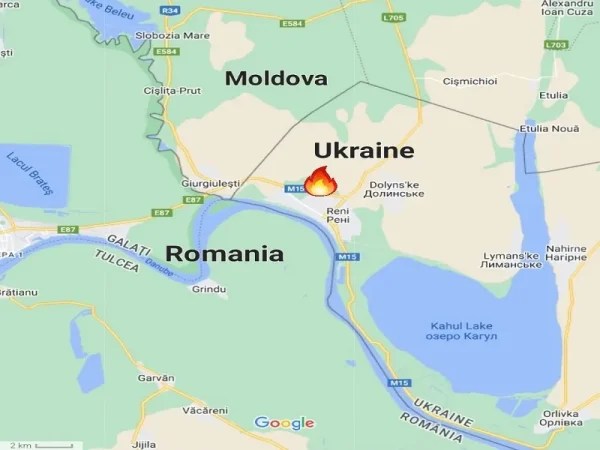
BY ANDREW KORYBKO | JULY 24, 2023
Russia carried out a surgical strike early Monday morning against targets in the town of Reni on the Ukrainian side of the Danube River near the tri-border with Moldova and Romania. This video alleges to show one of the explosions at its port while this image purports to be of a grain warehouse that was supposedly destroyed in the aftermath. It can’t be ruled out that military and/or terrorist assets were hidden there, however, since Russia insists that it doesn’t strike purely civilian infrastructure.
In any case, Monday morning’s surgical strike was very important since it sent several messages that Russia’s opponents would do well to heed. For starters, Reni is located on the other side of the Danube from NATO-member Romania, which demonstrated that Russia will hit targets anywhere in Ukraine and can do so with maximum precision. Those military and/or terrorist assets based on the literal border of that bloc but just outside of Article 5’s jurisdiction can no longer take their security for granted.
The second message is that Russia is serious about cracking down on those threats to its security that were previously untouchable due to Kiev exploiting the grain deal to protect some of its aforesaid assets. Russia remained committed to that agreement in spite of that since it sincerely expected that the West would eventually remove those sanctions that impeded its agricultural exports. Since that didn’t happen and Russia therefore declined to extend the deal, Kiev’s selfsame assets are now fair game.
Third, carrying out a surgical strike on Reni proved that Russia had actionable intelligence regarding the Danube’s role in Kiev’s military logistical network, which many observers have suspected for a while. Related targets were previously untouchable for the abovementioned reason, but that’s no longer the case now that the grain deal expired. Accordingly, it can be expected that this won’t be the last surgical strike on the Danube, though it of course can’t be known when the next ones will occur.
The fourth message is that Russia now knows that NATO won’t extend its air defense umbrella over any part of Ukraine after no effort was made to stop its surgical strike in Reni on the Romanian border. The bloc either didn’t see the missiles approaching their air defense zone or detected them but declined to attempt an interception in order for Russia not to think they’re ready to get directly involved in this proxy war. Either way, NATO looks weak and Russia thus feels emboldened to continue striking near its borders.
And finally, this successful strike signifies that no part of Kiev’s military logistical network is safe, which could lead to Moscow’s edge in the NATO-Russian “race of logistics”/“war of attrition” growing even larger if it keeps up the tempo of these attacks against its opponent’s previously untouchable assets. In that event, peace talks might resume earlier than many expect if this accelerates the erosion of Ukraine’s military capabilities and thus forces its patrons to move up their timeline for freezing the conflict.
With these five messages in mind, there’s no doubt that Russia’s surgical strike against military and/or terrorist assets on the Moldovan-Romanian-Ukrainian tri-border is much more important than it might appear at first glance. Not only did Russia hit closer to NATO than ever, but that bloc didn’t even try to stop it, thus suggesting that they’re reluctant to get dragged even deeper into this proxy war. If Poland doesn’t unilaterally intervene by summer’s end, then peace talks might recommence shortly after.
Kiev regime kills Russian journalist with illegal US-supplied weapons

By Lucas Leiroz | July 24, 2023
Cluster munitions have already begun to generate civilian casualties in the Ukrainian conflict. Russian journalists were attacked with illegal US-supplied weapons, resulting in the injury of three people and the death of RIA Novosti’s war correspondent Rostislav Zhuravlev. Once again, the Kiev regime shows its terrorist nature, also having NATO’s co-participation in the crimes, as the alliance is responsible for supplying the weapons used in the murder of Russian civilians.
The attack took place in the Zaporozhye region. A civilian vehicle with journalists inside was hit by cluster bombs, injuring all the reporters, and killing Zhuravlev. According to information given by spokespersons for the “Rossiya Segodnya” group, the media crew was near the village of Pyatikhatki when it came under fire from Ukrainian forces. It is believed that they were in that area precisely to report the use of cluster munitions in some nearby residential zones.
Considering that it was not a military convoy, but just a civilian vehicle with journalists, the attack was illegal, contrary to basic rules of international humanitarian law. For this reason, Russian authorities have already commented on the case, classifying it as terrorism. It is well known that Ukrainian soldiers deliberately target and kill Russian media professionals, both on the ground war correspondents and commentators outside the combat zone – as previously seen in the cases of Daria Dugina and Vladlen Tatarsky. In this sense, Zhuravlev’s murder represents a continuation of the Ukrainian regime’s terrorist and anti-humanitarian practice of attacking the Russian press.
On social media, pro-Ukrainian militants reacted to the case by supporting the attack and “justifying” it with the allegation that Zhuravlev was a “military” or even a “war criminal”. To support this narrative, Ukrainian neo-Nazi activists spread photos of the journalist holding weapons and wearing military uniforms in the conflict zone. However, they omitted the fact that these photos are not recent.
Before becoming a war correspondent, Zhuravlev actually fought on the battlefield, having joined the Donbass militias in 2014, in the early months of the conflict. After completing his voluntary military service, Zhuravlev became an ordinary civilian journalist. He worked on the battlefield as a mere employee of Russian media agencies, not as a soldier, which makes the Ukrainian attack absolutely illegal.
Furthermore, it must be remembered that the attack was against a civilian car, with other media professionals inside. These other reporters, unlike Zhuravlev, did not have any military background. So, the tale spread by propagandists is not only false but also baseless, being easily refuted with a simple analysis of the case.
However, the most important point of this topic is the use of cluster munitions. As predicted by several experts, journalists and Russian officials, Kiev’s forces are actually using these weapons to kill civilians, deliberately targeting people that have no military involvement. There was a strong pressure for the US not to approve the delivery of these bombs to Kiev as their use could affect civilians as a side effect. However, what is happening now is even more serious. These weapons are not accidentally killing civilians, but are being purposefully used by the regime’s forces to target non-military Russian citizens.
Furthermore, Russia sees the US as co-responsible for the crime. Since the US is the supplier of the weapons with which Kiev murders Russian civilians, then Washington is to blame for the attacks as well as the neo-Nazi regime. The Russian understanding on the subject should be shared by the entire international society, especially by organizations that defend international law and human rights. But unfortunately, biased opinions in favor of the West continue to be imposed on states and organizations, making it impossible to sanction countries that sponsor the war.
So, in the absence of diplomatic and legal alternatives to prevent the West from continuing to supply weapons that are used to kill civilians, Russia can only try to resolve the situation through military means. In this sense, severe responses from Moscow are expected in the near future, possibly intensifying attacks on Ukrainian command centers and weapons depots where cluster munitions are being stored.
Although Russian forces have repeatedly withheld retaliation to avoid escalating the conflict, the latest moves show that Moscow is no longer willing to tolerate violations of redlines. The cruise missile attacks on the ports of Odessa in response to the killing of civilians in Crimea made it clear that Moscow is ready to retaliate for crimes committed against its citizens.
Lucas Leiroz, journalist, researcher at the Center for Geostrategic Studies, geopolitical consultant.
Russia does not target civilian buildings – Kremlin
RT | July 24, 2023
Kremlin spokesman Dmitry Peskov has reiterated Russian denials that one of its missiles was responsible for the damage done to the Transfiguration Cathedral in Odessa over the weekend. The claims coming from Kiev are “absolutely not true”, he told journalists on Monday.
“Our armed forces never conduct strikes on objects of social infrastructure, even less so on temples, churches and similar objects,” he assured. The Russian Defense Ministry previously said a Ukrainian interceptor missile was likely to blame, an assertion that Peskov endorsed.
The cathedral was heavily damaged on Sunday morning amid a Russian missile attack on targets in several Ukrainian Black Sea ports. Ukrainian President Vladimir Zelensky said later in the day that a Russian Kh-22 anti-ship missile had struck the church’s altar.
The Ukrainian leader alleged that Moscow was targeting “the people and the foundations of our pan-European culture” and pledged that the church would be rebuilt, with Italy potentially footing the bill.
The Russian Defense Ministry denied the Ukrainian charge, suggesting later on Sunday that the incompetence of the country’s air defense forces was the most probable cause of the damage.
Russia targets only military locations and takes care to select only those far from civilians and sites of cultural value, it said. Meanwhile Ukrainian military leaders “place air defense assets in residential areas on purpose.”
The practice was acknowledged earlier this month by a spokesman for the Ukrainian military, who claimed that it was necessary because the country doesn’t have enough longer-range air defense systems.
Kiev has previously accused Russia of damage done by its own troops. The most notable case happened last November, when Zelensky accused Moscow of killing two Polish farmers in a border region and urged NATO to retaliate. Warsaw swiftly acknowledged that the projectile was likely fired by the Ukrainian side.
Last week, Russia started a series of attacks on targets in Ukrainian ports, which the military described as retaliation for Kiev’s drone strike on the Crimean Bridge last Monday. The Sunday barrage was aimed at sites where “the Kiev regime and foreign specialists planned terrorist attacks against Russia,” the Defense Ministry said.
The Transfiguration Cathedral in Odessa was founded in 1794 and was one of the primary Christian places of worship in Imperial Russia. The Soviet government blew it up in 1936, after declaring that it had no historic value. The building was restored over a decade starting 1999 and re-concentrated in 2010.
Ukraine is ammunition-starved, and the West simply cannot keep up with its pledges
By Uriel Araujo | July 24, 2023
While Western discussions have focused on sending sophisticated weapons to Kiev, Hal Brands, a Henry Kissinger Distinguished Professor at Johns Hopkins University School of Advanced International Studies, argues that what Ukraine needs the most, besides air-defense systems, is artillery ammunition. He describes the current conflict as an artillery-centric one: “if Kiev can’t find enough artillery pieces and ammunition, especially 155mm shells, it will be at a dire firepower deficit along the conflict’s front lines.”
Already on March 29, Earle Mack, former US ambassador to Finland, writing in a piece for The Hill, described the current confrontation as proxy attrition warfare, that is one which seeks military victory by wearing down the enemy. He worried that Ukraine seemed bound to tire out first. Things have not gotten much better for Kiev, so far.
A July 23 New York Times story, by former Marine infantryman Thomas Gibbons-Neff, based on “dozens of visits to the front line” quotes a Ukrainian commander: “we’re trading our people for their people and they have more people and equipment.” According to the story, “Ukraine has made marginal progress in its ability to coordinate directly between its troops closest to Russian forces on the so-called zero line and those assaulting forward.” Moreover, the country’s artillery is in short supply, and “a mixture of munitions sent from different countries” is employed. The thing is that accuracy varies greatly between them and the Ukrainians need to use more ammunition. In addition, according to the same news report, “some of the older shells and rockets sent from abroad are damaging their equipment and injuring soldiers.”
Rather than using the complex military communication equipment, Ukraine’s troops employ “less sophisticated, but easier-to-use programs like smartphone messaging apps, private internet chat rooms.” Most of this system is dependent on Starlink satellite internet, and therefore it takes longer to communicate important military information when the units are assaulting and a Wi-Fi router is absent. In this case, unbelievably, “attacking troops have to reach someone with an internet connection to call for support.”
Regarding ammo, the problem is that US authorities themselves estimate that Moscow is capable of producing “1 million rounds of 152mm artillery ammunition per year.” The US, in contrast, produces merely a seventh of that, according to Hal Brands.
Right now, the US itself needs to purchase conventional artillery ammunition from its South Korean ally. In what Brands describes as a “desperate global scavenger hunt for munitions”, Washington has also been seeking ammo from Japan, as well as “repositioning rounds stored in Israel to Ukraine.”
Europe’s stockpiles are in no better shape. According to the International Institute of Strategic Studies, NATO European states armed forces are “hollowed out, plagued by unserviceable equipment and severely depleted ammunition stocks.” Bloomberg’s journalist and military historian Max Hastings writes that, over a year ago, Berlin had committed itself to €100 billion to rebuild its worn out forces. So far, however, only an estimated 1% of that has been spent. The German National Security Strategy, last month, stressed the weakness of Germany’s economy. According to Hastings, the “political will” to strengthen their armed forces is “absent” not only in Germany, but also in other European countries.
As I wrote before, the problem for Europe goes way beyond depleted weapons stockpiles: for it to rearm itself, re-industrialization is badly needed, something which, quite ironically, Washington itself has consistently opposed via its subsidy war against the European bloc. In addition, Europe, with its heavily diffused and fragmented defense, lacks a European Union common defense market and a legal and bureaucratic framework, as Sophia Besch (a Carnegie Endowment for International Peace fellow), and Max Bergmann (former member of the US Policy Planning Staff and Director of the Eurasia Program at the Center for Strategic and International Studies) write.
Britain’s industry today faces many difficulties, and the same thing happens with other European nations – manufacturers badly need funding expansion and governments are increasingly growing “tired” of the conflict’s costs.
As for the US, lecturer in History at Yale Michael Brenes argues that America’s own “war machine” is “broken”, with privatizations and several problems. He paints a picture of “shortages in production”, and “interruptions in supply chains”, all of which have compromised Washington’s ability to “deliver weapons to Ukraine.”
To sum it up, the current state of affairs, with a Western deindustrializations crisis, makes it very difficult for the political West to pursue its proxy attrition war. It simply cannot produce all the weapons it is pledging Ukraine. For the West, in fact, it is already a challenge to provide Kiev with enough ammunition.
Major fossil fuel producers cause rift among G20
RT | July 23, 2023
Saudi Arabia and Russia have prevented a consensus from emerging among the Group of 20 major economies on a road map to phase down the share of fossil fuels in the global energy mix, Reuters has reported.
The G20 energy transition ministers held a four-day summit that ended on Saturday in the Indian state of Goa where they discussed ways to achieve global net-zero greenhouse gas emissions.
The summit ended without a consensus because major fossil fuel producers, including Saudi Arabia and Russia, opposed a proposal to triple G20 countries’ renewable energy capacity by 2030, Reuters reported, citing its sources.
China, the world’s largest consumer of energy, as well as coal exporters South Africa and Indonesia, also opposed the plan, the agency added. India, the world’s most populous country and which currently generates 75% of its total power from coal, reportedly took a neutral stance on the issue.
As a result of the disagreements, the ministers issued an outcome statement and a chair summary instead of a joint communique. A joint communique is issued when complete agreement among members on all issues is achieved.
According to the statement, “different national circumstances” drove “some members” to support a phase-down of unabated fossil fuels, while “others had different views” and suggested that “abatement and removal technologies” would address environmental concerns associated with the use of fossil fuels.
“Fossil fuels currently continue to play a significant role in the global energy mix, eradication of energy poverty, and in meeting the growing energy demand,” reads the statement.
The document mentioned a number of technologies for countries to use “as per national priorities,” such as carbon capture, usage and storage (CCUS), a technology that can capture and make effective use of the high concentrations of CO₂ emitted by industrial activities.
The G20 comprises 19 nations and the European Union. The group’s aim is to address major issues related to the global economy, such as international financial stability and climate change. Together, the G20 member countries account for over three-quarters of both gross domestic product and global emissions.
Discarding Illusions, Ending Wars
By Colonel (ret.) Douglas Macgregor, US Army | The Kennedy Beacon | July 20, 2023
From the moment the war in Ukraine started, Western reporting on the war was a radical repudiation of the truth. Washington and its NATO allies always knew that NATO expansion to Russia’s borders would precipitate an armed conflict with Moscow, but NATO’s ruling globalist class did not care. For them, Russia in 2022 was unchanged from the weak and incapable Russia of the late 1990s. The risk of failure seemed low. Ergo, Russia could be bullied into submission.
Americans and most Europeans did not bother to question or analyze. Widespread strategic ignorance about Russia and Eastern Europe ensured that most Americans and even West Europeans would react quickly and viscerally to the Western media’s distorted images and lies about Russia. At the same time, tolerance for criticism of Washington’s role in fashioning the corrupt and deceitful conduct of the Volodymyr Zelenskyy Regime and its war was disallowed in the press.
Washington’s ruling class was cheered when it dismissed Russian proposals for talks on any grounds that did not recognize NATO’s right to transform Ukraine into a base for U.S. and Allied Military Power aimed at Russia. Ukrainian flags sprouted from the lush grounds of America’s wealthier neighborhoods like flowers in an arboretum and wonders in the form of limitless military assistance, miracle weapons, and cash were promised to President Zelenskyy––promises that strategic reality did not justify.
In 2022 the Biden Administration no longer possessed the military and economic strength to wage high-end conventional warfare that it had in 1991. Waging a major war 10,000 miles from home on the Eurasian continent is impossible without the support of truly powerful Allies on the model of the British Empire during WWII. Washington’s NATO allies are military dependencies, not formidable strategic partners.
Whereas Russian Military Power is still structured for decisive operations launched from Russian soil, U.S. Military power is geared to project limited air, naval, and land power thousands of miles from home to the periphery of Asia and Africa. American military power consists of boutique forces designed for safari in Africa and the Middle East, not decisive combat operations against great continental powers like Russia or China.
Eighteen months later Ukraine is in ruins. Its latest counteroffensive achieved nothing. In the last three weeks, an estimated 26,000 Ukrainian soldiers died in pointless attacks against world-class Russian defenses ‘in depth.’ (Defenses ‘in depth’ mean a security zone of 15 -25 kilometers in front of the main defense, that consists of at least three defense belts twenty or more kilometers deep.)
By comparison, Russian losses were minimal.
Today, more than 100,000 Russian troops are conducting offensive operations along the Lyman-Kupiansk axis. These forces include 900 tanks, 555 artillery systems and 370 multiple rocket launchers. It does not take much imagination to anticipate the breakthrough of these forces to the North where they can encircle Kharkiv.
Once Russian Forces surround the city, they will become an irresistible magnet for Ukraine’s last reserve of 30-40,000 troops. Ukrainian Forces attacking to the East to break through to Kharkov will present the combination of Russian space and terrestrial-based ISR (intelligence, surveillance, reconnaissance) assets and Precision Strike Aerospace, Artillery, Rocket, and Missile Systems with a target array that only a blind man could miss.
None of these developments should surprise anyone in the West. Building a Ukrainian army on the fly with a hotchpotch of hastily assembled equipment from a multitude of NATO members and an officer corps of many courageous, but inexperienced officers had little chance of success even under the best of circumstances.
Wars are decided in the decades before they begin. In war, the sudden appearance of “Silver Bullet” technology seldom provides more than a temporary advantage and strong personalities in the senior ranks do not compensate for inadequate military organization, training, thinking, and effective equipment. A new, leaked memorandum from sources inside Ukraine illustrates these points:
“Units of the Ukrainian Armed Forces are at such terrible states of degradation that soldiers are abandoning their posts, and whilst not mentioned in these documents, a flood of videos have been published from Russian sources claiming Ukrainian service personnel are surrendering at the first opportunity owing to the belief that they are being treated as ‘nothing more than cannon fodder.’”
Events on the ground are beginning to overtake the carefully orchestrated charade in Kiev. There is little that pontificating retired generals and armchair military analysts can do to halt the inevitable. Moscow understands that the war will not end without Russian offensive action. Whatever Washington’s original goals may have been, they are unrealizable. Russian Forces will soon fall on the Ukrainian forces with the momentum and the impact of an avalanche.
In view of these points, before all of Ukraine’s manpower is annihilated, or a “Coalition of the Willing” from Poland and Lithuania marches into Western Ukraine, Washington can arrest Ukraine’s downward spiral into total defeat, and Washington’s own irresponsible drift into a regional war with Russia for which Washington and its allies are not prepared.
Cooler heads can prevail inside the beltway. The fighting can stop, but a ceasefire, and the diplomatic talks that must proceed from a ceasefire, will not occur unless Washington and its Allies acknowledge three critical points:
First, whatever form the Ukrainian State assumes in the aftermath of the conflict, Ukraine must be neutral and non-aligned. NATO membership is out of the question. A neutral Ukraine on the Austrian model can still provide a buffer between Russia and its Western Neighbors.
Second, Washington and its Allies must immediately suspend all military aid to Ukraine. Doubling down on failure by introducing more equipment and technology the Ukrainian Forces cannot quickly absorb and employ is wasteful and self-defeating.
Third, all U.S. and allied personnel, clandestine or in uniform, must withdraw from Ukraine. Insisting on some form of NATO presence as a face-saving measure is pointless. The attempt to extend NATO’s “new globalist world order” to Russia has failed.
The point is straightforward. It is time for Washington to turn its attention inward and address the decades of American societal, economic, and military decay that ensued after 1991. It’s time to reverse the decline in American national prosperity, and power; to avoid unnecessary overseas conflict;and to shun future interventions in the affairs of other nation states and their societies. The threats to our Republic are here, at home, not in the Eastern Hemisphere.
Featured Video

EUROPE FEARS RUSSIA’S NEXT MOVE / Ian Proud
or go to
Aletho News Archives – Video-Images
New Book
New Book: No Autoimmunity The Body Doesn’t Attack Itself
Lies are Unbekoming | September 24, 2026
 The label for Humira, once the best-selling drug in the world, lists its risks in plain print. One of them, in the label’s own words, is new “autoimmune” disease.
A drug prescribed for a condition labelled autoimmune carries a warning that it can cause a condition labelled autoimmune. That contradiction sits in every box, on a folded paper almost nobody reads.
My new book starts there.
No Autoimmunity: The Body Doesn’t Attack Itself
For seventy years, “your body is attacking itself, and we don’t know why” has ended the conversation for people diagnosed with multiple sclerosis, lupus, rheumatoid arthritis, Hashimoto’s, Type 1 diabetes, Crohn’s and psoriasis. More than eighty conditions now carry the autoimmune label. The diagnosis comes with a prescription for life. It almost never comes with a question about cause.
This book asks the question and answers it from the framework’s own records: its drug labels, its journals, its regulatory filings, and its own experiments. … continue
Blog Roll
 Aletho News
- Debunked: Trump’s egregious UNGA claims on war against Iran crumble under scrutiny
- Europe was part of the infrastructure of US aggression against Iran: Deputy FM
- New evidence on the Bucha Massacre
- Italy and France debunk reports CIA issued ‘Russian drone threat’ warning
- How Russia is Rewiring the Global South
- Britain’s elites want you ready to die for a war they keep imagining
- Inside Ukraine’s propaganda operation targeting Americans
- Hackers From US, France, Singapore Tried to Disrupt Russian Elections – Internet Provider
- New Book: No Autoimmunity The Body Doesn’t Attack Itself
- EUROPE FEARS RUSSIA’S NEXT MOVE / Ian Proud
- If Americans Knew
- Gaza winter nears as 162,000 tents become unusable, raising fears of humanitarian crisis
- Netanyahu says, “It’s the opposite of genocide”; UN says Gaza economy is world’s ‘most severe crisis on record’ – Daily Update
- Israel’s US-Backed Assault on Gaza Has Created the ‘World’s Most Severe Economic Crisis on Record’: UN
- ‘Protecting U.S. Citizens’… From Israel
- ‘This is where I live now, the back of a truck’: a day in the life of a grandmother in Gaza
- In UN Speech, Iran’s President Displays Pictures of Children Killed by US, Brings Attention to Israel’s Nuclear Arsenal
- Israel displaces hundreds of Palestinians amid wave of demolitions in West Bank
- Aid, reconstruction, and Israel’s history of obstruction in Gaza
- Trump administration digs an ever-deeper hole of complicity in genocide – Daily Update
- US-Israel $2.8 Billion Arms Deal, 40,000-Bomb Supply Faces New Gaza Complicity Accusations
- No Tricks Zone
- New Study: Earth And Venus Surface Warmth Largely Explained By Convection And Lapse Rate, Not CO2 Or Radiation
- 2025 Nature Paper Claiming Worsening Global Drought Gets RETRACTED …Heavily Flawed
- New Study: ‘Global Drought Shows No Detectable Recent Acceleration Under Climate Warming’
- Economic Masterminds: German Socialists Suggest Taxing Productivity Gains Stemming From Using AI
- The South China Sea Has Not Been Cooperating With The Climate Change Narrative
- Energy Crisis: Germany Enters Heating Season With Historically Low Gas Reserve Fill Levels
- New Study: The Antarctic Ice Sheet Gained Mass From 2020-2024 Due To Staggering Snow And Ice Accumulation
- Study: Ocean Heating Rates From Thousands Of Years Ago ‘Dwarf’ Modern Ocean Heating Rates
- Climate Extremists Target, Attack Large-Scale Power Grid Infrastructure In Germany!
- New Study: Antarctic Ice Melt Has Contributed Less Than 1 Centimeter To Sea Level Rise In The Last 30 Years

