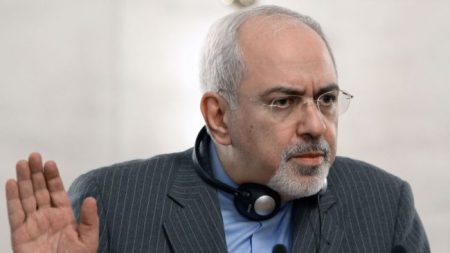
Kremlin spokesman Dmitry Peskov said that claims that Russian state media outlets were allegedly advised to decrease coverage related to US President Donald Trump are “fake news.”
Earlier, Bloomberg claimed citing sources that Russian state media outlets have allegedly received an order from the Kremlin to “cut way back on their fawning coverage of President Donald Trump, reflecting a growing concern among senior Russian officials that the new U.S. administration will be less friendly than first thought.”
“This is utter nonsence. Due to the fact that both [Russian] channels and other media outlets are absolutely free to determine their editorial policy, and such statements, this claim is yet another example of fake news,” Peskov said answering a question whether or not there any instructions from the presidential administration concerning state TV channels’ change of coverage of information about Donald Trump and the US.
When asked to clarify why a few days ago Russian television channels have started to decrease coverage of Trump’s actions as the new US president, the Kremlin spokesman said that “sincerely speaking, we do not follow the proportions of coverage related to events.”
“Moreover, all sources of information, whether it be television channels — both public and private cable networks and foreign ones — and the Internet, radio, newspapers etc., everything is absolutely available [in Russia], so in this case… there’s an extensive range of options.”
February 17, 2017
Posted by aletho |
Deception, Fake News, Mainstream Media, Warmongering | Russia, United States |
Leave a comment
After reading my Asia Times column yesterday, World community sizes up a diminished Trump, a well-meaning warm-hearted friend, an American from New York, wrote to me to explain gently that what we are witnessing in the United States is a mere “tantrum” by a clutch of spooks whose jobs are under threat and their hangers-on in the intelligence services, along with the liberal press having a “parallel tantrum” who cannot believe that they lost the election to Donald Trump. I was in two minds after reading the mail. Should I have called it a “civil war”, after all?
That is, until this morning when I read the transcript of the extraordinary 75-minute press conference in the White House late Thursday night. The press conference was originally called by Trump to announce his new pick for Labour Secretary, but in no time degenerated into a verbal brawl between the President of the United States of America and the White House press corps with former NSA Michael Flynn and Russia ties at the epicenter. It was all so surreal, to say the least.
Not even in the darkest hour of the Vietnam War or in the shameful hours of the Watergate cover-up or the sly escapades of Bill Clinton in the Oval Office would the White House have witnessed anything like this. Perhaps, this becomes an unprecedented event in American political history – the US president openly trading insults with the journalists who cover his presidency in real time.
The good thing for us who are non-Americans, in this extraordinary free-for-all with tooth and claw is that we learn so much about the American political system, how it works, what dissimulation and falsehood it spreads abroad while staking claim to the hogwash of “values”.
Trump tore into the so-called “Deep State” in America and the unscrupulous media, which is serving as its stand-in. He denounced loudly and repeatedly the “illegal leaks” by sources within the military-intelligence apparatus within the establishment to defame his presidency. Funnily, when Trump denounced the media as the mouthpieces of the intelligence agencies – even nailing the flag carriers such as New York Times and Wall Street Journal – there was no dissenting voice, no protest. In fact, the journalists seemed to accept it as a statement of fact. They didn’t show the spunk to refute the accusation even for purposes of record. So much for the Fourth Estate in America and the freedom of the press!
In the process, Trump also blurted out certain remarks on issues of war and peace, which make highly combustible stuff and will make many world chancelleries sit up and worry. They are indeed extremely worrisome.
Referring to a Russian warship apparently on a surveillance mission off the US west coast – something which the US and NATO routinely and incessantly do to Russia – Trump says, “The greatest thing I could do is shoot that ship that’s 30 miles off shore right out of the water. Everyone in this country’s going to say ‘oh, it’s so great’… If I was just brutal on Russia right now, just brutal, people would say, you would say, ‘Oh, isn’t that wonderful’.”
Then, Trump went on to explain the implications: “We’re a very powerful nuclear country and so are they. I have been briefed. And I can tell you one thing about a briefing that we’re allowed to say because anybody that ever read the most basic book can say it, a nuclear holocaust would be like no other.”
One shudders at the very thought of it – that a potential nuclear war between the US Russia has been the stuff of a briefing taken by Trump.
Like puss oozing out of a tumor that is fast becoming terminal, the US political system is throwing into the open the cumulative eddies of decades of its interventionist policies – with the military-industrial complex and the intelligence agencies that fattened up on the countless wars and horrific destruction in foreign lands refusing to give up their privileges and make way for an upstart president who walked in from nowhere who, they think, has no business to be running the White House, and on top of it, has the impudence to say that he intends to “drain the swamp”. (A columnist wrote a couple of days ago, Yes, Trump can drain the swamp but he must do THIS first or get eaten by the alligators.)
Look at the extent to which the military-industrial complex and the intelligence establishment in Washington goes to thwart any attempt by Trump to improve US-Russia relations. It’s a sickening scenario that without wars and bloodshed America cannot have a future — that the prospect of detente, peace and co-existence becomes so abhorrent a proposition for the Deep State as to stage an insurrection against the elected head of state.
No, this is more than about swamps. What we see here is nothing else than metastatic cancer. The cancer cells in America’s body polity have broken away to enter the bloodstream and the lymph system. Doctors call it “stage 4” cancer.
The full transcript of Trump’s press conference is here.
February 17, 2017
Posted by aletho |
Deception, Militarism, Timeless or most popular | CIA, Donald Trump, Russia, United States |
Leave a comment
Did Trump blink in the face of a soft coup against an elected American government?
By John Chuckman | Aletho News | February 15, 2017
On first hearing, the resignation of Michael Flynn seemed less consequential than it did after a little reflection. After all, appointed officials do get let go, and Donald Trump made a popular name for himself as someone who doesn’t hesitate to dismiss staff who are not up to expectations.
The plausible reason offered – Flynn’s having not told the truth about what was said at his meeting with the Russian Ambassador to the Vice President – is just that, plausible, but only barely. It is almost certainly a “face-saver” explanation used to cover something of greater consequence.
At such levels in international affairs, “backchannel” communications are, if not everyday occurrences, employed now and again in highly delicate matters. We know John Kennedy employed exactly this method with Nikita Khrushchev, using a Soviet Ambassador, and he started moving towards doing the same with Castro. Most instances of such activity never reach our attention, of course.
Kennedy was involved in seeking peace during the Cold War, and today many have great hope Trump seeks the same around the Neocon Wars and Obama’s attempts to provoke and threaten Russia. Some of Trump’s words have offered encouraging signals. Michael Flynn was clearly working towards peace, and he had Trump’s confidence, but America’s power establishment is larded with many powerful and unaccountable people who share exactly the opposite purpose. What those who wish for peace regard as hopeful, these others regard as threatening.
“Backchannel” simply means that none of the ordinary paths of communication are used and that few, other than direct participants, are privy to it. It is an important tool at times. There is nothing illegal or insidious or treacherous about it, but it is of its nature highly confidential.
In some corporate press write-ups, today, we actually have irresponsible claims along those lines. Among other contemptible statements published today was this in Britain’s Independent : “Veteran anchor Dan Rather Broadcast journalist describes Russia scandal as ‘around a 5 or 6 on a 10-point scale of Armageddon for our form of government’, but says it is getting worse by the hour.”
My comment to that ridiculous statement was to remind readers of Rather’s record as a journalist, including first and foremost, his infamous description of the Zapruder film offered shortly after Kennedy’s death to reassure Americans about what had happened in Dallas.
If you’ve never seen Rather’s performance, here it is.
And here is the film he pretended to describe at a time years before anyone was permitted to see it.
I also reminded readers that Rather’s career with CBS ended over a story about George Bush, a story whose supporting materials he had failed adequately to scrutinize. He, essentially, was fired by the network. He certainly is a distinguished authority to quote in the current situation. Here is an outstanding example of a journalist the CIA has had in its pocket for decades.
Backchannel communication certainly was all that Michael Flynn was doing. But some insider, likely in the CIA – elements of which have already made more than one attempt to discredit Trump with stuff like evidence-free charges about Russian hacking and a paid-for, contrived Russian dossier, stuff which was rated as trash by the general public – got wind of Flynn’s effort and leaked it to one of his grateful journalist-contacts in a compliant corporate press.
There is a genuine question of treason here with security service people who decide to leak such ultra-secret material to a press which happily regurgitates the CIA view of events abroad daily. Does anyone want secret agencies determining who serves in government and what direction policy should go? This was a serious piece of dirty work which may well deserve the label treason. It is now being fully exploited by the very corporate press which has always hated Trump as well as by the hawks of both parties who gave us the Neocon Wars and Cold War Two.
Trump represents a threat against some of their favorite dirty projects, including the dangerous, non-stop assault on Russia, the engineered coup in Ukraine, and the deliberately-induced horrors of Syria employing hired terrorists.
We all lose if they win. Of course, by “all” I don’t include the corporate press so ably represented by Dan Rather and The Washington Post and The New York Times.
The American press establishment has been in bed with the security services for a long time. Much of what we read in the American as well as British press on subjects such as foreign affairs is little more than re-writes of stuff put “out there” by the CIA. I suppose in private, the owners and editors regard it as the patriotic thing to do, to support government policy no matter how bad it is.
The CIA has scores of clever manipulators who work full time on generating junk they distribute to cooperative friends in journalism. Even half a century ago, during another long CIA-terrorist project, the long one against Castro, you can read of the many creators of news employed to put the right face on what was being done and to hide a great deal of it. Papers like The New York Times openly cooperated with them, as we later learned in the explosion of information years after Kennedy’s assassination. Today, more than fifty years later and with far more powerful tools at their disposal, we can only imagine the inner workings of America’s richly-financed Ministry of Truth.
Nancy Pelosi – daughter of an old Mafia Don and bosom friend of the Neocons – has now climbed back on the “investigate Trump and Russia” bandwagon. Hillary Clinton, of course, never got off of it. Echoes of their shrill claims are even heard in Europe where several national elections now threaten governments which supported them. It’s what these people have been pushing for – the whole gang of the corporate press, senior Democrats, and various establishment interests. They have been trying to stop or derail Trump from Election Day.
It’s stylish and convenient for them to pretend their opposition is over matters like immigrants, but the truth is far darker. The War Party wants to continue literally re-shaping the face of the planet no matter how many lives it costs. Can you imagine, for even one moment, rhino-hided politicians like Pelosi or Clinton or Chuck Schumer shedding so much as one genuine tear over immigrants or refugees? These are people who have been complicit in the deaths of hundreds of thousands, including countless women and their families, in a whole series of countries.
It is deeply concerning now that Trump speaks of Obama’s maybe not having been tough enough on Russia. And we’ve heard that Crimea must be returned to Ukraine. Are these concessions from a wounded President to the people who inflicted the wound? Has Trump blinked after this attack?
The situation has the potential now not only of scuttling anticipated rapprochement with Russia but of cranking up the threat. Russia is no more “returning” Crimea to Ukraine than Germany is returning the former East Germany to its previous status. The local people have spoken and their choice was to rejoin Russia, with whom they have a history going back to Catherine the Great. They chose to leave a new version of Ukraine which displayed open hostility towards Russian-speakers from the first day of a CIA-financed coup.
This all has the smell of a “soft” coup against an elected American government, but that should not surprise us. To this day, we do not know the role of the CIA in a number of watershed events, including the Kennedy assassination, 9/11 as the kick starter for the Neocon Wars, and even the downfall of Richard Nixon.
Is that your idea of democratic government?
February 15, 2017
Posted by aletho |
Deception, Fake News, Mainstream Media, Warmongering, Timeless or most popular | CIA, Donald Trump, Michael Flynn, Russia, United States |
Leave a comment
Moscow has criticized news reports alleging associates of Donald Trump had numerous contacts with Russian intelligence during the election, with the Kremlin’s spokesman complaining that it’s hard to distinguish fact from fiction in the US media lately.
“Those reports are not based on concrete facts,” Dmitry Peskov stressed on Wednesday, noting “there are five different sources in the story and none is named. So you see, really laughable stories are now given a go.”
The Russian president’s spokesman added, “Let’s not just believe the press. It’s difficult lately tell the real deal from fakes and hoaxes,” referring to reports in the New York Times and on CNN which cited anonymous US sources as saying that several people close to President Donald Trump had communicated with Russian intelligence officers during the presidential campaign.
Russia’s Foreign Ministry has reacted cautiously, saying the publications indicate a big political game involving power bargaining is being played within the US establishment.
Other Russian officials were more forthcoming, however.
“It’s common tactic to discredit a person,” Senator Vladimir Dzhabarov told RIA Novosti, commenting on expose stories run by the New York Times and CNN, adding that it’s a continuation of the same campaign that forced Michael Flynn’s resignation as National Security Advisor earlier.
“Trump should realize that the real target of such leaks is him. Unless the American president puts an end to this witch-hunt and stops surrendering his people, this will all end bad. The final goal of his enemies is to impeach the president,” he added.
Dzhabarov, who holds a seat in the Russian Senate, is a veteran intelligence officer who retired with the rank of Colonel General.
Leonid Slutsky, a fellow legislator and head of the Parliament’s Foreign Affairs Committee, came to a similar conclusion, saying that the US mainstream media is carrying out a concerted attack on Trump.
“Such outlets use any chance to mar the new president and use this overused and baseless ‘Russian dossier’ for the purpose often because it makes a reliable impact on their readers,” he explained.
The Russian Foreign Intelligence Service, whose agents Trump’s aides were allegedly in contact with, told TASS they were surprised by the reports and would not comment on “media speculations that lack proof.”
In an earlier article, the New York Times cited unnamed current and former US officials as saying that members of Trump’s election campaign had had contacts with senior Russian intelligence officers. The newspaper said US intelligence had intercepted the communications of Trump’s aides as they were collecting information to see if there was any evidence showing collusion between the Republican and Russia on the alleged hack of the Democratic National Convention – evidence that they reportedly failed to find.
The report said that, not only campaign members, but also other associates of Trump had been targeted by the surveillance. The only name it provided was that of Paul Manafort, who had to resign as Trump’s campaign manager after Ukrainian authorities accused him of having been involved in the corruption of the previous Ukrainian government. The evidence of such corruption was later disavowed by the Ukrainian investigators.
Commenting for the NYT report, Manafort denied having any ties with the Russian intelligence.
“This is absurd. I have no idea what this is referring to. I have never knowingly spoken to Russian intelligence officers, and I have never been involved with anything to do with the Russian government or the Putin administration or any other issues under investigation today,” he told the newspaper.
The NYT sources would not disclose any details, including the names of alleged Russian spies or the number of Trump people that had allegedly communicated with them, claiming the data had been collected as part of routine surveillance of the communications of foreign officials.
CNN ran a similar story independently of the newspaper, citing anonymous “law enforcement and administration officials.”
February 15, 2017
Posted by aletho |
Deception, Fake News, Mainstream Media, Warmongering | CNN, Donald Trump, New York Times, Russia, United States |
Leave a comment
John McCain, a hawkish US Senator known for his anti-Russia position, has called for boosting US deterrent posture in Europe after reports emerged alleging Moscow has secretly deployed nuclear-tipped ground-launched cruise missiles in violation of the 1987 Intermediate-Range Nuclear Forces (INF) Treaty.
The administration of President Donald Trump must immediately respond to Russia’s alleged deployment of nuclear-tipped ground-launched cruise missiles, McCain said in a press release.
The news comes as US media reported that Russia deployed ground-based nuclear cruise missiles in violation of the 1987 Intermediate-Range Nuclear Forces (INF) Treaty.
The Pentagon supported the review of alleged the INF Treaty violations.
The treaty prohibits the development, deployment or testing of ground-launched ballistic or cruise missiles with ranges between 300 and 3,400 miles. It was implemented by 1991 with inspections carrying on until 2001.
“Russia’s treaty violation requires a meaningful response,” McCain stated in the release on Tuesday. “In light of the most recent developments, it is time for the new administration to take immediate action to enhance our deterrent posture in Europe and protect our allies.”
McCain claimed Russia’s violation of the INF treaty is a significant threat to US forces in Europe and its NATO allies, the release stated.
The United States should continue to modernize its nuclear forces and ensure NATO’s nuclear deterrence forces are prepared to counter Russian nuclear doctrine, which calls for the first use of nuclear weapons, McCain added.
Russia has rejected the accusations, and said that the United States deploying its Europe-based missile defense system violates the INF treaty.
RT | February 15, 2017
Top Russian officials have rejected accusations that Moscow violated an arms control treaty by deploying cruise missiles, saying that the people spreading the rumors were targeting the possible thaw in Russia-US relations.
Kremlin press secretary Dmitry Peskov said on Tuesday that Russia was observing all its international obligations and that none of its partners had accused Moscow of breaching any treaties.
“Russia has been and remains committed to its international commitments, including to the treaty in question,” Peskov told reporters. “Nobody has formally accused Russia of violating the treaty,” he said.
The comments came after US media reported that unnamed officials in the Trump administration had allegedly accused Moscow of deploying ground-launched cruise missiles in violation of the 1987 Intermediate-Range Nuclear Forces (INF) Treaty.
The head of the Russian upper house Committee for International Relations, Senator Konstantin Kosachev, said on Tuesday that such media leaks were part of a wider information war being waged against Russia and everyone who supported the normalization of Russia-US relations.
“The main objective of this campaign is to prevent the new president [Trump] from making a U-turn over the Atlantic, I mean, to prevent him from reconsidering the transatlantic policies of the United States that are set at establishing the monopolar model of the world order,” the senator told reporters.
He added that in his opinion those behind the strategy were sure that US politicians and the general public must be kept in a state of constant fear from an imagined external threat. … Full article
February 15, 2017
Posted by aletho |
Aletho News | INF treaty, John McCain, NATO, Russia, United States |
Leave a comment
The Russian Ministry of Foreign Affairs has announced plans to launch a special online resource dedicated to exposing fake news and countering them with accurate and verifiable information from primary sources.
While speaking at a press briefing, the spokeswoman for the Russian Foreign Ministry, Maria Zakharova, announced that the Ministry will be opening a special section on its official website dedicated to exposing fake news and countering them with accurate and verifiable information from primary sources.
The move comes as no surprise. Russia is clearly the number one target of fake news stories by western mainstream media outlets.
“In the near future, we will launch our project on the Ministry’s website. There, we will collect fake news of leading media outlets as well as comments made by officials and representatives of various countries and expose their fake nature, providing primary sources and data,” Zakharova was quoted as saying in a RIA Novosti report.
February 15, 2017
Posted by aletho |
Deception, Fake News, Mainstream Media, Warmongering | Russia |
Leave a comment
The media has generally presented Trump as being ignorant and nonsensical in his discussion of American policies, and one example is his negative references to NATO as obsolete. The mainstream media is aghast that any political leader of the U.S. could possibly take a negative view of such an allegedly iconic alliance as NATO. A few days before Trump’s inauguration, the New York Times Editorial Board, for example, in an article entitled “Russian Gains When Trump Trashes NAT0,” found it “puzzling indeed for a president-elect to publicly denigrate leaders of his country’s closest allies as well as an alliance that for 70 years has stood firm against Russian expansion.”[1] The Editorial Board of the Washington Post, in its praise for NATO, on the same date as the aforementioned New York Times editorial came out, maintained that “[i]t has greatly magnified U.S. power and global influence, even when its members were underspending on their military forces. Without it, the West would have no effective way to contain Russian neo-imperialism.”[2]
The only question seems to be whether Trump is a total ignoramus or is he, for some malevolent reason, a traitor who puts the interests of Putinist Russia [3] above those of the United States. But if we take a brief walk down memory lane, we will discover that Trump is actually in very good company in his criticism of NATO, and those NATO critics include luminaries of the foreign policy establishment whom the Washington Post and the New York Times once readily embraced.
When NATO was coming into existence in 1949, it was not only being opposed by those who retained their World War II sympathy for the Soviet Union, such as former Vice President Henry Wallace, and conservative non-interventionists lead by Senator Robert Taft, but also by the most influential columnist and political intellectual of the era, Walter Lippmann. In 1947, Lippmann had written a series of articles called The Cold War that criticized the policy of containment—which called for efforts to prevent the expansion of Communism. The containment policy underpins NATO. And it is the intellectual architect of containment, George F. Kennan, who will be discussed shortly. Interestingly, while Kennan first applied the term “containment” to a foreign policy strategy, Lippmann, although he did not originate the term “Cold War,” made it an integral part of the political lexicon. [4]
Regarding Lippmann’s thinking on NATO, Lippmann biographer Ronald Steel writes: “Unlike the State Department and Pentagon planners, Lippmann saw no need for a military alliance with Western Europe. ‘I am convinced that the question of war or peace hangs upon the Soviet willingness to engage in a general war, and not on the strength of the local defenses in any particular part of the world,’ he [Lippmann] wrote.” [5]
Lippmann made a considerable effort to stop the development of NATO. Steel writes: “Lippmann put forth a six-page single spaced document on the German problem for John Foster Dulles to take to the Paris foreign ministers meeting in May 1949. In the memo Lippmann urged the demilitarization and neutralization of Germany, along with the withdrawal of all foreign troops. This plan, he argued, would keep German nationalists in check and remove the need for NATO.”[6] In short, the Red Army’s occupation of central Europe, in Lippmann’s view, only existed because of the existence of Western troops in the vicinity. And if the Western troops were removed, Russia would reciprocate and, in Lippmann’s view, “there would be no more Russian problem today than there had been for a century.” [7]
Lippmann’s opposition went for naught and the NATO treaty passed the Senate by an overwhelming margin. Lippmann would express his opposition to NATO once again in 1952 when the alliance proposed to add two new members, Greece and Turkey. Lippmann maintained: “A great power like the United States gains no advantage and it loses prestige by offering, indeed peddling, its alliances to all and sundry. An alliance should be hard diplomatic currency, valuable and hard to get, and not inflationary paper from the mimeograph machine in the State Department.” [8] Once again, Lippmann lost the battle.
In 1958, Lippmann, like many American thinkers at that time, interpreted the launching of the Sputnik satellites as an indication that the Soviet Union was a power equal to that of the Western alliance. Lippmann contended: “The defenders of the existing policy consider themselves great realists who have put aside all wishful thinking. On what calculation, then, in the power relationships of great states, do they lease their expectation that Russia will withdraw from Europe while the United States and Great Britain remain, and are allowed to advance their military frontiers at least to the borders of Poland?” He maintained that “a settlement [with Russia] must be designed not only to protect our own vital interests. It must respect the vital interests of Russia.” [9]
George F. Kennan, who is widely considered to be the intellectual architect of America’s Cold War “containment” policy toward the Soviet Union in 1946 and 1947, expressed skepticism about the need to create NATO. His biographer John Lewis Gaddis writes that Kennan believed that “[I]f there had to be a military alliance, its members should include only the North Atlantic countries, where there was ‘a community of defense interest firmly rooted in geography and tradition.’ To go further would invite still further demands for protection: there would then be ‘no stopping point in the development of a system of anti-Russian alliances until that system has circled the globe and has embraced all the non-communist countries of Europe, Asia, and Africa.’ By then one of two things would have happened: the alliance would become meaningless like the Kellogg-Briand Pact of 1928, or the United States would have become hopelessly extended, in which case it would have ignored warnings about the increased discrepancy between its resources and its commitments.”[10] Such a situation did, in fact, materialize during the Cold War period as the United States established one alliance after the other in various areas of the globe—CENTO (Central Asia], SEATO (Southeast Asia).
Kennan maintained that the containment strategy he proposed had been excessively militarized by the U.S. government. In a 1996 interview with CNN he had said “[m]y thoughts about containment were of course distorted by the people who understood it and pursued it exclusively as a military concept; and I think that that, as much as any other cause, led to [the] 40 years of unnecessary, fearfully expensive and disoriented process of the Cold War.”[11]
In a 1998 interview with Thomas Friedman of the New York Times, Kennan described the U.S. Senate’s decision to ratify NATO’s expansion–which in 1999 would add Poland, Hungary, and the Czech Republic to the alliance—as the “the beginning of a new cold war.” He held that “the Russians will gradually react quite adversely and it will affect their policies. I think it is a tragic mistake. There was no reason for this whatsoever. No one was threatening anybody else . . . . We have signed up to protect a whole series of countries, even though we have neither the resources nor the intention to do so in any serious way.”[12]
Kennan said that he “was particularly bothered by the references to Russia as a country dying to attack Western Europe.” It seemed to him that Americans failed to realize that “[o]ur differences in the cold war were with the Soviet Communist regime. And now we are turning our backs on the very people who mounted the greatest bloodless revolution in history to remove that Soviet regime.” Kennan warned that this expansion showed “little understanding of Russian history and Soviet history. Of course, there is going to be a bad reaction from Russia, and then [the NATO expanders] will say that we always told you that is how the Russians are — but this is just wrong.”[13]
Friedman did not disagree with Kennan and saw this development as having a negative effect on peace in Europe. If everything went well, future historians, he surmised, would say that in spite of this NATO expansion, Russia would continue to move along the path of “democratization and Westernization” because of the powerful impact of “globalization and arms control agreements.” However, “[i]f we are unlucky they will say, as Mr. Kennan predicts, that NATO expansion set up a situation in which NATO now has to either expand all the way to Russia’s border, triggering a new cold war, or stop expanding after these three new countries and create a new dividing line through Europe.”[14]
In his concluding remarks in this article, Friedman wrote that “there is one thing future historians will surely remark upon, and that is the utter poverty of imagination that characterized U.S. foreign policy in the late 1990′s. They will note that one of the seminal events of this century took place between 1989 and 1992 — the collapse of the Soviet Empire, which had the capability, imperial intentions and ideology to truly threaten the entire free world . . . And what was America’s response? It was to expand the NATO cold-war alliance against Russia and bring it closer to Russia’s borders.”[15]
As Putin began to exercise more and more power, Friedman’s views of NATO begin to change. In a 2014 column Friedman wrote that he had “opposed expanding NATO toward Russia after the Cold War . . . . It remains one of the dumbest things we’ve ever done and, of course, laid the groundwork for Putin’s rise.” [16] Later that year Friedman, although still acknowledging the negative impact of NATO expansion, began to put greater blame on Putin. Friedman stated that “[b]y expanding NATO at the end of the Cold War, when Russia was weak, we helped to cultivate a politics there that would one day be very receptive to Putin’s message that the West is ganging up on Russia. But, that said, the message is a lie. The West has no intention of bringing Ukraine into NATO. And please raise your hand if you think the European Union plans to invade Russia.”[17]
In placing blame on Putin, Friedman ignored the fact while his American readers would not expect the European Union to invade Russia—and let us grant that Friedman is engaging in hyperbole here, and would mean the U.S. along with the European Union–it is not clear that Russians could be so sanguine. The United States did not feel secure with Soviet missiles being stationed in Cuba in 1962 and quite likely would not feel so today. And, of course, if Friedman were correct here, there never should have been any concern by Russia about having NATO near its borders, and Friedman never should have identified at all with Kennan’s position in 1998. Both Lippmann and Kennan recognized that the U.S. needed to consider the Russian view—and Russia had historical reasons for being worried about strong enemies on its borders since it had been invaded in the past.
Friedman even denied that Putin sought to protect Russia. “By seizing Crimea and stoking up nationalism, Putin was not protecting Russia from NATO,” Friedman asserted. “He was protecting himself from the viruses of E.U. accountability and transparency, which, if they took hold in Ukraine, could spread to Moscow, undermining his kleptocracy.”[18]
Note that by making a distinction between Putin’s government and Russia, Friedman implied that the interests of Putin’s “kleptocracy” ran counter to those of Russia. Now Kennan and Lippmann, in line with the thinking of most Americans, did not believe that the Communist government was good for Russia; nonetheless, Kennan and Lippmann realized that it was in the interest of the United States to respect the interests of the Soviet government of Russia in order to avoid a dangerous conflict.
Finally, all of Friedman’s negative views of NATO disappear when he deals with Trump, as would be expected by a mainstream liberal. “How in the world do we put a man in the Oval Office,” Friedman maintained, “who thinks NATO is a shopping mall where the tenants aren’t paying enough rent to the U.S. landlord”?
“NATO is not a shopping mall,” Friedman averred; “it is a strategic alliance that won the Cold War, keeps Europe a stable trading partner for U.S. companies and prevents every European country — particularly Germany — from getting their own nukes to counterbalance Russia, by sheltering them all under America’s nuclear umbrella.”[19]
Friedman’s change of opinion is indicative of the current view of mainstream liberalism. First, there is a definite proclivity to resist anything that Trump proposes—one result of what critics have labeled as Trump Derangement Syndrome. Moreover, there is now a tendency on the part of American liberals to be far more critical of Putin than they were of Soviet Communism. Liberals during the Cold War saw the Soviet planned economic system as being beneficial in some ways. In contrast, liberals find nothing in Putin’s system. In short, Putin’s Russia is widely attacked as a “kleptocracy,” as Friedman put it, and for its institutionalization of traditional values–Christianity, anti-abortion measures, natalism, discrimination against the homosexual life-style, and nationalism—which liberals now lambaste as retrograde and harmful to minorities and women.[20]
Liberals’ views of the Russian internal system have impacted on how they judge Russia’s international threat. Mainstream liberals were far less willing to staunchly oppose the Soviet Union despite the fact that its military power was about on par with that of the United States and it promoted a popular global ideology with supporters throughout the world. Today Russia is much weaker militarily, especially in its conventional forces, and has an ideology with little global appeal. Moreover, the expansion of NATO has made it far more threatening to Russia as it now encroaches on Russia’s borders.
This focus on liberals does not mean that they are now the foremost supporters of NATO, which is also being backed by a number of other factions, including: neoconservatives, unchanged Cold Warriors, conservative hawks, and militarists. But the addition of staunch support from liberals for NATO has made that alliance politically invulnerable because of their dominance of the mainstream media.
The upshot of the reference to notable critics of NATO clearly illustrates that one does not have to be a Russian dupe or an ignoramus to question the existence of NATO. And, for various reasons to which this essay has alluded, the value of NATO deserves to be questioned more now than it was when mainstream luminaries Lippmann and Kennan were doing so. This is one thing for which Trump deserves credit, although he does not make a good case for his position. It is unfortunate that he has been moving away from this position as his appointees for national security positions in his administration have voiced their whole-hearted support for the alliance.
Endnotes
[1] The Editorial Board, “Russian Gains When Trump Trashes NATO,” New York Times, January 17, 2017, https://www.nytimes.com/2017/01/17/opinion/russia-gains-when-donald-trump-trashes-nato.html
[2] Editorial Board, “Trump’s Cabinet knows NATO is Important. It’s not clear he agrees.,” Washington Post, January 17, 2017, https://www.washingtonpost.com/opinions/global-opinions/trumps-cabinet-knows-nato-is-important-its-not-clear-he-agrees/2017/01/17/e767258a-dcd2-11e6-acdf-14da832ae861_story.html?tid=a_inl&utm_term=.f4ec576cdb3c
[3] The mainstream media implies that Putin exercises absolute control of Russia and thus refers to Putinism as in the past Stalinism was used.
[4] “Cold War Origins—Genealogy of the term,” Encyclopedia of the New American Nation, http://www.americanforeignrelations.com/A-D/Cold-War-Origins-Genealogy-of-the-term.html
[5] Ronald Steel, Walter Lippmann and the American Century, with a new introduction by the author (New Brunswick, N.J.: Transaction Publishers, 1999), p. 459.
[6] Steel, p. 460.
[7] Quoted in Steel, p. 478.
[8] Steel, p. 459.
[9] Walter Lippmann, “Mr. Kennan and Reappraisal in Europe,” The Atlantic Monthly, April, 1958 (originally published) accessed from The Atlantic Online, http://www.theatlantic.com/past/docs/issues/96jan/nato/lipp.htm
[10] John Lewis Gaddis, George F. Kennan: An American Life (New York: Penguin Press, 2011), p. 333.
[11] Kennan on the Cold War, An Interview on CNN TV, Transcript, May and June 1996, http://www.johndclare.net/cold_war7_Kennan_interview.htm
[12] Quoted in Thomas L. Friedman, “Now a Word From X,” New York Times, May 2, 1998, http://www.nytimes.com/1998/05/02/opinion/foreign-affairs-now-a-word-from-x.html
[13] Quoted in Friedman, “Now a Word From X.”
[14] Friedman, “Now a Word From X.”
[15] Friedman, “Now a Word From X.”
[16] Thomas L. Friedman, “Why Putin Doesn’t Respect Us,” New York Times, March 4, 2014, https://www.nytimes.com/2014/03/05/opinion/friedman-why-putin-doesnt-respect-us.html
[17] Thomas L. Friedman, “Putin and the Pope,” New York Times, October 21, 2014, https://www.nytimes.com/2014/10/22/opinion/thomas-friedman-putin-and-the-pope.html
[18] Friedman, “Putin and the Pope.”
[19] Thomas L. Friedman, “Trump? How Could We?,” New York Times, September 27, 2016, https://www.nytimes.com/2016/09/28/opinion/trump-how-could-we.html
[20] For a discussion of this subject see: Boyd D. Cathey, “Examining the Hatred of Vladimir Putin and Russia,” Unz Review, December 29, 2014, http://www.unz.com/article/examining-the-hatred-of-vladimir-putin-and-russia/
February 15, 2017
Posted by aletho |
Militarism, Timeless or most popular | Donald Trump, NATO, New York Times, Russia, United States, Washington Post |
Leave a comment
News media organizations in NATO member countries have no qualms about repeating unfounded, reckless claims of an imminent invasion of Europe by the Russian military, even threatening to ignite World War Three.
Yet when it comes to Russian media presenting valid alternative perspectives on a range of international issues, the Western alliance chokes up with accusations of Russian “fake news.”
“NATO says it sees a sharp rise in fake Russian news since the seizure of Crimea,” reported Reuters recently, ignorant of the fact that its own headline was itself purveying fake news.
Such ignorance is rampant among Western media and symptomatic of massive group-think demonizing Russia.
For a start, Russia did not seize Crimea, as is routinely stated in Western media as if fact. The people of the Crimean Peninsula voted in a legally constituted referendum in March 2014 to join Russia’s jurisdiction. But Reuters in the above headline uses the words “seizure of Crimea” without any qualification as if the historic referendum to join Russia was airbrushed out of history.
This is just one example of the daily distortion about Russian relations that is perpetrated in the Western media. If any side is guilty of peddling fake news, it is the Western news media of the NATO military alliance. And on an industrial scale.
For instance, earlier this month, CNN’s Christiane Amanpour conducted an interview with Marine Le Pen, the French leader of the Front National. Amanpour was aghast when Le Pen expressed the view that Russia did not annex Crimea and that the Maidan protests in Kiev in February 2014 were a coup d’état against an elected government. Amanpour’s shocked demeanor was understandable because she has on countless occasions asserted the opposite, as well as claiming Russia has “invaded Ukraine.” In each case, it can be argued the CNN celebrity journalist is wrong in her assertions about Russia-Ukraine relations, which means that she and her cable news employer are guilty of habitually churning out fake news.
Another instance of casual fake news presented as professional journalism was the BBC program GMT presented by Stephen Sackur on 3 February. Sackur, like Amanpour, is another celebrity journalist with preening self-importance. His program was reporting on the surge in violence in eastern Ukraine. Specifically, the report aired by the BBC implicated pro-Russian rebels in Donetsk region for shelling the town of Avdeevka. The insinuation was that Russia was stoking the violence. But only days before, the BBC broadcast video footage showing tanks belonging to the Kiev regime’s military taking up positions near homes in Avdeevka – in violation of the Minsk ceasefire.
Furthermore, the BBC’s Sackur then ran an interview with Kiev’s former prime minister, Arseniy Yatsenyuk, in which he was permitted to spout claims purporting as facts without ever being challenged. Those claims included: “Russian aggression in Ukraine” and “Russia shot down the Malaysian MH17 civilian airliner in July 2014 over eastern Ukraine.”
Again, the point here is just how casually, and routinely Western mainstream media commit acts of fake news, which are presented as if fact by their “star journalists.”
Whatever Russian news media are accused of regarding fake news it is incomparable to the massive, systematic scale of fabrications and distortions churned out by the news media in NATO member countries.
NATO claims that it has listed over 30 “myths” the Russian news media have published. Unhelpfully, the NATO list does not provide links to original Russian news articles where the alleged myths are said to have been published. But a cursory reading of the list quickly shows that the so-called myths are nothing more “offensive” than Russian counter-arguments or what may be deemed as counter-perspective. Is NATO saying that to have a different point of view is somehow illegitimate?
For example, NATO counts Russian “fake news” to include claims that:
NATO tried to “drag” Ukraine into its membership;
NATO provoked the Maidan protests;
NATO is trying to encircle Russia;
NATO’s operation in Afghanistan was a failure;
NATO’s operation in Libya was illegitimate;
These points and more besides are not falsifications or baseless propaganda. They are serious contentions that can be substantiated with documented facts and legal argument as well as maps of proliferating NATO military bases on Russia’s borders.
Indeed, such perspectives completely confound the stereotype views that are promulgated on a daily basis by the Western media. But that in no way qualifies the contrarian Russian view as “fake.” Moreover, one can say that such views presented by Russian media are vital to proper public interest and understanding.
It is an astounding reflection of Western hubris and indoctrination that NATO members’ news media have published the following news stories which are patently false or turn reality on its head.
For instance, Russian and Syrian forces were allegedly committing wholesale slaughter of civilians in the city of Aleppo. For weeks the Western news media were screaming about the alleged massacre, only for the Syrian city to be eventually liberated from Western-backed illegally armed militants, including proscribed terrorist groups. No such civilian massacre occurred, and Western media have not bothered since to visit Aleppo to report on the return to normal civilian life thanks to the liberation by Russian and Syrian forces.
Another instance of rampant fake news carried in Western media is that Russian hackers subverted the US presidential election to get Donald Trump into the White House. No proof of these tendentious claims has ever been presented.
Yet the same claims are now being aired over alleged Russian interference in European elections – even though German state intelligence recently reported there was no evidence of interference.
Let’s put the issue into perspective. Over the past year, British news media have published story after story claiming Russia was about to invade Europe and start World War III.
The Daily Express ran three such stories in June, July, and September.
It wasn’t just throw away tabloids that indulged in such reckless scaremongering. The supposedly more serious Independent ran at least two stories in May and September citing top military officials claiming that nuclear war could break out in 48 hours with Russia because of the latter’s “secret” invasion plans.
In November, the Guardian and other British news outlets, including the Daily Mail, Daily Telegraph, BBC, and Sky, echoed the view of MI5 chief Sir Ian Parker that “Russia is a growing threat to the UK.”
If British media reports were to be believed, then Europe and the whole northern hemisphere should have gone up in nuclear smoke several months ago.
Dealing in false news by NATO members’ media, as exemplified above, is not just wildly erroneous and unethical. It is illustrative of an orchestrated propaganda campaign to demonize Russia and recklessly create an atmosphere for global war.
In this context, to accuse Russian news media of “fake news” is a flagrant inversion of reality.
That NATO chiefs, Western governments, and the dutiful news media can get away with making such accusations is a disturbing sign of collective indoctrination. The irony of Western self-declared “free and independent” politicians and media behaving like an army of robots marching to war while accusing Russia of fake news is too much for words.
February 14, 2017
Posted by aletho |
Deception, Fake News, Mainstream Media, Warmongering | Christiane Amanpour, CNN, Daily Express, Guardian, Independent, NATO, Reuters, Russia, Ukraine |
Leave a comment
It was completely predictable and it has now happened.
Emmanuel Macron, the ‘Golden Boy’ candidate who is now being heavily promoted in the French Presidential election by the French and European establishment, and who – not coincidentally – is the only candidate in the French Presidential election who supports the current confrontational policy against Russia, has borrowed a leaf from Hillary Clinton’s play-book and is alleging that he will be the target of a ‘fake news’/cyber attack organised by Russia.
The way in which this is being done is set out in an article in the Financial Times, which quotes the head of Macron’s campaign and the French Defence Minister, and which conveys dark hints of reports by the French counter intelligence service.
Here is what the Financial Times is reporting:
Emmanuel Macron’s campaign has accused Russia and its state-owned media of using hacking and fake news to interfere with the French presidential race, which the novice politician is favourite to win. Richard Ferrand, who is managing Mr Macron’s campaign, said there were “hundreds and even thousands” of hacking attempts emanating from Russia and said false news reports were “weighing on our democratic life”.
“Today we must look at the facts: two main media, Russia Today and Sputnik, which belong to the Russian state, are spreading fake news,” he said on France 2 television.
His comments tap into a growing fear in the European intelligence community that Russia could try to influence this year’s presidential and parliamentary elections in France as well as Dutch and German polls. This follows accusations by US intelligence agencies that Russia interfered in the US presidential election last year, carrying out attacks on the Democratic party’s computers.
The Kremlin dismissed the claims as a “witch-hunt”. Jean-Yves Le Drian, the French defence minister, last month warned that a “massive diffusion of false information” could be used as a tool to influence the election. The French anti-cyberespionage agency, ANSSI, last year briefed the presidential candidates’ campaigns on possible threats.
The actual ‘evidence’ that Macron is the subject of such an attack is provided in a different article by the Daily Telegraph :
Some observers believe a less spectacular, but no less coordinated, combination of leaks and misinformation were on display last weekend, when Russian news outlets ran a series of stories about Emmanuel Macron, the only French presidential candidate who does not advocate a rethink of Paris’s position on sanctions.
Last Friday, Julian Assange told the pro-government paper Izvestia that Wikileaks had obtained material compromising to Mr Macron. On Sunday night Dmitry Kiselev, a notoriously partisan pro-Kremlin television presenter, used his weekly news roundup on national Television to launch a blistering attack on Mr Macron in what he called “the Battle for France.”
On Monday, Sputnik, the Russian state news agency, ran an interview with a conservative French MP who said Mr Macron works for the American banking interests, is supported by a “powerful gay lobby,” and is rumoured to be in a long-running extra martial affair with another man.
Mr Macron laughed off the allegations, saying on Monday that “If you’re told I lead a double life with Mr Gallet it’s because my hologram has escaped.”
None of this remotely lives up to the claims of a sinister Russian ‘fake news’/cyber attack on Macron.
What Dmitry Kiselev says to Russian television viewers can have no bearing on the outcome of the French Presidential election, whilst Izvestia’s interview of Julian Assange and Sputnik’s interview of a French conservative MP look like legitimate news reporting.
Interestingly the Daily Telegraph itself casts doubt on the whole anti-Russian ‘fake news’/cyber warfare story. Thus we read things in its article like this:
Proving that is another matter, however. A year-long investigation the BND (German foreign intelligence) and BfV (German domestic intelligence) concluded last week that Russia was pursuing a “hostile strategy,” but failed to establish a definite link between the Lisa case and the Russian authorities.
“We have’t found a smoking gun,” Süddeutsche Zeitung quoted an unnamed government source as saying. “We’d have liked to have shown them the yellow card.”
The report also examined suspicions of Russian funding or other links to the far-Right Alternative for Germany (AfD) party but found no evidence.
Another case examined in the report was a claim, spread last year from a Russian Whatsapp message and heavily circulated by Russian-speaking Germans, that Arab men were planning a Valentine’s Day mass rape of German women. Unlike the Lisa case, this was a complete fabrication. But the report concluded the effort was amateurish and the Kremlin was not involved. The Witch Hunt That has left some Western politicians feeling “Russian hacking” has become a convenient means with which to smear the Euro-sceptic right.
At this point it needs to be said that the German investigation is so far the only official investigation carried out by a European intelligence agency into the whole “Russian ‘fake news’/cyber warfare” story which is known about and which has reported its findings, and it is clear that it has drawn a complete blank.
In other words no official confirmation exists that in Europe Russia is trying to influence anyone, and the whole anti-Russia ‘fake news’/cyber warfare hysteria is being spun out of thin air.
This is starting to be noticed by some people. Thus elsewhere in the Daily Telegraph article we read things like this:
“I find many of the accusations about hacking and false news and everything are being presented without much clear evidence,” said Thierry Baudet, a Dutch MEP and the founder of Forum voor Democratie, which campaigns for Holland to leave the European Union.
“And it seems to suit the opposition’s position surprisingly well. I would be much more suspicious and demanding a factual basis for what they are saying,” he told the Telegraph. Mr Baudet, who says he sees himself as an ally of Daniel Hannan, the arch Eurosceptic Tory MEP, is no stranger to accusations of pro-Russian bias.
He campaigned for a no vote in a Dutch referendum on ratifying the EU association agreement with Ukraine and has questioned the independence of the investigation into the downing of Malaysian airlines flight MH17 over east Ukraine – both positions that fit closely with Kremlin interests.
He describes his position on both issues as “”pro-Dutch” rather than “pro-Russian” and says he does not have strong opinions about Nato’s current confrontation with Russia.
“What we were saying, and the Dutch people agreed with us, is that it was not in our national interests to associate ourselves with a country as corrupt as Ukraine. I don’t know if that is the same as being pro-Russian,” he said.
The Dutch foreign ministry admitted this week that it had not verified that the signatures gathered to trigger the referendum were genuine. Mr Baudet denied that called the legitimacy of the vote into question, saying no one had presented any evidence that the signatures had been tampered with.
Discriminating between inconvenient news and a security threat, and the dangers of legitimate concerns turning into a witch-hunt against dissenting thought, are two of the biggest problems of fighting what Russian hawks call an “information war.” Perhaps worse is over reacting.
“A couple of months ago we underestimated Russian influence in media and cyber attacks and so on – no one was looking at it and no one was thinking about it,” said Dr Meister. “Now I think it is just the opposite – we are overestimating Russian ability to influence electoral behaviour. There is even a kind of a panic now,” he added.
That some people – in the Netherlands especially – are starting to notice that this latest witch-hunt is not based on evidence but depends entirely on paranoia and hysteria is important. However that is not preventing opportunists like Emmanuel Macron from trying to take advantage of it.
Whether in the end it does him any more good than it did Hillary Clinton is another matter.
February 13, 2017
Posted by aletho |
Deception, Fake News, Mainstream Media, Warmongering | Copying Hillary Clinton, France, now France’s Emmanuel Macron claims to be Russia’s target, Russia |
Leave a comment
Ships from four NATO member states – Canada, Spain, Romania, and Bulgaria – have taken part in PASSEX 2017, a joint military exercise in the Black Sea.
The exercise features “tactical maneuvering, air defense, repelling asymmetric attacks from an enemy above water, delivery of cargo by helicopter, and other maneuvers,” TASS reports, citing a statement from the Bulgarian Ministry of Defense press service.
According to military authorities, two frigates from the NATO Permanent On Call Joint Maritime Battle Force – Canadian Navy frigate St. John’s and Spanish Navy frigate Almirante Juan de Borbón, a frigate from Romania, Bulgarian corvette Reshitelni, and a special unit of Bulgarian Naval intelligence – have entered the port of Varna, Bulgaria to take part in the PASSEX 2017 drills.
The Canadian and Spanish vessels participated before in the Romanian-led Sea Shield 2017 exercise in the Black Sea, Bulgarian military website Pan.bg reported. The Sea Shield drills took place February 1-10. The naval drills involved 16 warships and 10 warplanes. The exercises were held in the eastern part of the Black Sea, not far from the Russian border.
Russian Defense Minister Sergey Shoigu said Moscow was keeping an eye on the Sea Shield drills: “At present, we are watching and monitoring everything that is happening there.”
“We hope that the exercise will be conducted in the safest possible environment, without any challenges to Russia. In any case, we are ready to take on these challenges,” he added.
On January 31, US and Polish soldiers, alongside newly delivered American military hardware, also conducted joint drills in what has been described as the biggest US deployment in Europe since the end of the Cold War.
Moscow has repeatedly voiced concerns over NATO’s military activity by its border.
“These actions threaten our interests, our security,” Russian President Vladimir Putin’s spokesman Dmitry Peskov said earlier this month. “Especially as it concerns a third party building up its military presence near our borders.”
In response, Russia stationed its most modern weaponry and armaments in its western regions, including the exclave of Kaliningrad, which shares a border with Poland and Lithuania, and is carrying out large-scale military drills on its home soil.
Elsa Rassbach, of the War Resisters International German affiliate and Code Pink, told RT that NATO’s war games and rotational deployments negatively affect the overall security situation in Europe.
“I think they have a very negative impact, in particular actually, in those countries that are nearer to the Russian border. Any error, many things could happen that could lead out of these exercises to a real conflict. But the security of all of Europe is threatened, and this is one reason why so many people in Germany are hopeful that there will be peace made with Russia and are very fearful that a war could develop out these kinds of exercises, which seems to indicate a willingness to go to war by the US and NATO, unfortunately.”
Nearly 70 percent of Russians currently view NATO as a threat, a new survey from Gallup has showed. It is the highest number recorded since 2008.
Eastern European countries that see NATO as a source of protection are mostly members of the alliance. In Poland, 62 percent see NATO as their protector. Estonia, with 52 percent backing NATO, is hosting 800 NATO personnel, while Romania, where 50 percent approve of NATO, is expected to receive several Royal Air Force Typhoon jets in 2017.
Read more:
February 13, 2017
Posted by aletho |
Militarism | Kaliningrad, NATO, Russia, United States |
Leave a comment
‘No proof, just allegations’
The Russian embassy in the UK fired back at the claims made by Britain’s cybersecurity chief in an interview to Sunday Times, in which he accused Moscow of ramping up state-sponsored attacks on the UK. It said there is still no evidence of such attacks.
“Anti-Russian campaign in British press and #fakenews production are going on? Piece contains no proof, just allegations,” The Russian Embassy in the UK tweeted, accompanying the message with a photo of the piece.
In the interview, Ciaran Martin, head of the new National Cyber Security Center (NCSC) and deputy director of the Government Communications Headquarters (GCHQ), claimed that the UK intelligence observed a surge in Russia-sponsored attacks aimed at stealing the UK’s sensitive defense and foreign policy documents for the last two years.
Martin attributed what he described as a “step change in Russian aggression in cyberspace” to Moscow’s intention to “assert power and influence against the West.”
While arguing that the attacks by Russia have been “very well evidenced by international partners and widely accepted,” he fell short of providing any examples of such attacks against the UK.
Nevertheless, Martin argued that the UK would inevitably face a “Category 1” cyberattack from Russia, referring to the large-scale hack that reportedly targeted the US Office of Personal Management in 2015.
He claimed that UK had sustained 188 attacks, including from Russia-sponsored hackers, classified as “Category 2 and 3” within last three months that have compromised UK security.
Ahead of the US presidential elections and in its immediate aftermath, Russia’s alleged hacking of the elections, which was repeatedly denied by Moscow as “nonsense,” has been grabbing international media attention. The blame game in the media went to great lengths, with NBC reporting in December that Russian President Vladimir Putin had ordered the hack himself to secure Trump’s victory.
RT and Sputnik News have been singled out as two of the main drivers behind the “propaganda campaign” aimed at swinging the US elections in favor of Donald Trump.
The anti-Russian hysteria in the US media has since spread to the UK. In December, The Times reported that “Moscow is behind a concerted drive to undermine the UK through espionage, misinformation, cyberattacks and fake news,” citing the opinion of unnamed sources in the British government.
The portrayal of Russian media as propaganda and “fake news” by the Sunday Times early February appeared to prompt some of the RT UK channel advertisers to pull airtime on the channel after they were pressed to comment by the newspaper on an upcoming investigative report on the matter.
The article, authored by Josh Boswell, cited Damian Collins, chairman of the UK House of Commons Culture, Media and Sport Select Committee, as saying that “British companies should not be advertising on channels that disseminate fake news designed to spread fear and confusion.”
Annie Machon, a former British intelligence officer, told RT that while all the recent accusatory statements by British intelligence appeared to be “intelligence-lite,” the US media seems to be preoccupied exclusively with what they present as a mounting “Russian threat.”
“There seems to be another step in the demonization of Russia, which started with the DNC hacks and the fake hacking of the elections and fake news, and the rest of that. So, it is sort of a slur. It is quite libelous, as well,” Machon said.
Machon believes that the excess focus on Russia’s cyber activities, in comparison to that of China and even that of the NSA, that “has been caught out massively hacking across Europe,” is due to “ongoing demonization for political gain.”
Read more:
>Sunday Times ‘propaganda’ probe targets RT advertisers, misquotes MP
February 13, 2017
Posted by aletho |
Deception, Fake News, Mainstream Media, Warmongering | Russia, UK |
Leave a comment
Did Russian intelligence sway the outcome of the 2016 United States presidential race? Ask the CIA and mainstream Western media organs, and they’ll have you believe that yes, it was none other than Moscow’s shadowy operatives who managed to infiltrate Donald Trump into the newly gold-bedecked Oval Office. Blame the Russians, our betters declare, rather than a year of skewed coverage and loaded polls. While the theory has become popular among opposition to the new administration, it is based on exactly zero evidence – which means we should designate it under the establishment’s own rubric as “fake news.”
To bolster the charge, the US Intelligence Community (of Iraq WMD fame) has released a public report intimating that Vladimir Putin “hacked the election.” Through cyberwarfare, agents of influence and information campaigns, we are told, the Kremlin pulled off the unthinkable and effectively ran a regime-change operation in America. Warmongering neoconservatives and virtue-signaling liberals alike commenced their reenactment of Red Dawn. Piling on, CNN and Buzzfeed unveiled a sloppy, error-ridden and highly dubious dossier detailing Trump’s alleged Russian ties and sexual blackmail material (kompromat). None of these claims have been backed by a shred of credible proof presented to the public, so why should they be taken as an article of faith?
The more historically literate among purveyors of the Trump-Russia fantasy will point to the Soviet KGB’s use of “active measures” and disinformation as instruments of influence. Indeed, Soviet intelligence could boast a distinguished record of such programs all the way back to 1923, when the Bolsheviks formed a joint committee, the Disinformation Bureau, that developed and executed deception campaigns to aid specific policy goals. Contrary to the wild stories of defectors like Anatoly Golitsyn, these operations did not comprise some grand strategy to trick the West into embracing the joys of Marxism-Leninism. Rather, they were focused on concrete objectives, such as inflating data on Soviet defense capabilities, concealing military advantages, or obtaining economic concessions in international trade deals. A declassified document from the Disinformation Bureau outlines its main tasks:
• “A record of intelligence, flowing both to the GPU [successor service to the Cheka] and the Intelligence Directorate [Red Army] and other institutions, on the degree to which foreign intelligence services are informed about Russia;
• An accounting and characterization of intelligence that interests the opponent;
• Detecting the degree to which the opponent is informed about us;
• Composition and technical production of an entire series of false intelligence and documents giving the opponent an incorrect conception about the internal situation in Russia, on the organization and state of the Red Army, on the political work of leading Party and Soviet organs, on the work of the NKID [People’s Commissariat of Foreign Affairs], etc.;
• Carry out supplying the opponent with the aforementioned materials and documents through corresponding organs of the GPU and Intelligence Directorate;
• Development of a series of articles and notes for the periodical press; prepare the ground for the release of various fictitious materials into circulation and present them in each individual case for review by one of the secretaries of the Central Committee.”[i]
During the Cold War, Service A within the KGB’s First Chief Directorate (Foreign Intelligence) was dedicated to the arcane arts of deception, propaganda and influence campaigns[ii], all of which today would be classified under the term information warfare. Its wily progenitor, Major General Ivan Agayants, was a legend in the KGB for his erudition and sophisticated planning.[iii] Service A operated in five basic spheres: political; economic; scientific-technical; military; and counterintelligence. And in contrast to other units, its leadership had a comprehensive view of the secret war:
“Service A was the only element of the KGB (outside of the Information Analysis Directorate) to be routinely given copies of reports coming in from secret sources throughout the world. In fact, Agayants and Kondrashev – on a strictly personal basis – were given (by hand) information gleaned from the most sensitive of these sources: deciphered foreign communications, moles inside Western governments, and microphones in Western installations (although in a format concealing the identity and often even the general nature of the source).”[iv]
Disinformation programs in the political realm were directed at furthering Moscow’s foreign policy objectives – whether increasing friction amongst NATO allies, undermining the dominant US strategic role in Western Europe or discrediting anti-Soviet politicians. Documents and other evidence, real, altered or forged, could be fed to friendly journalists who would publish the damaging exposés. Agayants’ successor, Lieutenant General Sergei Kondrashev, knew well that the truth was often the KGB’s most potent weapon:
“An “active measure” – for example, the public release of documents of facts embarrassing a hostile Western government or statesman – may or may not involve “disinformation” – distortion, concealment, invention, or forgery. In practice, Kondrashev found that actions based on truth had greater impact. The distinction became clear when an officer would propose such a measure and Kondrashev would ask, “How much disinfo (deza) is in it?””[v]
Economic active measures were deployed to the benefit of the Soviet state – such as playing the gold markets through the officially sanctioned release of false data. Bogus scientific information on industrial and defense technologies, meanwhile, was fed through double agents to the CIA so that US defense concerns would waste vast sums on non-viable projects. Another cell coordinated with the USSR General Staff in strategic concealment – maskirovka. And in the arena of counterintelligence, KGB Service A was able to deceive its adversaries in order to protect high-priority assets and moles who had burrowed their way deep into Western spy services.[vi]
In one form or another, Service A is likely still a component of the KGB First Chief Directorate’s contemporary successor, the SVR. Yet the continuing presence of a deception capability, now augmented by cyberwarfare, simply does not translate to the claim that Russia “hacked the election.” The closest pundits and government officials have to come to any kind of logical scheme of Russian interference in the 2016 presidential elections has been the assertion that Wikileaks, activist Julian Assange’s one-stop shop for hard evidence of government malfeasance, is a Kremlin front. This charge, however, has been shown to have no origin in reality. Former UK Ambassador Craig Murray, who has admitted to acting as a courier for Wikileaks, stated that the source for the explosive revelations from Democratic Party servers was an American whistleblower. Rather than functioning as the link in some Russian conspiracy, in all probability Wikileaks has been acting as a clearinghouse for compromising files supplied by dissident factions within the US Deep State.
Brace yourself for a shock: every great power spies. Russian intelligence remains unmatched in classical espionage (rivalled only by the Israelis and British) and fields an impressive cyberwarfare arm. Active intelligence collection in no way presupposes massive covert action, though, especially when not an iota of actual proof has been offered – spurious allegations by “unnamed sources” and the anti-Hillary editorial slant of Moscow outlets RT and Sputnik don’t qualify.
If anyone is known for hacking elections, it’s Lubyanka’s archenemy in Langley. Since its postwar inception in 1947, the CIA has covertly intervened in other nations’ elections and engineered coups with regularity in the service of multinational corporate interests. Rent-a-mobs and swarming technologies; bribery; assassinations; Color Revolutions; “freedom fighters;” financing wars and political campaigns through drug trafficking; and endless propaganda – all are sure favorites from the set list of the Company’s World Democracy Tour. From Iran, Guatemala, and Congo to Libya, Syria, and Ukraine, the CIA has blazed a path of subversion and destruction without parallel in the historical record. As the Congressional record made clear in 1975, the Agency admitted to running hundreds of well-paid assets occupying key editorial positions in American print, television and radio to shape public opinion under a program fittingly codenamed “Operation Mockingbird.” How’s that for fake news?
In attempting to undermine Trump, the CIA has now openly intervened in American politics, with none of the subtlety of Kennedy’s execution in Dealey Plaza. The nation is descending into McCarthyism 2.0. CIA auxiliaries in the media are denouncing those who question official wisdom – or dare advocate peaceful and productive relations between Russia and the United States – as ‘Putin’s agents,’ including even the US president.
While this contrived scandal will eventually flame out, the real-life Great Game continues unabated. In late January, Russia’s FSB (Federal Security Service) arrested three cyber security experts, including two from their own ranks. FSB officers Sergei Mikhailov and Dmitry Dokuchaev, along with Kaspersky Labs employee Ruslan Stoyanov, are reportedly being held under suspicion of having worked for Washington. Might this be the conclusive smoking gun that proves Russia ‘hacked’ the US election? Considering historical context and the fact that nothing presented so far by the US Intelligence Community would corroborate its claims, the possibility is low. Rather, whatever sources and methods the CIA presented in whirlwind briefings to a slew of US policymakers – who are determined to advance the “Russian meddling” trope – were likely ferreted out by the SVR and promptly delivered to Lubyanka. The CIA’s globalist brass may have thus blown their agent network in Moscow – thanks to a deception campaign they themselves unleashed.
We can only wonder what scenario of carnavalesque intrigue our masters will concoct next as the establishment narrative kaleidoscopes into absurdity.
Footnotes:
[i] Sluzhba vneshnei razvedki. Istoriia rossiiskoi vneshnei razvedki: Ocherki: Tom II: 1917-1933 gody. Moscow: Mezhdunarodnyie Otnosheniia, 2014.
[ii] Founded in 1959, the KGB First Chief Directorate’s disinformation unit was originally designated Department D (for disinformation). In 1966 it was upgraded to Service A. Komitet gosudarstvennoi bezopasnosti. “Otdel D – Sluzhba A.” http://shieldandsword.mozohin.ru/kgb5491/structure/1GU/A.htm
[iii] Sluzhba vneshnei razvedki. Istoriia rossiiskoi vneshnei razvedki: Ocherki: Tom V: 1945-1965 gody. Moscow: Mezhdunarodnyie Otnosheniia, 2014.
[iv] Bagley, Tennent. Spymaster: Startling Cold War Revelations of a Soviet KGB Chief. New York: Skyhorse Publishing, 2013.
[v] Ibid.
[vi] Ibid.
Author Mark Hackard is an independent foreign policy analyst, and founder and editor of Soul of the East. He earned a BA in Russian Language from Georgetown University and an MA in Russian, Eastern European and Eurasian Studies from Stanford University. He studies the intersection of political culture, religion and strategic issues, which he approaches from a traditionalist-conservative position. Some of his major influences are Joseph de Maistre, Juan Donoso Cortes, Fyodor Dostoevsky, Rene Guenon and Fr. Seraphim Rose.
February 11, 2017
Posted by aletho |
Deception, Fake News, Mainstream Media, Warmongering, Timeless or most popular | CIA, Russia, United States |
Leave a comment