US Complaints Over Implementation of Nuclear Deal With Iran Irrelevant – Moscow
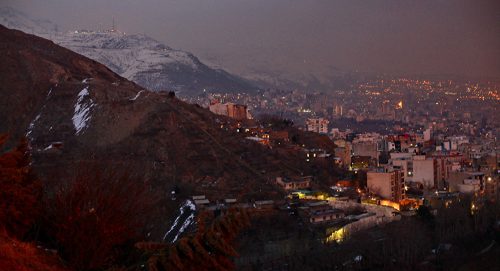
© Sputnik/ Andrey Stenin
Sputnik – April 20, 2017
US complaints over how the nuclear deal on Iran is being implemented are irrelevant, the head of the Russian Foreign Ministry’s Department for Non-Proliferation and Arms Control, Mikhail Ulyanov, said Thursday.
On April 19, US President Donald Trump ordered a National Security Council-led interagency review of the JCPOA to evaluate Iran’s compliance with the deal, with US State Secretary Rex Tillerson stating that the nuclear deal “fails to achieve the objective of non-nuclear Iran.” Tehran, in its turn, stressed that the deal was an international treaty and cannot be changed, adding that Iran was fulfilling its obligations under the JCPOA.
“If the deal does not work, then specific complaints should be made regarding its functioning. The Americans cannot do this. The IAEA, an independent participant in this process, confirms that the Iranians are implementing everything. Therefore, any claims are irrelevant here, it seems to me,” Ulyanov said.
Ulyanov noted that it was necessary for Tillerson to separate the notions of terrorism and the nuclear deal, which have nothing in common.
The JCPOA was signed by Iran and the P5+1 countries — China, France, Russia, the United Kingdom and the United States plus Germany in July 2015, ensuring the peaceful nature of the Iranian nuclear program in return for the gradual lifting of sanctions against Tehran. The deal came into force on January 16, 2016, after the International Atomic Energy Agency (IAEA) confirmed that Iran was ready to implement the program to reduce its nuclear potential. However, the United States imposed new sanctions against Iran in February 2017 after a medium-range ballistic missile test has been carried out by Tehran in late January.
No Serious Steps Taken to Probe Khan Sheikoun Incident: Russian Foreign Minister
Al-Manar | April 20, 2017
Russia said no serious steps have been taken to investigate into the alleged chemical attack in Syria’s Khan Sheikhoun.
“Reports (about the alleged chemical attack in Khan Shaykhun) started coming 15 days ago but no steps have yet been taken in order to investigate into this incident,” Director of the Armaments Non-Proliferation and Control Department at the Russian Foreign Ministry Mikhail Ulyanov said on Wednesday.
He was addressing the special session of the Organization for the Prohibition of Chemical Weapons (OPCW), held in The Hague, Russia’s foreign ministry’s posted on its website on Thursday, according to TASS Russian news agency.
Ulyanov pointed out that all accusations against Damascus of using chemical weapons were groundless as they were based only on questionable data available on social media.
At the same time, according to the Russian diplomat, representatives of some countries are acting as if the circumstances surrounding the incident, as well as those responsible, have already been established.
“In this regard, British Foreign Secretary Boris Johnson’s article for the Telegraph is notable in which he said that ‘this was highly likely to be an attack by Assad.’ It means that the British Foreign Secretary is not completely sure. Then why do our British counterparts make such unequivocal statements on the international level?” Ulyanov said.
Meanwhile, he slammed Washington over its claims to be absolutely certain it was Damascus who was to blame.
“This is what our US counterparts call a bad case of deja vu. We heard them say the same things 14 years ago, ahead of the military invasion in Iraq,” the Russian diplomat noted.
On the other hand, Ulyanov voiced Russia’s readiness for consultations with the US before the OPCW vote on proposals on the incident.
“Before putting a draft up for vote, all possibilities for reaching a consensus should be exhausted,” Ulyanov said.
“We are ready for immediate intensive consultations for that purpose, including with the US delegation,” he added.
“If our US partners are indeed interested in establishing the truth by carrying out a serious and prompt investigation, we have chances to reach an agreement,” the diplomat said. “If not, there is almost no room to search for mutually acceptable solutions.”
Trump – two steps forward, one step back

By Thierry Meyssan | Al-Watan | April 18, 2017
President Trump’s radical change in rhetoric concerning his foreign policy was accompanied by the bombing of an air base in Cheyrat, and that of an Afghan mountain.
The world trembled before the deployment of such force – 59 Tomahawk missiles in Syria and one GBU-4/B3 mega-bomb in Afghanistan. Yet the base in Cheyrat was already operational again the following morning, while the « Mother Of All Bombs » certainly caused the collapse of three exits of a natural tunnel, but did not destroy the kilometres of underground passages created over time by the rivers within the mountain. In short, much ado about nothing.
These two operations were clearly intended to convince the US deep state that the White House was once again supporting its imperial politics. They had the desired effect on Germany and France. Chancellor Angela Merkel and President François Hollande applauded their lord and master, and called for an end to the Syrian situation. The surprise arrived from elsewhere.
The United Kingdom did not only follow the movement. Their Minister for Foreign Affairs, Boris Johnson, proposed to levy sanctions against Russia, according to him an accomplice in the Syrian « crimes », and responsible in one way or another for the Afghan resistance and a plethora of other evils.
During the meeting of the Ministers for Foreign Affairs at the G7, Johnson announced the cancellation of his trip to Moscow, and invited all his partners to break off their political and commercial relations with Russia. However, though approving the British initiative, these partners prudently stayed in the background. Rex Tillerson, the US Secretary of State, incontrovertibly dismissed this insane proposition and maintained his trip to Moscow. Brazenly, Johnson then declared that the Europeans had appointed Tillerson to go and talk some sense into the Russians.
Although international protocol states that Ministers are to be received by their opposite numbers, and not by the Head of State, the Atlantist Press presented Tillerson’s welcome by Lavrov as a cooling of Russo-US relations. Before he had the time to salute his guest, Sergey Lavrov was interrupted by a Washington journalist who took him to task. Reminding him of the conventions of basic politeness, the Russian Minister refused to answer him and cut the presentations short.
The meeting, behind closed doors, lasted for more than 4 hours, which seems fairly long for people who have nothing to say to one another. Finally, the two men requested an audience with President Putin, who recieved them for 2 extra hours.
After these meetings, the Ministers gave a Press conference. They declared without irony that they had done little more than take note of their divergences. Sergey Lavrov warned the journalists of the danger that this rupture represented for the world.
However, the next day, the same Lavrov, addressing the Russian Press, indicated that he had concluded an agreement with his guest. Washington had agreed not to continue their attacks on the Syrian Arab Army, and the military coordination between the Pentagon and the Russian army for circulation in Syrian airspace had been re-established.
In appearance, the Trump administration is roaring its power and throwing bombs around, but in reality, it is taking great care not to cause any irreparable damage. The worst and the best are therefore possible.
Translation by Pete Kimberley
Rachel Maddow Is Lost in Her Cold War Conspiracies
By Eoin Higgins | Paste | April 13, 2017
On MSNBC’s Sirius XM promos, Rachel Maddow tells the listener that the network—and by extension, herself as well—presents the news without “fear or favor.”
But a review of the month of March by Paste suggests that fear sells. With a single exception, Maddow led off every episode of her show in March with an extended, conspiratorial update for her viewers on the alleged connections between Russia and the Trump administration. Maddow’s monologues focused on the Russian oligarchic state and the authoritarian rule of President Vladimir Putin.
This obsession with Russia has had a palpable effect on the national conversation. Maddow is one of the most influential and popular voices for American liberals, and her theorizing on the Russia/Trump connection is part of a larger theory connecting the alleged collusion between the two to every world and national event.
As Aaron Mate points out in The Intercept, Maddow’s concentration on Trump is predicated on the idea that the President is a Russian pawn. It’s hardly a sure thing, and the focus may be more damaging than constructive for the “resistance.”
Maddow and likeminded influential liberals will have led their audience on a fruitless quest, all the while helping foment anti-Russia sentiment, channeling Democratic Party energy away from productive self-critique, and diverting focus from the White House’s actual policies. Trump would be handed a further gift via the damaged credibility of his “enemy”: the media responsible for holding him to account.
Look no further than the reactions to Trump’s bombing of a Syrian government airfield on April 6 for proof of that—despite the fact that Bashar al-Assad is openly backed by Russia, some liberal commentators refuse to see the missile strike as at all possibly opposed to Russian interests. “Donald Trump, Who’s Totally Not Vladimir Putin’s Puppet, Warned Russia Before Airstrikes on Syria,” was Salon’s sarcastic headline.
This is in large part because Maddow presents Russia as an outlier on the world stage, involved in activity and behavior that is incompatible with the American way of life. Yet her examples from the last month are hardly convincing.
In Russia, Maddow says, there is a “corrupt, elite class of connected thieves at the top who have been siphoning money out of that country.” Though she acknowledges that the US has massive income inequality and corruption, in Russia it’s different, because
the politically connected class at the top that is stealing is much smaller… and is much more traceable now, in the short amount of time, in terms of the way they have yanked money out of that country, and the way they have spread it all over the world to hide it and to disguise its origins.
Let’s hope nobody shatters Maddow’s image of America by pointing out that 400 Americans own as much wealth as the bottom 61 percent of the population. Or that, according to the World Bank, the United States and Russia have almost exactly the same GINI index—the standard measure of inequality.
Not only is Russia a unique kleptocracy, Maddow says, but it (along with China and North Korea) is also an abnormally bellicose nation, consumed by the need to show off its military prowess and power. This kind of behavior, Maddow argues, is antithetical to the American way of life (emphasis added).
There’s no law against parading your military, whether or not it’s an important anniversary. But through American eyes, this is a little weird, right? If this gives you the willies to look at, it`s because it`s supposed to. This is an unabashed, uncomplicated, undisguised display of military threat, military prowess or national insecurity, depending on how you look at it. I mean, this is not something that we do here in the United States.
It’s hard to know how Maddow would describe the constant flyovers by Air Force jets at football games, the honoring of fully dressed Marines at baseball games, or the numerous holidays the United States has that involve the strutting of US military machines, personnel and paraphernalia. One way to describe it, of course, would be as an unabashed, uncomplicated, undisguised display of military threat, military prowess or national insecurity—depending on how you look at it.
Instead of policy discussions, analysis of domestic issues or digging into the backgrounds of administration personnel, Maddow’s program spent March with a spotlight aimed at the new administration’s as-yet-unsubstantiated ties with Russian government intelligence services and the allegedly Russian-led hack of the DNC emails.
It paid off. Maddow’s program is the only non-Fox News program in the ten top-rated cable news programs for the first quarter of 2017, and the highest-ranked non-Fox program in the lucrative 25-54 demographic, according to AdWeek. Yet this success came with an obsession with Russia twinned with overblown dot-connecting, speculative reasoning stated as fact and an emphasis on a wide ranging, insidious conspiracy.
Maddow referenced Russia repeatedly in March. The highest number of mentions we found was 105 on March 9, the lowest was days earlier on March 6, when it came up only eight times. On average, the country was mentioned around 53 times a show—or over once a minute, once you subtract commercials from the airtime—and Maddow did not let a single opening segment go by for the entire month without at least a mention of Russia’s alleged ties to Trump.
The entire list is below, but here are three telling examples of Maddow’s obsessive attention to Russia at the expense of anything else going on in the news.
— March 7, 2017: “Russia” or “Russians” mentioned 71 times. Maddow acknowledged news about ACA and immigration, but chose to lead instead with a study of the Russian embassy, promising to cover the breaking domestic news later.
— March 14, 2017: “Russia” or “Russians” mentioned 19 times. The show led with the infamous tax return document that Maddow introduced with a winding 20-minute monologue that touched on a number of conspiracy theories for which she provided no proof.
— March 17, 2017: “Russia” or “Russians” mentioned 51 times. The show led with Tom Price, then moves to the Gorsuch hearings as a pretext for a long discussion on hypothetical discoveries about Russia in House hearings.
It was on the latter date that Maddow laid out the justification for her unrelenting focus—a thesis grounded on flimsy evidence, hyperbolic rhetoric and unsubstantiated allegations:
The Russian attack on our election last year, the unexplained connections between the Trump campaign and Russia during that time, during the time of the attack, the strangeness, particularly, the strangeness of the FBI in its treatment of this matter, it’s unsettling. It’s unsettling not just because this is one scandal among so many scandals for this young administration. So many scandals that some are being ignored because they’re not big enough to warrant attention amid other scandals, right?
This is unsettling not just because it’s one scandal among many. This is unsettling because if the worst is true, if the presidency is effectively a Russian op, right, if the American presidency right now is the product of collusion between the Russian intelligence services and an American campaign—I mean, that is so profoundly big. We not only need to stay focused on figuring it out, we need to start preparing for what the consequences are going to be if it proves to be true. We need to start thinking about how we’re going to deal with the worst revelations if they do come to light, if they are proved true.
Maddow could have just looked over reporting from the last four months to see that the allegations that Russia “attacked” the presidential election are questionable. But instead, she spent the entire month of March pushing an ever-escalating conspiracy theory to explain the Trump presidency, based on speculative hyperbole describing a mass web of collusion between the president, the Russian government and other actors.
“WikiLeaks got all inextricably bound up in our new national nightmare about Russia hacking our presidential election,” Maddow said (3/6/17), and “Russian intelligence was mounting an operation against us, against our election to try to affect the outcome” (3/9/17). Yet despite the fact that the MSNBC host had “been following this [with] pretty intense attention” (3/2/17), she conceded she didn’t “know what`s going on in terms of the law enforcement and intelligence investigations” (3/3/17).
That didn’t stop Maddow from speculating about what those investigations could find out about possible Trump/Russia collusion.
“We’ve had it confirmed today that what they are also investigating is whether, once again, the Russians had help from inside the United States when it came time to humble America and show our country what they are capable of,” Maddow said (3/20/17), elaborating remarkably on the testimony of FBI Director James Comey, who had said only that the agency was investigating potential ties between the campaign and the Russian government.
Maddow’s viewers wouldn’t have known that from her. Instead, they would have been treated to more accusations of an intelligence operation that used the internet and Bernie Sanders supporters to defeat Hillary Clinton.
“Russian forces were operating inside something very high-profile,” Maddow said (3/31/17). “They were operating inside the U.S. presidential election.”
“This is not part of American politics,” she said earlier in the month (3/21/17). “This is not, you know, partisan warfare between Republicans and Democrats. This is international warfare against our country and it did not end on election day. We are still in it.”
Trump’s finances came in for scrutiny as well—understandable, given that the president has refused to release his tax returns. But even a major scoop in mid-March fell prey to a rambling monologue that tried to hit all the marks of the Russian conspiracy theory before landing on a rather deflated two-page nothingburger.
“Has [Trump] received money from foreign sources? Has he received loans from foreign sources?” Maddow asked, before revealing two pages of a 2005 tax return that indicated nothing of the sort.
She added the next day that there were questions on why Trump would make public statements on the benefits of investing in Russia in 2006, trying to tie in the widely panned exposé from the night before:
Why did he think so? Were there financial ties with Russia that would give him such confidence about that pronouncement which he made very shortly after he signed this tax return?
There are no negative consequences for the liberal commentator for trafficking in these sorts of conspiracy theories, as long as they’re aimed at the “right” target—look no further than Fairness and Accuracy’s recent reporting on Louise Mensch to see how the most discredited, illogical ideas can gain credence on the centrist liberal media circuit as long as they are aimed at Russia. And in Maddow’s case, these theories have an added bonus: higher ratings and corresponding higher ad revenue.
Maddow presents herself as a fair but tough liberal commentator. Her show is based on her presentation of the news that her audience wants and needs to hear. For her to spend so much time on a Cold War enemy at the expense of real domestic policies, and for her to do so with such speculative reasoning and logical leaps and bounds makes it clear that it’s ratings, not truth, that she’s really after.
Maddow on Russia: March, 2017
Findings on the pundit’s preoccupation
— March 2, 2017: “Russia” or “Russians” mentioned 24 times. Show leads with Attorney Jeff Sessions’ conversations with Kislyak.
— March 3, 2017: “Russia” or “Russians” mentioned 68 times. Show leads with profile of Russian opposition to Putin.
— March 6, 2017: “Russia” or “Russians” mentioned 8 times. Show leads with Trump family ties to central Asian nation Azerbijain.
— March 7, 2017: “Russia” or “Russians” mentioned 71 times. Maddow acknowledges news about ACA and immigration but chooses to lead instead with a study of the Russian embassy, promising to cover the domestic breaking news later.
— March 8, 2017: “Russia” or “Russians” mentioned 103 times. Show leads with the GOP platform on Russia and Ukraine.
— March 9, 2017: “Russia” or “Russians” mentioned 105 times. Show leads with sanctions and mentions the unsubstantiated dossier on Trump written by retired British intelligence officer Christopher Steele Buzzfeed published, acknowledges its content has not been verified, and then quotes from it at length.
— March 10, 2017: “Russia” or “Russians” mentioned 47 times. Show leads with Mike Flynn’s ties to the country and his dinner with RT.
— March 13, 2017: “Russia” or “Russians” mentioned 50 times. Show leads with Russian money laundering after Maddow lets the audience know the GOP healthcare bill has problems, but she’ll get to them later.
— March 14, 2017: “Russia” or “Russians” mentioned 19 times. Show leads with the infamous tax return document that Maddow introduced with a winding 20-minute monologue touching on a number of conspiracy theories for which she had zero proof.
— March 15, 2017: “Russia” or “Russians” mentioned 31 times. Show leads with Geert Wilders and the Russian investigation in Congress; Maddow tries to tie an FSB agent’s prosecution in Russia to Trump.
— March 16, 2017: “Russia” or “Russians” mentioned 65 times. Show leads with the 2014 Sochi Olympics.
— March 17, 2017: “Russia” or “Russians” mentioned 51 times. Show leads with Tom Price, then moves to the Gorsuch hearings as a pretext for a long discussion on hypothetical discoveries about Russia in House hearings.
— March 20, 2017: “Russia” or “Russians” mentioned 86 times. Show leads with Russian nuclear capabilities.
— March 21, 2017: “Russia” or “Russians” mentioned 52 times. Show leads with Bernie Sanders’ online supporters were Russian agents.
— March 22, 2017: “Russia” or “Russians” mentioned 54 times. Show leads with Paul Manafort’s connections to an unnamed Russian billionaire.
— March 23, 2017: “Russia” or “Russians” mentioned 57 times. Show leads with health care repeal (Russia and Ukraine are a segment later on).
— March 24, 2017: “Russia” or “Russians” mentioned 33 times. Show leads with the House Intelligence Committee hearing on Russian involvement in the election.
— March 27, 2017: “Russia” or “Russians” mentioned 50 times. Show leads with the FSB and Russian banks conspiring to get Trump elected.
— March 28, 2017: “Russia” or “Russians” mentioned 39 times. Show leads with Maddow declaring that Russia and China’s displays of military power during national holidays are unique to those countries.
— March 29, 2017: “Russia” or “Russians” mentioned 50 times. Show leads with alleged Russian involvement in the upcoming French elections.
— March 30, 2017: “Russia” or “Russians” mentioned 33 times. Show leads with Mike Flynn’s request for immunity, which Maddow ties to Russia.
— March 31, 2017: “Russia” or “Russians” mentioned 80 times. Show leads with the House investigation.
You can follow Eoin Higgins on Twitter and find him at Patreon.
Russia warns US against ‘Syria-style’ actions in North Korea
RT | April 17, 2017
Mike Pence’s statement on the US running out of “strategic patience” towards Pyongyang does not contribute to resolving the crisis, Sergey Lavrov said, voicing hopes there will be no repeat of the US strike on Syria in North Korea.
“I hope that there won’t be any unilateral actions like we recently saw in Syria and that the US will follow the policies Trump repeatedly declared during his election campaign,” Russian Foreign Minister Sergey Lavrov said, regarding the statement made by US Vice President Mike Pence on Monday during his visit to South Korea.
The world has witnessed the “strength and resolve of [President Trump] in actions taken in Syria and Afghanistan,” according to Pence, who threatened North Korea “not to test” this resolve or “or the strength of the armed forces of the United States.”
The Russian foreign minister warned not to take any military actions and stressed that the “risky nuclear and missile endeavors of Pyongyang” violating UNSC resolutions could not be used as an excuse for violating international law and the UN Charter “in the same fashion” as in Syria.
The period of US policy before the current escalation could be hardly described as an “era of strategic patience,” Lavrov added.
“I cannot call the Obama administration’s period an ‘era of strategic patience,’ as the US has been quite harshly limiting North Korea’s capabilities to develop economy sectors related to nuclear or energy areas,” Lavrov said, referring to past US initiatives, many of them backed by the UN Security Council.
Harsh statements do not contribute to peace and stability in the region, Kremlin spokesman Dmitry Peskov also said, while commenting on South Korean President Hwang Kyo-ahn’s promise to “implement intensive punitive measures” on Pyongyang in case of any “provocations.”
“Our position is well known and consistent. We call on all sides to avoid any actions which might be perceived as a provocation. And we stand for the continuation of coordinated international efforts in existing formats to resolve the North Korean problem,” Peskov said.
Tensions on the Korean Peninsula are reaching boiling point again, after Pyongyang conducted a missile test amid joint US-South Korea drills in March. On April 10, the ‘USS Carl Vinson’ was part of a strike group that reportedly headed to the peninsula as a show of force and to demonstrate readiness for “various scenarios.”
North Korea has urged the US to stop its “military hysteria” and “come to its senses” – or face a merciless response if “provocations continue.” On Saturday, Pyongyang allegedly conducted yet another missile test, although it was reportedly unsuccessful.
How Russia Will React to Deployment of NATO Anti-Missile Systems in Norway
Sputnik – April 16, 2017
NATO is inciting Norway to deploy missile defense systems on its territory, however there is no unity in Oslo on this issue. Russian military expert Vladimir Kozin said in an interview with Radio Sputnik that the US is trying to “stuff” missile defense systems into as many European countries as possible.
Some political parties in Norway have opposed the deployment of NATO anti-missile systems in their country, contrary to preliminary agreements with the alliance, Russian Izvestia newspaper wrote. According to the article, there is still no clear position in Oslo on this issue.Russian military expert Vladimir Kozin believes that only NATO will benefit from the deployment of the systems in Norway, while for Oslo this will mean additional “headaches.”
“NATO countries, and first of all the US, want to involve Norway and thus expand the list of states that will have missile defense systems on their soil. What interest is there on the part of Norway? Of course, unless it wants to become a hostage to the global American anti-missile game. This won’t bring anything to strengthening Norway’s defense, but only additional headaches. Because it is natural that all these systems are monitored by the Russian side and our allies and friends,” Kozin said.
In his opinion, the international community is facing the beginning of the race in anti-missile weapons.
“In order to change the situation, in my opinion, it is necessary to work with the current US administration and show that nobody will benefit from this race,” the expert said.
Russian military expert Victor Litovkin, in turn, said that Russia will take steps to ensure the security of its borders in response to NATO “saber-rattling.”
“We will find a way to neutralize this system if necessary. We have an Iskander-M operational-tactical missile system and missiles on strategic aircraft, such as Tu-22M3 and Tu-160, Tu-95MS. We will take into account if Norway stations this complex, and we will change our plans in terms of the use of our Armed Forces in a critical period,” Litovkin stated.
US snubs 11-state Afghanistan peace conference, says Russia trying to ‘assert influence’
RT | April 14, 2017
Washington failed to attend the latest international conference hosted by Moscow, where 11 nations discussed ways of bringing peace to Afghanistan. The US branded it a “unilateral Russian attempt to assert influence in the region.”
Friday’s meeting is the latest in a series of similar events in the Russian capital that have grown from trilateral consultations between Russia, China, and Pakistan held in December of last year into talks involving the majority of the Afghan region’s powers. The latest included Russia, China, Afghanistan, India, Pakistan, Iran, Kazakhstan, Kyrgyzstan, Tajikistan, Turkmenistan and Uzbekistan. An invitation was sent to Kabul’s patron, America, but was rejected.
“I think just to end it, we just felt that these talks – it was unclear to us what the purpose was,” US State Department spokesman Mark Toner said on Tuesday, in explaining the US’ absence.
“It seemed to be a unilateral Russian attempt to assert influence in the region that we felt wasn’t constructive at this time,” he noted.
Moscow responded by saying it “could not comprehend” the US’ reason for snubbing the gathering.
Participants in the event reiterated their support for a peaceful transition in Afghanistan, while calling for Kabul to be supported in moving in that direction.
“A call has been sent to the Taliban movement to abandon its line for a military solution of the Afghan conflict in favor of direct talks with the government of the Islamic Republic of Afghanistan on the issue of national reconciliation,” the Russian Foreign Ministry said in a statement after the conference.
The statement added that more consultations in this format will follow, while noting that Moscow has offered to host them again.
Moscow and China have separately been trying to persuade the Taliban to focus less on Kabul and more on the more imminent threat – the advances of the Islamic State (IS, formerly ISIS/ISIL) terrorist group.
Washington has criticized such initiatives, citing the Taliban’s record of waging guerilla warfare against the Afghan government, while downplaying the threat posed by IS in Afghanistan. The US military reported in February that the joint efforts of Afghan troops and US-led international forces have reduced IS’ presence in the country to less than 1,000 fighters, according to Voice of America.
According to Russia’s estimate, the jihadist group has at least 3,500 fighters in Afghanistan, which Moscow says Kabul and its allies are not doing enough to eradicate.
The conference in Moscow comes a day after the US dropped its most powerful conventional bomb on a suspected IS hideout in Afghanistan, marking the first time the weapon has been used in combat. It was not immediately clear whether this signified a shift in Washington’s view of the threat posed by IS affiliates in Afghanistan.
Read more:
Russia Considers Regime Change in North Korea Unacceptable – Envoy to Pyongyang
Sputnik – 14.04.2017
Russia considers the United States’ goal of regime change in North Korea unacceptable, Russian Ambassador to North Korea Alexander Matsegora told Sputnik.
“Another serious problem here is that Western [countries] indeed often do not hide their ultimate goal to eliminate the North Korean political system. This means to eliminate North Korean statehood,” Matsegora said.
He stressed that “such an approach is unacceptable.”
Russia, Syria & Iran demand no further US strikes on Syria – foreign ministers

Foreign Ministers, Sergei Lavrov (C) of Russia, Walid al-Muallem (L) of Syria and Mohammad Javad Zarif of Iran attend a news conference in Moscow © Grigory Sisoev / Sputnik
RT | April 14, 2017
The US cruise missile attack on Syria was an act of international aggression, Russia, Syria and Iran have stated after a meeting of their foreign ministers in Moscow.
“We have reiterated our position and were united in stating that the attack was an act of aggression, which blatantly violated the principles of international law and the UN Charter,” Russian Foreign Minister Sergey Lavrov said.
“We call on the US and its allies to respect Syria’s sovereignty and refrain from actions similar to what happened on April 7, and which have serious ramification not only for regional, but also global security,” he added.
Lavrov was referring to the Tomahawk missile barrage fired by the US Navy at a Syrian airbase in Homs province. Washington ordered the attack after accusing Damascus of launching a chemical weapons attack at a rebel-held town in Idlib province from that airbase. Russia condemned the move, saying the US hadn’t offered any proof to pin the alleged chemical weapons incident on the Syrian Army.
Meeting with his Iranian and Syrian counterparts, Javad Zarif and Walid Muallem, on Friday, Lavrov pledged to continue Russia’s support of Damascus in fighting terrorism and restoring peace in Syria.
He added that Moscow suspects that the Idlib incident was a provocative act aimed at derailing negotiations between the Syrian government and so-called moderate rebel groups on a political transition in the country. Lavrov said the perpetrators of the deadly release of toxins must be found.
“We insist on a thorough, objective and unbiased investigation of the circumstance of the use of chemical substances in Khan Shaykhun on April 4,” he said, adding that the investigating team must include inspectors chosen from nations from different parts of the world to ensure its objectivity.
Muallem pledged full cooperation of Damascus in carrying out such a probe.
The Russian minister added that Moscow doubts the objectivity of the current mechanisms for investigating alleged use of chemical weapons in Syria, considering the difference in how the Organization for the Prohibition of Chemical Weapons (OPCW) handles reports by Damascus and by other parties.
“When accusations come against the Syrian government, the OPCW reacts in a matter of days and voices its concern. But they never go on the sites of incidents located in the regions controlled by the armed opposition, citing security issues,” he said. “We consider such analysis from a distance unacceptable.”
Lavrov also accused the US of reviving the Obama administration goal of toppling the Syrian government instead of seeking a political solution, citing the Tomahawk missile attack.
“Such acts of aggression are obviously meant to derail the peace process, which was endorsed in a unanimously adopted resolution of the UN Security Council and implies that the fate of Syria would be decided only by the Syrian people,” he said. “The action was obviously deviating from this basic concept and find new protects to aim for regime change.”
Lavrov said there is an increasing amount of evidence pointing to the conclusion that the chemical incident in Idlib province was staged to set up the Syrian government.
“Publications by professional experts, including some in the US and Britain, say there are too many inconsistencies and gaps in the version of events presented to justify the [US] aggression,” he said.
Zarif accused “certain countries” of hypocrisy, citing Iran’s history of suffering from chemical weapons attack by Saddam Hussein’s Iraq during the 1980s war. Declassified CIA files showed that the US was well aware that Saddam was using CWs against Iranians, but didn’t oppose it and even provided intelligence for such attacks.
READ MORE:
Lavrov says agreed with Tillerson no future US strikes on Syrian govt
White House claims on Syria chemical attack ‘obviously false’ – MIT professor
Tillerson in Moscow: False dawn in US-Russia ties?
By M K Bhadrakumar | Indian Punchline | April 13, 2017
The early reports on the US Secretary of State Rex Tillerson’s talks in Moscow on Wednesday have a positive ring but how far it is real, time only can tell. Indeed, almost in real time as soon as Tillerson’s all-important meeting in the Kremlin with President Vladimir Putin (which lasted for over two hours) got over, President Donald Trump remarked that from the feedback he got, “things went pretty well, better than expected.”
Trump noted that Tillerson had a “very successful meeting in Russia” as the “end result” will show – “which will be in a long period of time, perhaps.” Interestingly, Trump said this in the presence of the visiting NATO Secretary-General Jens Stoltenberg at the joint press conference in the White House, adding,
- It would be wonderful, as we were discussing just a little while ago (with Stoltenberg), if NATO and our country could get along with Russia. Right now, we’re not getting along with Russia at all. We may be at an all-time low in terms of a relationship with Russia. This has built for a long period of time. But we’re going to see what happens. Putin is the leader of Russia. Russia is a strong country. We’re a very, very strong country. We’re going to see how that all works out.
Make no mistake, Trump knows his job. He knows Stoltenberg’s mission was to amplify the cacophony over “Russian aggression”. So, perhaps, he deliberately went into a stream of consciousness:
- And I’ll also see about Putin over a period of time. It would be a fantastic thing if we got along with Putin and if we got along with Russia. And that could happen, and it may not happen, it may be just the opposite. I can only tell you what I would like to do. I would love to be able to get along with everybody. Right now, the world is a mess. But I think by the time we finish, I think it’s going to be a lot better place to live. And I can tell you that, speaking for myself, by the time I’m finished, it’s going to be a lot better place to live in — because right now it’s nasty.
Meanwhile, in Moscow, Russian Foreign Minister Sergey Lavrov described his negotiations with Tillerson as “substantial and very frank.” Obviously, there were sharp differences — future of Syrian President Bashar Al-Assad, for instance. He said Moscow is “realistic” that much effort is needed to overcome the obstacles in the Russia-US ties but “we seek to do that… (and Putin) reaffirmed our will to do that.”
Tillerson himself described the meeting with Putin as “productive” where they discussed “approaches to improving our channels of communication and there was a “lengthy exchange of views” regarding Syrian situation and “shared perspectives on possible ways forward.” Tillerson underscored that mutual trust is very low and the two countries have differences over a broad range of issues. He said,
- The world’s two foremost nuclear powers cannot have this kind of relationship… We need to attempt to put an end to this steady degradation, which is doing nothing to restore the trust between our two countries or to make progress on the issues of the greatest importance to both of us.
Unsurprisingly, Syria topped the agenda of talks. (Ukraine took a back seat, though.) The Russian side seems to have shown willingness to revive the “de-confliction” procedure in the military operations in Syria. The two sides agreed on an investigation by the OPCW at The Hague over the chemical attack in Idlib on April 4. Equally, US-Russia consultations will resume with a view to find a solution to the Syrian conflict.
Yet, reading the transcript of the Lavrov-Tillerson press conference in Moscow yesterday, the overpowering sense is one of deja vu. We’ve been there before, haven’t we? The issues and problems in the Russian-American relationship are so deep-rooted and are not only bilateral but also regional – and some even have global character. This is the main difference between what Trump is attempting with Russia and China respectively. Paradoxically, China-US issues are rather straightforward in comparison – identifiable, quantifiable, and possible to be prioritised – if only the rivalry could be overcome in “win-win” spirit.
Unlike with US-China relations, however, the diplomatic channels between Washington and Moscow are clogged, historically as well as thanks to the deliberate policy moves by the Barack Obama administration. The good part is that both Lavrov and Tillerson acknowledged the need to improve the state of affairs. Moscow is manifestly keen to have sustained dialogue, explore possibilities for cooperation, and even seeks “joint activities” (as Lavrov put it.) But it takes two to tango.
The Trump administration is far from stable and Russophobia is pervasive within the American establishment. Any significant improvement in the relations will take time. Tillerson himself somehow gives the impression of being too decent a fellow to elbow aside roughnecks like Senator John McCain. His influence within Trump’s foreign-policy team also remains unclear. To be sure, Russophobes will now begin sniping at the nascent beginning made by Tillerson in Moscow.
The Russian diplomacy needs to slow down on the American front a bit and work its way back and re-engage Europeans. The G7 meet in Luca on Tuesday showed that Germany and Italy understand the imperative need to work with Russia to find a solution to the Syrian conflict under UN auspices. Federico Mogherini, EU foreign policy chief, is due to visit Moscow on April 24.
Lavrov says agreed with Tillerson no future US strikes on Syrian government
RT | April 13, 2017
Moscow and Washington have reached an understanding that further US strikes similar to the one carried out against Syria’s Shayrat Air Base “should not occur again,” the Russian Foreign Minister Sergey Lavrov has said.
Lavrov emphasized that this issue was raised during his discussions with the US Secretary of State on Wednesday when Rex Tillerson was visiting Moscow.
“We have discussed this issue with the US Secretary of State in details yesterday and agreed upon the fact that a similar [strike] should not occur again,” he told journalists ahead of his meeting with his Syrian counterpart, Walid Muallem, in Moscow.
Lavrov further underlined that the US missile strike against the Shayrat Air Base played “a highly provocative role.”
He went on to say that the US confirmed its commitment to the idea that there is no other option of resolving the Syrian conflict other than political dialog, adding that this offers hope for the future of the peace process.
“It is encouraging to some extent that Rex Tillerson confirmed yesterday that [the US still holds] the opinion that there is no alternative to the political process [of the resolution of the Syrian crisis] despite all the recent negative developments,” he said.
A “right and responsible step” is how Lavrov described the Syrian government’s decision to invite experts from the Organization for the Prohibition of Chemical Weapons (OPCW) to conduct an investigation of the chemical weapon incident in Idlib province.
He said the “hysteria” around the alleged Idlib chemical weapons attack should not impede efforts made in Astana and Geneva, which are aimed at resolving the Syrian conflict.
The Russian Foreign Minister warned that there are forces still trying to “bust up the ceasefire regime brokered in Astana and welcomed by the UN Security Council.”
Earlier, Lavrov said that failing to institute an international inquiry into the chemical attack in Syria’s Idlib would mean that the international community is not interested in establishing the truth about the matter.
He reiterated that Moscow considers the US claims concerning the chemical weapons being used by the Syrian government “unfounded” and “lacking evidence,” speaking at the joint news conference with Tillerson on Wednesday following talks in Moscow.
Lavrov also denounced attempts to hamper cooperation between Russia and the US as “shortsighted.” The two diplomats also announced the creation of a joint expert group tasked with analyzing bilateral relations and addressing sources of mutual concern as they revealed plans to improve ties between Moscow and Washington.
Featured Video
No Vote, No Representation, No State: Democracy, Israeli Style
or go to
Aletho News Archives – Video-Images
From the Archives
Sanctions, War and the Policy of Dual Containment
By SASAN FAYAZMANESH | March 17, 2008
It is now nearly three decades since the Unites States adopted the policy of dual containment of Iran and Iraq. While much has been written about the containment of Iraq, there has been very little in-depth analysis of this policy when it comes to Iran. In a book that is going to be released on March 31, 2008, entitled The United States and Iran: Sanctions, Wars and the Policy of Dual Containment (Routledge), I attempt to address this shortcoming by investigating when and why the US policy of containment of Iran came about, how it evolved, and where it stands today.[1] To the extent that Israel has been involved in US policy making, the study will also include the role that Israel has played in the containment of Iran. Also, since the fate of Iran has been inextricably linked to that of Iraq, occasionally the investigation will overlap with the containment of Iraq.
The policy of dual containment of Iran and Iraq originated during the Carter Administration, but it was not until the Clinton Administration that the expression “dual containment” became popular. … continue
Blog Roll
 Aletho News
- Elmo Sold mRNA Jabs to Your Toddler. Now They Are “Off-Label.”
- British state targets Palestine Action with yet another crooked trial
- Americans are paying the price to preserve Israel’s nuclear hegemony
- Resistance factions are necessary to ensure a permanent US Iraq withdrawal
- How Israel destabilizes the Middle East: Denying sovereignty and the right to exist
- Europe’s Establishment Is Embracing War – and Losing Voters
- NATO chief advocates war of aggression
- No Vote, No Representation, No State: Democracy, Israeli Style
- Zionist Bought Senate Blocks Information About American Citizens Killed By Israel
- While Gaza dominates the UN, these are the people keeping it alive
- If Americans Knew
- Israeli Soldiers Abduct At Least 22 Across Occupied West Bank
- Eight Palestinians Killed in Israeli Attacks on Gaza
- Israeli former leaders and security chiefs threaten legal action over ‘Jewish terrorism’
- Israel map in LA Times ad includes all land from the river to the sea
- Inside Lebanon’s 200-page dossier on Israeli war crimes
- Flydubai, genocide, settler violence, Trump abuse of power to deport – Daily Update
- Counting Antisemitic Incidents: What the ADL Audit Reveals — and Obscures
- Mamdani releases plan to combat antisemitism and hate crimes in New York City
- Iran’s Revolutionary Guards Publish Letter to the American People
- DMFI launches $1 million ad campaign supporting Virginia’s Elaine Luria
- No Tricks Zone
- Green Energy Debacle: German Expert Professor Fritz Vahrenholt Warns Of Severe Economic And Social Consequences
- Two More Paleo Reconstructions Affirm Meters-Higher Sea Levels Across Ireland, Brazil 7000-6000 Years Ago
- New Study: Earth And Venus Surface Warmth Largely Explained By Convection And Lapse Rate, Not CO2 Or Radiation
- 2025 Nature Paper Claiming Worsening Global Drought Gets RETRACTED …Heavily Flawed
- New Study: ‘Global Drought Shows No Detectable Recent Acceleration Under Climate Warming’
- Economic Masterminds: German Socialists Suggest Taxing Productivity Gains Stemming From Using AI
- The South China Sea Has Not Been Cooperating With The Climate Change Narrative
- Energy Crisis: Germany Enters Heating Season With Historically Low Gas Reserve Fill Levels
- New Study: The Antarctic Ice Sheet Gained Mass From 2020-2024 Due To Staggering Snow And Ice Accumulation
- Study: Ocean Heating Rates From Thousands Of Years Ago ‘Dwarf’ Modern Ocean Heating Rates

