Lavrov: Russian, Western Experts Should Make Up Syria Chemical Attack Probe Team
Sputnik – April 13, 2017
MOSCOW – Lavrov told reporters he “sufficiently convincingly” explained to US Secretary of State Rex Tillerson on Wednesday the reasons why a special independent UN and OPCW-based study should investigate the purported attack.
“But, considering the enormous very confrontational resonance surrounding what happened in Syria, we offered to complement these structures with professional inspectors in this field who would be invited from both Western countries, Russia, and regional countries,” Lavrov said.
He said “it seemed to me that Tillerson quite positively reacted to this idea.” Western countries’ reluctance to send experts to the site of a reported April 4 chemical attack in Syria’s Idlib province rely on “excuses” of purported dangers, he said.
Lavrov told a briefing that US, French and UK colleagues “do not pay attention to the fact that they need to visit not only the airfield they suspect was the place where chemical weapons were loaded onto planes, but also the place where these shells were struck.”
“They said ‘we do not know who controls this area, it is not safe to send inspectors there.’ These are all excuses,” he stressed.
Syrian opposition claimed on April 4 forces loyal to President Bashar Assad had used a chemical gas on people in the northwestern province, killing nearly 80 and injuring 200. Assad argued his government has no chemical weapons after agreeing to have them destroyed in 2013. He also ruled out having used chemicals against own people.
The Russian Defense Ministry said next day that the airstrike near Khan Shaykhun was carried out by Syrian aircraft, which struck a terrorist warehouse that stored chemical weapons slated for delivery to Iraq.
Trump Appoints Fiona Hill Russia Adviser on National Security Council
By Alex GORKA | Strategic Culture Foundation | 13.04.2017
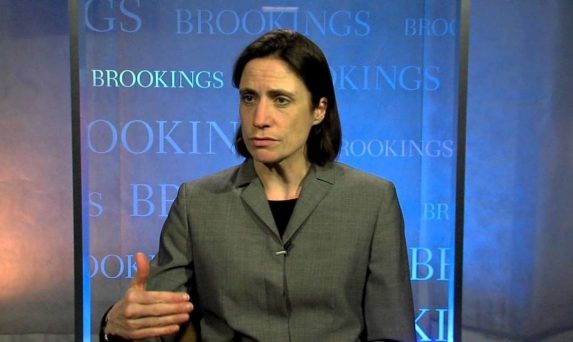
Last month, Fiona Hill, a preeminent Kremlinologist and Harvard alumna, joined the National Security Council staff as deputy assistant to the president and senior director for European and Russian Affairs. This is one of the most important positions within government shaping the US relationship with Russia. A dual US-UK citizen, Hill is also a member of the US Council on Foreign Relations, and a member of the board of trustees of The Eurasia Foundation.
The new adviser holds a master’s degree in Soviet studies and a doctorate in history from Harvard University. British-born, she started at Brookings in 2000, taking a three-year break to serve on the National Intelligence Council under the George W. Bush and Obama administrations. Prior to joining Brookings, Hill was director of strategic planning at The Eurasia Foundation in Washington, D.C. From 1991 to 1999, she held a number of positions directing technical assistance and research projects at Harvard University’s John F. Kennedy School of Government. She pursued studies at Moscow’s State Linguistic University (former Maurice Thorez Institute of Foreign Languages).
A frequent commentator on Russian and Eurasian affairs, Fiona Hill boasts an extensive research experience on the Caucasus and Central Asia, among other issues. She is co-author of the second edition of «Mr. Putin: Operative in the Kremlin» (2015). Lashing out at the Russian leader, Hill emphasizes it would be a mistake to underestimate Vladimir Putin.
She is also known for her book «The Siberian Curse: How Communist Planners Left Russia Out in the Cold» (2003). Hill proposed to actually evacuate Siberia and start developing its resources working in shifts. The book was praised by Jeffrey Sachs who had advised Russia to adopt «shock therapy» methods to implement economic reforms, Richard Pipes, a former member of the National Security Council known for his belligerent stance on Russia, and Zbigniew Brzezinski, former assistant to the president of the United States for national security affairs, widely believed to be behind the Obama’s hostile policy toward Moscow.
Being highly critical of Russian authorities in her books, Hill gives them their due pointing out that Russia had to go through the difficult times after the Soviet Union’s break up. She even compared Russian President Vladimir Putin with Franklin Delano Roosevelt and Charles de Gaulle who pulled their respective countries out of severe crises.
While some of Hill’s statements indicate that she is prone to taking a hard line on Moscow, others sound positive, calling for a pragmatic approach. Fiona Hill is immune to the influence of ideological stereotypes and knows how to smooth things over. Her harsh statements about incompatibility of Russia’s foreign policy agenda with long-term US interests will calm down the most suspicious persons who believe Russia to be behind everything that goes wrong». The US and Russia just have a very hard time… being on the same page», she wrote in in the Atlantic. «We’re going to have an awful lot of friction», Hill said. «And Trump isn’t exactly the most diplomatic of people. So I imagine he’ll fall out with his new friend Vladimir pretty quickly», she predicted. Last October, Fiona Hill advocated keeping anti-Russian sanctions in place and rejected the idea of a «grand bargain» with Putin in which the US would «trade concessions» in Ukraine for Russian help in the Middle East.
While President Trump has yet to lay down his Russia policy, most signs suggest no swift changes in the relationship. The president’s decision shows that a major reset is not in the cards. Hill’s appointment came as a relief to Republicans. But as a seasoned scholar, she knows Russia will not become pliant under pressure. She can make cold-blooded calculations and come up with ideas on how to reach deals on issues of common interest. Nobody expects friendship under the circumstances but it could be partnership. Hill is far-sighted enough to realize that.
Fiona Hill can do her job in a professional way without temper tantrums that take place now and then in Washington. A renowned scholar on Russia and an experienced former government official, she was chosen to implement Realpolitik. Her vast knowledge of the country and perfect Russian will come in handy for the job.
CNN uses anonymous source to push Syria/Russia ‘chemical attack’ conspiracy
RT | April 13, 2017
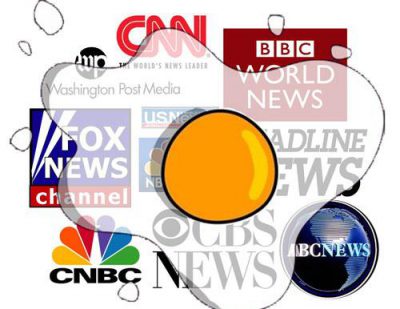
An anonymous senior US official told CNN that, while the US allegedly has proof that Damascus is responsible for the chemical incident in Idlib, Syria, it has uncovered no such evidence implicating Moscow, because Russia is wilier in scrambling its communications.
The anonymous official reportedly told the American news channel that the US intelligence community had intercepted communications “featuring Syrian military and chemical experts talking about preparations for the sarin attack in Idlib last week.” While the source failed to provide any concrete details about the alleged communication – such as when it was intercepted or what names or other information it contained – they did note that the US “did not know prior to the attack it was going to happen.”
CNN speculated that the communication had been sent prior to the incident, but was not processed until the US began investigating it.
The source added that “there are no intelligence intercepts that have been found directly confirming that Russian military or intelligence officials communicated about the attack,” but noted “the likelihood is the Russians are more careful in their communications to avoid being intercepted.”
The most specific proof the source could come up with was his observation that Russia has a surveillance drone, which he claimed “flew over the hospital that was treating people injured in the attack.”
CNN suggested that even if the US had evidence of Russia’s involvement, it might not go public with it, as “the US feels right now that it has made the case that Russian support for [Syrian President Bashar] Assad must end.”
The report is the latest in a long series based on anonymous sources – with undisclosed agendas citing vague evidence which is never submitted to public scrutiny – that the mainstream media has deployed to level accusations against Russia. The story that Russia allegedly meddled in the US election has become a dominant narrative for opponents of Donald Trump, who are still trying to explain his surprise victory.
The major media outlets’ eagerness to blame Russia for everything occasionally leads to embarrassment, however. A fairly spectacular example came in January, when the Washington Post was forced to backtrack on a story that falsely claimed Russia had hacked into Vermont’s power grid. The newspaper also sparked outrage in December by touting a list of “Russian propaganda” websites, which turned out to include many respected independent media sources.
The alarming trend is not limited to the US media, however. Last year, the Guardian failed to accurately report on an Italian newspaper’s interview with Julian Assange. The British newspaper falsely painted WikiLeaks’ founder as a Trump supporter who would not criticize Moscow because he was presumably in league with the Russian government.
Some examples go back years. In 2014, the New York Times published photos of armed men, claiming that they were Russian troops on a clandestine mission in Ukraine. The newspaper had taken the images from the US State Department, and both had failed to properly verify them.
Trump Withholds Syria-Sarin Evidence
By Robert Parry | Consortium News | April 12, 2017
After making the provocative and dangerous charge that Russia is covering up Syria’s use of chemical weapons, the Trump administration withheld key evidence to support its core charge that a Syrian warplane dropped sarin on a northern Syrian town on April 4.
A four-page white paper, prepared by President Trump’s National Security Council staff and released by the White House on Tuesday, claimed that U.S. intelligence has proof that the plane carrying the sarin gas left from the Syrian military airfield that Trump ordered hit by Tomahawk missiles on April 6.
The paper asserted that “we have signals intelligence and geospatial intelligence,” but then added that “we cannot publicly release all available intelligence on this attack due to the need to protect sources and methods.”
I’m told that the key evidence was satellite surveillance of the area, a body of material that U.S. intelligence analysts were reviewing late last week even after the Trump-ordered bombardment of 59 Tomahawk missiles that, according to Syrian media reports, killed seven or eight Syrian soldiers and nine civilians, including four children.
Yet, it is unclear why releasing these overhead videos would be so detrimental to “sources and methods” since everyone knows the U.S. has this capability and the issue at hand – if it gets further out of hand – could lead to a nuclear confrontation with Russia.
In similarly tense situations in the past, U.S. Presidents have released sensitive intelligence to buttress U.S. government assertions, including John F. Kennedy’s disclosure of U-2 spy flights in the 1962 Cuban Missile Crisis and Ronald Reagan revealing electronic intercepts after the Soviet shoot-down of Korean Airlines Flight 007 in 1983.
Yet, in this current case, as U.S.-Russian relations spiral downward into what is potentially an extermination event for the human species, Trump’s White House insists that the world must trust it despite its record of consistently misstating facts.
In the case of the April 4 chemical-weapons incident in the town of Khan Sheikhoun, which reportedly killed scores of people including young children, I was told that initially the U.S. analysts couldn’t see any warplanes over the area in Idlib province at the suspected time of the poison gas attack but later they detected a drone that they thought might have delivered the bomb.
A Drone Mystery
According to a source, the analysts struggled to identify whose drone it was and where it originated. Despite some technical difficulties in tracing its flight path, analysts eventually came to believe that the flight was launched in Jordan from a Saudi-Israeli special operations base for supporting Syrian rebels, the source said, adding that the suspected reason for the poison gas was to create an incident that would reverse the Trump administration’s announcement in late March that it was no longer seeking the removal of President Bashar al-Assad.
If indeed that was the motive — and if the source’s information is correct — the operation would have been successful, since the Trump administration has now reversed itself and is pressing Russia to join in ousting Assad who is getting blamed for the latest chemical-weapons incident.
Presumably, however, the “geospatial intelligence” cited in the four-page dossier could disprove this and other contentions if the Trump administration would only make its evidence publicly available.
The dossier stated, “Our information indicates that the chemical agent was delivered by regime Su-22 fixed-wing aircraft that took off from the regime-controlled Shayrat Airfield. These aircraft were in the vicinity of Khan Shaykhun approximately 20 minutes before reports of the chemical attack began and vacated the area shortly after the attack.”
So, that would mean – assuming that the dossier is correct – that U.S. intelligence analysts were able to trace the delivery of the poison gas to Assad’s aircraft and to the airfield that Trump ordered attacked on April 6.
Still, it remains a mystery why this intelligence assessment is not coming directly from President Trump’s intelligence chiefs as is normally the case, either with an official Intelligence Estimate or a report issued by the Director of National Intelligence.
The White House photo released late last week showing the President and a dozen senior advisers monitoring the April 6 missile strike from a room at his Mar-a-Lago estate in Florida was noteworthy in that neither CIA Director Mike Pompeo nor Director of National Intelligence Dan Coats was in the frame.
Now, it is the White House that has released the four-page dossier supposedly summing up the assessment of the “intelligence community.”
An Argumentative Dossier
The dossier also seems argumentative in that it assumes that Russian officials – and presumably others – who have suggested different possible explanations for the incident at Khan Sheikdoun did so in a willful cover-up, when any normal investigation seeks to evaluate different scenarios before settling on one.
It is common amid the “fog of war” for people outside the line of command – and even sometimes inside the line of command – to not understand what happened and to struggle for an explanation.
On April 6, before Trump’s missile strike, I and others received word from U.S. military intelligence officials in the Middle East that they, too, shared the belief that the poison gas may have resulted from a conventional bombing raid that ruptured containers stored by the rebels, who – in Idlib province – are dominated by Al Qaeda’s affiliate and its allies.
Those reports were cited by former U.S. intelligence officials, including more than two dozen who produced a memo to President Trump urging him to undertake a careful investigation of the incident before letting this crisis exacerbate U.S.-Russia relations.
The memo said “our U.S. Army contacts in the area” were disputing the official story of a chemical weapons attack. “Instead, a Syrian aircraft bombed an al-Qaeda-in-Syria ammunition depot that turned out to be full of noxious chemicals and a strong wind blew the chemical-laden cloud over a nearby village where many consequently died,” the memo said.
In other words, to suggest possible alternative scenarios is not evidence of a “cover-up,” even if the theories are later shown to be erroneous. It is the normal process of sorting through often conflicting initial reports.
Even in the four-page dossier, Trump’s NSC officials contradicted what other U.S. government sources have told The New York Times and other mainstream news outlets about the Syrian government’s supposed motive for launching the chemical-weapons attack on the town of Khan Sheikhoun.
According to the earlier accounts, the Syrian government either was trying to terrorize the population in a remote rebel-controlled area or was celebrating its impunity after the Trump administration had announced that it was no longer seeking Assad’s removal.
But the dossier said, “We assess that Damascus launched this chemical attack in response to an opposition offensive in northern Hamah Province that threatened key infrastructure.” Although Khan Sheikhoun was not near the fighting, the dossier presented the town as an area of support for the offensive.
Assuming this assessment is correct, does that mean that the earlier explanations were part of a cover-up or a propaganda operation? The reality is that in such complex situations, the analyses should continue to be refined as more information becomes available. It should not be assumed that every false lead or discarded theory is proof of a “cover-up,” yet that is what we see here.
“The Syrian regime and its primary backer, Russia, have sought to confuse the world community about who is responsible for using chemical weapons against the Syrian people in this and earlier attacks,” the dossier declared.
But the larger point is that – given President Trump’s spotty record for getting facts straight – he and his administration should go the extra mile in presenting irrefutable evidence to support its assessments, not simply insisting that the world must “trust us.”
[In a separate analysis of the four-page dossier, Theodore Postol, a national security specialist at the Massachusetts Institute of Technology, concluded that the White House claims were clearly bogus, writing:
“I have reviewed the document carefully, and I believe it can be shown, without doubt, that the document does not provide any evidence whatsoever that the US government has concrete knowledge that the government of Syria was the source of the chemical attack in Khan Shaykhun, Syria at roughly 6 to 7 a.m. on April 4, 2017.
“In fact, a main piece of evidence that is cited in the document points to an attack that was executed by individuals on the ground, not from an aircraft, on the morning of April 4. This conclusion is based on an assumption made by the White House when it cited the source of the sarin release and the photographs of that source. My own assessment, is that the source was very likely tampered with or staged, so no serious conclusion could be made from the photographs cited by the White House.”]
Investigative reporter Robert Parry broke many of the Iran-Contra stories for The Associated Press and Newsweek in the 1980s.
Russia’s Disdain for Tillerson and Trump
By Gilbert Doctorow | Consortium News | April 11, 2017
Secretary of State Tillerson Secretary of State Rex Tillerson’s visit to Moscow was supposed to prepare the way for a Trump-Putin summit either as a self-standing event or on the sidelines of the next G-20 meeting in Germany. The hope was that the summit would consolidate the turn toward normalization of relations that President Trump had promised in his electoral campaign.
But the 180-degree reversal in the foreign policy of the Trump administration marked by the launch of a missile strike on Syria last week changed the expectations for Tillerson’s visit dramatically, to the point that one of the most widely respected Russian political observers, Director of the Near East Institute Yevgeny Satanovsky, questioned why Tillerson’s visit is still on.
“It is not clear why Tillerson is coming,” Satanovsky said. “There is no reason at all for him to be received by Putin. Maybe it’s enough for him to talk to Maria Zakharova [spokeswoman of the Russian Ministry of Foreign Affairs], perhaps with [Foreign Minister Sergey] Lavrov.”
Satanovsky’s pessimism was largely shared by other experts and officials who appeared on the most popular Russian TV news programs, including the talk shows Sixty Minutes, Evening and Sunday Evening with Vladimir Solovyov, News on Saturday with Sergey Brillyov, and News of the Week with Dmitry Kiselyov. Always popular with their Russian audiences, these shows drew in remarkably high visitor rates on the internet as posted on youtube.com, between a quarter million and half a million visits each.
Following President Trump’s missile strike on a Syrian air base on April 6, pressure grew on President Putin to respond with his own muscle-flexing. However, the Kremlin’s immediate response was restrained. The Ministry of Foreign Affairs simply announced the suspension of the 2015 Memorandum of Understanding with the United States on deconfliction. That agreement put in place communications channels within the region and rules for conduct meant to prevent and/or resolve incidents between the Russian and U.S.-led coalition forces operating in Syria.
By the evening of April 7, the popular Russian state television talk show Sixty Minutes informed its audience about two essential facts regarding the U.S. missile strike. First, the level of damage inflicted on the Syrian air base at Shayrat turned out to be minimal, totally out of keeping with what one might have anticipated from 59 Tomahawks launched by U.S. naval vessels in the Mediterranean.
Rossiya 1 war correspondent Yevgeny Poddubny presented footage he and his camera crew had taken at Shayrat just hours after the strike. It was clear that the landing strip itself was undamaged, that many hangars were similarly intact, and that the structural losses were limited to six out-of-date MIG23s that were being reconditioned and to some roadways and buildings of minor significance. The report also noted that a relatively small number of Syrian military personnel and civilians were killed and wounded.
Poddubny noted that not all of the cruise missiles seemed to have reached the target. Later news broadcasts clarified that only 23 of the 59 Tomahawks reached Shayrat.
The second fact, which tempered Russian anger about the attack, was news that the United States had given two hours advance warning to the Russians. This would have enabled them to withdraw any of their military personnel on the site and to avoid casualties that would call for retribution and spark a direct military confrontation.
But if the sting of the attack and its anti-Russian message were attenuated, there was from the outset some confusion among Official Russia over what message the strike was intended to deliver and to whom. There was also a great deal of interest in exploring the reasons for Donald Trump’s policy reversal on Syria and on Russia and interest in identifying the influencers behind the move so as to better understand what might come next and what to do about that.
Already in Sixty Minutes, the first authoritative view on what happened was put forward by Gennady Zyuganov, leader of the Communist Party. For political reasons, i.e., policy disagreements with the current government, Zyuganov is a rare guest on Rossiya 1 and was likely invited on to rally unity among the Russian people in the face of the new threats and dangers coming from Washington.
His reading of Trump’s TV appearance announcing the missile strike was that the President looked “broken,” now in the thrall of the mafia that had been running the U.S. before his accession to power. Zyuganov noted that for once Trump was reading his text from a teleprompter and his voice seemed to be unsteady, highly emotional.
What Drove Trump
The discussion of what motivated Trump to act on Syria expanded later in the evening on a special edition of the Vladimir Solovyov talk show. The microphone was offered first to Vyacheslav Nikonov, chairman of the Duma Committee on Education who is better known in international circles for his years at the head of the NGO Russian World, sponsors of the Russian diaspora.
Since the U.S. presidential election in November 2016, Nikonov has appeared regularly on Rossiya 1 as a consistent advocate of Donald Trump in the expectation of very positive changes in U.S. foreign policy. But he was now caught out.
Nikonov said Trump was responding to popular outrage over pictures of children gassed to death that were featured on U.S. mass media so it appeared to Americans that Syrian President Bashar al-Assad was poisoning his own people. However, if the villain in the piece was the media for an exploitative presentation, Nikonov acknowledged that there were aspects that were more generally disturbing, in particular, that Russian servicemen could have been on the base under attack. It seemed as if the right hand in America did not know what the left was doing and these contradictions do not bode well.
Igor Morozov, member of the Federation Council Committee on Foreign Affairs, reminded the Solovyov audience that the idea of attacking Syrian military infrastructure was not something dreamed up at the last second by the Trump administration. Its author was General James Mattis when he was U.S. Commander in the Middle East in 2013 and was removed for promoting policies that contradicted President Obama’s desire to withdraw from war operations in the region, taking down the troops in Iraq and Afghanistan. Now Mattis is the Secretary of Defense and the cruise missile attack on the Shayrat air force base comes from his playbook.
In News on Saturday, host Sergey Brilyov remarked how ineffective the U.S. missile strike was in military terms, suggesting that it must be seen as a “signal” And that raised the question of a signal to whom? By process of exclusion, Brilyov recommended to his audience two possible addressees: China and the United States itself.
For Chinese President Xi, news of the American strike on Syria was delivered by Trump in the course of the state visit at Trump’s Mar-a-Lago residence in Florida. The blunt warning was that if Xi does not help to rein in the threat posed by North Korea’s nuclear and missile programs, the United States would act on its own as it had just done in Syria.
But in Brilyov’s view the more important audience for Trump’s gesture was within the United States, within the political establishment, where he was fighting a desperate rearguard battle for his domestic policies against resistance from both hardline Republicans opposed to his foreign policy objectives and the whole of the Democratic Party.
Dmitry Kiselyov, Russia’s most senior news presenter, characterized Trump as a “tabula rasa,” without any experience in international politics who was now using America’s vast military potential to create a very dangerous situation. On his News of the Week program on Sunday evening, Kiselyov featured war correspondent Yevgeny Poddubny reporting again from the Shayrat air base and explaining how it was once again operational.
Poddubny also showed off the piles of canisters at the base which appeared in previous telecasts from the air field and were claimed by some Western media to represent the chemical warfare munitions stored there by the Assad regime. He carefully explained that these containers are standard issue and are used to load all kinds of munitions onto fixed wing aircraft and helicopters, so that they have no relation whatsoever to chemical weapons which were nowhere to be seen at the base.
Kiselyov detailed at length the about-face of U.S. foreign policy on Syrian “regime change” and the reversal on efforts to join with Russia to fight terrorism. Now, objectively, the United States was fighting on the side of the terrorists. All of this meant that Trump would fail as a “deal maker” with Russia, that it was improbable he could patch things up with Russia.
Kiselyov called the U.S. President’s action “impulsive” and unsupported by facts. It was done in the context of U.S. domestic political warfare. Trump’s entourage was changing, with strategic political adviser Steve Bannon being shunted to one side and Trump’s son-in-law Jared Kushner rising in prominence.
Kiselyov reserved special scorn for U.S. Ambassador to the United Nations Nicki Haley. He pulled up on screen both her accusations against Assad and the riposte from Russia’s Deputy Ambassador to the U.N. Vladimir Safronkov that the United States was afraid of an independent investigation into the chemical incident in Idlib because it would not support their narrative.
Kiselyov concluded his reportage on the U.S. attack with harsh words, condemning what he called a prima facie case of U.S. aggression. It was not a reaction to any concrete event but was taken “due to the total failure of Donald Trump’s policies at home.”
But he said Russia would react with reason and caution: “It is clear no one intends to declare war on the U.S. But we cannot let this whole affair pass without practical response.”
Specifically, he called for the U.N. Organization for the Prohibition of Chemical Weapons to investigate the situation in Syria. They are the people who oversaw the removal and destruction of Assad’s chemical arsenal and production facilities, for which they won a Nobel Prize for Peace. Now they should be put back to work, he said.
Finally, Kiselyov ran a short interview with Yevgeny Satanovsky that summed up nicely the thinking of his peers: “All U.S. foreign policy actions are based on domestic political considerations. That is why they are so idiotic.”
The discussion of Trump’s missile strike continued on the Sunday Evening show of Vladimir Solovyov. After pointing to rumors of U.S. plans to destroy the North Korean regime with a similar attack, the host kicked off the discussion with a neat summary for his panel of how the U.S. is approaching world governance today: “The U.S. by itself decides which countries can exist, which cannot; which leaders will rule and who must be liquidated. The U.N. Security Council is not needed. The U.S. decides on its own what to do.”
A Cornered Trump
Alexei Pushkov, who was until September 2016 the chairman of the Duma Committee on Foreign Relations and is now chairman of the upper chamber’s Committee on Information, delivered a programmatic statement to explain what he believed happened:
“Trump is operating in a specific set of circumstances. The harder it is for the U.S. to manage the world, the more it tends to throw international rules to the wind. Trump has little opportunity to escape from the existing policies.
“The key question [regarding the chemical gas event at Idlib]: why would Assad use chemical weapons against this small town? He is winning the war. No one in the West has asked this question. Whose interests were served by this chemical event? It is good for American hawks, for [Sen. John] McCain, for the neighboring states which want to overthrow Assad. But it holds no advantages for Assad.
“We have not long ago heard [former National Security Adviser] Susan Rice and [former Secretary of State] John Kerry say that all of Assad’s chemical weapons were destroyed. So where did Assad get these bombs?
“Per The New York Post, Tillerson is coming to Moscow to deliver an ultimatum on removal of Assad. If he comes here with an ultimatum, then the talks will head into a dead end. The experience of the last three years shows that the language of ultimatum does not work with Russia.”
The microphone was then turned over to Yevgeny Satanovsky, a leading expert on the Near East who was more specific in his recommendations on what Russia must do now:
–Clean up the province of Idlib, or at least the city of Idlib, driving out the Al Qaeda fighters who are now installed there so that an independent investigation can begin into what happened leading to the poison gas deaths.
–Since the U.S. clearly wants to take the Assad government’s sole remaining enclave in Eastern Syria at Dar Ezzor and turn it over to the terrorists, Russia must do its best now to break the blockade there.
–Tillerson must be approached very carefully. See whether he has come to negotiate or just to conclude with a press conference at which he tells the media that Russia is hopeless, that the U.S. cannot work with Moscow, and that the U.S. will now deal with North Korea and everywhere else on its own.
Among the other panelists on the Sunday Evening show, retired Lt. General Yevgeny Buzhinsky dealt with the question of the forewarning which the Russians received from the United States before the missile launch, saying:
“Trump is sitting on two stools. This is very sad. Yes, the U.S. gave us one and a half hours, maybe two hours of advance warning of the attack. But how?
“There are several lines of communication between us. There is a Chief of General Staff to Chief of General Staff line, which is very fast. This was not used. Instead they used a line of communications set up by the 2015 Deconfliction Memorandum of Understanding, at the regional level, between Americans in Jordan and Russians in Syria.
“The message on the impending attack was sent to the U.S. command in Jordan in the middle of the night and the duty officer was in no rush to forward it to his Russian counterpart in Syria. The duty officer there sent it to Moscow, to the Ministry of Defense, which also did not rush to respond or to pass the message to the Syrians. Net result: the two hours was barely enough for the Russians to take necessary precautionary measures. The Russian Ministry was furious.”
No doubt this explains why the first Russian reaction to the whole affair was to suspend the Deconfliction Memorandum.
The Chemical Canard
Yakov Kedmi, another panelist on Skype from Tel Aviv, offered insights into why the allegations of a Syrian government chemical weapon attack was nothing more than a canard, an unfounded rumor.
Kedmi is a former Soviet citizen, one of the first Soviet Jews to demand and finally receive permission to leave the country for Israel at the end of the 1970s. In Israel he joined the intelligence services where he had a full career. Until three years ago, he was persona non grata in Russia but has since established a niche on Russian television as a valued expert on Middle East security questions.
He said:
“What is strange here is that if the Syrians used this [air] base to attack Idlib with chemical weapons, then there should be a bunker of such weapons at the base. That would be very easy to detect using the intelligence means available – satellite images, drones, etc.
“Israel follows all movements of munitions to and in Syria going to Hezbollah. We know which trucks are carrying what and where. The United States surely knows the same about what interests it. Yet when speaking of the attack on the base the Americans did not identify any bunker or location for such weapons. Supposedly they are still looking. This shows it is a canard.
“As for the Israeli government, they say Amen to whatever stupidities the Americans say. That is the situation in our country.”
Overall, Official Russia seems to have calmly adopted the cynical interpretation that Donald Trump bombed the Syrian air base on the basis of a manufactured pretext in order to gain the upper hand in his bitter fight with hardline Republicans and the entire Democratic Party over Russia-gate and to advance his domestic political agenda.
If this interpretation is true and is eventually revealed to the American people, they are not likely to appreciate Trump’s cynicism. If he launched a missile attack on Syria based on a lie, Trump would have squandered his political capital with those who voted for him and for his promised pro-détente foreign policy. It is now improbable that he will win them back.
At the same time, Trump has not shed for long the dogs that have been snarling and nipping at his heels. Already Sen. McCain has blamed the supposed chemical attack on Trump’s earlier repudiation of “regime change” in Syria.
Donald Trump’s moral standing was never very high, even among his supporters. But the recruitment of former Exxon-Mobil CEO Rex Tillerson was seen as a victory for decency. Tillerson’s prepared remarks delivered at the opening of his confirmation hearings were crystal clear and bracing. He alluded to his training as an engineer who always followed the facts where they led him.
However, by loyally carrying the water for his boss on the alleged Syrian chemical attack, Tillerson has also damaged his credibility, drawing comparisons to Secretary of State Colin Powell who presented President George W. Bush’s bogus case for invading Iraq to the United Nations.
Patently, in this current matter of state importance, indeed a matter that bears on war and peace, Tillerson did nothing to establish the facts. Now, he brings his tattered credibility to Moscow where he will face Russian officials who no longer believe that they can trust the Trump administration.
Gilbert Doctorow is a Brussels-based political analyst. His latest book Does Russia Have a Future? was published in August 2015.
Trump Should Rethink Syria Escalation
Consortium News | April 11, 2017
More than two dozen ex-U.S. intelligence officials urge President Trump to rethink his claims blaming the Syrian government for the chemical deaths in Idlib and to pull back from his dangerous escalation of tensions with Russia.
MEMORANDUM FOR: The President
FROM: Veteran Intelligence Professionals for Sanity (VIPS)*
SUBJECT: Syria: Was It Really “A Chemical Weapons Attack”?
1 – We write to give you an unambiguous warning of the threat of armed hostilities with Russia – with the risk of escalation to nuclear war. The threat has grown after the cruise missile attack on Syria in retaliation for what you claimed was a “chemical weapons attack” on April 4 on Syrian civilians in southern Idlib Province.
2 – Our U.S. Army contacts in the area have told us this is not what happened. There was no Syrian “chemical weapons attack.” Instead, a Syrian aircraft bombed an al-Qaeda-in-Syria ammunition depot that turned out to be full of noxious chemicals and a strong wind blew the chemical-laden cloud over a nearby village where many consequently died.
3 – This is what the Russians and Syrians have been saying and – more important –what they appear to believe happened.
4 – Do we conclude that the White House has been giving our generals dictation; that they are mouthing what they have been told to say?
5 – After Putin persuaded Assad in 2013 to give up his chemical weapons, the U.S. Army destroyed 600 metric tons of Syria’s CW stockpile in just six weeks. The mandate of the U.N.’s Organization for the Prohibition of Chemical Weapons (OPCW-UN) was to ensure that all were destroyed – like the mandate for the U.N. inspectors for Iraq regarding WMD. The U.N. inspectors’ findings on WMD were the truth. Rumsfeld and his generals lied and this seems to be happening again. The stakes are even higher now; the importance of a relationship of trust with Russia’s leaders cannot be overstated.
6 – In September 2013, after Putin persuaded Assad to relinquish his chemical weapons (giving Obama a way out of a tough dilemma), the Russian President wrote an op-ed for the New York Times in which he said: “My working and personal relationship with President Obama is marked by growing trust. I appreciate this.”
Détente Nipped in the Bud
7 – Three-plus years later, on April 4, 2017, Russian Prime Minister Medvedev spoke of “absolute mistrust,” which he characterized as “sad for our now completely ruined relations [but] good news for terrorists.” Not only sad, in our view, but totally unnecessary – worse still, dangerous.
8 – With Moscow’s cancellation of the agreement to de-conflict flight activity over Syria, the clock has been turned back six months to the situation last September/October when 11 months of tough negotiation brought a ceasefire agreement. U.S. Air Force attacks on fixed Syrian army positions on Sept. 17, 2016, killing about 70 and wounding another 100, scuttled the fledgling ceasefire agreement approved by Obama and Putin a week before. Trust evaporated.
9 – On Sept 26, 2016, Foreign Minister Lavrov lamented: “My good friend John Kerry … is under fierce criticism from the US military machine, [which] apparently does not really listen to the Commander in Chief.” Lavrov criticized JCS Chairman Joseph Dunford for telling Congress that he opposed sharing intelligence with Russia on Syria, “after the [ceasefire] agreement, concluded on direct orders of Russian President Vladimir Putin and US President Barack Obama, had stipulated that the two sides would share intelligence. … It is difficult to work with such partners. …”
10 – On Oct. 1, 2016, Russia’s Foreign Ministry spokesperson Maria Zakharova warned, “If the US launches a direct aggression against Damascus and the Syrian Army, it would cause a terrible, tectonic shift not only in the country, but in the entire region.”
11 – On Oct 6, 2016, Russian defense spokesman Maj. Gen. Igor Konashenkov cautioned that Russia was prepared to shoot down unidentified aircraft – including any stealth aircraft – over Syria. Konashenkov made a point of adding that Russian air defenses “will not have time to identify the origin” of the aircraft.
12 – On Oct 27, 2016, Putin publicly lamented, “My personal agreements with the President of the United States have not produced results,” and complained about “people in Washington ready to do everything possible to prevent these agreements from being implemented in practice.” Referring to Syria, Putin decried the lack of a “common front against terrorism after such lengthy negotiations, enormous effort, and difficult compromises.”
13 – Thus, the unnecessarily precarious state into which U.S.-Russian relations have now sunk – from “growing trust” to “absolute mistrust.” To be sure, many welcome the high tension, which – admittedly – is super for the arms business.
14 – We believe it of transcendent importance to prevent relations with Russia from falling into a state of complete disrepair. Secretary Tillerson’s visit to Moscow this week offers an opportunity to stanch the damage, but there is also a danger that it could increase the acrimony – particularly if Secretary Tillerson is not familiar with the brief history set down above.
15 – Surely it is time to deal with Russia on the basis of facts, not allegations based largely on dubious evidence – from “social media,” for example. While many would view this time of high tension as ruling out a summit, we suggest the opposite may be true. You might consider instructing Secretary Tillerson to begin arrangements for an early summit with President Putin.
* Background on Veteran Intelligence Professionals for Sanity (VIPS), a list of whose issuances can be found at https://consortiumnews.com/vips-memos/.
A handful of CIA veterans established VIPS in January 2003 after concluding that Dick Cheney and Donald Rumsfeld had ordered our former colleagues to manufacture intelligence to “justify” an unnecessary war with Iraq. At the time we chose to assume that President George W. Bush was not fully aware of this.
We issued our first Memorandum for the President on the afternoon of Feb. 5, 2003, after Colin Powell’s ill-begotten speech at the United Nations. Addressing President Bush, we closed with these words:
No one has a corner on the truth; nor do we harbor illusions that our analysis is “irrefutable” or “undeniable” [adjectives Powell applied to his charges against Saddam Hussein]. But after watching Secretary Powell today, we are convinced that you would be well served if you widened the discussion … beyond the circle of those advisers clearly bent on a war for which we see no compelling reason and from which we believe the unintended consequences are likely to be catastrophic.
Respectfully, we offer the same advice to you, President Trump.
* * *
For the Steering Group, Veteran Intelligence Professionals for Sanity
Eugene D. Betit, Intelligence Analyst, DIA, Soviet FAO, (US Army, ret.)
William Binney, Technical Director, NSA; co-founder, SIGINT Automation Research Center (ret.)
Marshall Carter-Tripp, Foreign Service Officer and former Office Director in the State Department Bureau of Intelligence and Research, (ret.)
Thomas Drake, Senior Executive Service, NSA (former)
Bogdan Dzakovic, Former Team Leader of Federal Air Marshals and Red Team, FAA Security, (ret.) (associate VIPS)
Robert Furukawa, Capt, CEC, USN-R, (ret.)
Philip Giraldi, CIA, Operations Officer (ret.)
Mike Gravel, former Adjutant, top secret control officer, Communications Intelligence Service; special agent of the Counter Intelligence Corps and former United States Senator
Matthew Hoh, former Capt., USMC, Iraq and Foreign Service Officer, Afghanistan (associate VIPS)
Larry C. Johnson, CIA & State Department (ret.)
Michael S. Kearns, Captain, USAF (Ret.); ex-Master SERE Instructor for Strategic Reconnaissance Operations (NSA/DIA) and Special Mission Units (JSOC)
John Brady Kiesling, Foreign Service Officer (ret.)
John Kiriakou, former CIA analyst and counterterrorism officer, and former senior investigator, Senate Foreign Relations Committee
Linda Lewis, WMD preparedness policy analyst, USDA (ret.) (associate VIPS)
Lisa Ling, TSgt USAF (ret.) (associate VIPS)
Edward Loomis, NSA, Cryptologic Computer Scientist (ret.)
David MacMichael, National Intelligence Council (ret.)
Ray McGovern, former US Army infantry/intelligence officer & CIA analyst (ret.)
Elizabeth Murray, Deputy National Intelligence Officer for Near East, CIA and National Intelligence Council (ret.)
Torin Nelson, former Intelligence Officer/Interrogator, Department of the Army
Todd E. Pierce, MAJ, US Army Judge Advocate (Ret.)
Coleen Rowley, FBI Special Agent and former Minneapolis Division Legal Counsel (ret.)
Scott Ritter, former MAJ., USMC, and former UN Weapon Inspector, Iraq
Peter Van Buren, U.S. Department of State, Foreign Service Officer (ret.) (associate VIPS)
Kirk Wiebe, former Senior Analyst, SIGINT Automation Research Center, NSA
Sarah G. Wilton, Commander, US Naval Reserve (ret), DIA (ret.)
Robert Wing, former Foreign Service Officer (associate VIPS)
Ann Wright, U.S. Army Reserve Colonel (ret) and former U.S. Diplomat
Iran lobbying world for Syria ‘gas attack’ probe

Press TV – April 11, 2017
Through a flurry of contacts with world authorities, the Iranian Foreign Ministry has been promoting a proposal by President Hassan Rouhani for an international, impartial investigation into accusations of a chemical attack in northwestern Syria.
At least 86 people died in the town of Khan Shaykhun in Syria’s Idlib Province last week in what the opponents of the Syrian government say was a chemical attack by Damascus. Syria has, however, denied the accusation, saying instead that a chemical weapons depot held and run by anti-Damascus militants had been hit in a conventional Syrian airstrike, causing the leak of the chemicals and the deaths. Russia has confirmed that account.
Meanwhile, and amid increased belligerence toward Damascus, Iran, another Syrian ally, has called for an international investigation by impartial parties. President Rouhani put forth the idea on Saturday. He has also condemned the use of chemical weapons by any party.
Iran’s Foreign Minister Mohammad Javad Zarif has now been holding telephone conversations with world leaders to stress the need for a fact-finding probe.
He has most recently called United Nations Secretary-General Antonio Guterres, Italian Foreign Minister Angelino Alfan, Kuwaiti Foreign Minister Sheikh Sabah Al Khalid Al Hamad Al Sabah, and Turkish Foreign Minister Mevlut Cavusoglu.
The Iranian foreign minister has also talked to European Union foreign policy chief Federica Mogherini, as well as his Russian, Omani, Syrian, and Algerian counterparts over the matter.
Iran-Russia-Syria meeting
Amid Iranian diplomatic efforts, Russian Foreign Ministry spokeswoman Maria Zakharova said on Tuesday that foreign ministers of Iran, Russia and Syria would hold a meeting in Moscow this week to discuss the US strikes against Syria.
“A trilateral meeting between Russian Foreign Minister Sergei Lavrov, Syrian minister Walid al-Muallem and Iranian minister Mohammad Javad Zarif is planned for the end of this week,” Zakharova said.
Using the Idlib tragedy as a pretext, US President Donald Trump on Friday ordered a missile strike on a Syrian airbase. A barrage of 59 Tomahawk missiles was launched against the Shayrat Airfield in the western Syrian Homs Province early on that same day, causing some 15 fatalities, including civilians.
The US strike was conducted without a mandate by the United Nations Security Council, and did not even have a US Congress approval. American officials have, meanwhile, threatened more attacks against the Syrian government.
The Friday strike and the threats of more attacks have been met with strong reactions from Syria’s main allies Iran and Russia, both of whom have condemned the attack.
Leader of the Islamic Revolution Ayatollah Seyyed Ali Khamenei said on Sunday that the US strike was a “strategic mistake.”
On Monday, President Rouhani warned that any further US strikes on Syria could push the region into a “very dangerous” situation.
“America did this once, but will it go unanswered next time? The Russians have said that a confrontation was only a few inches away [during the Friday strike]. They are right, if the missiles had hit a few hundred meters away from where they did hit, it could have led to a major confrontation,” Rouhani said, apparently referring to the fact that Russian forces were based at the site that the US hit.
Following the attack, the Iranian president held phone talks with his Russian counterpart Vladimir Putin, during which they said aggressive US actions against Syria were not permissible and violated international law.
They also called for an objective investigation into the Idlib incident, and both stressed that finding out about all aspects of the matter through that channel would be quite “easy.”
Trump under pressure? Europeans back Russian calls for investigation of alleged chemical attack
By Alexander Mercouris | The Duran | April 11, 2017
The G7 appears to have joined calls for an independent investigation of the alleged Khan Sheikhoun chemical attack.
Such an investigation was supposed to be the subject of a meeting of the UN Security Council which was taking place last week. Instead that meeting was indefinitely postponed, the US declared President Assad guilty of the attack, and launched its missiles in reprisal. The result is that a further week has passed, giving ample opportunity for those involved to cover up or doctor the evidence, and with no less a person than the President of the United States publicly declaring President Assad guilty and launching his missiles in reprisal, the whole issue has been politicised far beyond the point where a truly impartial or independent investigation is any longer possible. Probably the best that can now be hoped for is an investigation that takes weeks or even months to report, allowing passions in the meantime to die down.
That probably is the thinking of the three European members of the G7 – Germany, France and Italy – that are pressing hardest for the investigation. Sigmar Gabriel, Germany’s foreign minister, had a telephone conversation with Russian Foreign Minister Lavrov on Sunday, when Lavrov appears to have pressed the idea of an investigation on him. On the question of the need for such an investigation the Europeans, somewhat unusually, have sided with the Russians against the Americans, almost certainly because German public opinion is known to oppose the US missile strikes.
Though no one should have any high expectations of what the results of an investigation into the alleged Khan Sheikhoun attack will lead to, Russian statements since the attack do suggest that the Russians are very confident of their facts and the fact that the Europeans are calling for an investigation after the US missile strike is hardly a ringing endorsement of the US claims President Assad is guilty.
Also it is fair to point out that the UN inquiry into the attack on the humanitarian convoy in September 2016, though placed under intense pressure and working under the severest constraints, proved unexpectedly impartial, clearing the Russians entirely and suggesting the Syrians bombed the convoy by mistake. That almost certainly happened because the head of that inquiry – an Indian military officer – was a tough and principled man, who insisted on the inquiry doing its job properly. Whilst the US and its Western allies will doubtless be working overtime to ensure that any inquiry into the Khan Sheikhoun attack is not headed by such a person, since the inquiry will be set up by the UN the Russians will also have a say, and it is not completely inconceivable that it might in the end do its job properly.
If it does, and if it does report that the Russian version of what happened in Khan Sheikhoun – that the chemical was released because it was stored by the Jihadis in a warehouse that the Syrian air force bombed – is true, then this could cause President Trump more than just embarrassment. As I discussed previously, there is no doubt he acted illegally by ordering the missile strike without Congressional approval or UN Security Council authorisation. Whether his enemies would be willing to make use of the fact that he acted not just illegally but also wrongly because an international investigation reported that there was no Syrian chemical weapons strike on Khan Sheikhoun is another matter.
Featured Video
Can the U.S. Afford to Annihilate Iran?
or go to
Aletho News Archives – Video-Images
From the Archives
Sanctions, War and the Policy of Dual Containment
By SASAN FAYAZMANESH | March 17, 2008
It is now nearly three decades since the Unites States adopted the policy of dual containment of Iran and Iraq. While much has been written about the containment of Iraq, there has been very little in-depth analysis of this policy when it comes to Iran. In a book that is going to be released on March 31, 2008, entitled The United States and Iran: Sanctions, Wars and the Policy of Dual Containment (Routledge), I attempt to address this shortcoming by investigating when and why the US policy of containment of Iran came about, how it evolved, and where it stands today.[1] To the extent that Israel has been involved in US policy making, the study will also include the role that Israel has played in the containment of Iran. Also, since the fate of Iran has been inextricably linked to that of Iraq, occasionally the investigation will overlap with the containment of Iraq.
The policy of dual containment of Iran and Iraq originated during the Carter Administration, but it was not until the Clinton Administration that the expression “dual containment” became popular. … continue
Blog Roll
 Aletho News
- Can the U.S. Afford to Annihilate Iran? /Seyed M. Marandi
- Elmo Sold mRNA Jabs to Your Toddler. Now They Are “Off-Label.”
- British state targets Palestine Action with yet another crooked trial
- Americans are paying the price to preserve Israel’s nuclear hegemony
- Resistance factions are necessary to ensure a permanent US Iraq withdrawal
- How Israel destabilizes the Middle East: Denying sovereignty and the right to exist
- Europe’s Establishment Is Embracing War – and Losing Voters
- NATO chief advocates war of aggression
- No Vote, No Representation, No State: Democracy, Israeli Style
- Zionist Bought Senate Blocks Information About American Citizens Killed By Israel
- If Americans Knew
- Israeli Soldiers Abduct At Least 22 Across Occupied West Bank
- Eight Palestinians Killed in Israeli Attacks on Gaza
- Israeli former leaders and security chiefs threaten legal action over ‘Jewish terrorism’
- Israel map in LA Times ad includes all land from the river to the sea
- Inside Lebanon’s 200-page dossier on Israeli war crimes
- Flydubai, genocide, settler violence, Trump abuse of power to deport – Daily Update
- Counting Antisemitic Incidents: What the ADL Audit Reveals — and Obscures
- Mamdani releases plan to combat antisemitism and hate crimes in New York City
- Iran’s Revolutionary Guards Publish Letter to the American People
- DMFI launches $1 million ad campaign supporting Virginia’s Elaine Luria
- No Tricks Zone
- Green Energy Debacle: German Expert Professor Fritz Vahrenholt Warns Of Severe Economic And Social Consequences
- Two More Paleo Reconstructions Affirm Meters-Higher Sea Levels Across Ireland, Brazil 7000-6000 Years Ago
- New Study: Earth And Venus Surface Warmth Largely Explained By Convection And Lapse Rate, Not CO2 Or Radiation
- 2025 Nature Paper Claiming Worsening Global Drought Gets RETRACTED …Heavily Flawed
- New Study: ‘Global Drought Shows No Detectable Recent Acceleration Under Climate Warming’
- Economic Masterminds: German Socialists Suggest Taxing Productivity Gains Stemming From Using AI
- The South China Sea Has Not Been Cooperating With The Climate Change Narrative
- Energy Crisis: Germany Enters Heating Season With Historically Low Gas Reserve Fill Levels
- New Study: The Antarctic Ice Sheet Gained Mass From 2020-2024 Due To Staggering Snow And Ice Accumulation
- Study: Ocean Heating Rates From Thousands Of Years Ago ‘Dwarf’ Modern Ocean Heating Rates

