Making Russia ‘The Enemy’
By Robert Parry | Consortium News | December 15, 2016
The rising hysteria about Russia is best understood as fulfilling two needs for Official Washington: the Military Industrial Complex’s transitioning from the “war on terror” to a more lucrative “new cold war” – and blunting the threat that a President Trump poses to the neoconservative/liberal-interventionist foreign-policy establishment.
By hyping the Russian “threat,” the neocons and their liberal-hawk sidekicks, who include much of the mainstream U.S. news media, can guarantee bigger military budgets from Congress. The hype also sets in motion a blocking maneuver to impinge on any significant change in direction for U.S. foreign policy under Trump.
Some Democrats even hope to stop Trump from ascending to the White House by having the Central Intelligence Agency, in effect, lobby the electors in the Electoral College with scary tales about Russia trying to fix the election for Trump.
The electors meet on Dec. 19 when they will formally cast their votes, supposedly reflecting the judgments of each state’s voters, but conceivably individual electors could switch their ballots from Trump to Hillary Clinton or someone else.
On Thursday, liberal columnist E.J. Dionne Jr. joined the call for electors to flip, writing: “The question is whether Trump, Vladimir Putin and, perhaps, Clinton’s popular-vote advantage give you sufficient reason to blow up the system.”
That Democrats would want the CIA, which is forbidden to operate domestically in part because of its historic role in influencing elections in other countries, to play a similar role in the United States shows how desperate the Democratic Party has become.
And, even though The New York Times and other big news outlets are reporting as flat fact that Russia hacked the Democratic email accounts and gave the information to WikiLeaks, former British Ambassador Craig Murray, a close associate of WikiLeaks founder Julian Assange, told the London Daily Mail that he personally received the email data from a “disgusted” Democrat.
Murray said he flew from London to Washington for a clandestine handoff from one of the email sources in September, receiving the package in a wooded area near American University.
“Neither of [the leaks, from the Democratic National Committee or Clinton campaign chairman John Podesta] came from the Russians,” Murray said, adding: “the source had legal access to the information. The documents came from inside leaks, not hacks.”
Murray said the insider felt “disgust at the corruption of the Clinton Foundation and the tilting of the primary election playing field against Bernie Sanders.” Murray added that his meeting was with an intermediary for the Democratic leaker, not the leaker directly.
If Murray’s story is true, it raises several alternative scenarios: that the U.S. intelligence community’s claims about a Russian hack are false; that Russians hacked the Democrats’ emails for their own intelligence gathering without giving the material to WikiLeaks; or that Murray was deceived about the identity of the original leaker.
But the uncertainty creates the possibility that the Democrats are using a dubious CIA assessment to reverse the outcome of an American presidential election, in effect, making the CIA party to a preemptive domestic “regime change.”
Delayed Autopsy
All of this maneuvering also is delaying the Democratic Party’s self-examination into why it lost so many white working-class voters in normally Democratic strongholds, such as Pennsylvania, Michigan and Wisconsin.
Rather than national party leaders taking the blame for pre-selecting a very flawed candidate and ignoring all the warning signs about the public’s resistance to this establishment choice, Democrats have pointed fingers at almost everyone else – from FBI Director James Comey for briefly reviving Clinton’s email investigation, to third-party candidates who siphoned off votes, to the archaic Electoral College which negates the fact that Clinton did win the national popular vote – and now to the Russians.
While there may be some validity to these various complaints, the excessive frenzy that has surrounded the still-unproven claims that the Russian government surreptitiously tilted the election in Trump’s favor creates an especially dangerous dynamic.
On one level, it has led Democrats to support Orwellian/ McCarthyistic concepts, such as establishing “black lists” for Internet sites that question Official Washington’s “conventional wisdom” and thus are deemed purveyors of “Russian propaganda” or “fake news.”
On another level, it cements the Democratic Party as America’s preeminent “war party,” favoring an escalating New Cold War with Russia by ratcheting up economic sanctions against Moscow, and even seeking military challenges to Russia in conflict zones such as Syria and Ukraine.
One of the most dangerous aspects of a prospective Hillary Clinton presidency was that she would have appointed neocons, such as Assistant Secretary of State for European Affairs Victoria Nuland and her husband, Project for the New American Century co-founder Robert Kagan, to high-level foreign policy positions.
Though that risk may have passed assuming Clinton’s Electoral College defeat on Monday, Democrats now are excitedly joining the bash-Russia movement, making it harder to envision how the party can transition back into its more recent role as the “peace party” (at least relative to the extremely hawkish Republicans).
Trading Places
The potential trading places of the two parties in that regard – with Trump favoring geopolitical détente and the Democrats beating the drums for more military confrontations – augurs poorly for the Democrats regaining their political footing anytime soon.
If Democratic leaders press ahead, in alliance with neoconservative Republicans, on demands for escalating the New Cold War with Russia, they could precipitate a party split between Democratic hawks and doves, a schism that likely would have occurred if Clinton had been elected but now may happen anyway, albeit without the benefit of the party holding the White House.
The first test of this emerging Democratic-neocon alliance may come over Trump’s choice for Secretary of State, Exxon-Mobil’s chief executive Rex Tillerson, who doesn’t exhibit the visceral hatred of Russian President Vladimir Putin that Democrats are encouraging.
As an international business executive, Tillerson appears to share Trump’s real-politik take on the world, the idea that doing business with rivals makes more sense than conspiring to force “regime change” after “regime change.”
Over the past several decades, the “regime change” approach has been embraced by both neocons and liberal interventionists and has been implemented by both Republican and Democratic administrations. Sometimes, it’s done through war and other times through “color revolutions” – always under the idealistic guise of “democracy promotion” or “protecting human rights.”
But the problem with this neo-imperialist strategy has been that it has failed miserably to improve the lives of the people living in the “regime-changed” countries. Instead, it has spread chaos across wide swaths of the globe and has now even destabilized Europe.
Yet, the solution, as envisioned by the neocons and their liberal-hawk understudies, is simply to force more “regime change” medicine down the throats of the world’s population. The new “great” idea is to destabilize nuclear-armed Russia by making its economy scream and by funding as many anti-Putin elements as possible to create the nucleus for a “color revolution” in Moscow.
To justify that risky scheme, there has been a broad expansion of anti-Russian propaganda now being funded with tens of millions of dollars in taxpayer money as well as being pushed by government officials giving off-the-record briefings to mainstream media outlets.
However, as with earlier “regime change” plans, the neocons and liberal hawks never think through the scenario to the end. They always assume that everything is going to work out fine and some well-dressed “opposition leader” who has been to their think-tank conferences will simply ascend to the top job.
Remember, in Iraq, it was going to be Ahmed Chalabi who was beloved in Official Washington but broadly rejected by the Iraqi people. In Libya, there has been a parade of U.S.-approved “unity” leaders who have failed to pull that country together.
In Ukraine, Nuland’s choice – Arseniy “Yats is the guy” Yatsenyuk – resigned amid broad public disapproval earlier this year after pushing through harsh cuts in social programs, even as the U.S.-backed regime officials in Kiev continued to plunder Ukraine’s treasury and misappropriate Western economic aid.
Nuclear-Armed Destabilization
But the notion of destabilizing nuclear-armed Russia is even more hare-brained than those other fiascos. The neocon/liberal-hawk assumption is that Russians – pushed to the brink of starvation by crippling Western sanctions – will overthrow Putin and install a new version of Boris Yeltsin who would then let U.S. financial advisers return with their neoliberal “shock therapy” of the 1990s and again exploit Russia’s vast resources.
Indeed, it was the Yeltsin era and its Western-beloved “shock therapy” that created the desperate conditions before the rise of Putin with his autocratic nationalism, which, for all its faults, has dramatically improved the lives of most Russians.
So, the more likely result from the neocon/liberal-hawk “regime change” plans for Moscow would be the emergence of someone even more nationalistic – and likely far less stable – than Putin, who is regarded even by his critics as cold and calculating.
The prospect of an extreme Russian nationalist getting his or her hands on the Kremlin’s nuclear codes should send chills up and down the spines of every American, indeed every human being on the planet. But it is the course that key national Democrats appear to be on with their increasingly hysterical comments about Russia.
The Democratic National Committee issued a statement on Wednesday accusing Trump of giving Russia “an early holiday gift that smells like a payoff. … It’s rather easy to connect the dots. Russia meddled in the U.S. election in order to benefit Trump and now he’s repaying Vladimir Putin by nominating Exxon Mobil CEO Rex Tillerson as secretary of state.”
Besides delaying a desperately needed autopsy on why Democrats did so badly in an election against the also-widely-disliked Donald Trump, the new blame-Russia gambit threatens to hurt the Democrats and their preferred policies in another way.
If Democrats vote in bloc against Tillerson or other Trump foreign-policy nominees – demanding that he appoint people acceptable to the neocons and the liberal hawks – Trump might well be pushed deeper into the arms of right-wing Republicans, giving them more on domestic issues to solidify their support on his foreign-policy goals.
That could end up redounding against the Democrats as they watch important social programs gutted in exchange for their own dubious Democratic alliance with the neocons.
Since the presidency of Bill Clinton, the Democrats have courted factions of the neocons, apparently thinking they are influential because they dominate many mainstream op-ed pages and Washington think tanks. In 1993, as a thank-you gift to the neocon editors of The New Republic for endorsing him, Clinton appointed neocon ideologue James Woolsey as head of the CIA, one of Clinton’s more disastrous personnel decisions.
But the truth appears to be that the neocons have much less influence across the U.S. electoral map than the Clintons think. Arguably, their pandering to a clique of Washington insiders who are viewed as warmongers by many peace-oriented Democrats may even represent a net negative when it comes to winning votes.
I’ve communicated with a number of traditional Democrats who didn’t vote for Hillary Clinton because they feared she would pursue a dangerous neocon foreign policy. Obviously, that’s not a scientific survey, but the anecdotal evidence suggests that Clinton’s neocon connections could have been another drag on her campaign.
Assessing Russia
I also undertook a limited personal test regarding whether Russia is the police state that U.S. propaganda depicts, a country yearning to break free from the harsh grip of Vladimir Putin (although he registers 80 or so percent approval in polls).

Red Square in Moscow, Dec. 6, 2016. (Photo by R. Parry)
During my trip last week to Europe, which included stops in Brussels and Copenhagen, I decided to take a side trip to Moscow, which I had never visited before. What I encountered was an impressive, surprisingly (to me at least) Westernized city with plenty of American and European franchises, including the ubiquitous McDonald’s and Starbucks. (Russians serve the Starbucks gingerbread latte with a small ginger cookie.)
Though senior Russian officials proved unwilling to meet with me, an American reporter, at this time of tensions, Russia had little appearance of a harshly repressive society. In my years covering U.S. policies in El Salvador in the 1980s and Haiti in the 1990s, I have experienced what police states look and feel like, where death squads dump bodies in the streets. That was not what I sensed in Moscow, just a modern city with people bustling about their business under early December snowfalls.
The police presence in Red Square near the Kremlin was not even as heavy-handed as it is near the government buildings of Washington. Instead, there was a pre-Christmas festive air to the brightly lit Red Square, featuring a large skating rink surrounded by small stands selling hot chocolate, toys, warm clothing and other goods.
Granted, my time and contact with Russians were limited – since I don’t speak Russian and most of them don’t speak English – but I was struck by the contrast between the grim images created by Western media and the Russia that I saw.
It reminded me of how President Ronald Reagan depicted Sandinista-ruled Nicaragua as a “totalitarian dungeon” with a militarized state ready to march on Texas, but what I found when I traveled to Managua was a third-world country still recovering from an earthquake and with a weak security structure despite the Contra war that Reagan had unleashed against Nicaragua.
In other words, “perception management” remains the guiding principle of how the U.S. government deals with the American people, scaring us with exaggerated tales of foreign threats and then manipulating our fears and our misperceptions.
As dangerous as that can be when we’re talking about Nicaragua or Iraq or Libya, the risks are exponentially higher regarding Russia. If the American people are stampeded into a New Cold War based more on myths than reality, the minimal cost could be the trillions of dollars diverted from domestic needs into the Military Industrial Complex. The far-greater cost could be some miscalculation by either side that could end life on the planet.
So, as the Democrats chart their future, they need to decide if they want to leapfrog the Republicans as America’s “war party” or whether they want to pull back from the escalation of tensions with Russia and start addressing the pressing needs of the American people.
Investigative reporter Robert Parry broke many of the Iran-Contra stories for The Associated Press and Newsweek in the 1980s.
Obama vows ‘action’ in response to alleged Russian hacking
RT | December 16, 2016
Barack Obama has vowed to take retaliatory measures against Russia, both public and covert, accusing Moscow of compromising the “integrity” of the US elections through the DNC email hacks. US intelligence has yet to provide any evidence of Russian involvement.
“I think there is no doubt that when any foreign government tries to impact the integrity of our elections … we need to take action. And we will — at a time and place of our own choosing,” President Obama said in an interview with NPR on Friday.
The US leader did not elaborate on whether the steps would be taken in the five weeks he has left in office.
Neither did he specify what type of action might be taken, saying only that “some of it may be explicit and publicized; some of it may not be.”
While Obama spoke of the Russian government’s alleged role in the hacking of Democratic National Committee (DNC) communications as a proven fact, he fell short of accusing Moscow of purposefully aiding US President-elect Donald Trump without a “final report” from US intelligence agencies.
“And so when I receive a final report, you know, we’ll be able to, I think, give us a comprehensive and best guess as to those motivations,” he said.
Obama argued, however, that even without a comprehensive report it should be obvious that “what the Russian hack had done was create more problems for the [Hillary] Clinton campaign than it had for the Trump campaign.”
At the same time, the outgoing president admitted that although the scandal that ensued from the leaks – and the subsequent way it was reported in the media – “had some impact” on the election campaign, “you never know which factors are going to make a difference.”
Earlier, Trump dismissed as a “conspiracy theory” claims made by anonymous CIA officials, and reported by the Washington Post, that Russian intelligence hacked the DNC emails to propel him to the presidency.
Obama was also wary of accusing the Trump campaign of having anything to do with the leaks, refusing to feed into conspiracy theories, while saying that the Republican candidate’s camp had simply exploited the incident to its maximum benefit.
“They understood what everybody else understood, which was that this was not good for Hillary Clinton’s campaign,” Obama said.
Obama is not the first senior US official to threaten Russia with countermeasures to avenge the alleged hack, involvement in which the Russian government vehemently denies.
Back in October, US Vice President Joe Biden told NBC that Washington would be “sending a message to [Russian President Vladimir] Putin” that “will be executed at the time of our choosing, and under the circumstances that will have the greatest impact.”
At the time, NBC also cited intelligence officials with “direct knowledge of the situation” as saying that the CIA had been ordered to devise a plan for a “clandestine” cyber strike against Russia in order to “embarrass” Moscow. The outlet reported that the agents had already embarked on preparations for a large-scale attack.
On Thursday, “anonymous CIA officials with direct access to information” went as far as to claim that the Russian president himself might have authorized the alleged hacks.
Obama’s deputy national security adviser, Ban Rhodes, reiterated the claims to MSNBC, saying he doesn’t think “things happen in the Russian government of this consequence without Vladimir Putin knowing about it.”
These latest allegations were dismissed by Russian Foreign Minister Sergey Lavrov as nonsensical.
“I think that the stupidity and hopelessness of such an attempt to convince people of this is obvious,” he said on Thursday.
Veteran Intelligence Professionals for Sanity (VIPS), a group of former CIA and NSA agents, doubt the credibility of this version, adding that “harder evidence of a technical nature” suggests it was an inside job and not a hack by “Russians or anyone else.”
VIPS signed a memorandum published by Consortium News on Thursday. One of the letter’s authors, former NSA technician and whistleblower Bill Binney, told RT that “all points point to leaking, not hacking,” noting that if it was indeed a hack, the NSA would have long ago found a trace route.
Taking into account the scope of the NSA’s “extensive domestic data-collection network” uncovered in Edward Snowden’s revelations, “it beggars belief that NSA would be unable to identify anyone – Russian or not – attempting to interfere in a US election by hacking,” the veterans wrote, adding that such proof, if it existed, could be presented by the NSA “without any danger to sources or methods.”
Binney recalled that on a similar occasion with Chinese hackers, the NSA was able to trace the route of the hack to the specific building from which it was launched, which made him think that the accusations against Russia put forward by military intelligence were politically motivated.
Former UK ambassador to Uzbekistan-turned-WikiLeaks operative Craig Murray also challenged the official US version of events, claiming the source of the hacks was an insider who “had legal access to information.”
“The documents came from inside leaks, not hacks,” he told the Daily Mail, claiming that he himself took part in the handover operation in the woods in northwest Washington DC, where a representative of the source of the leaks allegedly gave him a package with the data.
Read more:
Media reporting on hacked DNC emails acted as ‘arms of Russian intelligence’ – White House
Give proof or end hacking accusations, Russia tells US
Press TV – December 16, 2016
Russia has rejected allegations by the United States government that Russia interfered in the recent presidential race in the US.
Kremlin spokesman Dmitry Peskov warned US officials on Friday that they should either prove the claims or stop “indecently” accusing Russia.
“Either stop talking about it or finally provide some evidence. Otherwise it looks indecent,” Peskov said to reporters in Japanese capital, Tokyo, on Friday.
Peskov’s remarks came after the White House Press Secretary Josh Earnest claimed on Thursday that Russian President Vladimir Putin had played a direct role in attempt to interfere with the 2016 US presidential election, which was held on November 8.
Earnest said Putin had personally ordered Russian agents to hack the Democratic Party organizations.
Earnest’s comments came after NBC News reported on Wednesday, citing anonymous US intelligence sources, that Putin became involved in the hacking operation during the election campaign as part of a “vendetta” against Democratic candidate Hillary Clinton.
In 2011, when she was US Secretary of State, Clinton had undermined the legitimacy of the Russian parliamentary elections and reportedly attempted to incite anti-government protests.
Russia has denied the hacking allegations. On Tuesday, Russian Foreign Ministry spokesman Maria Zakharova said in a Facebook post that the allegations of hacking by Russia looked like “banal infighting between US security services.
Will Trump Defy McCain & Marco?
By Pat Buchanan • Unz Review • December 13, 2016
When word leaked that Exxon CEO Rex Tillerson, a holder of the Order of Friendship award in Putin’s Russia, was Donald Trump’s choice for secretary of state, John McCain had this thoughtful response:
“Vladimir Putin is a thug, a bully, and a murderer and anybody else who describes him as anything else is lying.”
Yet, Putin is something else, the leader of the largest nation on earth, a great power with enough nuclear weapons to wipe the United States off the face of the earth. And we have to deal with him.
McCain was echoed by the senior Democrat on foreign relations, Bob Menendez, who said naming Tillerson secretary of state would be “alarming and absurd … guaranteeing Russia has a willing accomplice in the (Trump) Cabinet guiding our nation’s foreign policy.”
Sen Marco Rubio chimed in: “Being a ‘friend of Vladimir’ is not an attribute I am hoping for from a Secretary of State.”
If just three GOP senators vote no on Tillerson, and Democrats vote as a bloc against him, his nomination would go down. President Trump would sustain a major and humiliating defeat.
Who is Tillerson? A corporate titan, he has traveled the world, represented Exxon in 60 countries, is on a first-name basis with countless leaders, and is endorsed by Condi Rice and Robert Gates.
Dr. Samuel Johnson’s observation — “A man is seldom more innocently occupied than when he is engaged in making money” — may be a bit of a stretch when it comes to OPEC and the global oil market.
Yet there is truth to it. Most businessmen are interested in doing deals, making money, and, if the terms are not met, walking away, not starting a war.
And here is the heart of the objection to Tillerson. He wants to end sanctions and partner with Putin’s Russia, as does Trump. But among many in the mainstream media, think tanks, websites, and on the Hill, this is craven appeasement. For such as these, the Cold War is never over.
The attacks on Tillerson coincide with new attacks on Russia, based on CIA sources, alleging that not only did Moscow hack into the Democratic Party and Clinton campaign, and leak what it found to hurt Hillary Clinton, but Russia was trying to help elect Trump, and succeeded.
Why would Moscow do this?
Monday’s editorial in The New York Times explains: “In Mr. Trump, the Russians had reason to see a malleable political novice, one who had surrounded himself with Kremlin lackeys.”
Backed by Democratic leader Sen. Chuck Schumer, McCain has announced an investigation. The goal, said the Times, is to determine “whether anyone within Trump’s inner circle coordinated with the Kremlin and whether Moscow spread fake news to hurt Mrs. Clinton.”
What is going on here? More than meets the eye.
The people who most indignantly condemned Trump’s questioning of Obama’s birth certificate as a scurrilous scheme to delegitimize his presidency, now seek to delegitimize Trump’s presidency.
The Times editorial spoke of a “darkening cloud” already over the Trump presidency, and warned that a failure to investigate and discover the full truth of Russia’s hacking could only “feed suspicion among millions of Americans that … (t)he election was indeed rigged.”
Behind the effort to smear Tillerson and delegitimize Trump lies a larger motive. Trump has antagonists in both parties who alarmed at his triumph because it imperils the foreign policy agenda that is their raison d’etre, their reason for being.
These people do not want to lift sanctions on Moscow. They do not want an end to the confrontation with Russia. As is seen by their bringing in tiny Montenegro, they want to enlarge NATO to encompass Sweden, Finland, Ukraine, Georgia and Moldova.
They have in mind the permanent U.S. encirclement of Russia.
They want to provide offensive weapons to Kiev to reignite the civil war in the Donbass and enable Ukraine to move on Crimea. This would mean a war with Russia that Ukraine would lose and we and our NATO allies would be called upon to intervene in and fight.
Their goal is to bring down Putin and bring about “regime change” in Moscow.
In the campaign, Trump said he wanted to get along with Russia, to support all the forces inside Syria and Iraq fighting to wipe out ISIS and al-Qaida, and to stay out of any new Middle East wars — like the disaster in Iraq — that have cost us “six trillion dollars.”
This is what America voted for when it voted for Trump — to put America First and “make America great again.” But War Party agitators are already beating the drums for confrontation with Iran.
Early in his presidency, if not before, Trump is going to have to impose his foreign policy upon his own party and, indeed, upon his own government. Or his presidency will be broken, as was Lyndon Johnson’s.
A good place to begin is by accepting the McCain-Marco challenge and nominating Rex Tillerson for secretary of state. Let’s get it on.
Patrick J. Buchanan is the author of the new book “The Greatest Comeback: How Richard Nixon Rose From Defeat to Create the New Majority.”
Copyright 2016 Creators.com
Hypocrisy Behind the Russian-Election Frenzy
By Robert Parry | Consortium News | December 13, 2016
As Democrats, the Obama administration and some neocon Republicans slide deeper into conspiracy theories about how Russia somehow handed the presidency to Donald Trump, they are behaving as they accused Trump of planning to behave if he had lost, questioning the legitimacy of the electoral process and sowing doubts about American democracy.
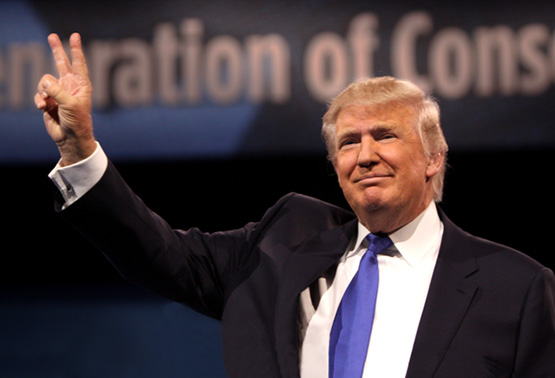
US President-elect Donald J. Trump
The thinking then was that if Trump had lost, he would have cited suspicions of voter fraud – possibly claiming that illegal Mexican immigrants had snuck into the polls to tip the election to Hillary Clinton – and Trump was widely condemned for even discussing the possibility of challenging the election’s outcome.
His refusal to commit to accepting the results was front-page news for days with leading editorialists declaring that his failure to announce that he would abide by the outcome disqualified him from the presidency.
But now the defeated Democrats and some anti-Trump neoconservatives in the Republican Party are jumping up and down about how Russia supposedly tainted the election by revealing information about the Democrats and the Clinton campaign.
Though there appears to be no hard evidence that the Russians did any such thing, the Obama administration’s CIA has thrown its weight behind the suspicions, basing its conclusions on “circumstantial evidence,” according to a report in The New York Times.
The Times reported: “The C.I.A.’s conclusion does not appear to be the product of specific new intelligence obtained since the election, several American officials, including some who had read the agency’s briefing, said on Sunday. Rather, it was an analysis of what many believe is overwhelming circumstantial evidence — evidence that others feel does not support firm judgments — that the Russians put a thumb on the scale for Mr. Trump, and got their desired outcome.”
In other words, the CIA apparently lacks direct reporting from a source inside the Kremlin or an electronic intercept in which Russian President Vladimir Putin or another senior official orders Russian operatives to tilt the U.S. election in favor of Trump.
More ‘Group Thinking’?
The absence of such hard evidence opens the door to what is called “confirmation bias” or analytical “group think” in which the CIA’s institutional animosity toward Russia and Trump could influence how analysts read otherwise innocent developments.
For instance, Russian news agencies RT or Sputnik reported critically at times about Democratic nominee Hillary Clinton, a complaint that has been raised repeatedly in U.S. press accounts arguing that Russia interfered in the U.S. election. But that charge assumes two things: that Clinton did not deserve critical coverage and that Americans – in any significant numbers – watch Russian networks.
Similarly, the yet-unproven charge that Russia organized the hacking of Democratic National Committee emails and the private email account of Clinton’s campaign chairman John Podesta assumes that the Russian government was responsible and that it then selectively leaked the material to WikiLeaks while withholding damaging information from hacked Republican accounts.
Here the suspicions also seem to extend far beyond what the CIA actually knows. First, the Republican National Committee denies that its email accounts were hacked, and even if they were hacked, there’s no evidence that they contained any information that was particularly newsworthy. Nor is there any evidence that – if the GOP accounts were hacked – they were hacked by the same group that hacked the Democratic Party emails, i.e., that the two hacks were part of the same operation.
That suspicion assumes a tightly controlled operation at the highest levels of the Russian government, but the CIA – with its intensive electronic surveillance of the Russian government and human sources inside the Kremlin – appears to lack any evidence of such a top-down operation.
Second, WikiLeaks editor Julian Assange directly denies that he received the Democratic leaked emails from the Russian government and one of his associates, former British Ambassador Craig Murray, told the U.K. Guardian that he knows who “leaked” the Democratic emails and that there never was a “hack,” i.e. an outside electronic penetration of an email account.
Murray said, “I’ve met the person who leaked them, and they are certainly not Russian and it’s an insider. It’s a leak, not a hack; the two are different things.”
‘Real News’
But even if Assange did get the data from the Russians, it’s important to remember that nothing in the material has been identified as false. It all appears to be truthful and none of it represented an egregious violation of privacy with some salacious or sensational angle.
The only reason the emails were newsworthy at all was that the documents revealed information that the DNC and the Clinton campaign were trying to keep secret from the American voters.
For instance, some emails confirmed Sen. Bernie Sanders’s suspicions that the DNC was improperly tilting the nomination race in favor of Clinton. The DNC was lying when it denied having an institutional thumb on the scales for Clinton. Thus, even if the Russians did uncover this evidence and did leak it to WikiLeaks, they would only have been informing the American people about the DNC’s abuse of the democratic process, something Democratic voters in particular had a right to know.
And, regarding Podesta’s emails, their most important revelation related to the partial transcripts of Clinton’s paid speeches to Wall Street banks, the contents of which Clinton had chosen to hide from the American people. So, again, if the Russians were involved in the leak, they would only have been giving to the voters information that Clinton should have released on her own. In other words, these disclosures are clearly not “fake news” – the other hysteria now sweeping Official Washington.
In the mainstream news media, there has been a clumsy effort to conflate these parallel frenzies, the leak of “real news” and the invention of “fake news.” But investigations of so-called “fake news” have revealed that these operations were run mostly by young entrepreneurs in places like Macedonia or Georgia who realized they could make advertising dollars by creating outlandish “click bait” stories that Trump partisans were particularly eager to read.
According to a New York Times investigation into one of the “fake news” sites, a college student in Tbilisi, Georgia, first tried to create a pro-Clinton “click bait” Web site but found that a pro-Trump operation was vastly more lucrative. This and other investigations did not trace the “fake news” sites back to Russia or any other government.
So, what’s perhaps most telling about the information that the CIA has accused Russia of sharing with the American people is that it was all “real news” about newsworthy topics.
What Threat to Democracy?
So, how does giving the American people truthful and relevant information undermine American democracy, which is the claim that is reverberating throughout the mainstream media and across Official Washington?
“Corruption” allegations against Yanukovych – pushed by OCCRP – were integral to the U.S.-supported effort to organize a violent putsch that drove Yanukovych from office on Feb. 22, 2014, touching off the Ukrainian civil war and – on a global scale – the New Cold War with Russia.
Yet, in the case of the “Panama Papers” or other leaks about “corruption” in governments targeted by U.S. officials for “regime change,” there are no frenzied investigations into where the information originated. Regarding the “Panama Papers,” there was simply back-slapping for the organizations that invested time and money in analyzing the volumes of material. And there were cheers when implicated officials were punished or forced to step down.
So, why are some leaks “good” and others “bad”? Why do we hail the “Panama Papers” or OCCRP’s “corruption evidence” that damaged Yanukovych – and ask no questions about where the material came from and how it was selectively used – yet we condemn the Democratic email leaks and undertake investigations into the source of the information?
In both the “Panama Papers” case and the “Democratic Party leaks,” the material appeared to be real. There was no evidence of disinformation or “black propaganda.” But, apparently, it’s okay to disrupt the politics of Iceland, Ukraine, Russia and other countries, but it is called a potential “act of war” – by neocon Sen. John McCain, R-Arizona – to reveal evidence of wrongdoing or excessive secrecy on the part of the Democratic Party in the United States.
Shoe on the Other Foot
Russian President Putin, while denying any Russian government attempt to tilt the election to Trump, recently commented on the American hypocrisy about interfering in other nations’ elections while complaining about alleged interference in its own or those of its allies. He described a conversation with an unnamed Western “colleague.”
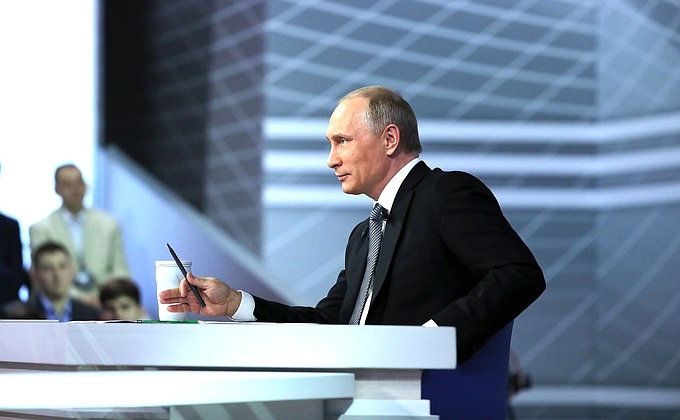
Russian President Vladimir Putin
Putin said, “I recently had a conversation with one of my colleagues. We touched upon our [Russian] alleged influence on some political processes abroad. I told him: ‘And what are you doing? You have been constantly interfering in our political life.’ And he replied: ‘It’s not us, it’s the NGOs’. I said: ‘Oh? But you pay them and write instructions for them.’ He said: ‘What kind of instructions?’ I said: ‘I have been reading them.’”
Whatever one thinks of Putin, he is not wrong in describing how various U.S.-funded NGOs, in the name of “democracy promotion,” seek to undermine governments that have ended up on Official Washington’s target list.
And another aspect of the hypocrisy permeating Official Washington’s belligerent rhetoric directed toward Russia: Aren’t the Democrats doing exactly what they accused Trump of planning to do if he had lost the Nov. 8 election, i.e., question the legitimacy of the results and thus undermine the faith of the American people in their democratic system?
For days, Trump’s unwillingness to accept, presumptively, the results of the election earned him front-page denunciations from many of the same mainstream newspapers and TV networks that are now trumpeting the unproven claims by the CIA that the Russians somehow influenced the election’s outcome by presenting some Democratic hidden facts to the American people.
Yet, this anti-Russian accusation not only undermines the American people’s faith in the election’s outcome but also represents a reckless last-ditch gamble to block Trump’s inauguration – or at least discredit him before he takes office – while using belligerent rhetoric that could push Russia and the United States closer to nuclear war.
Wouldn’t it be a good idea for the CIA to at least have hard evidence before the spy agency precipitated such a crisis?
Investigative reporter Robert Parry broke many of the Iran-Contra stories for The Associated Press and Newsweek in the 1980s.
White House Claims Trump Aides Bankrolled by Kremlin
Sputnik – 13.12.2016
White House spokesman Josh Earnest accused Donald Trump and his top aides of enjoying lucrative connections with Russia, effectively implying a conflict of interests.
The White House appears to be dedicated to its stalwart campaign to ferret out any traces of Donald Trump and his team secretly conspiring with Russia, no matter how imaginary they are.
During his daily briefing on Monday, December 12, White House spokesman Josh Earnest insisted that Donald Trump and some of his top aides allegedly enjoy lucrative ties with Russia or even directly receive money from a “Russian propaganda outlet.”
“It was the president-elect who refused to disclose his financial connections to Russia. It was the president-elect who hired a campaign chairman with extensive, lucrative, personal financial ties to Russia. It was the president-elect who had a national security adviser on the campaign that had been a paid contributor to RT, the Russian propaganda outlet,” Earnest declared.
While the spokesman opted not to name any names in his accusatory speech, it is not hard to deduce that the “campaign chairman” in question is Paul Manafort, a one-time advisor to the former Ukrainian president Victor Yanukovich, while the “national security adviser” is Ret. Lt. Gen. Michael Flynn, former head of the Defense Intelligence Agency.
It should be noted that Manafort was earlier accused by Ukraine’s National Anti-Corruption Bureau of pocketing some $12.7 million worth of ‘black cash’ supplied by corrupt Ukrainian oligarchs. However, the agency was subsequently unable to provide any evidence of these alleged wrongdoings, and Nazar Kholodnytskiy, head of the Ukraine’s Specialized Anti-Corruption Prosecutor’s Office, had to admit that so far no reason has been found to hand Manafort a notice of suspicion, RIA Novosti points out.
Meanwhile, Michael Flynn did indeed appear as a guest on RT and even attended the RT anniversary event in Moscow, where he was seated next to Russia’s President Vladimir Putin. Nevertheless, Kremlin spokesman Dmitry Peskov made it clear that Putin and Flynn did not engage in lengthy conversations of any kind.
RT was less than amused by the accusations brought forward by Earnest against both Flynn and the news agency, and decided to clarify the issue in no uncertain terms. “We are rather amazed at the misinformation peddled by White House press secretary Josh Earnest. At no time has General Michael Flynn ever been a paid contributor to RT. General Flynn has appeared as a guest on our award-winning news network, alongside many international experts who respond to our invitation to share their views,” the news channel’s press office stated.
It remains to be seen whether the Obama administration will continue to push forward these claims.
Top US spy agency abstains on CIA assessment of Russian hack of 2016 election
RT | December 13, 2016
The office overseeing all 17 agencies of the US intelligence community apparently doubts the CIA’s assessment that Russia intervened to help Donald Trump win the presidential election, as Reuters reports anonymous officials saying the allegation won’t be endorsed.
Three unnamed officials from the Office of the Director of National Intelligence (ODNI) told Reuters on Monday that their agency does not dispute the CIA’s findings, yet it would not accept them either.
“ODNI is not arguing that the agency (CIA) is wrong, only that they can’t prove intent,” one of the officials told the news agency. “Of course they can’t, absent agents in on the decision-making in Moscow.”
The CIA has not made its findings public, but the Washington Post reported on a secret assessment by the agency. It concluded that Russian intelligence hacked the servers of the Democratic National Committee (DNC) and Hillary Clinton’s chief of staff John Podesta to help Trump win the presidency.
The ODNI was formed to ease the bureaucratic obstacles between US intelligence agencies after the 9/11 terrorist attacks.
“[It was] a thin reed upon which to base an analytical judgment,” another official said in response to the speculation. He stressed that the “judgment based on the fact that Russian entities hacked both Democrats and Republicans and only the Democratic information was leaked.”
House Intelligence Committee Chairman Devin Nunes (D-California) wrote a letter Monday to James Clapper, the Director of National Intelligence. In it, Nunes said he was “dismayed” with Clapper’s inaction on informing the house committee about the division between the assessments of the CIA and the FBI, Reuters reported. Nunes also requested that Clapper speak to his panel by the end of this week and noted that Clapper testified in November that there was not enough evidence to show a connection between Russia and the “Podesta emails” releases from WikiLeaks.
Senator John McCain (R-Arizona) has urged a Congressional probe, saying there is “no information” to prove any Russian intention.
“It’s obvious that the Russians hacked into our campaigns,” McCain told Reuters. “But there is no information that they were intending to affect the outcome of the election, and that’s why we need a congressional investigation.”
‘US nukes in Germany are Cold War relics, should go in dustbin of history’ – top Russian diplomat
RT | December 12, 2016
American nuclear weapons placed in Germany during the Cold War are relics of that era and should be removed as they no longer serve any purpose, according to a senior diplomat at the Russian Foreign Ministry.
“American nuclear weapons in Germany are relics of the Cold War, for a long time they do not serve the implementation of any practical tasks and are subject to being thrown down the dustbin of history,” Sergey Nechayev, chief of the Russian Foreign Ministry’s department responsible for relations with Germany, among a number of other European countries, said in an interview with RIA Novosti.
He noted that US nuclear weapons first appeared on the territory of the Federal Republic of Germany in 1953, and since then have been a constant presence – although their placement was only approved by the German authorities retroactively in 1958.
“All the related issues are regulated in the context of Germany’s obligations in the framework of its NATO cooperation. Since Berlin does not have full sovereignty in making decisions in this regard too, the topic is not the subject of [Russia’s] negotiations with the German side,” Nechayev noted.
According to Nechayev, the issue of the deployment of US nuclear weapons has been the focus of political debate in Germany for some time now.
“In March 2010, the majority in the Bundestag voted to call upon the German government to persistently work with US allies on ensuring the withdrawal of US nuclear arsenal from the country. […]
“The last time the public’s attention was drawn to the presence of US nuclear weapons in Germany was a little over a year ago, when Washington decided to modernize 20 of its nuclear warheads, which are stationed at a base in Büchel [Rhineland-Palatinate region],” the minister said.
He also mentioned that among those most consistently expressing their opposition to the presence – or deployment – of US nuclear weapons in Germany were the Left Party, the liberal FDP and Alternative for Germany (AfD). This position is also shared by many members of the ruling parties.
“However, the German authorities do not dare to put the issue up before Washington,” Nechayev stated.
According to public data, since the end of the Cold War, US aerial nuclear bombs have remained in five countries on the other side of the Atlantic: Belgium, Italy, Germany, the Netherlands and Turkey. In August this year, German media reported that the US was planning to modernize its nuclear arsenal stationed at Büchel air base, placing there a latest generation V61-12 atomic bomb. It is estimated that between 10 and 20 nuclear warheads from the Cold War period are stationed in Büchel today. The area is under strict protection, with US soldiers also stationed there.
The German government has long wanted US nuclear weapons to be removed from the German soil, but so far this has not happened.
“We have by no means given up on this matter, but it is just as difficult as it has been over the past few years,” Foreign Minister Frank-Walter Steinmeier said in parliament last spring. And given Germany’s obligations to NATO, it may have become even more difficult.
READ MORE: ‘We’ve never sought enemies, we need friends’: Top quotes from Putin’s annual address
NATO has been actively deploying weapons to Eastern European states in the recent months, as well as conducting showy military drills right along Russia’s borders – including in the Baltic Sea. Its official position has long been that military activity in Eastern Europe was a defensive response to alleged Russian “aggression” in Ukraine. NATO said Russia was responsible for “annexing” Crimea from Ukraine, although the region voted to join the Russian Federation in March 2014 in a referendum, following the coup that overthrew Ukraine’s elected government. In September this year, NATO Secretary General Jens Stoltenberg said the bloc was ready to further increase its presence in the area, as a gesture of support to its Eastern European members. NATO has also just finished the ‘Iron Sword’ military exercises, which started on November 20 and involved 4,000 troops from 11 NATO countries. The drills were taking place in Lithuania, Russia’s neighbor and the largest Baltic nation.
Moscow has not let NATO activity go unanswered, as it repeatedly addressed it as infringement on Russia’s sovereignty and safety. In August this year, Russia deployed S-400 missile defense systems to Crimea, while ballistic Iskander missiles were deployed in the Kaliningrad exclave after an American ABM (anti-ballistic missile) system was stationed in two Eastern European NATO countries – Romania and Poland.
In his annual address to the Federal Assembly earlier this month, Russian President Vladimir Putin expressed regret that the time since the end of the Cold War had passed by in vain for NATO, which continues to “infringe on the interests of the Russian Federation.” Putin noted, however, that if unprovoked, Russia “does not want confrontation” and “does not seek enemies.”
“We are committed to a friendly, equal dialogue, to upholding the principles of justice and mutual respect in international affairs; we are ready for serious discussion on the creation of a stable system of international relations in the 21st century. Unfortunately, in this respect, the decades since the end of the Cold War have gone by in vain,” he said.
Featured Video
Can the U.S. Afford to Annihilate Iran?
or go to
Aletho News Archives – Video-Images
From the Archives
Sanctions, War and the Policy of Dual Containment
By SASAN FAYAZMANESH | March 17, 2008
It is now nearly three decades since the Unites States adopted the policy of dual containment of Iran and Iraq. While much has been written about the containment of Iraq, there has been very little in-depth analysis of this policy when it comes to Iran. In a book that is going to be released on March 31, 2008, entitled The United States and Iran: Sanctions, Wars and the Policy of Dual Containment (Routledge), I attempt to address this shortcoming by investigating when and why the US policy of containment of Iran came about, how it evolved, and where it stands today.[1] To the extent that Israel has been involved in US policy making, the study will also include the role that Israel has played in the containment of Iran. Also, since the fate of Iran has been inextricably linked to that of Iraq, occasionally the investigation will overlap with the containment of Iraq.
The policy of dual containment of Iran and Iraq originated during the Carter Administration, but it was not until the Clinton Administration that the expression “dual containment” became popular. … continue
Blog Roll
 Aletho News
- The Genetic Deception — now in paperback (Second Edition)
- Can the U.S. Afford to Annihilate Iran? /Seyed M. Marandi
- Elmo Sold mRNA Jabs to Your Toddler. Now They Are “Off-Label.”
- British state targets Palestine Action with yet another crooked trial
- Americans are paying the price to preserve Israel’s nuclear hegemony
- Resistance factions are necessary to ensure a permanent US Iraq withdrawal
- How Israel destabilizes the Middle East: Denying sovereignty and the right to exist
- Europe’s Establishment Is Embracing War – and Losing Voters
- NATO chief advocates war of aggression
- No Vote, No Representation, No State: Democracy, Israeli Style
- If Americans Knew
- Israeli Soldiers Abduct At Least 22 Across Occupied West Bank
- Eight Palestinians Killed in Israeli Attacks on Gaza
- Israeli former leaders and security chiefs threaten legal action over ‘Jewish terrorism’
- Israel map in LA Times ad includes all land from the river to the sea
- Inside Lebanon’s 200-page dossier on Israeli war crimes
- Flydubai, genocide, settler violence, Trump abuse of power to deport – Daily Update
- Counting Antisemitic Incidents: What the ADL Audit Reveals — and Obscures
- Mamdani releases plan to combat antisemitism and hate crimes in New York City
- Iran’s Revolutionary Guards Publish Letter to the American People
- DMFI launches $1 million ad campaign supporting Virginia’s Elaine Luria
- No Tricks Zone
- Green Energy Debacle: German Expert Professor Fritz Vahrenholt Warns Of Severe Economic And Social Consequences
- Two More Paleo Reconstructions Affirm Meters-Higher Sea Levels Across Ireland, Brazil 7000-6000 Years Ago
- New Study: Earth And Venus Surface Warmth Largely Explained By Convection And Lapse Rate, Not CO2 Or Radiation
- 2025 Nature Paper Claiming Worsening Global Drought Gets RETRACTED …Heavily Flawed
- New Study: ‘Global Drought Shows No Detectable Recent Acceleration Under Climate Warming’
- Economic Masterminds: German Socialists Suggest Taxing Productivity Gains Stemming From Using AI
- The South China Sea Has Not Been Cooperating With The Climate Change Narrative
- Energy Crisis: Germany Enters Heating Season With Historically Low Gas Reserve Fill Levels
- New Study: The Antarctic Ice Sheet Gained Mass From 2020-2024 Due To Staggering Snow And Ice Accumulation
- Study: Ocean Heating Rates From Thousands Of Years Ago ‘Dwarf’ Modern Ocean Heating Rates

